

 Brazil
 Argentina
 Chile
Chile Colombia
 Peru
Peru Uruguay
 Germany
 Spain
Spain France
 Greece
 the Netherlands
 Ireland
 Italy
Italy Portugal
 the United Kingdom
 Switzerland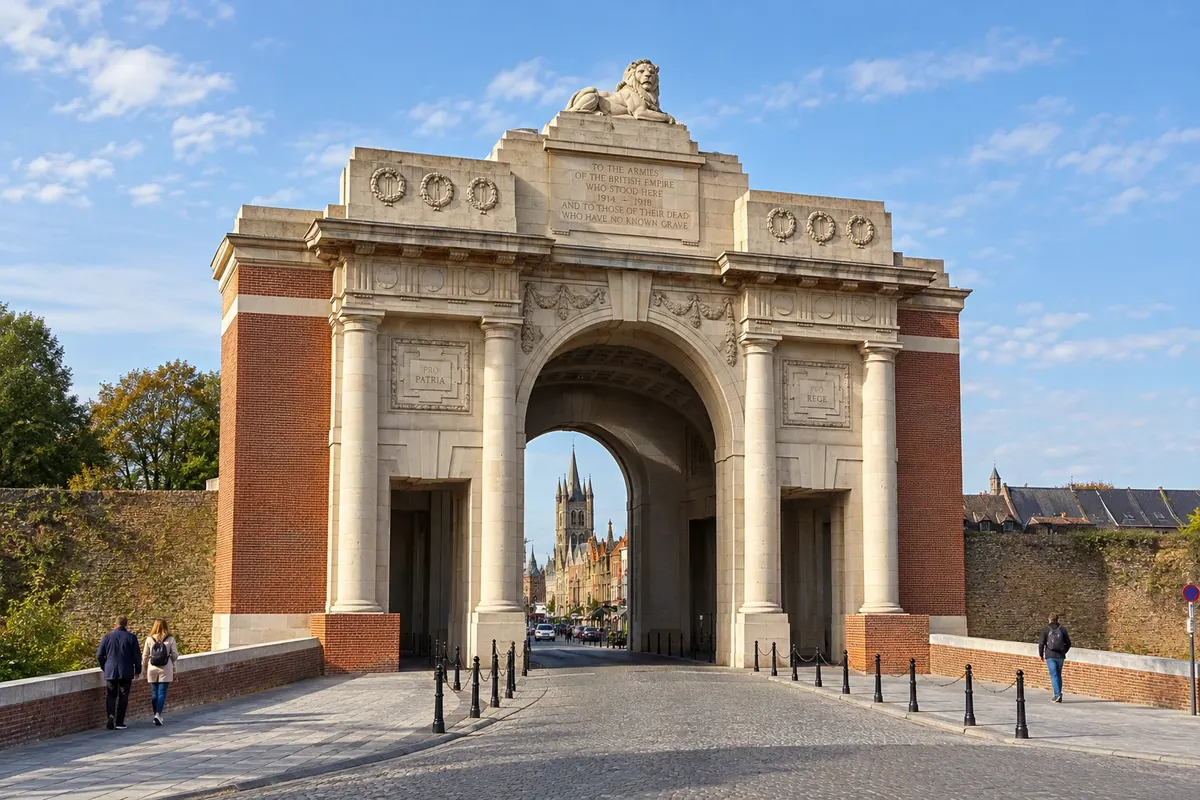
Route · Flandres Ocidental
Flanders Fields: the First World War front, from Ypres to Nieuwpoort
Cemeteries, museums and First World War trenches in West Flanders, from the Ypres salient to the mouth of the river IJzer, near the North Sea.
In the photo: Menenpoort · Ieper
Illustrative images. The pictures in this guide are illustrations based on the real place, not photographs, and may differ from it.

The route
What the Flanders Fields: the First World War front, from Ypres to Nieuwpoort is
In the west corner of Belgium, between the border with France and the North Sea, lies the Westhoek. The English call the region Flanders Fields. From October 1914 to September 1918, the First World War front line remained almost static there, in an arc of mud and polder.
The route starts in Ypres, a town that the front arced around, the so‑called salient, for almost the entire war. It continues to Zonnebeke and the village of Passendale, scene of the Third Battle of Ypres, from 31 July to 10 November 1917. Then it goes to Poperinge, the rear-area town where British soldiers rested.
Further north, Diksmuide and Nieuwpoort tell the other half of the story: the Belgian front along the river IJzer. At the end of October 1914, the Belgians opened the sluices at Nieuwpoort and flooded the plain. The water stopped the German advance and the river became the frontline until the end of the war.
Along the way are cemeteries maintained by the Commonwealth War Graves Commission, German and Belgian cemeteries, museums and preserved stretches of trench. In 2023 several of these sites were inscribed on the UNESCO World Heritage List, including Tyne Cot, Lijssenthoek, Vladslo and the Menin Gate.
The map
5 cities along the way
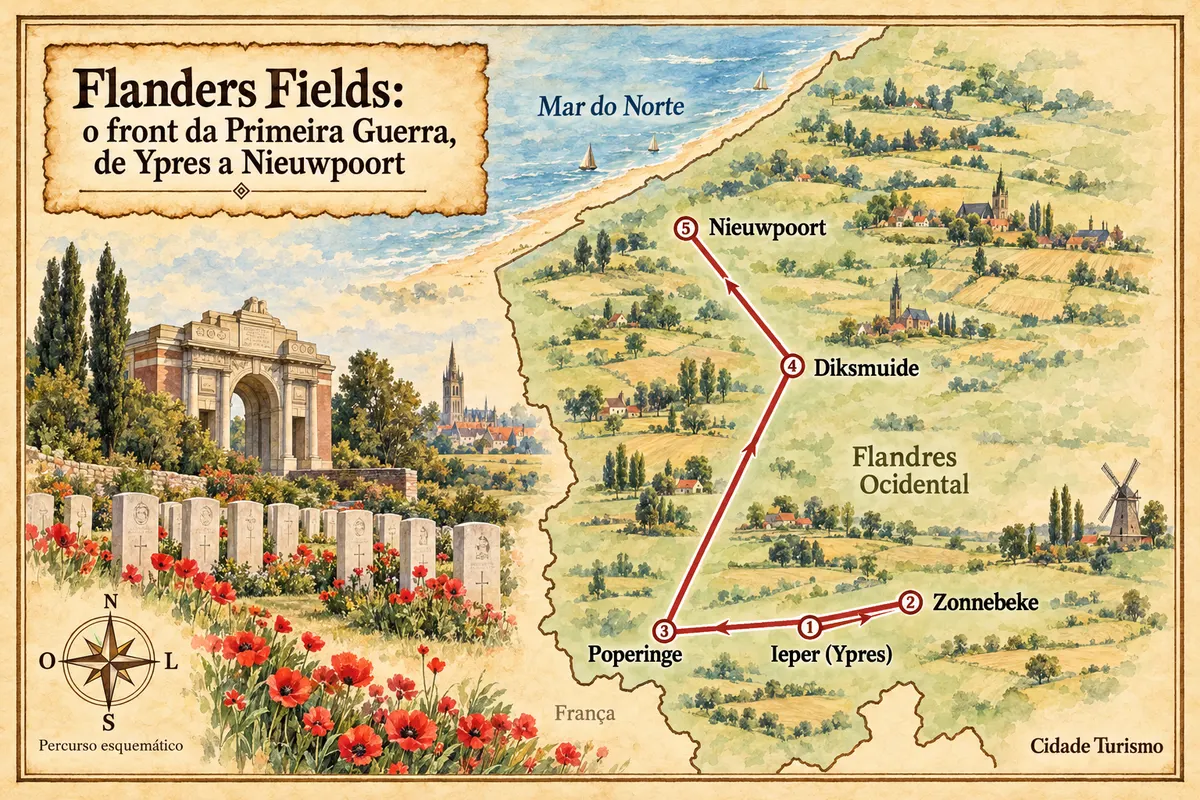
Contornos: © NGI-IGN, AdminVector, CC BY 4.0. Adaptação do Cidade Turismo.
The journey
City by city
Distances and times are approximate: check before you set off.
-
 1 · Flandres Ocidental
Ypres
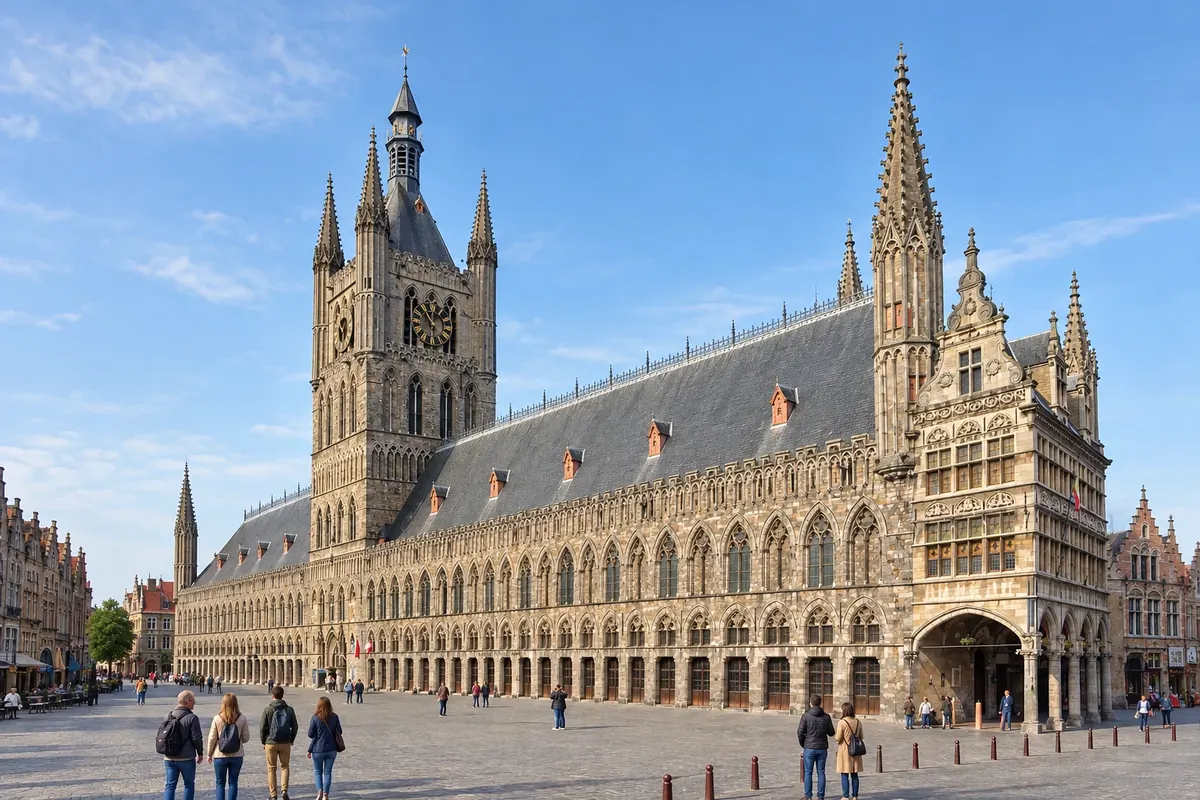
Base of the route and the train arrival point. The main battles occurred in 1914, 1915 and 1917, and the town was devastated and rebuilt after the war, with the Lakenhal and the cathedral reconstructed. The In Flanders Fields Museum is housed in the Lakenhal. At the Menin Gate, the Commonwealth memorial opened in 1927 with the names of soldiers with no known grave, the Last Post is sounded every night.
→ Zonnebeke By car the road leaves Ypres to the east and climbs the gentle ridge of Zonnebeke, crossing the terrain of the 1917 battles. There are De Lijn buses and guided tours that depart from Ypres; check schedules before you go.
-
 2 · Flandres Ocidental
Zonnebeke
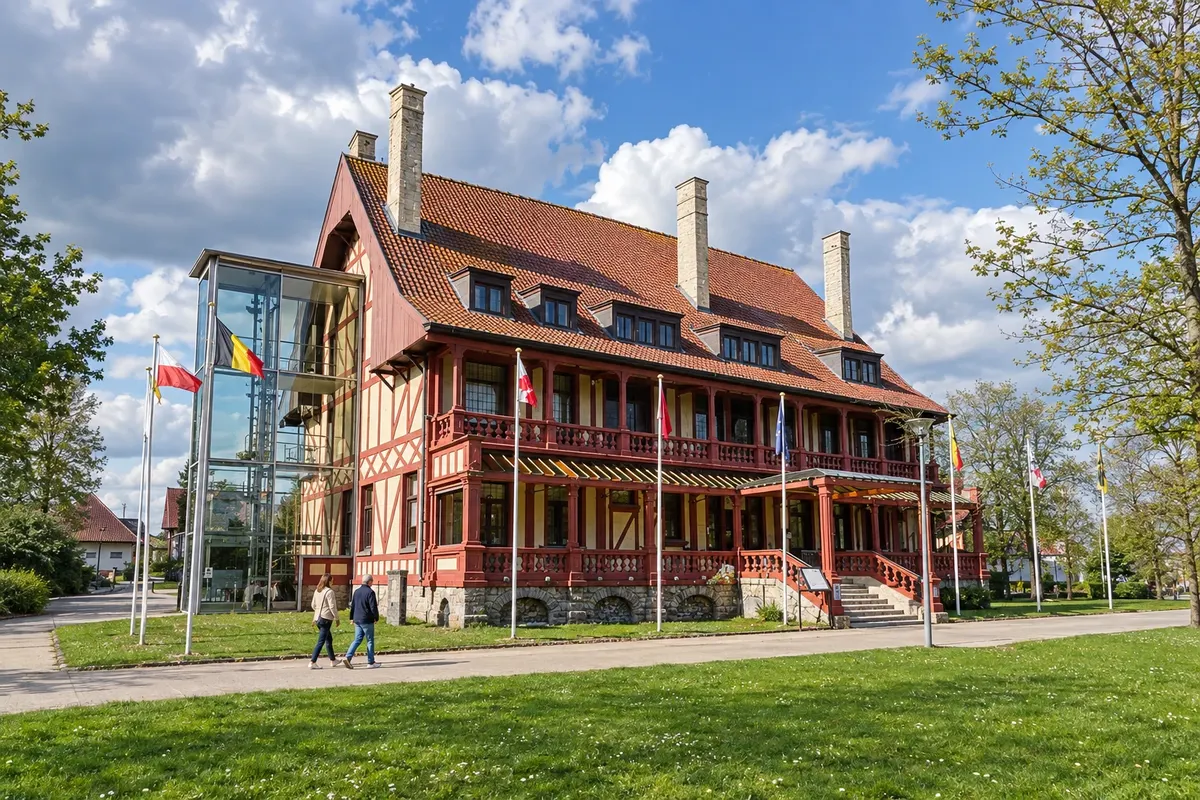
It lies in the middle of the former salient, east of Ypres. In the castle park is the Memorial Museum Passchendaele 1917, which includes a reconstructed underground shelter. On the top of the Passendale ridge, the Tyne Cot cemetery is the largest Commonwealth cemetery in the world, with about 12,000 graves.
→ Poperinge By car, you return via Ypres and continue west between hop fields. Without a car, the combination is a bus to Ypres and the line 69 train, which terminates at Poperinge.
-
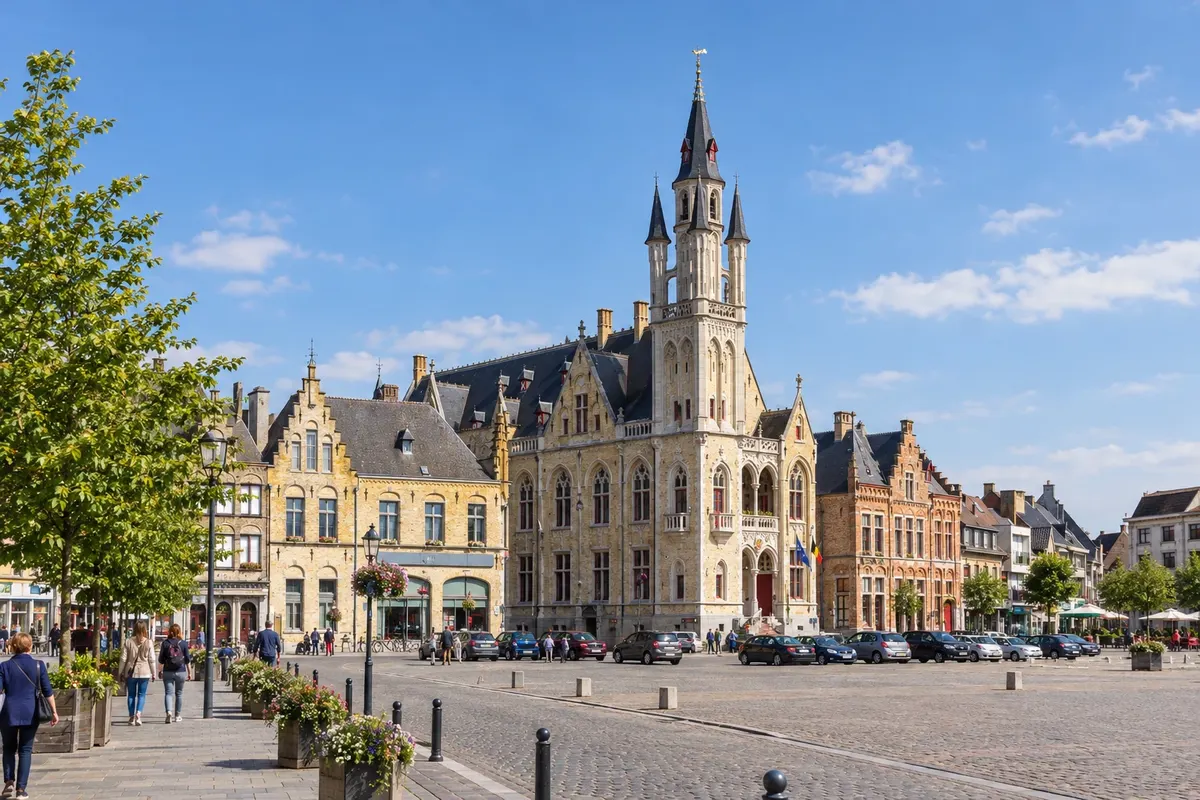 3 · Flandres Ocidental
Poperinge
It remained outside German occupation and served as a rear area for the British. Talbot House, opened in December 1915 as a club for soldiers of any rank, is now a museum. On the road south, Lijssenthoek contains nearly 11,000 graves of the wounded who died in the field hospitals.
→ Diksmuide By car the route cuts through the agricultural interior heading north. There is no direct train: Poperinge is at the end of line 69 and Diksmuide is on line 73, which connects Gante to De Panne, and using public transport requires changes.
-
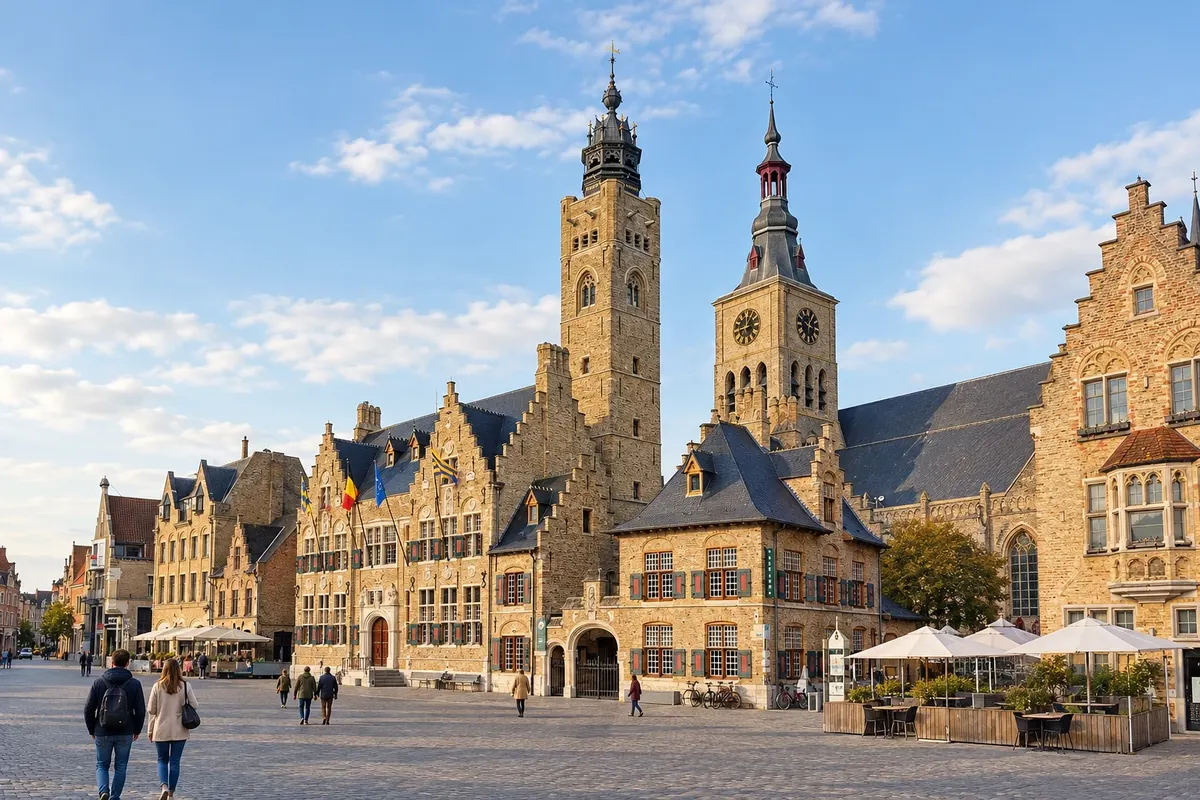 4 · Flandres Ocidental
Diksmuide
A town on the Belgian front, destroyed in 1914 and rebuilt in the 1920s. On the bank of the IJzer, the IJzertoren, at 84 metres, houses a museum about war and peace. Downriver lies the Dodengang, the only preserved Belgian trench. The German cemetery at Vladslo, with sculptures by Käthe Kollwitz, is also in the municipality.
→ Nieuwpoort The road follows the IJzer valley to the sea, across the plain that was underwater from 1914 to 1918. Nieuwpoort does not have a train station. The section is also part of the Western Front Way, waymarked for walkers and cyclists.
-
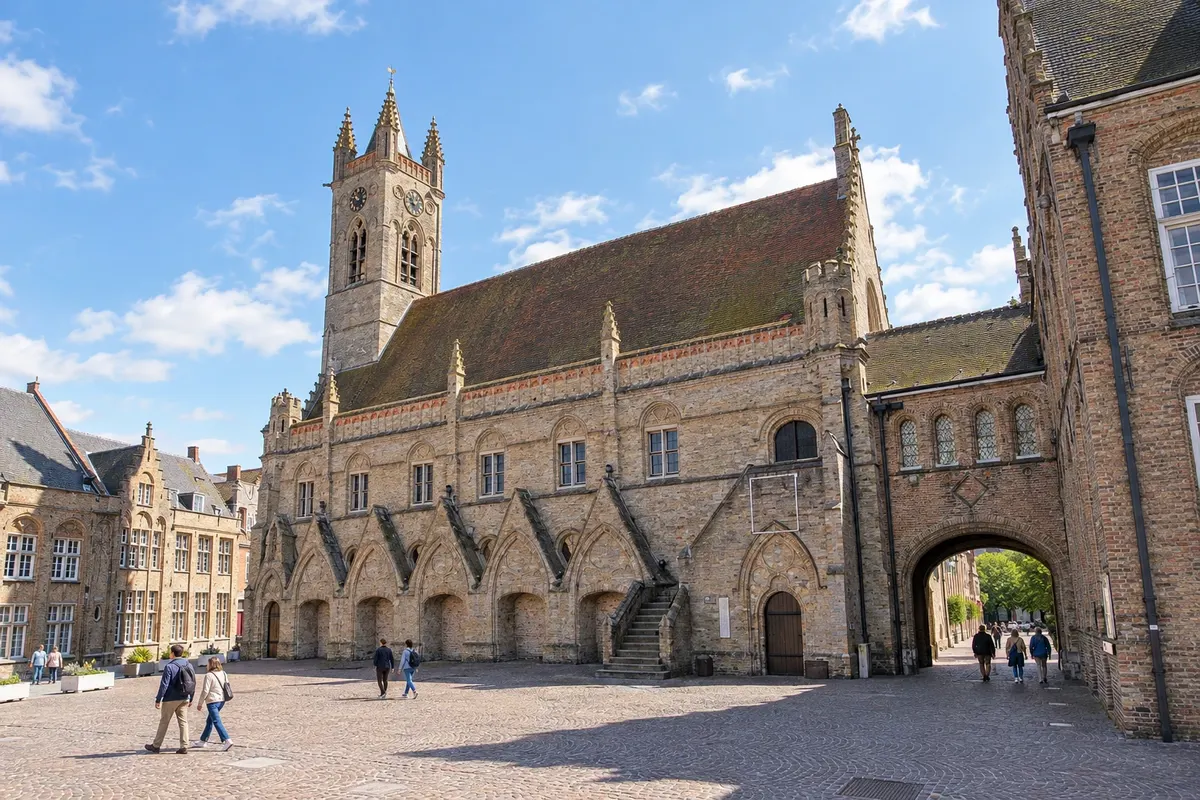 5 · Flandres Ocidental
Nieuwpoort
End of the route, at the mouth of the IJzer. At the Ganzepoot sluice complex, the Belgians flooded the plain at the end of October 1914. Beside it, the monument to King Albert I, from 1938, houses the Westfront Nieuwpoort centre, with an exhibition about the inundation and views from above over the polder and the sea.
How many days
Two days are enough to see the essentials: one in the Ypres salient, including Zonnebeke and Poperinge, and another on the IJzer front, with Diksmuide and Nieuwpoort. With three days you’ll have time for museums at a relaxed pace. Many people stay in Ypres to attend the Last Post at the Menin Gate.
Best time to go
From April to October the days are long and most museums are usually open. November is busy with ceremonies, especially on the 11th, Armistice Day, and Ypres becomes crowded. From December to February it gets dark in the mid‑afternoon, rain is frequent and some sites close for weeks, like the Dodengang. Check ahead before you go.
The seasons shown are the most usual ones; nature doesn't always follow the calendar.
How to travel it
By car is the simplest way, because many sites are in the countryside, far from stations. If you don’t drive you can reach Ypres and Poperinge by train and do the salient with a guided tour departing from Ypres. Diksmuide has a station on a different line. Nieuwpoort does not have a train station. Road signs are in Dutch: Ieper, Passendale, Diksmuide.
Who it's for
For those interested in First World War history, memory and military cemeteries. It’s a trip of calm visits, with plenty of time outdoors between fields and rural crossroads. Older children usually cope well with museums that have reconstructed trenches.
Your questions
Frequently asked questions about the Flanders Fields: the First World War front, from Ypres to Nieuwpoort
Do you need a car to do the route?
It helps a lot. Museums are in the towns, but cemeteries such as Tyne Cot and Lijssenthoek are in the countryside. Without a car you can take the train to Ypres and Poperinge and book a guided tour from Ypres for the salient. The stretch between Diksmuide and Nieuwpoort depends on buses or a car.
Can it be done as a day trip from Bruxelas?
Only part of it. Ypres is at the far western edge of the country and the train from Bruxelas requires changes. In one day you can see Ypres, the Menin Gate and one or two sites in the salient. To include Diksmuide and Nieuwpoort, it’s best to spend at least one night in the region.
What is the Last Post and how do you attend?
It is the bugle call honouring Commonwealth soldiers who died in the area, performed by volunteer firefighters beneath the Menin Gate arch in Ypres every night since 1928, interrupted only during the German occupation in the Second World War. The ceremony is short and solemn. Arrive early, as crowds are large on dates like 11 November. Check the time before you go.
What is the best time to go?
From April to October, with long days and museums open. November has the Armistice ceremonies on the 11th, but also rain and short days. From December to February, some places close for a few weeks, like Dodengang and IJzertoren in January.
Do the city names change on the signs?
Yes. Flandres speaks Dutch and the signs use Ieper for Ypres, Passendale for Passchendaele and Nieuwpoort for Nieuport. Books and British cemeteries use the older names in English or French, and it's useful to know both forms to find your way.
Can the cemeteries be visited by anyone?
Yes. Commonwealth and German cemeteries are open to the public and have a register with the names at the entrance. Silence and respect for the graves are requested. Tyne Cot and Lijssenthoek have a visitor centre next to the car park.