Sint-Janshospitaal and the works of Memling
From Brugge city center On foot about 1 hour 30 minutes afternoon easy
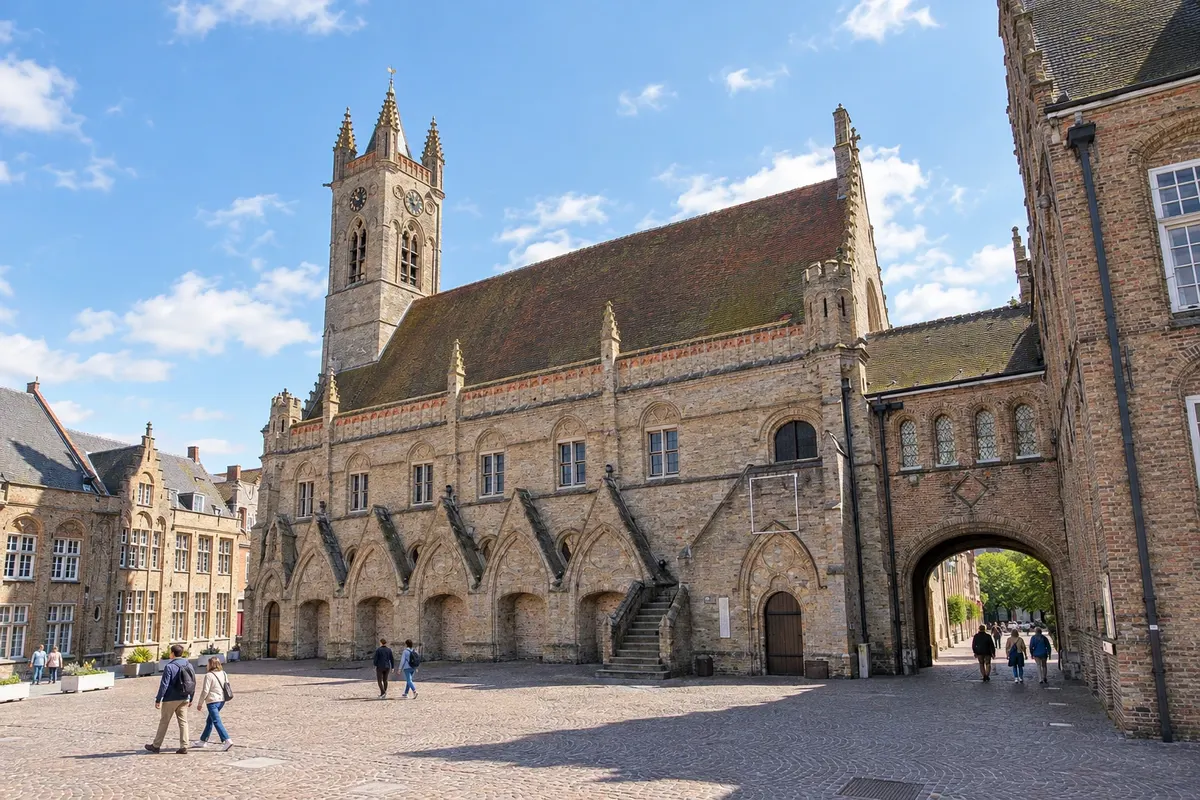
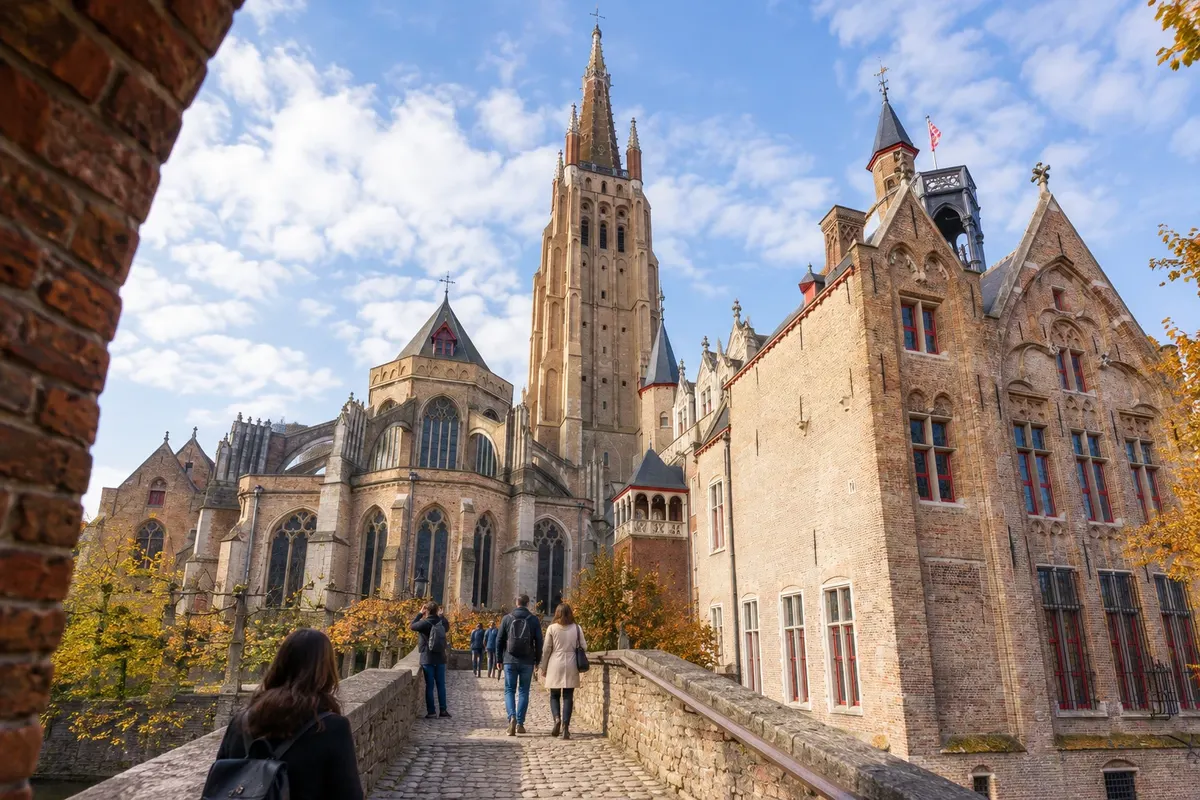
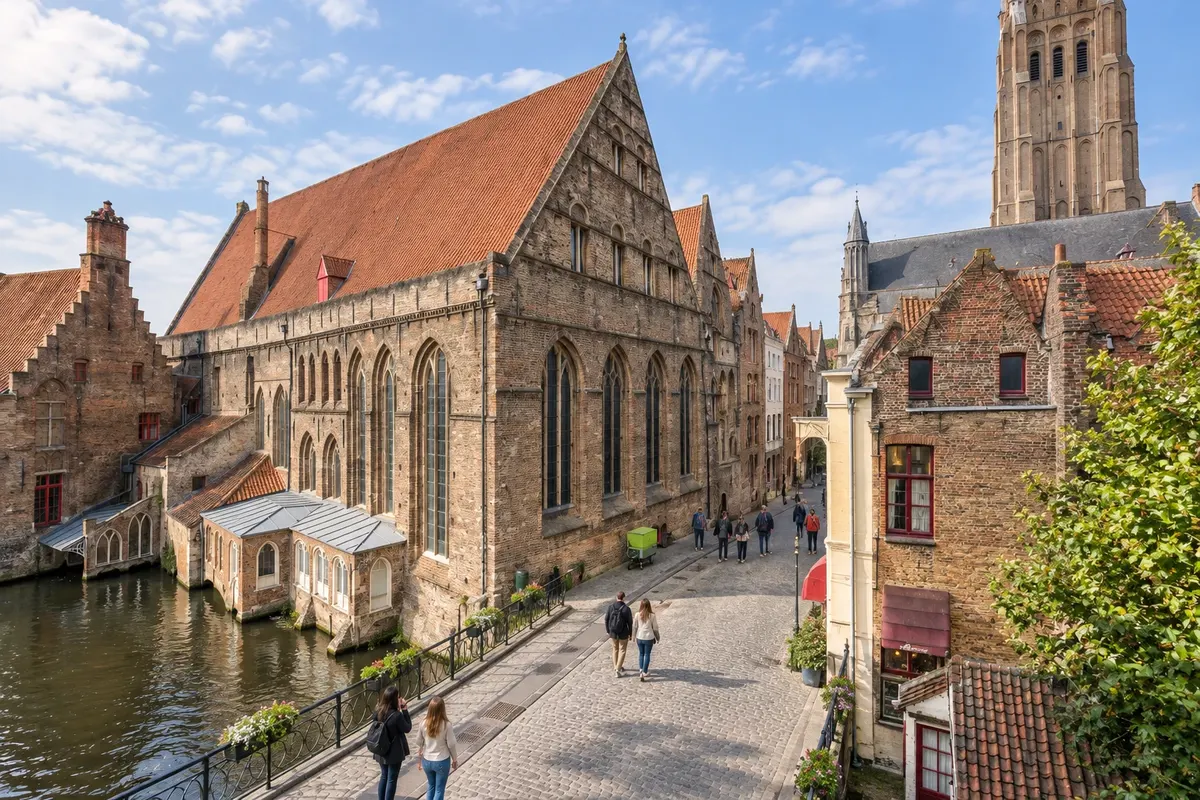
The Sint-Janshospitaal is a preserved medieval hospital. It began in the 12th century and for centuries cared for the sick and welcomed travellers of any origin or class. Today the medieval wards, with their wooden ceilings, house a museum on the history of caring for the sick.
The highlight is Hans Memling. Four of the museum’s seven main works were painted by him for the hospital itself and have been there since the late 15th century. In the old hospital church stands the reliquary of Saint Ursula, a small gilded wooden chapel with painted scenes of the saint’s life.
The visit ends in the old apothecary, with its 17th-century interior preserved, and in the adjoining medicinal herb garden.
Stops: Sint-Janshospitaal, Hospitaalkerk.
Includes: Museum admission, with ticket paid separately. The municipal museums pass is valid here; check the current pricing.
Tip: The museum is closed on Mondays, except Easter Monday and Whit Monday. Combine the visit with the Onze-Lieve-Vrouwekerk across the street.
Best time: All year. A good option for rainy days.
Sint-Salvatorskathedraal
From Brugge city center On foot about 45 minutes afternoon easy
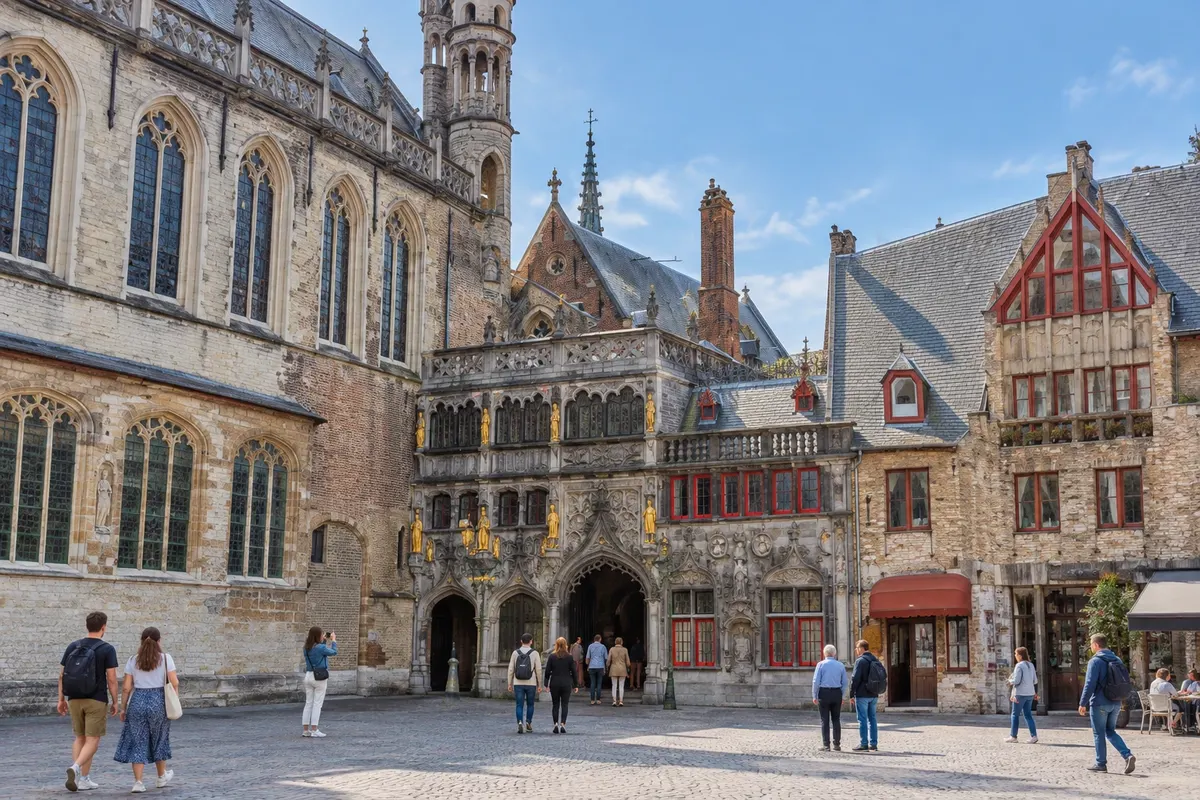
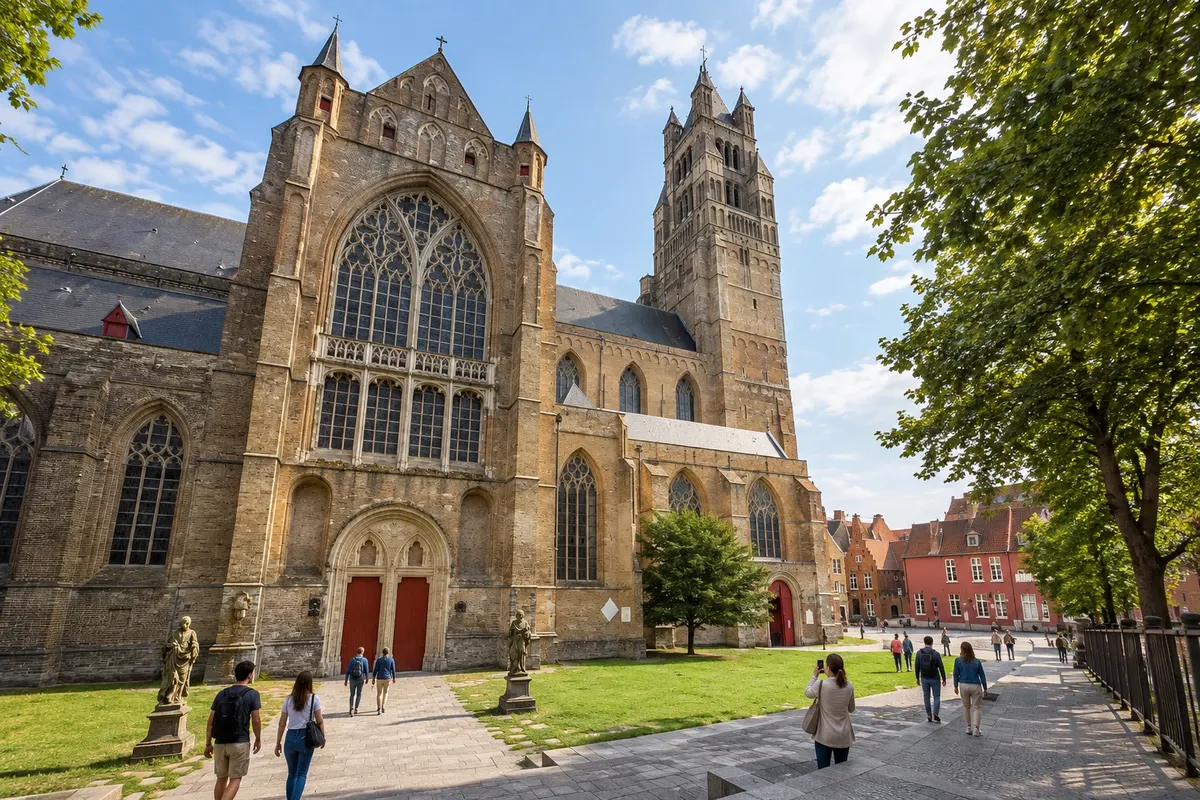
The Sint-Salvatorskathedraal sits between the Markt and the station, near Steenstraat, the city centre’s shopping street. It served as a parish church from the 10th century and became a cathedral in 1834, shortly after Belgium’s independence, when the city received a new bishop.
The west tower, in Neo-Romanesque style, is 99 meters high and was designed by the English architect Robert Chantrell. Inside, the entrance tapestries were woven in Brussels by Jasper van der Borcht in 1731, and the paintings that served as their models are also in the church. The organ, dating from 1717–1719, has been enlarged several times and is used in a concert series established in 1952.
The visit is quick and fits on the route between the station and the Markt.
Stops: Sint-Salvatorskathedraal, Steenstraat.
Includes: The church is a place of worship and is usually open for visits during the day. Check opening times before you go.
Tip: Respect silence and avoid moving around during masses. If there is an organ concert the week you visit, it’s worth fitting it into your itinerary.
Best time: All year round.
Kruisvest windmills and bobbin lace in the Sint-Anna neighborhood
From Brugge city center On foot or by bicycle about 3 hours afternoon easy
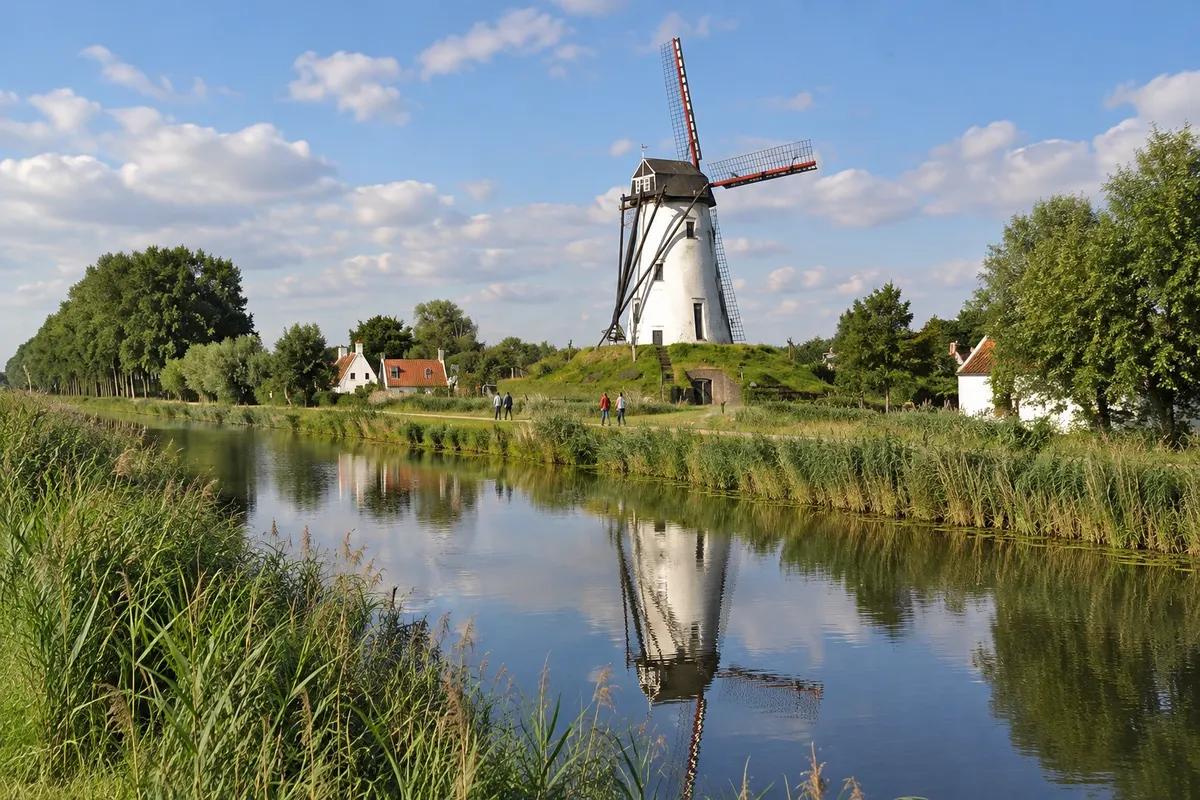
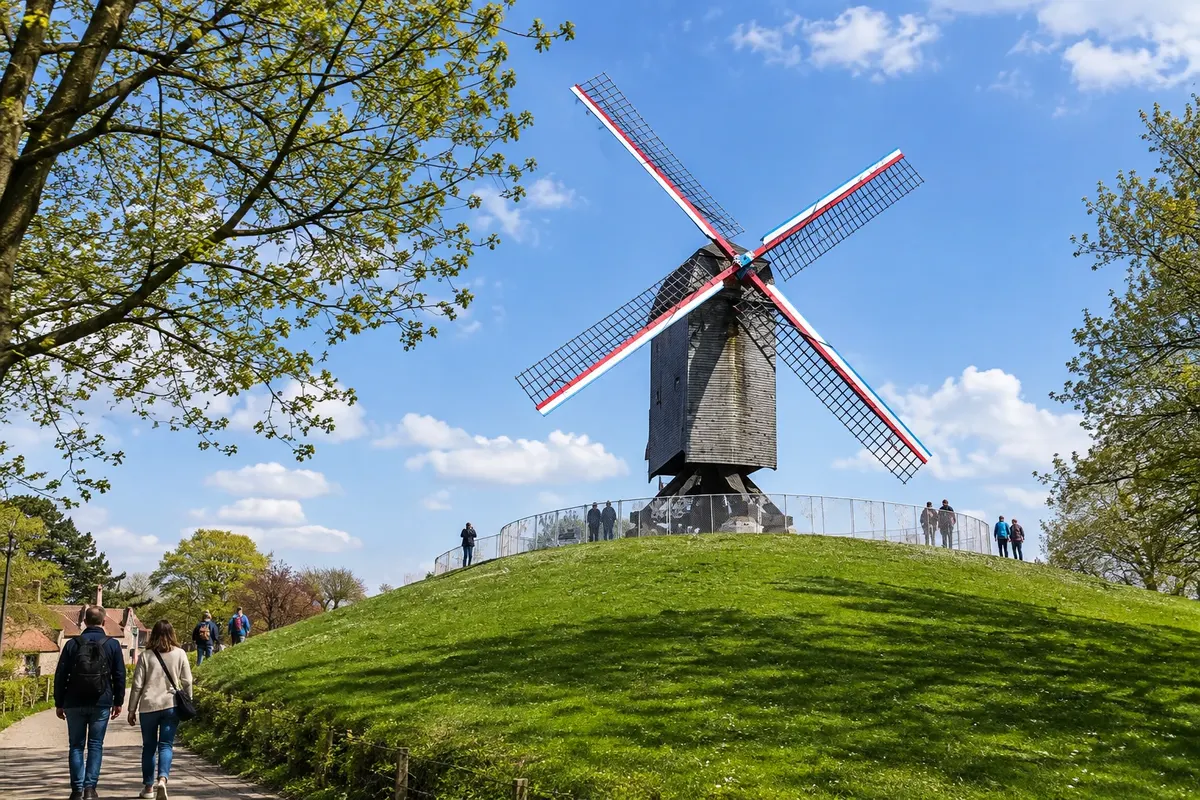
East of the centre, the Sint-Anna neighborhood is quieter and residential. Along its edge runs the Kruisvest, a section of the old walls turned into a park, with four windmills on the embankment.
The Sint-Janshuismolen dates from 1770 and stands on its original site. It is the only one of the four that still grinds grain: in favorable wind you can see the mechanism at work. The ascent to the mill is via a steep staircase.
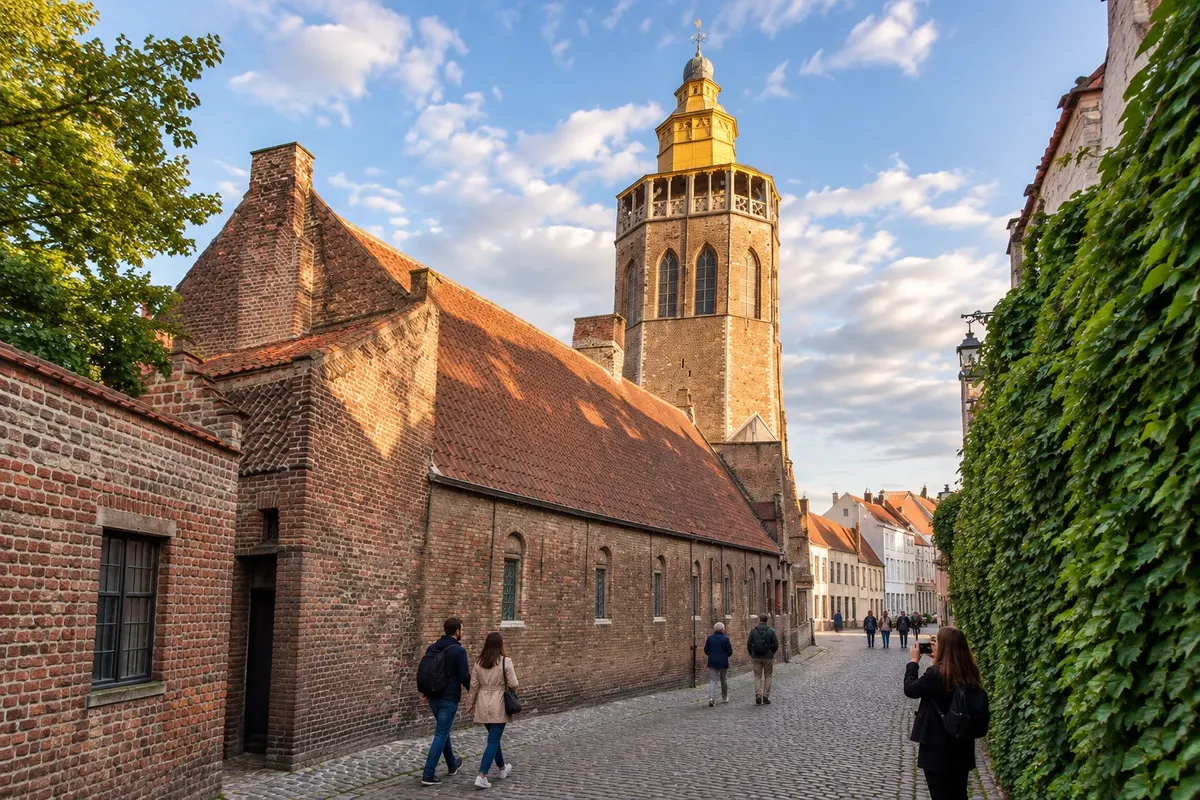
In the middle of the neighborhood, on Balstraat, is the Kantcentrum, the bobbin-lace centre, next to the Jeruzalemkerk. The small museum displays cushions, old bobbins, templates and finished pieces of Brugge lace. In the afternoons from Monday to Saturday, lacemakers often work in front of the public and explain the technique.
Stops: Kruisvest, Sint-Janshuismolen, Sint-Anna, Kantcentrum, Jeruzalemkerk.
Includes: Admission to Sint-Janshuismolen and to the Kantcentrum, each with its own ticket, paid separately. The mill is included in the municipal museums pass. Check the current price list.
Tip: Leave the Kantcentrum for the afternoon, when there is usually a demonstration. The mill is closed on Mondays. The walk along the Kruisvest, among the mills, is open year‑round.
Best time: From April until early November, when the mill is open. From November to March it is closed, except for some Sundays.
Choco-Story: the chocolate museum
From Brugge city center On foot about 1 hour 30 minutes afternoon easy
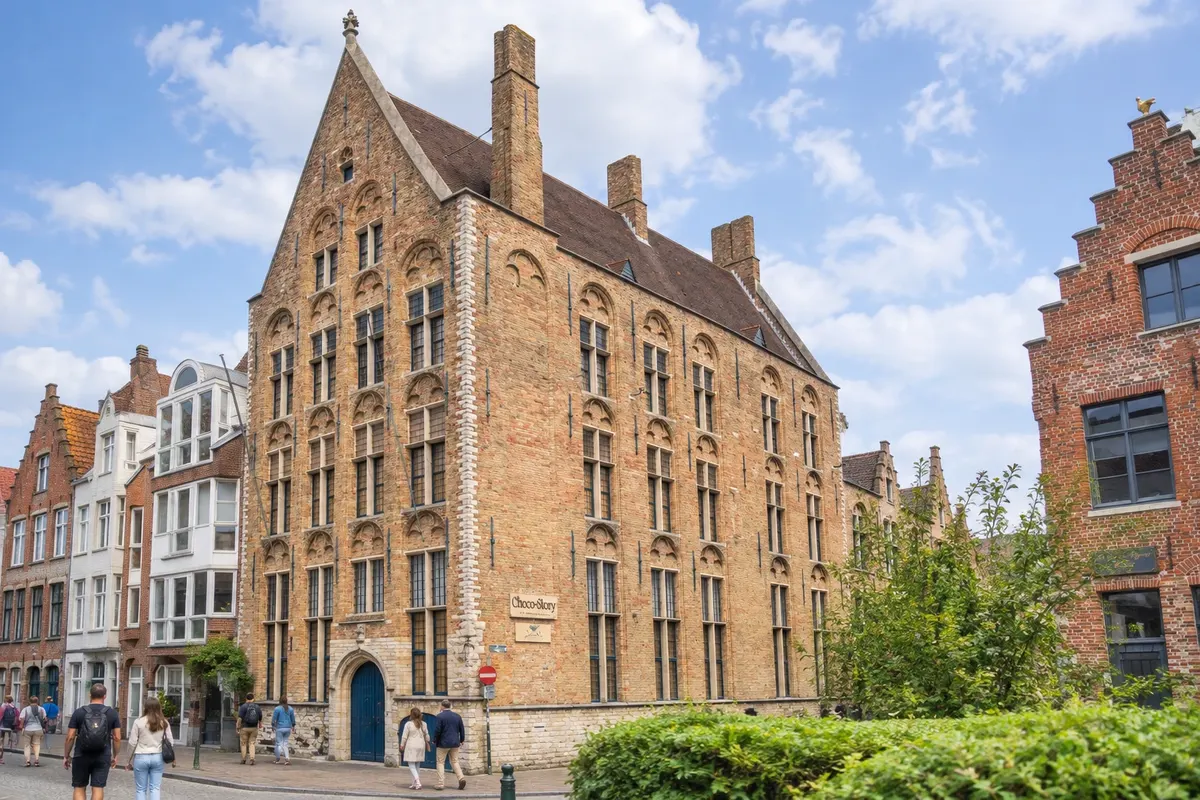
Choco-Story tells about 5,500 years of cacao and chocolate history, from the origins of cacao in the Americas to Belgian production. The collection includes roughly a thousand objects—vessels, tools, molds and posters—in rooms with interactive features.
The museum is housed in the De Croon house, dating from around 1480, which was once a wine tavern and a confectioners’ house. It opened in 2004 at the initiative of a Belgian family.
The visit ends with a demonstration: a chocolatier shows how a traditional praline is made, and visitors taste the result. There are other tastings along the route.
Stops: Choco-Story.
Includes: Museum admission, demonstration and tasting, with separate ticket. Check the current schedule.
Tip: Buy tickets online on weekends and holidays, when the museum fills up. It’s a good activity with children and on rainy days.
Best time: All year round.
Brewery De Halve Maan
From Brugge city center On foot, with a guided tour about 1 hour afternoon easy (steep stairs)
De Halve Maan is a family brewery operating in the center of Brugge since 1856; the sixth generation of the family now runs it. This is where Brugse Zot, the city’s beer, is brewed.
The guided tour walks through the brewery rooms and explains production, from the ingredients to fermentation. One topic is the roughly 3 km underground pipeline, installed in 2016, that carries beer from the city brewery to the bottling facility on the outskirts.
The tour ends with a tasting. Children receive a soft drink instead of beer. Beer here is part of the city’s culture and history: taste it slowly, in small amounts.
Stops: De Halve Maan.
Includes: Guided tour and a beer tasting (soft drink for children), with separate admission. There is a longer version on weekends. Check the current schedule.
Tip: Book the tour in advance during high season. The stairs are narrow and steep. If you’ve been drinking, don’t drive: in the city, walk.
Best time: All year round.
Historium: medieval Bruges in themed rooms
From Markt, in Bruges On foot about 1 hour afternoon easy
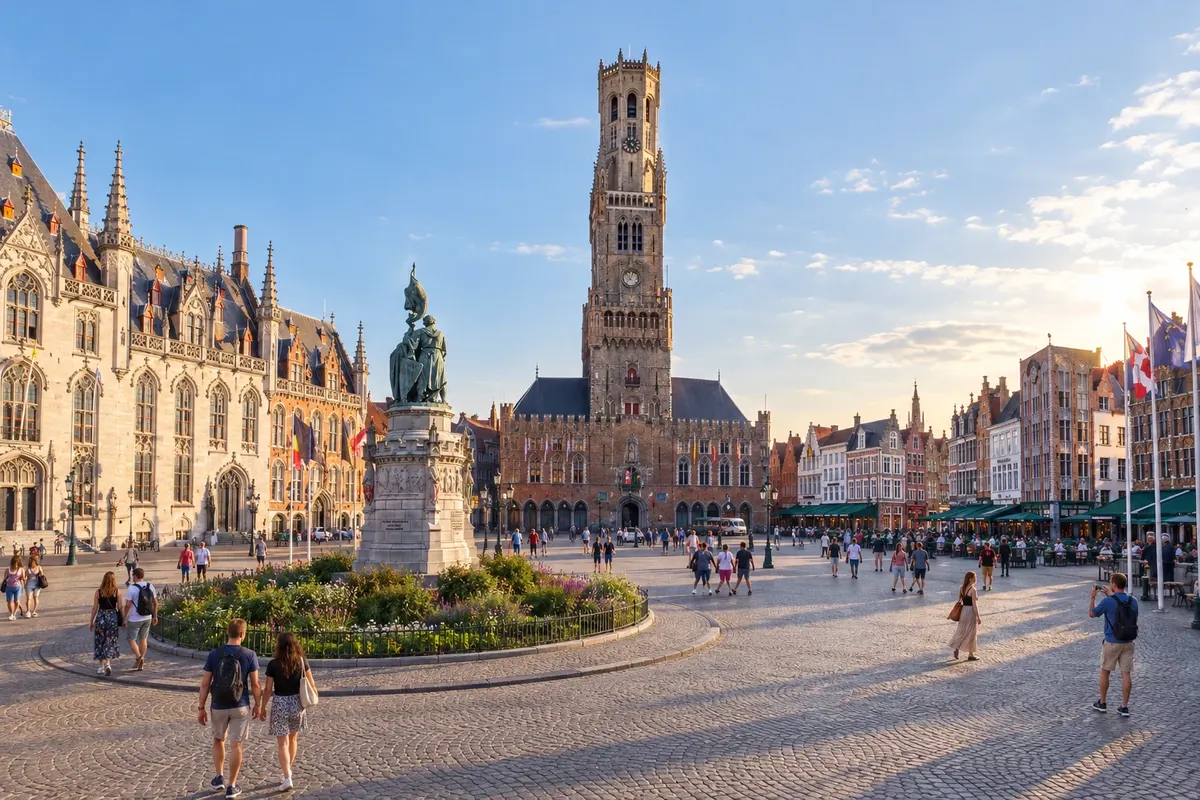
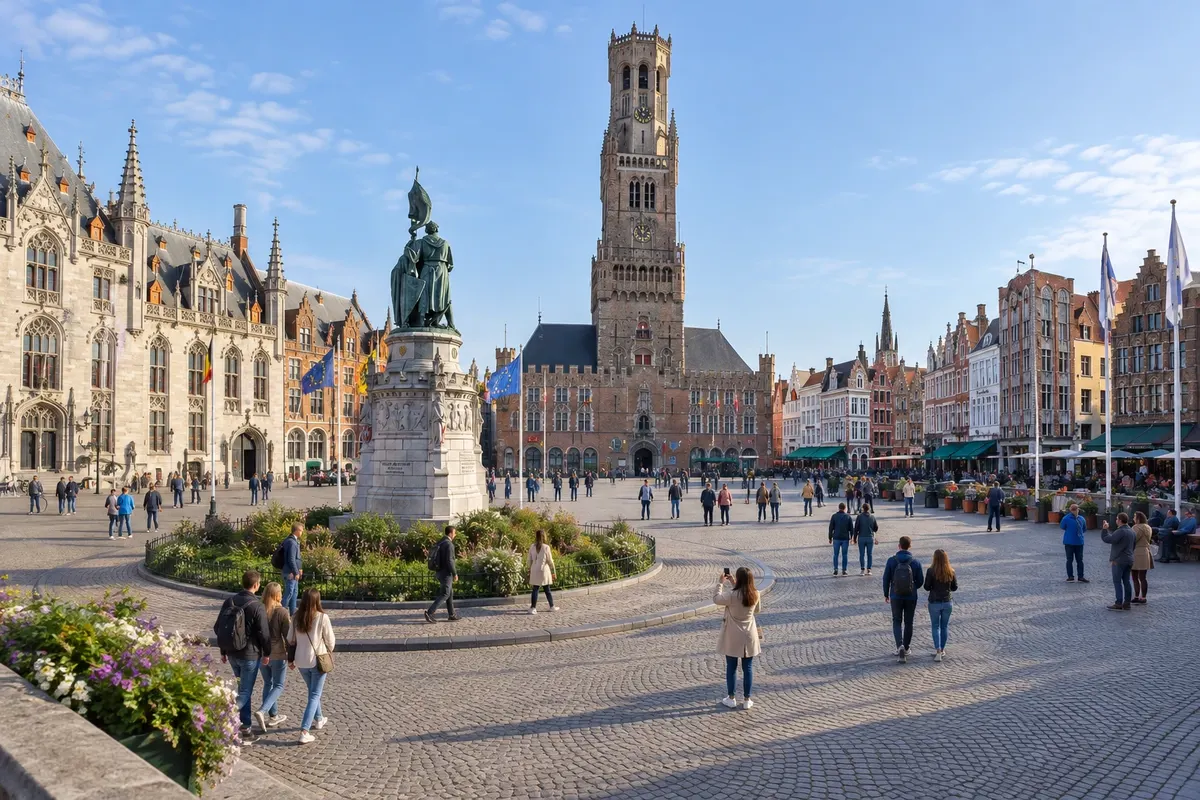
Historium occupies a neo‑Gothic building on the Markt and tells the story of 15th‑century Bruges, the city’s golden age when Jan van Eyck was painting there. The route goes through seven themed rooms with films, music and effects, framed by a love story, and an audio guide explains life in the city.
With virtual‑reality goggles, visitors take a flight over medieval Bruges that passes the old covered market by the water and over the Church of Saint Donatian, which no longer exists.
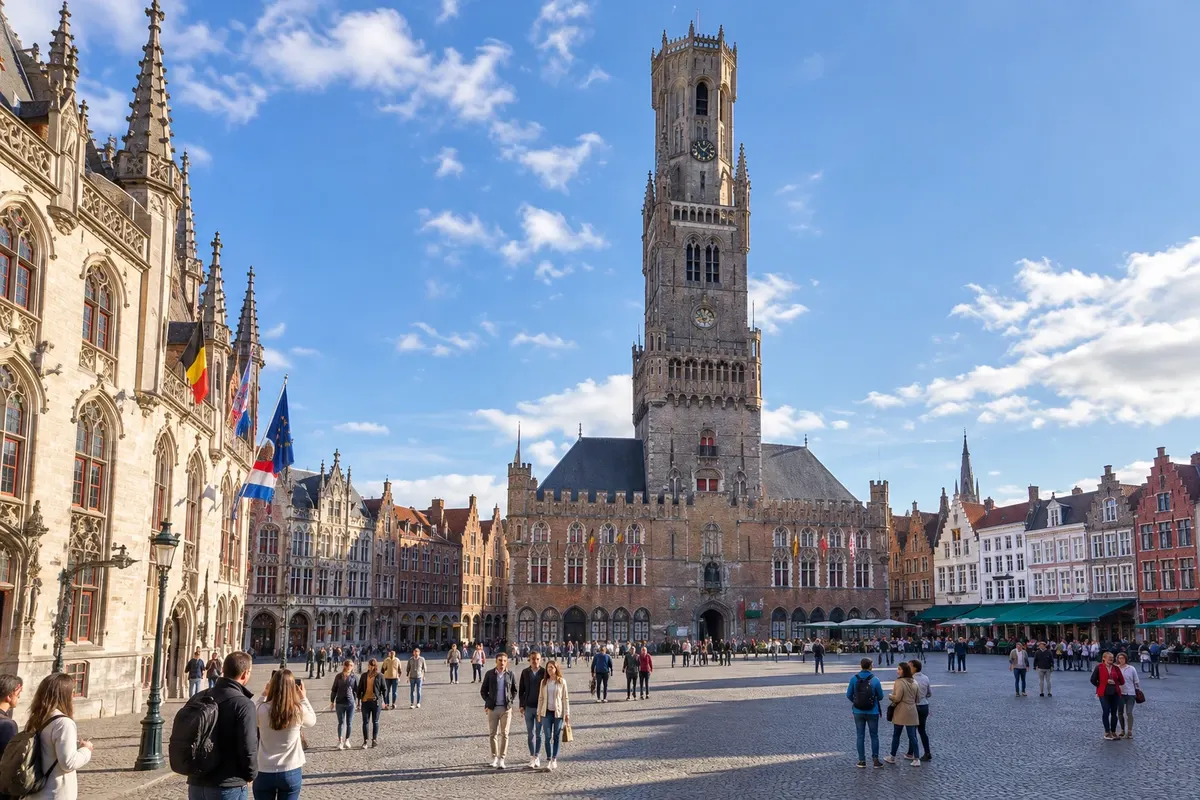
On the second floor a terrace overlooks the Markt. The Historium Tower, the building’s 35‑meter neo‑Gothic tower, offers 360‑degree views over the roofs and the Belfry.
Stops: Historium, Markt.
Includes: Admission to the route, with a separately paid ticket; virtual reality and the tower may have combined tickets. Check the current price list.
Tip: Works well as a first visit to understand the city before walking, and on a rainy day. It is a visit that appeals to children.
Best time: All year round.
Bike to Damme along the canal
From Brugge city center Rented bicycle or steam boat in season about 4 hours, round trip morning easy (flat route)
Damme is about 6 km northeast of Brugge. In the 13th century it was one of Europe’s major ports and Brugge’s outlet to the sea, until the Zwin arm silted up. Today it is a small, quiet village with secondhand bookshops and restaurants.
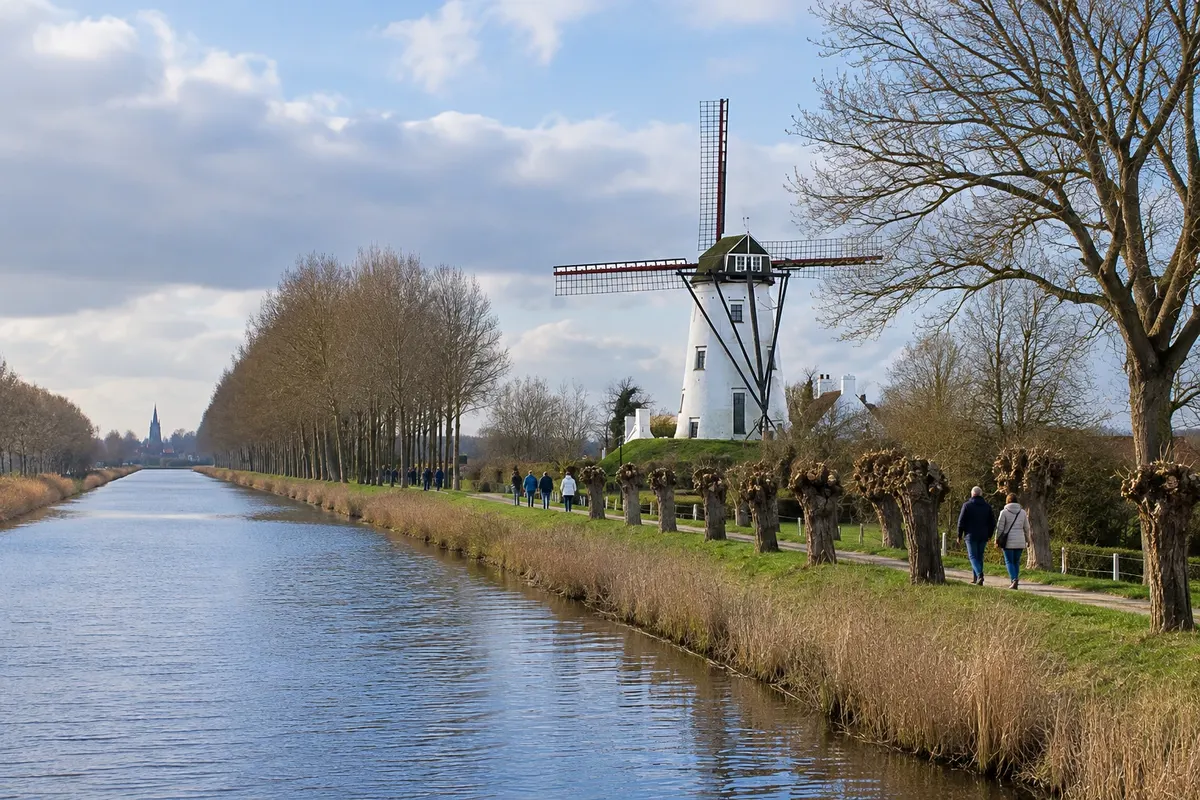
The most used route is the road alongside the Damse Vaart, a straight canal from the early 19th century commissioned by Napoleon. The banks are lined with tall poplars, some more than a hundred years old, and the route is flat, which makes it easier for those who don’t cycle often.
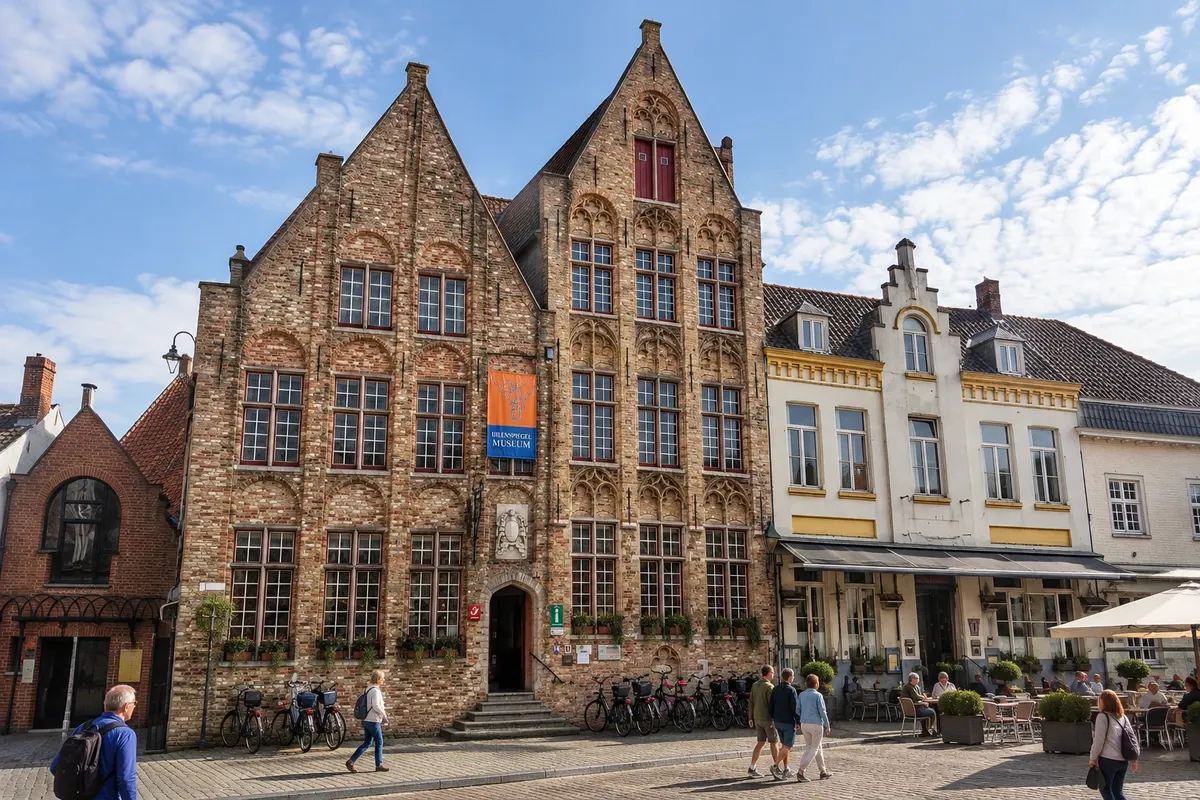
In Damme, the medieval poet Jacob van Maerlant served as town clerk, and the writer Charles De Coster made it the birthplace of Tijl Uilenspiegel, the playful figure of Flemish folklore. On the second Sunday of each month the village usually hosts a book market.
In season, the paddle steamer Lamme Goedzak runs between the Noorweegse Kaai in Brugge and Damme, allowing you to cycle there and return by water.
Stops: Damse Vaart, Damme, Noorweegse Kaai.
Includes: Bicycle rental and the Lamme Goedzak boat are paid separately. Check the current rates.
Tip: Rent a bicycle in town and follow the numbered bike path network. Bring a rain poncho and windbreaker: the canal is exposed and windy. If you go by boat, confirm the seasonal schedule.
Best time: From April to September, with long days and the boat in operation. In autumn, in October, the canal trees change color.
Oostende: seafront, Vistrap and the sailing ship Mercator
From Brugge (train) or Oostende Train to Oostende and on foot about 5 hours full day easy
Oostende (Ostende) is the main city on the Belgian coast and is about 25 km from Brugge. The station is near the port, and from there you can walk to the main sights.
On the Visserskaai, the fishermen’s quay, is the Vistrap, an open-air fish market that appeared in the 19th century when the port gained commercial activity. The stalls sell North Sea fish and Oostende’s gray shrimp, preferably early in the morning.
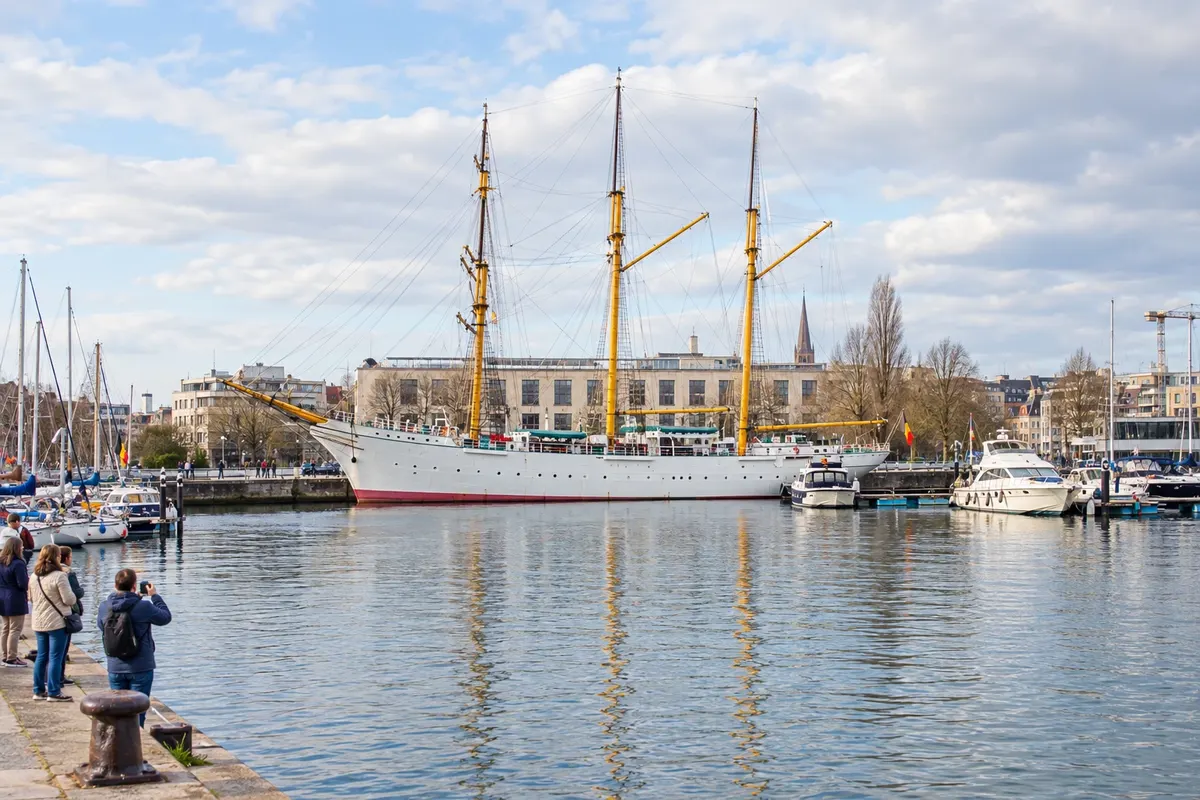
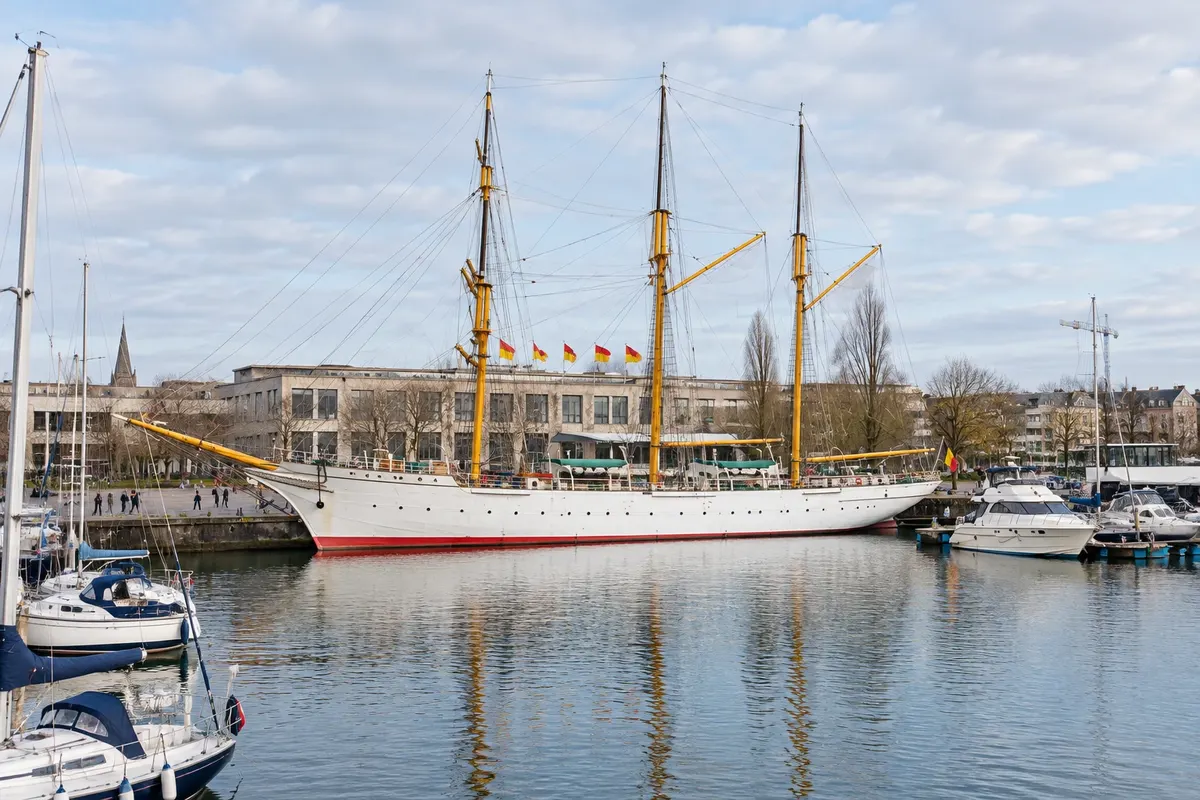
In the marina is the Mercator, a three-masted sailing ship built in Scotland and put into service in 1932 as a training ship for the Belgian merchant navy. In 1936 it brought the mortal remains of Father Damien from Panama to Antwerp. It has been moored in Oostende since 1960 and became a museum, keeping its original interior.
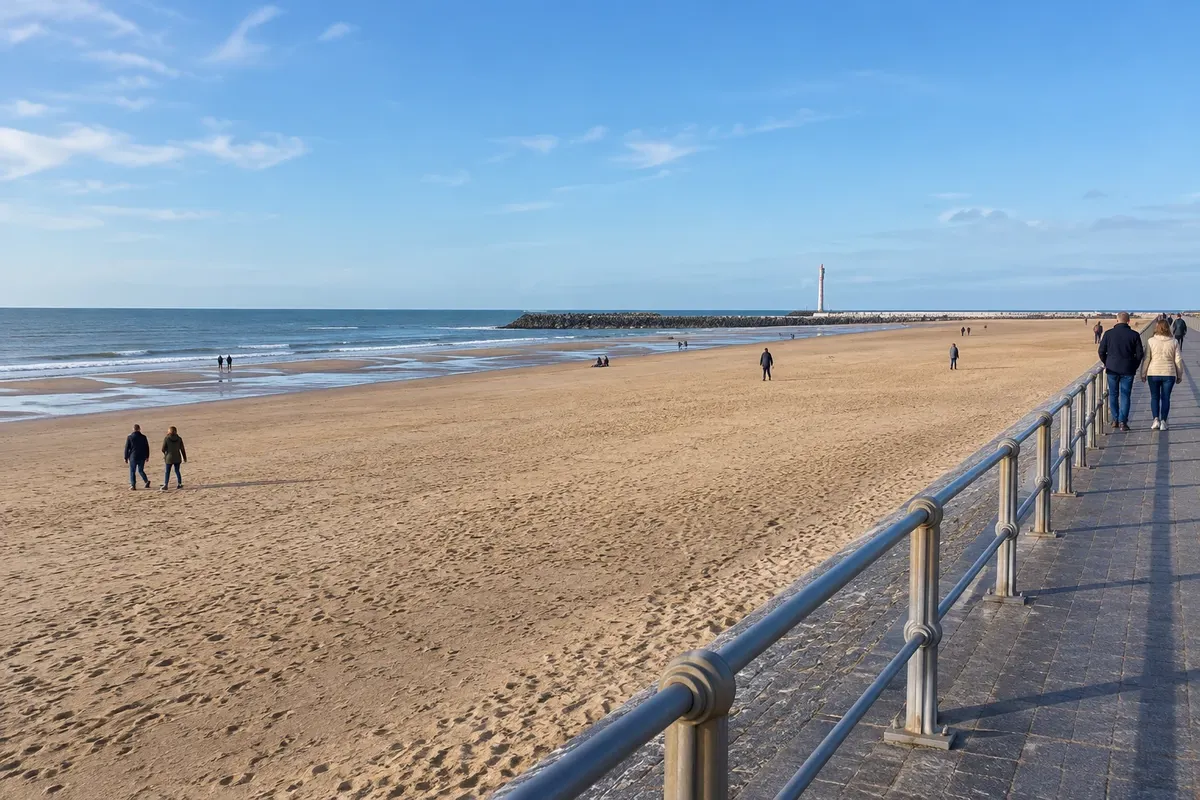
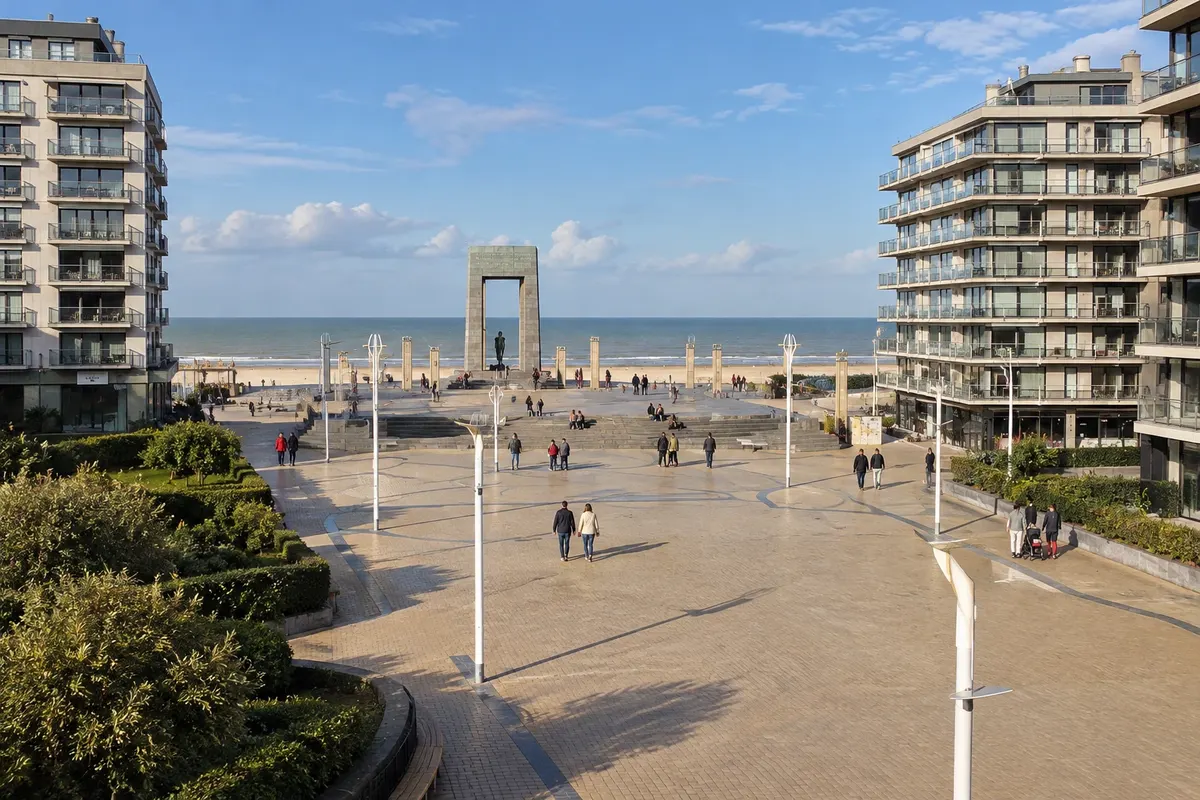
Afterward, follow the Zeedijk, the seaside promenade, with the wide beach on one side and the city on the other.
Stops: Oostende, Vistrap, Visserskaai, Mercator, Zeedijk.
Includes: Train fare and Mercator admission are paid separately. The Vistrap and the promenade are freely accessible. Check the current schedule.
Tip: Arrive early at the Vistrap when there’s more fish at the stalls, and try the grey shrimp. The Mercator is closed on Mondays; from November to March it only opens on weekends and during Belgian school holidays. Bring a windbreaker.
Best time: From May to September, with long days and the Mercator open Tuesday to Sunday. In winter the seafront is cold and windy, but the Vistrap operates for most of the year.
Atlantikwall Raversyde
From Oostende Kusttram (coastal tram) or car about 2 hours 30 minutes afternoon easy (trails on the dune)
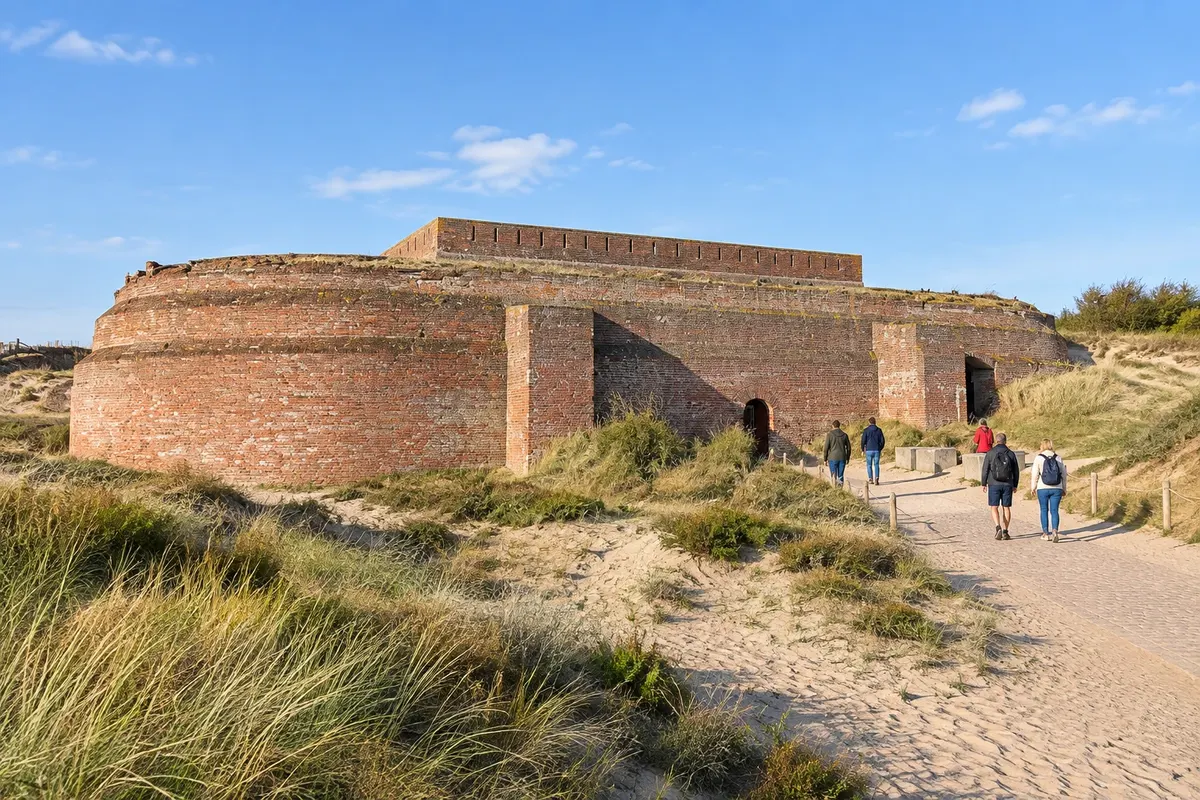
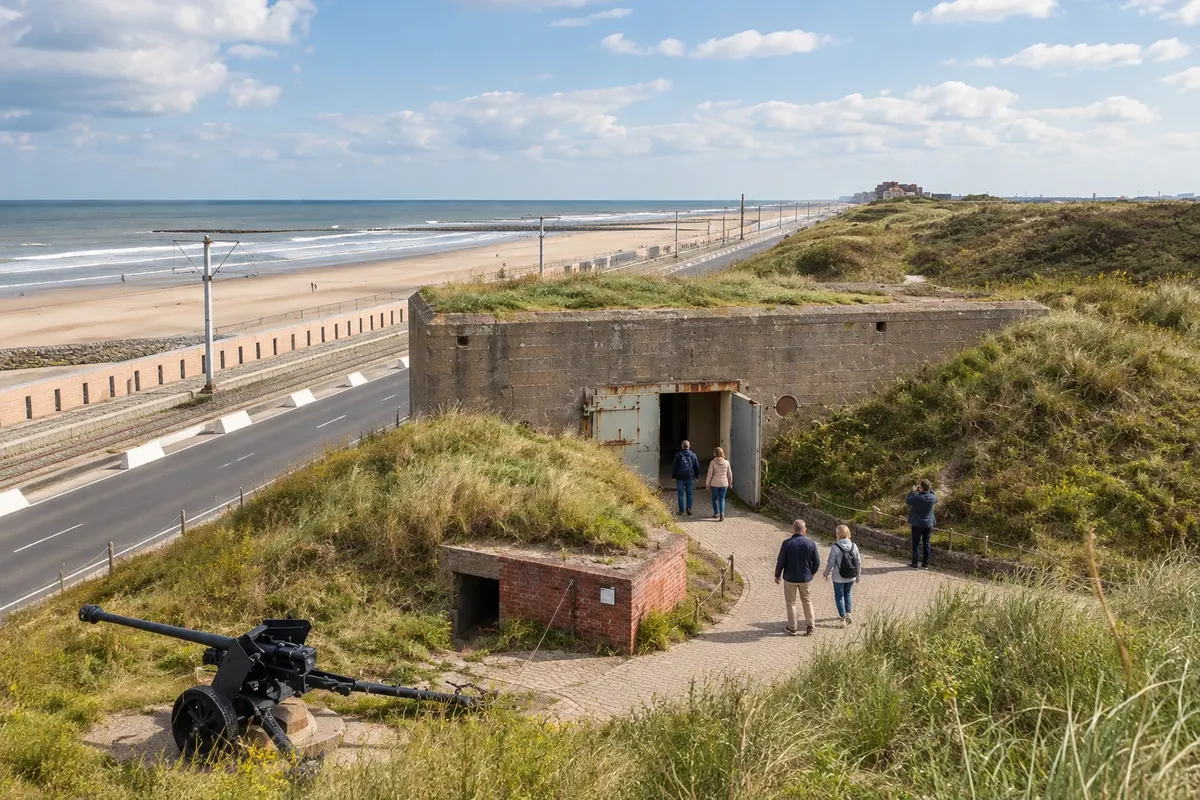
The Atlantikwall open-air museum is on the provincial domain of Raversyde, near Oostende, in the dunes by the sea. It is one of the preserved stretches of the defensive line that Germany built along the coast during the two world wars.
The route features more than 60 bunkers, open trenches and underground passages, observation posts and artillery positions. Battery Aachen dates from World War I and has been restored to show the daily life of soldiers on the coast. Battery Saltzwedel-neu, from World War II, is a textbook example of the Atlantikwall.
In the reception area there are restored objects, including an Enigma machine. The subject is war and the lives it affected; the visit calls for a respectful tone.
Stops: Raversyde, Atlantikwall.
Includes: Admission to the open-air museum, with a separate ticket required. Check the current price list.
Tip: Wear closed shoes: the route goes over sand, stairs and narrow corridors. The last admission is well before closing, so arrive early in the afternoon. The surrounding park is open year-round.
Best time: In season, which runs from spring until mid-November. Confirm opening dates before you go.
Kusttram and De Haan, the belle époque village
From Oostende Kusttram (coastal tram) about 4 hours morning easy
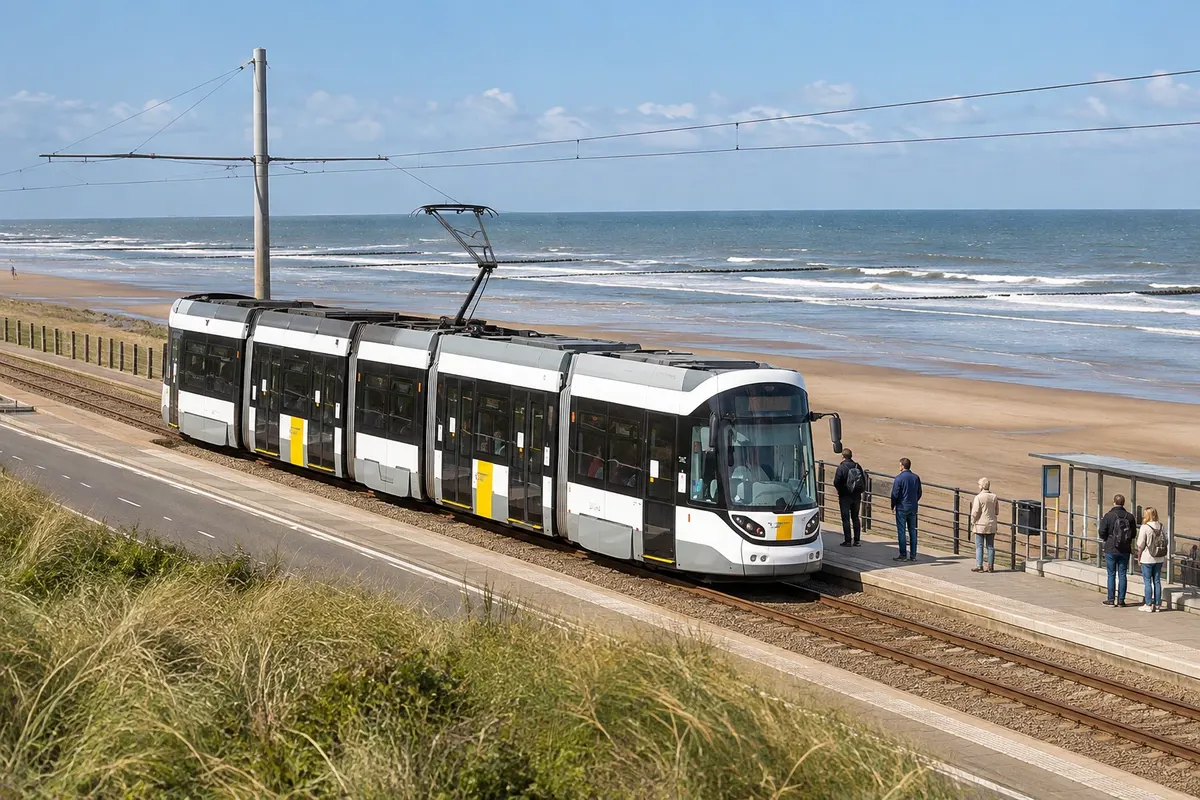
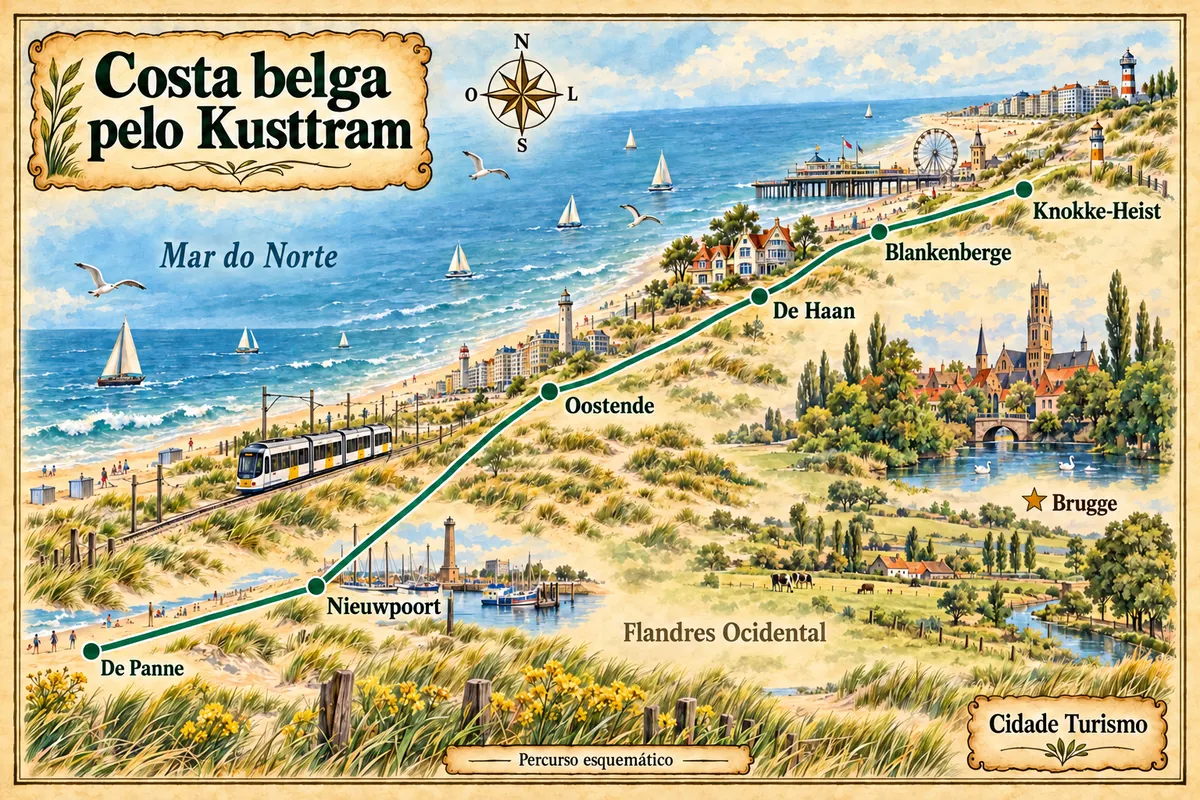
The Kusttram, the coastal tram, runs about 67 km along the Belgian coast, from De Panne, near France, to Knokke‑Heist, near the Netherlands, with 68 stops. The line began in 1885 between Ostend and Nieuwpoort, and is now operated by De Lijn. It’s a practical way to go from one beach to another.
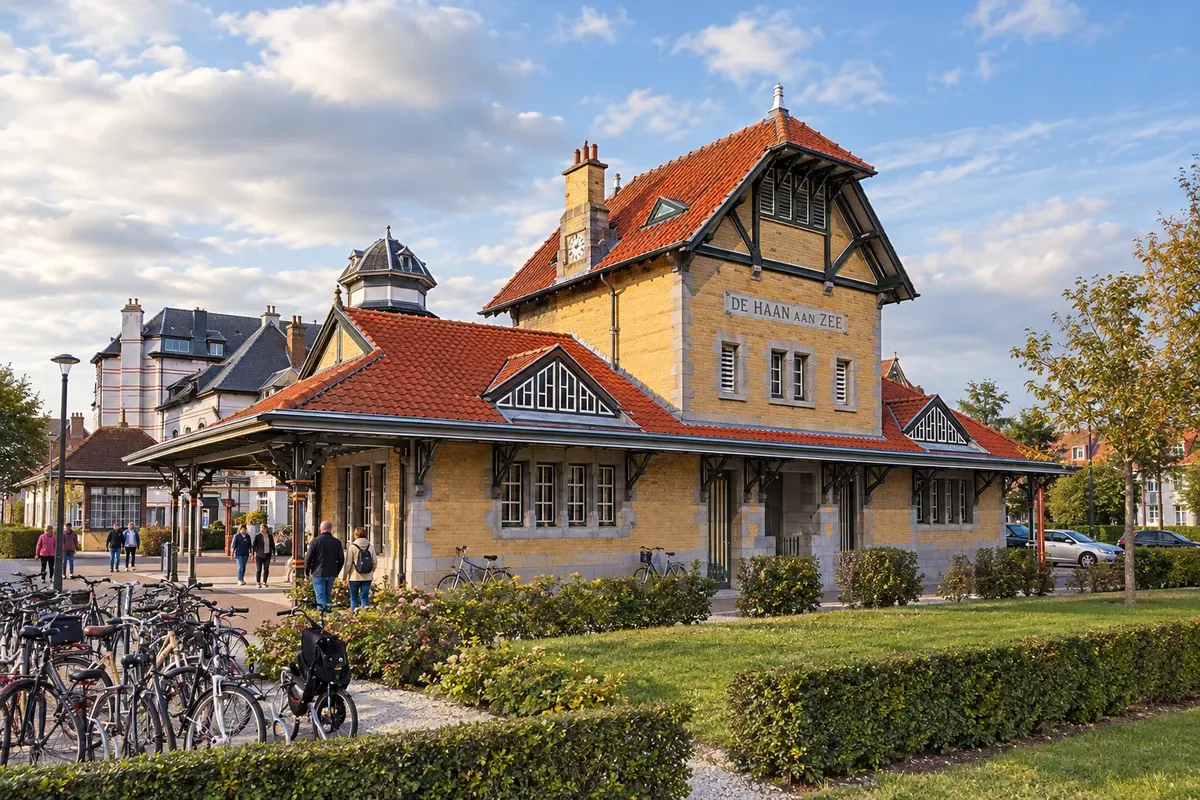
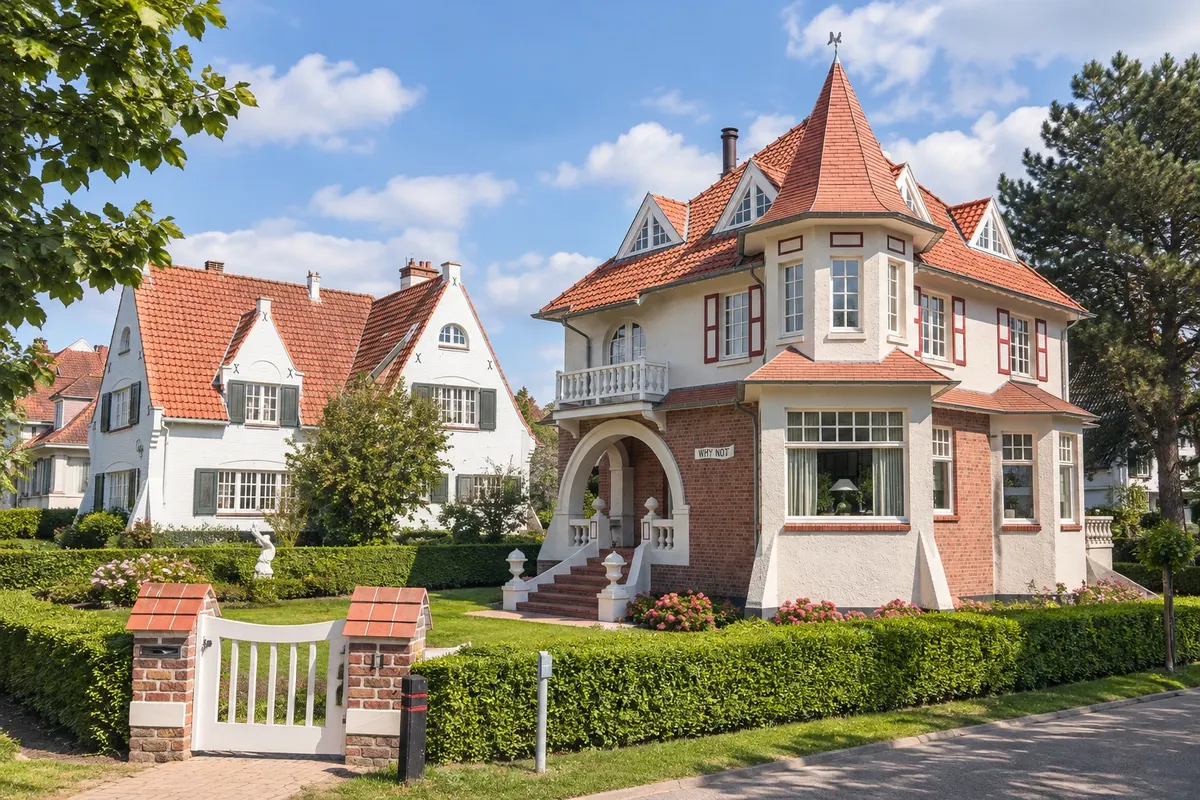
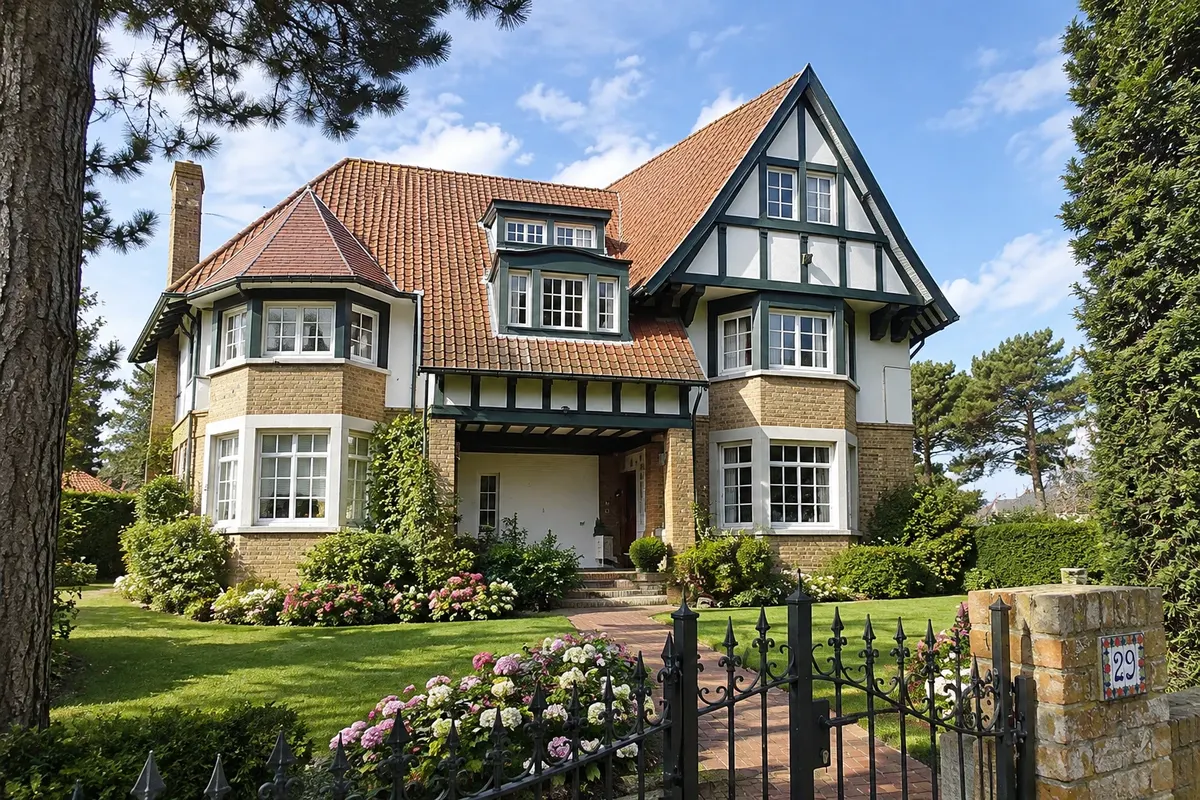
De Haan lies east of Ostend on the tram line and is notable for having no tall buildings. The old tram station is the arrival point. From there begins the Concessie, the planned neighborhood laid out from 1889 over 50 hectares, with chalets and belle époque villas on curved streets under strict building rules. The ensemble has been protected since 1995.
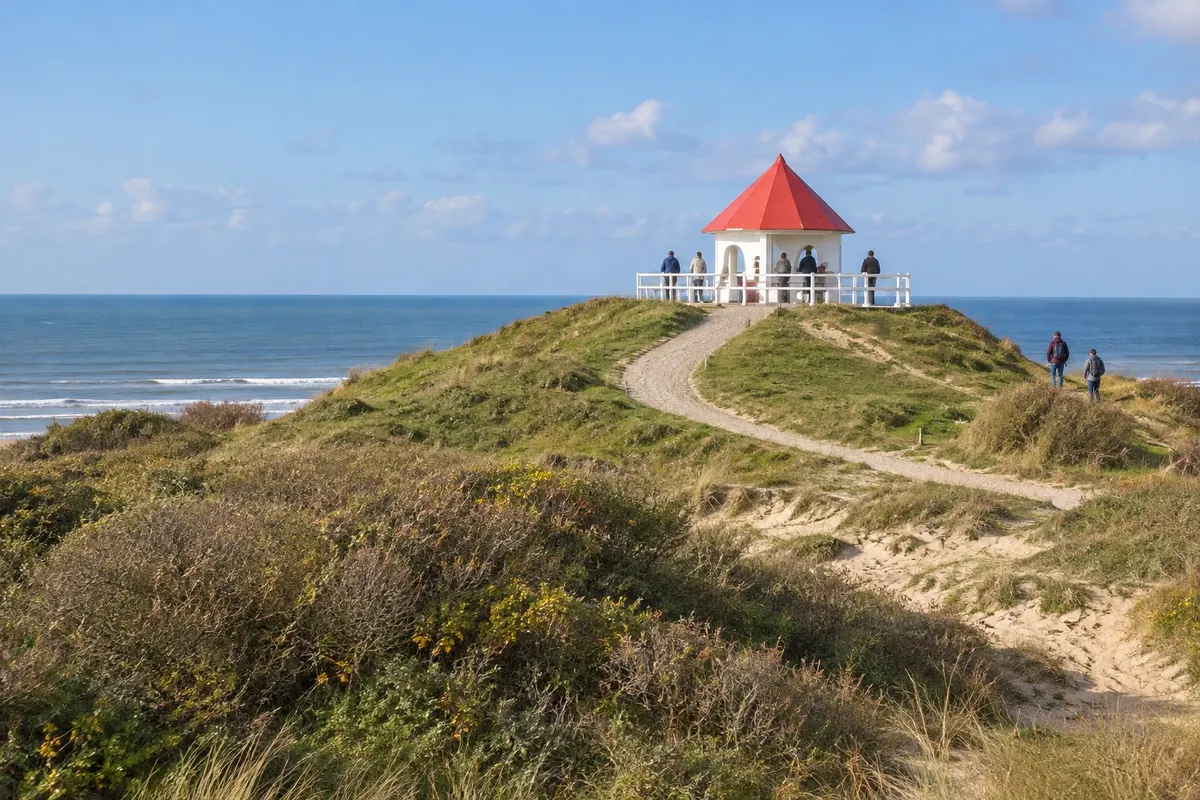
In 1933, Albert Einstein lived for about six months in the Villa Savoyarde after leaving Nazi Germany. A statue of him sitting on a bench commemorates his stay. On the dune stands the Spioenkop, a red‑and‑white pavilion 31 meters high that was formerly used by the military and customs.
Stops: Kusttram, De Haan, Concessie, Spioenkop.
Includes: Kusttram ticket paid separately; there are one‑day and multi‑day passes. Check the current fare table.
Tip: Sit on the sea side when the route runs along the dunes. In De Haan, explore the Concessie on foot and follow the dune path to the beach.
Best time: From May to September. In summer the tram runs more frequently; in winter the intervals are longer.
Knokke‑Heist and Het Zwin
From Bruges (train) or Knokke‑Heist Train to Knokke and then bus, bicycle or car about 4 hours morning easy
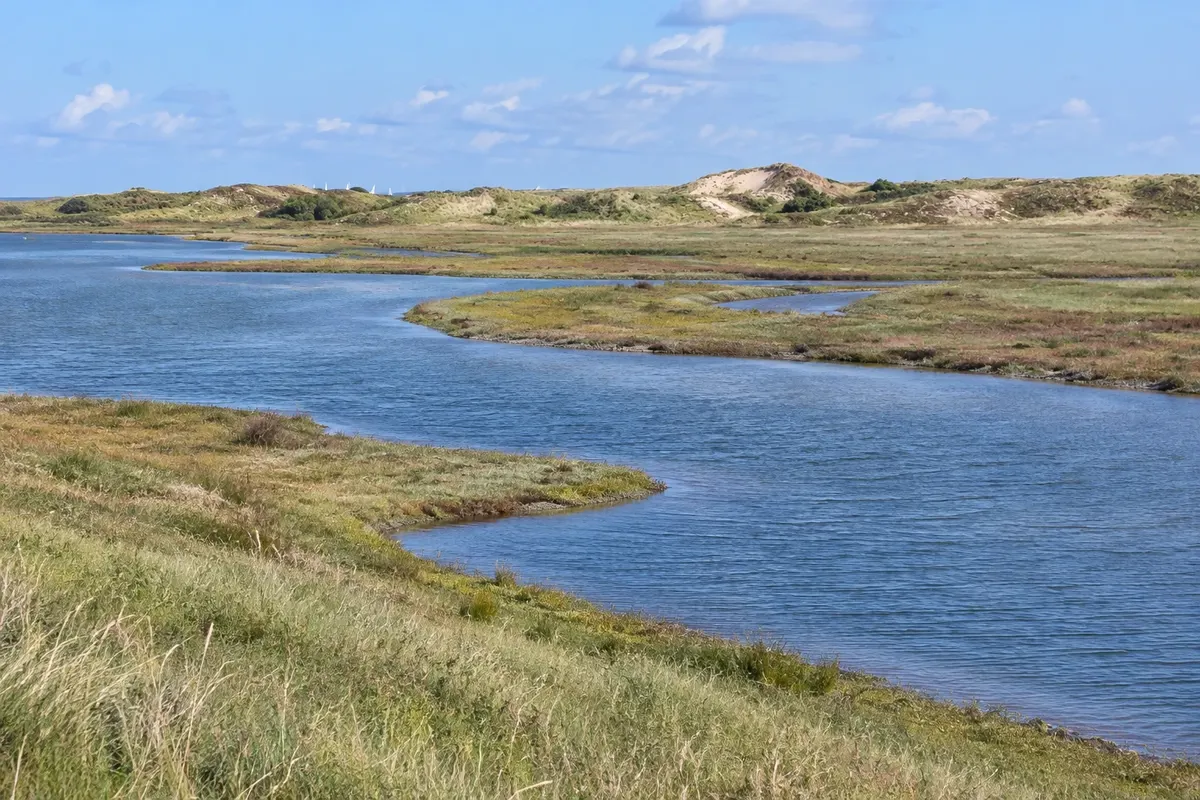
Knokke‑Heist is the last town on the Belgian coast before the Netherlands and the terminus of the Kusttram. East of it lies Het Zwin, an area of salt marshes and mudflats where North Sea water enters through the Zwin channel twice a day with the tide.
Zwin Natuur Park is the gateway to the reserve. The visitor center has an exhibition on bird migration, and a panoramic tower provides 360‑degree views over the plain. From a covered viewpoint you can see the islets where birds breed and rest, such as oystercatchers and spoonbills. The region is also a breeding area for storks.
The Zwin is the same sea arm that, as it silted up, cut Bruges and Damme off from the sea.
Stops: Knokke‑Heist, Zwin Natuur Park, Het Zwin.
Includes: Entry to Zwin Natuur Park requires a separate paid ticket. Check the current schedule/pricing.
Tip: Bring binoculars and a windbreaker. The park is closed on Mondays. In spring and autumn, during migration, there are usually more birds, but sightings depend on the season and the tide.
Best time: From March to May and from September to October, during migration seasons. In summer, combine it with Knokke beach.
De Panne and the Westhoek dunes
From Oostende Kusttram (coastal tram) or train to Adinkerke-De Panne about 4 hours afternoon easy to moderate (soft sand)
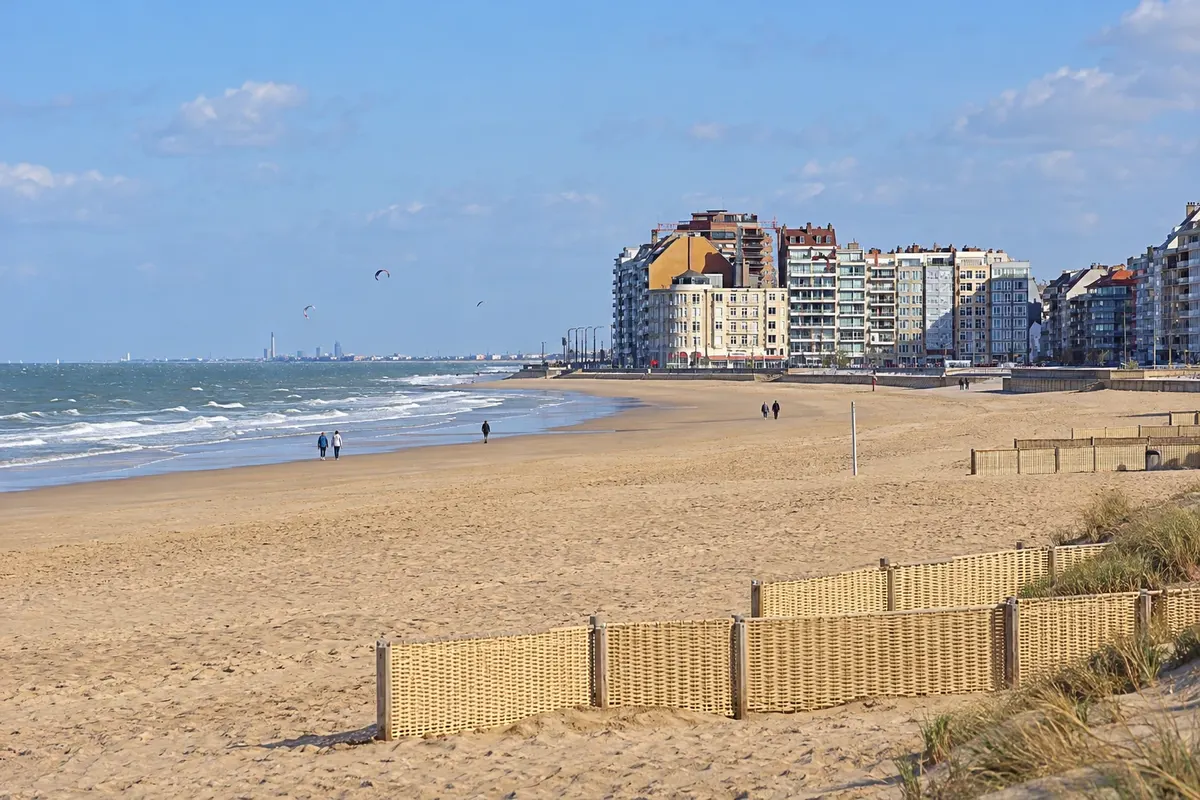
De Panne is the town at the western end of the Belgian coast, near France, and the other terminus of the Kusttram. The beach is wide, good for walking and for the sand yacht, the sport of sailing over the sand.
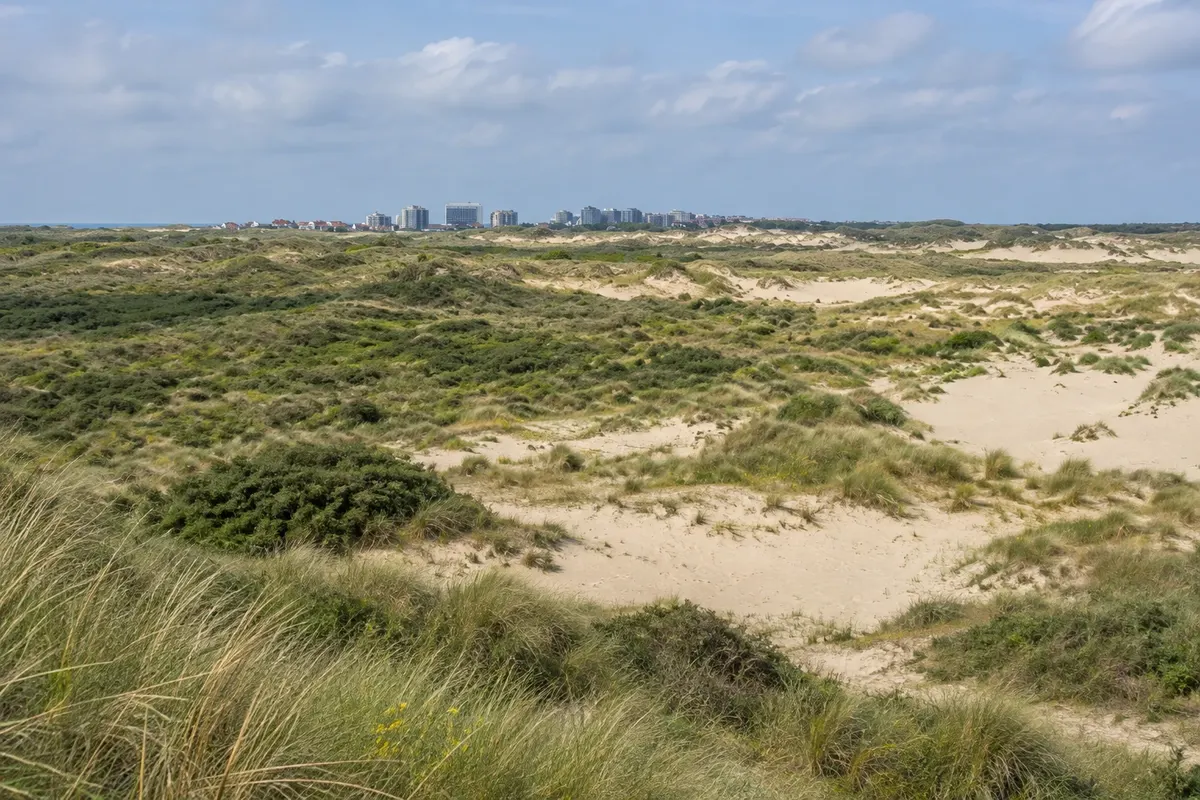
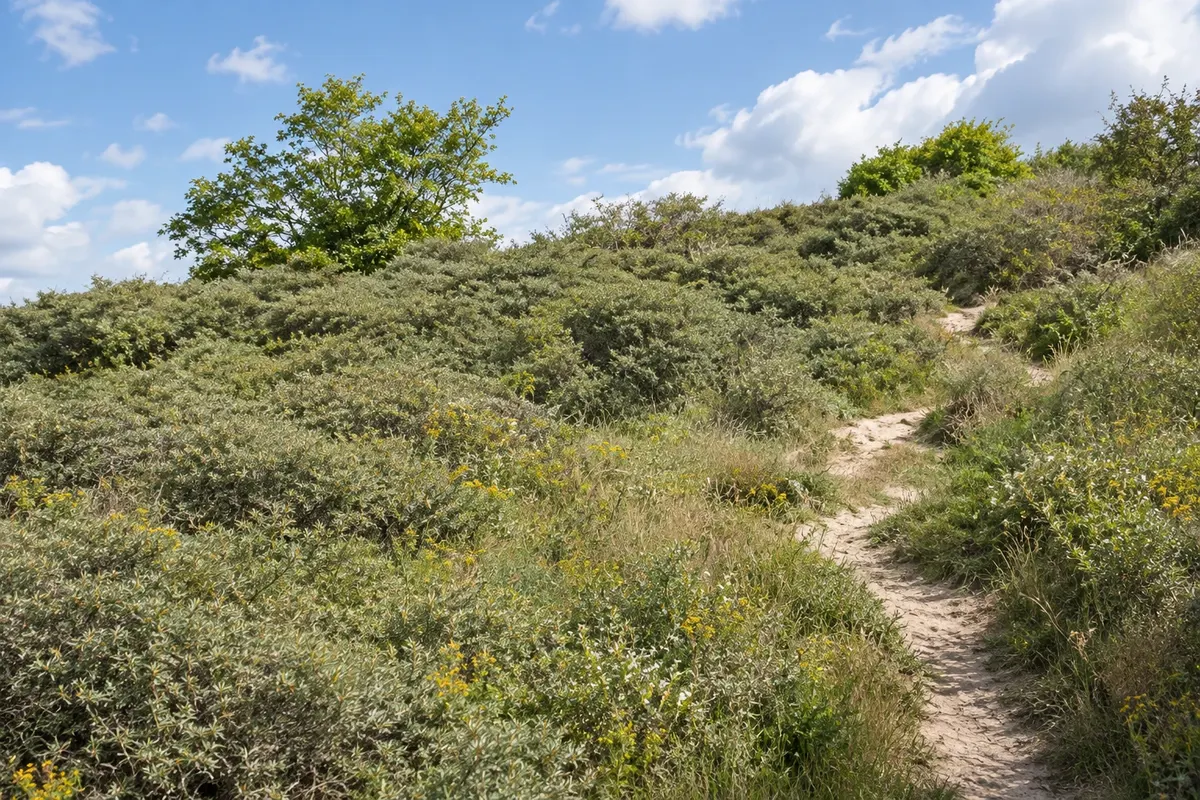
On the western edge of town is the Westhoek nature reserve, with 340 hectares of dunes. Many visitors call it the Sahara because of the sandy landscape. Waymarked trails cross the reserve.
On the return trip, the tram passes the other beaches in the area, allowing you to stop at Koksijde or Nieuwpoort.
Stops: De Panne, Westhoek, Kusttram.
Includes: The reserve has free access via the trails. Kusttram, train and beach activities are paid separately. Check the current rates.
Tip: Stay on marked trails, because dune vegetation is fragile. Bring water, sunscreen and sunglasses: sand reflection is strong even on cloudy days.
Best time: From May to September. In winter the reserve remains open, but it is windy and it gets dark early.
Nieuwpoort: Westfront and the King Albert I monument
From Oostende Kusttram (coastal tram) or car about 2 hours morning easy
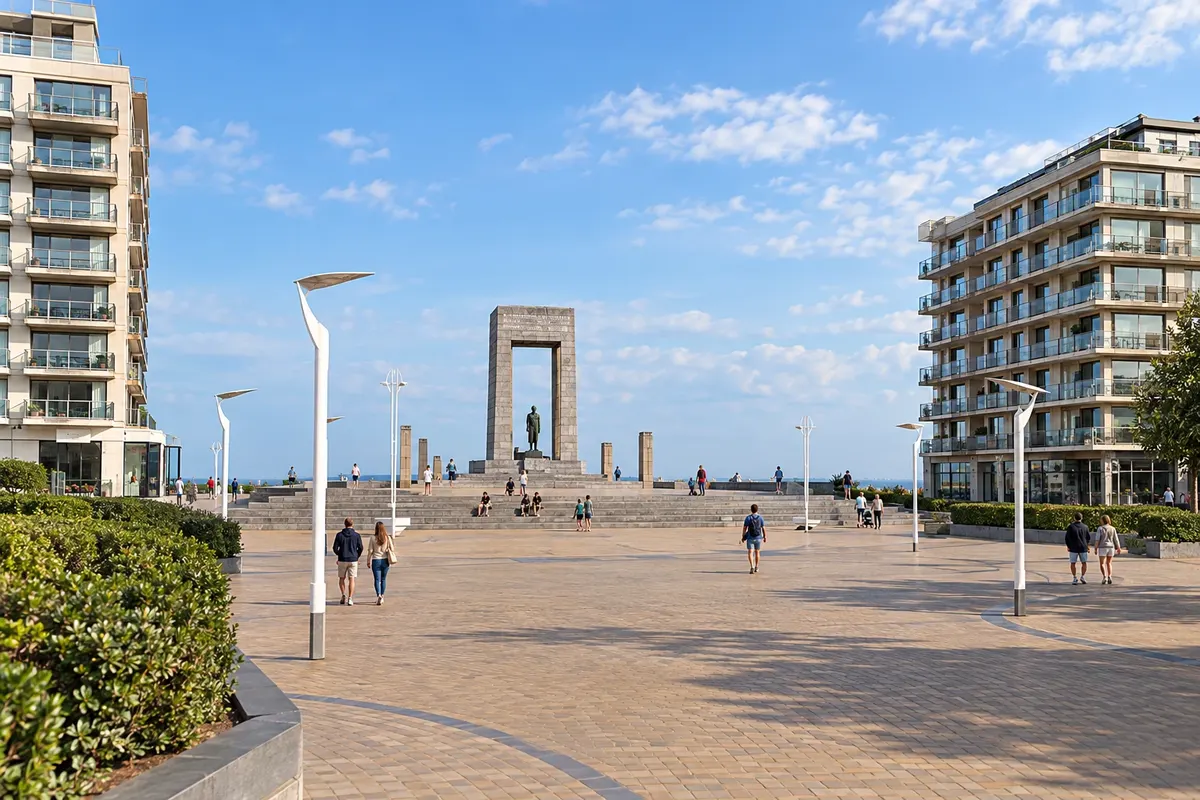
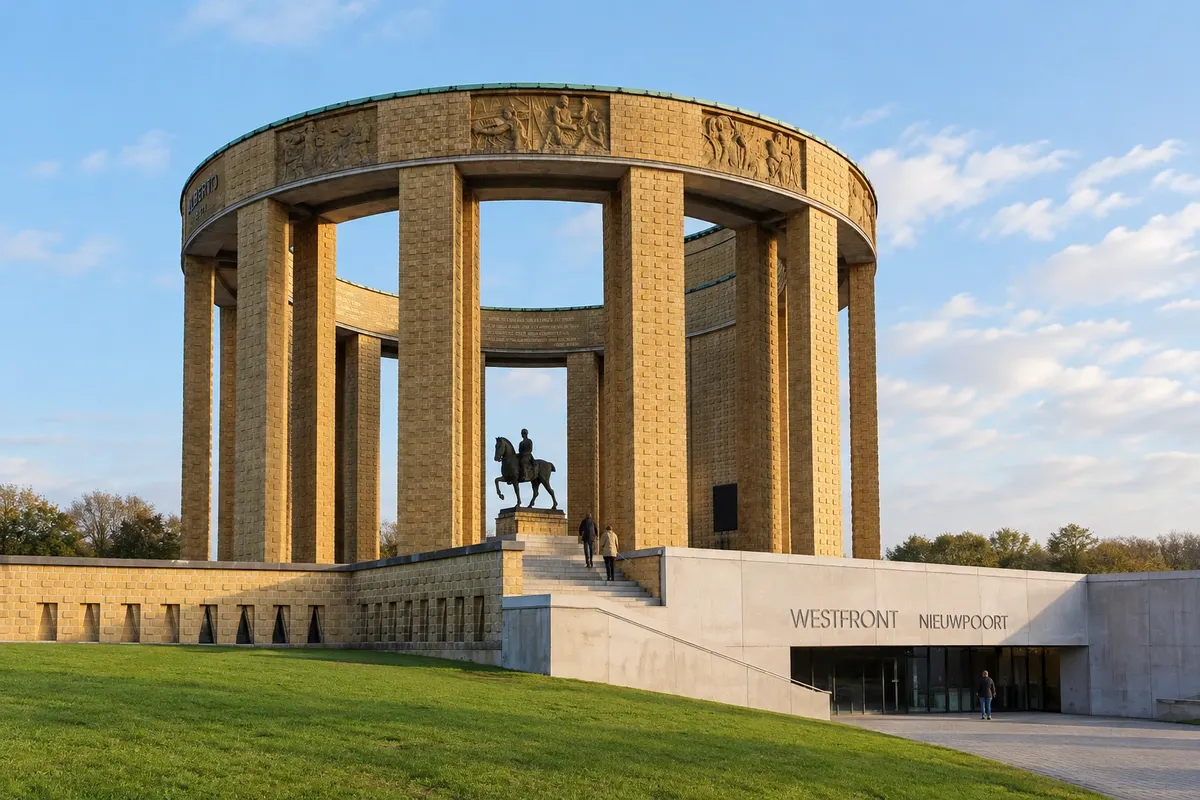
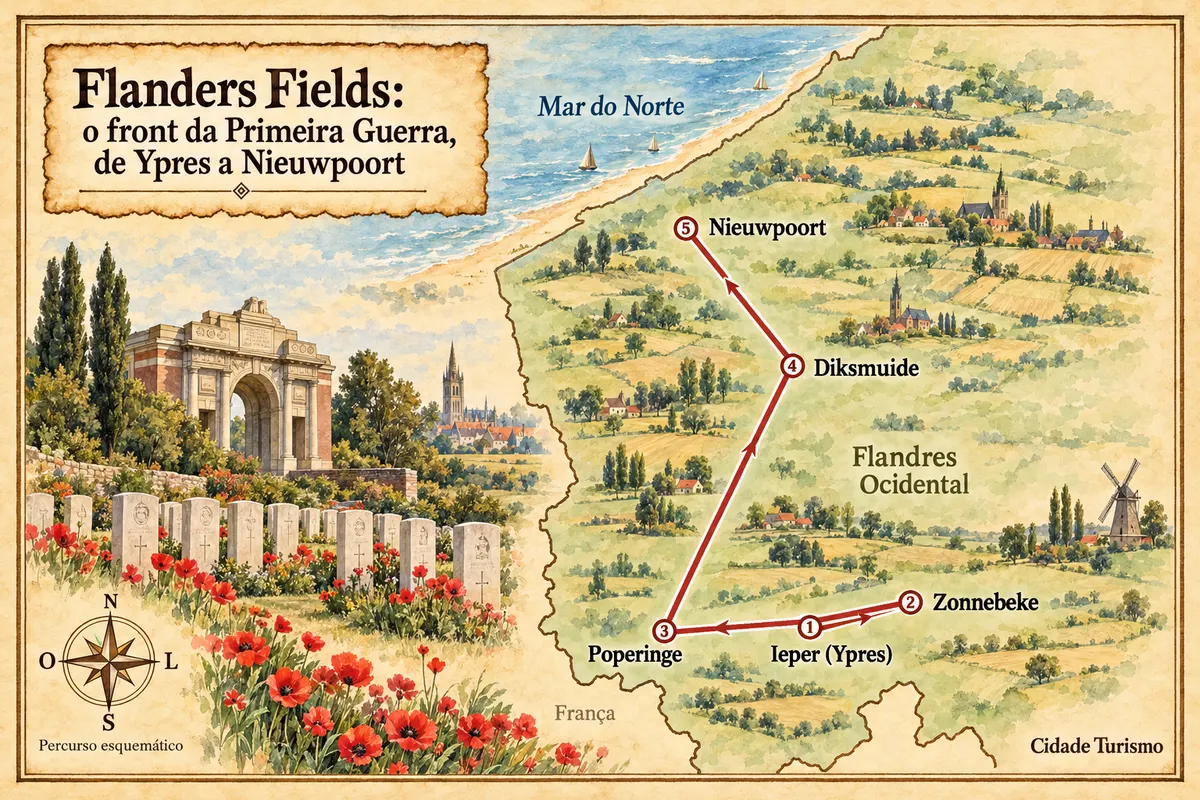
In Nieuwpoort, the river IJzer meets the sea at a set of locks called Ganzepoot, the goose foot. In October 1914, during the early months of the First World War, opening those locks flooded the IJzer plain and halted the advance of the German army. The front line remained there until the end of the war.
The Westfront Nieuwpoort visitor centre is located under the King Albert I monument, beside the locks. Objects, interactive resources, personal stories and a panoramic projection, based on a 115‑metre panel, tell this episode. An elevator takes you to the top of the monument, with views of the sea, the coast and the polders.
It is a short, respectful visit that helps to understand the coast. Further south, the front continues around Ieper (Ypres).
Stops: Nieuwpoort, Westfront Nieuwpoort, Koning Albert I Monument, Ganzepoot.
Includes: Admission to the visitor centre and to the viewing platform, with tickets paid separately. Check the current price list.
Tip: Combine the visit with the Kusttram stop at Nieuwpoort and a walk to the marina. There is a special activity for children aged 8 to 12.
Best time: Open year‑round. On a clear day the view from the top of the monument reaches farther.
Blankenberge: Belgium Pier and Sea Life
From Brugge (train) or Blankenberge Train to Blankenberge and on foot about 4 hours afternoon easy
Blankenberge is a seaside town on the Belgian coast and is less than half an hour by train from Brugge. The station provides walking access to the town center and the promenade.
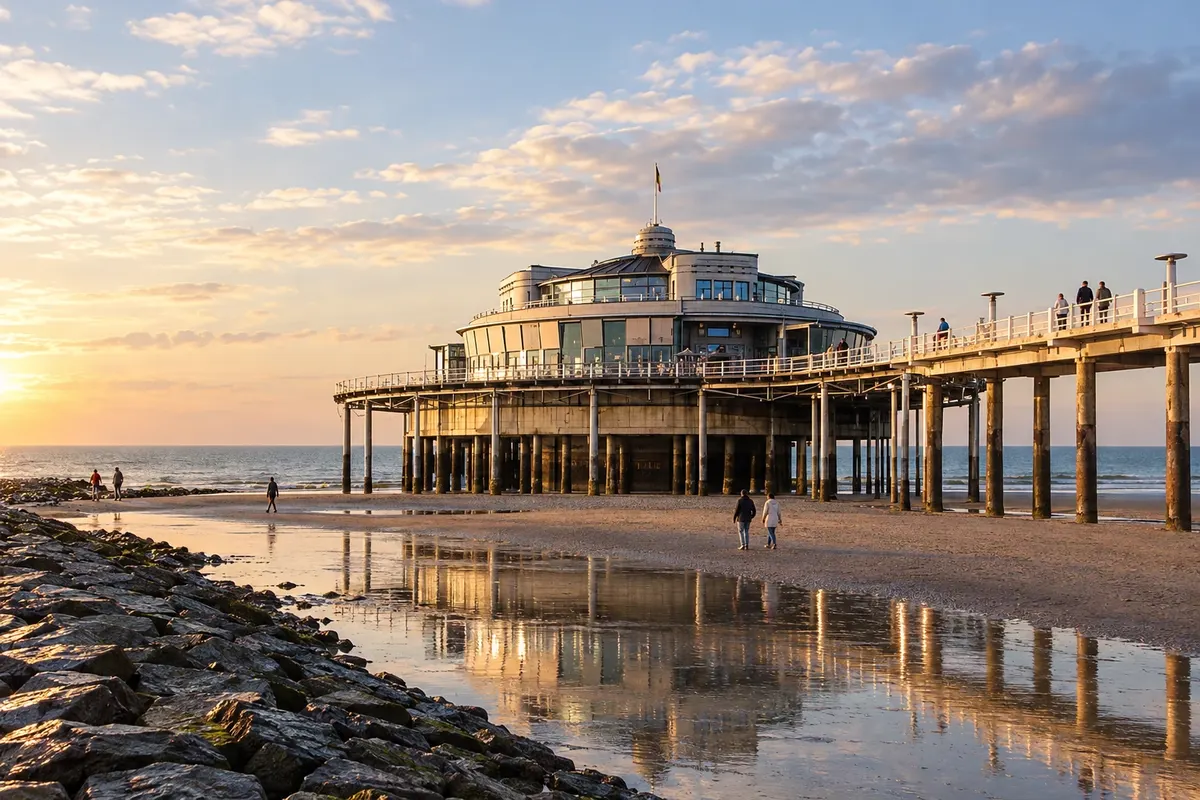
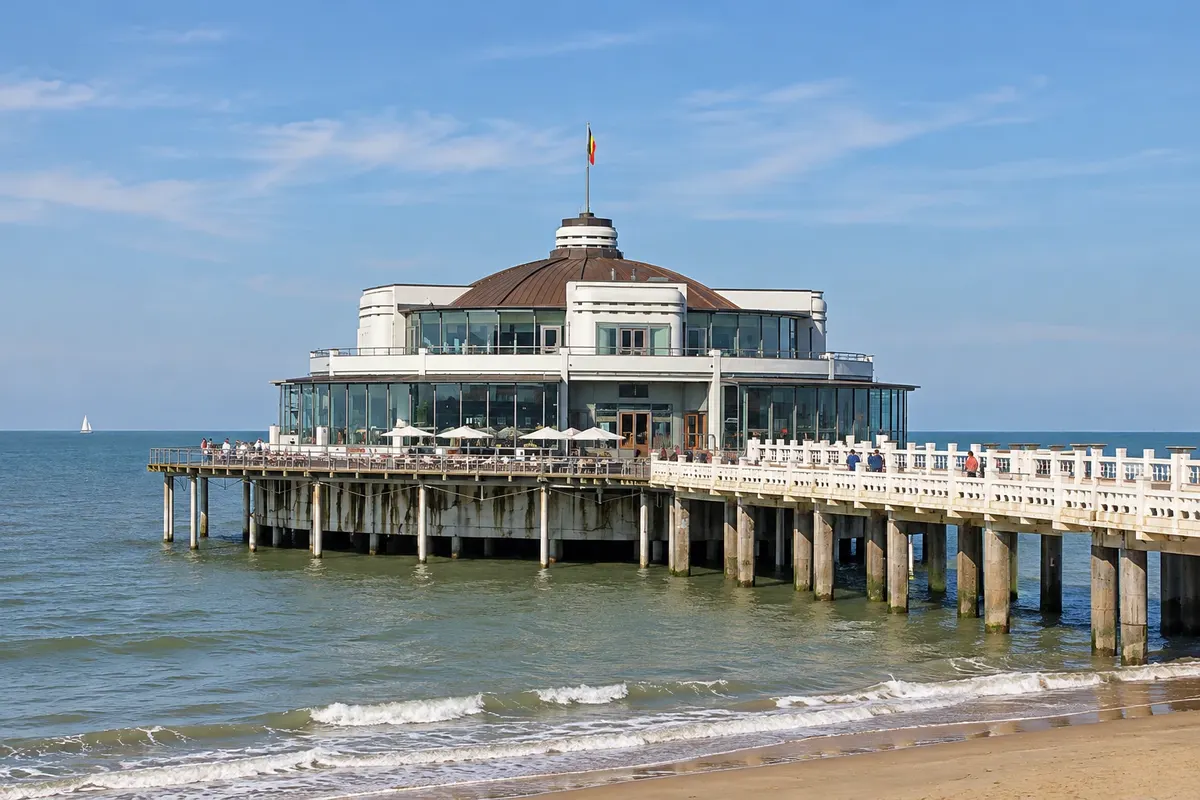
The town’s postcard is the Belgium Pier, built in 1933 in an Art Deco style, designed by architect Jules Soete. It extends 350 meters over the North Sea and was restored according to the original design. At the end there is a brasserie with a 360-degree view over the waves.
For travelers with children, Sea Life Blankenberge has penguins, seals, turtles, seahorses, and a glass tunnel with sharks and rays. The aquarium also works on seal rescue: more than 400 have been treated and returned to the sea since it opened.
Stops: Blankenberge, Belgium Pier, Sea Life Blankenberge.
Includes: The walk along the pier and promenade is free. Sea Life has a separate paid admission; check the current pricing.
Tip: Buy your Sea Life ticket online on weekends and during Belgian school holidays. Combine it with De Haan, just a few tram stops away.
Best time: All year for Sea Life. From June to August for the beach; in winter the waterfront is cold and windy.


 Brazil
 Argentina
 Bolivia
 Chile
 Colombia
 Ecuador
 Guyana
 French Guiana
 Falkland Islands (Malvinas)
 Paraguay
 Peru
 Suriname
 Uruguay
 Venezuela
 Germany
 Austria
 Croatia
 Denmark
 Spain
 Finland
 France
 Greece
 the Netherlands
 Hungary
 Ireland
 Iceland
 Italy
 Luxembourg
 Norway
 Poland
 Portugal
 the United Kingdom
 the Czech Republic
 Sweden
 Switzerland
 Turkey
 the United States
 Mexico
 the Dominican Republic
 South Africa
 Australia
 Fiji