Antuérpia and Mechelen

Antuérpia · Belgium

Antuérpia and Mechelen

Antuérpia, the city of Rubens, of the port and of the diamonds, and Mechelen, the former capital of the Low Countries, are about 20 minutes apart by train.

Flandres

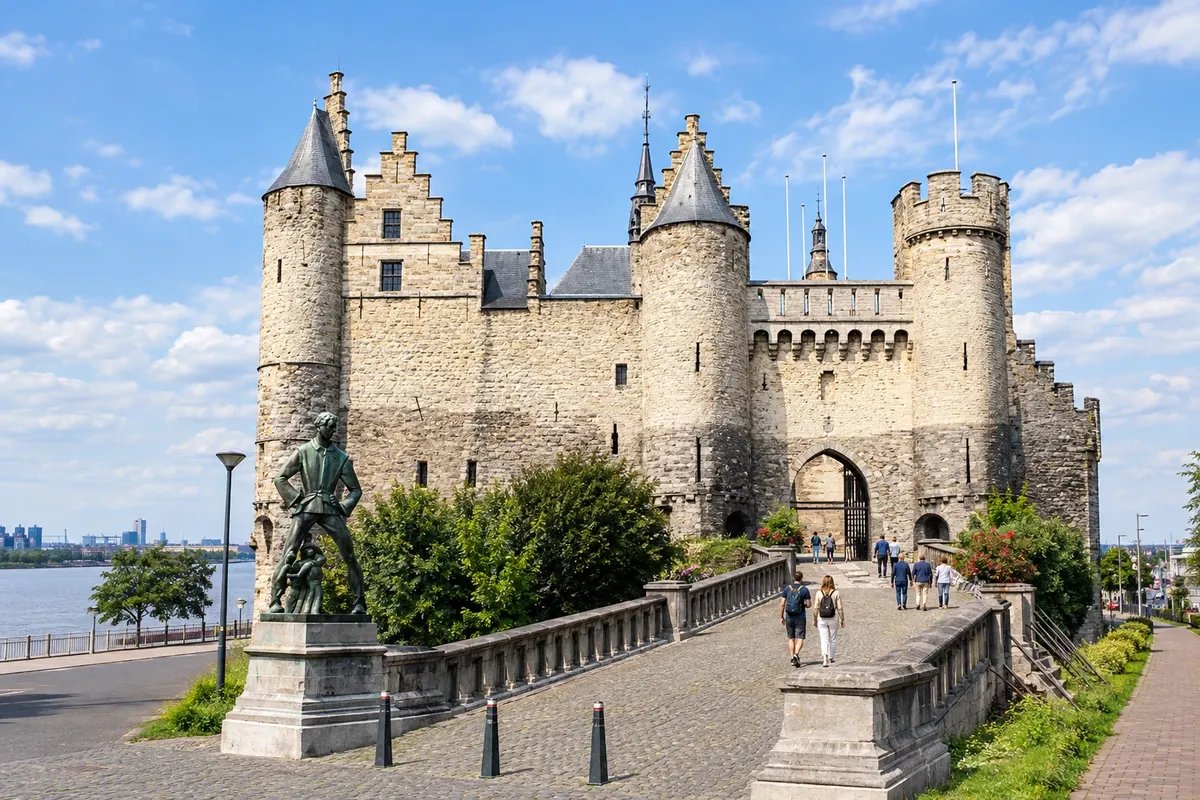
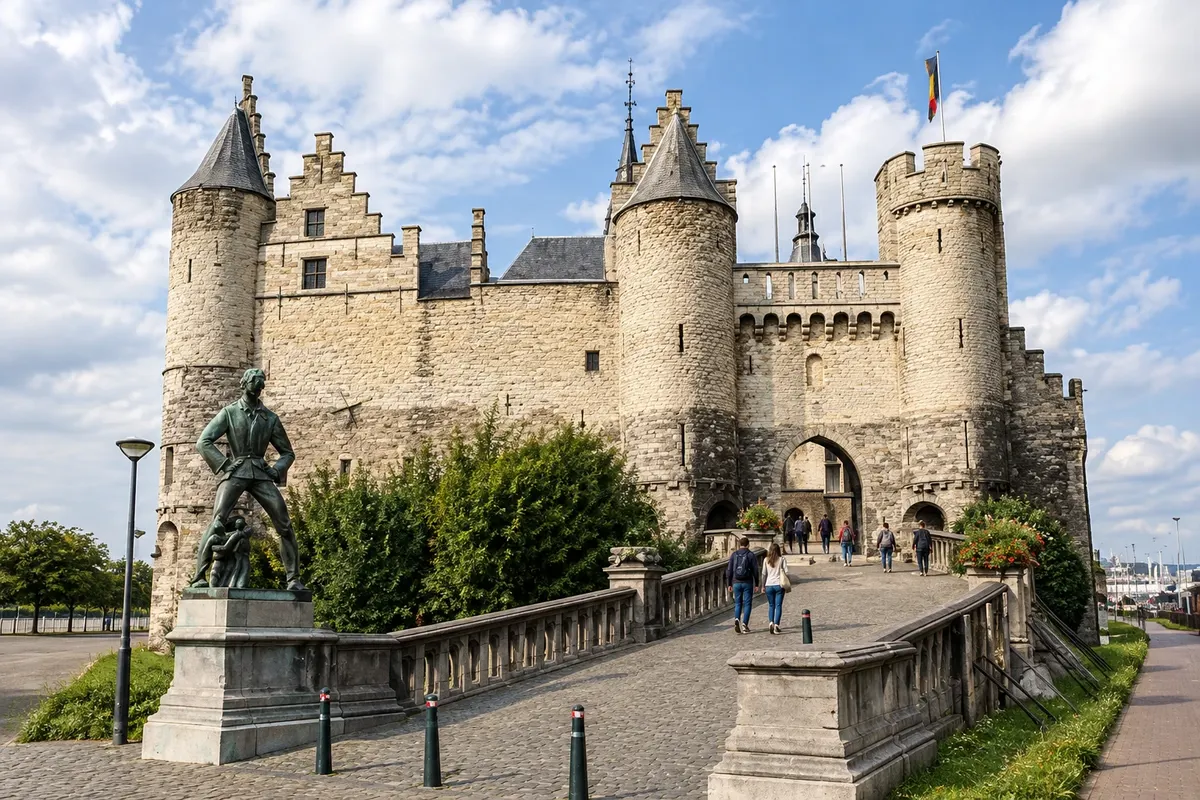
In the photo: Het Steen de Antuérpia

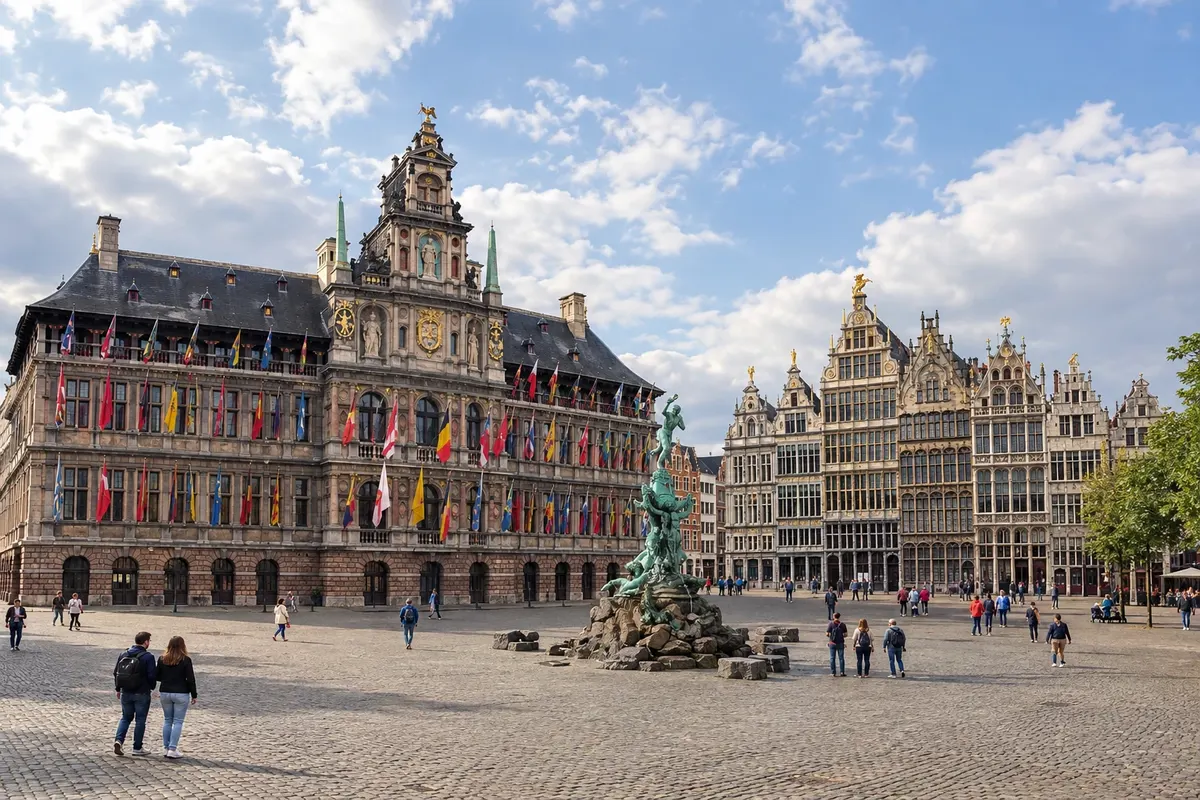
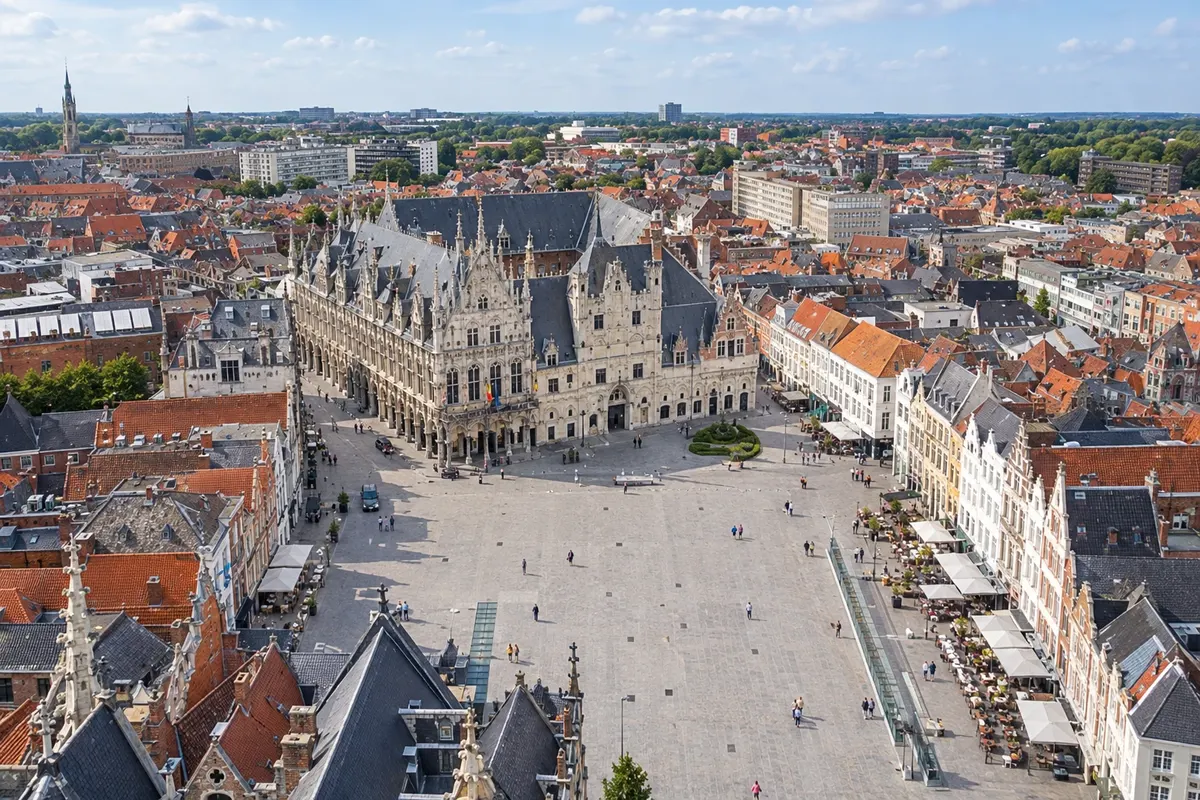
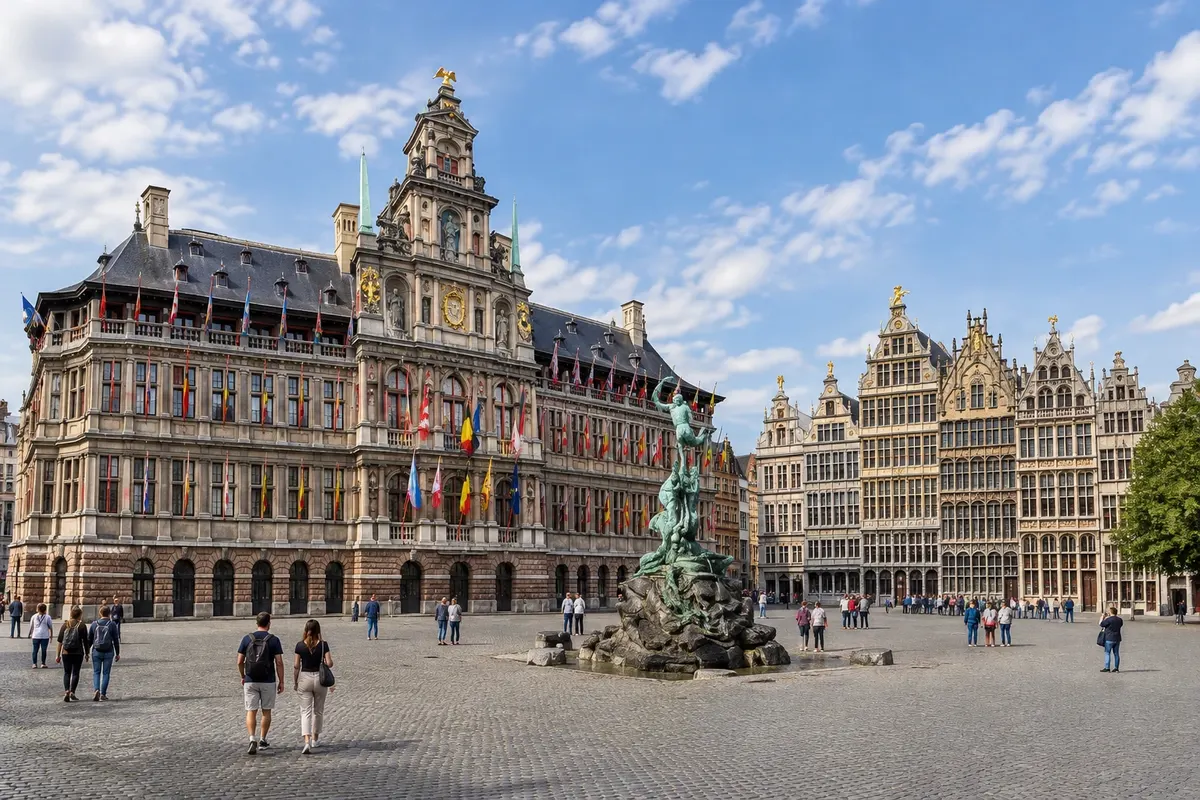
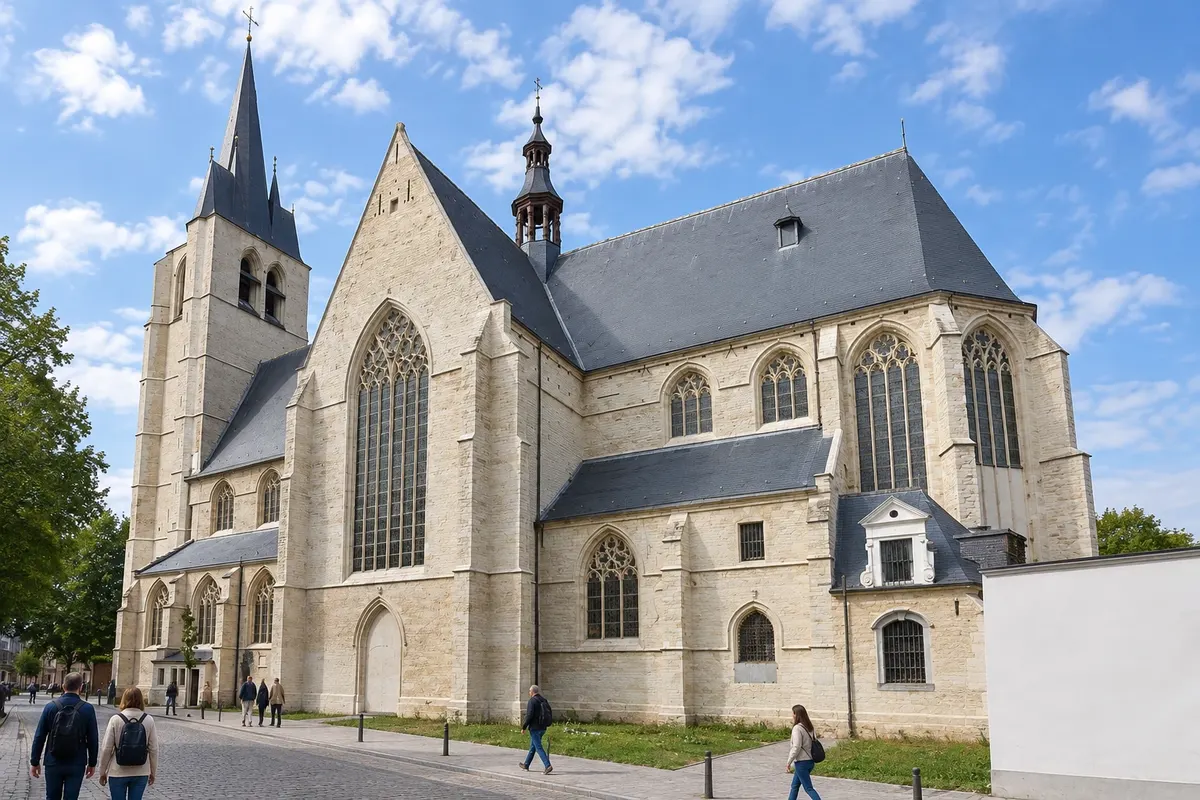
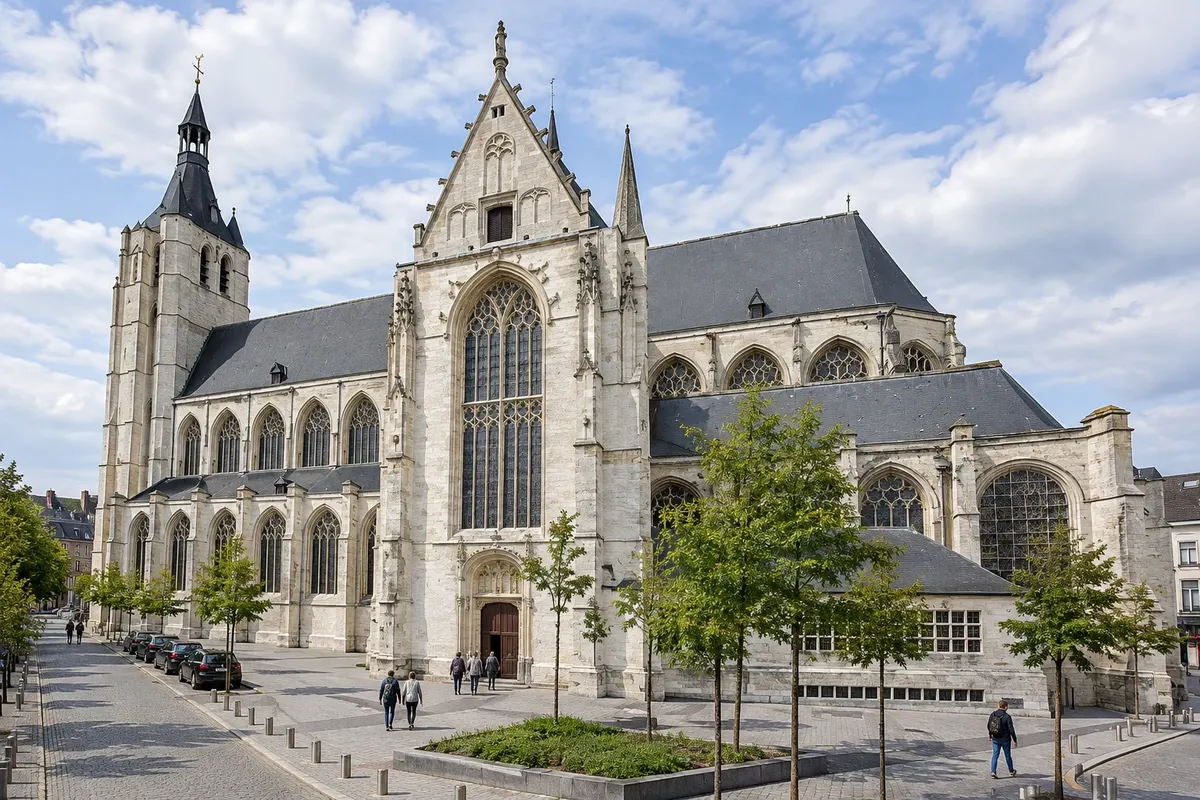
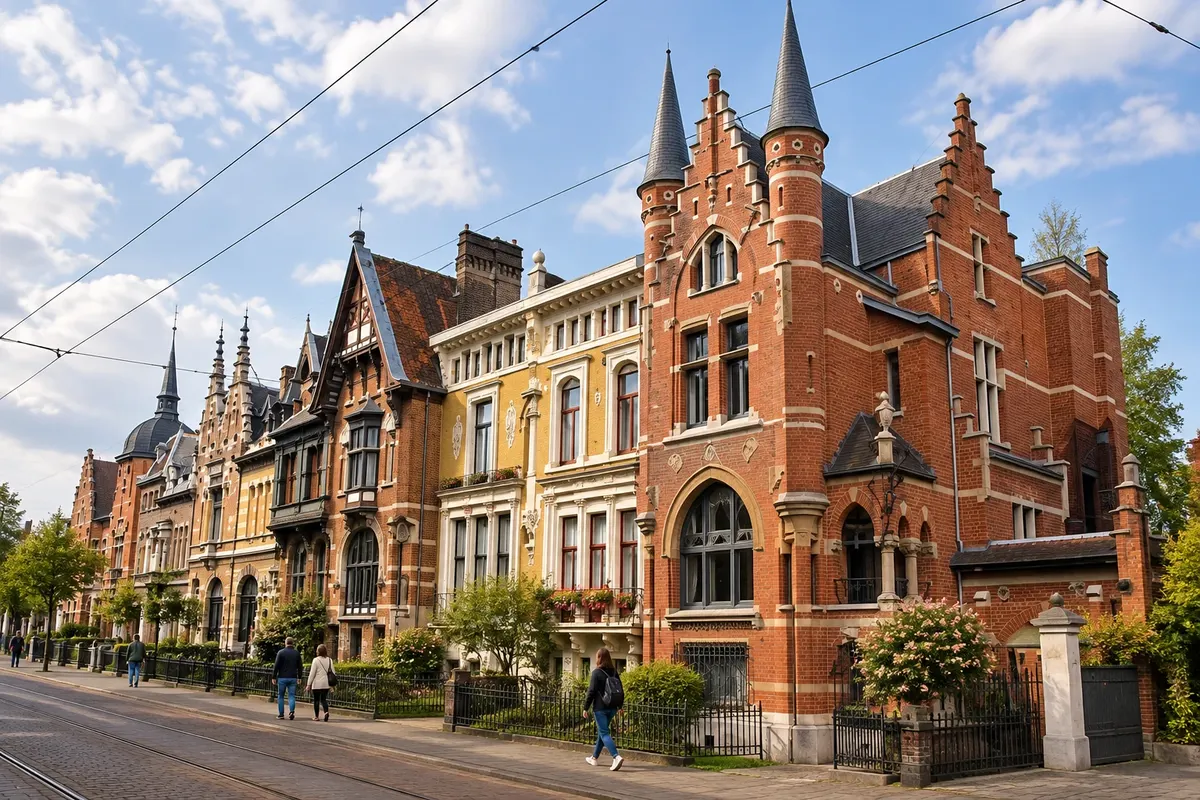
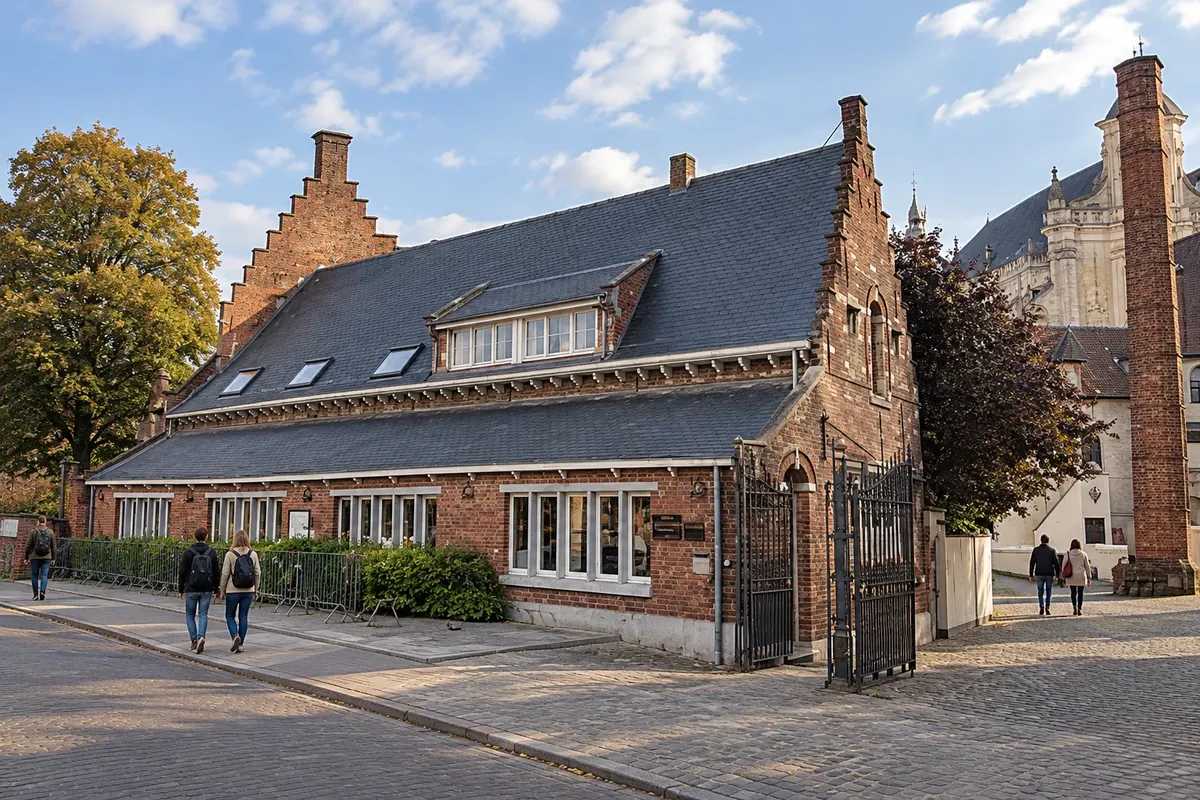
Illustrative images. The pictures in this guide are illustrations based on the real place, not photographs, and may differ from it.

Get it on Google Play Send your photos

Get to know the place

A region to enjoy
at your own pace.

Antuérpia and Mechelen are in the north of Belgium, in Flanders, in the province of Antuérpia. In both places people speak Flemish, the Dutch spoken in Belgium. The distance between them is about 25 km, and the train covers it in roughly 20 minutes, which makes it easy to combine both on the same trip.

Antuérpia is the largest city in Flanders, on the banks of the river Escalda, with the second-largest port in Europe and a long history of trade. The historic center includes the Grote Markt, with the Stadhuis and the Brabofontein, and the Onze-Lieve-Vrouwekathedraal, which houses paintings by Rubens. Antwerpen-Centraal station, the castle Het Steen, the MAS, the Museum Plantin-Moretus, the KMSKA and the art nouveau houses of Zurenborg round out the visit.

Mechelen is smaller and walkable. At the beginning of the 16th century it was the capital of the Low Countries, under Margaret of Austria, and from that period it preserves the Grote Markt and the palace Hof van Busleyden. The tower of the Sint-Romboutskathedraal has 538 steps up to the viewpoint. The Kazerne Dossin commemorates the Holocaust deportations, and the Groot Begijnhof and the Speelgoedmuseum complete the route.

This destination brings together 2 cities: Antuérpia, Mechelen.

Share: WhatsApp
Traveler, share your experiences through photos Up to 5 photos of each place you visited.

One destination, many paths

The cities on this trip

Start with one city or combine several in your itinerary.

Where Antuérpia and Mechelen is
MechelenAntuérpia

Outlines: © NGI-IGN, AdminVector, CC BY 4.0. Adapted by Cidade Turismo.

How to get there: Antuérpia and Mechelen

Confirm before buying. From Brussels airport there are direct trains to Mechelen in about 15 minutes and to Antuérpia in about 30 to 40 minutes. From Brussels, trains depart several times per hour.

Suggested arrival point: Antuérpia

The local experience

Things to do in Antuérpia and Mechelen

Grote Markt
Antuérpia · Antuérpia · Square

Grote Markt

Antwerp's central square, with the Renaissance Stadhuis, the guild houses with stepped façades, and the Brabofontein, the fountain that tells the legend behind the city's name.

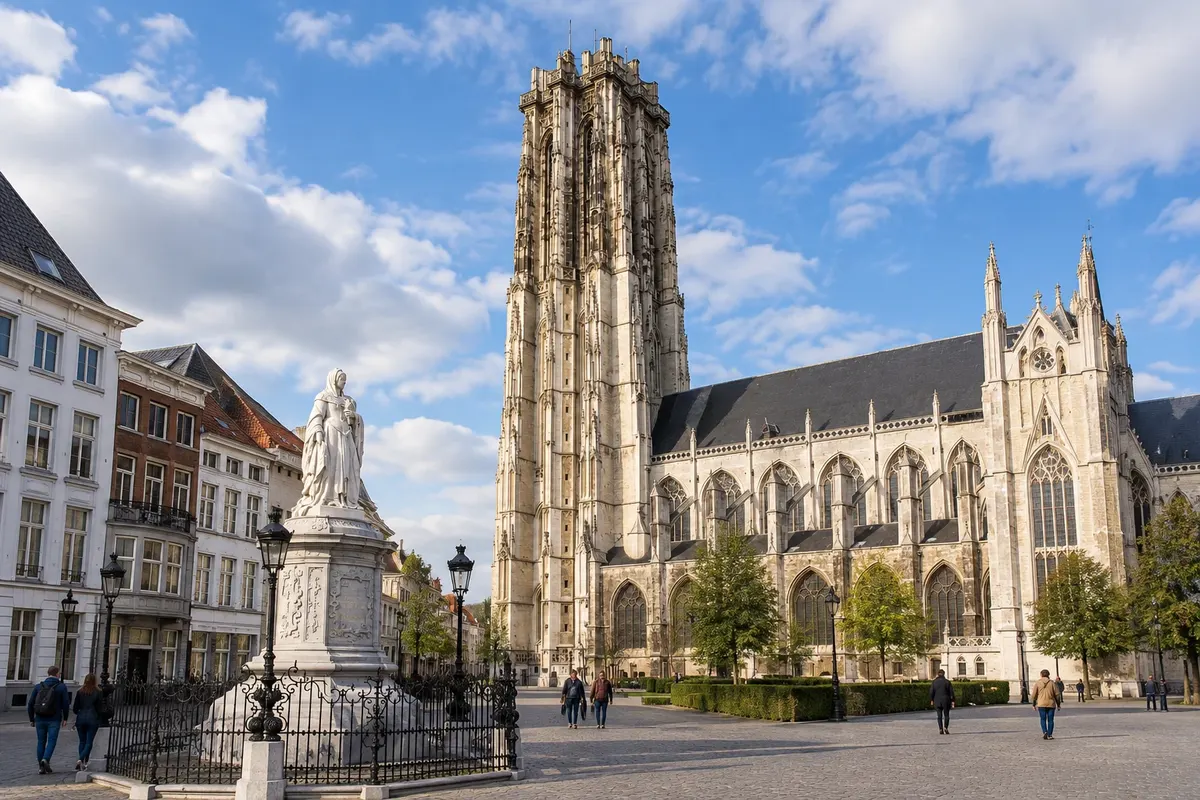
Sint-Romboutskathedraal
Mechelen · Antuérpia · Church

Sint-Romboutskathedraal

Gothic cathedral with a 97-metre tower, a UNESCO World Heritage site. A staircase of 538 steps leads to the Skywalk, a viewpoint over Mechelen and the Flemish plain.

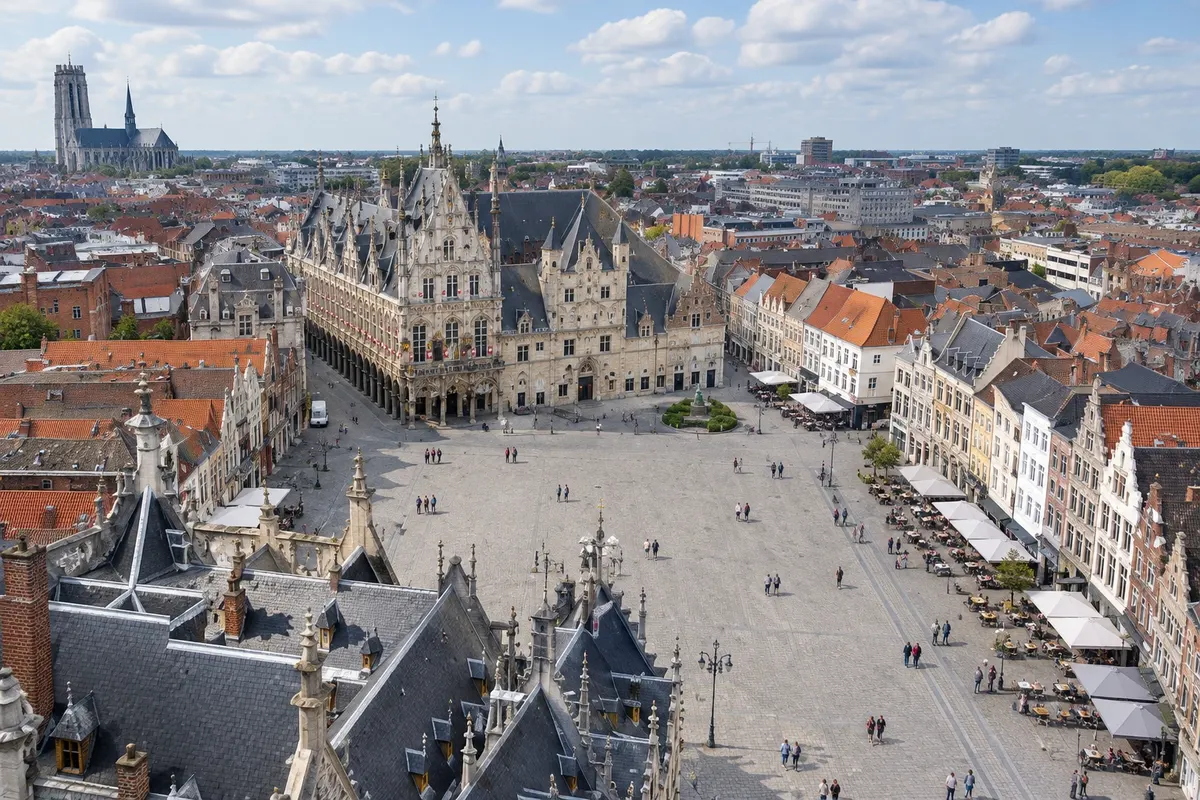
Grote Markt
Mechelen · Antuérpia · Square

Grote Markt

The central square of Mechelen, between the cathedral and the Stadhuis, a ensemble that combines an unfinished belfry, a 14th-century cloth market and a neo‑Gothic hall.

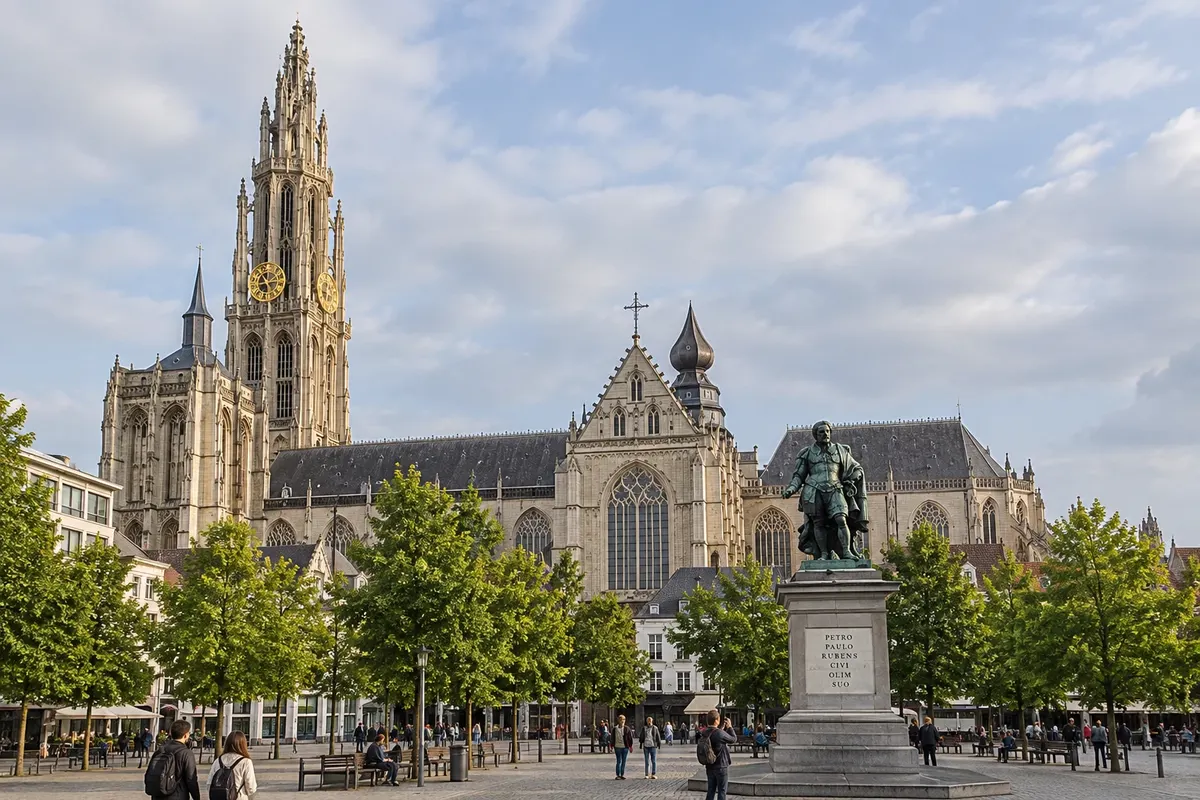
Onze-Lieve-Vrouwekathedraal
Antuérpia · Antuérpia · Church

Onze-Lieve-Vrouwekathedraal

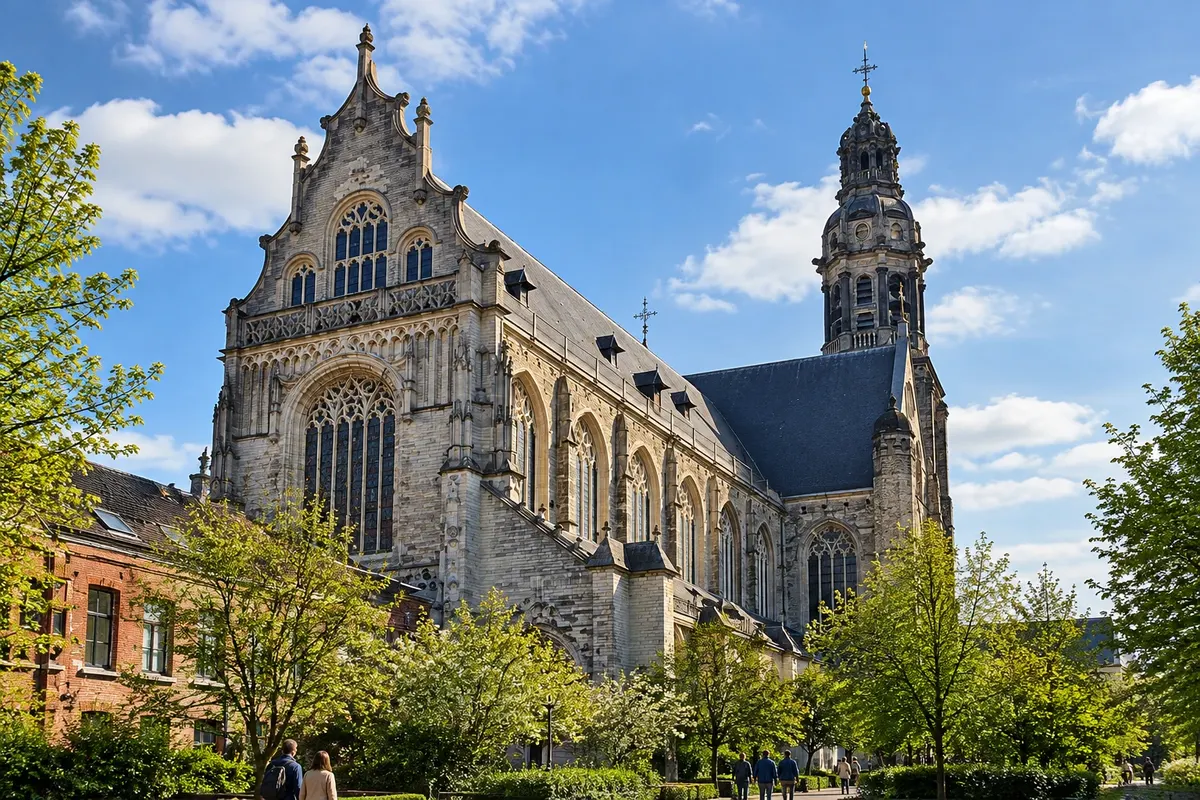
Gothic cathedral with a 123-meter tower, the tallest church in the Netherlands and Belgium, and four paintings by Rubens inside, including The Descent from the Cross.

See 24 more places in Antuérpia and Mechelen
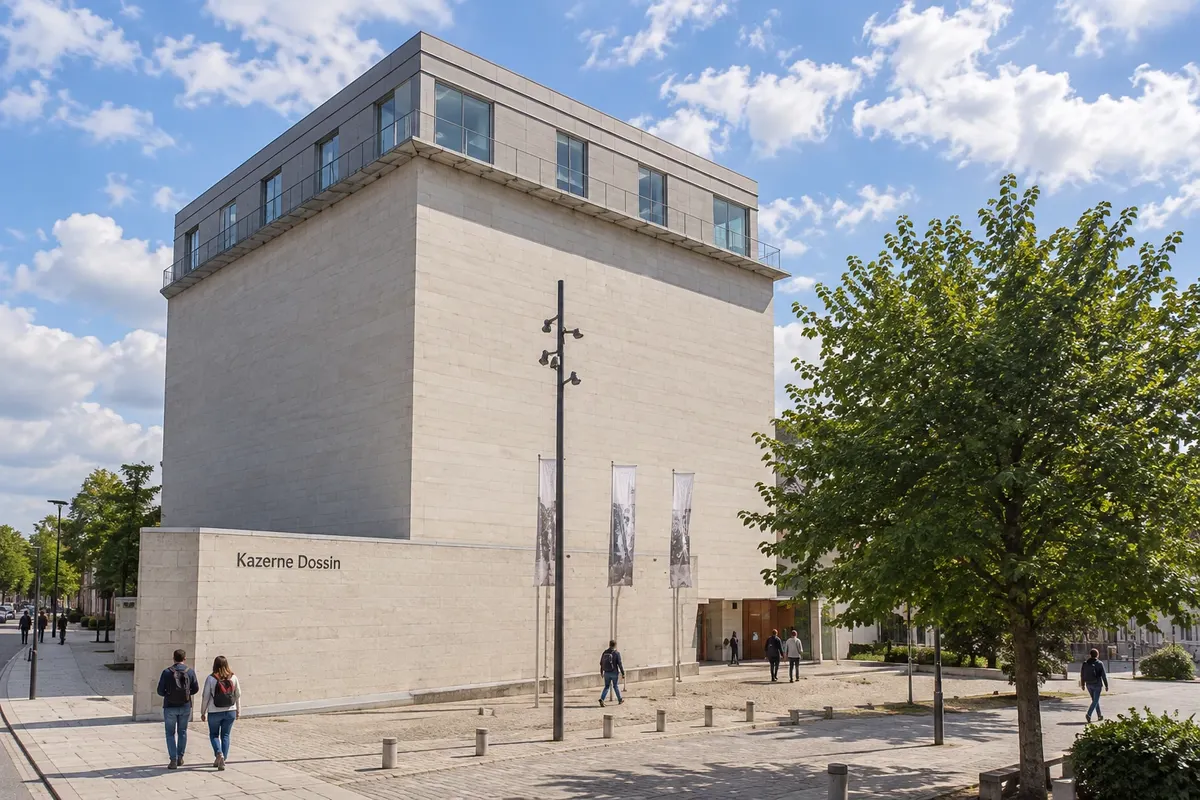
Kazerne Dossin
Mechelen · Antuérpia · Museum

Kazerne Dossin

Memorial and museum about the Holocaust in Belgium, beside the former barracks from which more than 25,000 Jews and 351 Roma and Sinti were deported between 1942 and 1944.

Station Antwerpen-Centraal
Antuérpia · Antuérpia · Monument

Station Antwerpen-Centraal

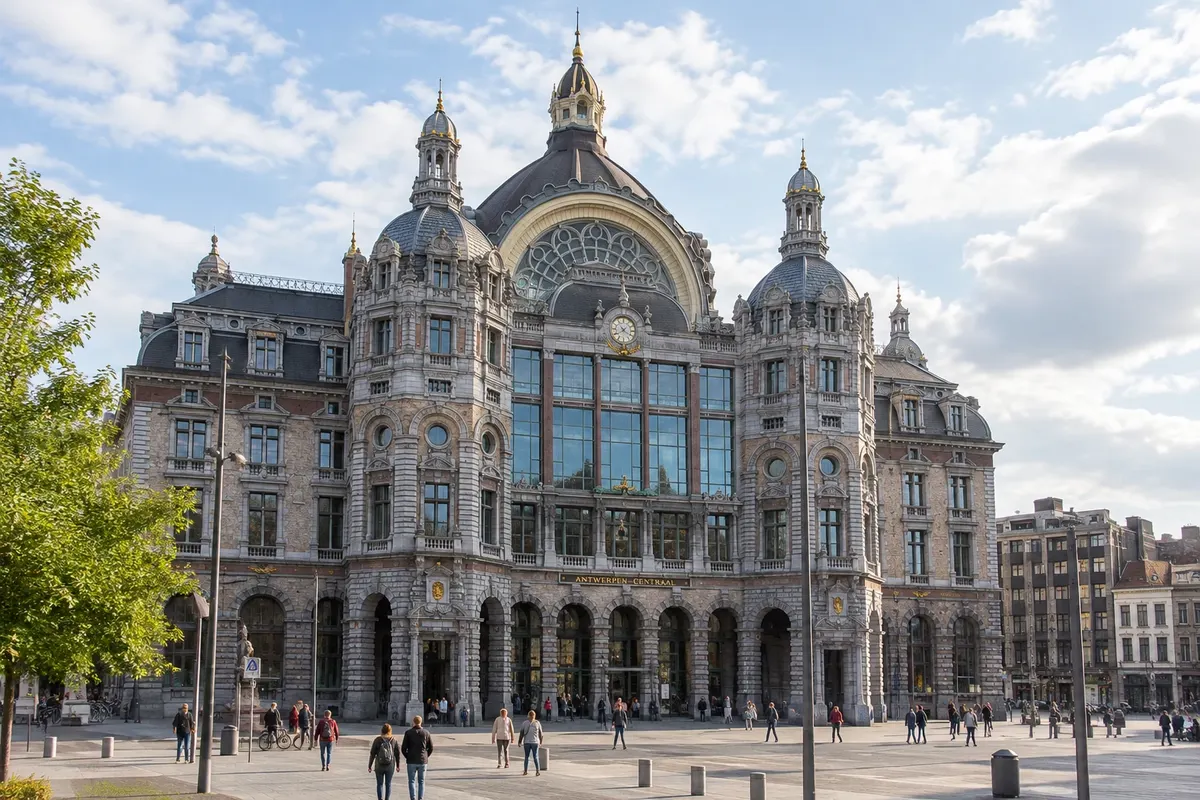
Train station opened in 1905, with an entrance hall of stone and marble beneath a large dome. The Belgians call it the railway cathedral.

Het Steen
Antuérpia · Antuérpia · Castle

Het Steen

Small medieval castle on the banks of the Escalda, the oldest building in Antuérpia. It houses the city's visitor centre and the interactive Antwerp Story exhibition.

Hof van Busleyden
Mechelen · Antuérpia · Museum

Hof van Busleyden

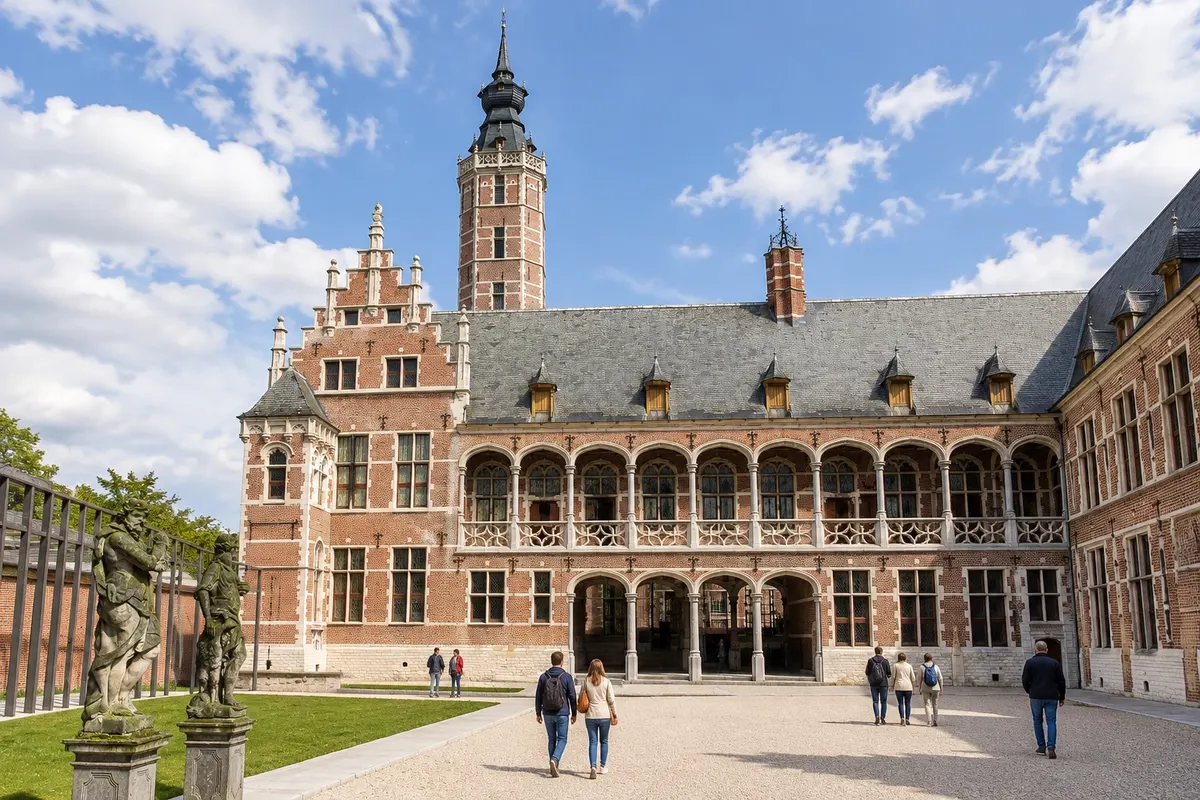
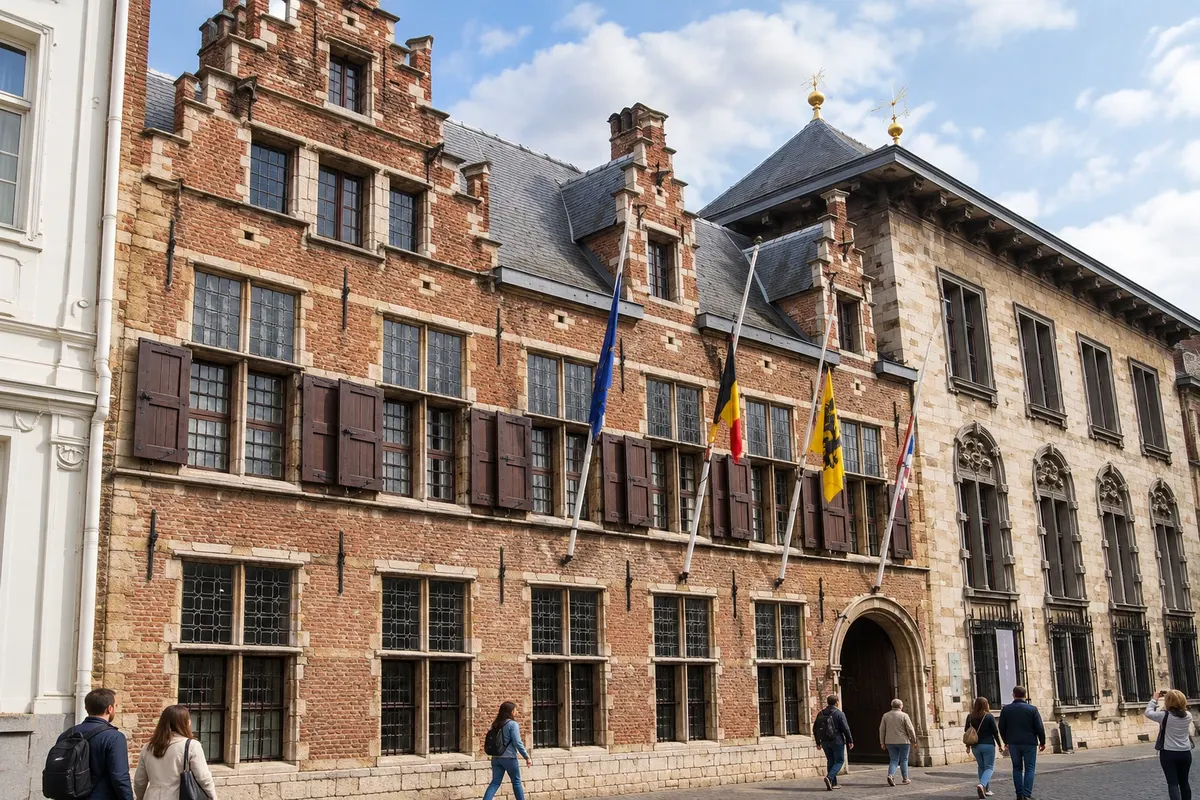
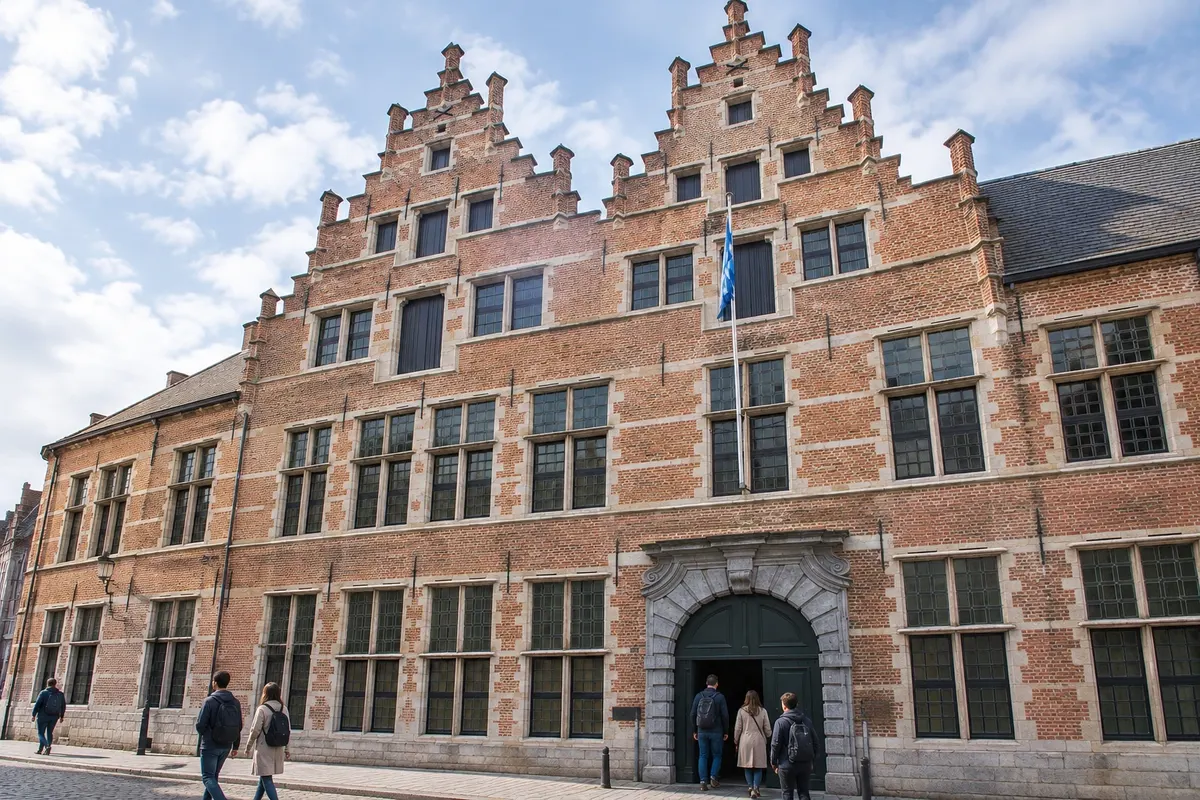
Early 16th-century palace housing a museum about Mechelen in the Burgundian era, when the city was the capital of the Netherlands.

MAS
Antuérpia · Antuérpia · Museum

MAS

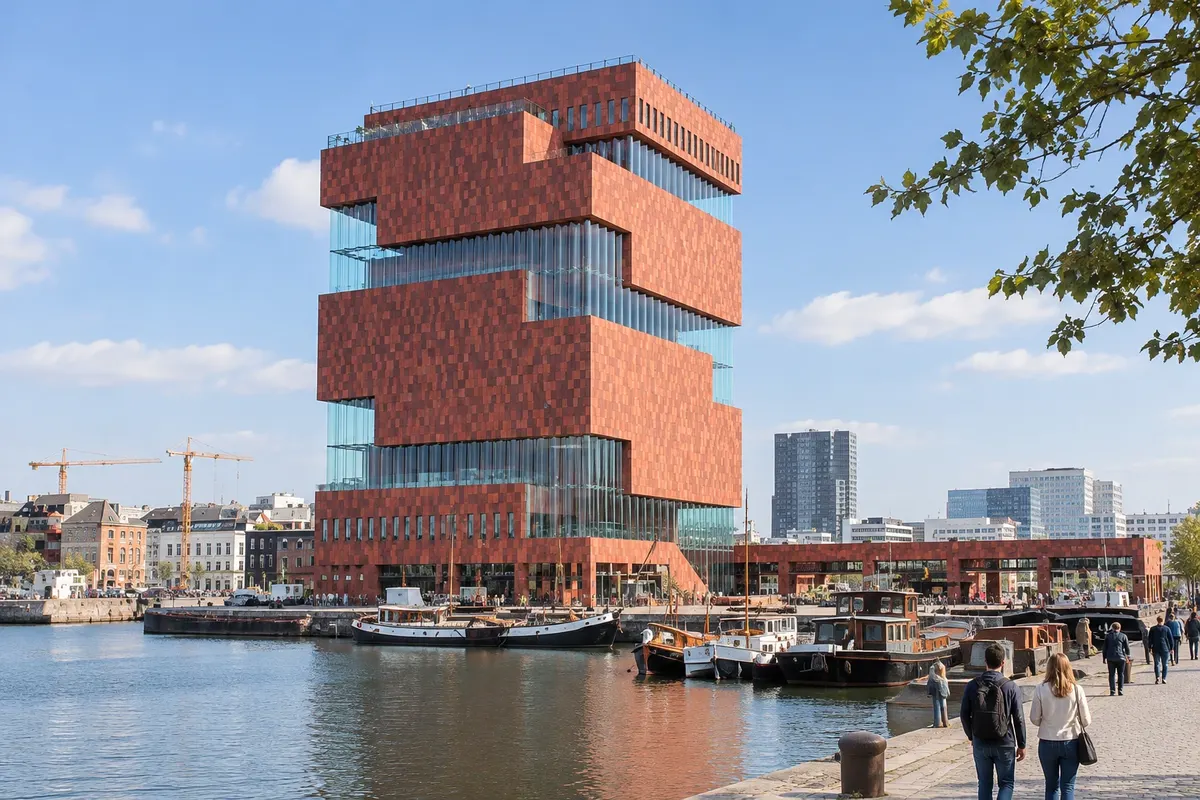
A 60-metre tower of red stone and undulating glass in the Eilandje neighbourhood. The museum tells the story of Antuérpia, the port and the world; at the top a panoramic terrace opens over the city.

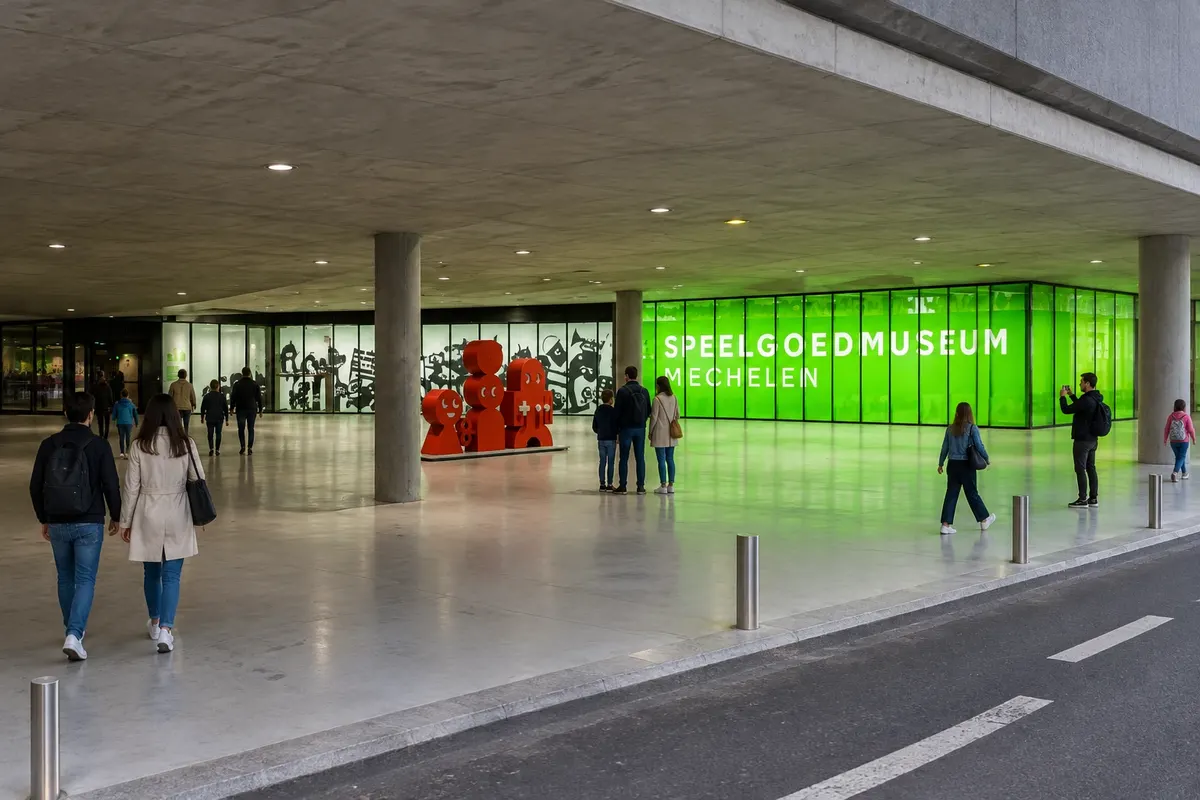
Speelgoedmuseum
Mechelen · Antuérpia · Museum

Speelgoedmuseum

Toy museum located in the Mechelen station building, with toys from the Middle Ages to the present and play rooms for all ages.

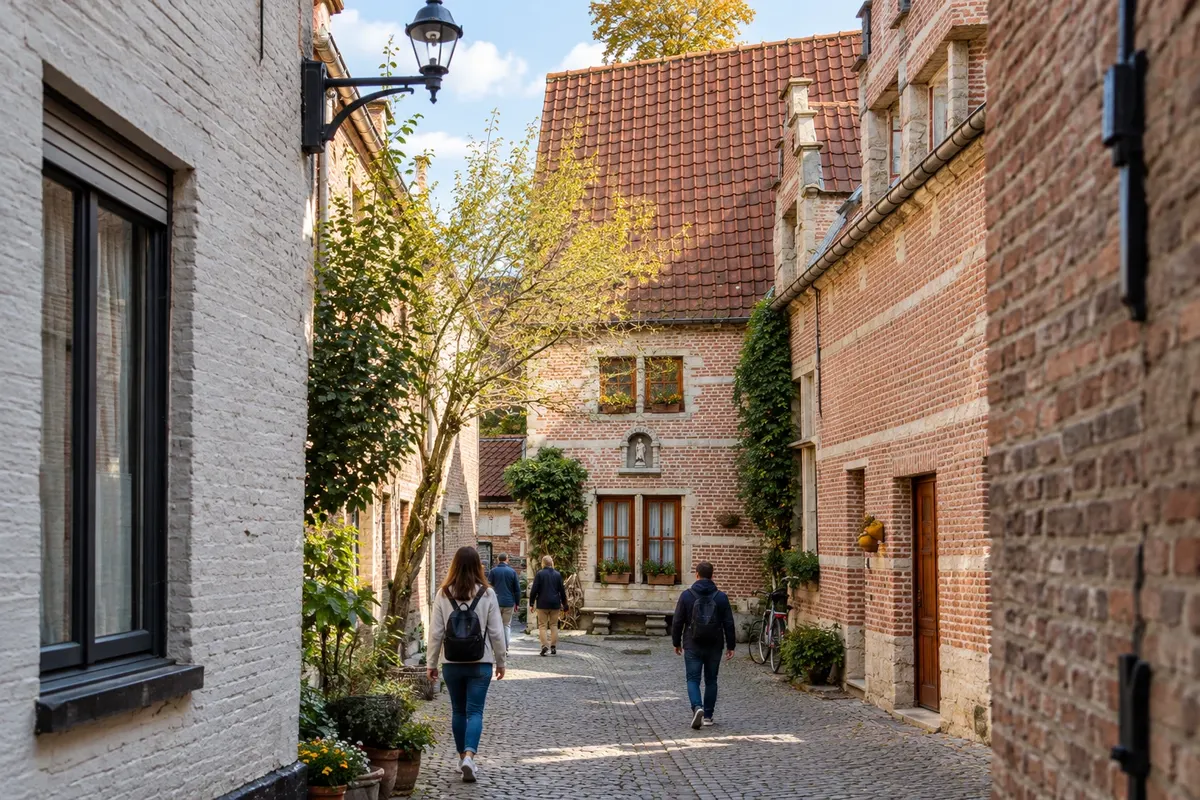
Groot Begijnhof
Mechelen · Antuérpia · Neighborhood

Groot Begijnhof

Former complex of houses of the beguines, laywomen who lived in community, with narrow streets and the baroque church of Sint-Alexius and Sint-Catharina. UNESCO World Heritage.

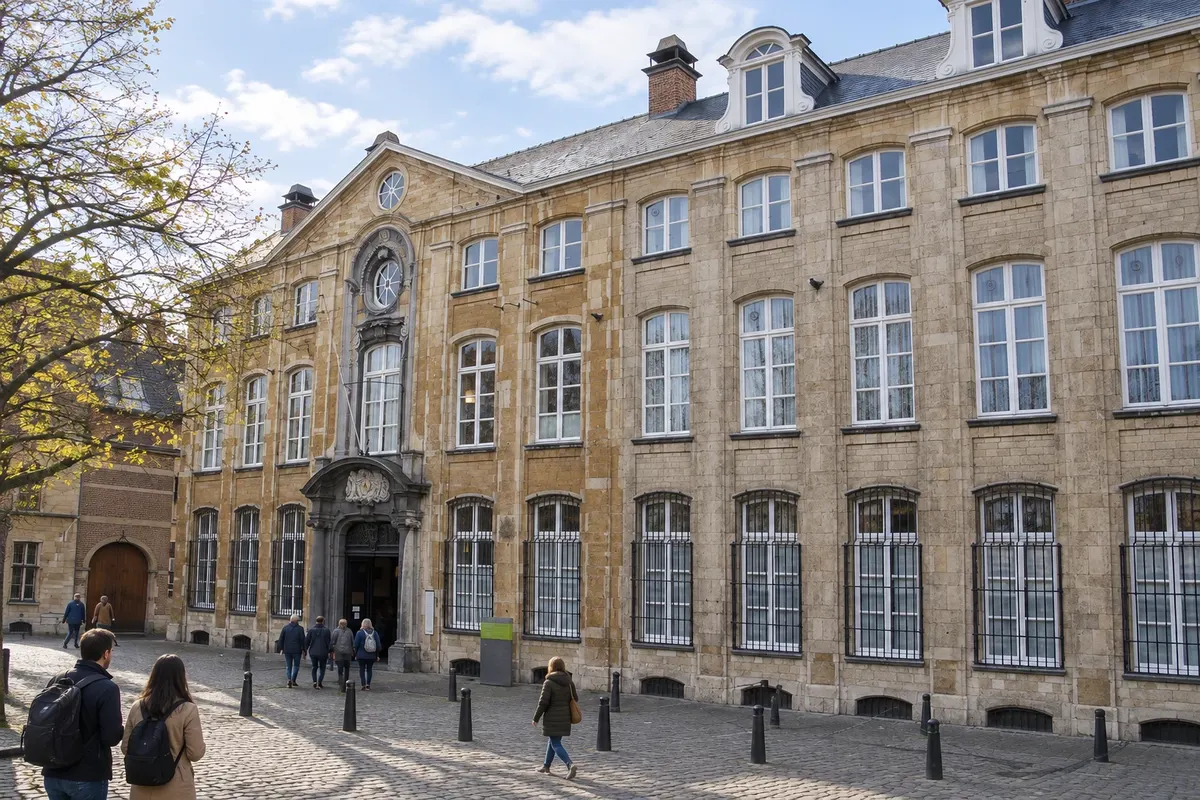
Museum Plantin-Moretus
Antuérpia · Antuérpia · Museum

Museum Plantin-Moretus

House and workshop of a family of printers from the 16th to the 19th centuries, a UNESCO World Heritage Site, with the two oldest surviving printing presses.

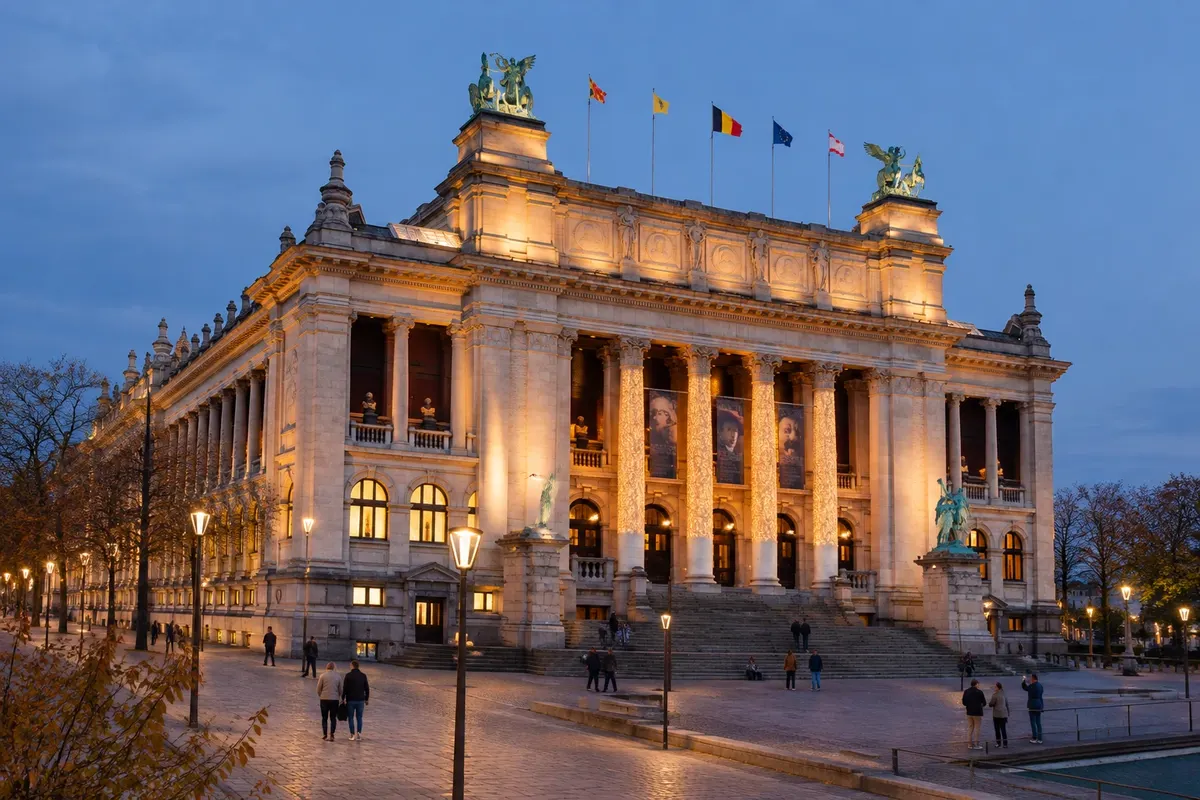
KMSKA
Antuérpia · Antuérpia · Museum

KMSKA

Museu Real de Belas Artes de Antuérpia, in the Zuid neighbourhood, with works by Jan van Eyck, Rubens, Jean Fouquet and James Ensor in a 19th-century neoclassical building.

Sint-Janskerk
Mechelen · Antuérpia · Church

Sint-Janskerk

Gothic church near Mechelen Cathedral, featuring the triptych The Adoration of the Magi, which Rubens completed inside the church itself, and a Baroque interior rich in carved wood.

Onze-Lieve-Vrouw-over-de-Dijlekerk
Mechelen · Antuérpia · Church

Onze-Lieve-Vrouw-over-de-Dijlekerk

Gothic church on the south side of the Dijle river in Mechelen, featuring the triptych The Miraculous Draught of Fishes, which Rubens painted for the fishmongers' guild, and a 14th-century sculpture of Our Lady.

Zurenborg
Antuérpia · Antuérpia · Neighborhood

Zurenborg

Residential neighbourhood from the late 19th century with Art Nouveau and eclectic houses, concentrated on Cogels-Osylei street, near Antwerpen-Berchem station.

Brouwerij Het Anker
Mechelen · Antuérpia · Brewery

Brouwerij Het Anker

Historic brewery next to the Groot Begijnhof in Mechelen, originating in the 15th century, which produces Gouden Carolus and opens for guided tours of the brewhouse and the whisky distillery.

Rubenshuis
Antuérpia · Antuérpia · Museum

Rubenshuis

Pieter Paul Rubens’ house-museum in Antwerp city centre. The visit enters from Hopland and goes through the Rubens Experience, which includes the painter’s self-portrait, and the baroque garden with a portico and pavilion; beside it is the study library on Rubens.

Red Star Line Museum
Antuérpia · Antuérpia · Museum

Red Star Line Museum

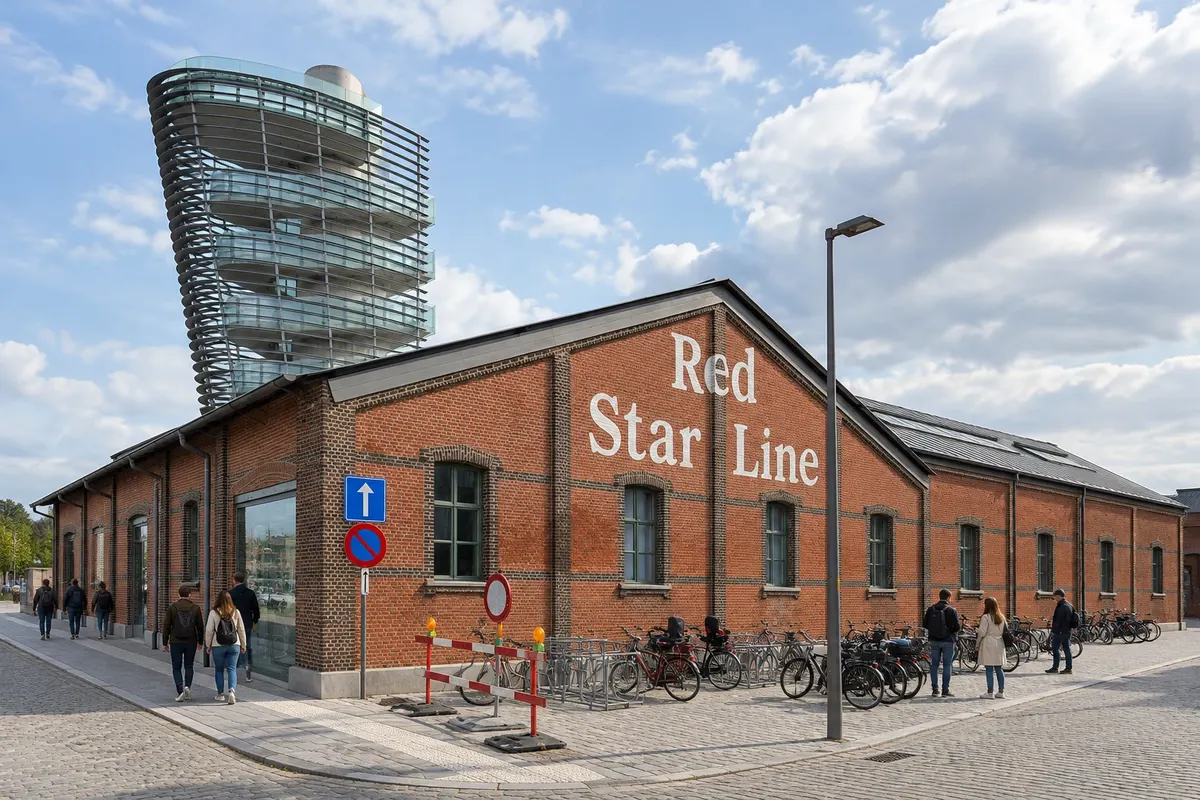
Museum of emigration in the port district, housed in the warehouses of the Red Star Line company, from which around two million passengers left Antuérpia bound for the United States and Canada.

Technopolis
Mechelen · Antuérpia · Museum

Technopolis

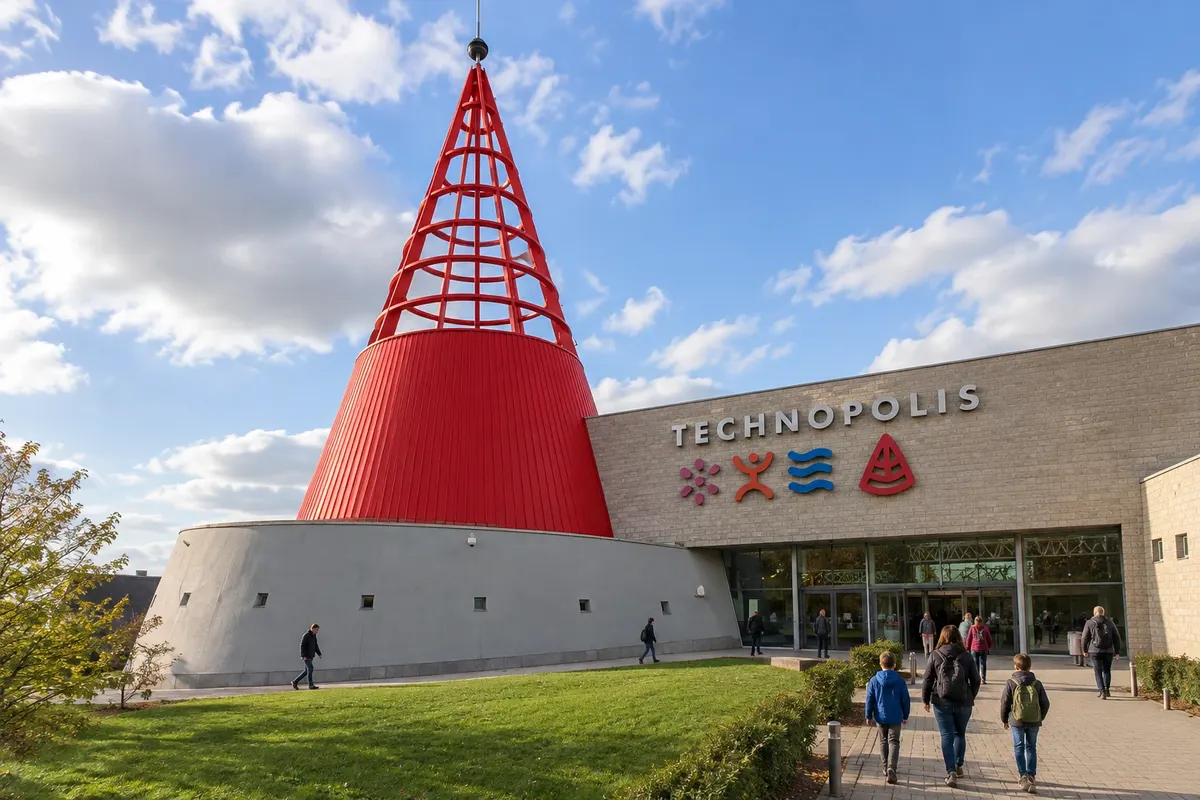
Interactive science centre in Mechelen, opened in 2000, where you can touch everything: pedal a bicycle on a cable 5 metres high, step inside a soap bubble and carry out experiments in the lab.

Planckendael
Mechelen · Antuérpia · Zoo

Planckendael

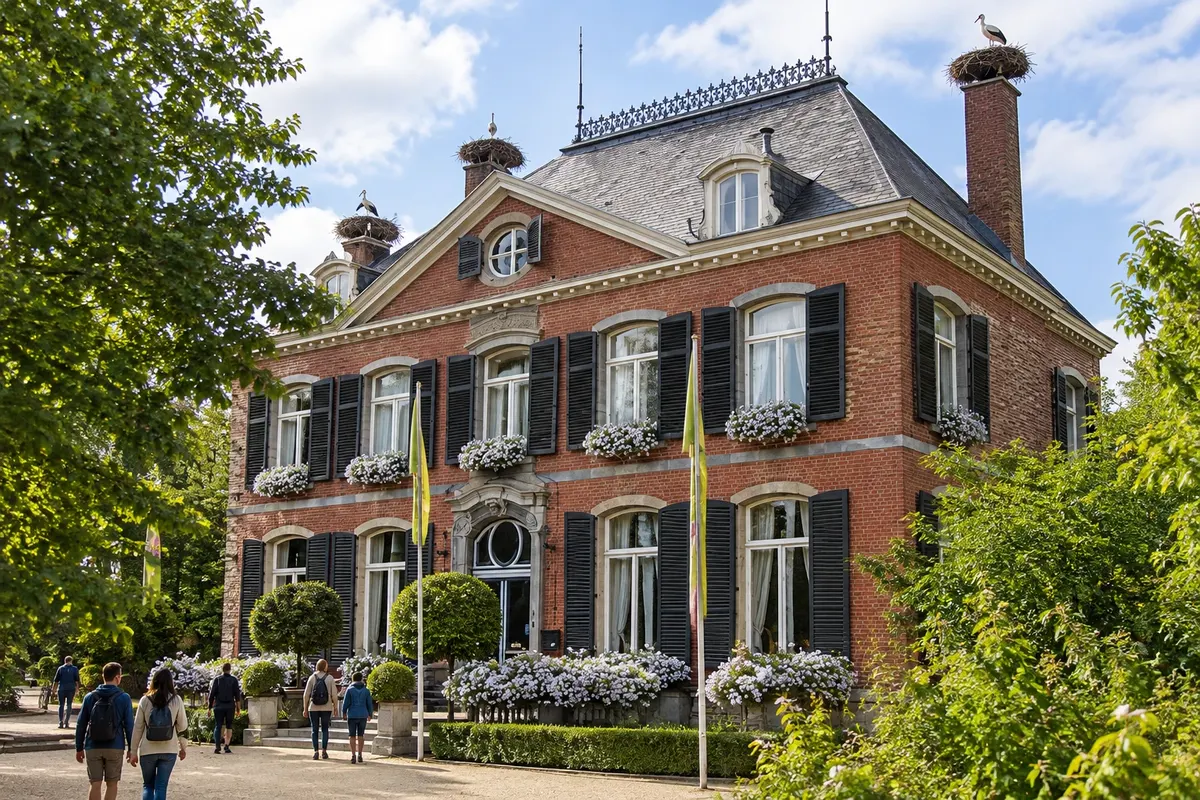
Animal park in Muizen, on the outskirts of Mechelen, centred around a 1780 castle, with areas by continent, elephants, koalas, giraffes, penguins and bonobos.

Sint-Pauluskerk
Antuérpia · Antuérpia · Church

Sint-Pauluskerk

Dominican church on Veemarkt, near the old port, with paintings by Rubens, Van Dyck and Jordaens and, in the side courtyard, a Baroque Calvary with 63 life-size statues.

Sint-Carolus Borromeuskerk
Antuérpia · Antuérpia · Church

Sint-Carolus Borromeuskerk

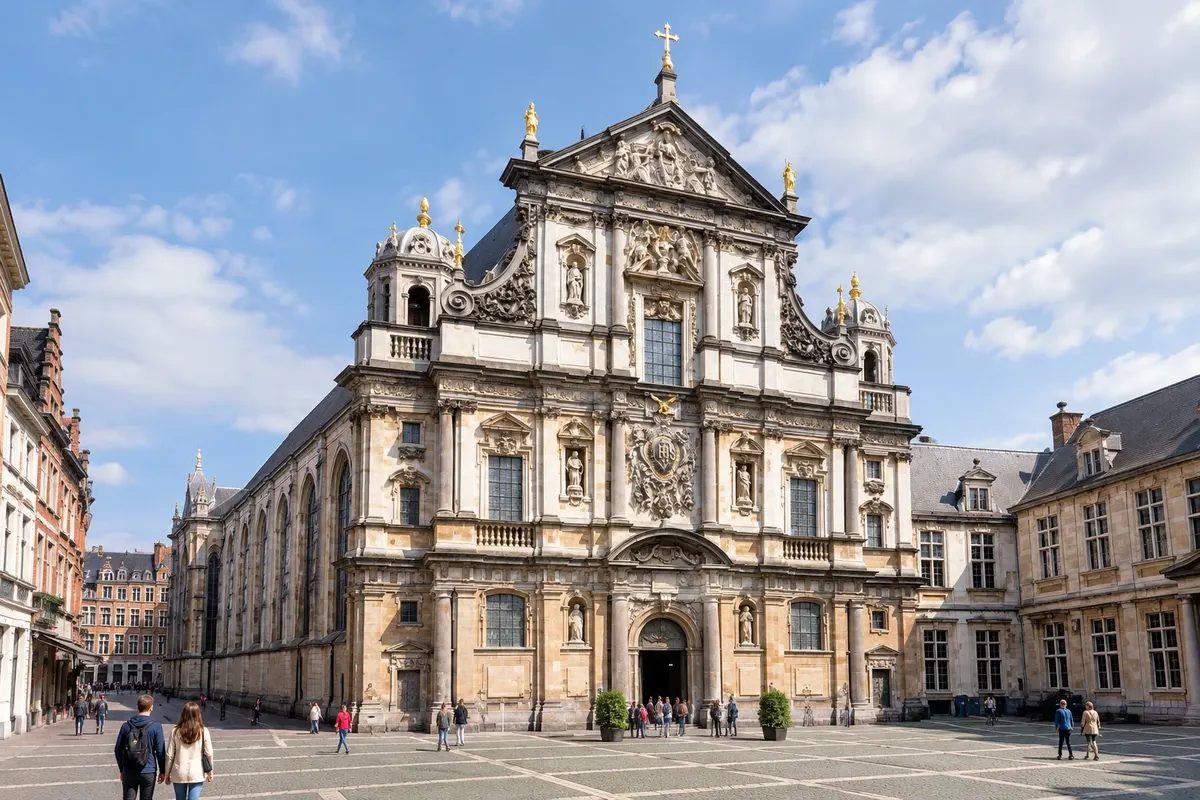
Baroque Jesuit church on Hendrik Conscienceplein, built between 1615 and 1621, with a façade and an altar connected to Rubens.

Snijders&Rockoxhuis
Antuérpia · Antuérpia · Museum

Snijders&Rockoxhuis

Two neighbouring houses on Keizerstraat, that of mayor Nicolaas Rockox, a friend of Rubens, and that of animal painter Frans Snijders, featuring 17th-century Flemish painting and a reconstructed garden.

Sint-Annatunnel
Antuérpia · Antuérpia · Monument

Sint-Annatunnel

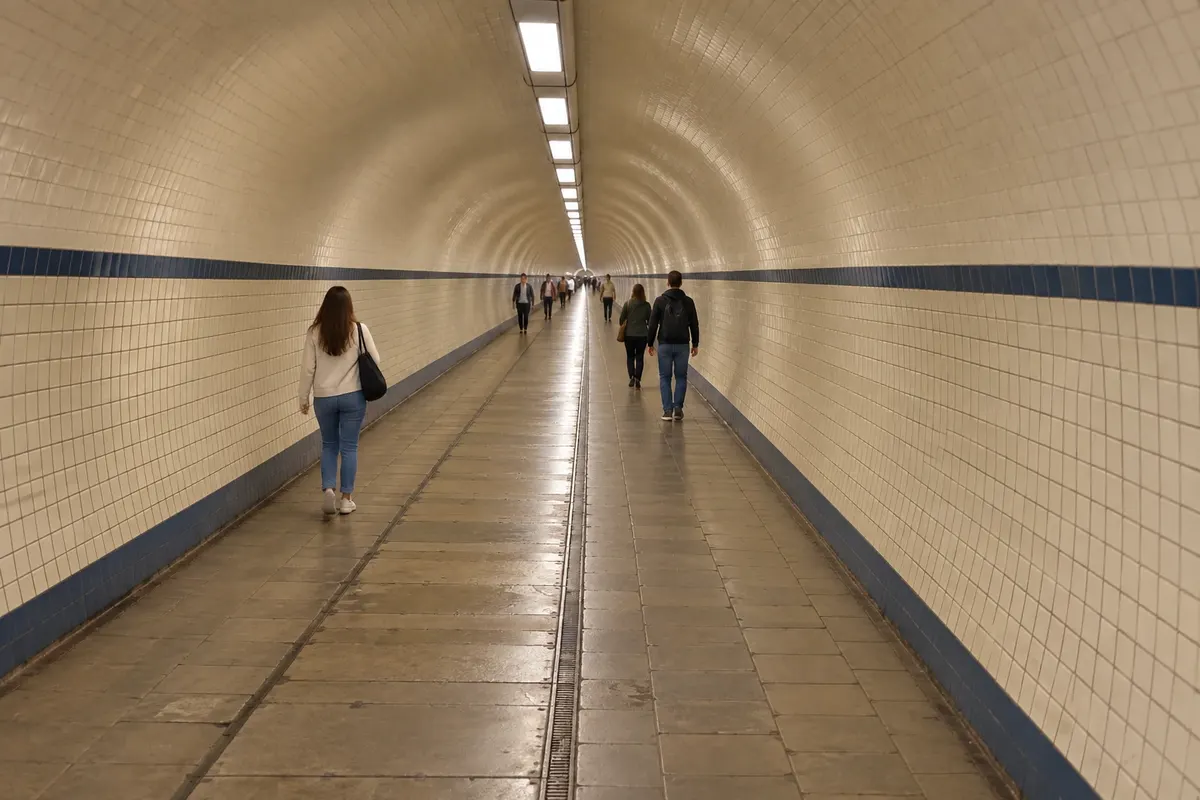
572-metre pedestrian and cyclist tunnel under the river Escalda, opened in 1933, with original wooden escalators and entrance buildings in Art Deco style.

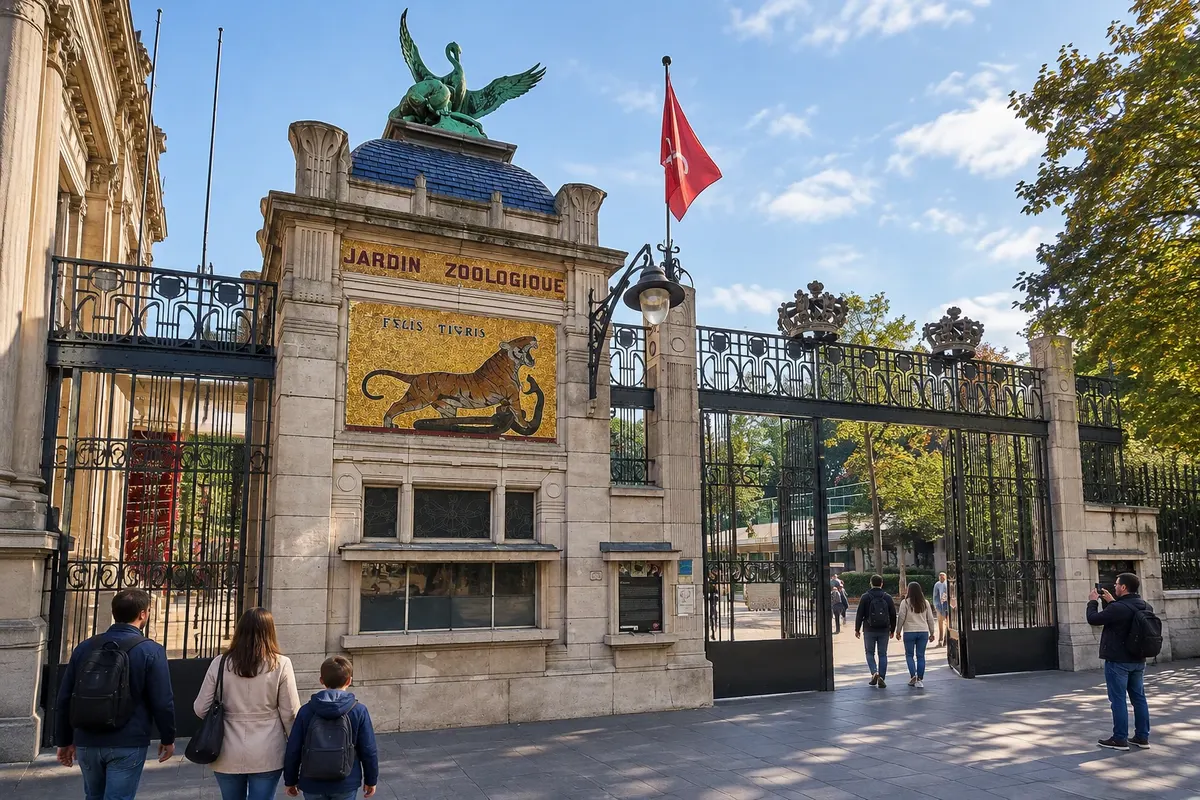
ZOO Antwerpen
Antuérpia · Antuérpia · Zoo

ZOO Antwerpen

Zoo from 1843 adjacent to Antwerpen-Centraal station, with about 5,000 animals and historic buildings such as the Egyptian temple, the winter garden and the aquarium.

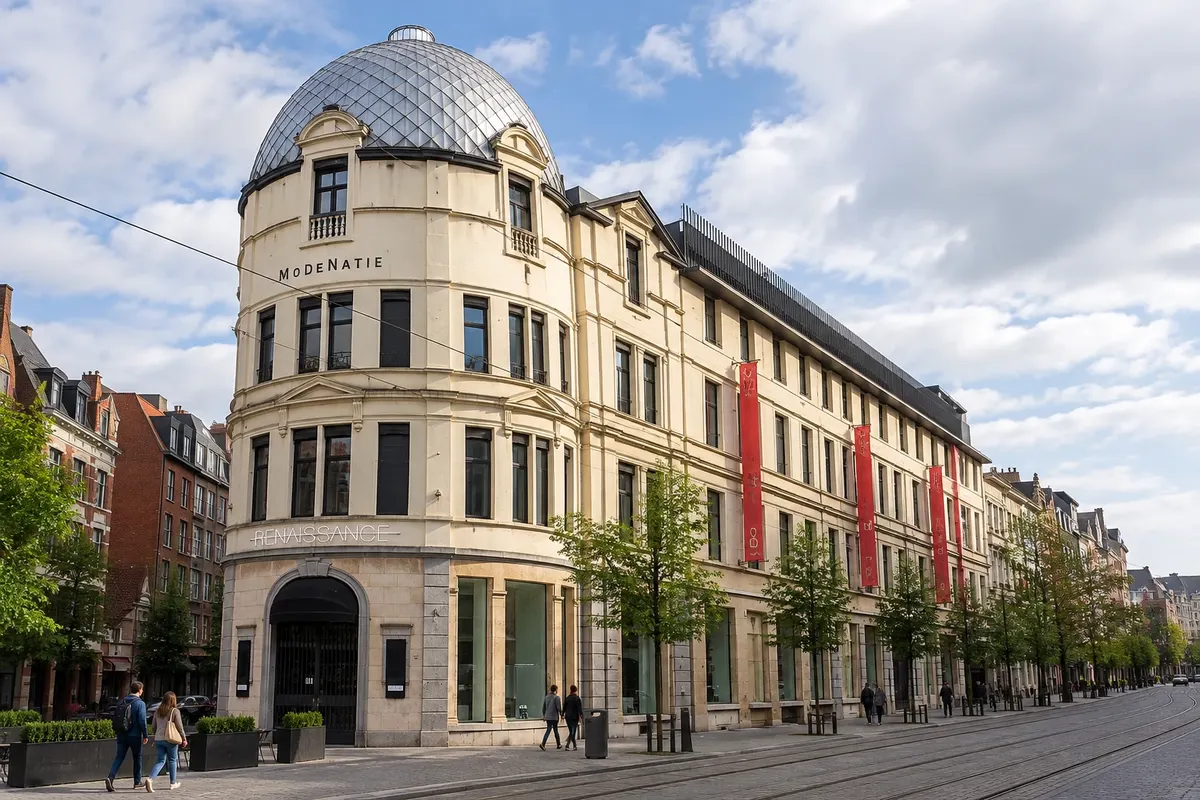
MoMu
Antuérpia · Antuérpia · Museum

MoMu

Antwerp's fashion museum, on Nationalestraat, dedicated to Belgian fashion and to designers trained at the city’s Royal Academy of Fine Arts, such as the group known as the Antwerp Six.

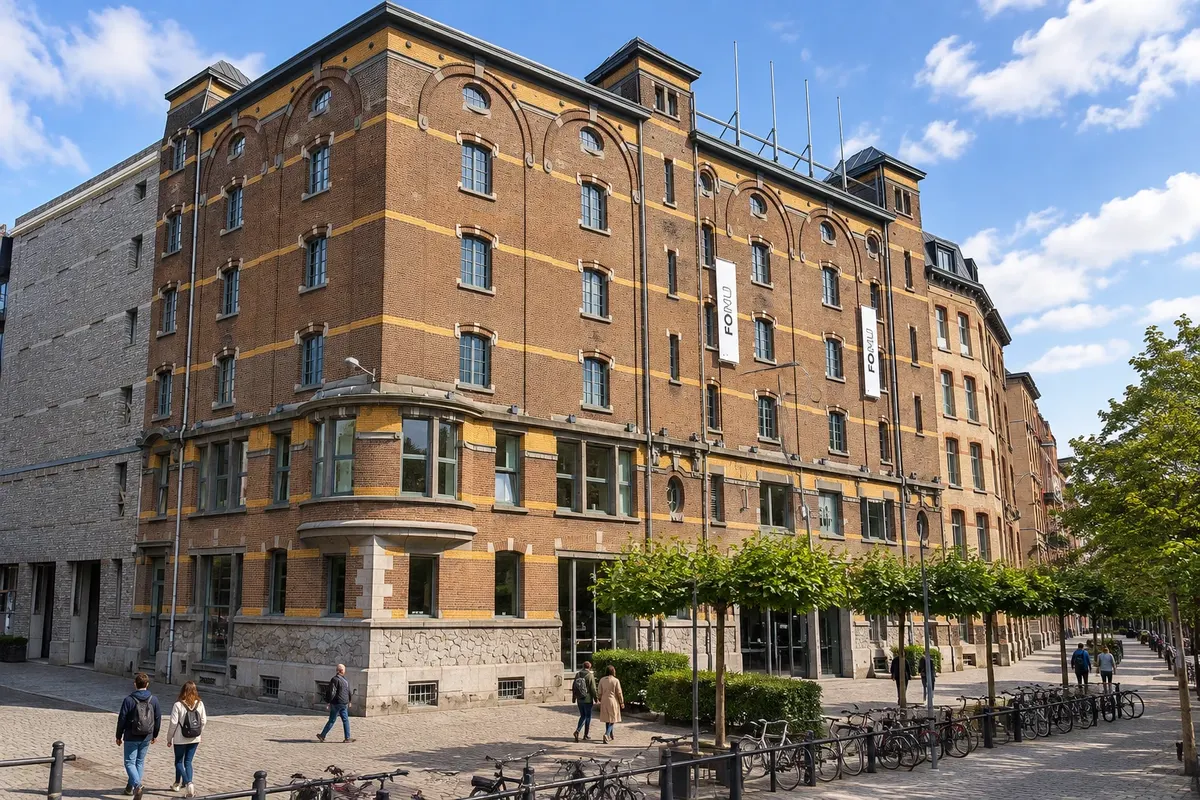
FOMU
Antuérpia · Antuérpia · Museum

FOMU

Antwerp photography museum, in a former warehouse on the Waalsekaai in the Zuid district, with exhibitions by Belgian and international photographers and a collection that ranges from early cameras to contemporary photography.

To choose before you go

Tours in Antuérpia and Mechelen

Where each tour starts, how long it takes, how it is done, what is included and the price range.

Grote Markt, Stadhuis and Brabofontein: Antwerpen’s historic centre

From Antwerp city centre On foot through the historic centre about 2 hours morning easy

The Grote Markt is Antwerpen’s central square and the natural starting point for a visit. One side is occupied by the Stadhuis, the city hall, built between 1561 and 1565 to a design by Cornelis Floris de Vriendt. The Renaissance façade was burned in the Spanish Fury of 1576 and restored three years later. The building is part of the belfries of Belgium and France listed as a UNESCO World Heritage Site. In the centre of the square stands the Brabofontein, a bronze fountain by Jef Lambeaux unveiled in 1887. It tells the legend of the giant Druon Antigoon, who charged tolls to boats on the Schelde and cut off the hand of anyone who did not pay. The Roman soldier Silvius Brabo defeated the giant, cut off his hand and threw it into the river. Popular tradition links the city’s name to this story: hand werpen, to throw the hand. Around the square are the former guild houses, with narrow façades and decorated gables. A short walk away are the Handschoenmarkt at the foot of the cathedral and the alleys that lead down to the river, where Het Steen is located.

Stops: Grote Markt, Stadhuis, Brabofontein, Handschoenmarkt.

Includes: Outdoor walk, no entrance required. Guided walking tours of the centre usually depart from the Grote Markt area and are paid separately. Check the current price list.

Tip: Start early, when the square is quieter for photos of the Brabofontein. Notice the hands that appear around the city, even on cookies and chocolates: they are the symbol of Antwerpen.

Best time: Year-round. In December the square typically hosts a winter market, with an ice rink, until early January.

Onze-Lieve-Vrouwekathedraal: the cathedral of Antwerpen and Rubens’s paintings

From Antwerp city centre On foot from the Grote Markt about 1 hour morning easy

The Onze-Lieve-Vrouwekathedraal, the Cathedral of Our Lady, dominates the skyline of the city centre. Construction began in 1352 and the first phase finished in 1521, in a Gothic style that was never completed in full: of the planned towers, only one was finished. It is 123 meters tall, the tallest church tower in the Benelux, and is part of the set of belfries inscribed by UNESCO. The carillon has 49 bells; the largest, the Karolus, was cast in 1507. The main reason to visit is inside. The cathedral houses four works by Peter Paul Rubens: The Elevation of the Cross (1610–1611), the triptych The Descent from the Cross (1612–1614), The Resurrection of Christ and The Assumption of the Virgin (1626), at the high altar. The Descent from the Cross, with Christ’s body supported on a white cloth, is one of the most famous paintings by the Flemish master. The interior is spacious, with side chapels, stained glass and a carved Baroque pulpit. The entrance to the cathedral is on the Handschoenmarkt side, and Groenplaats, on the opposite side, provides the classic view of the tower.

Stops: Onze-Lieve-Vrouwekathedraal, Handschoenmarkt, Groenplaats.

Includes: There is an admission ticket for the tourist visit, with access to Rubens’s works. Audio guide and guided tours are paid separately. Check the current price list.

Tip: Avoid mass times, especially Sunday morning, when tourist visits are restricted. Bring a small pair of binoculars or use your phone’s zoom to see the details of high-placed paintings.

Best time: All year. On rainy days it is one of the covered activities in the city center.

Museum Plantin-Moretus: the Renaissance printing house that became a UNESCO World Heritage Site

From Antwerp city centre On foot from the Grote Markt about 2 hours afternoon easy

The Museum Plantin-Moretus occupies the house and workshop of Antwerp’s most important printing family. The Frenchman Christophe Plantin arrived in the city around 1550 and, in 1576, moved to the house De Gulden Passer on the Vrijdagmarkt, where he set up the press. His heirs, the Moretus family, ran the business for almost three centuries, until selling everything to the city in 1876. The museum opened the following year. The visit takes you through the family’s rooms, the shop, the proofreading room and the workshop, where the two oldest surviving presses in the world are kept. There are lead type, matrices, engravings and a library with thousands of old books, including the Biblia Polyglotta, printed between 1568 and 1573 in several languages. The walls hold paintings and drawings by Rubens, a friend of the family. The complex was inscribed on the UNESCO World Heritage List in 2005, and the company archive has been on the Memory of the World register since 2001. The inner courtyard, with its garden, is one of the quietest corners of the centre.

Stops: Museum Plantin-Moretus, Vrijdagmarkt.

Includes: There is an admission fee. Temporary exhibitions may require a separate ticket. Check the current schedule.

Tip: Allow at least two hours: the house has many rooms and small details. The museum often closes on Mondays; check opening days before you go.

Best time: Open year-round. A good option for a rainy day.

MAS (Museum aan de Stroom) and the docks of the Eilandje

From Antwerp city centre On foot, by tram or by bicycle about 3 hours afternoon easy

The MAS, Museum aan de Stroom (Museum by the River), is the red sandstone tower that marks the Eilandje, the former port district north of the centre. The building by the Dutch firm Neutelings Riedijk opened in 2011, is about 62 meters high, and sits between the Willemdok and Bonapartedok docks. Its façade features 3,185 aluminium hands, the city’s symbol. The museum tells the story of Antwerpen through the river and the port: trade, shipping, the city’s links with the wider world, life and death. The exhibitions occupy several floors, connected by a boulevard of escalators behind a rippled glass wall. With each floor the view over the city widens. At the top is the panoramic terrace, offering 360-degree views over the port, the Scheldt and the central rooftops. The boulevard and the terrace do not require an admission ticket, and the boulevard stays open into the evening. Around it, the Eilandje has swapped warehouses for restaurants, apartments and marinas. You can walk along the docks to the Red Star Line Museum, a few minutes away, and see the silhouette of the Port House in the distance.

Stops: MAS, Eilandje, Willemdok, Bonapartedok.

Includes: Permanent and temporary exhibitions require a ticket. The boulevard and the rooftop terrace do not require a ticket. Check the current price list.

Tip: Go up to the terrace at late afternoon, when the light falls over the port. Combine it with the Red Star Line Museum the same afternoon. The museum is usually closed on Mondays.

Best time: All year. From May to September the long days make it possible to stay on the terrace until late.

Day trip to Mechelen: Grote Markt and climb up Sint-Romboutstoren

From Antwerpen-Centraal SNCB train to Mechelen and walk about 5 hours full day moderate (538 steps in the tower)

Mechelen sits between Antwerpen and Brussels, about a 20-minute train ride from Antwerpen, with frequent trains. In the early 16th century the city served as the capital of the Low Countries when Margaret of Austria governed from here. Her palace, the Paleis Margareta van Oostenrijk, is regarded as the first Renaissance building in the region. The center revolves around the Grote Markt, with the stadhuis (city hall) and old houses, and the Sint-Romboutskathedraal, a Gothic church largely dating from the 15th century that became a cathedral in 1559. Inside you can find Baroque art, such as Anthony van Dyck’s Christ on the Cross. The cathedral tower, at 97 meters, is the main attraction. The climb has 538 steps, with landings to rest, and passes the bells and the carillon; sometimes you can see the city carillonneur at work. At the top, the Skywalk offers views over the city and the Flemish plain. The tower is part of the group of bell towers listed by UNESCO. Mechelen is a carillon city: the Koninklijke Beiaardschool Jef Denyn, founded here in 1922, is the world’s first carillon school. From June to mid-September, on Monday evenings, the school usually holds concerts that can be heard in the gardens near the tower.

Stops: Mechelen, Grote Markt van Mechelen, Sint-Romboutskathedraal, Sint-Romboutstoren, Paleis Margareta van Oostenrijk.

Includes: Train and tower ticket paid separately. The tower sells timed tickets online. Check the current schedule.

Tip: The staircase is narrow: wear sturdy shoes and avoid the climb if you have knee problems or claustrophobia. Outside Saturdays, the tower usually opens only in the afternoon; check ahead. From Mechelen station to the center is about a 15–20 minute walk.

Best time: All year. From June to mid-September there are carillon concerts on Monday evenings; clear evenings improve the view from the tower.

KMSKA: the Royal Museum of Fine Arts, from Van Eyck to Ensor

From Antwerp city centre Tram or on foot to the Het Zuid neighborhood about 3 hours morning easy

The KMSKA, Koninklijk Museum voor Schone Kunsten Antwerpen (Royal Museum of Fine Arts Antwerp), occupies an 1890 palace in the Het Zuid neighborhood, south of the center. After a long renovation, the Dutch firm KAAN Architecten built a new museum within the old one, using four interior courtyards. Exhibition space increased by about 40%. The collection ranges from the Early Netherlandish painters to the 20th century. There are works by Jan van Eyck, Rogier van der Weyden and Rubens in the older rooms, with colored walls and gilded frames. The most famous piece is the Madonna surrounded by seraphim and cherubs, by Jean Fouquet, showing the Virgin with pale skin and angels in red and blue. In the new rooms, all white, are the moderns: René Magritte, Luc Tuymans, Rik Wouters—of whom the museum holds the largest collection in the world—and James Ensor, the painter of Ostend’s masks, with the largest surviving set of his works. The surrounding neighborhood, Het Zuid, has wide squares, cafés and galleries. It’s a good area for lunch after your visit.

Stops: KMSKA, Het Zuid.

Includes: There is an entrance fee, with timed tickets online during busier periods. Temporary exhibitions may have separate charges. Check the current price list.

Tip: Start with the rooms of the old masters and finish in the white rooms with Ensor. The museum is usually closed on Mondays and often stays open late on Thursdays. Book a timed entry for weekends.

Best time: All year. A good program for a rainy or cold day.

See 14 more tours

Antwerpen-Centraal and the Meir: the station-cathedral and the shopping street

From Antwerpen-Centraal On foot, from the station to the historic center about 2 hours afternoon easy

Antwerpen-Centraal station is called the spoorwegkathedraal, the railway cathedral, because of the dome over the waiting concourse. The stone building, by Louis Delacenserie, was built between 1895 and 1905, with marble staircases, a monumental clock and an iron-and-glass gare about 44 meters high. The station operates on four levels, with 14 tracks. Trains heading north pass through a tunnel under the city, 18 meters below street level, opened in 2007. For those arriving by train, the first impression of Antwerpen is already a stroll: it’s worth climbing the stairs and taking time to look at the concourse. From the station runs De Keyserlei, a wide avenue that continues into the Meir, the city’s main shopping street, pedestrian-only. It’s about 2 km to the cathedral area, passing shops, cafés and 18th- and 19th-century buildings. At the end of the Meir, Groenplaats opens the view to the cathedral tower. The station sits next to Zoo Antwerpen and the diamond district, which makes it easy to combine all three in one day.

Stops: Antwerpen-Centraal, Astridplein, De Keyserlei, Meir.

Includes: Outdoor walk and in the station concourse, no ticket required.

Tip: Enter via Astridplein to see the facade and go up to the upper level for the view of the gare. On Sundays many shops on the Meir are closed; on Saturdays the street gets crowded.

Best time: All year. In December the area usually has Christmas decorations.

Het Steen, Schelde riverbank and Sint-Annatunnel

From Antwerp city centre On foot along the riverbank about 2 hours afternoon easy

Het Steen is the oldest building in Antwerp. Built between 1200 and 1225, it was the gatehouse of the dukes of Brabant’s castle, demolished in the 19th century, and served as a prison from 1303 to 1827. On the entrance bridge stands the statue of Lange Wapper, a giant from Flemish folklore who frightened locals in the Middle Ages. The building was enlarged and became the gateway for city visitors, with a visitor center, a cruise ship terminal and Antwerp Story, an interactive exhibition about the city and the port. The terrace at the top offers views of the river and the city centre. The Schelde riverbank is a long promenade, good for walking. Heading south, on Sint-Jansvliet, is the entrance to the Sint-Annatunnel, a 572-meter pedestrian and cyclist tunnel under the river, opened in 1933. The descent of about 31 meters is made via the original wooden escalators, among the few still in use worldwide. On the other side is Linkeroever, the left bank, with a small riverside beach and the classic view of Antwerp’s skyline, including the cathedral tower.

Stops: Het Steen, Steenplein, Sint-Annatunnel, Linkeroever.

Includes: The tunnel and the riverbank do not require tickets. Antwerp Story, at Het Steen, has an admission fee. Check the current price list.

Tip: Cross the tunnel in the late afternoon and return after sunset to see Linkeroever’s illuminated city center. On Thursdays the wooden escalators are often under maintenance; there are elevators.

Best time: All year round. From May to September the riverbank is livelier.

Red Star Line Museum: the port from which 2 million emigrants departed for America

From Antwerp city centre On foot through the Eilandje or by bus about 2 hours afternoon easy

Between 1872 and 1935, Red Star Line ships carried more than 2 million people from Antwerpen to the United States and Canada. Many came from Eastern Europe in search of a new life. At peak years the company transported over 100,000 passengers a year. The museum occupies the company’s original warehouses on the banks of the Scheldt, where third-class passengers underwent medical inspections and disinfection before boarding. The exhibition follows the journeys of real people, with letters, photos, objects and testimonies, from leaving their village to arriving at Ellis Island in New York. Among the famous passengers are Albert Einstein, who traveled three times with the line, the last time in 1933, and Irving Berlin, who crossed the ocean at age five in 1893. The theme of migration is brought up to the present in temporary exhibitions. On the site of the old chimney a viewing tower shaped like a ship’s funnel was built, offering views of the port and the Eilandje.

Stops: Red Star Line Museum, Eilandje, Rijnkaai.

Includes: There is an admission fee; temporary exhibitions are generally included. Check the current price list.

Tip: Combine it with the MAS, a few minutes’ walk away. Those with ancestors who emigrated through Europe may find context for their family history. The museum usually closes on Mondays.

Best time: Open year-round. A good option for a rainy day.

MoMu (ModeMuseum) and the fashion shops on Nationalestraat

From Antwerp city centre On foot from the Groenplaats about 2 hours afternoon easy

Antwerpen is one of Europe’s fashion capitals thanks to a generation of designers trained at the Royal Academy of Fine Arts in the city. In 1986 six of them caught international press attention at a fair in London and became known as the Antwerp Six: Dries Van Noten, Ann Demeulemeester, Walter Van Beirendonck, Dirk Van Saene, Dirk Bikkembergs and Marina Yee. Martin Margiela, from the same school, followed soon after. The MoMu, ModeMuseum Antwerpen (Fashion Museum), was founded in 2002 and is on Nationalestraat, in the same building as the academy’s fashion department. The museum alternates displays from its collection with thematic exhibitions about designers, techniques and the history of dress. Around it, Nationalestraat and Kammenstraat bring together Belgian designer stores, independent boutiques and vintage shops. Dries Van Noten’s flagship store is in the area, housed in a historic building. The walk combines culture and shopping and fits nicely between the cathedral and the Het Zuid neighbourhood.

Stops: MoMu, Nationalestraat, Kammenstraat.

Includes: The museum charges admission. Shops in the area are free to visit. Check the current pricing.

Tip: Check which exhibition is on before you go, because the museum can close for a few days between shows. Many shops are closed on Sundays.

Best time: Year-round. Sales typically take place in January and July.

Kazerne Dossin: Holocaust memorial and museum in Mechelen

From Mechelen city centre On foot from Mechelen’s Grote Markt about 2 hours morning easy

During World War II, the Nazis used the former Dossin barracks in Mechelen as an assembly site for Jews, Sinti and Roma arrested in Belgium and northern France. Between 1942 and 1944, more than 25,000 people passed through there and were deported, most to Auschwitz-Birkenau. Few returned. The original barracks house the memorial. In 1955 it received the first Jewish museum on deportation and resistance. The current museum, in a new building by architect bOb Van Reeth across the street, opened in 2012. The architecture carries symbolic references to the Holocaust. The exhibition traces the persecution in Belgium, life in the camp and the transports, with photos, documents and portraits of those who were deported. The final section links that history to contemporary issues such as racism, exclusion and human rights. There is also a documentation centre. It is a powerful, quiet visit. Allow time for it and avoid scheduling it hurriedly between other activities.

Stops: Kazerne Dossin, Mechelen.

Includes: There is an admission fee. Guided visits for groups are reserved separately. Check the current price list.

Tip: The museum is usually closed on Wednesdays and on dates in the Jewish calendar, such as Rosh Hashanah and Yom Kippur. For children from 9 years old there is a dedicated route to be done with parents. Maintain a respectful tone at the memorial.

Best time: All year round. Confirm the closing days before you go.

Diamond quarter and DIVA, the museum of diamonds, jewelry and silver

From Antwerpen-Centraal On foot about 2 hours morning easy

Right next to Antwerpen-Centraal station is the Diamantkwartier, the diamond district, a few-block area known as the Square Mile. Four diamond exchanges operate there, including the Diamond Club of Antwerp, and hundreds of cutting and trading offices. A large share of the world’s rough diamonds passes through Antwerpen. Much of the trade was built up by Jewish families, and Antwerpen’s Jewish community remains connected to the sector. For that reason, the district is quiet on Saturdays. Hoveniersstraat is the main street for the offices, and jewelry shops line the streets around the station. To learn the history, visit DIVA, the museum of diamonds, jewelry and silver, near the Grote Markt. The exhibition shows how diamonds are cut, displays centuries of goldsmith work and explains the city’s link to the gemstone trade.

Stops: Diamantkwartier, Hoveniersstraat, DIVA.

Includes: The neighborhood is a free street walk. The DIVA requires an admission ticket. Check the current table.

Tip: Visit the neighborhood on a weekday: on Saturdays many shops close. Photographing people and office facades can be intrusive; be discreet.

Best time: All year, Monday to Friday.

Sint-Jacobskerk: the church where Rubens is buried

From Antwerp city centre On foot from the Meir about 1 hour afternoon easy

Sint-Jacobskerk, the church of Saint James, is on Lange Nieuwstraat, a few minutes from the Meir. From the outside it is Gothic; inside it is almost entirely Baroque, with marble, altars and sculptures paid for by wealthy city families who had their chapels there. Behind the choir is Peter Paul Rubens’s funerary chapel. The painter is buried there, and the altar includes a work by him, the Madonna and Child surrounded by saints. The whole chapel, with the altar, epitaph and tombs, has undergone full restoration. Another notable work is The Miraculous Draught of Fishes by Jacob Jordaens, which returned to the church after restoration. The church itself underwent a long restoration in two phases. The visit is short and calm, away from the crowds at the cathedral, and completes the Rubens route through the city.

Stops: Sint-Jacobskerk, Lange Nieuwstraat.

Includes: Guided visits are usually ticketed. Check the current price list.

Tip: The church usually opens for visits only in the afternoon. Speak quietly, as it is a place of worship. Combine it with the Meir and the Centraal on the same day.

Best time: Open year-round. Confirm visiting hours before you go.

Sint-Pauluskerk: the Rosary paintings and the Baroque Calvary

From Antwerp city centre On foot from the Grote Markt about 1 hour afternoon easy

Sint-Pauluskerk was the church of the Dominican convent. Construction began after 1517 and the church was consecrated in 1571. In 1679 a lightning strike caused a fire, and the tower was rebuilt in Baroque style on its Gothic base. In the north side nave is the cycle of the Fifteen Mysteries of the Rosary, painted between 1616 and 1618 by eleven artists. Rubens encouraged the project and painted The Flagellation; Anthony van Dyck and Jacob Jordaens are also included in the series. In April 1968 a fire hit the church at night, and neighborhood residents helped remove the paintings. Next to the church is the Calvary, a garden planned in 1697 and completed in the 18th century, with 63 life-size statues of prophets, angels and saints rising up to the crucifixion. It is one of the most curious scenes in the city. The church is near the Veemarkt, a few minutes from the Grote Markt, in an area of old streets by the river.

Stops: Sint-Pauluskerk, Veemarkt.

Includes: The visit has restricted hours. Check whether tickets are available and the current pricing.

Tip: Opening days and hours are limited and change with the season; check before you go so you don't find the door closed. Enter the Calvary garden from the side of the church.

Best time: From April to October, when the church usually has more open days. Confirm beforehand.

Zoo Antwerpen: the historic zoo next to the station

From Antwerpen-Centraal On foot, the entrance is next to the station about 4 hours full day easy

The Zoo Antwerpen was founded on July 21, 1843 and is the oldest animal park in Belgium, one of the oldest in the world. It is located in the city centre, adjacent to Antwerpen-Centraal station, which makes it easy to visit even for those just passing through. Beyond the animals, the zoo is notable for 19th- and early-20th-century architecture. The Egyptian temple, from 1856, houses savanna animals; the Moorish-style temple, from 1885, houses the okapis; and the aquarium, from 1910, was designed by Emile Thielens. Gardens, lakes and historic pavilions complete the route. The zoo has about 5,000 animals from different parts of the world. It is managed by the same society as Planckendael, the animal park in Muizen, near Mechelen. It’s a programme for families with children and a good break between the city centre museums.

Stops: Zoo Antwerpen, Antwerpen-Centraal.

Includes: There is an admission fee, with discounts for children and online purchase. Check the current price table.

Tip: Buy the ticket in advance to avoid queues on weekends and during school holidays. Bring a coat outside of summer, because much of the route is outdoors.

Best time: From April to September, with long days and animals more active outdoors. Open year-round.

Port House (Havenhuis) by Zaha Hadid and the port of Antwerpen

From Antwerp city centre By bicycle, bus or car to the northern docks about 2 hours morning easy

The Havenhuis, the Port House, is the headquarters of the port authority of Antwerpen. At its base is an old fire station from 1922, protected as a monument. Above it, Zaha Hadid’s office placed a faceted glass volume that resembles a diamond or a ship’s bow, opened in 2016. The old fire station has changed little inside. The old hose-drying tower links the old part to the new, with four glass elevators. The building is one of the landmarks of contemporary architecture in Belgium and stands on the square named after the architect. The port of Antwerpen is one of the largest in Europe, and the Havenhuis sits on the passage between the old docks of the Eilandje and the port area to the north. From the outside the building can be seen at any time. The interior is only open on guided tours with a reservation.

Stops: Havenhuis, Zaha Hadidplein, Eilandje.

Includes: The exterior view does not require a ticket. Guided tours of the interior are paid and need a reservation. Check the current price list.

Tip: Ride a bicycle from the MAS, following the docks north. Confirm guided-tour dates in advance, as they do not run every day.

Best time: All year. On sunny days the glass reflects the sky and the docks.

Zurenborg and Cogels-Osylei: the belle époque neighbourhood

From Antwerp city centre Tram or train to Antwerpen-Berchem and walk about 2 hours morning easy

Zurenborg is a residential neighbourhood southeast of the centre, near Antwerpen-Berchem station, built almost entirely between 1894 and 1906. The streets bring together art nouveau houses alongside neo-Gothic, neo-Renaissance and neoclassical façades, and even English chalet–style houses, a mix that reflects the tastes of the wealthy bourgeoisie of the belle époque. The best-known street is Cogels-Osylei, with the highest concentration of mansions. It’s worth walking slowly and looking up: there are wrought-iron balconies, mosaics, stained glass, small turrets and tile panels. In the 1960s the neighbourhood was threatened with demolition and was saved when it was protected as an urban landscape; many houses are listed monuments. The northern part of the neighbourhood, more middle-class, revolves around Dageraadplaats, a square with cafés and restaurants, good for a break at the end of the walk.

Stops: Zurenborg, Cogels-Osylei, Dageraadplaats, Antwerpen-Berchem.

Includes: Outdoor street walk, no admission. The houses are private residences and are not open for visits.

Tip: Start at Cogels-Osylei and finish at Dageraadplaats for lunch. Respect the residents: photograph from the sidewalk, do not enter gardens or doorways.

Best time: Year-round; from April to October daylight helps with photos of the façades.

Museum Hof van Busleyden: the Renaissance palace of Mechelen

From Mechelen city centre On foot from Mechelen’s Grote Markt about 2 hours afternoon easy

The Hof van Busleyden is an urban Renaissance palace built about 500 years ago by Hieronymus van Busleyden, a humanist and court adviser. It is a few minutes from Mechelen’s Grote Markt, with inner gardens and rooms of brick and stone. The museum covers the era of the Dukes of Burgundy and the time when Mechelen was the capital of the Low Countries. The visit features Margaret of Austria, who governed from here, her nephew Charles V, and the city’s hospitable sisters. The rooms display Northern European Renaissance art on themes such as power, religion, humanism and globalization. The museum’s two gardens are open to the public and provide a calm place to rest between visits. There is a special trail for children aged 6 to 13, included with admission.

Stops: Museum Hof van Busleyden, Mechelen.

Includes: The museum requires admission. The gardens do not require a ticket. Check the current pricing.

Tip: The museum usually opens Wednesday to Sunday and is closed on Mondays and Tuesdays. Combine it with a climb of the cathedral tower on the same day.

Best time: Open year-round. A good option for a rainy day.

Brouwerij Het Anker and the Groot Begijnhof of Mechelen

From Mechelen city centre On foot from Mechelen’s Grote Markt about 3 hours afternoon easy (about 100 steps)

The Groot Begijnhof, Mechelen’s large beguinage, is a neighbourhood of narrow streets and brick houses where beguines—religious women who lived communally without perpetual vows—once lived. It is part of the Flemish beguinages listed as a UNESCO World Heritage Site. Inside the beguinage is Brouwerij-Stokerij Het Anker, a brewery with origins in 1471, one of Belgium’s oldest. The Leclef family restored the buildings in the 1990s. The site produces Gouden Carolus, a beer named for Charles V, who grew up in Mechelen. The Gouden Carolus Classic and Tripel are still produced in the three postwar copper boilers. The guided tour visits the brewhouse, the fermentation area and the distillery, which makes whisky from beer, and ends with two tastings. The ground-floor brasserie is open to the public every day. If you don’t drink alcohol, you can stick to the walk through the beguinage and the brewery’s architecture.

Stops: Groot Begijnhof, Brouwerij Het Anker.

Includes: Guided tour with two tastings, paid and by reservation. The walk through the beguinage does not require an entrance ticket. Check the current price list.

Tip: Book the visit in advance, especially on Saturdays. Taste little and take it slow; if you drink, do not drive. The route has about 100 steps and is not wheelchair accessible.

Best time: Year-round. Tours run Tuesday through Sunday, with additional times on Saturdays.

Speelgoedmuseum Mechelen: the toy museum

From Mechelen On foot or by bus from Mechelen center about 2 hours morning easy

The Speelgoedmuseum Mechelen is the city’s toy museum, designed for families. The permanent collection brings together toys from the Middle Ages to the present day, all used by children in Belgium. The visit is interactive. Each visitor receives a wristband that activates information screens, and there are play areas set up for all ages. Adults often rediscover toys from their own childhood. The museum is open every day, which makes it easier to fit into an itinerary when other museums are closed on Mondays or Tuesdays.

Stops: Speelgoedmuseum Mechelen.

Includes: There is an admission fee, with different prices for children. Check the current rates.

Tip: Good program for a rainy day with children. Closed December 24, 25 and 31, and January 1.

Best time: All year round.

Best time to go

When to go: Antuérpia and Mechelen month by month

From May to September the days are long and the temperatures mild, good for walking between neighborhoods. April and October are cooler and see fewer visitors. From November to February it’s cold, it rains frequently and it gets dark early; museums remain a good option.

The seasons shown are the most usual ones; nature doesn't always follow the calendar.

January Some rain

cold, short-days winter

In Antwerpen average highs are around 7 °C and lows around 1 °C, with frost on some days. It rains about 13 days in the month, almost always drizzle. Days are short and it gets dark in the mid-afternoon. The winter market usually runs until the beginning of the month; afterwards the city becomes quieter. Sale season in the shops.

February Some rain

wet cold · empty museums

Still winter: average highs around 8 °C and lows around 1 °C. It rains about 12 days, with gray skies most of the time. Days begin to lengthen, but it still gets dark early. It is a quiet month for museums such as the KMSKA and the Plantin-Moretus, with few queues. Bring a warm coat, hat and gloves.

March Low rain

early spring · daylight saving time

European spring begins at the end of the month. Average highs rise to around 11 °C, and lows are about 3 °C. Rain decreases, with about 54 mm in the month. Days are already much longer than in winter.

April Low rain

spring · driest month

One of the driest months of the year in Antwerpen, with about 43 mm of rain. Average highs are around 15 °C, but nights remain cold, near 5 °C. Parks and gardens bloom, and the long days help for walks, such as Zurenborg and the Scheldt riverside. During the Easter school holidays, which usually fall between March and April, museums receive more visitors.

May Low rain

long days · mild weather

Average highs near 19 °C and lows near 9 °C. Days exceed 15 hours of light, and the terraces of the cafés on the Grote Markt and the Eilandje fill up. It rains about 10 days, usually quick showers. It is a pleasant month to combine Antwerpen and Mechelen, before the European summer holidays.

June Some rain

early summer · carillon in Mechelen

European summer begins. Average highs are around 22 °C and lows around 12 °C. These are the longest days of the year, with more than 16 hours of daylight, and it gets dark very late. In Mechelen, the carillon concert season usually starts at the beginning of the month on Monday evenings. Bring a light jacket: nights can be chilly.

July High rain

high season · national holiday

Warmest month, with average highs near 24 °C and lows around 14 °C; during some heat waves the temperature exceeds 30 °C. Rainfall is about 82 mm, mostly in summer showers. School holidays in Europe: museums, the zoo and trains become busier. July 21 is Belgium's National Day, a public holiday across the country.

August High rain

European summer · school holidays

Heat similar to July: average highs around 24 °C and lows around 14 °C. It is one of the rainiest months, with about 84 mm, almost always in showers. School holidays continue and tourist activity is high. Days are still long, good for staying on the MAS terrace in the late afternoon. Book in advance the visits that require timed entry.

September Some rain

end of summer · fewer queues

Average highs around 20 °C and lows around 11 °C. With the end of school holidays, cities become quieter, and the weather remains good for walking. Mechelen's carillon concerts usually run until mid-month. Days gradually shorten, but there is still daylight into early evening.

October Some rain

autumn · end of daylight saving time

European autumn, with leaves changing color in the parks. Average highs fall to around 15 °C and lows to about 8 °C. It rains on roughly 11 days. Bring a waterproof jacket and footwear that can handle rain.

November High rain

rainy autumn · short days

One of the grayest months: it rains about 13 days, with around 81 mm, and the sun appears little. Average highs near 11 °C and lows near 4 °C. It gets dark early, in the mid-afternoon. November 11, Armistice Day, is a public holiday in Belgium. A good month for museums and churches, with short queues.

December High rain

winter market · cold

Start of European winter, with average highs around 7 °C and lows around 2 °C. It is the rainiest month of the year, with about 91 mm, and the days are the shortest. From the beginning of the month the winter market usually occupies the Grote Markt, the Groenplaats and nearby streets, with an ice rink and stalls. Many museums close on the 24th, 25th and 31st.

Plan the journey

How to get there: Antuérpia and Mechelen

By train from the airport and from Brussels

The train is the main mode. From Brussels Airport there are direct trains to Antwerpen-Centraal in about 30 minutes, and the express to Mechelen takes around 11 minutes. From Brussels, SNCB/NMBS trains reach Antwerpen in about 45 minutes without change, with dozens of departures a day. Mechelen is midway: about 20 minutes from Brussels and about 20 minutes from Antwerpen, with frequent trains. In Antwerpen, many trains also stop at Antwerpen-Berchem, near Zurenborg. Tickets are sold at station machines and via the SNCB app. Check the timetable before travelling, as engineering works can reduce services.

By train from Paris, London, Amsterdam or Köln

From Paris, the Eurostar goes direct to Antwerpen-Centraal in about 2 hours on the line that continues to Amsterdam. From Amsterdam, the Eurostar and the Eurocity Direct reach Antwerpen in just over 1 hour. From London, Eurostar arrives at Bruxelles-Midi/Brussel-Zuid, and from there SNCB trains go to Antwerpen or Mechelen; on some services there may be a direct train to Antwerpen. From Cologne, ICE trains go to Brussels, usually with a change for Antwerpen. Check schedules and connections before purchasing.

By car

The E19 motorway links Brussels with Mechelen and Antwerpen, about a 45 km drive to Antwerpen; to the north it continues into the Netherlands toward Breda and Rotterdam. From Gent, the E17 reaches Antwerpen from the west, passing under the Scheldt. The E34 and E313 connect Antwerpen to the eastern part of the country, and the R1 ring road circles the city, with heavy traffic at peak times. Antwerpen has a Low Emission Zone (LEZ) in the centre that requires prior registration of foreign cars; check the rules before entering. Parking in the centre is expensive and difficult: many travellers leave their car in edge parking and continue by tram.

How to get around Antwerpen and Mechelen

Both historic centres are walkable. In Antwerpen, Antwerpen-Centraal station is about 2 km from the Grote Markt via the Meir. Trams and buses from De Lijn, including the pre-metro under the centre, go to the Eilandje, Het Zuid, Zurenborg and the Linkeroever; the Sint-Annatunnel crosses the Scheldt on foot. The city's bike-share has stations across the centre. In Mechelen, the station is about a 15–20 minute walk from the Grote Markt, and the centre—with the tower, the beguinage and the museums—is compact. Use the train between the two cities.

Tickets and reservations

Museums in Antwerpen and Mechelen charge admission, and Antwerpen Cathedral has an entrance fee for tourist visits. Many close on Mondays; Kazerne Dossin is closed on Wednesdays, and Hof van Busleyden on Mondays and Tuesdays. Sint-Rombouts tower, the Het Anker brewery and tours of the Havenhuis require reservations or timed tickets, and KMSKA recommends booking on weekends. Buy online in busy periods and check each attraction’s current schedule.

Before you go

Practical information

A little planning leaves more time to enjoy the journey.

When to go

From May to September the days are long and the temperatures mild, good for walking between neighborhoods. April and October are cooler and see fewer visitors. From November to February it’s cold, it rains frequently and it gets dark early; museums remain a good option.

The seasons shown are the most usual ones; nature doesn't always follow the calendar.

How many days to stay

Three days work well: two in Antuérpia for the historic center, the port and the museums, and one in Mechelen. With limited time you can do one day in each city. Those staying in Brussels can visit both on day trips by train.

Which city to stay in

In Antuérpia the historic center, between the Grote Markt, the cathedral and the Meir, leaves the main sights within walking distance. The area around Antwerpen-Centraal station is convenient for those arriving and leaving by train. Zuid, near the KMSKA, and the Eilandje, next to the MAS, are neighborhoods with restaurants and quieter at night. In Mechelen the center around the Grote Markt allows you to do everything on foot; the station area makes day trips easier.

Respect the place

Take your trash with you, follow the signs and support local businesses. In natural areas, follow the visiting guidelines.

Get your questions answered

Frequently asked questions about Antuérpia and Mechelen

Can you visit Antuérpia and Mechelen on the same trip?

Yes. The two cities are about 20 minutes apart by train. Many people stay in Antuérpia and do Mechelen in a day, or visit both from Brussels.

What language is spoken in both cities?

Flemish, the Dutch spoken in Belgium. English is usually well understood in museums, restaurants and shops in the center.

Do I need a car?

No. Trains connect Brussels, Mechelen, Antuérpia and the airport with several departures per hour, and the historic centers are walkable.

Routes in Belgium

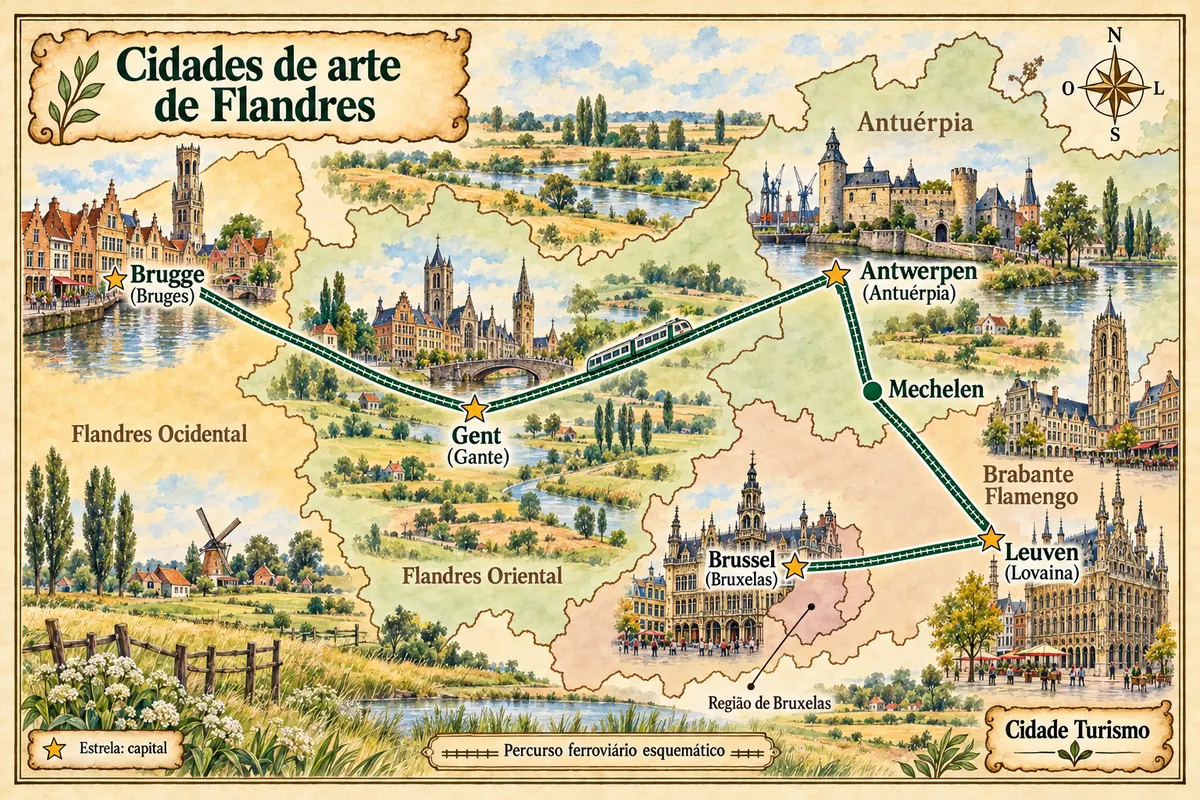
Antuérpia and Mechelen is on the Flemish art cities

Six historic cities linked by train: Brussels, Leuven, Mechelen, Antwerp, Ghent and Bruges, with Flemish painting, cathedrals and medieval centres less than an hour apart.

Illustrative map, not to scale. Tap a city to open its page.
Illustrated map of Flemish art cities
Explore the Flemish art cities

Rotas entre países

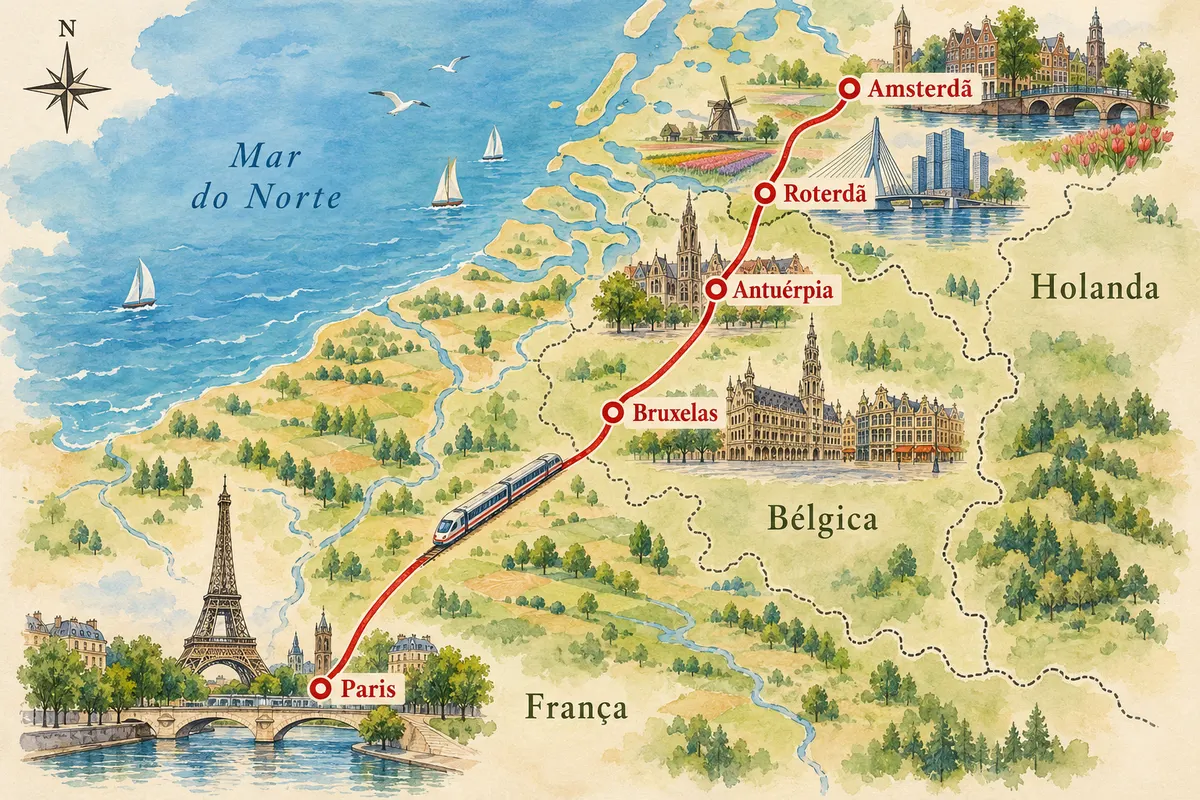
Antuérpia and Mechelen is on the Eurostar Paris–Amsterdam

By train through the centers of Paris, Brussels, Antwerp, Rotterdam and Amsterdam: three countries in just over three hours, from central station to central station.

Illustrative map, not to scale. Tap a city to open its page.
Illustrated map of Eurostar Paris–Amsterdam
Explore the Eurostar Paris–Amsterdam

Rotas entre países

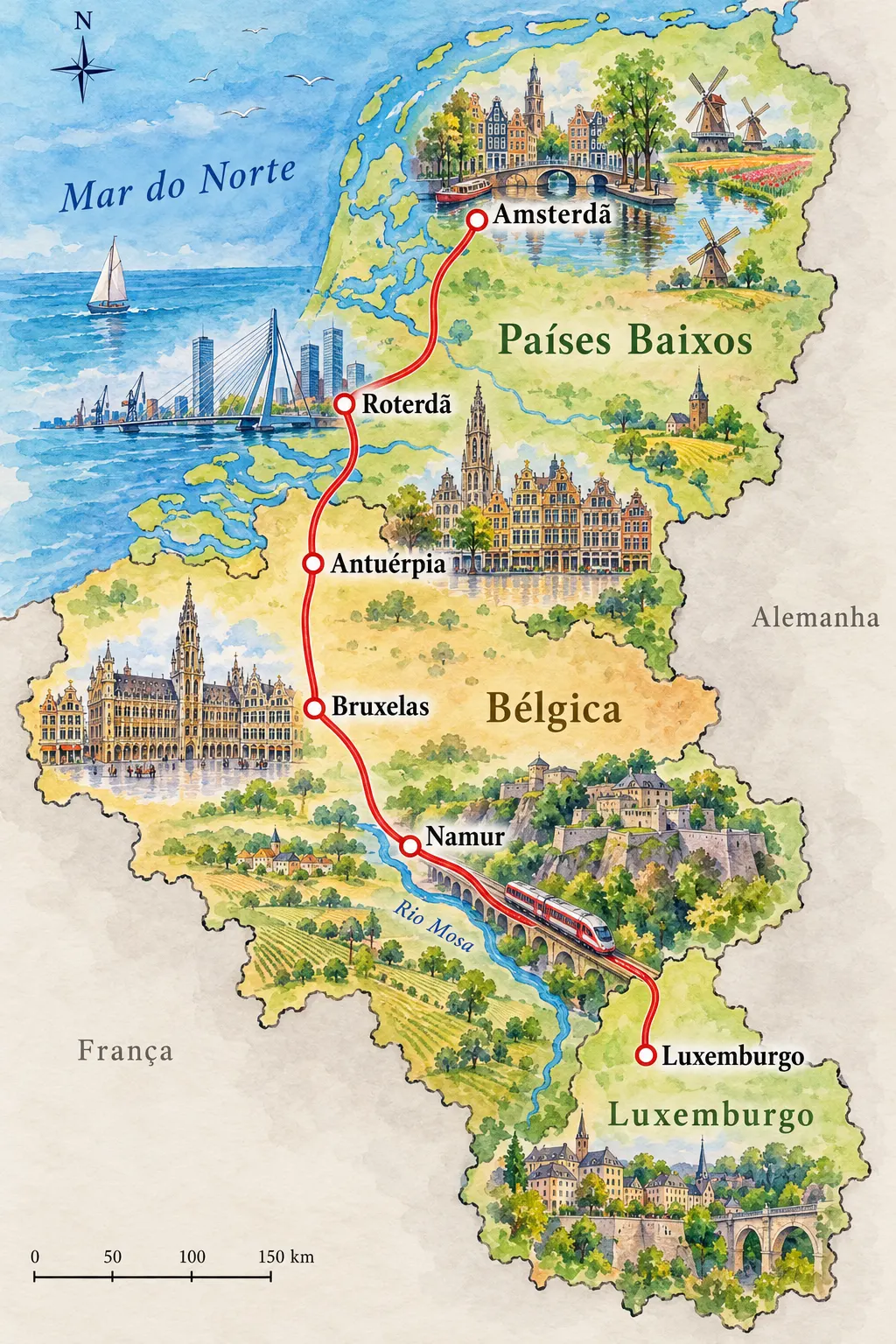
Antuérpia and Mechelen is on the Benelux by train: Amsterdam–Brussels–Luxembourg

The three Benelux countries by train: from Amsterdam to Brussels in about two hours, and from Brussels to Luxembourg via the Ardennes, with Rotterdam, Antwerp and Namur along the way.

Illustrative map, not to scale. Tap a city to open its page.
Illustrated map of Benelux by train: Amsterdam–Brussels–Luxembourg
Explore the Benelux by train: Amsterdam–Brussels–Luxembourg
Explore other destinations Search by state and city