Sweet · Suriname
Bojo
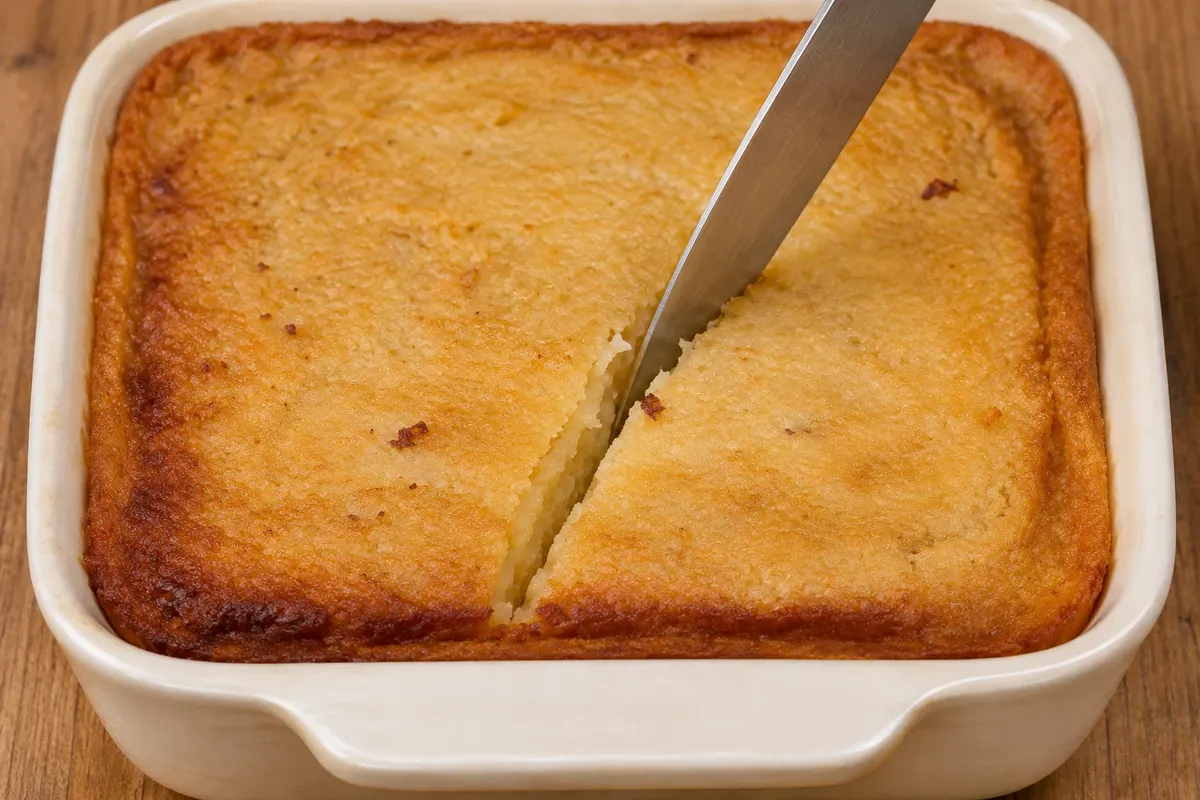
Dense cake made from grated cassava and coconut, without egg or leavening, with an elastic crumb and crunchy crust. A sweet from the Surinamese Creole tradition, commonly served at birthdays and celebrations.

 Search
 Brazil
 Argentina
 Bolivia
 Chile
 Colombia
 Ecuador
 Guyana
 French Guiana
 Falkland Islands (Malvinas)
 Paraguay
 PeruSuriname
 Uruguay
 Venezuela
 Germany
 Austria
 Belgium
 Croatia
 Denmark
 Spain
 Finland
 France
 Greece
 the Netherlands
 Hungary
 Ireland
 Iceland
 Italy
 Luxembourg
 Norway
 Poland
 Portugal
 the United Kingdom
 the Czech Republic
 Sweden
 Switzerland
 Turkey
 Canada
 the United States
 Mexico
 the Dominican RepublicTurkey
 South Africa
 Australia
 Fiji
 New Zealand
 Papua New Guinea
Flavors · Suriname
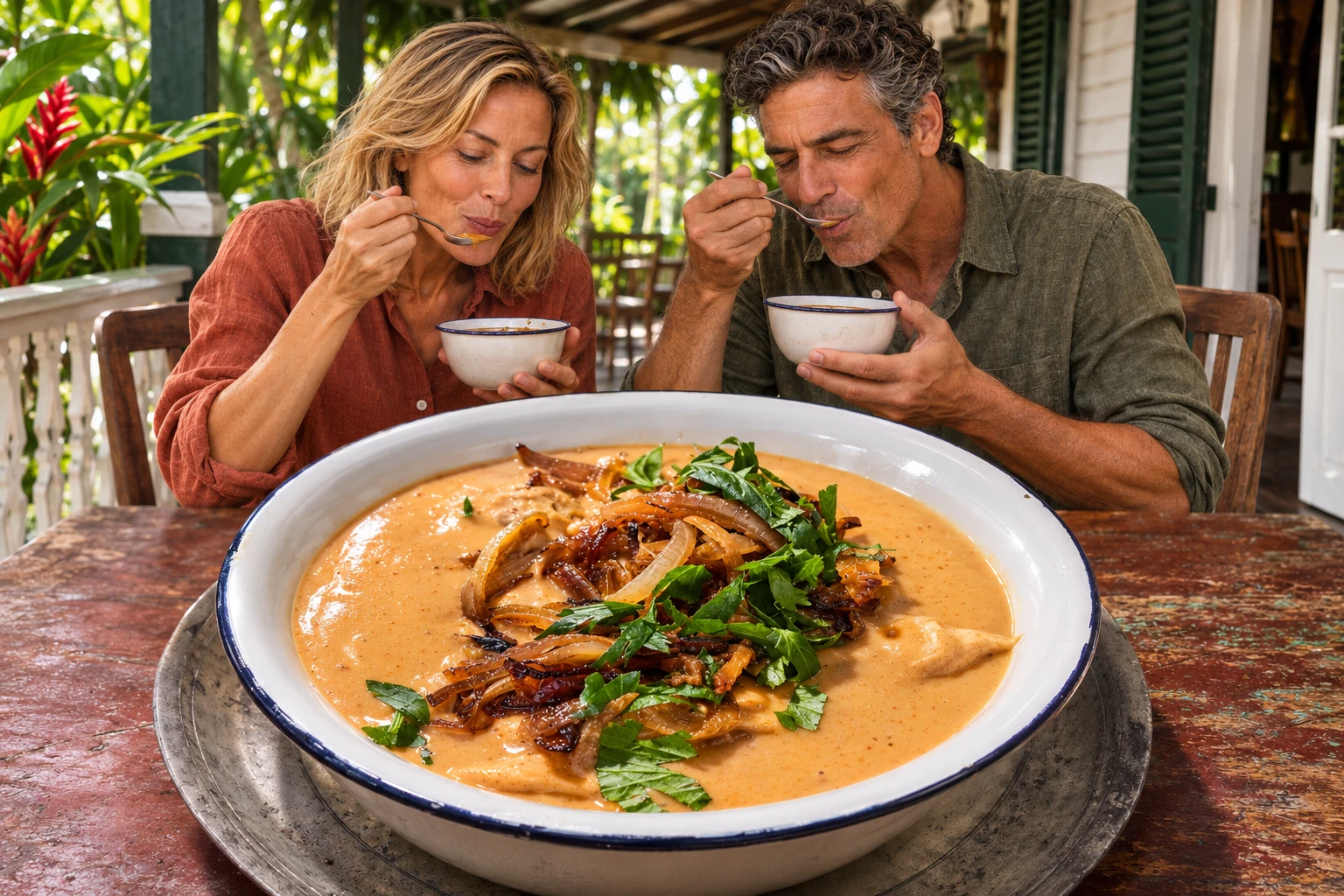
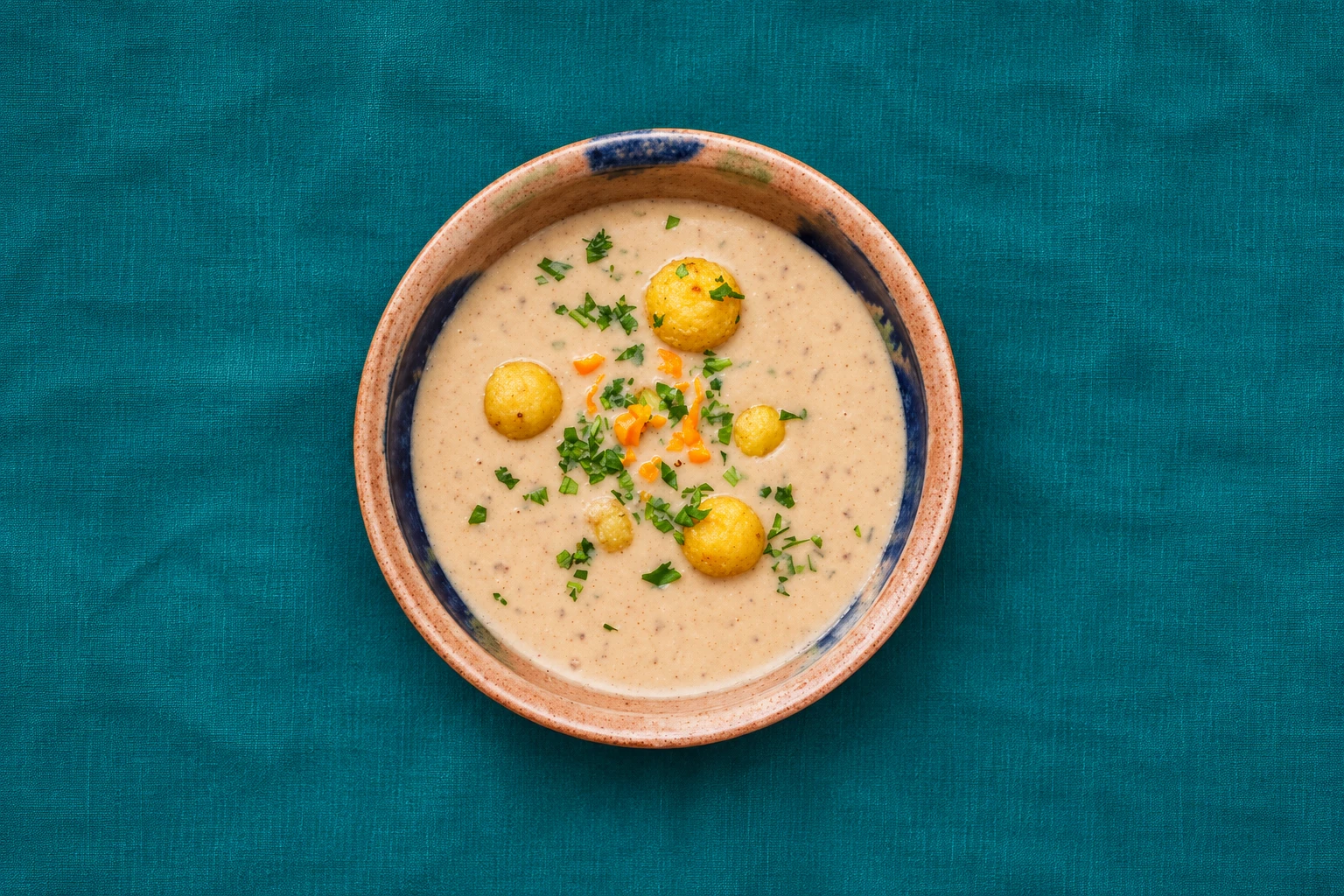
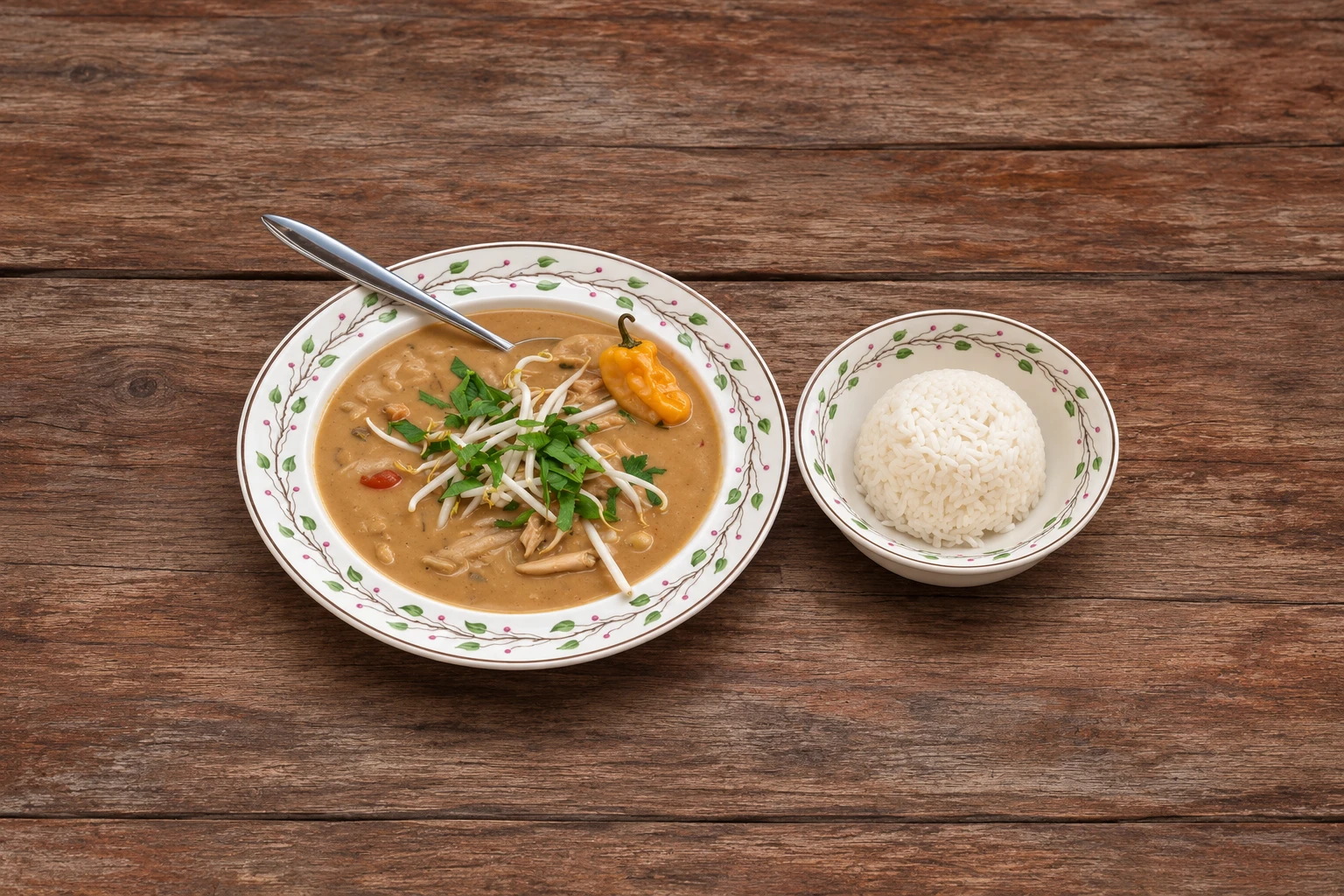
Peanut soup with chicken broth, served with tomtom — small balls of cooked, mashed plantain. It has roots in West African cuisine and is part of Suriname’s Creole culinary tradition.
Traditional dish from Suriname
Also known as: pindasoep met tomtom
Illustrative images. The pictures in this guide are illustrations based on the real place, not photographs, and may differ from it.

Click a photo to enlarge it.
Pindasoep — Suriname
Pindasoep is a thick peanut soup. The base is a slowly simmered chicken broth with onion, garlic, allspice, celery and madame jeanette pepper; peanut paste is stirred into the broth at the end. The traditional recipe also includes salted meat, the zoutvlees.
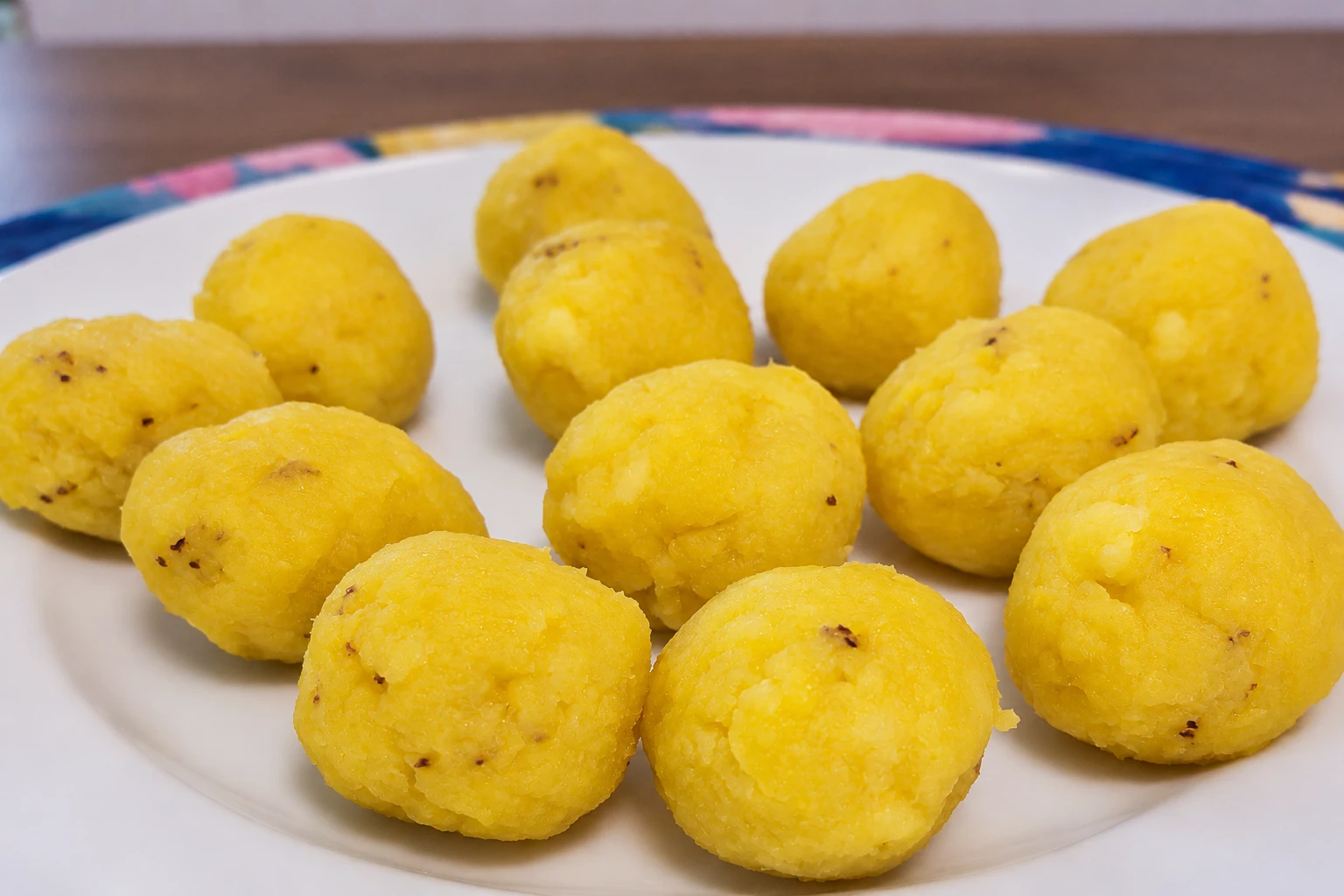
The classic accompaniment is tomtom. Plantains are cooked, mashed and shaped with wet hands into walnut-sized balls; the plantain starch helps bind the dough. The balls go in the soup bowl and the hot soup is poured over them.
The soup is part of the African heritage of Suriname’s Creole cuisine. In West Africa there were similar soups made with bambara groundnut, which resembles peanut; in Suriname, the peanut, a plant native to South America, took that place. Every family has its own way of making it.
Pindasoep appears at parties and gatherings and also as an everyday meal. The soup’s heat varies: Surinamese peanut paste is often already spicy, and the madame jeanette pepper makes the broth stronger.
Suriname
A Creole-tradition soup with roots in West African cuisine, eaten across the country.
Chicken, peanut paste, salted meat (zoutvlees), onion, garlic, allspice, celery and madame jeanette pepper. For the tomtom: green and ripe plantains.
In a deep bowl: tomtom at the bottom and hot soup on top, garnished with chopped celery leaves. It may be served with rice; the pepper is often provided on the side.
At family parties and gatherings, and also as an ordinary meal.
Your questions
They are walnut-sized balls of cooked, mashed plantain. They go at the bottom of the bowl, and the pindasoep is served over them.
It depends on the recipe. Surinamese peanut paste is often already spicy, and the madame jeanette pepper makes the soup hotter; many times the pepper is served separately.
It is part of the African heritage of Suriname’s Creole cuisine. In West Africa there were similar soups made with bambara groundnut; in Suriname, the peanut took that role.
Flavors of Suriname
Dense cake made from grated cassava and coconut, without egg or leavening, with an elastic crumb and crunchy crust. A sweet from the Surinamese Creole tradition, commonly served at birthdays and celebrations.
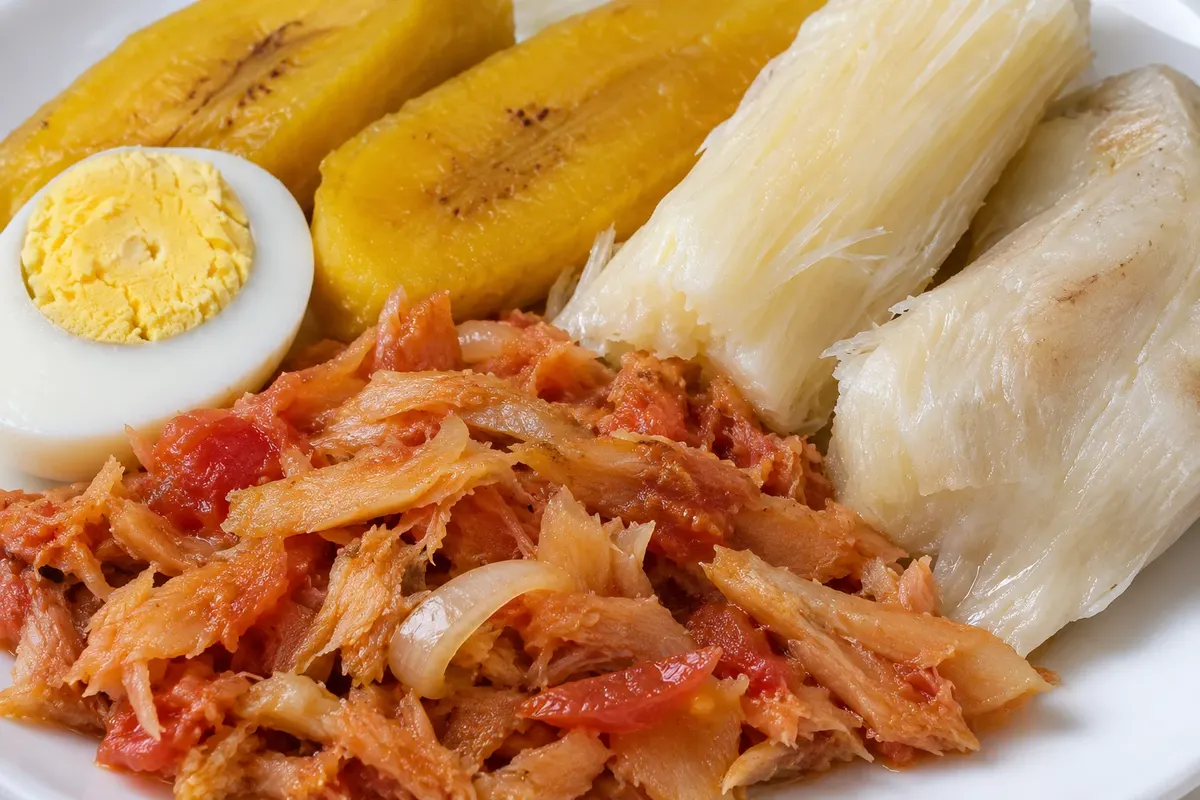
Dish of cassava, sweet potato, green and ripe plantain, salted cod and boiled egg. It originated from plantation food in the time of slavery and is associated with Keti Koti, July 1st.
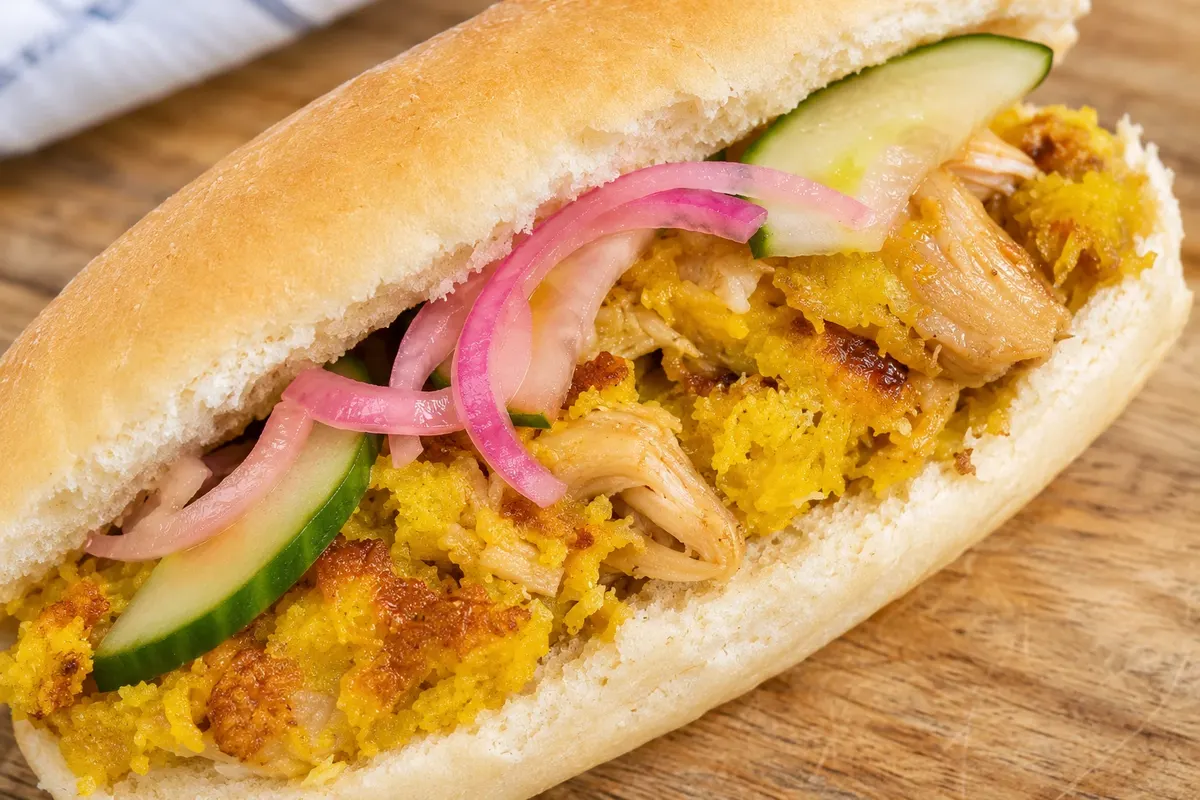
Baked dish made with pomtajer, a regional root, grated and mixed with citrus juice, layered with sautéed chicken. It is Suriname’s best-known festive dish and is often called the national dish.
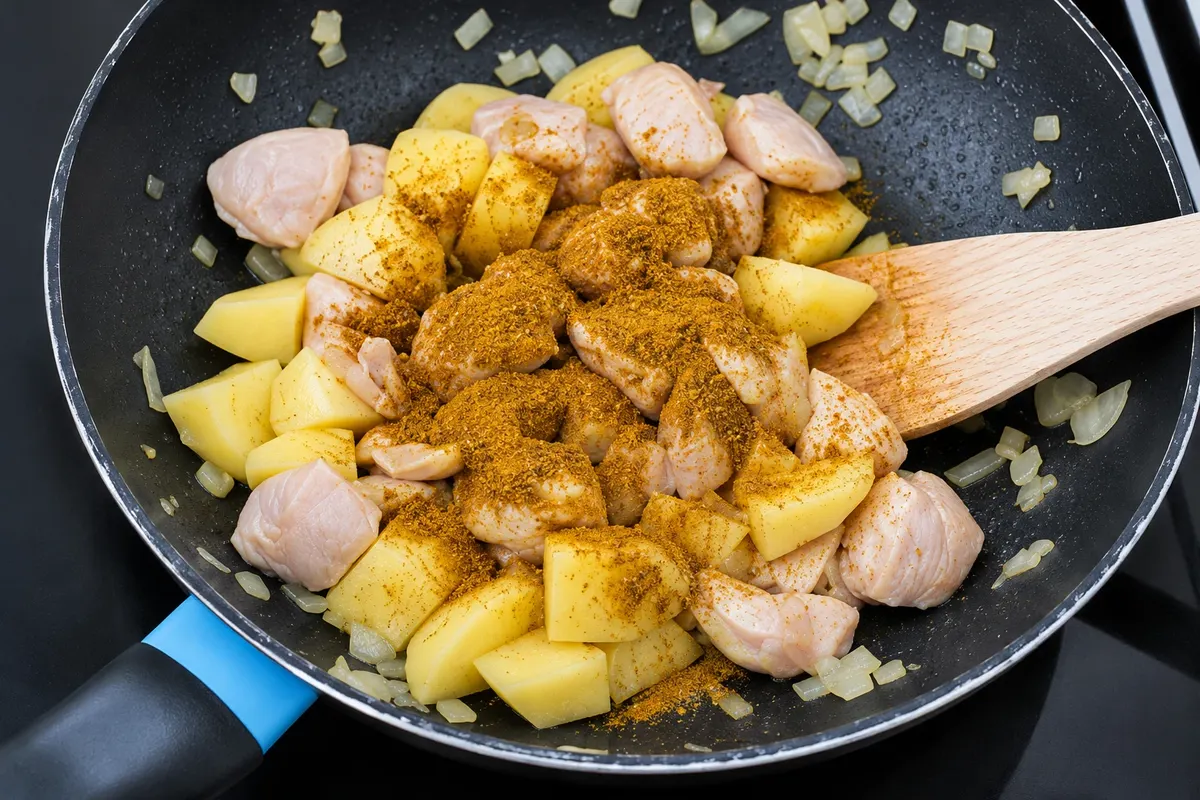
Flat thin bread of Indian origin, served with curried chicken, potato and kousenband, a long bean. It arrived in Suriname with indentured workers from British India starting in 1873, and today it is eaten throughout the country.
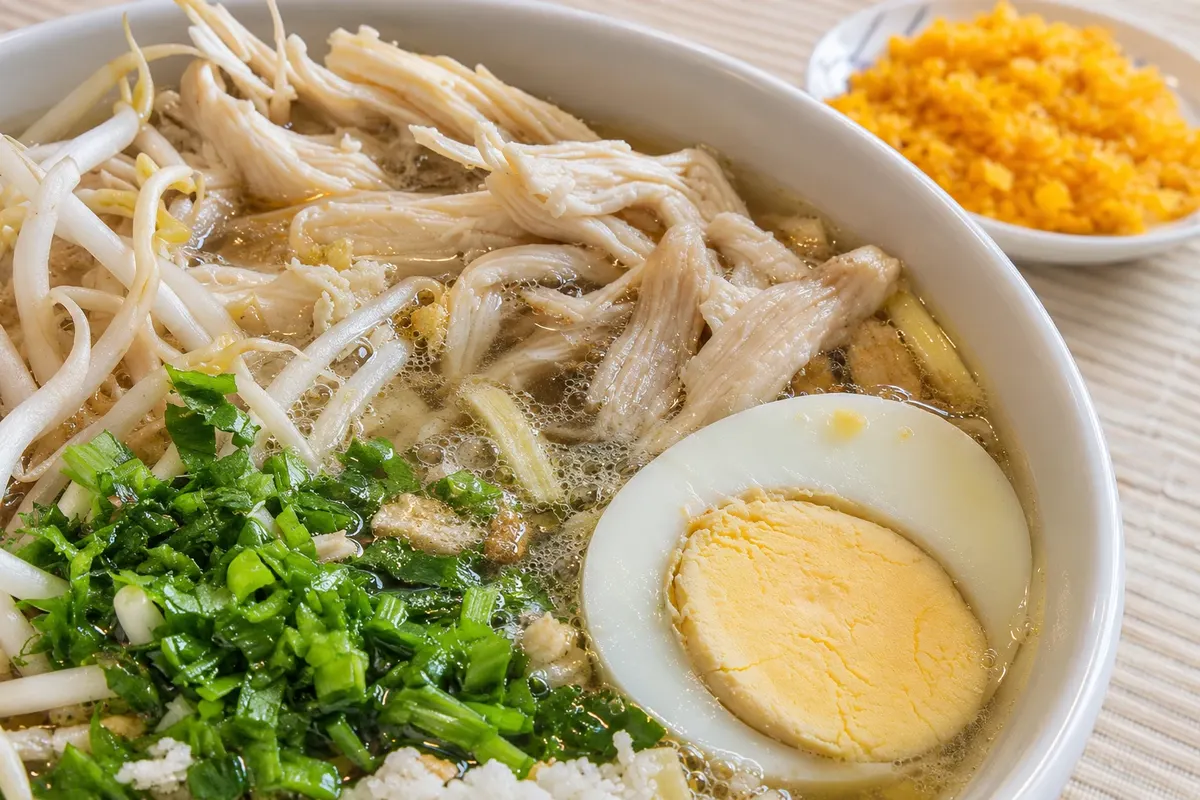
Clear chicken broth served over rice, with shredded chicken, bean sprouts, hard‑boiled egg, fried rice vermicelli and thin stick fries. It is the Surinamese version of Javanese soto, brought by Javanese workers from 1890.