1 city

 Search
 Brazil
 Argentina
 Bolivia
 Chile
 Colombia
 Ecuador
 Guyana
 French Guiana
 Falkland Islands (Malvinas)
 Paraguay
 Peru
 Suriname
 Uruguay
 Venezuela
 Germany
 Austria
 Belgium
 Croatia
 Denmark
 Spain
 Finland
 France
 Greece
 the Netherlands
 Hungary
 Ireland
 Iceland
 Italy
 Luxembourg
 Norway
 Poland
 Portugal
 the United Kingdom
 the Czech Republic
 Sweden
 Switzerland
 Turkey
 the United States
 Mexico
 the Dominican RepublicTurkey
 South Africa
 Australia
 FijiNew Zealand
Region · Otago and Southland
Otago stretches from the lakes and mountains of Queenstown and Wānaka to the coast of Dunedin: adventure sports, ski fields, pinot noir vineyards and the wildlife of the Otago Peninsula.
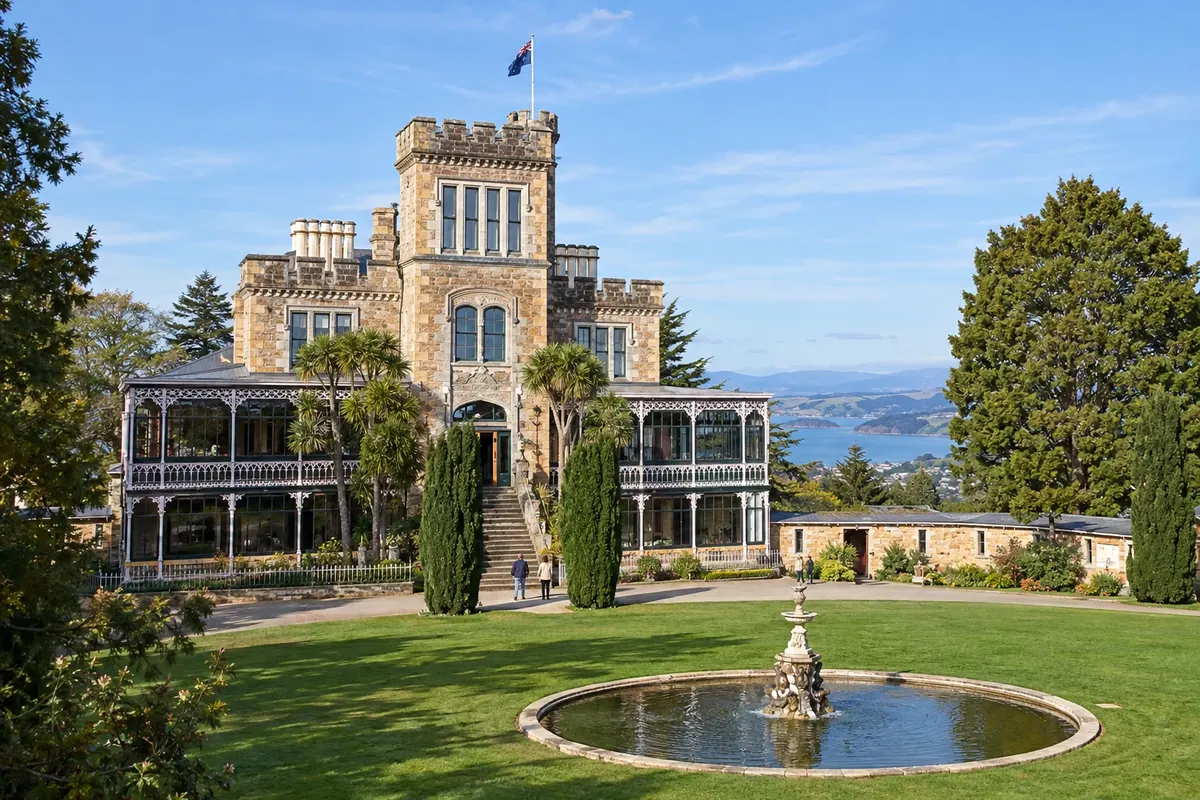
In the photo: Larnach Castle in Otago
Illustrative images. The pictures in this guide are illustrations based on the real place, not photographs, and may differ from it.

The region
Otago (Ō Tākou) occupies the southeast and southern interior of the South Island, from the Southern Alps to the Pacific coast. The interior, called Central Otago, has a dry climate, hot summers and cold winters, with glacial lakes, vineyards and former 1860s gold-rush towns. Dunedin, on the coast, is the regional council seat.
Queenstown, on the shore of Lake Wakatipu and facing The Remarkables range, is the country's main adventure-sports centre: commercial bungee jumping started there, at the Kawarau River bridge, and there are jet boats, rafting and paragliding. The gondola climbs to Bob's Peak above the town. Nearby Arrowtown preserves gold-rush buildings and Chinese miners' huts, and Glenorchy, at the northern tip of the lake, is the gateway to the Routeburn Track.
Wānaka, on the shore of the lake of the same name, is quieter and provides access to Mount Aspiring National Park; Roys Peak and the Matukituki Valley are among the most popular hikes. In winter, Coronet Peak and The Remarkables near Queenstown, and Cardrona and Treble Cone near Wānaka, host skiers.
Central Otago is often cited as the southernmost wine region in the world and is known for pinot noir, with vineyards in Gibbston, Bannockburn and Cromwell. The Otago Central Rail Trail, about 150 km between Clyde and Middlemarch, was the country's first rail-trail and passes through tunnels, viaducts and old towns.
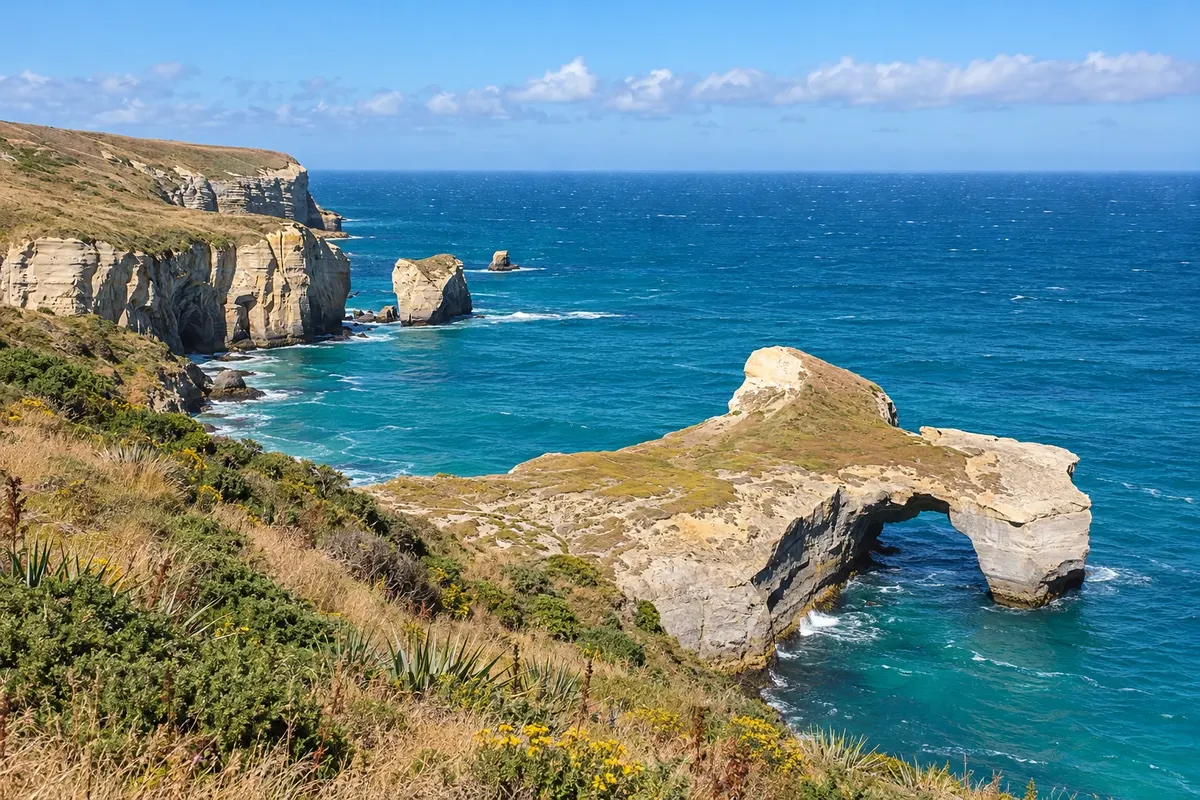
Dunedin (Ōtepoti) has Scottish heritage, a stone railway station, the country's oldest university and Baldwin Street, a road of extreme steepness. On the Otago Peninsula, Pukekura (Taiaroa Head) hosts the only mainland royal albatross colony in the world that is inhabited, and the peninsula's beaches are habitat for the yellow-eyed penguin (hoiho), fur seals and sea lions.
Destinations
Cities
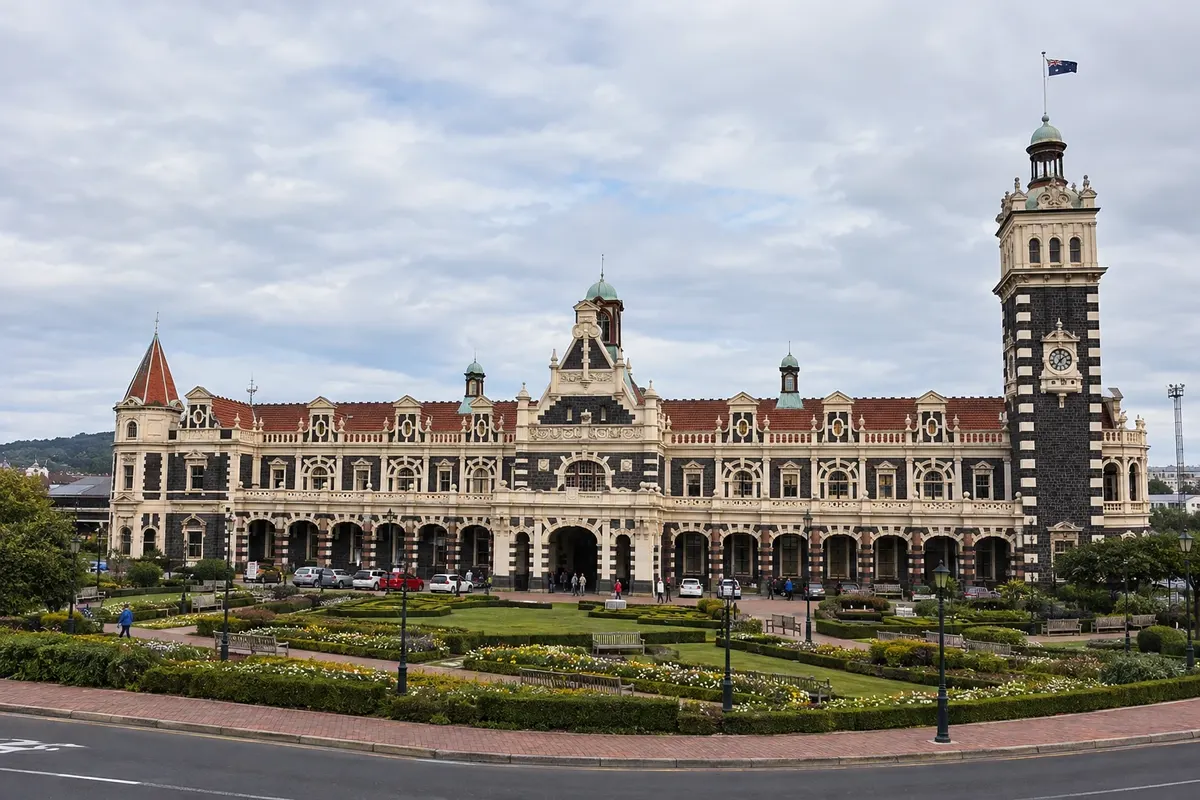
Dunedin is the seat of Otago and the second-largest city on the South Island, founded in 1848 by Scottish settlers at the head of Otago Harbour. The stone centre revolves around the Octagon, with the 1906 railway station, the Toitū museum and the Otago Museum a few blocks away. It has Baldwin Street, the steepest street in the world, and provides access to the Otago Peninsula, with Larnach Castle and the Taiaroa albatrosses.
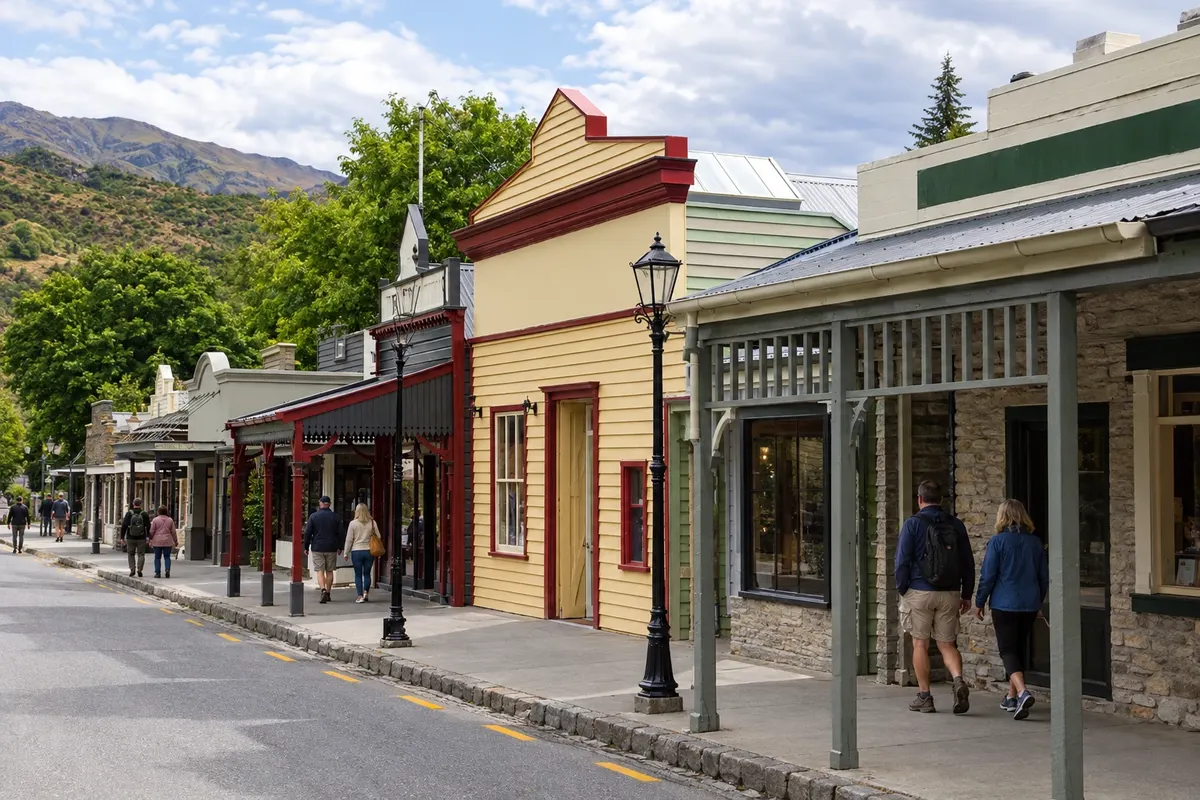
Arrowtown is a village of about 2,900 people that began in 1862 when gold was found in the Arrow River, about 20 km from Queenstown. Buckingham Street preserves miners’ cottages from the 1870s, the Lakes District Museum tells the gold‑rush story, and the restored Chinese settlement commemorates Chinese miners. In autumn the village trees turn golden.
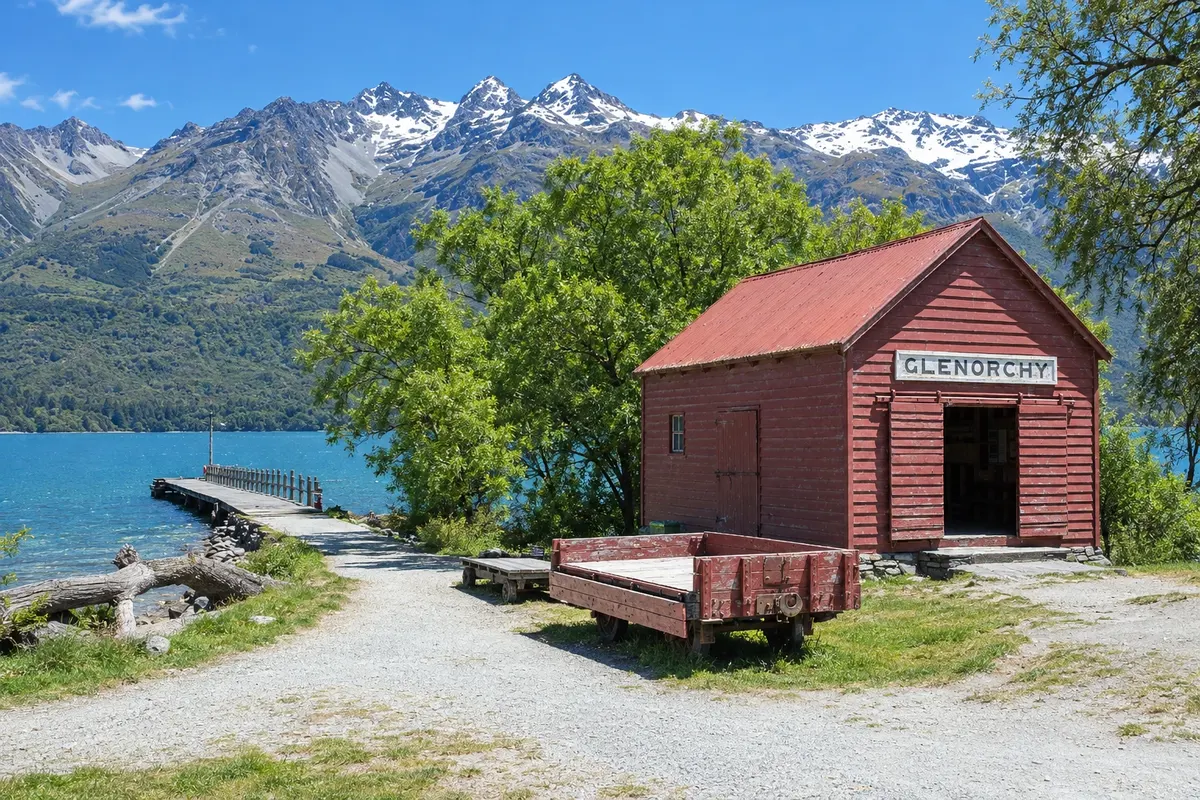
Glenorchy is a village of about 360 people at the end of Lake Wakatipu, 45 km from Queenstown, where the Dart River reaches the lake. The road there runs along the shore between mountains. It is the gateway to the Routeburn Track, one of the Great Walks, and has a boardwalk trail around the lagoon beside the village.
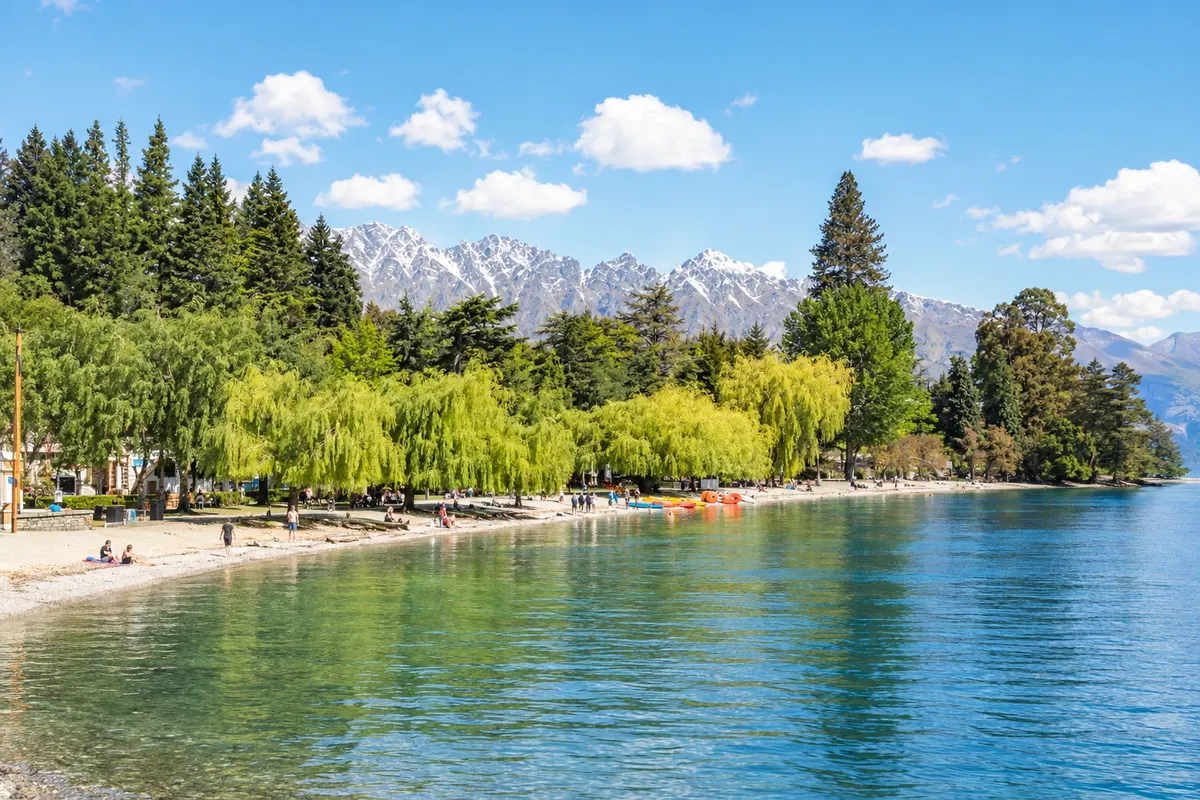
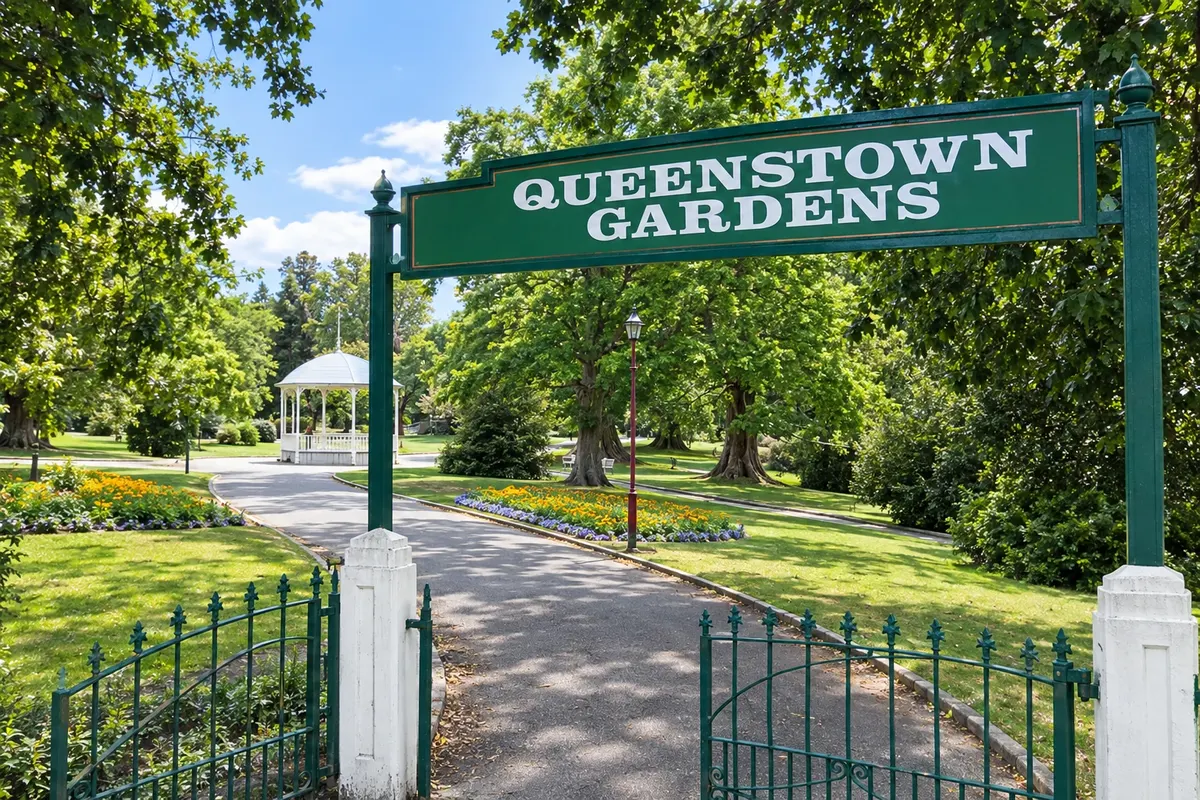
Queenstown is the adventure-sports and skiing town on the shore of Lake Wakatipu, founded during the 1860s gold rush. The compact town center sits between the lake and the slope of Ben Lomond, served by a gondola. The steamship TSS Earnslaw departs from the wharf, and the gardens occupy the peninsula opposite. It’s the base for Arrowtown, Glenorchy, Milford Sound and the ski resorts.
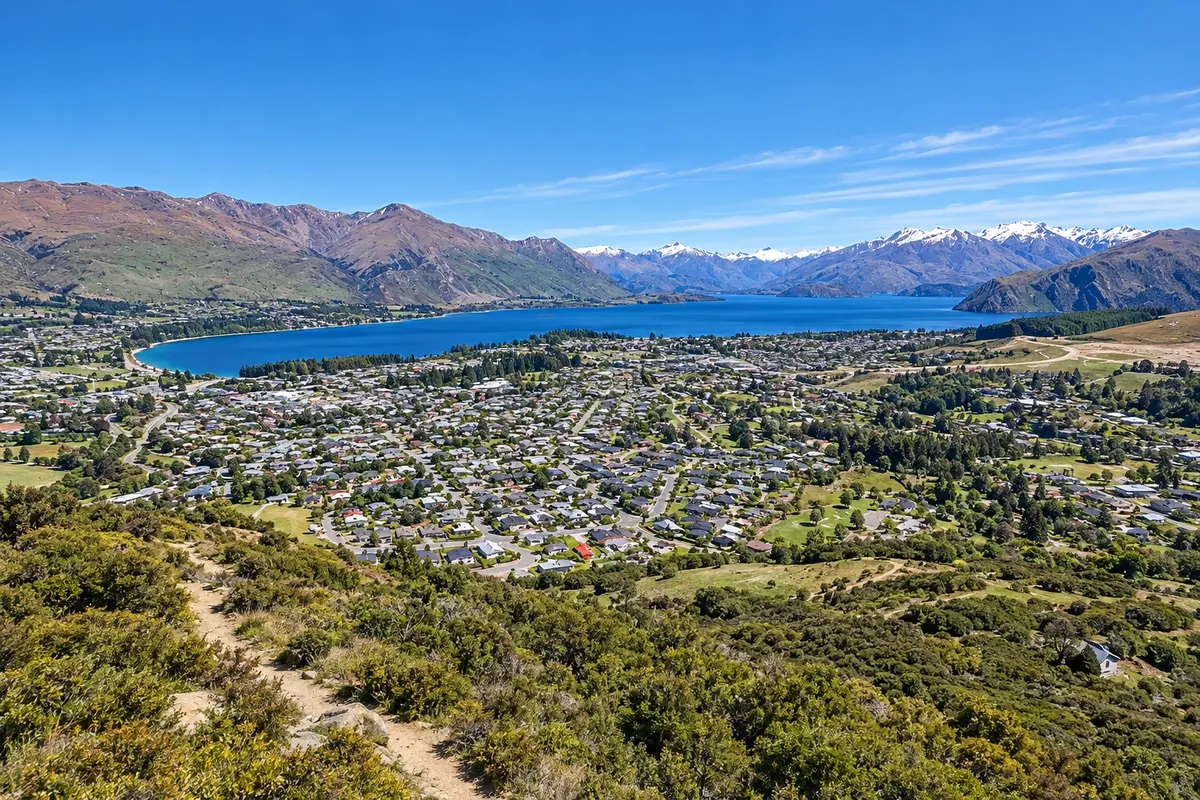
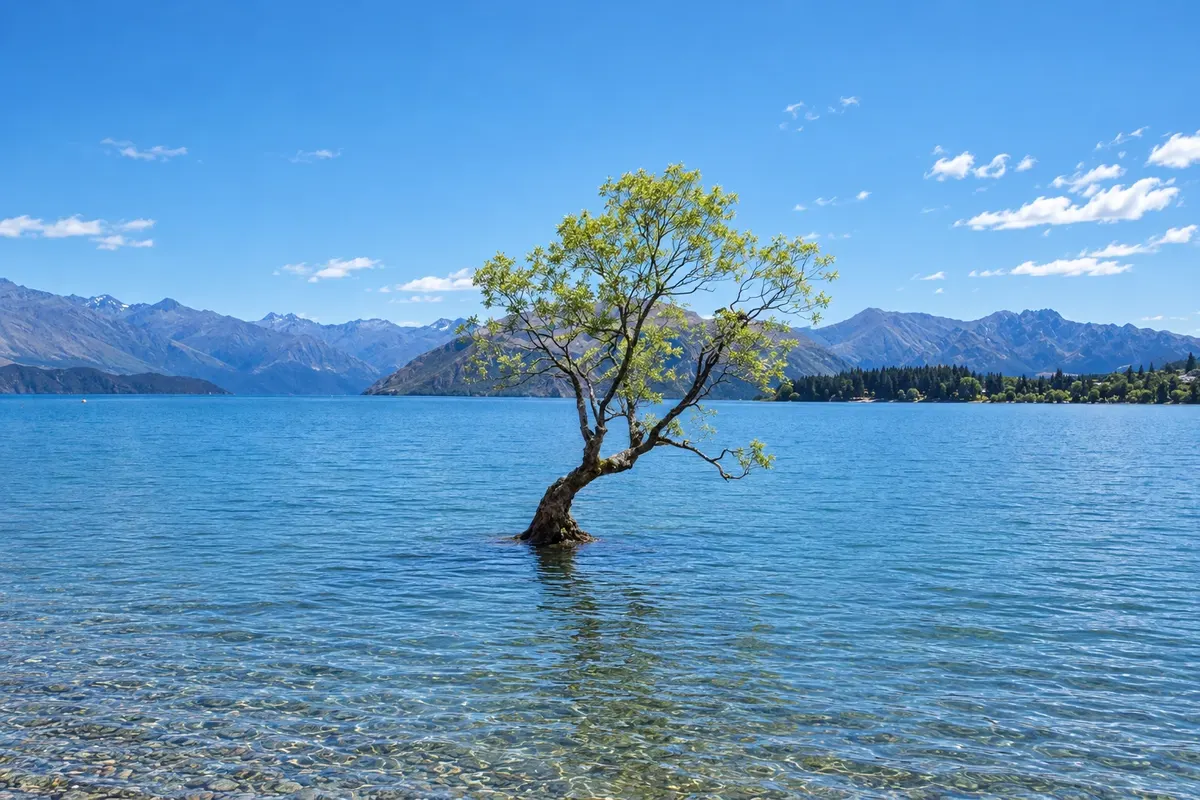
Wānaka is the town on the shore of Lake Wānaka, the gateway to Mount Aspiring National Park. The waterfront features the tree that grows in the lake, pebble beaches and trails, and the surrounding mountains hold the routes of Roys Peak, Mount Iron and the Rob Roy Glacier. Just outside town is Puzzling World, with a maze and optical illusions.
Summer, from December to February, brings long, warm days inland, good for hikes, lakes and cycle trails. In autumn, the poplars of Arrowtown and Wānaka usually turn yellow in April. The ski season generally runs from mid-June to early October. At the albatross colony, chicks typically remain in the nest between February and September.
Queenstown Airport (ZQN) has domestic flights and services from Australia, and Dunedin Airport (DUD) has flights from Auckland, Wellington and Christchurch. By road, Queenstown is about 480 km from Christchurch and about 280 km from Dunedin; Wānaka is around 70 km from Queenstown via the Crown Range road. Long-distance buses link the region's towns.
Your questions
Three days allow for the town and the gondola, Arrowtown, Glenorchy and one adventure activity. With four or five days you can include a day trip to Milford Sound, departing from Queenstown or from Te Anau.
Queenstown has more flights, tours and nightlife; Wānaka is smaller and quieter, close to Mount Aspiring. Many travellers split their stay between the two, linked by about an hour's drive.
At Pukekura (Taiaroa Head), on the tip of the peninsula, the visitor centre runs guided groups to an observatory above the colony; book in advance. In some months access is restricted because of nesting.
To sleep in huts and campsites during the Great Walks season, yes: places are limited and fill quickly. Day hikes, such as the walk to the Routeburn Falls, do not require booking.
Generally from mid-June to early October, depending on snow. Queenstown and Wānaka serve as bases, with buses to the ski fields.