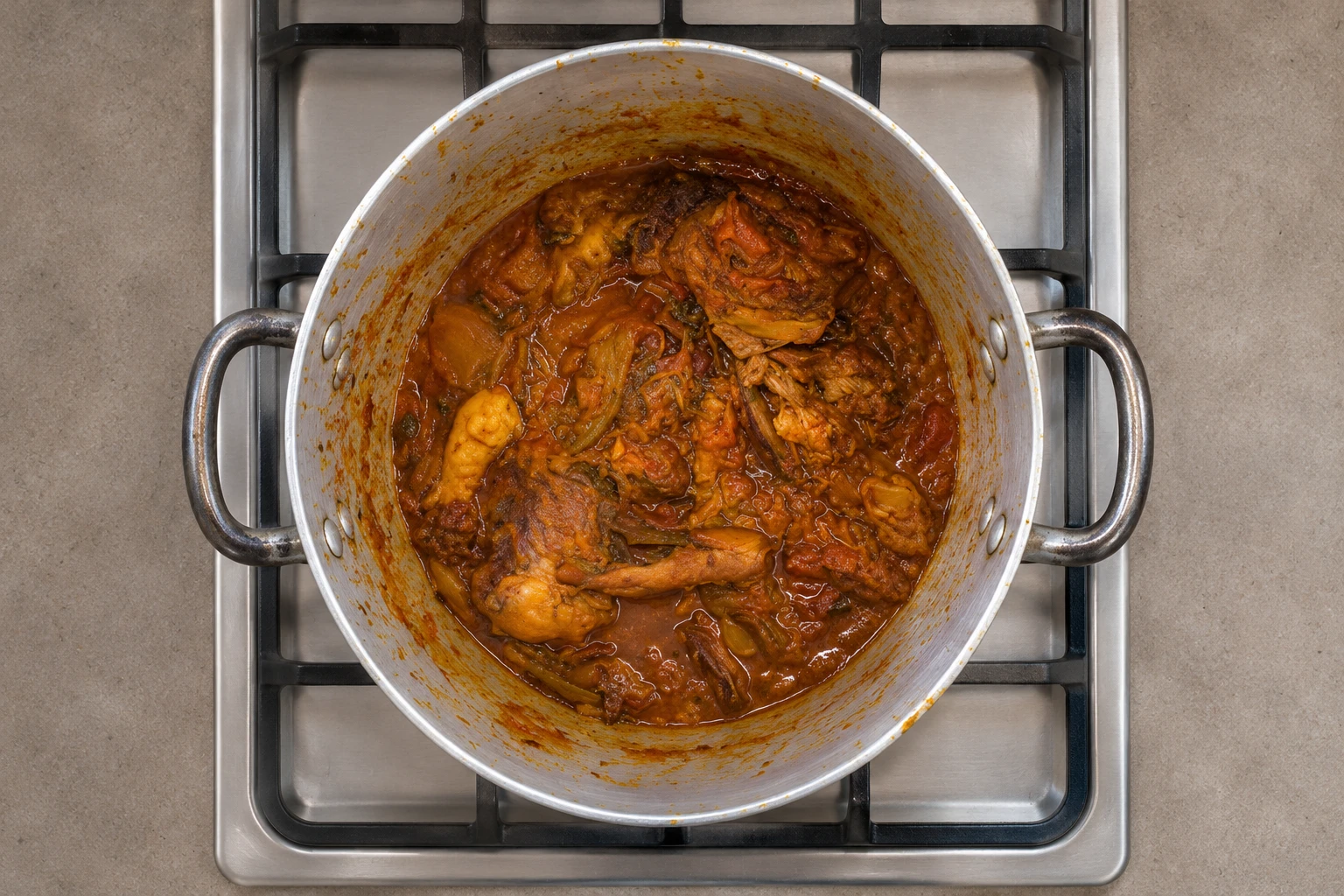
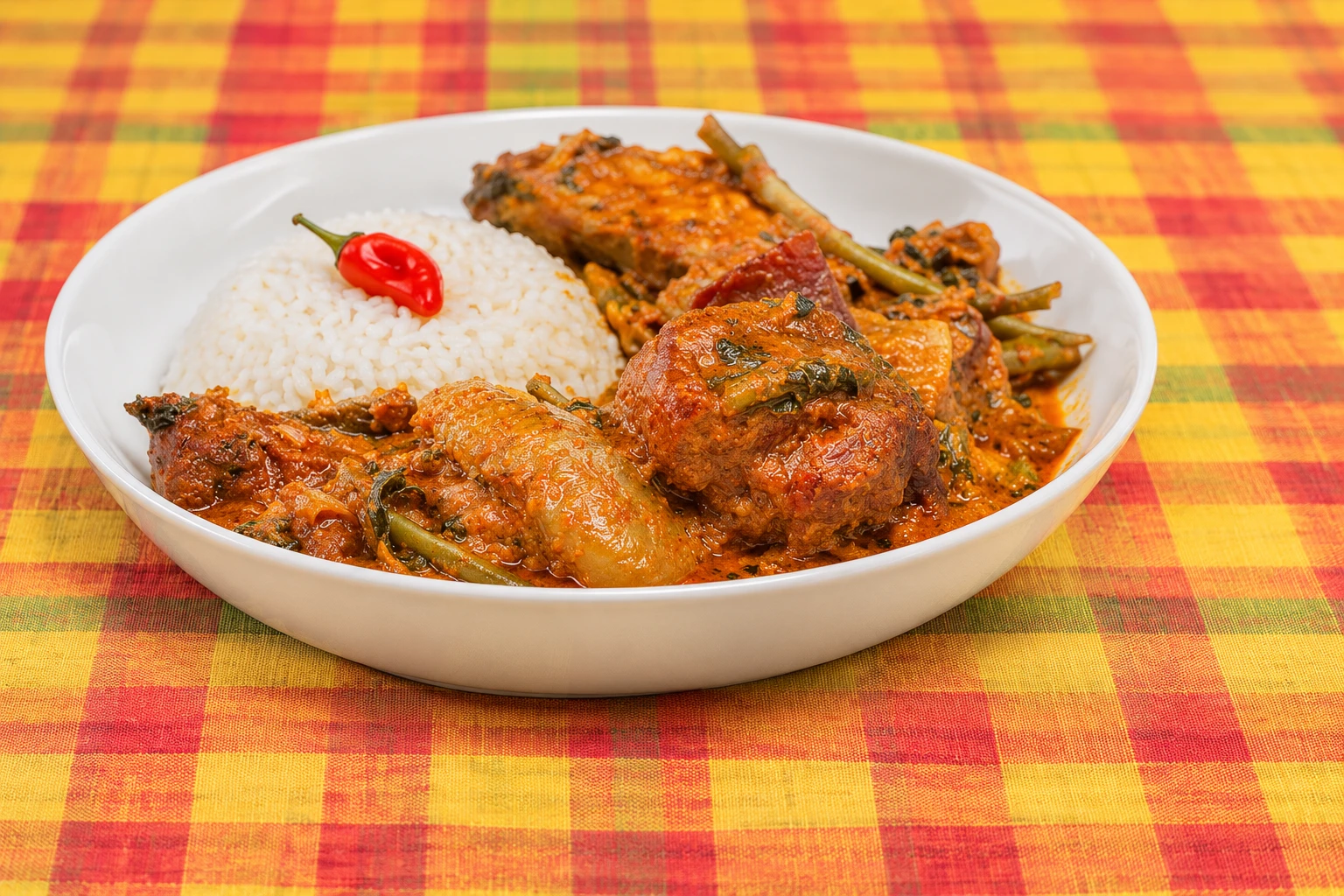
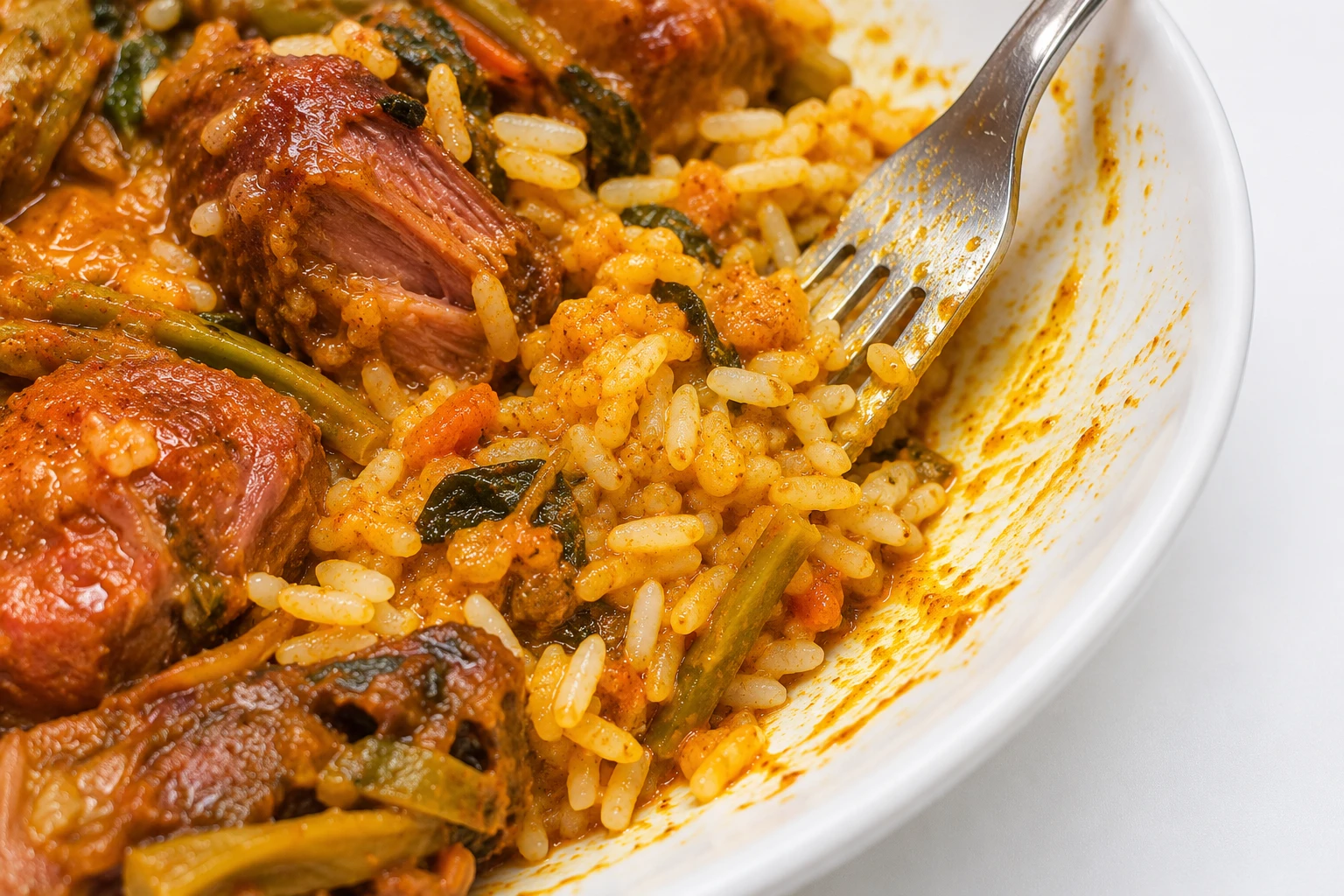
Bouillon d'awara is a thick, orange stew. The base is awara paste, made from the pulp of the fruit of a local palm (Astrocaryum vulgare), about the size of a plum. Smoked meats and fish (boucanés), salted meats such as pig tail and bacon, shrimp, crab and many vegetables cook in it for hours, including spinach, cabbage, cucumber, green beans and eggplant. Each family has its own combination.
Preparation takes days. Salted meats soak to remove excess salt, the paste is diluted and simmered with them, and the vegetables are added gradually. The bouillon then cooks for many hours over low heat until the flavors meld.
It is the Easter dish, and for many families also served at Pentecost. According to official French tourism sources, this 'national' dish is also a way to welcome visitors. A popular saying goes: “Si tu manges du bouillon d'awara, en Guyane tu reviendras” — whoever eats bouillon d'awara will return to Guiana.
The origin is told in more than one way. Lonely Planet mentions an African origin. In 2024, historian Emmanuel Garnier of the CNRS presented research in Cayenne conducted with the Confrérie gastronomique du bouillon d'awara. According to him, the use of awara in local cooking appears as early as the 17th century: indigenous peoples passed on knowledge of the fruit, and Africans brought by the slave trade and maroons adapted it to their traditions. The current form of the dish is thought to have been defined between the 1930s and 1950s. Garnier describes bouillon d'awara as a common heritage that no single community can claim on its own.


 Brazil
 Argentina
 Bolivia
 Chile
 Colombia
 Ecuador
 Guyana
 Falkland Islands (Malvinas)
 Paraguay
 Peru
 Suriname
 Uruguay
 Venezuela
 Germany
 Austria
 Belgium
 Croatia
 Denmark
 Spain
 Finland
 France
 Greece
 the Netherlands
 Hungary
 Ireland
 Iceland
 Italy
 Luxembourg
 Norway
 Poland
 Portugal
 the United Kingdom
 the Czech Republic
 Sweden
 Switzerland
 Turkey
 Canada
 the United States
 Mexico
 the Dominican Republic
 South Africa
 Australia
 Fiji
 New Zealand
 Papua New Guinea