Hospices de Beaune (Hôtel-Dieu): the 1443 hospital and the Last Judgment polyptych
From Beaune centre TER from Dijon to Beaune and walk to the center about 1 hour to 1 hour 30 minutes morning or afternoon easy
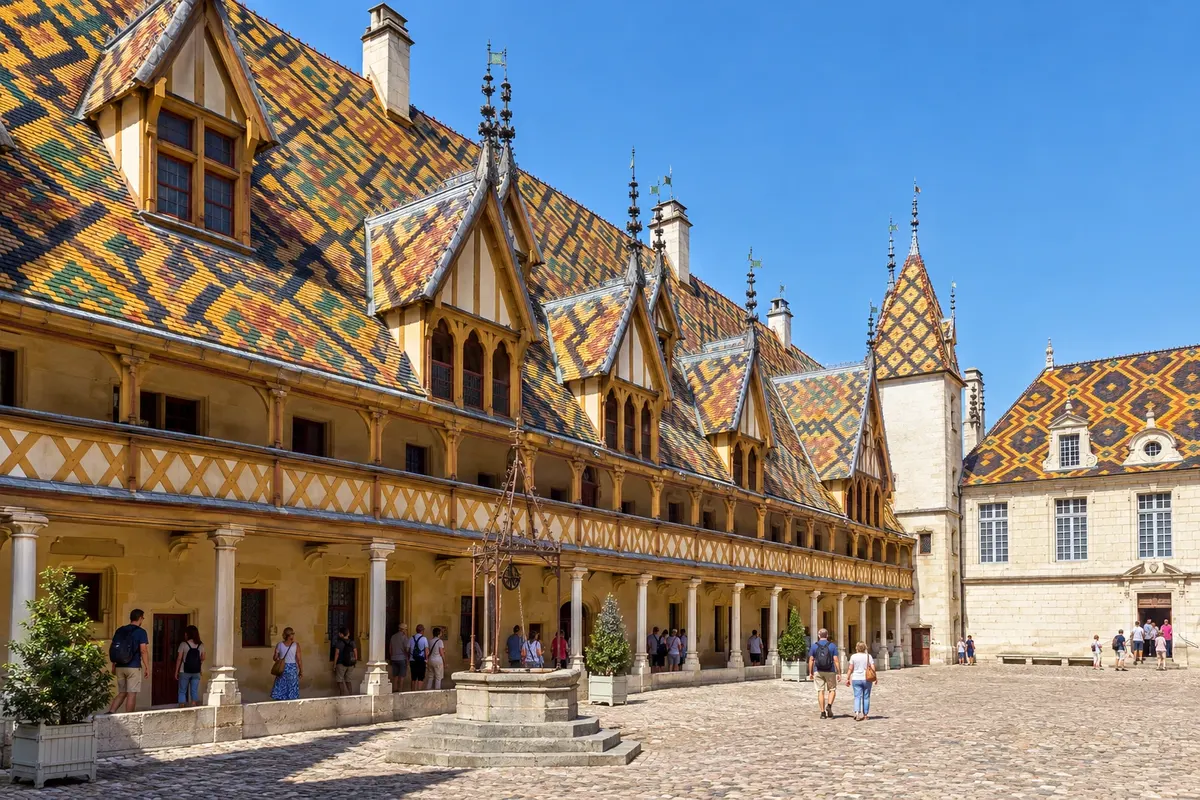
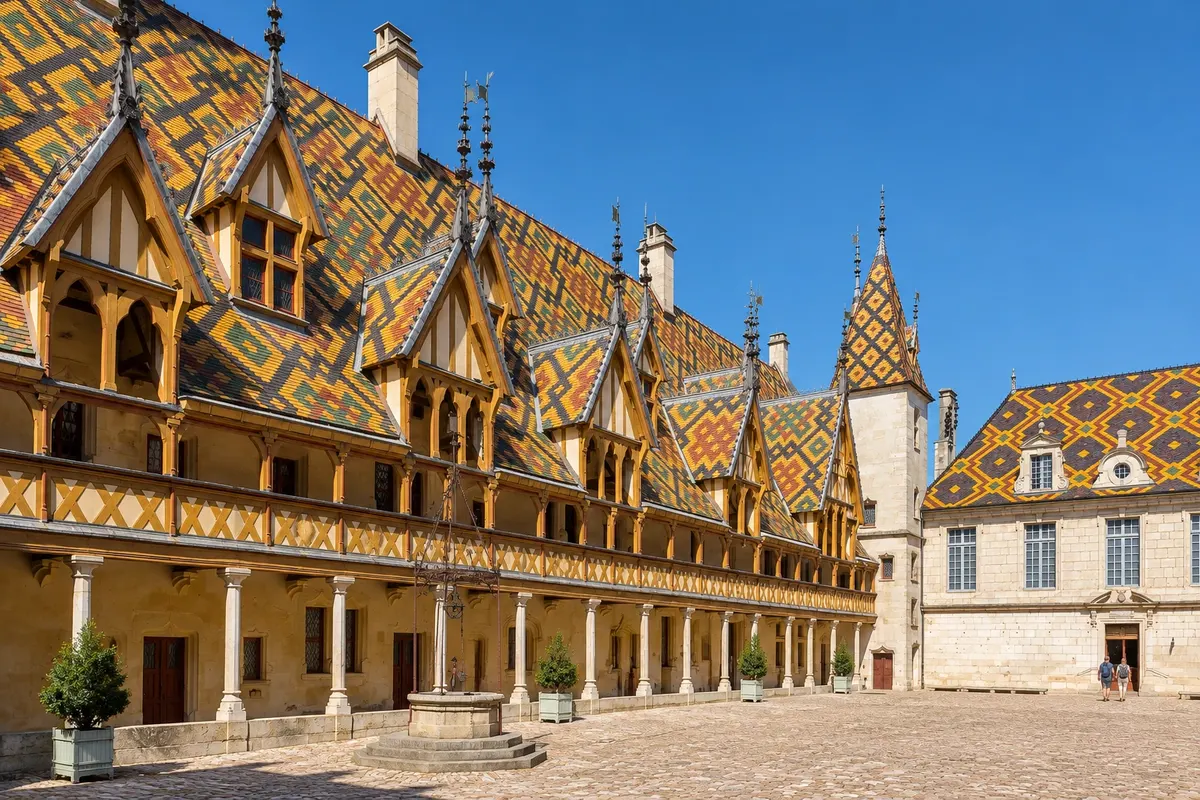
The Hôtel-Dieu of Beaune, the building of the Hospices de Beaune, was founded in 1443 by Nicolas Rolin, chancellor to Duke Philip the Good, and his wife Guigone de Salins as a hospital for the poor. It operated as a hospital until 1971 and is now a museum. The feature seen most in photos is the roof of glazed tiles in four colors—red, brown, yellow and green—forming lozenges around the central courtyard, which has wooden galleries and an iron‑forged well. The visit includes the Grande Salle des Pôvres, 50 m long, 14 m wide and 16 m high, with a wooden ceiling shaped like an inverted ship’s hull and about 30 beds with red curtains. It also passes through the Salle Saint-Hugues, the kitchen and the pharmacy, which holds about 130 faience jars from the 18th century. The highlight is the Last Judgment polyptych, painted by Rogier van der Weyden between 1443 and 1452, displayed in a climate-controlled room.
Stops: Hospices de Beaune, Hôtel-Dieu, Grande Salle des Pôvres, Beaune.
Includes: There is an admission fee, with an audio guide available for a self-guided visit. Check the current price list.
Tip: Arrive at opening time: tour groups usually arrive mid-morning. Beaune station is a short walk from the center. On the third weekend of November, during the Trois Glorieuses, the town fills up because of the Hospices wine auction.
Best time: All year round. From April to October there is more activity; in November, the Hospices wine auction fills the town.
Beaune center: Collégiale Notre-Dame and walk along the ramparts
From Beaune centre On foot about 2 hours morning or afternoon easy
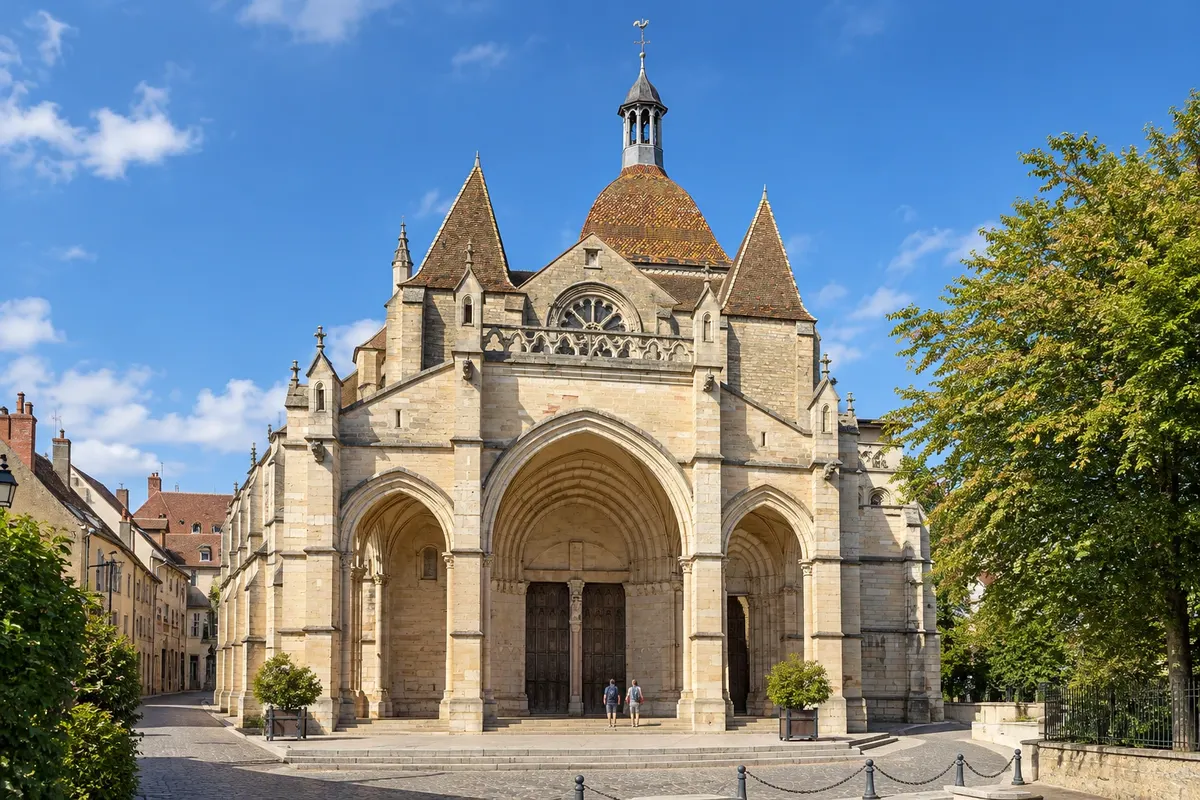
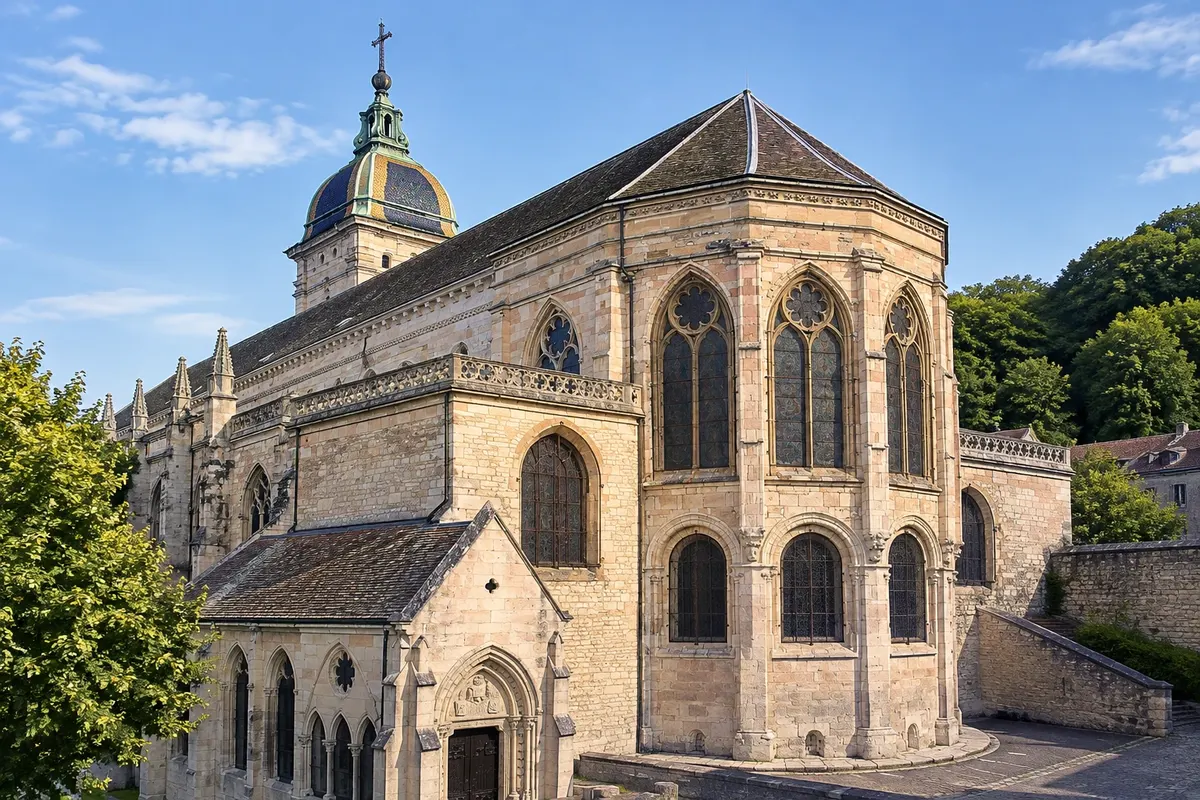
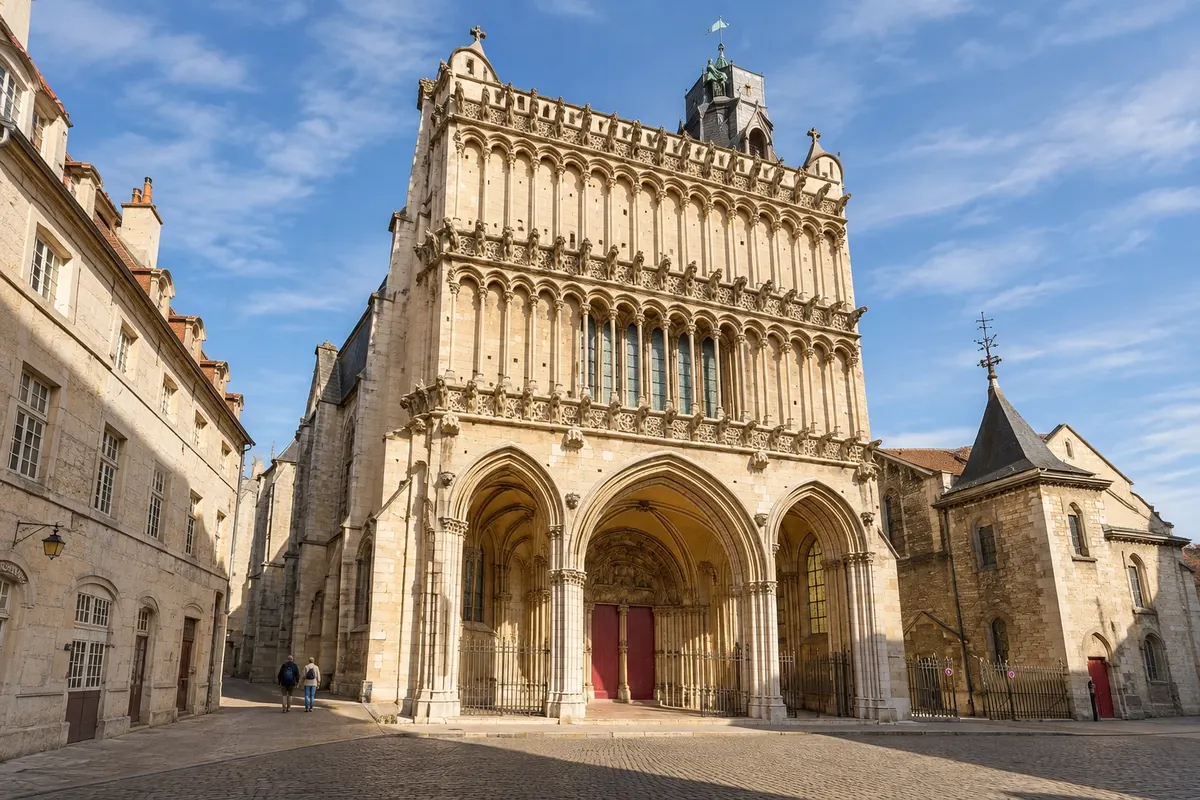
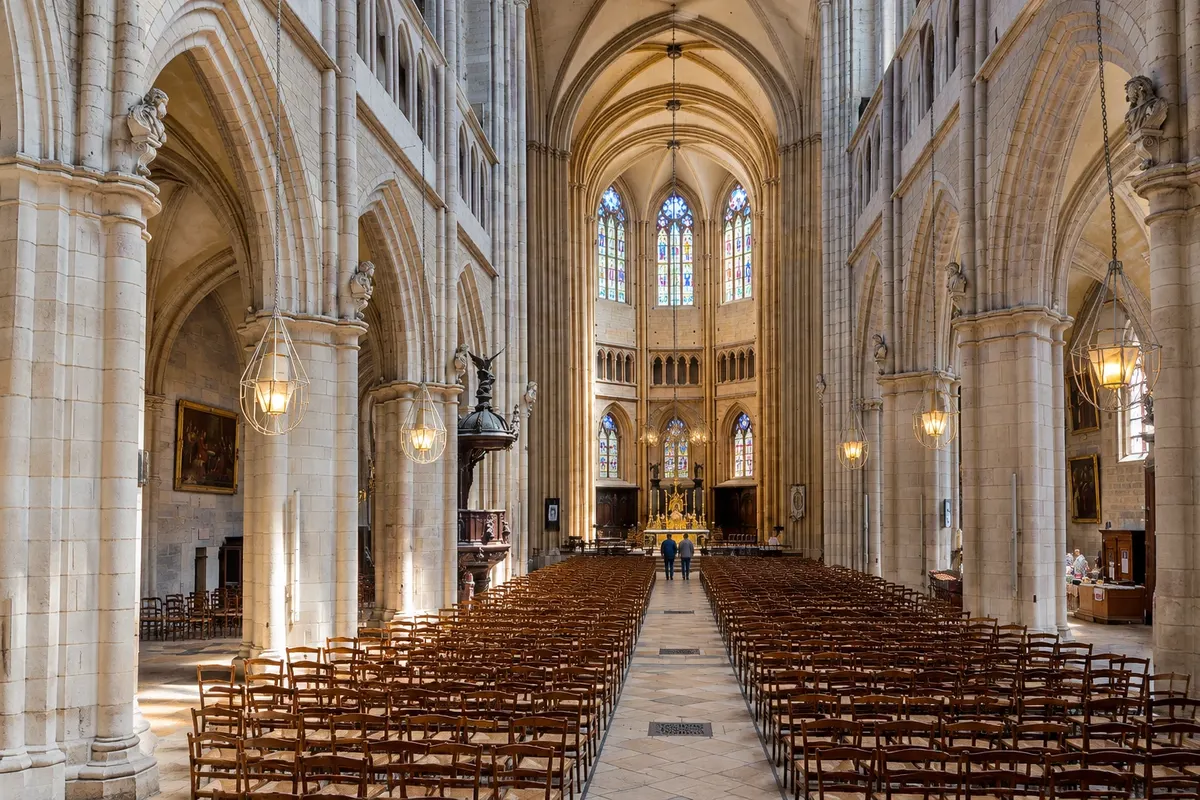
Beaune’s center lies within a ring of medieval walls and can be crossed on foot in about 15 minutes. The Basilique Collégiale Notre-Dame de Beaune, which locals call the basilica, has a Romanesque façade and houses a 15th-century tapestry about the life of the Virgin, displayed in the choir at certain times. Around it, streets with wine shops, mustard shops and regional products lead to the central squares. The ramparts, about 2 km long, can be walked along a tree-lined path with bastions; on one side you see the old town and on the other the former moats converted into gardens and streets. Beneath the town are several kilometers of vaulted galleries dug into the limestone since the Middle Ages, used as cellars. Beaune is also the commercial center of the climats: the town is part of the World Heritage site.
Stops: Beaune, Basilique Collégiale Notre-Dame de Beaune, Remparts de Beaune.
Includes: Walking the town and entering the church are free. Guided tours and cellars are paid separately.
Tip: Visit the Collégiale in mid-morning, when it is usually quieter, and ask at the entrance when the tapestry is on display. Walk the ramparts late in the afternoon, after visiting the Hospices.
Best time: All year; from April to October the days are long and the streets become busier.
Beaune cellars: visit the underground galleries and tasting
From Beaune centre On foot, at a scheduled time at the chosen cellar about 1 hour morning or afternoon easy (stairs and uneven floor)
Beneath Beaune’s center are kilometers of vaulted galleries cut into limestone since the Middle Ages, where wine houses store their bottles. Several open to visitors. One example is Patriarche Père & Fils, housed in the former Couvent des Visitandines, with about 5 km of cellars. The visit is a self-guided walk through the galleries, with video screens in nine languages that tell the history of the house and Burgundy wine. At the end there is a tasting guided by sommeliers, usually featuring white and red wines from Côte villages such as Savigny-lès-Beaune, Meursault, Santenay and Nuits-Saint-Georges. Other cellars in town offer similar visits, with galleries, explanations about the climats and a tasting at the end. The visit itself is the draw: the gallery architecture, the bottle storage and the explanation of how each wine takes its name from its climat.
Stops: Beaune, Caves Patriarche Père & Fils, Couvent des Visitandines.
Includes: There is an admission fee, usually including the cellar tour and the tasting. Groups are small and visits are at set times. Check the current pricing.
Tip: Book in advance, especially from June to October. Cellars stay cool year-round: bring a light jacket. If you will drive afterward, do not drink: you can just take the tour and ask not to join the tasting. Minors: check the house rules.
Best time: All year; a good option for rainy days.
Route des Grands Crus by car: the climats of the Côte de Nuits and the Côte de Beaune
From Dijon or Beaune Private or rental car, or minivan tour about 6 to 8 hours with stops full day easy
The Route des Grands Crus runs almost 60 km between Dijon and Santenay and passes through 38 wine villages, marked by brown signs with a bunch of grapes. It crosses the climats of the Burgundy vineyard, a UNESCO World Heritage site since 2015. In Burgundy, climat does not refer to weather: it is the name for a vineyard parcel with clearly defined boundaries, its own soil, sun exposure and history, and which gives its name to the wine it produces. There are 1,247 climats in a strip of about 50 km on the slopes south of Dijon, often separated by stone walls. The northern section is the Côte de Nuits: Marsannay-la-Côte, Gevrey-Chambertin, Morey-Saint-Denis, Chambolle-Musigny, Vougeot, with the Château du Clos de Vougeot, Vosne-Romanée, where you can see the stone wall of the Romanée-Conti vineyard, and Nuits-Saint-Georges, a good lunch stop. After Beaune comes the Côte de Beaune: Pommard, Meursault, Puligny-Montrachet, Chassagne-Montrachet and Santenay, with the Moulin Sorine, a 19th-century windmill.
Stops: Route des Grands Crus, Marsannay-la-Côte, Gevrey-Chambertin, Morey-Saint-Denis, Chambolle-Musigny, Vougeot, Vosne-Romanée, Nuits-Saint-Georges, Aloxe-Corton, Beaune, Pommard, Meursault, Puligny-Montrachet, Chassagne-Montrachet, Santenay.
Includes: Driving the route has no cost beyond the car. Visits to domaines, châteaux and cellars have separate tickets or require reservations; many domaines only accept visitors by appointment or are not open to the public. On minivan tours, check what is included.
Tip: Start early: many domaines open in the mid-morning. Book in advance the visits you want to make. If you are driving, do not drink at tastings; a tour with a driver solves this. If you wish to continue, after Santenay the road continues into the Mâconnais.
Best time: From April to October, with the vineyards green; the harvest usually takes place in September, with dates that change each year. In October the leaves turn yellow and red.
Cycling the Voie des Vignes: from Beaune to Santenay through the vineyards
From Beaune Standard or electric bicycle rented in central Beaune about 4 to 6 hours, round trip full day easy to moderate (gentle climbs)
The Voie des Vignes is the cycling route that follows the Route des Grands Crus along country lanes and tracks through the vineyards. The most popular section is from Beaune to Santenay, 22 km long, passing through Pommard, Volnay, Meursault, Puligny-Montrachet and Chassagne-Montrachet, always amid the climats. The terrain is almost flat, with some gentle climbs. From Santenay the route continues another 13 km to Nolay along a former railway line converted to a cycle path, with two viaducts. North of Beaune there is another section of 24 km to Nuits-Saint-Georges via Savigny-lès-Beaune, Pernand-Vergelesses, Aloxe-Corton and Ladoix-Serrigny, and from there the route continues to Dijon passing through Vosne-Romanée, Vougeot, Chambolle-Musigny, Gevrey-Chambertin and Fixin. There are train stations along the way, such as Meursault and Santenay, and many TER accept bicycles: you can cycle one way and return by train.
Stops: Voie des Vignes, Beaune, Pommard, Volnay, Meursault, Puligny-Montrachet, Chassagne-Montrachet, Santenay, Nolay.
Includes: The route is free of charge. Bicycle rental, standard or electric, for half a day or a full day is paid separately at rental shops in central Beaune. Check the current price list.
Tip: Bring water and sunscreen in summer: there is little shade among the vineyards. If you are cycling, do not drink at stops in cellars. The electric bike helps on the climbs. Check the TER schedules from Santenay or Meursault for the return.
Best time: From April to October. In July and August, start early because of the heat; in September, the harvest usually brings activity to the vineyards.
Château du Clos de Vougeot, the home of the Cîteaux monks in the middle of the vineyards
From Dijon or Beaune Car via the Route des Grands Crus or bicycle via the Voie des Vignes about 1 hour 30 minutes morning or afternoon easy
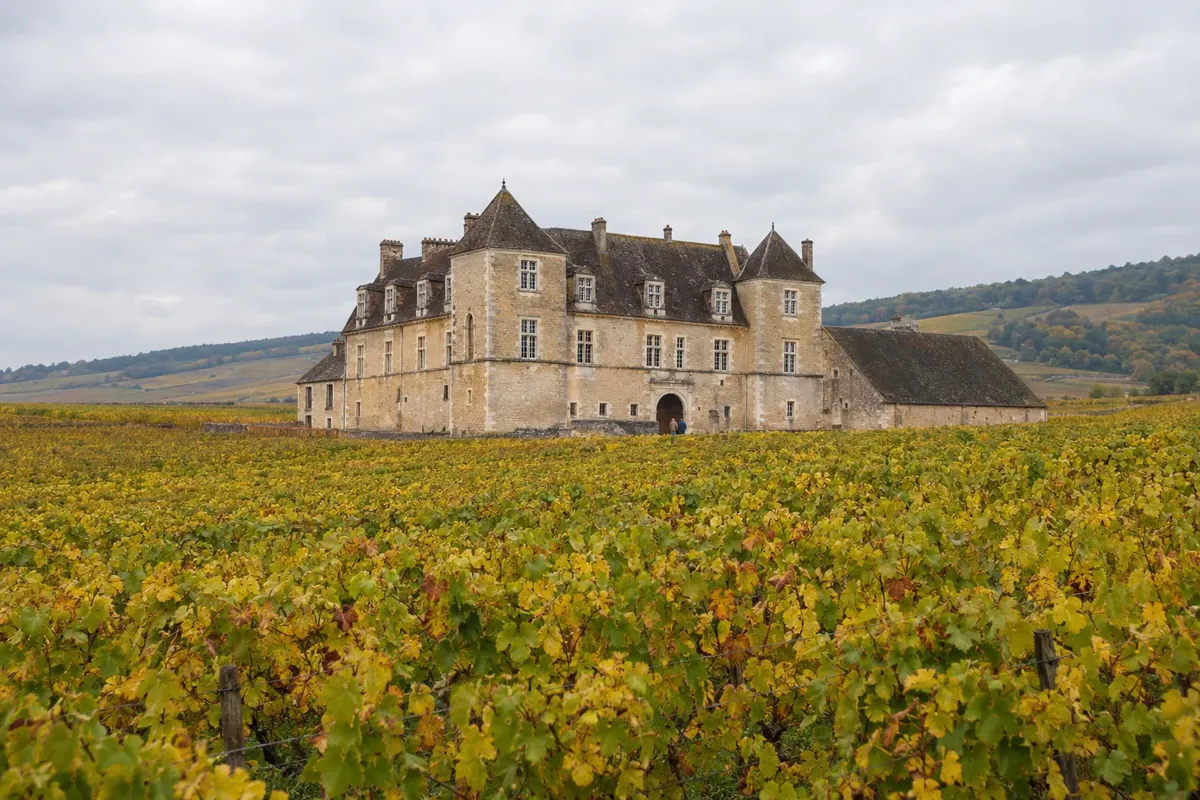
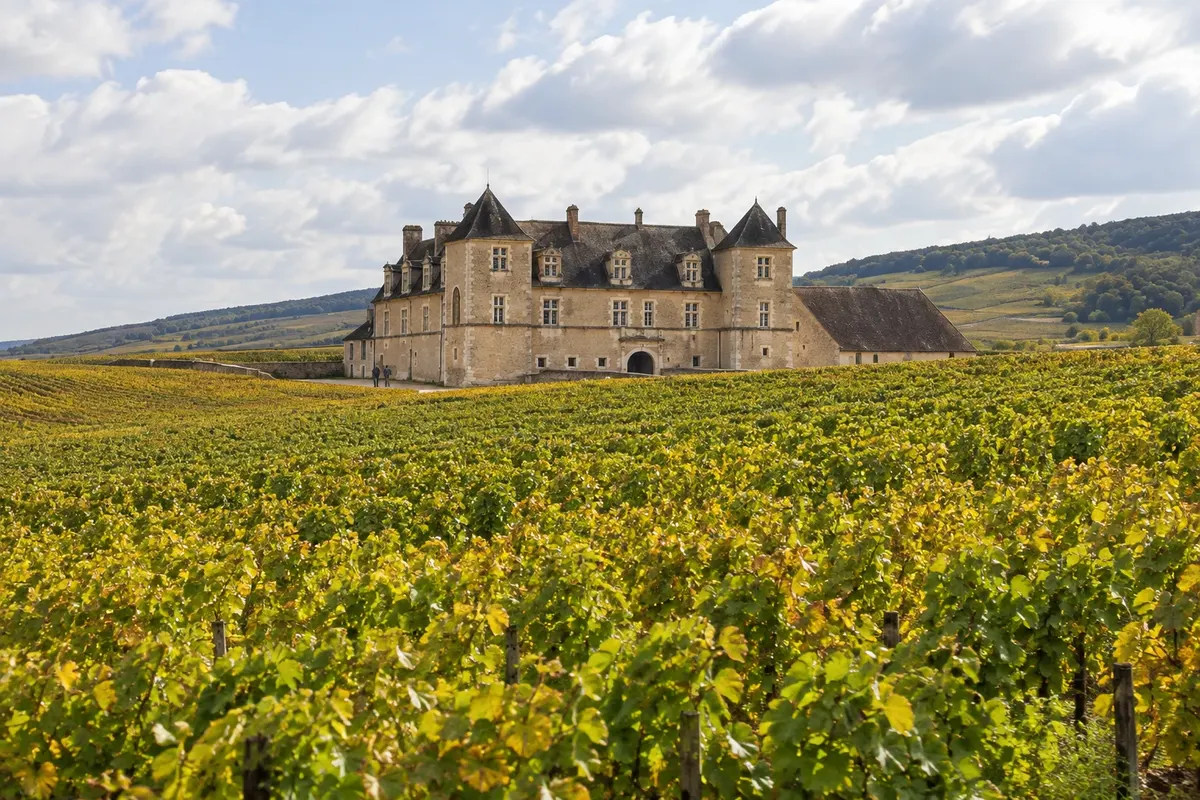
The Château du Clos de Vougeot was built in the 12th century by the monks of the Abbaye de Cîteaux, in the middle of the Clos de Vougeot vineyard, in the village of Vougeot in the Côte de Nuits. The clos covers about 50 hectares walled in, now divided into more than 130 plots owned by roughly 80 different proprietors. The visit shows the 12th-century cuverie with the old winemaking equipment, the Petit Cellier and the Grand Cellier, and a well in the Renaissance wing. The castle is the headquarters of the Confrérie des Chevaliers du Tastevin, Burgundy’s wine brotherhood; a film about it is shown in the cellars. There are self-guided and guided visits at set times. The castle is open every day, with hours that change by season, and is closed on December 24, 25 and 31 and January 1, plus some event days.
Stops: Château du Clos de Vougeot, Vougeot, Clos de Vougeot, Abbaye de Cîteaux.
Includes: There is an admission fee, for self-guided or guided visits. Check the current price list.
Tip: Schedule the visit as part of the drive along the Route des Grands Crus. Check beforehand whether an event is closing the castle that day. The Abbaye de Cîteaux, where the monks came from, is about 30 minutes from Dijon and can only be visited with a guide and reservation.
Best time: Open year-round; from April to October the surrounding vineyards are green.
Château de Savigny-lès-Beaune: castle, fighter planes and motorcycles
From Beaune By car or bicycle along the Voie des Vignes about 1 to 2 hours morning or afternoon easy
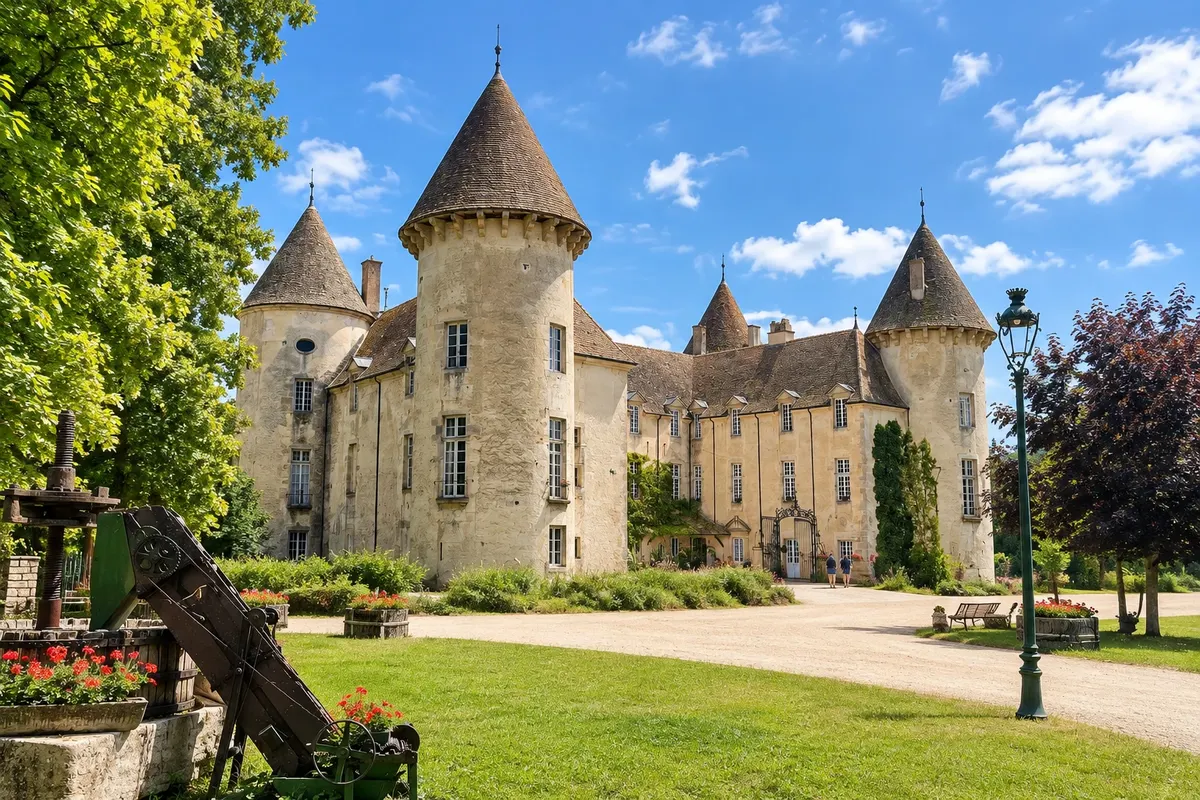
The Château de Savigny-lès-Beaune is a 14th-century castle, with a 17th-century Petit Château, on about 10 hectares of parkland in the village of Savigny-lès-Beaune, north of Beaune. The visit combines the castle with seven mechanical museums spread across the estate: fighter planes parked in the grounds, Abarth racing cars, motorcycles, fire trucks, models, aerospace industry parts and vineyard tractors. It’s a different kind of outing for the region and works well for children. The estate also has its own vineyards, about 10.5 hectares, and a cellar where the visit can end with a tasting.
Stops: Château de Savigny-lès-Beaune, Savigny-lès-Beaune.
Includes: There is an admission fee for the castle and the museums. The tasting in the cellar is paid separately. Check the current price list.
Tip: Combine it with the northern section of the Voie des Vignes or with the end of the Route des Grands Crus. For families, it’s a good break between a château and a winery.
Best time: Open year-round; the aircraft are outdoors, so dry days from April to October are more comfortable.
Round-trip visit to the Abbaye de Fontenay, a Cistercian abbey and World Heritage Site
From Dijon Car, or train to Montbard and taxi about 5 hours including round trip morning or afternoon easy
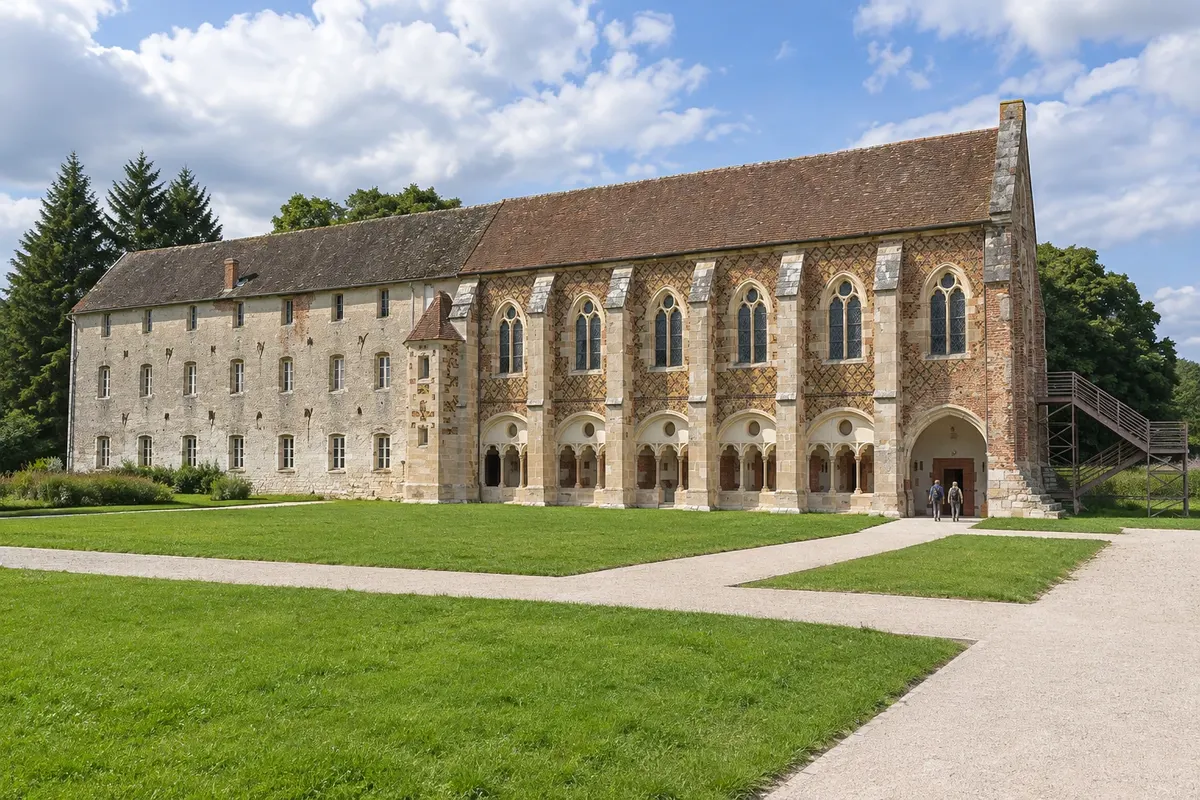
The Abbaye de Fontenay was founded by Saint Bernard (saint Bernard) in 1118 and consecrated by the pope in 1147. It is a Cistercian abbey and has been on the UNESCO World Heritage list since 1981. It is about 80 km from Dijon, near Montbard, roughly 1 hour by car. The visit includes the abbey church, with simple lines and no decoration as required by Cistercian rule; the cloister; the chapter house; the room where monks copied manuscripts; and the dormitory, with a vaulted wooden ceiling. The forge has a watermill that still powers a hydraulic hammer. Surrounding the abbey, the park is classified as a Jardin Remarquable and has trails from 45 minutes to 3.5 hours through valleys and woods. Allow at least 2 hours on site.
Stops: Abbaye de Fontenay, Montbard.
Includes: There is an admission fee for visiting the abbey. Transport and meals are paid separately. Check the current pricing.
Tip: Without a car, take the train to Montbard station, about 6 km from the abbey, and continue by taxi; book the return in advance. By car, you can combine Fontenay and Vézelay in the same day, or visit Fontenay on the route between Paris and Dijon.
Best time: From April to October, when the park is green and the days are long.
Round-trip visit to Vézelay: the hilltop village and the Basilique Sainte-Marie-Madeleine
From Dijon Car (about 1.5 hours from Dijon) about 7 hours including round trip full day easy (walk uphill along the main street)
Vézelay is a village perched on a hill in the Yonne department, at the entrance to the Parc naturel régional du Morvan, about a 1.5-hour drive from Dijon. It is one of the historic starting points of the Camino de Santiago in France, and the basilica is listed as a UNESCO World Heritage site. The visit begins by walking up the main street, lined with shops and art galleries, to the Basilique Sainte-Marie-Madeleine. The Romanesque nave was built between 1120 and 1140, and the Gothic choir between 1185 and 1215; the church was restored by Viollet-le-Duc in the 19th century. The central tympanum shows Christ with outstretched arms, and inside the carved capitals depict Bible scenes, with the dark nave contrasting with the lighter choir. It was on the hill of Vézelay that Bernard of Clairvaux preached the Second Crusade. On the descent are the Maison du Visiteur, which explains the basilica, the Musée Zervos, with works by Picasso, Calder and Miró, and the ramparts overlooking the Cure valley and the Morvan.
Stops: Vézelay, Basilique Sainte-Marie-Madeleine de Vézelay, Musée Zervos, Vallée de la Cure.
Includes: Entry to the basilica is free. The Musée Zervos and guided tours are charged separately. Check the current pricing.
Tip: A car is the practical way: Sermizelles-Vézelay station is 10 km away and has few trains. The street is uphill and cobbled: wear comfortable shoes. Half a day is enough for the village and the basilica.
Best time: All year. Summer is the busiest period; spring and autumn are quieter.


 Brazil
 Argentina
 Bolivia
 Chile
 Colombia
 Ecuador
 Guyana
 French Guiana
 Falkland Islands (Malvinas)
 Paraguay
 Peru
 Suriname
 Uruguay
 Venezuela
 Germany
 Austria
 Belgium
 Croatia
 Denmark
 Spain
 Finland
 Greece
 the Netherlands
 Hungary
 Ireland
 Iceland
 Italy
 Luxembourg
 Norway
 Poland
 Portugal
 the United Kingdom
 the Czech Republic
 Sweden
 Switzerland
 Turkey
 the United States
 Mexico
 the Dominican Republic
 South Africa
 Australia
 Fiji