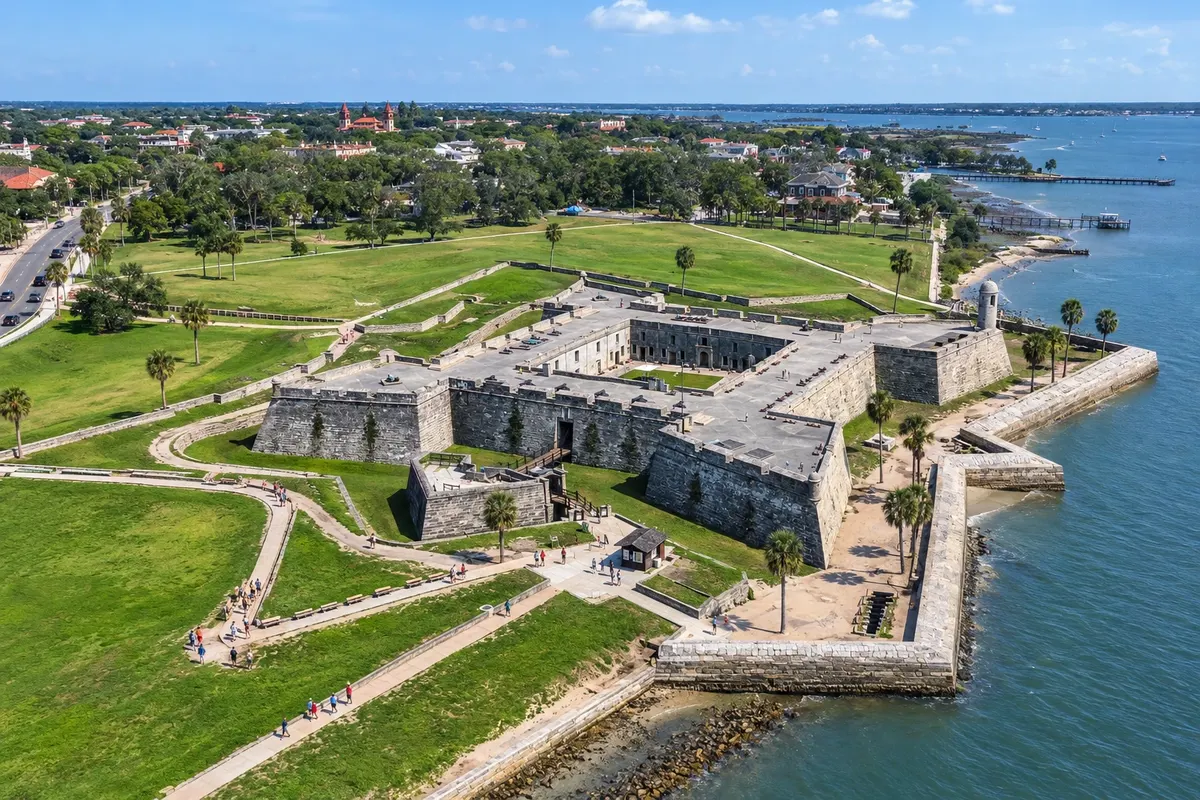
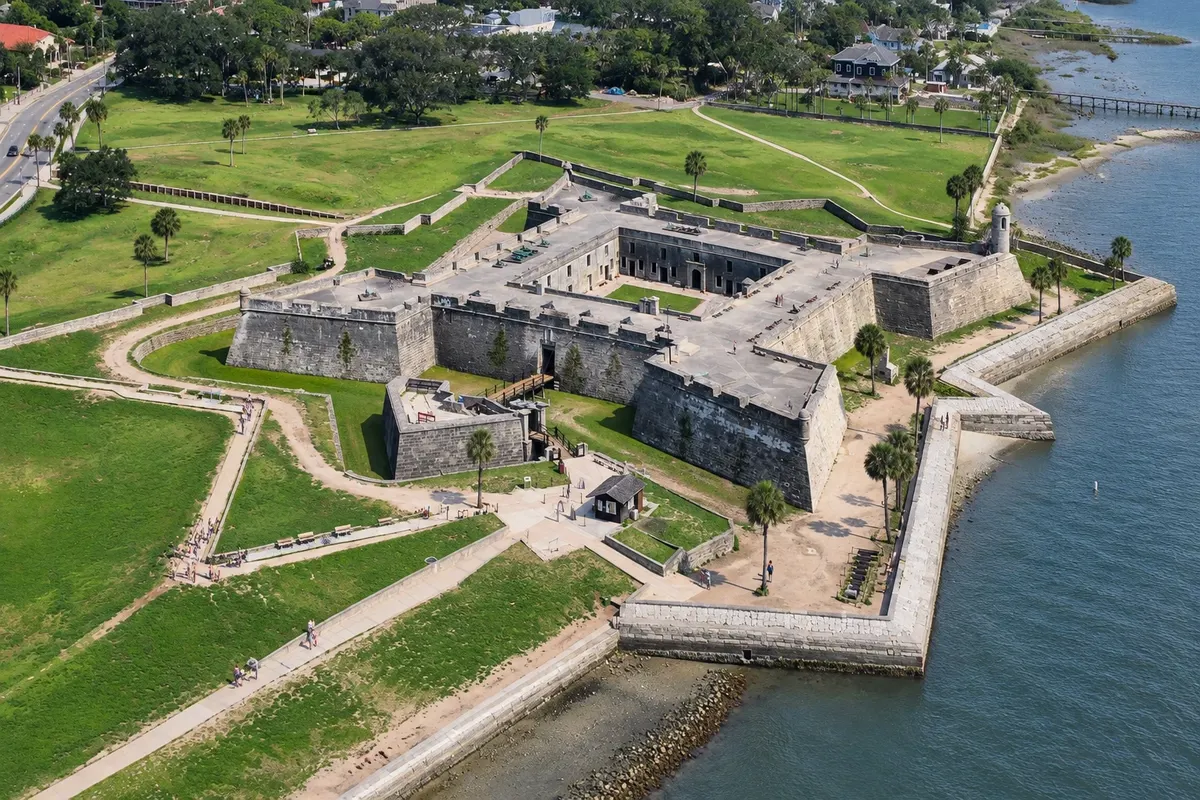
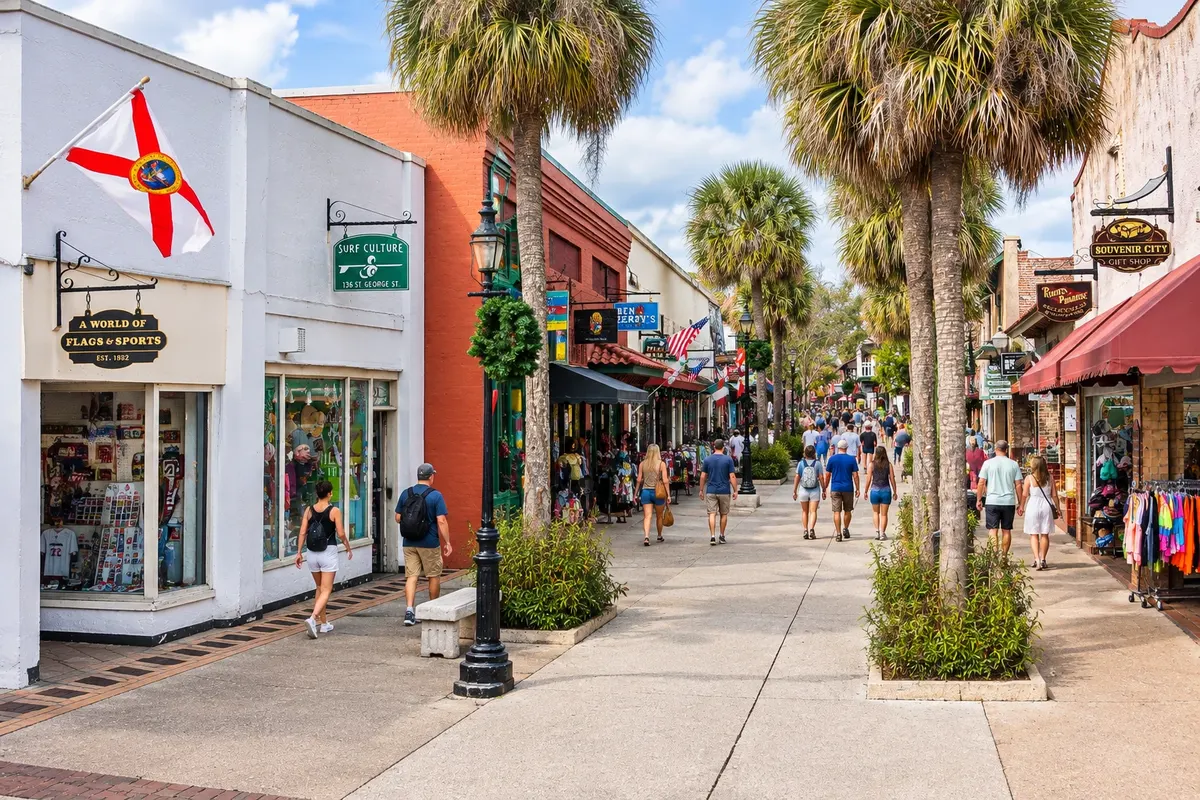
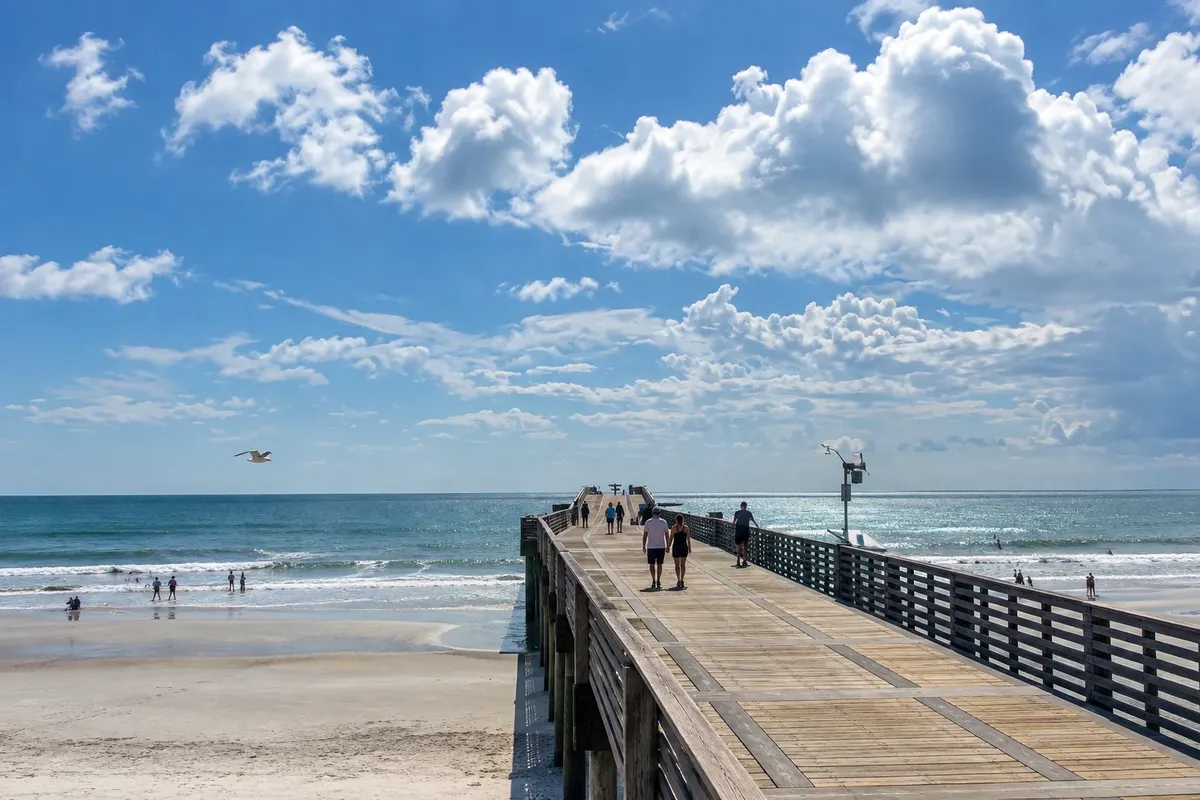
Northeast Florida preserves the earliest history of European colonization in the United States. Saint Augustine was founded in 1565 by the Spaniard Pedro Menéndez de Avilés and is the longest continuously inhabited European-founded city on the continental U.S. The historic center has narrow streets, stone and wood houses, churches and the Castillo de San Marcos, a 17th-century Spanish fort built from coquina, a stone made of shells.
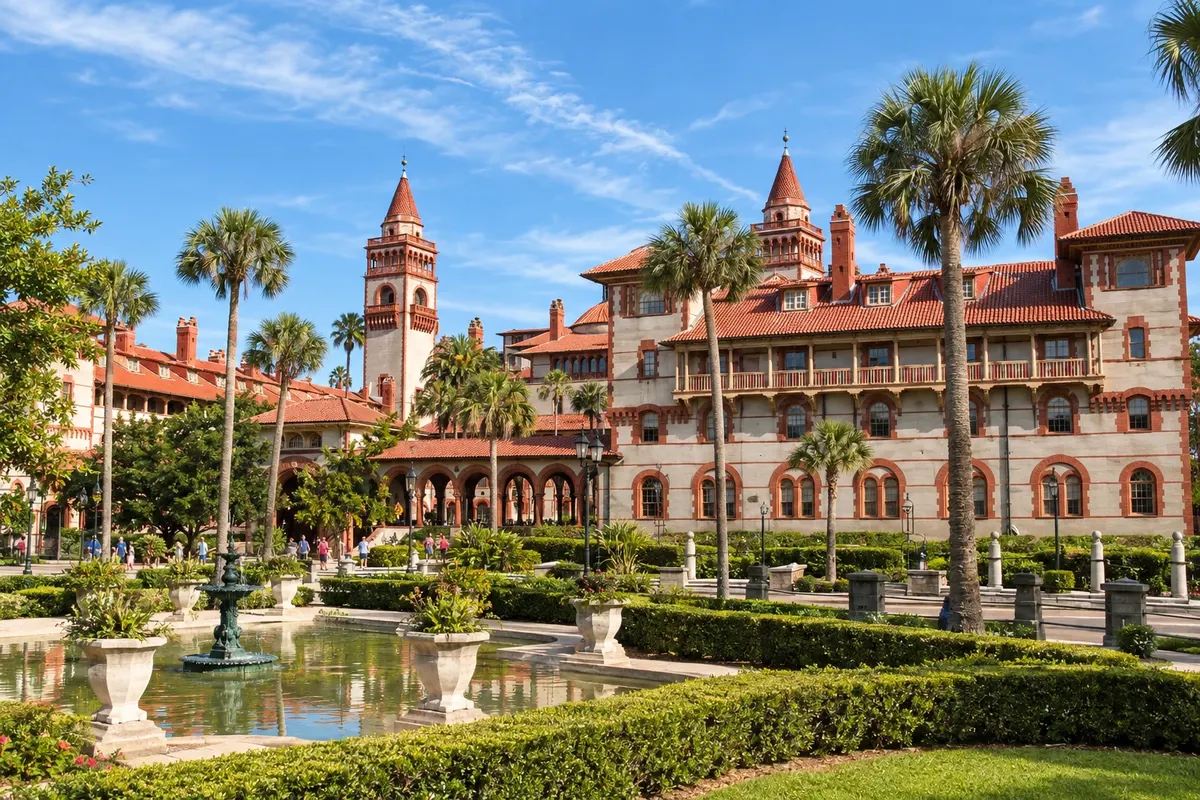
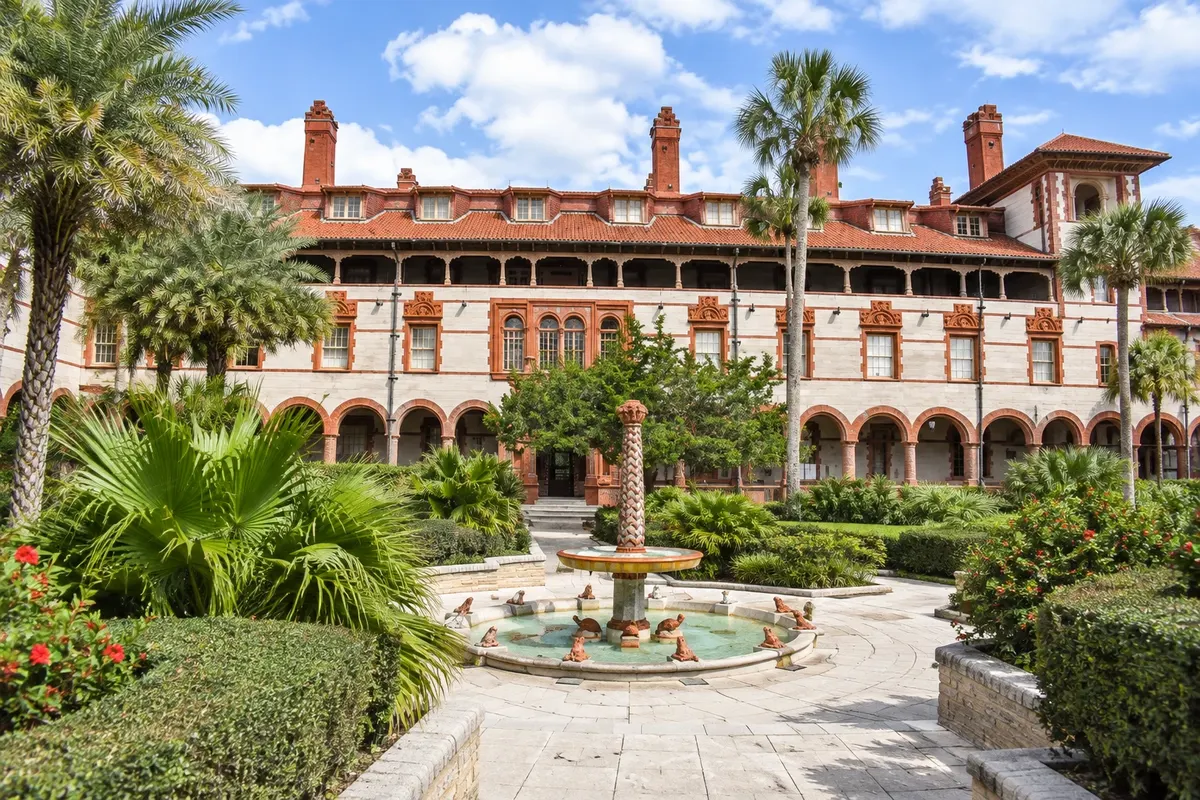
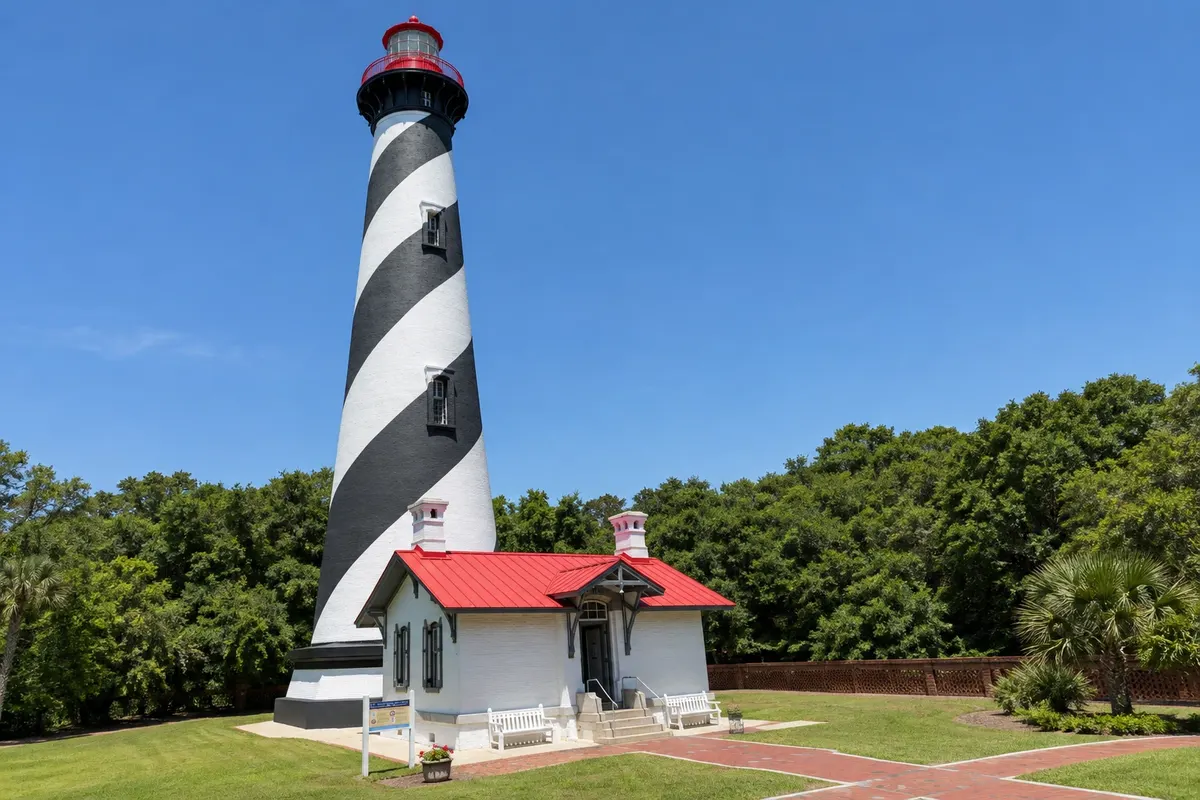
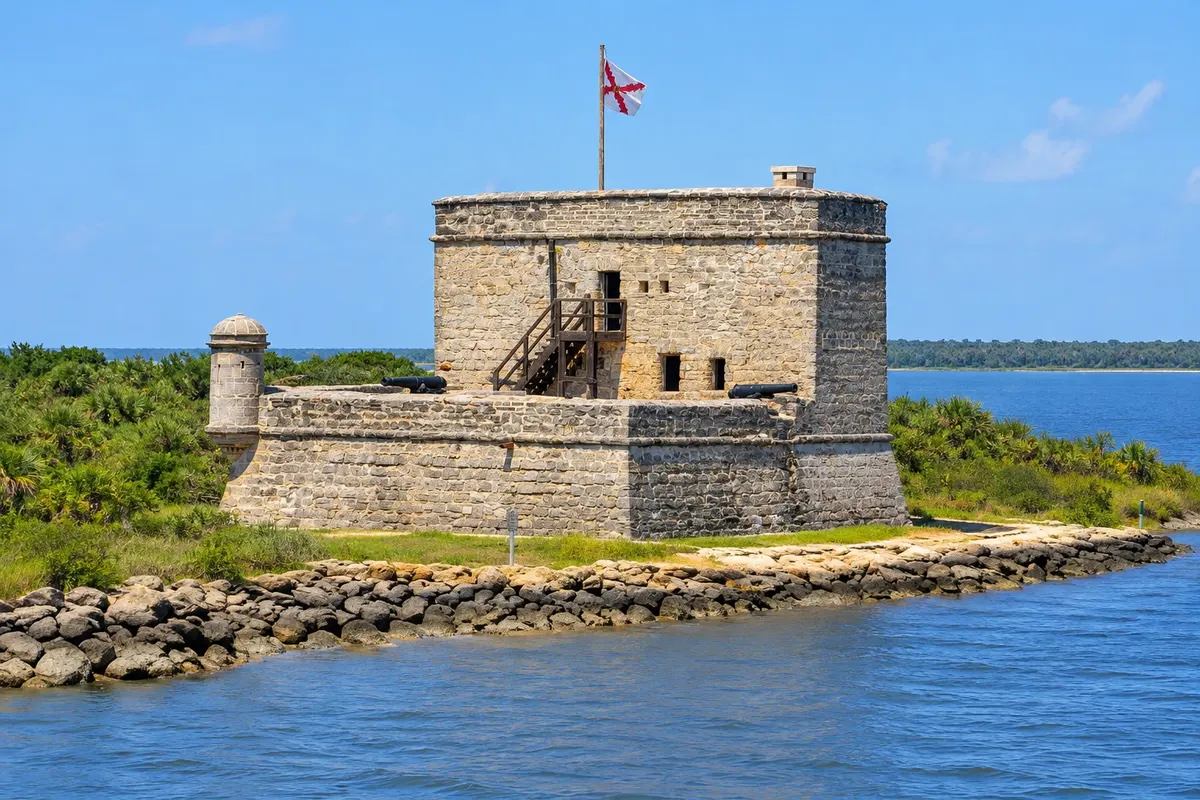
At the end of the 19th century, entrepreneur Henry Flagler extended the railroad to the city and built luxury hotels in Spanish style; the main one, the Hotel Ponce de León, is now Flagler College. Across the bay, on Anastasia Island, are the black-and-white striped lighthouse and wide beaches, and farther south the small Fort Matanzas, reached by boat.
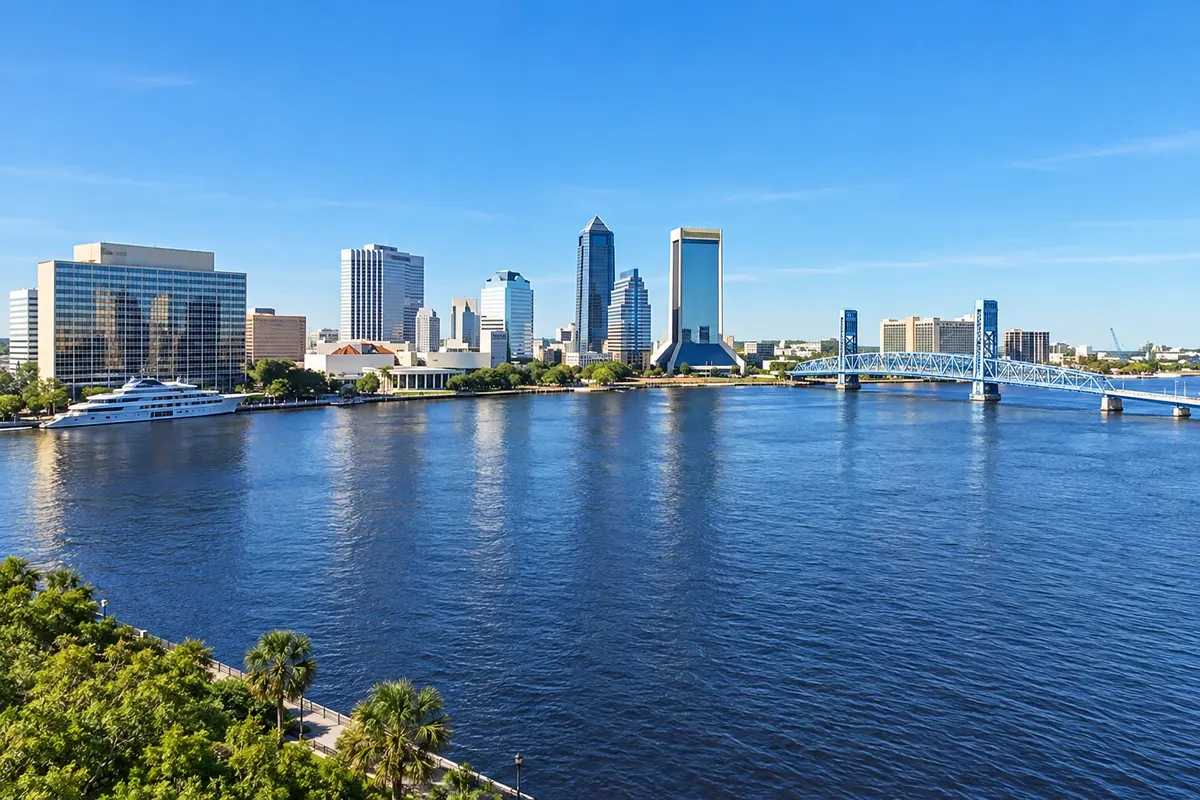
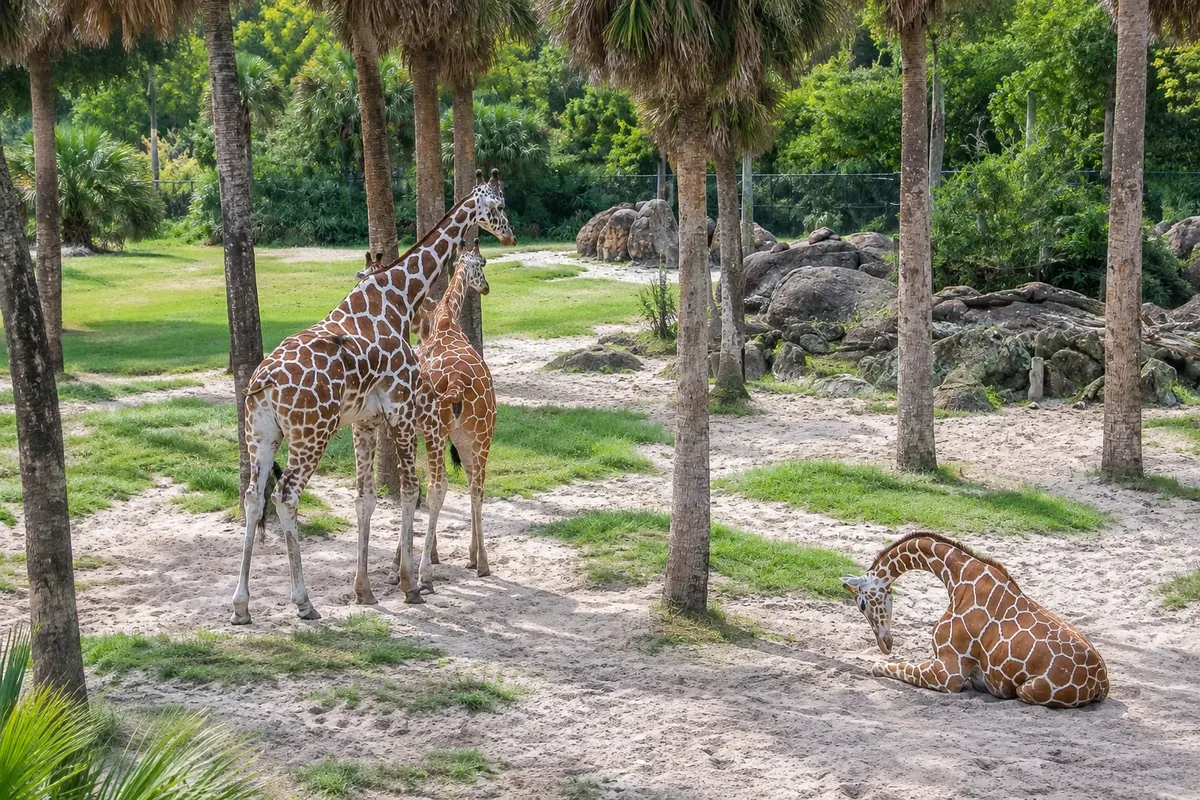
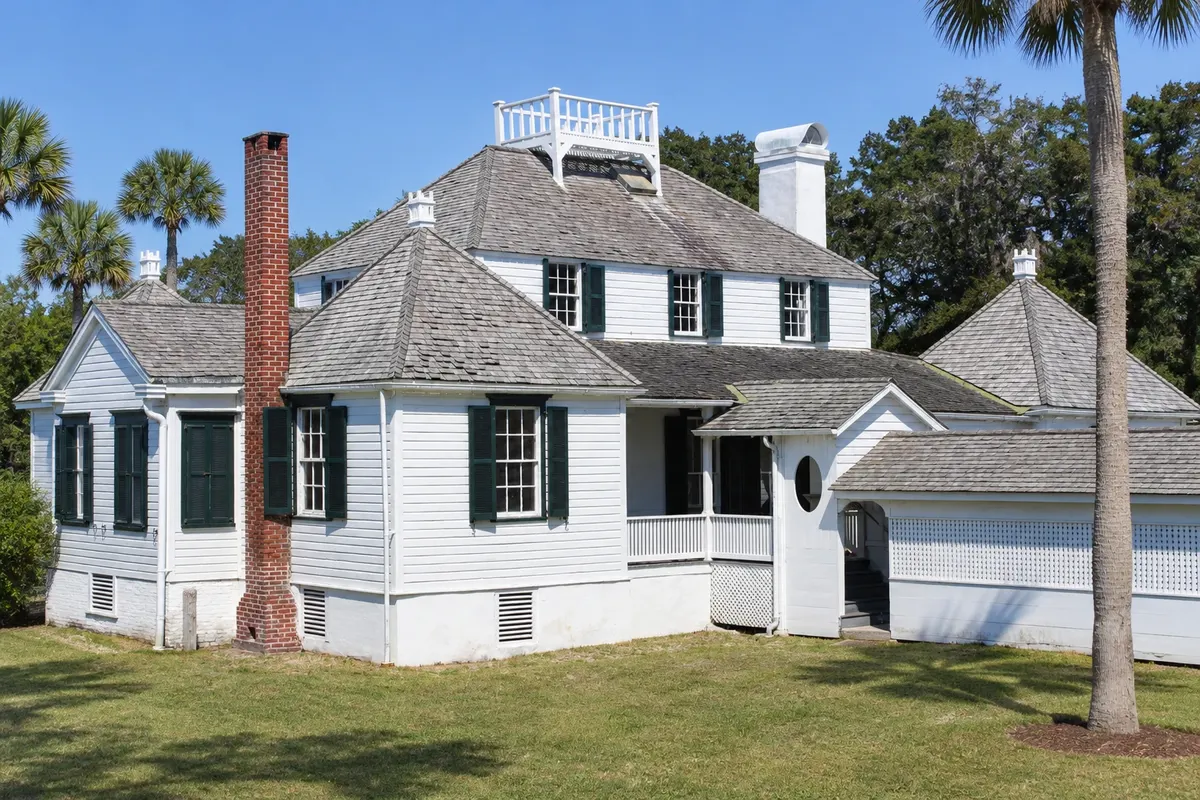
Jacksonville, about 65 km to the north, is Florida’s largest city by population and one of the largest in the United States by area. Cut by the St. Johns River, it has the Cummer Museum with riverside gardens, a large zoo, Atlantic beaches and, to the north, preserved areas such as Kingsley Plantation on Fort George Island.
The climate is milder than in South Florida, with cool winters. Spring and fall are the most pleasant seasons for walking around Saint Augustine’s historic center.
This destination brings together 2 cities: Jacksonville, St. Augustine.


 Brazil
 Argentina
 Bolivia
 Chile
 Colombia
 Ecuador
 Guyana
 French Guiana
 Falkland Islands (Malvinas)
 Paraguay
 Peru
 Suriname
 Uruguay
 Venezuela
 Germany
 Austria
 Belgium
 Croatia
 Denmark
 Spain
 Finland
 France
 Greece
 the Netherlands
 Hungary
 Ireland
 Iceland
 Italy
 Luxembourg
 Norway
 Poland
 Portugal
 the United Kingdom
 the Czech Republic
 Sweden
 Switzerland
 Turkey
 Canada
 Mexico
 the Dominican Republic
 South Africa
 Australia
 Fiji
 New Zealand
 Papua New Guinea