Antwerpse handjes
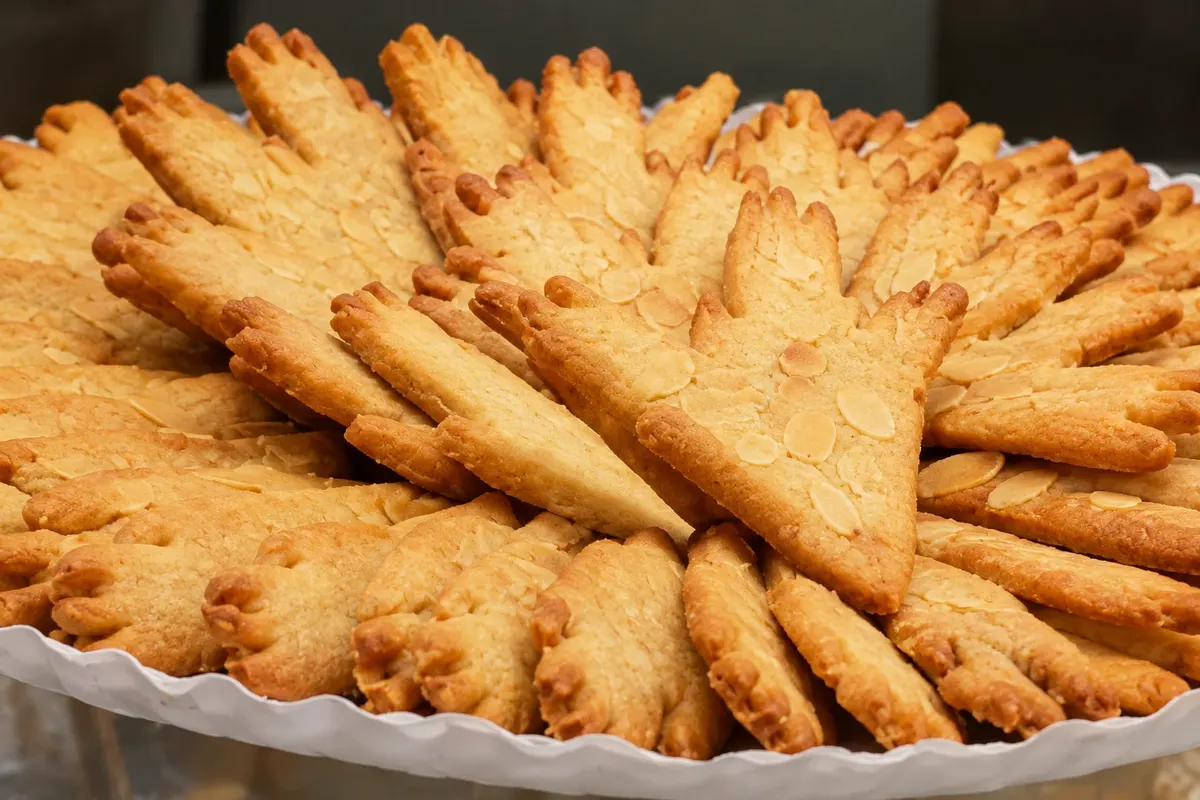
Buttery cookie with almond slices, or a chocolate bonbon shaped like a hand. It recalls the legend of the hero Brabo and the giant Antigoon, which explains the name Antwerpen, and has been a city specialty since 1934.
Illustrative images. The pictures in this guide are illustrations based on the real place, not photographs, and may differ from it.
Flavors · Ostende
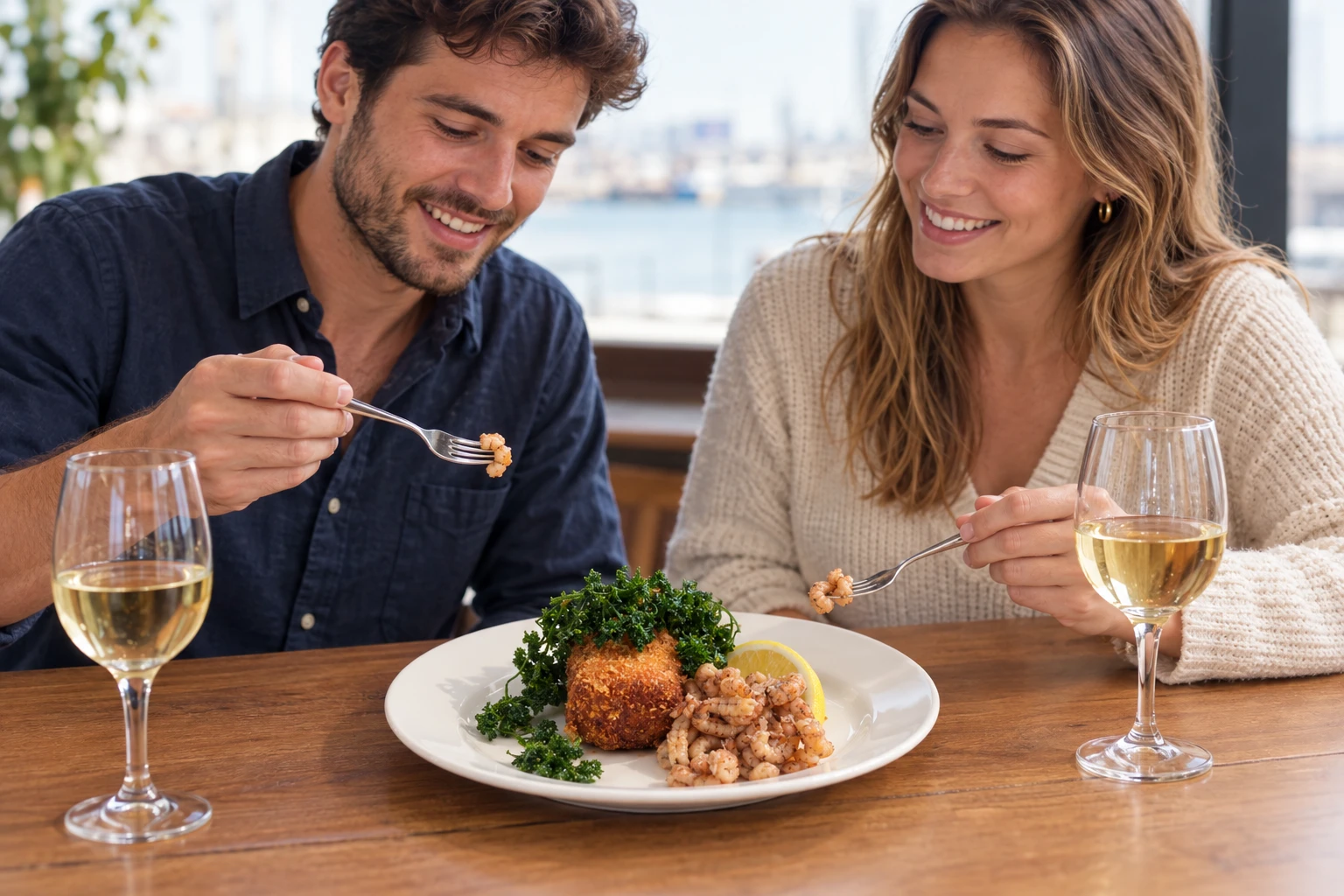
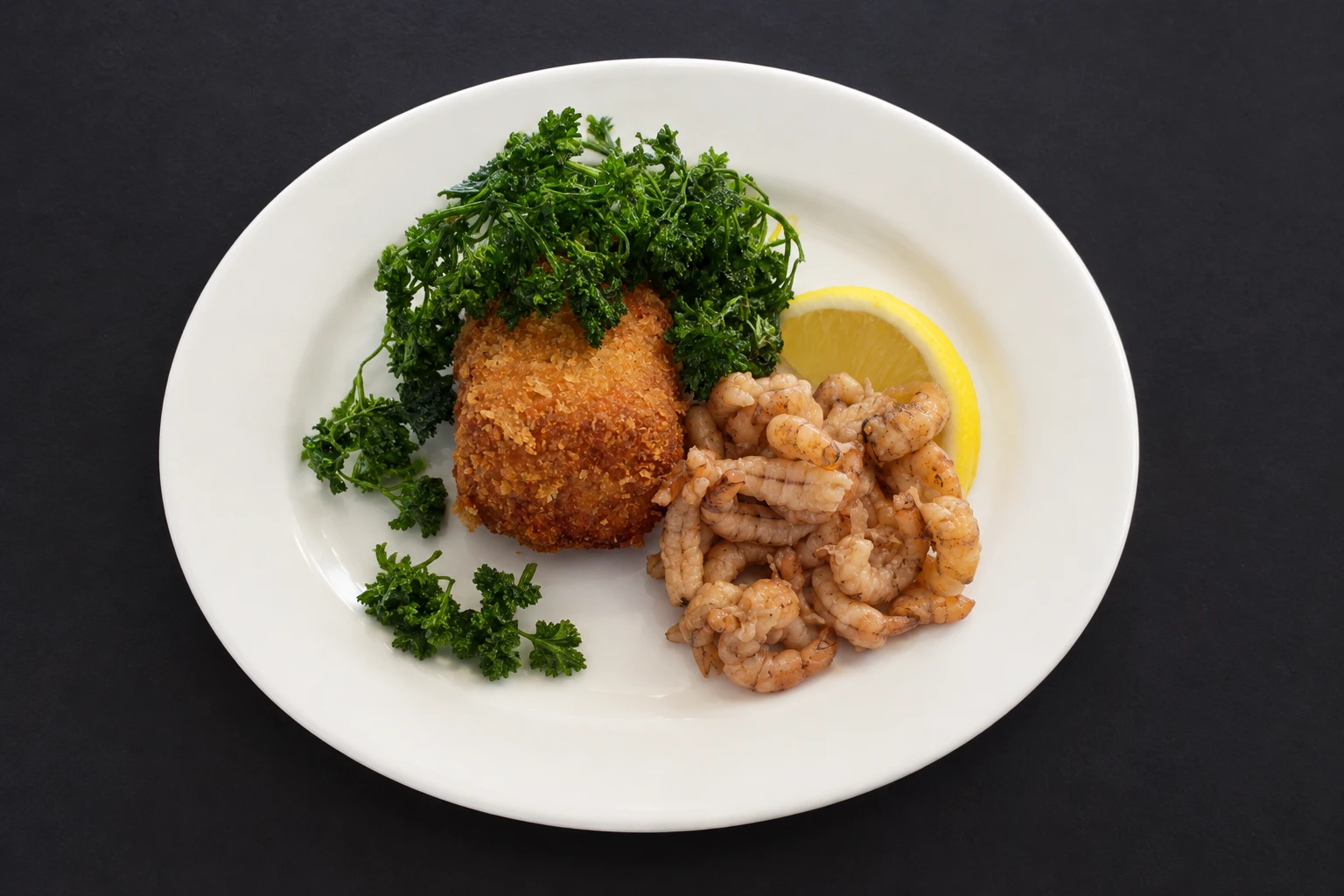
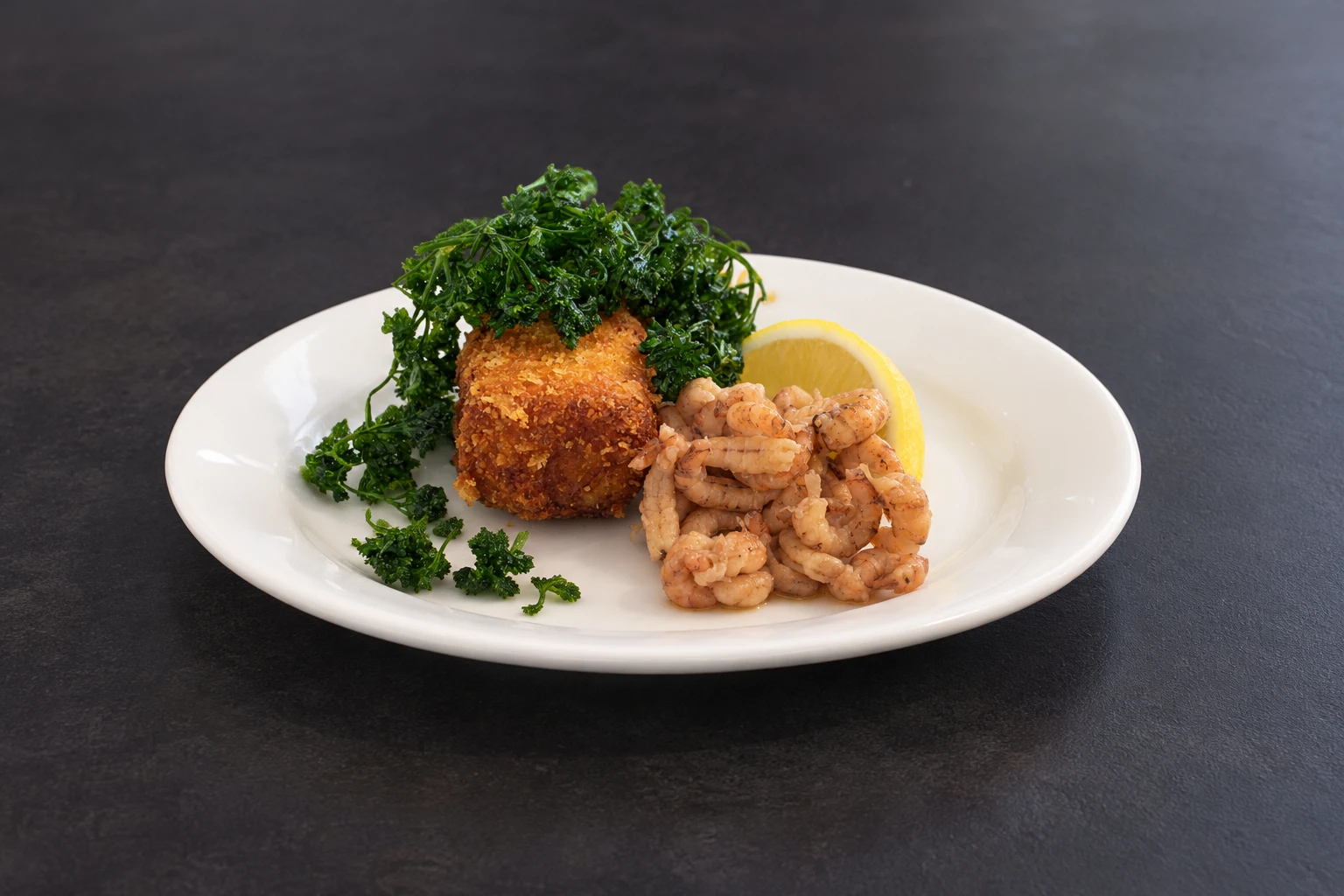
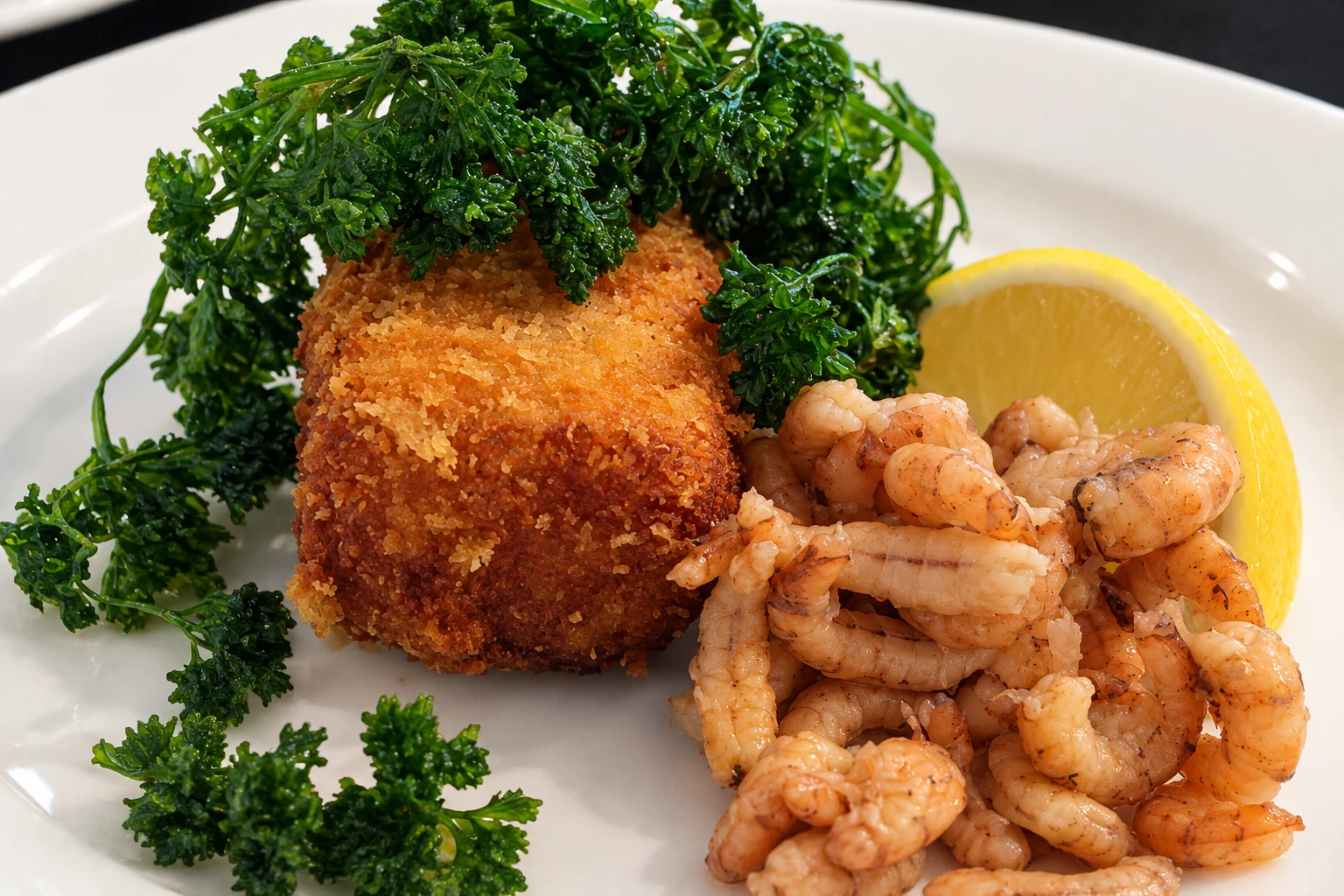
Croquette of creamy sauce with North Sea grey shrimp, breaded and fried, served with fried parsley and lemon. The Ostend version is recognized as a Flemish regional product, with rules about the shrimp’s origin and the filling.
Traditional dish from Ostende, Flandres Ocidental
Also known as: garnaalkroket, garnaalkroketten, croquette aux crevettes
Click a photo to enlarge it.
Oostendse garnaalkroket — Ostende, Belgium
The garnaalkroket is a croquette with a thin, crispy crust and a filling of creamy sauce packed with shrimp. When cut, the filling should still be soft, almost running. It is usually served with fried parsley and a slice of lemon.
The shrimp is the North Sea grey shrimp, small and sweet. In traditional fishing it is cooked on board, in seawater with a little salt, and then peeled by hand. In Ostend, at the fish quay called Vistrap, vendors sell cooked shrimp coming straight from the boats.
The Ostend version was recognized by the Flemish center for agri-food promotion (VLAM) as a regional product. The rules require shrimp peeled by hand and caught by Ostend boats, a filling with at least 30% shrimp, and preparation within a 10-kilometer radius of the city.
The recognition sparked debate along the coast. Other towns point out that shrimp croquettes are eaten all along the Belgian coast, and Oostduinkerke, further west, preserves horse-shrimping, listed by UNESCO as intangible heritage. The association with Ostend comes from that official recognition, without the croquette being exclusive to the city.
Each cook has their recipe, and the ratio of shrimp to sauce is the main point of contention. In Ostend, the croquette appears as a starter in many beachfront and central restaurants, always served hot.

Ostende, Flandres Ocidental
The Ostend version is recognized by VLAM as a regional product, with shrimp from the city’s boats and preparation within a 10 km radius.
North Sea grey shrimp peeled by hand, butter, wheat flour, milk or shrimp stock and egg yolk; for breading, egg and breadcrumbs. Served with fried parsley and lemon.
Hot, as a starter, with fried parsley and lemon. When cut, the filling should be creamy.
Your questions
It is a Belgian croquette filled with creamy sauce and North Sea grey shrimp, breaded and fried. It is served hot, as a starter, with fried parsley and lemon.
It is a small, sweet shrimp caught off the North Sea coast. In traditional fishing it is cooked on board in seawater and peeled by hand.
The Ostend version was recognized as a Flemish regional product, with shrimp from the city’s boats and preparation nearby. The croquette, however, is common all along the Belgian coast.
Flavors of Belgium

Buttery cookie with almond slices, or a chocolate bonbon shaped like a hand. It recalls the legend of the hero Brabo and the giant Antigoon, which explains the name Antwerpen, and has been a city specialty since 1934.

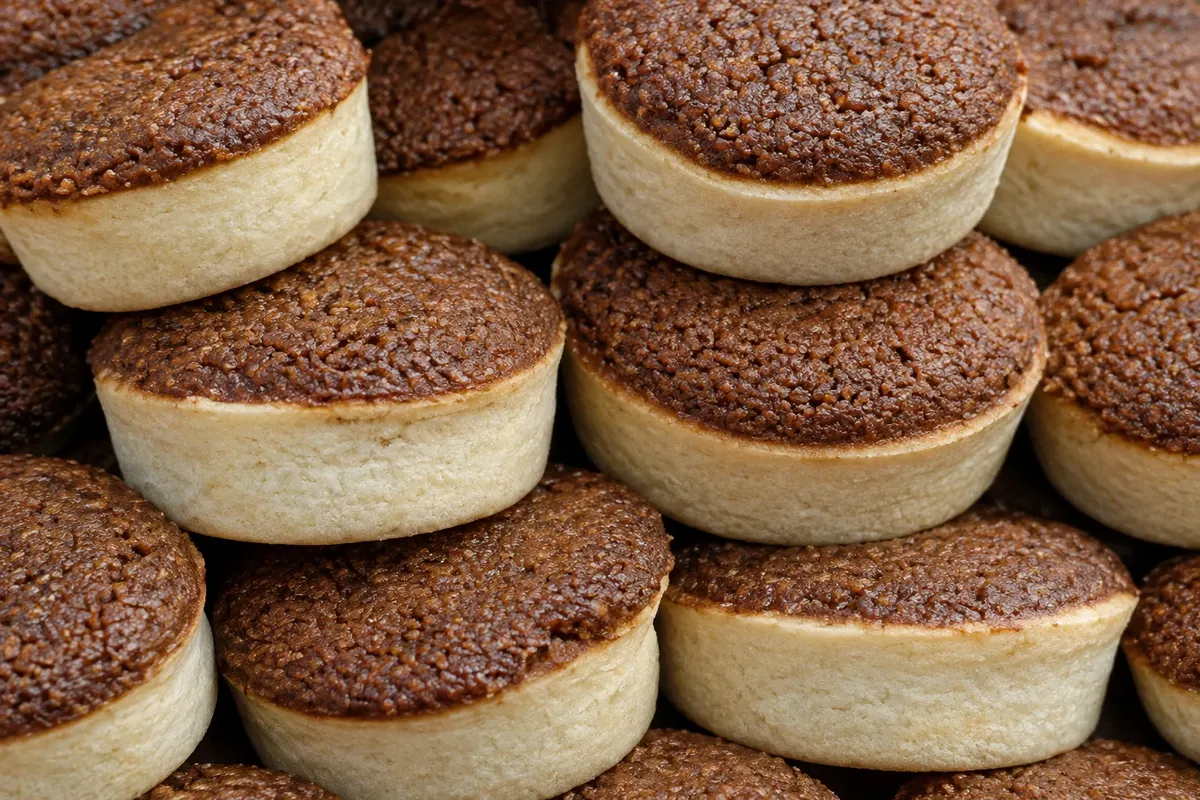
Round tartlet from Lier, in the province of Antwerp, with a crunchy sugar-free pastry and a dark filling of breadcrumbs, cane sugar syrup and spices. The name is protected by a European geographical indication.

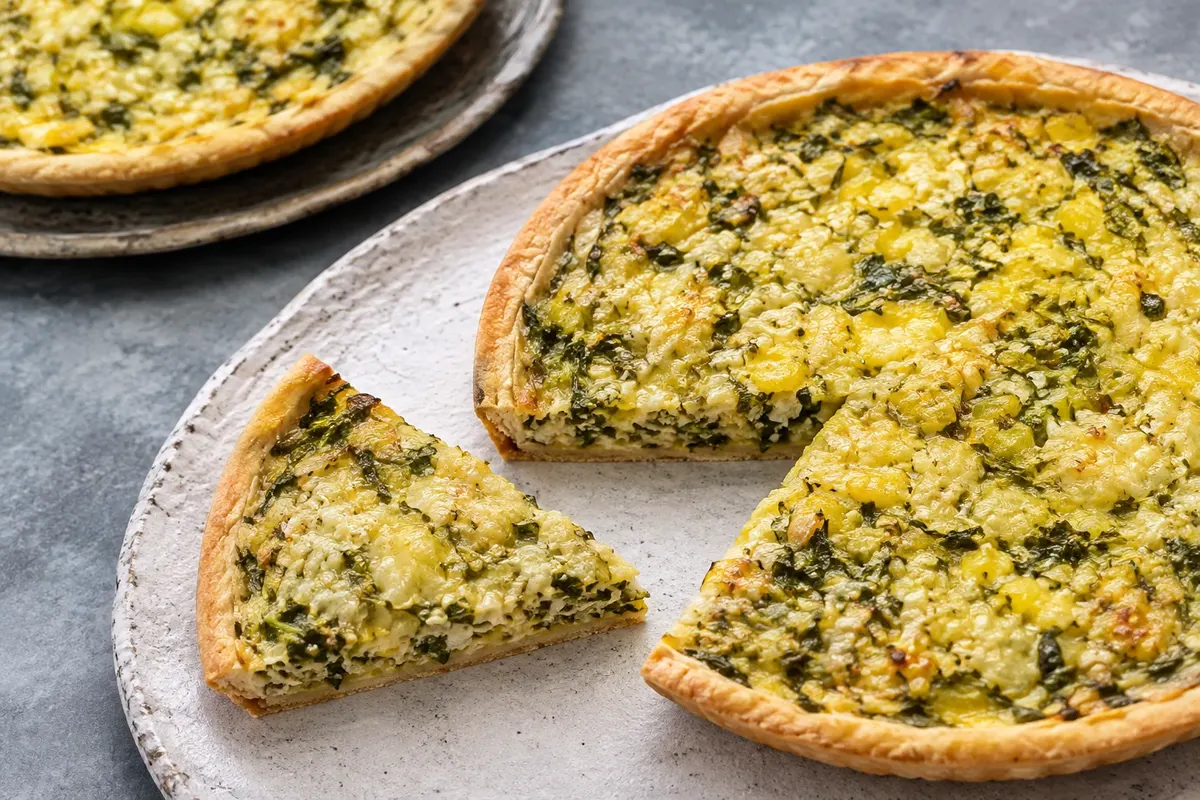
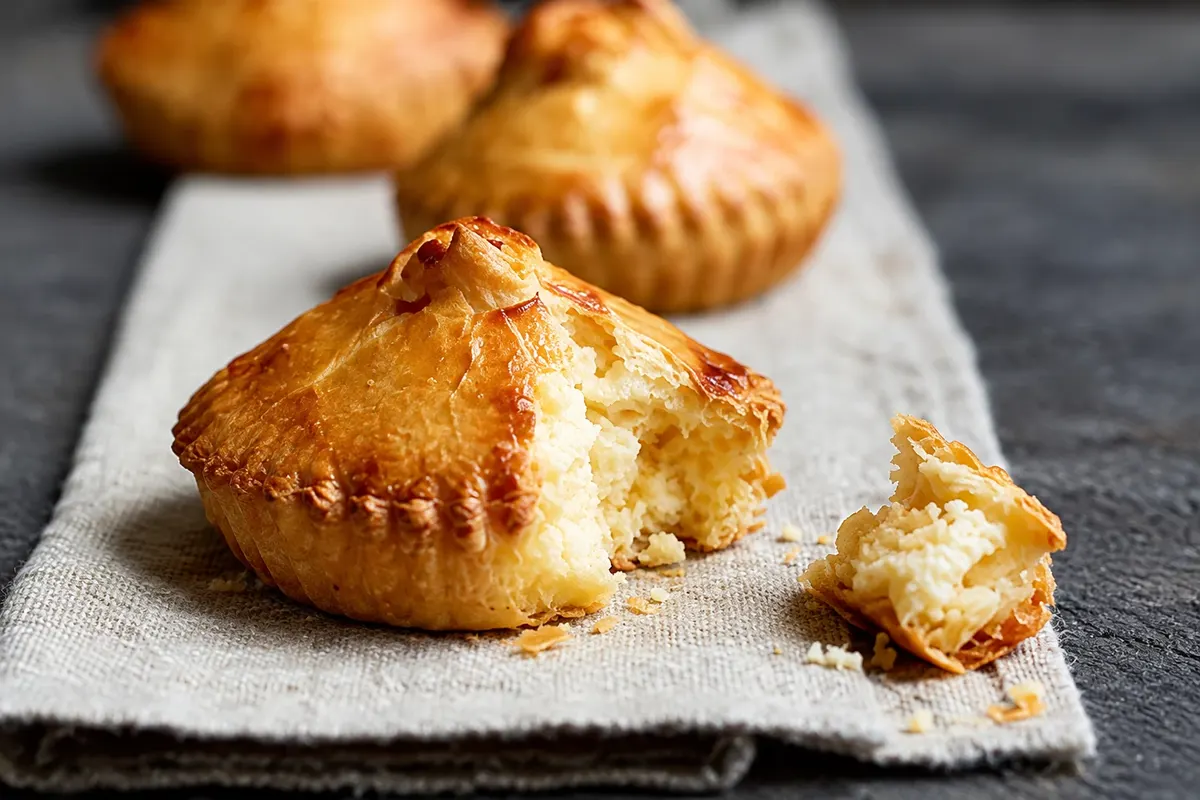
Savory pie from Nivelles, in Walloon Brabant, made with fermented fresh cheese, chard, eggs and plenty of butter, served very hot. A local brotherhood evaluates producers and awards quality seals every year.

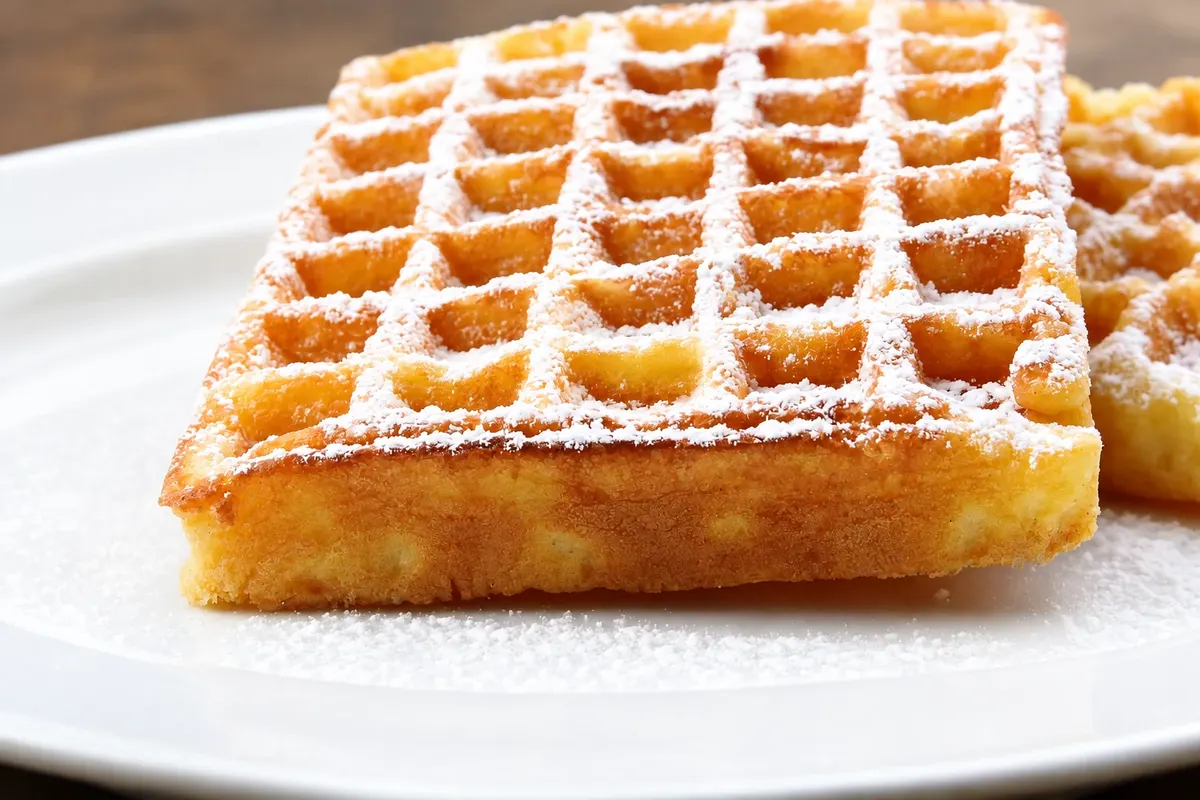
Rectangular waffle, light and crispy on the outside, soft on the inside, served dusted with confectioners' sugar. It is the first specialty presented by Brussels official tourism and appears in Flemish paintings related to festive celebrations.

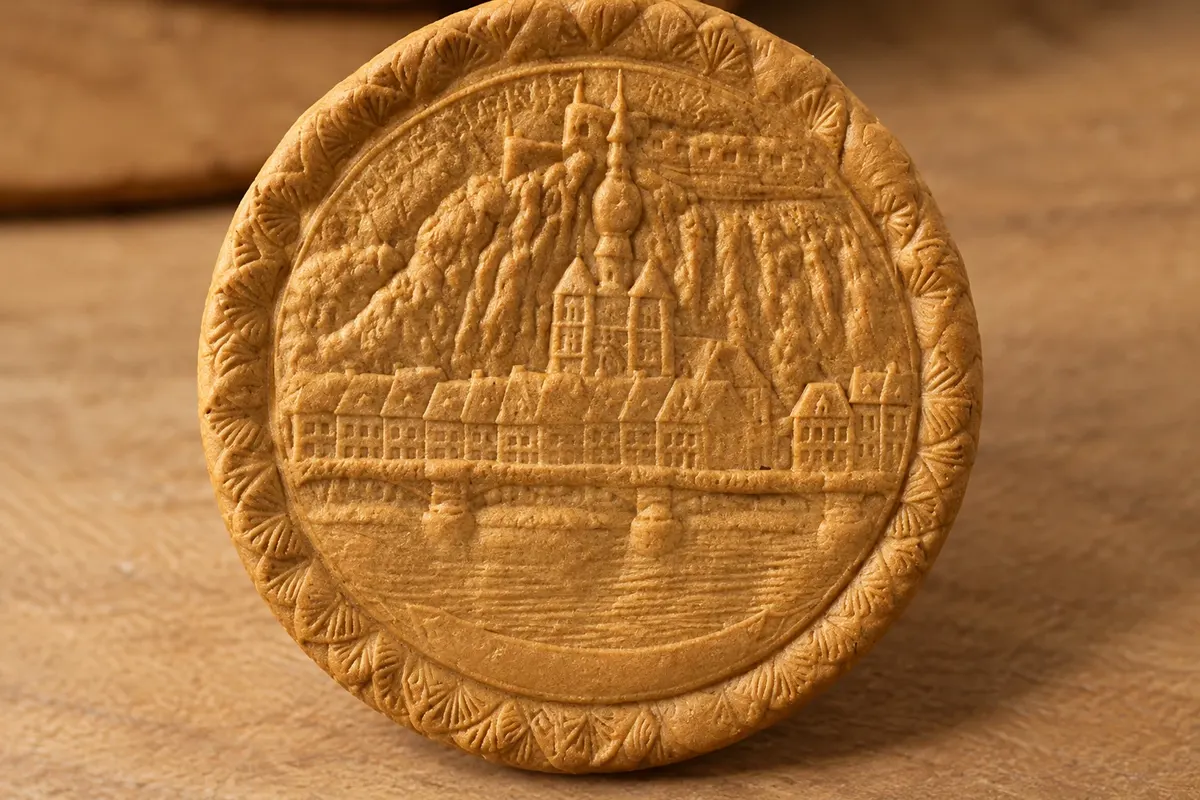
Very hard biscuit, made only of honey and wheat flour, pressed in wooden molds carved with animals, figures and views of the city. A tradition of Dinant, in the Meuse valley, it should be softened in the mouth, not bitten.

Small tart of puff pastry filled with matten, the curd of raw cow's milk, eggs and sugar. It is made in Geraardsbergen and Lierde, in the province of East Flanders, and has a protected geographical indication by the European Union.

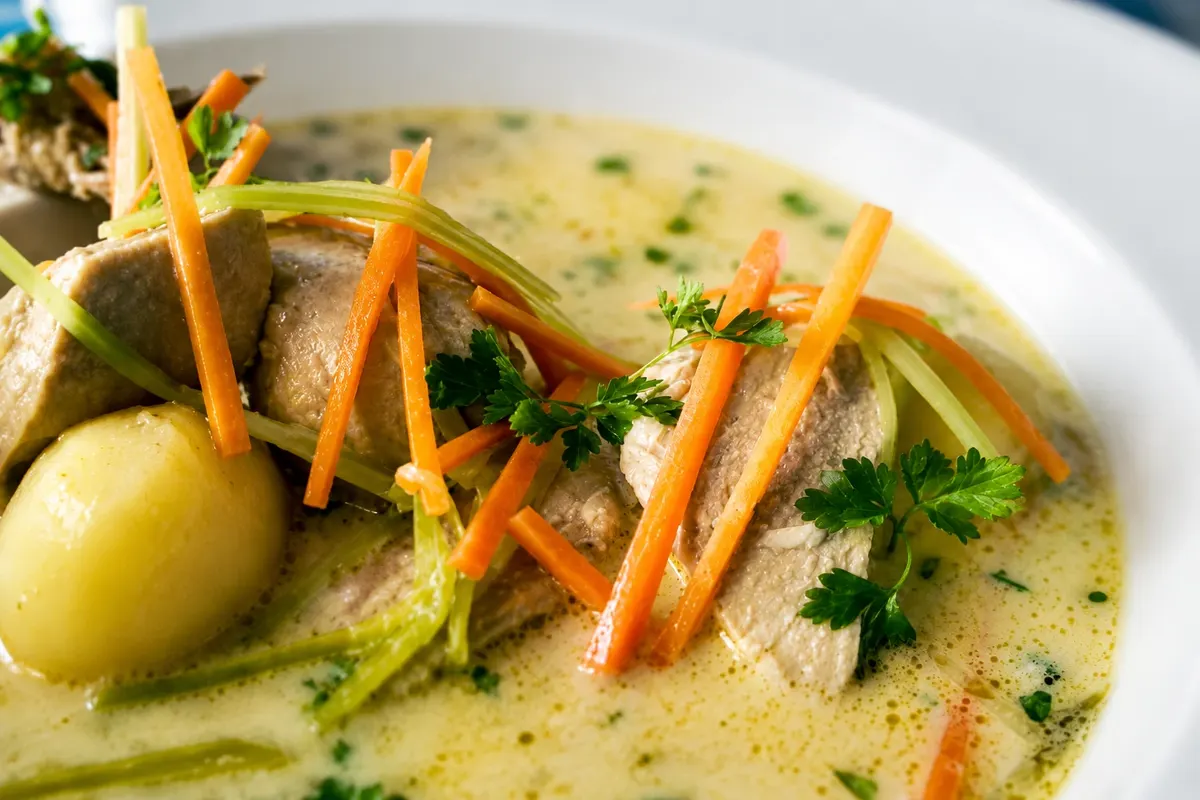
Creamy stew from Ghent, with a broth thickened with cream, vegetables such as carrot, leek and celery, potato and chicken. The earliest versions were made with river fish, and fish still appears in some kitchens of the city.

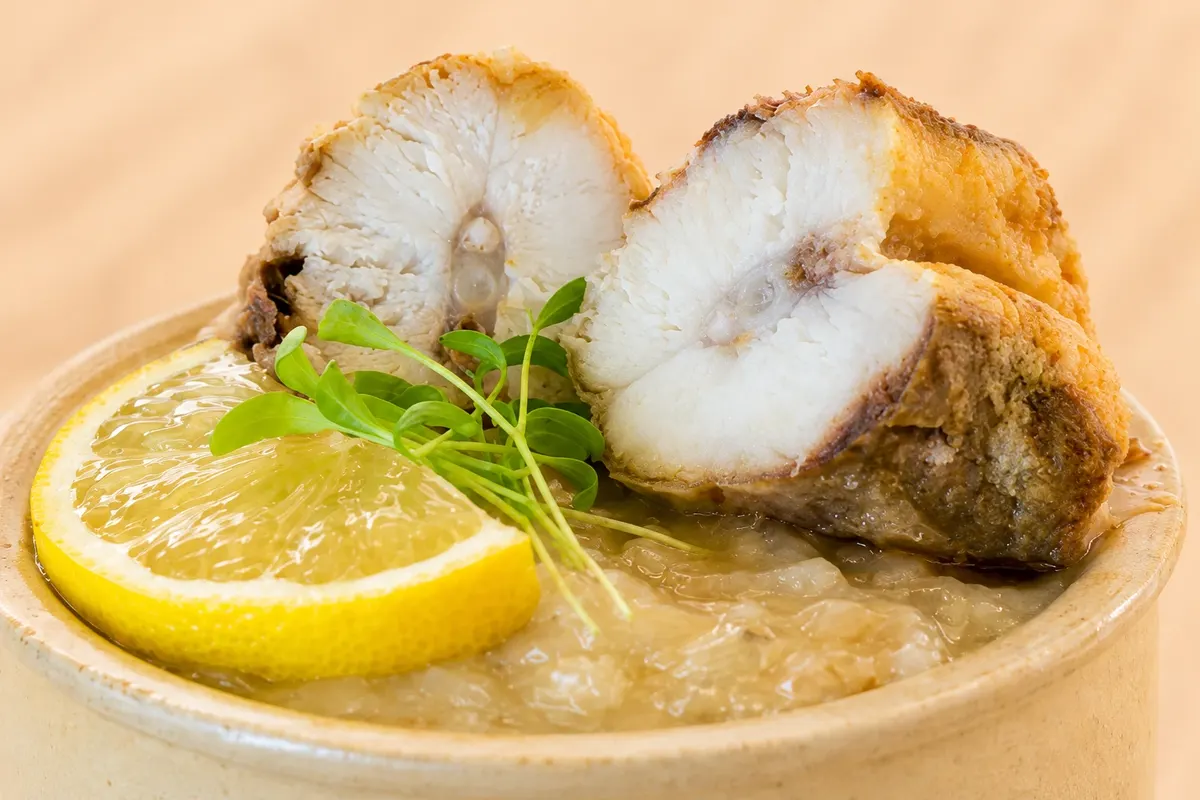
Cooked fish, served cold in a vinegar jelly with onion, traditionally in a stoneware jar. It has a European geographical indication, produced in Chimay and in neighboring municipalities of the provinces of Hainaut and Namur.

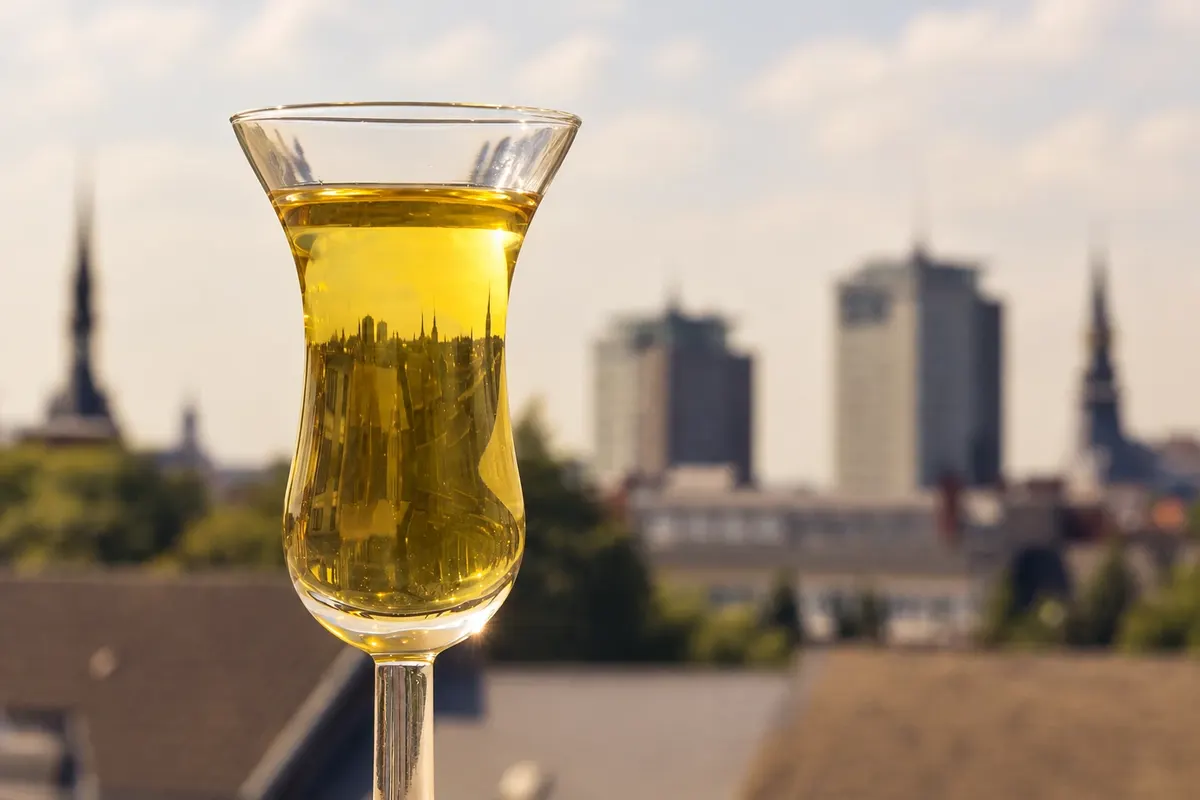
Cereal distillate flavored with juniper and herbs, milder and sweeter than other jenever. It has a European geographical indication: it must be distilled in Hasselt, Zonhoven or Diepenbeek. The city maintains a museum of the drink in a former distillery.

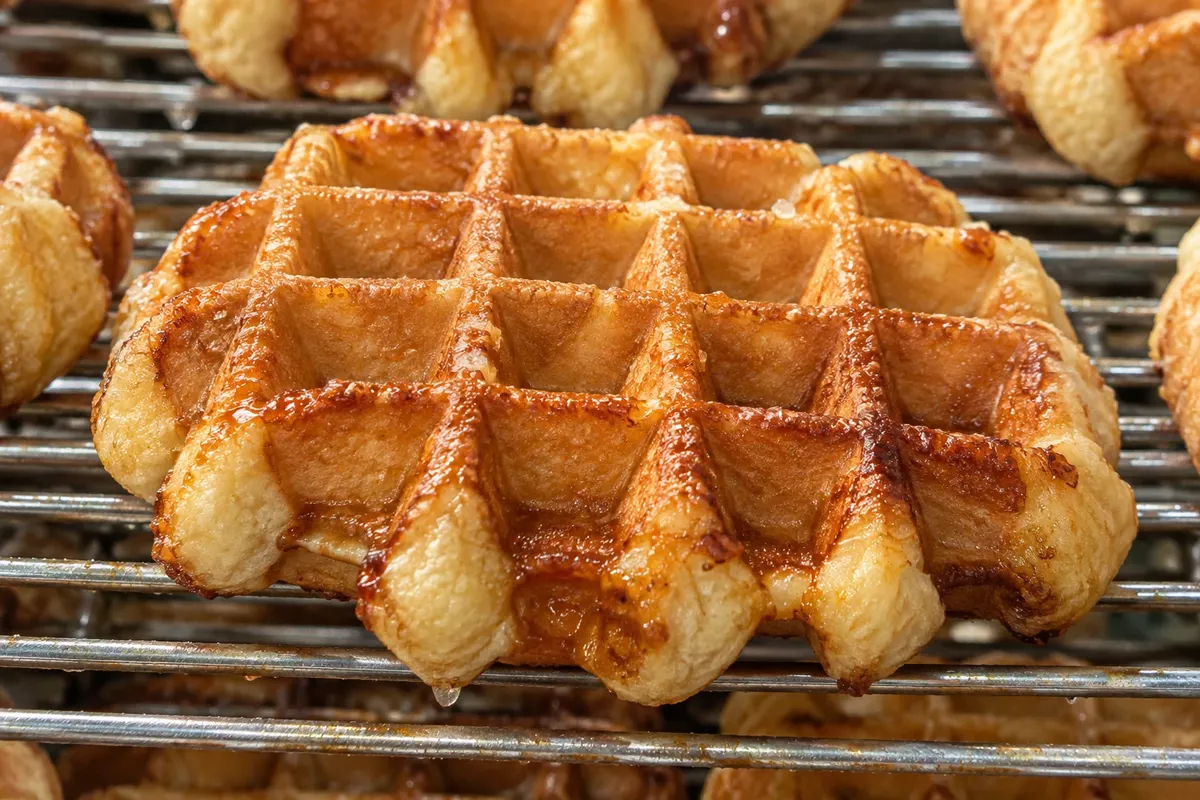
Dense waffle, made from a brioche-like dough with pieces of pearl sugar that caramelize on the griddle. Rounded and without corners, it is eaten hot and without topping. According to tradition, it was created in Liège in the 18th century.

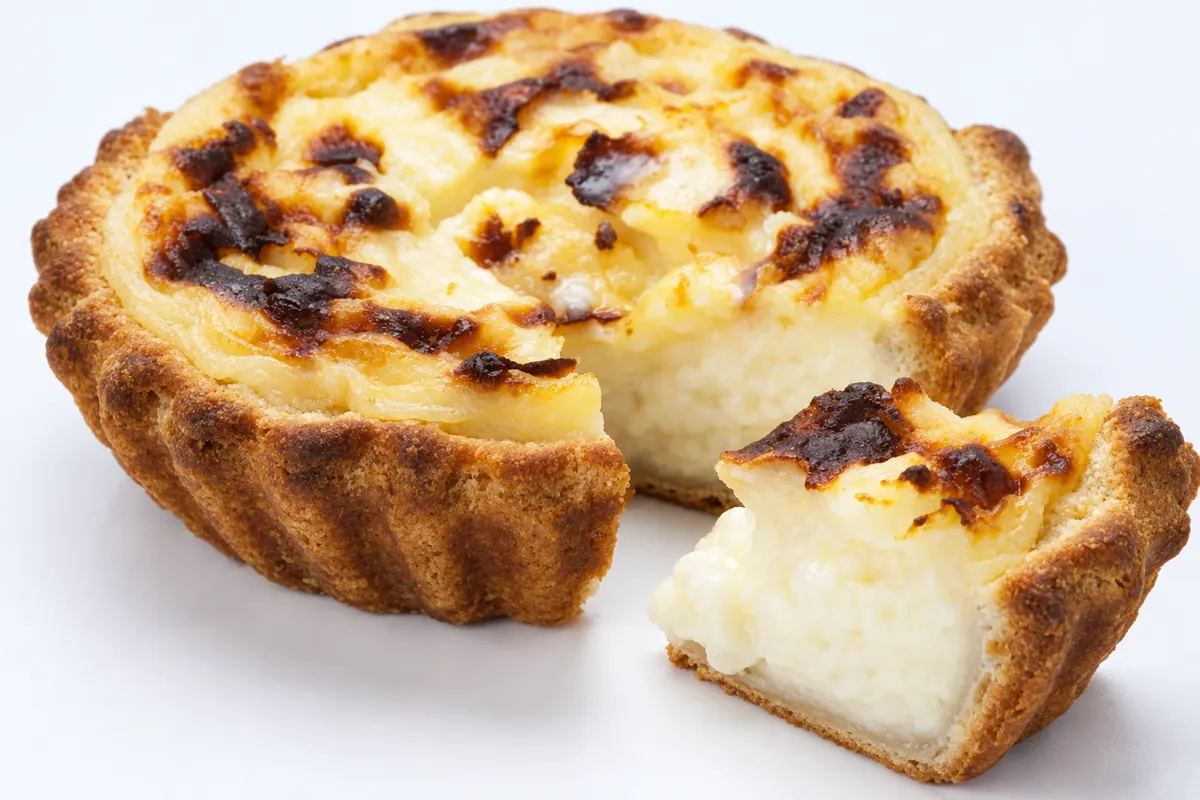
Open tart of creamy rice pudding on a thin crust, typical of Verviers in the province of Liège. Eaten warm or cold, at any time of day, often with coffee.

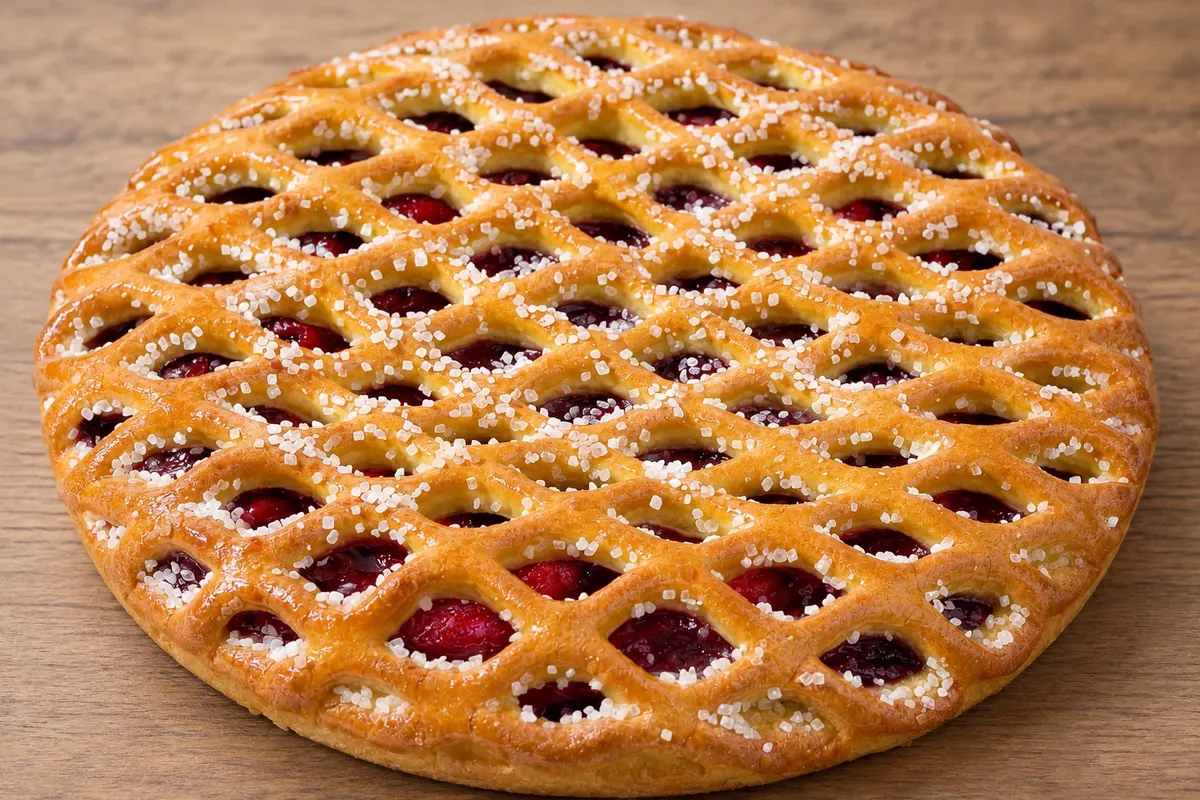
Round tart of thin fermented dough with a generous filling of fruit, rice pudding or cream. It is made in Belgian Limburg and Dutch Limburg, and the name is protected by a European geographical indication.

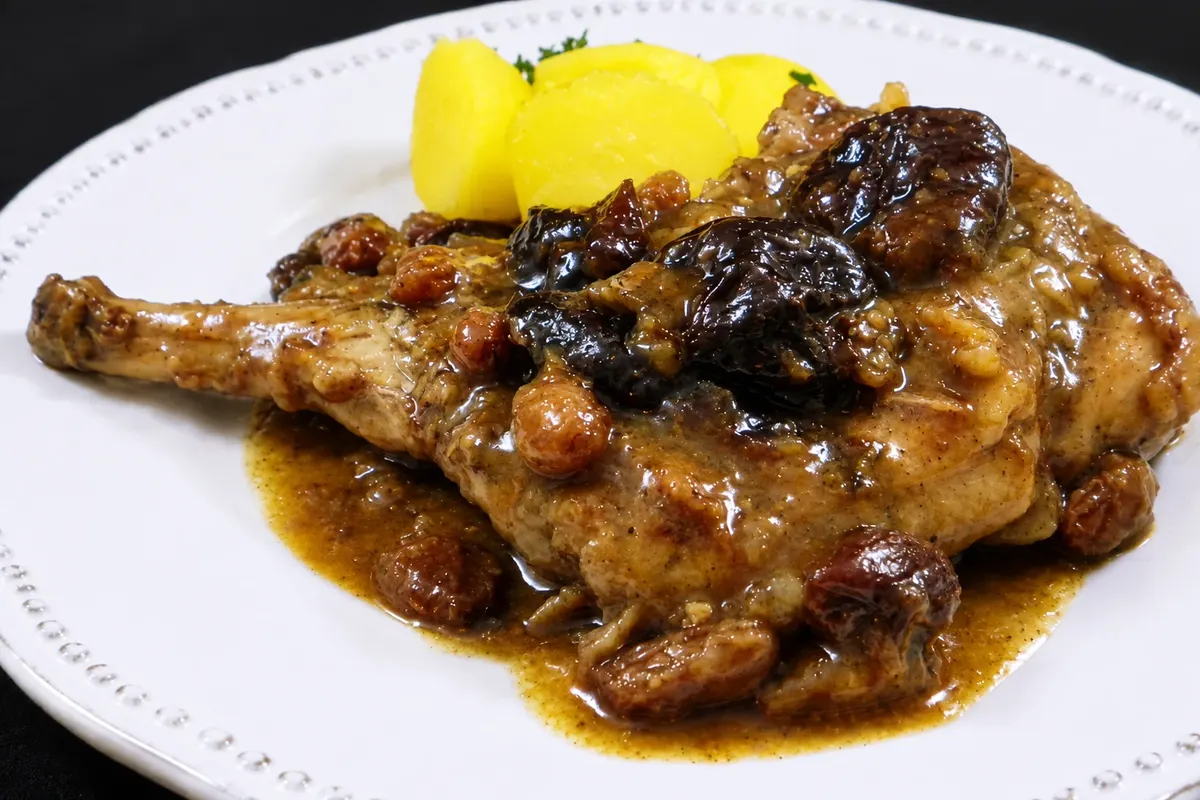
Rabbit slowly cooked with onion, black plum and raisins, served with potato. It is the dish of the Lundi perdu dinner, the Monday after Epiphany, a Tournai tradition recognized as intangible heritage by the Fédération Wallonie-Bruxelles.