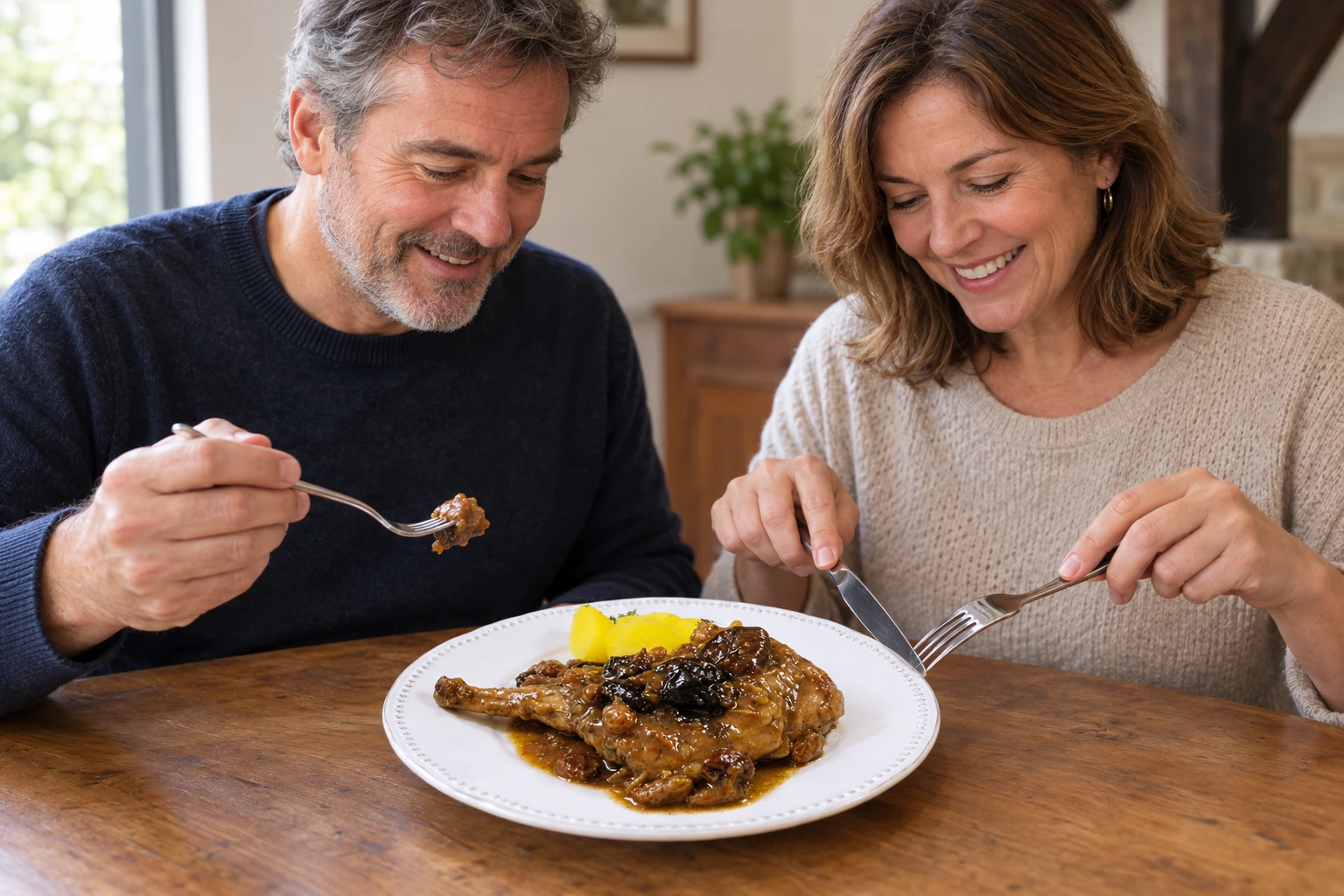
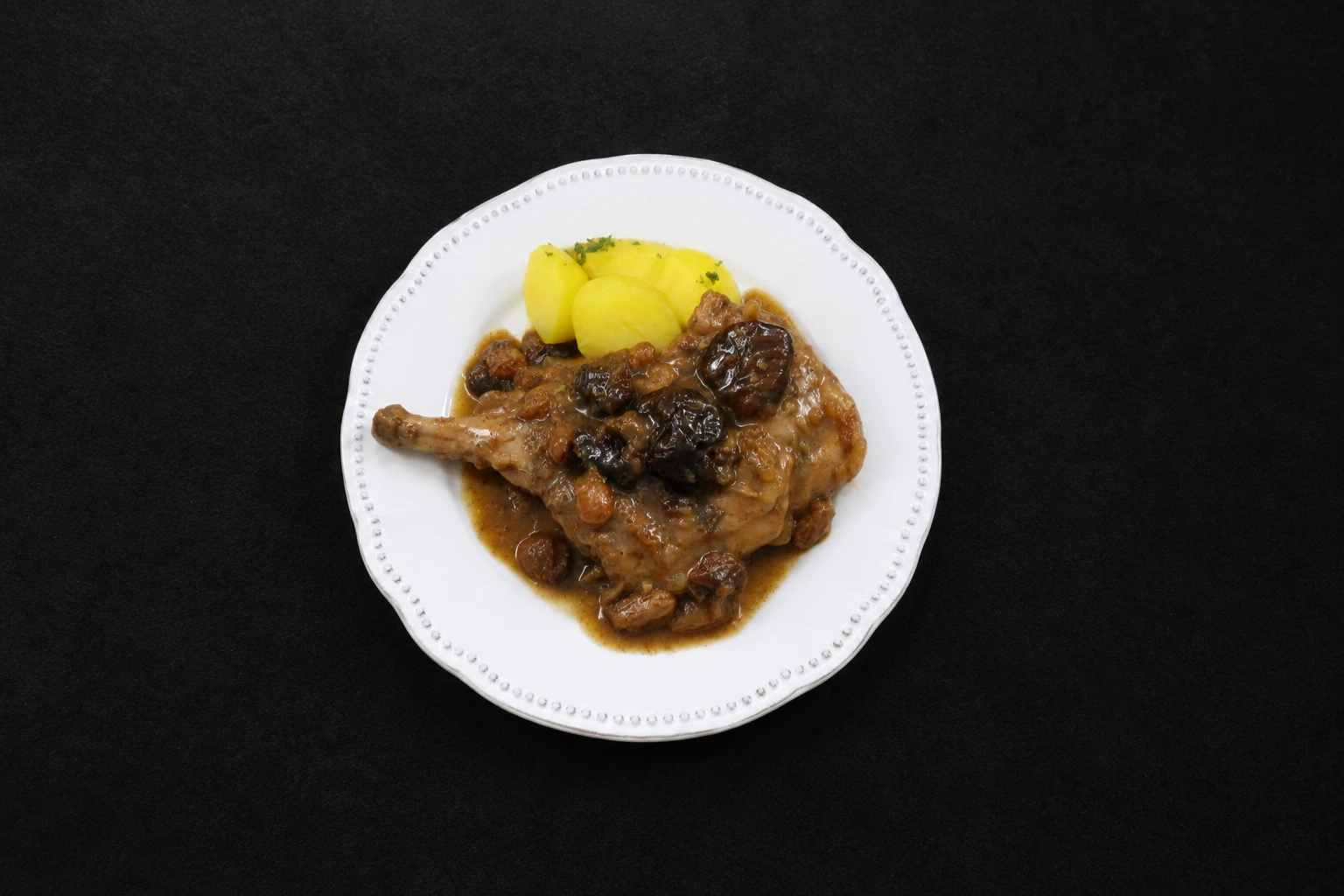
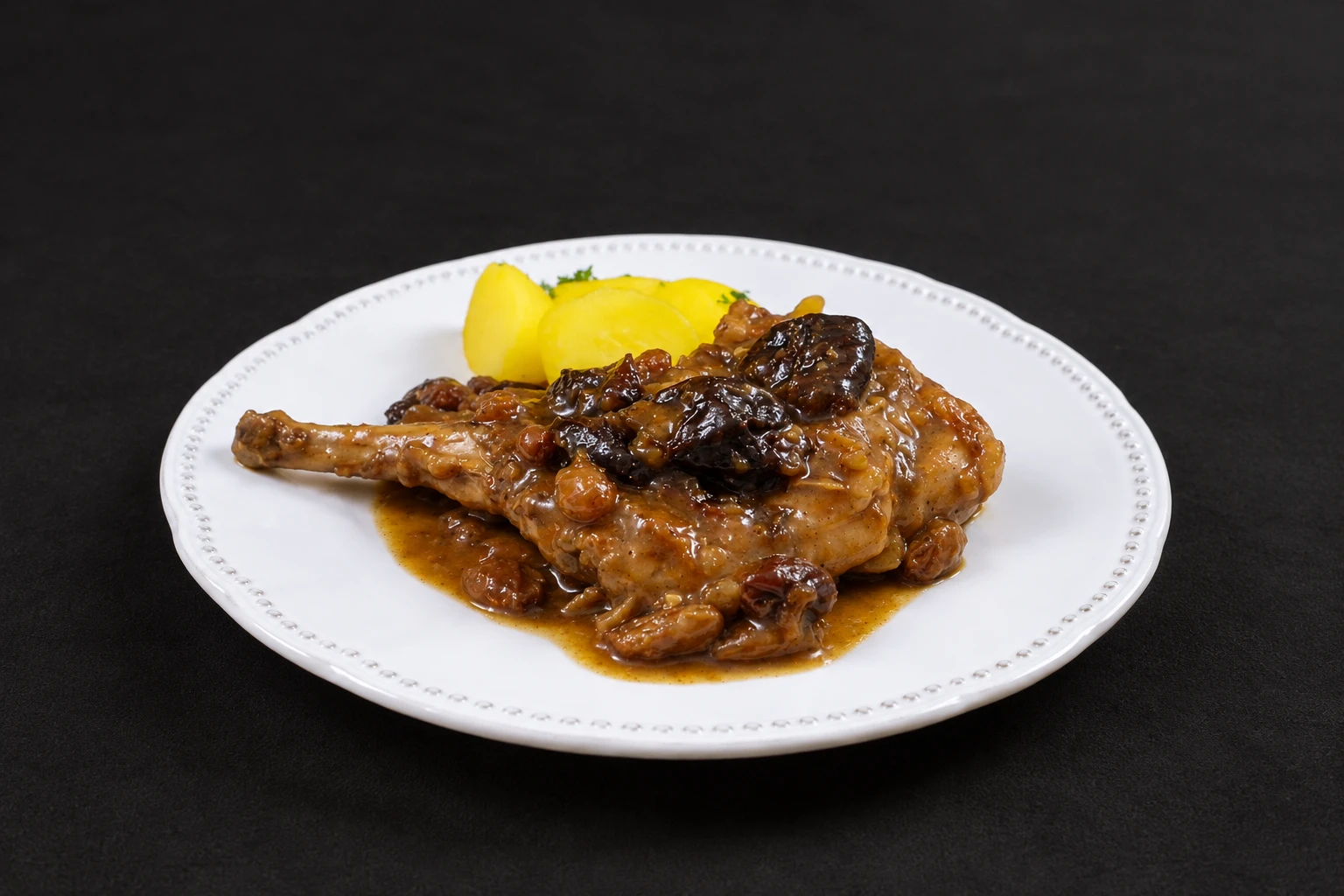
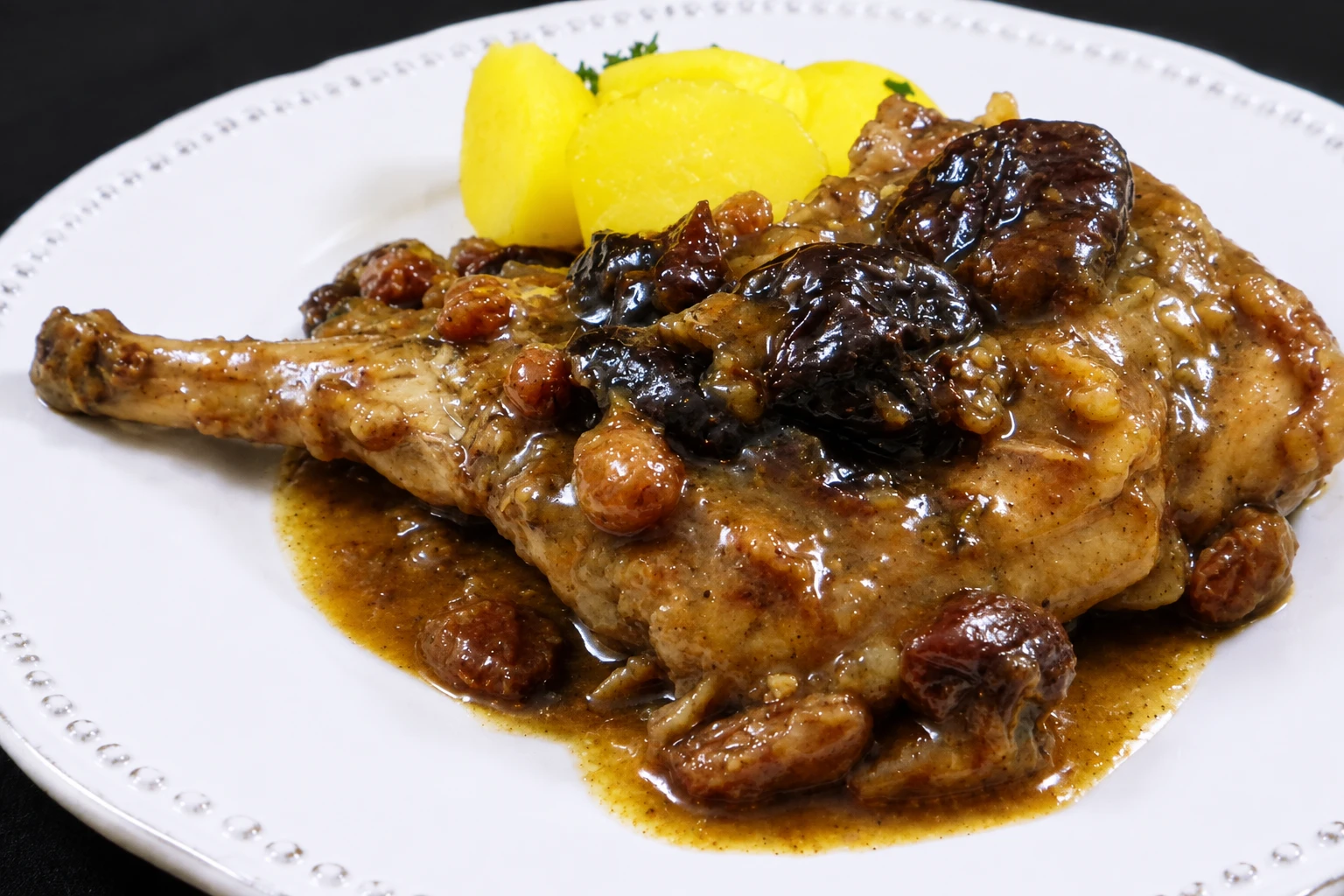
Lapin à la tournaisienne is rabbit cut into pieces, browned in butter with onion and slowly cooked with thyme, bay leaf, a little vinegar and, depending on the recipe, brown sugar. At the end, black plums and raisins are added, which give the sauce a sweet-and-sour note. It is served with boiled potatoes.
The dish is central to the Lundi perdu, or lundi parjuré, the first Monday after Epiphany. In the past, it was the day when end-of-year gifts were distributed: the butcher gave sausage to good customers and workers received tips. The earliest written references to the custom date to the 13th century. In Tournai it is called the third réveillon.
The dinner follows an order: first the small sausage, with compote or cabbage; then the rabbit; next the salade tournaisienne, with many ingredients; and finally the king cake, with the hidden bean. At the table, each guest draws a slip that defines their role in the celebration. When the person who drew the king raises their glass, everyone drinks together, and songs are sung in the local dialect, Picard.
The Fédération Wallonie-Bruxelles recognized the rabbit dinner of the Lundi perdu as a masterpiece of the oral and intangible heritage. At that time of year, many restaurants in the Tournai region put rabbit on the menu and organize feasts.
There is no single recipe. For traditionalists, the rabbit is cooked in water, as in the simple original dish; other families use dark beer and add gingerbread. Each household defends its own version.


 Brazil
 Argentina
 Bolivia
 Chile
 Colombia
 Ecuador
 Guyana
 French Guiana
 Falkland Islands (Malvinas)
 Paraguay
 Peru
 Suriname
 Uruguay
 Venezuela
 Germany
 Austria
 Croatia
 Denmark
 Spain
 Finland
 France
 Greece
 the Netherlands
 Hungary
 Ireland
 Iceland
 Italy
 Luxembourg
 Norway
 Poland
 Portugal
 the United Kingdom
 the Czech Republic
 Sweden
 Switzerland
 Turkey
 the United States
 Mexico
 the Dominican Republic
 South Africa
 Australia
 Fiji