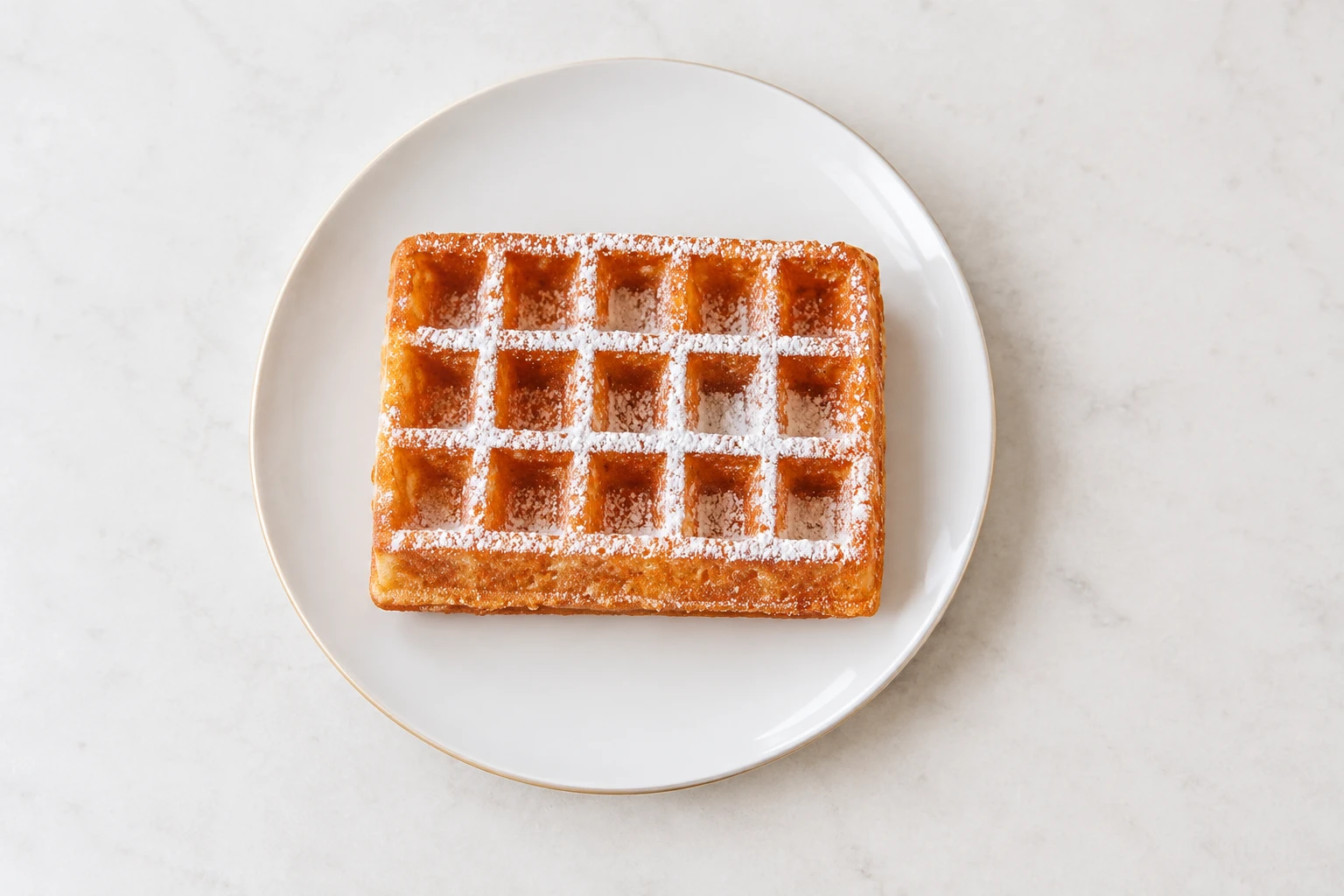
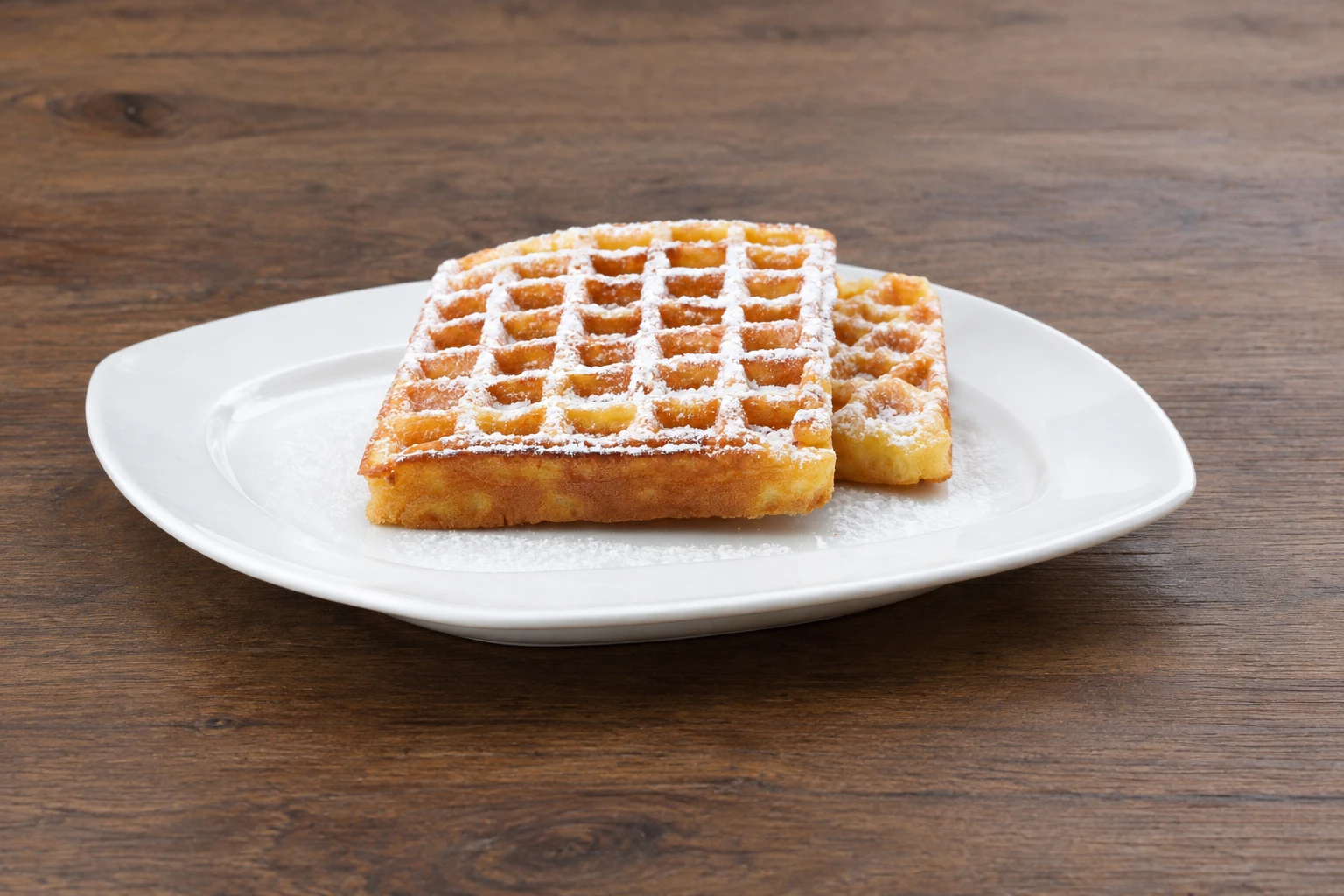
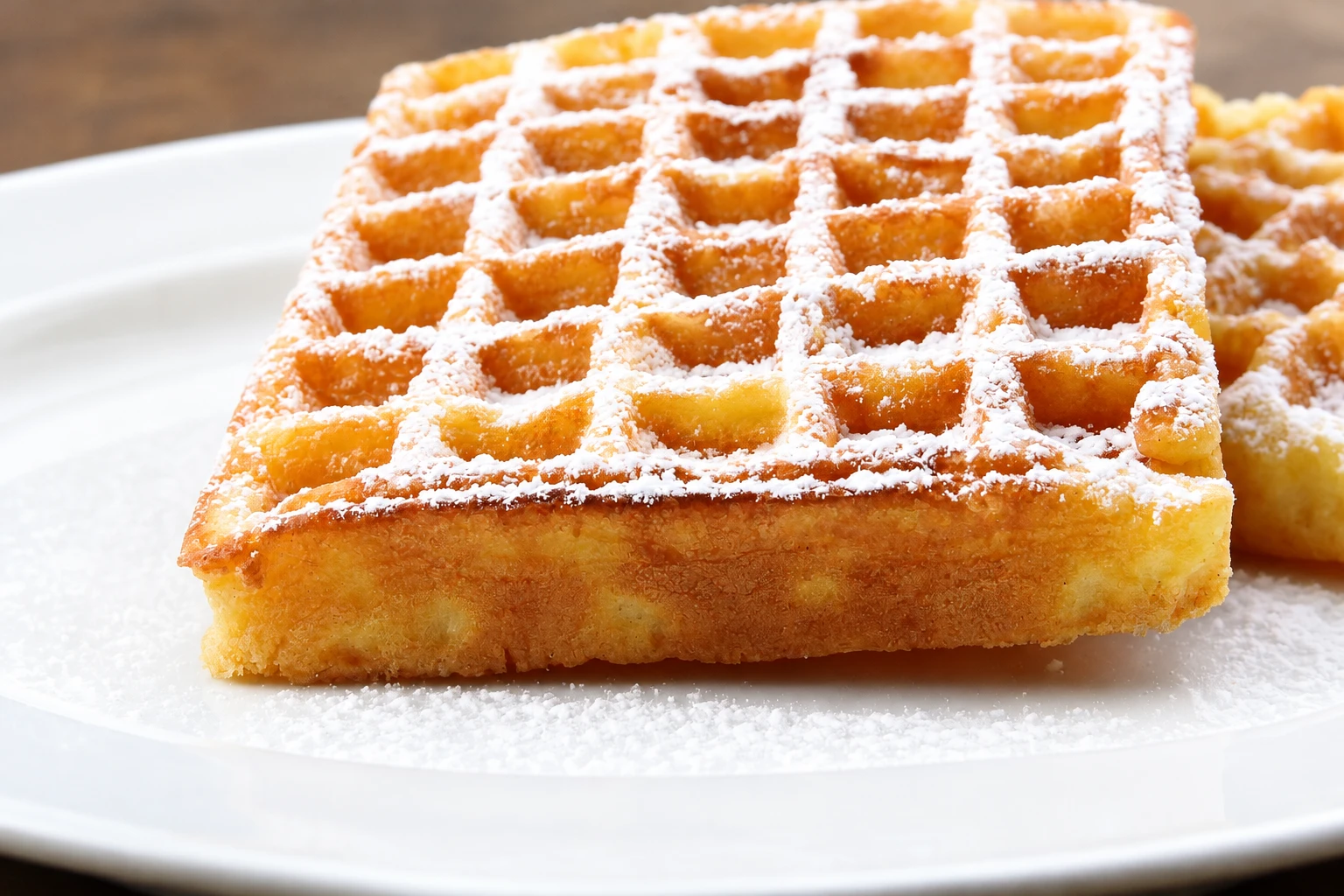
The gaufre de Bruxelles is a rectangular waffle, with straight edges and deep pockets, usually with 20 to 24 cavities. The batter is liquid and becomes light thanks to egg whites beaten to stiff peaks and, in many recipes, yeast. It comes off the iron crispy on the outside and soft inside, with little sugar in the batter: it serves as a base for toppings.
Waffles are old in the region. They appear in Bruegel paintings from the 16th century and in the canvas The King Drinks by Jacob Jordaens, which is in the Royal Museums of Fine Arts of Belgium in Brussels, where the waffle is part of the Epiphany celebration. For centuries it was a festive sweet, associated mainly with carnival.
The name gaufres de Bruxelles appears in writing in the mid-19th century, on the card of a confectioner who had worked in Brussels and opened a shop in Ghent. Ghent also claims the invention, attributed to a confectioner from the city who allegedly presented the waffle at a fair in 1856, and the oldest known written recipe, from 1874, used beaten egg whites instead of yeast. The exact origin is disputed; the name and tradition became linked to the capital.
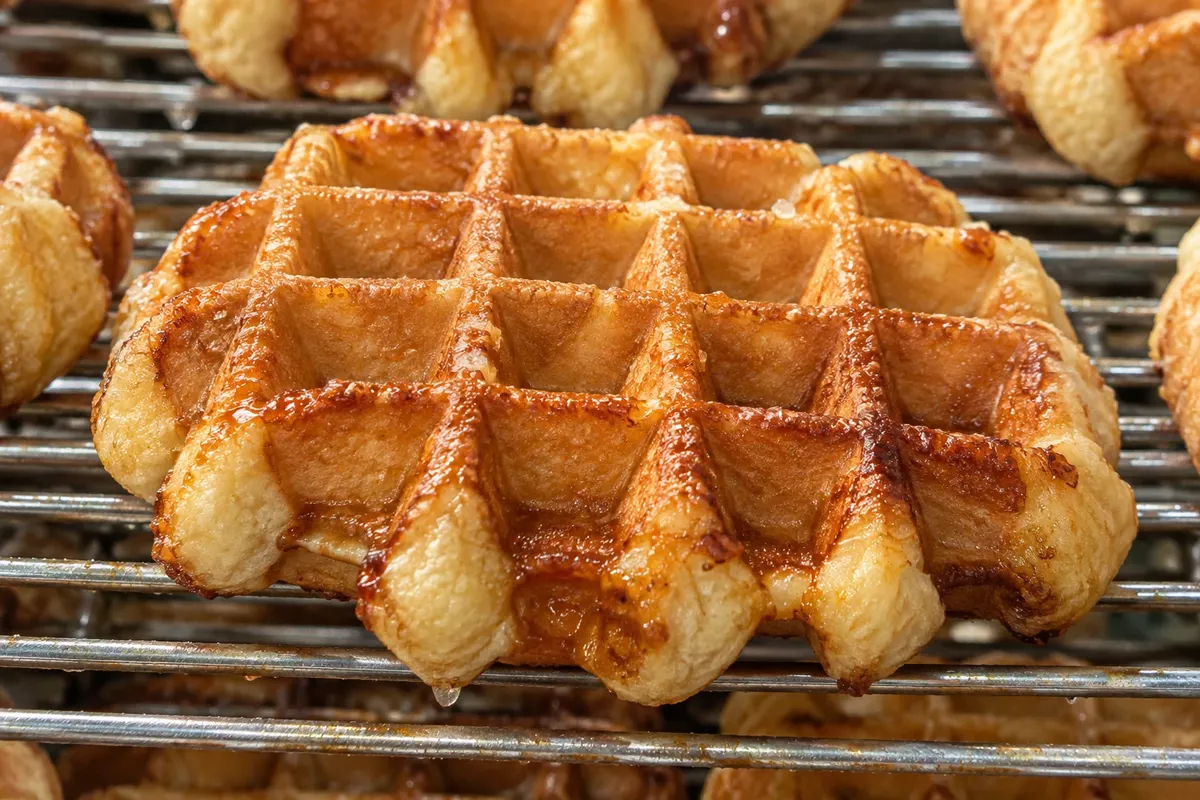
It is different from the Liège waffle, the other major Belgian waffle. The Brussels one is light, rectangular and not very sweet; the Liège one is round, dense and full of caramelized sugar. That is why the Brussels waffle often comes with toppings, while the Liège does not need them.
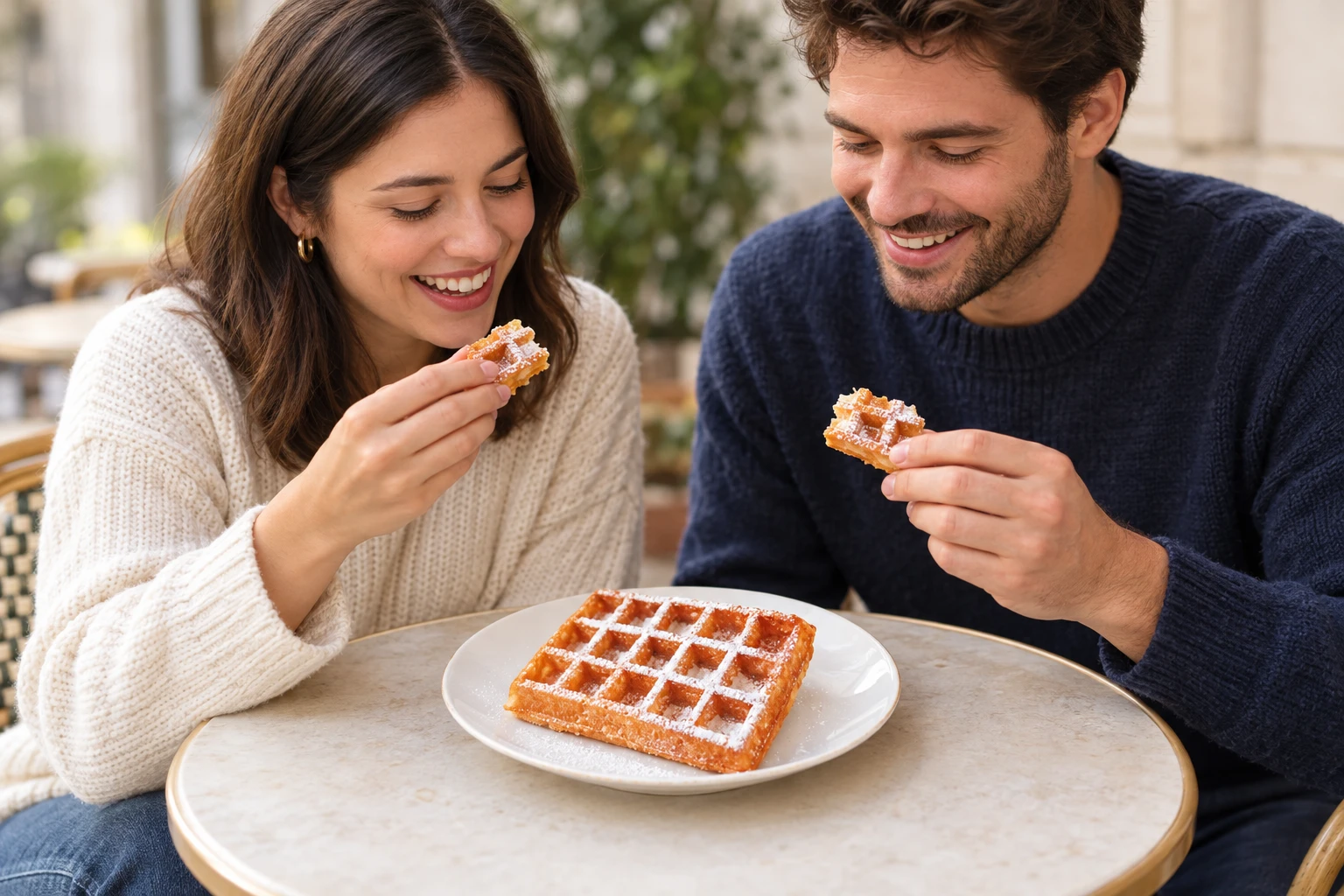
In Brussels, the waffle is eaten at any time: seated in a tea room with fork and knife, or on the street with the hands. The classic way is just with confectioners' sugar. Chantilly, fresh fruit and melted chocolate are common additions, especially on the busiest streets downtown.


 Brazil
 Argentina
 Bolivia
 Chile
 Colombia
 Ecuador
 Guyana
 French Guiana
 Falkland Islands (Malvinas)
 Paraguay
 Peru
 Suriname
 Uruguay
 Venezuela
 Germany
 Austria
 Croatia
 Denmark
 Spain
 Finland
 France
 Greece
 the Netherlands
 Hungary
 Ireland
 Iceland
 Italy
 Luxembourg
 Norway
 Poland
 Portugal
 the United Kingdom
 the Czech Republic
 Sweden
 Switzerland
 Turkey
 the United States
 Mexico
 the Dominican Republic
 South Africa
 Australia
 Fiji