Meuse Valley

Namur · Liège · Belgium

Meuse Valley

Namur and Dinant on the banks of the Meuse, in the French-speaking Valônia: two citadels above the river, the cable car, the birthplace of the saxophone and kayaking on the Lesse.

Wallonia

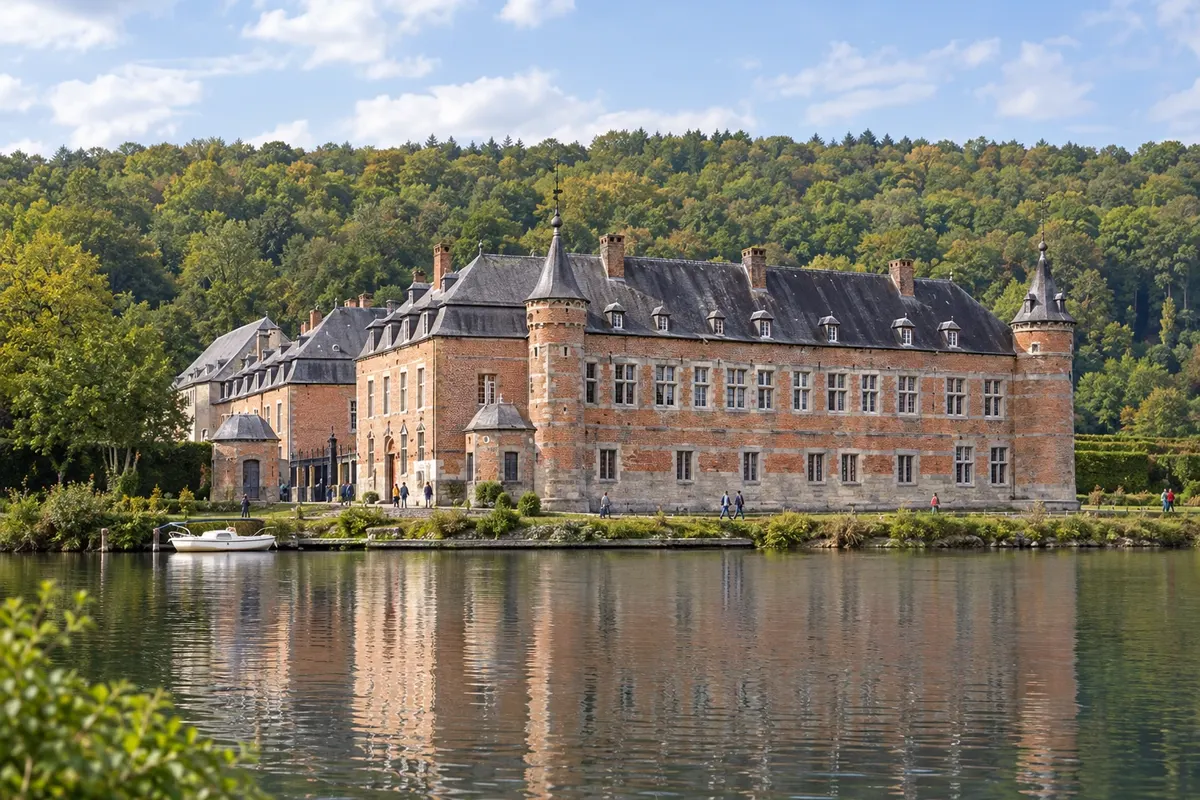
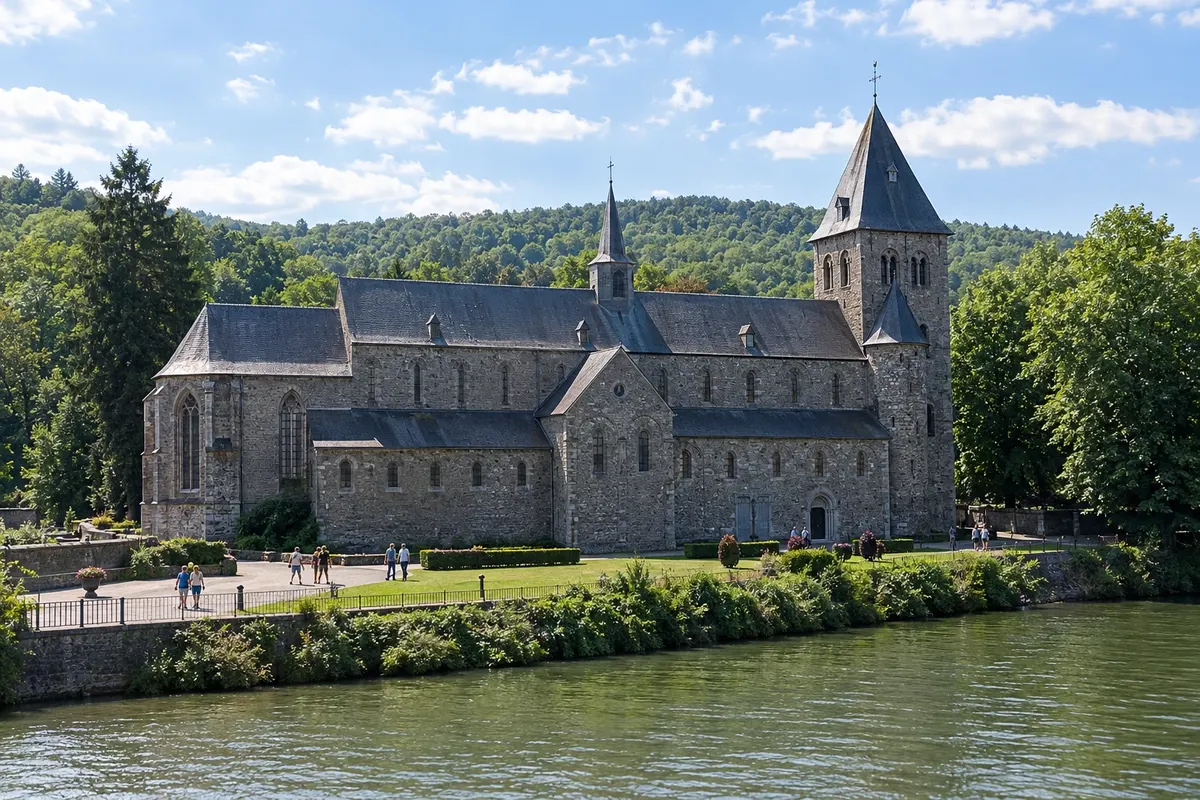
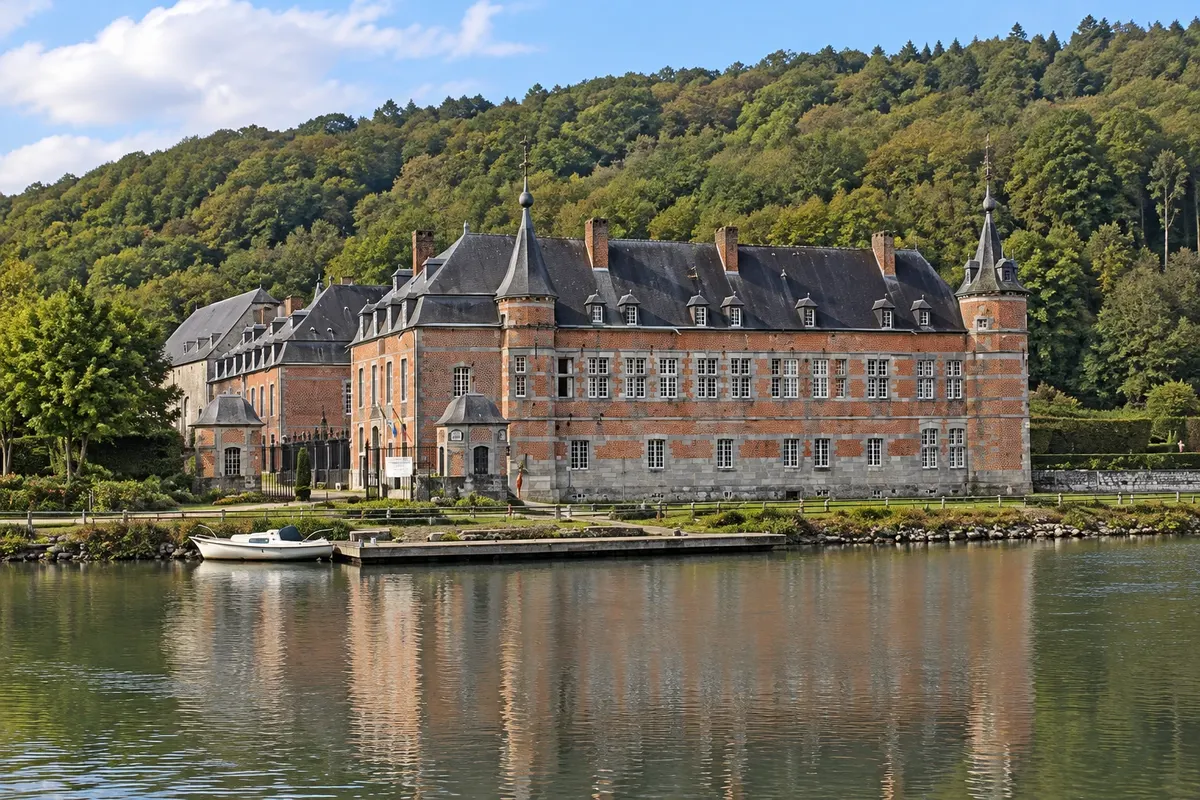
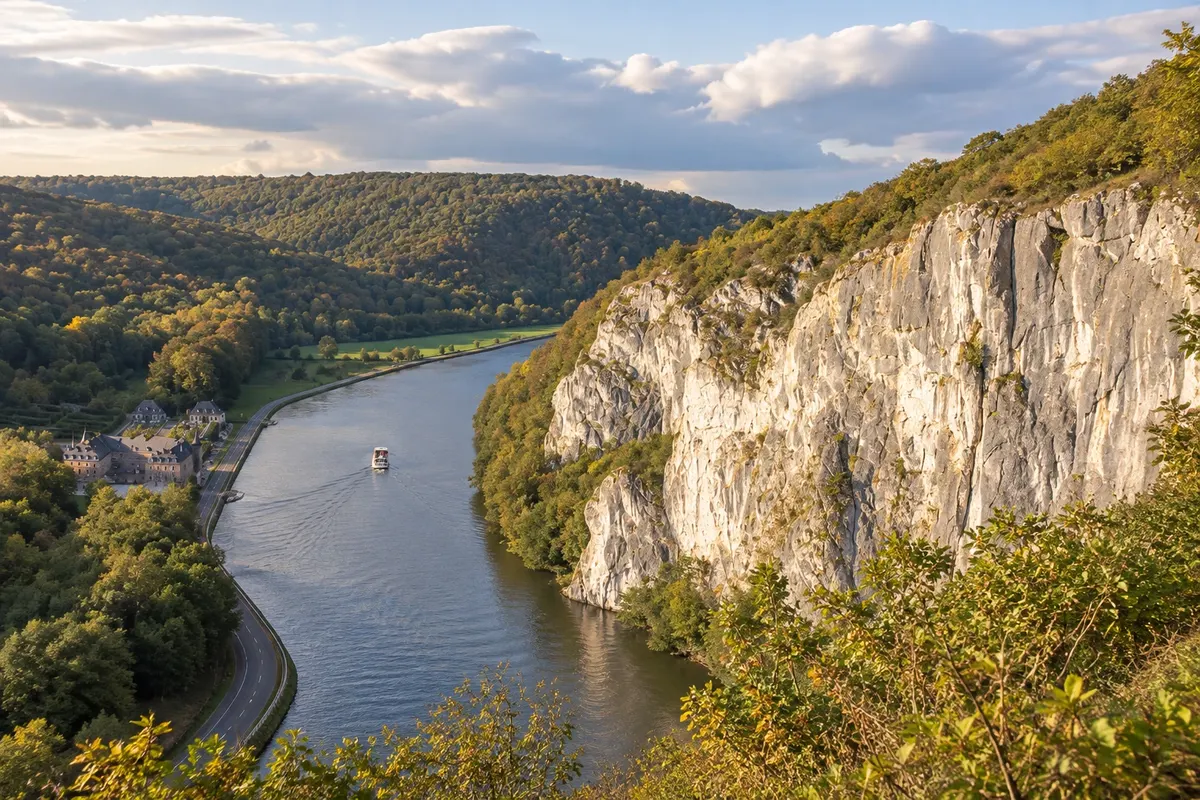
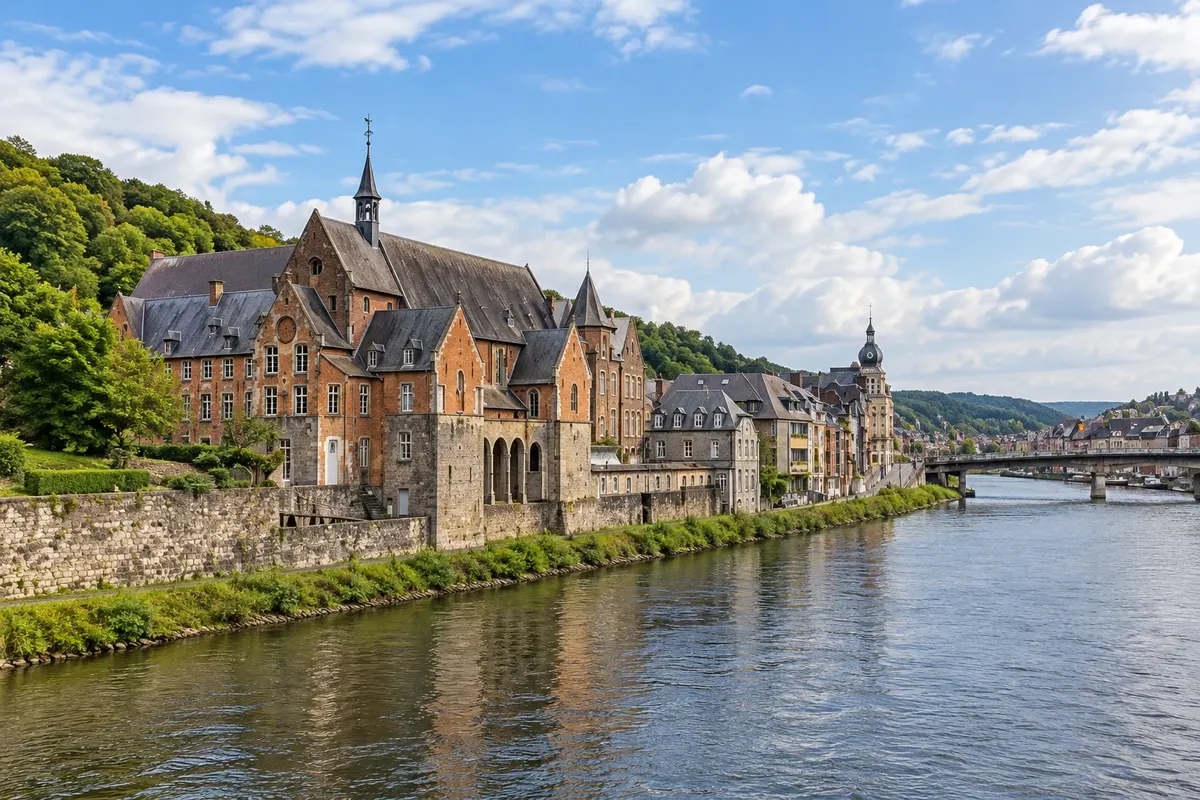
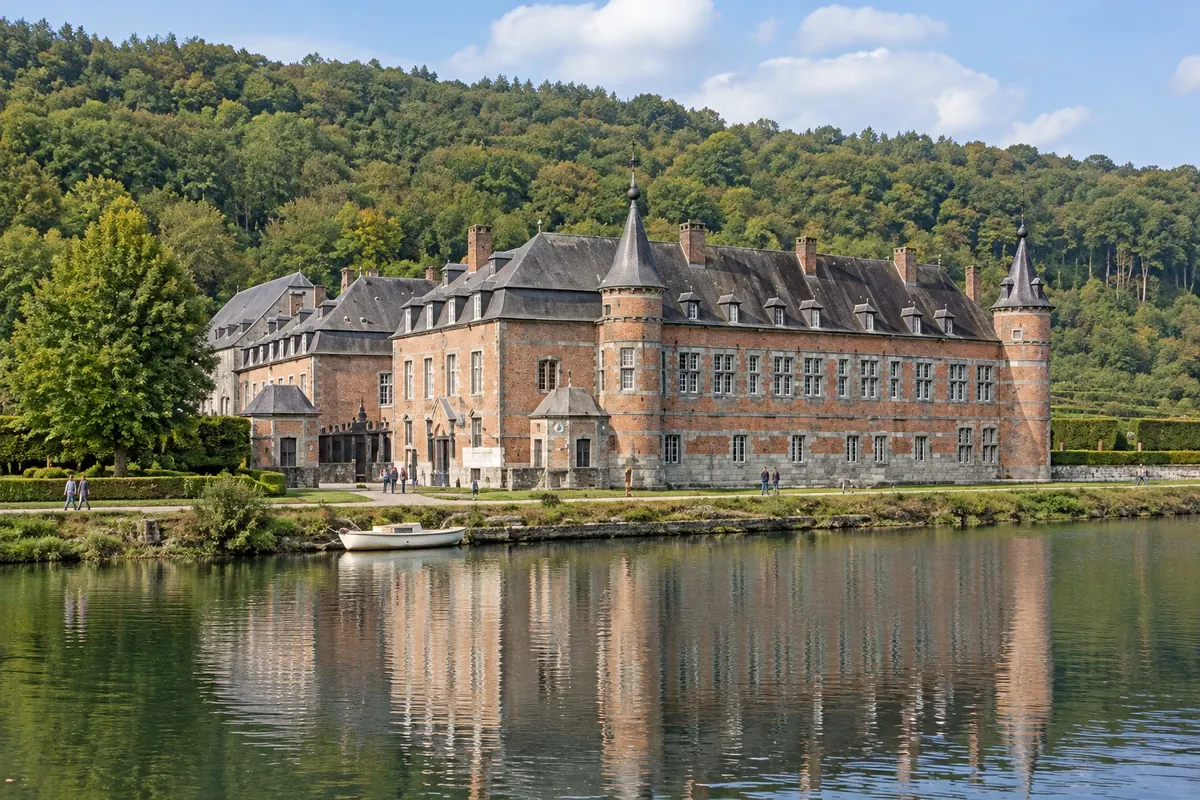
In the photo: Château de Freÿr on the banks of the Mosa

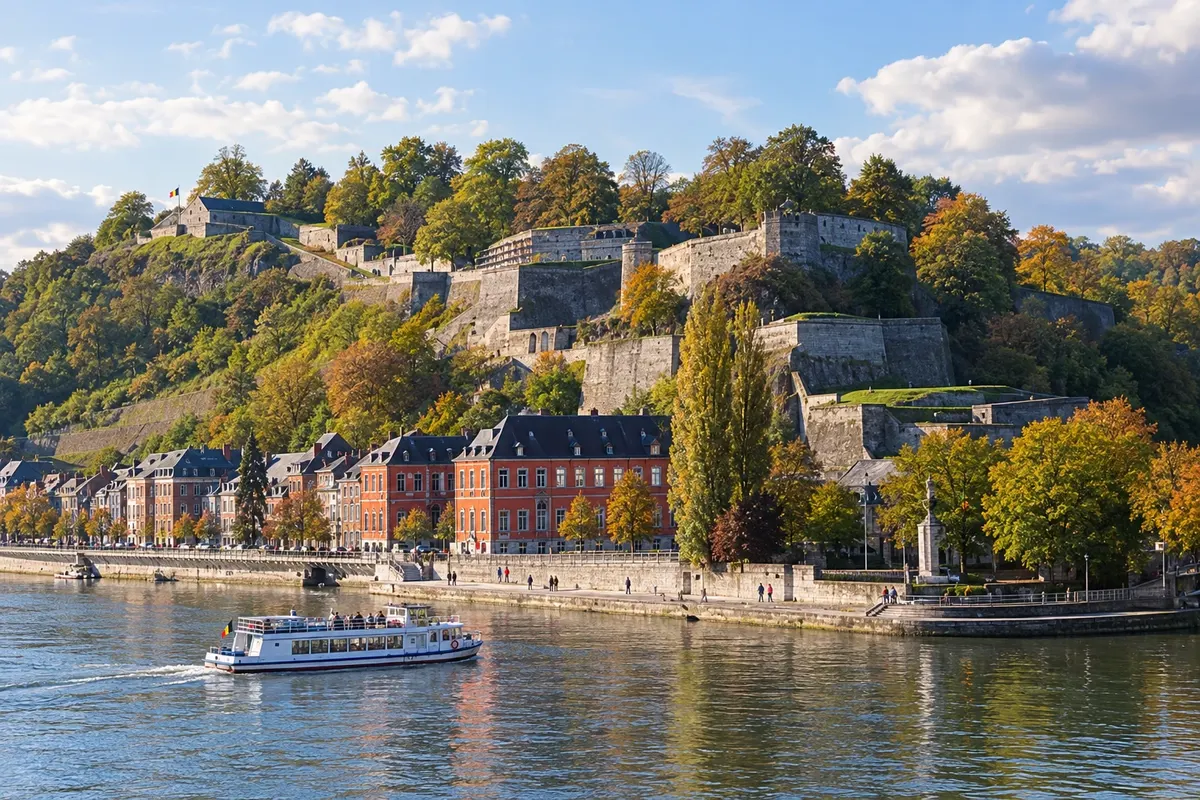
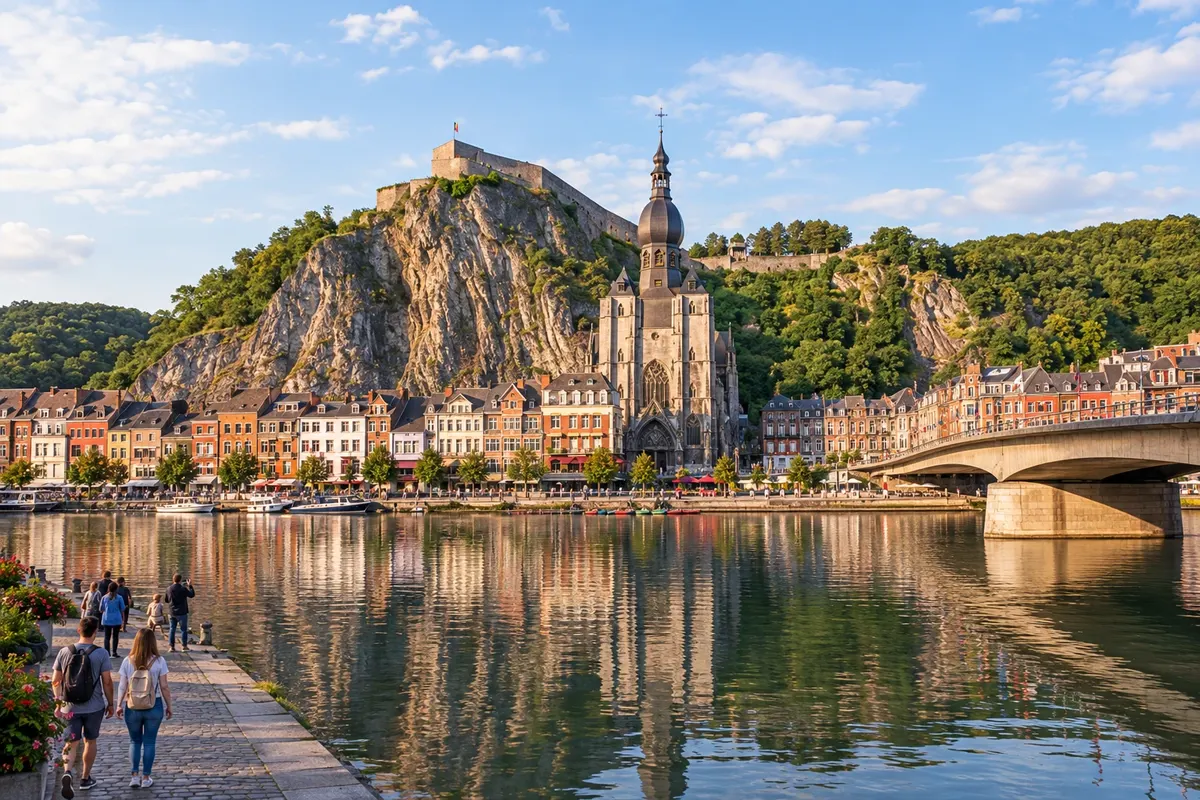
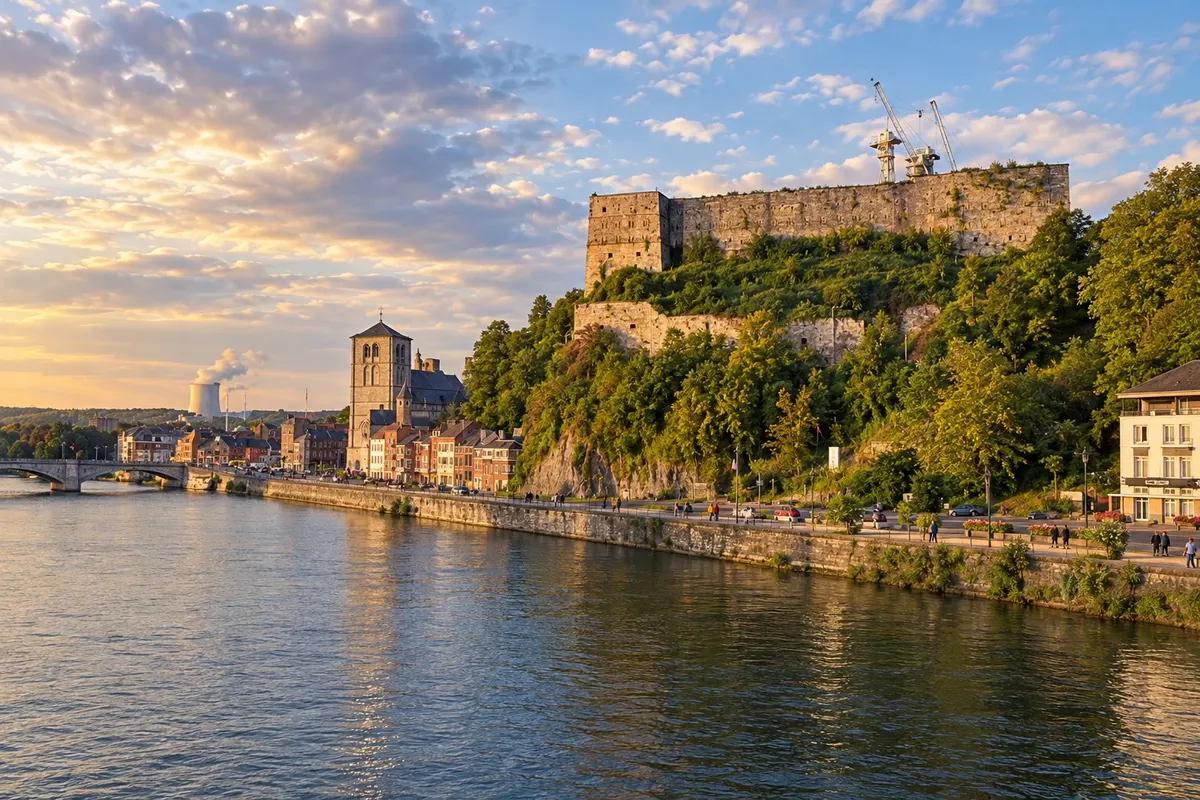
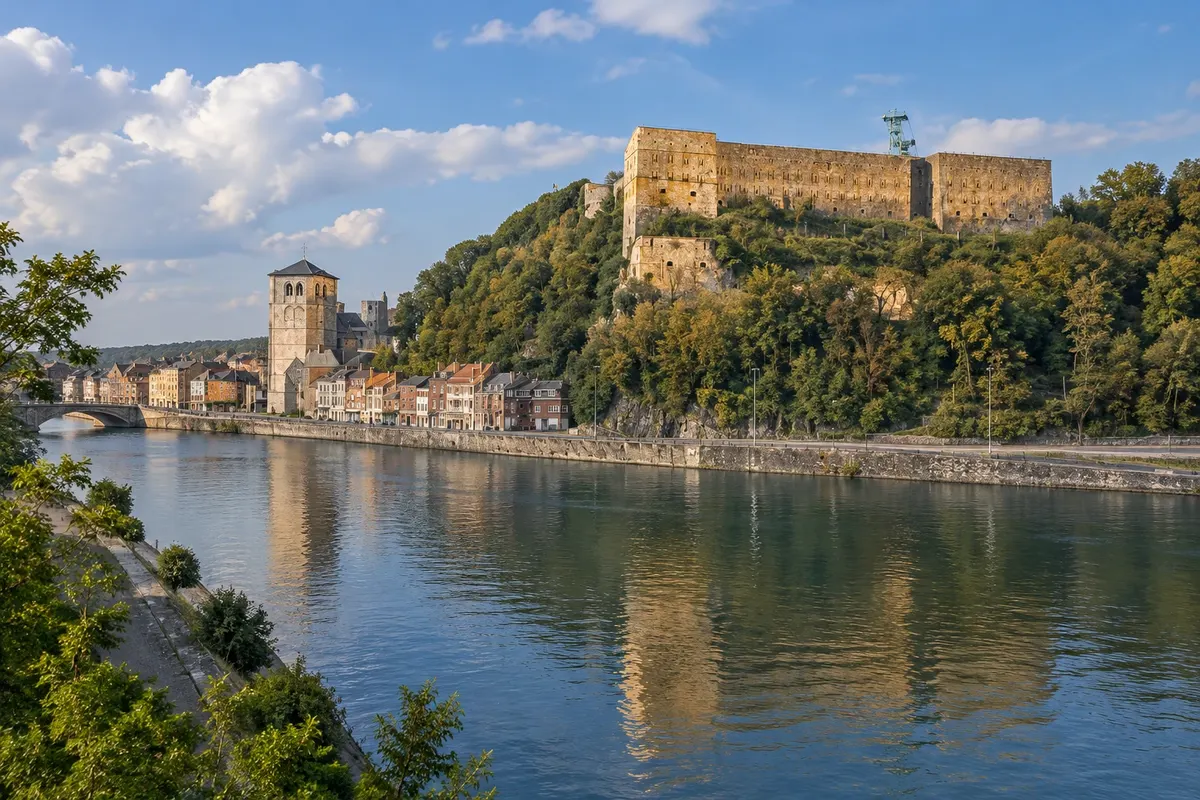
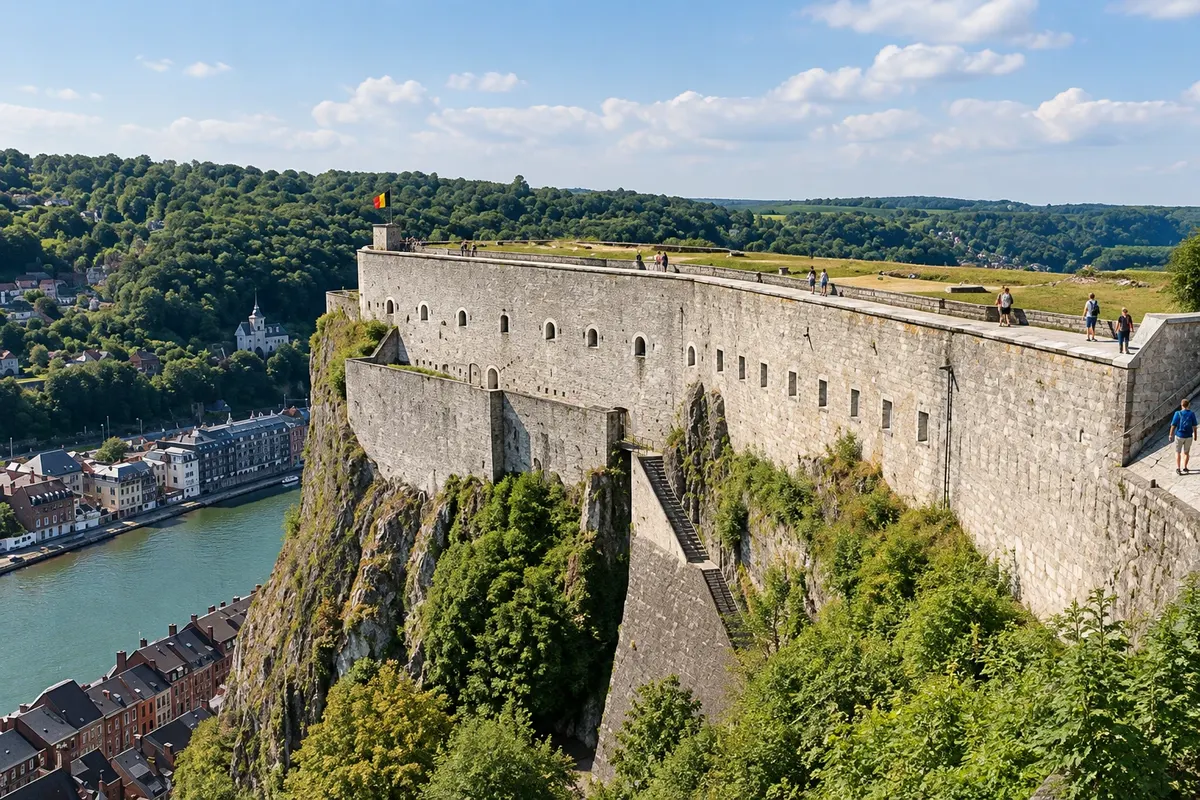
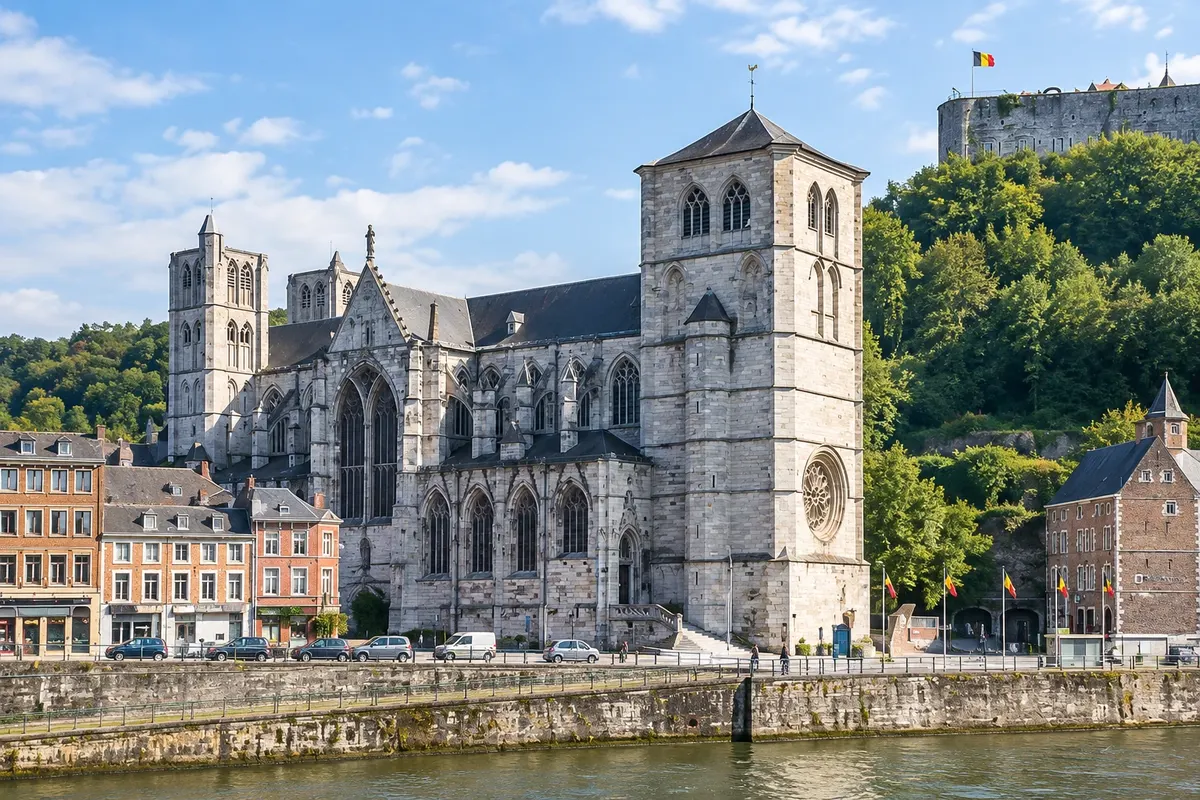
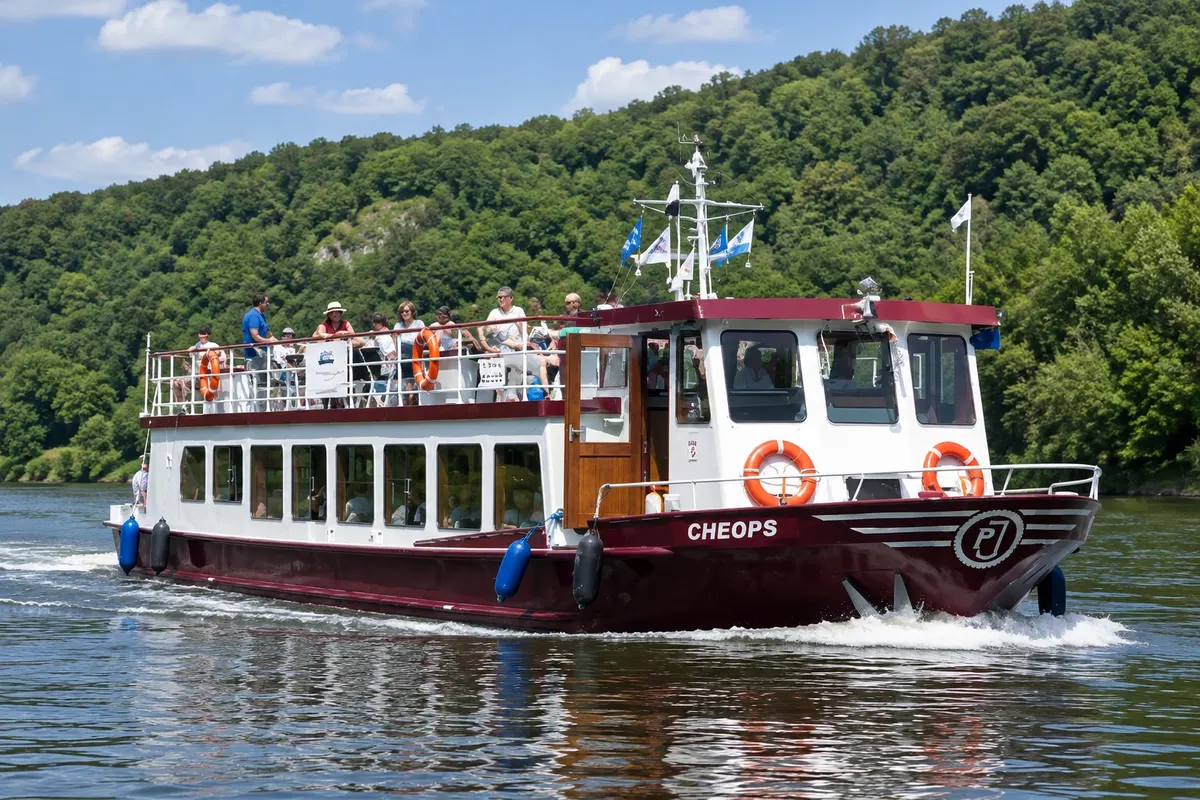
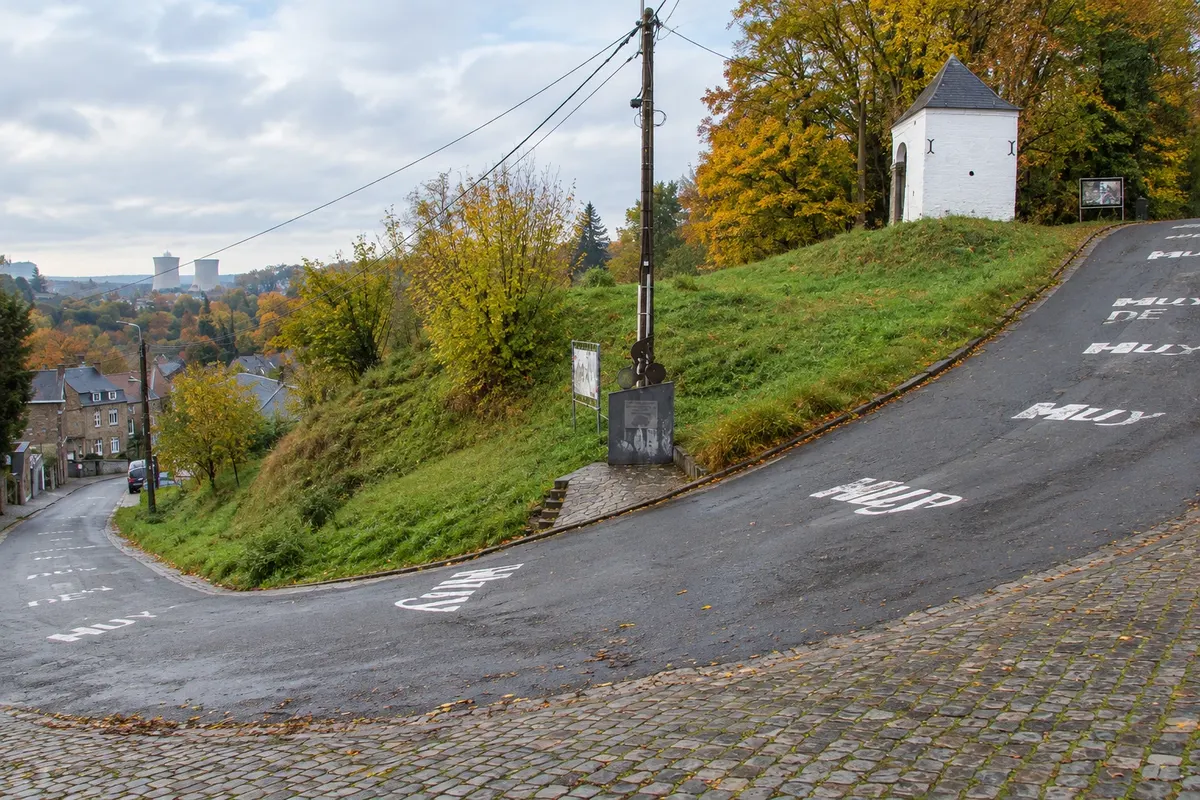
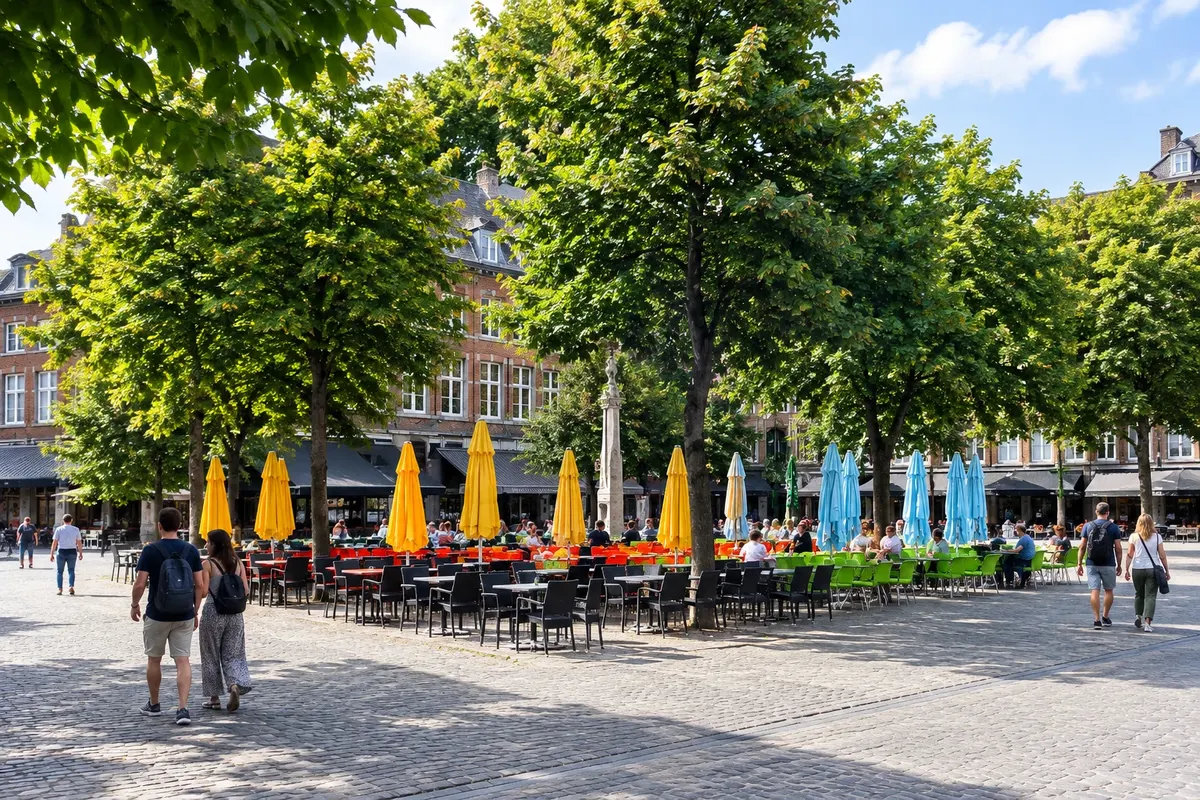
Illustrative images. The pictures in this guide are illustrations based on the real place, not photographs, and may differ from it.

Get it on Google Play Send your photos

Get to know the place

A region to enjoy
at your own pace.

The Vale do Mosa follows the Meuse River, called Mosa in Portuguese, through Valônia, the southern region of Belgium where French is spoken. The stretch between Namur and Dinant has about 30 kilometers of limestone cliffs, forests and towns pushed up against the water, linked by a train line that runs along the river.

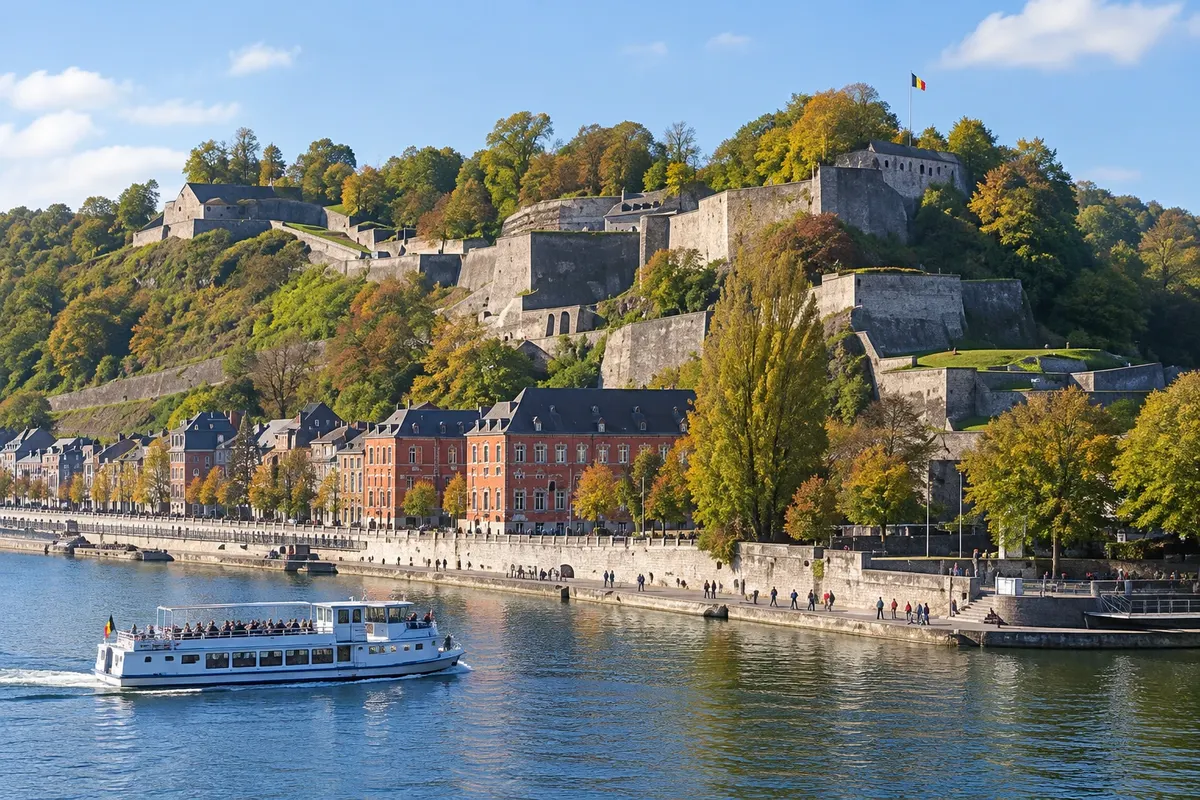
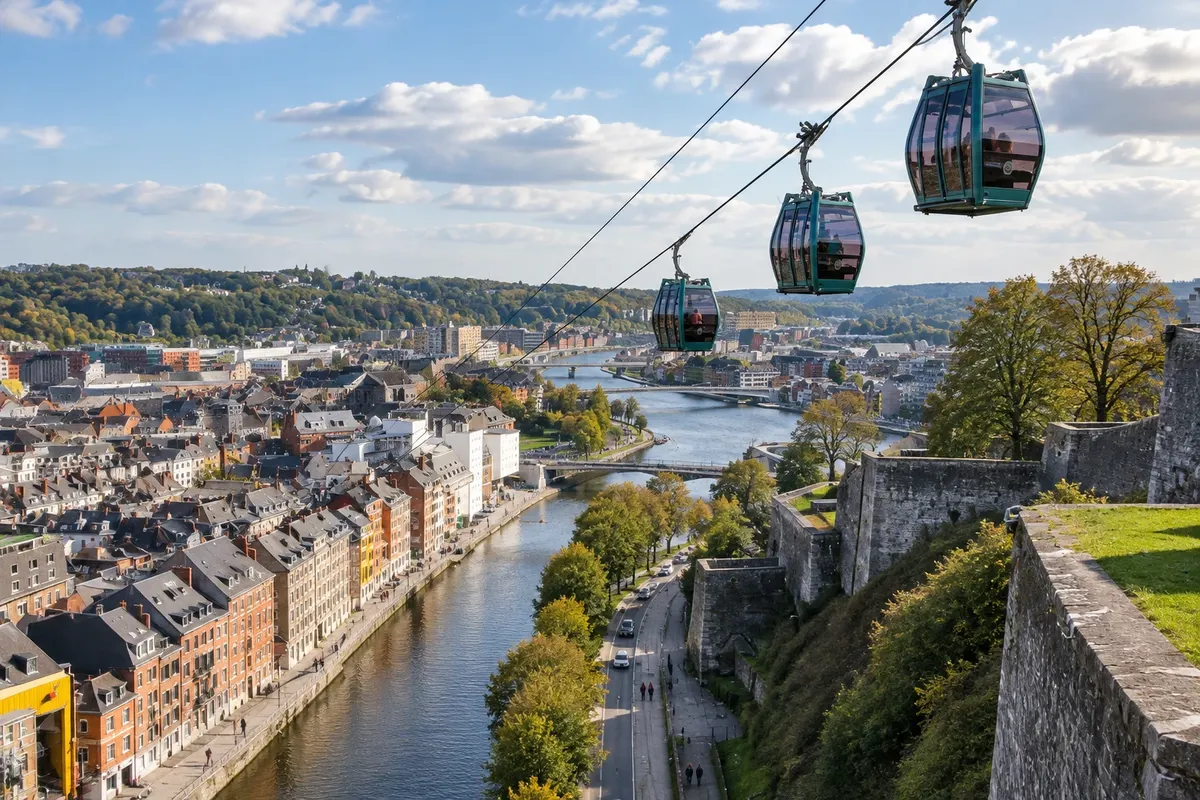
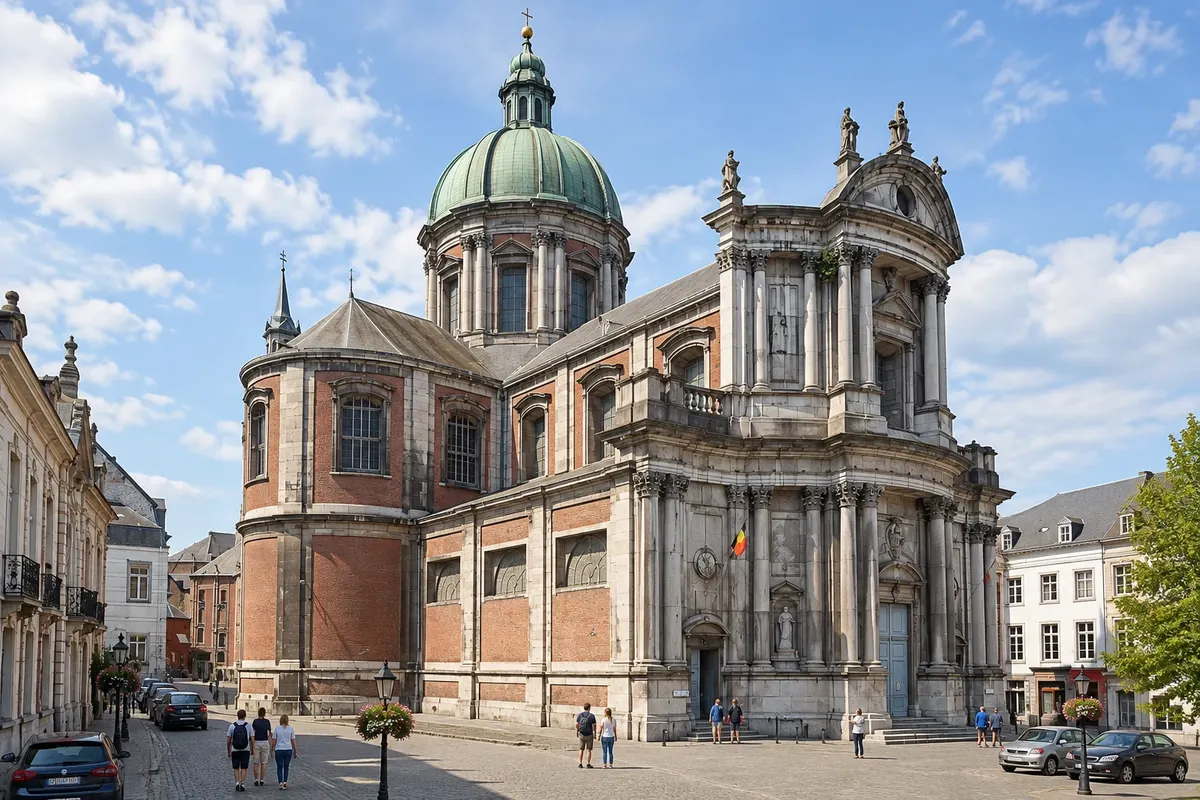
Namur, the capital of Valônia, grew at the confluence of the Sambre and the Meuse, at the Grognon. Overlooking it is the Citadelle de Namur, with tunnels visited on guided tours, and the Téléphérique de Namur takes you to the top in a few minutes. In the old center are the Beffroi, a UNESCO World Heritage site, the Place du Marché aux Légumes, the Cathédrale Saint-Aubain, the Église Saint-Loup and the Musée Félicien Rops.

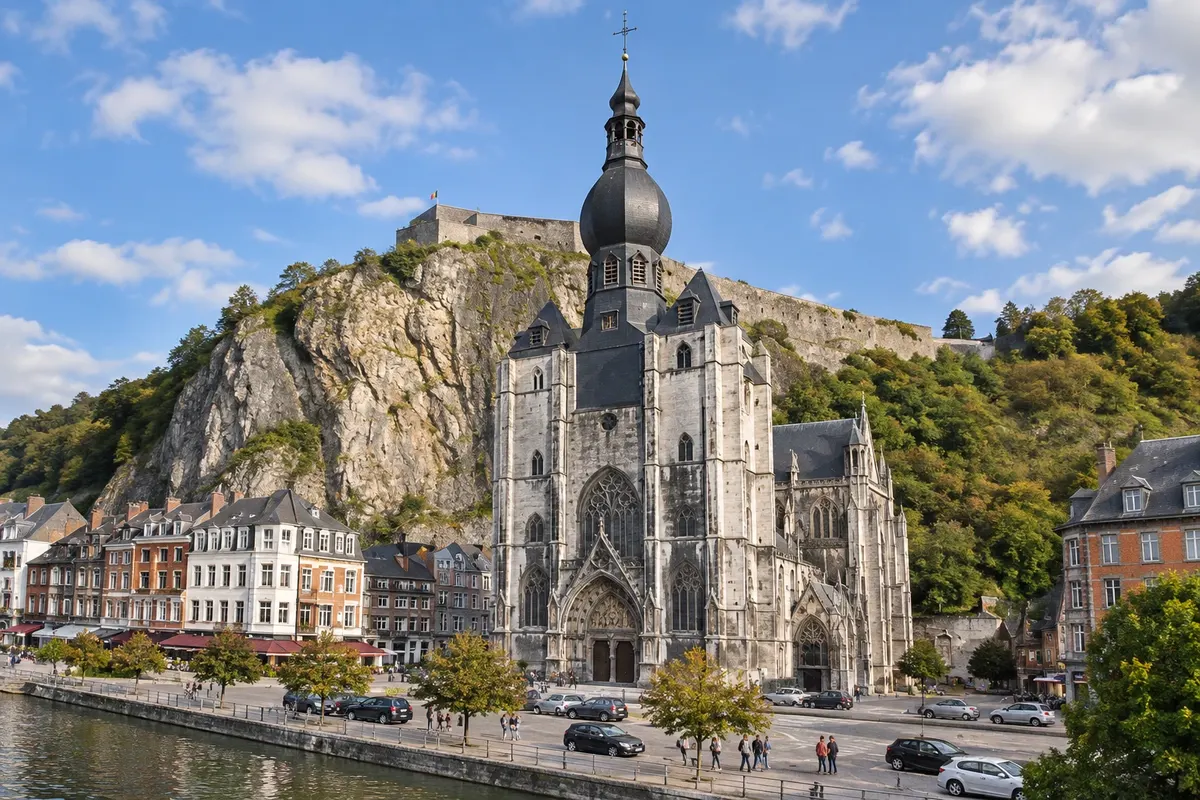
Upstream, Dinant is squeezed between the Meuse and the rock. The Collégiale Notre-Dame, with its bulbous bell tower, sits at the foot of the Citadelle de Dinant, 408 steps high. The town is the birthplace of Adolphe Sax, remembered at the Maison de Monsieur Sax. Boats of the Croisières Mosanes depart from here, passing the Rocher Bayard, and there is the Descente de la Lesse by kayak. Between the two towns are the Jardins d'Annevoie, with 18th-century fountains.

The climate is cold and wet much of the year, and in winter it gets dark in the mid-afternoon.

This destination brings together 4 cities: Namur, Dinant, Huy, Hastière.

Share: WhatsApp
Traveler, share your experiences through photos Up to 5 photos of each place you visited.

One destination, many paths

The cities on this trip

Start with one city or combine several in your itinerary.

Where Meuse Valley is
HuyDinantNamurHastière

Outlines: © NGI-IGN, AdminVector, CC BY 4.0. Adapted by Cidade Turismo.

How to get there: Meuse Valley

Check before you buy. From Brussels, the train reaches Namur in about an hour; from there, Dinant is roughly half an hour away on the Meuse line.

Suggested arrival point: Namur

Namur
Namur · Meuse Valley Capital Suggested arrival point

Namur

Namur is the capital of Valônia and of the province of Namur, at the point where the Sambre flows into the Meuse. French is spoken. On top of the hill is the Citadelle de Namur, with tunnels and viewpoints, reached by the Téléphérique de Namur. Below, the old town includes the Beffroi, the Place du Marché aux Légumes, the Cathédrale Saint-Aubain, the Église Saint-Loup and the Musée Félicien Rops. The tip of the Grognon marks the rivers' confluence.

Dinant
Namur · Meuse Valley

Dinant

Dinant is a small town squeezed between the Meuse and the cliffs, about 30 kilometers south of Namur. French is spoken. The Collégiale Notre-Dame, with its bulbous bell tower, stands at the foot of the Citadelle de Dinant. Adolphe Sax, inventor of the saxophone, was born there, and the Maison de Monsieur Sax tells his story. There are Croisières Mosanes boat trips on the Meuse, the Rocher Bayard, the Descente de la Lesse by kayak and, on the way to Namur, the Jardins d'Annevoie.

The local experience

Things to do in Meuse Valley

Abbatiale Notre-Dame d'Hastière
Hastière · Namur · Church

Abbatiale Notre-Dame d'Hastière

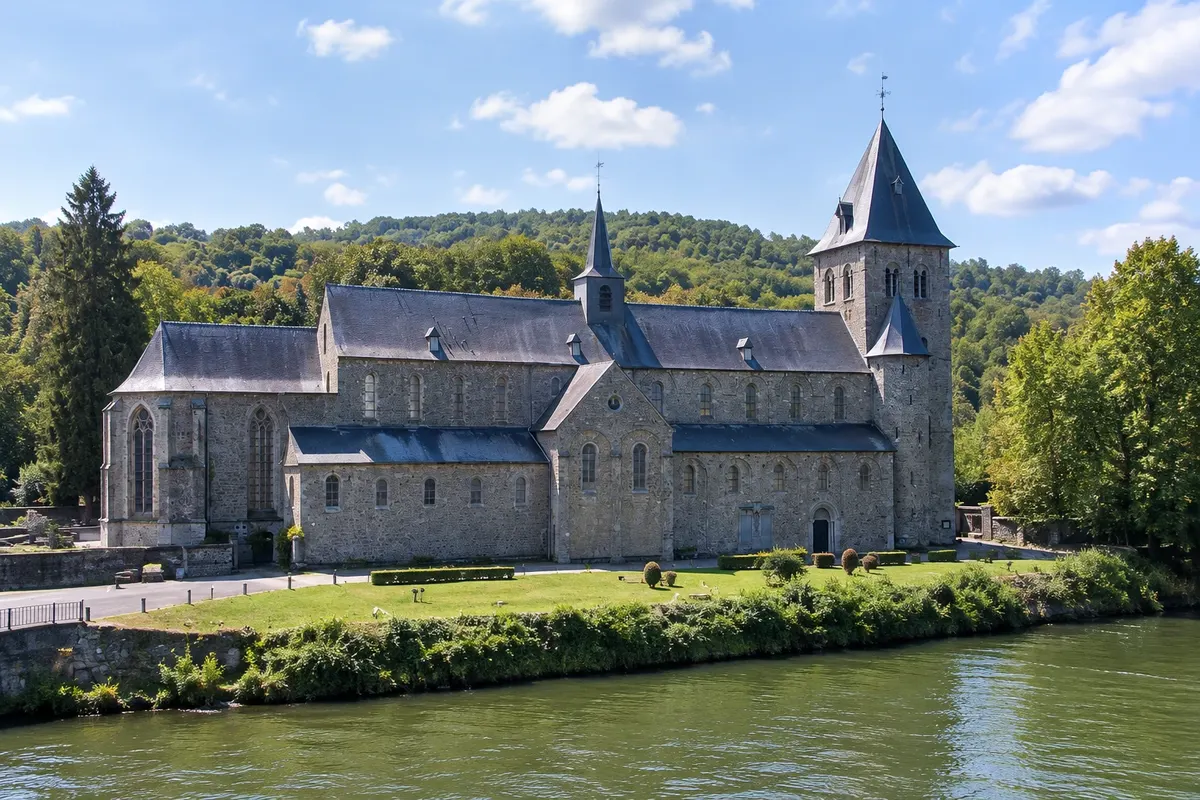
Romanesque church from the 11th century that belonged to a Benedictine monastery, on the right bank of the Mosa in Hastière-par-delà, with a crypt, a Gothic choir and carved choir stalls.

Citadel of Namur
Namur · Namur · Fortress

Citadel of Namur

Fortress on the rocky spur between the Sambre and the Meuse, with about two thousand years of history. It houses the Terra Nova visitor centre, guided underground galleries, a tourist train and viewpoints over the city.

Collegiate Church of Our Lady of Dinant
Dinant · Namur · Church

Collegiate Church of Our Lady of Dinant

Gothic church at the foot of the cliff, on the banks of the Meuse, with a 16th-century bulb-shaped bell tower. It has a stained-glass window by Gustave Ladon that is among the largest in Europe.

Fort de Huy
Huy · Liège · Fortress

Fort de Huy

19th-century fort on the top of the rock above the Meuse (Mosa), on the site of Huy's old castle. It was used as a prison during the German occupation in World War II and now houses a memorial about that period. Access by cable car during the season.

See 24 more places in Meuse Valley
Château de Freÿr
Hastière · Namur · Castle

Château de Freÿr

Renaissance castle on the left bank of the Mosa, the former summer residence of the dukes of Beaufort-Spontin, with 18th‑century French-style gardens, century-old orange trees, terraces and mazes.

Citadel of Dinant
Dinant · Namur · Fortress

Citadel of Dinant

Dutch fortress from 1818 to 1821, about 100 meters above the Meuse, on the site of castles from the 11th and 17th centuries. It has a museum about the wars, a trench simulation, cells and a viewpoint overlooking the collegiate church.

Collégiale Notre-Dame de Huy
Huy · Liège · Church

Collégiale Notre-Dame de Huy

Gothic collegiate church built between 1311 and 1536 on the banks of the Meuse (Mosa), with the rose window Li Rondia, 9 metres across, an 11th-century Romanesque crypt and a treasury of medieval reliquaries.

Namur Cable Car
Namur · Namur · Cable car

Namur Cable Car

Cabin cable car linking Place Maurice Servais in the centre to the Esplanade of the Citadelle. It's about 650 metres, a four-minute ride, with views over the Sambre and the city's rooftops.

Belfry of Namur
Namur · Namur · Monument

Belfry of Namur

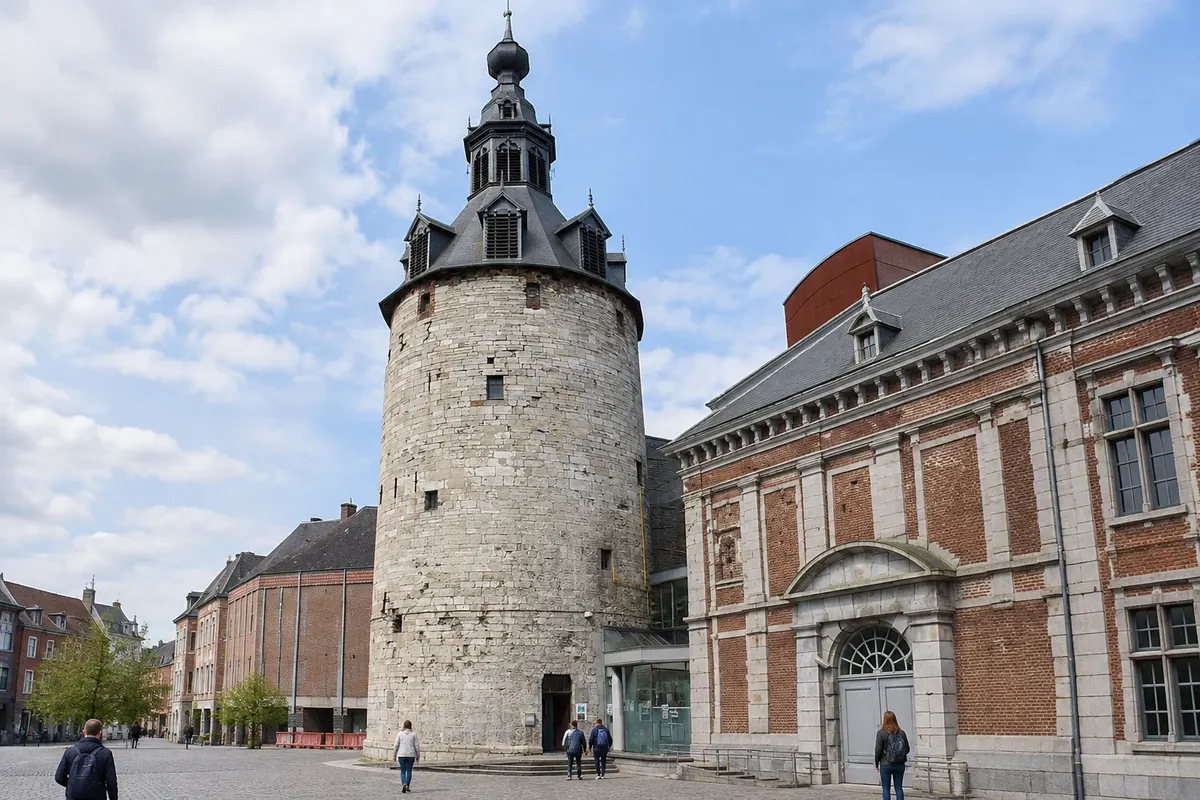
Round limestone tower built from 1388 on the medieval wall and transformed into the city's belfry in the 18th century. It is part of the belfries of Belgium and France inscribed as a UNESCO World Heritage Site.

Grand-Place de Huy and Li Bassinia
Huy · Liège · Square

Grand-Place de Huy and Li Bassinia

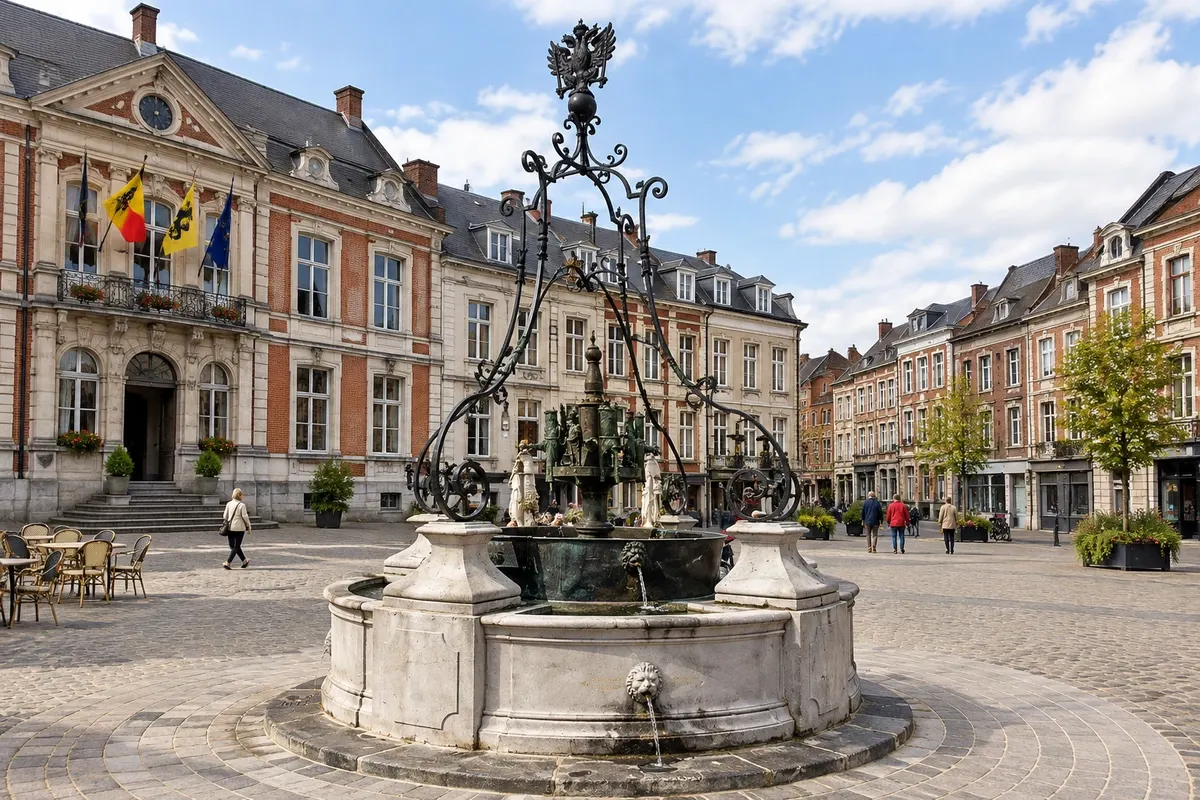
Huy's central square, with the 18th-century town hall and the copper fountain Li Bassinia from the 15th century, a symbol of the town and one of its four wonders.

Adolphe Sax House
Dinant · Namur · Museum

Adolphe Sax House

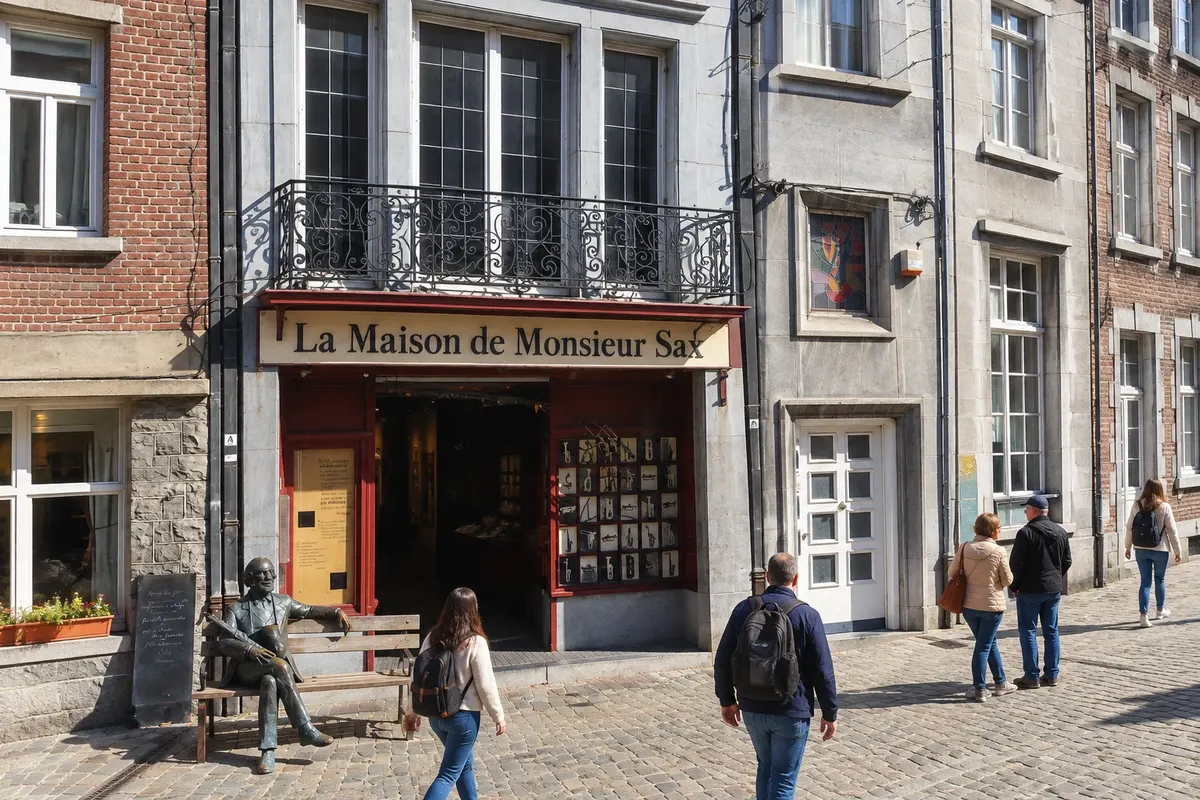
Interpretation centre on the street where Adolphe Sax, inventor of the saxophone, was born. It tells the life of the musician and instrument maker, with free admission and a statue of Sax seated on a bench on the pavement.

Rochers de Freÿr
Hastière · Namur · Rock formation

Rochers de Freÿr

Limestone cliffs on the right bank of the Mosa, facing Château de Freÿr — the largest rock complex in Belgium and one of the country’s main climbing areas, with a viewpoint on the high road.

Meuse River Cruises
Dinant · Namur · Boat trip

Meuse River Cruises

Boat trips on the Meuse leaving from Dinant's quay. The shortest goes to Anseremme and back in about 45 minutes, passing the Citadelle, the collegiate church and the Rocher Bayard.

Hastière · Namur · Grotto

Grottes du Pont d'Arcole

Limestone caves discovered in 1924 in Hastière, carved by a tributary of the Féron river, with stalactites and fine concretions, visited on a guided route.

Mur de Huy
Huy · Liège · Viewpoint

Mur de Huy

A steep ramp of about 1.3 km in the south of Huy, the finish of the Flèche Wallonne race, with sections of 26% and the chapels of the pilgrimage route to Notre-Dame de la Sarte.

Place du Marché aux Légumes
Namur · Namur · Square

Place du Marché aux Légumes

Square in Namur's old town, around the church of Saint-Jean-Baptiste, with terraces of bars and restaurants. It lies on the route between Place d'Armes, Rue des Brasseurs and the Sambre riverside.

Saint-Aubain Cathedral
Namur · Namur · Church

Saint-Aubain Cathedral

Catedral de Namur, built from 1751 to 1767 by the Italian architect Gaetano Matteo Pisoni, with a green dome visible from afar. The 13th-century tower is what remains of the previous collegiate church.

Bayard Rock
Dinant · Namur · Natural monument

Bayard Rock

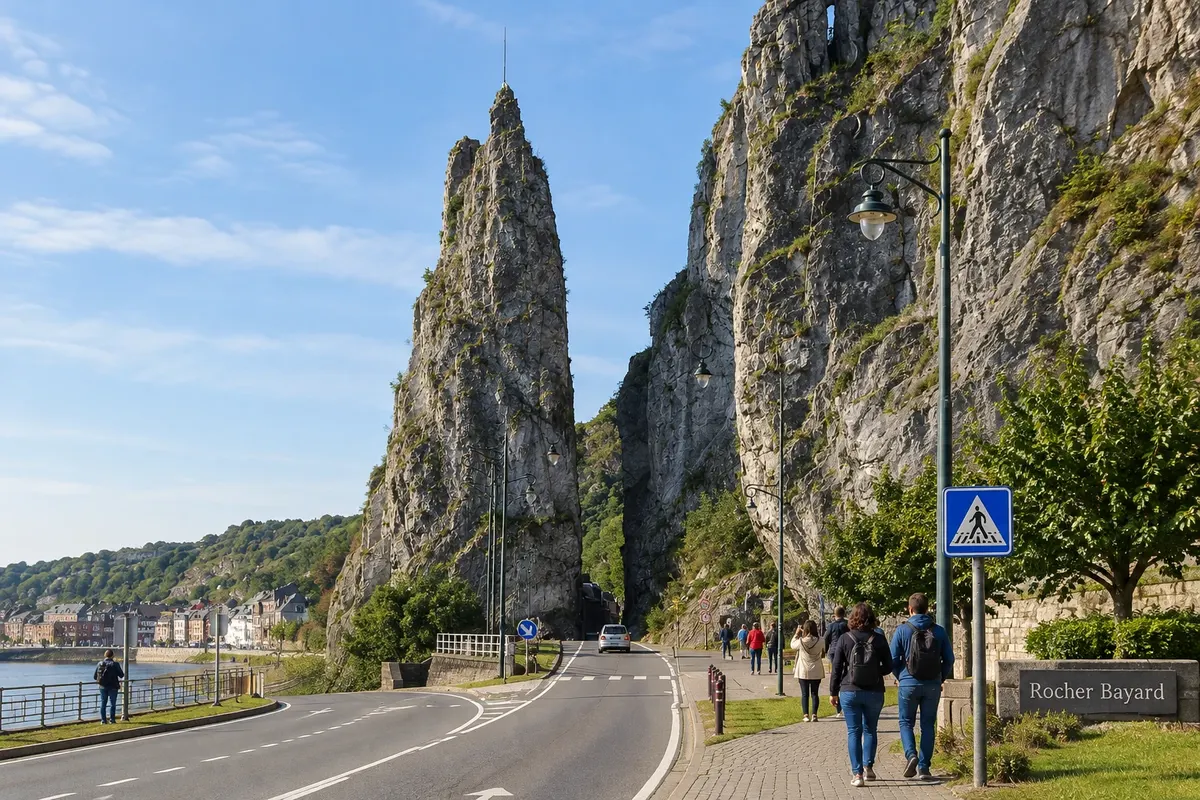
Limestone needle about 40 metres high on the bank of the Meuse, south of Dinant's centre. Legend says it was split by the horse Bayard, which leapt the river with the four Aymon brothers.

Lesse River Descent (kayaking)
Dinant · Namur · Kayak trip

Lesse River Descent (kayaking)

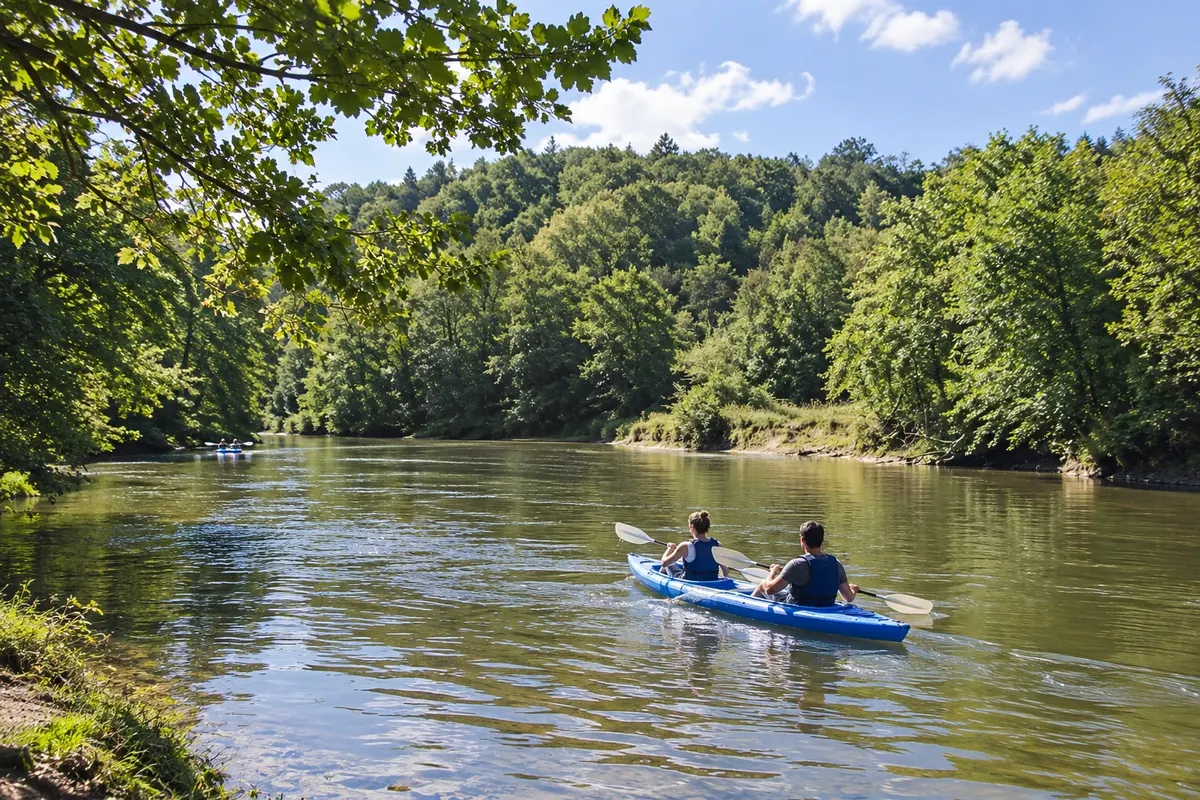
Kayak descent along the Lesse river to Anseremme, where it flows into the Meuse. Routes are 9, 12 or 21 kilometres, with shuttle buses to the starting point and a season from April to October.

Saint-Loup Church
Namur · Namur · Church

Saint-Loup Church

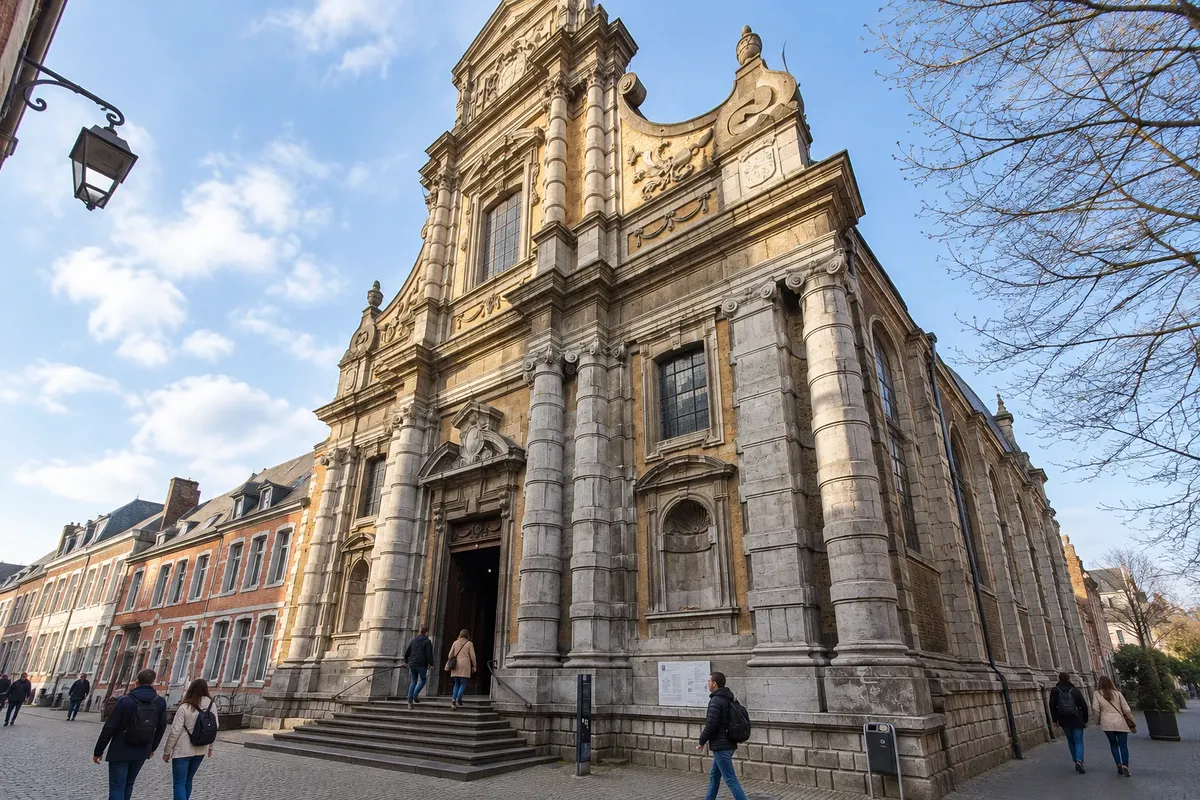
Baroque church built by the Jesuits between 1621 and 1645, with a carved sandstone vault and red and black marble columns. It was upon leaving this church that the poet Charles Baudelaire fell ill in 1866.

Annevoie Gardens
Dinant · Namur · Park

Annevoie Gardens

18th-century water gardens in Anhée, between Namur and Dinant. They blend French, Italian and English styles, with fountains, cascades and reflecting pools fed by the hills' water.

Félicien Rops Museum
Namur · Namur · Museum

Félicien Rops Museum

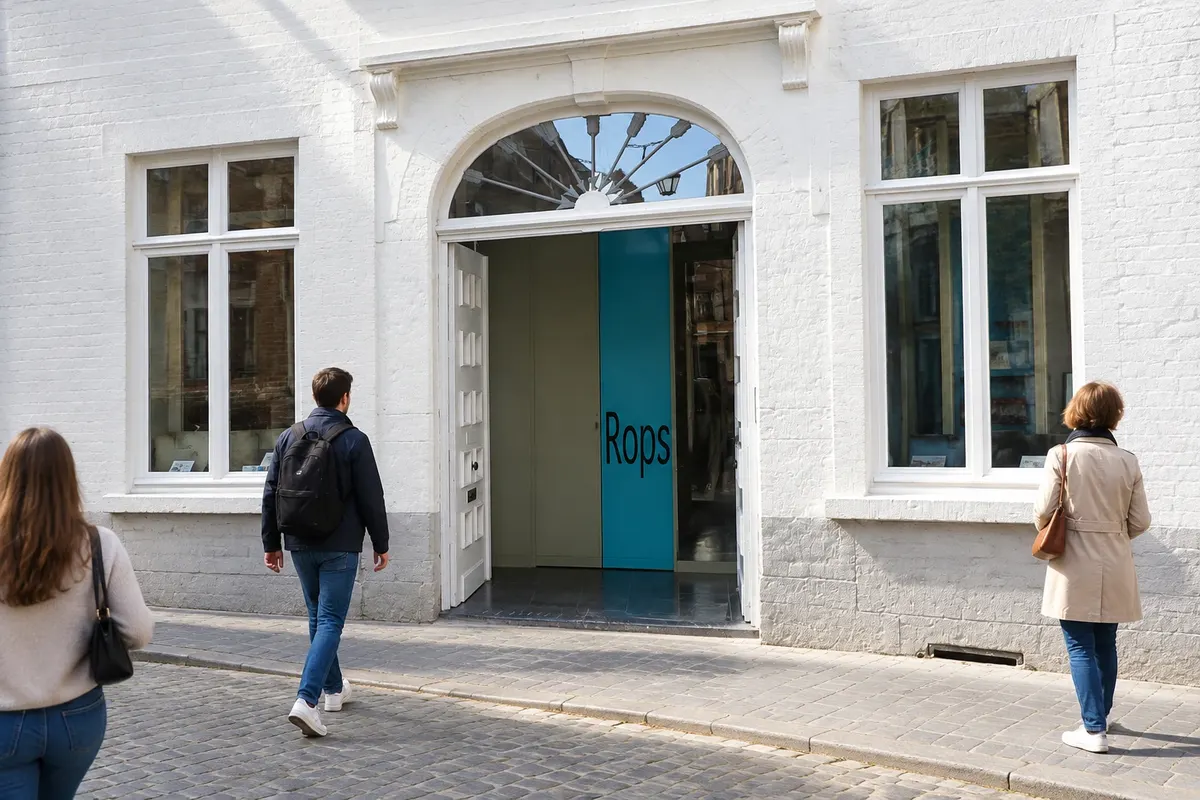
Museum dedicated to Félicien Rops, engraver and painter born in Namur in 1833. It occupies an hôtel de maître on Rue Fumal in the old town, with prints, drawings, watercolours, paintings and letters by the artist.

Le Grognon
Namur · Namur · Viewpoint

Le Grognon

A headland where the Sambre flows into the Meuse, at the foot of the Citadelle. It has a promenade, sightseeing boats and the footbridge L'Enjambée, which crosses the Meuse to Jambes.

Maison Leffe
Dinant · Namur · Museum

Maison Leffe

Leffe beer museum in the chapel of an old convent in Dinant, overlooking the Meuse. The interactive route tells the story of the abbey of Leffe, founded in 1152, and ends with a tasting.

Abbaye de Maredsous
Dinant · Namur · Abbey

Abbaye de Maredsous

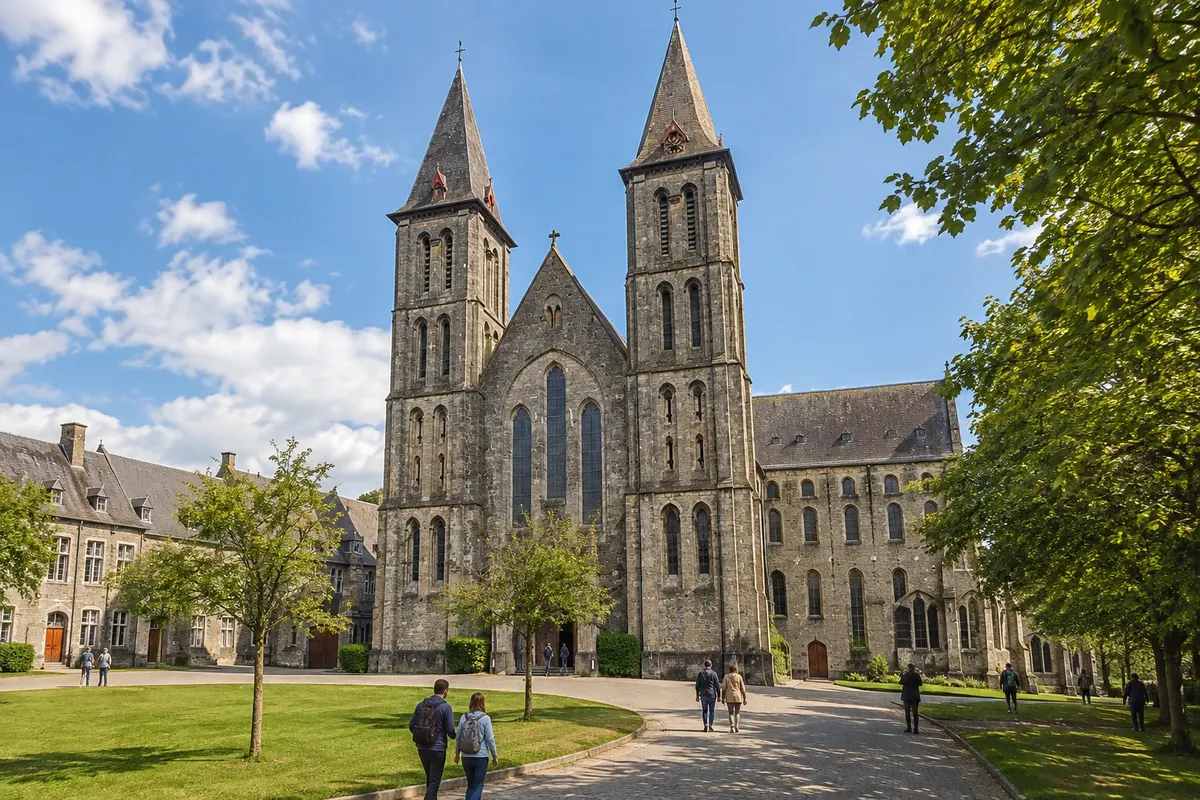
Neogothic Benedictine abbey in the Molignée valley, founded in 1872, with a basilica, cloister and the Saint-Joseph visitor centre, where you can taste the cheese and beer that bear the place's name.

TreM.a – Musée des Arts anciens du Namurois
Namur · Namur · Museum

TreM.a – Musée des Arts anciens du Namurois

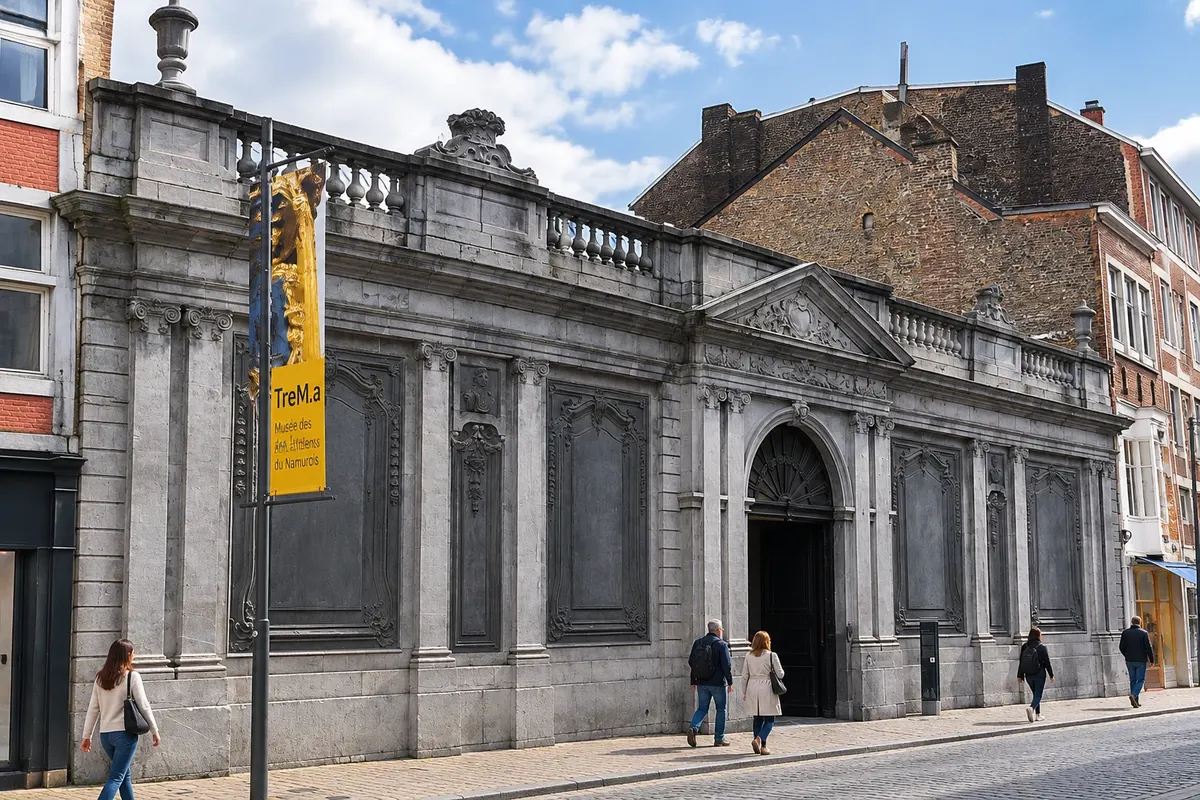
Provincial museum of medieval and Renaissance art in an 18th-century manor house on Rue de Fer. It houses the Tesouro de Oignies, 13th-century goldsmith work made by Hugo d'Oignies, and landscape paintings by Henri Bles.

Château et Jardins de Freÿr
Dinant · Namur · Castle

Château et Jardins de Freÿr

Renaissance castle on the banks of the Meuse, south of Dinant, with French gardens from 1760, orange trees in pots planted in the early 18th century, and hornbeam mazes on the upper terrace.

Grotte La Merveilleuse
Dinant · Namur · Cave

Grotte La Merveilleuse

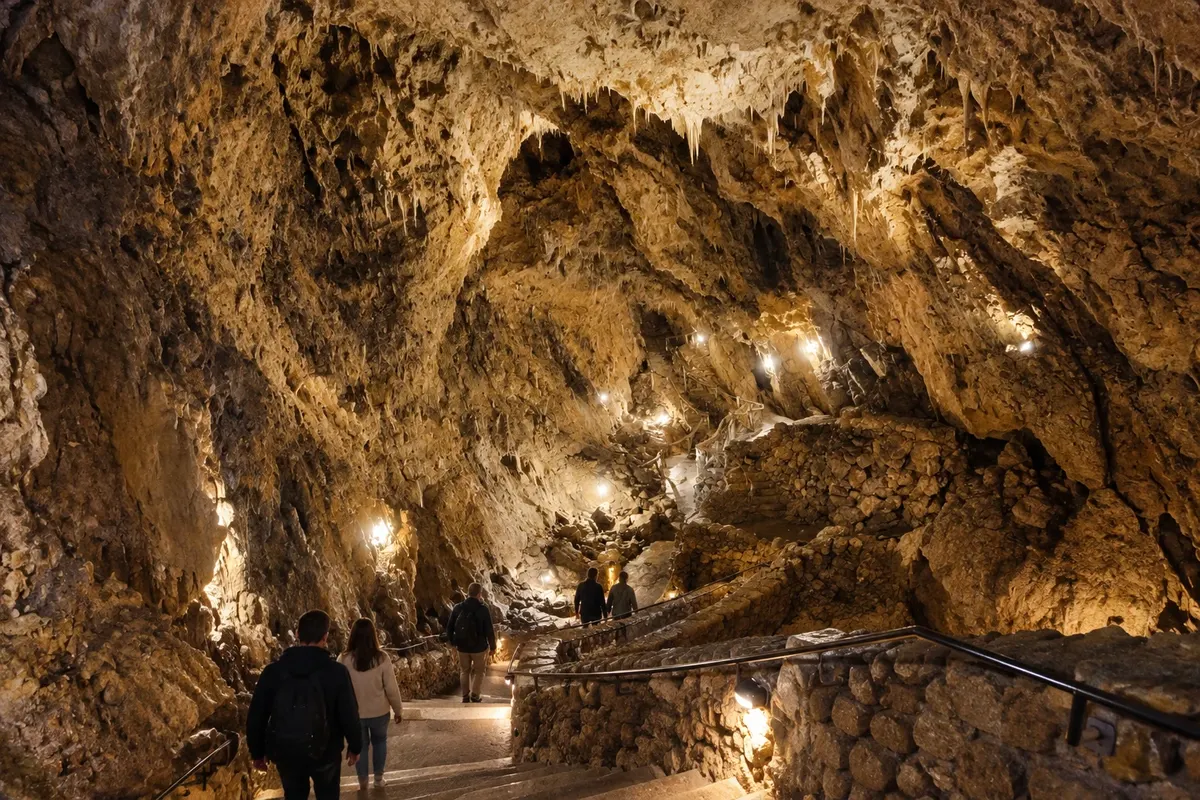
Limestone cave discovered in 1904 during railway works, 500 meters from Dinant station. The guided tour covers 650 meters of galleries with white stalactites, calcite cascades and an underground river.

To choose before you go

Tours in Meuse Valley

Where each tour starts, how long it takes, how it is done, what is included and the price range.

Citadelle de Namur: Terra Nova, underground galleries and tourist train

From Namur centre Cable car, on foot, or by car; guided visits about 3 to 4 hours morning moderate (350 steps in the galleries)

Namur is the capital of Wallonia, the French-speaking part of Belgium, and sits where the Sambre River flows into the Meuse (Meuse, in French). The Citadelle occupies the rocky spur between the two rivers and has about 2,000 years of history: it was the residence of the counts of Namur in the Middle Ages and later became a fortress. The Terra Nova barracks were built in the Dutch period for 1,200 men, and the Belgian army left the site in 1977. The barracks house the Centre du Visiteur Terra Nova, with the history of the city and the fortress, visitable with an audio guide. From there the underground galleries start: the network exceeds 7 km, and the guided visit covers about 500 m, with staging using projections and sound effects, lasting roughly 1 hour 15 minutes. The tourist train also departs from Terra Nova, a narrated circuit of about 20 minutes around the fortifications, with views over the city and the Meuse valley. There is also the La Citadelle au Moyen Âge visit, about life in the medieval fortress. The esplanade has free access.

Stops: Citadelle de Namur, Terra Nova, Souterrains de la Citadelle, Esplanade de la Citadelle, Meuse, Sambre.

Includes: Self-guided or guided visits, depending on the ticket. The Citadel PASS combines three or four visits. The esplanade and the walls have free access. Check the current schedule.

Tip: Inside the galleries the temperature stays between 12 °C and 14 °C: bring a coat even in summer and wear closed shoes. Take the cable car up and descend on foot via the hillside paths, with views of the confluence. Guided tours are usually in French and Dutch; check times for other languages.

Best time: Open year-round, with a schedule that changes by season: from April to September it is open every day; in part of winter it closes on Mondays. Check the calendar.

Téléphérique de Namur: from the center to the Citadel

From Place Maurice Servais, Namur city center Cable car about 4 minutes each way morning easy

The cable car links Place Maurice Servais in the historic center with the Citadel esplanade. The line is about 650 m long, crosses the Sambre and rises in roughly 4 minutes in small six-seat cabins that run at short intervals. From the cabin you can see the confluence of the Sambre with the Meuse, the roofs of the old town and the fortress walls. The city had a first cable car until 1997; the current one opened in 2021, with the lower station by the center and the upper station on the esplanade near Citadel visits. It’s the convenient way to combine the old town and the fortress in one day without tackling the climb on foot.

Stops: Téléphérique de Namur, Place Maurice Servais, Esplanade de la Citadel, Sambre.

Includes: One-way or round-trip journeys. There is a ticket, paid separately from Citadel visits. Check the current price list.

Tip: Buy a round-trip ticket if you don't want to walk down. The lower station is a few steps from the old town, and the upper station is near the Terra Nova entrance.

Best time: Year-round, with a schedule that changes by season. Check opening times before you go. On clear days the view of the valley is more expansive.

Namur old town: Beffroi, Place d'Armes, Saint-Aubain Cathedral and Saint-Loup Church

From Namur station On foot about 3 hours afternoon easy

Namur’s old town can be walked in a few hours, between the station and the Sambre. The Beffroi, the limestone tower near Place d’Armes, was built around 1388 as a wall tower, the Tour Saint-Jacques, and became the city’s belfry in 1746. It is part of the group of 56 belfries in Belgium and France inscribed as a UNESCO World Heritage Site. From the squares, Place du Marché aux Légumes hosts cafés with sidewalk tables, and Rue des Brasseurs, lined with old houses, slopes down toward the Sambre and the Parlement de Wallonie, the red-brick building on the riverbank. Near the Bourse there is a bronze sculpture of snails, a local specialty. The Cathédrale Saint-Aubain, on Place Saint-Aubain, was built from 1751 to 1767 by the Italian architect Gaetano Matteo Pisoni, with an internal dome of about 70 m in height and works attributed to Van Dyck and Jordaens. The Église Saint-Loup, of the Jesuits, was consecrated in 1645: it has red and black marble columns and a stone-sculpted vault. It was there that Charles Baudelaire fell ill in 1866; the poet described the church as a terrible and delightful catafalque.

Stops: Beffroi of Namur, Place d'Armes, Rue des Brasseurs, Place du Marché aux Légumes, Cathédrale Saint-Aubain, Église Saint-Loup, Parlement de Wallonie.

Includes: Self-guided walk. Streets and churches are open to the public during opening hours; the treasury and the diocesan museum next to the cathedral charge admission. Check the current rate table.

Tip: Churches close during Mass and generally on Mondays; enter wearing modest clothing. Combine this walk with the Citadel on the same day, taking the cable car from Place Maurice Servais.

Best time: All year. In September, the Fêtes de Wallonie fill the centre with shows and stilted jousts; in December there is a Christmas market.

Musée Félicien Rops

From Namur centre On foot about 1 hour 30 minutes afternoon easy

Félicien Rops was born in Namur in 1833 and died in 1898 in France. Above all a printmaker—working in etching, aquatint and lithography—he also painted and illustrated, and was a friend of Charles Baudelaire, whose poems he illustrated and for whom he created the frontispiece of Les Épaves. The museum is housed in a town mansion on Rue Fumal in the old centre, near the artist’s birthplace, and has been there since 1987. The permanent display brings together about 270 works and traces Rops’s career: the caricature and social satire of his early years, his ties to the literary world, life in Paris, his travels, and the themes that marked his work, such as woman, death and eroticism. The museum also hosts temporary exhibitions on the 19th century and on printmaking.

Stops: Musée Félicien Rops, Rue Fumal.

Includes: Self-guided visit, with an audio guide via an app (bring headphones). There is an admission fee, higher when it includes the temporary exhibition. Check the current price table.

Tip: Some of Rops’s work contains erotic content; assess before visiting with children. Closed on Mondays, during year-end holidays, and the third weekend of September.

Best time: All year. A good option for rainy days.

Cruise on the Meuse and Sambre from Namur

From Quay beside Rue du Pont, Namur city center Sightseeing boat about 50 minutes to 3 hours afternoon easy

Sightseeing boats depart from Namur city center, near the confluence, and show the city from the river. The short circuit, Meuse & Sambre, takes about 50 minutes round trip and passes the confluence, with the Citadel perched on the rock above. There are also longer cruises upstream through the Meuse valley: to Wépion, about 2 hours round trip, passing one lock, and to Profondeville, about 3 hours, with two locks. On the longer routes you can reserve an aperitif or meal on board. In season, the city also operates the Namourettes, small boats that cross between Namur, Jambes and Salzinnes, used by residents and tourists.

Stops: Meuse, Sambre, Wépion, Profondeville, Citadel of Namur.

Includes: Boat cruise with commentary. Meals on board are paid separately and require reservation. Check the current timetable/fare.

Tip: The nearest parking is the Confluence underground car park, about 50 m from the quay. On weekends in July and August, buy tickets in advance.

Best time: From April to early November. In July and August there are daily departures; in other months, generally only on weekends and holidays.

Confluence, L'Enjambée, Jambes and Le Delta

From Namur centre On foot about 2 hours afternoon easy

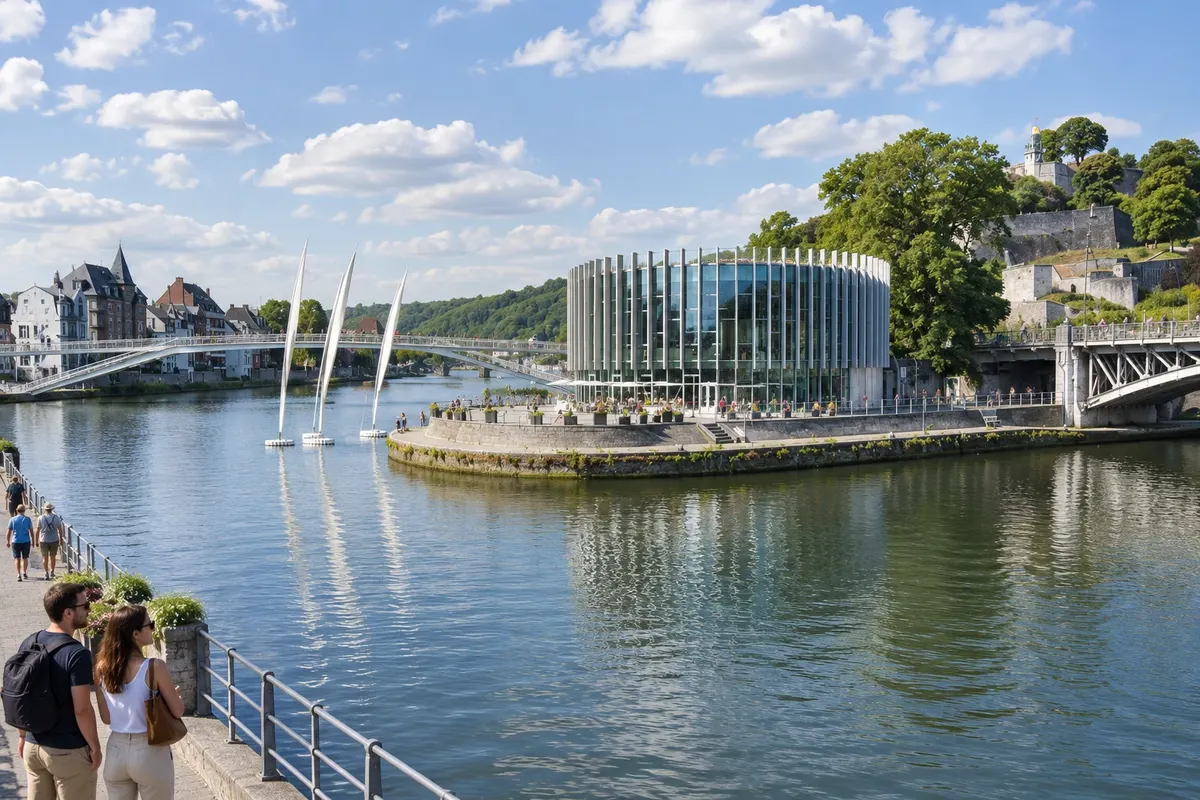
The promontory where the Sambre meets the Meuse, the Grognon, became the Espace Confluence: an open square beside the Parlement de Wallonie, with dry fountains where children play and a direct view of the Citadelle. From there departs L'Enjambée, a roughly 100 m pedestrian and cycle footbridge that crosses the Meuse without piers in the river and reaches Jambes, the neighborhood on the opposite bank. On the Jambes side, the riverside paths provide the classic view of the confluence and the fortress rock. The return can be made via the Pont de Jambes, with seven arches. On the Namur side, along the Meuse, is Le Delta, the province’s cultural space, with performance halls, exhibitions and a panoramic terrace. The lobby, foyer and terrace remain open to the public during the day, with no obligation to purchase anything.

Stops: Espace Confluence, Le Grognon, L'Enjambée, Jambes, Le Delta, Pont de Jambes.

Includes: Self-guided walk with free access. Performances and some exhibitions at Le Delta charge admission. Check the current schedule.

Tip: Do the circuit late in the afternoon, when the light hits the Citadelle. Le Delta is closed on Mondays. In September, during the Fêtes de Wallonie, the Confluence esplanade hosts concerts.

Best time: Open year-round. From May to September the long days favor riverside walks.

See 14 more tours

Dinant: Collégiale Notre-Dame, Maison de Monsieur Sax and the saxophone bridge

From Dinant station On foot about 2 hours morning easy

Dinant is squeezed between the Meuse and a cliff, about a 30-minute train ride south of Namur. The Collégiale Notre-Dame, built in Mosan Gothic, rests its choir against the rock; the earlier Romanesque church collapsed in 1227 after a rockfall. The bulb-shaped tower, the town’s symbol, was destroyed by a fire in 1914 and rebuilt in 1927. Inside, the stained-glass windows stand out. Adolphe Sax, inventor of the saxophone, was born in Dinant in 1814 and patented the instrument in Paris in 1846. On Rue Adolphe Sax, the house where he was born houses the Maison de Monsieur Sax, a small interpretation center about the inventor and the instrument, which can be seen in about 20 minutes. The Pont Charles de Gaulle, in front of the collegiate church, has displayed giant colorful saxophones since 2010, each painted with the colors of an EU country. By the bridge, a statue recalls that Charles de Gaulle was wounded in Dinant in August 1914. On the left bank, about 800 m from the station, the Grotte La Merveilleuse, discovered in 1904, offers a guided tour of about 50 minutes through white formations.

Stops: Dinant, Collégiale Notre-Dame de Dinant, Maison de Monsieur Sax, Pont Charles de Gaulle, Grotte La Merveilleuse.

Includes: Self-guided walk. The Collégiale and the Maison de Monsieur Sax have free access; the Grotte La Merveilleuse charges an admission fee. Check the current schedule.

Tip: Try the couque de Dinant, a hard cookie made of honey and flour, pressed in wooden molds. For the Grotte La Merveilleuse, wear non-slip shoes: there are many steps and low ceilings in some sections.

Best time: All year. On August 15, the Régate internationale de baignoires puts decorated bathtubs to descend the Meuse, and the town fills up.

Citadel of Dinant via the 408-step stairway

From Dinant town centre (next to the Collégiale) On foot via the stairway or by car to the upper parking lot about 2 hours morning moderate (408 steps and steep ramps)

The Citadel of Dinant sits atop the cliff, more than 100 m above the Meuse. The first castle on the site dates to the 11th century; it was destroyed and rebuilt several times, and the fortress you see was built by the Dutch from 1818 to 1821. In 1914 Dinant was the scene of fighting in the First World War, and the Citadel was taken again in 1940; the site has served as a museum of arms and history for over a century. The visit covers soldiers' life in the Dutch period, the use of the fortress as a military prison, and the battles of 1914, with a reconstructed trench and a collapsed shelter showing the impact of an artillery shell. Guided tours are offered in French and Dutch and there is a tablet-based augmented reality route. From the top, the view drops directly onto the onion-topped tower of the Collégiale, the bridge, and the valley. The climb on foot is via the 408-step stairway that starts beside the Collégiale. By car you reach the plateau, where there is a large parking area.

Stops: Citadel of Dinant, Collégiale Notre-Dame de Dinant, Meuse.

Includes: Guided visit or tablet-based tour, depending on the ticket. There is a ticket package that combines the Citadel and the cruise to Anseremme. Check the current price list.

Tip: Ascend the stairway slowly, bring water, and wear sneakers: inside the fortress there are ramps up to 30% incline. At the top there is a snack bar, terrace, and play area.

Best time: Open year-round, with a schedule that varies by season and is shorter in winter. Check before you go.

Cruise from Dinant to Anseremme and Rocher Bayard

From Quay on Avenue Winston Churchill, Dinant Sightseeing boat about 45 minutes to 2 hours afternoon easy

The Croisières Mosanes boats depart from the quay on Avenue Winston Churchill, about 500 m from the station. The Dinant–Anseremme–Dinant trip takes about 45 minutes, with commentary in several languages: the boat goes upstream between the town’s two locks and passes at the foot of Rocher Bayard. Rocher Bayard is a rock spire about 40 m high on the right bank, separated from the cliff. According to legend, the horse Bayard, which carried the four sons of Duke Aymon fleeing Charlemagne, split the rock with its hoof when leaping over the Meuse. The road passage was opened by soldiers of Louis XIV. You can also see the rock on foot from the center, on the way to Anseremme. In July and August there is also the Dinant–Freÿr cruise, about 2 hours round trip, to the Château de Freÿr, with one departure per day.

Stops: Meuse, Dinant, Rocher Bayard, Anseremme, Château de Freÿr.

Includes: Boat cruise with commentary. Tickets available, with a package that combines the cruise and the Citadel. Check the current timetable/fare.

Tip: Bring sunglasses and sunscreen: the boat is open. The departure for Freÿr is usually only once per day; arrive early at the quay.

Best time: From April to early November, departures every hour; from November to December, only on weekends. The route to Freÿr runs only in July and August.

Lesse kayaking: from Houyet or Gendron to Anseremme

From Anseremme (Dinant) Rented kayak, with transport to the put-in point about 2 hours 30 minutes to 5 hours full day easy to moderate, depending on the section

The Lesse is a tributary of the Meuse that runs through a valley of forest and cliffs, in a nature reserve area, and flows into the Meuse at Anseremme, south of Dinant. Kayak descent is a classic Belgian summer outing. There are three sections: Houyet–Gendron, 9 km, about 2 hours, with no weirs; Gendron–Anseremme, 12 km, about 2 hours 30 minutes, popular with families, with two small weirs that are negotiated while sitting in the kayak; and Houyet–Anseremme, 21 km, about 5 hours, which fills the day. Along the way the Château de Walzin appears, perched on a rock above the right bank: the castle is private, and it is from the river that it is seen in full. The main rental company is based in Anseremme, where you leave the car; a bus takes you to the put-in. If you come by train, get off at Houyet or Gendron stations, a few meters from the launch points.

Stops: Lesse, Houyet, Gendron, Anseremme, Château de Walzin.

Includes: Kayak rental, life jacket and transport to the put-in point. There is a per-person fee depending on the section. Check the current rate table.

Tip: Book in advance, especially in July and August. Bring clothes that can get wet, closed-toe shoes and a dry bag for your phone. The descent is canceled when the river is too low or too high; check the conditions for the day.

Best time: From April to October, depending on water level; the 21 km section usually ends in early October. In summer droughts the descent may be suspended.

Château de Freÿr and its gardens

From Dinant Own car or summer cruise from Dinant about 2 hours afternoon easy (there are stairs)

Château de Freÿr stands on the Meuse bank, between Dinant and Hastière. There was a fortified castle there from the 13th century, destroyed in 1554; what is seen today is Renaissance, from the 16th century, with the river-facing wing dated to 1571. It has received visitors such as Louis XIV and Prince Naruhito of Japan, and is recognized as exceptional heritage of Wallonia. The 18th-century formal French gardens rise in terraces up the slope, with small hedge mazes along the main axis. Two conservatories, the orangeries, house a collection of orange trees, some around 200 years old. Inside the castle, the visit is self-guided with panels and a guided tour by cellphone via QR code; a live guide can be reserved.

Stops: Château de Freÿr, Hastière, Meuse.

Includes: Visit to the castle and the gardens. There is an entrance fee; small children accompanied do not pay. Check the current price list.

Tip: The lower garden is flat; the upper garden has stairs, grass and a slope. Dogs are allowed on leash only in the gardens. In July and August it is possible to arrive by boat from Dinant.

Best time: From April to mid-November, Thursday to Sunday and on holidays; in July and August, Tuesday to Sunday. The garden is greenest from May to September.

Jardins d'Annevoie: 18th‑century water gardens

From Namur or Dinant By private car via the N92 about 1 hour 30 minutes morning easy

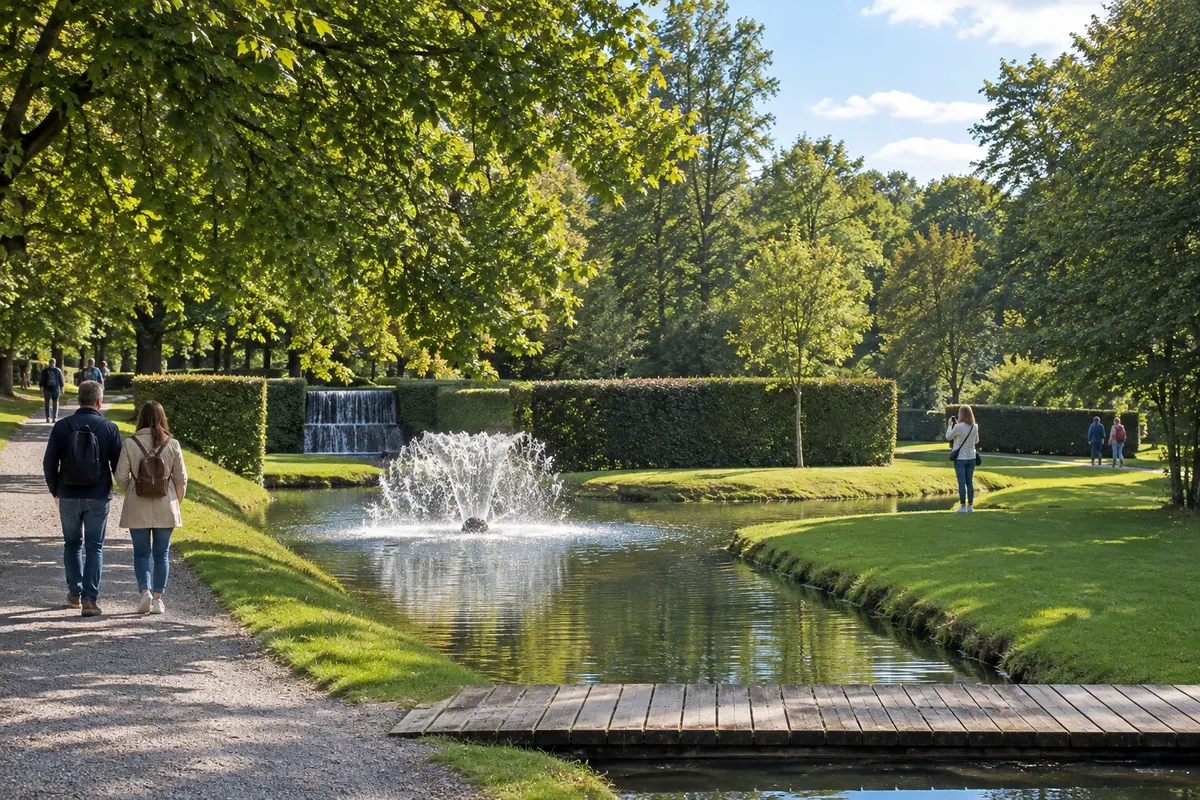
The Jardins d'Annevoie are in Anhée, in the Meuse valley, between Namur and Dinant. Created in the 18th century, they combine features of French, Italian and English gardens around a water network fed by four springs. The fountains, cascades, reflective pools and jets operate without pumps or machinery: the water runs by gravity alone, taking advantage of the site's slopes. The château remains inhabited and is viewed from the outside. The gardens are maintained without pesticides or herbicides and carry the Jardin remarquable label.

Stops: Jardins d'Annevoie, Anhée, Meuse.

Includes: Self-guided visit. There is an entrance fee. Check the current price list.

Tip: The last admission is in the mid‑afternoon. Combine it with the Abbaye de Maredsous in the neighboring Molignée valley on the same day.

Best time: From late March to mid‑November, daily; closed in winter. In spring and summer the gardens are more in bloom.

Abbaye de Maredsous: Benedictine abbey, cheese and beer

From Namur or Dinant Private car about 2 hours afternoon easy

The Abbaye de Maredsous is in Denée, in the Molignée valley, and is still inhabited by Benedictine monks. It was founded in 1872 by monks from Beuron in Germany, with support from the Desclée family, publishers; the local-stone neo-Gothic buildings were designed by architect Jean-Baptiste de Béthune and were completed in 1892. The abbey church was granted the title of basilica in 1926, and the library holds about 500,000 volumes. The Centre Saint-Joseph, the visitors’ welcome centre, has a café, shop, bookshop and play area. The abbey’s cheese, made in the on-site dairy, and Maredsous beer, produced since 1963 under licence by a brewery in Flanders, are available there. The basilica and monastic spaces are mainly seen on guided tours, usually on the second and fourth Sunday of each month.

Stops: Abbaye de Maredsous, Centre Saint-Joseph, Denée, Vallée de la Molignée.

Includes: Free access to the Centre Saint-Joseph and the green areas. Meals, products and guided tours are charged separately. Check the current price list.

Tip: This is a place of prayer: speak quietly in the basilica and respect the times of services. If you drink, don’t drive; the valley roads are narrow and winding.

Best time: All year; the welcome centre only closes on January 1. On summer weekends it is often busy.

Maison Leffe: the story of Leffe abbey beer

From Dinant centre On foot about 1 hour afternoon easy

The Abbaye Notre-Dame de Leffe, of Premonstratensian canons, was founded in 1152 at the mouth of the Leffe valley, on the northern approach to Dinant. The beer named after the abbey grew out of the religious community’s tradition and is today produced by the AB InBev group in Leuven, in the Flanders region. Maison Leffe occupies a former convent in central Dinant, overlooking the Meuse valley. The route is interactive, with touchscreens, and tells the story of the abbey and the beer. The visit finishes with a tasting and a toast.

Stops: Maison Leffe, Abbaye Notre-Dame de Leffe, Dinant.

Includes: Interactive visit, tasting and toast. There is an entrance fee, with a municipal tax. Check the current price list.

Tip: Book in advance online on weekends. The tasting is small; anyone who drinks should not drive.

Best time: All year; open every day. A good option for rainy days.

Bouvignes-sur-Meuse and the Crèvecœur ruins

From Dinant On foot or by car about 2 hours 30 minutes morning moderate (ascent to the ruins)

Bouvignes-sur-Meuse is a district of Dinant on the left bank of the Meuse, north of the centre. It was a medieval town and reached its peak in the 16th century with the copper beaters. On the Place du Bailliage, the Maison espagnole, dating from about 1570, houses the Maison du Patrimoine Médiéval Mosan, a museum about the river, the town and the castle, daily and religious life, ceramics and copperwork. The Église Saint-Lambert, Gothic, has a tall square tower. At the top of the spur are the ruins of the Château de Crèvecœur, dating from around 1320. In 1554, the troops of Henry II of France took Bouvignes and besieged the castle. By tradition, three officers’ wives led the defence and, when the resistance ended, jumped from the tower hand in hand to avoid capture. From the restored ruins, opened to visitors, the view stretches over the Meuse and the valley.

Stops: Bouvignes-sur-Meuse, Crèvecœur Castle, Maison du Patrimoine Médiéval Mosan, Maison espagnole, Saint-Lambert Church.

Includes: Self-guided visit. The Crèvecœur ruins are open at all times; the Maison du Patrimoine Médiéval Mosan charges an entrance fee. Check the current price list.

Tip: The museum is closed on Mondays. Climb up to the ruins wearing trainers: the path is steep. Bouvignes is close to the Maison Leffe and the Abbaye de Leffe, at the same north exit from Dinant.

Best time: All year. On clear days, the view from Crèvecœur reaches far across the valley.

Ruins of Poilvache and the village of Crupet

From Namur or Dinant Private car about 3 hours afternoon easy (uneven terrain)

The ruins of Poilvache stand atop a cliff above the Meuse, in Houx, municipality of Yvoir, between Namur and Dinant. The castle and walled town covered about 2.5 hectares between the 13th and 15th centuries. In 1430 the town was besieged and almost completely destroyed by troops from Liège, Dinant and Huy. The wall remains are in a nature reserve with tall black pines, and from the walls you can view the Meuse valley. Nearby, Crupet, in the municipality of Assesse, is a member of Les Plus Beaux Villages de Wallonie. At the village center is the Grotte Saint-Antoine, an artificial grotto opened in 1903 with 22 religious statues, many depicting scenes from the life of Saint Anthony of Padua. Below the village lies Crupet Castle, a medieval farm-castle by the stream.

Stops: Poilvache, Houx, Yvoir, Crupet, Grotte Saint-Antoine.

Includes: Self-guided visit. Poilvache charges an entrance fee; Crupet and the grotto have free access. Check the current price list.

Tip: At Poilvache, wear sneakers and take care with children near the walls. There is a café and parking on site.

Best time: Poilvache is open from April to early November: daily in July and August and during school holidays, and on weekends for the rest of the season. Crupet can be visited year-round.

Château de Vêves and the village of Celles

From Dinant Private car about 3 hours afternoon easy

Celles is in the municipality of Houyet, southeast of Dinant, and is part of Les Plus Beaux Villages de Wallonie. The Collégiale Saint-Hadelin, in Mosan Romanesque style, dates largely from about 1030–1040: it has a square tower, two crypts, and oak choir stalls predating 1338. A stone Stations of the Cross climbs from the church up to the hermitage of Saint-Hadelin. Just above the village, Château de Vêves stands on a rock outcrop. It is an example of 14th-century military architecture in Belgium and received the European Historic Houses Award in 2016. During the visit, children can dress up.

Stops: Château de Vêves, Celles, Collégiale Saint-Hadelin.

Includes: Self-guided visit to the castle, without a fixed time. There is an entrance fee. The village and the church have free access. Check the current price list.

Tip: Combine it with kayaking on the Lesse or with Anseremme on the same day. In the church of Celles, respect mass times.

Best time: The castle is open from late March to early November, on weekends and holidays, and every day during Belgian school holidays, such as July and August; in February it opens during Carnival week.

Huy: Collégiale Notre-Dame, Grand-Place and the Li Bassinia fountain

From Huy Station On foot about 2 hours 30 minutes morning easy

Huy lies on the Meuse, between Namur and Liège, and was part of the Prince-Bishopric of Liège. The town preserves what locals call the four wonders: li Pontia, the bridge; li Rondia, the rose window; li Tchestia, the castle; and li Bassinia, the fountain. The Collégiale Notre-Dame had its first stone laid in 1311 and was not completed until 1536. The Gothic rose window on the façade, Li Rondia, is about 9 m in external diameter; it was destroyed in the 1944 bombings and rebuilt with abstract stained glass in 1974. In the Romanesque crypt is the treasury, with four Mosan goldsmith relicaries from the 12th and 13th centuries, including that of Saint Mengold, attributed to Godefroid de Huy. On the Grand-Place, the bronze fountain Li Bassinia dates from 1406. The Hôtel de Ville, dating to 1766, has a carillon of 37 bells. Narrow streets link the square to the riverbank and to the hillside chapels.

Stops: Huy, Collégiale Notre-Dame de Huy, Grand-Place de Huy, Li Bassinia, Hôtel de Ville de Huy.

Includes: Self-guided walk. The collegiate church and the square are freely accessible; the treasury requires visits with specific conditions and hours. Check before you go.

Tip: Huy is on the Namur–Liège train line, about 25 minutes from Namur. In April, the climb up the Mur de Huy is the finish of the Flèche Wallonne cycling race, and the town becomes crowded.

Best time: All year. From April to October you can combine it with Fort de Huy and the cable car.

Fort de Huy and the cable car over the Meuse

From Esplanade Batta, Huy Cable car or on foot about 2 hours afternoon easy to moderate (stairs in the fort)

Fort de Huy stands on the hill above the town, on the site of the old castle, li Tchestia. The Dutch built it from 1818 to 1823, with limestone walls reaching up to 17 m. From May 1940 to September 1944, the German army used the fort as a detention site: thousands of political prisoners and hostages of various nationalities passed through it, and from 1941 the fort served as a transit camp for prisoners sent to concentration camps. Today the fort is a Second World War memorial, housing the resistance and concentration camp museum. The visit passes through isolation cells, interrogation rooms and reconstructed barracks, and a documentary presents survivors’ testimonies. From the ramparts you can see the town and the valley. The Huy cable car departs from Esplanade Batta, crosses the Meuse, stops at the fort and continues to La Sarte on the plateau. The line is about 1.3 km long with 131 m of elevation change, covered in roughly 4 minutes.

Stops: Fort de Huy, Téléphérique de Huy, Esplanade Batta, La Sarte, Meuse.

Includes: Fort visit and cable car ride require separate tickets. Check the current schedule.

Tip: It is a place of memory: visit respectfully and consider before taking young children into the cells. A path around the fort, with views over Huy, remains open year-round.

Best time: From April to October, when the fort and the cable car are open; hours are extended in July and August.

Hastière: the Romanesque abbey and the Grotte du Pont d'Arcole

From Dinant Private car or TEC bus about 2 hours afternoon easy (narrow steps in the cave)

Hastière is on the Meuse, about 12 km south of Dinant, near the French border. A Benedictine monastery was founded there around the year 900. The church of the old abbey, now Église Saint-Pierre, was built around 1033–1035 in the Mosan Romanesque style, with a 13th-century Gothic choir. Beneath the altar, the Romanesque crypt, rediscovered in 1882, houses Merovingian sarcophagi. The choir contains Gothic stalls from 1443 with carved misericords, and a Virgin and Child. In the village, the Grotte du Pont d'Arcole has five galleries, and only one is open to visitors. The entrance is through the basement of a bistro on Rue d'Inzemont, and the self-guided visit with a helmet takes about half an hour among formations as delicate as lace.

Stops: Hastière, Église Saint-Pierre d'Hastière, Grotte du Pont d'Arcole, Meuse.

Includes: Self-guided visit. The church is freely accessible during opening hours; the cave charges an entrance fee. Check the current schedule/prices.

Tip: There is no regular train to Hastière: go by car or by TEC bus from Dinant, about 15 minutes. The cave is not wheelchair accessible and has narrow passages. Combine with Château de Freÿr on the way.

Best time: The church usually opens from April to early November. The cave is open year-round, Wednesday to Sunday; check by phone beforehand.


Day by day

3, 5 and 7-day itinerary in Meuse Valley

Suggestions to plan the trip. Change the order of the days according to the weather and tour availability.

3 days · Meuse Valley in three days: Namur and Dinant

For For those with little time who want the essentials: the Citadel and Namur city center, and Dinant with the collegiate church, the fortress and the river. · Based in Namur
  1. Day 1 · Arrival and Namur old town

    Arrive at Brussels Airport and take the train to Namur, usually changing in Brussels, in about 1 hour 30 minutes. After resting, stroll through Namur’s old town with the Beffroi, Place d'Armes and Cathédrale Saint-Aubain at a relaxed pace to shake off the flight fatigue. In the late afternoon, walk to the Confluence and cross L'Enjambée to Jambes.

  2. Day 2 · Citadel of Namur and Musée Félicien Rops

    Take the Téléphérique de Namur up and spend the morning at the Citadel of Namur, including Terra Nova, the underground galleries and the little train. Walk down the slope on foot. In the afternoon, visit the Musée Félicien Rops and, from April to October, take the cruise on the Meuse and Sambre from Namur.

  3. Day 3 · Dinant

    Take the train to Dinant, about 30 minutes. Tour the Collégiale Notre-Dame, the Maison de Monsieur Sax and the saxophone bridge, and climb to the Citadel of Dinant via the 408-step staircase. In the afternoon, take the Dinant to Anseremme cruise, passing the Rocher Bayard, in season. Return to Namur or continue to Brussels by train.

5 days · Meuse Valley in five days: Namur, Dinant, castles and abbeys
For For those who want to visit both towns at a relaxed pace and the valley’s castles, gardens and abbeys by rental car. · Based in Namur (3 nights) and Dinant (2 nights)
  1. Day 1 · Arrival and Namur old town

    From Brussels Airport, take the train or a rental car to Namur — about 1 hour 30 minutes by train with a change in Brussels, or roughly 1 hour by car. In the afternoon, explore Namur’s old town with the Beffroi, Cathédrale Saint-Aubain and Église Saint-Loup. At the end of the day, walk along the Confluence and across L'Enjambée to Jambes.

  2. Day 2 · Citadel of Namur, Musée Félicien Rops and the river

    Take the Téléphérique de Namur up and spend the morning at the Citadel of Namur, including the underground galleries. In the afternoon, visit the Musée Félicien Rops. From April to October, finish with the cruise on the Meuse and Sambre; out of season, stop by Le Delta and the terrace overlooking the city.

  3. Day 3 · Annevoie, Maredsous and Poilvache

    Drive along the N92, following the Meuse. In the morning, visit the Jardins d'Annevoie, open from late March to mid-November. Have lunch at the Abbaye de Maredsous in the Molignée valley and try the abbey cheese. In the afternoon, climb to the ruins of Poilvache and, if time allows, stop at the village of Crupet. Outside the season, swap Annevoie and Poilvache for more time in Crupet and Maredsous.

  4. Day 4 · Dinant

    Change your base to Dinant. Tour the Collégiale Notre-Dame, the Maison de Monsieur Sax and the saxophone bridge, and climb to the Citadel of Dinant via the 408-step staircase. In the afternoon, take the Dinant to Anseremme cruise and then visit the Maison Leffe or Bouvignes-sur-Meuse and the ruins of Crèvecœur.

  5. Day 5 · Freÿr and Hastière, and return

    Head south down the valley. Visit the Château de Freÿr and its gardens, open from April to mid-November, then continue to Hastière to see the Romanesque abbey. Return to Brussels, about 1 hour 10 minutes by car from Dinant. In winter, swap Freÿr for the Grotte La Merveilleuse in Dinant.

7 days · Meuse Valley in seven days: from Huy to Hastière, including the Lesse
For For those who want to travel the entire valley, from Huy to Hastière, with time for the castles, villages and kayaking on the Lesse in summer. · Based in Namur (4 nights) and Dinant (3 nights)
  1. Day 1 · Arrival and Confluence

    From Brussels Airport, take the train or a rental car to Namur. Rest and, at dusk, walk around the Confluence, L'Enjambée, Jambes and Le Delta, with the Citadel lit by the evening light.

  2. Day 2 · Citadel of Namur and old town

    Take the Téléphérique de Namur up and spend the morning at the Citadel of Namur, including Terra Nova, the underground galleries and the little train. In the afternoon, explore Namur’s old town with the Beffroi, Place d'Armes, Cathédrale Saint-Aubain and Église Saint-Loup.

  3. Day 3 · Huy

    Take the train to Huy, about 25 minutes. In the morning, visit the Collégiale Notre-Dame, the Grand-Place and the Li Bassinia fountain. In the afternoon, from April to October, take the cable car up to Fort de Huy and visit the memorial. Return to Namur and, if you have time, visit the Musée Félicien Rops.

  4. Day 4 · Annevoie, Maredsous and Poilvache

    Drive along the N92. Visit the Jardins d'Annevoie in the morning and have lunch at the Abbaye de Maredsous. In the afternoon, climb to the ruins of Poilvache and pass through the village of Crupet. In summer, finish with the Meuse and Sambre cruise in Namur.

  5. Day 5 · Dinant

    Change your base to Dinant. Tour the Collégiale Notre-Dame, the Maison de Monsieur Sax and the saxophone bridge, and climb to the Citadel of Dinant via the 408-step staircase. In the afternoon, take the Dinant to Anseremme cruise, passing the Rocher Bayard, and visit the Maison Leffe.

  6. Day 6 · Lesse kayaking or Vêves and Celles

    From April to October, with the river in good condition, kayak the Lesse from Gendron to Anseremme, passing under the Château de Walzin. In the afternoon, visit the Château de Vêves and the village of Celles. Out of season, do Bouvignes-sur-Meuse and the ruins of Crèvecœur in the morning and Celles in the afternoon.

  7. Day 7 · Freÿr, Hastière and return

    Visit the Château de Freÿr and its gardens in the morning, then continue to Hastière to see the Romanesque abbey and the Grotte du Pont d'Arcole. Return to Brussels, about 1 hour 10 minutes by car from Dinant, or by train from Dinant station.

Best time to go

When to go: Meuse Valley month by month

From April to September, when the citadels are open every day, the boats run and the days are long. The kayaking season on the Lesse runs from April to October, depending on water levels. Winter is cold and rainy, with many outdoor activities paused.

The seasons shown are the most usual ones; nature doesn't always follow the calendar.

January Some rain

deep winter · short days

In Namur, average highs are around 6 °C and lows about 0 °C; in Dinant, lows below zero. It rains on about 13 days, and it can frost or snow, with no guarantee. It gets dark early, in the mid-afternoon. Castles, gardens, boats and kayaking are closed; museums, churches and the Citadel of Namur remain open.

February Some rain

late winter · damp cold

Still winter: in Namur, average highs around 7 °C and lows of 0 °C; in Dinant, lows of −1 °C. It rains on about 12 days. Days begin to lengthen but remain short. During Carnival week, the Château de Vêves usually opens; the rest of the seasonal attractions remain closed.

March Some rain

early spring · attractions reopen

Spring in the northern hemisphere. In Namur, average highs are around 11 °C and lows of 2 °C, with rain on about 11 days. At the end of the month, the Jardins d'Annevoie and the Château de Vêves reopen, and the clock changes to daylight saving time. Bring a coat and a rain cover.

April Low rain

spring · season begins

Month with little rain, with precipitation on about 9 to 10 days. In Namur, average highs around 15 °C and lows of 4 °C. The season starts: boats in Namur and Dinant, Freÿr, Poilvache, the Fort de Huy and the Huy cable car, and kayaking on the Lesse depending on river level. In Huy, the Flèche Wallonne finishes on the Mur de Huy.

May Some rain

green spring · long days

In Namur, average highs around 19 °C and lows of 8 °C, with rain on about 10 days. The gardens of Annevoie and Freÿr are in bloom, and it gets dark progressively later. Belgian holidays in May fill attractions on long weekends.

June Some rain

start of summer · light until late

European summer begins: in Namur, average highs around 22 °C and lows of 11 °C, with rain on about 10 days, generally in showers. These are the longest days of the year, with daylight until late evening. Attractions open on more days, but still without the peak crowds of the holiday season.

July Some rain

summer · school holidays

Warmest month, with average highs around 24 °C and lows of 13 °C in Namur; hotter days occur. It rains on about 10 days, sometimes with thunderstorms. School holidays in Belgium: boats, castles and kayaking operate every day, and the Dinant to Freÿr cruise runs. Book kayaking in advance.

August High rain

summer · bathtub regatta

Average highs around 23 °C and lows of 12 °C in Namur, but with substantial rainfall in volume, about 80 mm over roughly 11 days, often in storms. On August 15, Dinant holds the Régate internationale de baignoires on the Meuse. In dry summers, kayaking on the Lesse may be suspended.

September Low rain

late summer · Fêtes de Wallonie

A month with little rain, with precipitation on about 9 days. In Namur, average highs are near 20 °C and lows around 10 °C. In September, the Fêtes de Wallonie fill Namur’s center with shows and stilt jousts. With the end of the holidays, seasonal attractions reopen on fewer days.

October Some rain

autumn · colors in the valley

Autumn: in Namur, average highs around 15 °C and lows of 7 °C, with rain on about 11 days. The valley forests change color. The kayaking season and Fort de Huy season end at the end of the month, and at the end of October clocks go back to winter time. Days shorten quickly.

November Some rain

end of season · cold coming

In Namur, average highs around 10 °C and lows of 4 °C; in Dinant, lows around 3 °C. It rains on about 12 days and there are foggy days in the valley. The boats at Namur, Poilvache and Vêves close at the start of the month, and Annevoie and Freÿr in mid-month. It gets dark late in the afternoon.

December High rain

winter · Christmas market

Wettest month of the year, with about 90 mm over roughly 14 days. In Namur, average highs around 6 °C and lows of 1 °C. Days are shortest and it gets dark in the mid-afternoon. Namur sets up a Christmas market, and the Dinant to Anseremme cruise usually runs on weekends. Museums close on December 24, 25 and 31.

Plan the journey

How to get there: Meuse Valley

From Brussels and the airport by train

The SNCB/NMBS train links Brussels to the valley towns. From Brussels to Namur is about 1 hour on direct trains with two or more departures per hour from Bruxelles-Midi/Brussel-Zuid, Central, Nord and Luxembourg stations. To Dinant the direct intercity passes via Namur and takes about 1 hour 30 minutes; Namur to Dinant is about 30 minutes on the Meuse valley line. Huy lies on the Namur–Liège line: about 25 minutes from Namur and about 1 hour 30 minutes from Brussels, with an hourly direct intercity on weekdays. From Brussels Airport some trains run direct to Namur and Dinant; at other times change in Brussels. The ticket to leave the airport carries an additional fee, charged together with it.

By train from Paris, London, Amsterdam or Cologne

The Eurostar comes from London, Paris and Amsterdam to Brussel-Zuid/Bruxelles-Midi, from where trains depart for Namur and Dinant. The ICE comes from Cologne (Köln) and stops at Liège-Guillemins before Brussels: from there the train to Namur passes via Huy, which avoids going into the capital. Compare schedules and connections before you buy.

By car

The E411 motorway links Brussels to Namur, about 63 km, in roughly 50 minutes. From Namur the N92 follows the Meuse to Dinant, about 28 km, via Profondeville. From Brussels to Dinant is about 93 km, roughly 1 hour 10 minutes. The E42 connects Namur with Liège and gives access to Huy, about 32 km from Namur. Dinant to Hastière is about 12 km. A car makes visiting castles, gardens and abbeys outside the towns easier; in central Namur, Dinant and Huy use parking facilities and explore on foot.

Getting around the Meuse valley

Namur, Dinant and Huy have train stations close to their centers, and each town is explored on foot. Between Namur and Dinant the train follows the river and takes about 30 minutes. For places off the line, like Annevoie, Maredsous, Poilvache, Crupet, Freÿr, Vêves and Hastière, a car is the practical option; TEC buses serve some of them with limited departures. There is no regular train from Dinant to Hastière; the TEC bus takes about 15 minutes. For kayaking on the Lesse, Houyet and Gendron stations are next to the launch points, and the rental company buses people who leave their car in Anseremme.

Tickets and season

The citadels of Namur and Dinant, Fort de Huy, the castles of Freÿr and Vêves, the Jardins d'Annevoie, Poilvache, the museums, boat services and cable cars charge admission or tickets. Churches, the esplanade of Namur’s Citadelle, the ruins of Crèvecœur, the Maison de Monsieur Sax and the Centre Saint-Joseph de Maredsous have free access. Many valley attractions open only in the season, generally from April to October or November, and operate on fewer days outside July and August. Check current opening times and the calendar before you go.

Before you go

Practical information

A little planning leaves more time to enjoy the journey.

When to go

From April to September, when the citadels are open every day, the boats run and the days are long. The kayaking season on the Lesse runs from April to October, depending on water levels. Winter is cold and rainy, with many outdoor activities paused.

The seasons shown are the most usual ones; nature doesn't always follow the calendar.

How many days to stay

Two days allow you to see Namur at a relaxed pace and do Dinant as a day trip by train. Three days give room for kayaking on the Lesse and the Jardins d'Annevoie, preferably with a car. If you only have one day, choose one of the two towns.

Which city to stay in

In Namur, the old center between the station, the Place d'Armes and the Place du Marché aux Légumes leaves everything within walking distance and close to the cable car. Jambes, on the other side of the Meuse, is quieter and linked to the center by the footbridge. In Dinant, the right bank near the collegiate church sits next to the boat quay; Anseremme is practical for kayak departures. For train travel, Namur is the best-served base.

Respect the place

Take your trash with you, follow the signs and support local businesses. In natural areas, follow the visiting guidelines.

Get your questions answered

Frequently asked questions about Meuse Valley

Are Mosa and Meuse the same river?

Yes. Meuse is the French name, used on signs in Valônia. In Portuguese the river is called Mosa, and in the Netherlands, Maas.

What language is spoken in the Vale do Mosa?

French. Namur and Dinant are in Valônia, the French-speaking region of Belgium. In tourist spots many staff also speak English.

Can you visit Namur and Dinant without a car?

Yes. Trains link Brussels to Namur and Namur to Dinant, and both centers are walkable. A car is helpful for the Jardins d'Annevoie and the kayak base in Anseremme.

Which town to choose as a base?

Namur has more accommodation, restaurant and train options. Dinant is smaller and works well as a day trip, or as a base for those spending the day on the river.

Routes in Belgium

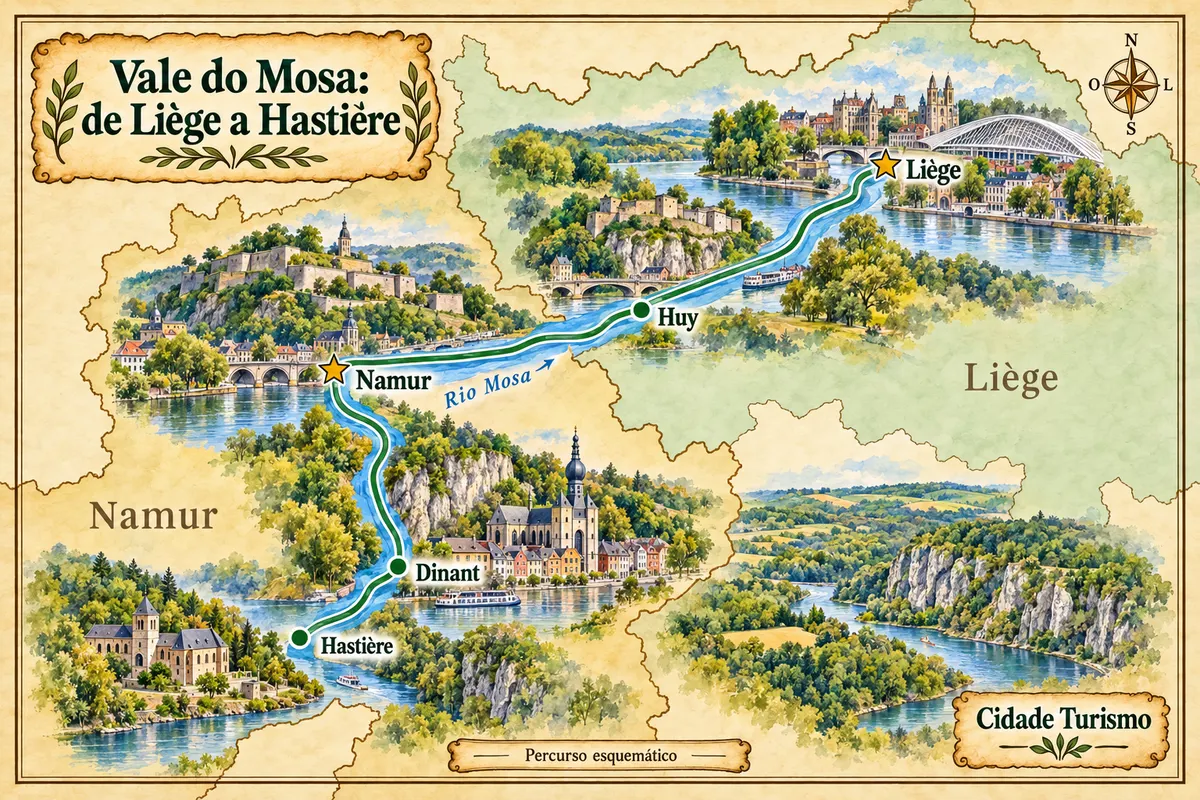
Meuse Valley is on the Meuse Valley: from Liège to Hastière

The Meuse River cuts through Wallonia from south to north. The route follows the valley from Liège to Hastière, passing Huy, Namur and Dinant, with fortresses atop the cliffs and a train running beside the water.

Illustrative map, not to scale. Tap a city to open its page.
Illustrated map of Meuse Valley: from Liège to Hastière
Explore the Meuse Valley: from Liège to Hastière

Rotas entre países

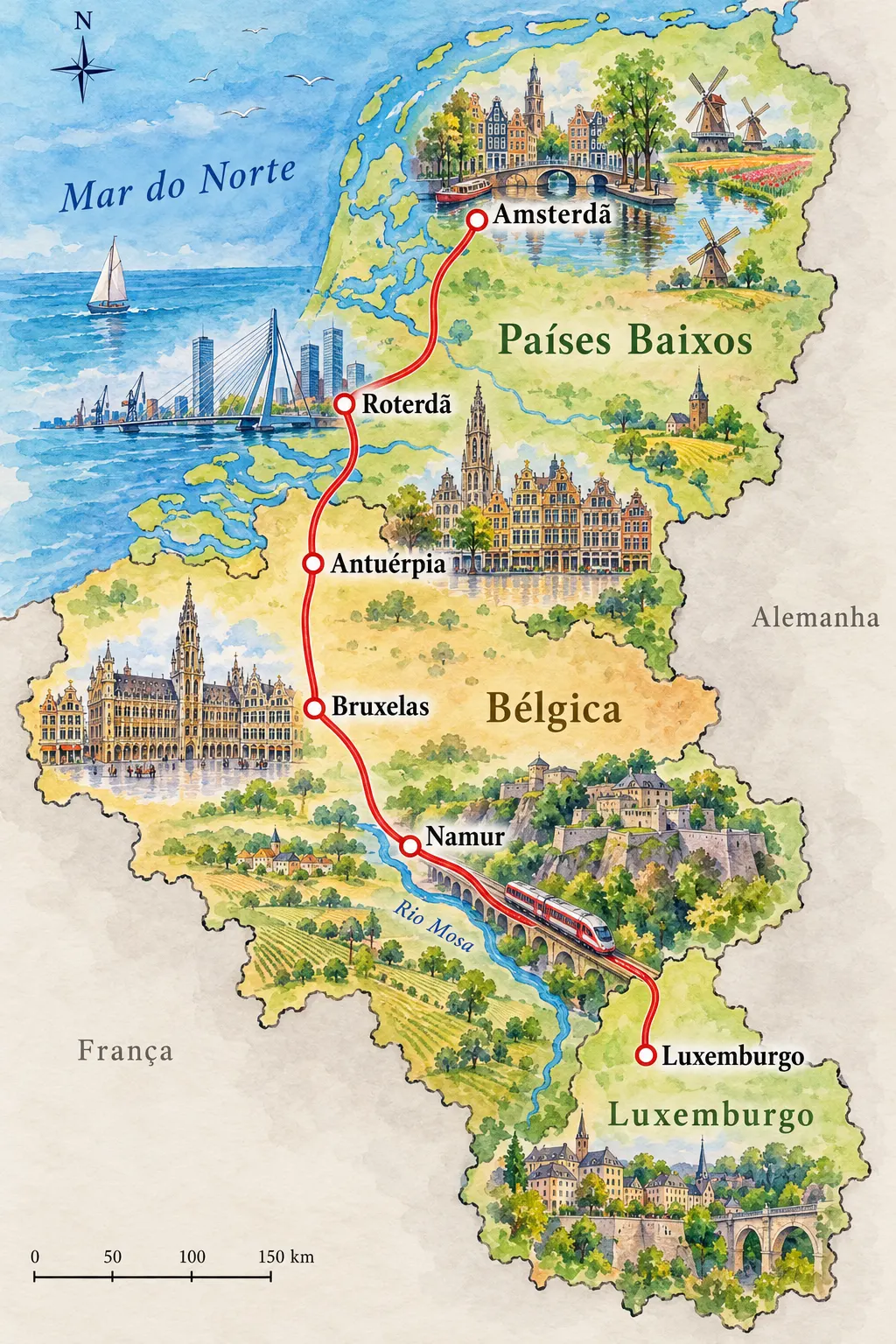
Meuse Valley is on the Benelux by train: Amsterdam–Brussels–Luxembourg

The three Benelux countries by train: from Amsterdam to Brussels in about two hours, and from Brussels to Luxembourg via the Ardennes, with Rotterdam, Antwerp and Namur along the way.

Illustrative map, not to scale. Tap a city to open its page.
Illustrated map of Benelux by train: Amsterdam–Brussels–Luxembourg
Explore the Benelux by train: Amsterdam–Brussels–Luxembourg
Explore other destinations Search by state and city