Lovaina

Brabante Flamengo · Belgium

Lovaina

University town of Brabante Flamengo, with a lace-like Gothic town hall, a painting by Dieric Bouts in the church of São Pedro, a listed beguinage and a café-filled square full of students.

Flandres

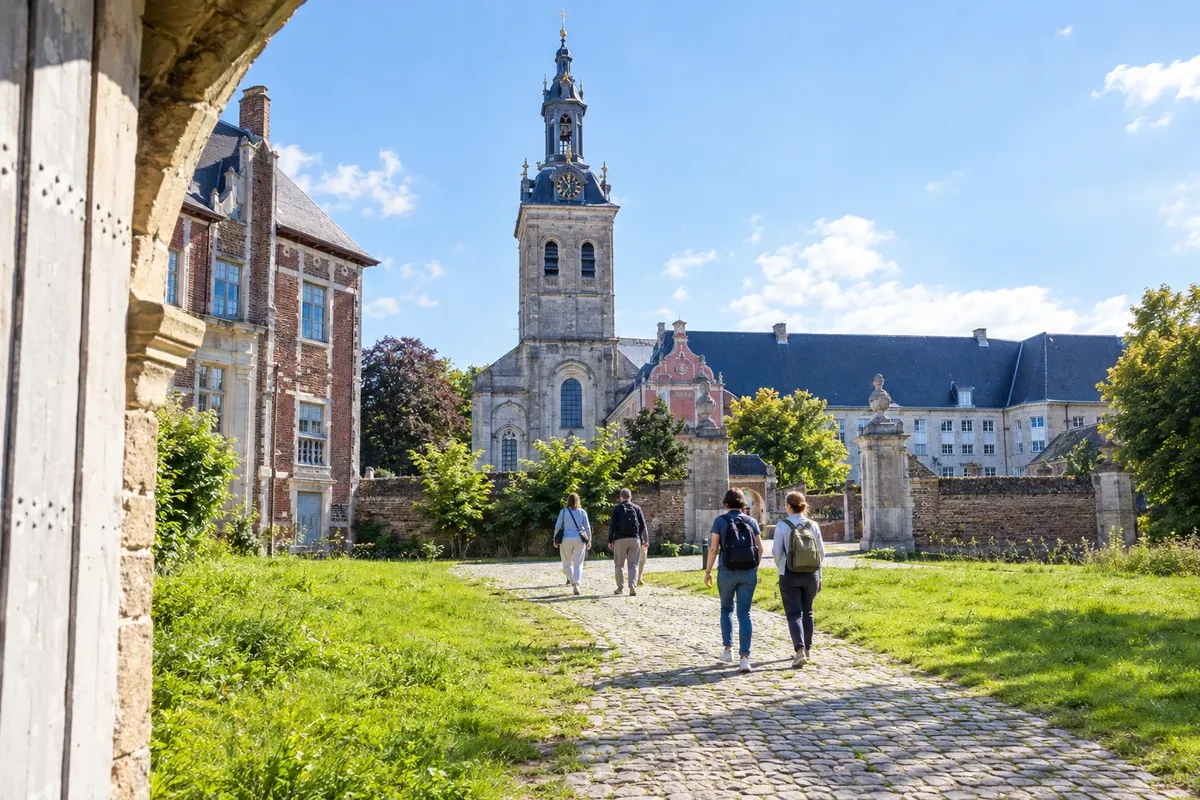
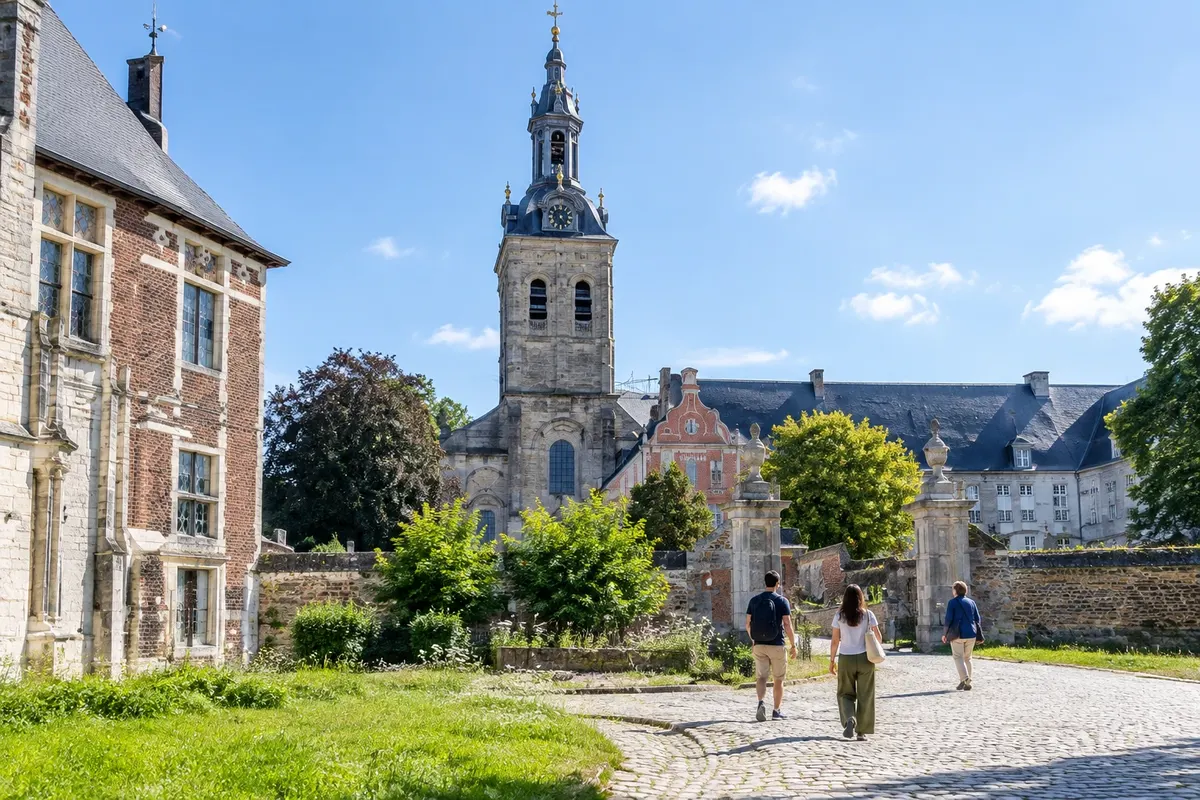
In the photo: Abdij van Park, Lovaina

Illustrative images. The pictures in this guide are illustrations based on the real place, not photographs, and may differ from it.

Get it on Google Play Send your photos

Get to know the place

A region to enjoy
at your own pace.

Lovaina, Leuven on the signs, is the capital of the province of Brabante Flamengo and is about 25 km east of Bruxelas. The city's language is Flemish, the Dutch spoken in Bélgica. The Portuguese name comes from the French Louvain, a form that still appears in old books and in the name of the French-language university.

The city revolves around the university, founded in 1425. In 1968 the institution split into two: KU Leuven, Flemish-speaking, remained in Lovaina, and UCLouvain, French-speaking, moved to Louvain-la-Neuve in Valônia. Faculty buildings, old colleges and student houses spread throughout the centre.

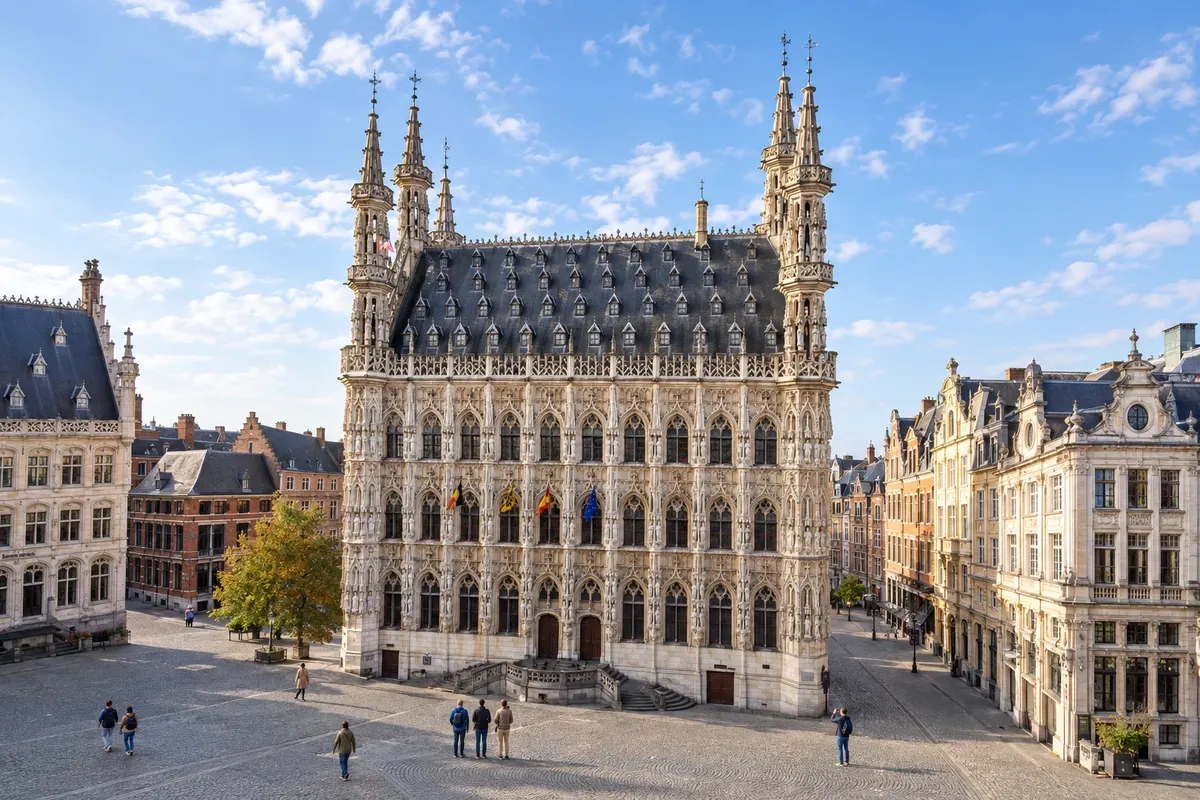
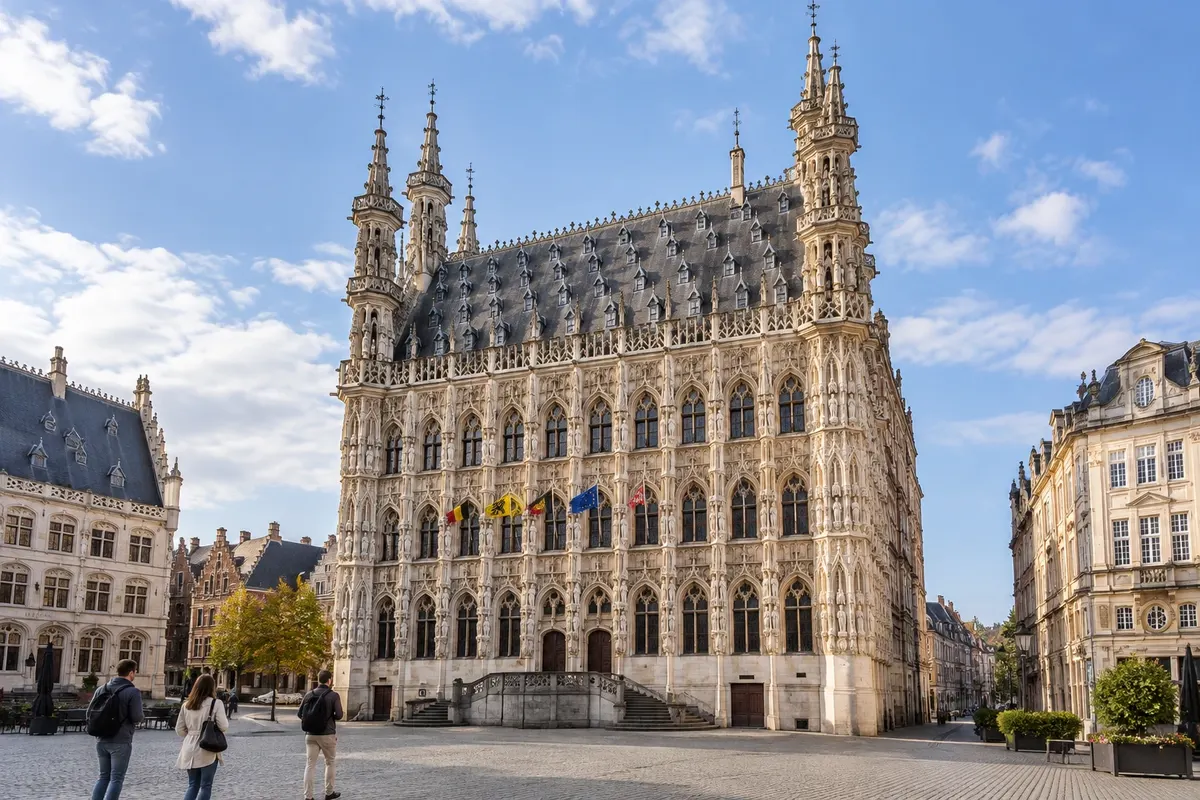
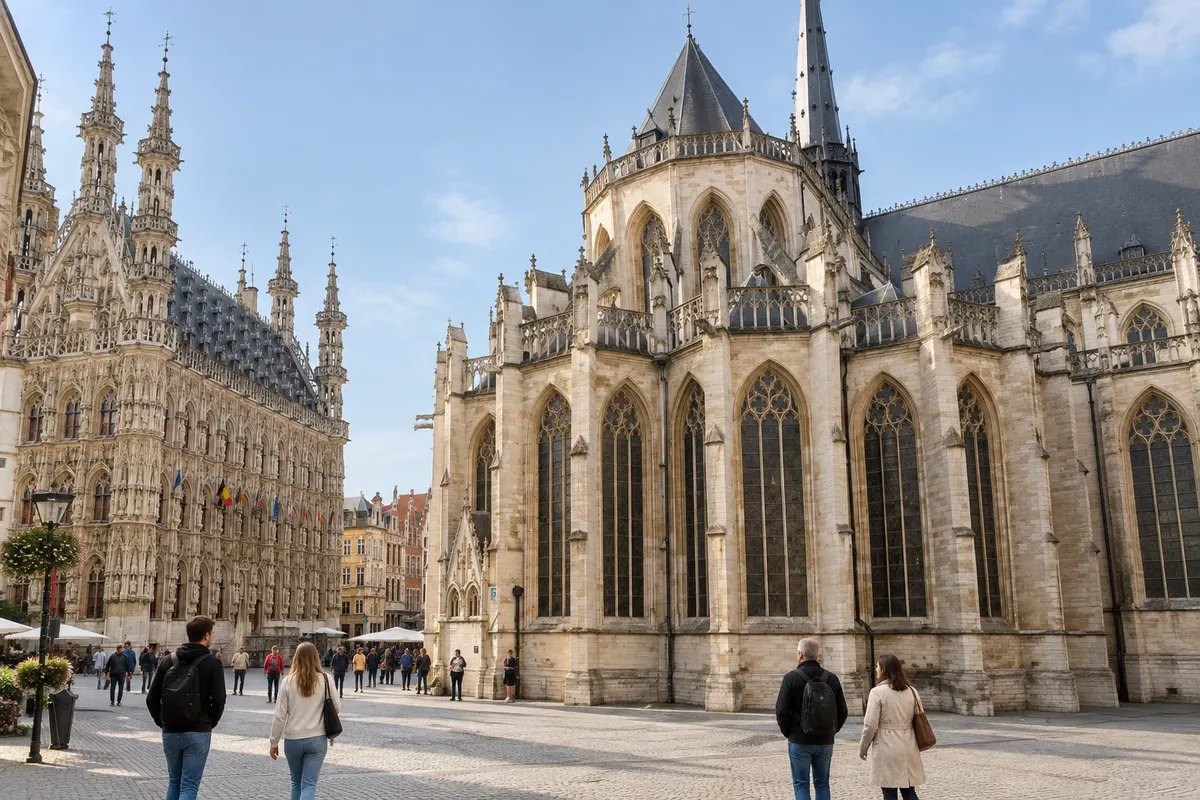
The walk begins at the Grote Markt, where the Stadhuis, the lace-like Gothic town hall covered in statues, faces the Sint-Pieterskerk, which houses the Last Supper painted by Dieric Bouts. A few blocks away are the M Leuven, the city's art museum, and the Universiteitsbibliotheek, the library rebuilt after the 1914 fire, with a tower open to visitors.

South of the centre, the Groot Begijnhof forms a neighbourhood of brick houses cut by the river Dijle, a UNESCO World Heritage site. At night life concentrates on the Oude Markt, a square taken over by cafés. A little farther away, in Heverlee, the Abdij van Park includes a 12th-century abbey, lakes and a water mill. Beer is part of the local history: Stella Artois is brewed in Lovaina.

This destination brings together 1 city: Lovaina.

Share: WhatsApp
Traveler, share your experiences through photos Up to 5 photos of each place you visited.

One destination, many paths

The cities on this trip

Start with one city or combine several in your itinerary.

Where Lovaina is
Lovaina

Outlines: © NGI-IGN, AdminVector, CC BY 4.0. Adapted by Cidade Turismo.

How to get there: Lovaina

✈ Brussels Airport (BRU), in Zaventem · 20 km to Lovaina

Check before you buy. From Bruxelas airport there is a direct train to Lovaina station in about 15 minutes. From Bruxelas, trains depart from Bruxelles-Central, Midi and Nord and take 20 to 25 minutes.

The local experience

Things to do in Lovaina

Stadhuis
Lovaina · Brabante Flamengo · Monument

Stadhuis

Leuven’s town hall on the Grote Markt is a Brabantine late-Gothic building, erected between 1439 and 1469. The façade has 236 niches with statues, and the interior can be seen on a guided tour.

Sint-Pieterskerk
Lovaina · Brabante Flamengo · Church

Sint-Pieterskerk

15th-century Gothic church on the Grote Markt, with artworks in their original locations, such as The Last Supper by Dieric Bouts, painted between 1464 and 1468, and the Sedes Sapientiae, a symbol of KU Leuven.

M Leuven
Lovaina · Brabante Flamengo · Museum

M Leuven

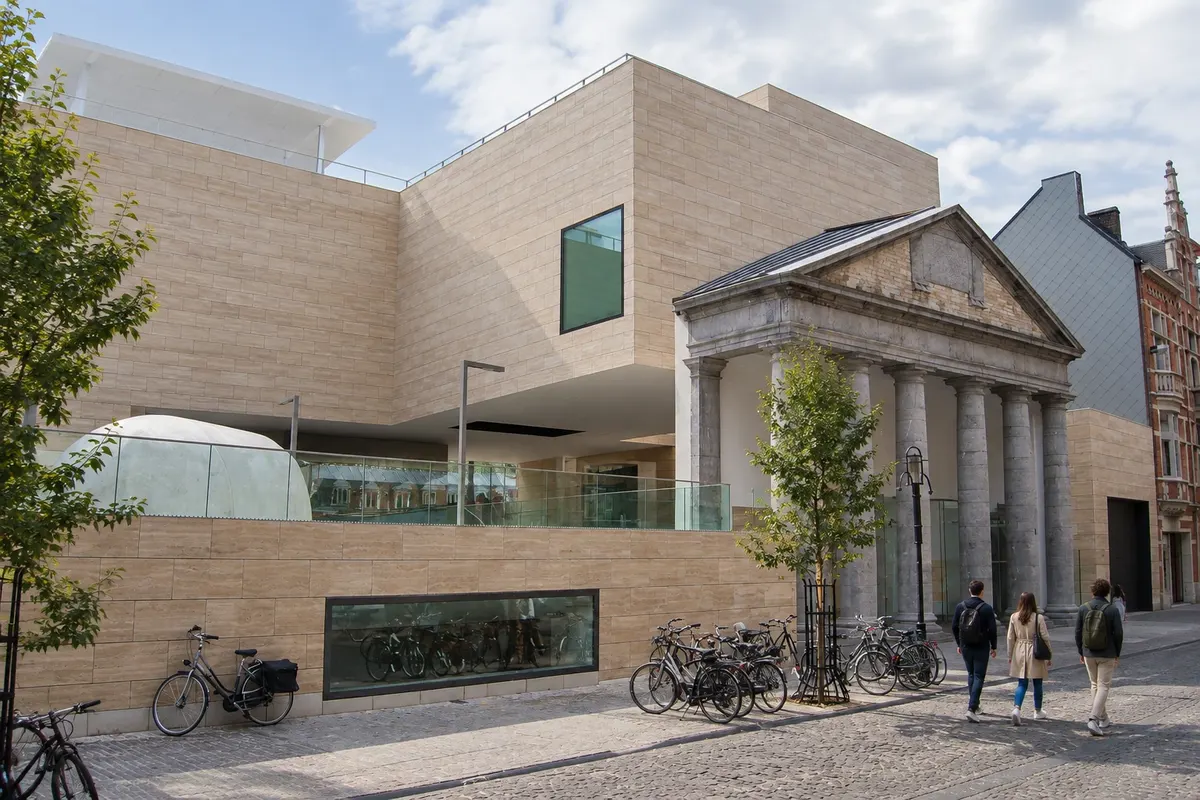
Leuven art museum, with around 46,000 works, from Brabantine Gothic sculpture to 19th-century paintings and contemporary art, housed in a building that combines a historic house with architecture by Stéphane Beel.

Universiteitsbibliotheek
Lovaina · Brabante Flamengo · Monument

Universiteitsbibliotheek

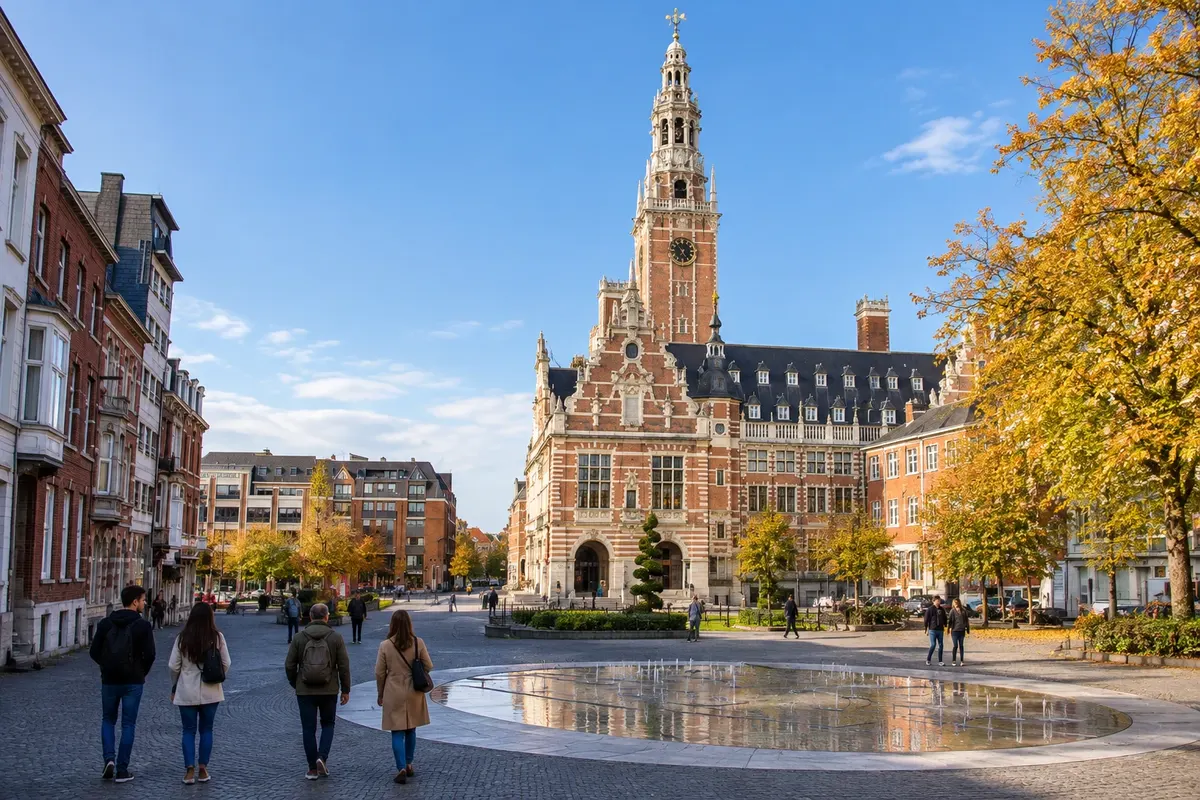
Central library of KU Leuven, on the Ladeuzeplein, built between 1921 and 1928 with American funding after the old one was set on fire in 1914. It has a monumental reading room and a tower with a carillon of 63 bells.

See 5 more places in Lovaina
Groot Begijnhof
Lovaina · Brabante Flamengo · Neighborhood

Groot Begijnhof

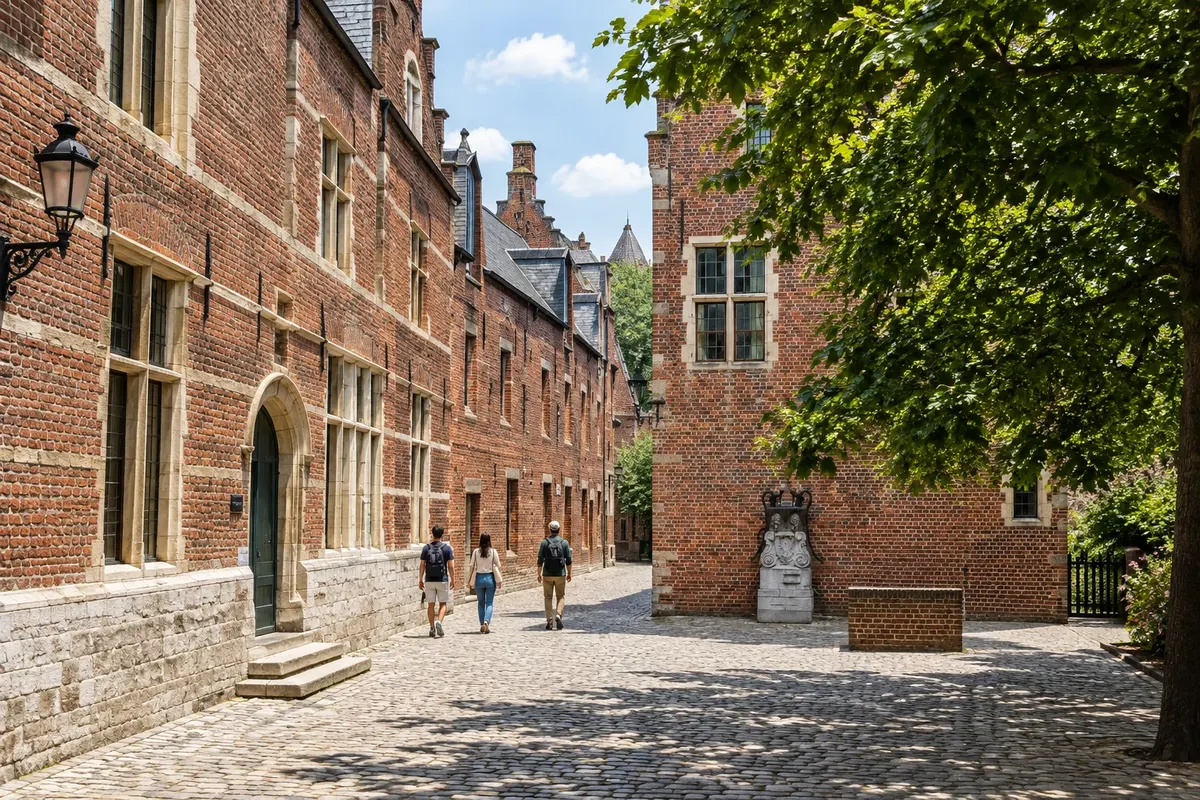
Former 13th-century beguinage, with around one hundred brick and sandstone houses, cobbled streets and the river Dijle running through it. It has been a UNESCO World Heritage Site since 1998 and belongs to KU Leuven.

Oude Markt
Lovaina · Brabante Flamengo · Square

Oude Markt

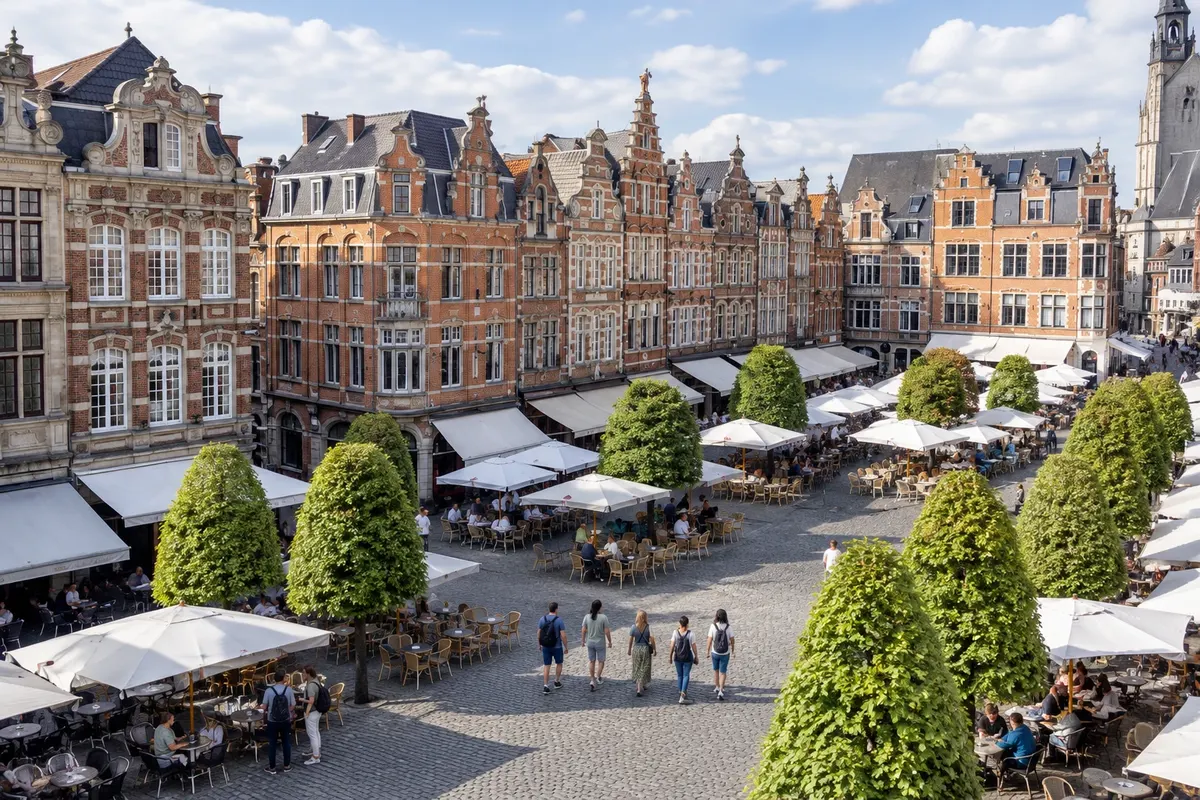
Rectangular square next to the Grote Markt, surrounded by old houses occupied by cafés and bars. It is the students' meeting point and has the nickname of the longest bar in the world.

Abdij van Park
Lovaina · Brabante Flamengo · Abbey

Abdij van Park

Premonstratensian abbey founded in 1129, in Heverlee on the edge of Lovaina. It has 17th-century buildings with stucco ceilings, the PARCUM museum, a church, lakes, a watermill and 42 hectares of green space.

Kruidtuin
Lovaina · Brabante Flamengo · Botanical garden

Kruidtuin

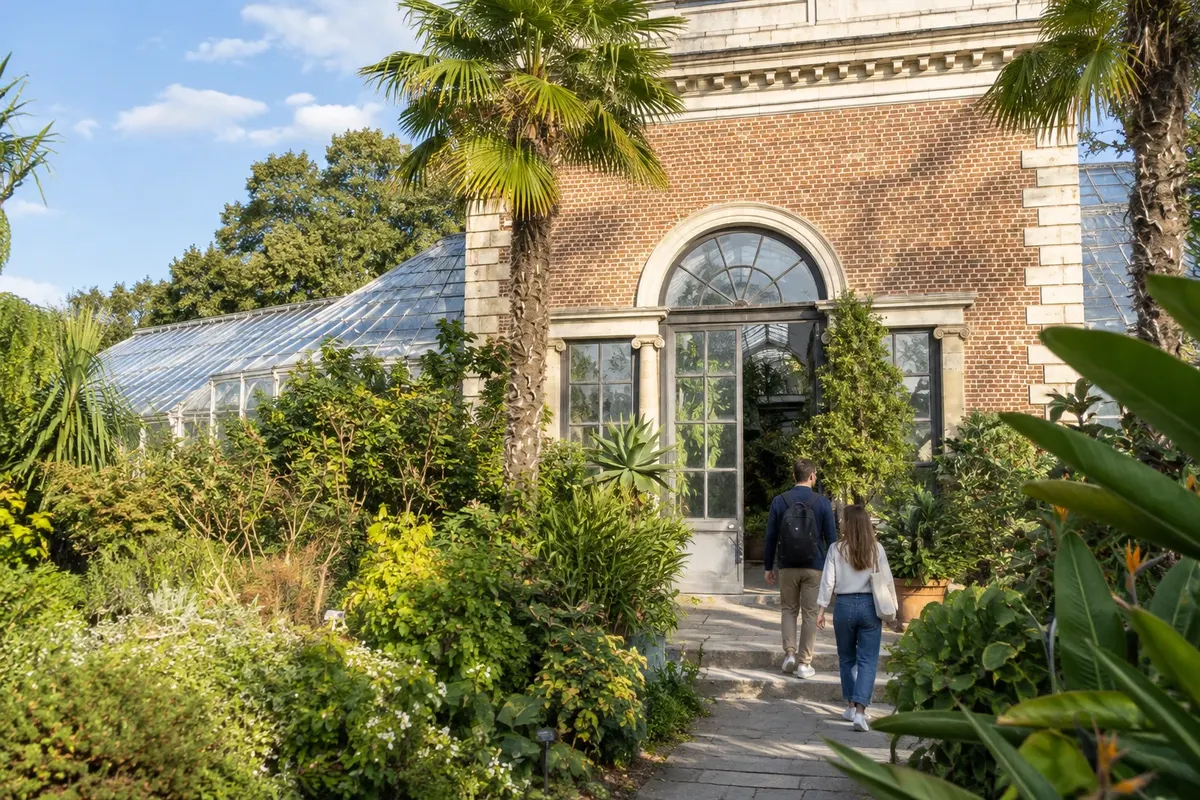
The oldest botanical garden in Belgium, created by the university of Lovaina in 1738 for medical students, with tropical greenhouses, an orangery and collections of medicinal plants.

Brouwerij Stella Artois
Lovaina · Brabante Flamengo · Brewery

Brouwerij Stella Artois

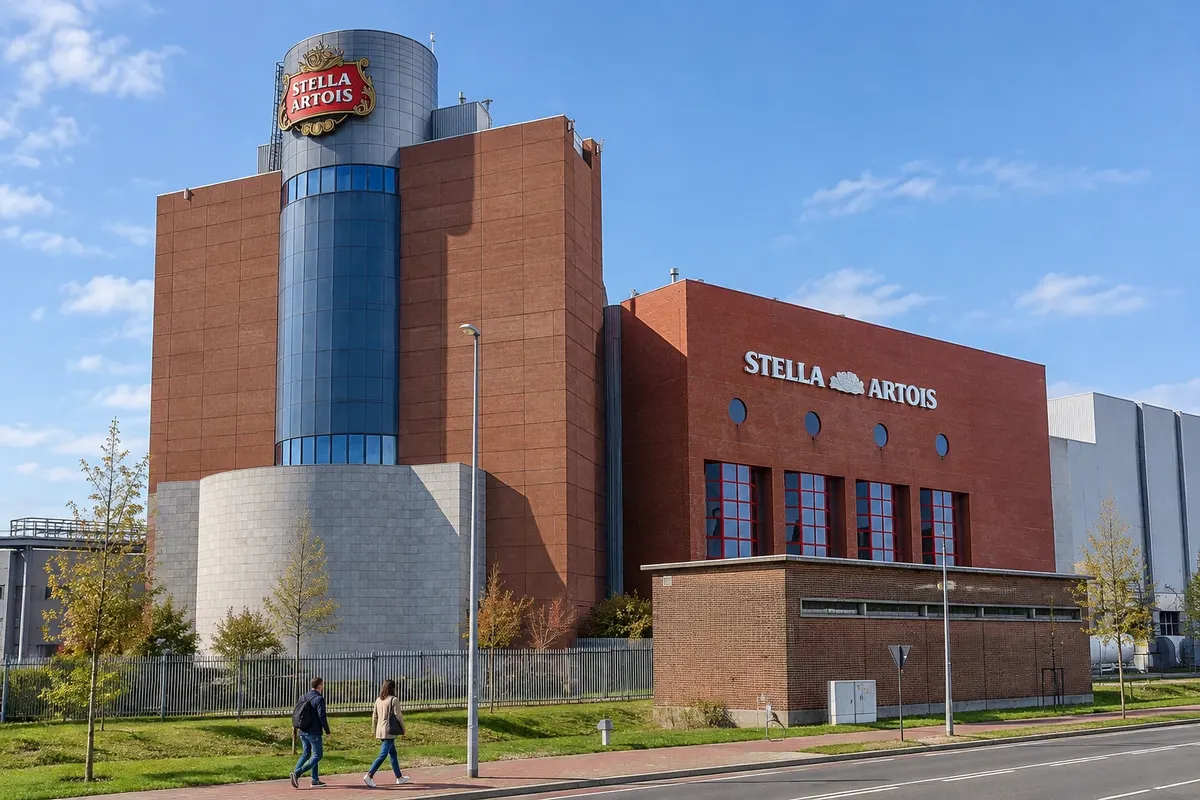
The Stella Artois brewery, north of Lovaina's centre next to the Vaartkom, offers a public guided tour showing the brewing, fermentation and bottling processes, in Dutch or English.

To choose before you go

Tours in Lovaina

Where each tour starts, how long it takes, how it is done, what is included and the price range.

Leuven historic centre: Grote Markt, Stadhuis and Universiteitshal

From Leuven station On foot about 2 hours morning easy

Leuven (Louvain) is the capital of the province of Flemish Brabant, in Flanders, where Flemish—the variety of Dutch spoken in Belgium—is used. It is a university city: the university was founded in 1425, and KU Leuven students set the pace of the streets. From the station to the Grote Markt is about a 15‑minute walk along Bondgenotenlaan. On the Grote Markt stands the Stadhuis (town hall), in Brabantine Gothic, built between 1439 and 1469; the final design is by Matheus de Layens. The façade has 236 niches with statues, placed from 1850 onwards, of figures from the city’s history. On the opposite side of the square is the Sint‑Pieterskerk (Saint Peter’s Church), with works by Dirk Bouts. Along Naamsestraat, the university colleges’ street, you reach the Universiteitshal, the former Lakenhalle (cloth hall), now the KU Leuven central building, with a café and university shop. Beside it, Hogeschoolplein brings together historic colleges. On the way, look for Fonske, the statue of a student reading a book while pouring water from a cup over his head, as if it were wisdom; on festive dates he appears in costume. If you prefer a guide, you can take the ILUVLeuven Walk, a roughly 45‑minute small‑group walk in Flemish or English that departs from the tourist office and finishes at the Grote Markt.

Stops: Grote Markt, Stadhuis, Sint‑Pieterskerk, Naamsestraat, Universiteitshal, Hogeschoolplein, Fonske.

Includes: On foot and self‑guided; the squares and streets do not require tickets. The ILUVLeuven Walk is paid separately, departs in the afternoon, and is included in the ILUVLeuven Ticket, which bundles the walk, the Universiteitsbibliotheek with the tower and M Leuven or the Abdij van Park. Check the current price list.

Tip: The interior of the Stadhuis is not part of the route: enjoy the façade in the square. On Fridays there are carillon concerts in the Grote Markt. The ILUVLeuven Walk runs on specific days for each language; buy in advance online or at the tourist office.

Best time: All year. From November to February it gets dark in the late afternoon and the square is lit up; from May to September the terraces are open.

Sint-Pieterskerk (Church of Saint Peter) and Dirk Bouts’s Last Supper

From Grote Markt of Leuven On foot about 1 hour 30 minutes morning easy

The Sint-Pieterskerk (Church of Saint Peter) occupies an entire side of the Grote Markt. It is a late-Gothic church, begun around 1425 and practically finished in 1497. The towers were never completed because of unstable ground, and the main tower barely rises above the roof; nevertheless, the belfry was added to the UNESCO World Heritage list in 1999, together with the belfries of Belgium and France. The main reason to visit are two works by the Flemish painter Dirk Bouts (Dieric Bouts) made for this church and still kept here: the Triptych of the Last Supper, painted between 1464 and 1468, and the Martyrdom of Saint Erasmus. The route, prepared with the M Leuven museum, goes through the choir and the ambulatory, which house sculptures, paintings and goldsmithing pieces. Notice the Sedes Sapientiae, an image of the Virgin with Child from 1442, a symbol of KU Leuven; the stone tabernacle of 1450, about 12.5 m high, by Matheus de Layens; Jan Borman’s Triumph Cross; the tomb of Duke Henry I; and the chapel of Fiere Margriet (Proud Margaret), a character from a medieval city legend. An augmented-reality tablet or the printed guide explain each piece.

Stops: Sint-Pieterskerk, Grote Markt.

Includes: Entrance to the church is free. The augmented-reality tablet experience and the HoloLens version are paid separately; the printed guide and the family route are available on site. Check the current table.

Tip: Check opening days before you go: the church usually closes one weekday a week. Combine the visit with the walk around the Grote Markt and, if you want to see more Bouts works and regional art, head to M Leuven a few blocks away.

Best time: All year round. It’s a good option for rainy days and for winter, from December to February.

Universiteitsbibliotheek (University Library) and the carillon tower

From Leuven city center On foot about 1 hour afternoon moderate (stair climb in the tower)

The Universiteitsbibliotheek (KU Leuven University Library) sits on the Ladeuzeplein and tells a chapter of the city’s wars. the old library was destroyed by the fire of August 25, 1914, at the start of World War I. The present building, in Flemish neo-Renaissance style, was designed by American architect Whitney Warren and built between 1921 and 1928 with funds from the United States. In May 1940, during World War II, it was burned again. The self-guided visit follows an audio guide: it goes through a photo exhibition, the large reading hall and ends at the tower, with views over Leuven’s roofs. The tower houses a carillon, and on two days of the week there are visits that include a live concert, heard from the gallery. On the square in front, Totem, by Belgian artist Jan Fabre, is a giant beetle impaled on a needle about 23 m high.

Stops: Universiteitsbibliotheek, Ladeuzeplein, Totem.

Includes: Paid admission separate, with an audio guide; it is included in the ILUVLeuven Ticket. Guided visits take place on Fridays, Saturdays and Sundays, and carillon concert visits on Tuesday evenings and Wednesday at midday. Check the current schedule.

Tip: The climb to the tower is by stairs. If you enjoy the carillon, book in advance the visit with concert, which lasts about 1 hour 30 minutes. Observe silence in the reading rooms, which are used by students.

Best time: Year-round. On clear days the view from the tower is best; from November to February, opt for early afternoon.

Groot Begijnhof (Great Beguinage of Leuven)

From Leuven city center On foot about 1 hour morning easy (stone paving)

The Groot Begijnhof (Great Beguinage) is located south of the centre, a short walk from Naamsestraat. A beguinage was the complex where beguines lived—lay religious women who did not take nun’s vows. Leuven’s beguinage began in the early 13th century and housed about 360 beguines in the 17th century. It was added to the UNESCO World Heritage List in 1998, together with 12 other beguinages of Flanders. There are nearly 100 brick and sandstone houses, arranged along streets, courtyards, gardens and lawns, cut by two branches of the Dijle River that form an island connected by three bridges. In the centre stands the Sint-Jan-de-Doperkerk (Church of Saint John the Baptist). In 1962 the university bought the complex and restored it between 1964 and 1989 under professor Raymond Lemaire’s direction. The houses are home to students, visiting professors and KU Leuven staff: it is a living neighbourhood, not a museum.

Stops: Groot Begijnhof, Sint-Jan-de-Doperkerk, Dijle.

Includes: Free access and open all the time; there is no ticket. Groups can request a guided visit from KU Leuven in advance.

Tip: Speak quietly and do not enter the courtyards and gardens of the houses: people live there. The stone paving and the bridges make access difficult for wheelchairs and baby strollers. De Lijn buses stop nearby, at the Heilig Hart stop.

Best time: All year. From April to June and in October the trees and lawns are green and in bloom.

M Leuven: art of Leuven and Brabant

From Leuven city center On foot about 2 hours afternoon easy

M Leuven is the city’s art museum, on Leopold Vanderkelenstraat, a few minutes from the Grote Markt. The building, by Belgian architect Stéphane Beel, combines historic structures and contemporary architecture, with an interior garden and a rooftop terrace with views over the city. The collection mainly brings together art made in Leuven and Brabant from the Middle Ages to the 19th century: religious sculptures and paintings from the era of the Flemish masters and works by Belgian artists such as Constantin Meunier, Jef Lambeaux and Georges Minne. The museum also mounts temporary exhibitions that mix old masters and contemporary artists. It is M Leuven that manages the route through the treasures of Sint-Pieterskerk, including works by Dirk Bouts.

Stops: M Leuven, Leopold Vanderkelenstraat.

Includes: Paid admission separate, with an audio guide for individual visits; a single ticket covers the collection and the temporary exhibitions during your visit. Included in the ILUVLeuven Ticket, which gives the choice between M Leuven and Abdij van Park. Check the current table.

Tip: The museum is closed on Wednesdays. Go up to the terrace at the end of the visit to see the tower of Sint-Pieterskerk and the rooftops of the centre.

Best time: All year round; a good option for rainy days, frequent from October to February.

Oude Markt and the beer culture in Leuven

From Leuven city center On foot about 2 to 3 hours night easy

Leuven has a long brewing tradition. In the mid-18th century, at least 42 breweries operated along the Dijle, where they drew their water. The Den Hoorn brewery has existed at least since 1366; in 1708 the brewmaster Sebastiaan Artois took over the house and, years later, bought it and put his own name on the façade. The city is the world headquarters of AB InBev, and Stella Artois has been brewed here since 1926. The Oude Markt (Old Market), behind the Grote Markt, was a fair square and today has about 40 bars side by side, with terraces that fill the whole square. It is the students’ meeting point and fills up at night during the academic year. On a bench in the square, the statue De Kotmadam honors the boarding-house owner who rented rooms (kot) to students. To sample the local beers at a relaxed pace, the guided walk “Leuven on tap” visits different bars and tastes five regional beers, with a beer-and-chocolate pairing. There is also the Leuven Beer Adventure, a self-guided route through the bars and the drink’s history.

Stops: Oude Markt, De Kotmadam, Grote Markt.

Includes: On your own, with drinks paid separately. The “Leuven on tap” walk is guided, runs on Fridays and Saturdays, and has an additional fee. Check the current table.

Tip: On terraces, you usually order at the table.

Best time: All year round. From May to September the terraces stay busy until late; from late September to June, during the academic year, there are more students.

See 8 more tours

Guided tour of the Stella Artois brewery

From Leuven city center On foot about 2 hours afternoon easy (about 1.3 km on foot)

Stella Artois has been brewed in Leuven since 1926, in a brewery tied to the history of Den Hoorn and the Artois family, and the city is the global headquarters of AB InBev. The brewery is on the northern edge of the center, near the Vaartkom, the old canal port. The public guided tour runs on weekends and shows the production process past and present: from malted grain to the bottling line. The route is about 1.3 km. At the end, adults taste a Stella Artois.

Stops: Brouwerij Stella Artois, Vaartkom.

Includes: Guided tour in English or Flemish, with a tasting at the end. Admission is paid separately and must be purchased in advance online; children under 12 are free. Check the current schedule.

Tip: Visits often sell out: book in advance. Wear comfortable shoes. If you plan to drink, don’t drive; return on foot or by public transport. Wheelchair users should notify the brewery in advance.

Best time: Year‑round, on Fridays, Saturdays and Sundays.

Abdij van Park (Abbey of the Park), in Heverlee

From Leuven city center On foot, by bicycle or by bus about 3 hours morning easy

Abdij van Park (Abbey of the Park) is in Heverlee, about 2.4 km from Leuven city centre. It was founded in 1129 by Duke Godfrey I and has been occupied since then by Premonstratensian canons (Norbertines). The abbey played a prominent role in the old Southern Netherlands, and the interiors of the buildings have changed little since the 17th century. The abbey sits within about 42 hectares of protected green space, with avenues, lakes and meadows open to visitors. The restored buildings house Museum PARCUM, dedicated to religion, art and culture: highlights are the stucco ceilings of the library and 20 seventeenth-century stained-glass windows reinstalled in the cloister. You can also visit Sint-Jan-Evangelistkerk church, with the choir, and the cemetery. The water mill runs on the first Sunday of each month, when you can enter and buy flour. There is also a shop selling products from the De Wikke farm and the abbey brewery, Braxatorium Parcensis.

Stops: Abdij van Park, Museum PARCUM, Sint-Jan-Evangelistkerk, Heverlee.

Includes: Access to the gardens, lakes and avenues is free; Museum PARCUM and the buildings have separate paid entry. The abbey is included in the ILUVLeuven Ticket, which gives the choice between it and M Leuven. Check the current table.

Tip: Some of the buildings may be under restoration: check the museum opening times before you go. The walk from the center passes the city cemetery and takes about 30 minutes; by bike it is quicker. Combine it with Kasteel van Arenberg, also in Heverlee.

Best time: All year round. From April to October the gardens and lakes are most attractive; on the first Sunday of the month the mill operates.

Kasteel van Arenberg and the Arenberg campus of KU Leuven

From Leuven city center On foot or by bicycle about 2 hours afternoon easy

The Kasteel van Arenberg (Arenberg Castle) stands in Heverlee, south of the centre. The lords of Heverlee built the first castle on the site in the 14th century; the present Renaissance building dates from the early 16th century and was heavily altered in the 19th century. In 1916 the Duke of Arenberg donated the estate to the university, and today the castle is part of the KU Leuven science and technology campus, used by students and faculty. The surrounding park is open to the public: lawns, tree-lined avenues and the Dwaaltuin, a garden-maze of paths and plants. Along the way you’ll see university buildings and research centres, a contrast between the castle and modern architecture. The interior is only visited on heritage tours organized by the university on scheduled dates.

Stops: Kasteel van Arenberg, Arenbergpark, Dwaaltuin, Heverlee.

Includes: Free access to the park, open at all times. The castle interior only opens on guided heritage visits on scheduled dates or for reserved groups.

Tip: Do the bike ride and continue to Abdij van Park, which is nearby. The Best of Leuven bike route, 15.5 km with numbered points, goes through the Arenberg campus and returns to the center. The park closes on stormy days.

Best time: From April to October, with the park green; in October, with autumn colors.

Kruidtuin (Botanical Garden of Leuven)

From Leuven city center On foot about 1 hour morning easy

The Kruidtuin (Botanical Garden) is on Kapucijnenvoer, on the west edge of the city centre. It was created in 1738 by the university for medical students. The garden mixes beds of herbaceous and medicinal plants, aquatic plants and outdoor pots. A group of greenhouses of 450 m² houses tropical and subtropical species. The orangery, the entrance house and the garden itself host exhibitions throughout the year. It’s a quiet place for a break between museums, with shaded benches.

Stops: Kruidtuin, Kapucijnenvoer.

Includes: Free entry. Open year-round; hours change with the season, and the gates close at night.

Tip: Combine with M Leuven and Sint-Pieterskerk for a morning on foot. On rainy days, the greenhouses provide shelter.

Best time: From April to September, with flowerbeds in bloom; the greenhouses are worth a visit year-round.

Vaartkom, Klein Begijnhof and Abdij Keizersberg

From Leuven city center On foot about 3 hours afternoon easy (short uphill walk to Keizersberg)

This walk explores the northern part of the center, which is less visited. Vaartkom is the basin of Leuven’s old port, at the start of the Leuvense Vaart canal, opened in 1763 toward Mechelen. The port attracted factories and warehouses, and the area was once nicknamed the “Detroit of Leuven.” The old industrial buildings have been converted into lofts, offices, shops and restaurants along the water. Nearby, the Klein Begijnhof (Small Beguinage), first mentioned in 1272, consists of one street and two dead‑end alleys with about 30 traditional Flemish houses, restored in 2000. It lies in the shadow of the tower of the Sint‑Geertrui abbey. The walk ends on the top of Keizersberg, where Benedictine monks from Maredsous Abbey built an abbey in the 19th century. The abbey garden is a public park with views over the city, from the central towers to the Vaartkom.

Stops: Vaartkom, Leuvense Vaart, Klein Begijnhof, Abdij Keizersberg, Mechelsestraat.

Includes: On foot and on your own; the streets, the Klein Begijnhof and the Keizersberg abbey park have no admission. The houses in the Klein Begijnhof are private.

Tip: Climb Keizersberg in the late afternoon to see the city in a different light. The park opens later in summer, from April to September, and closes earlier from October to March. Respect the residents of the Klein Begijnhof.

Best time: From April to September, with long days and the Vaartkom terraces open.

Abdij van Vlierbeek and Provinciedomein Kessel-Lo

From Leuven station On foot or by bicycle about 3 hours afternoon easy

On the other side of the railway line, east of the centre, the Kessel‑Lo neighbourhood has two green walks that fit into the same afternoon. Provinciedomein Kessel‑Lo is a provincial leisure park, popular with Leuven families, with green areas, playgrounds, pedal boats, rowing boats, minigolf and an environmental education centre focused on water. A little further on is the Abdij van Vlierbeek (Vlierbeek Abbey), whose history begins in 1125. The church, built of sandstone in a neoclassical style, was restored inside and out in 2001 and remains the parish church for the neighbourhood. The former guest houses were turned into homes, and the cemetery beside the church completes the complex. The walking route suggested by Leuven tourism, covering the park and the abbey, is about 8.8 km from the centre.

Stops: Provinciedomein Kessel‑Lo, Abdij van Vlierbeek, Kessel‑Lo.

Includes: Free access to the park and the abbey complex. Pedal boats, rowing boats and minigolf are paid separately. Check the current price list.

Tip: By bicycle the trip is short: rent one at the Fietspunt by the station. The park closes on stormy days and when winds are strong.

Best time: From April to September, when the park stays open into the evening and the boats operate.

Heverleebos and Meerdaalwoud: the Brabant woods by bicycle

From Leuven city center By bicycle about 4 hours full day moderate (31.6 km by bicycle)

South of Leuven the Brabant woods begin, part of the Brabantse Wouden national park. They cover about 10,000 hectares of nature, with nearly 900 km of trails for walking and cycling. Heverleebos, closer to the city, is a wood designed for leisure, with signposted paths for pedestrians and cyclists. Meerdaalwoud, just beyond it, gives priority to nature, and some areas have restricted access. The Meerdaal Route, a 31.6 km cycling route that starts at the outskirts of Leuven, crosses both woods. There are trails that reach the Doode Bemde nature reserve and the Abdij van Park on the return.

Stops: Heverleebos, Meerdaalwoud, Doode Bemde, Abdij van Park.

Includes: Free access to the woods. Bicycle rental at additional cost; the Fietspunten at the station and at Rector De Somerplein rent standard and electric bicycles. Check the current schedule.

Tip: Download the route map before you set off: the signage follows the numbered points of the cycling network (fietsknooppunten). Bring water and a snack, because there are few places to eat inside the wood. Stay on the open trails.

Best time: From April to October. In May the wood turns green; in October it shows autumn colours. From November to March the dirt trails are muddy.

University of Leuven: Naamsestraat colleges and guided tour

From Grote Markt of Leuven On foot about 2 hours morning easy

The university has shaped Leuven for more than 600 years, and the old colleges still form the heart of the campus in the city center. Most are along the Naamsestraat, which runs south from the Grote Markt. Heilige Geestcollege (Collegium of the Holy Spirit), dating from 1442, was the university’s first college. On the Hogeschoolplein, the Pauscollege (Pope’s College) was founded in 1523 by Pope Adrian VI, who had been a lecturer in Leuven. Atrecht College was rebuilt in 1508, Hogenheuvelcollege has a 15th-century brick Gothic façade, and Hollands College, from the 17th century, preserves a chapel and library. The colleges serve students and faculties and are generally seen only from the outside. To get into the history, the guided tour Six centuries of the university in Leuven, in English, runs on Saturdays; the university also offers an app with walking routes across the campuses.

Stops: Naamsestraat, Heilige Geestcollege, Pauscollege, Hogeschoolplein, Hollands College, Universiteitshal.

Includes: The self-guided walk does not require an entrance ticket. The guided tour is paid separately and must be reserved online or at the tourist office. Check the current schedule.

Tip: During term time, from late September to June, the street is full of students; in July and August the atmosphere is calmer. Combine the visit with the Groot Begijnhof at the end of Naamsestraat.

Best time: Year-round; the guided tour takes place on Saturdays.

Day by day

1, 2 and 3-day itinerary in Lovaina

Suggestions to plan the trip. Change the order of the days according to the weather and tour availability.

1 days · Leuven in 1 day, a day trip from Brussels

For If you are in Brussels and want the essentials of Leuven in one day by train. · Based in Brussels or Leuven
  1. Day 1 · Grote Markt, Bouts, library and Oude Markt

    Train from Brussels to Leuven in about 30 minutes. In the morning, Leuven’s historic center: Grote Markt, Stadhuis and Universiteitshal, then Sint-Pieterskerk (Church of Saint Peter) and Dirk Bouts’s Last Supper. Lunch near the square. In the afternoon, walk down Naamsestraat to the Groot Begijnhof (Great Beguinage of Leuven) and return via Ladeuzeplein to the Universiteitsbibliotheek (University Library) and the carillon tower. Finish late afternoon at the Oude Markt and Leuven’s beer culture before the return train.

2 days · Leuven in 2 days: center, museums and beer
For If you arrive from Brazil and want to see Leuven unhurriedly, with one day for museums and another for the university. · Based in Leuven
  1. Day 1 · Arrival and historic center

    Arrival at Brussels Airport (BRU) and a direct train to Leuven in about 15 minutes. In the afternoon, take it easy after the flight and visit Leuven’s historic center: Grote Markt, Stadhuis and Universiteitshal. At the end of the day, Oude Markt and Leuven’s beer culture—drink in moderation after a long trip.

  2. Day 2 · Bouts, M Leuven, beguinage and library

    In the morning, Sint-Pieterskerk (Church of Saint Peter) and Dirk Bouts’s Last Supper, then M Leuven, which is closed on Wednesdays. In the afternoon, Groot Begijnhof (Great Beguinage of Leuven) and the Universiteitsbibliotheek (University Library) with the tower climb. If it’s Friday, Saturday or Sunday, swap the library for the guided tour of the Stella Artois brewery—book in advance.

3 days · Leuven in 3 days: town, abbeys and woods
For If you want to see Leuven thoroughly, with one day by bike through the green outskirts and the abbeys. · Based in Leuven
  1. Day 1 · Arrival and historic center

    Arrival at Brussels Airport (BRU) and a direct train to Leuven in about 15 minutes. In the afternoon, visit Leuven’s historic center: Grote Markt, Stadhuis and Universiteitshal, at an easy pace because of jet lag. Have an early dinner near the Oude Markt.

  2. Day 2 · Bouts, university and library

    In the morning, Sint-Pieterskerk (Church of Saint Peter) and Dirk Bouts’s Last Supper, followed by the University of Leuven: the colleges along Naamsestraat, up to the Groot Begijnhof (Great Beguinage of Leuven). In the afternoon, M Leuven and the Universiteitsbibliotheek (University Library) with the carillon tower. At night, Oude Markt and Leuven’s beer culture.

  3. Day 3 · Heverlee by bike: abbey and castle

    Rent a bicycle at the station. In the morning, Abdij van Park (Park Abbey), with Museum PARCUM and the lakes. In the afternoon, Kasteel van Arenberg and KU Leuven’s Arenberg campus. If you cycle well, you can swap the afternoon for the Heverleebos woods. At the end of the day, Vaartkom and the Keizersberg viewpoint; on weekends, fit in the guided tour of the Stella Artois brewery.

Best time to go

When to go: Lovaina month by month

From May to September the days are long and tables spill onto the pavement of the Oude Markt. In July the square usually hosts concerts on Fridays, and in the first three weeks of September the city's fair takes place. From November to February it's cold, it often rains and it gets dark early, but museums and churches remain open as usual.

The seasons shown are the most usual ones; nature doesn't always follow the calendar.

January Some rain

cold winter · short days

In Leuven, average highs are around 7 °C and lows about 1 °C, with rain on about 13 days, and it can freeze. It gets dark in the late afternoon. A good month for Sint-Pieterskerk, M Leuven and the library, when there are fewer people. Bring a heavy coat, hat and waterproof footwear.

February Some rain

damp cold · quiet museums

Still winter: average highs near 8 °C and lows of 1 °C, with rain on about 12 days. Days begin to get longer, but it still gets dark early. Schedule museums and churches for late afternoon.

March Some rain

end of winter · daylight saving time

European spring begins at the end of the month: average highs around 12 °C and lows of 3 °C, with rain on about 11 days. Parks begin to bloom. You will still need a coat.

April Low rain

spring · driest month

The driest month of the year in Leuven, with about 43 mm of rain over 9 days; average highs near 16 °C and lows of 5 °C, with chilly nights. The Provinciedomein Kessel-Lo and Keizersberg parks stay open later, and the terraces on Oude Markt fill up again. At Easter there are more people.

May Some rain

spring · biking in the woods

Settled spring: average highs around 20 °C and lows of 9 °C, with rain on about 10 days. Days are long and it only gets dark at night. A good month for cycling through Heverleebos and Meerdaalwoud and for the gardens of Abdij van Park. Belgian public holidays make weekends busier.

June Some rain

start of summer · late sunsets

European summer begins at the end of the month. Average highs near 22 °C and lows of 12 °C, with rain on about 10 days, sometimes in showers. Days are the longest of the year and it gets dark very late. Bring a light jacket for the evening.

July Some rain

summer · university holidays

Warmest month, with average highs around 24 °C and lows of 14 °C; during some heat waves temperatures exceed 30 °C. It rains about 10 days, sometimes with thunderstorms. Students are on holiday, and the city hosts the Summer in Leuven program. Good month for the Vaartkom and the parks.

August High rain

rainy summer · long days

Still summer: average highs around 24 °C and lows of 14 °C. It rains a fair amount, about 80 mm, in heavy showers that pass quickly. European holidays: museums and trains busier on weekends. Carry a small umbrella even on sunny days.

September Some rain

end of summer · back to school

European autumn begins at the end of the month. Average highs around 21 °C and lows of 11 °C, with rain on about 10 days. At the end of the month the school year starts and thousands of students return to Naamsestraat and the Oude Markt. Good month for cycling and for the Abdij van Park.

October Some rain

autumn · colored leaves

Autumn: average highs near 16 °C and lows of 8 °C, with rain on about 11 days. The Heverleebos woods and the park at Kasteel van Arenberg change color.

November Some rain

cool autumn · short days

Average highs around 10 °C and lows of 4 °C, with often gray skies and rain on about 12 days. It gets dark in the late afternoon. A good month for museums, churches and beer bars; the dirt trails in the woods become muddy.

December High rain

winter · year-end lights

Start of the European winter, with the shortest days of the year: it gets dark in the mid-afternoon. Average highs near 7 °C and lows of 2 °C; it is the rainiest month, with about 84 mm over 14 days. The Winter Season Leuven decorates the center for the year-end festivities. Check museum opening hours on the holiday dates.

Plan the journey

How to get there: Lovaina

From the airport and Brussels by train

From Brussels Airport, direct SNCB/NMBS trains take about 15 minutes to Leuven. The ticket from the airport includes an extra fee, usually already added to the fare. From Brussels, trains to Leuven run very frequently from Brussel-Zuid (Bruxelles-Midi), Brussel-Centraal and Brussel-Noord throughout the day, and the journey takes about 30 minutes. That makes Leuven a good day-trip from Brussels. Leuven station is on the east edge of the center, about a 15-minute walk from the Grote Markt. If there are rail works, the number of trains can be reduced: check the SNCB/NMBS journey planner before you leave.

By train from Paris, London, Amsterdam or Cologne

International high-speed trains arrive at Brussel-Zuid (Bruxelles-Midi): the Eurostar comes from Paris, London and Amsterdam, and the ICE comes from Cologne. The high-speed line passes through Leuven, but international trains do not stop in the city. Get off at Brussel-Zuid and take the SNCB/NMBS train to Leuven from the same station, about 30 minutes. Compare timetables and connections before you buy.

By car

Leuven is about 25 km east of Brussels, linked to the capital by the E40 motorway, which passes south of the city and continues to Liège; by car the trip takes about 30 minutes without traffic. The E314 leaves Leuven eastbound toward Hasselt and Aachen (Aix-la-Chapelle) in Germany. The historic center has many pedestrian-only streets: park on the edge of the center or near the station. Don’t drink and drive.

Getting around Leuven

Leuven’s center is compact and walkable: it takes about 15 minutes from the station to the Grote Markt, and the Groot Begijnhof, M Leuven and the Oude Markt are a few blocks away. De Lijn buses connect the center with neighborhoods such as Heverlee and Kessel-Lo. Cycling is the city’s main transport: the Fietspunt at the station and the one at Rector De Somerplein rent regular and electric bikes, and Blue-bike offers shared bikes via an app. For longer rides, such as to the Abdij van Park, Kasteel van Arenberg and the woods, routes follow the numbered cycle-path network (fietsknooppunten).

Tickets and opening days

Sint-Pieterskerk, the Groot Begijnhof, the Kruidtuin and the parks have free entry. M Leuven, the Universiteitsbibliotheek with the tower, Museum PARCUM at the Abdij van Park and the Stella Artois brewery have separate tickets. The ILUVLeuven Ticket bundles the guided center walk, the tower library and either M Leuven or the Abdij van Park, and is cheaper than separate tickets. M Leuven is closed on Wednesdays, and the Stella Artois tour runs Friday to Sunday with advance booking. Check current opening information before you go.

Before you go

Practical information

A little planning leaves more time to enjoy the journey.

When to go

From May to September the days are long and tables spill onto the pavement of the Oude Markt. In July the square usually hosts concerts on Fridays, and in the first three weeks of September the city's fair takes place. From November to February it's cold, it often rains and it gets dark early, but museums and churches remain open as usual.

The seasons shown are the most usual ones; nature doesn't always follow the calendar.

How many days to stay

A full day covers the Grote Markt, the church of São Pedro, the library with its tower, the beguinage and the Oude Markt. With two days there's time left for the M Leuven and the Abdij van Park in Heverlee. Because the train to Bruxelas is short, many people sleep in the capital and come to Lovaina for the day.

Which city to stay in

The historic centre, between the Grote Markt and the Ladeuzeplein, leaves everything within walking distance; the streets around the Oude Markt stay lively late, especially during term time. The station area, at Martelarenplein and Bondgenotenlaan, is convenient for those arriving by train or going to Bruxelas and the airport. The Vaartkom, the old canal port north of the centre, has new buildings and is quieter at night. Heverlee, to the south, is residential and close to the Abdij van Park.

Respect the place

Take your trash with you, follow the signs and support local businesses. In natural areas, follow the visiting guidelines.

Get your questions answered

Frequently asked questions about Lovaina

Are Lovaina and Louvain-la-Neuve the same city?

No. Lovaina (Leuven) is in Flanders, speaks Flemish and is home to KU Leuven. Louvain-la-Neuve is a city built in Valônia, French-speaking, to host UCLouvain after the university split in 1968. The two are about half an hour apart by car, but they are different places.

Can you visit Lovaina on a day trip from Bruxelas?

Yes. The train from Bruxelas takes 20 to 25 minutes and runs several times an hour. In a day you can see the Grote Markt, the Sint-Pieterskerk, the library with its tower, the Groot Begijnhof and finish at the Oude Markt before returning.

What language is spoken in Lovaina?

Flemish, the Dutch spoken in Bélgica. Signs, menus and notices are in Flemish. Being a university city with many international students, English is widely understood in museums, shops and restaurants.

Is Lovaina a good base for exploring the Bélgica?

It works well for those who want to be near the airport. There are direct trains to Bruxelas, and from there trains continue to Gante, Bruges and Antuérpia. Those who prefer day trips in many directions often stay in Bruxelas, which is the hub of the rail network.

Routes in Belgium

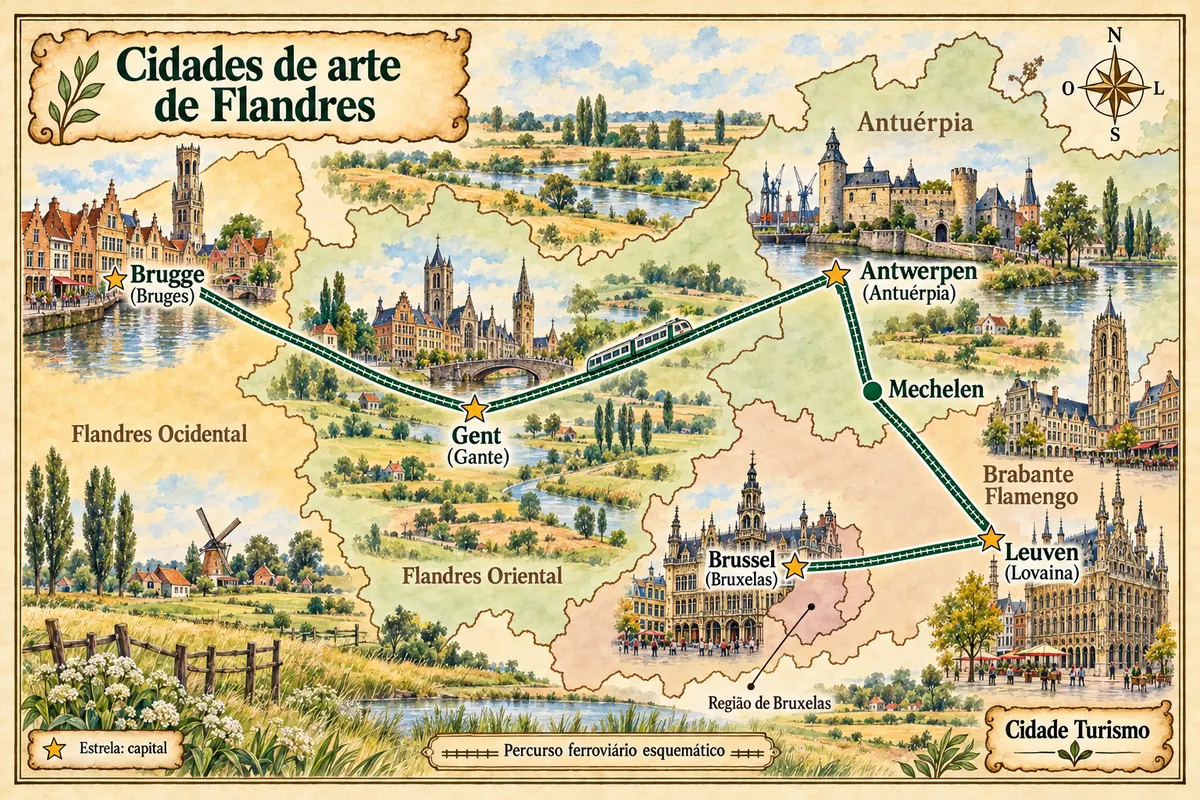
Lovaina is on the Flemish art cities

Six historic cities linked by train: Brussels, Leuven, Mechelen, Antwerp, Ghent and Bruges, with Flemish painting, cathedrals and medieval centres less than an hour apart.

Illustrative map, not to scale. Tap a city to open its page.
Illustrated map of Flemish art cities
Explore the Flemish art cities
Explore other destinations Search by state and city