Via Garibaldi and the Musei di Strada Nuova: the palaces of the Rolli
From Via Garibaldi, Genoa (De Ferrari metro or on foot) Walk with museums in palaces about 3 hours morning easy
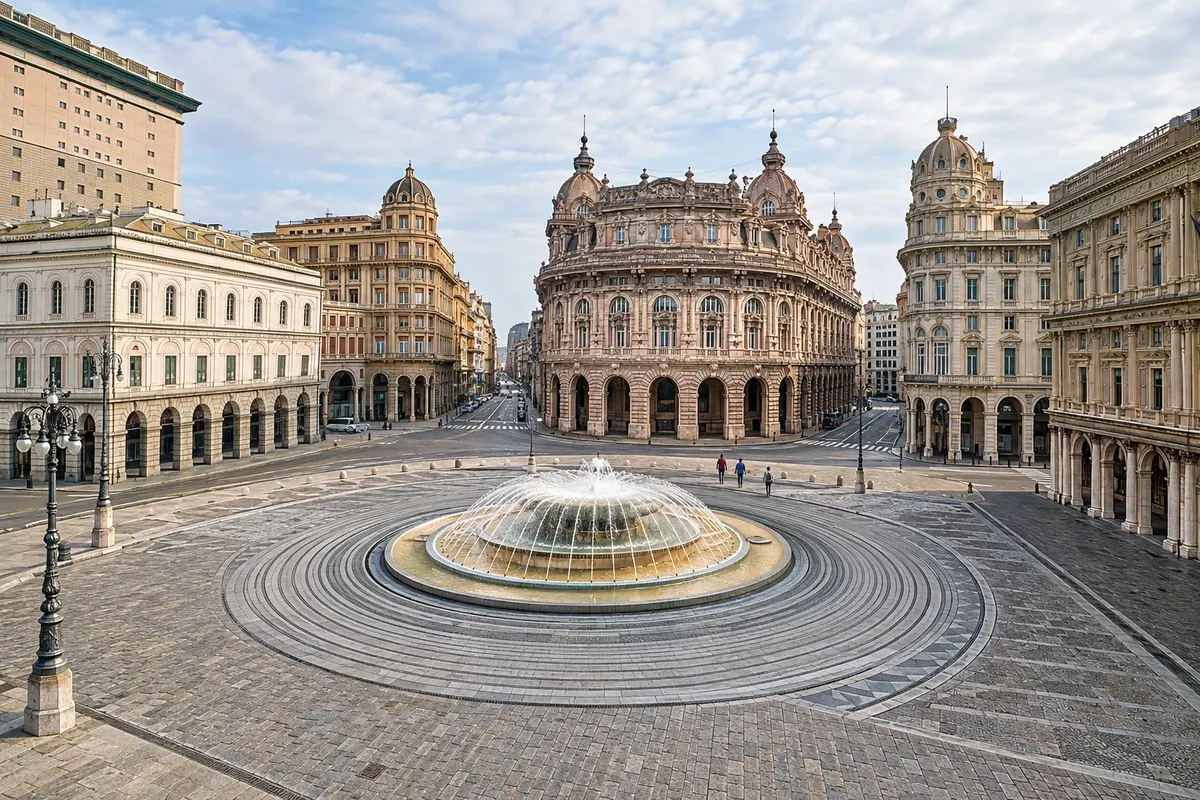
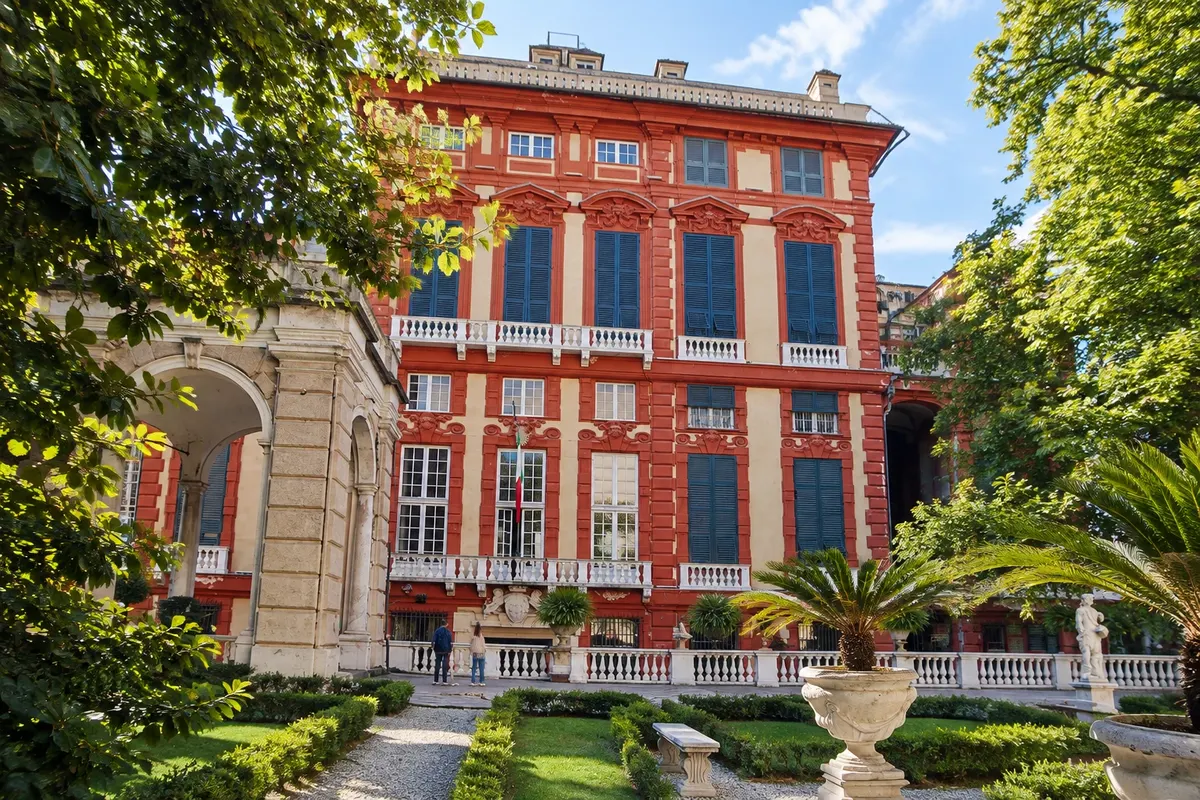
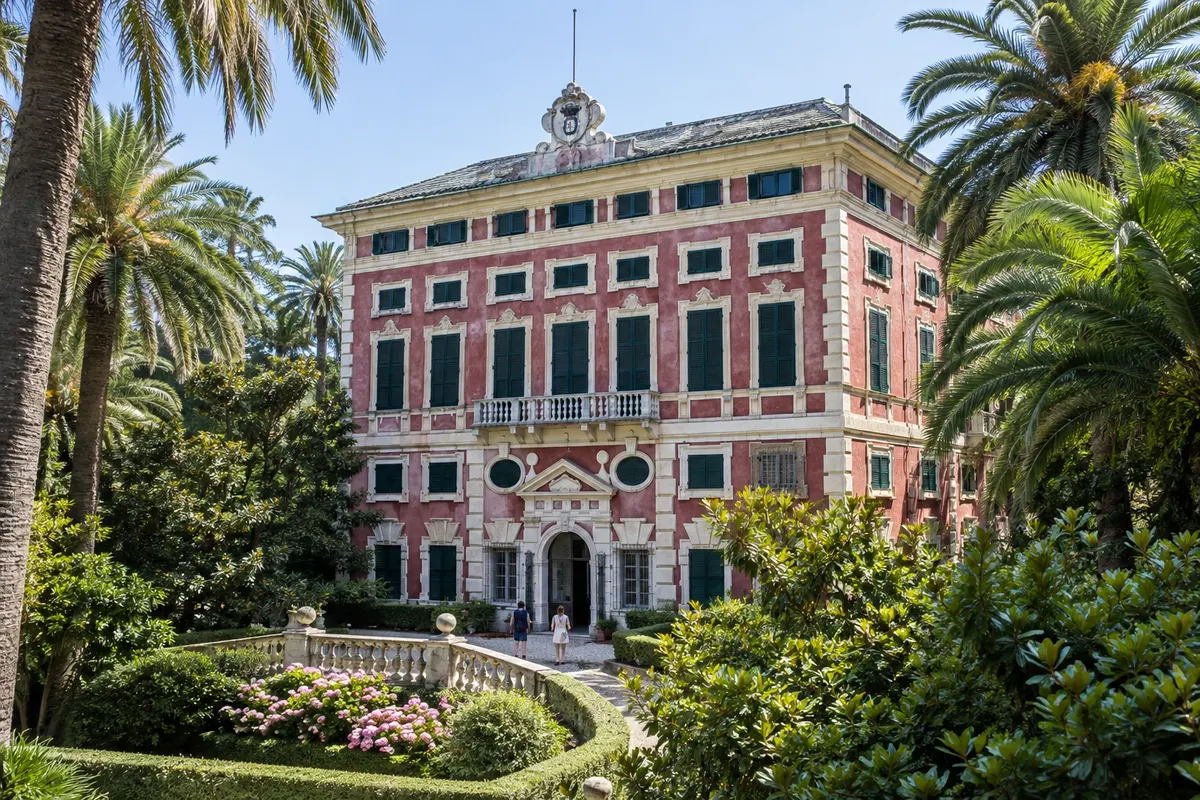
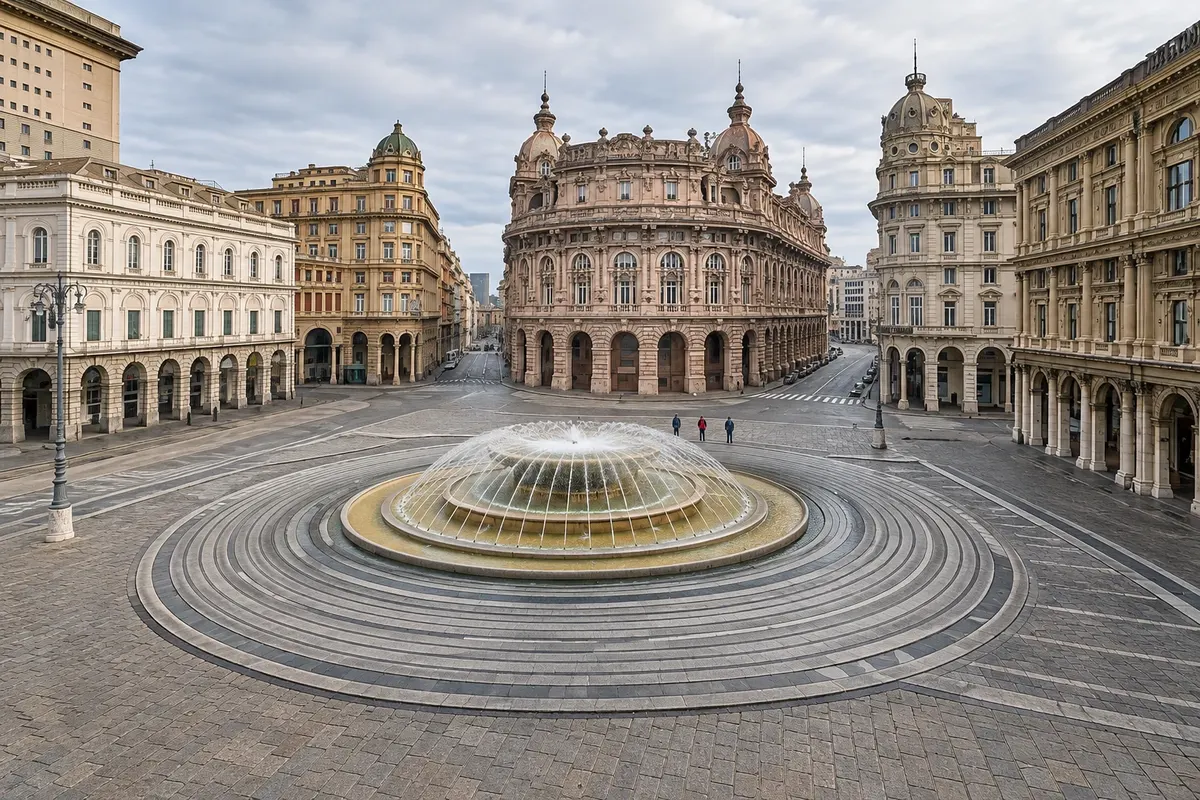
Via Garibaldi, the Strada Nuova opened in 1550 for Genoese bankers' palaces, is the axis of the Palazzi dei Rolli, listed by UNESCO: the residences entered in a 'rollo' that obliged them to host the Republic's distinguished visitors. The Musei di Strada Nuova occupy three of them, with a single ticket: the Palazzo Rosso, with portraits of the Brignole-Sale family by Van Dyck and the rooftop viewpoint; the Palazzo Bianco, with Caravaggio, Rubens, Veronese and Genoese painting; and the Palazzo Tursi, the city hall, with Paganini's violin, he was born in Genoa, and Columbus's letters. The street has 14 palaces in 250 m, with courtyards and staircases open; the Via Balbi, its continuation, has the Palazzo Reale, with the hall of mirrors. Piazza De Ferrari, with the bronze fountain, the Teatro Carlo Felice and the Palazzo Ducale, is the central square, 5 minutes away.
Stops: Musei di Strada Nuova, Piazza De Ferrari.
Includes: Combined ticket for the three museums, paid separately (closed on Mondays); palace courtyards free of charge. Palazzo Reale and Palazzo Ducale have separate admissions.
Tip: On Rolli Days (two weekends a year, in May and October), dozens of private palaces open free of charge with guided tours: check the dates. The viewpoint at Palazzo Rosso gives the view from the roofs down to the harbor.
Best time: Year-round.
Historic center: the caruggi, Cattedrale di San Lorenzo and Colombo’s house
From Piazza De Ferrari, Genoa Walk through the medieval alleyways about 3 hours afternoon easy
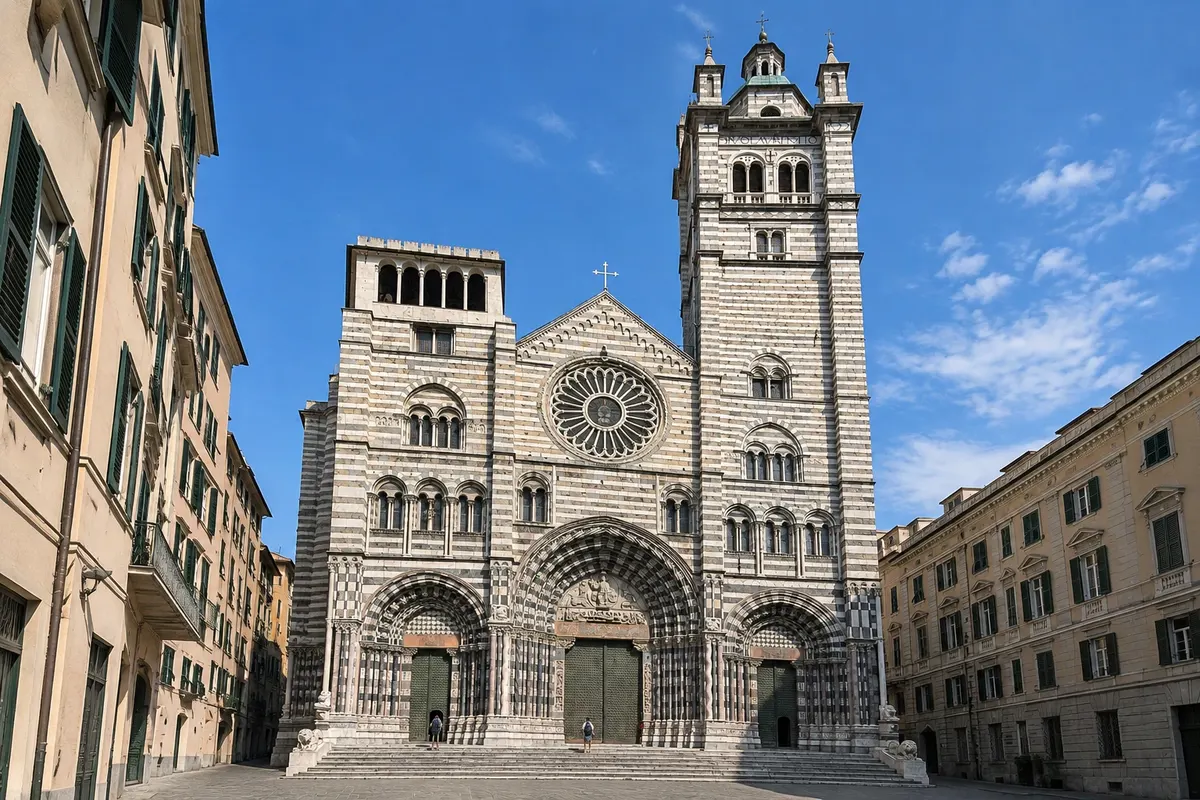
Genoa’s historic center is one of the largest in Europe, a labyrinth of 'caruggi', narrow lanes 2 m wide between six‑story buildings, stretching from the port to Via Garibaldi, where the medieval city survived intact: Via San Luca, Via degli Orefici, Piazza Banchi with the Loggia dei Mercanti, and the old shops selling 'frisceu' (fried foods) and focaccia. The Cattedrale di San Lorenzo, dating from 1098, with its black-and-white striped façade and the lions, houses in the Chapel of St. John the Baptist the patron’s relics, the treasury with the Sacro Catino, the green glass dish that legend says is the Holy Grail, and, in the nave, an English bomb from 1941 that fell and did not explode. The Porta Soprana, the two towers of 1155, and the Casa di Colombo, an 18th-century house rebuilt on the site of the house where Christopher Columbus lived as a child, lie at the edge of the center; Piazza San Matteo, with the Doria palace, is a corner dating to 1278.
Stops: Cattedrale di San Lorenzo, Piazza De Ferrari.
Includes: Free walk; cathedral free of charge (treasury with ticket); Casa di Colombo with a small admission.
Tip: Try Genoese focaccia at breakfast and pesto at lunch: the basil comes from Prà, on the city’s edge. The caruggi north of Via San Luca become empty at night; the streets on the Banchi and Sottoripa side do not.
Best time: Year-round.
Porto Antico and Acquario di Genova
From Porto Antico (10 min on foot from De Ferrari) Aquarium and walk along the port about 4 hours morning or afternoon easy
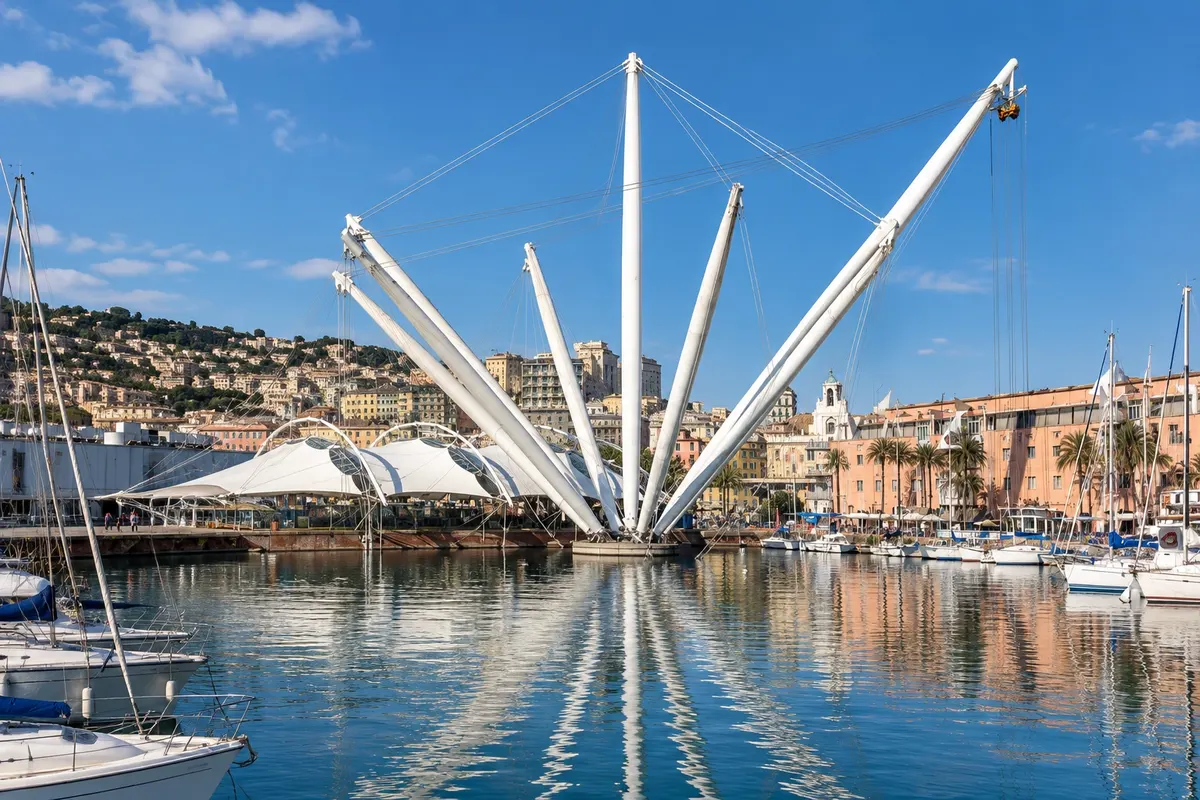
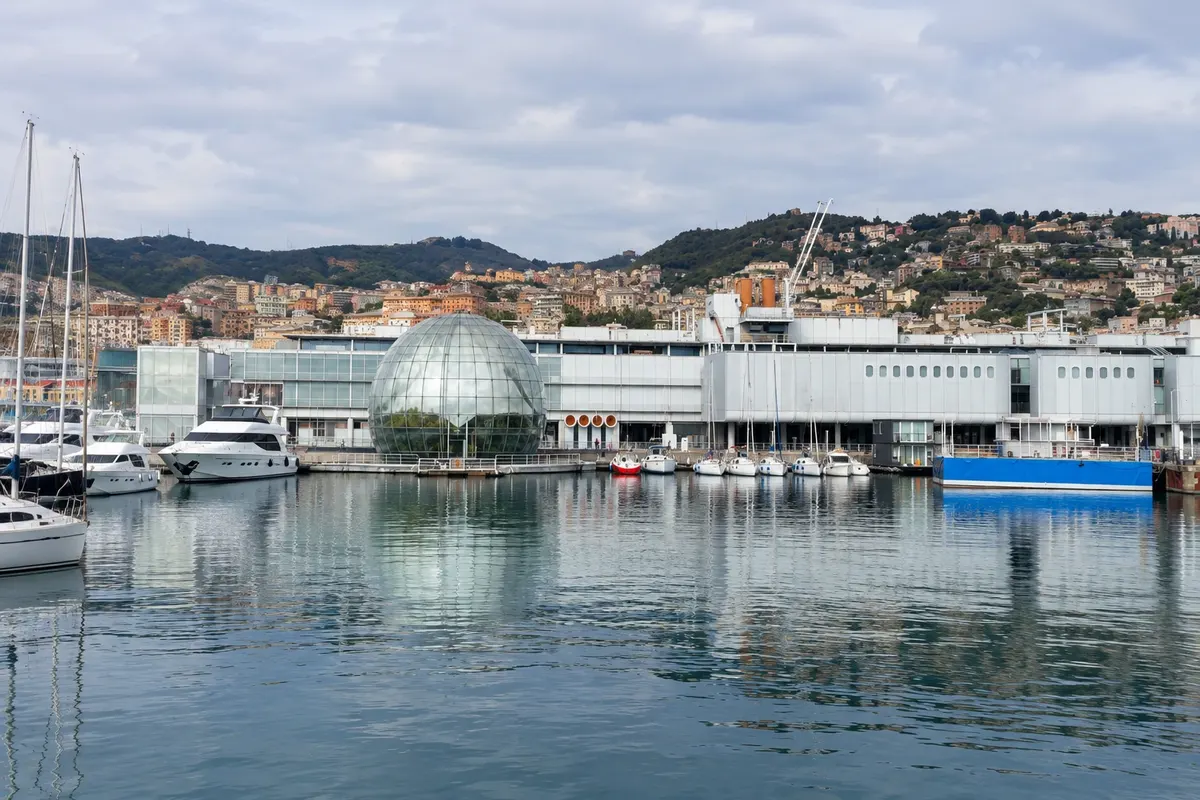
The Porto Antico, the old harbor closed to commercial traffic, was redesigned by Renzo Piano, a native of Genoa, for the 500th anniversary of Columbus’s voyage in 1992: the Bigo, a panoramic elevator shaped like a crane; the glass Biosfera with a tropical forest; the Galata Museo del Mare, the largest maritime museum in the Mediterranean, featuring a reconstruction of a 17th-century galley and the submarine Nazario Sauro moored alongside; and bars and cinemas in the warehouses. The Acquario di Genova, the largest aquarium in Italy, with 70 tanks and 12,000 animals, houses dolphins, sharks, seals, penguins and an Antarctica section in a ship-shaped building over the water; a visit takes 2 to 3 hours and is a family favorite. Nearby are the Città dei Bambini and the Lanterna in the distance. The Sottoripa, the medieval arcades facing the harbor, contains the fried-fish shops.
Stops: Porto Antico, Acquario di Genova.
Includes: Aquarium with separate paid ticket (online reservation with timed entry; combo tickets available with the Biosfera, Bigo and Galata); harbor area free of charge.
Tip: Buy aquarium tickets online for the first time slot or late afternoon: on weekends and holidays the queue can exceed an hour.
Best time: All year; in summer the harbor has evening shows.
Boccadasse and the Corso Italia: the city's fishing village
From Corso Italia (bus 31 or 42 from De Ferrari) Walk along the waterfront and the village about 2 h 30 late afternoon easy
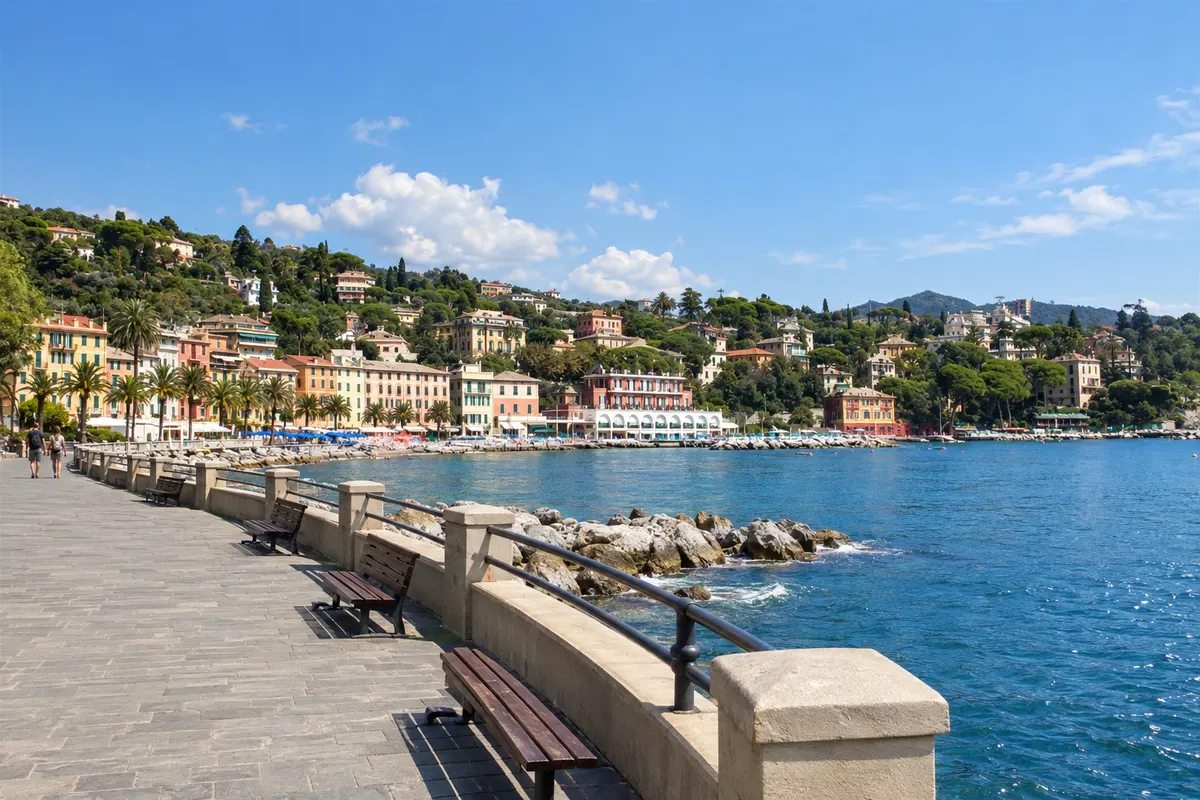
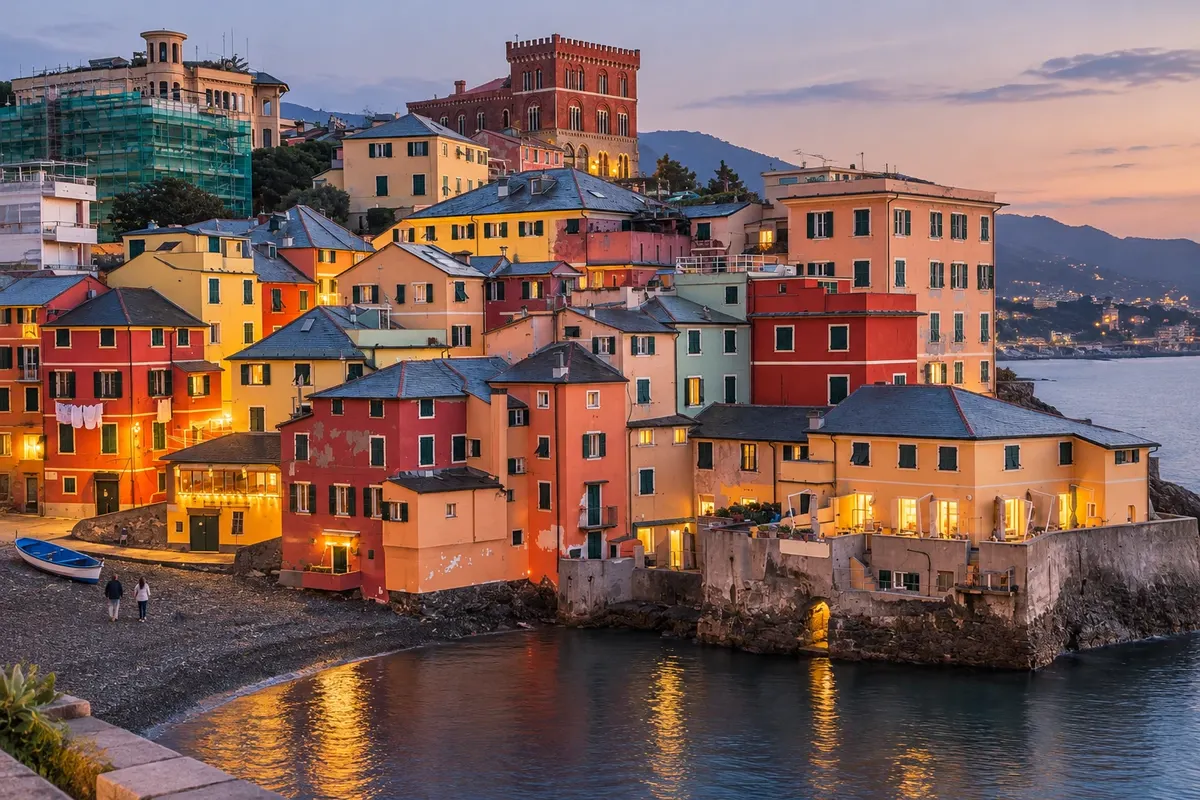
Boccadasse is the fishing village swallowed by the city, at the end of the Corso Italia, the Genovese 2.5 km waterfront, with bathing establishments and a view of Portofino on a clear day: a rocky cove with boats pulled up on the sand, colourful terraced houses, a church from 1870 and the gelaterias and focaccerias where everyone sits on the rocks at sunset. It’s the part of the city that feels like Cinque Terre without leaving Genoa. From the top of the village, the walk along Via al Capo di Santa Chiara leads to Vernazzola, another cove, and the Sturla neighbourhood; the Corso Italia on the return has the Abbazia di San Giuliano and the 1900 bathing establishments.
Stops: Boccadasse.
Includes: Free walk, no fee. Gelato and focaccia are paid separately.
Tip: Go an hour before sunset, get a gelato and sit on the rocks; summer Sundays are crowded. The bus takes 20 minutes from the center.
Best time: Year-round; from June to September swimming from the rocks is possible.
Lanterna di Genova: the city lighthouse and the promenade
From Porto Antico (800 m promenade from the ferry terminal) Walk along the promenade and climb the lighthouse about 2 hours afternoon moderate (172 steps)
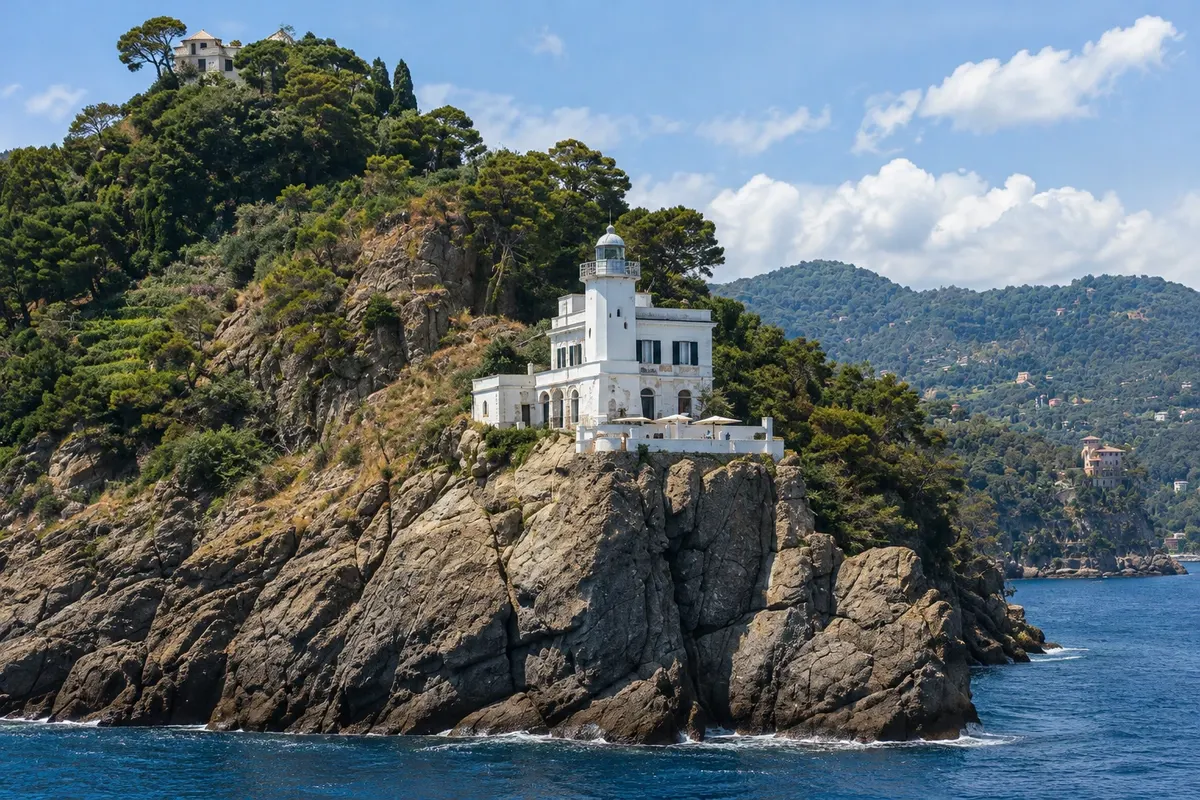
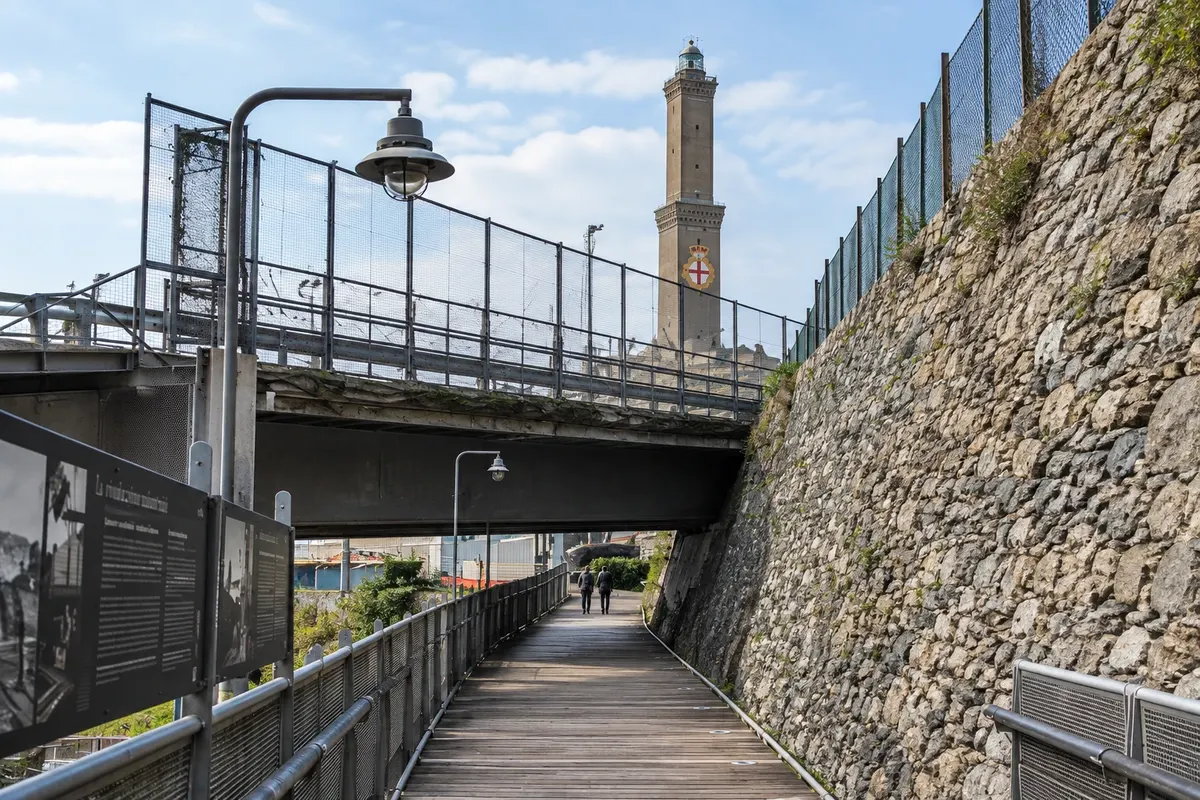
The Lanterna di Genova, from 1543, is the city’s emblematic lighthouse, 77 m tall, the second tallest in Europe, standing on a 40 m promontory in the harbor, and it marked ship entry since the Middle Ages (a lighthouse existed there since 1128). The 800 m promenade that starts in the ferry terminal area, between the commercial port and the cranes, leads to the tower’s base; you climb 172 steps to the first terrace, with views of the city, the whole port, the cruise ships and, on clear days, the coast as far as Portofino; the lantern at the top is not visitable. The museum, in the old fortifications at the base, tells the history of the lighthouse and the port with videos. The visit is short and off the main routes, which makes it peaceful.
Stops: Lanterna di Genova, Porto Antico.
Includes: Separate paid admission (museum and climb); open on specific days of the week, with reduced hours in winter.
Tip: Check opening days on the website: historically only Fridays, Saturdays and Sundays. The late-afternoon light over the port is the reason to go.
Best time: All year round, on the days it is open.
Camogli: the fishing village and the Basilica di Santa Maria Assunta
From Camogli (regional train from Genoa, 30 min) Walk in the fishing village about 3 hours morning or late afternoon easy
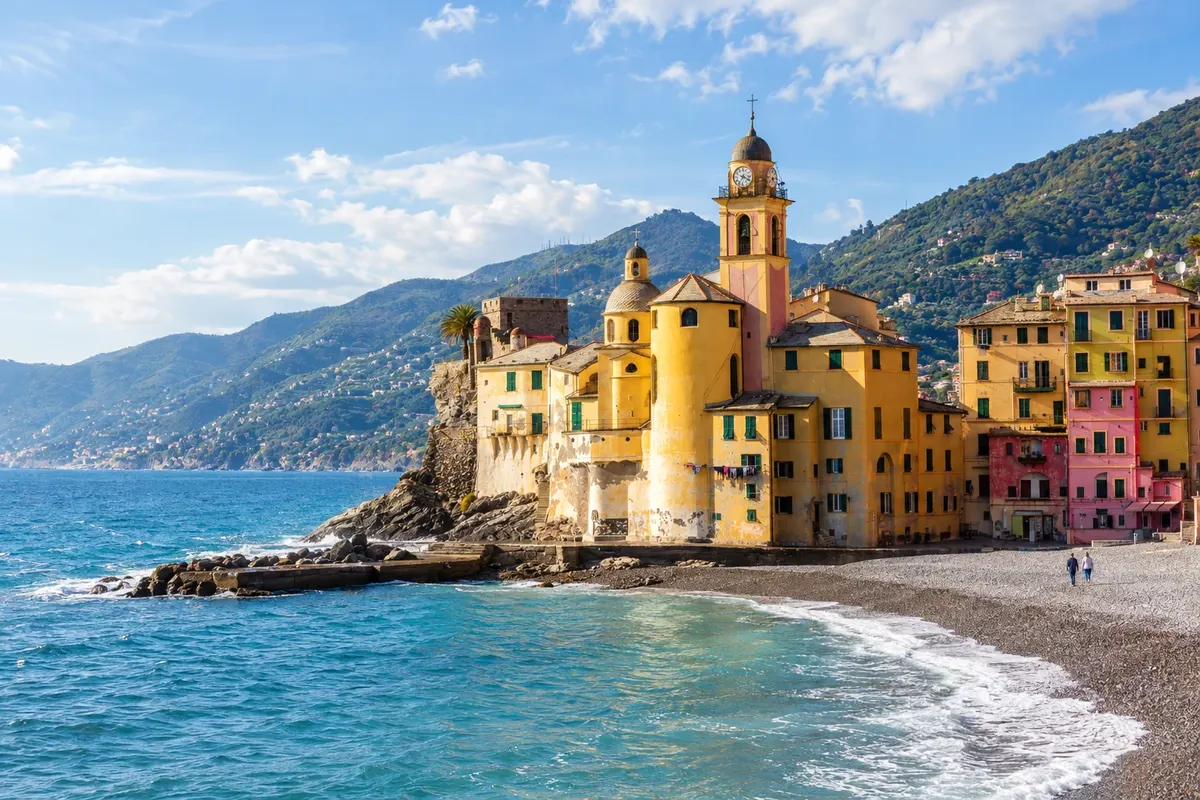
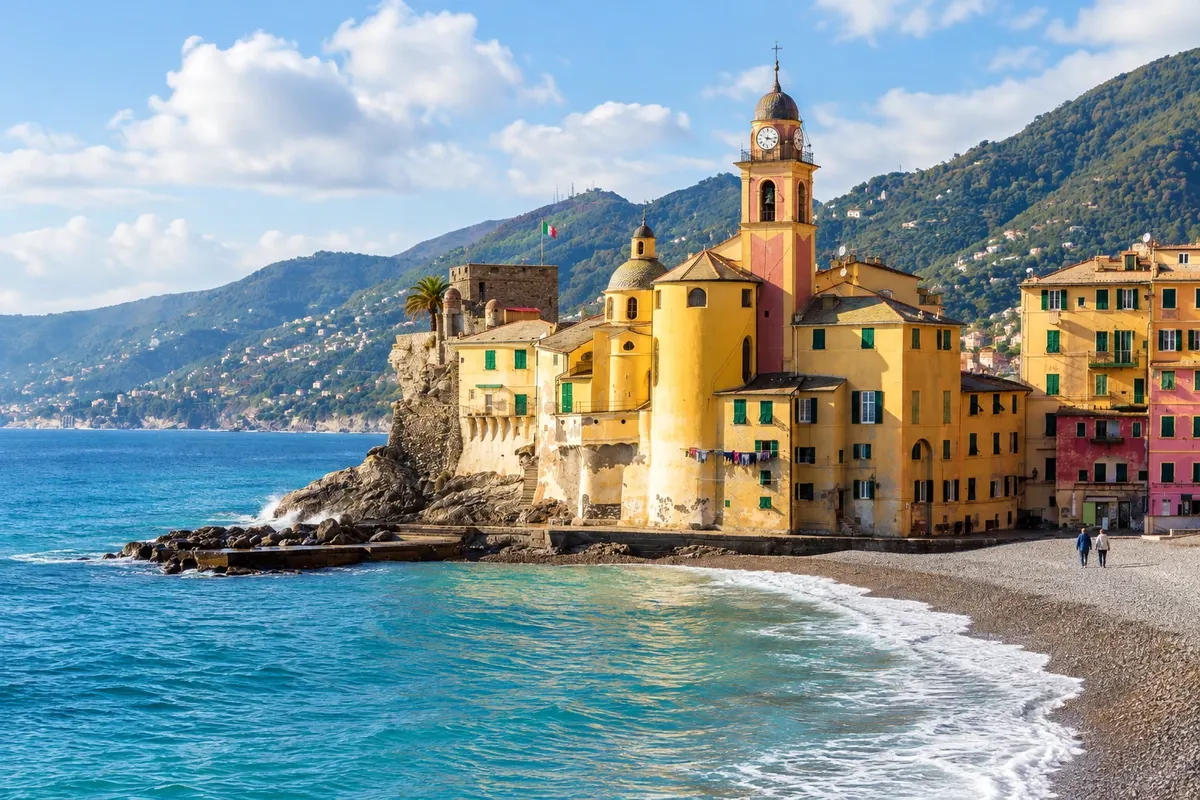
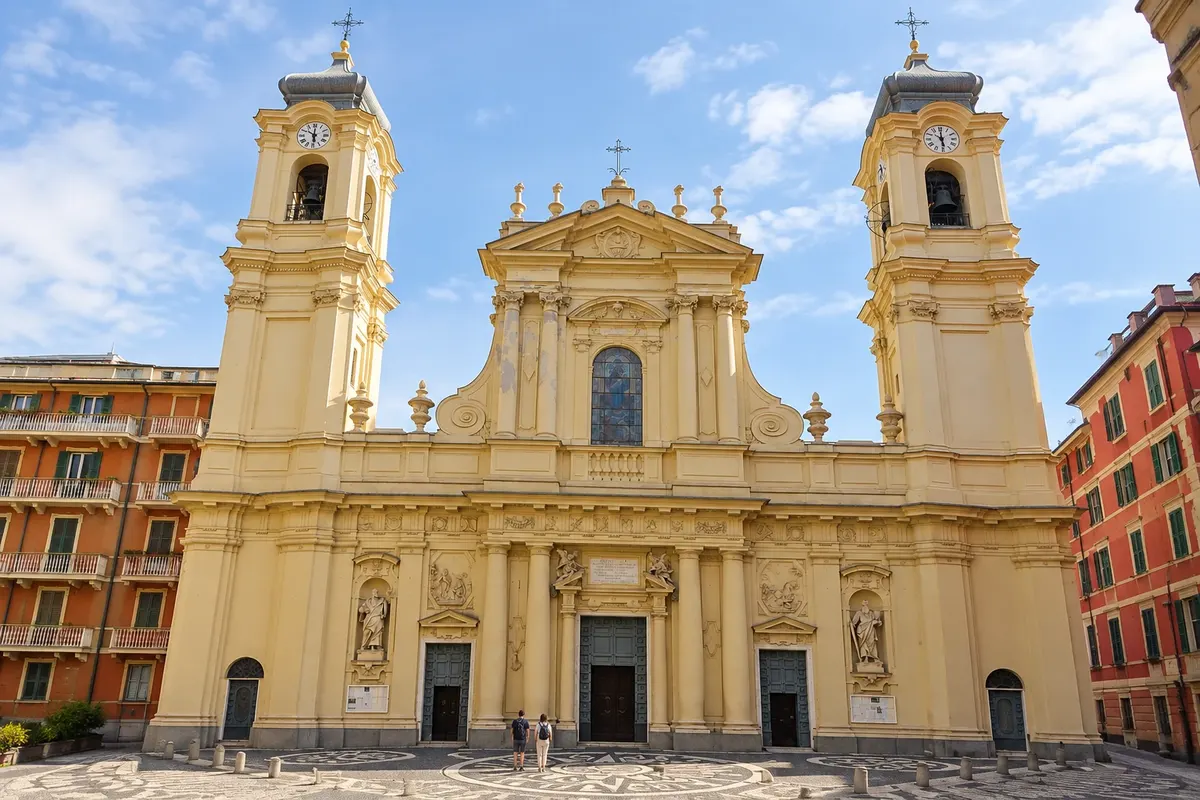
Camogli, the 'town of a thousand white sails' of the 19th century, when it manned Liguria’s largest merchant fleet, is a village of tall houses painted yellow, pink and ochre with trompe-l'oeil (painted windows and cornices) in a row above the pebble beach, 30 minutes by train from Genoa and off the route of large tour groups. The Basilica di Santa Maria Assunta, from the 12th century, sits on the rock above the harbour, next to the Castello della Dragonara, with a Baroque interior of marble and gold and a terrace over the sea. The small harbour has boats to San Fruttuoso and Portofino; the pebble beach allows swimming from May to September. The Sagra del Pesce, on the second Sunday of May, fries fish in a 4 m diameter pan for the crowds. The focaccia di Recco, the neighbouring village specialty with cheese, has a protected designation.
Stops: Basilica di Santa Maria Assunta.
Includes: Free walk; basilica with no charge; train ticket extra.
Tip: Go at dusk, when the facades light up; have dinner at the harbour. From Camogli, the boat to San Fruttuoso takes 30 minutes and is the simplest way to reach the abbey.
Best time: April to October for the boats; year-round for the village.


 Brazil
 Argentina
 Bolivia
 Chile
 Colombia
 Ecuador
 Guyana
 French Guiana
 Falkland Islands (Malvinas)
 Paraguay
 Peru
 Suriname
 Uruguay
 Venezuela
 Germany
 Austria
 Belgium
 Croatia
 Denmark
 Spain
 Finland
 France
 Greece
 the Netherlands
 Hungary
 Ireland
 Iceland
 Luxembourg
 Norway
 Poland
 Portugal
 the United Kingdom
 the Czech Republic
 Sweden
 Switzerland
 Turkey
 the United States
 Mexico
 the Dominican Republic
 South Africa
 Australia
 Fiji