

 Brazil
 Argentina
 Bolivia
 Chile
 Colombia
 Ecuador
 Guyana
 French Guiana
 Falkland Islands (Malvinas)
 Paraguay
 Peru
 Suriname
 Uruguay
 Venezuela
 Germany
 Austria
 Belgium
 Croatia
 Denmark
 Spain
 Finland
 Greece
 the Netherlands
 Hungary
 Ireland
 Iceland
 Italy
 Luxembourg
 Norway
 Poland
 Portugal
 the United Kingdom
 the Czech Republic
 Sweden
 Switzerland
 Turkey
 the United States
 Mexico
 the Dominican Republic
 South Africa
 Australia
 Fiji
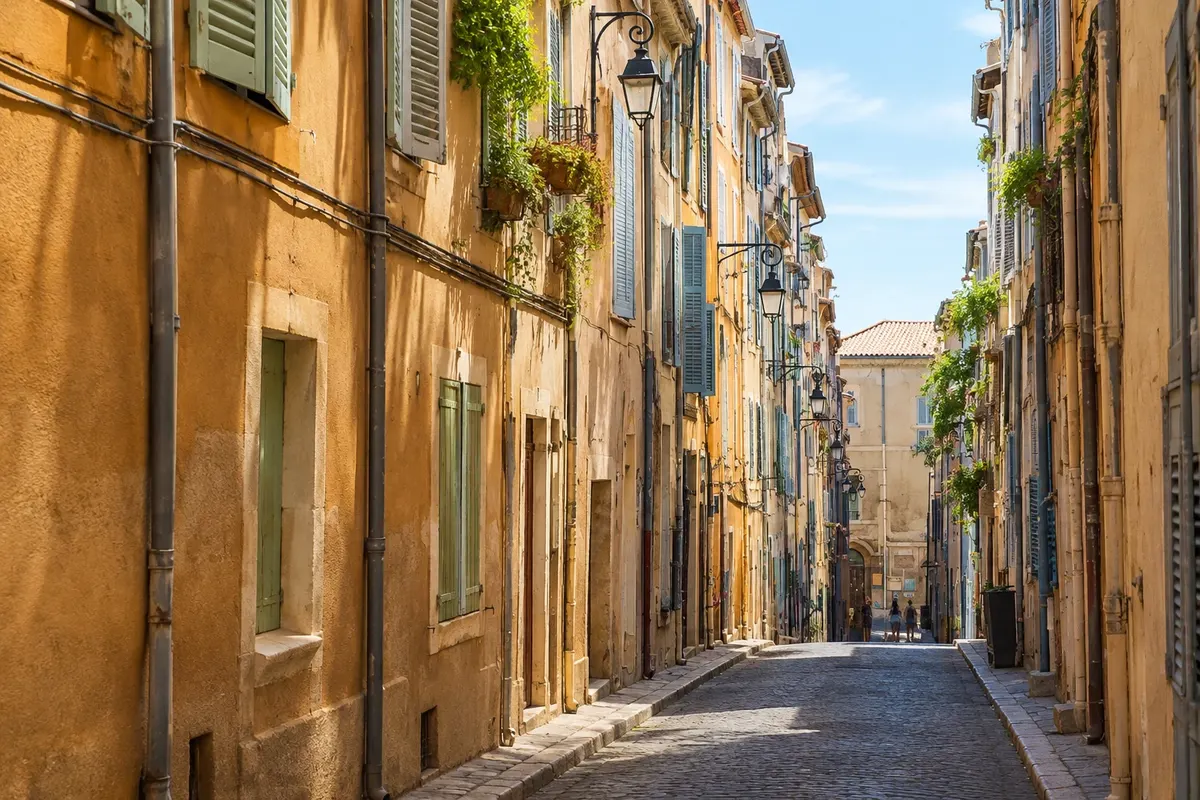
Historic neighborhood · Marselha, Provence-Alpes-Côte d'Azur
Le Panier
The oldest neighborhood of Marselha, on the hill north of the Vieux-Port, where the Greek city once stood. Narrow lanes, stairways, colorful facades, studios and Marseille soap shops, and the Centre de la Vieille Charité, a 17th-century almshouse that now houses museums.
Illustrative images. The pictures in this guide are illustrations based on the real place, not photographs, and may differ from it.

Discover
About Le Panier
Le Panier occupies the hill on the north bank of the Vieux-Port, the oldest part of the place where the Greeks founded Massalia around 600 BC. Much of the old center was destroyed in the 19th century with the opening of the Rue de la République, and in 1943 when German troops blew up the Saint-Jean quarter. Le Panier is what remained.
The name is said to come from an old inn that had a basket (panier) as its sign. From the 19th century the neighborhood received Italian immigrants, Corsicans and later people from North Africa. Today it mixes long-time residents, artists' studios, small restaurants, graffiti and Marseille soap shops and Provençal product stores.
At the top of the neighborhood stands the Centre de la Vieille Charité, a former poorhouse built between 1671 and 1749 to a design by Pierre Puget. The three levels of arcaded galleries surround a courtyard with an oval-domed chapel. It houses the Musée d'Archéologie Méditerranéenne and the Musée d'Arts Africains, Océaniens et Amérindiens; access to the permanent collections is free.
It's worth strolling unhurriedly along the Montée des Accoules, the Place de Lenche, where the Greek agora once stood, and the Rue du Panier. From the neighborhood you can descend to the Cathédrale de la Major and to the Fort Saint-Jean and the MuCEM.
Before you go
Practical information
Cidade Turismo reviews its information regularly, but something may have changed. Check with the place before planning your trip.
How much time to set aside
About two hours to walk around the neighborhood and visit the Vieille Charité. The Charité's museums need an additional hour.
Best time
Morning or mid-afternoon, when shops and studios are open. The Vieille Charité is closed on Mondays (check before you go). In summer, from June to August, the narrow streets provide shade during the hottest hours.
How to get there
From the Vieux-Port, walk up behind the Hôtel de Ville via the Montée des Accoules (about 10 minutes, with stairs). By metro, Vieux-Port station (line 1) or Joliette (line 2); by tram, Sadi-Carnot or République-Dames stop.
Tip
There are many hills and stairs: wear sneakers. The tourist train that departs from the Vieux-Port goes through the Panier and helps those who have difficulty climbing. The Vieille Charité has a café in the courtyard.
Get your questions answered
Frequently asked questions about Le Panier
What is the Vieille Charité?
A former poorhouse from the 17th–18th centuries, designed by Pierre Puget, located on the heights of the Panier. Today it houses two museums: one of Mediterranean archaeology and one of arts from Africa, Oceania and the Americas.
Is there an entrance fee for the museums at the Vieille Charité?
Access to the permanent collections is free; temporary exhibitions may be ticketed. It is closed on Mondays. Check before you go.
Is the Panier very steep?
Yes, there are hills and staircases. Wear comfortable shoes or take the tourist train from the Vieux-Port.
Where to buy Marselha soap?
The Panier has several shops selling Marselha soap and Provença products, especially on the streets near the Vieille Charité.