Liège and Spa

Liège · Belgium

Liège and Spa

Liège, a working-class city on the banks of the Mosa, with Calatrava's station and a staircase of 374 steps, and Spa, the waters town that gave its name to spas.

Valônia

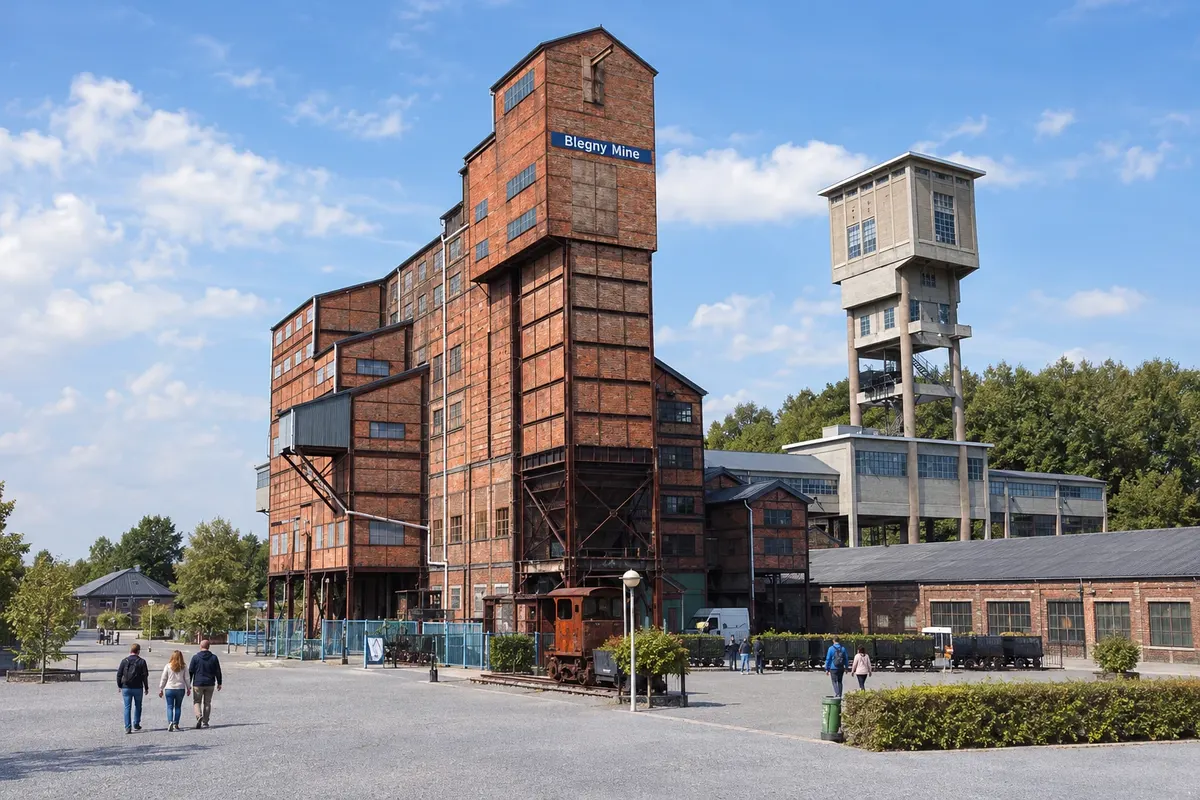
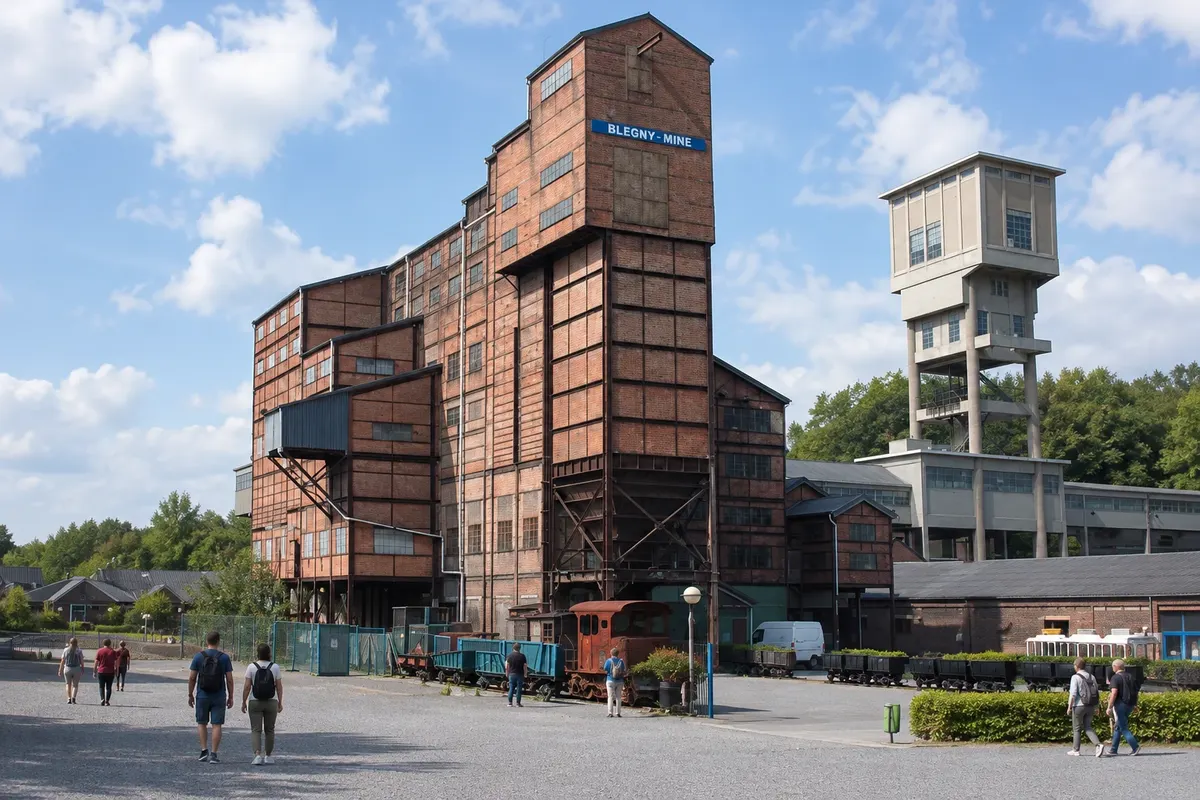
In the photo: Blegny-Mine

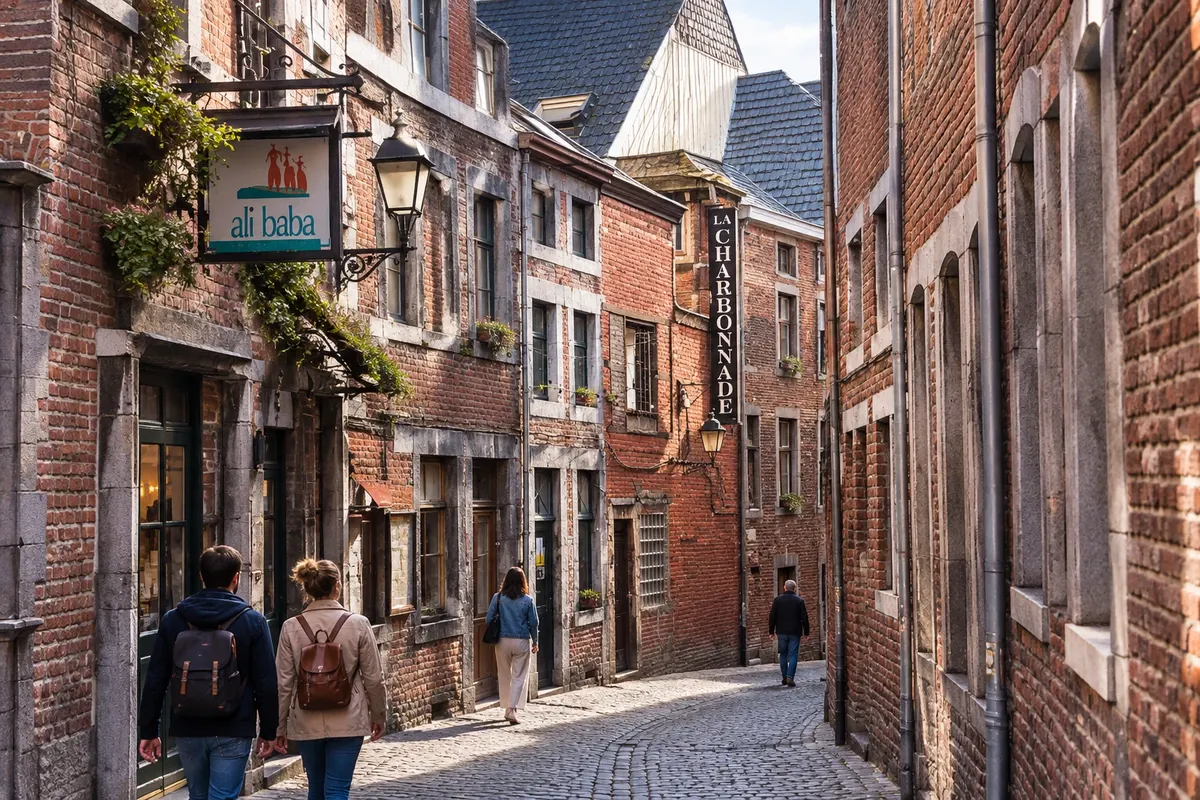
Illustrative images. The pictures in this guide are illustrations based on the real place, not photographs, and may differ from it.

Get it on Google Play Send your photos

Get to know the place

A region to enjoy
at your own pace.

Liège is in Wallonia, the southern half of Belgium, where the everyday language is French. It is the capital of the province of the same name and the largest city in the region, with about 195,000 inhabitants, spread across the valley of the Mosa River (Meuse in French) at the point where it is joined by the Ourthe. The local nickname is Cité Ardente, the 'fiery city', a legacy of centuries of coal mines, steelmaking and uprisings against outside power.

For almost eight centuries Liège was the seat of a principality ruled by bishops. The Palais des Princes-Évêques, with its columned courtyard, still dominates the center, and the treasure kept in the cloister of the Cathédrale Saint-Paul preserves goldsmithing pieces from that era. On the other side of the square, the Montagne de Bueren rises in a straight line up to the top of the old citadel, and on Sundays the La Batte market occupies the riverbank.

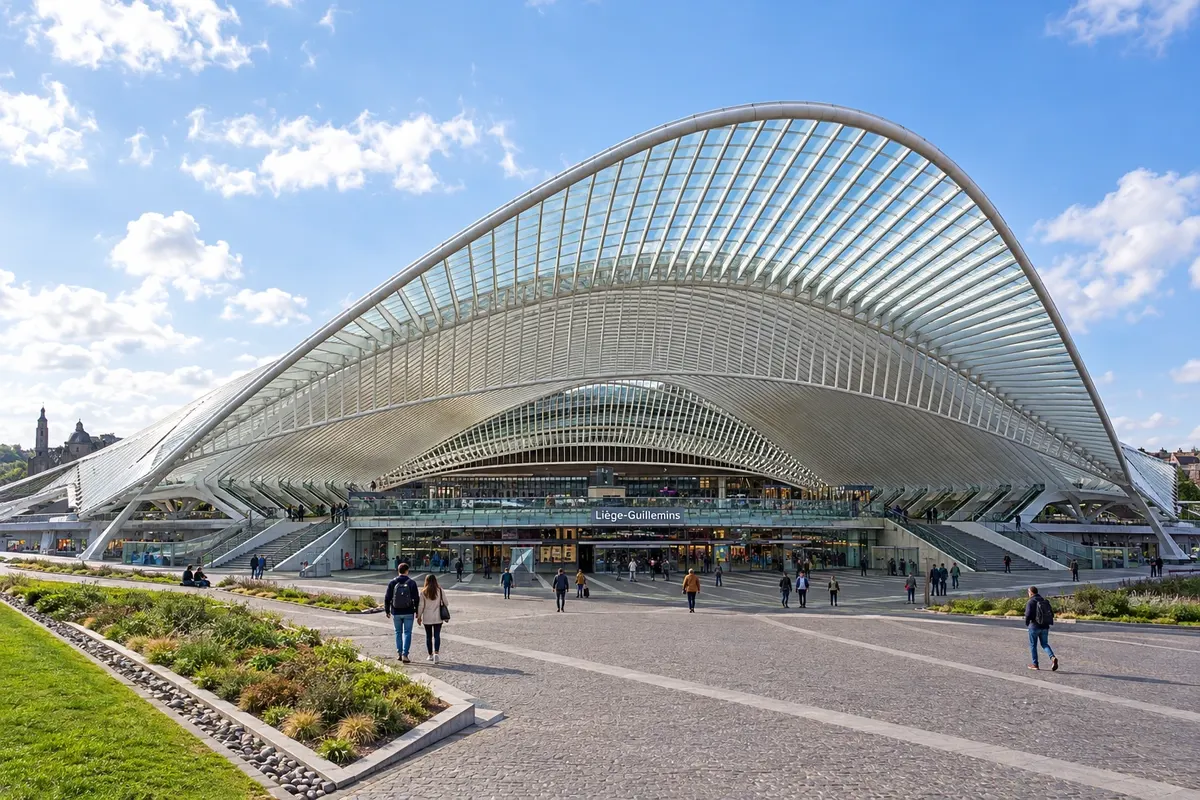
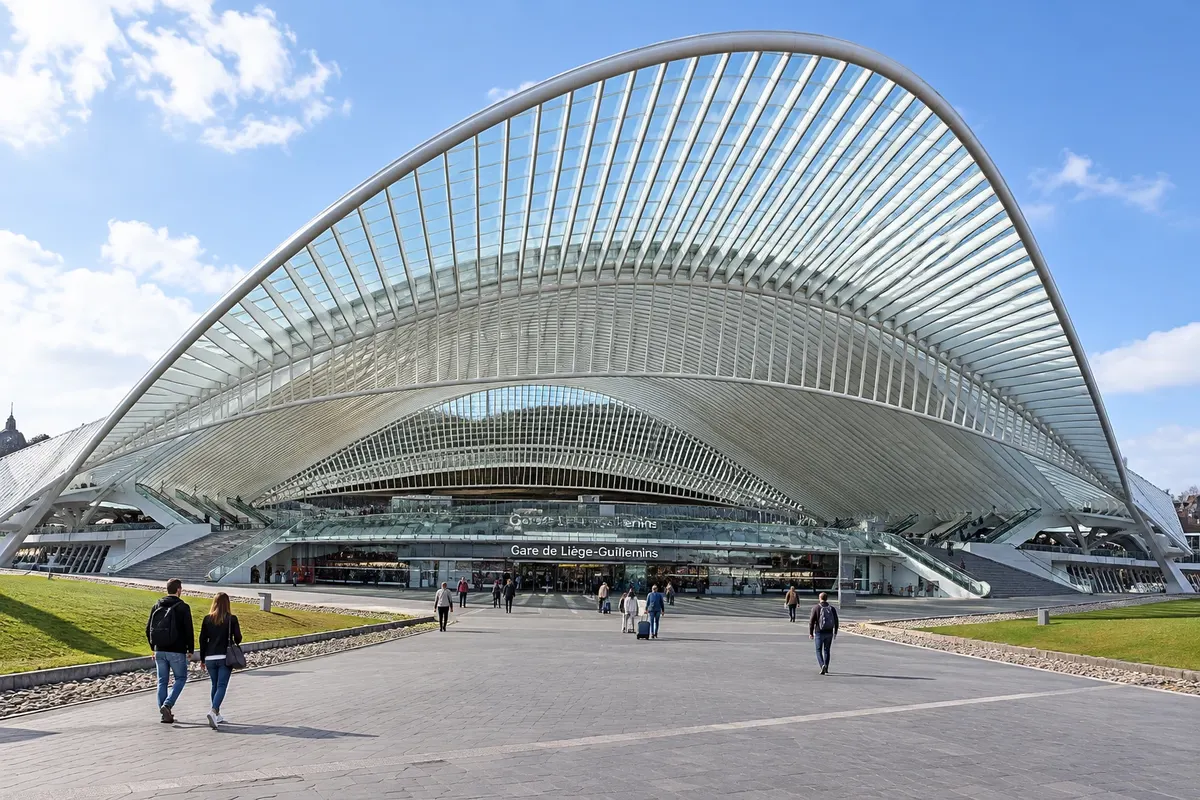
The city also has a modern face. Those arriving by train get off at Gare de Liège-Guillemins, the white steel-and-glass station designed by Santiago Calatrava. A footbridge leads from there to the park where La Boverie, the fine arts museum, is located. Popular culture appears in the Musée de la Vie wallonne, with the Tchantchès puppet theatre, and in the Outremeuse neighborhood, which holds the big August 15 festival.

About 40 kilometers away, in the hills of the Ardennes, lies Spa. The small town of ferruginous springs hosted kings and nobles since the 17th century and ended up lending its name to waters resorts around the world. Today it is included in UNESCO's World Heritage list of the Great Spa Towns of Europe. Near it, in Francorchamps, is the circuit of the Belgian Formula 1 Grand Prix.

In the same province, further east, lives Belgium's small German-speaking community, based in Eupen.

This destination brings together 2 cities: Liège, Spa.

Share: WhatsApp
Traveler, share your experiences through photos Up to 5 photos of each place you visited.

One destination, many paths

The cities on this trip

Start with one city or combine several in your itinerary.

Where Liège and Spa is
SpaLiège

Outlines: © NGI-IGN, AdminVector, CC BY 4.0. Adapted by Cidade Turismo.

How to get there: Liège and Spa

Confirm before buying. Liège-Guillemins receives trains from Brussels, which take less than an hour, and fast trains from Germany. To reach Spa, take the train with a transfer at Pepinster or Verviers.

Suggested arrival point: Liège

The local experience

Things to do in Liège and Spa

Gare de Liège-Guillemins
Liège · Liège · Monument

Gare de Liège-Guillemins

Liège railway station, designed by Santiago Calatrava and opened in 2009. The arched roof of steel, glass and white concrete has no closed façade and serves both as an arrival gate and as a postcard image.

Pouhon Pierre-le-Grand
Spa · Liège · Monument

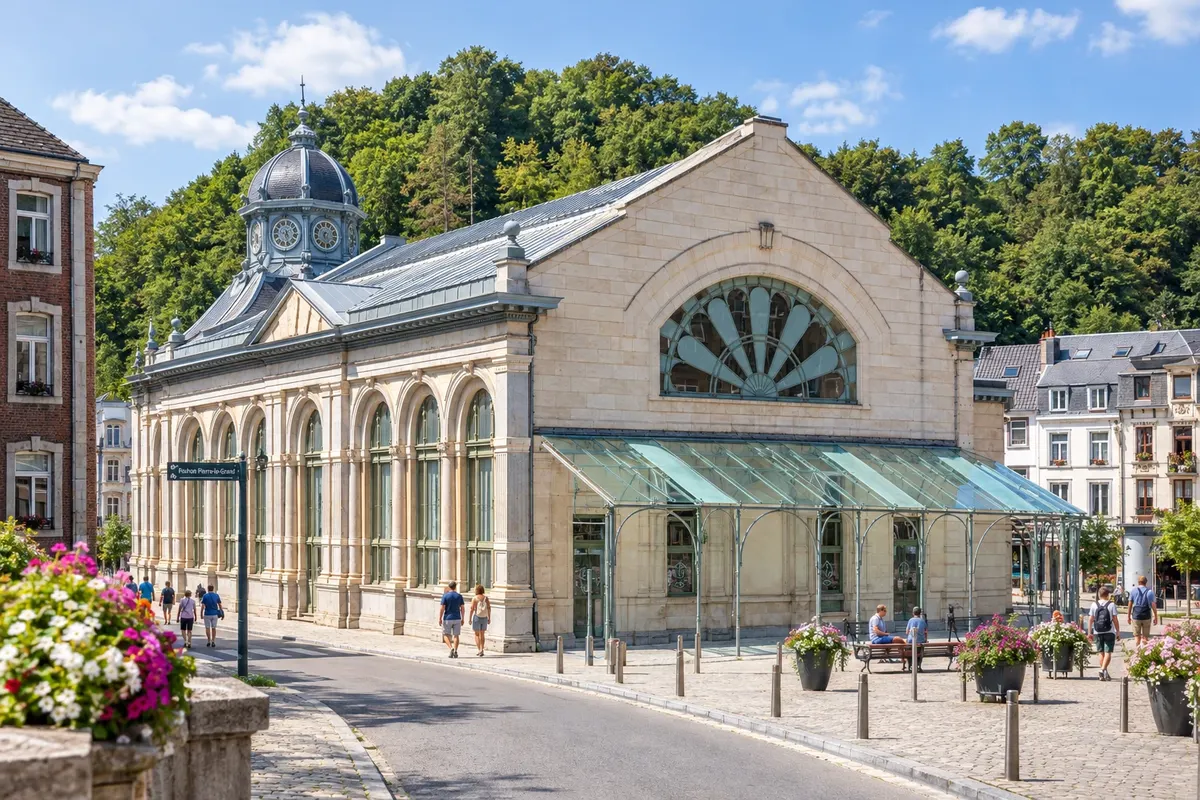
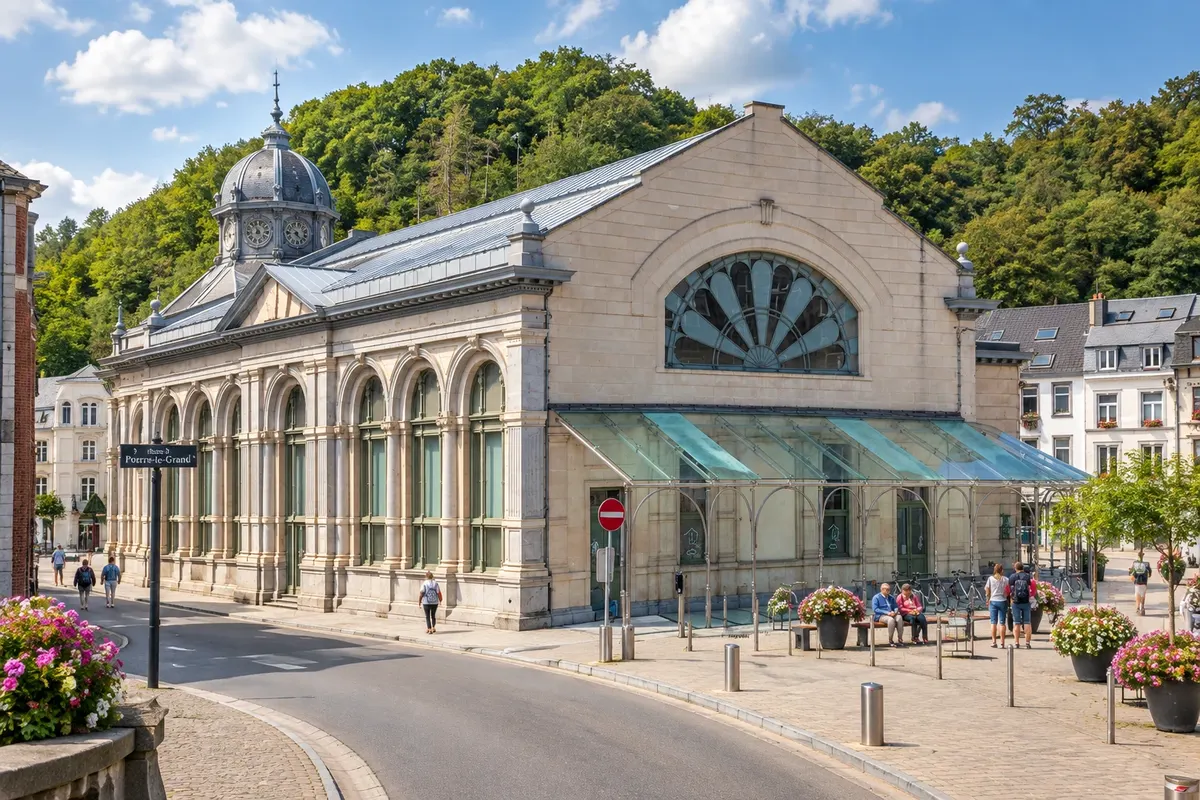
Pouhon Pierre-le-Grand

An 1880 pavilion that houses Spa’s most abundant spring, with naturally sparkling, iron-rich water. It bears the name of Tsar Peter the Great, who took the waters there in 1717, and serves as the town's tourist information centre.

Montagne de Bueren
Liège · Liège · Viewpoint

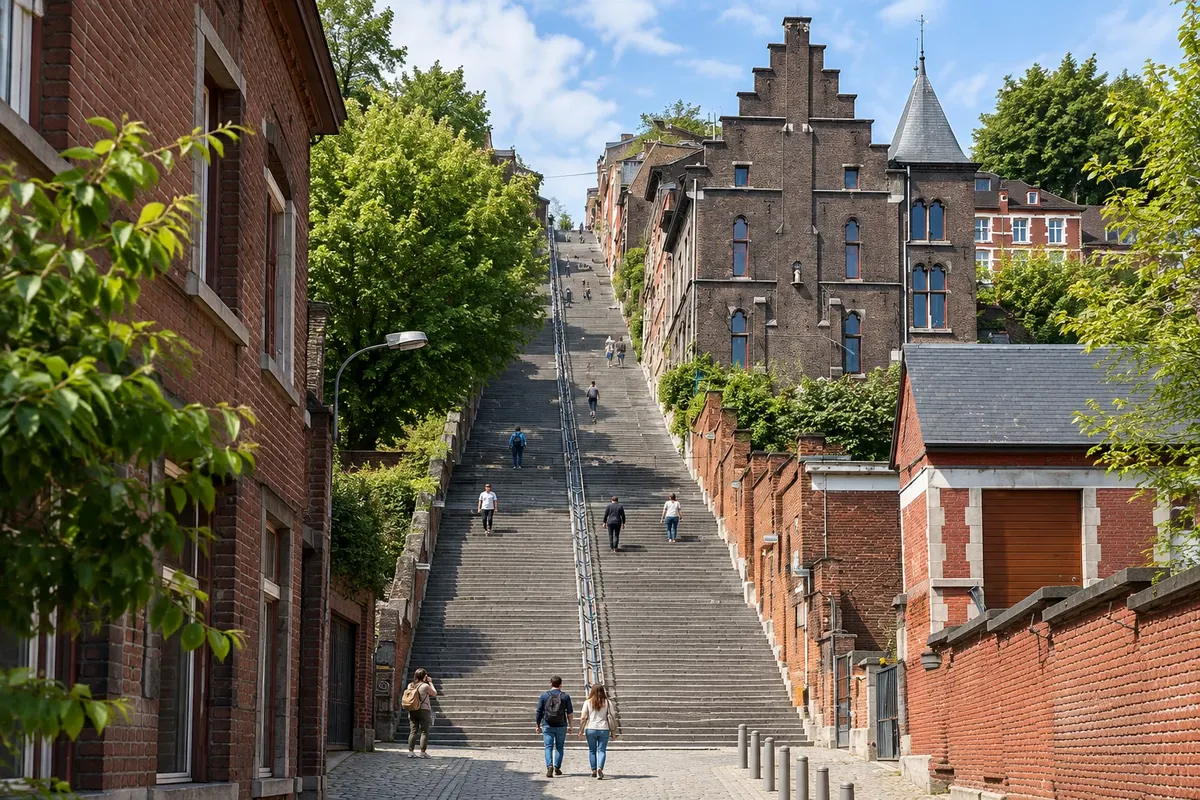
Montagne de Bueren

A straight stairway of 374 steps linking Hors-Château street to the top of the old citadel. Built at the end of the 19th century, it ends at a point with views over the roofs, the towers and the Mosa valley.

Thermes de Spa
Spa · Liège · Hot springs

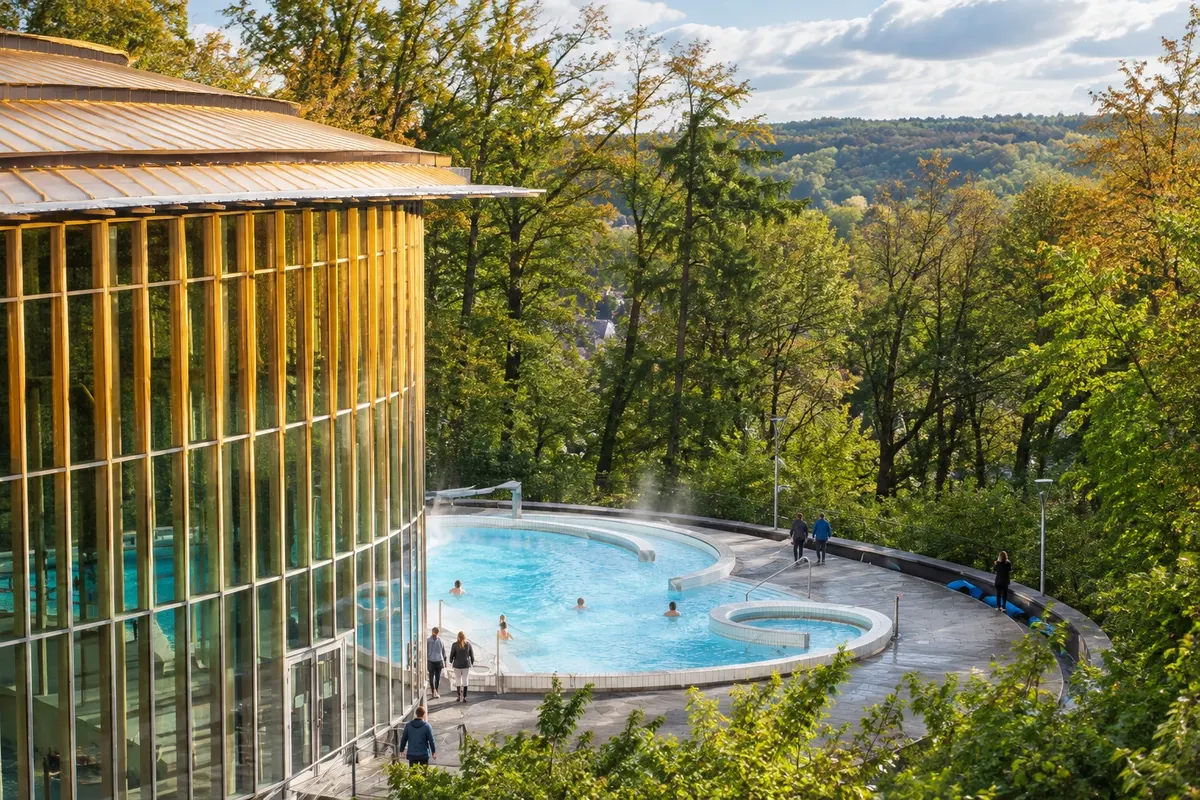
Thermes de Spa

Thermal centre atop the Annette et Lubin hill, reached by funicular from the centre. It has indoor and outdoor pools fed with mineral water from the Clémentine spring, heated, with views over the town.

See 15 more places in Liège and Spa
Palais des Princes-Évêques
Liège · Liège · Monument

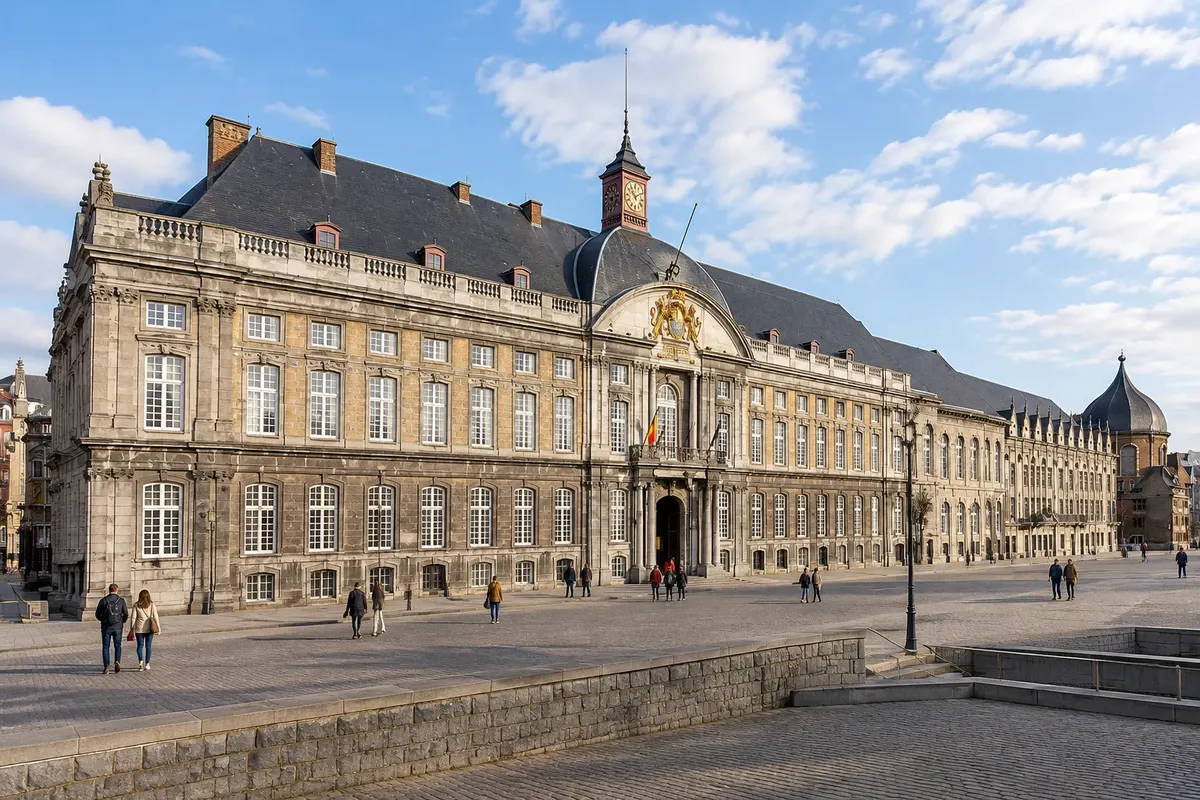
Palais des Princes-Évêques

Former palace of the prince-bishops who ruled Liège, facing Place Saint-Lambert. The main courtyard has arcaded galleries supported by about 60 columns, each with a different decoration.

Parc de Sept Heures
Spa · Liège · Park

Parc de Sept Heures

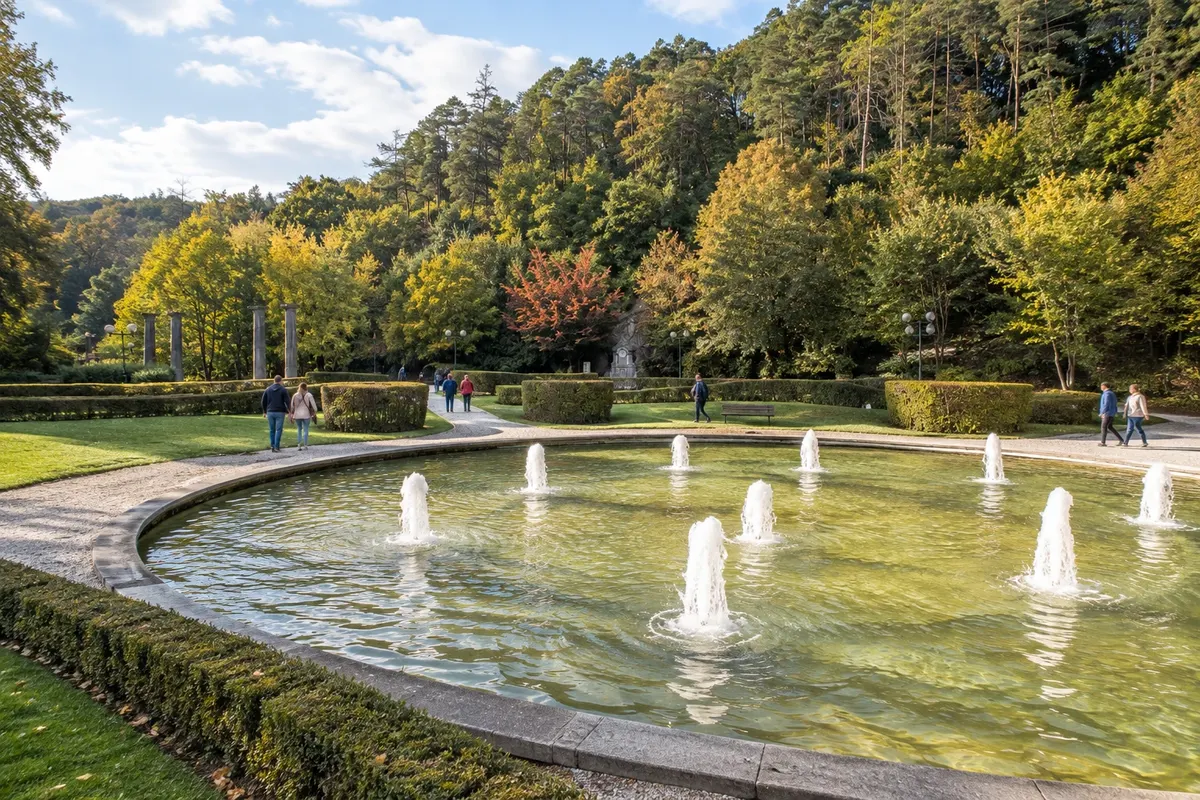
Tree-lined park in the center of Spa, the former promenade of 19th-century spa-goers. It features the Galerie Léopold II, a covered gallery dating from 1878 that hosts an antiques fair, events and summer concerts.

La Batte
Liège · Liège · Market

La Batte

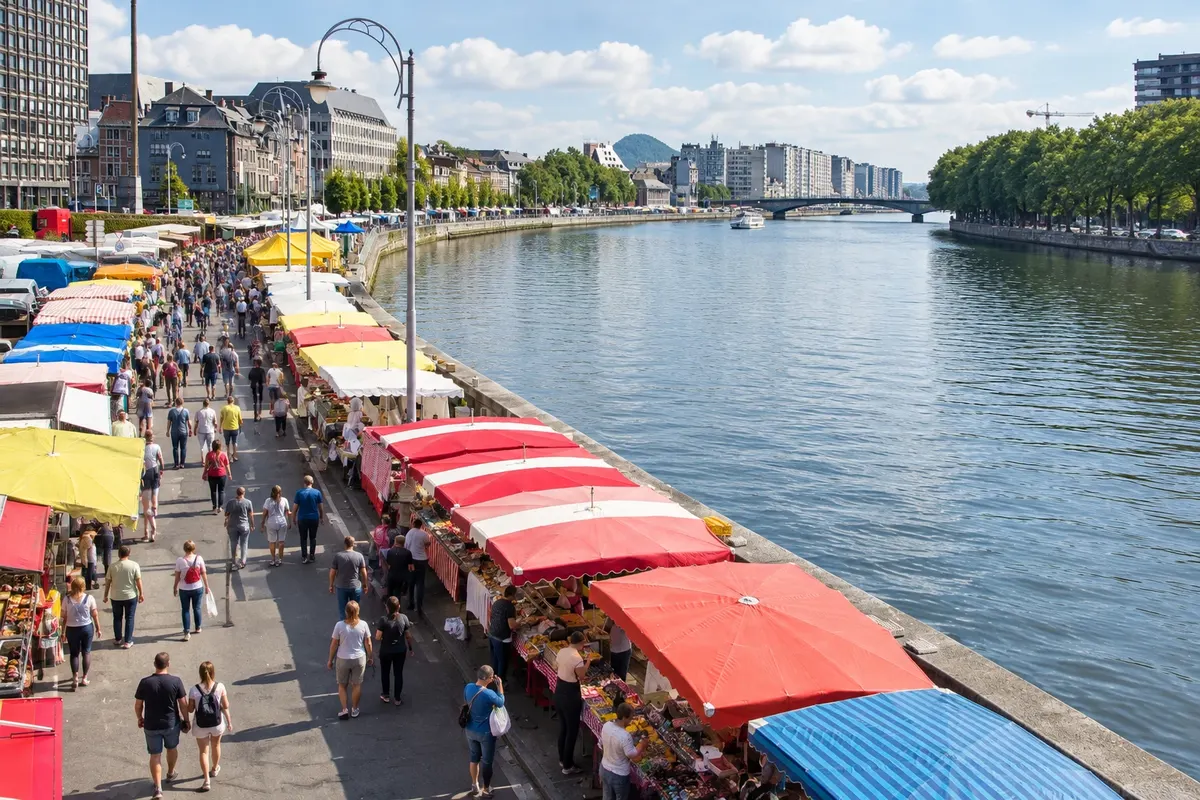
Sunday market that stretches for about 2 kilometres along the Meuse quay in central Liège, in operation since the 16th century. It mixes fruit and vegetables, flowers, clothing, second-hand goods and local food stalls.

Musée de la Ville d'eaux
Spa · Liège · Museum

Musée de la Ville d'eaux

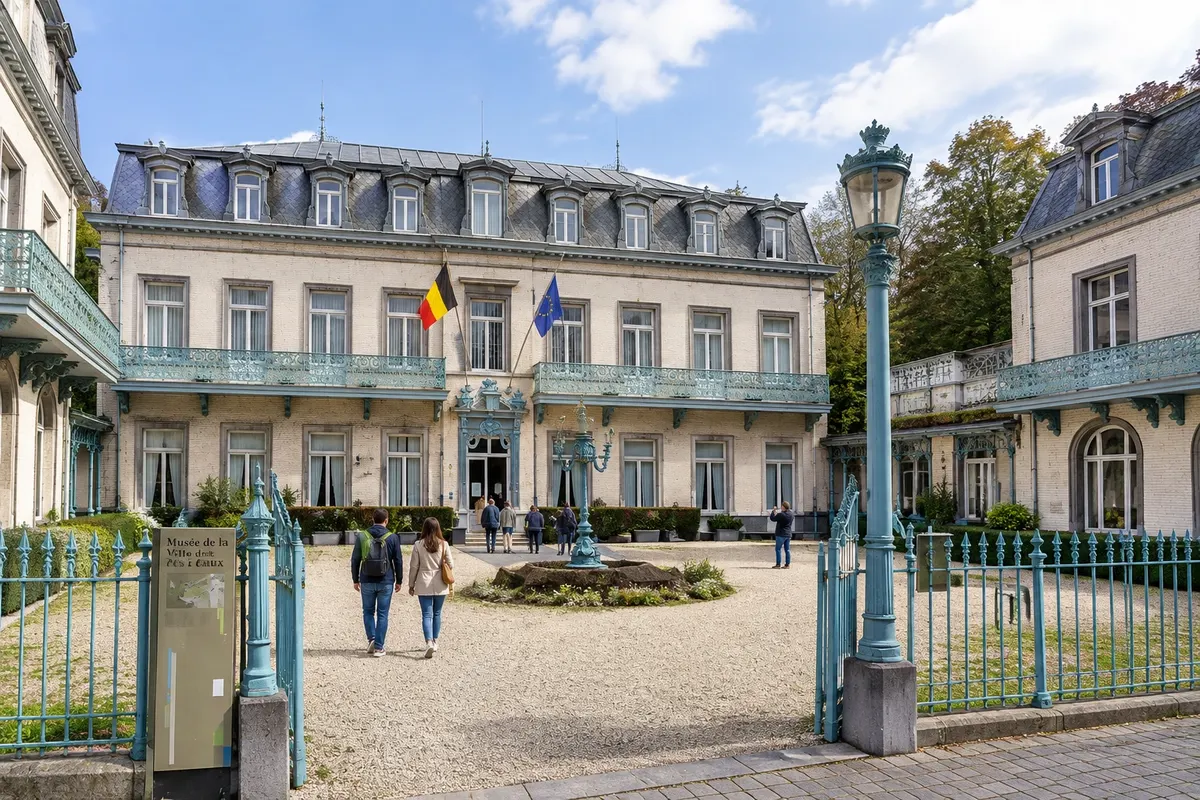
Museum of Spa's thermal history, housed in the Villa Royale, the former residence of Queen Maria Henriqueta. Known for its collection of jolités, painted wooden trinket boxes that visitors took as souvenirs.

Cathédrale Saint-Paul
Liège · Liège · Church

Cathédrale Saint-Paul

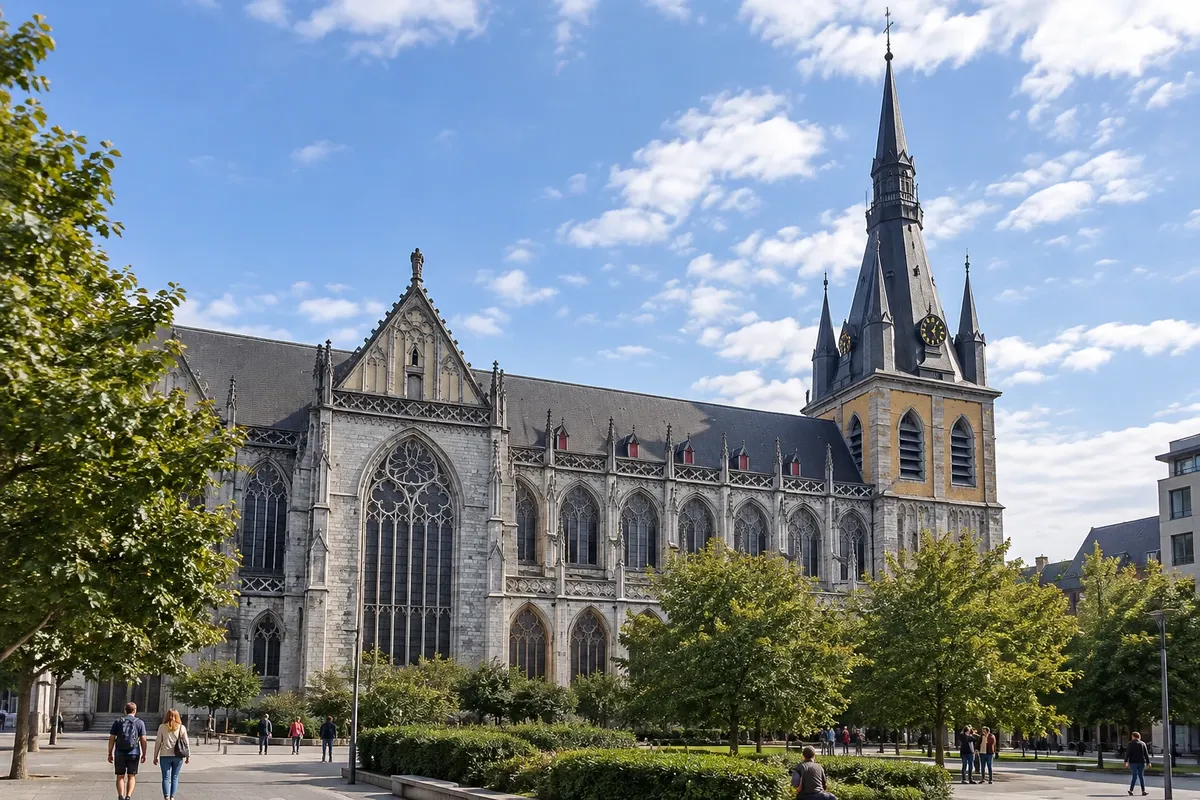
Gothic cathedral of Liège, founded as a collegiate church in the 10th century and raised to cathedral status in 1802. In the cloister is the Trésor, which houses the bust-reliquary of São Lamberto and the reliquary given by Charles the Bold.

Lac de Warfaaz
Spa · Liège · Lake

Lac de Warfaaz

Lake formed by a dam built in 1892 on the Wayai stream, northeast of Spa's center. It has a waterside path, pedal boats in season and a trail of about 4 kilometers from the thermes.

Circuit de Spa-Francorchamps
Spa · Liège · Racetrack

Circuit de Spa-Francorchamps

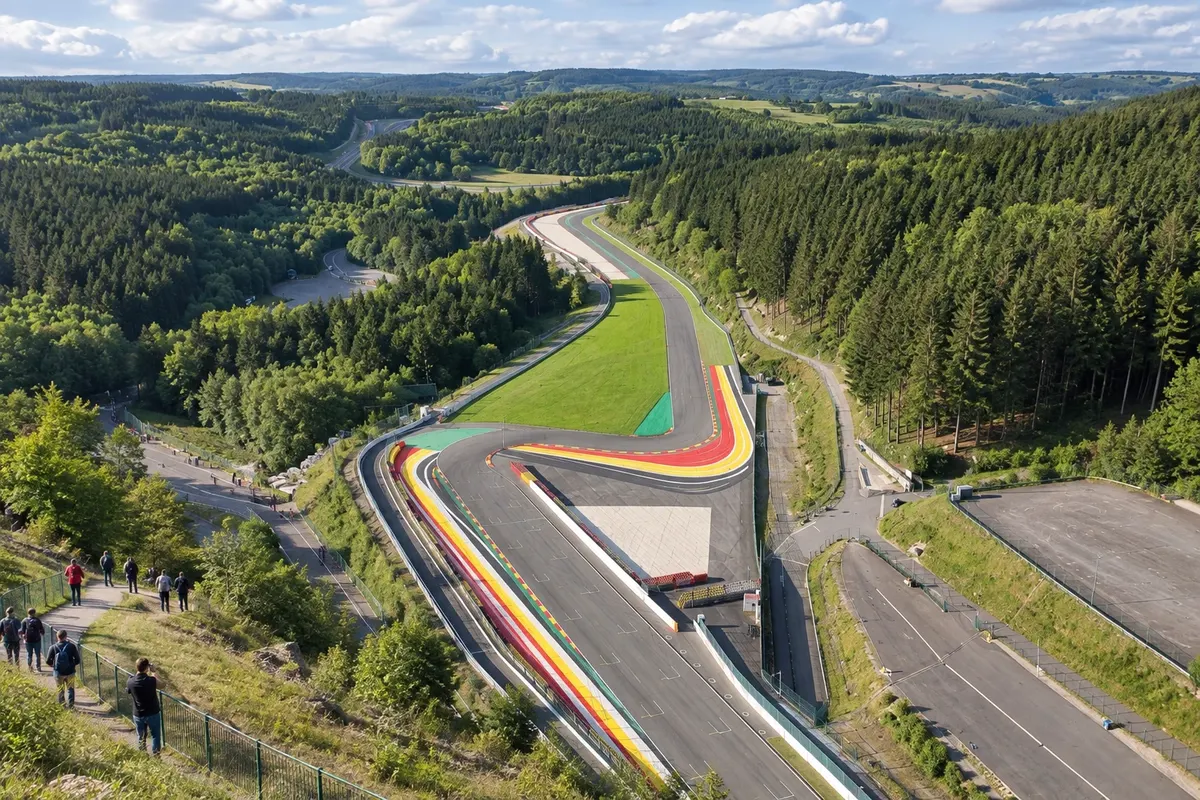
Autodrome for the Belgian Formula 1 Grand Prix, with just over 7 kilometres of track through the forests of the Ardennes. It is in Francorchamps, near Spa, and offers behind-the-scenes guided tours from March to November.

Musée de la Vie wallonne
Liège · Liège · Museum

Musée de la Vie wallonne

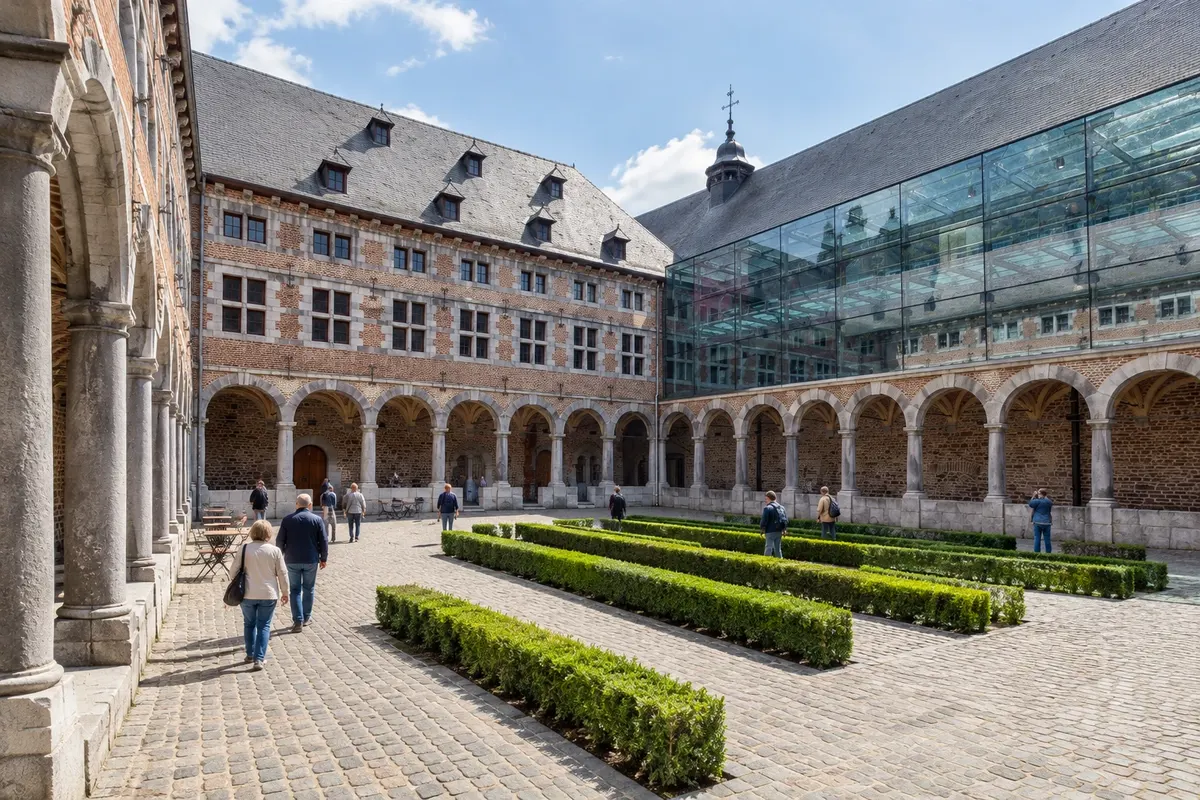
Museum of everyday life of Valônia, in the former convent of the Friars Minor, in the centre of Liège. It showcases work, festivals, beliefs and customs and has a puppet theatre with Tchantchès.

Casino de Spa
Spa · Liège · Monument

Casino de Spa

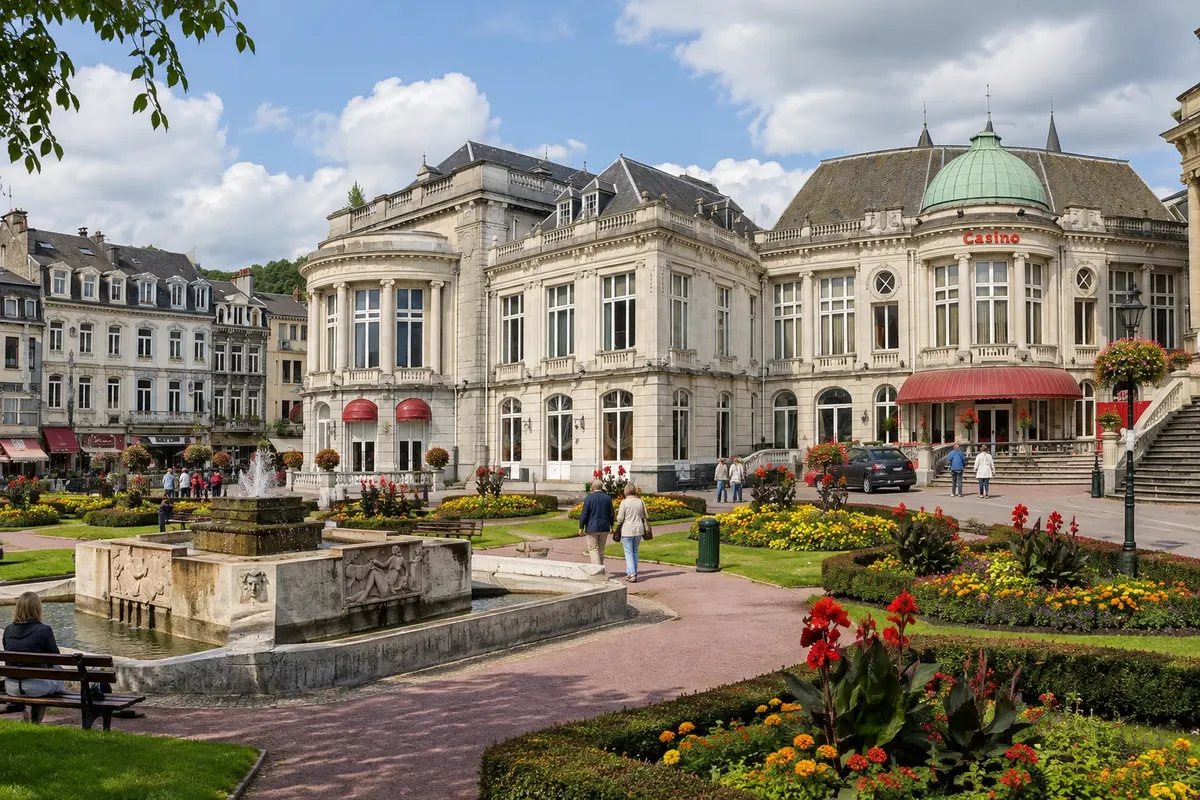
Historic building in the centre of Spa, successor to the Redoute opened in the 18th century for the aristocrats who came to take the waters. The façade and the halls date from the early 20th century, the work of architect Alban Chambon, and the complex is listed as a monument.

La Boverie
Liège · Liège · Museum

La Boverie

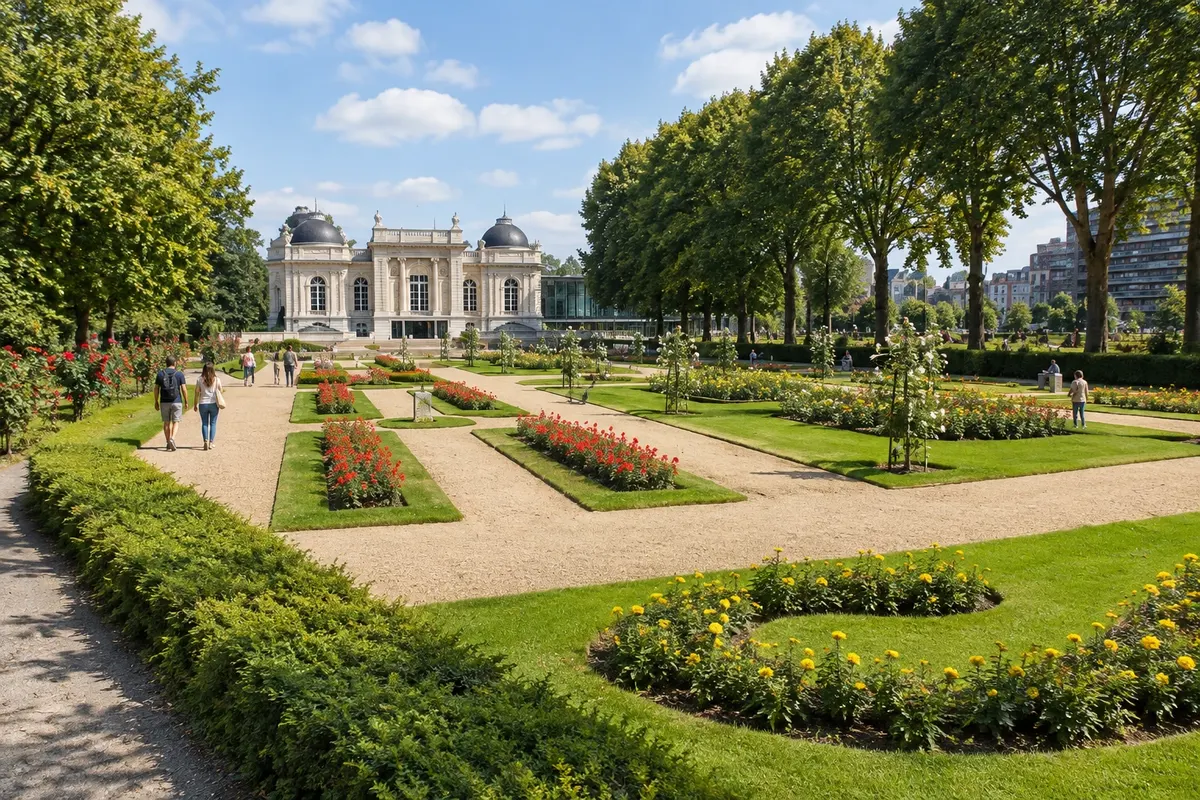
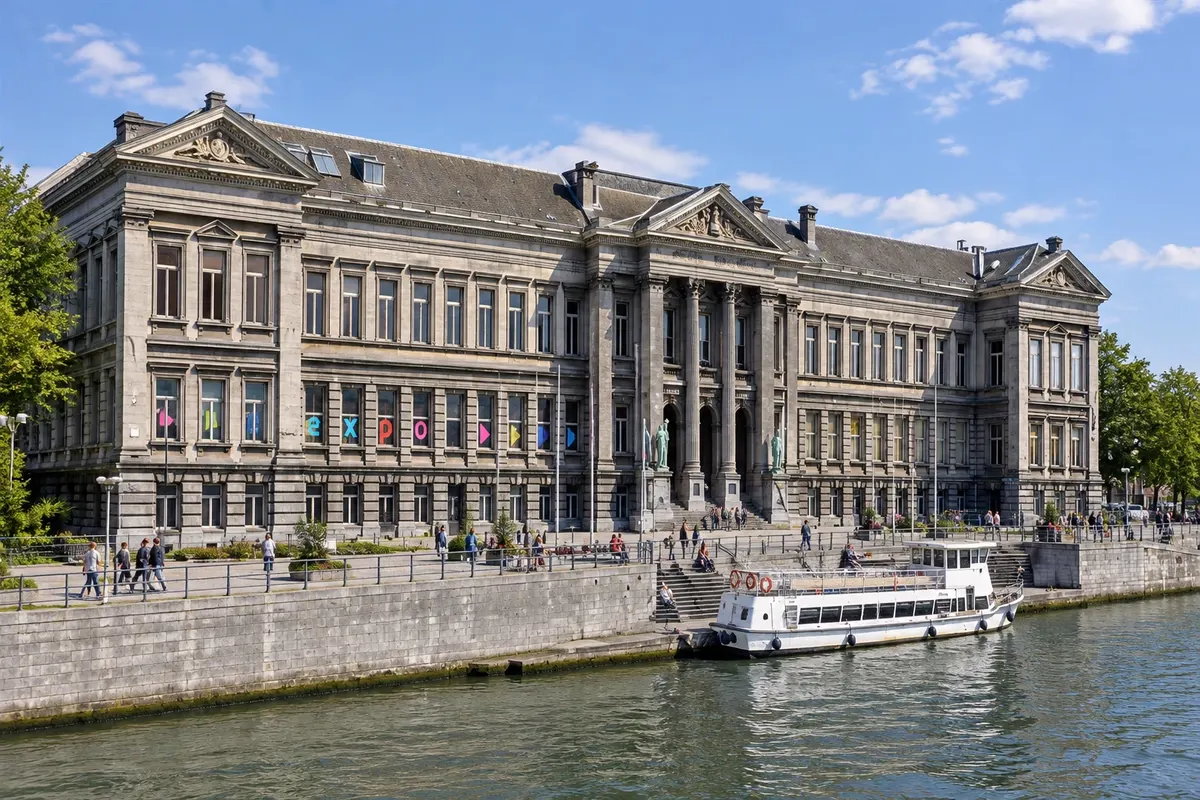
Liège's fine arts museum, housed in a palace built for the 1905 Universal Exposition in the park of La Boverie, between the Mosa and a canal. It brings together the city's collection and hosts temporary exhibitions.

Château de Franchimont
Spa · Liège · Castle

Château de Franchimont

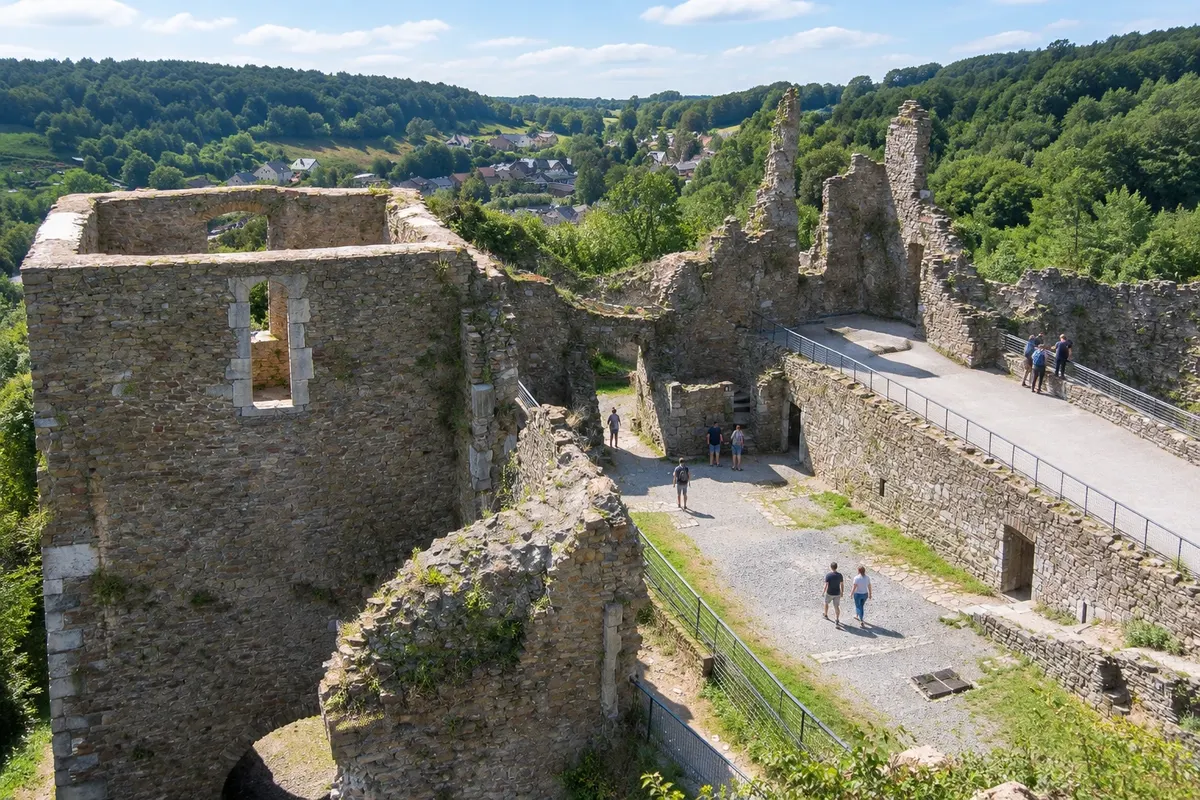
Ruins of a medieval castle on a spur above the Hoëgne valley, in Theux, about 5 kilometres from Spa. It has a keep, a 16th‑century five‑sided curtain wall and underground casemates that can be explored.

Outremeuse
Liège · Liège · Neighborhood

Outremeuse

A popular neighbourhood on the island between the Mosa and the Ourthe, home to Tchantchès and to Georges Simenon's childhood. On 15 August it hosts Liège's largest folk festival.

Grand Curtius
Liège · Liège · Museum

Grand Curtius

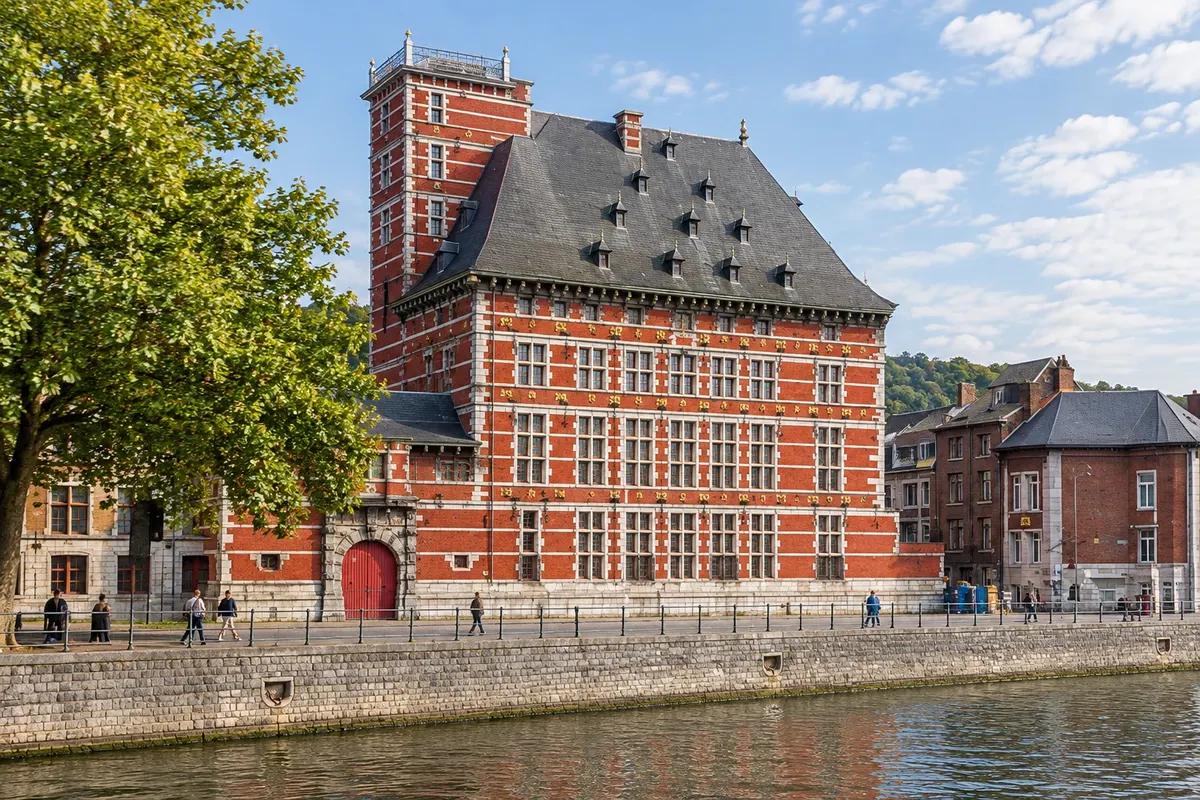
Museum of Art and History of Liège, on the banks of the Mosa, centred on the red-brick palace of industrialist Jean Curtius. It brings together archaeology, arms, religious and Mosan art, glass and decorative arts.

Aquarium-Muséum
Liège · Liège · Museum

Aquarium-Muséum

Aquarium and Zoology Museum of the University of Liège, in the Outremeuse neighbourhood on the banks of the Mosa. It has around 250 living species in dozens of tanks and a collection of preserved animals, skeletons and glass models.

Blegny-Mine
Liège · Liège · Museum

Blegny-Mine

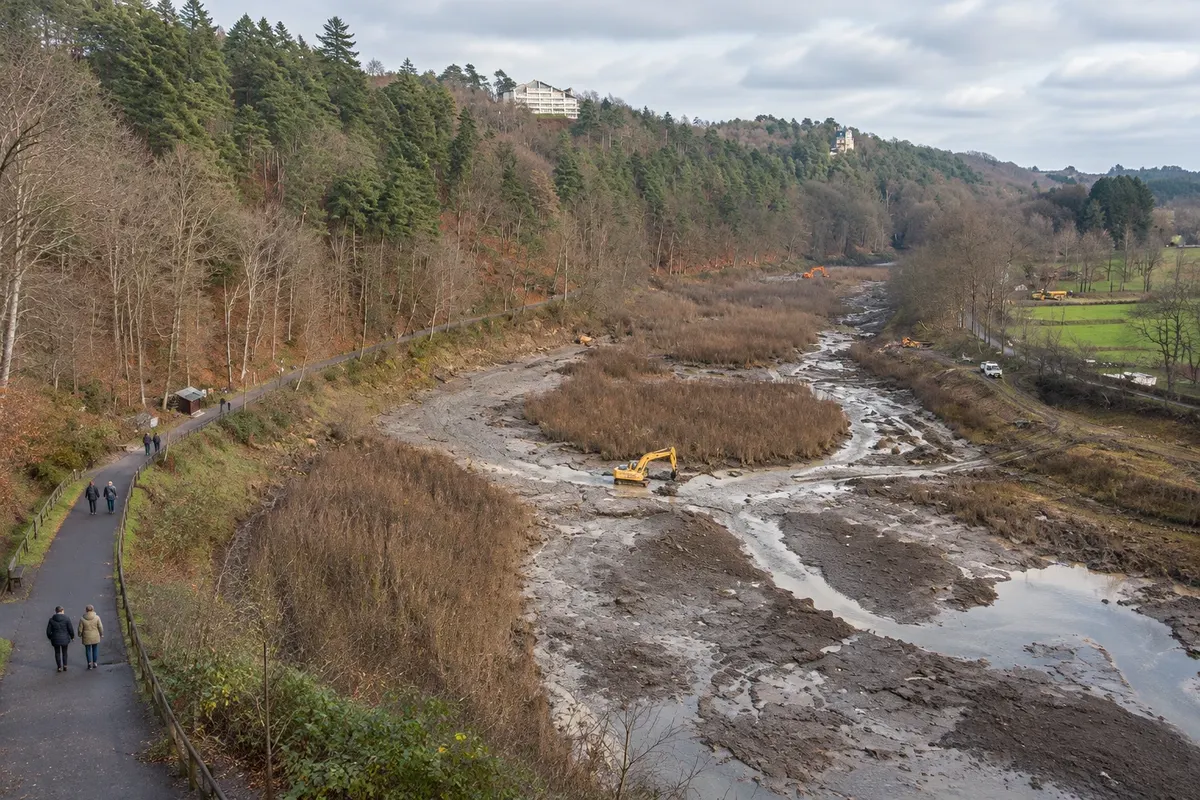
Former coal mine in Trembleur, about 15 kilometers from Liège, open to visitors after mining ceased. Visitors descend by elevator to the galleries at 30 and 60 meters deep. It is a UNESCO World Heritage site.

To choose before you go

Tours in Liège and Spa

Where each tour starts, how long it takes, how it is done, what is included and the price range.

Historic center of Liège: Place Saint-Lambert, Palais des Princes-Évêques and Place du Marché

From Center of Liège On foot about 2 to 3 hours morning easy

Liège sits on the banks of the Meuse (Mosa) River, in Wallonia, the French-speaking part of Belgium. For about eight centuries it was the capital of a principality governed by bishops, the prince-bishops, which ended with the French Revolution. The walk through the center begins at Place Saint-Lambert, where the old Saint-Lambert cathedral stood, demolished from 1794 onwards. Under the square, the Archéoforum displays the cathedral’s foundations and remains from earlier periods. Next to it is the Palais des Princes-Évêques, the former residence of the prince-bishops, rebuilt from 1526 by Prince-Bishop Érard de La Marck. The main courtyard, open to the public, is surrounded by a gallery of about 60 columns with sculpted capitals, each differently decorated. The building houses the courthouse and the provincial government; the second courtyard and the interior rooms open only on rare occasions, such as heritage days. A short walk away, Place du Marché has in its center the Perron, a column atop a fountain symbolizing the city’s liberties, and on one side the Hôtel de Ville, the 18th-century town hall nicknamed La Violette. Around the square are cafés and brasseries, and from there Féronstrée and Hors-Château streets lead to the museums and the Montagne de Bueren.

Stops: Place Saint-Lambert, Palais des Princes-Évêques, Archéoforum, Place du Marché, Perron, Hôtel de Ville de Liège.

Includes: Self-guided walk through the squares and the palace’s main courtyard. The Archéoforum has a separate paid admission. Check the current schedule.

Tip: Start at the Archéoforum to understand the history of the principality before walking. It usually opens Tuesday to Saturday and the first Sunday of the month, and it is not wheelchair accessible. Liège’s tourist office organizes guided tours of the center.

Best time: All year. From late November to late December, the Christmas market usually occupies Place Saint-Lambert and Place du Marché.

Montagne de Bueren and Coteaux de la Citadelle: Liège’s 374 steps

From Rue Hors-Château, Liège city center On foot about 1 hour 30 minutes to 2 hours morning moderate (374 steps up)

The Montagne de Bueren is a straight staircase of 374 steps rising from rue Hors-Château in the historic center to the top of the hill of the old citadel. It was built at the end of the 19th century in brick and sandstone blocks to provide direct access from the center to the citadel barracks. The name recalls Vincent de Bueren, who on the night of October 29, 1468 led, with Gossuin de Streel, about 600 men from Franchimont in an attempt to capture Charles the Bold, Duke of Burgundy, and the French king Louis XI, who were besieging Liège. The climb is steep, with no elevator, and has landings to rest. From the top you can see the roofs of the center, church towers, the Meuse and, in the distance, the valley hills. Around the staircase lie the Coteaux de la Citadelle, more than 90 hectares of green slopes with 13 km of waymarked trails, narrow lanes, staircases, remains of 13th-century walls and the Minimes terraces, with entrance via rue Pierreuse. On the first Saturday of October, the Nocturne des Coteaux lights alleys, courtyards, staircases and terraces with more than 20,000 candles, with music and theater along the route and fireworks at the end of the night.

Stops: Rue Hors-Château, Montagne de Bueren, Coteaux de la Citadelle, Citadel of Liège.

Includes: Free access to the staircase and the hillside trails. The Minimes terraces are open only during daytime.

Tip: Wear sturdy footwear: on rainy days the steps become slippery. If you don’t want to climb, you can do the route in reverse, arriving by bus or taxi at the top of the citadel and descending the staircase. The area is residential: keep your voice down. It connects with rue Hors-Château and the Musée de la Vie wallonne, near the foot of the climb.

Best time: All year, on dry days. From May to September the slopes are greener; the Nocturne des Coteaux takes place on the first Saturday of October.

Liège-Guillemins, La Belle Liégeoise footbridge and La Boverie

From Liège-Guillemins station On foot about 3 to 4 hours afternoon easy

Liège-Guillemins station, designed by Spanish architect Santiago Calatrava and opened in 2009, is the calling card for travelers arriving by train. A large glass and white-steel vault covers the platforms, with no facade walls, allowing light to enter from all sides. It’s worth getting off the train slowly and looking at the building both inside and out, from the square in front. From the station, the La Belle Liégeoise footbridge, for pedestrians and bicycles, crosses the Meuse and leads in about 800 meters to Parc de la Boverie, between the river and the Dérivation canal. In the park sits La Boverie, the city’s fine arts museum, housed in a palace built for the 1905 World Exhibition and reopened in 2016 after a renovation that added a new glass wing. The collection brings together the city’s fine art holdings, with Flemish painting, modern art, sculptures and contemporary works by names such as Lambert Lombard, Picasso, Monet, Chagall, Magritte and Delvaux. The museum also hosts major temporary exhibitions. The park, with old trees and a riverside, is a nice spot for a break before returning to the center.

Stops: Liège-Guillemins, La Belle Liégeoise, Parc de la Boverie, La Boverie.

Includes: The station and the park are free to access. La Boverie requires an admission ticket, with different prices for the permanent collection and for temporary exhibitions. Check the current price table.

Tip: La Boverie usually opens Tuesday to Sunday and is closed on Mondays; on the first Sunday of the month admission to the permanent collection is free. If you arrive by train you can leave your suitcase at the hotel and do this walk on your first afternoon.

Best time: All year. From April to October the park is nicer for walking; in winter, the museum is a good option for rainy days.

Marché de la Batte: the Sunday market by the Meuse

From Quai de la Batte, Liège city center On foot about 2 hours morning easy

Every Sunday morning the La Batte quay, on the left bank of the Meuse, turns into a market that stretches along a long section of the riverside quay. The tradition of the market at La Batte dates back to 1561, and the fair remains a meeting point for locals. The stalls sell fruit, vegetables, cheeses, breads, flowers, clothing, household items, plants and even small animals. Between purchases there are food stands: gaufres de Liège, fried snacks, roast chicken and small cups of péket, the local aguardiente. It’s busy and has a neighborhood feel. The market ends near Quai de Maastricht, where the Grand Curtius is located and, just behind it, the Collégiale Saint-Barthélemy, which makes it easy to combine the visit with a museum.

Stops: Quai de la Batte, Quai de Maastricht, Meuse.

Includes: Free access. Purchases and food are paid separately at the stalls.

Tip: Arrive early, because the market fills up and ends in the early afternoon. Bring cash for the small stalls and watch your belongings in the crowd. If you drink péket go slowly: the aguardiente is strong.

Best time: All year, only on Sunday mornings. In the European spring and summer, from April to September, there are more fruit and flower stalls.

Grand Curtius and Collégiale Saint-Barthélemy, with the baptismal fonts by Renier de Huy

From Quai de Maastricht, Liège city centre On foot about 3 hours afternoon easy

The Grand Curtius is Liège’s major museum of history and art, on the banks of the Meuse. It occupies a group of buildings around the palace that Jean Curtius, an industrialist and arms dealer, built between 1597 and 1605. The museum opened in 2009 after a long restoration. The route covers archaeology, medieval religious art, decorative arts, glass and a large collection of weapons, linked to the city’s arms-making tradition. A few minutes’ walk away is the Collégiale Saint-Barthélemy, a Romanesque church built between the late 11th and late 12th centuries, with two towers on the west facade and an interior redecorated in Baroque style. Inside are the brass baptismal fonts cast between 1107 and 1118 and traditionally attributed to the goldsmith Renier de Huy, of the so-called Mosan art. The font rested on 12 oxen, of which 10 survive, and shows five scenes of baptism in relief, including the baptism of Christ. It was originally in the church of Notre-Dame-aux-Fonts, next to the old cathedral, and was hidden during the Revolution; it arrived at the collegiate church in 1804.

Stops: Grand Curtius, Collégiale Saint-Barthélemy, Féronstrée, Quai de Maastricht.

Includes: The Grand Curtius charges admission, with a separate fee for temporary exhibitions. The visit to the baptismal fonts in the collegiate church is also paid. Check the current price list.

Tip: Allow at least two hours for the Grand Curtius, which usually closes on Tuesdays. The collegiate church closes at lunchtime and, on Sundays, opens only in the afternoon: check opening hours before you go. On Sundays, combine the visit with the Batte market, which runs in front of the museum.

Best time: All year; it’s a good program for rainy days.

Cathédrale Saint-Paul and the Treasury of Liège

From Center of Liège On foot about 1 hour 30 minutes afternoon easy

Cathédrale Saint-Paul began as a collegiate church in the 10th century and received the status of cathedral in the early 19th century, after the old Saint-Lambert cathedral was demolished. The building is Gothic, with a high nave, stained glass, and a cloister. In the former monastery buildings is the Trésor de Liège, the cathedral’s treasury, which contains goldsmith work, sculptures and ivories largely from the old Saint-Lambert cathedral, including two 11th-century ivory sculptures. The best-known pieces are the bust-reliquary of Saint Lambert, the city’s patron, made in the early 16th century, and a 15th-century reliquary given by Charles the Bold, Duke of Burgundy, who sacked Liège in 1468. The cathedral is near the Carré, the city’s bar and restaurant quarter, making it easy to follow the visit with an early evening there.

Stops: Cathédrale Saint-Paul, Trésor de la Cathédrale de Liège, Le Carré.

Includes: Entry to the cathedral does not require a ticket. The Treasury has a paid visit. Check the current price list.

Tip: Schedule the visit to the Treasury after seeing the Palais des Princes-Évêques: the two stories complement each other. The Treasury usually closes on Mondays and opens only in the afternoon on Sundays. Respect the silence and avoid moving around during masses.

Best time: Year-round.

See 11 more tours

Musée de la Vie wallonne: Liège’s folklore and puppets

From Liège center (Cour des Mineurs) On foot about 2 hours afternoon easy

The Musée de la Vie wallonne, founded in 1913, tells the everyday life of Wallonia. It is housed in the former convent of the Mineurs, on the Cour des Mineurs, a few steps from Place Saint-Lambert and Hors-Château street. About 2,000 objects are on display and show trades, tools, the home, beliefs, festivals and the work that shaped the region. The collection includes nearly 600 rod puppets, the tradition of Liège, with characters such as Tchantchès, the young man who represents the citizen of Liège, Nanesse, Charlemagne and Roland. The museum’s puppet theatre gives performances for the public several times a week, and there are temporary exhibitions about Walloon culture.

Stops: Musée de la Vie wallonne, Cour des Mineurs, Rue Hors-Château.

Includes: Paid admission, which includes the permanent exhibitions. Puppet performances and temporary exhibitions may require a separate ticket. Check the current pricing.

Tip: Visit before going to Outremeuse: the museum helps explain who Tchantchès is and why he appears all over the city. Check the days of the puppet shows. The museum is usually open Tuesday to Sunday; on the first Sunday of the month admission is free.

Best time: All year; a good program for rainy days.

Outremeuse and Tchantchès: the neighbourhood on the other side of the Meuse

From Center of Liège On foot about 1 hour 30 minutes afternoon easy

Outremeuse is the neighborhood located on an island between the Meuse and the Dérivation canal, right in front of the center. Locals jokingly call it the Free Republic of Outremeuse. The writer Georges Simenon, author of the Inspector Maigret books, spent his early years there and described the neighborhood in the novel Pedigree. The neighborhood is home to Tchantchès, the puppet that became a symbol of Liège: a short young man with a cap and a neckerchief, stubborn but kindhearted. There is a monument to Tchantchès in the heart of the neighborhood and the Musée Tchantchès, with the character’s costumes and puppets; from October to April the museum theatre stages performances on Wednesdays and Sundays. Around August 15, Outremeuse holds its big festival, which lasts about a week, with concerts, stalls, a funfair and péket. On the 15th there is the procession of the Black Virgin, an outdoor mass with a sermon in Walloon, the regional language, and the parade of the neighborhood giants, featuring Tchantchès and Nanesse. Outside the festival the neighborhood is quiet, with streets of old houses and corner cafés.

Stops: Outremeuse, Musée Tchantchès, Mosa, Dérivation.

Includes: Self-guided walk through the neighbourhood. The Musée Tchantchès is open only a few days a week, by reservation, and does not charge admission; puppet performances are paid separately. Check the current schedule and pricing.

Tip: At the August 15 festival the neighbourhood fills up: go on foot, book accommodation in advance and drink responsibly. To see the Tchantchès statue and the neighbourhood calmly, prefer a weekday.

Best time: All year. The festival usually takes place on days around August 15.

University of Liège Aquarium (Aquarium-Muséum)

From Quai Édouard Van Beneden, Outremeuse On foot about 1 hour afternoon easy

The Aquarium-Muséum belongs to the University of Liège and is in a university building on the banks of the Meuse, in Outremeuse, a few minutes’ walk from the city centre. The aquarium houses dozens of species of fish and other aquatic animals from a range of environments, from rivers to tropical seas. The visit is short and usually appeals to those travelling with children. It’s a covered activity for a rainy day or for late afternoon after walking around Outremeuse.

Stops: Aquarium-Muséum, Quai Édouard Van Beneden, Outremeuse.

Includes: Paid admission. On the first Sunday of the month entry is often free with a reservation. Check the current schedule.

Tip: During term time the aquarium usually closes on Mondays; during Belgian school holidays it is open every day. Confirm the opening hours before you go, because there can be occasional closures.

Best time: Year-round.

Blegny-Mine: descent into a coal mine

From Liège (about 15 km) Car or bus; guided tour on site about half a day morning easy (stairs and damp galleries)

Blegny-Mine is a former coal mine in Trembleur, in the municipality of Blegny, northeast of Liège. Extraction stopped in 1980 after subsidies ended following the oil crisis, and the site was turned into a visitor centre retaining the original installations. In 2012, Blegny-Mine was added to the UNESCO World Heritage list together with other major mining sites in Wallonia. The visit is guided. Wearing a jacket and helmet, the group descends in the miners’ cage, the shaft elevator, to galleries at 30 and 60 meters depth, where you can see the coal faces and hear the sounds of the machinery. Back on the surface, the route goes through the coal screening and washing installations. A small tourist train, charged separately, runs tours through the surrounding fields.

Stops: Blegny-Mine, Trembleur, Blegny.

Includes: Guided tour with descent to the galleries, jacket and helmet. There is an admission fee; the little tourist train is charged separately. Check the current schedule.

Tip: Bring a jacket even in summer and wear closed shoes: the galleries are cool and damp. To descend, a child must be at least 1 meter tall. Buy tickets in advance and check the days and times of visits, which change throughout the year.

Best time: All year, with a schedule that changes by season. Check the calendar before you go.

Fort de Loncin: the fort destroyed in 1914

From Liège (about 8 km) Car, bus or train to Ans about 1 hour 30 minutes afternoon easy (uneven terrain)

At the end of the 19th century, Liège was surrounded by a ring of forts to protect passage along the Meuse. In August 1914, at the start of the First World War, the forts held out for several days against the advancing German army, in an episode known as the Battle of Liège. Fort de Loncin was destroyed by a 420 mm shell from a German gun nicknamed Grosse Bertha, which hit the ammunition magazine. Hundreds of defenders died, and many remain buried under the rubble; the crypt holds the remains of 69 soldiers. For that reason the site is a national necropolis. The visit begins in a museum with objects, models and an explanation of the role of the forts, and continues inside the fort, with an audio guide in French, Dutch, German and English. The route is restrained and requires respect: it is both a historic site and a cemetery.

Stops: Fort de Loncin, Loncin, Ans.

Includes: Visit to the museum and the fort with an audio guide, entry included. Groups can have a guided tour. Check the current price list.

Tip: Keep a memorial‑appropriate tone: speak quietly and do not climb on the ruins. The fort is open only in the afternoons: from April to September, Thursday to Sunday; from October to March, only on weekends. The nearest train station is Ans, about 2 km away.

Best time: From April to September, when it is open on more days.

Spa centre: Pouhon Pierre-le-Grand, Parc de Sept Heures and Galerie Léopold II

From Spa center On foot about 2 to 3 hours morning easy

Spa is a small town about 35 km from Liège, on the edge of the Ardennes, known for its mineral waters for centuries. Its reputation was such that the town’s name became, in several languages, synonymous with a waterside resort. Around the town more than 300 cold springs emerge, and the fizzy, iron-rich ones are called pouhons. The center revolves around the Pouhon Pierre-le-Grand, the pavilion of the main spring, dating from 1880. The name recalls Czar Peter the Great, who visited Spa in 1717 to treat his health with the waters. Inside is the spout of the spring, which can generally be tasted, and a 9-meter painting by Antoine Fontaine, the Livre d'Or, showing 92 famous visitors to the town. The pavilion also houses the tourist office. A few steps away is the Parc de Sept Heures, a public promenade since the 18th century, with the Galerie Léopold II, an iron-and-glass covered gallery from 1878 about 130 meters long. Beside it is the Casino de Spa; the town has had gambling houses since the 18th century.

Stops: Spa, Pouhon Pierre-le-Grand, Parc de Sept Heures, Galerie Léopold II, Casino de Spa.

Includes: Free access to the centre and the park. Entry to the Pouhon spring is paid separately. Check the current price list.

Tip: If the spout is running, taste the water of the Pouhon: the iron taste is strong. Pick up the map of springs and trails around the town at the tourist office. To enter the casino gaming rooms you must be of legal age and show ID.

Best time: All year. From May to September the park is livelier; in July the town hosts the Francofolies de Spa music festival and fills up.

Thermes de Spa: mineral water baths on the hill

From Spa center Funicular or car up to the top of the hill about 3 hours afternoon easy

The Thermes de Spa sit atop the d'Annette et Lubin hill, above the town center, in a modern building set in greenery with views over the town. The complex opened in 2005, when the old 1868 baths in the lower town closed, and a funicular links it to the center. There are about 800 m² of indoor and outdoor pools, with natural mineral water from the Clémentine spring heated to 33 °C, more than 100 hydro‑massage jets, saunas, steam baths and relaxation areas. Massages and treatments are booked separately. The outdoor pool is much sought after, especially on cold days when steam rises from the water. Pool access is by time slot, from a few hours up to a full day.

Stops: Thermes de Spa, Colline d'Annette et Lubin, Spa.

Includes: Access to the pools, saunas and relaxation areas for the chosen time. Massages and treatments are paid separately and require booking. Check the current price list.

Tip: Access is allowed from age 15. Bring a swimsuit or sunga, flip‑flops and a towel. On weekends and public holidays the place fills up: book in advance, especially for treatments. There is a café on site.

Best time: All year. In the European autumn and winter, from October to February, the heated outdoor pool in cold weather is often the highlight of the visit.

Spa springs: Sauvenière, Groesbeek, Tonnelet, Barisart and Lac de Warfaaz

From Spa center Walk, bike or car, from spring to spring about 4 hours full day moderate (forest trails, climbs)

Around Spa, in the middle of the forest, are the historic pouhons, carbonated springs with their own pavilions. Since the 17th century visitors made the so‑called Tour des Fontaines, and in 1862 the town opened the Route des Fontaines, which links the Tonnelet, the Sauvenière, the Géronstère and the Barisart. The Sauvenière, used since the 16th century, has iron-rich water and a legend tied to the foot of Saint Remaclus, the saint who founded the Abbey of Stavelot. Beside it springs Groesbeek, once famed for dissolving kidney stones. The Tonnelet has very fizzy water with little iron, and the Barisart gained fame in the 19th century, promoted by an English doctor. Paths such as the Promenade d'Orléans and the Promenade Meyerbeer link the springs to one another. Northeast of the town centre is Lac de Warfaaz, an artificial lake formed by a dam from 1892, surrounded by forest and offering pedal boats. From the Thermes de Spa to the lake it’s about a 4 km walk.

Stops: Fontaine de la Sauvenière, Fontaine de Groesbeek, Pouhon du Tonnelet, Pouhon de Barisart, Pouhon de la Géronstère, Lac de Warfaaz.

Includes: Free access to the springs, trails and the lake. Pedal boats are charged separately.

Tip: Pick up the trail map at the tourist office, at Pouhon Pierre-le-Grand. Wear hiking shoes and bring a rain jacket. During dry periods, access to the region’s forests may be prohibited due to fire risk: follow the signs and the tourism office’s instructions.

Best time: From April to October, with drier trails and longer days. In October the forest changes color.

Musée de la Ville d'eaux and Musée spadois du Cheval

From Spa centre (avenue Reine Astrid) On foot about 1 hour 30 minutes afternoon easy

The Musée de la Ville d'eaux operates in the Villa Royale, on avenue Reine Astrid, the house where Queen Marie-Henriette, wife of King Leopold II, lived. The museum tells the history of the spa resort: foreign visitors, treatments, tourism posters and the city’s social life. The highlight of the collection is the jolités — small boxes and painted, varnished wooden objects that visitors took home as souvenirs after the spa season. In the same complex is the Musée spadois du Cheval, about the city’s equestrian past, with displays on the horse, racing and the horseback rides that were part of life in Spa.

Stops: Musée de la Ville d'eaux, Villa Royale Marie-Henriette, Musée spadois du Cheval.

Includes: Paid admission. Check the current pricing.

Tip: Opening days vary by season and outside summer museums are open fewer days: check before you go. The visit pairs well with a walk through the centre and the Parc de Sept Heures.

Best time: From March to November, when museums are open on more days.

Circuit de Spa-Francorchamps: guided tour of the racetrack

From Spa (about 10 km) Car; guided visit on site about 1 hour 30 minutes morning easy

The Circuit de Spa-Francorchamps is located in the municipality of Stavelot, south of the village of Francorchamps, amid hills and forests of the Ardennes. The Grand Prix track is 7,004 meters long with 19 turns. The best-known section is Eau Rouge: cars descend to the stream of the same name and then climb steeply through the Raidillon, a sequence of blind-crested turns. The circuit hosts the Belgian Grand Prix of Formula 1, the 24 Hours of Spa for GT cars, the 6 Hours of Spa of the World Endurance Championship, and motorcycle races. The guided tour, about 1 hour 30 minutes long, goes through the paddock, the press room, the commentators' booths, the podium and the race control room, and explains the history and changes of the layout. If you want to see racing cars and bikes, the circuit museum is in the Abbaye de Stavelot.

Stops: Circuit de Spa-Francorchamps, Francorchamps, Eau Rouge, Raidillon.

Includes: Guided tour with a multilingual guide, with ticket and reservation. Race tickets are sold separately. Check the current schedule.

Tip: Book the visit in advance: it takes place on scheduled dates from March to November. On race weekends the program changes, the surrounding roads are crowded and accommodation sells out months ahead. The Formula 1 Grand Prix does not take place in Spa every year; confirm the season calendar.

Best time: From March to November, when guided visits run. The Formula 1 Grand Prix usually falls in the European summer, generally between July and August, in the years when Spa is on the calendar.

Stavelot: the abbey, the three museums and the Cascade de Coo

From Spa (about 20 km) Car about 5 hours full day easy

Stavelot is a small town in the Amblève valley, formed around the abbey founded in 651 by Saint Remaclus. From the 10th century the abbots held the title of princes of the Empire and ruled the principality of Stavelot‑Malmedy, which ended with the French Revolution. The abbey church was sold and demolished afterward; only the base of the tower from 1536 remains. The new abbey, built between 1741 and 1753, houses three museums under a single ticket: the history of the principality, the Circuit de Spa‑Francorchamps museum with racing cars and motorcycles, and the museum for the poet Guillaume Apollinaire, who spent a summer in the town when he was young. During Lent, the Laetare carnival features the Blancs Moussis, figures dressed in white with long noses. In the same municipality is the Cascade de Coo, a 15‑meter waterfall on the Amblève. There was already a small cascade in the 15th century; in the 18th century the monks of Stavelot cut a bend in the river and formed the current fall. Next to it is the Plopsa Coo amusement park.

Stops: Stavelot, Abbaye de Stavelot, Cascade de Coo, Amblève.

Includes: Ingresso único para os três museus da abadia. A cascata tem acesso livre. Confira a tabela atual.

Tip: Reserve duas horas para a abadia, que costuma abrir todos os dias; confira o calendário antes. A cascata é uma parada curta e fica mais cheia nos fins de semana de verão. Se for de carro, combine este dia com o Circuit de Spa-Francorchamps, que fica no caminho.

Best time: From April to October. The Laetare of Stavelot falls on the fourth Sunday of Lent, usually in March.


Day by day

3, 5 and 7-day itinerary in Liège and Spa

Suggestions to plan the trip. Change the order of the days according to the weather and tour availability.

3 days · Liège and Spa in three days: historic center, Bueren and the waters of Spa

For For those short on time who want the essentials: Liège city center, the Bueren stairway, the city's food and a day in the waters of Spa, all by train. · Based in Liège
  1. Day 1 · Arrival and Liège-Guillemins

    Arrive at Brussels Airport and take the train to Liège-Guillemins, about 1:00 to 1:15 hours on the direct train. After dropping off your bag, visit Liège-Guillemins, the La Belle Liégeoise footbridge and La Boverie at an easy pace to shake off flight fatigue. In the evening, sample Liège’s flavors at a downtown brasserie.

  2. Day 2 · Historic center and Montagne de Bueren

    In the morning, explore Liège’s historic center: Place Saint-Lambert, Palais des Princes-Évêques and Place du Marché. Climb the 374 steps of the Montagne de Bueren and descend via the Coteaux de la Citadelle. In the afternoon, visit the Musée de la Vie wallonne and finish in Outremeuse. If it’s Sunday, start at the Marché de la Batte.

  3. Day 3 · A day in Spa

    Take the train to Spa, changing at Pepinster. In the morning, see Spa’s center, with the Pouhon Pierre-le-Grand, Parc de Sept Heures and Galerie Léopold II. In the afternoon, go up to the Thermes de Spa for the baths. Return by train to Liège early in the evening.

5 days · Liège and Spa in five days: museums, the mine, the springs and Spa-Francorchamps
For For those who want to get to know Liège at a relaxed pace, include a UNESCO-listed coal mine, and spend two days in Spa and at the circuit. · Based in Liège (3 nights) and Spa (1 night)
  1. Day 1 · Arrival in Liège

    Arrive at Brussels Airport and take the train to Liège-Guillemins. In the afternoon, visit Liège-Guillemins, the La Belle Liégeoise footbridge and La Boverie. In the evening, try boulets à la liégeoise at a downtown brasserie.

  2. Day 2 · Historic center, Bueren and cathedral

    Start in Liège’s historic center: Archéoforum, Palais des Princes-Évêques and Place du Marché. Climb the Montagne de Bueren and walk the Coteaux de la Citadelle. In the afternoon, visit the Cathédrale Saint-Paul and the Treasury of Liège.

  3. Day 3 · Museums and Outremeuse

    If it’s Sunday, start at the Marché de la Batte; on other days, visit the Musée de la Vie wallonne. In the afternoon, see the Grand Curtius, closed on Tuesdays, and the baptismal fonts of the Collégiale Saint-Barthélemy. At the end of the day, cross the Meuse to Outremeuse and the Aquarium-Muséum.

  4. Day 4 · Blegny-Mine and arrival in Spa

    In the morning, take the guided tour of Blegny-Mine, including the descent into the galleries. In the afternoon, head to Spa and see the town centre, the Pouhon Pierre-le-Grand and the Parc de Sept Heures. End the day at the Thermes de Spa.

  5. Day 5 · Spa-Francorchamps and return

    In the morning, take the guided tour of the Circuit de Spa-Francorchamps, by reservation, from March to November. Out of season, swap it for the Musée de la Ville d'eaux. In the afternoon, walk to the Lac de Warfaaz before heading to Brussels Airport, about a 2-hour drive or slightly longer by train.

7 days · Liège, Spa and Stavelot in seven days
For For those who want to see Liège in depth, the mining heritage and World War I memory, and have time for Spa’s springs, the circuit and Stavelot — preferably with a car in the second half. · Based in Liège (4 nights) and Spa (2 nights)
  1. Day 1 · Arrival and Liège-Guillemins

    Arrive at Brussels Airport and take the train to Liège-Guillemins. After resting, visit Liège-Guillemins, the La Belle Liégeoise footbridge and La Boverie at a relaxed pace. Have an early dinner downtown.

  2. Day 2 · Historic center and Montagne de Bueren

    In the morning, explore Liège’s historic center, including the Archéoforum, the Palais des Princes-Évêques and Place du Marché. Climb the Montagne de Bueren and explore the Coteaux de la Citadelle. In the afternoon, visit the Musée de la Vie wallonne, near rue Hors-Château.

  3. Day 3 · Cathedral, Grand Curtius and Outremeuse

    If it’s Sunday, start at the Marché de la Batte; on other days, begin at the Cathédrale Saint-Paul and the Treasury of Liège. In the afternoon, visit the Grand Curtius and the baptismal fonts of the Collégiale Saint-Barthélemy. In the evening, cross to Outremeuse and follow Liège’s flavor route, with boulets and a gaufre.

  4. Day 4 · Blegny-Mine and Fort de Loncin

    In the morning, take the guided tour of Blegny-Mine, including the descent into the galleries. In the afternoon, visit the Fort de Loncin, the 1914 necropolis, which is open only in the afternoons and on some days of the week. Return to Liège for the last dinner in the city.

  5. Day 5 · Arrival in Spa

    Travel to Spa by train or car. See the town centre, the Pouhon Pierre-le-Grand, the Parc de Sept Heures and the Musée de la Ville d'eaux. In the late afternoon, relax at the Thermes de Spa.

  6. Day 6 · Spa springs and Lac de Warfaaz

    Day of walking the Spa springs: Sauvenière, Groesbeek, Tonnelet and Barisart, along the forest trails, with the map from the tourist office. In the afternoon, circle the Lac de Warfaaz and, if you like, go out on a pedal boat.

  7. Day 7 · Spa-Francorchamps, Stavelot and return

    In the morning, take the guided tour of the Circuit de Spa-Francorchamps, from March to November. Continue to Stavelot, visit the abbey and the three museums and stop at the Cascade de Coo. Return to Brussels Airport, about a 2-hour drive via the E42 and E40.

Best time to go

When to go: Liège and Spa month by month

From May to September the days are long and you can climb the staircase and walk in Spa without the cold. In mid-August Outremeuse holds the August 15 festival. Liège's Christmas market usually occupies the center from late November to late December. Winter is damp and it gets dark early; Spa's thermal baths operate year-round.

The seasons shown are the most usual ones; nature doesn't always follow the calendar.

January High rain

cold winter · short days

In Liège, average highs are about 6 °C and lows around 1 °C, with rain on roughly 13 days; in Spa, cooler, highs near 4 °C, lows below 0 °C and about 100 mm of precipitation. Freezing and snow are possible, no guarantee, especially in the higher areas around Spa. It gets dark in the mid-afternoon. Museums and the thermal baths are the month’s main activities.

February Some rain

late winter · thermal baths in the cold

Still winter: in Liège, average highs around 7 °C and lows of 1 °C, with rain on about 12 days; in Spa, highs near 5 °C and lows around -1 °C. Snow and frost are possible in Spa and on the Hautes Fagnes plateau, no guarantee. Days start getting longer but remain short. A good month for the heated outdoor pool at the Thermes de Spa.

March Some rain

cold spring · Laetare of Stavelot

Start of the European spring: in Liège, average highs about 11 °C and lows of 3 °C; in Spa, highs around 9 °C and lows of 1 °C. Rain on roughly 12 days. The Laetare of Stavelot, featuring the Blancs-Moussis, usually takes place this month. Visits to the Circuit de Spa-Francorchamps resume. Daylight saving time begins at the end of the month.

April Low rain

driest month · longer days

The least rainy month, with rain on about 10 days and just over 50 mm in Liège. Average highs are near 15 °C in Liège and 13 °C in Spa; nights are still cool, with lows from 4 °C to 6 °C. Fort de Loncin starts opening on more days. Days are long and good for climbing the Montagne de Bueren.

May Some rain

spring · green slopes

Full spring: in Liège, average highs about 19 °C and lows of 9 °C; in Spa, highs near 17 °C. Rain on roughly 11 days. The Coteaux de la Citadelle and the Spa spring trails turn green. There are long holiday weekends in Belgium: book ahead if you travel then.

June Some rain

long days · gardens open

Start of the European summer: in Liège, average highs around 22 °C and lows of 13 °C; in Spa, highs near 20 °C. Rain on about 11 days. It gets dark very late, which helps combine a museum visit and a walk in the same day. On the last Sunday of the month, the Jardins et coins secrets liégeois event usually opens private gardens on Liège’s slopes.

July Some rain

European summer · Francofolies of Spa

Warmest month: in Liège, average highs near 24 °C and lows of 15 °C; in Spa, highs around 22 °C. Rain on about 11 days, often in showers. In July, Spa hosts the Francofolies, a music festival that fills the town, and in some years the Formula 1 Grand Prix falls in this month. Book accommodation in advance.

August Some rain

August 15 festival · showers

Heat similar to July: in Liège, average highs near 24 °C and lows of 14 °C, with about 85 mm of rain over roughly 11 days; in Spa, highs near 21 °C. Around August 15, Outremeuse holds its big festival, with a procession, a giants’ parade and péket. School holidays in Belgium: attractions busy.

September Low rain

late summer · fewer people

One of the least rainy months, with rain on about 10 days. In Liège, average highs near 20 °C and lows of 11 °C; in Spa, highs around 18 °C. With the end of the holidays, museums and attractions become quieter. A good month for the Spa spring trails and for the circuit.

October Some rain

Nocturne des Coteaux · colorful autumn

European autumn: in Liège, average highs near 15 °C and lows of 8 °C; in Spa, highs around 13 °C. It rains on about 11 days. On the first Saturday of the month, the Nocturne des Coteaux lights the Montagne de Bueren and the slopes with more than 20,000 candles. The forest around Spa changes color. Daylight saving time ends at the end of the month.

November Some rain

short days · Christmas market

Cold and wet: in Liège, average highs near 10 °C and lows of 5 °C, with rain on about 13 days; in Spa, highs around 8 °C and lows of 3 °C. It gets dark in the mid-afternoon. The puppet theatre at the Musée Tchantchès runs from October to April. At the end of the month, the Christmas market usually fills Liège’s centre.

December High rain

winter · Christmas market

Rainiest month: in Liège, about 89 mm over roughly 15 days, with average highs near 7 °C and lows of 2 °C; in Spa, about 118 mm, with highs near 5 °C and lows of 0 °C. It may snow in Spa and on the plateau, no guarantee. Liège’s Christmas market usually runs until the end of the month. It gets dark in the mid-afternoon and some museums close for the holidays.

Plan the journey

How to get there: Liège and Spa

From Brussels and the airport by train

The SNCB/NMBS train is the most practical way to arrive. From Brussels Airport there is a direct train to Liège-Guillemins hourly, taking about 1 hour to 1 hour 15 minutes; other departures require a change. tickets purchased at the airport include an additional surcharge charged with the fare. From Brussels there are frequent intercity trains, and high-speed ICE and Eurostar trains cover Brussels–Liège in about 40 minutes, with reservations. To reach Spa, travel from Liège to Pepinster and change to the local train on line 44, which climbs to Spa and Spa-Géronstère stations; including the change, the journey takes about 1 hour to 1 hour 30 minutes.

By train from Paris, London, Amsterdam or Cologne

Liège-Guillemins sits on the high-speed line between Brussels and Germany. The German ICE links Brussels, Liège, Aachen, Cologne and Frankfurt. Eurostar trains run the Paris–Brussels–Liège–Aachen–Cologne route and continue to Düsseldorf, Essen and Dortmund, with some direct Paris–Liège services. From London, Eurostar arrives at Bruxelles-Midi, where you change for Liège. From Amsterdam the connection is usually via Brussels or Maastricht in the Netherlands, which has regional trains to Liège. Compare timetables and connections before buying.

By car

The E40 links Brussels to Liège in about 100 km, and continues to Aachen and Cologne in Germany. The E25 leaves Liège to the north towards Maastricht, and to the south towards Bastogne and Luxembourg. The E42 comes from Namur and, east of Liège, continues via Verviers towards Spa, Francorchamps and Sankt Vith. Liège to Spa is roughly 35 km, or about 40 minutes. A car makes trips to the Circuit de Spa-Francorchamps, Stavelot, the Cascade de Coo and the springs around Spa easier. In central Liège traffic and parking are difficult: leave the car at your hotel and walk. In winter, the high roads around Spa can have snow and ice.

Getting around Liège and Spa

The centre of Liège is best explored on foot: from Place Saint-Lambert to Place du Marché, Montagne de Bueren and the Grand Curtius is only a few minutes’ walk. Liège-Guillemins station is slightly outside the centre and is linked to it by the city tram, which stops in front of the station and at Place Saint-Lambert, and by TEC buses. For Fort de Loncin, trains run to Ans, about 2 km from the fort; for Blegny-Mine there are TEC buses with fewer departures. In Spa, the centre, the Pouhon, the park and the museums are within walking distance, and a funicular climbs to the Thermes de Spa. For the Circuit de Spa-Francorchamps, Stavelot and the Cascade de Coo, a car is the most practical option.

Tickets and reservations

La Boverie, the Grand Curtius, the Musée de la Vie wallonne, the cathedral Treasury, the Archéoforum and the Aquarium-Muséum charge admission; several of them do not charge on the first Sunday of the month. Most close on Mondays, and the Grand Curtius on Tuesdays. Blegny-Mine, Fort de Loncin and the Abbaye de Stavelot charge entry, and visits to the Circuit de Spa-Francorchamps require a reservation. The Thermes de Spa charge for pool access, with treatments extra, and only accept guests aged 15 and over. Montagne de Bueren, the squares, the Marché de la Batte, the springs of Spa and the Cascade de Coo are free to access. Check current timetables before you go.

Before you go

Practical information

A little planning leaves more time to enjoy the journey.

When to go

From May to September the days are long and you can climb the staircase and walk in Spa without the cold. In mid-August Outremeuse holds the August 15 festival. Liège's Christmas market usually occupies the center from late November to late December. Winter is damp and it gets dark early; Spa's thermal baths operate year-round.

The seasons shown are the most usual ones; nature doesn't always follow the calendar.

How many days to stay

Two days in Liège cover the station, the old town, the staircase, the cathedral and a museum; if it falls on a Sunday, include the La Batte market. Spa requires another full day, with thermal baths, springs and a park. Motorsport fans should allow an extra half day for the guided tour of the Francorchamps circuit.

Which city to stay in

In Liège, the area around Place Saint-Lambert and Place du Marché puts everything within walking distance and close to the tram. The Carré, a block of streets of bars and restaurants in the center, appeals to those looking for nightlife but is noisy on weekends. The Guillemins area is convenient for those arriving late by train or leaving early. In Spa, the flat core between Place Royale and the park concentrates guesthouses and B&Bs, a few steps from the springs and the funicular.

Respect the place

Take your trash with you, follow the signs and support local businesses. In natural areas, follow the visiting guidelines.

Get your questions answered

Frequently asked questions about Liège and Spa

What language is spoken in Liège and Spa?

Both cities speak French. Walloon, the regional language, appears in names of festivals, dishes and characters such as Tchantchès. Belgium's German-speaking area is in the same province, further east, around Eupen. In restaurants, shops and attractions English usually works, but a few words of French help a lot.

Can you do Liège as a day trip from Brussels?

Yes. The train between the two cities takes less than an hour and stops at Gare de Liège-Guillemins. In a single day, however, you can only fit the historic center and the staircase. With one night in the city there's time for museums, Outremeuse and to continue on to Spa the next day.

How to go from Liège to Spa without a car?

By train, with a transfer at Pepinster or Verviers, arriving at the Spa or Spa-Géronstère stations, which are next to the center. The full journey usually takes around an hour. Check the timetables before you leave, because the Spa branch has fewer trains than the main line.

Which typical foods are worth trying in Liège?

The boulets à la liégeoise, meatballs with a sweet-and-sour sauce made with Liège syrup, pear and apple, served with fries. The gaufre de Liège, the waffle made from a dough with chunks of caramelized sugar, was born there. The péket, a juniper spirit, is part of local festivities and should be consumed in moderation.

Is Spa the origin of the word spa?

Yes, the English term for a waters resort comes from the city's name, which became famous in Europe for springs with iron and natural gas. The origin of the name Spa itself is debated: one hypothesis links it to Latin, with the idea of water that gushes. The explanation that it would be a Latin acronym was invented later.

Routes in Belgium

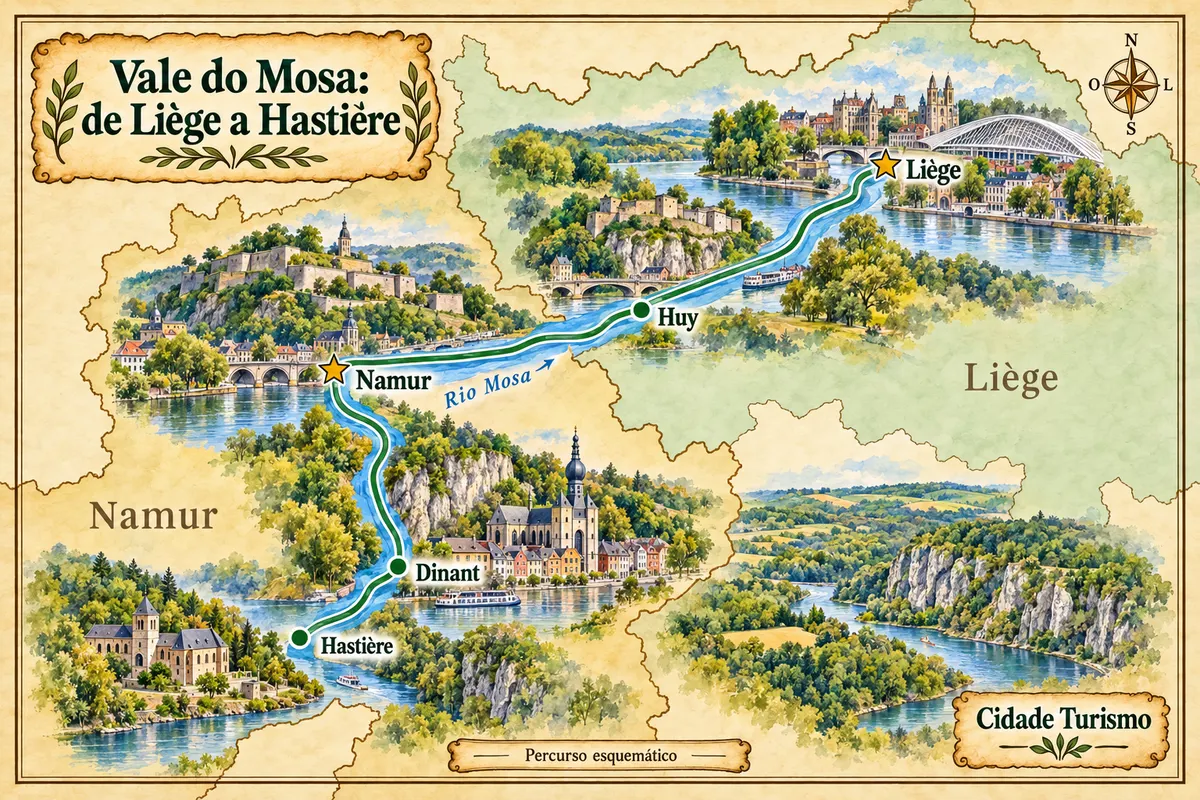
Liège and Spa is on the Meuse Valley: from Liège to Hastière

The Meuse River cuts through Wallonia from south to north. The route follows the valley from Liège to Hastière, passing Huy, Namur and Dinant, with fortresses atop the cliffs and a train running beside the water.

Illustrative map, not to scale. Tap a city to open its page.
Illustrated map of Meuse Valley: from Liège to Hastière
Explore the Meuse Valley: from Liège to Hastière

Rotas entre países

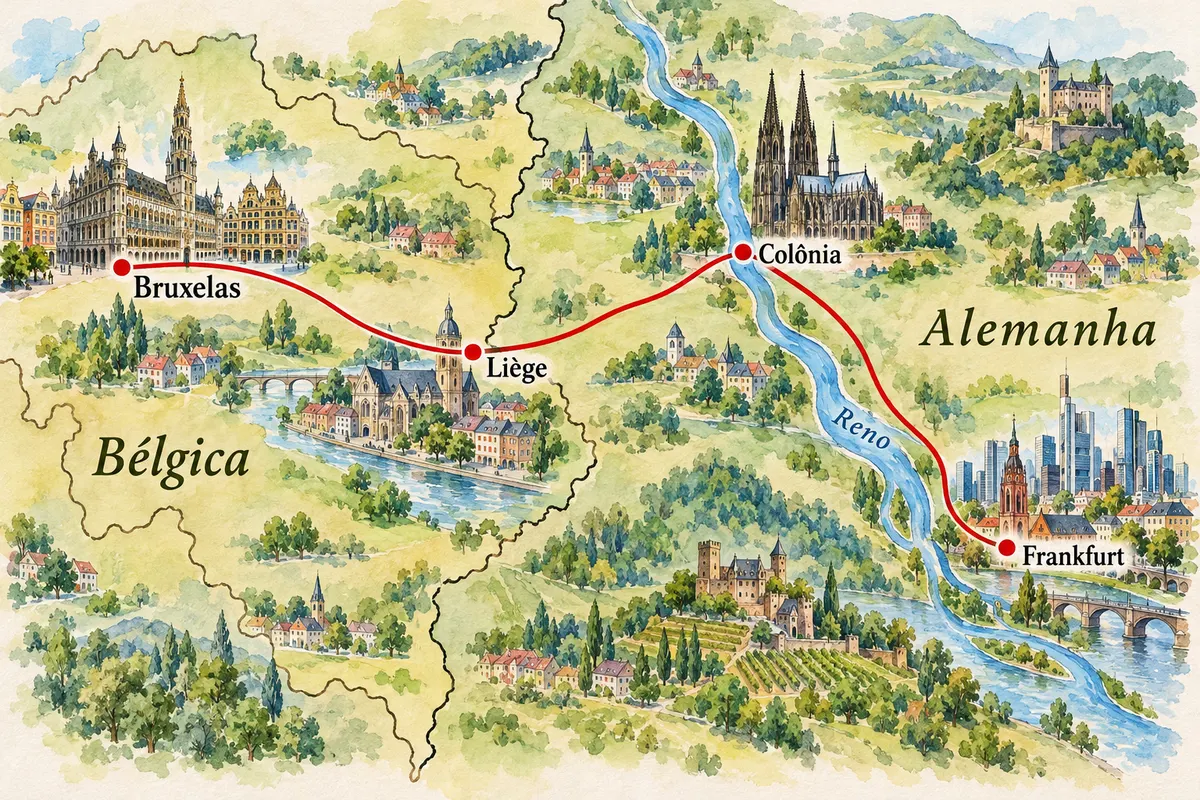
Liège and Spa is on the Brussels–Cologne–Frankfurt by train

By train from Belgium to Germany: Brussels, Liège, Cologne and Frankfurt in about three hours, from central station to central station.

Illustrative map, not to scale. Tap a city to open its page.
Illustrated map of Brussels–Cologne–Frankfurt by train
Explore the Brussels–Cologne–Frankfurt by train
Explore other destinations Search by state and city