Patershol, Kraanlei and Huis van Alijn
From Ghent city centre On foot about 2 hours afternoon easy (cobblestone streets)
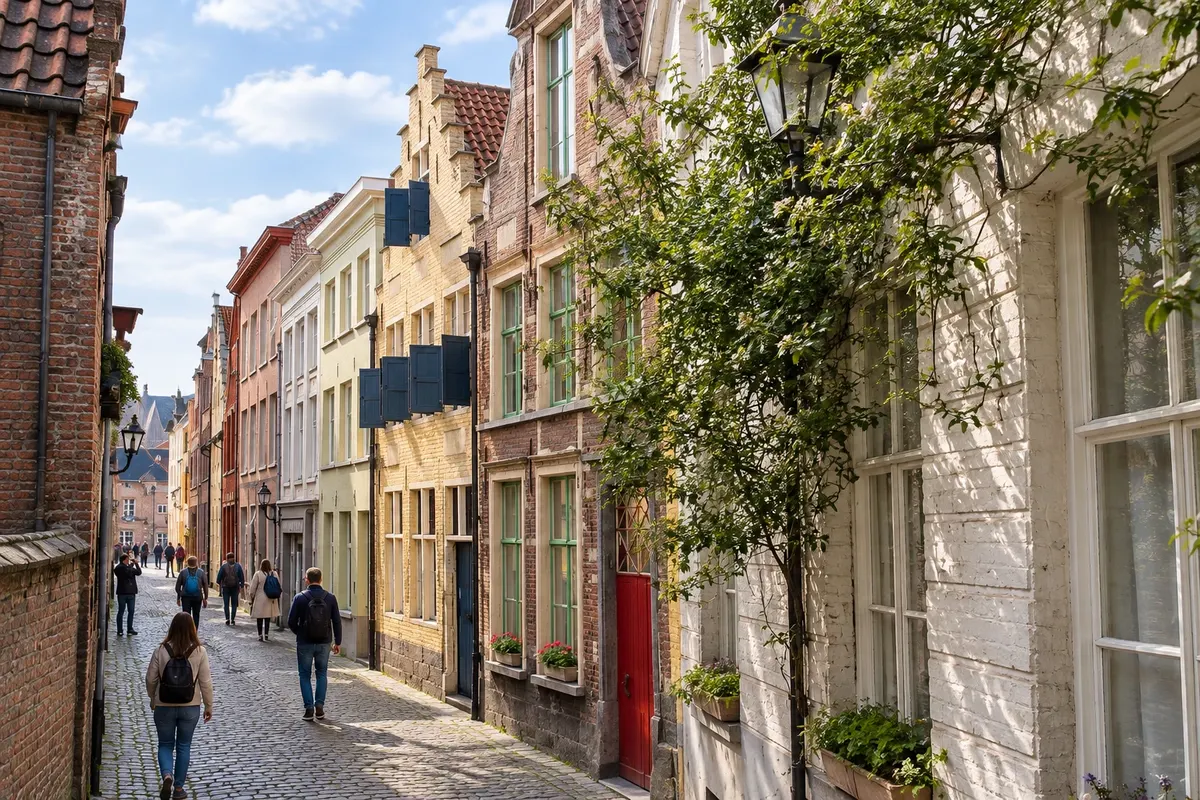
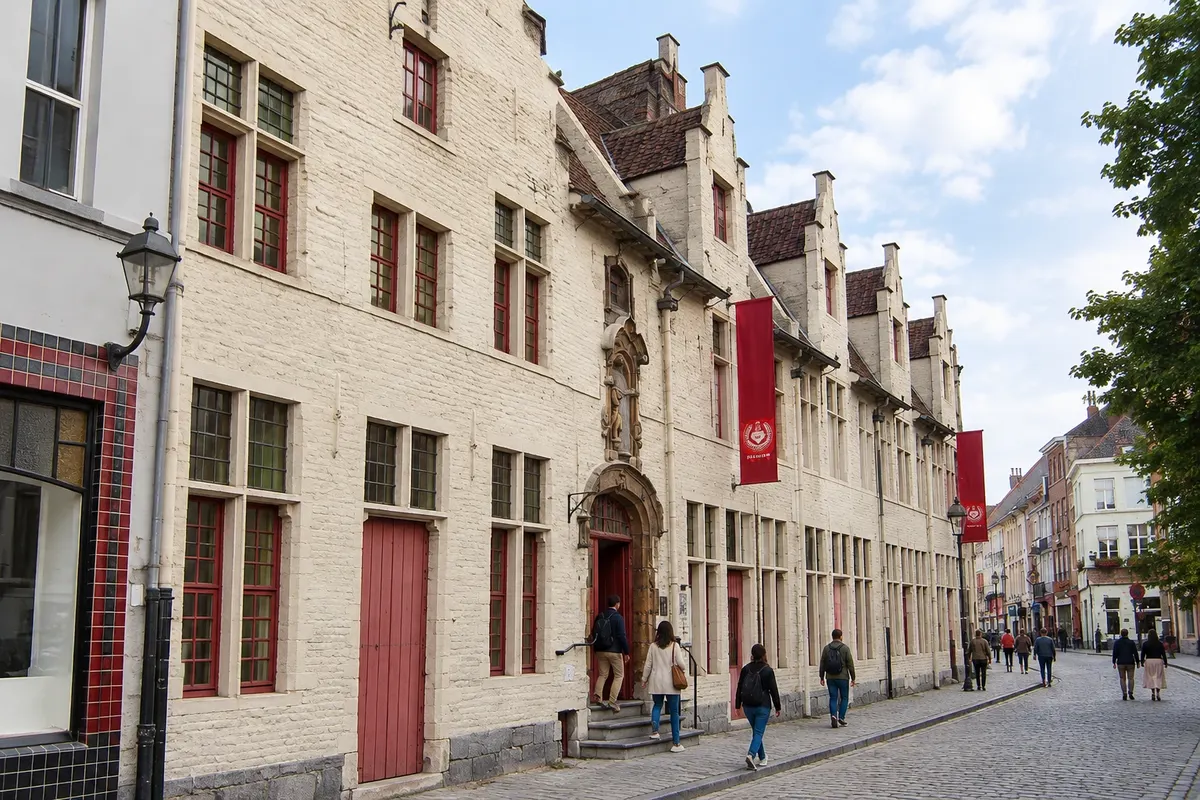
Patershol is the medieval quarter just north of the Gravensteen, between the Leie river and the Lieve canal. The name likely comes from a Carmelite friary that once stood there. In the 19th century it was a poor working-class quarter, with tanneries and small workshops; from the 1980s the houses were restored and the cobbled lanes filled with restaurants. It is still a residential neighbourhood, with its own street festival.
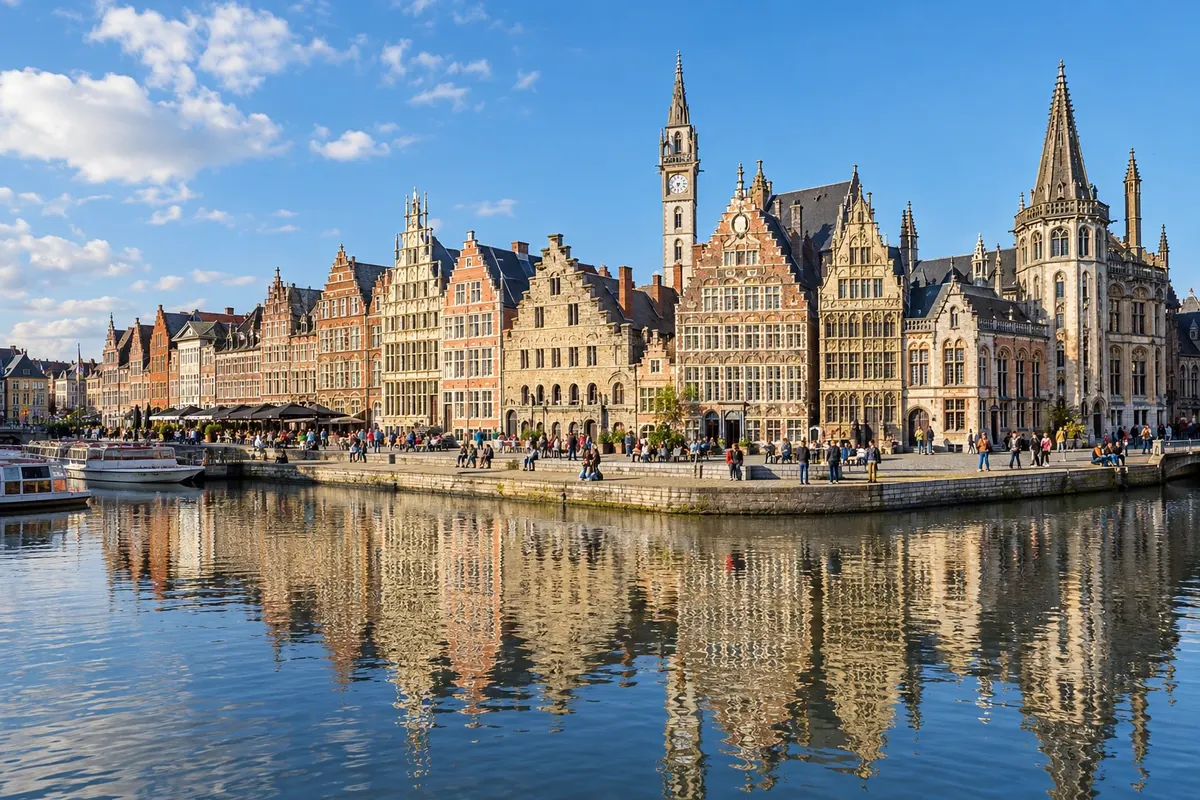
The Kraanlei, on the banks of the Leie, is the most photographed street in the quarter. The Huis van Alijn is located there, a museum set in an old asylum, the only one in the city that has been preserved. The museum shows everyday life in the 20th century: baby photos, street games, first love, summer holidays. There are activities for children, an inner garden and a café in the style of old popular bars. The museum also has a puppet theatre.
The Caermersklooster, a restored former convent that hosts visual art exhibitions, is also in the neighbourhood.
Stops: Patershol, Kraanlei, Huis van Alijn, Caermersklooster.
Includes: The neighbourhood is freely accessible. The Huis van Alijn has a separately paid entrance, and the puppet theatre has its own ticket; check the current price list.
Tip: Book a table for dinner in Patershol at weekends. Many restaurants do not open for lunch on weekdays, and some close on Monday or Tuesday.
Best time: All year round. In winter the candlelit cafés are part of the atmosphere; in summer the Kraanlei looks lovely in the late afternoon.
Vrijdagmarkt, Werregarenstraat (graffiti street) and Ghent flavours
From Ghent city centre On foot about 2 hours morning easy
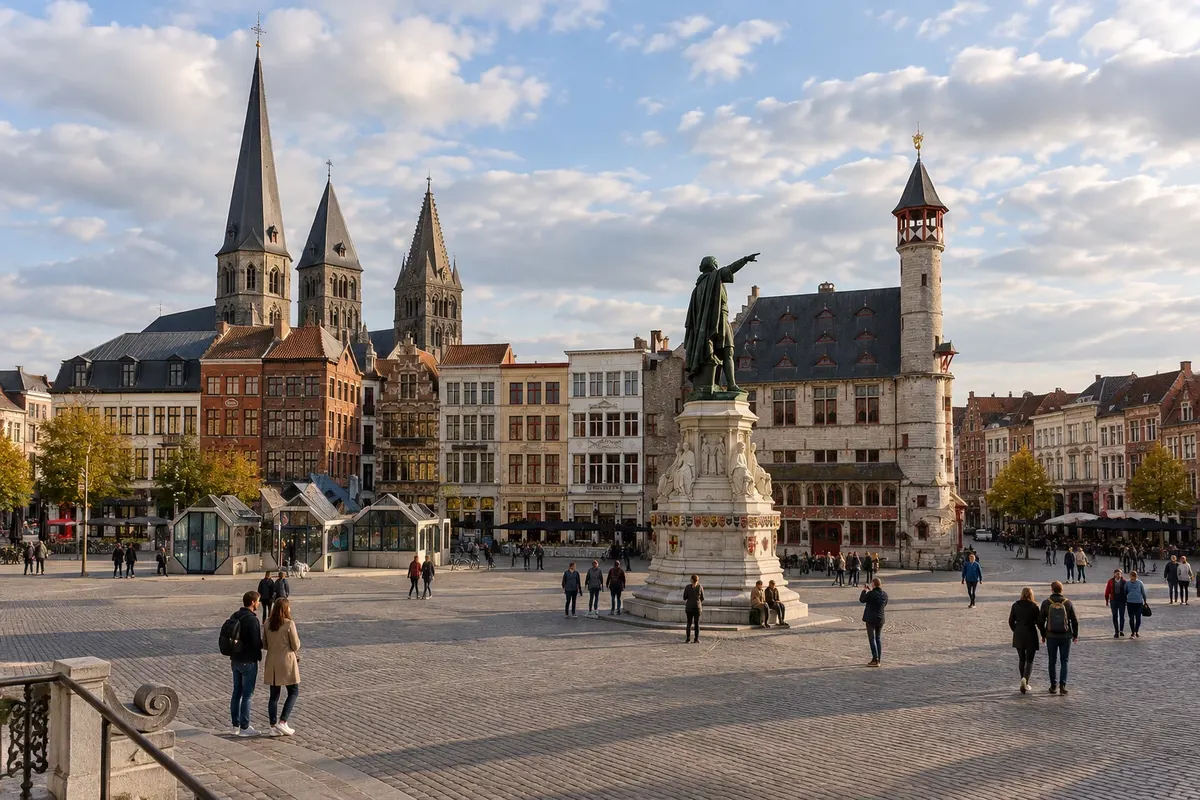
The Vrijdagmarkt (Friday Market) is one of Ghent’s oldest squares. There the city received kings in solemn entries, held celebrations and, until 1863, carried out public executions. In the centre, the statue of Jacob van Artevelde points toward England: in the 14th century, during the Hundred Years’ War, he reopened access to English wool and saved the city’s textile industry. 't Toreken, from the 15th century, is the oldest building on the square; the socialist headquarters Bond Moyson, from the early 20th century, has a rooster on its façade. The square hosts a fresh-produce and goods market on Fridays.
In the historic centre is Werregarenstraat, a narrow street where graffiti is tolerated. Artists paint over each other, and the walls change from week to week.
The walk is good for sampling the city’s food. Waterzooi is a creamy stew of chicken or fish with vegetables; stoverij in the Ghent style is meat braised in a dark sauce, served with fries. Cuberdons, called neuzekes, are purple cone-shaped candies filled with raspberry syrup, sold at stalls on the Groentenmarkt. Tierenteyn mustard, kroakemandels (fried peas) and Gruut beer, brewed with herbs instead of hops, complete the list.
Stops: Vrijdagmarkt, Werregarenstraat, Groentenmarkt.
Includes: Walk through open spaces, no admission required. Food and drink are paid separately.
Tip: On Werregarenstraat, respect residents: avoid noise at night. Cuberdons soften over time; buy them close to when you will eat them.
Best time: All year. Waterzooi is especially suitable for the cold months, from November to March.
STAM (city museum) and the Bijloke complex
From Ghent city centre On foot or by tram about 2 hours morning easy
STAM is Ghent’s city museum and tells the story of Ghent from the Middle Ages to the present. It is in the Bijloke complex, a former abbey with 14th-century buildings, a 17th-century convent and a 21st-century building, in the city’s arts district.
The visit starts on top of a giant aerial photo of Ghent, which you walk across looking for your own street. Interactive models, 3D renderings and building materials you can touch show how the city grew over the centuries. An app displays the city in four historical periods. There is a route for children and a space with temporary exhibitions that are free to access.
Next door, the old infirmary of the Bijloke hospital, with a timber-beam ceiling, was converted into a concert hall known for its acoustics.
Stops: STAM, Bijloke, Godshuizenlaan.
Includes: Museum admission, with a printed guide to the 15 main items in the collection. There is a separate paid ticket; check the current schedule. Concerts at the Bijloke have their own tickets.
Tip: Do the STAM at the start of your visit: the aerial photo and the models help you understand the city before you walk around. Check Bijloke’s concert schedule for the evening.
Best time: All year; it’s a good option for rainy days.
MSK (Museum of Fine Arts) and Citadelpark
From Ghent city center or Gent-Sint-Pieters station On foot or by tram about 2 hours 30 minutes afternoon easy
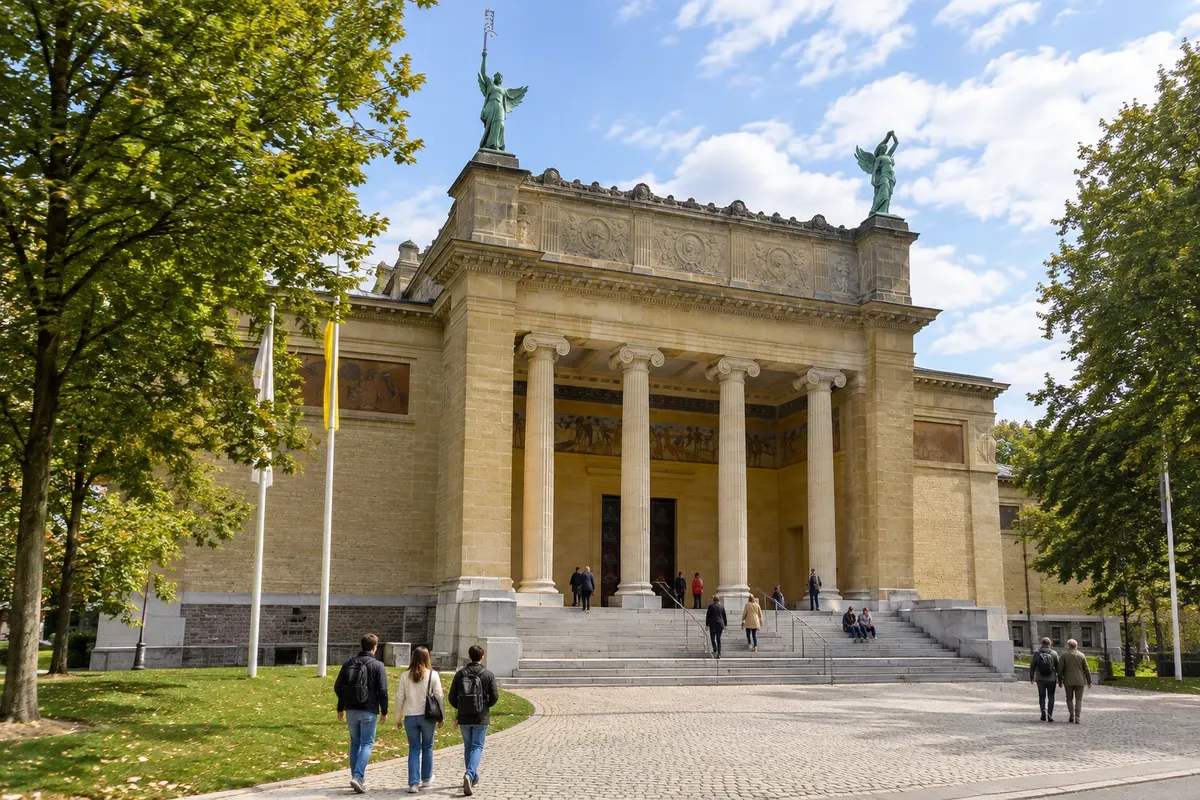
The MSK (Museum voor Schone Kunsten, Museum of Fine Arts) is located in Citadelpark, a park near Gent-Sint-Pieters station. The building was designed by the city architect Charles van Rysselberghe around 1900. The collection has about 9,000 works, from the Middle Ages to the 20th century, with roughly 600 on permanent display: painting, sculpture, drawing, printmaking and tapestry, with a focus on Flemish art.
The museum houses two paintings by Hieronymus Bosch, Saint Jerome in Prayer and Christ Carrying the Cross; canvases by Rubens; James Ensor’s Children in the Morning Toilet and Perspective II, Manet’s balcony, and works by René Magritte. There is also European painting, especially French, and many sculptures.
Citadelpark has lawns, ponds, grottos and large trees. In front of the MSK is S.M.A.K., the museum of contemporary art, and you can combine both in the same day.
Stops: MSK, Citadelpark.
Includes: Museum admission. There is a separate paid ticket; check the current price list. The park is free to access.
Tip: From the center, trams 1 and 3 stop near the park; if you arrive by train you can visit the museum before heading to the center.
Best time: All year. The park is most attractive from April to October.
S.M.A.K., the contemporary art museum
From Citadelpark On foot or by tram about 2 hours afternoon easy
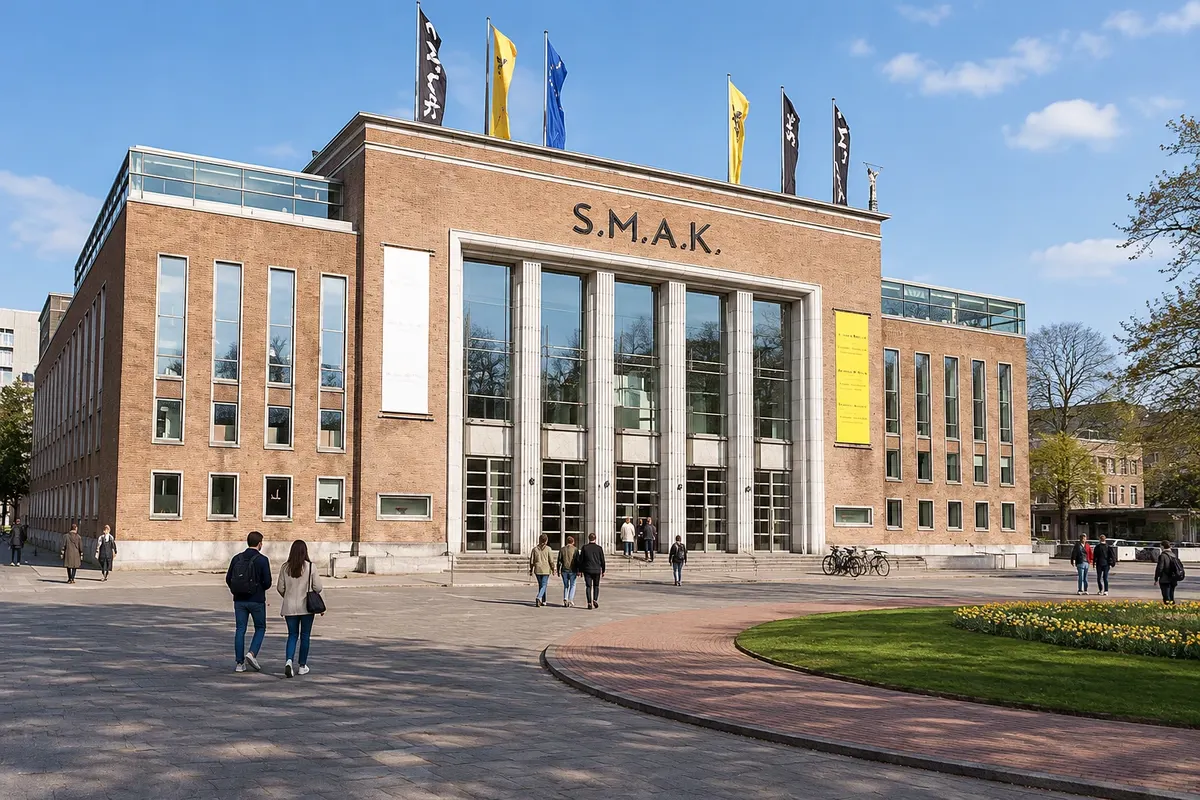
S.M.A.K. (Stedelijk Museum voor Actuele Kunst, the municipal museum of contemporary art) was founded in 1999 and occupies a former casino building in Citadelpark, opposite the MSK. The collection holds over 5,000 works, from the post–Second World War period to the present, including pieces from CoBrA, pop art, minimal art, conceptual art and arte povera.
The museum displays parts of the collection on rotation alongside works by living artists, and mounts several new exhibitions each year. That means every visit is different. There is a café, a shop and activities for children.
Stops: S.M.A.K., Citadelpark.
Includes: Admission to the museum and current exhibitions. There are separate paid tickets, with prices that vary by exhibition; check the current list. Under-19s have free admission.
Tip: Check the programme before you go to see which exhibitions are on. The MSK is across the street: if time is short, choose one of the two.
Best time: All year; it’s a good option for rainy days.
Begijnhofs of Ghent: Klein Begijnhof and Groot Begijnhof
From Ghent city centre On foot or by tram about 2 hours morning easy
The beguinages (begijnhofs) were communities where women lived in a religious way without taking vows as nuns. They emerged in the 13th century, usually next to a church and enclosed by walls with gates. Ghent has three, and two are part of the Flemish beguinages group inscribed as a UNESCO World Heritage Site.
The Klein Begijnhof Onze-Lieve-Vrouw ter Hoyen, in the south of the center, was founded in 1235 by the Countess of Flanders and is the pre-French Revolution beguinage that has been best preserved. It has a neoclassical gate from 1819 as its only entrance, a lawn with lindens and beeches, white houses with green gates and small gardens, convents named after saints and a baroque church. There are still residents, and silence is part of the visit.
The Groot Begijnhof Sint-Elisabeth is in Sint-Amandsberg, outside the center. It was built in 1873 and 1874 and at one time housed about 600 beguines; the last beguine of Ghent died in 2008. The Oud Begijnhof Sint-Elisabeth, near the center, is known as the sacred corner, with Catholic, Orthodox and Protestant churches side by side.
Stops: Klein Begijnhof Onze-Lieve-Vrouw ter Hoyen, Groot Begijnhof Sint-Elisabeth, Oud Begijnhof Sint-Elisabeth.
Includes: The beguinages have free access, as open spaces.
Tip: Keep your voice low and do not enter the houses’ gardens: they are private residences. For the Groot Begijnhof, go by tram or by bicycle.
Best time: All year. From April to June the trees and lawns are greener.
Sint-Pietersabdij (Abbey of Saint Peter) and the vineyard
From Ghent city centre On foot or by tram about 1 hour 30 minutes afternoon easy
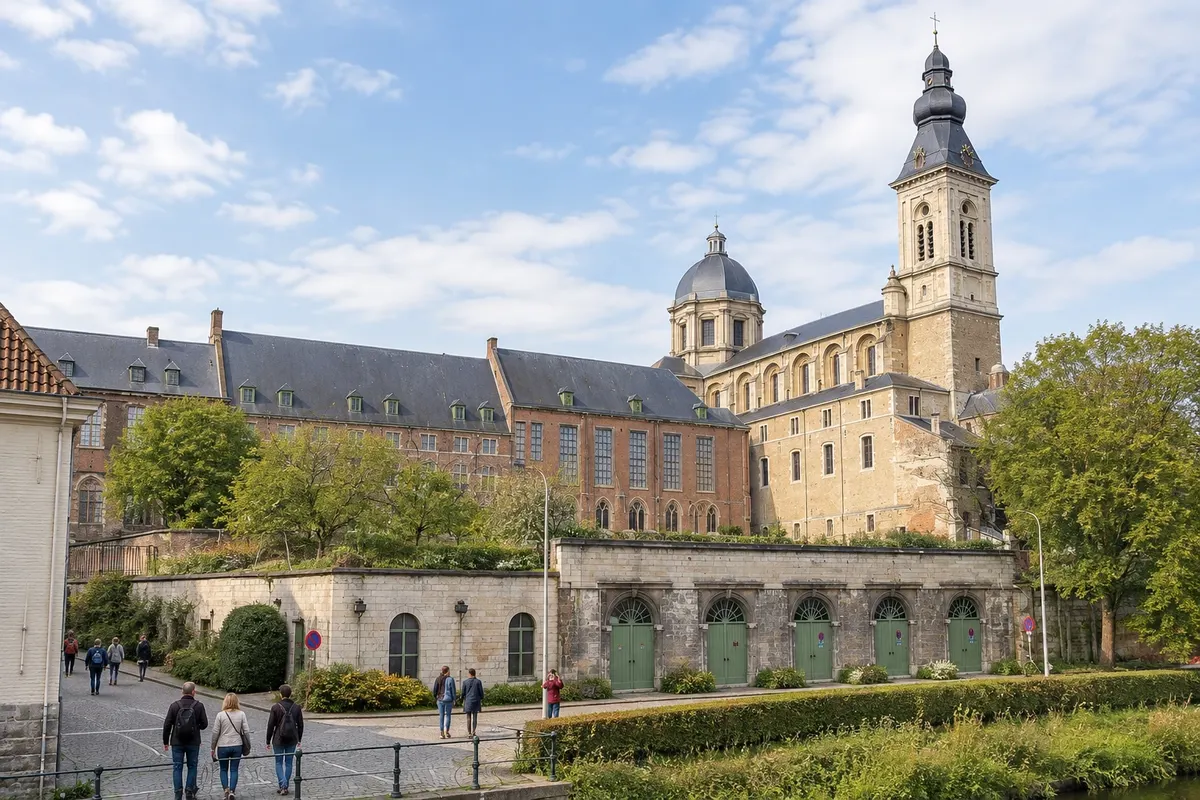
Sint-Pietersabdij is a Benedictine abbey founded in the 7th century by Saint Amand, regarded as one of the origins of Ghent. In the 14th and 15th centuries it became a small settlement, with farms, gardens, houses and lands that reached the port. Its wealth came from privileges and taxes levied on those lands.
The medieval refectory wing is original. On the ground floor the cloister, courtyard and abbey garden can be visited without a ticket. The garden includes a vineyard and a ruin and is a resting spot for students. The abbey hosts temporary exhibitions every year, each with its own ticket.
It is on Sint-Pietersplein, between the centre and Gent-Sint-Pieters station, near the university district.
Stops: Sint-Pietersabdij, Sint-Pietersplein.
Includes: The ground floor, the cloister and the garden have free access. The exhibitions require a separate ticket; check the current price list.
Tip: Combine the abbey with the MSK and Citadelpark, which are on the same side of the city.
Best time: All year. The garden and the vineyard are greener from May to September.
Museum Dr. Guislain, the history of psychiatry
From Ghent city centre By tram or bus about 2 hours morning easy
The Museum Dr. Guislain tells the history of psychiatry. It is housed in the building of Belgium’s first modern psychiatric hospital, founded by physician Joseph Guislain and opened in 1857. The complex is protected as heritage and continues to function as a psychiatric centre alongside the museum.
The permanent collection shows how society has treated people with mental illness over time. Temporary exhibitions bring together art and science and question the idea of what is normal. It’s a visit to take slowly and with respect: the subject is serious, and the museum is about people, not just objects.
Stops: Museum Dr. Guislain.
Includes: Admission to the permanent collection and temporary exhibitions. There is a separate paid ticket; check the current price list.
Tip: The museum is outside the historic center, to the northwest. Keep in mind the campus is an active health center: behave discreetly and do not photograph patients.
Best time: Year-round.
Illuminated Ghent: night walk along the lighting plan
From Kouter, in central Ghent On foot, self-guided or with a guide about 2 hours night easy
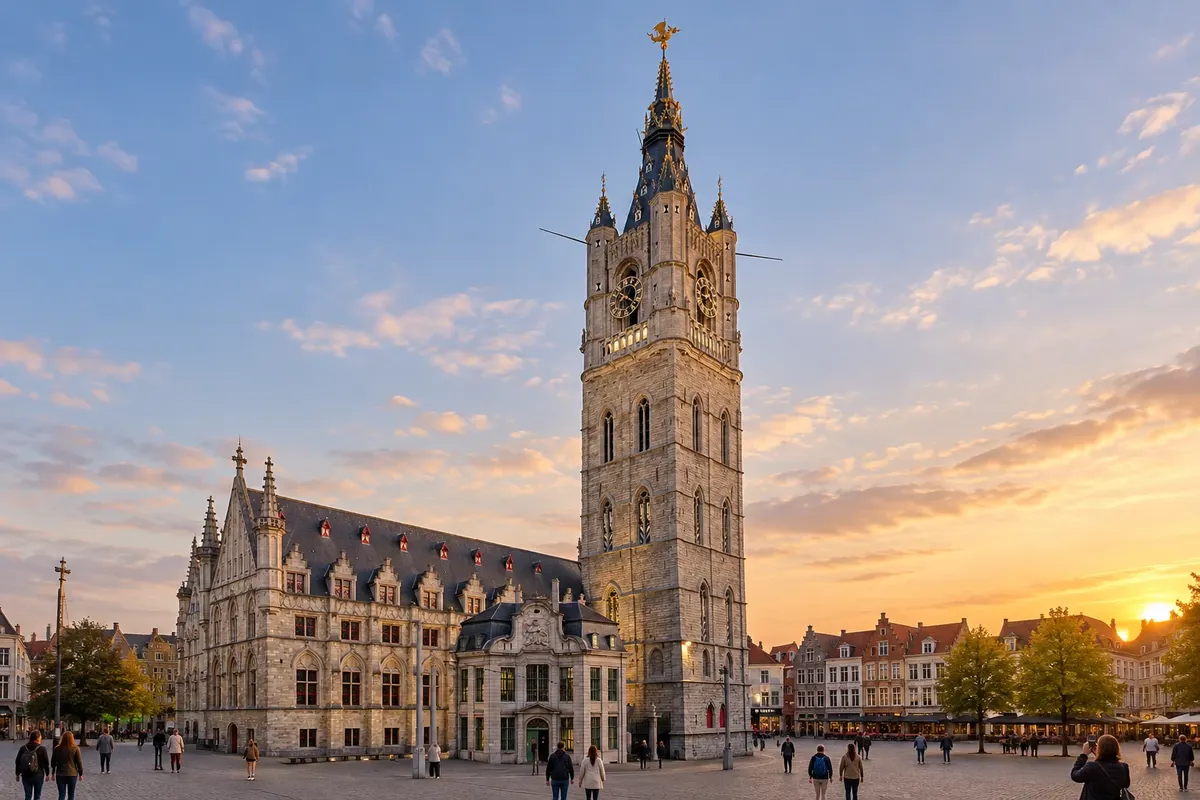
Ghent has a lighting plan for the historic centre that lights up facades, towers and quays after dark. The basic route is about 3.2 km and passes 80 numbered points, including the Kouter, the Graslei and Korenlei, the Belfry and the Lakenhalle, the Sint-Michielsbrug and the opera house.
You can follow the route with the leaflet, which is available in Flemish, French, English, German and Spanish, or join one of the city’s guide associations that run night tours. Decorative lighting is replaced by the regular lighting at midnight, so start early.
Stops: Kouter, Graslei, Korenlei, Belfort, Sint-Michielsbrug.
Includes: Walk in open spaces, no ticket required. Guided tours are paid separately; check the current price list.
Tip: Pegue o folheto em papel no centro de informações turísticas. No verão escurece tarde; no inverno a caminhada pode começar no fim da tarde.
Best time: All year. From October to March it gets dark early, and you can do the walk before dinner.


 Brazil
 Argentina
 Bolivia
 Chile
 Colombia
 Ecuador
 Guyana
 French Guiana
 Falkland Islands (Malvinas)
 Paraguay
 Peru
 Suriname
 Uruguay
 Venezuela
 Germany
 Austria
 Croatia
 Denmark
 Spain
 Finland
 France
 Greece
 the Netherlands
 Hungary
 Ireland
 Iceland
 Italy
 Luxembourg
 Norway
 Poland
 Portugal
 the United Kingdom
 the Czech Republic
 Sweden
 Switzerland
 Turkey
 the United States
 Mexico
 the Dominican Republic
 South Africa
 Australia
 Fiji