

 Brazil
 Argentina
 Bolivia
 Chile
 Colombia
 Ecuador
 Guyana
 French Guiana
 Falkland Islands (Malvinas)
 Paraguay
 Peru
 Suriname
 Uruguay
 Venezuela
 Germany
 Austria
 Belgium
 Croatia
 Denmark
 Spain
 Finland
 France
 Greece
 the Netherlands
 Hungary
 Ireland
 Iceland
 Italy
 Luxembourg
 Norway
 Poland
 Portugal
 the United Kingdom
 the Czech Republic
 Sweden
 Switzerland
 Turkey
 Canada
 the United States
 Mexico
 the Dominican Republic
 South Africa
 Fiji
 New Zealand
 Papua New Guinea
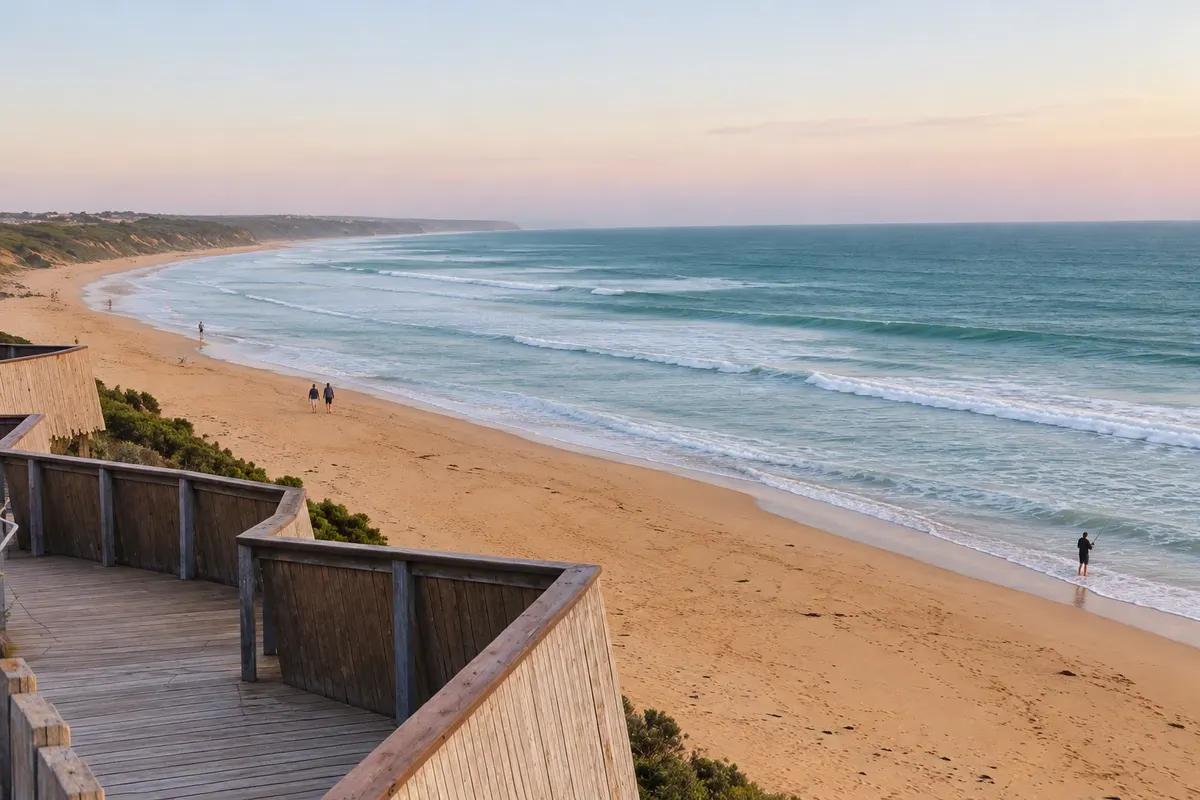
Viewpoint · Warrnambool, Victoria
Logans Beach
Beach east of Warrnambool with a viewing platform from which, in winter, southern right whales are often seen near the surf with their calves.
Illustrative images. The pictures in this guide are illustrations based on the real place, not photographs, and may differ from it.

Discover
About Logans Beach
Logans Beach is about 3 km east of Warrnambool town center. Each year, generally from June to September, southern right whales arrive in the bay to give birth and tend their calves, often just a few hundred meters from the beach.
A viewing platform on the dunes, with information panels about the whales, allows visitors to see them without a boat. When whales are present, word spreads through town and the visitor information center posts the sightings.
The whales do not appear every day or in the same numbers every year. Outside the season, the beach is peaceful and good for walking.
The bay is one of the best-known nursery areas for the species in southern Australia, and mothers often stay there for weeks with their calves before returning to the open sea.
Before you go
Practical information
Cidade Turismo reviews its information regularly, but something may have changed. Check with the place before planning your trip.
How much time to set aside
From 30 minutes to 1 hour.
Best time
From June to September, in the morning when the sea is calmer. Check recent sightings before you go.
How to get there
By car, about 3 km from Warrnambool center via Logans Beach Road, with parking next to the platform.
Tip
Bring binoculars and warm clothes: it’s windy and cold in winter.
Official website
Get your questions answered
Frequently asked questions about Logans Beach
When is whale season at Logans Beach?
Generally from June to September, with the southern right whales and their calves.
Do you need a boat to see whales in Warrnambool?
No. They usually stay close to the shore and are seen from the dunes’ platform.
Do the whales appear every day?
No. Presence varies day to day and year to year; check recent sightings.