

 Brazil
 Argentina
 Bolivia
 Chile
 Colombia
 Ecuador
 Guyana
 French Guiana
 Falkland Islands (Malvinas)
 Paraguay
 Peru
 Suriname
 Uruguay
 Venezuela
 Germany
 Austria
 Belgium
 Croatia
 Denmark
 Spain
 Finland
 Greece
 the Netherlands
 Hungary
 Ireland
 Iceland
 Italy
 Luxembourg
 Norway
 Poland
 Portugal
 the United Kingdom
 the Czech Republic
 Sweden
 Switzerland
 Turkey
 the United States
 Mexico
 the Dominican Republic
 South Africa
 Australia
 Fiji
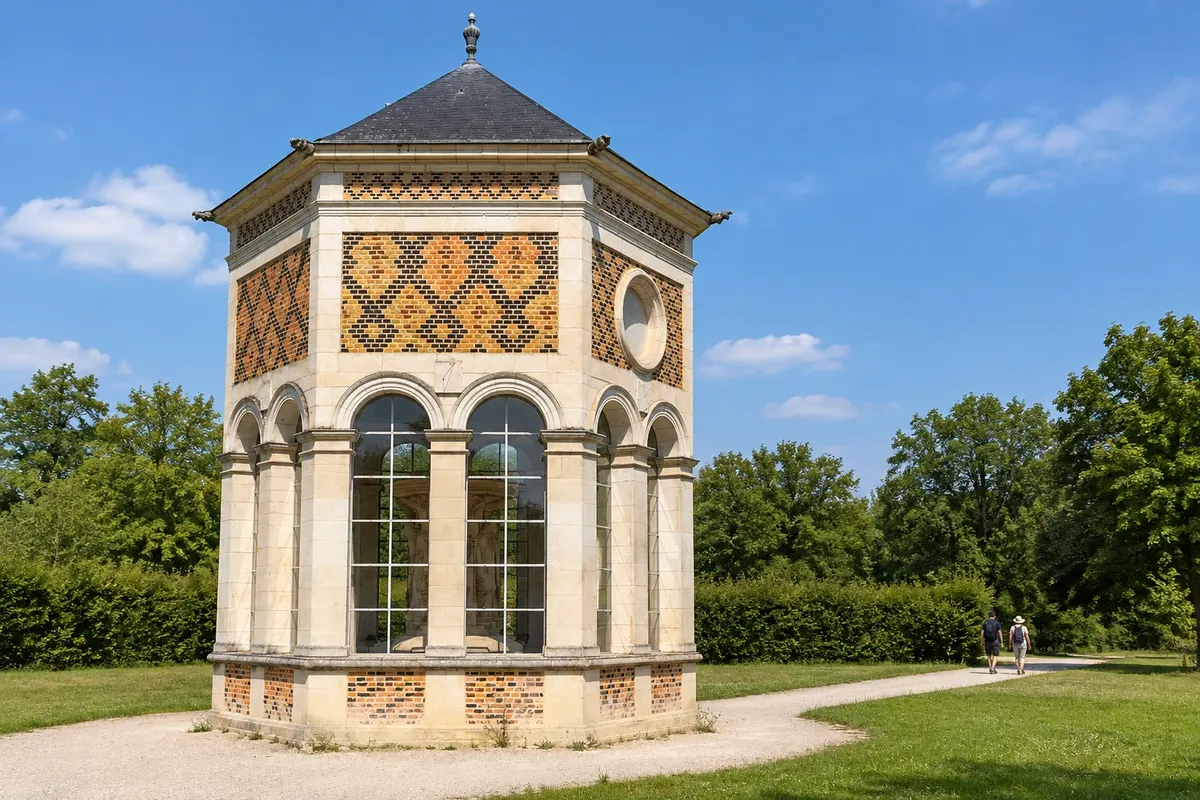
Monument · Dijon, Borgonha-Franco-Condado
Puits de Moïse
Base of a calvary carved between 1396 and 1405 by Claus Sluter for the Chartreuse de Champmol, the ducal monastery-necropolis. Six life-size prophets, with a realism rare for the time.
Illustrative images. The pictures in this guide are illustrations based on the real place, not photographs, and may differ from it.

Discover
About Puits de Moïse
The Puits de Moïse (Well of Moses) is what remains of a calvary that stood in the middle of the great cloister of the Chartreuse de Champmol, the Carthusian monastery founded in 1385 by Duke Philip the Bold to serve as the ducal family's tomb, much as the Basilica of Saint-Denis served the kings of France.
The work was carved and painted between 1396 and 1405 by the Dutch sculptor Claus Sluter, with his nephew Claus de Werve and the painter Jean Malouel. The upper part, with the cross, was destroyed in the 18th century. What remained is the hexagonal base with six prophets of the Old Testament: Moses, David, Jeremiah, Zechariah, Daniel and Isaiah. The realism of the faces and the drapery makes the work a landmark of Gothic sculpture and a precursor to the Renaissance.
The monastery was closed during the French Revolution and was almost entirely demolished. Since the 19th century, the site has housed a psychiatric hospital, the Centre hospitalier La Chartreuse, and the well is located within the hospital park, protected by a pavilion. Also surviving from the medieval ensemble are the church portal and a chapel.
The tombs of the dukes that were in Champmol are now in the Musée des Beaux-Arts, in the center.
Before you go
Practical information
Cidade Turismo reviews its information regularly, but something may have changed. Check with the place before planning your trip.
How much time to set aside
About 30 minutes.
Best time
During the day; the site is open daily, but check the opening times. Combine it with the Cathédrale Saint-Bénigne or the station, which are relatively nearby.
How to get there
It is on Boulevard Chanoine Kir, on the grounds of the Centre hospitalier La Chartreuse, west of Dijon-Ville station. It’s about a 15–20 minute walk from the station or a short bus ride.
Tip
Remember that it is an active hospital: follow the signs to the well and keep quiet. The tourist office organizes full guided tours of the site, in French, by reservation.
Get your questions answered
Frequently asked questions about Puits de Moïse
Can you visit the Puits de Moïse?
Yes. It is in the park of a psychiatric hospital, the Centre hospitalier La Chartreuse, and free visits are allowed daily. Check opening times before you go.
What was the Chartreuse de Champmol?
A Carthusian monastery founded in 1385 by Duke Philip the Bold to serve as the necropolis of the Dukes of Burgundy. It was mostly demolished after the French Revolution.
Is it worth going there?
For lovers of medieval art, yes: it is one of the most important works of Gothic sculpture. The visit is short and it is a few minutes from the station.