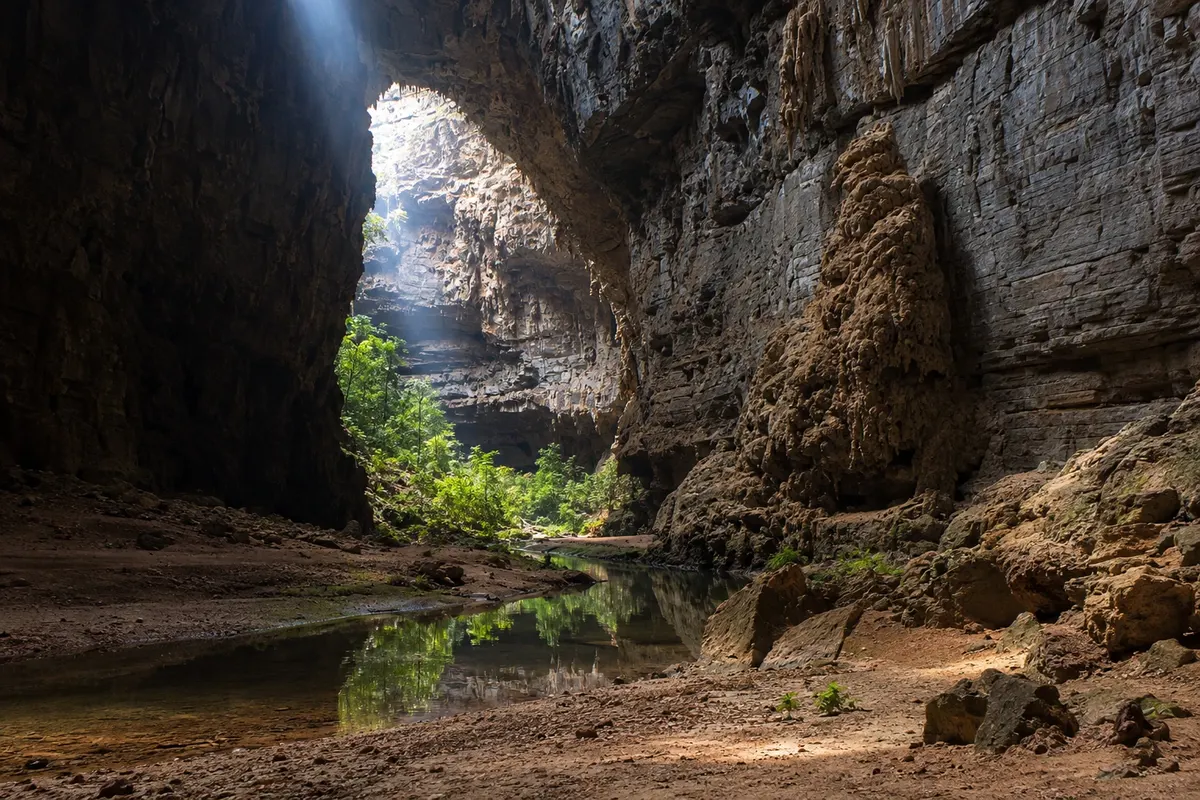
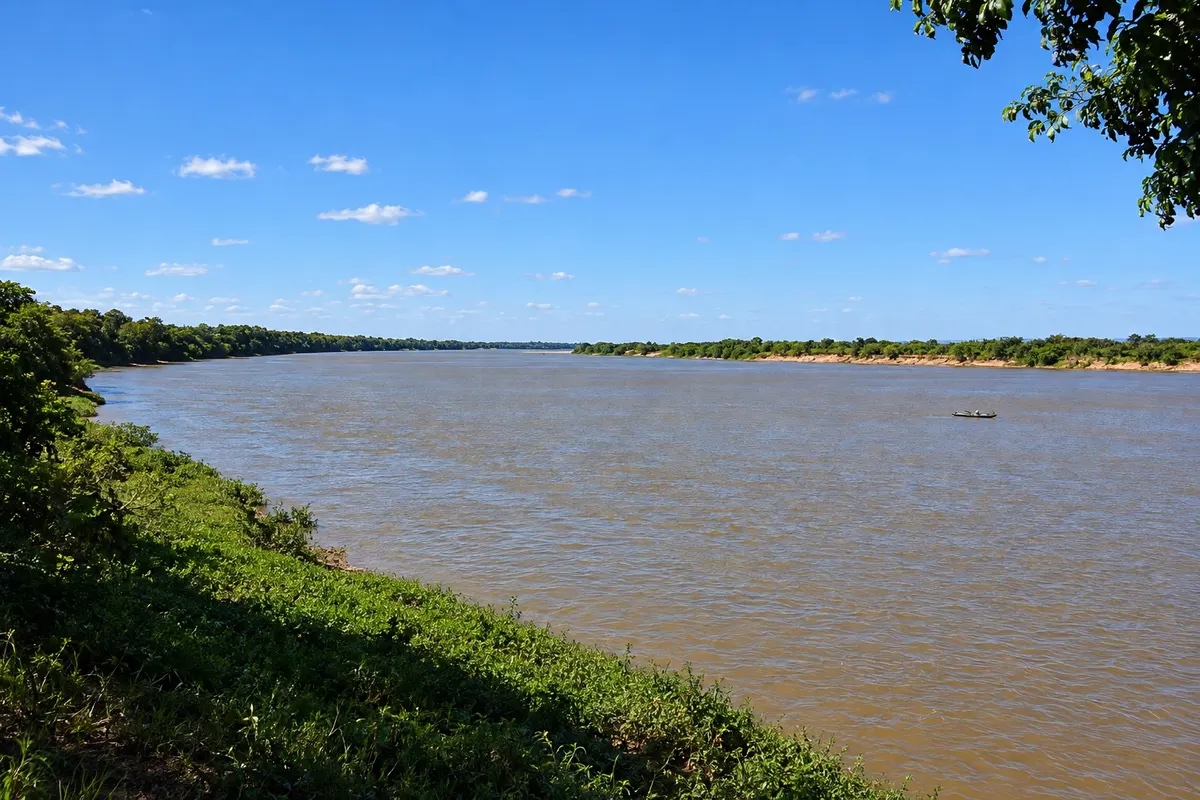
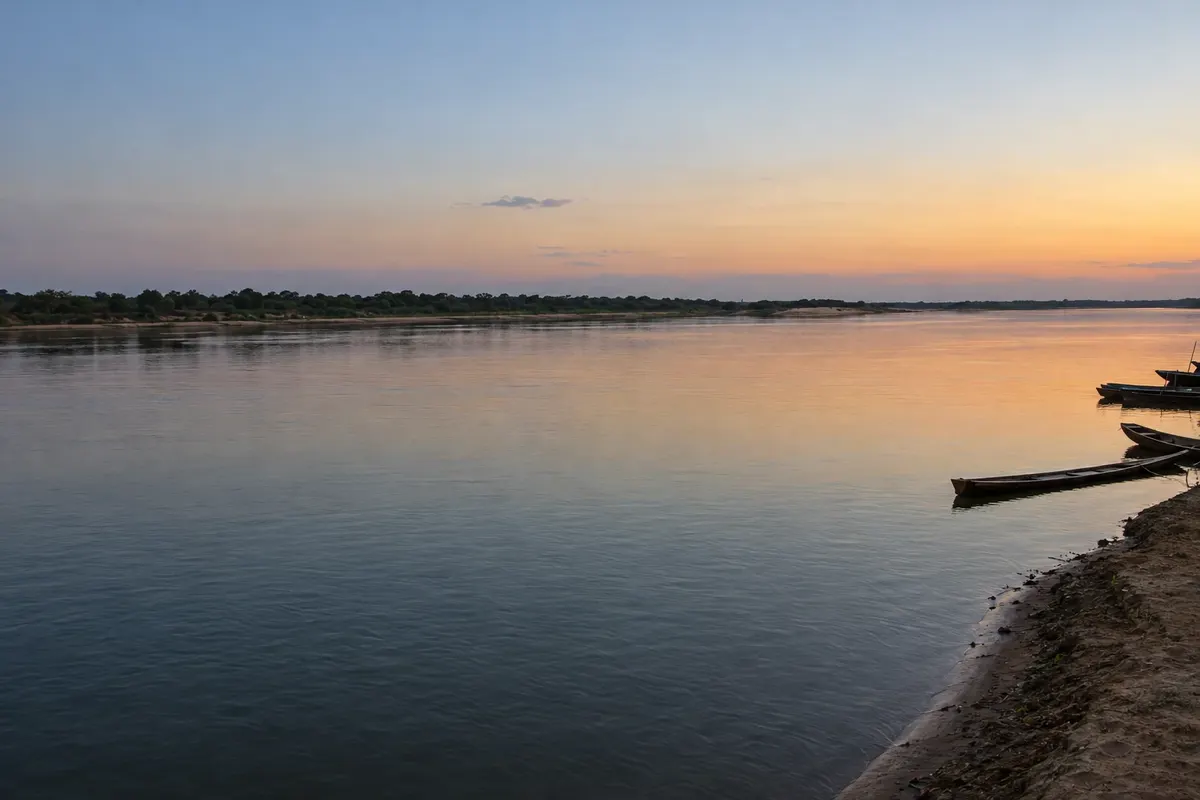
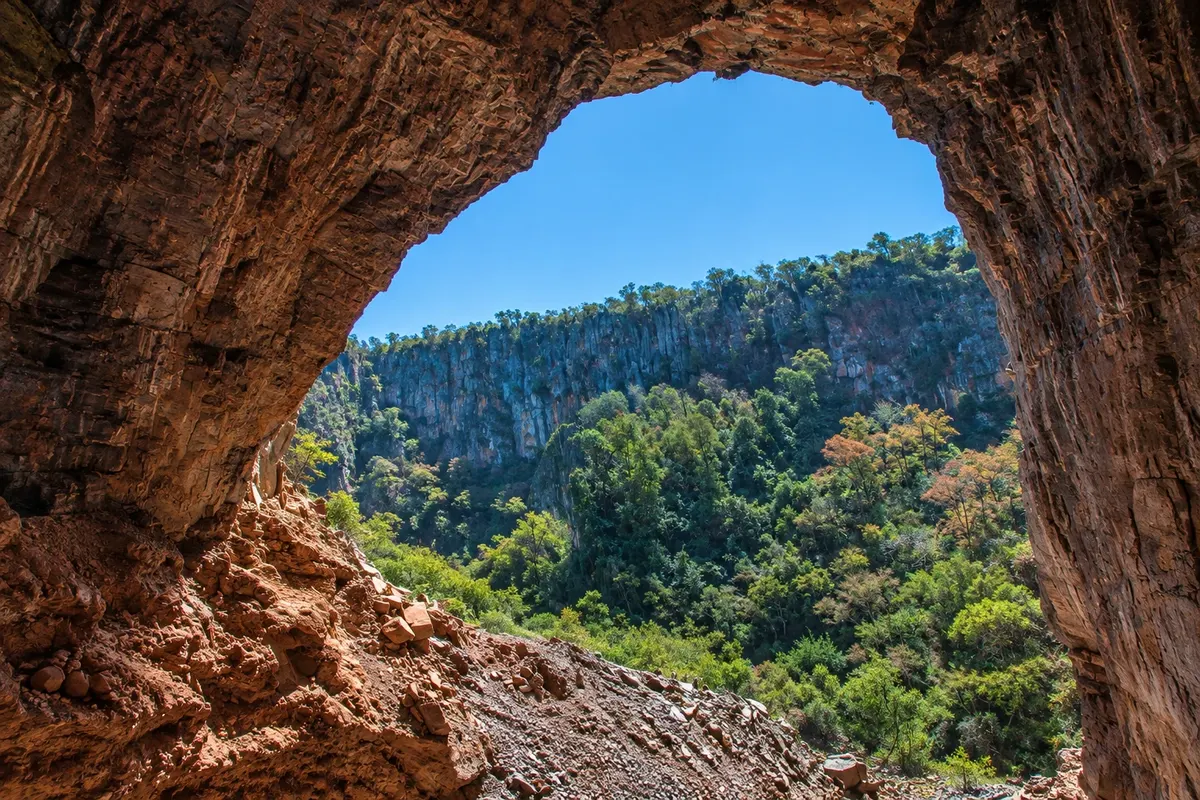
The Peruaçu is a tributary of the São Francisco that, in northern Minas Gerais, crosses a limestone massif and opens a canyon of cliffs, caves and stone arches. The Parque Nacional Cavernas do Peruaçu was created in 1999 and protects 56,448 hectares in the municipalities of Januária, Itacarambi and São João das Missões, in a transition zone between cerrado, caatinga and dry forests. In July 2025 the canyon was inscribed by UNESCO on the World Heritage List as a natural property.
The park contains more than 180 known caves. The most visited is Gruta do Janelão, with galleries exceeding 100 meters in height, roof openings that let in light and allow vegetation to grow inside the cave, and the stalactite known as Perna da Bailarina, about 28 meters long. Other caves open to visitors include Lapa Bonita, Lapa do Índio, Gruta do Carlúcio and Gruta do Rezar.
The cliffs and rock shelters hold archaeological sites with rock paintings and engravings and traces of human occupation dating back up to about 12,000 years, such as Lapa dos Desenhos. The region is also the territory of the Xakriabá indigenous people.
Visits are always made with a guide accredited by ICMBio and with prior booking, from the park headquarters in the community of Fabião I, alongside the BR-135. Support towns are Januária, about 45 km away, and Itacarambi, about 20 km.
This destination brings together 2 cities: Januária, Itacarambi.


 Argentina
 Bolivia
 Chile
 Colombia
 Ecuador
 Guyana
 French Guiana
 Falkland Islands (Malvinas)
 Paraguay
 Peru
 Suriname
 Uruguay
 Venezuela
 Germany
 Austria
 Belgium
 Croatia
 Denmark
 Spain
 Finland
 France
 Greece
 the Netherlands
 Hungary
 Ireland
 Iceland
 Italy
 Luxembourg
 Norway
 Poland
 Portugal
 the United Kingdom
 the Czech Republic
 Sweden
 Switzerland
 Turkey
 the United States
 Mexico
 the Dominican Republic
 South Africa
 Australia
 Fiji