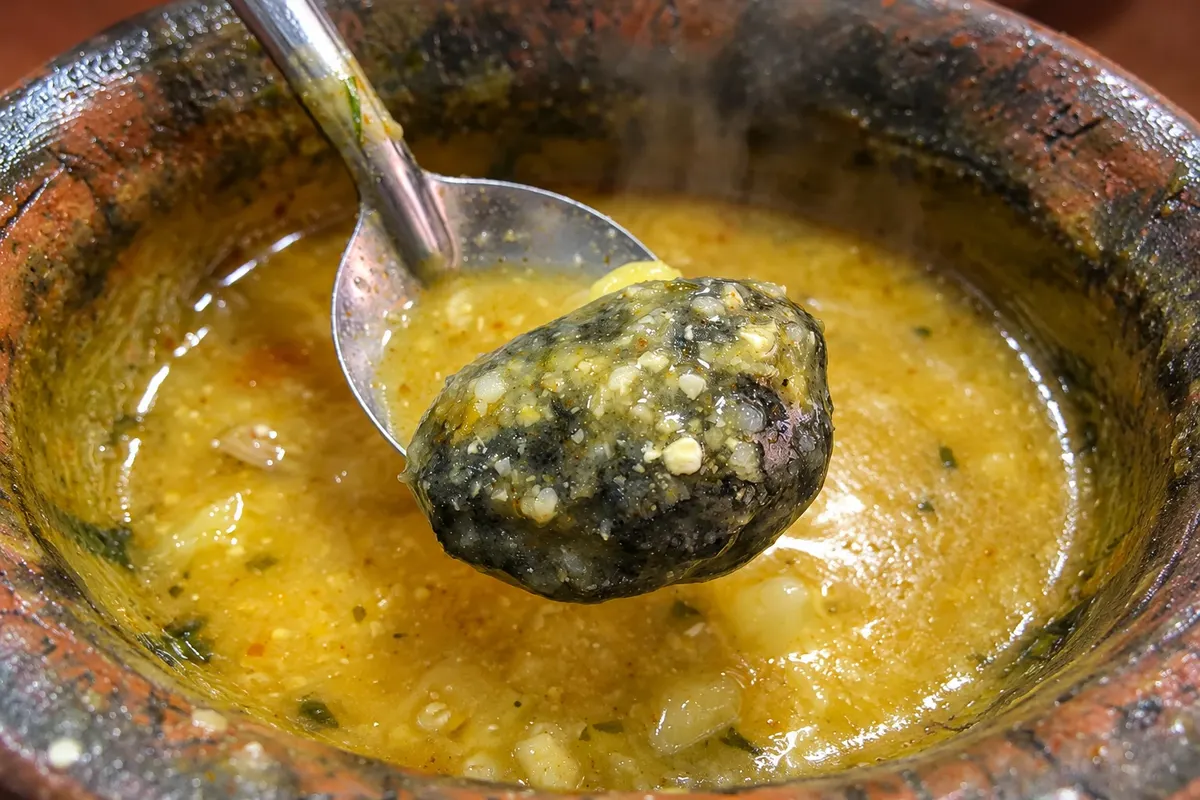
K'alapurka
Thick soup made from white cornmeal with meat, potato and red ají, served in a clay bowl with a very hot volcanic stone inside that makes the broth boil at the table. It is a national heritage dish as representative cuisine of Potosí.
Potosí · Bolivia Capital
In the destination Sucre and Potosí.
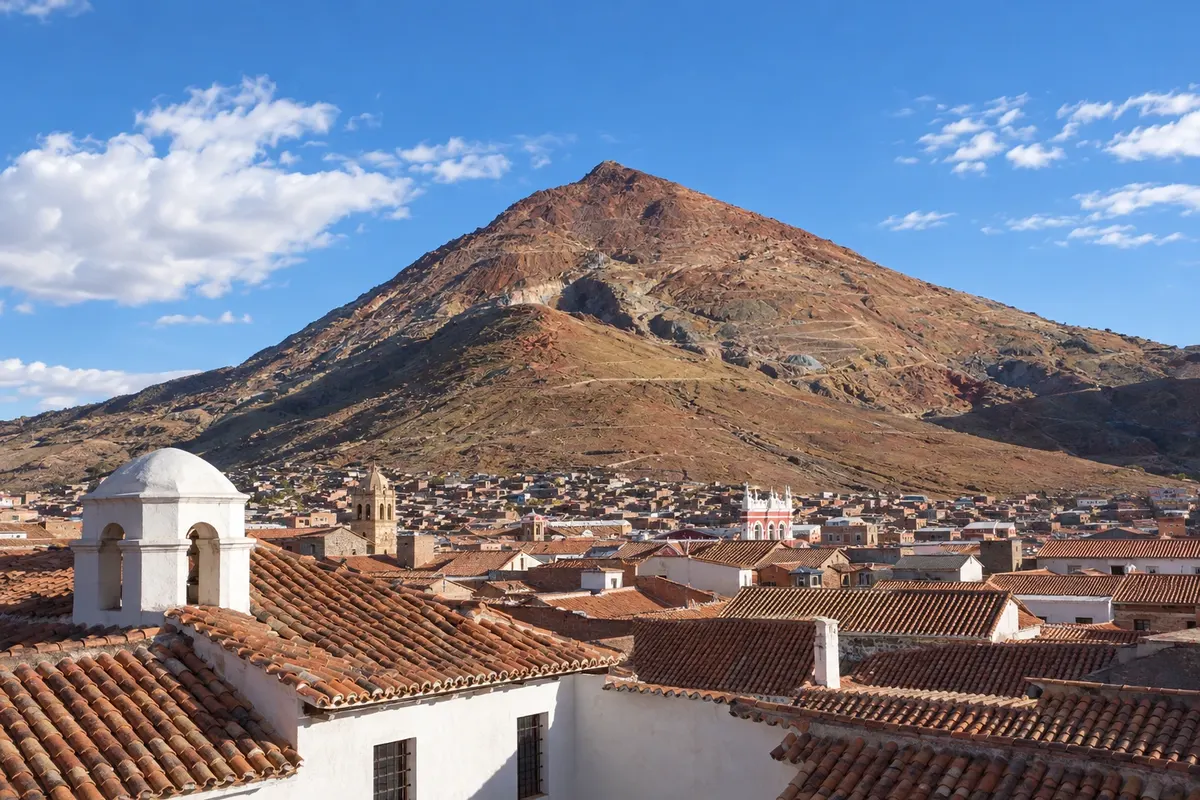
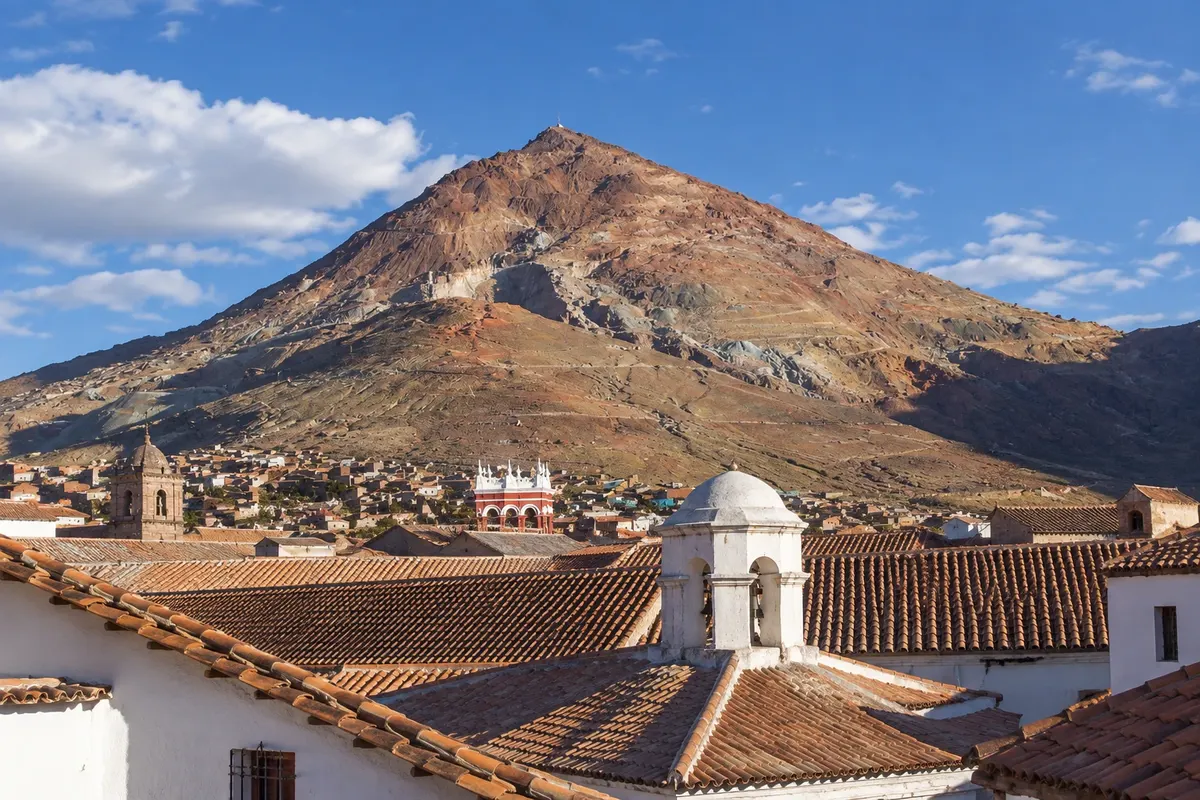
In the photo: Potosí center with Cerro Rico in the background
Illustrative images. The pictures in this guide are illustrations based on the real place, not photographs, and may differ from it.
The city
Potosí is about 4,000 meters high, at the foot of Cerro Rico, the silver mountain that made the city one of the richest and most populous in the world in the 17th century. A World Heritage Site since 1987, it has baroque churches, mansions with wooden balconies and the Casa Nacional de Moneda, where colonial silver was minted. It is the capital of the department of Potosí and is 3 hours from Sucre.
There's no accommodation in the guide yet in Potosí.
There are no restaurants in the guide yet in Potosí.
Know a good one? Recommend it to ushow to get there · how many days · itinerary · questions
Flavors of Bolivia

Thick soup made from white cornmeal with meat, potato and red ají, served in a clay bowl with a very hot volcanic stone inside that makes the broth boil at the table. It is a national heritage dish as representative cuisine of Potosí.

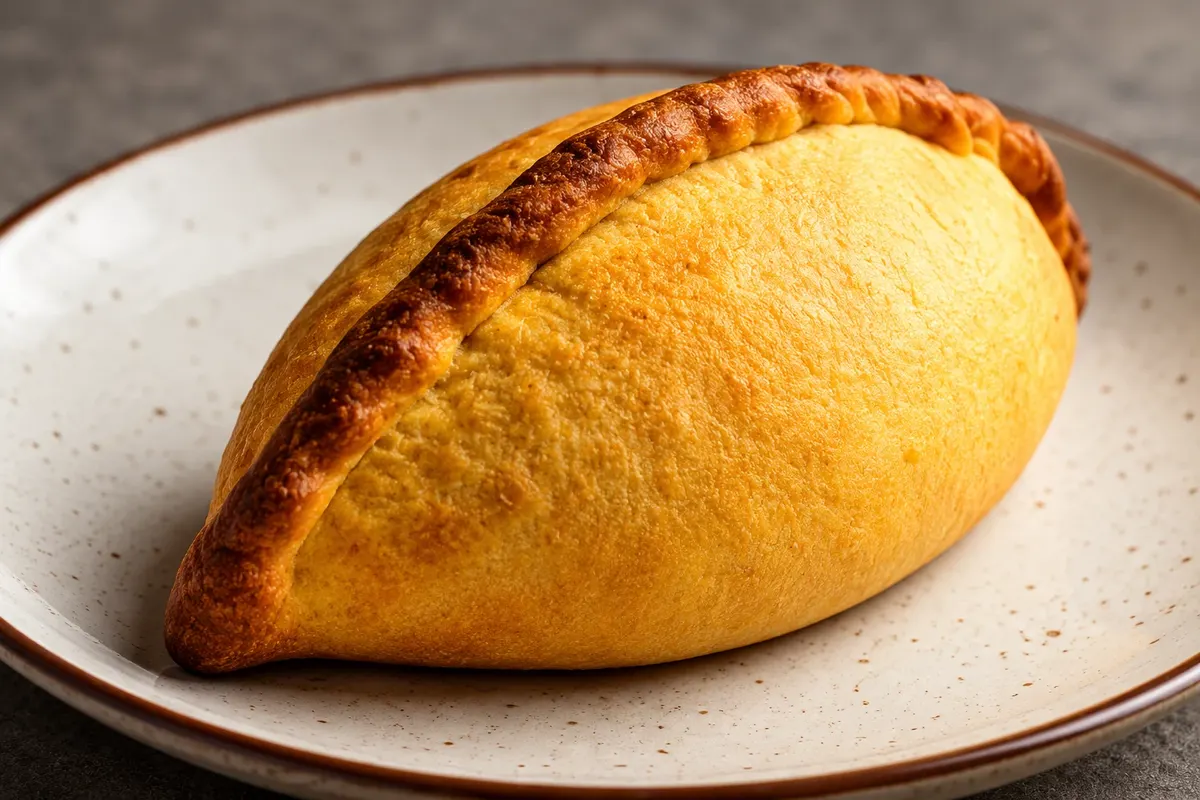
Baked empanada with a slightly sweet dough and a juicy filling of meat, potato, ají and broth, eaten mid-morning throughout Bolivia. Law 485 declared the salteña potosina a national heritage; its origin is disputed.
The local experience
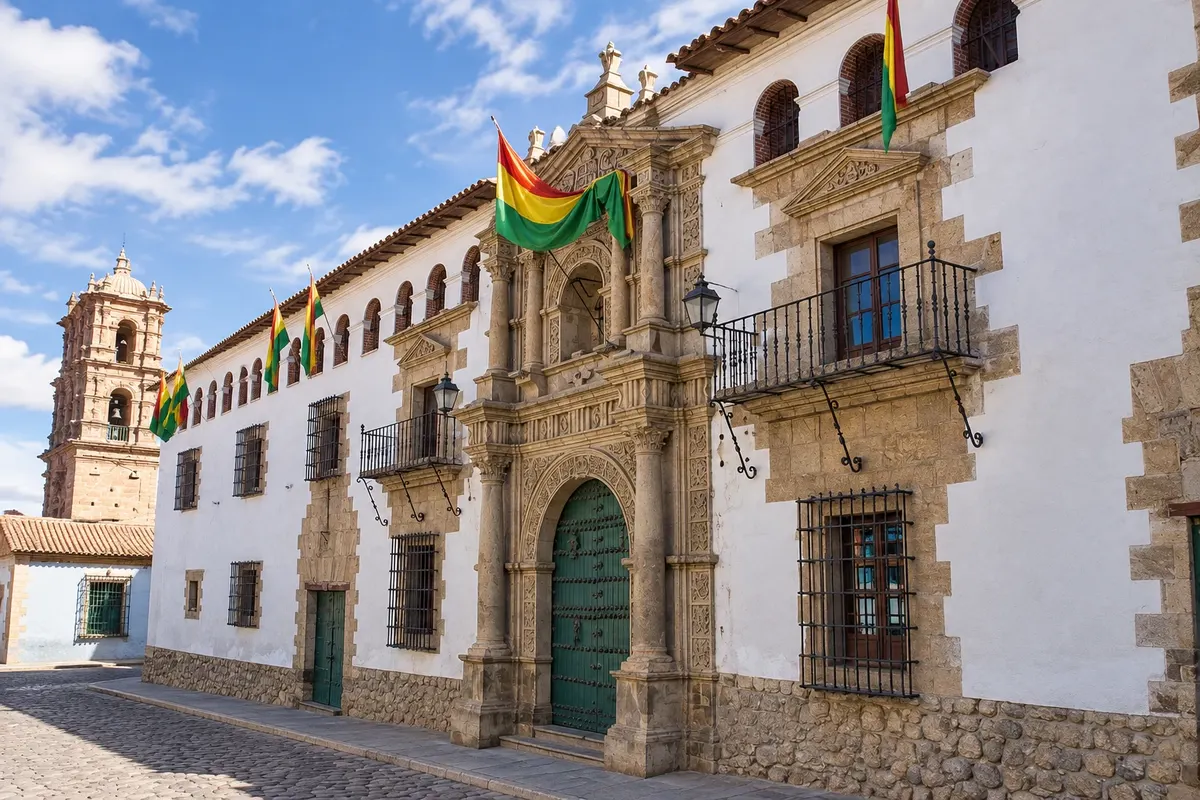
The old mint of Potosí, built from 1753 to 1773, where colonial silver was coined; today it's a museum with mule-powered minting machines, coins, colonial painting and the Mascarón in the courtyard.
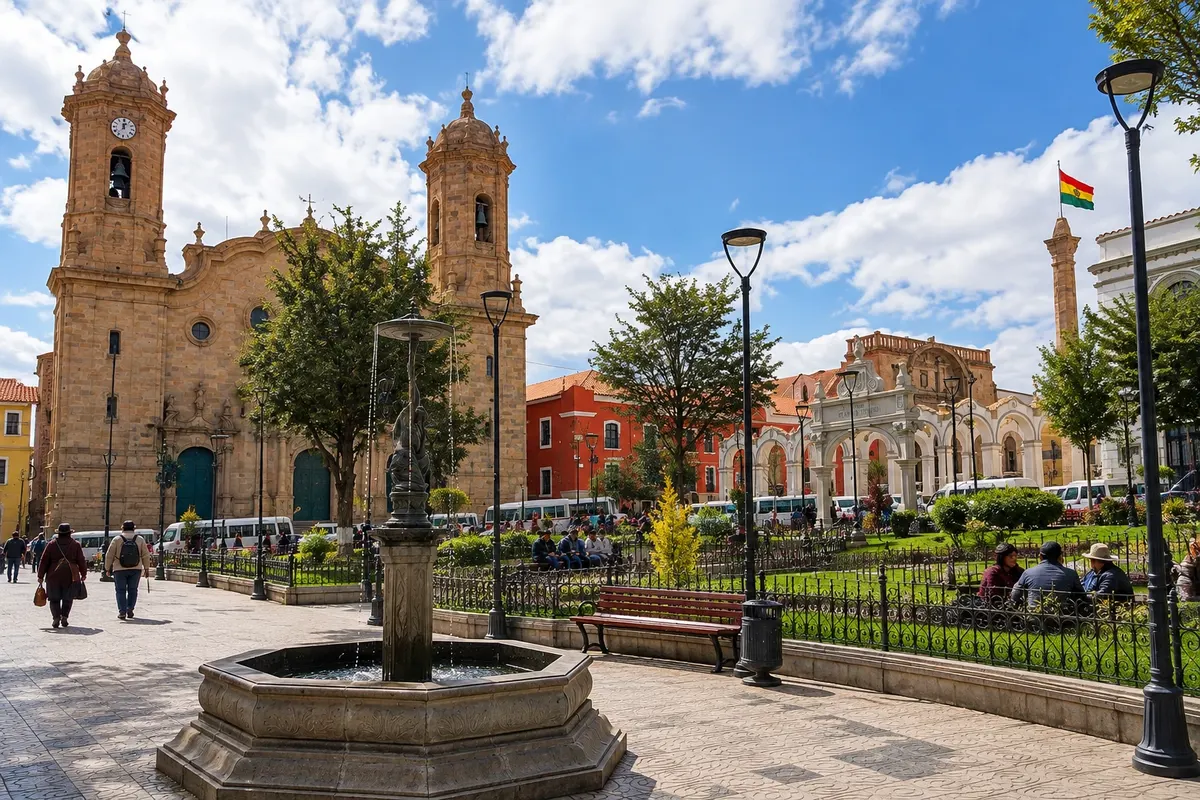
Potosí's central square, with the neoclassical Cathedral, the Cabildo and large houses with balconies, near the baroque tower of the Compañía de Jesús, which serves as a viewpoint for the Cerro Rico.
Carmelite convent founded in 1685, with a colonial art museum in the old rooms and cloisters, showing the life of cloistered nuns, daughters of Potosí's wealthy families.
The conical, reddish mountain of about 4,780 m to the south of Potosí, from which silver has been extracted since 1545, visible from almost the entire city and from the viewpoints of the downtown towers.