

 Brazil
 Argentina
 Bolivia
 Chile
 Colombia
 Ecuador
 Guyana
 French Guiana
 Falkland Islands (Malvinas)
 Paraguay
 Peru
 Suriname
 Uruguay
 Venezuela
 Germany
 Austria
 Croatia
 Denmark
 Spain
 Finland
 France
 Greece
 the Netherlands
 Hungary
 Ireland
 Iceland
 Italy
 Luxembourg
 Norway
 Poland
 Portugal
 the United Kingdom
 the Czech Republic
 Sweden
 Switzerland
 Turkey
 the United States
 Mexico
 the Dominican Republic
 South Africa
 Australia
 Fiji
Church · Mechelen, Antuérpia
Onze-Lieve-Vrouw-over-de-Dijlekerk
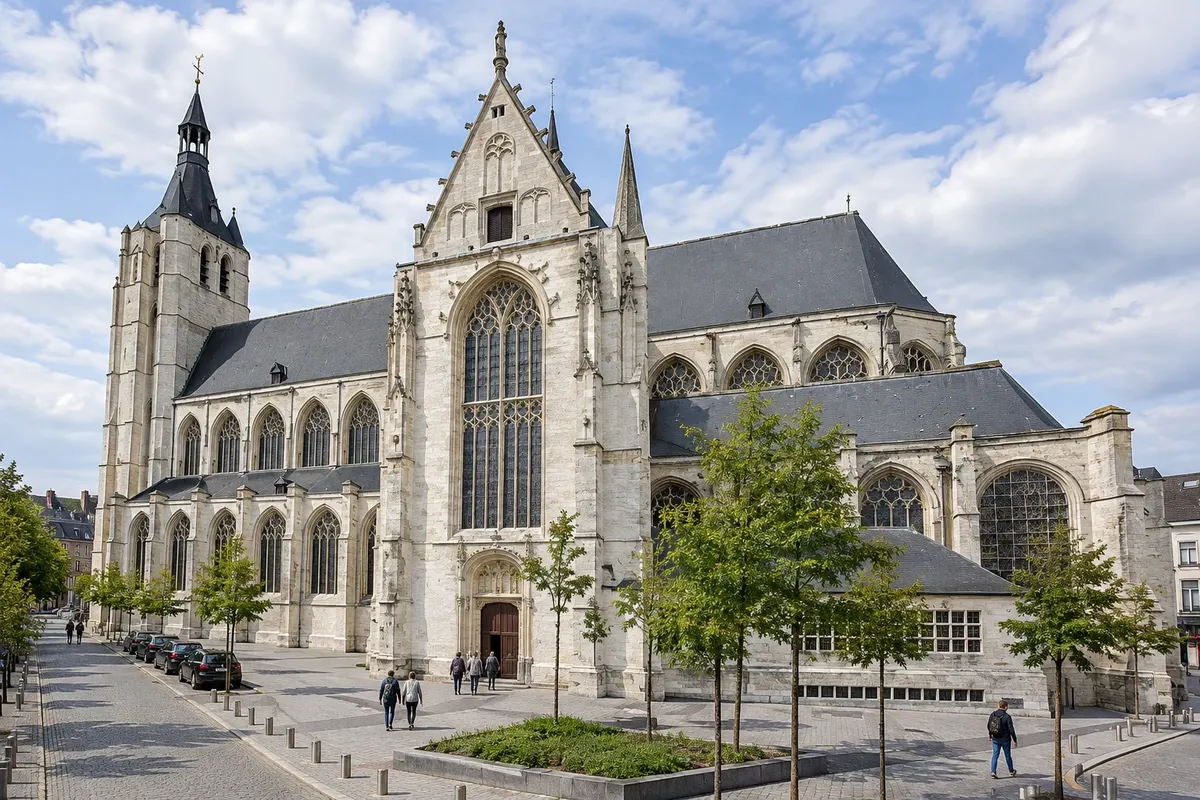
Gothic church on the south side of the Dijle river in Mechelen, featuring the triptych The Miraculous Draught of Fishes, which Rubens painted for the fishmongers' guild, and a 14th-century sculpture of Our Lady.
Illustrative images. The pictures in this guide are illustrations based on the real place, not photographs, and may differ from it.

Discover
About Onze-Lieve-Vrouw-over-de-Dijlekerk
The Onze-Lieve-Vrouw-over-de-Dijlekerk, the Church of Our Lady beyond the Dijle, stands at the end of Onze-Lieve-Vrouwestraat on the south bank of the river. It is the second largest church in Mechelen, in the Brabantine Gothic style, built mainly in the 14th and 15th centuries, probably on the site of the city's first parish church. The tower has a full carillon of 49 bells.
The work that draws visitors is The Miraculous Draught of Fishes, a triptych by Rubens commissioned by the fishmongers' guild, with a central panel about 3 metres high. The painting left Rubens's workshop in Antwerp in 1619 and has been in the church for more than 400 years, with a pause at the end of the 18th century when the French took it and later returned it.
Another old piece is Our Lady of the Crooked Hip, a 14th-century sculpture whose nickname refers to the posture of Mary. Much of the historic stained glass was lost in World War II and was replaced by coloured glass in the 1960s. The Baroque pulpit is by Willem Ignatius Kerrikx.
A few steps from the church, by the Fonteinbrug bridge, is one of the accesses to the Dijlepad, a walkway that runs along and over the river, including a floating section, between the Haverwerf and the botanical garden.
Before you go
Practical information
Cidade Turismo reviews its information regularly, but something may have changed. Check with the place before planning your trip.
How much time to set aside
About 30 minutes in the church; another 30–45 minutes if you want to walk the Dijlepad.
Best time
In general, visits are possible in the afternoon; check the opening days before you set out. The Dijlepad is nicer on dry days, as the access ramps can be slippery in the rain. Confirm times before you go.
How to get there
It's about 600 metres south of the cathedral, down Onze-Lieve-Vrouwestraat. From Mechelen station it's about a 10-minute walk.
Tip
Return to the centre via the Dijlepad: enter at the Fonteinbrug near the church and follow the walkway, including the floating section, to the Haverwerf, where the old riverside houses are located.
Official website
Get your questions answered
Frequently asked questions about Onze-Lieve-Vrouw-over-de-Dijlekerk
Which Rubens painting is in this church?
The triptych The Miraculous Draught of Fishes, commissioned by the fishmongers' guild and delivered by Rubens' workshop in 1619.
What is the Dijlepad?
A walkway that follows the river Dijle through central Mechelen, with a floating section, between the Haverwerf and the botanical garden. One of the entrances is next to the Fonteinbrug, near the church.