

 Brazil
 Argentina
 Bolivia
 Chile
 Colombia
 Ecuador
 Guyana
 French Guiana
 Falkland Islands (Malvinas)
 Paraguay
 Peru
 Suriname
 Uruguay
 Venezuela
 Germany
 Austria
 Croatia
 Denmark
 Spain
 Finland
 France
 Greece
 the Netherlands
 Hungary
 Ireland
 Iceland
 Italy
 Luxembourg
 Norway
 Poland
 Portugal
 the United Kingdom
 the Czech Republic
 Sweden
 Switzerland
 Turkey
 the United States
 Mexico
 the Dominican Republic
 South Africa
 Australia
 Fiji
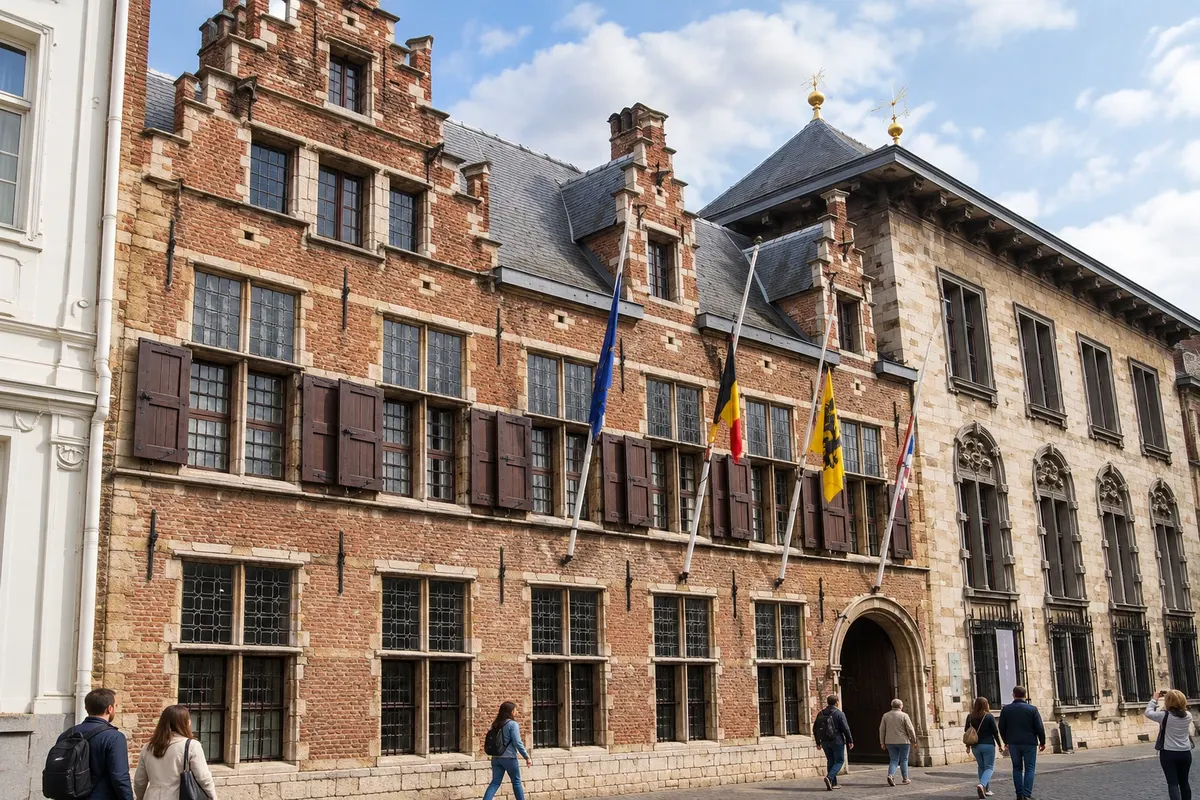
Museum · Antuérpia, Antuérpia
Rubenshuis
Pieter Paul Rubens’ house-museum in Antwerp city centre. The visit enters from Hopland and goes through the Rubens Experience, which includes the painter’s self-portrait, and the baroque garden with a portico and pavilion; beside it is the study library on Rubens.
Illustrative images. The pictures in this guide are illustrations based on the real place, not photographs, and may differ from it.

Discover
About Rubenshuis
Pieter Paul Rubens bought the Wapper property in 1610 and set up a residence there in the style of Italian villas, with a studio, inner courtyard and garden. The city of Antuérpia acquired the complex in 1937 and opened it as a museum in 1946.
The visit begins in the Hopland entrance building, designed by the Robbrecht en Daem firm. The facade mimics two large bookshelves, a reminder of the room where Rubens kept his collection, and three spiral staircases welcome visitors. There is the Rubens Experience, which tells the painter’s life as an artist, diplomat, husband and father, with life-size projections, interactive apps and collection pieces, including Rubens’s self-portrait.
The garden links the entrance building to the residence. The design, by the Ars Horti office, with colors suggested by the designer Dries Van Noten, follows the painting The Garden Stroll, painted by Rubens around 1630: two formal beds, marble urns, stone fountains, yew hedges and about 40 citrus trees in pots. At the back are the portico and garden pavilion designed in Rubens’s time, and from there you can see the house facade.
On the second floor of the Hopland building is the research library, with about 100,000 publications, old prints and documentation on Rubens and the artists of the period. The reading room overlooks the garden, and visitors may take books from the shelf and leaf through them on site.
Before you go
Practical information
Cidade Turismo reviews its information regularly, but something may have changed. Check with the place before planning your trip.
How much time to set aside
About an hour for the Rubens Experience and the garden. Allow more time if you want to go up to the library.
Best time
In spring, from April to May, when the garden’s historic tulips usually bloom. From August the citrus fruits usually ripen, and in autumn the leaves change color. The Rubens Experience, the garden and the library have different opening days: check before you go. Check before you go.
How to get there
The entrance is on Hopland, a street parallel to Meir in the shopping district. It’s about a ten-minute walk from Antwerpen-Centraal station. By tram, get off at Meir or Stadspark; by boat, the waterbus stops at Steenplein.
Tip
The Rubens Experience accepts groups by timed entry and has limited capacity: buy tickets online in advance and arrive fifteen minutes early. The ticket office does not accept cash, only card. In the garden you can listen to a roughly 45-minute podcast about the plants and the Baroque design.
Official website
Get your questions answered
Frequently asked questions about Rubenshuis
What can you see at the Rubenshuis?
The Rubens Experience, which tells the painter’s story through projections, apps and collection pieces such as the self-portrait; the Baroque garden, with its portico, pavilion and the view of the residence façade; and the research library on Rubens on the second floor of the Hopland building.
Do you need to reserve a visit to the Rubenshuis?
For the Rubens Experience, yes: entry is timed and capacity is limited, so it’s worth buying online. If the Rubens Experience is sold out, you can buy a ticket for the garden only. The library does not require a reservation.
Which painting is the Rubenshuis garden based on?
On The Walk in the Garden, which Rubens painted around 1630. The canvas shows beds divided by gates, a tulip meadow, citrus in pots and a fountain—elements that guided the garden’s design.