Drink · Burgenland
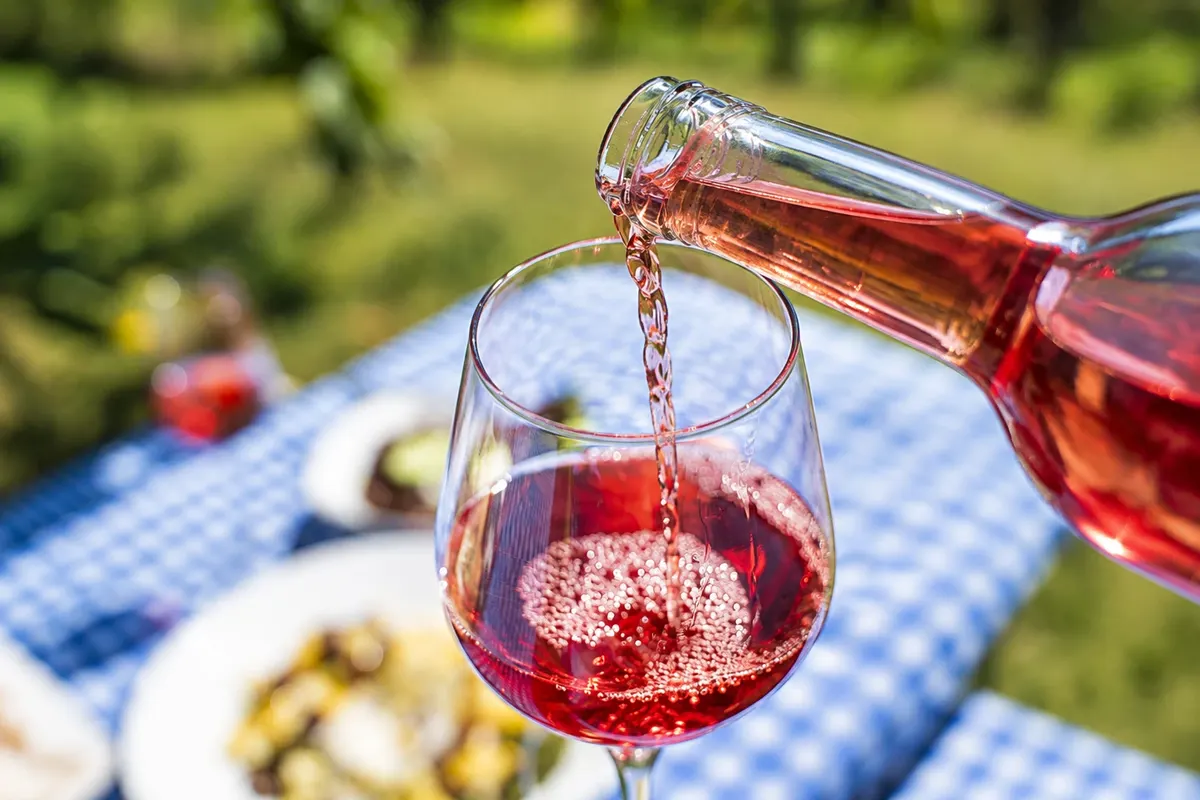
Uhudler
Wine from the southern Burgenland made from American vines planted after the phylloxera outbreak, with aromas of strawberry and wild berries. It was banned for decades and returned to sale in 1992.

 Search
 Brazil
 Argentina
 Bolivia
 Chile
 Colombia
 Ecuador
 Guyana
 French Guiana
 Falkland Islands (Malvinas)
 Paraguay
 Peru
 Suriname
 Uruguay
 Venezuela
 GermanyAustria
 Belgium
 Croatia
 Denmark
 Spain
 Finland
 France
 Greece
 the Netherlands
 Hungary
 Ireland
 Iceland
 Italy
 Luxembourg
 Norway
 Poland
 Portugal
 the United Kingdom
 the Czech Republic
 Sweden
 Switzerland
 Turkey
 the United States
 Mexico
 the Dominican RepublicTurkey
 South Africa
 Australia
 Fiji
Flavors · Viena
Dense chocolate cake, with apricot jam and a smooth chocolate coating, served with unsweetened whipped cream. The basic recipe is attributed to Franz Sacher, in 1832.
Traditional sweet from Viena, Viena
Also known as: torta Sacher, Sacher-Torte
Illustrative images. The pictures in this guide are illustrations based on the real place, not photographs, and may differ from it.

Click a photo to enlarge it.
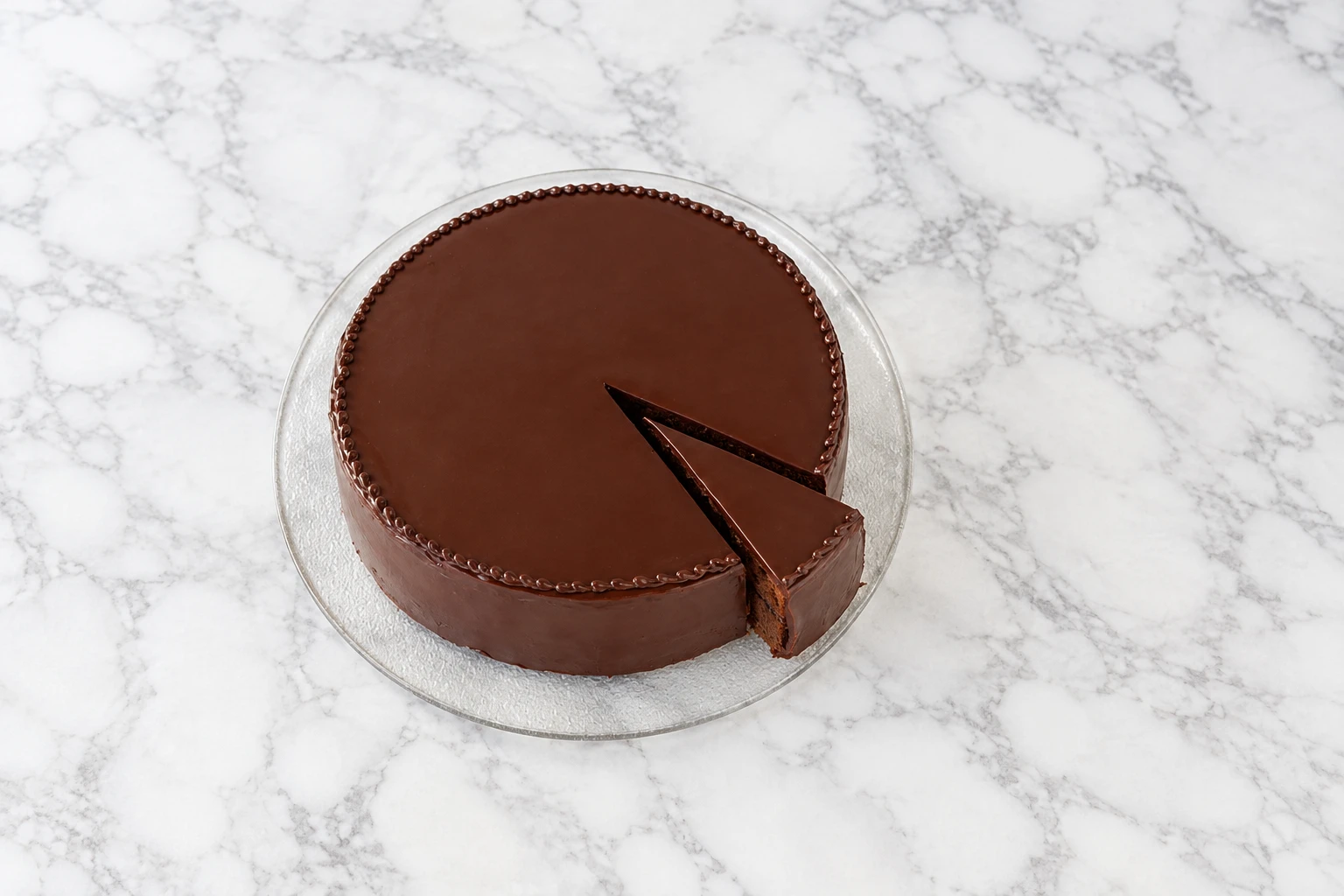
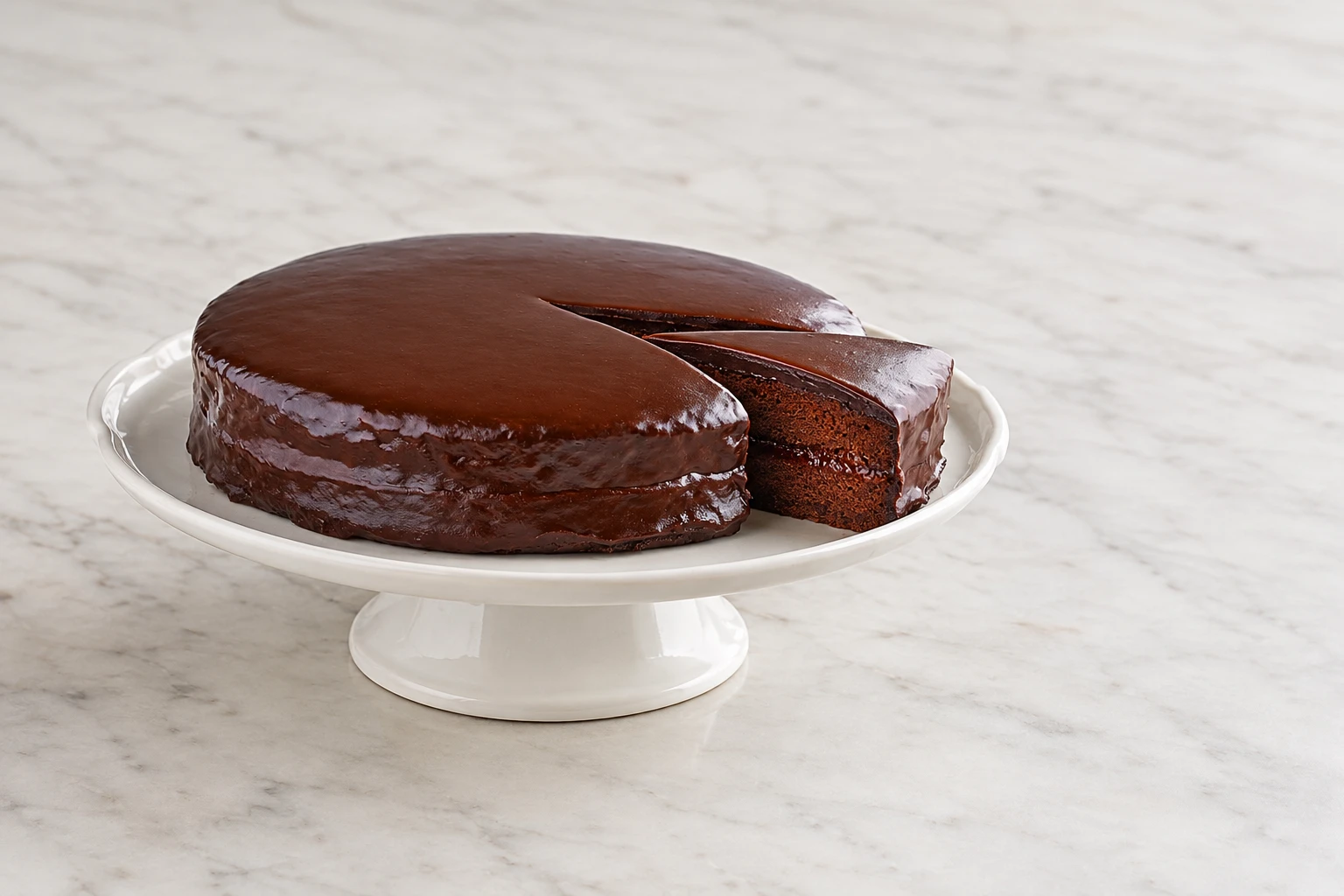
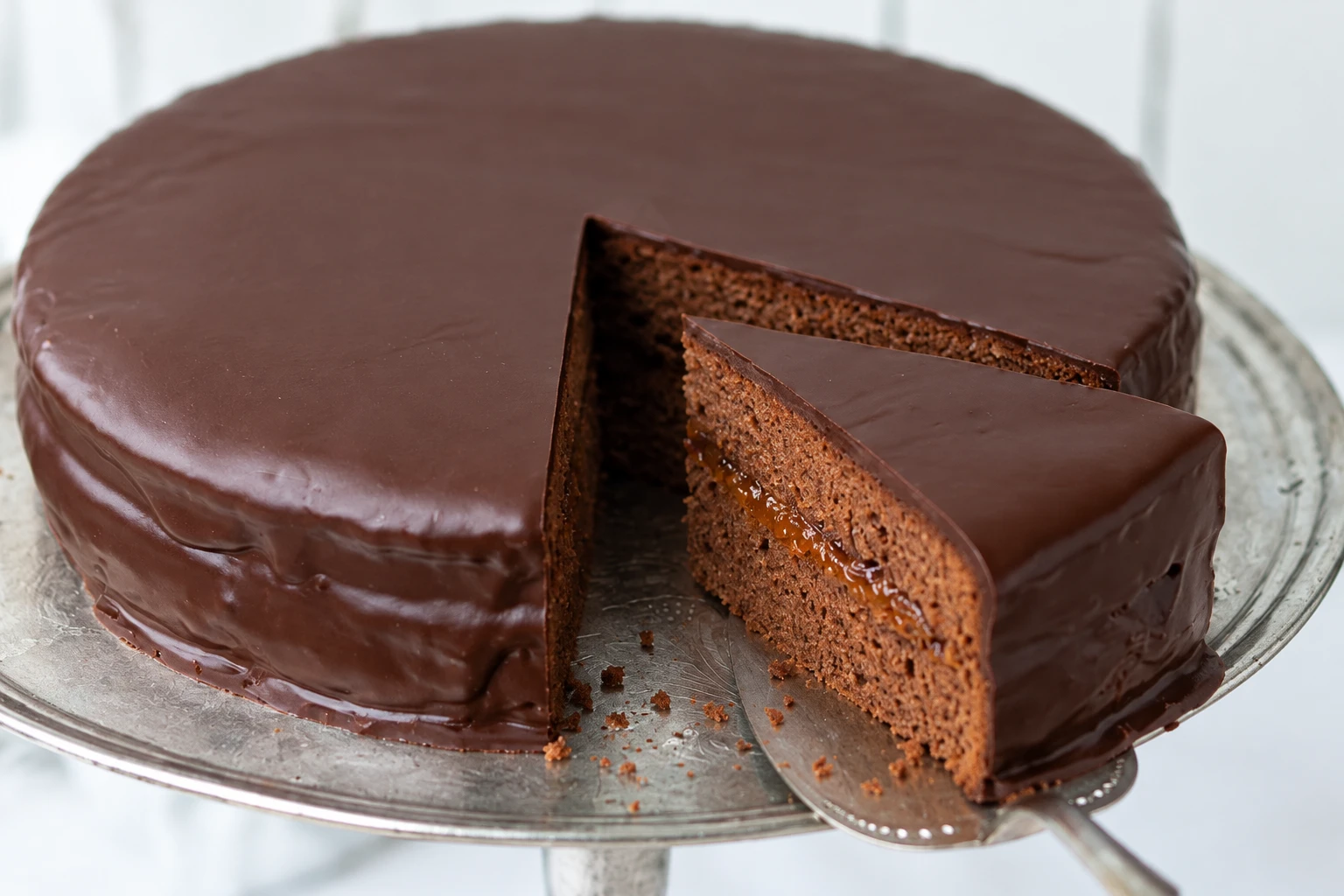
Sachertorte — Viena, Austria
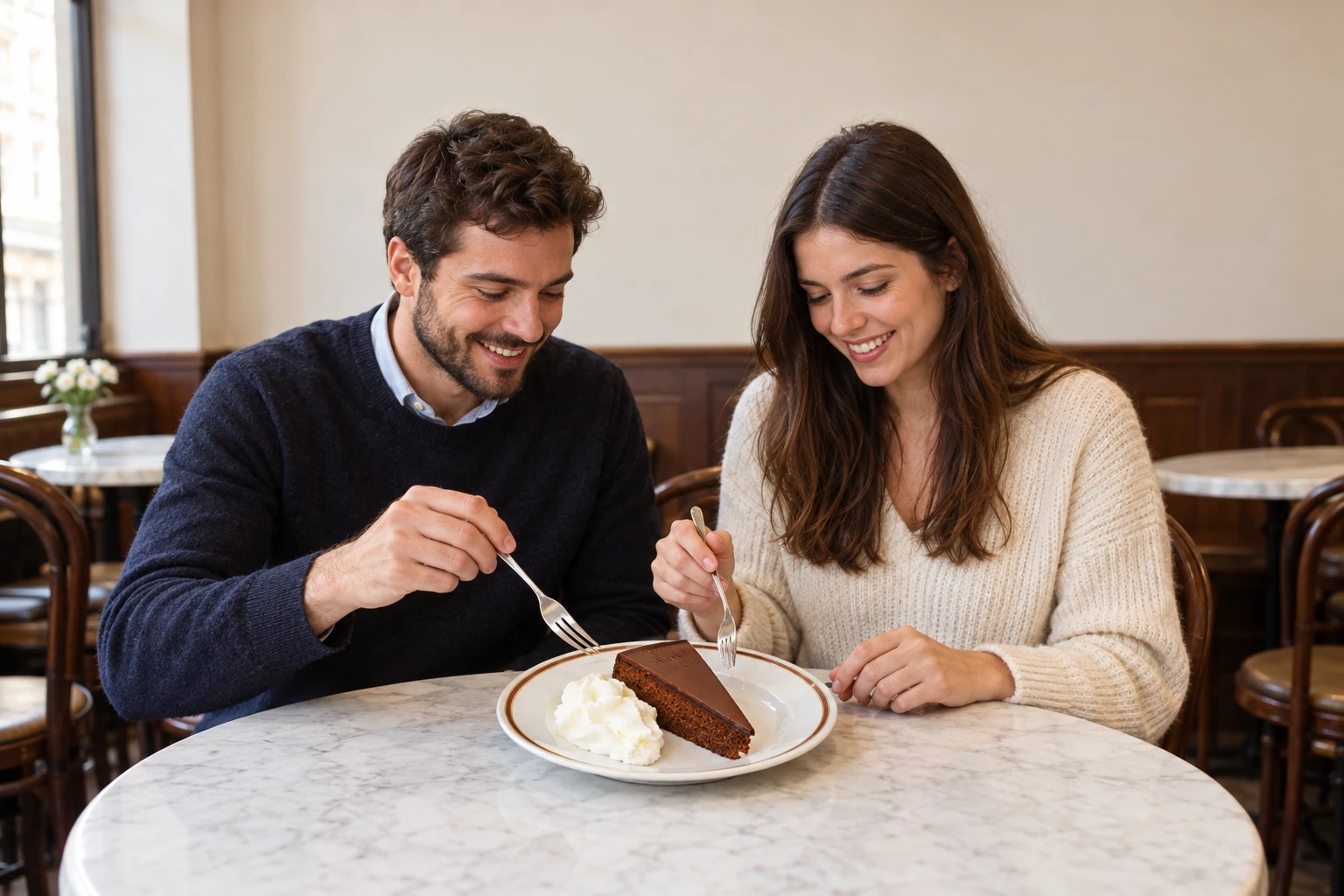
Sachertorte is a chocolate cake with a firm, slightly dry crumb, made with butter, eggs, sugar, flour and chocolate. After baking, it is covered with a layer of hot apricot jam on top and on the sides and then coated with a cooked sugar-and-chocolate icing that dries smooth and glossy. In many recipes the jam is also placed in the middle, between two cake layers.
The history told by the Traditional Foods Register of the Austrian Ministry of Agriculture begins in 1832. Prince Metternich, chancellor of the empire, asked the kitchen for a special dessert for his guests, and the task fell to Franz Sacher, a 16-year-old apprentice. He created the basic form of the cake.
Franz’s son, Eduard Sacher, learned the trade in a court confectionery and later opened a hotel in Vienna in 1876, which helped spread the cake worldwide. In the following decades the hotel and the pastry shop fought in court over the right to sell the cake as the original and over the question of the jam in the middle. The dispute ended in an agreement in 1963: both establishments continued making the cake, under different names and seals.
The name Sachertorte is not a registered trademark: pastry shops throughout Austria and cookbooks use it.
Viena , Viena
The Traditional Foods Register of the Austrian Ministry of Agriculture describes the Sachertorte as a typical Viennese chocolate cake, created in the city in 1832.
Butter, sugar, eggs, wheat flour and dark chocolate for the cake; apricot jam for the filling and the topping; sugar, water and chocolate for the icing.
Sliced, at room temperature, with a spoonful of unsweetened whipped cream (Schlagobers) on the side.
Cake served in slices, with unsweetened whipped cream.
Your questions
Tradition attributes the basic form to Franz Sacher, a 16-year-old kitchen apprentice, who is said to have created it in 1832 for a dinner for Prince Metternich. His son, Eduard, made it famous.
It depends on the recipe. Apricot jam is always placed on top, under the icing; many versions also put it in the middle of the cake. That difference was at the heart of a legal dispute in Vienna, settled by agreement in 1963.
With unsweetened whipped cream, which balances the chocolate.
Flavors of Austria
Wine from the southern Burgenland made from American vines planted after the phylloxera outbreak, with aromas of strawberry and wild berries. It was banned for decades and returned to sale in 1992.
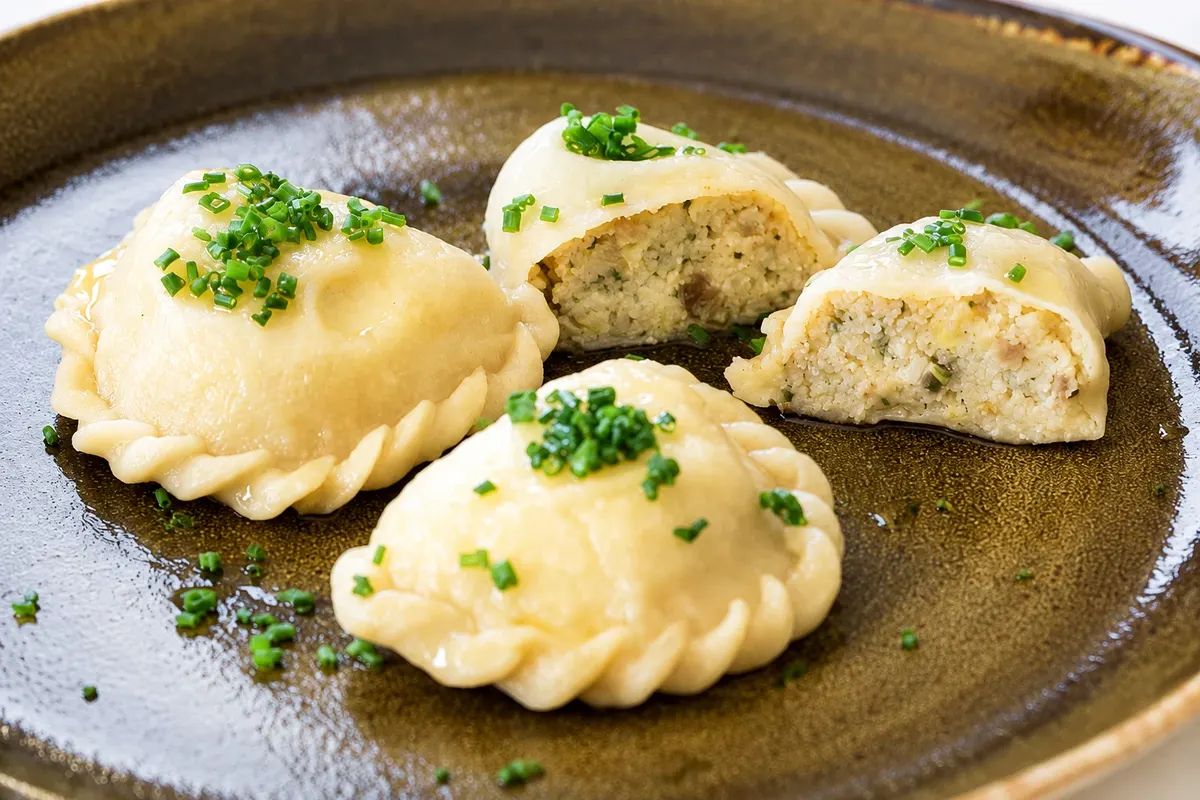
Dough filled with dry farmer’s cheese (requeijão seco), potato and herbs like mint and chervil, sealed with a hand-braided edge and served with melted butter. It is the dish most associated with Carinthia.
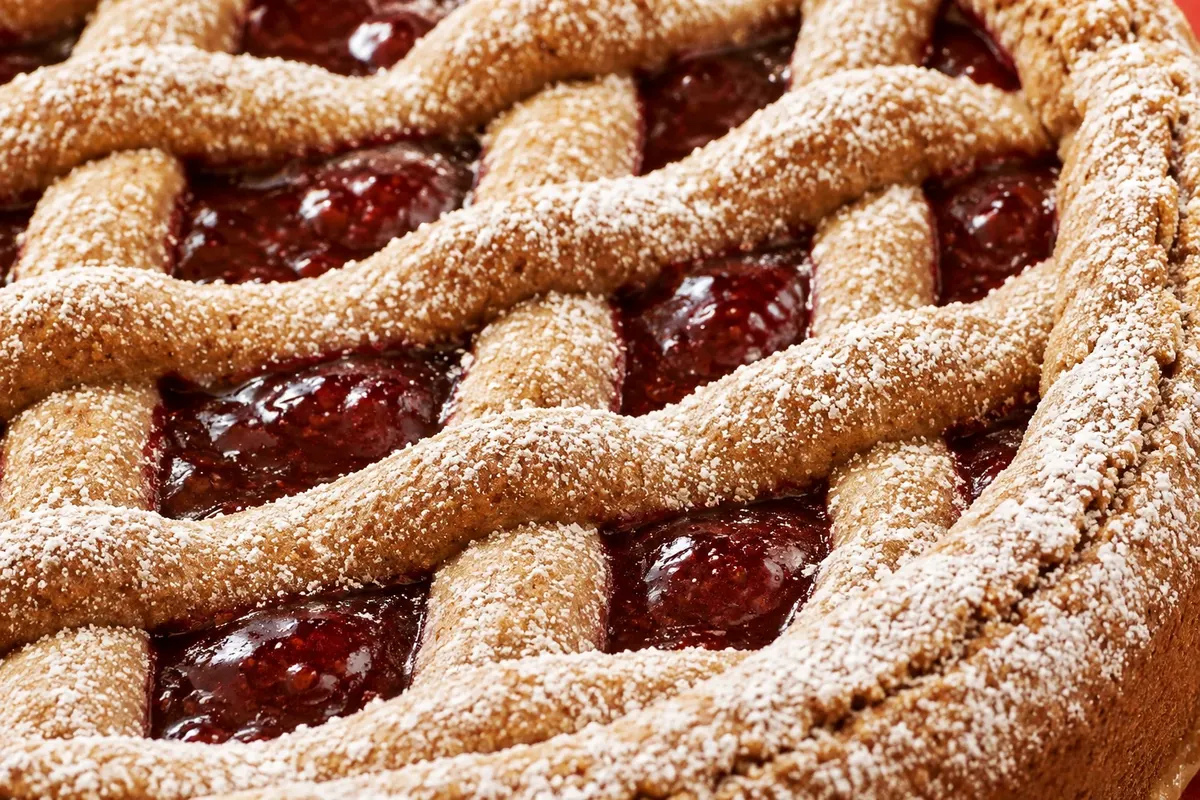
Shortcrust tart with butter dough and ground almonds or hazelnuts, filled with currant jam and topped with a lattice of dough. Its oldest known recipe dates from 1653.
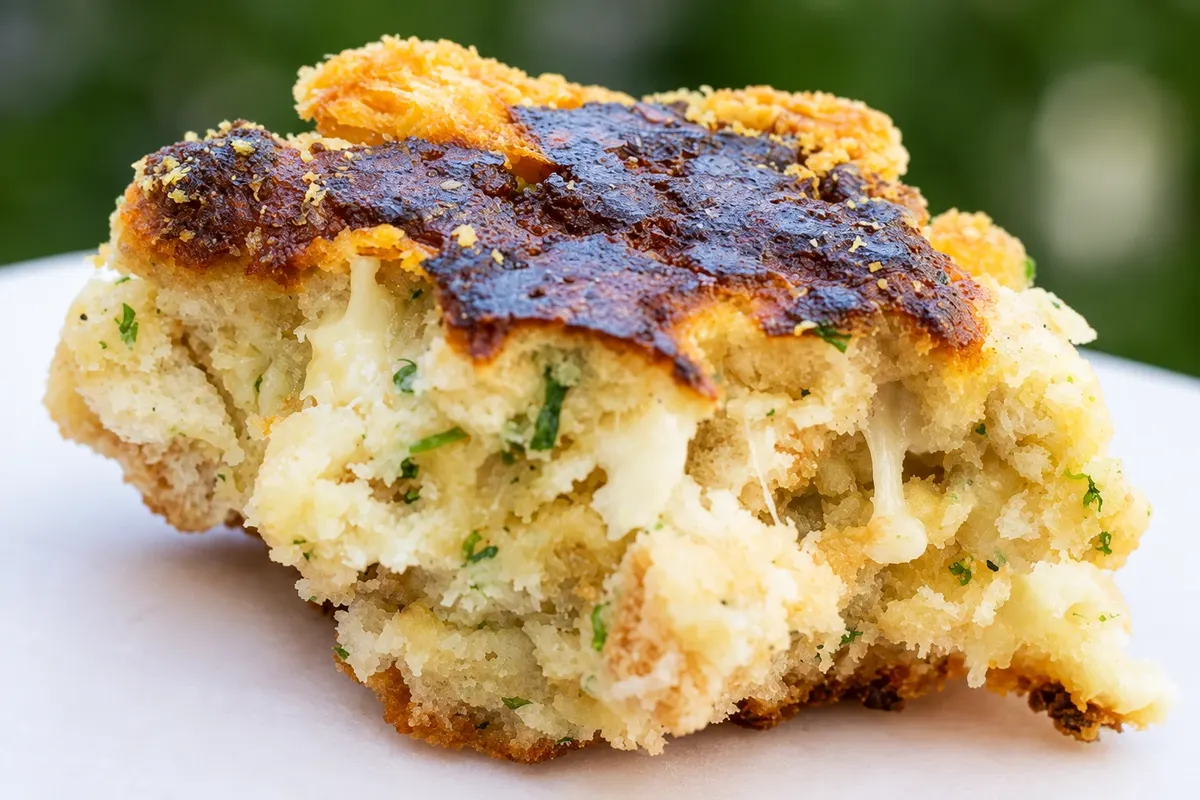
Flattened dumplings made from day‑old bread, cheese, eggs and onion, browned in butter and served in beef broth or with a green salad. A dish from the Pinzgau mountains in Salzburg.
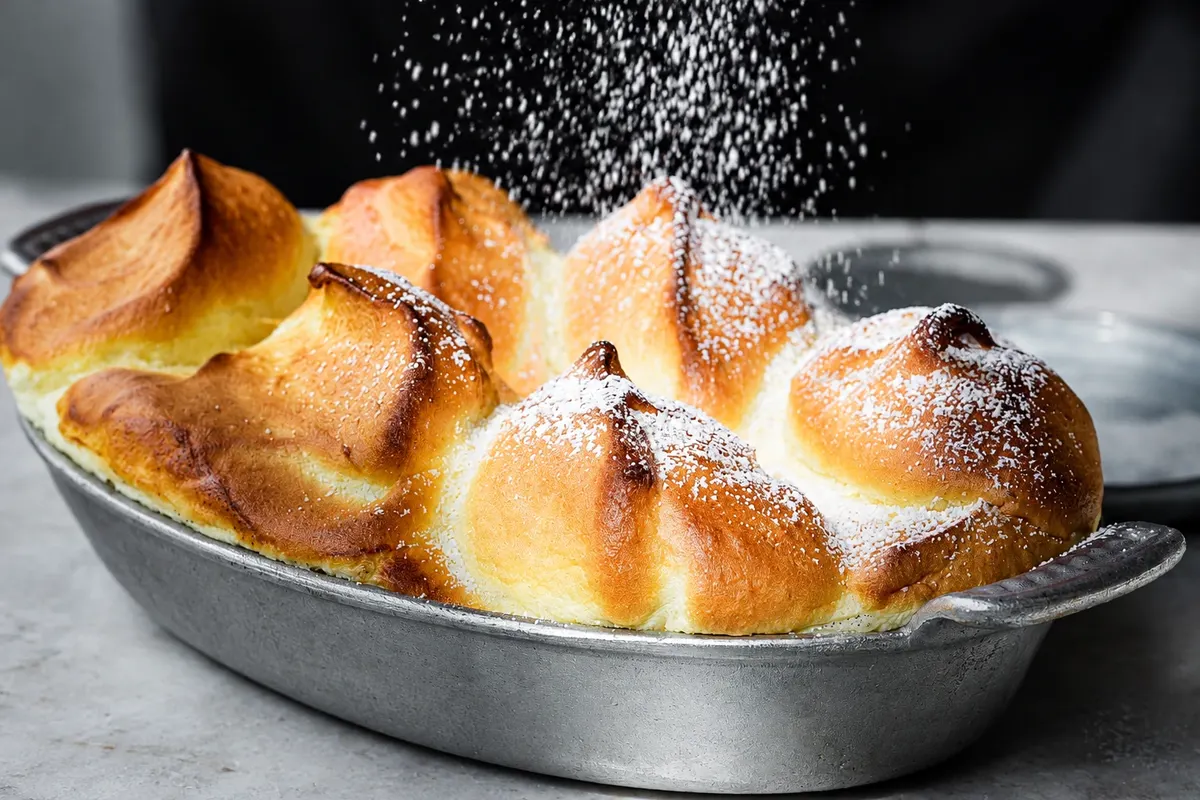
Sweet soufflé made from beaten egg whites, yolks, sugar and a little flour, baked into three golden mounds and dusted with sugar. It is brought to the table as soon as it comes out of the oven.
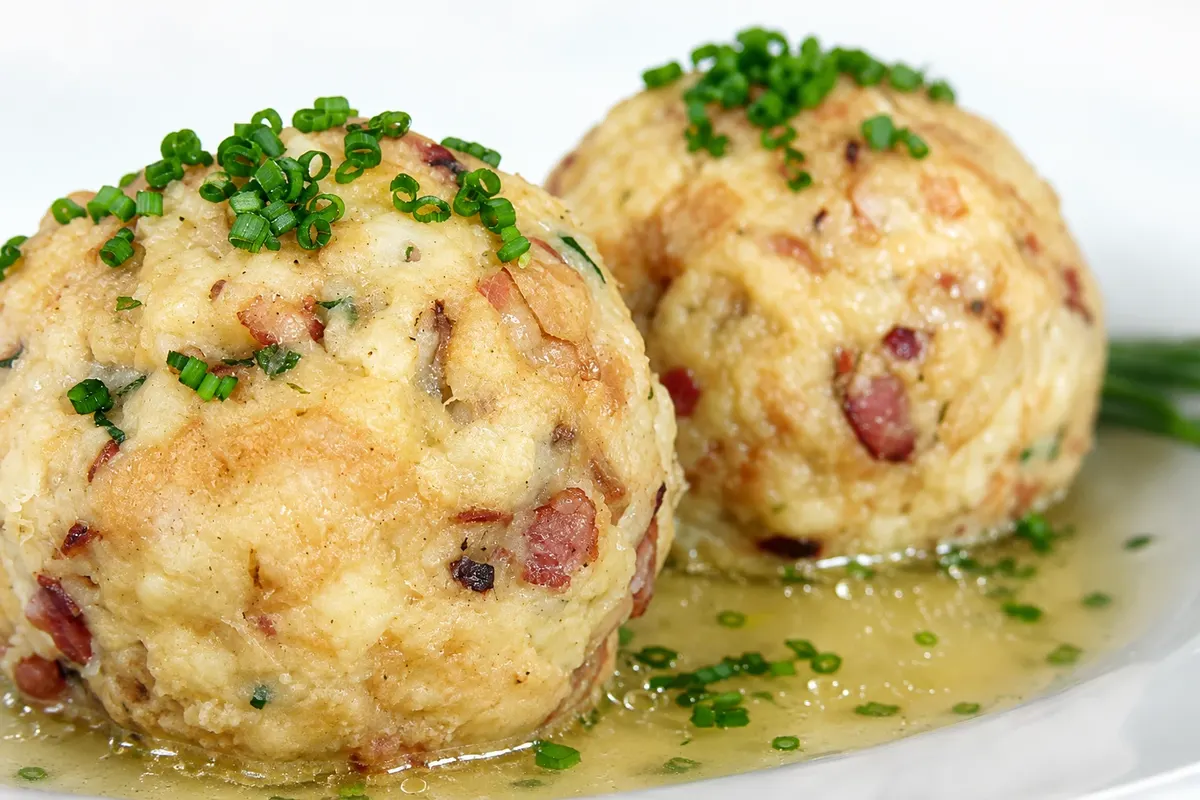
Bread dumplings made from day‑old bread with smoked bacon, eggs, milk and chives, cooked in water and served in the broth or with cabbage salad. Tirol tourism calls them a state classic.
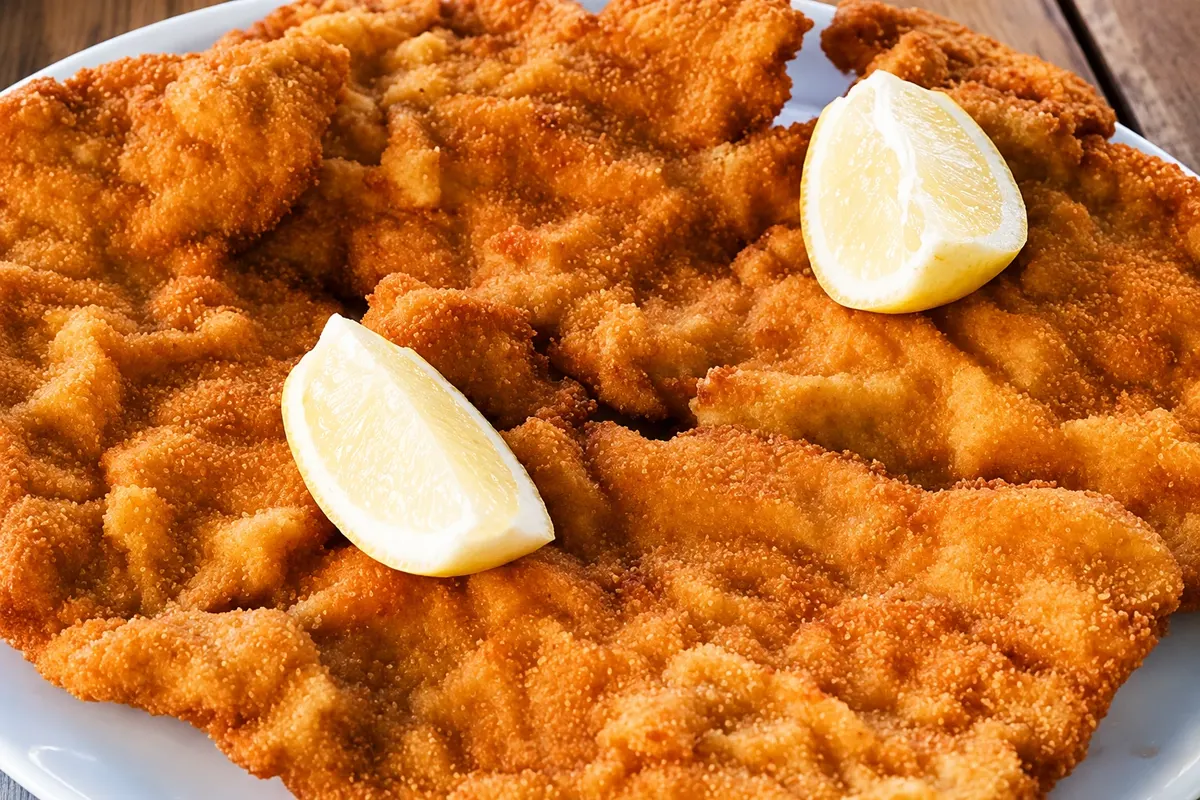
Veal pounded very thin, coated in flour, egg and breadcrumbs and fried until the crust is golden and separates from the meat. By Austrian regulation, the name applies only to the veal version.
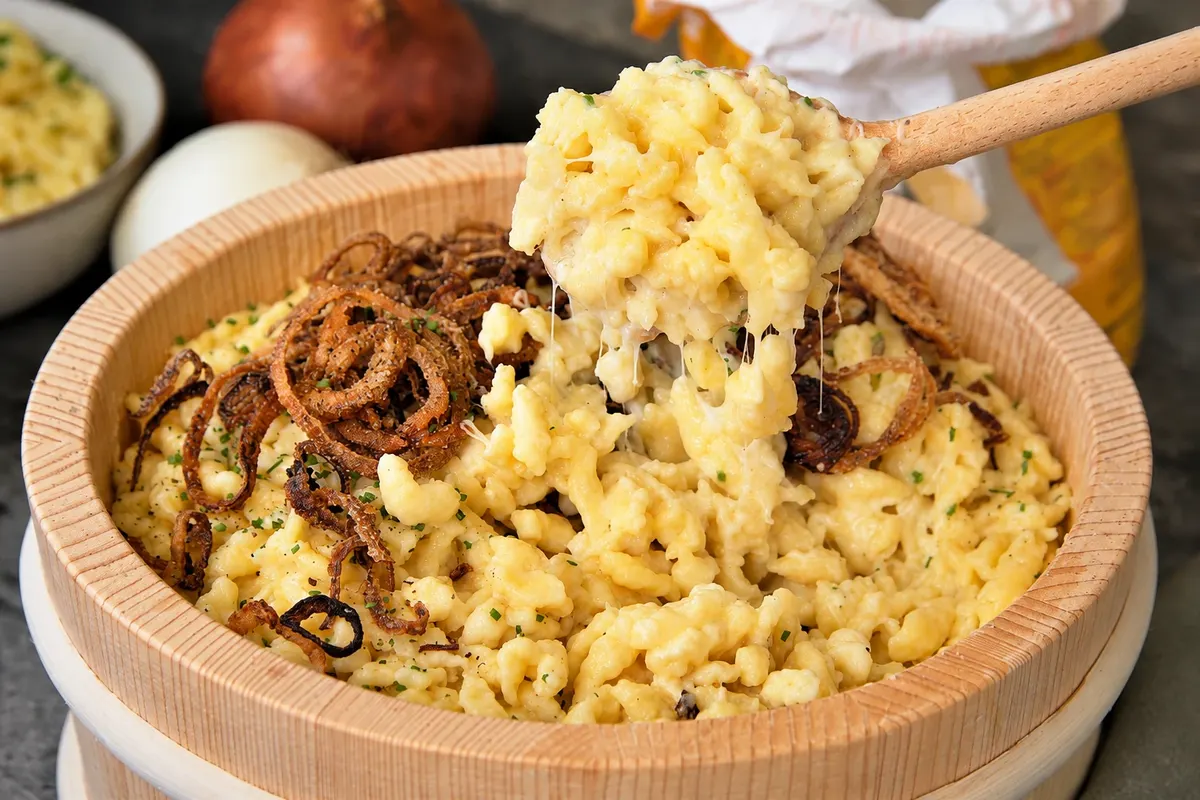
Small cooked egg dumplings assembled in layers with melted mountain cheeses, topped with fried onion. Vorarlberg tourism calls them the state's traditional cheese dish.