

 Brazil
 Argentina
 Bolivia
 Chile
 Colombia
 Ecuador
 Guyana
 French Guiana
 Falkland Islands (Malvinas)
 Paraguay
 Peru
 Suriname
 Venezuela
 Germany
 Austria
 Belgium
 Croatia
 Denmark
 Spain
 Finland
 France
 Greece
 the Netherlands
 Hungary
 Ireland
 Iceland
 Italy
 Luxembourg
 Norway
 Poland
 Portugal
 the United Kingdom
 the Czech Republic
 Sweden
 Switzerland
 Turkey
 the United States
 Mexico
 the Dominican Republic
 South Africa
 Australia
 Fiji
Historic cemetery · Paysandú, Paysandú
Monument to Perpetuity
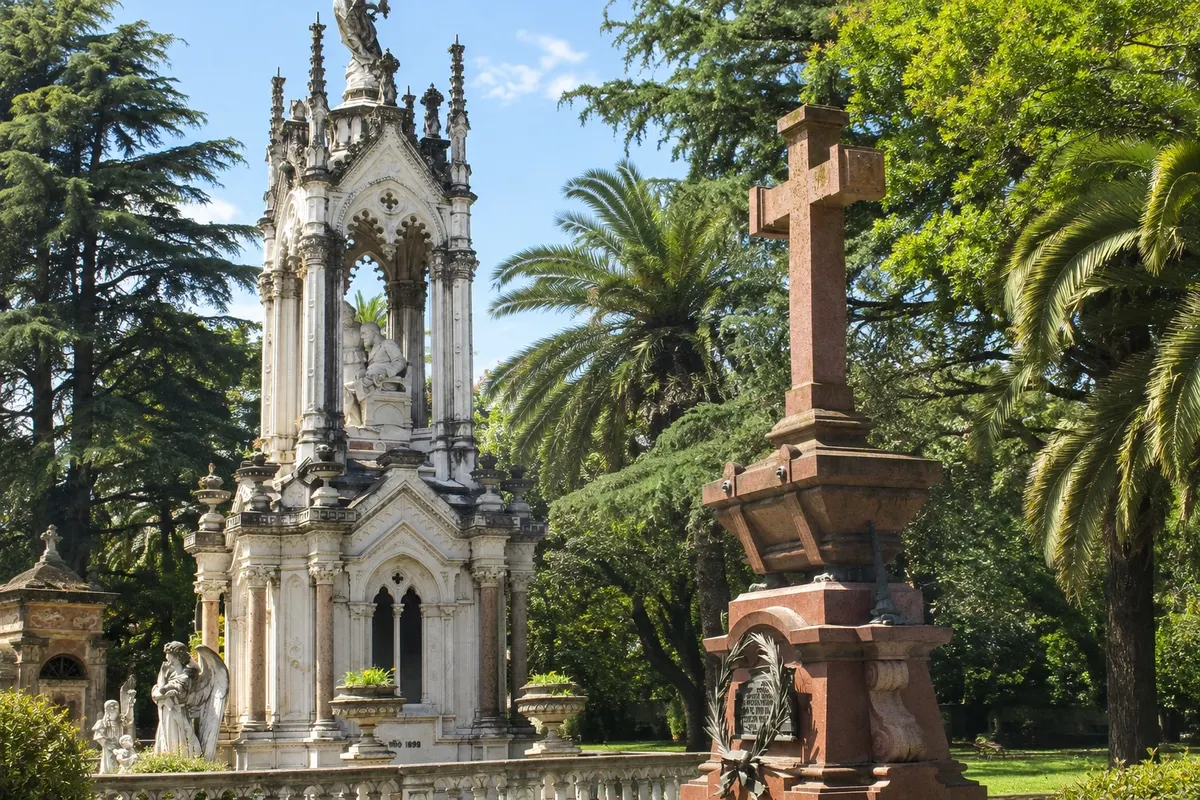
The old cemetery of Paysandú, used from 1835 and turned into an open-air museum, with about 80 pantheons and sculptures in Italian marble. It is a national historic monument.
Illustrative images. The pictures in this guide are illustrations based on the real place, not photographs, and may differ from it.

Discover
About Monument to Perpetuity
Known in the city as the "Cementerio Viejo," the Monumento a Perpetuidad began receiving burials in 1835, when Paysandú was still a small village. The chapel, with simple lines reminiscent of the Uruguayan countryside, was built in 1859 by Francisco Poncini.
In 1867, because it was seven blocks from the main square, the city council decided to close the cemetery and open another. On December 2, 1881, a law declared it a departmental public monument "in perpetuity," which is where the name comes from. In 1887 the site began to be transformed into a European-inspired necropolis, with a project by surveyor José M. Guerrin.
The complex includes about 80 family pantheons and niches of ranchers, merchants, military figures, and politicians from the 19th century. The sculptures came from Italy, with works by Giovanni del Vecchio and José Livi: angels, saints, and lions in Carrara marble, granite, and bronze, featuring Masonic and Catholic symbols. The graves of those who died defending the city during the 1864–1865 siege are also there.
It was declared a national historic monument in 2004 and operates as a museum, with guided visits and activities throughout the year.
Before you go
Practical information
Cidade Turismo reviews its information regularly, but something may have changed. Check with the place before planning your trip.
How much time to set aside
About 1 hour to walk through the pantheons and the chapel; longer with a guided visit.
Best time
During the day, with light to see the sculpture details. There are guided visits and special activities on some dates; hours vary, check before you go.
How to get there
It is on Montecaseros Street, between General Artigas and Avenida Soriano, seven blocks from the main square. You can walk there from downtown.
Tip
Take the guided visit if it is offered on the date: guides explain the sculpture symbols and the families' histories. Notice the pantheon of Luis Galán y Rocha in the center of the grounds.
Get your questions answered
Frequently asked questions about Monument to Perpetuity
What is the Monumento a la Perpetuidad in Paysandú?
It is the city’s former cemetery, used from 1835 and declared a public monument “in perpetuity” in 1881. Today it functions as an open-air museum, with pantheons and 19th-century sculptures.
Who made the sculptures at the Monumento a la Perpetuidad?
Many came from Italy; among the artists are Giovanni del Vecchio and José Livi. There are angels, saints and lions in Carrara marble, granite and bronze.
Are burials still performed at the Monumento a la Perpetuidad?
No. The cemetery was closed to new burials in the 19th century and today is a museum and national historic monument.