Konya
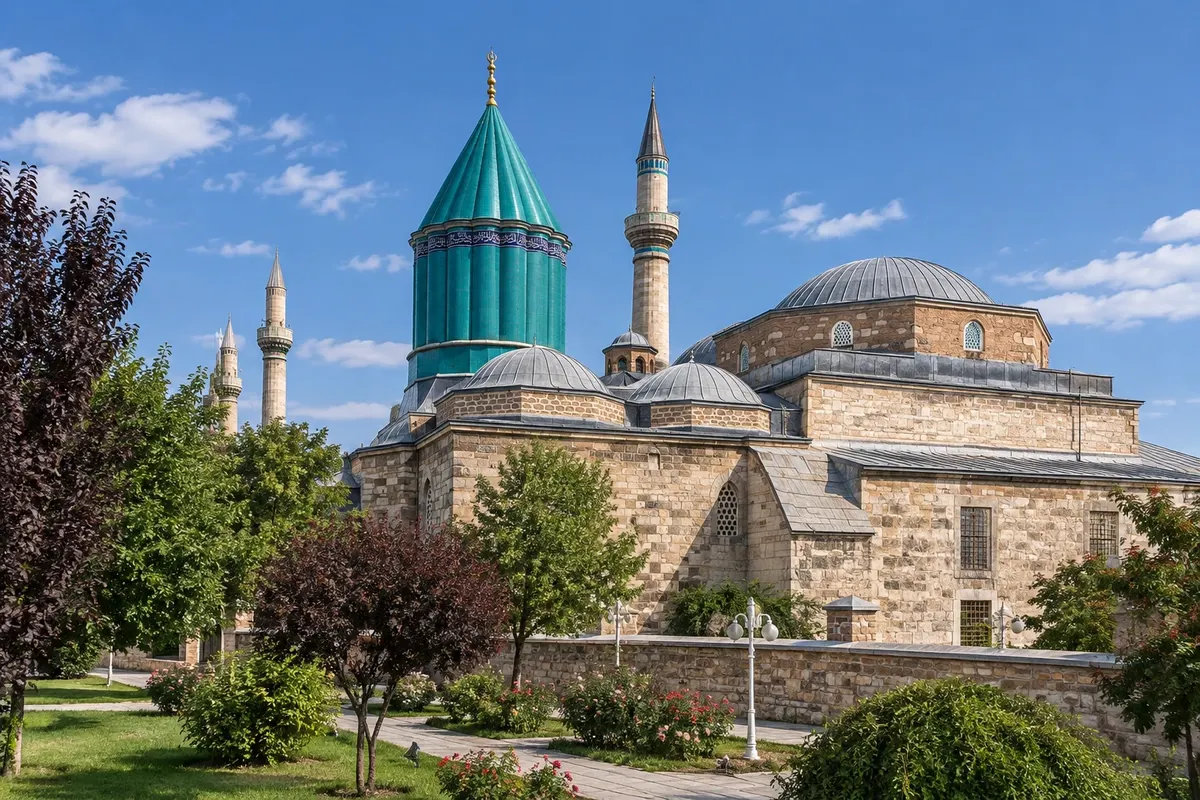
Konya’s main visitor attraction is the Mevlana Museum, associated with the poet Rumi and the Mevlevi tradition. The old Karatay madrasa showcases Seljuk art; outside the urban core, Çatalhöyük takes the itinerary to the Neolithic settlement.
Konya · Turkey
The legacy of Rumi meets Seljuk art and Neolithic archaeology in Konya.
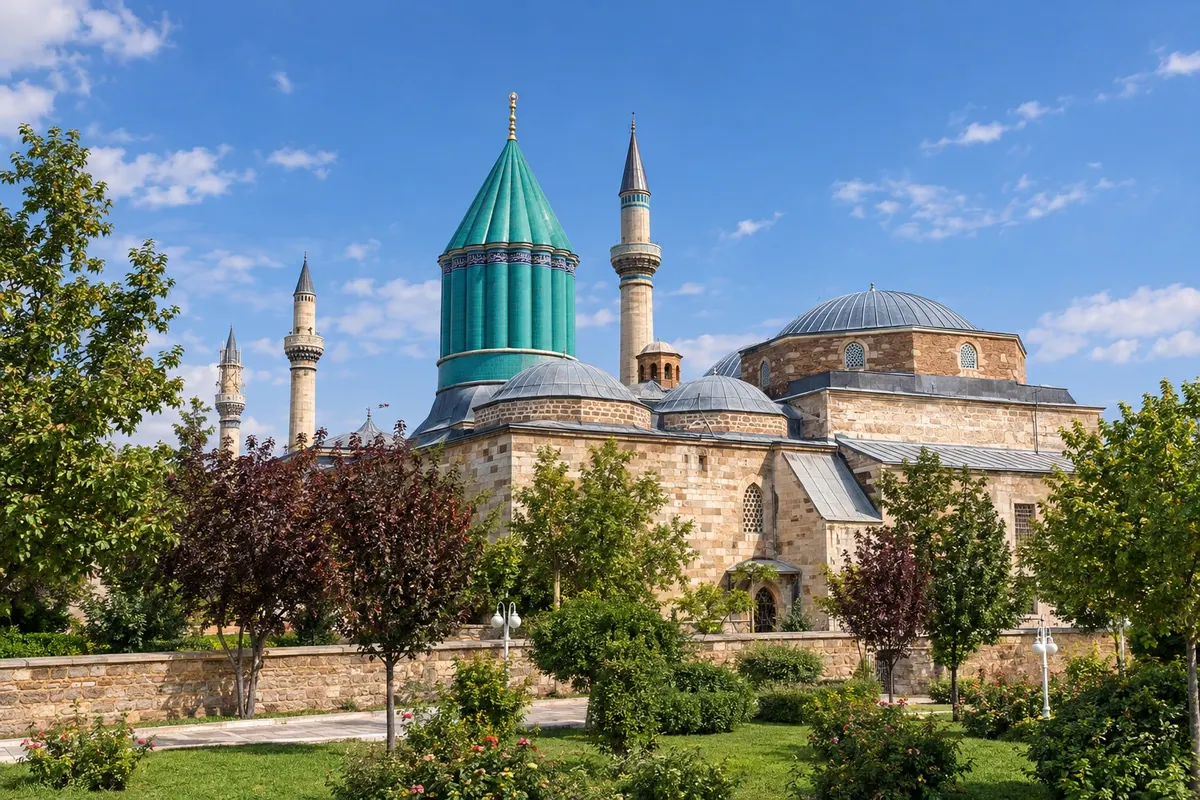
In the photo: Museu Mevlâna, Konya
Illustrative images. The pictures in this guide are illustrations based on the real place, not photographs, and may differ from it.
Get to know the place
Konya brings the traveler close to Rumi’s legacy, the Mevlevi tradition, and Seljuk architecture.
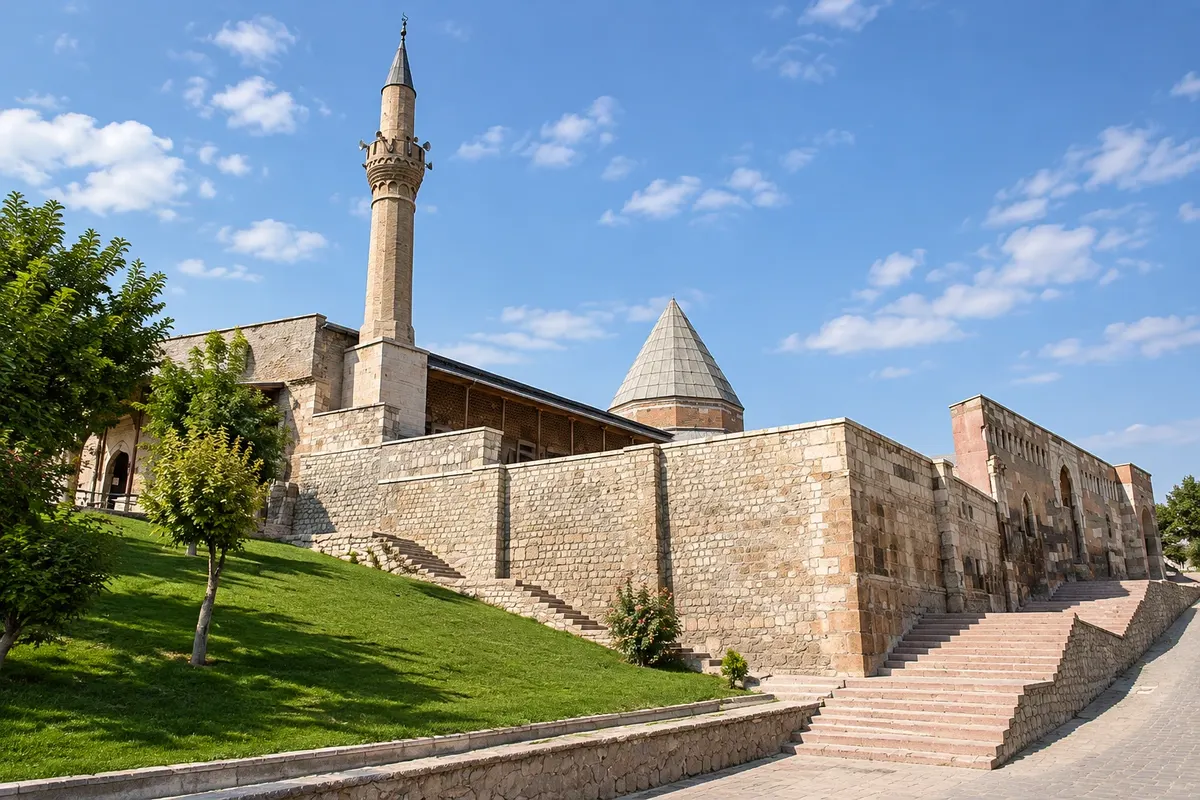
The city also preserves buildings from the period when it was the capital of the Seljuks of Anatolia, allowing visitors to combine art, architecture, and religious history on walks through the central core.
The sema ceremony, associated with the whirling dervishes, is part of a spiritual tradition. Attendance depends on the schedule: arrange date and place in advance and do not assume that visiting the mausoleum includes a performance.
Outside the city, Çatalhöyük presents remains of one of the Neolithic communities studied on the Anatolian plateau. The archaeological outing requires private or hired transport. Konya lies on the Asian side of the country, where the plateau typically has dry summers and cold winters.
This destination brings together 1 city: Konya.
One destination, many paths
Start with one city or combine several in your itinerary.
Boundaries: Natural Earth (public domain). Marmara and Princes' Islands: geoBoundaries / © OpenStreetMap contributors (CC BY-SA). Adapted by Cidade Turismo.
✈ Konya Havalimanı (KYA), in Konya · 20 km to Konya
Konya has the KYA airport and high-speed train connections with other Turkish cities, depending on the route. From the terminal or the station, continue by local public transport or taxi. Çatalhöyük is outside the urban core and requires a stretch by road.
The local experience
Rumi’s mausoleum and mevlevi tradition spaces in a complex topped by a turquoise dome in central Konya.
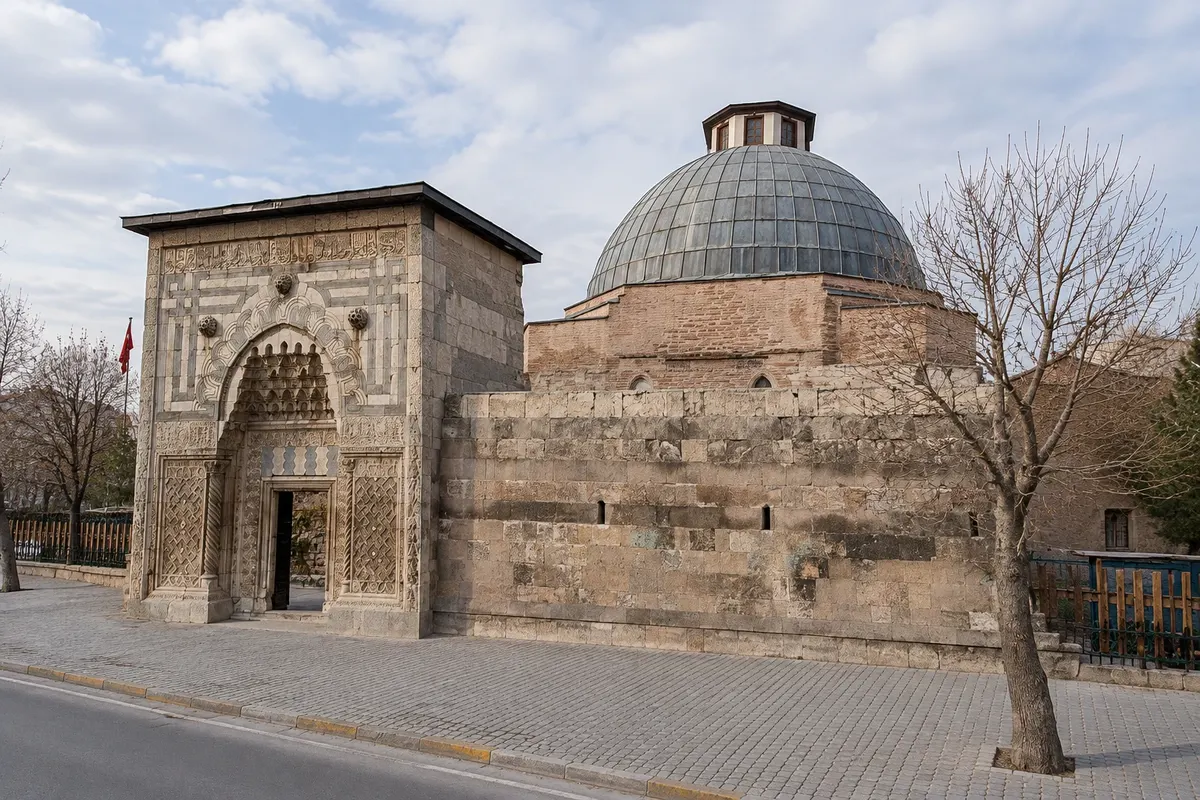
Former Seljuk religious school, with ceramic decoration and architecture organized around a courtyard.
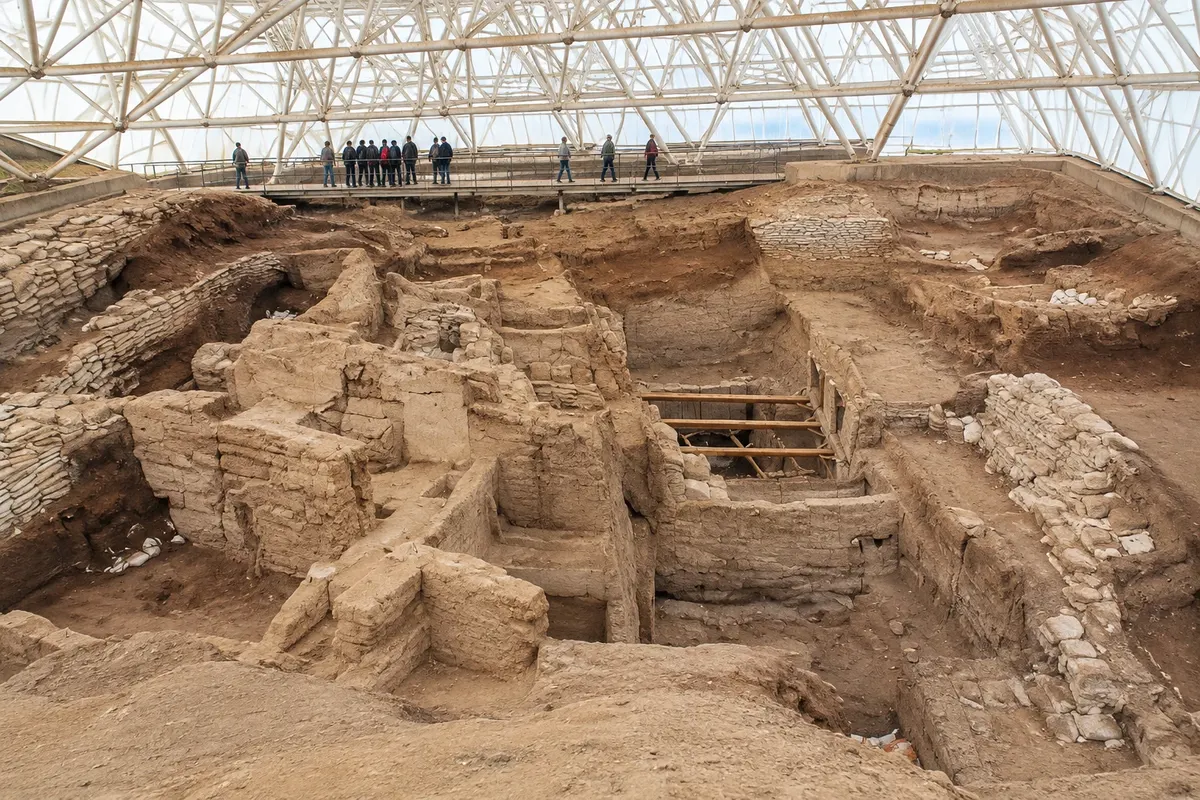
Clustered houses and occupation layers reveal the life of a Neolithic community on the Konya plateau.
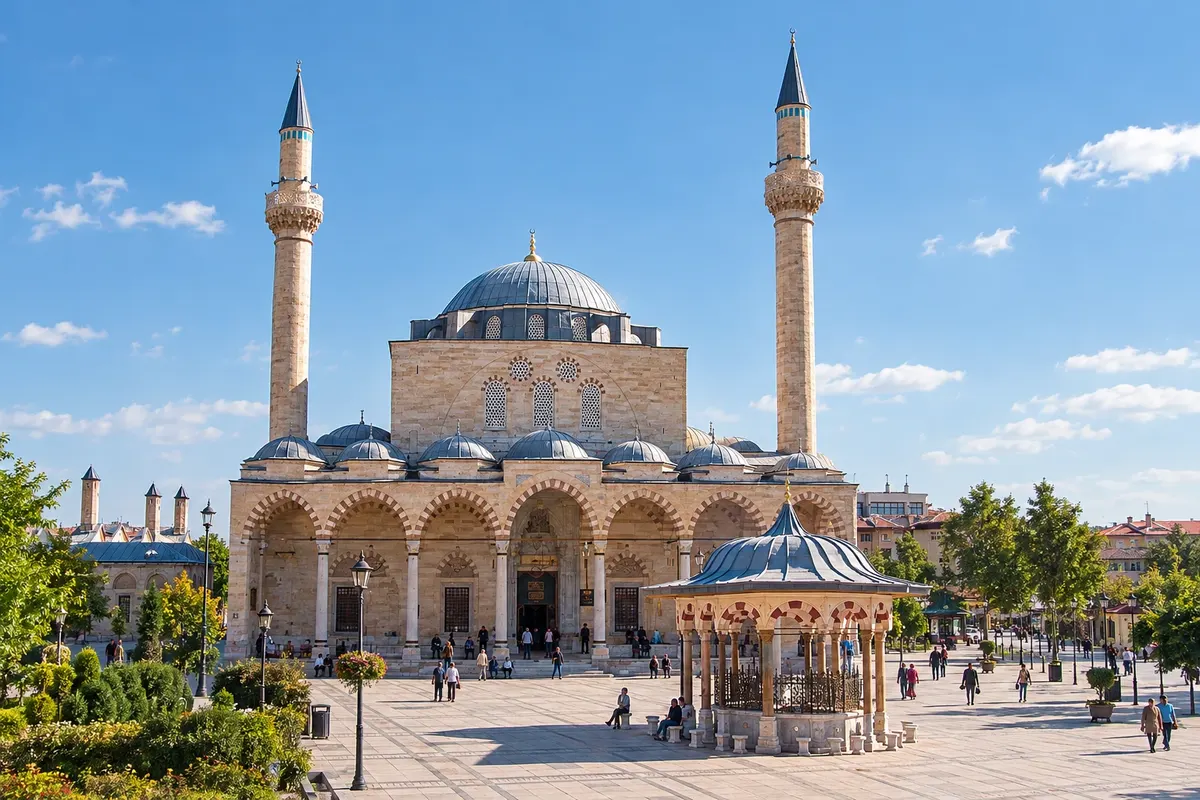
A mosque associated with the Seljuk period occupies Konya’s central hill, featuring worship spaces and historic architecture.
Before you go
A little planning leaves more time to enjoy the journey.
April to June and September to October usually offer milder temperatures for the Alâeddin hill and the outing to Çatalhöyük. In July and August, concentrate walking efforts early; from December to March, expect short days and the possibility of intense cold in Konya.
The seasons shown are the most usual ones; nature doesn't always follow the calendar.
Two days allow for the Mevlana Museum and central architecture. Add a third for Çatalhöyük and adjust your nights to the schedule of the sema ceremony.
The area around Mevlana brings you close to the main religious complex. the Alaeddin district makes central walks and access to public transport easier. If you arrive by train, compare the distance from the station to the area you intend to explore.
Take your trash with you, follow the signs and support local businesses. In natural areas, follow the visiting guidelines.
Get your questions answered
The poet and Sufi master spent part of his life in Konya, where his mausoleum is located in the Mevlana Museum.
Visiting the museum and attending a sema ceremony are different activities. Check the schedule of the venue where you plan to attend the ceremony.
The center allows combining walking and public transport. For Çatalhöyük, arrange a car, driver, or a guided tour.
Book two for the city and one more for Çatalhöyük. The cultural schedule can guide your arrival day.