2 cities

 the Dominican Republic
 Brazil
 Argentina
 Bolivia
 Chile
 Colombia
 Ecuador
 Guyana
 French Guiana
 Falkland Islands (Malvinas)
 Paraguay
 Peru
 Suriname
 Uruguay
 Venezuela
 Germany
 Austria
 Belgium
 Croatia
 Denmark
 Spain
 Finland
 France
 Greece
 the Netherlands
 Hungary
 Ireland
 Iceland
 Italy
 Luxembourg
 Norway
 Poland
 Portugal
 the United Kingdom
 the Czech Republic
 Sweden
 Switzerland
 Turkey
 Mexicothe Dominican Republic
 South Africa
 Fiji
Province · Costa Leste: Punta Cana e La Romana
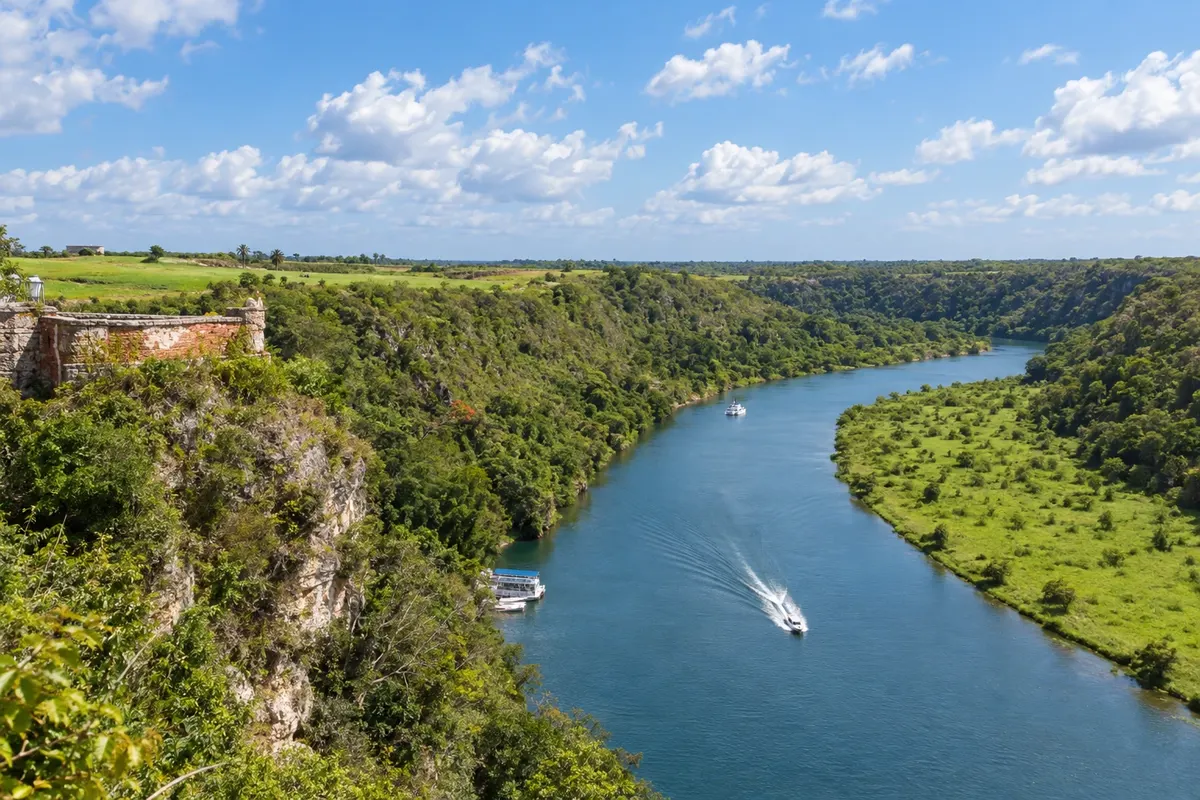
La Romana is the smallest province of the east: the sugar city, Casa de Campo and Altos de Chavón above the river, the village of Bayahibe, Isla Catalina and the Cueva de las Maravillas on the border.
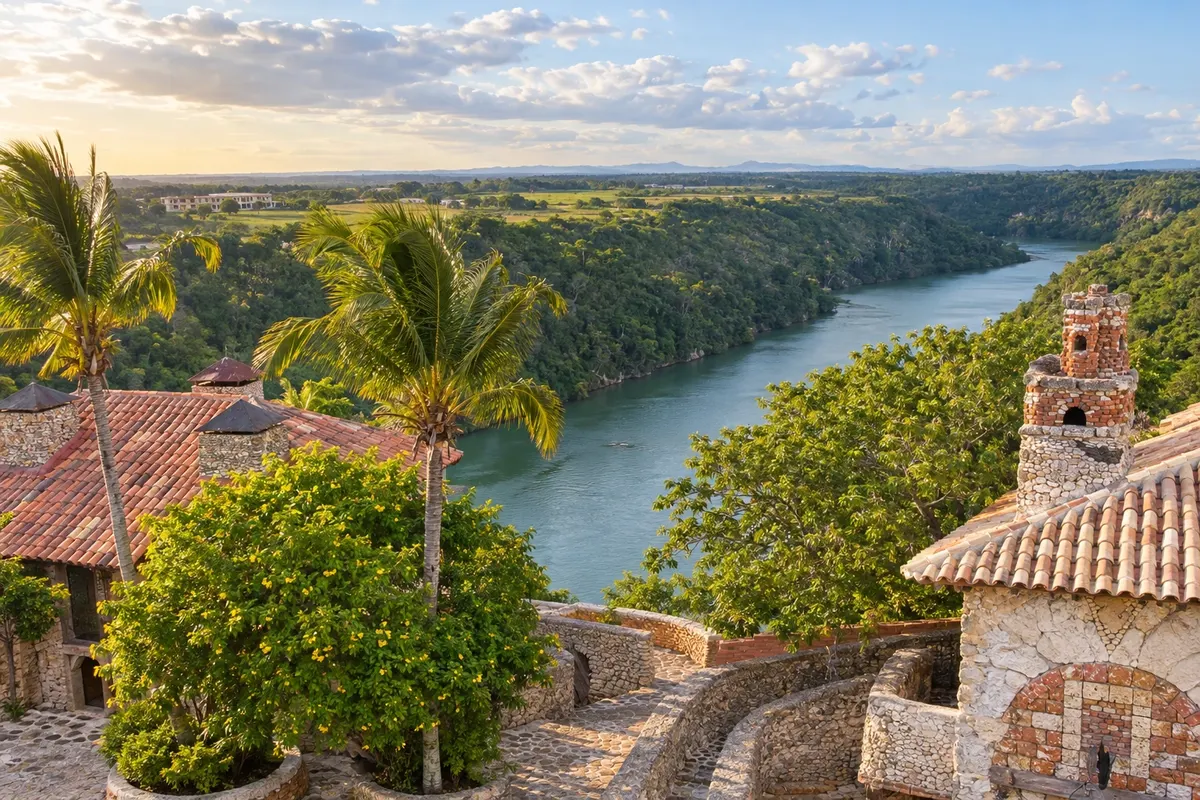
In the photo: Altos de Chavón above the río Chavón (La Romana)
Illustrative images. The pictures in this guide are illustrations based on the real place, not photographs, and may differ from it.

The province
La Romana is one of the country's smaller provinces, on the southern coast of the east, between San Pedro de Macorís and La Altagracia. The landscape is endless sugarcane fields: the city of La Romana grew around a large sugar mill in the early 20th century and still depends on it, as well as on the port that receives cruise ships.
The guide lists La Romana and Bayahibe as destinations in the province. Beside the city, the Casa de Campo development brings together golf courses, a marina and Altos de Chavón, a stone village in 16th-century Mediterranean style, built in the 1970s on a high bluff above the río Chavón, with a church, amphitheater and viewpoint. In front of the port, Isla Catalina has a calm-water beach and a coral wall for diving.
Bayahibe, the fishing village that became a diving center and the port for boats to Isla Saona, lies on the eastern edge, next to Playa Dominicus and the trails and caves of Parque Nacional Cotubanamá. West of the city, on the border with San Pedro de Macorís, the Cueva de las Maravillas houses hundreds of Taíno paintings in illuminated chambers.
The southern coast cuisine features fried fish, lobster and lambi (sea snail), and in the bateyes, the cane workers' villages, the culture of Haitian origin and of the English-speaking Caribbean islands left its own music and festivals.
Destinations
Cities
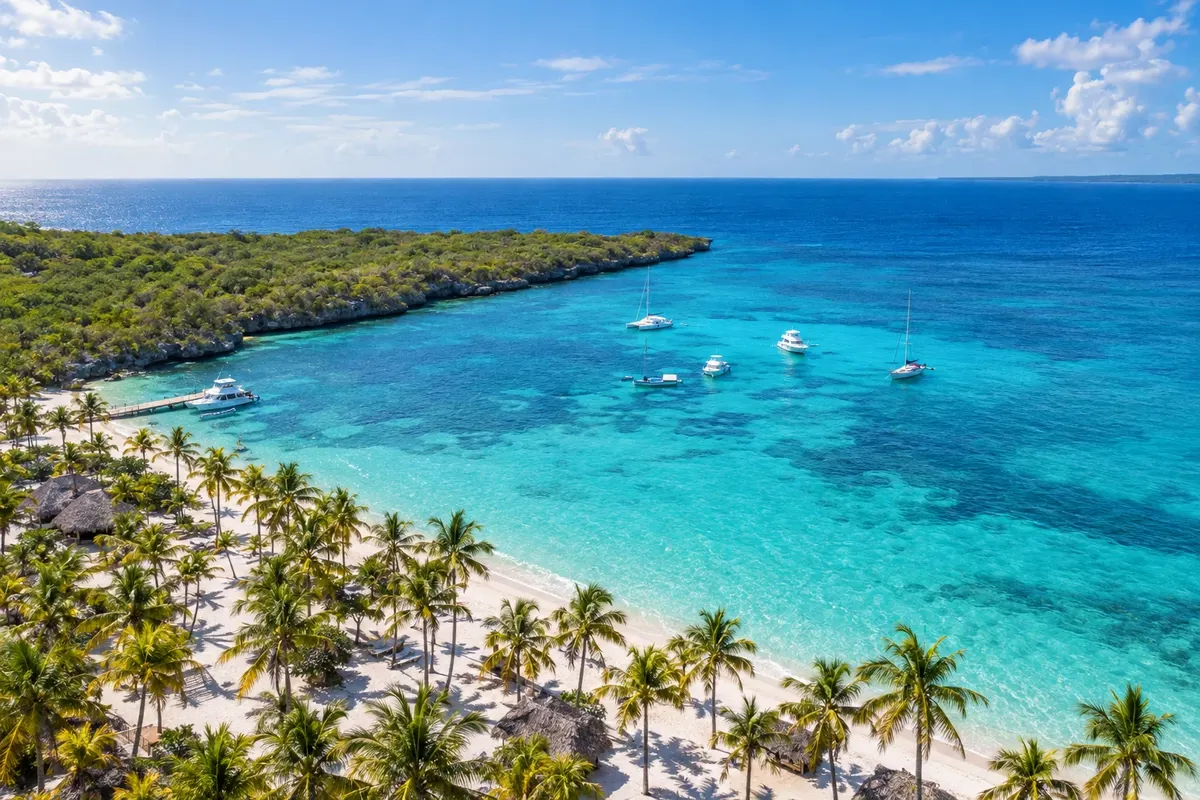
La Romana is the capital of the province of the same name, a sugar-mill town and cruise port on the south coast. To the east is Casa de Campo, with Altos de Chavón, the stone village above the Chavón River; to the west, the Cueva de las Maravillas, with Taíno paintings; and in front of the port, Isla Catalina, with a beach and diving.
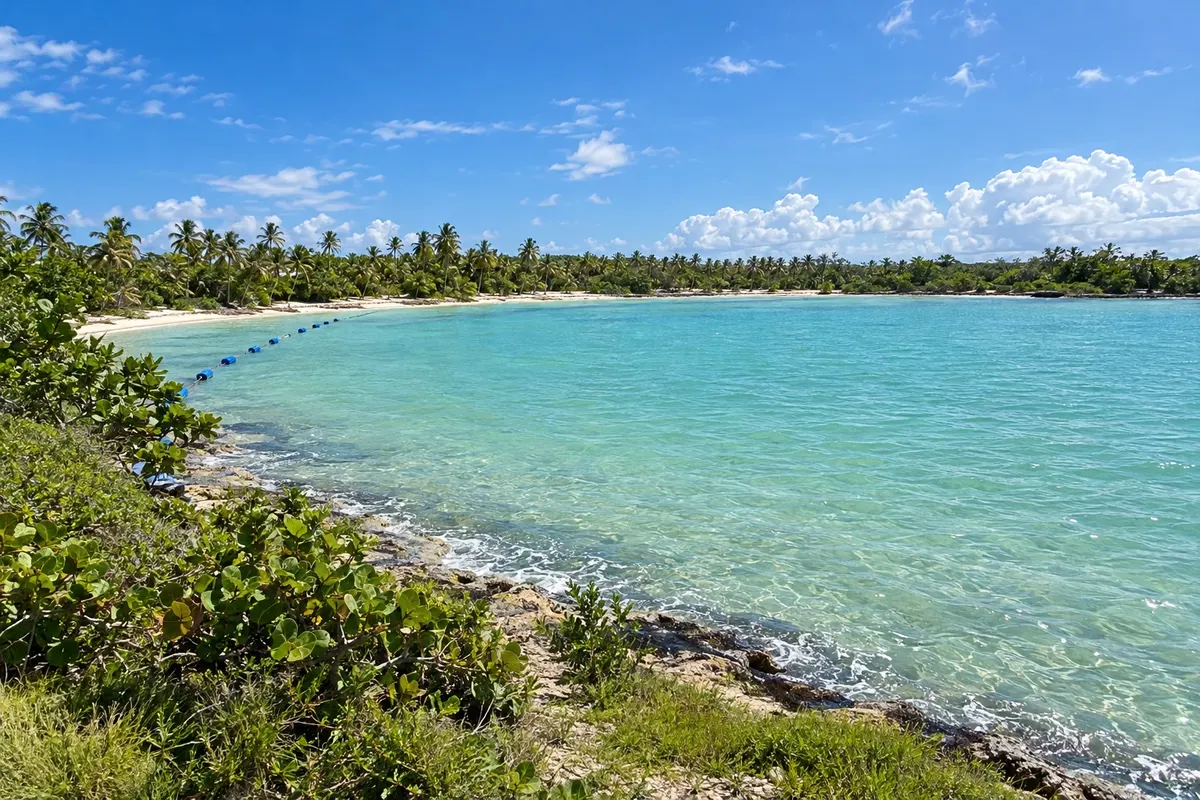
Bayahibe is a fishing village founded at the end of the 19th century that became the departure point for boats to Isla Saona and the diving center of the southern coast. It has a calm beach, small inns, seafood restaurants and the pier in the village center. Nearby are Playa Dominicus, with a blue flag, and the trails and caves of Parque Nacional Cotubanamá.
From December to April it usually rains less and the sea is calm for boats to Isla Saona and Isla Catalina; this is the high season. On La Romana's coast, June to November is hurricane season, with more frequent rain from August to October. Diving in Bayahibe is good year-round, except on stormy days.
La Romana International Airport (LRM) is a few kilometers from the city and Casa de Campo. The airports in Punta Cana (PUJ), about an hour away, and Santo Domingo (SDQ), around an hour and a half via the highway, have more flights. There are buses from Santo Domingo to La Romana and vans from La Romana to Bayahibe.
Your questions
Visit Altos de Chavón and the Cueva de las Maravillas, take a boat to Isla Catalina and Isla Saona, and dive or sunbathe in Bayahibe and Playa Dominicus.
No. It was built beginning in 1976, imitating a 16th‑century Mediterranean village, using stone and the work of local craftsmen.
Bayahibe has the fishing village, guesthouses and the boat pier; Casa de Campo is the upscale resort community; the city of La Romana has shops but little beach.
About 15 km west of the city, on the road to San Pedro de Macorís.
Yes, it's about an hour and a half on the highway; many people do the reverse trip to visit the Ciudad Colonial.