Roma and the Vaticano

Lazio · Italy

Roma and the Vaticano

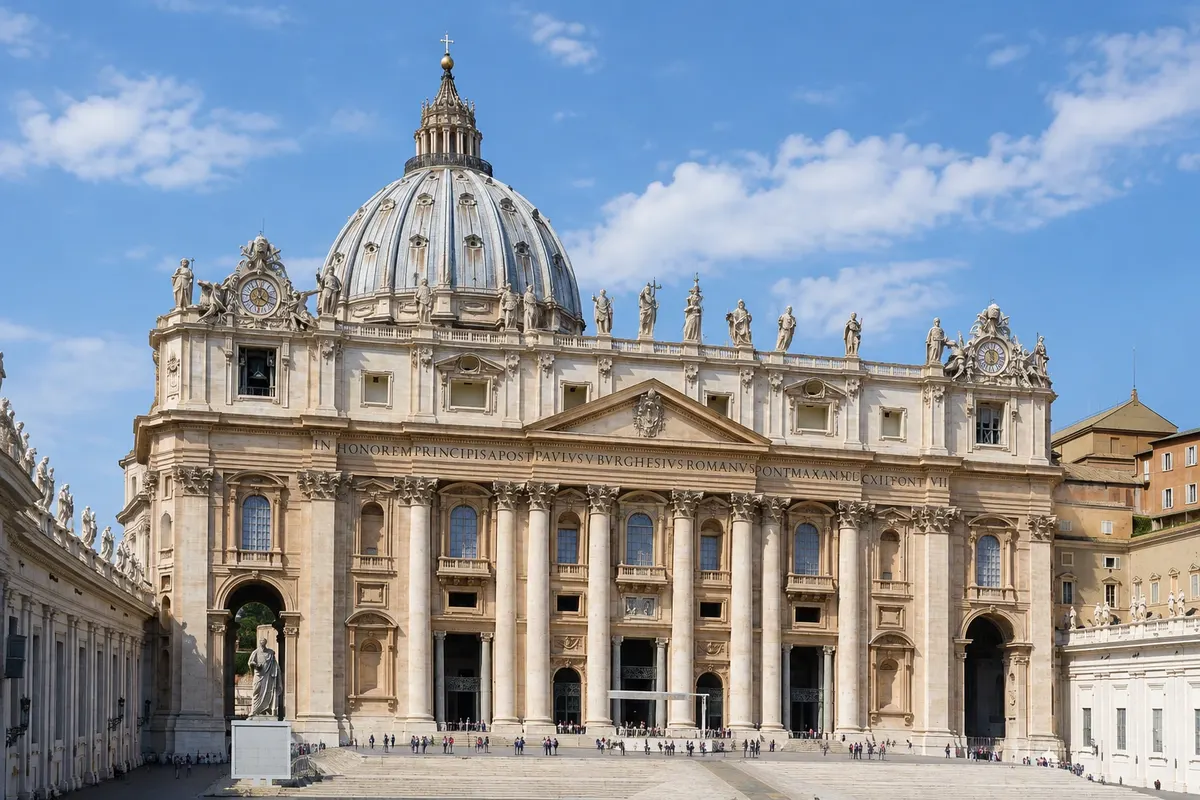
The capital of Italy brings together the Coliseu, the Fórum, the Pantheon and the Fontana di Trevi, and within it lies the Cidade do Vaticano, with the Basílica de São Pedro and the Capela Sistina.

Central

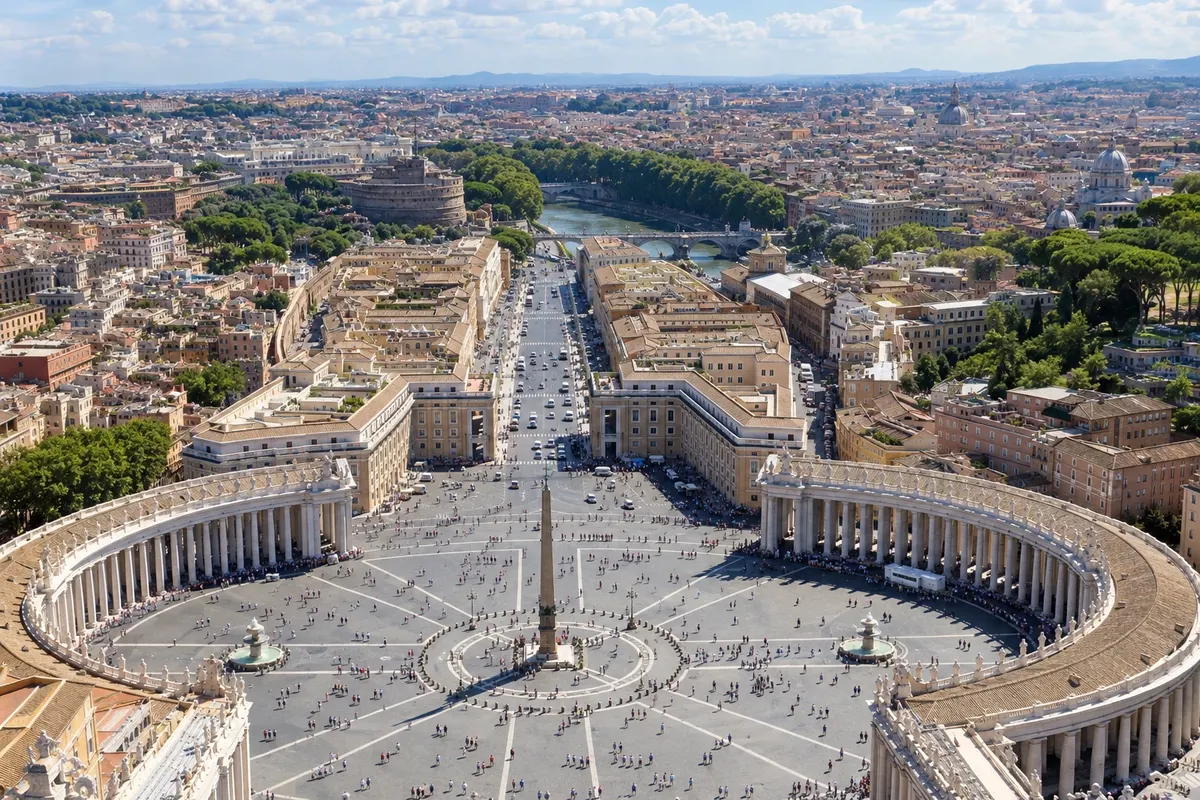
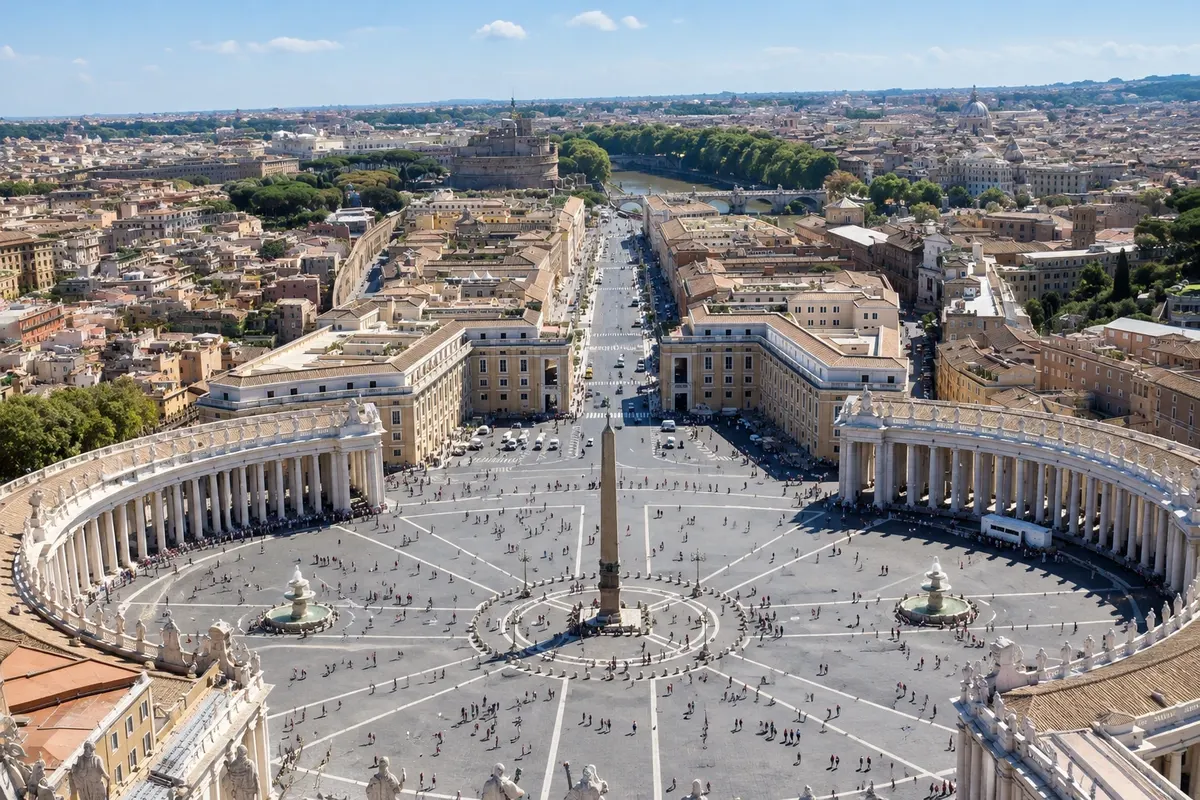
In the photo: Piazza San Pietro, Vaticano

Illustrative images. The pictures in this guide are illustrations based on the real place, not photographs, and may differ from it.

Get it on Google Play Send your photos

Get to know the place

A region to enjoy
at your own pace.

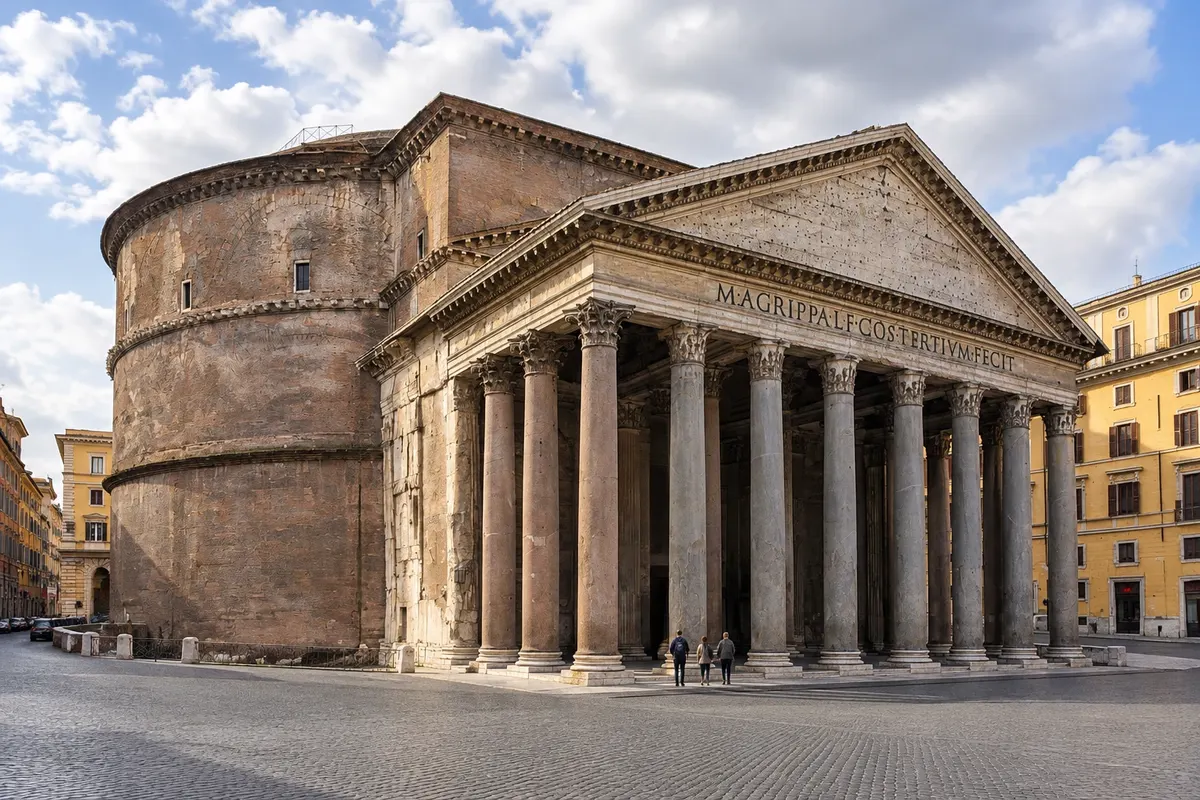
Roma is the capital of Italy and is in the Lácio region, near the coast of the mar Tirreno, on the banks of the rio Tibre. It was the center of an empire that dominated the Mediterranean, and the ruins from that time are in the middle of today's city: the Coliseu, the Foro Romano, Palatine Hill and the Pantheon, which still stands with its original 2nd-century dome.

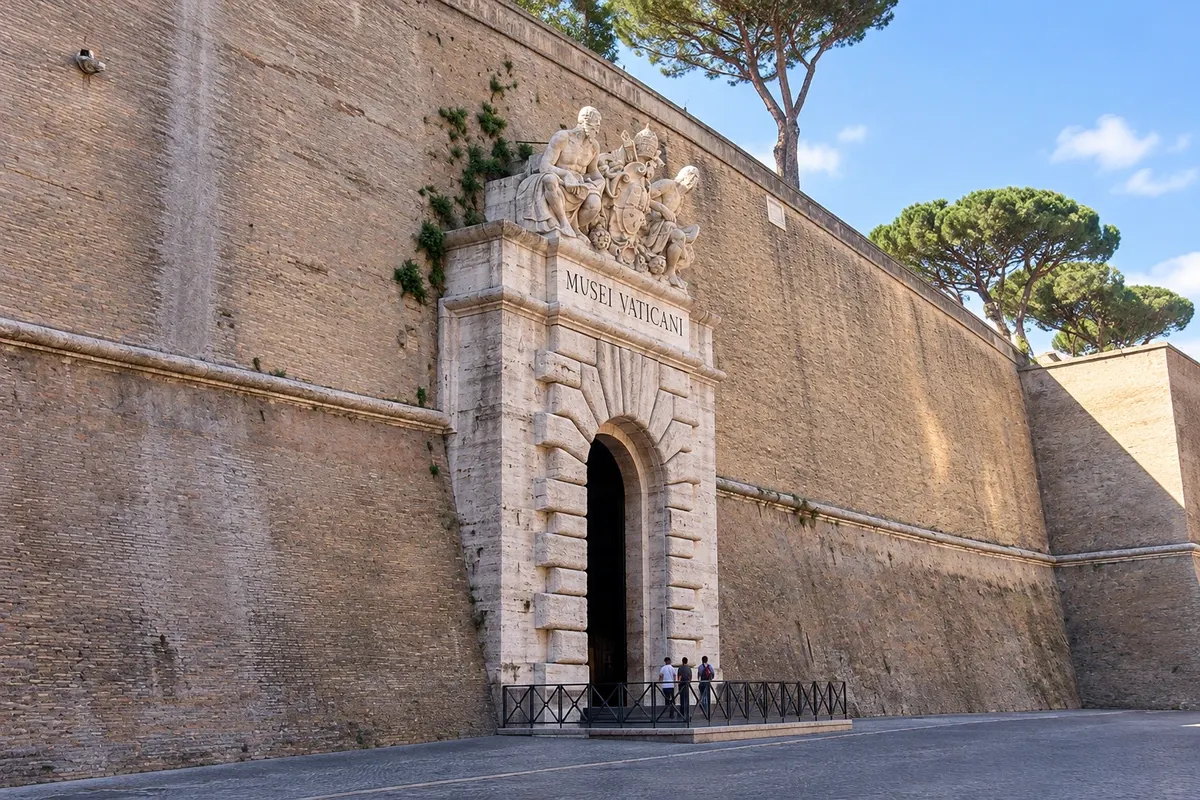
Inside Roma there is another country, the Cidade do Vaticano, the pope's seat and the world's smallest State. There is no passport control to enter: you simply cross the Piazza San Pietro. There you find the Basílica de São Pedro, with the dome designed by Michelangelo, and the Museus Vaticanos, which end at the Capela Sistina.

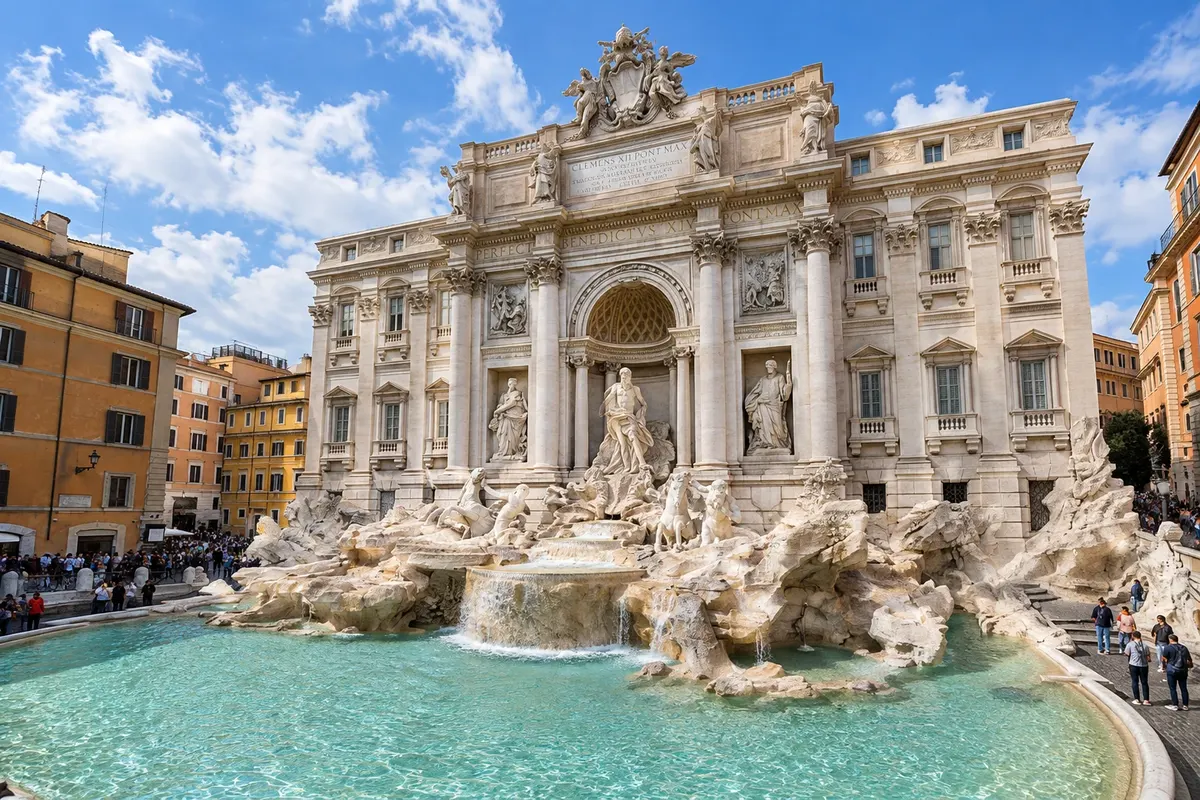
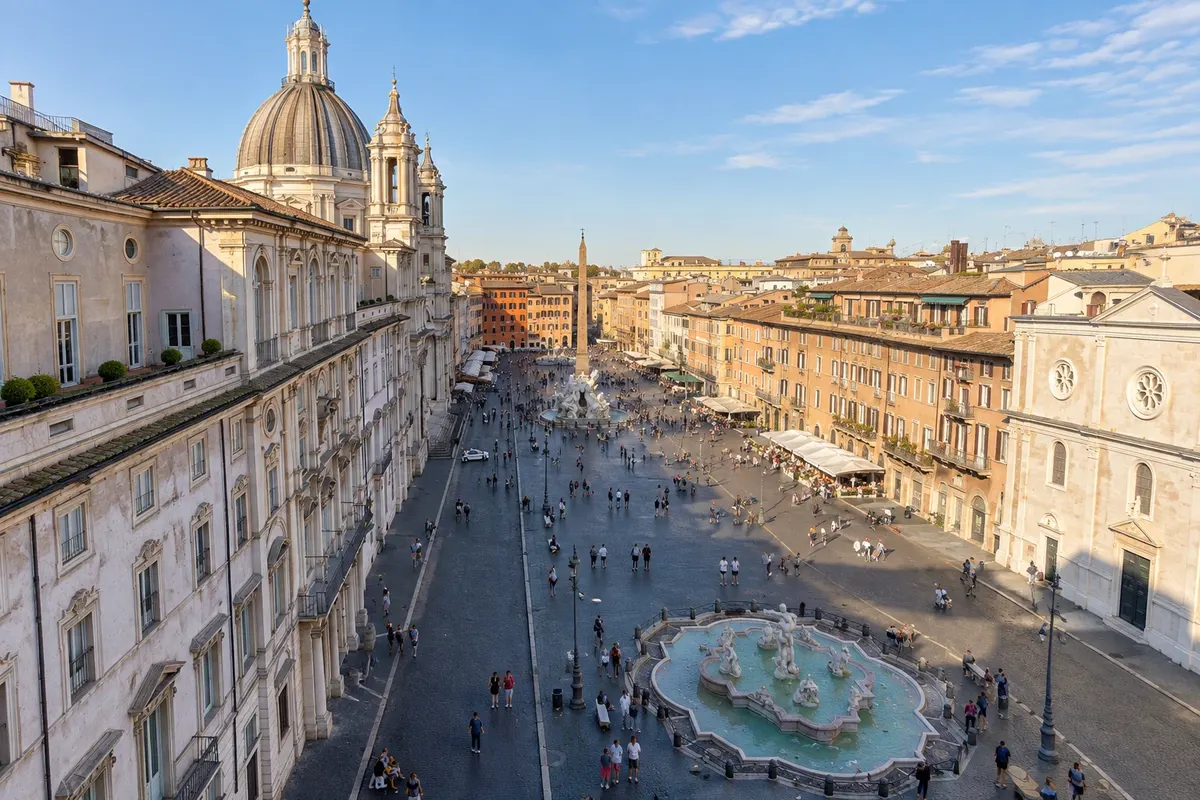
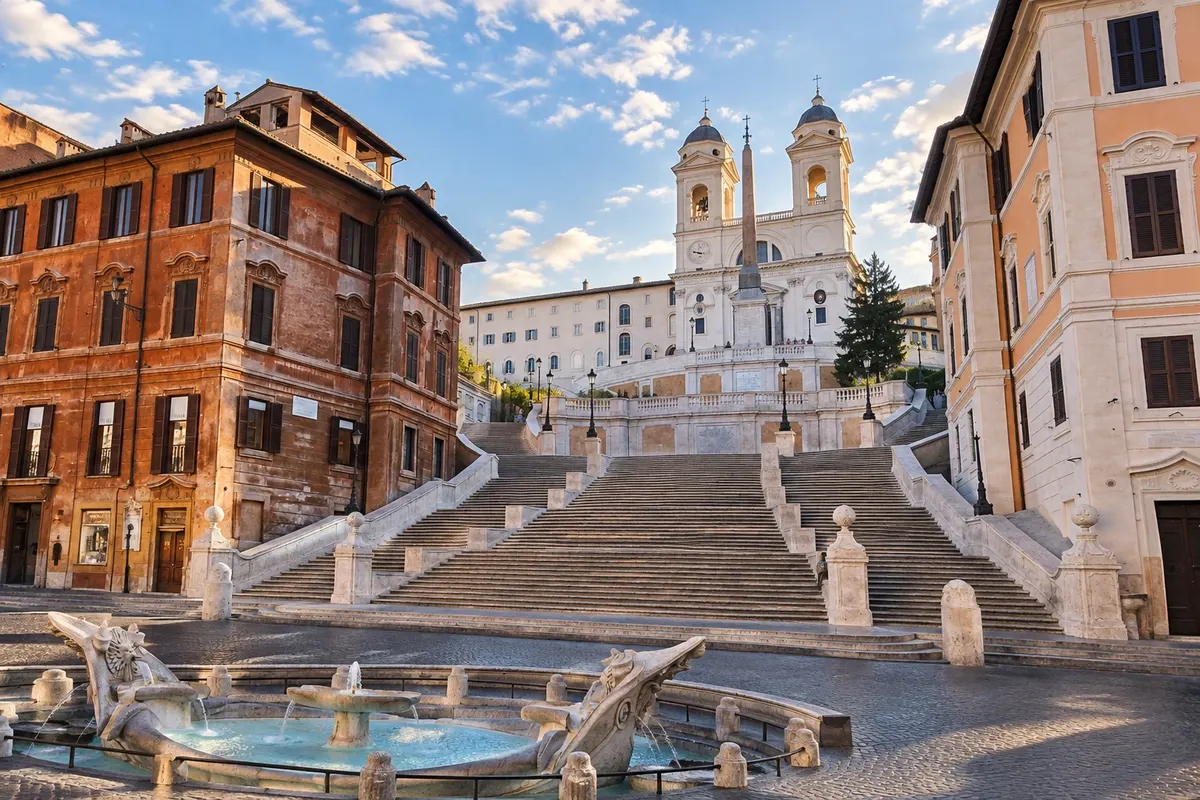
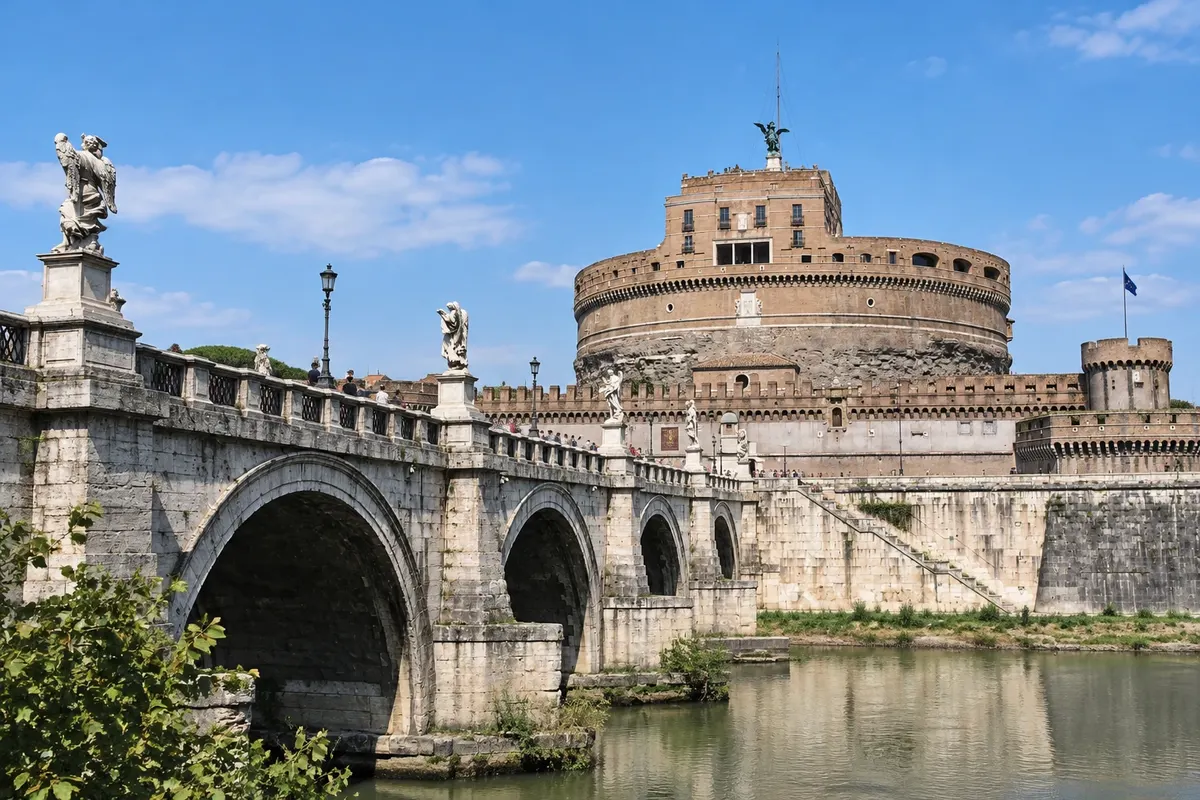
The historic center (centro storico) mixes ancient Roma with the papal and baroque Roma: the Piazza Navona, the Fontana di Trevi, the Scalinata di Trinità dei Monti at the Piazza di Spagna, the Castel Sant'Angelo and the Galleria Borghese, with Bernini's sculptures. Almost everything can be done on foot, with the metro and buses for longer distances.

Fiumicino airport has a direct train to Termini station, and from Termini fast trains depart for Florence, Naples, Venice and Milan.

This destination brings together 1 city: Roma.

Share: WhatsApp
Traveler, share your experiences through photos Up to 5 photos of each place you visited.

One destination, many paths

The cities on this trip

Start with one city or combine several in your itinerary.

Where Roma and the Vaticano is
Roma

Outlines: ISTAT, limites administrativos 2026, CC BY 4.0. Adapted by Cidade Turismo.

How to get there: Roma and the Vaticano

✈ Aeroporto di Roma-Fiumicino Leonardo da Vinci (FCO) · 30 km to Roma

✈ Aeroporto di Roma-Ciampino G. B. Pastine (CIA) · 15 km to Roma

Confirm before booking. The main airport is Roma-Fiumicino, linked to Termini station by the Leonardo Express train, non-stop. There is also Ciampino airport, more used for flights within Europe.

The local experience

Things to do in Roma and the Vaticano

Colosseo
Roma · Lazio · Ruins

Colosseo

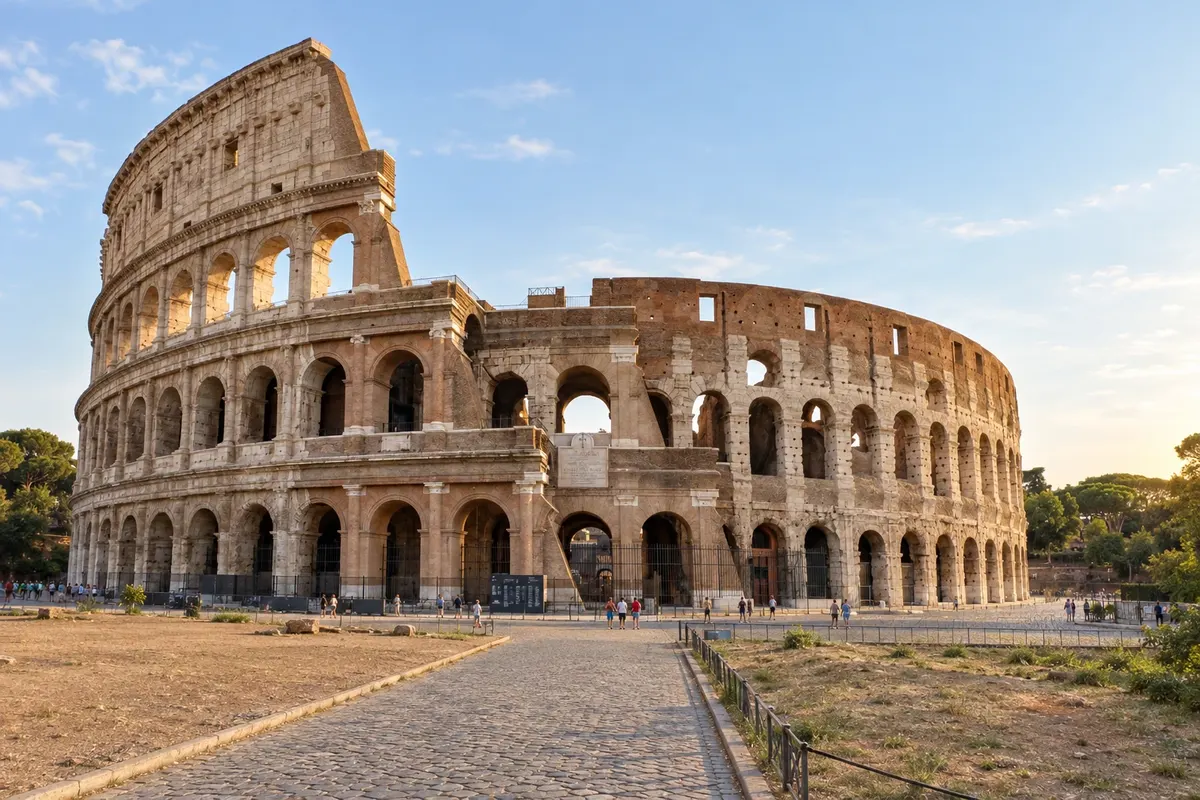
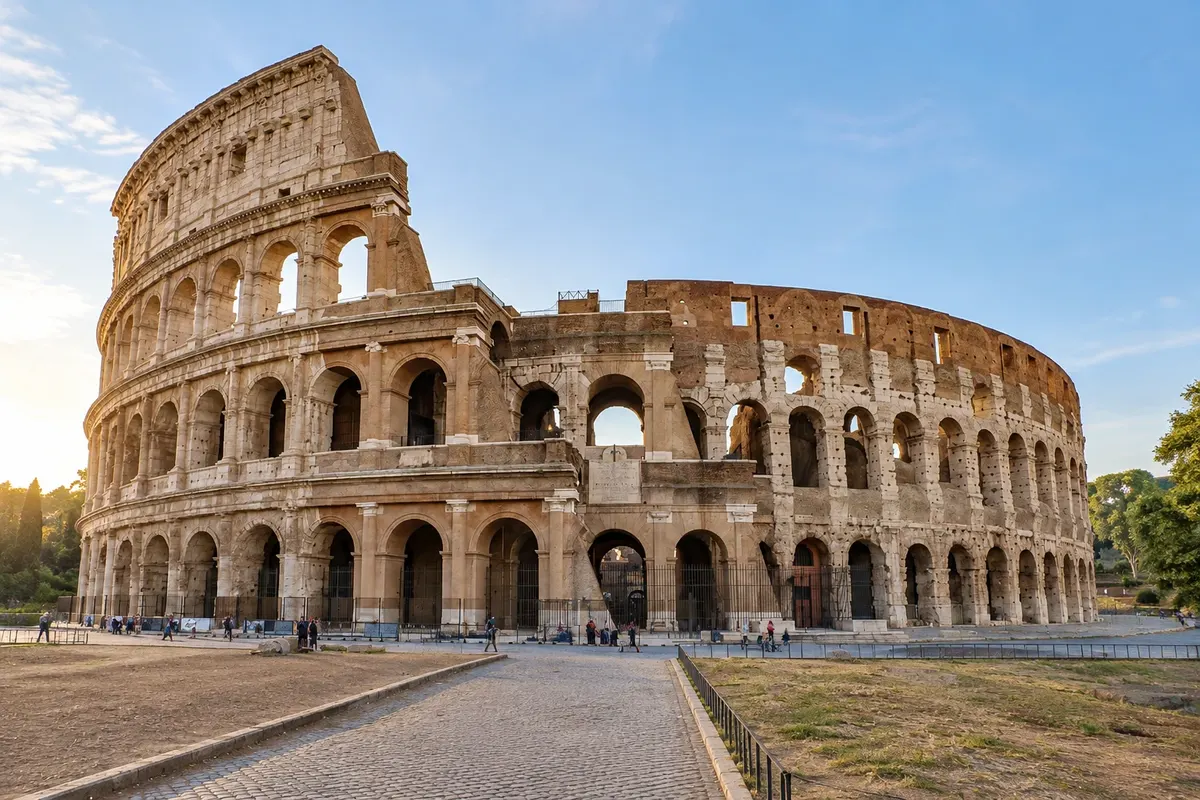
The largest amphitheatre of the Roman Empire, inaugurated in 80 AD, where gladiator fights and animal hunts took place. The visit requires a nominal ticket with a scheduled time.

Foro Romano e Palatino
Roma · Lazio · Archaeological site

Foro Romano e Palatino

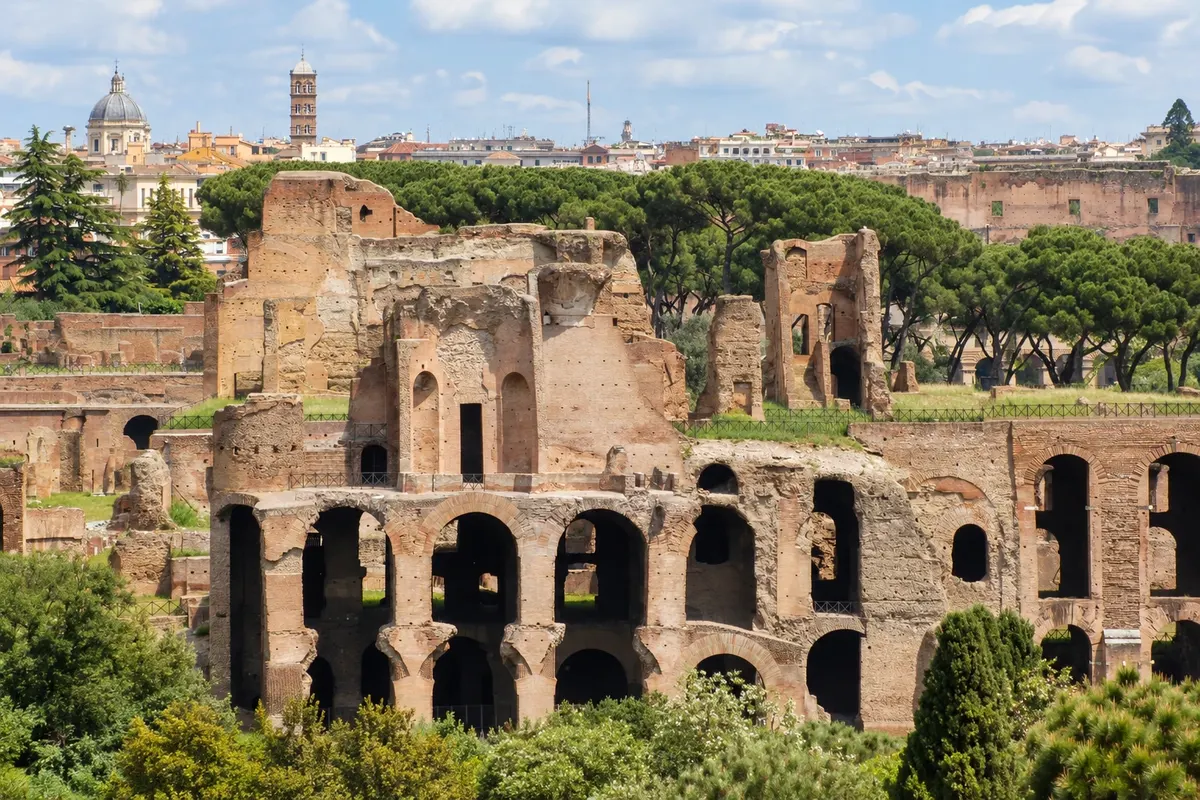
The ancient political and religious center of Rome and the hill where the emperors lived, next to the Coliseu. The ticket is the same as for the Coliseu.

Basilica di San Pietro
Roma · Lazio · Church

Basilica di San Pietro

The largest church in the Vatican, with Michelangelo's Pietà and Bernini's baldachin. Entry is free; the climb to the dome requires a ticket. Shoulders and knees must be covered.

Musei Vaticani
Roma · Lazio · Museum

Musei Vaticani

The museums of the popes, with ancient sculptures, the Salas de Rafael and, at the end of the route, the Capela Sistina painted by Michelangelo. Booking a timed entry is recommended.

See 31 more places in Roma and the Vaticano
Piazza San Pietro
Roma · Lazio · Square

Piazza San Pietro

The square in front of the Basílica de São Pedro, embraced by Bernini's colonnade, with the Egyptian obelisk in the center. It is the gateway to the Cidade do Vaticano.

Pantheon
Roma · Lazio · Monument

Pantheon

The best-preserved Roman temple, with a concrete dome and an open oculus at the top. It is also a church and houses the tomb of Rafael. Admission requires a ticket.

Fontana di Trevi
Roma · Lazio · Monument

Fontana di Trevi

Rome's largest Baroque fountain, with the god Oceanus at the center. Throwing a coin over your shoulder, tradition says, guarantees your return to Rome. The area next to the water has controlled access.

Piazza Navona
Roma · Lazio · Square

Piazza Navona

Elongated square in the shape of the ancient stadium of Domiciano, with Bernini's Fontana dei Quattro Fiumi and Borromini's church of Sant'Agnese in Agone.

Scalinata di Trinità dei Monti
Roma · Lazio · Monument

Scalinata di Trinità dei Monti

The Baroque stairway that rises from the Piazza di Spagna to the church of Trinità dei Monti, with the Fontana della Barcaccia at its foot. It is not allowed to sit on the steps.

Castel Sant'Angelo
Roma · Lazio · Castle

Castel Sant'Angelo

The mausoleum of Emperor Adrian, turned into a fortress and refuge for the popes, on the banks of the Tiber. From the terrace you can see St. Peter's and the center of Rome.

Galleria Borghese
Roma · Lazio · Museum

Galleria Borghese

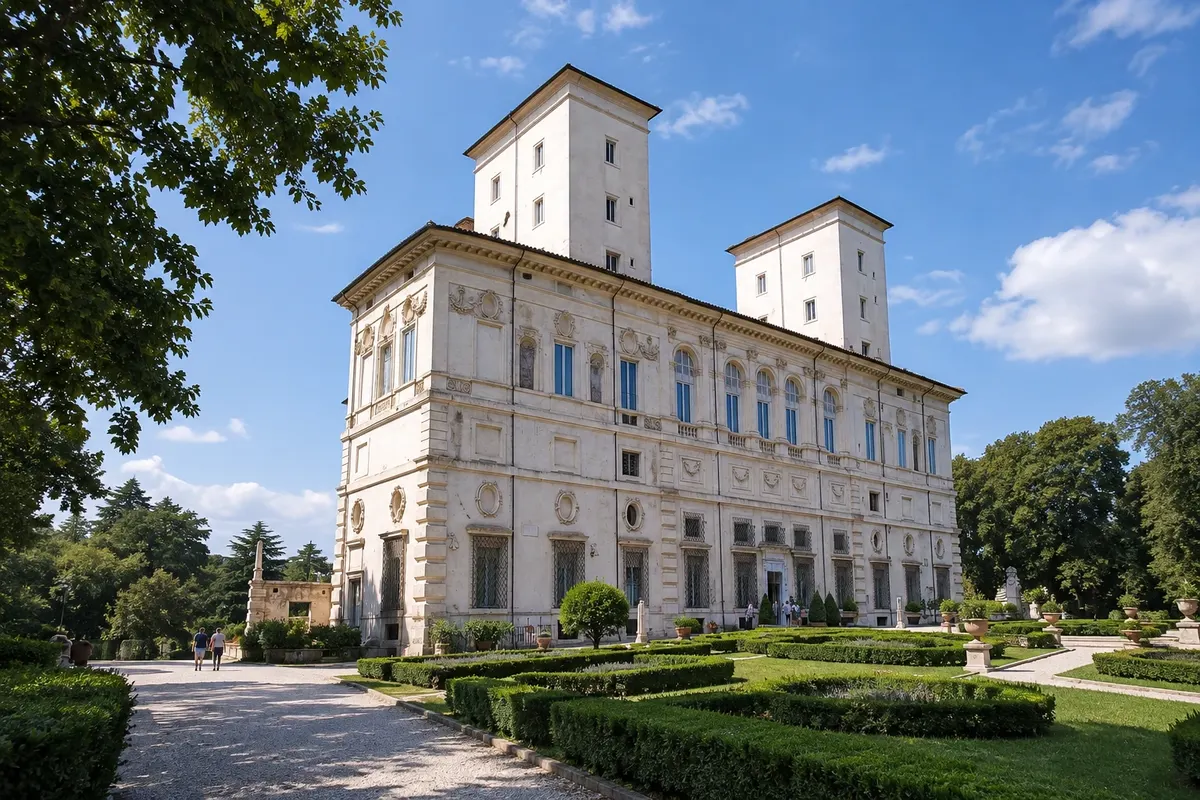
Museum in a 17th-century villa with sculptures by Bernini and Canova and paintings by Caravaggio, Raphael and Titian. Timed reservation is mandatory.

Villa Borghese
Roma · Lazio · Park

Villa Borghese

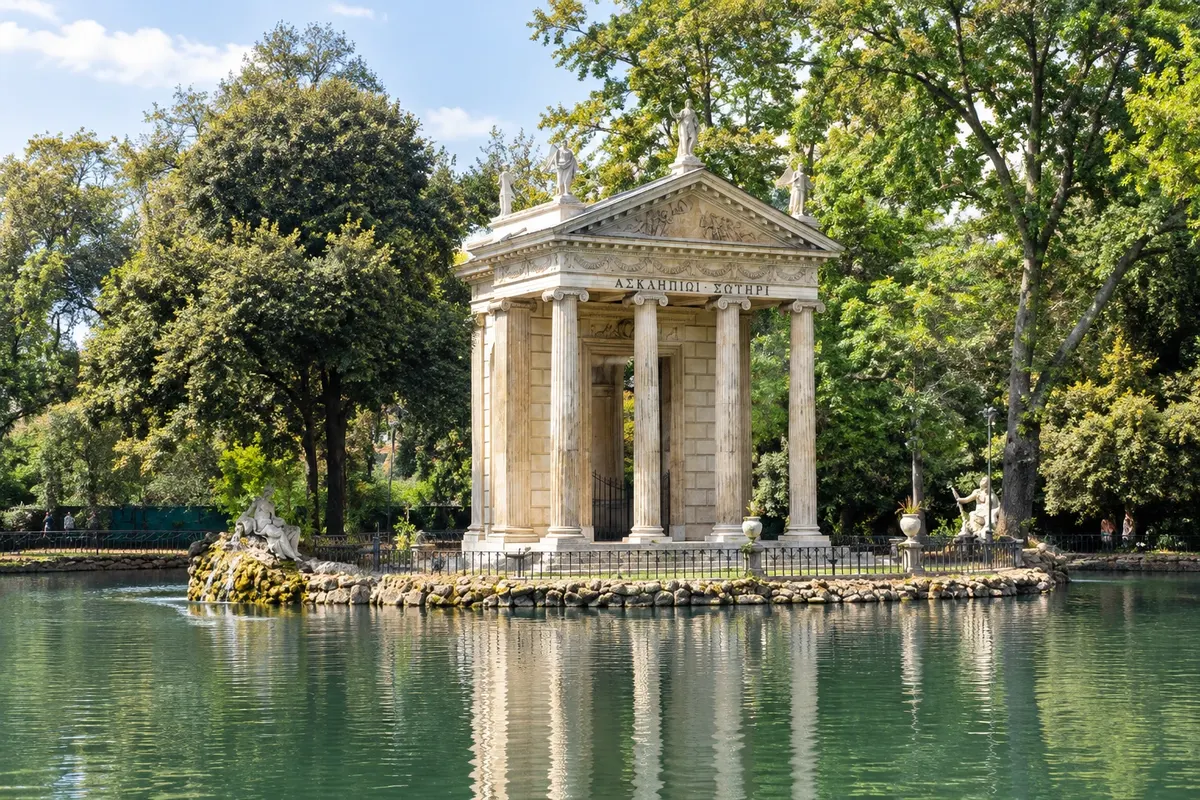
The large park in central Rome, with a lake, gardens, museums and the Pincio terrace overlooking the Piazza del Popolo. Entrance to the park is free.

Musei Capitolini
Roma · Lazio · Museum

Musei Capitolini

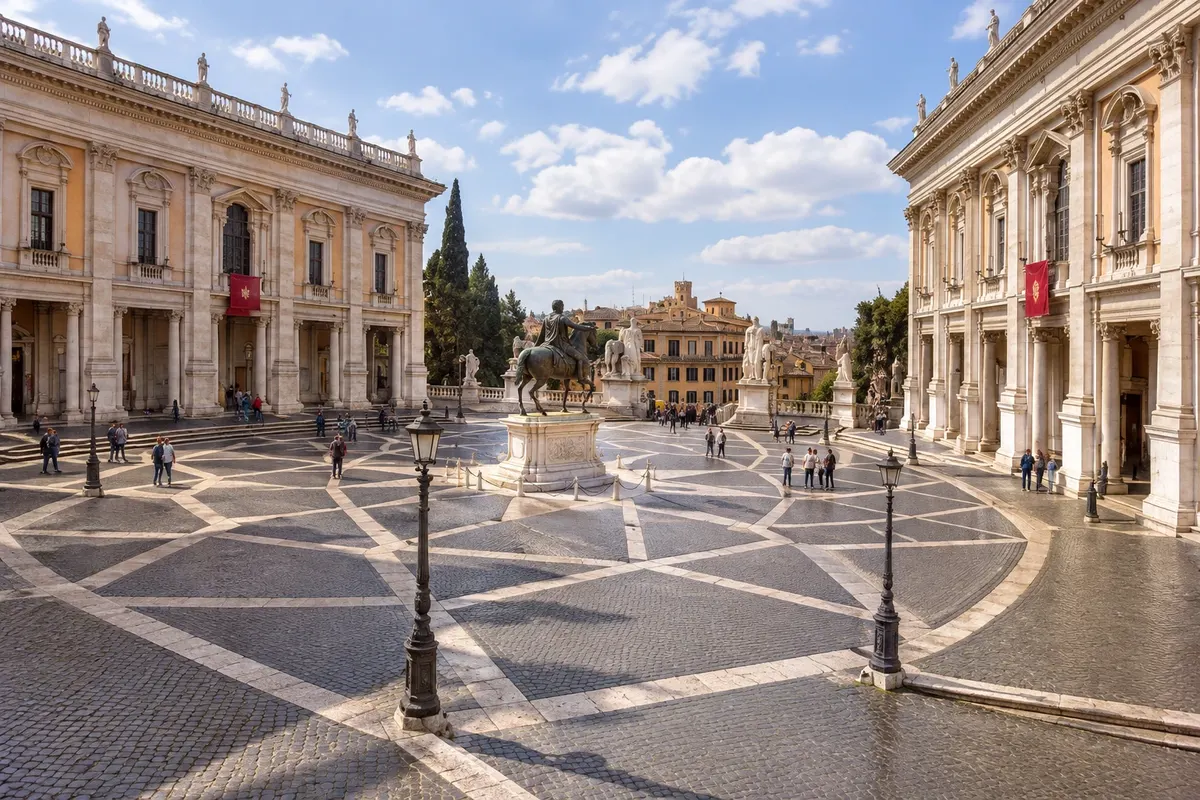
Museums atop the Campidoglio, in the piazza designed by Michelangelo, with the Loba Capitolina, the equestrian statue of Marco Aurélio and a window onto the Foro Romano.

Vittoriano
Roma · Lazio · Monument

Vittoriano

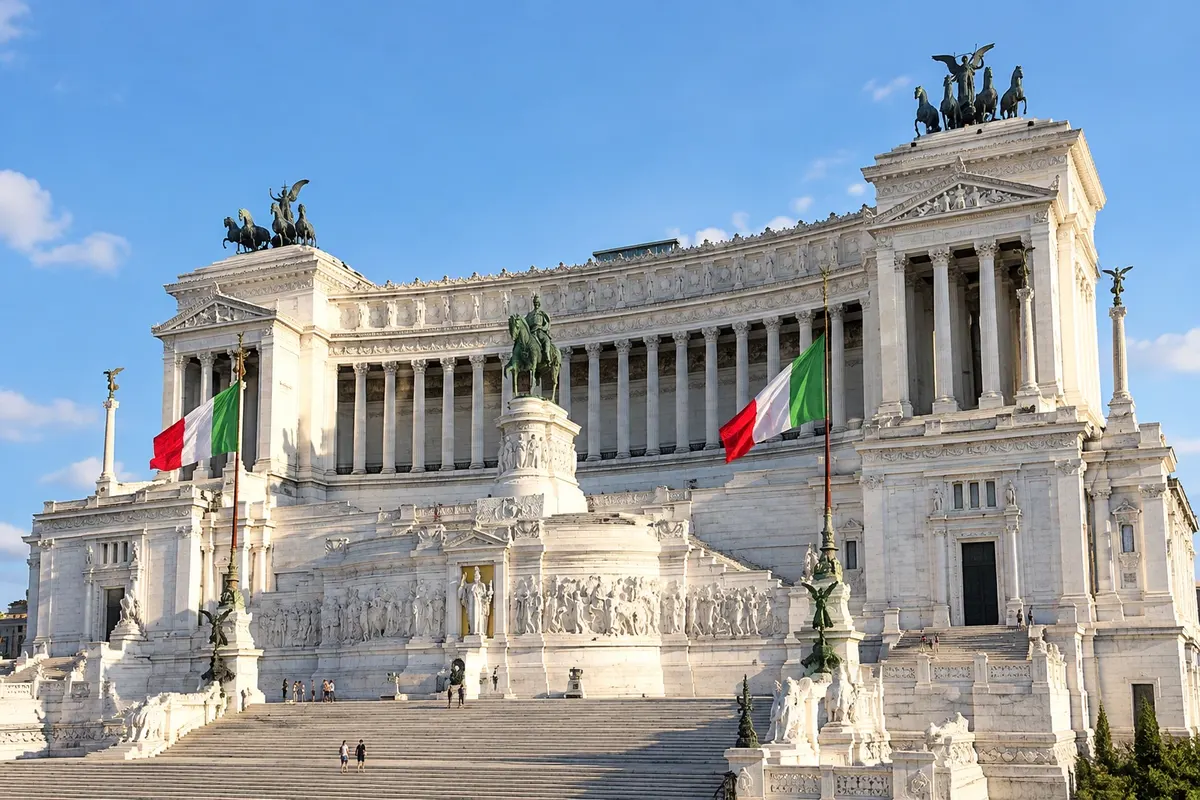
The white marble monument to Vittorio Emanuele II in Piazza Venezia, with the Altar da Pátria and the tomb of the Unknown Soldier. Elevators take you up to the panoramic terrace.

Trastevere
Roma · Lazio · Historic neighborhood

Trastevere

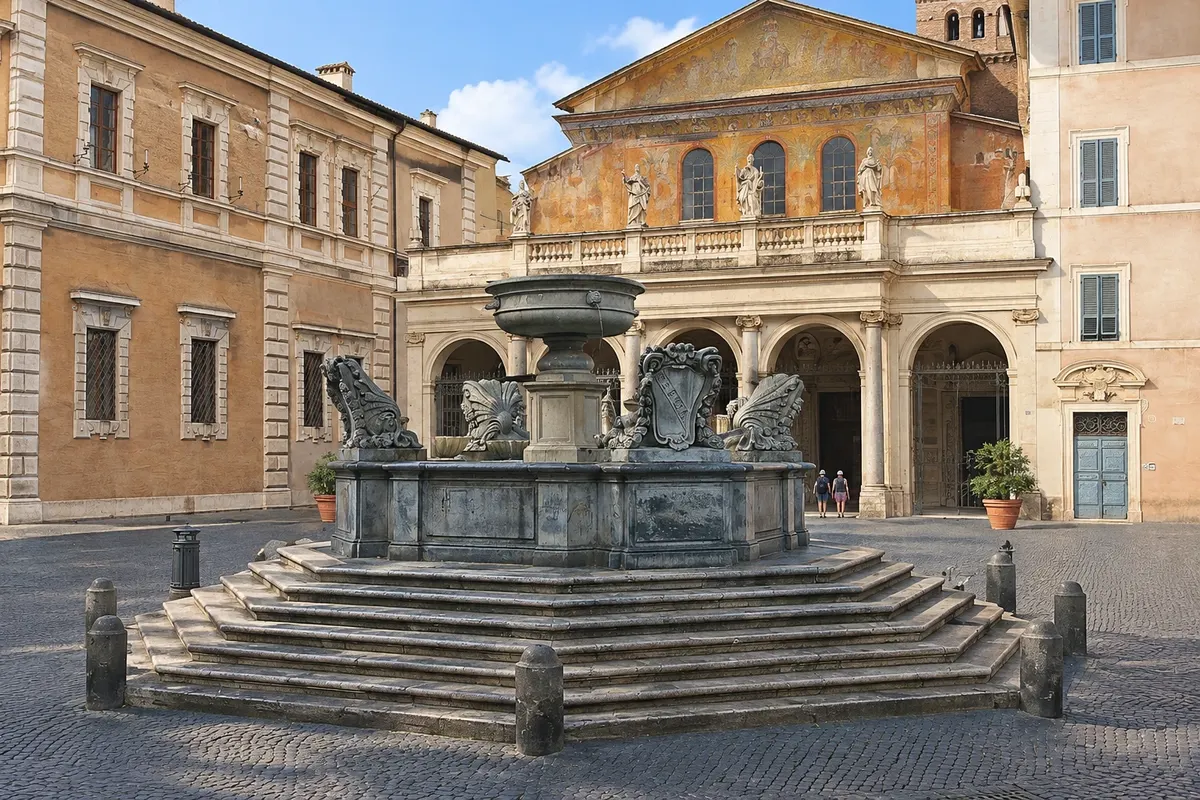
Neighborhood of cobbled alleys, ochre-colored houses and trattorias on the other side of the Tiber. At its center is the Piazza di Santa Maria in Trastevere, with the basilica of golden mosaics.

Campo de' Fiori
Roma · Lazio · Square

Campo de' Fiori

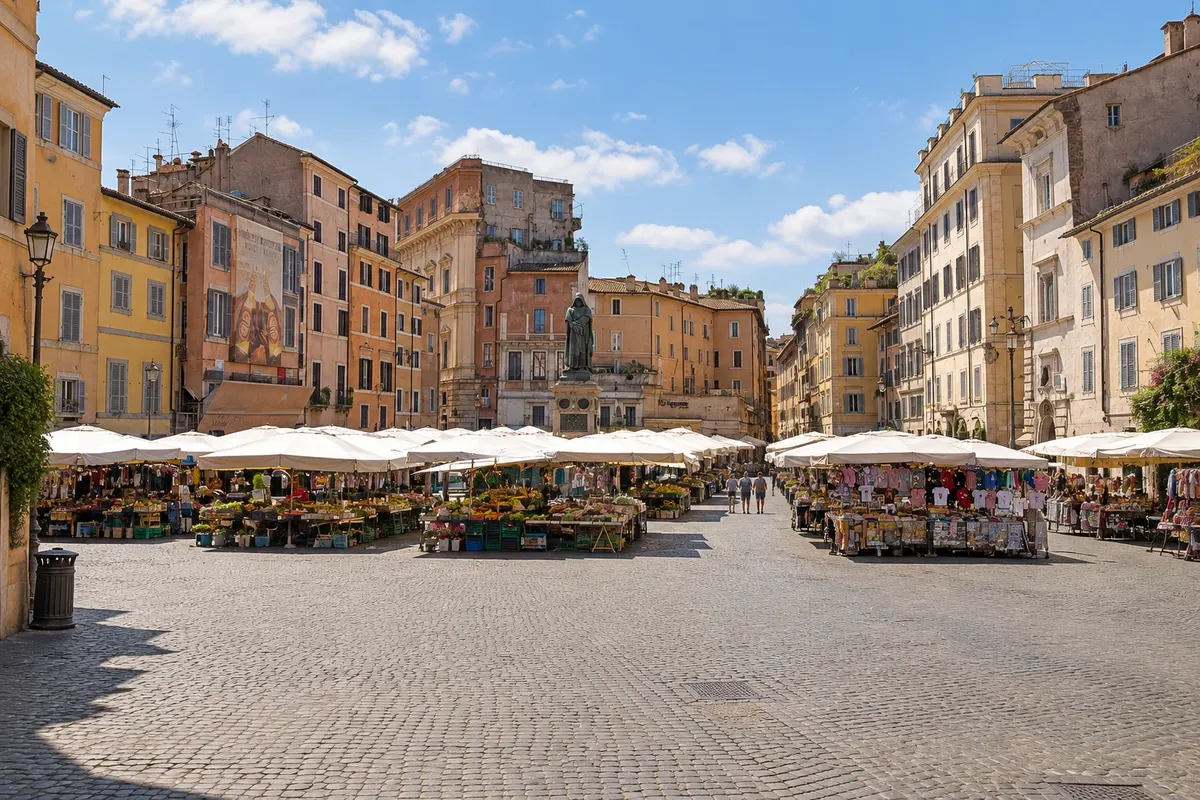
Square in the historic center with a morning market of fruit, vegetables and flowers and the statue of Giordano Bruno in the middle. At night it becomes a meeting point with bars and restaurants.

Bocca della Verità
Roma · Lazio · Monument

Bocca della Verità

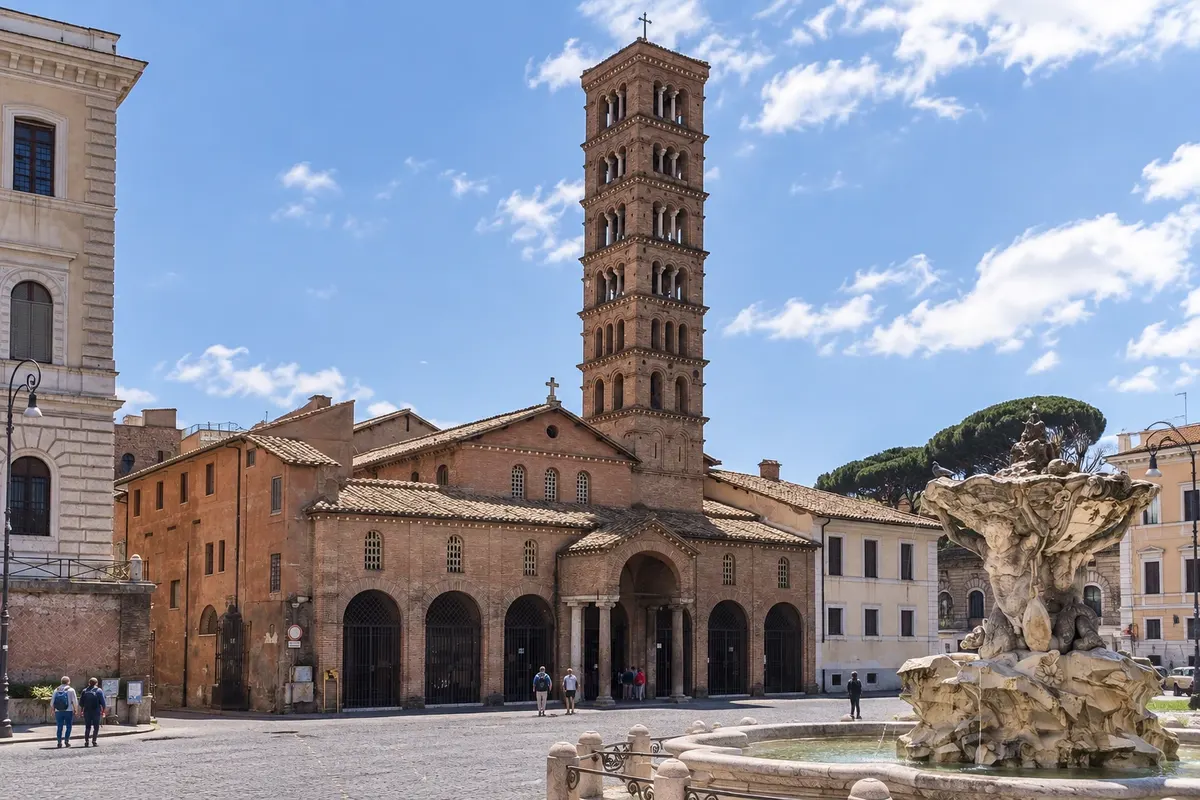
The marble mask that, according to legend, bites the hand of anyone who lies. It is in the portico of the medieval church of Santa Maria in Cosmedin, near the Circo Massimo.

Circo Massimo
Roma · Lazio · Archaeological site

Circo Massimo

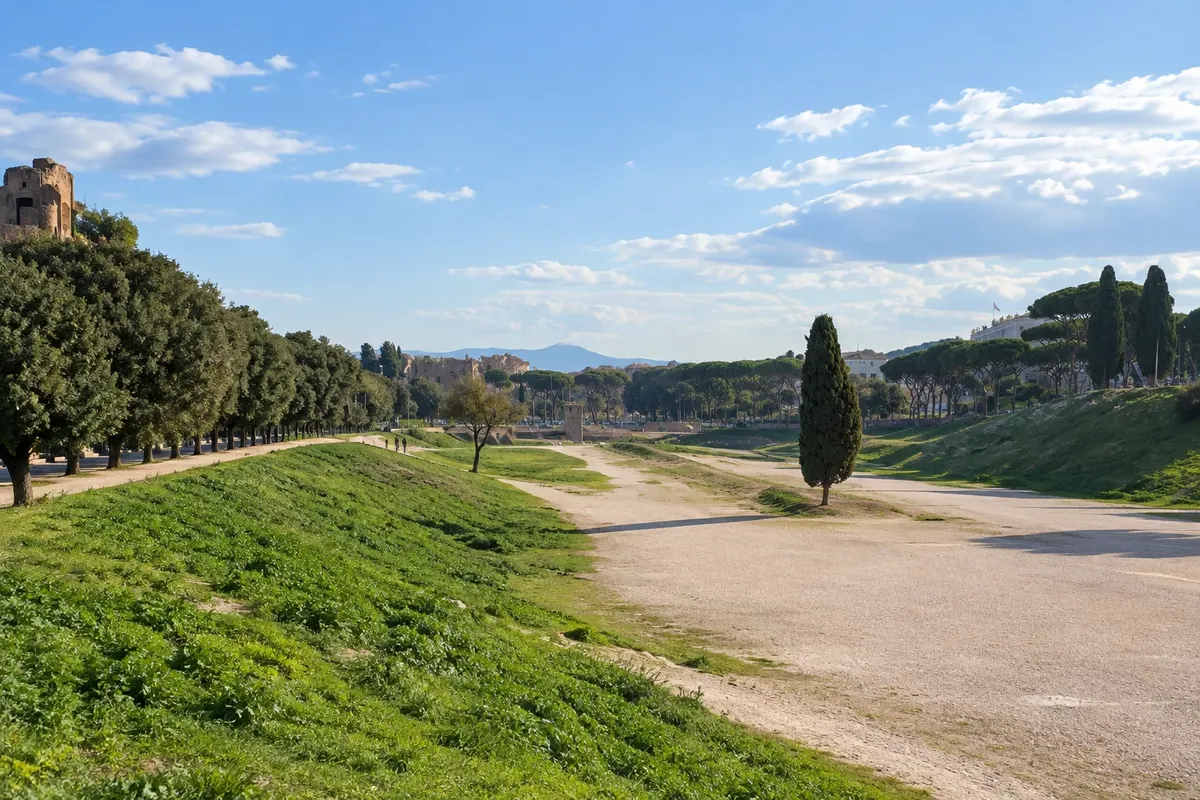
The large stadium for chariot races of ancient Rome, today a grassy valley 600 meters long between the Palatino and the Aventino. The eastern end preserves ruins and the Torre della Moletta.

Terme di Caracalla
Roma · Lazio · Ruins

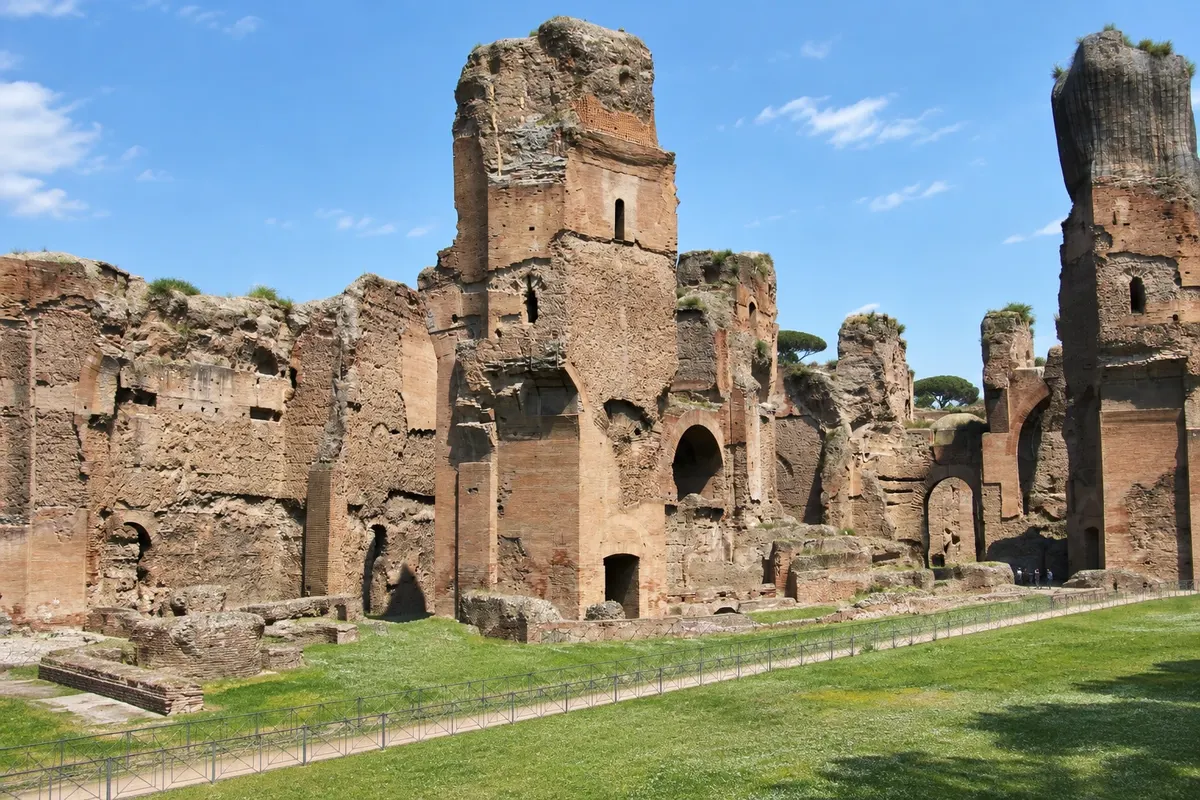
Terme di Caracalla

One of the largest public bath complexes of ancient Rome, from the early 3rd century. Walls over 30 meters high, mosaics on the floor and the stage for the summer opera season.

Via Appia Antica
Roma · Lazio · Historic site

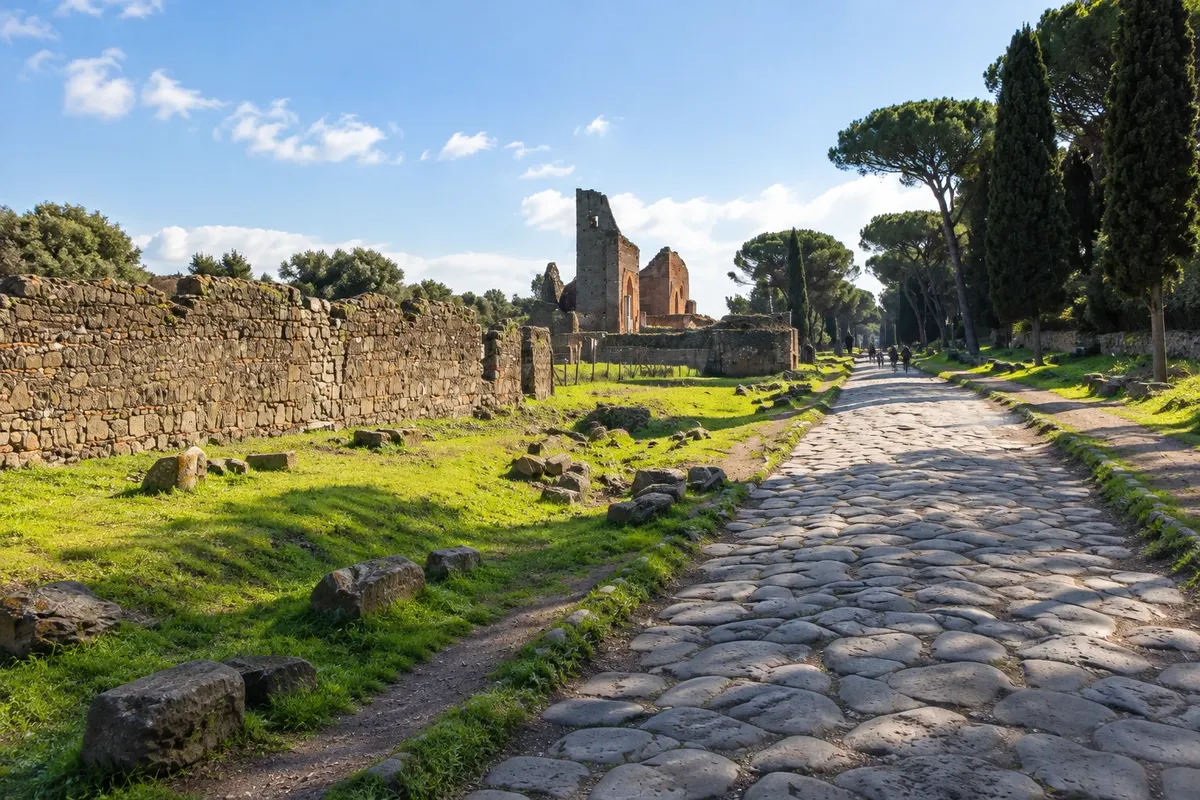
Via Appia Antica

The Roman road opened in 312 BC, still with stretches of original stone, lined with pine trees, tombs and catacombs. A good bike ride or walk outside the city center.

Catacombe di San Callisto
Roma · Lazio · Archaeological site

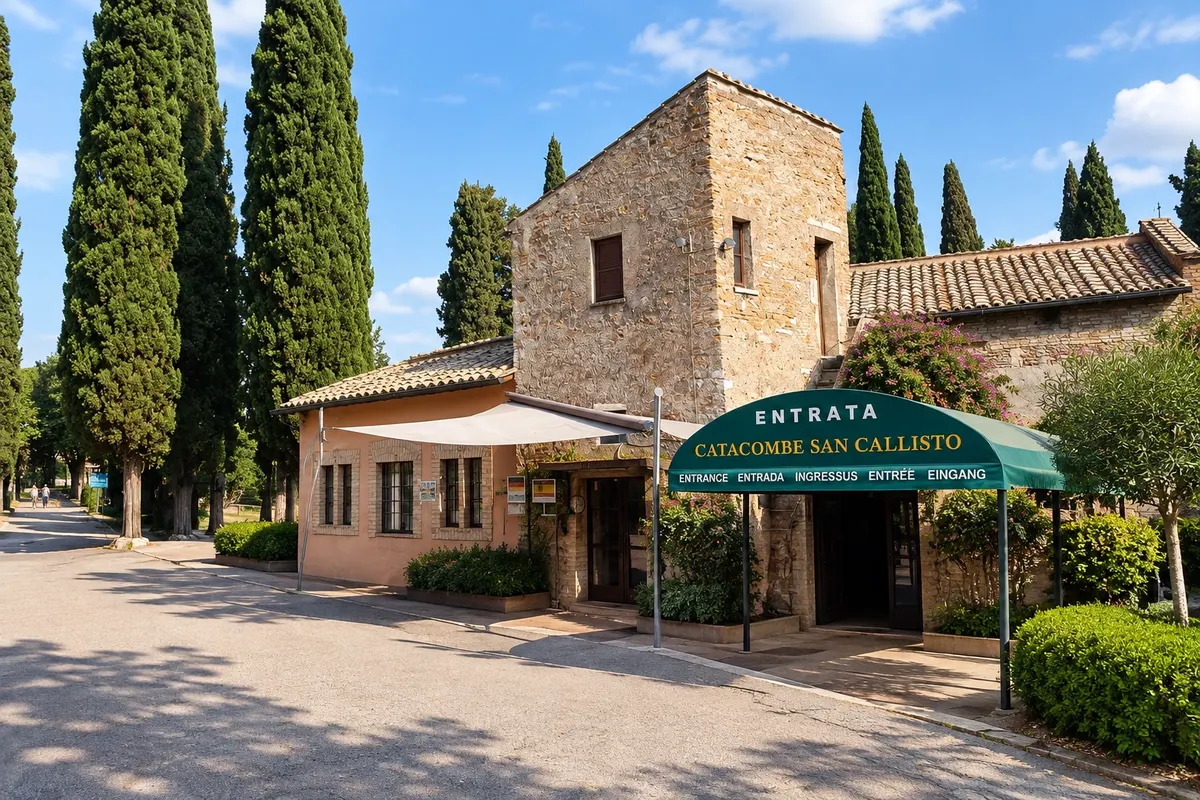
Catacombe di San Callisto

One of the largest underground cemeteries of early Christians, on the Via Appia Antica, with the Cripta dos Papas. Guided visits only, with online reservation.

Catacombe di San Sebastiano
Roma · Lazio · Archaeological site

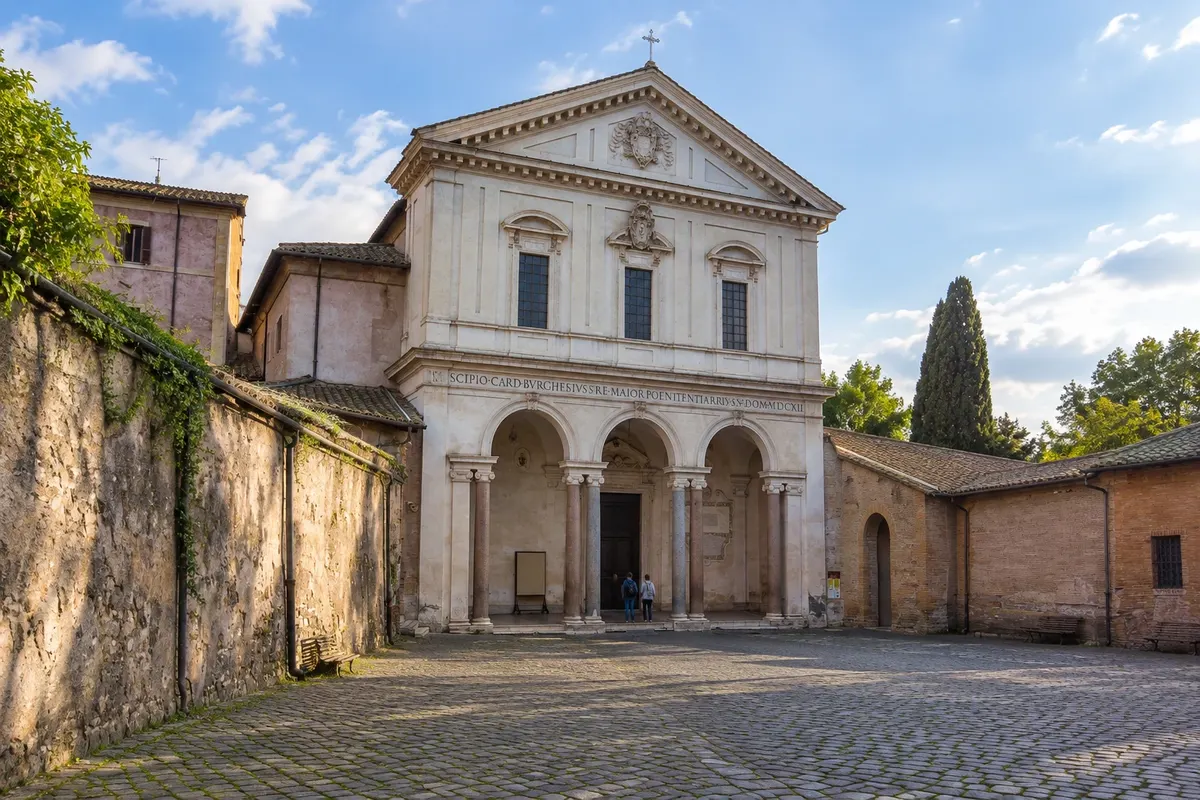
Catacombe di San Sebastiano

Catacombs beneath the basilica of São Sebastião on the Via Appia Antica, with three decorated Roman mausoleums and the martyr's tomb. Guided visits only.

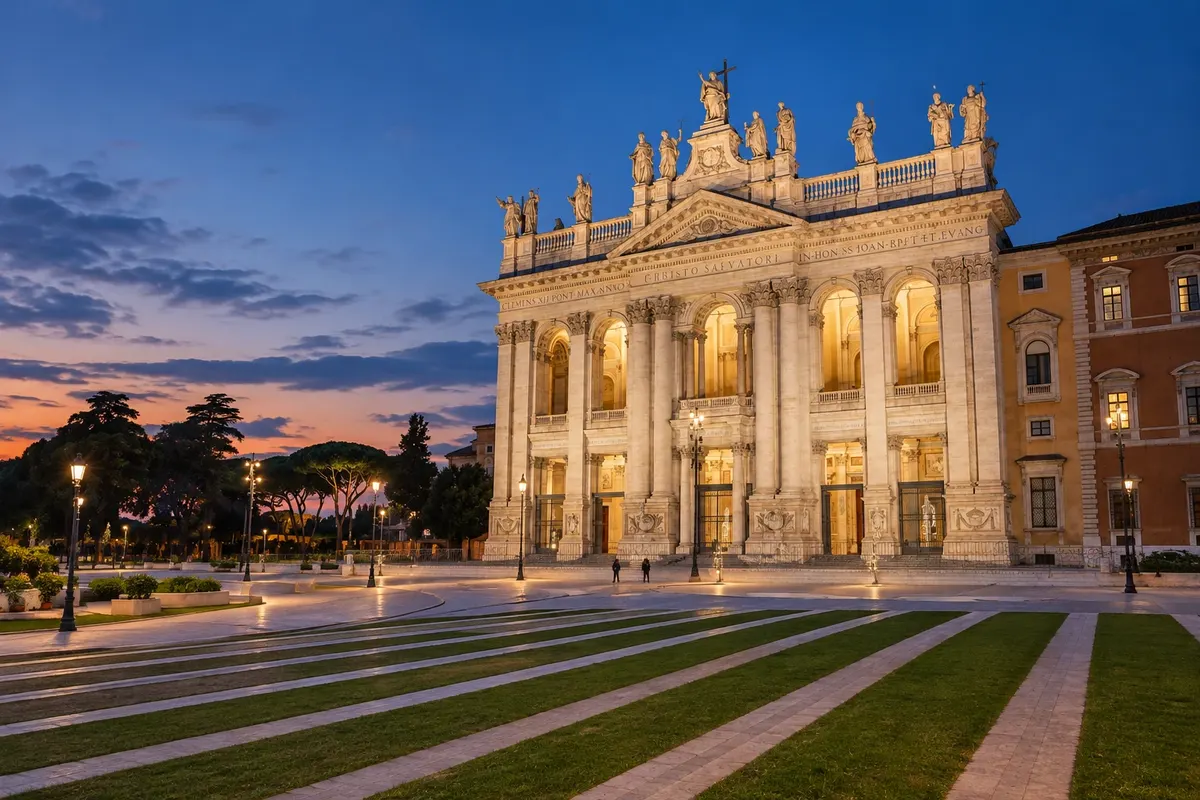
Basilica di San Giovanni in Laterano
Roma · Lazio · Cathedral

Basilica di San Giovanni in Laterano

The cathedral of Rome, the pope's seat as bishop of the city, with a Baroque façade of giant statues and an interior by Borromini. Opposite it is the Scala Santa.

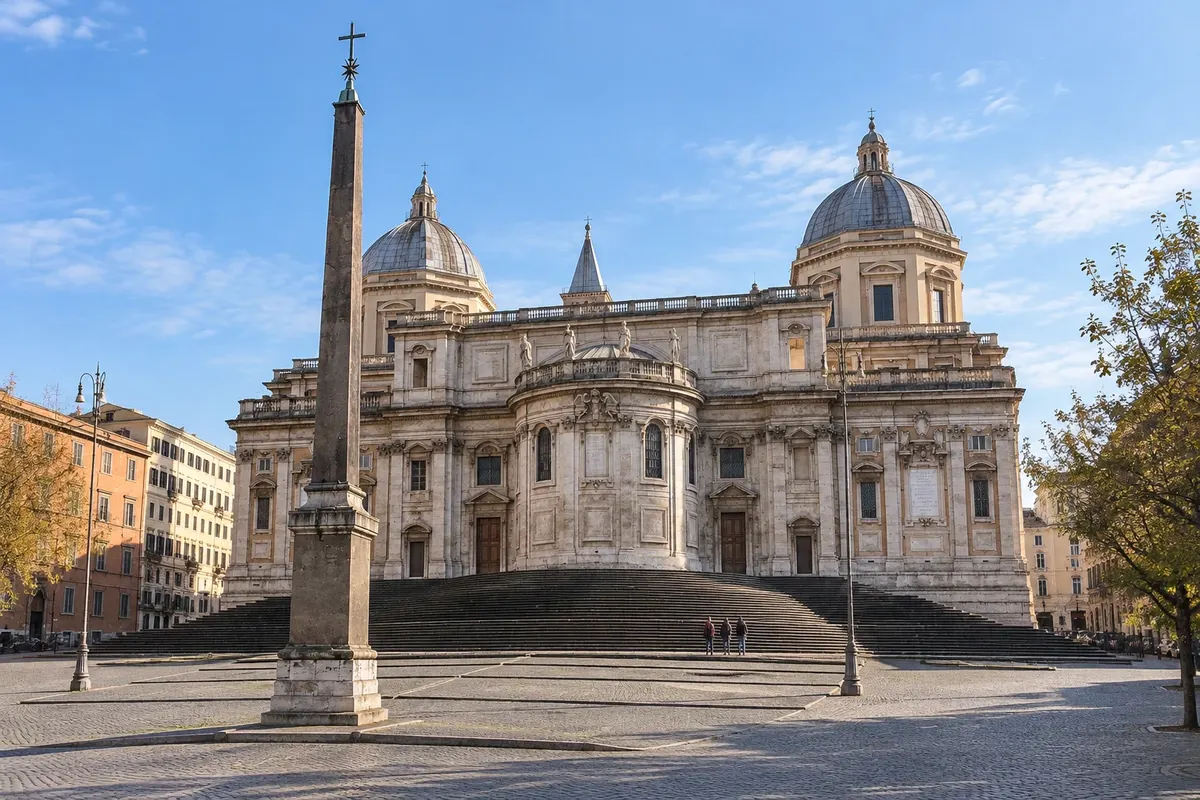
Basilica di Santa Maria Maggiore
Roma · Lazio · Church

Basilica di Santa Maria Maggiore

One of Rome's four papal basilicas, near Termini station, with 5th-century mosaics, a gilded ceiling and the tallest bell tower in the city.

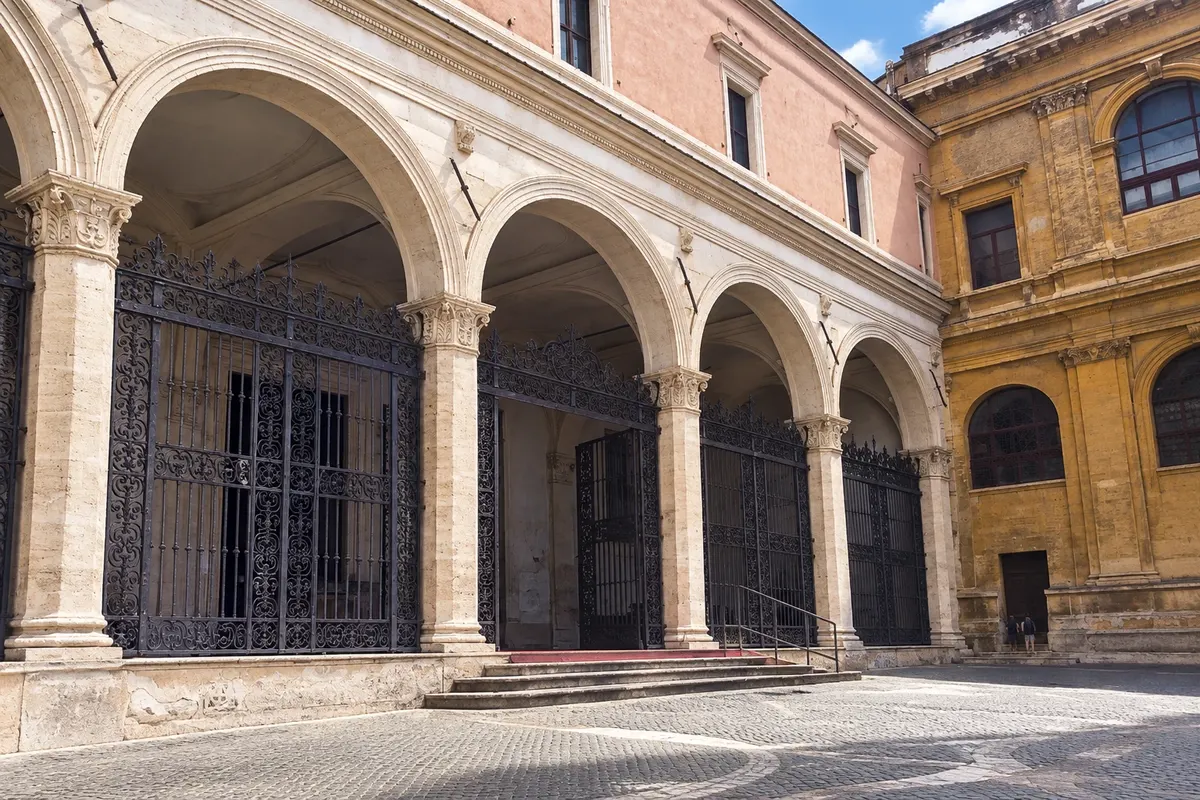
Basilica di San Pietro in Vincoli
Roma · Lazio · Church

Basilica di San Pietro in Vincoli

Church near the Colosseum that houses Michelangelo's Moses, in the tomb of Pope Julius II, and the chains that, according to tradition, bound São Pedro.

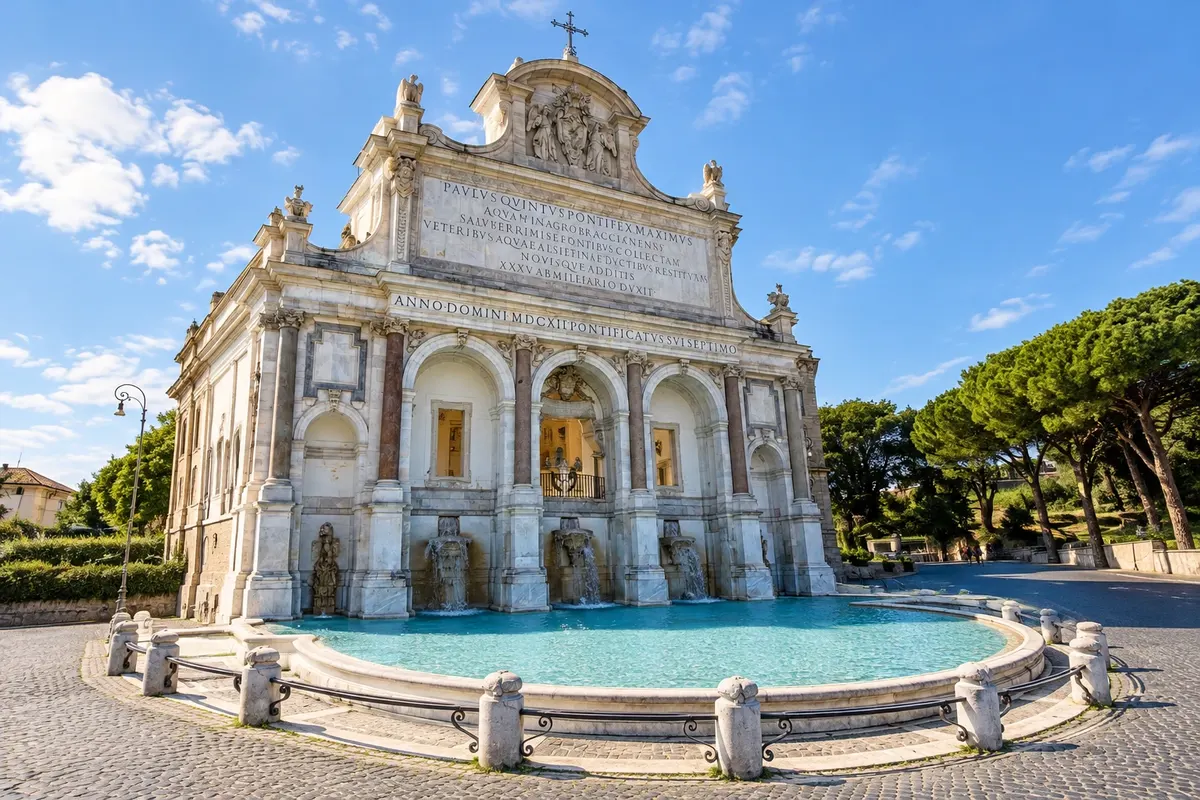
Gianicolo
Roma · Lazio · Viewpoint

Gianicolo

Tree-lined hill above Trastevere with one of the widest views of Roma, the statue of Garibaldi, the Fontanone and the daily cannon shot at noon.

Aventino
Roma · Lazio · Viewpoint

Aventino

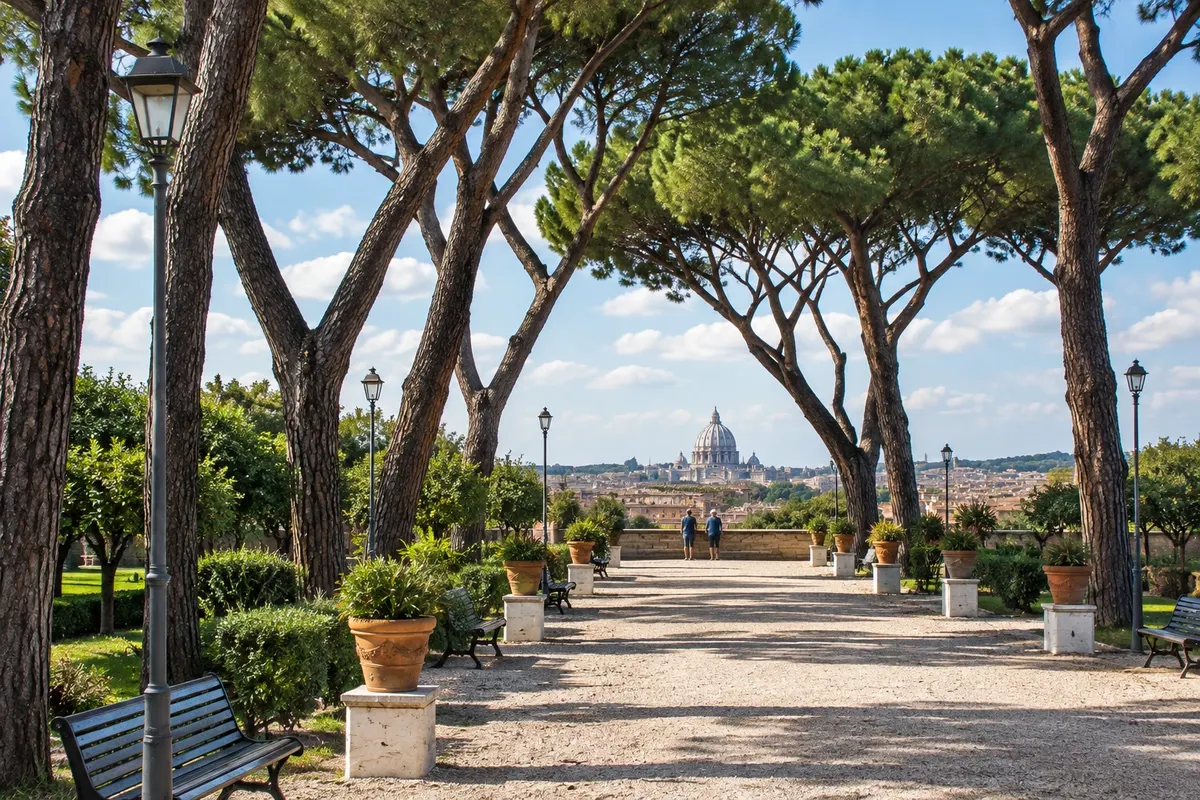
Quiet hill above the Circo Massimo with the Giardino degli Aranci, overlooking the dome of São Pedro, and the famous keyhole of the Order of Malta.

Mercato di Testaccio
Roma · Lazio · Market

Mercato di Testaccio

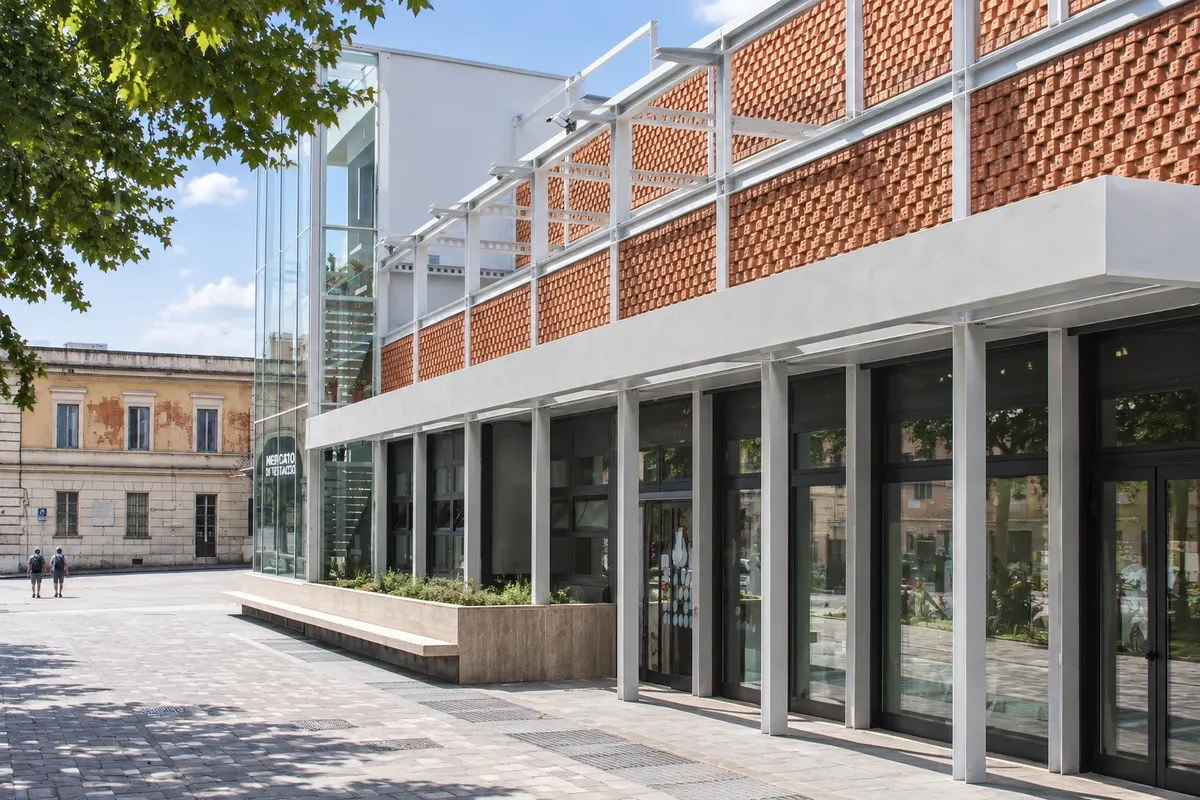
Covered market in the Testaccio neighborhood, with stalls selling fruit, cheeses, cold cuts and Roman street food. Good for having lunch like the locals.

Piazza del Popolo
Roma · Lazio · Square

Piazza del Popolo

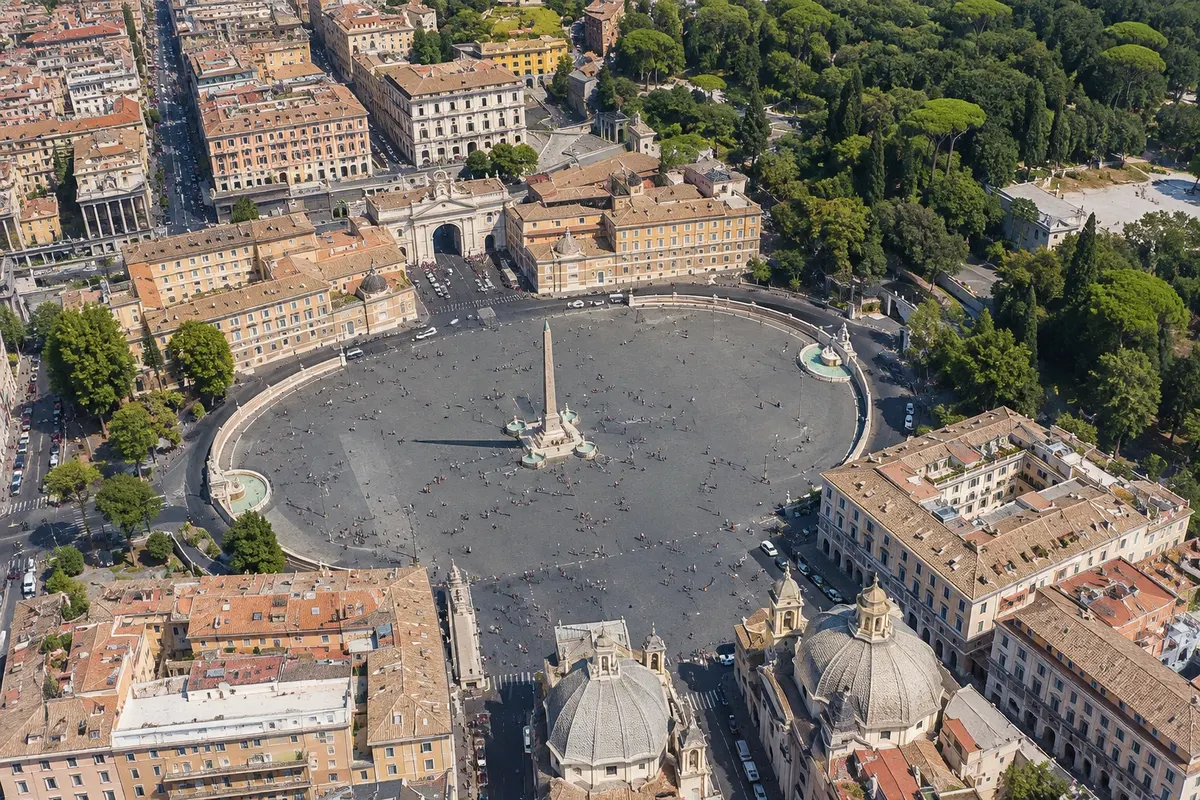
Large oval square at the northern entrance of the historic center, with an Egyptian obelisk, twin churches and the Basilica di Santa Maria del Popolo, which houses two paintings by Caravaggio.

Galleria Doria Pamphilj
Roma · Lazio · Museum

Galleria Doria Pamphilj

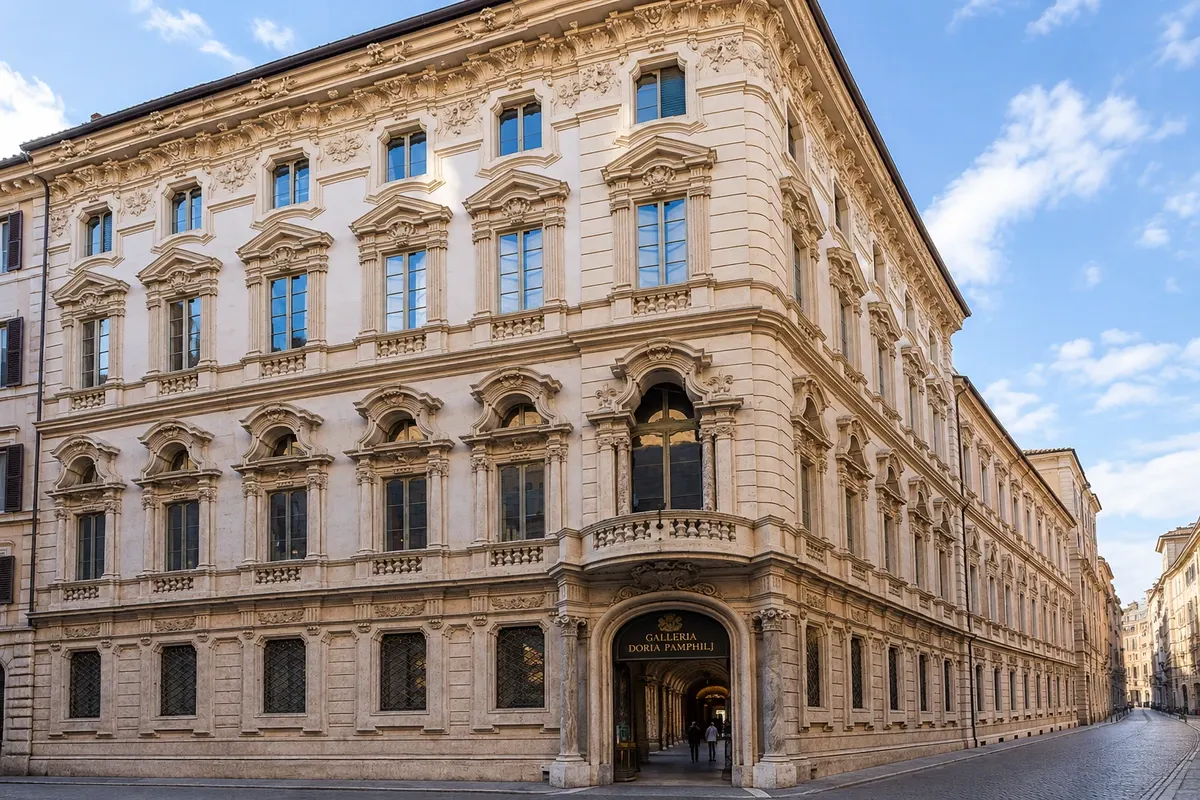
Private art collection inside a palazzo on the Via del Corso, still owned by the Doria Pamphilj family, featuring the portrait of Pope Inocêncio X by Velázquez and paintings by Caravaggio.

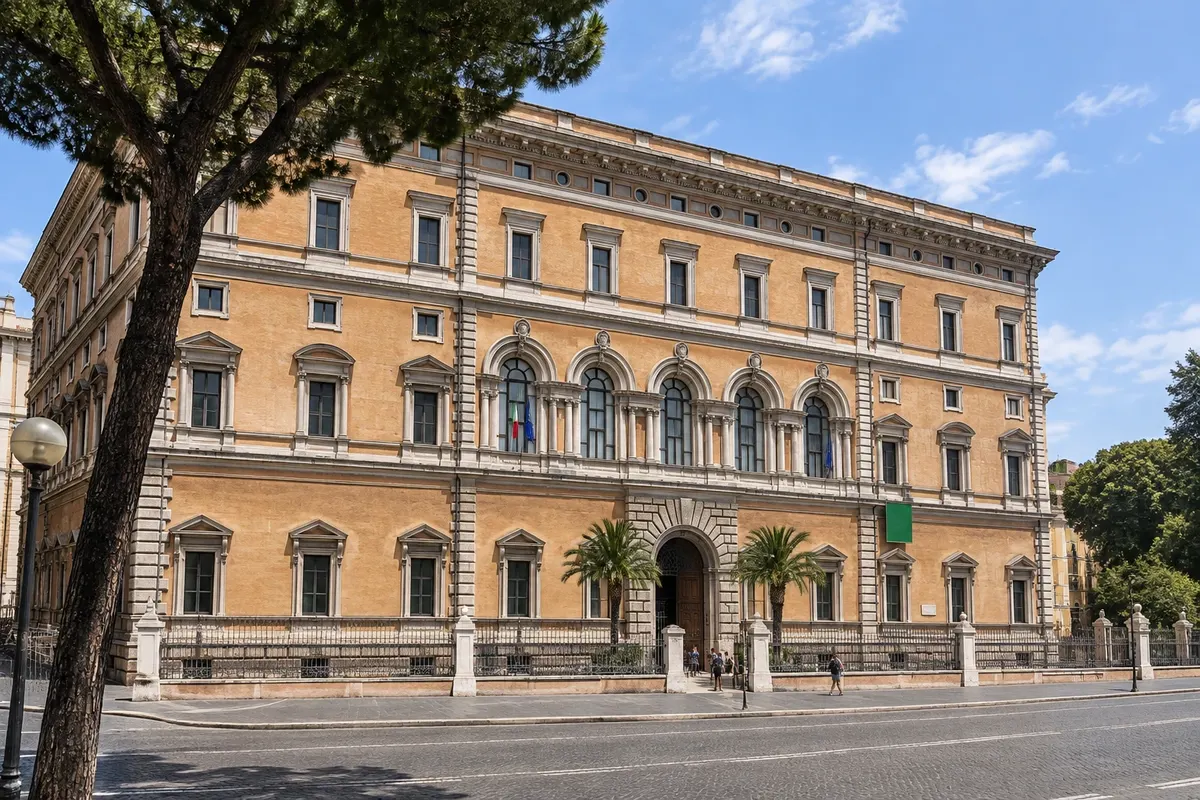
Palazzo Massimo alle Terme
Roma · Lazio · Museum

Palazzo Massimo alle Terme

Seat of the Museo Nazionale Romano next to Termini station, with frescoes from Roman villas, the Boxer at Rest and the Discobolus. One of the best museums of ancient art in Rome.

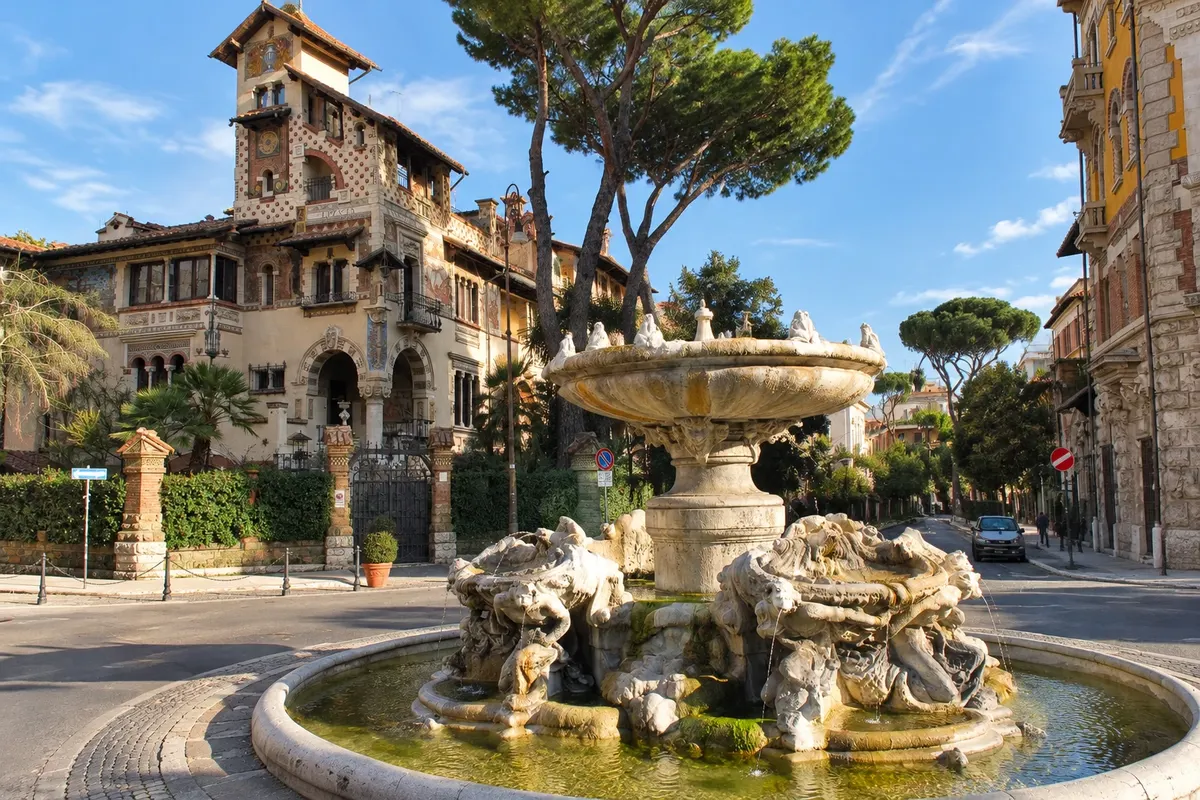
Quartiere Coppedè
Roma · Lazio · Architecture

Quartiere Coppedè

A group of whimsical buildings by the architect Gino Coppedè, with towers, mosaics, arches and the Fontana delle Rane, around the Piazza Mincio in the Trieste district.

Parco archeologico di Ostia antica
Roma · Lazio · Archaeological site

Parco archeologico di Ostia antica

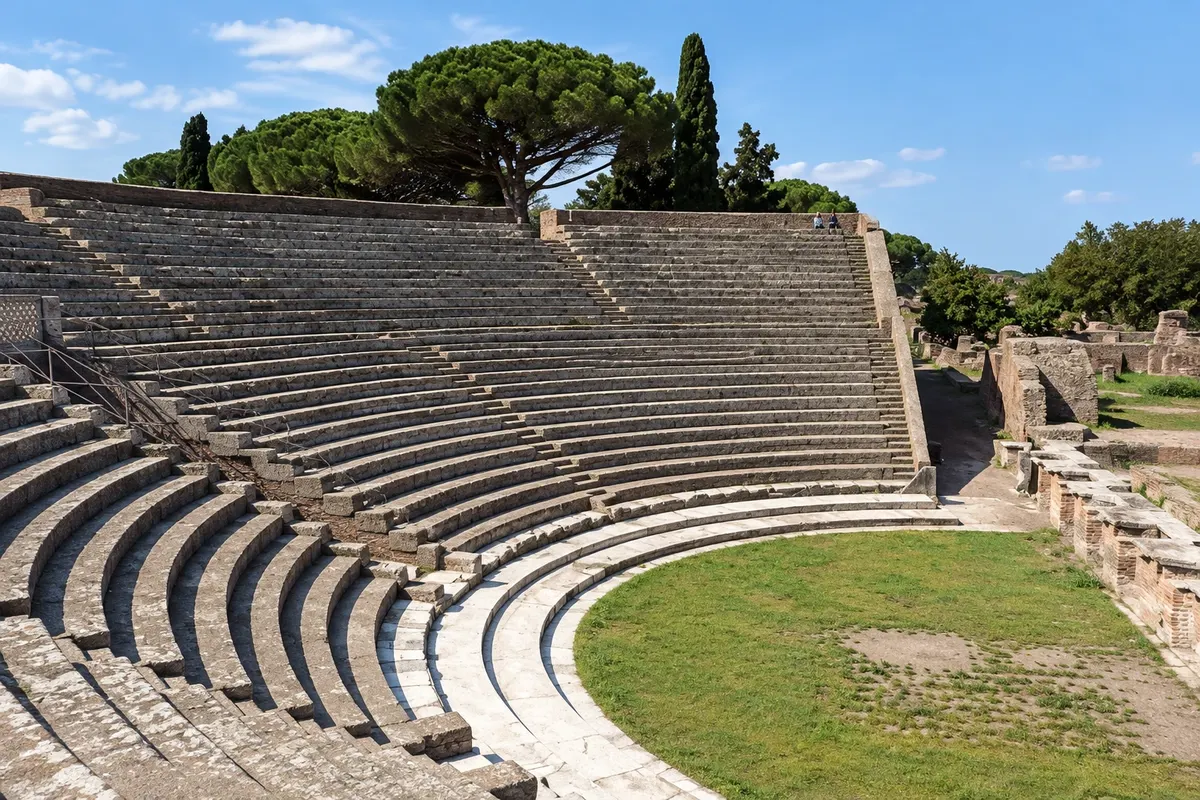
The ruins of ancient Rome’s port, about 30 km from the center: streets, houses, baths, a theater and mosaics of an entire Roman town. Day trip by train.

Villa d'Este
Roma · Lazio · Garden

Villa d'Este

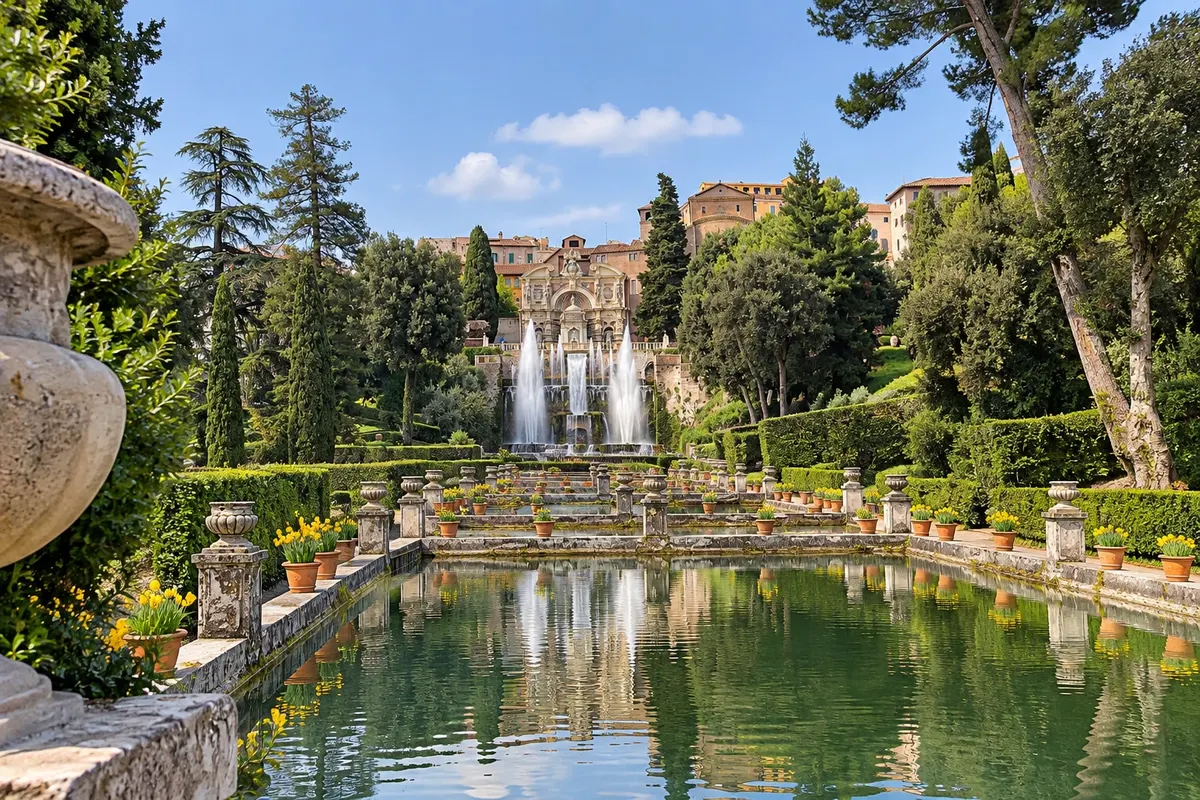
Renaissance palace in Tivoli, about 30 km from Rome, with terraced gardens and hundreds of fountains, such as the Fontana dell'Organo. UNESCO World Heritage Site.

Villa Adriana
Roma · Lazio · Archaeological site

Villa Adriana

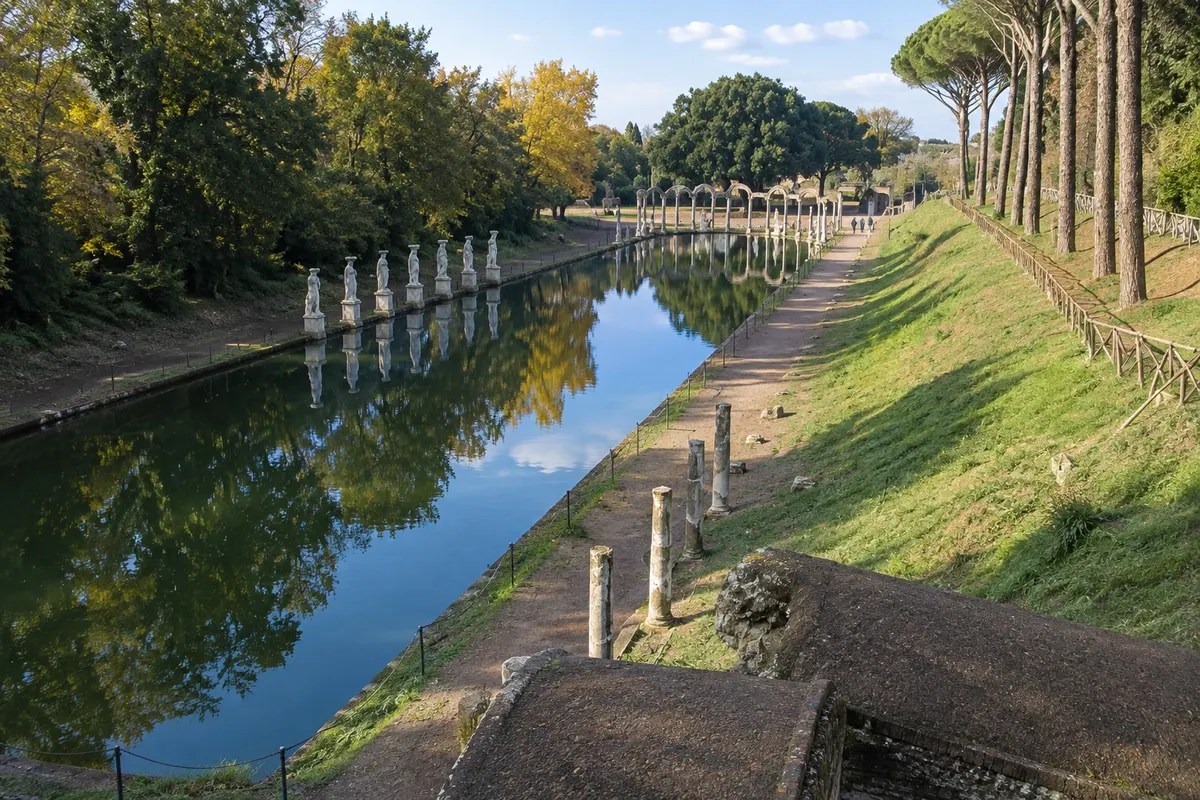
The vast country residence of Emperor Adriano from the 2nd century, near Tivoli: ruins of palaces, baths and reflecting pools such as the Canopo. UNESCO World Heritage Site.

To choose before you go

Tours in Roma and the Vaticano

Where each tour starts, how long it takes, how it is done, what is included and the price range.

Colosseo, Roman Forum and Palatine: the heart of ancient Rome

From Colosseo metro (line B) Walk with timed-entry ticket about 4 hours morning easy (a lot of walking and steps)

The Colosseo (Colosseum) was inaugurated in year 80 and could hold tens of thousands of people for gladiator fights and hunts. The standard visit covers the first and second tiers of seating, with views of the arena and the underground areas where cages and stage lifts were located; there are separate tickets to stand on the arena and to go down to the undergrounds. The same archaeological park ticket opens the Roman Forum (Foro Romano), with the Via Sacra, the Arch of Titus, the Curia of the Senate, the Temple of Saturn and the House of the Vestals, and the Palatine, the hill where tradition places Romulus’s hut and where the imperial palaces stand, with a viewpoint over the Circus Maximus. It is a lot of ground: allow half a morning just for the Forum and the Palatine. The ticket is nominal, with a date and time set to enter the Colosseo; the Forum and the Palatine are visited the same day, before or after.

Stops: Colosseo, Roman Forum and Palatine.

Includes: Separate paid ticket, nominal, with a timed entry, sold on the official archaeological park website; the option that includes the arena or the underground is a different ticket. Audioguide and guided tours are paid separately. Free entry on the first Sunday of the month, without reservation and with a queue.

Tip: Buy the ticket on the official website as soon as you know the date: the most requested times often sell out weeks in advance. Enter via the Palatine (Via di San Gregorio) to avoid the Colosseo gate line. Bring water and a hat: there is little shade in the Forum.

Best time: All year. From April to October mornings are the most pleasant time; in July and August the heat in the Forum is strong. In January and February there are fewer people.

Musei Vaticani and Cappella Sistina

From Ottaviano Metro (line A) or Cipro Visit with timed-entry ticket about 3 to 4 hours morning easy (long and tiring route)

The Musei Vaticani (Vatican Museums) are the popes' museums, with about 7 km of galleries. The classic route goes through the Cortile della Pigna, the Museo Pio‑Clementino (Laocoön, Belvedere Apollo), the Galleria delle Carte Geografiche, with Italy maps painted in the 16th century, the Stanze di Raffaello, with The School of Athens, and ends in the Cappella Sistina (Sistine Chapel), with the ceiling painted by Michelangelo between 1508 and 1512 and the Last Judgment from 1536 to 1541. In the chapel one must not speak loudly or take photos. There is also the Pinacoteca, with Caravaggio and Raphael, and the Egyptian and Etruscan collections, which most visitors skip for lack of time. The Vatican is a different country, but there is no border control: you enter via Viale Vaticano on foot, with your passport in your bag only as a precaution.

Stops: Musei Vaticani.

Includes: Separate paid admission, with date and time, sold only on the museums’ official website; audio guide and guided tours at extra cost. Without a reservation, the ticket line can exceed two hours. Dress code: shoulders and knees covered.

Tip: Book in advance on the official Musei Vaticani website, and be wary of sites that sell the same ticket for a higher price. Opening hours and late afternoon are the least crowded times. On exiting the Sistine Chapel, the door on the right (used by groups) leads directly to St. Peter’s Basilica without returning to the square’s line; it is not always open.

Best time: All year. Saturdays and the Easter holidays are busier; the museum is closed on Sundays except the last Sunday of the month, when entry is free and the line is long.

Basilica di San Pietro, dome and Piazza San Pietro

From Ottaviano metro (line A) Walk and climb to the dome about 3 hours morning or afternoon moderate (up to 551 steps to the dome)

Piazza San Pietro (St. Peter’s Square), designed by Bernini between 1656 and 1667, is embraced by two colonnades of 284 columns, with the Egyptian obelisk at the center. The Basilica di San Pietro (St. Peter’s Basilica), consecrated in 1626, is the largest church in the Christian world: immediately to the right of the entrance is Michelangelo’s Pietà, behind glass; in the center, Bernini’s bronze baldachin over the papal altar, and below it the tomb attributed to St. Peter. The ascent to the dome, designed by Michelangelo, starts by elevator or stairs to the terrace and continues up a narrow stair between the two shells of the dome to the lantern, with views over the square and all of Rome. The Vatican grottoes contain the tombs of the popes. Entry to the basilica goes through a security check in the square; the line moves, but it can take an hour.

Stops: Basilica di San Pietro, Piazza San Pietro.

Includes: Entrance to the basilica is free, with a security line; ascent to the dome is paid separately (with or without an elevator to the terrace), no reservation required, tickets sold on site. Audio guide paid separately. Dress code: shoulders and knees covered, no caps.

Tip: Arrive early at opening, or go late in the afternoon when the security line is shorter. On Wednesday mornings, when there is a papal audience, the square is closed until midday. The dome closes earlier than the basilica: climb the dome first.

Best time: All year. From April to October the line is longer; on Sundays at noon the pope usually prays the Angelus from the window, and the square fills up.

Historic center on foot: Pantheon, Trevi Fountain, Piazza Navona and Campo de' Fiori

From Piazza Barberini (metro line A) Walk about 3 to 4 hours morning or late afternoon easy

The walk links the squares of the old center, all a few minutes from each other. The Trevi Fountain (Fontana di Trevi), completed in 1762, fills the entire facade of a palace; the tradition is to throw a coin over your shoulder. The Pantheon (Panteon), a Roman temple rebuilt by Hadrian around 126, has the largest unreinforced concrete dome of the ancient world, with the oculus open at the top; inside are the tombs of Raphael and the kings of Italy. Piazza Navona occupies the site of a Roman stadium and houses Bernini’s Fountain of the Four Rivers in front of the church of Sant'Agnese by Borromini. Campo de' Fiori has a morning market from Monday to Saturday, and the statue of Giordano Bruno, who was burned there in 1600. Along the way, San Luigi dei Francesi holds three canvases by Caravaggio, and Sant'Ignazio has Andrea Pozzo’s perspective ceiling.

Stops: Pantheon, Trevi Fountain, Piazza Navona, Campo de' Fiori.

Includes: Self-guided walk. The Pantheon charges an entrance fee (ticket office on site or online); churches do not charge. The area around the Trevi Fountain has controlled access at peak times, sometimes with a queue; check the rules for the day.

Tip: Go to the Fontana di Trevi very early, before 8:00, or late at night, when you can get close. The Pantheon closes to the public for Sunday morning masses. In churches, bring coins to light up the paintings.

Best time: All year. In summer evenings the squares stay busy late; from November to February the center is quieter.

Scalinata di Trinità dei Monti, Piazza del Popolo and Villa Borghese

From Spagna metro (line A) Walk with park about 3 hours afternoon easy

The Scalinata di Trinità dei Monti (Spanish Steps), dating from 1725, rises from the Piazza di Spagna, with the Fontana della Barcaccia, up to the French church of Trinità dei Monti; sitting on the steps is prohibited and the rule is enforced. From Via del Babuino or Via Margutta you reach Piazza del Popolo, the old gateway for travelers coming from the north, with its obelisk, the two twin churches and, in Santa Maria del Popolo, two canvases by Caravaggio. The Pincian ramp leads up to the terrace overlooking the square and St. Peter's dome in the late afternoon. From there Villa Borghese begins, the 80-hectare park with its small boating lake, the Giardino del Lago, the water clock and the zoo (Bioparco). Inside the park are the Galleria Borghese and the Galleria Nazionale d'Arte Moderna.

Stops: Scalinata di Trinità dei Monti, Piazza del Popolo, Villa Borghese.

Includes: Free walk, no charge. Rowboats, bicycles and the Bioparco are paid separately.

Tip: To photograph the empty staircase, go before 8 a.m. Via Condotti, opposite, is the designer shopping street; parallel Via Margutta is the street of ateliers. Combine this walk with the Galleria Borghese, booked for late afternoon.

Best time: All year round. In April and May the staircase is adorned with azaleas; in summer the park provides shady refuge.

Galleria Borghese: Bernini and Caravaggio in Villa Borghese

From Villa Borghese (bus or on foot from Barberini metro) Visit with mandatory reservation 2 hours (fixed time slot) morning or afternoon easy

The Galleria Borghese occupies the 1613 casino of Cardinal Scipione Borghese, patron of Bernini and collector of Caravaggio. On the ground floor are Bernini’s sculptures made between 1621 and 1625: Apollo and Daphne, The Rape of Proserpina, David and Aeneas with Anchises, and also Canova’s Pauline Bonaparte. Upstairs are the six Caravaggios (including Boy with a Basket of Fruit and David with the Head of Goliath), Raphael (The Deposition), Titian (Sacred and Profane Love) and Correggio. Visits are in two-hour shifts with a limited number of people, which keeps the rooms quiet. The museum is inside the Villa Borghese park; it’s worth approaching on foot through the park.

Stops: Galleria Borghese, Villa Borghese.

Includes: Ticket paid separately, with mandatory reservation of date and time slot on the official website; without a reservation only if there is leftover availability that day. Audioguide paid separately. Backpacks and large bags must be left in the cloakroom.

Tip: Book weeks in advance on the official Galleria Borghese website; weekend time slots sell out earlier. Arrive 30 minutes before your slot to collect the ticket. The museum is closed on Mondays.

Best time: All year. During Easter holidays, in May and from September to October the slots sell out earlier.

See 10 more tours

Castel Sant'Angelo and Ponte Sant'Angelo

From Lepanto metro (line A) or on foot from the Vatican Visit to the castle about 2 hours afternoon easy (ramps and stairs)

Castel Sant'Angelo (Castle of the Holy Angel) began as the mausoleum of Emperor Hadrian around 139 AD and later became a fortress, prison and refuge for the popes, connected to the Vatican by an elevated corridor, the Passetto di Borgo. The visit climbs the Roman helical ramp, passes the Renaissance papal apartments, the Angel’s courtyard and the cells, and ends on the terrace with the statue of Archangel Michael and views of St. Peter’s dome and the Tiber River. The Ponte Sant'Angelo opposite features the ten angel statues designed by Bernini. The name comes from Pope Gregory the Great’s vision in 590 of an angel sheathing his sword atop the mausoleum, a sign of the end of a plague.

Stops: Castel Sant'Angelo.

Includes: Admission paid separately (tickets at the venue or online, with timed entry on busy days). Audio guide paid separately. Closed on Mondays.

Tip: Go late afternoon: the terrace with low light on St. Peter is the highlight. On summer nights the castle often opens later—check the schedule. Combine it with the walk along Via della Conciliazione to the square.

Best time: All year. From June to September there are often night openings.

Trastevere and Gianicolo: the neighborhood of narrow streets and the viewpoint

From Piazza Trilussa (tram 8 or on foot from the Isola Tiberina) Walk with uphill sections about 3 hours late afternoon and evening moderate (ascent to the Gianicolo)

Trastevere, "across the Tiber," is the neighborhood of stone alleys, laundry lines and trattorie, which becomes a meeting point at night. Santa Maria in Trastevere, one of Rome's oldest churches, has 12th-century mosaics on the façade and in the apse; Santa Cecilia houses the sculpture of the saint by Maderno. Villa Farnesina on Via della Lungara has frescoes by Raphael. From there you climb to the Gianicolo (Janiculum), the hill above the neighborhood: along the way you'll find Bramante's Tempietto in the courtyard of San Pietro in Montorio, and the Fontana dell'Acqua Paola. At the top, the square with Garibaldi's statue offers the city's broadest viewpoint, with domes in a row; at noon a cannon fires a blank shot, a tradition since 1847. Descend via Via Garibaldi back to the neighborhood for dinner.

Stops: Trastevere, Gianicolo.

Includes: Free walk, no charge. Villa Farnesina requires a separate admission fee.

Tip: Climb up to the Gianicolo before sunset, with the light coming from behind the domes. In Trastevere, the streets on the west side (near Santa Maria) are the busiest; the east side (Santa Cecilia) is quieter. On Sunday mornings there is the Porta Portese market at the edge of the neighborhood.

Best time: All year. From May to September tables spill onto the streets; on summer nights the neighborhood stays busy late.

Aventino, Bocca della Verità, Circo Massimo and Terme di Caracalla

From Circo Massimo metro (line B) Walk with ruins about 3 to 4 hours morning easy

The Aventine is the quiet hill of gardens and ancient churches. At the Giardino degli Aranci, the terrace among orange trees looks over the river and St. Peter’s dome; nearby, on the Piazza dei Cavalieri di Malta, the priorate gate’s keyhole frames the dome in the distance, and there is often a line to look through. Santa Sabina, from the 5th century, has the oldest carved wooden door in Christendom. Descending, the Bocca della Verità (Mouth of Truth), the marble disc in the portico of Santa Maria in Cosmedin, has drawn queues since the 1953 film. Opposite are the temples of Hercules and Portuno at the Foro Boario. The Circo Massimo, where chariot races took place, is now a 600 m lawn between the Palatine and the Aventine. The walk ends at the Terme di Caracalla, the monumental ruins of the 3rd‑century public baths, with floor mosaics and 30 m walls.

Stops: Aventino, Bocca della Verità, Circo Massimo, Terme di Caracalla.

Includes: Self‑guided walk. Terme di Caracalla requires a separate paid ticket; the Bocca della Verità requests a donation. Churches have no charge.

Tip: Begin early on the Aventine, before the groups arrive at the keyhole. At the Terme di Caracalla, the audio guide or virtual reality glasses (when offered) help imagine the spaces. In summer the baths host open‑air operas.

Best time: Year‑round. Mornings are pleasant from April to June and September to October; in high summer the Circo Massimo has no shade.

Via Appia Antica and the catacombs of San Callisto and San Sebastiano

From Colli Albani metro + bus 660, or bus 118 Walk or cycling in archaeological park about 4 hours morning moderate (uneven stones)

The Via Appia Antica (Ancient Appian Way), opened in 312 BC to connect Rome to Capua and later to Brindisi, is now an archaeological park: in the first kilometers, among pines and walls, you can find the original Roman pavement, family tombs along the road, the Mausoleum of Cecilia Metella from the 1st century BC, and the Villa dei Quintili. The Catacombe di San Callisto (Catacombs of Saint Callixtus), with about 20 km of galleries across four levels, were the official cemetery of the Church of Rome in the 3rd century, containing the popes' crypt; the Catacombe di San Sebastiano, smaller, lie beneath the basilica of the same name and preserve the place where, for a time, the remains of Peter and Paul are said to have been hidden. The catacombs are only visited with a guide, in language-specific groups, and it is cold inside. On Sundays and public holidays the road is closed to cars and becomes a bike route.

Stops: Via Appia Antica, Catacombe di San Callisto, Catacombe di San Sebastiano.

Includes: Park entrance free; catacombs require a separate paid ticket, guided tour included (about 40 minutes each); Mausoleum of Cecilia Metella and Villa dei Quintili charge admission. Bicycle rental at the park information point, paid separately.

Tip: Go on a Sunday, when the road is closed to cars, rent a bicycle at the visitor center (Via Appia Antica 58-60) and cycle to the Villa dei Quintili, about 8 km. The catacombs close on different days of the week: San Callisto on Wednesdays, San Sebastiano on Sundays; confirm.

Best time: All year. Spring and autumn are best for cycling; in summer leave early.

The major basilicas: San Giovanni in Laterano, Santa Maria Maggiore and San Pietro in Vincoli

From San Giovanni metro (line A) Walk among churches about 3 hours morning or afternoon easy

The Basilica di San Giovanni in Laterano (Basilica of St. John Lateran) is Rome’s cathedral, the pope’s seat as bishop of the city, founded by Constantine in the 4th century and rebuilt by Borromini in the 17th century, with giant statues of the apostles in the nave and a cosmatesque cloister; opposite is the Scala Santa, which the faithful climb on their knees. The Basilica di Santa Maria Maggiore houses 5th-century mosaics in the nave, the gilded ceiling containing the first gold brought from the Americas, and Bernini’s tomb; since 2025 it receives pilgrims to Pope Francis’s tomb. San Pietro in Vincoli, near the Colosseo, displays Saint Peter’s chains and Michelangelo’s Moses from 1515, part of Pope Julius II’s tomb. All three are active churches: respect services and cover your shoulders and knees.

Stops: Basilica di San Giovanni in Laterano, Basilica di Santa Maria Maggiore, Basilica di San Pietro in Vincoli.

Includes: Free entry to the three basilicas. The cloister of San Giovanni and visits to the loggias and the museum of Santa Maria Maggiore require a separate ticket.

Tip: Do the walk from San Giovanni to Santa Maria Maggiore via Via Merulana, 15 minutes, and continue via San Pietro in Vincoli to the Colosseo. Bring a coin to light the Moses. During Jubilee years and on the August feasts (August 5 at Santa Maria Maggiore) there is more activity.

Best time: All year round. On August 5, Santa Maria Maggiore celebrates the “miracle of the snow” with white petals falling from the ceiling.

Musei Capitolini, Campidoglio and Vittoriano

From Piazza Venezia (bus) Museum and viewpoints about 3 hours afternoon easy

The Piazza del Campidoglio, designed by Michelangelo, with the equestrian statue of Marcus Aurelius at its center (a copy; the original is inside), houses the Musei Capitolini (Capitoline Museums), the oldest public museum in the world, dating from 1471: the Capitoline Wolf, the Spinario, the colossal head of Constantine, the Capitoline Venus and, in the picture gallery, Caravaggio and Rubens. The underground gallery (Tabularium) has a window onto the Roman Forum. Beside it, the Vittoriano (Altare della Patria), the white marble monument to Victor Emmanuel II, inaugurated in 1911, holds the Tomb of the Unknown Soldier; panoramic elevators go up to the quadriga terrace, with 360-degree views over the center. Behind the museum, the terrace of the Caffè Capitolino overlooks the domes without paying admission.

Stops: Musei Capitolini, Vittoriano.

Includes: Musei Capitolini with separate paid admission (included on the Roma Pass). Vittoriano: monument terrace free of charge; panoramic elevator for an additional fee.

Tip: Go to the Vittoriano in the late afternoon and visit the Musei Capitolini beforehand to see the Forum from the Tabularium window with good light. The staircase behind the square leads straight down to the Roman Forum.

Best time: All year. On June 2 (Republic Day) and November 4 there are ceremonies at the Vittoriano.

Mercato di Testaccio, Palazzo Massimo and Galleria Doria Pamphilj

From Piramide metro (line B) Market and two museums about 4 hours morning easy

The Mercato di Testaccio, in the neighborhood of the old slaughterhouse, is the covered market where Romans do their shopping and eat standing at food stalls: trapizzino, meat sandwiches and fresh pasta, until early afternoon, Monday through Saturday. Nearby are the Pyramid of Cestius and the Non-Catholic Cemetery, with the graves of Keats and Shelley. The Palazzo Massimo alle Terme, next to Termini station, is the main seat of the Museo Nazionale Romano: on the top floor are the frescoes from the garden of the Villa of Livia and those from the Villa Farnesina; on the lower floors, the Resting Boxer, the Discobolus Lancellotti and the coin room. The Galleria Doria Pamphilj, on Via del Corso, is a private family collection displayed in the family’s own palace: Velázquez (the portrait of Innocent X), Caravaggio, Titian and mirror salons, with an audio guide narrated by a family member.

Stops: Mercato di Testaccio, Palazzo Massimo alle Terme, Galleria Doria Pamphilj.

Includes: Market free of charge, food paid separately. Palazzo Massimo and Galleria Doria Pamphilj require separate paid admission; the Doria Pamphilj audioguide is included.

Tip: At the market, go before noon and look for the stalls with lines of Romans. Palazzo Massimo is often empty: ideal for a rainy morning. The Doria Pamphilj closes some days each month for events; check the calendar.

Best time: All year; the market is closed on Sundays.

Quartiere Coppedè and Villa Torlonia: the Rome tourists don't see

From Piazza Buenos Aires (tram 3 or 19) neighbourhood walk about 2 hours afternoon easy

Quartiere Coppedè is a group of about 40 buildings constructed between 1913 and 1927 by the Florentine architect Gino Coppedè, in a mix of Art Nouveau, medieval, baroque and fantasy: you enter through the arch with the iron chandelier on Via Tagliamento and arrive at Piazza Mincio, with the Fontana delle Rane (fountain of the frogs), the Villino delle Fate with frescoes of Dante and Petrarca, and the Palazzo del Ragno with the spider on the façade. It is a residential neighborhood: there is no ticket office or museum, just walking and photography. A few minutes away is Villa Torlonia, a public park with the house where Mussolini lived from 1925 to 1943, now a museum, and the Casina delle Civette, the house of the owls, featuring Art Nouveau stained glass.

Stops: Quartiere Coppedè.

Includes: Free walk, no charge. Villa Torlonia museums require a separate paid admission.

Tip: Late‑afternoon light falls on the façades of Piazza Mincio. It is one of the few walks to do on museum‑closed days (Monday). Trams 3 and 19 stop at Piazza Buenos Aires, 100 m from the arch.

Best time: All year round.

Ostia Antica: the Roman port town half an hour from the centre

From Porta San Paolo station (Piramide metro), Roma‑Lido train Round‑trip train excursion and walk in an archaeological site about 5 hours full day moderate (lots of ground to cover, little shade)

The Parco archeologico di Ostia antica (Ostia Antica) is Rome’s port town, abandoned in the 5th century and covered by sand, which preserved streets, multi‑storey apartment buildings, taverns with counters, laundries, 18 public bath complexes and a theatre for 4,000 people. You walk along the Decumanus Maximus, the main street, to the Forum and the Capitol; at the Terme di Nettuno there are mosaics of Neptune and Amphitrite; at the Thermopolium on Via di Diana, the bar with a marble counter and food frescoes; at the Piazzale delle Corporazioni, the mosaics of the 60 merchant corporations showing products from each Mediterranean port. It is less visited than Pompeii and can be seen in half a day. The Roma‑Lido train (Metromare line) departs from Porta San Paolo and takes about 30 minutes to Ostia Antica station, a 5‑minute walk from the entrance.

Stops: Parco archeologico di Ostia antica.

Includes: Separate paid admission (ticket office on site or online); the on‑site museum is included. The train uses the regular urban transport ticket.

Tip: Bring water, a hat and closed shoes: the site is large and open. Pick up the map at the entrance and prioritise the theatre, the Neptune baths, the Thermopolium and the Piazzale delle Corporazioni. It is closed on Mondays. Combine it with an afternoon at the Lido di Ostia beach, three stations further.

Best time: All year. Spring and autumn are ideal; in summer go at opening and leave before midday.

Tivoli: Villa d'Este and Villa Adriana

From Tiburtina station (regional train) or Ponte Mammolo metro + Cotral bus Round-trip visit to two villas about 8 hours full day moderate (stairs and sloping gardens)

Tivoli, 30 km from Rome, has two UNESCO-listed villas. Villa d'Este, begun in 1550 for Cardinal Ippolito d'Este, is the Renaissance garden of 51 fountains and hundreds of gravity-fed jets: the Fontana dell'Ovato, the Cento Fontane, the Fontana dell'Organo, which plays a water organ at set times, and terraces overlooking the plain. Villa Adriana (Hadrian's Villa), on the outskirts of town, was Emperor Hadrian's country residence between 118 and 138, a 120-hectare complex with the Canopo (the lake with columns and statues), the Teatro Marittimo (the island where the emperor retired), baths and libraries. The two are 5 km apart, linked by a local bus. You can do both in one day if you start early, but each needs two to three hours.

Stops: Villa d'Este, Villa Adriana.

Includes: Separate admission ticket required for each villa (ticket office on site or online). Regional train Rome–Tivoli and Cotral bus paid separately, not covered by Rome urban ticket.

Tip: Start at Hadrian's Villa in the morning (more open and warm) and save Villa d'Este, with its shade and water, for the afternoon. At Villa d'Este, check the times when the Fontana dell'Organo plays. Both close on Mondays (Villa d'Este) or may not: confirm on each site's official website.

Best time: From March to October the fountains and gardens are at their best; Villa d'Este often opens at night on summer Fridays and Saturdays.


Day by day

3, 5 and 7-day itinerary in Roma and the Vaticano

Suggestions to plan the trip. Change the order of the days according to the weather and tour availability.

3 days · Rome in 3 days: Ancient Rome, the Vatican and the piazza-centered historic core

For First trip, arriving from Brazil on the direct flight to Rome, with little time and wanting to see the essentials without rushing. · Based in Historic center (Pantheon, Campo de' Fiori) or Monti, near the Colosseo
  1. Day 1 · Arrival, historic center and Trevi Fountain
    The overnight flight from São Paulo or Rio arrives at Fiumicino in the morning. The Leonardo Express takes about 32 minutes to Termini station. Drop your bags and do a light day on foot: a walk through the historic center with the Pantheon, Piazza Navona and Campo de' Fiori, and the Trevi Fountain in the late afternoon. Early dinner and to bed: jet lag takes its toll.

  2. Day 2 · Colosseo, Roman Forum and Capitoline

    Enter the Colosseo at your reserved time in the morning, then continue through the Roman Forum and the Palatine. Lunch in Monti. In the afternoon, go up to the Capitoline Hill for the Musei Capitolini (or just the piazza and terrace) and finish at the Vittoriano, with the terrace view at the end of the day.

  3. Day 3 · Vatican and Trastevere

    Musei Vaticani and the Sistine Chapel with a reserved entry in the first hour; then St. Peter’s Basilica and, if your legs permit, the dome. Lunch in Borgo Pio. In the afternoon, Castel Sant'Angelo and a walk across the Ponte Sant'Angelo; in the evening, dinner in Trastevere.

5 days · Rome in 5 days: including Galleria Borghese, the Via Appia and the basilicas
For For those who want the classics at a relaxed pace, two top museums and a day outside the center. · Based in Historic center or Prati (near the Vatican)
  1. Day 1 · Arrival and the square-lined center

    Arrive in the morning at Fiumicino, train to Termini and an easy day in the historic center: Pantheon, Piazza Navona, Campo de' Fiori and the Trevi Fountain at night, when the crowd eases.

  2. Day 2 · Ancient Rome

    Colosseo with a timed entry, Roman Forum and Palatine in the morning. In the afternoon, Aventine, Bocca della Verità, Circus Maximus and the Baths of Caracalla, or the Musei Capitolini and the Vittoriano.

  3. Day 3 · Vatican

    Musei Vaticani and the Sistine Chapel in the first hour; St. Peter’s Basilica and the dome; Castel Sant'Angelo in the afternoon; dinner in Trastevere, with the climb to the Janiculum before sunset.

  4. Day 4 · Villa Borghese and the basilicas

    In the morning, the Spanish Steps of Trinità dei Monti, Piazza del Popolo and the Pincian Hill; Galleria Borghese in your reserved slot. In the afternoon, San Giovanni in Laterano, Santa Maria Maggiore and Michelangelo’s Moses at San Pietro in Vincoli.

  5. Day 5 · Via Appia Antica

    Morning on the Via Appia Antica, by bike or on foot, with the catacombs of San Callisto or San Sebastiano. Free afternoon for the Mercato di Testaccio and the Galleria Doria Pamphilj, or for shopping; last night in the center.

7 days · Rome in 7 days: the whole city, Ostia Antica and Tivoli
For For those who have only one week for Rome and want to include day trips and neighborhoods off the main route. · Based in Historic center; the last two days can be in Monti, near Termini station, for train connections
  1. Day 1 · Arrival and historic center

    Arrive at Fiumicino in the morning, Leonardo Express to Termini in about 32 minutes. Drop your bags and take a light walking day: Pantheon, Piazza Navona and Campo de' Fiori, with the Trevi Fountain at night when the square empties. Dine near your accommodation and get an early night.

  2. Day 2 · Colosseo, Forum and Palatine

    Colosseo at your reserved time, right at opening, then the Roman Forum and the Palatine with the same ticket, with lunch in Monti. In the afternoon, the Musei Capitolini, with the Tabularium window overlooking the Forum, and the Vittoriano terrace to view the center from above at day’s end.

  3. Day 3 · Vatican

    Musei Vaticani and the Sistine Chapel with a reserved entry for the first hour; on exit, St. Peter’s Basilica and the climb to the dome. Lunch in Borgo Pio. Castel Sant'Angelo late in the afternoon, with its terrace over the river, and return to the center via the Ponte Sant'Angelo.

  4. Day 4 · Villa Borghese and Galleria Borghese

    Spanish Steps of Trinità dei Monti, Via Margutta, Piazza del Popolo and the Pincian Hill in the morning; Galleria Borghese in your reserved slot; late afternoon in the Quartiere Coppedè, by tram.

  5. Day 5 · Aventine, Caracalla and Via Appia

    Aventine and the Locksmith of the Knights of Malta very early, then the Bocca della Verità and the Circus Maximus; Baths of Caracalla at the end of the morning. In the afternoon, the Via Appia Antica, on foot or by bike, with a guided visit to one of the catacombs. Dinner in Testaccio, near the market.

  6. Day 6 · Ostia Antica

    Roma-Lido train to Ostia Antica, half a day at the site; afternoon on Lido beach (summer) or back to the city for the basilicas of San Giovanni and Santa Maria Maggiore.

  7. Day 7 · Tivoli

    Regional train from Tiburtina or Cotral bus to Tivoli: Hadrian's Villa in the morning, with the Canopus and the Maritime Theatre, and Villa d'Este in the afternoon, with the fountains. Return late afternoon and last night in Trastevere, with the climb to the Gianicolo to see the domes at sunset.

Best time to go

When to go: Roma and the Vaticano month by month

April, May, September and October usually have pleasant temperatures for walking all day. June through August is hot summer, with more people at the monuments. December through February is winter, colder and with less activity.

The seasons shown are the most usual ones; nature doesn't always follow the calendar.

January Some rain

winter · empty museums

Winter. At the Roma Ciampino station (129 m), 1991–2020 normals: average 7.5 °C (highs near 12 °C, lows around 3 °C) and about 66 mm of rain over 7 days. Short, cool days, rarely below zero; snow is rare. It is the quietest month of the year: Colosseum and Vatican without long lines, hotels calmer. On January 6 (Epiphany) Piazza Navona ends the Befana fair. Coat, scarf and umbrella.

February Some rain

winter · Carnival

Winter. At the Roma Ciampino station (129 m), 1991–2020 normals: average 8 °C and about 63 mm of rain. Variable sky, sometimes sunny afternoons. Low crowds, except at Carnival, with children in costume in the squares. Good time for museums and basilicas; the Galleria Borghese has time slots available at short notice.

March Some rain

early spring · Easter (sometimes)

Spring beginning. At Roma Ciampino station (129 m), 1991–2020 normals: average 10.7 °C and about 59 mm of rain. Days lengthen and the almond trees bloom on the Pincian Hill. When Easter falls in March, Holy Week fills the Vatican: the Way of the Cross at the Colosseum on Good Friday and the mass in the square on Sunday mean you should arrive hours early.

April Some rain

spring · Easter and April 21

Spring. At Roma Ciampino station (129 m), 1991–2020 normals: average 13.6 °C and about 69 mm of rain, with short showers. Azaleas on the Trinità dei Monti staircase and roses in the Roseto on the Aventine (open April–June). It is one of the busiest months: Easter (when it falls in April), April 25 (holiday) and April 21, Rome’s birthday, with parades at the Circus Maximus. Book the Colosseum, the Vatican and the Borghese weeks in advance.

May Some rain

spring · long days

Full spring. At Roma Ciampino station (129 m), 1991–2020 normals: average 18 °C (highs around 23 °C) and about 57 mm of rain. Ideal weather for walking and the Appian Way; evenings already allow outdoor dining. High activity, with the May 1 holiday; the Internazionali d'Italia (tennis) occupy the Foro Italico mid-month. Villa d'Este has its fountains running at full.

June Low rain

start of summer · outdoor evenings

Summer. At Roma Ciampino station (129 m), 1991–2020 normals: average 22.5 °C (highs around 28 °C) and about 30 mm of rain. Increasing heat, strong sun from noon to 4 p.m., long nights. On June 2 the Republic Day parade closes the Fori Imperiali; June 29 (Saint Peter and Saint Paul) is a city holiday. Night openings at Castel Sant'Angelo and operas at the Baths of Caracalla begin. Sunscreen, water and visiting museums during the hottest hours are advised.

July Low rain

summer · heat

Summer. At Roma Ciampino station (129 m), 1991–2020 normals: average 25.1 °C (highs around 31 °C) and about 20 mm of rain, almost always dry. It is the hottest month along with August: do ruins and walks early, leave museums and churches (cooler) for the afternoon, and enjoy the squares at night. High crowds; long lines at the Vatican without a reservation. The nasoni, public drinking fountains, are everywhere.

August Low rain

summer · Ferragosto

Summer. At Roma Ciampino station (129 m), 1991–2020 normals: average 25.4 °C and about 30 mm of rain, with some storms at the end of the month. On August 15 (Ferragosto) the city empties of Romans and many neighborhood shops and trattorias close for one or two weeks; monuments remain open. On August 5 white petals fall at Santa Maria Maggiore. The city becomes quieter; the heat requires planning your day around the cooler hours.

September Some rain

end of summer · return of activity

End of summer. At Roma Ciampino station (129 m), 1991–2020 normals: average 21 °C and about 65 mm of rain, concentrated in a few storms. Days are still warm but nights cool down; it is one of the preferred months to visit. High activity from mid-month, with competitive bookings for the Galleria Borghese and the Vatican. Summer night openings begin to end.

October High rain

autumn · golden light

Autumn. At the Roma Ciampino station (129 m), 1991–2020 normals: average 17 °C (highs of 22 °C) and about 88 mm of rain, with some heavy-rain days. Low light favors photos in the Forum and on the Gianicolo; the 'ottobrata romana' brings mild afternoons. The Rome Film Fest occupies the Auditorium in the second half of the month.

November High rain

autumn · wettest month

Late autumn. At the Roma Ciampino station (129 m), 1991–2020 normals: average 12.4 °C and about 108 mm of rain, the wettest month of the year, with 9 rainy days. November 1 (All Saints) is a public holiday. Low traffic, short lines, good for museums and the Galleria Doria Pamphilj. Bring an umbrella and waterproof shoes for the stone pavement.

December High rain

winter · Christmas at the Vatican

Winter. At the Roma Ciampino station (129 m), 1991–2020 normals: average 8.5 °C and about 98 mm of rain. Short days, but many clear, sunny afternoons. On December 8 (Immaculate Conception) the pope usually goes to the Piazza di Spagna; the nativity scene and the tree in Piazza San Pietro are set up mid-month, and the Befana fair occupies Piazza Navona until January 6. Midnight Mass and the Christmas blessing fill the Vatican; from December 25 to January 6 museums have special hours: check in advance.

Plan the journey

How to get there: Roma and the Vaticano

By train from other Italian cities

Roma Termini station is the central hub; many high-speed trains also stop at Roma Tiburtina. On Frecciarossa (Trenitalia) and Italo trains: Firenze (Florence) in about 1 h 30; Napoli (Naples) in about 1 h 10; Bologna in about 2 h; Milano (Milan) in about 3 h; Venezia (Venice) in about 3 h 45; Torino (Turin) in about 4 h. High-speed tickets have assigned seating and prices rise closer to the travel date: buy in advance on the Trenitalia and Italo websites, which compete on the same routes. Regional trains, without reservation, go to Tivoli, Ostia, Orvieto and the coast. Long-distance trains to Rome do not come from other countries without a change, except overnight trains from Austria and Germany; check the yearly offering.

By car: highways, ZTL and parking

Rome is encircled by the Grande Raccordo Anulare (GRA, A90), where the A1 (Milan–Naples via Firenze), the A24 (L'Aquila) and the A12 (Civitavecchia) connect. Milan is about 575 km away, Florence 275 km, Naples 225 km via the A1, with tolls. The historic center is a ZTL (limited traffic zone): cameras record plates of vehicles entering during restricted hours without authorization and fines arrive later, including for rental cars via the agency. Do not drive into the center; leave the car in parking outside the ZTL near a metro station, or return the car when you arrive. Within the city a car hinders more than it helps; it only makes sense for traveling on to Tuscany or the south.

How to get around Rome: on foot, metro, bus and tram

The historic center is explored on foot: it takes about 20 minutes from Termini to the Colosseum, 30 minutes from the Pantheon to the Vatican. The metro has three lines: A (Vatican–Spagna–Termini–San Giovanni), B (Termini–Colosseum–Piramide) and C (eastern part; the Colosseo station linking B and C opened in stages). Buses and trams cover the rest; tram 8 goes to Trastevere, 3 and 19 to Coppedè. The BIT ticket is valid for 100 minutes on buses, trams and one metro ride; there are 24, 48, 72-hour and weekly passes, sold at tobacco shops, machines and by contactless credit card at the gates. The Roma Pass (48 or 72 hours) includes transport and one or two museums with fast-track access. Official taxis are white with a meter; ride-hailing apps work with restrictions. Validating your ticket is mandatory: fines are issued on the spot.

Tickets and reservations: what to buy before you travel

Colosseo, Roman Forum and Palatine: nominal ticket with a timed entry, only on the official archaeological park website; time slots sell out weeks in advance in high season. Musei Vaticani: reservation on the museums' official website. Galleria Borghese: mandatory 2‑hour time slot reservation on the official site. Pantheon: ticket at the door or online. Castel Sant'Angelo, Terme di Caracalla, Ostia Antica, Villa d'Este and Villa Adriana: box office on site or online. Basilicas: free entry. On the first Sunday of the month state museums do not charge entry, often with queues. Rome charges a tourist tax per night, paid at your accommodation, which varies by category. In all places, check the current table and be wary of street resellers.

Day trips by train and bus from Rome

Ostia Antica: Roma-Lido train (Metromare) from Porta San Paolo, about 30 minutes, with an urban ticket. Tivoli: regional train from Tiburtina (about 1 hour) to Tivoli station and a local bus to the villas, or metro B to Ponte Mammolo and Cotral bus. Orvieto: regional or Intercity train from Termini, about 1 h 15, and a funicular to the upper town. Naples and Pompeii: Frecciarossa or Italo to Napoli Centrale (about 1 h 10) and the Circumvesuviana to Pompei Scavi; doable as a day trip but tiring. Florence: about 1 h 30 by high-speed train. Castelli Romani (Frascati, Castel Gandolfo): regional trains from Termini in 30–45 minutes. For all, check schedules for the day on the Trenitalia, Italo and Cotral websites.

Before you go

Practical information

A little planning leaves more time to enjoy the journey.

When to go

April, May, September and October usually have pleasant temperatures for walking all day. June through August is hot summer, with more people at the monuments. December through February is winter, colder and with less activity.

The seasons shown are the most usual ones; nature doesn't always follow the calendar.

How many days to stay

Three days allow you to see ancient Roma, the Vaticano and the historic center without rushing: one day for the Coliseu, the Foro and Palatine Hill, one for the Museus Vaticanos and the Basílica de São Pedro, and one for the squares, the fountains and the Galleria Borghese. With two days you can see the essentials; with only one, choose between ancient Roma and the Vaticano.

Which city to stay in

The historic center, between the Pantheon, the Piazza Navona and the Fontana di Trevi, leaves almost everything within walking distance. Monti, near the Coliseu, has streets of restaurants and sits between ancient Roma and Termini. Prati, next to the Vaticano, is more residential and has metro access. The Termini station area is practical for those arriving by train or from the airport. Trastevere, on the other side of the Tibre, is lively at night.

Respect the place

Take your trash with you, follow the signs and support local businesses. In natural areas, follow the visiting guidelines.

Get your questions answered

Frequently asked questions about Roma and the Vaticano

How many days should I book for Roma and the Vaticano?

The ideal is three days: one for ancient Roma (Coliseu, Foro Romano and Palatine Hill), one for the Vaticano (Museus Vaticanos, Capela Sistina and Basílica de São Pedro), and one for the historic center, with the Fontana di Trevi, the Pantheon and the Piazza Navona. With more time, there are extra days for neighborhoods like Trastevere and excursions to the surroundings.

How to get from Fiumicino airport to central Roma?

The Leonardo Express train links the airport to Roma Termini station non-stop, in about 32 minutes, with departures every 15 or 30 minutes depending on the time. The train station is inside the airport. From Termini the metro, buses and trains to other cities depart. Check schedules before you go.

Do I need to rent a car in Roma?

No. The historic center is a ZTL (limited traffic zone), closed to outside cars, and traffic is heavy. The metro, buses and walking handle the city. To continue traveling around Italy, the train is the simplest: Roma to Florence takes about 1h30 and Roma to Naples about 1h10 on high-speed trains.

Rotas entre países

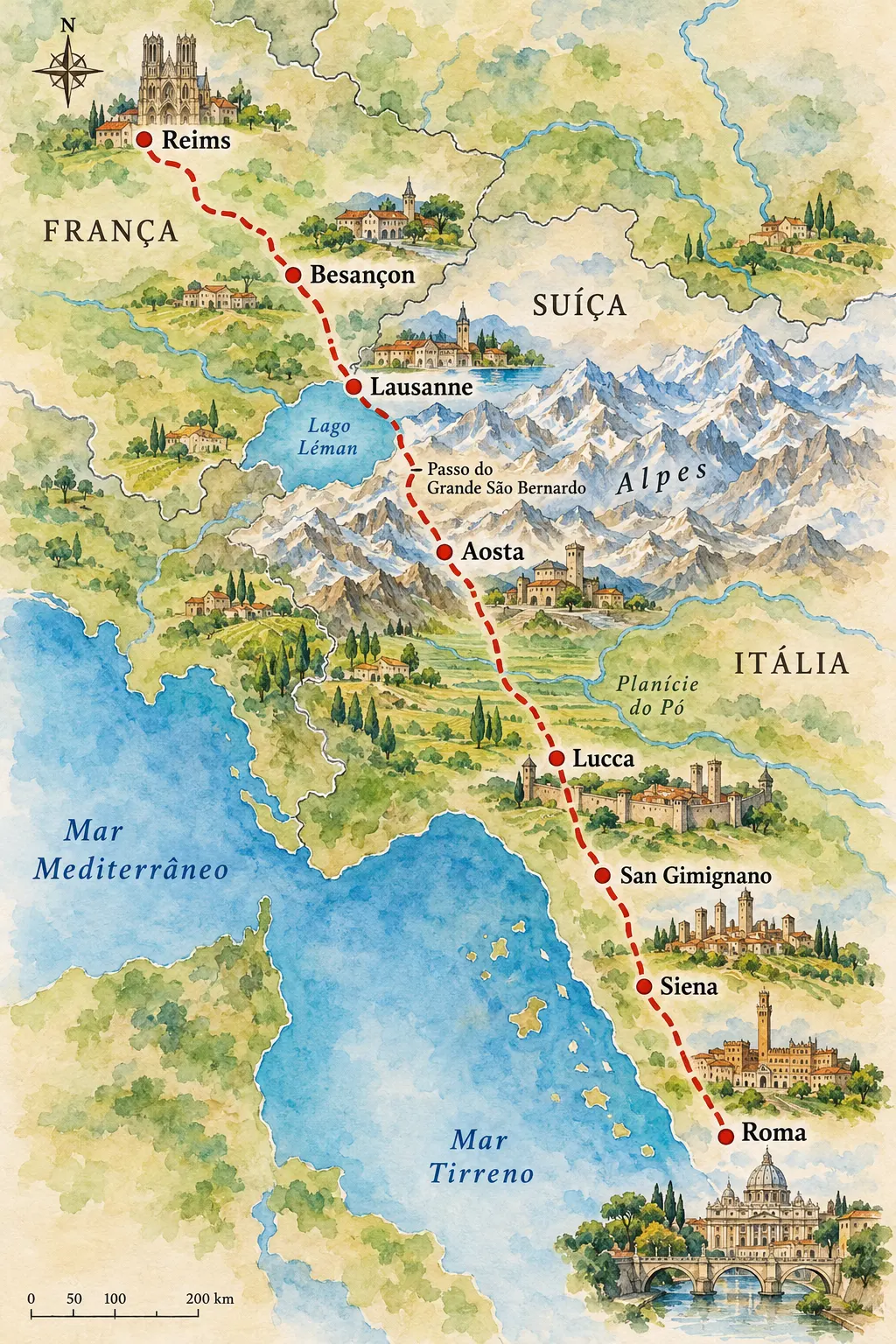
Roma and the Vaticano is on the Via Francigena on foot: from Canterbury to Rome

The ancient pilgrims’ route to Rome: from Canterbury Cathedral, through France and Switzerland, over the Alps via the Great St Bernard Pass and through Tuscany to St. Peter’s Square.

Illustrative map, not to scale. Tap a city to open its page.
Illustrated map of Via Francigena on foot: from Canterbury to Rome
Explore the Via Francigena on foot: from Canterbury to Rome
Explore other destinations Search by state and city