
 Brazil
 Argentina
 Bolivia
 Chile
 Colombia
 Ecuador
 Guyana
 French Guiana
 Falkland Islands (Malvinas)
 Paraguay
 Peru
 Suriname
 Uruguay
 Venezuela
 Germany
 Austria
 Belgium
 Croatia
 Denmark
 Spain
 Finland
 France
 Greece
 the Netherlands
 Hungary
 Ireland
 Iceland
 Luxembourg
 Norway
 Poland
 Portugal
 the United Kingdom
 the Czech Republic
 Sweden
 Turkey
 the United States
 Mexico
 the Dominican Republic
 South Africa
 Australia
 Fiji
Cross-border route · Europe
Bernina Express: Chur–St. Moritz–Tirano
The red train that crosses the Alps from Suíça to Itália: viaducts, spiral tunnels, glaciers and the lago Bianco, from Chur to Tirano in about four hours, with a bus to Lugano.
 Switzerland
 Italy
4 cities 2 countries
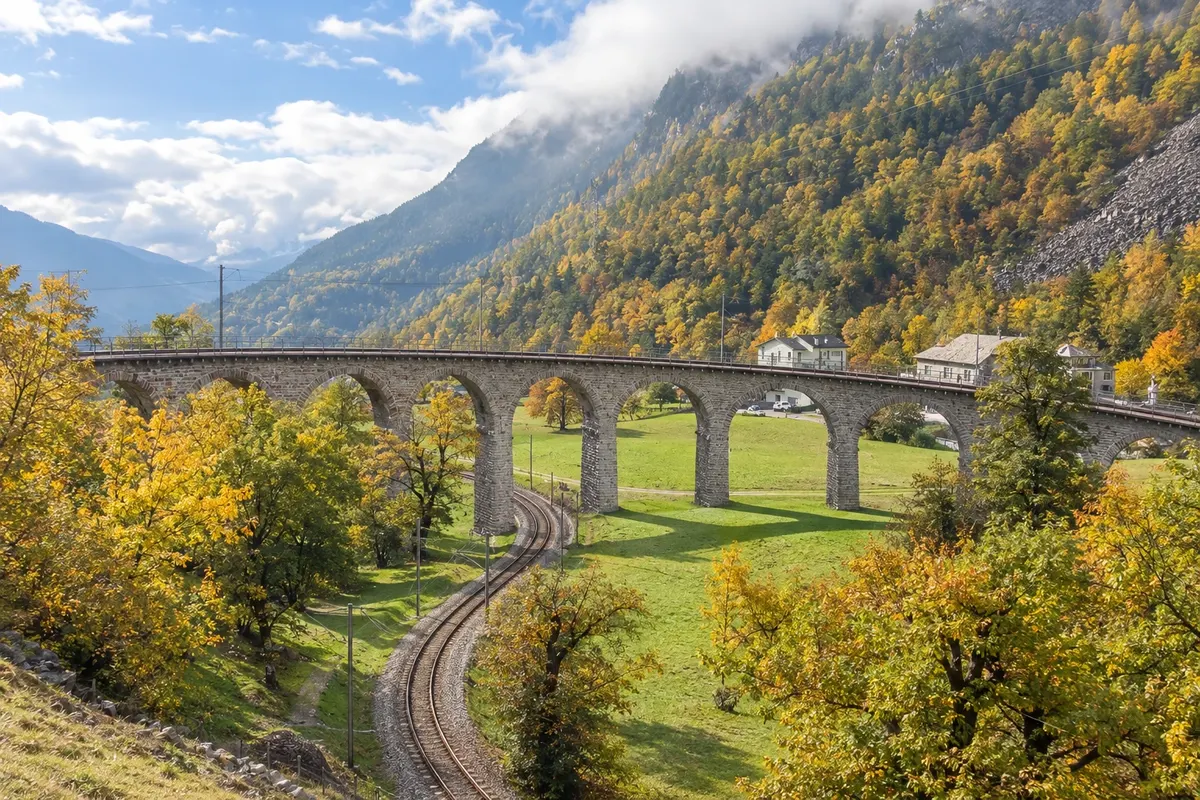
In the photo: Circular viaduct of Brusio
Illustrative images. The pictures in this guide are illustrations based on the real place, not photographs, and may differ from it.

The route
What is Bernina Express: Chur–St. Moritz–Tirano
The Bernina Express is the panoramic train of the Ferrovia Rética (RhB) that links Chur, in the Grisões, to Tirano, in Itália, along the Albula and Bernina lines, recognized by UNESCO as World Heritage. The trip takes 4 to 4h30 and features carriages with windows that rise to the ceiling. There are also departures from Davos and from St. Moritz.
From Chur the train climbs the Albula valley, passes the Landwasser viaduct, near Filisur, and goes through spiral tunnels to the Engadina and St. Moritz. Then it crosses the Bernina pass at the Ospizio Bernina, at 2,253 metres, the highest point of the line, beside the lago Bianco and with views of the Morteratsch glacier. On the descent it passes Alp Grüm, the Poschiavo valley and the circular viaduct of Brusio, a full spiral loop, before arriving at Tirano, already in Itália.
In season, a panoramic bus, the Bernina Express Bus, continues from Tirano to Lugano, in the Italian-speaking part of Suíça, via the Valtellina and along the shore of the lago de Como, in about 3 hours. Suíça is part of the Schengen area but not of the European Union, and uses the franco suíço; Itália uses the euro.
The map
4 cities in 2 countries
Outlines: Natural Earth, public domain. Adapted by Cidade Turismo.
The journey
City by city
Distances and times are approximate: check before you set out.
-
 1 · Switzerland
Chur
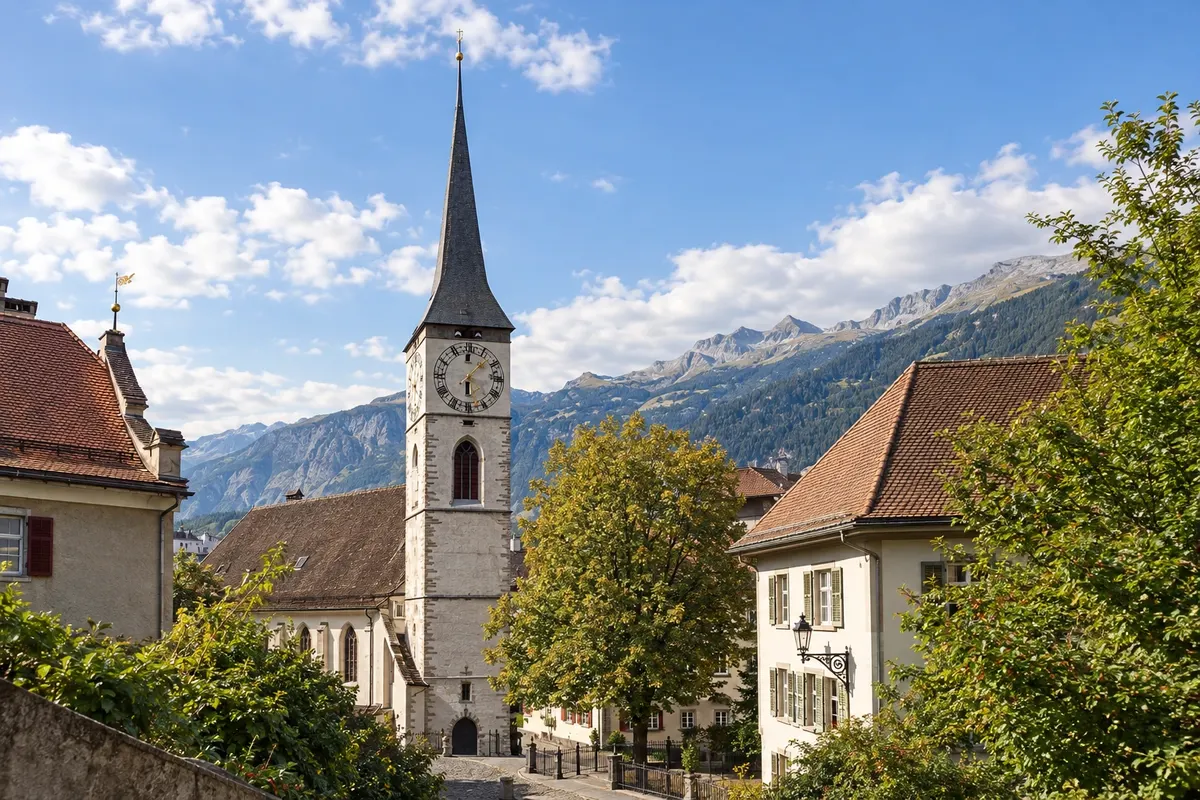
Chur is the capital of the Grisões and one of the oldest towns in Suíça, with a historic centre of cobbled streets, the cathedral and the Museu de Arte dos Grisões. It is the starting point of the Bernina Express, which departs from the station next to the centre.
→ St. Moritz cerca de 2h Bernina Express pela linha do Albula: Thusis, Tiefencastel, o viaduto Landwasser perto de Filisur, Bergün, os túneis em espiral e Samedan.
-
 2 · Switzerland
St. Moritz
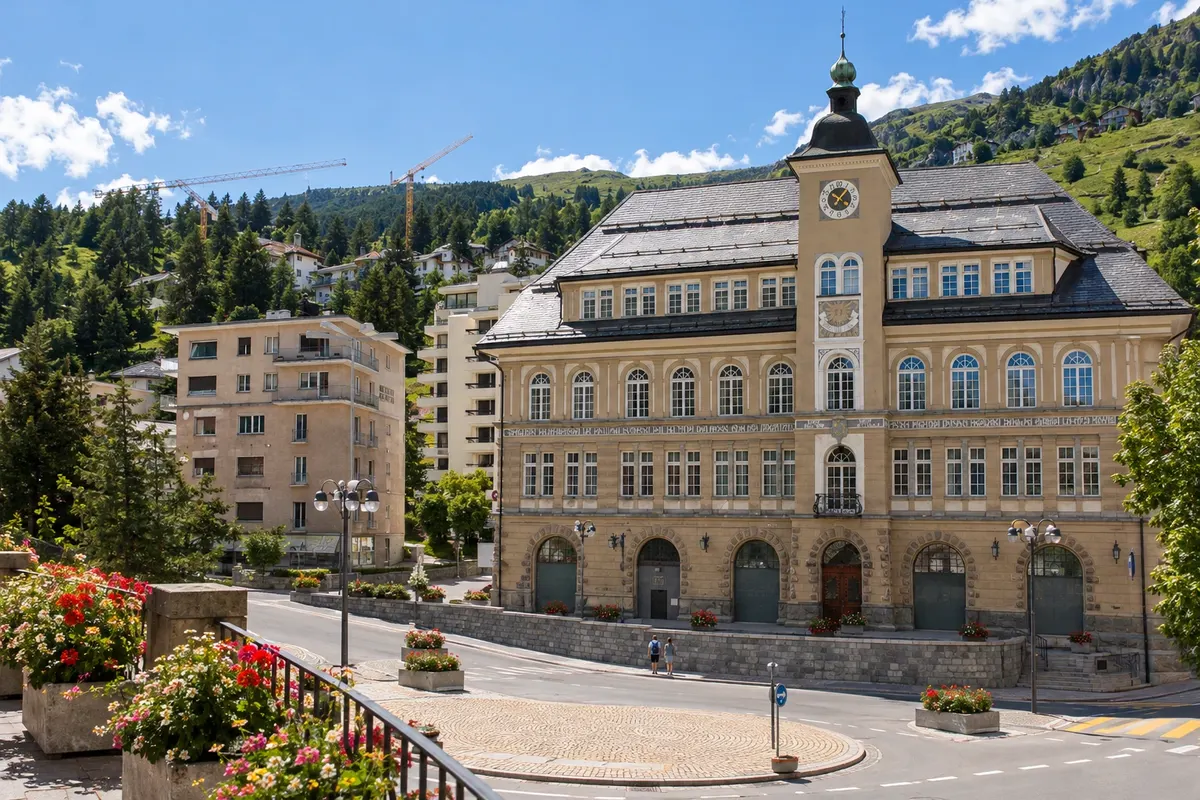
After the Landwasser viaduct and the Albula spirals, passing Filisur, Bergün and Samedan, the train reaches the Engadina and St. Moritz, a lakeside town and ski resort. Bernina Express trains also depart from here for those who want to do only the Bernina pass section, in about 2h30.
→ Tirano cerca de 2h30 Bernina Express pela linha do Bernina: Pontresina, Ospizio Bernina (2.253 m), Alp Grüm, Poschiavo, o viaduto circular de Brusio e Tirano.
-
 3 · Italy
Tirano
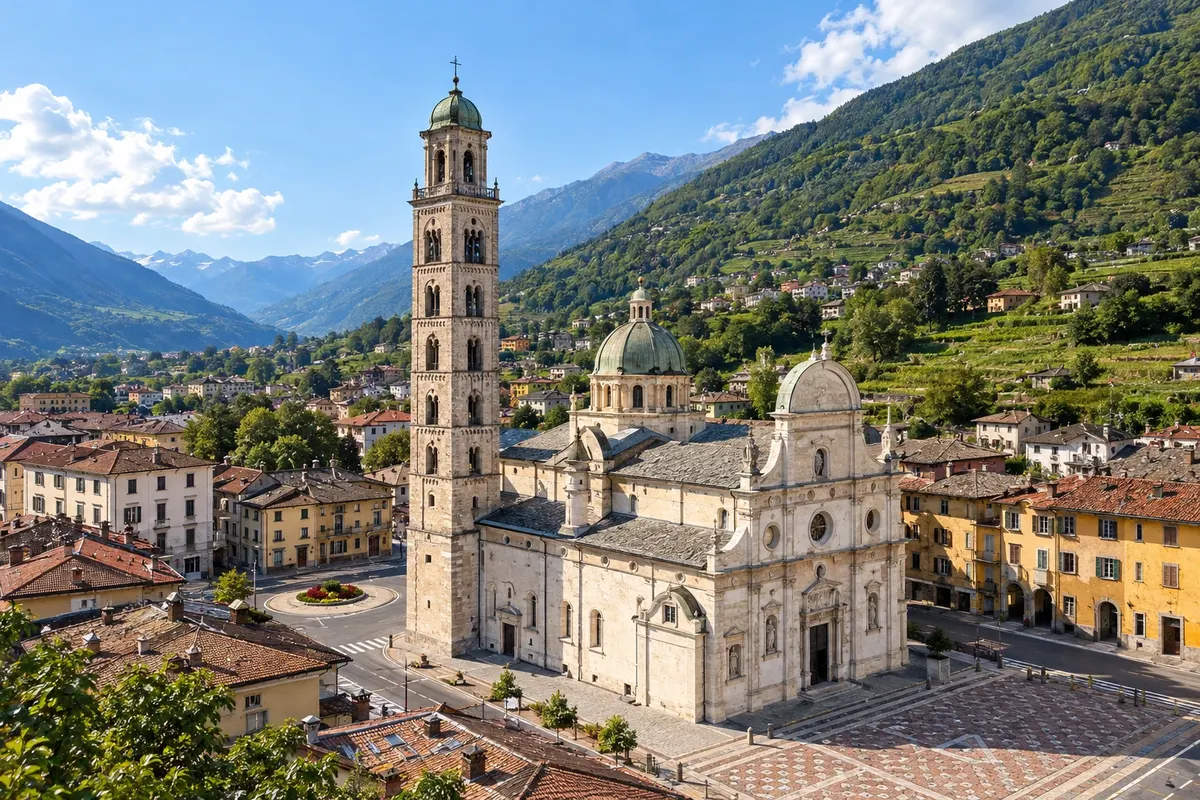
After the Ospizio Bernina, Alp Grüm, Poschiavo and the circular viaduct of Brusio, the train arrives at Tirano, in the Italian Valtellina, where it runs along the middle of the street before entering the station. The town has the sanctuary of the Madonna di Tirano and is the terminus of the line.
→ Lugano cerca de 3h Bernina Express Bus pela Valtellina e pela margem do lago de Como, com reserva própria e circulação só em parte do ano. Fora da temporada, o caminho é de trem, com trocas, pela Itália.
-
 4 · Switzerland
Lugano
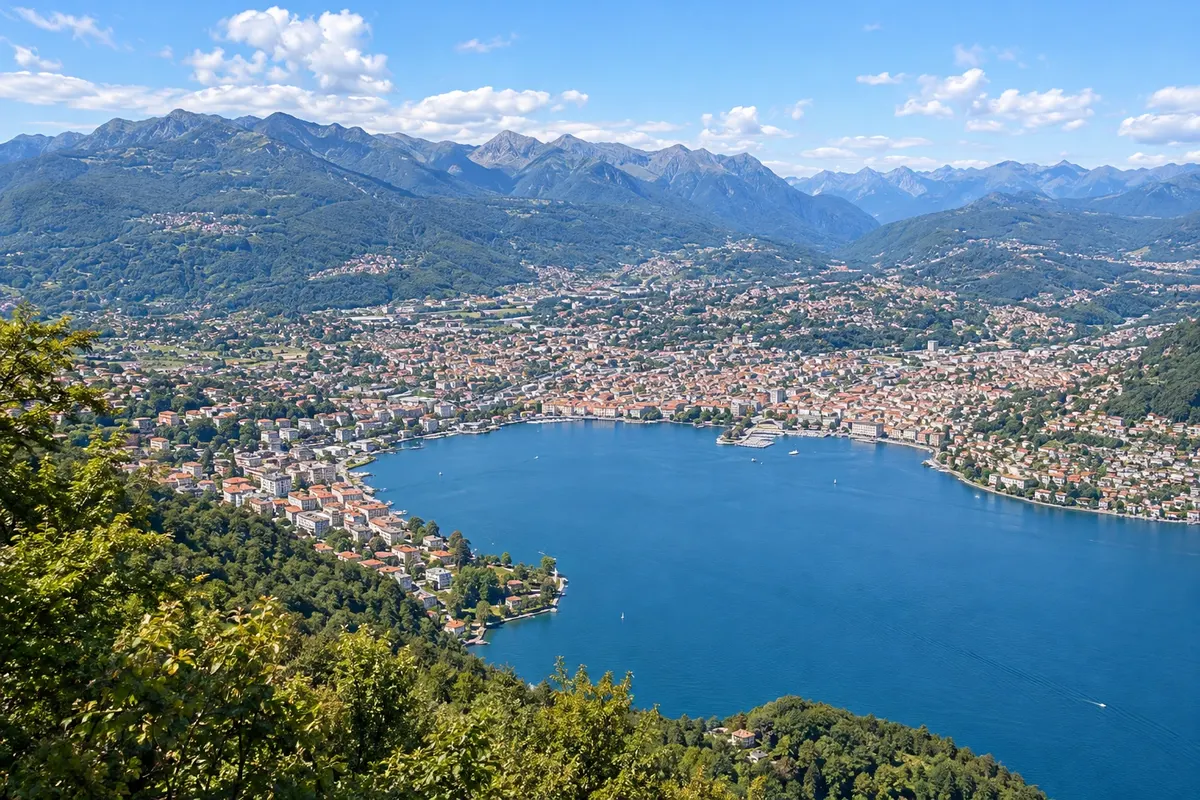
In season, the Bernina Express Bus continues from Tirano to Lugano, via the Valtellina and along the shore of the lago de Como, in about 3 hours. Lugano sits on the shore of its namesake lake, in the Italian-speaking part of Suíça, with a centre of squares and arcades, the Ciani park and the San Salvatore and Brè hills.
How to travel
The way and the tickets
By train, with a ticket and seat reservation on the Bernina Express. Reservation is mandatory and charged separately, including for holders of a pass. RhB regional trains follow the same route without mandatory reservation and without panoramic carriages, but they require at least one change between Chur and Tirano. To continue to Lugano, the bus has its own reservation.
Best time to go
When to go: month by month
The train runs year-round. From June to September the valleys are green, the days are long and the lago Bianco is often ice-free. From December to March the landscape is covered in snow and the service runs on a winter timetable. The bus to Lugano has its own season and does not run in all months: check ahead.
The seasons shown are the most usual ones; nature doesn't always follow the calendar.
Planning
Planning the trip
How many days
The train covers the entire route in 4 to 4h30. To see the towns, allow 3 to 5 days: one in Chur, one or two in St. Moritz and one in Lugano, or return from Tirano the same day.
Who it is for
For those who want to cross the Alps by train, who enjoy mountain scenery and railway engineering, and who want to combine Suíça and Itália in a single trip.
Your questions answered
Frequently asked questions about Bernina Express: Chur–St. Moritz–Tirano
Quanto tempo dura a viagem no Bernina Express?
De Chur a Tirano, de 4 a 4h30. De St. Moritz a Tirano, cerca de 2h30. O ônibus de Tirano a Lugano leva cerca de 3 horas.
Precisa de reserva?
Sim. A reserva de assento no Bernina Express é obrigatória e cobrada à parte, inclusive para quem tem Swiss Travel Pass, Interrail ou Eurail. O ônibus para Lugano tem reserva própria.
Dá para fazer o mesmo caminho sem o Bernina Express?
Sim. Os trens regionais da RhB fazem o mesmo trajeto, sem reserva obrigatória, mas sem os vagões panorâmicos e com pelo menos uma troca. Em alguns verões há vagões abertos em trens regionais entre St. Moritz e Tirano.
De que lado sentar?
De Chur a Pontresina, do lado direito para ver o viaduto Landwasser. De Pontresina a Tirano, também do lado direito, para a geleira Morteratsch e o lago Bianco. Com reserva, nem sempre dá para escolher o lado.
Precisa mostrar passaporte entre a Suíça e a Itália?
A Suíça está no espaço Schengen, e não há controle fixo de passaporte. Mas ela não faz parte da União Europeia, e pode haver controle de alfândega na fronteira. Leve o passaporte com você.
O trem funciona no inverno?
Sim, o ano todo, com horário de inverno. A paisagem fica coberta de neve. Em alguns períodos pode haver obras com trechos de ônibus: confirme antes.