
 Brazil
 Argentina
 Bolivia
 Chile
 Colombia
 Ecuador
 Guyana
 French Guiana
 Falkland Islands (Malvinas)
 Paraguay
 Peru
 Suriname
 Uruguay
 Venezuela
 Austria
 Belgium
 Croatia
 Denmark
 Spain
 Finland
 Greece
 the Netherlands
 Hungary
 Ireland
 Iceland
 Italy
 Luxembourg
 Norway
 Poland
 Portugal
 the United Kingdom
 the Czech Republic
 Sweden
 Switzerland
 Turkey
 the United States
 Mexico
 the Dominican Republic
 South Africa
 Australia
 Fiji
Cross-border route · Europe
Alsácia and Floresta Negra
By car on both sides of the Rhine: the Rota dos Vinhos da Alsácia, with villages of half-timbered houses among vineyards, and the mountain roads of the Floresta Negra, between Estrasburgo, Colmar, Freiburg and Baden-Baden.
 France
 Germany
4 cities 2 countries
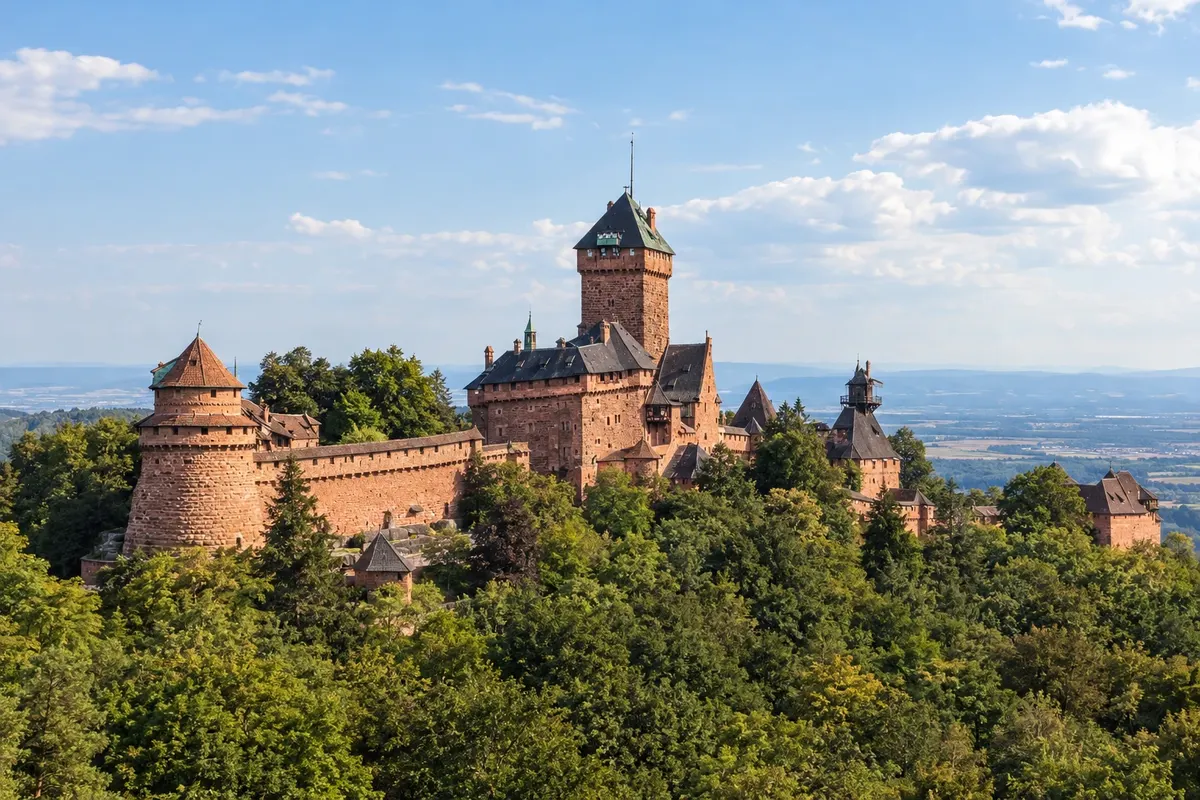
In the photo: Castelo do Haut-Koenigsbourg, Orschwiller
Illustrative images. The pictures in this guide are illustrations based on the real place, not photographs, and may differ from it.

The route
What is Alsácia and Floresta Negra
Alsácia, in France, and Floresta Negra, in Germany, face each other across the Rhine. On the French side, the Rota dos Vinhos da Alsácia runs for about 170 km at the foot of the Vosges mountains, from Marlenheim, near Estrasburgo, to Thann, passing through villages of colorful half-timbered houses, vineyards and hilltop castles. On the German side, Floresta Negra is a range of pine forests, lakes and spa towns.
The circuit starts in Estrasburgo, follows the Rota dos Vinhos to Colmar, crosses the Rhine toward Freiburg, climbs into Floresta Negra via the lakes and waterfalls and returns via the mountain scenic road (Schwarzwaldhochstrasse) to Baden-Baden, about an hour from Estrasburgo.
France and Germany are in the Schengen area and use the euro: there is no fixed border control, and the Rhine is crossed by ordinary bridges. Distances are short, and much of the trip is in the small villages between cities, so renting a car is the most practical way to do the route.
The map
4 cities in 2 countries
Outlines: Natural Earth, public domain. Adapted by Cidade Turismo.
The journey
City by city
Distances and times are approximate: check before you set out.
-
 1 · France
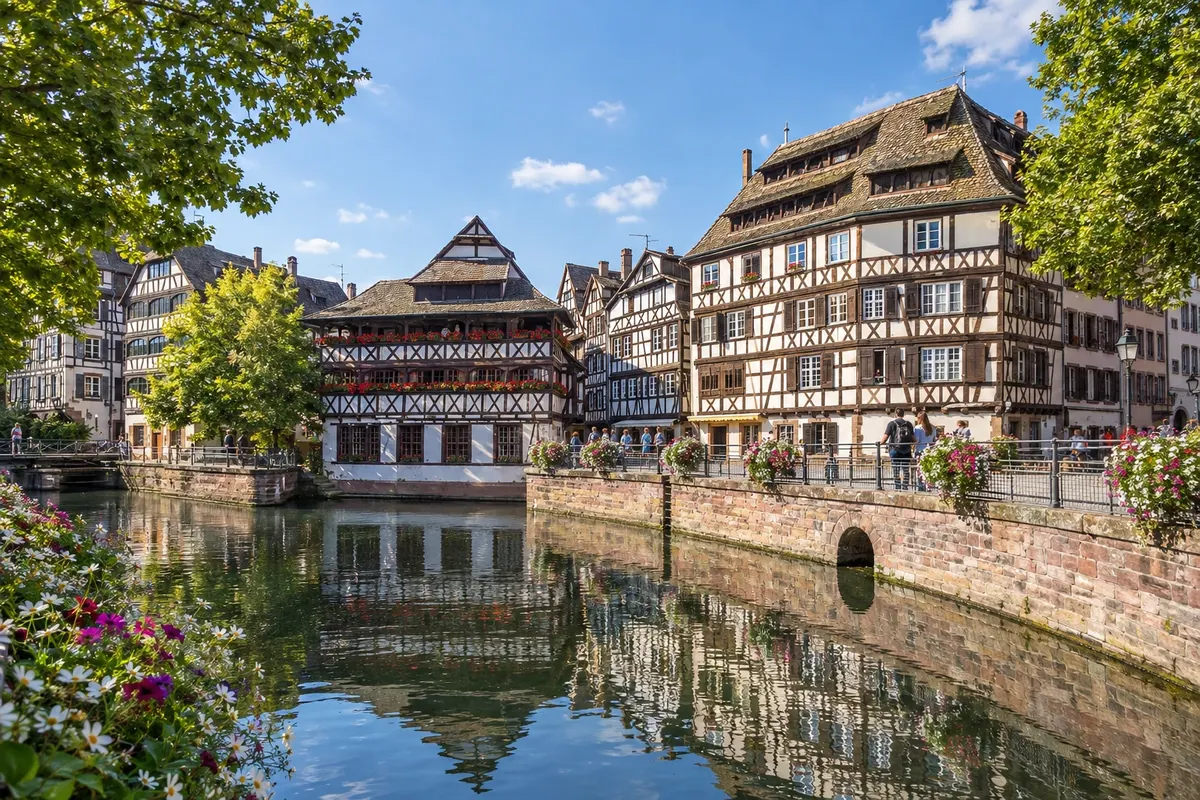
Estrasburgo
The start of the circuit. The pink sandstone cathedral, the Petite France quarter with half-timbered houses along the canals, and the European district with the European Parliament. For driving, pick up the car on the outskirts: the old town has many streets closed to traffic.
→ Colmar cerca de 2h ao volante, um ou dois dias com as paradas Pela Rota dos Vinhos da Alsácia (D35 e estradas vicinais), com placas próprias da rota, passando pelas vilas entre os vinhedos. Pela via rápida A35, o caminho direto leva cerca de 1 hora.
-
 2 · France
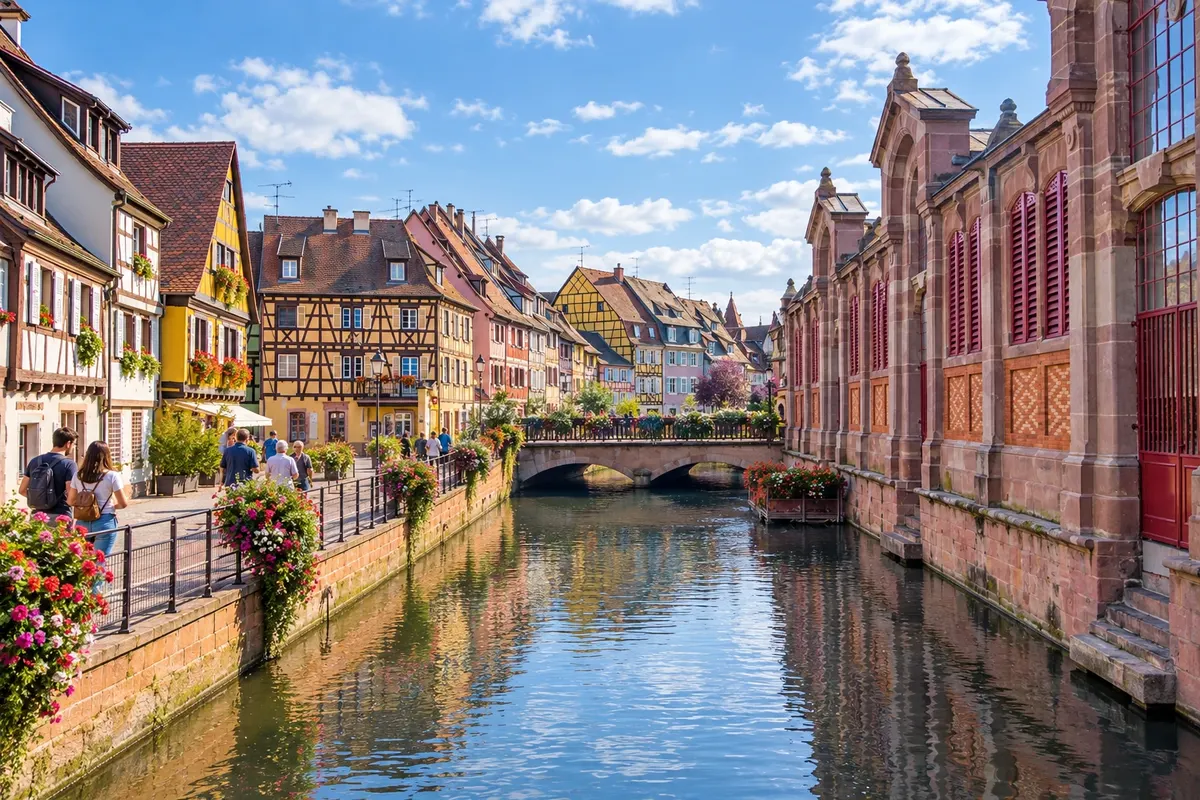
Colmar
Colmar lies in the middle of the Rota dos Vinhos, and the road to it includes the route's most popular villages: Obernai, Castelo do Haut-Koenigsbourg, Ribeauvillé, Riquewihr and Kaysersberg, with wineries open for tastings. South of Colmar is Eguisheim, a village of circular streets. In town, Petite Venise and the Museu Unterlinden, housing the Retábulo de Isenheim.
→ Freiburg im Breisgau cerca de 1h Por Neuf-Brisach e Breisach, atravessando o Reno, e depois pela região vinícola do Kaiserstuhl até Freiburg.
-
 3 · Germany
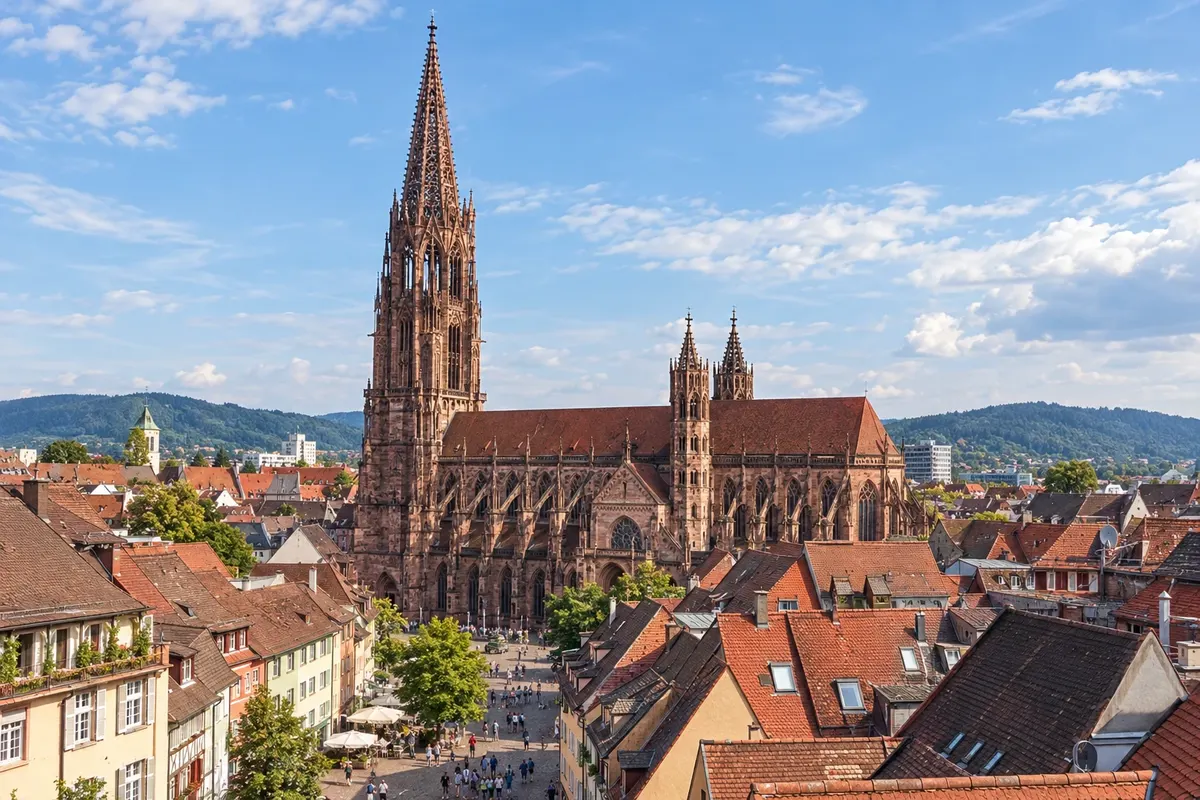
Freiburg im Breisgau
From Colmar you cross the Rhine near Breisach and reach Freiburg in about 1 hour. The university city has the cathedral (Münster) with the market square, and the small water channels (Bächle) that run through the streets. From the city you climb into Floresta Negra: the Titisee lake, the Höllental valley and the Triberg waterfalls.
→ Baden-Baden cerca de 4h ao volante pela serra, um ou dois dias com as paradas Pelo vale do Höllental até o Titisee, depois Triberg e a estrada panorâmica Schwarzwaldhochstrasse (B500) até Baden-Baden. Pela autoestrada A5, o caminho direto leva cerca de 1 hora e 15 minutos.
-
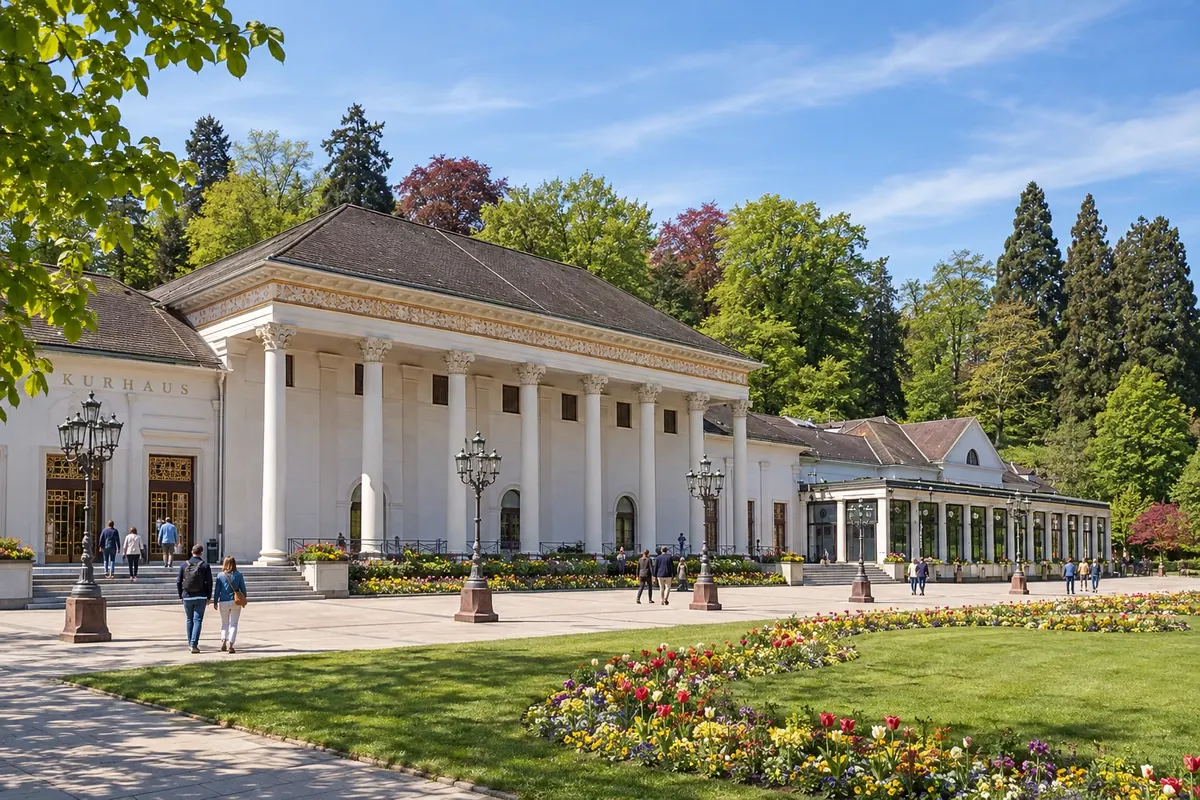 4 · Germany
Baden-Baden
Baden-Baden is the spa town, with thermal baths, the casino in the Kurhaus and the Lichtentaler Allee avenue along the river. You reach it via the mountain scenic road, the Schwarzwaldhochstrasse (B500), which passes the Mummelsee. From Baden-Baden to Estrasburgo is about 1 hour.
→ Estrasburgo cerca de 1h Pela autoestrada até o Reno e a ponte para Estrasburgo, onde o circuito fecha.
How to travel
The way and the tickets
By rental car, starting and ending in Estrasburgo. You can also do part of the trip by regional train and bus (Estrasburgo, Colmar, Freiburg and Baden-Baden have stations), but the villages on the Rota dos Vinhos and the mountain lakes are easier to reach by car.
Best time to go
When to go: month by month
From May to October: long days, green vineyards and, in September and October, the grape harvest and wine festivals. December brings Alsácia's Christmas markets, which are very popular. In winter it can snow on the high roads of Floresta Negra.
The seasons shown are the most usual ones; nature doesn't always follow the calendar.
Planning
Planning the trip
How many days
The circuit is about 450 km. To do it without rushing, including the villages of the Rota dos Vinhos and the mountains, allow 6 to 8 days; with 4 days, stay in Alsácia and do a day trip to Floresta Negra from Freiburg.
Who it is for
For those who enjoy driving on small roads, wine and historic villages; suited to couples and families who want nature without difficult hikes.
Your questions answered
Frequently asked questions about Alsácia and Floresta Negra
Quantos dias são precisos para a Alsácia e a Floresta Negra?
De 6 a 8 dias para o circuito sem correria. Com menos tempo, fique em Estrasburgo e Colmar e faça um dia na Floresta Negra a partir de Freiburg.
As estradas têm pedágio?
Na Alsácia, as vias rápidas usadas na rota, como a A35, costumam não ter pedágio para carro, e a Rota dos Vinhos é de estradas comuns. Na Alemanha, as autoestradas não têm pedágio nem vinheta para carro. Confira antes, porque as regras podem mudar.
Posso alugar o carro na França e devolver na Alemanha?
Pode, mas a devolução em outro país costuma ter taxa extra. Como o circuito é fechado, o mais simples é retirar e devolver em Estrasburgo. Se alugar do lado francês do aeroporto de Basileia-Mulhouse, confira em que país o carro está registrado.
Dá para fazer a rota sem carro?
Em parte. Estrasburgo, Colmar, Freiburg e Baden-Baden são ligadas por trem, e algumas vilas da Rota dos Vinhos têm ônibus a partir de Colmar. Na Floresta Negra, há trens regionais até o Titisee e Triberg. Mas as vilas menores e a estrada da serra ficam mais fáceis de carro.