

 Brazil
 Argentina
 Bolivia
 Chile
 Colombia
 Ecuador
 Guyana
 French Guiana
 Falkland Islands (Malvinas)
 Paraguay
 Peru
 Suriname
 Uruguay
 Venezuela
 Germany
 Austria
 Belgium
 Croatia
 Denmark
 Spain
 Finland
 France
 Greece
 the Netherlands
 Hungary
 Ireland
 Iceland
 Italy
 Luxembourg
 Norway
 Poland
 Portugal
 the United Kingdom
 the Czech Republic
 Sweden
 Switzerland
 Turkey
 the United States
 Mexico
 the Dominican Republic
 South Africa
 Australia
 Fiji
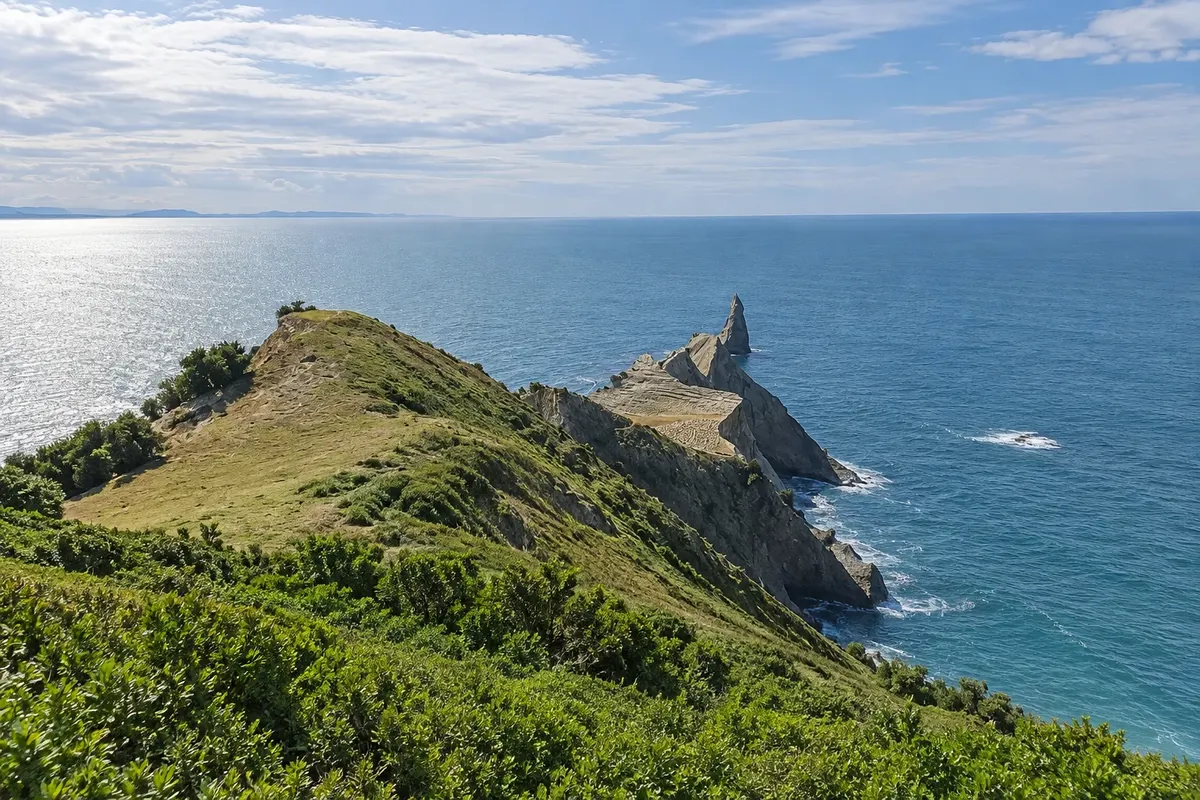
Nature reserve · Hastings (Heretaunga), Hawke's Bay
Cape Kidnappers
A cape of striped cliffs at the southern end of Hawke Bay, home to one of the largest mainland colonies of gannet (takapu), visited from the beach at low tide or on guided farm tours.
Illustrative images. The pictures in this guide are illustrations based on the real place, not photographs, and may differ from it.

Discover
About Cape Kidnappers
Cape Kidnappers (Te Kauwae-a-Māui, “Māui’s hook” in Māori) is the southern point of Hawke Bay, about 25 km from Hastings. Its cliffs reveal layers of sediments and pumice in light and dark bands, and atop the cliffs sits one of the world’s largest mainland colonies of Australasian gannets (takapu), numbering thousands of pairs.
The birds arrive to nest around September, raise chicks during the summer and leave between late April and May. Nests are clustered on open plateaus, and visitors can view the birds from a few meters away, from behind markers. The best period to see nests is early November through late February.
There are two ways to reach it. The beach walk starts at Clifton and runs beneath the cliffs for about 8 km to the cape; it can only be done near low tide, and the return must follow the DOC’s tide and timing guidance. The alternative is farm tours by vehicle that cross private farmland to the colony plateau, requiring less walking.
The cliffs are unstable, and rockfalls and landslides have closed beach access for long periods. The DOC track to the colony is closed each year from July until the week before Labour Weekend at the end of October. Check conditions before you go.
Before you go
Practical information
Cidade Turismo reviews its information regularly, but something may have changed. Check with the place before planning your trip.
How much time to set aside
About 5 hours return via the beach; 3 to 4 hours on the farm tours.
Best time
From early November to late February, when nests and chicks are present. For the beach walk, follow the tide table: depart Clifton at least three hours after high tide. From July through late October, the colony is closed.
How to get there
By car, about 25 minutes from Hastings and 30 minutes from Napier to Clifton, where the beach walk begins. Farm tours depart from the Te Awanga and Clifton area and include transport.
Tip
Check the DOC website for the current status of beach access and the tide table before you set out. Keep away from the cliff edges and do not cross the colony markers. Bring water, a hat and sunscreen: there is no shade along the route.
Official website
Get your questions answered
Frequently asked questions about Cape Kidnappers
When can you see the gannets at Cape Kidnappers?
Nests are best seen from early November through late February. The birds arrive around September and leave between late April and May.
Can you walk to Cape Kidnappers?
Yes — along the beach from Clifton, about 8 km one way, only near low tide. Check beforehand whether access is open.
Are there organized tours to Cape Kidnappers?
Yes. Vehicle tours cross private farmland to the colony plateau, requiring less walking.
Is Cape Kidnappers open year-round?
No. The track to the colony closes from July until late October to protect the birds at the start of the nesting season.