Bergstaden Røros
From Røros It sits around the train station, which is in the lower part of town center. From daytime to 3 hours. during the day according to the chosen route
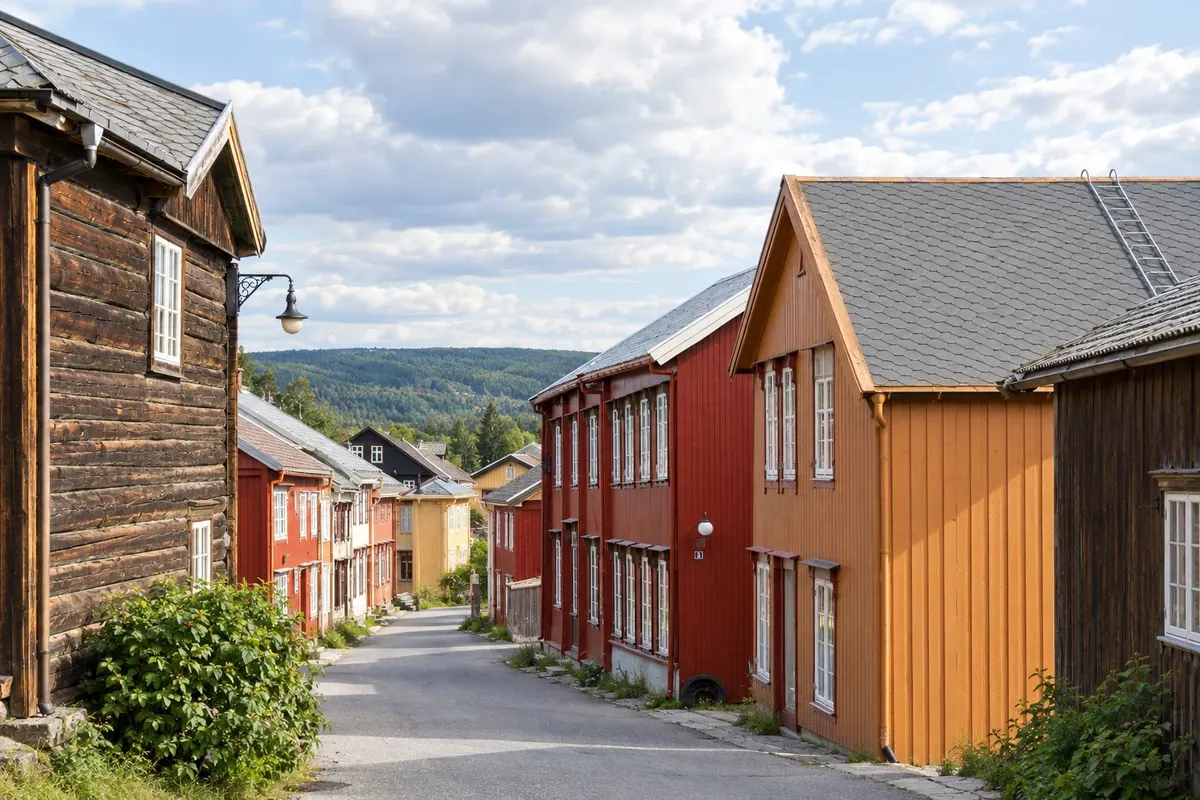
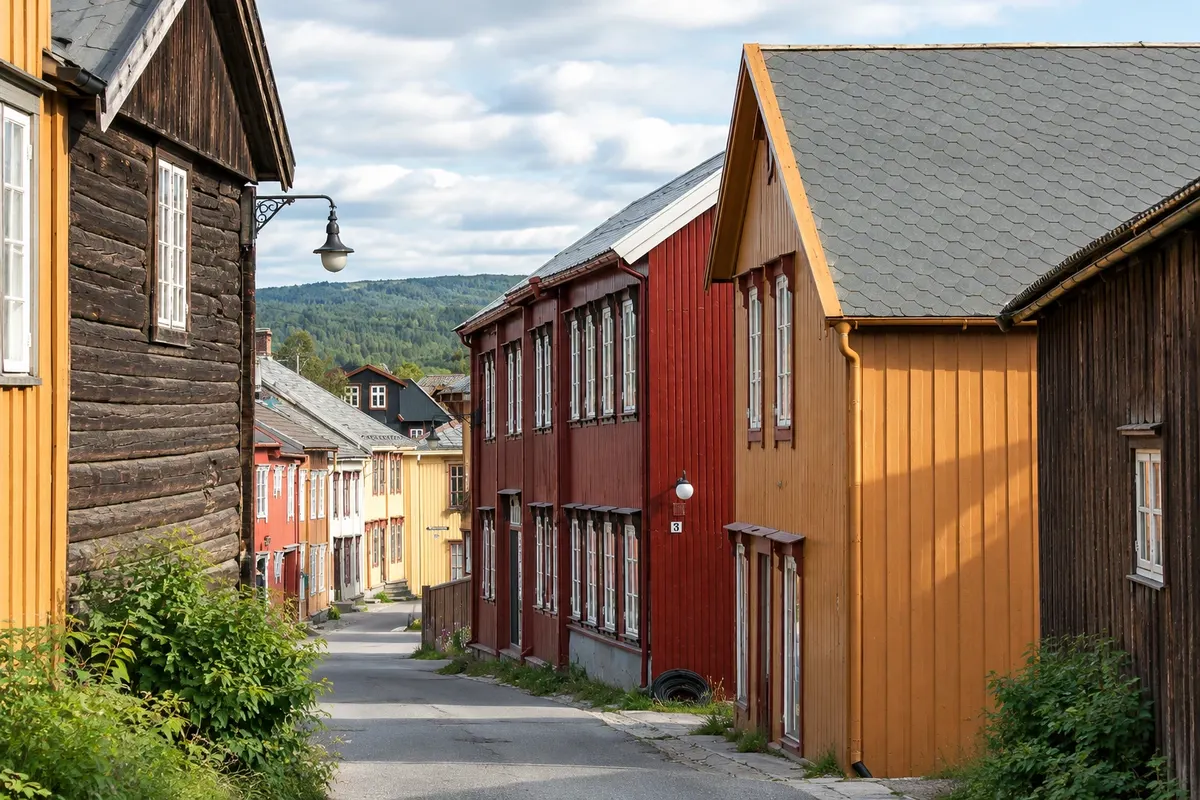
The historic centre of Røros, the Bergstaden, the mining town, was laid out in the 17th century around two wide, parallel streets, Bergmannsgata and Kjerkgata, which rise from the Hitterelva river toward the church. Along them are the houses of miners, traders and company staff, built of timber logs, almost all one or two storeys high, with painted façades or wood darkened by time.
Behind the façades, the inner courtyards, the gårdsrom, contain barns, stables, storage rooms and workshops, with external staircases and roofs covered with turf. Many courtyards are private, but several now house craft shops, weaving studios, bakeries, cafés and restaurants serving local food, including reindeer meat, lake fish and regional cheeses.
Stops: Bergstaden Røros.
Includes: Arrange access to the site and transfers separately. Guided activities and admissions have their own conditions.
Tip: Go into the open courtyards, which show what miners’ homes were like behind the façades. Take the guided walking tour that usually departs from the tourist centre in summer.
Best time: All year round
Røros kirke
From Røros It is located at the top of Kjerkgata, a 10-minute walk from the train station, uphill along the street. 30 minutes to 1 hour. during the day according to the chosen route
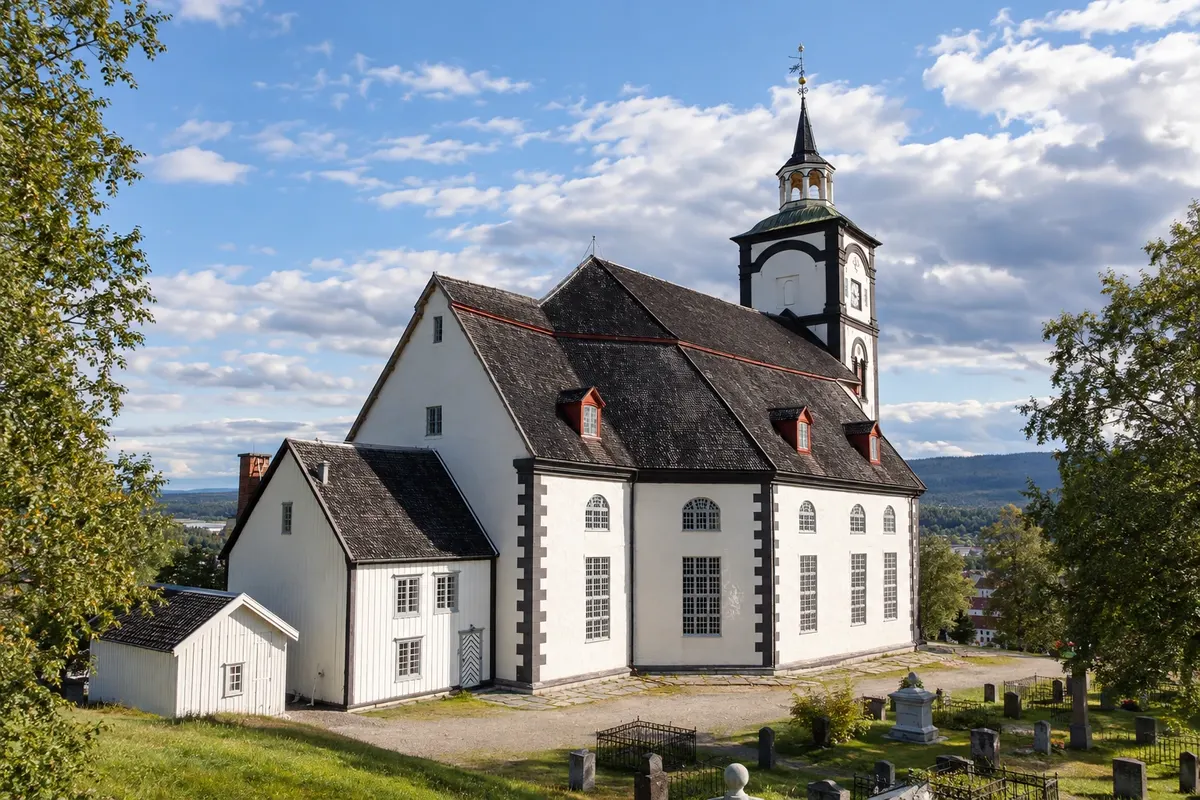
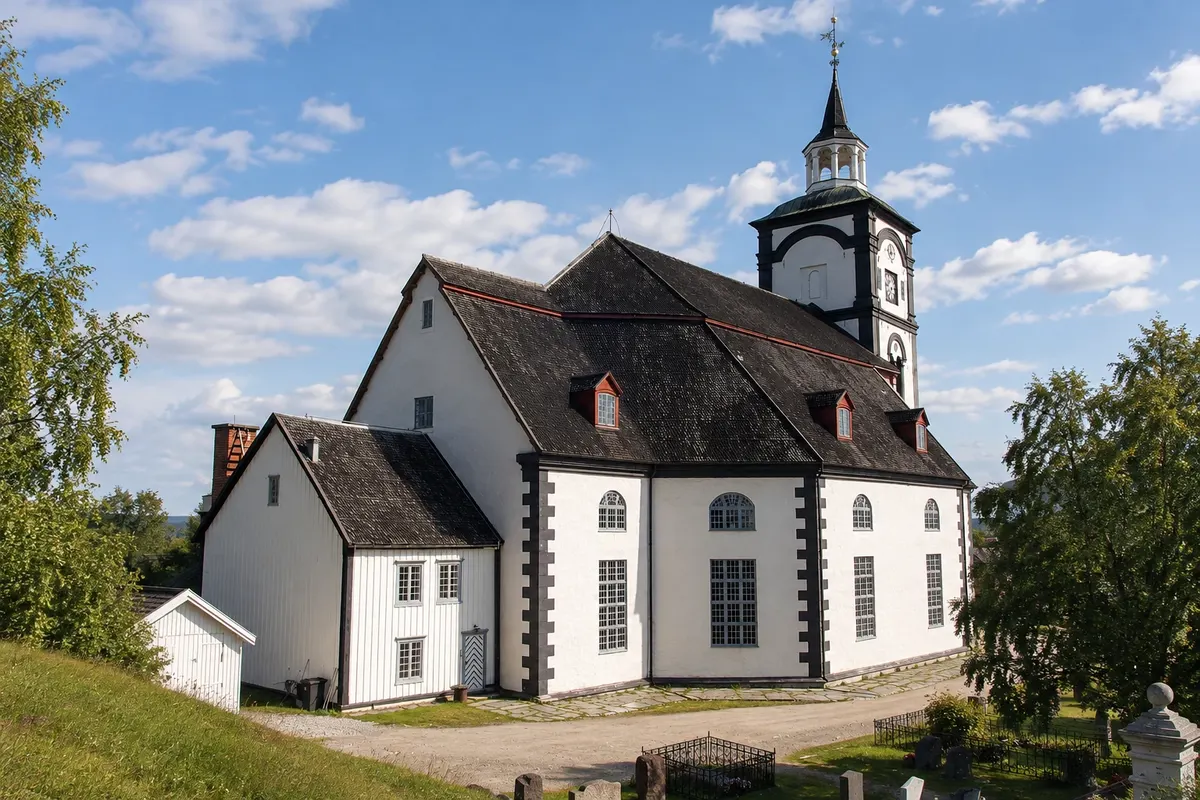
Røros church was built between 1780 and 1784, at the top of Kjerkgata, to replace a wooden church that had become too small for the mining town. It is made of stone, painted white, with a tall tower visible from across the town and surrounding area. The miners called it Bergstadens Ziir, the Pride of the Mining Town, and the name stuck.
The interior is Baroque, with wooden galleries on two levels around the nave and seating for about 1,600 people, far more than the town's population at the time. The altar, pulpit and organ are stacked on the same wall, one above the other, a rare arrangement in Norwegian churches. In the galleries, reserved pews reveal the town's hierarchy: the directors of the mining company had their own seats, facing the pulpit.
Stops: Røros kirke.
Includes: Arrange access to the site and transfers separately. Guided activities and admissions have their own conditions.
Tip: Walk up Kjerkgata from the station to see the tower rise at the end of the street. Notice the altar, the pulpit and the organ, one above the other.
Best time: From June to August, when the church is usually open for guided visits
Smelthytta
From Røros It sits by the Hitterelva river, in the upper part of the town center, a 10-minute walk from the sta From during the day up to 2 hours, including a walk over the slag heaps. during the day according to the chosen route
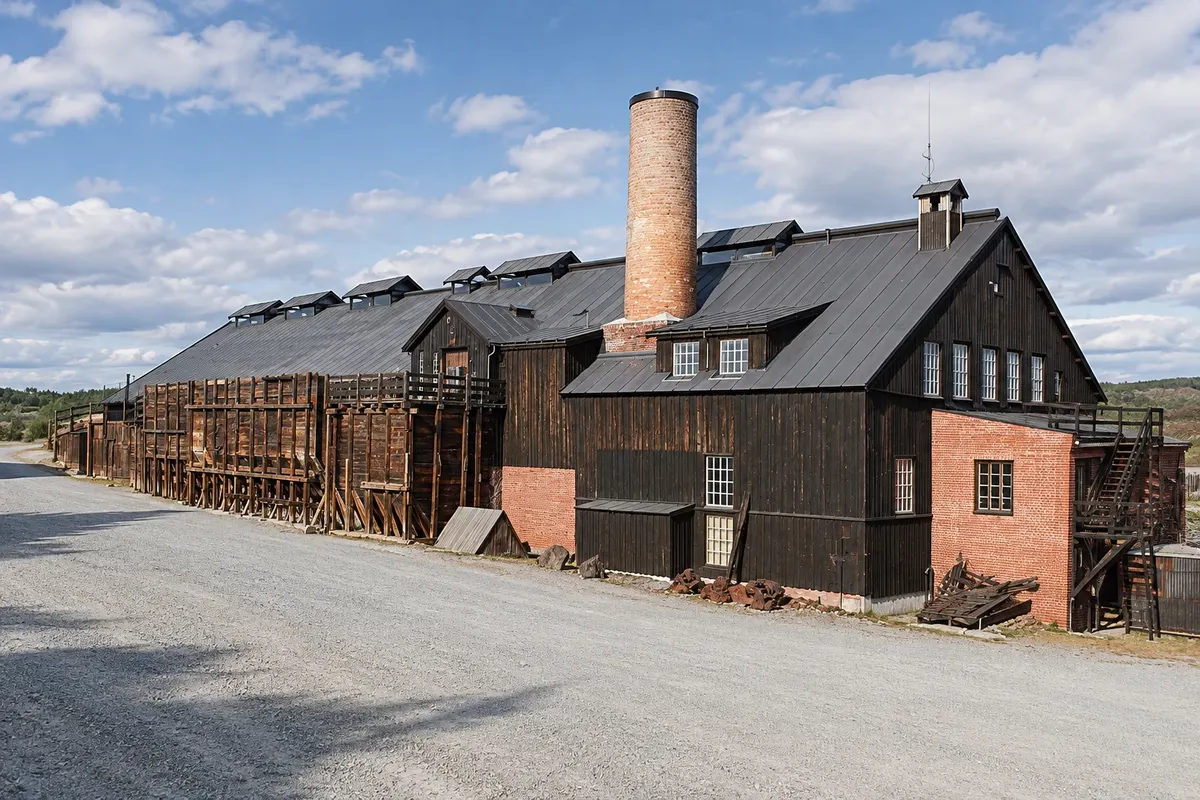
Smelthytta is the smelting works where Røros copper ore was melted. The original operated for almost three centuries on the banks of the Hitterelva River, using water power, and burned down more than once. The current building was rebuilt on the old foundations, following the plans and photos of the last smelter, and houses the Rørosmuseet, the town and mining museum.
The exhibition shows how the copper chain worked: extraction in the mountain mines, transport of ore on horse-drawn sleds in winter, burning of firewood and charcoal, and the smelting process. Mechanical models, some powered by water, explain the machinery, water wheels and bellows. Other rooms tell the lives of the miners and their families, child labor and the relationship with the southern Sámi, who lived in the same region.
Stops: Smelthytta.
Includes: Arrange access to the site and transfers separately. Guided activities and admissions have their own conditions.
Tip: See the models that move with the water, which explain the smelting process better than any text. Then climb the slag heaps for a view of the town center and the church.
Best time: All year round, with extended hours from June to August
Olavsgruva
From Røros It is about 13 km east of Røros. From 1 to daytime on the guided visit during the day according to the chosen route
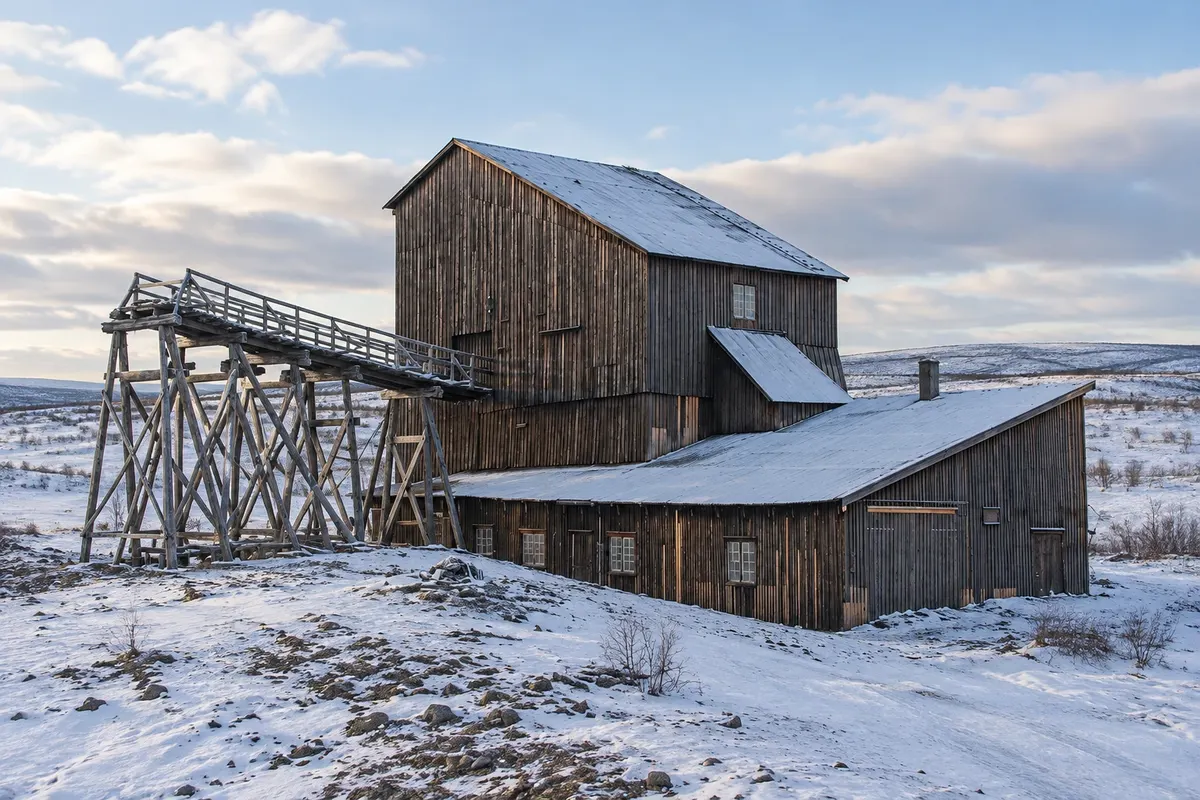
Olavsgruva is a copper mine that operated until the second half of the 20th century, on the plateau east of Røros in the Kojedalen area. It is part of the UNESCO-recognized mining landscape and is the most direct way to understand the work that sustained the town.
Visits are always guided. The group enters through the mine gallery and descends via stairs and passages to about 50 meters depth, walking sections of gallery excavated at different times. Guides show the tools, the fire-setting marks used to break rock in older mines, the ore carts, the rails and the water shafts. The temperature inside the mountain is usually around 5 °C year-round.
Stops: Olavsgruva.
Includes: Arrange access to the site and transfers separately. Guided activities and admissions have their own conditions.
Tip: Bring a coat and closed shoes even in July. If you can, combine the visit with one of the concerts in the mine hall.
Best time: From June to August, when there are usually multiple guided tours per day


 Brazil
 Argentina
 Bolivia
 Chile
 Colombia
 Ecuador
 Guyana
 French Guiana
 Falkland Islands (Malvinas)
 Paraguay
 Peru
 Suriname
 Uruguay
 Venezuela
 Germany
 Austria
 Belgium
 Croatia
 Denmark
 Spain
 Finland
 France
 Greece
 the Netherlands
 Hungary
 Ireland
 Iceland
 Italy
 Luxembourg
 Poland
 Portugal
 the United Kingdom
 the Czech Republic
 Sweden
 Switzerland
 Turkey
 the United States
 Mexico
 the Dominican Republic
 South Africa
 Australia
 Fiji