
 Brazil
 Argentina
 Bolivia
 Chile
 Colombia
 Ecuador
 Guyana
 French Guiana
 Falkland Islands (Malvinas)
 Paraguay
 Peru
 Suriname
 Uruguay
 Venezuela
 Austria
 Belgium
 Croatia
 Denmark
 Spain
 Finland
 France
 Greece
 the Netherlands
 Hungary
 Ireland
 Iceland
 Italy
 Norway
 Poland
 Portugal
 the United Kingdom
 the Czech Republic
 Sweden
 Switzerland
 Turkey
 the United States
 Mexico
 the Dominican Republic
 South Africa
 Australia
 Fiji
Cross-border route · Europe
Mosela Valley: Luxemburgo–Trier–Cochem–Koblenz
Along the river Mosela, from Luxemburgo to Germany: vineyards on slopes, half-timbered villages, Roman Trier, Cochem’s castle and the confluence with the Rhine in Koblenz.
 Luxembourg
 Germany
6 cities 2 countries
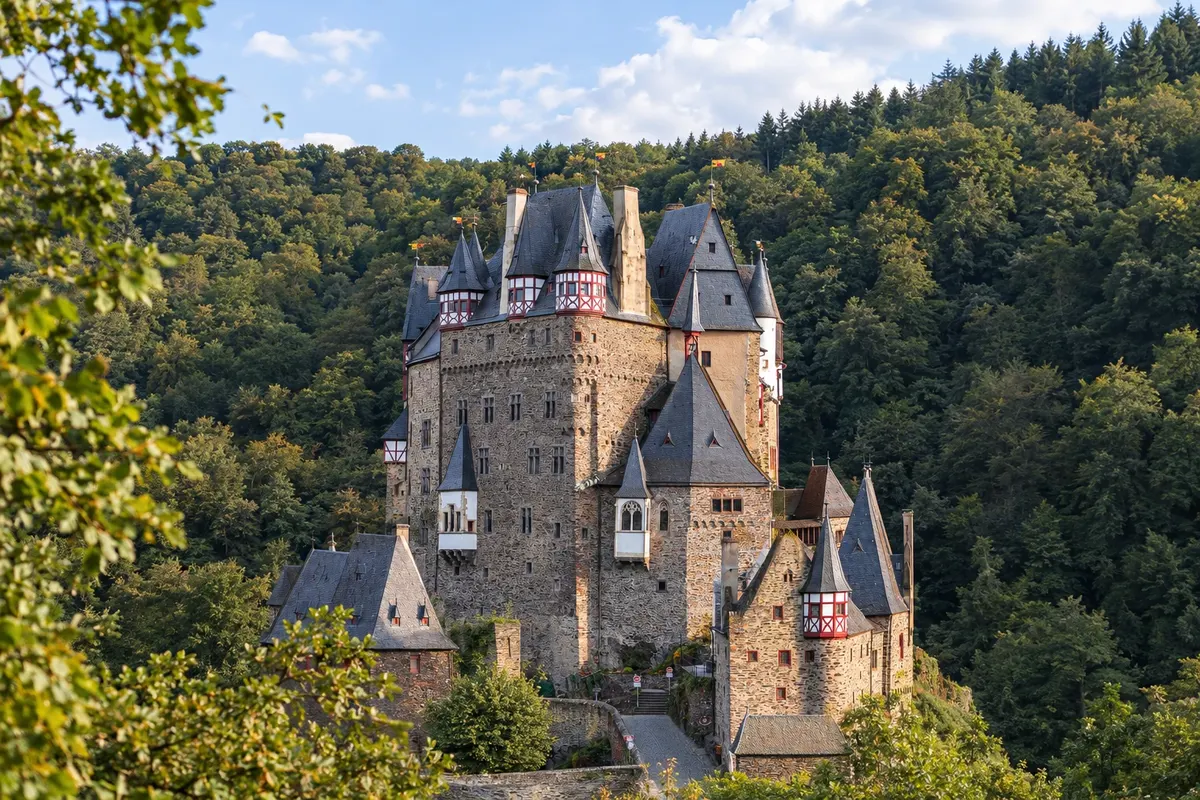
In the photo: Castelo de Eltz
Illustrative images. The pictures in this guide are illustrations based on the real place, not photographs, and may differ from it.

The route
What is Mosela Valley: Luxemburgo–Trier–Cochem–Koblenz
The Mosela rises in France, forms the border between Luxemburgo and Germany and winds into Germany in tight curves until it flows into the Rhine at Koblenz. This route follows the river from the city of Luxemburgo: it goes through the Luxemburgo section of the Mosela in Grevenmacher, enters Germany at Trier, the Roman city, and follows the valley down through Bernkastel-Kues and Cochem to Koblenz. It's about 230 km of road, almost always along the river.
The valley slopes are covered in riesling vineyards, some on very steep terraces, with half-timbered villages, wineries and castles perched on the hills. Near Cochem is the castle of Eltz, hidden in the middle of the forest.
You can do it by car, which allows stops in small villages, or by combining train and boat: there are trains between Luxemburgo and Trier and from Trier to Koblenz, and sightseeing boats on several stretches of the river. Luxemburgo and Germany are in the Schengen area, use the euro and share the same time zone.
The map
6 cities in 2 countries
Outlines: Natural Earth, public domain. Adapted by Cidade Turismo.
The journey
City by city
Distances and times are approximate: check before you set out.
-
 1 · Luxembourg
Luxemburgo
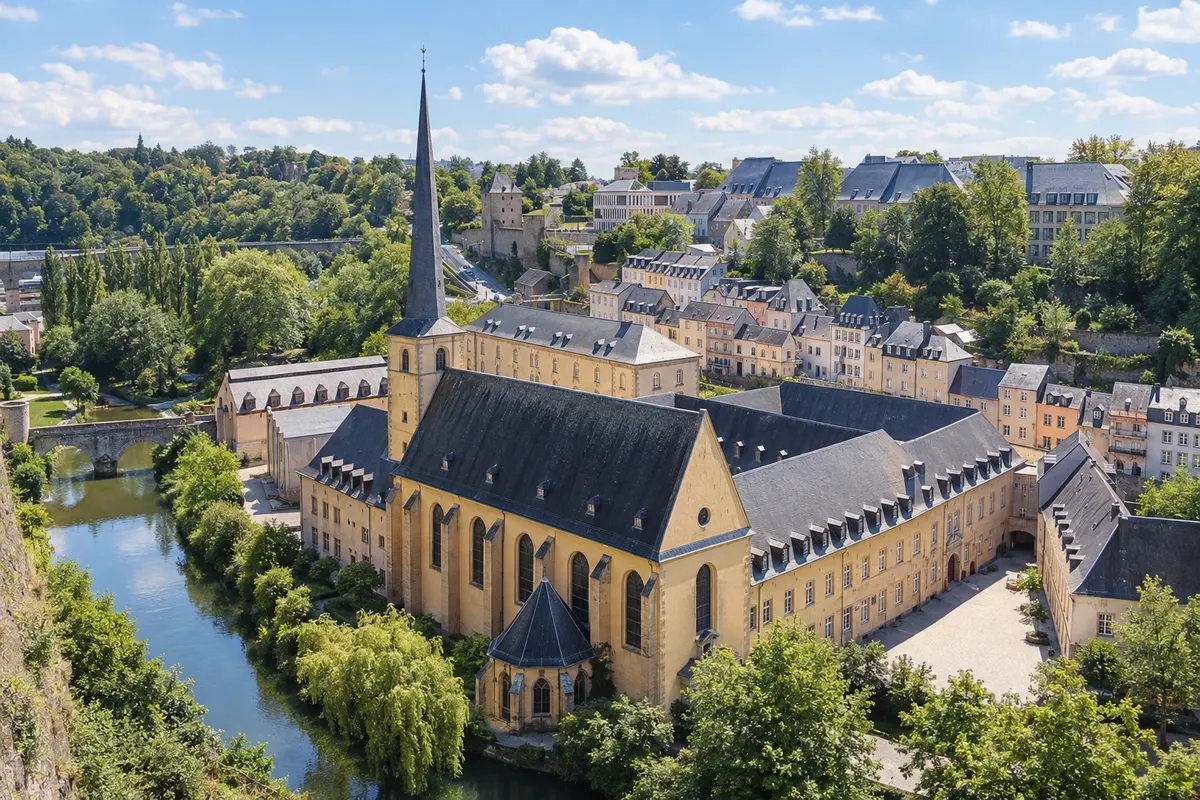
The route begins in the city of Luxemburgo, perched on cliffs and valleys, with the old town, the Bock casemates and the Grund quarter. From the center to the river Mosela it's about 25 km to the east.
→ Grevenmacher cerca de 30 min Cerca de 25 km pela autoestrada A1 ou por estradas entre as vilas. Sem carro, ônibus regionais ligam a capital às vilas do Mosela.
-
 2 · Luxembourg
Grevenmacher
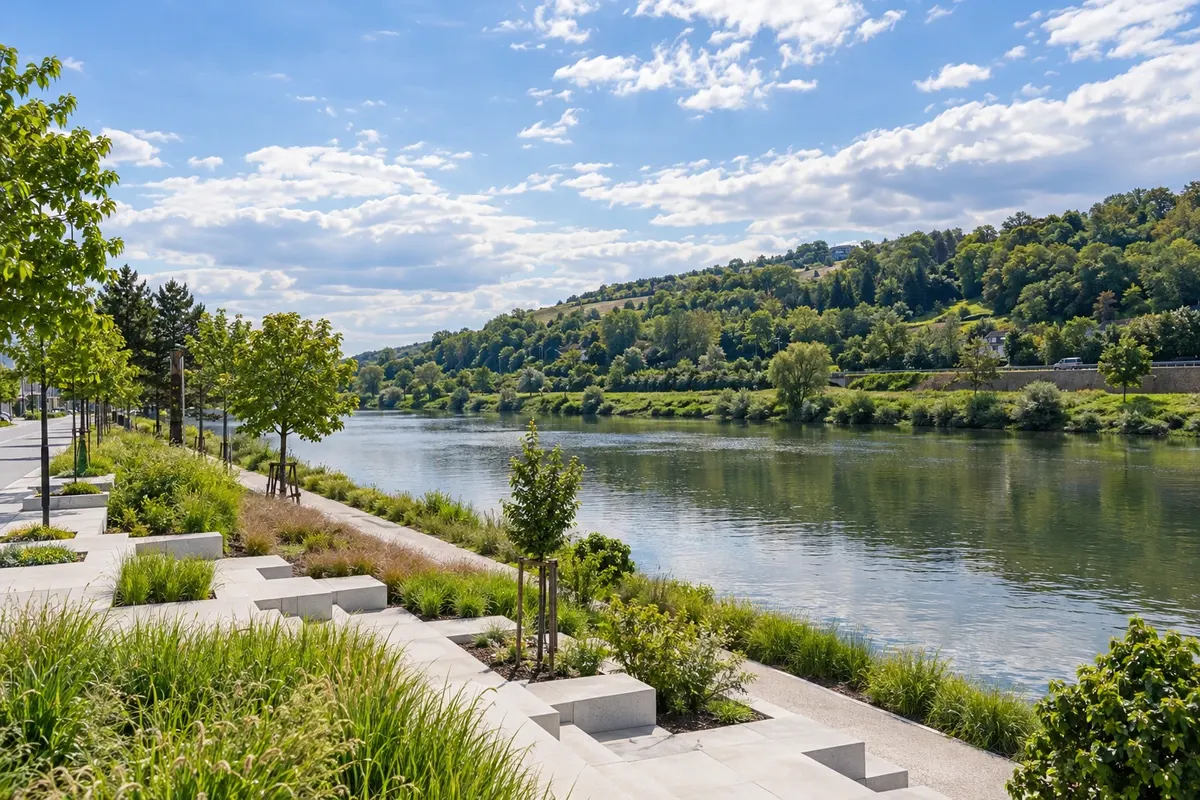
Grevenmacher is the capital of the Luxemburgo Mosela, with sparkling wine cellars (crémant) and vineyards that descend to the river. Further south are Remich and Schengen, the village that gave its name to the European free-movement agreement. After Grevenmacher the road crosses the Mosela at Wasserbillig and enters Germany.
→ Trier cerca de 30 min Cerca de 25 km pela margem do rio, cruzando a fronteira em Wasserbillig. Sem carro, o trem regional liga Luxemburgo a Trier em cerca de 45 minutos.
-
 3 · Germany
Trier
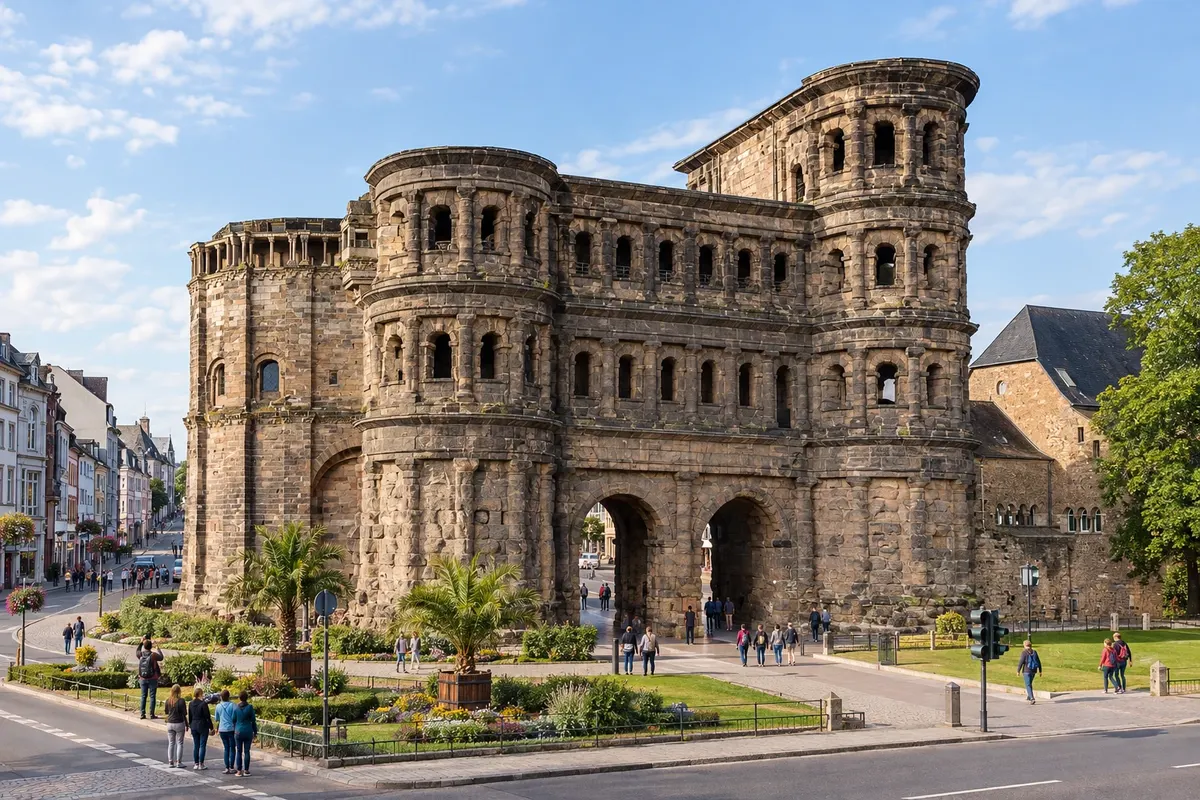
Trier is one of Germany's oldest cities, founded by the Romans. It has the Porta Nigra, the imperial baths, the Basilica of Constantino, the amphitheatre and the cathedral, as well as the house where Karl Marx was born. The train station is within walking distance of the center.
→ Bernkastel-Kues cerca de 1h Cerca de 50 km pela B53, à beira do rio, passando por Neumagen-Dhron e Piesport. Sem carro, trem até Wittlich e ônibus até Bernkastel-Kues.
-
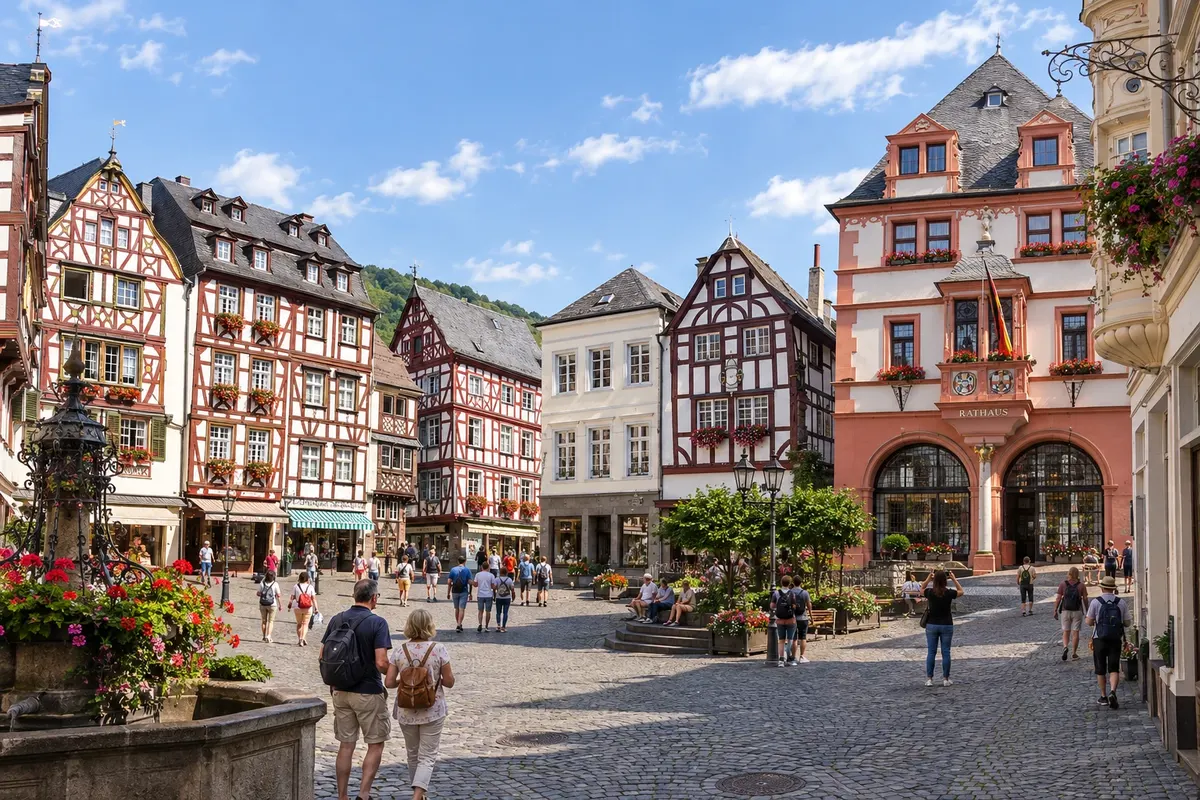 4 · Germany
Bernkastel-Kues
After Trier the valley narrows and winds. Bernkastel-Kues has a market square surrounded by half-timbered houses and the ruins of Landshut Castle above the vineyard. Sightseeing boats depart from here to Traben-Trarbach and other riverside towns.
→ Cochem cerca de 1h15 Cerca de 60 km pela margem, por Traben-Trarbach, Zell e Beilstein. Nos meses de temporada, parte do caminho pode ser feita de barco de passeio.
-
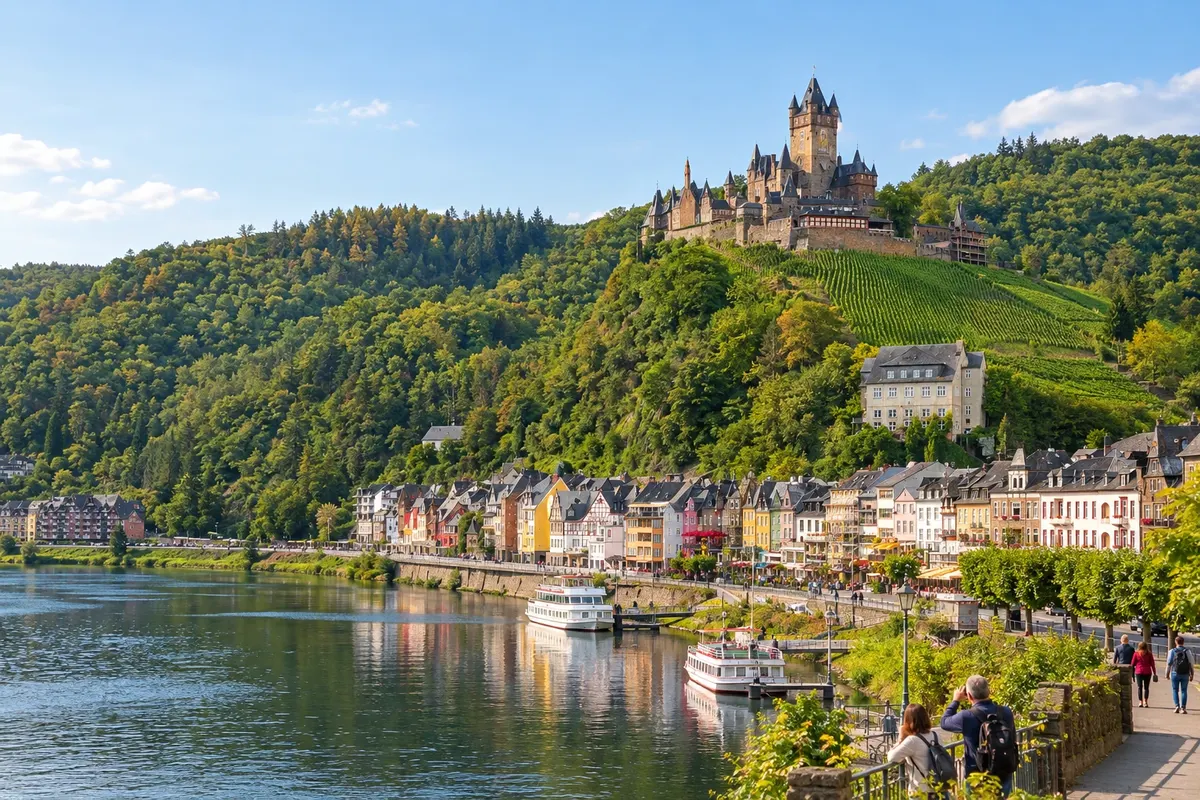 5 · Germany
Cochem
Cochem features the Reichsburg on the hilltop overlooking the town and river, and an old center with narrow streets. About half an hour away is the castle of Eltz, hidden in a forested valley, reachable from a parking area with a shuttle bus or on foot from Moselkern.
→ Koblenz cerca de 50 min Cerca de 50 km pela B49, com a saída para o castelo de Eltz em Moselkern. O trem de Cochem a Koblenz leva cerca de 45 minutos.
-
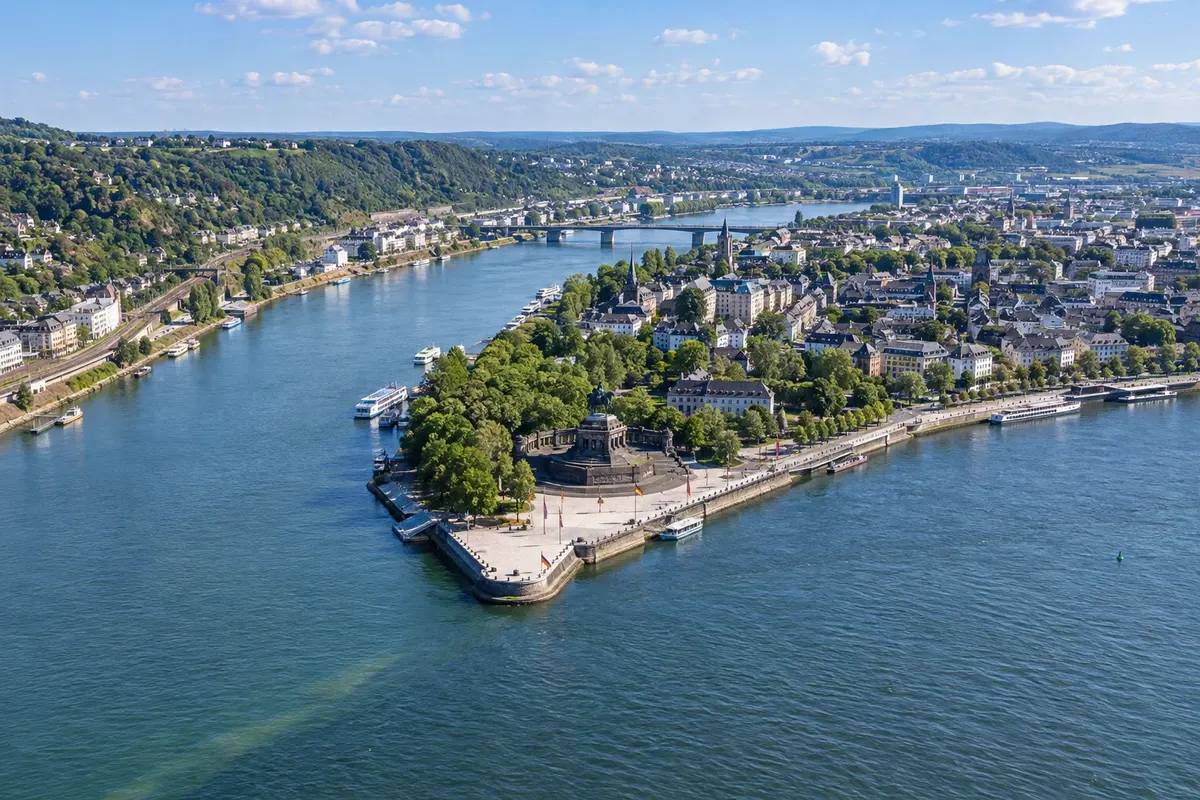 6 · Germany
Koblenz
The route ends in Koblenz at the Deutsches Eck, the point where the Mosela meets the Rhine, with a monument to Emperor Guilherme I. Across the Rhine a cable car rises to the Ehrenbreitstein fortress. From here the Romantic Rhine valley begins, heading toward Bacharach and Rüdesheim.
How to travel
The way and the tickets
By rental car, follow the road running along the river (the B53 between Trier and the Cochem region, and the B49 to Koblenz). Without a car, combine the Luxemburgo–Trier regional train and the Trier–Koblenz train, which stops in Cochem, with sightseeing boats between villages and buses to Bernkastel-Kues, which has no train station.
Best time to go
When to go: month by month
From May to October, when sightseeing boats and the castle of Eltz usually operate. September and October are the harvest season and wine festivals in the villages, with vineyards turning golden late in the season. In winter many boats stop running and some wineries close, but there are Christmas markets in Trier and in Bernkastel-Kues.
The seasons shown are the most usual ones; nature doesn't always follow the calendar.
Planning
Planning the trip
How many days
By car, the whole drive takes about 4 to 5 hours without stops. To experience the route properly, allow 4 to 6 days, with at least one night in Trier and one in the valley, in Bernkastel-Kues or Cochem.
Who it is for
For wine lovers, castle fans and those who enjoy small riverside towns; for travelers wanting to combine Luxemburgo and Germany in one trip; and for anyone who prefers unhurried roads to highways.
Your questions answered
Frequently asked questions about Mosela Valley: Luxemburgo–Trier–Cochem–Koblenz
Dá para fazer o Vale do Mosela sem carro?
Sim, com mais planejamento. Há trens entre Luxemburgo e Trier e entre Trier e Koblenz, com parada em Cochem. Bernkastel-Kues não tem estação: chega-se de ônibus a partir de Wittlich ou de barco. Os barcos de passeio costumam funcionar de primavera a outono.
Como chegar ao castelo de Eltz?
De carro, até o estacionamento do castelo, e de lá a pé ou de ônibus de ligação. Sem carro, a pé pela trilha que sai da estação de Moselkern, em cerca de uma hora. O castelo costuma abrir do fim de março ao começo de novembro: confirme antes.
Precisa mostrar passaporte entre Luxemburgo e a Alemanha?
Os dois países estão no espaço Schengen e não há controle fixo de fronteira. Leve o passaporte com você, porque pode haver fiscalização eventual.
Quantos dias reservar para o Mosela?
De 4 a 6 dias para a rota com calma. Com 3 dias, durma em Trier e em Cochem e faça Bernkastel-Kues no caminho.
Quando acontecem as festas do vinho?
A maior parte costuma acontecer de agosto a outubro, na época da vindima, com datas diferentes em cada vila. Confira o calendário da vila antes de ir.