
 Brazil
 Argentina
 Bolivia
 Chile
 Colombia
 Ecuador
 Guyana
 French Guiana
 Falkland Islands (Malvinas)
 Paraguay
 Peru
 Suriname
 Uruguay
 Venezuela
 Germany
 Austria
 Belgium
 Croatia
 Denmark
 Finland
 France
 Greece
 the Netherlands
 Hungary
 Ireland
 Iceland
 Italy
 Luxembourg
 Norway
 Poland
 the United Kingdom
 the Czech Republic
 Sweden
 Switzerland
 Turkey
 the United States
 Mexico
 the Dominican Republic
 South Africa
 Australia
 Fiji
Cross-border route · Europe
Porto–Vigo–Santiago de Compostela by train
From Porto to Galicia by train: the Celta crosses the Minho to Vigo, and a regional train takes about an hour to reach Santiago de Compostela.
 Portugal
 Spain
5 cities 2 countries
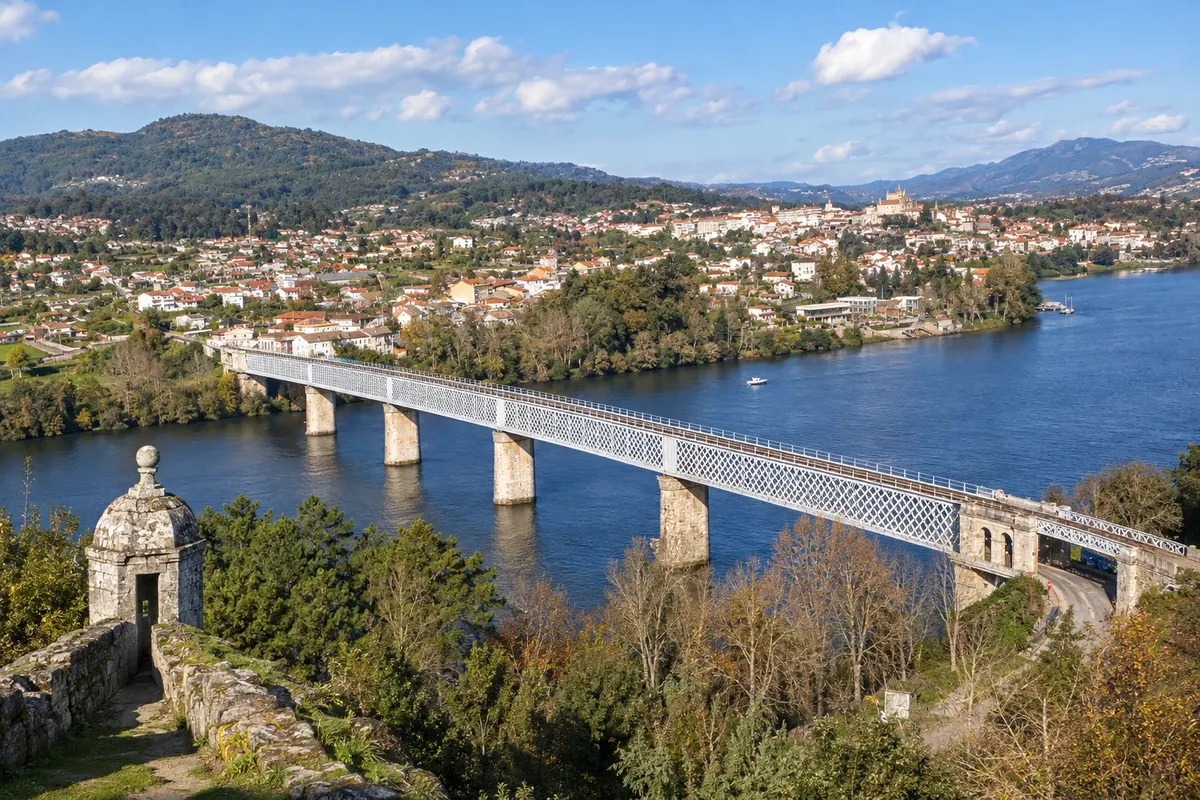
In the photo: Ponte Internacional Valença–Tui over the Minho River
Illustrative images. The pictures in this guide are illustrations based on the real place, not photographs, and may differ from it.

The route
What is Porto–Vigo–Santiago de Compostela by train
The train connection between northern Portugal and Galicia is made in two parts. The Celta, an international train operated by CP and Renfe, departs from Campanhã station in Porto and reaches Vigo in about 2h20. Along the way it stops at a few Portuguese stations, such as Nine, Viana do Castelo and Valença, and crosses the Minho River via the international bridge between Valença and Tui, already in Spain. In Vigo, another train continues along the Atlantic Axis to Santiago de Compostela, passing through Pontevedra.
There are few Celta services per day, and in some periods part of the journey may involve changing trains or traveling by bus: confirm before buying and again the day before. There are trains between Vigo and Santiago throughout the day.
Portugal and Spain are in the Schengen area and use the euro, but Spain is one hour ahead of Portugal: set your watch when crossing the Minho.
The map
5 cities in 2 countries
Outlines: Natural Earth, public domain. Adapted by Cidade Turismo.
The journey
City by city
Distances and times are approximate: check before you set out.
-
 1 · Portugal
Porto
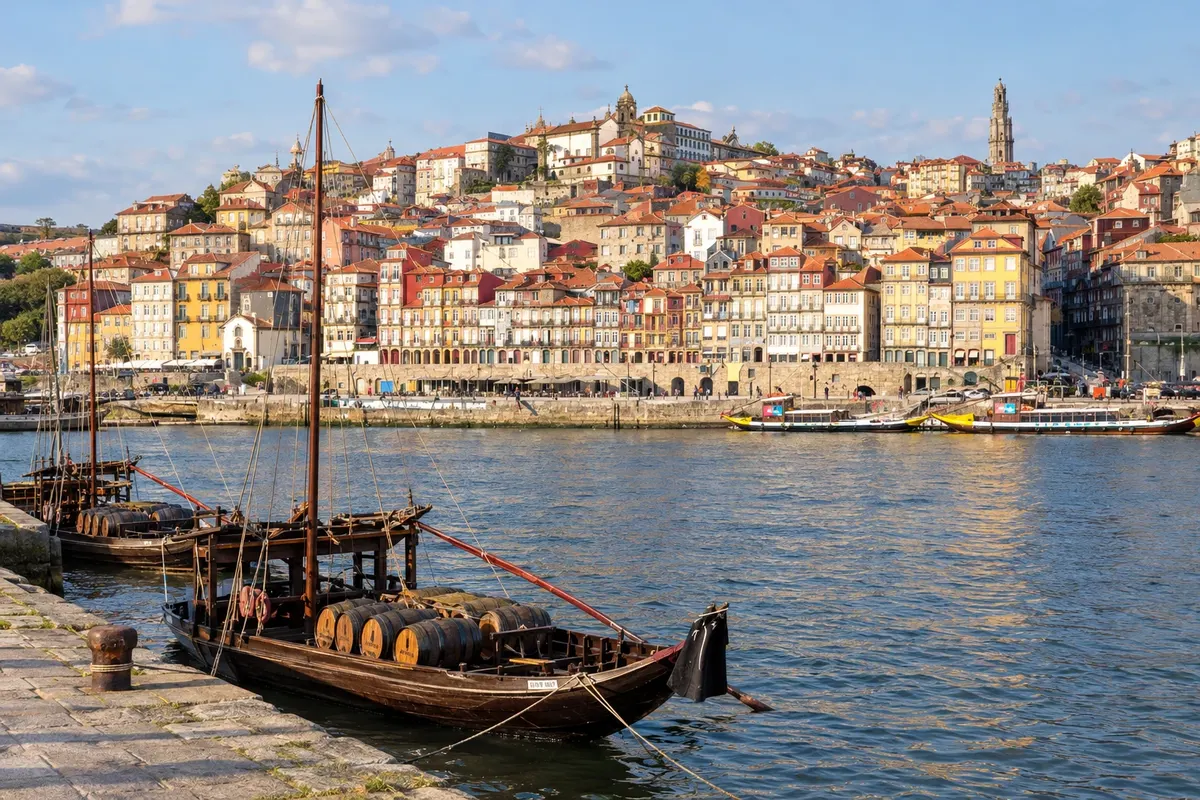
The route begins at Campanhã station, connected to the metro and suburban trains that go to São Bento station in the city center. In Porto: the Ribeira, the Dom Luís I bridge, the Torre dos Clérigos, Livraria Lello and the Port wine cellars on the other side of the Douro, in Vila Nova de Gaia.
→ Valença cerca de 1h45 a 2h Celta, da CP e da Renfe, de Porto-Campanhã a Valença pela linha do Minho, passando por Nine e Viana do Castelo. Em alguns períodos pode haver troca de trem ou trecho de ônibus: confirme antes.
-
 2 · Portugal
Valença
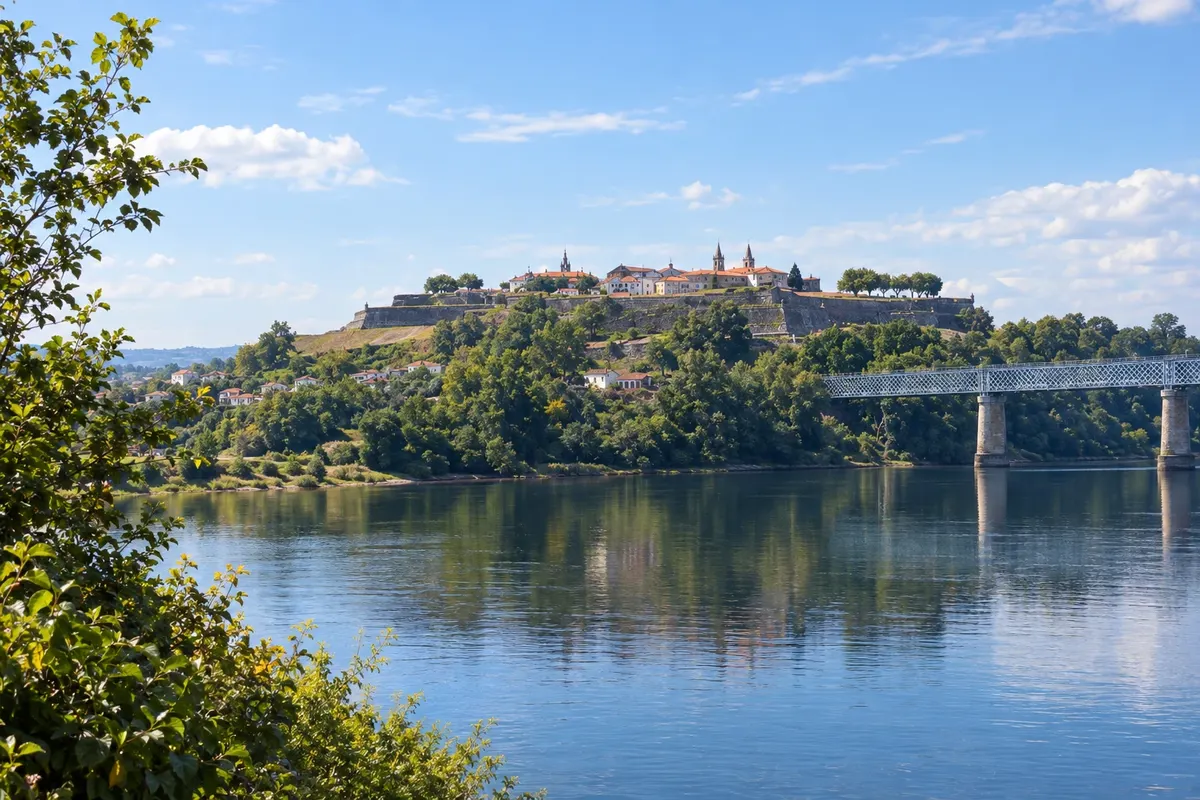
The train's last stop in Portugal. It's worth getting off to walk around the star-shaped fortress above the Minho River and cross the international bridge on foot to Tui.
→ Tui cerca de 20 a 30 min, mais 1 hora de fuso A pé, pela ponte internacional sobre o rio Minho, entre Valença e Tui. Cerca de 2 km entre as áreas centrais; o tempo varia conforme o ponto de partida.
-
 3 · Spain
Tui
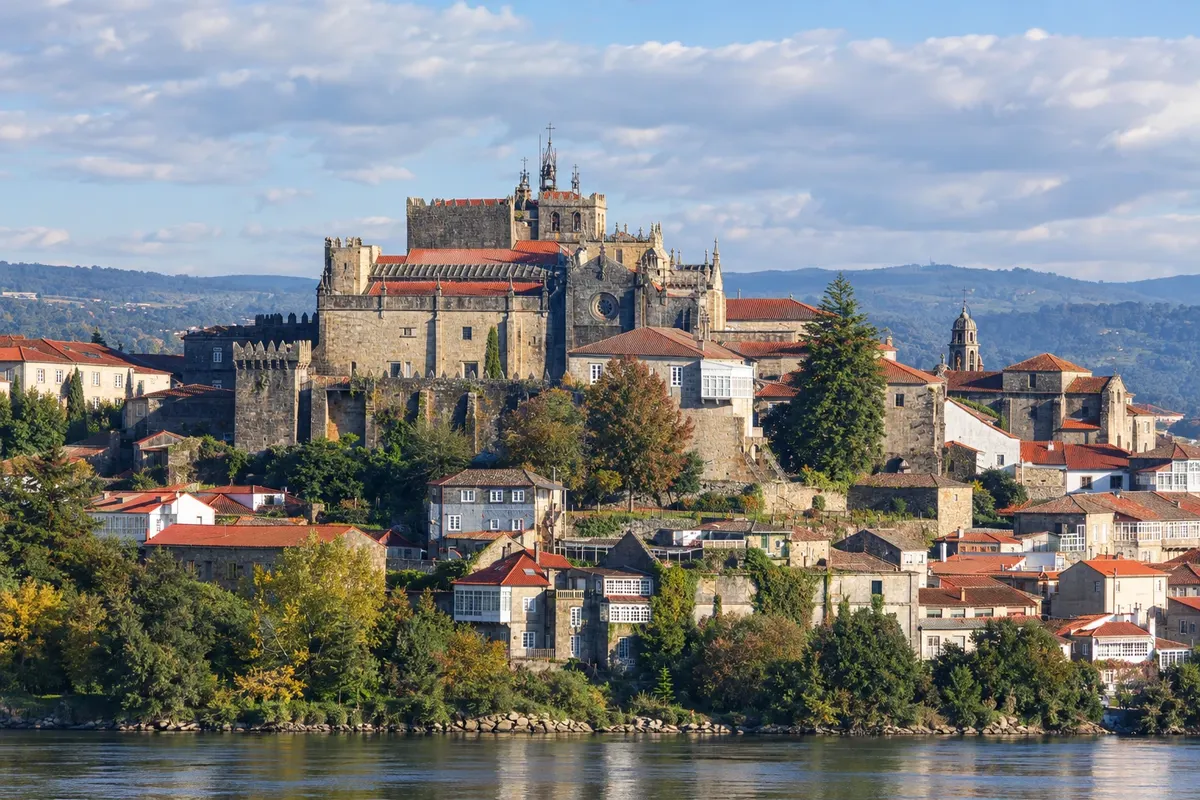
On the other side of the bridge, already in Galicia, the cathedral-fortress dominates the river. Many pilgrims start the Caminho Português from here, just over 100 km from Santiago.
→ Vigo cerca de 40 min a 1h Cerca de 30 km até Vigo, de ônibus ou trem, conforme a ligação disponível. Confira os horários e a estação de embarque; o Celta não costuma parar no centro de Tui.
-
 4 · Spain
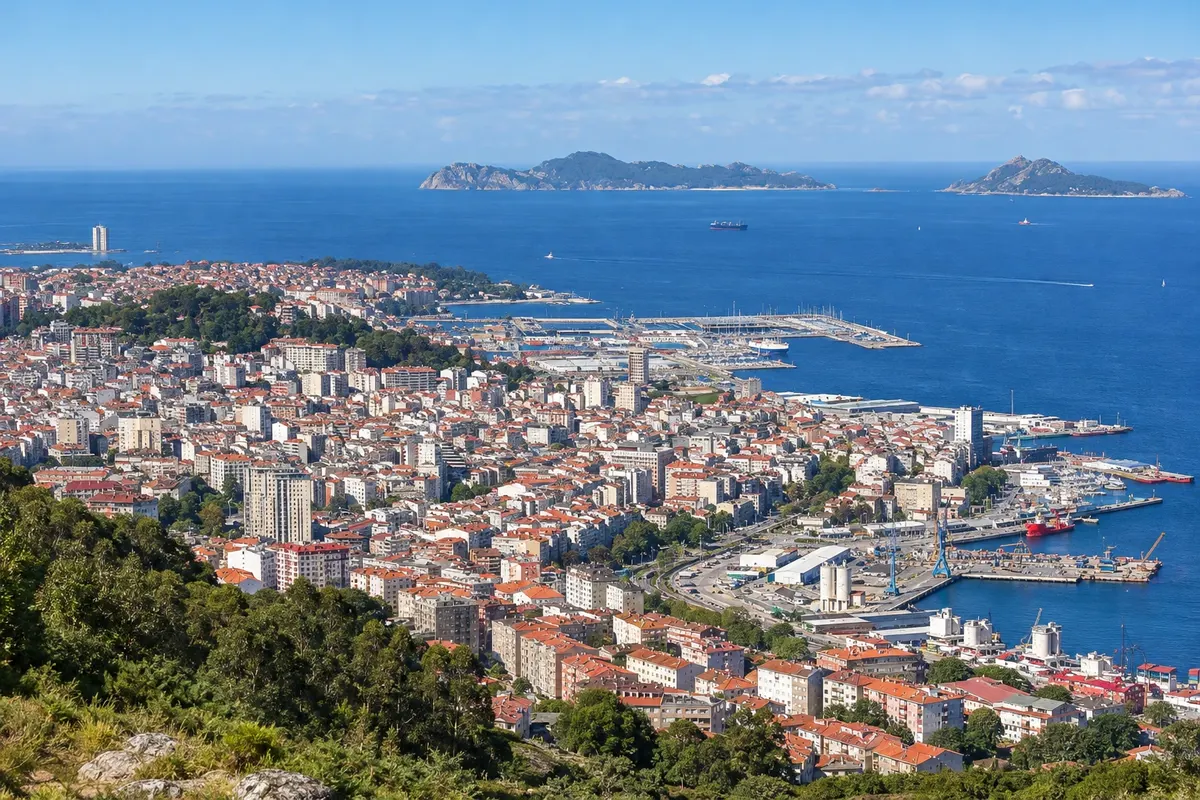
Vigo
Before reaching Vigo, the Celta stops at Valença, the fortified town on the banks of the Minho, and crosses the river to Tui, already in Galicia. Vigo is the largest Galician city, with a fishing port, the old quarter Casco Vello, the viewpoint on Monte do Castro and the ria full of mussel farms. Boats leave the port for the Cíes islands, which require prior authorization in summer.
→ Santiago de Compostela cerca de 50 min a 1h15 Trem da Renfe pelo Eixo Atlântico, com parada em Pontevedra. Há vários horários por dia; confira no bilhete se o trem sai de Vigo-Urzaiz ou de Vigo-Guixar.
-
 5 · Spain
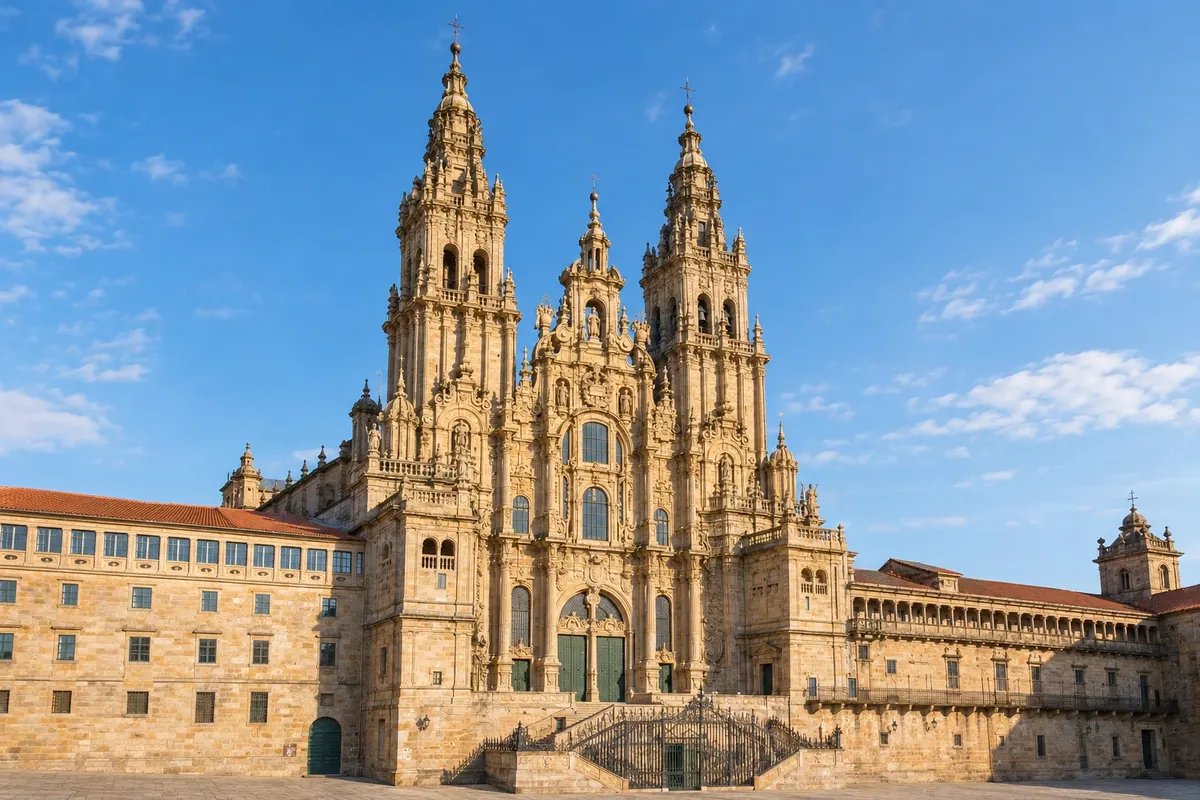
Santiago de Compostela
The train arrives at Santiago de Compostela station, a walk from the old town. On the route from Vigo it passes through Pontevedra, a city with a stone historic center. In Santiago: the cathedral and the Praça do Obradoiro, the cobbled streets of the old quarter, the Mercado de Abastos and the arrival of pilgrims from all routes.
How to travel
The way and the tickets
By train, using two tickets: the Celta from Porto to Vigo and a Renfe train from Vigo to Santiago. The Celta usually arrives at Vigo-Guixar station, and some trains to Santiago depart from Vigo-Urzaiz, a short walk away: check the station on your ticket and allow time between the two trains.
Best time to go
When to go: month by month
From May to June and in September: long days and pleasant coastal temperatures. Northern Portugal and Galicia usually have rain in autumn and winter. July and August are high season, with Santiago busier because of pilgrims.
The seasons shown are the most usual ones; nature doesn't always follow the calendar.
Planning
Planning the trip
How many days
Trains make the entire journey in about 3h30, including the change in Vigo. To see all three cities, allow 5 to 7 days; with 4 days, stay in Porto and Santiago and pass through Vigo en route.
Who it is for
For those who want to combine northern Portugal and Galicia without a car, for travelers going to Santiago de Compostela without walking the Camino, and for those who want to explore the Rías Baixas coast from Vigo.
Your questions answered
Frequently asked questions about Porto–Vigo–Santiago de Compostela by train
Tem trem direto do Porto a Santiago de Compostela?
Não. O Celta vai do Porto a Vigo, e de Vigo a Santiago é preciso pegar outro trem, da Renfe. A viagem toda leva cerca de 3h30, contando a troca.
Quantos trens Celta saem por dia?
Poucos, e a quantidade muda conforme a época. Veja os horários no site da CP ou da Renfe e compre com antecedência.
O Celta faz o trajeto inteiro de trem?
Na maior parte do tempo, sim. Em alguns períodos, por obras ou por falta de trens, parte do caminho pode ser feita com troca de trem ou de ônibus. Confirme antes de comprar e na véspera.
Precisa mostrar passaporte entre Portugal e a Espanha?
Os dois países estão no espaço Schengen e não há controle fixo de fronteira. Mesmo assim, leve o passaporte com você durante a viagem.
Muda o horário ao entrar na Espanha?
Sim. A Espanha fica uma hora à frente de Portugal. Os horários de chegada a Vigo já aparecem no horário espanhol.
Dá para descer em Valença ou em Tui?
O Celta para em Valença, do lado português. De lá, Tui fica do outro lado da ponte sobre o Minho, a uma caminhada. É um bom ponto para quem quer começar o Caminho Português a pé.