

 Brazil
 Argentina
 Bolivia
 Chile
 Colombia
 Ecuador
 Guyana
 French Guiana
 Falkland Islands (Malvinas)
 Paraguay
 Peru
 Suriname
 Uruguay
 Venezuela
 Germany
 Austria
 Belgium
 Croatia
 Denmark
 Finland
 France
 Greece
 the Netherlands
 Hungary
 Ireland
 Iceland
 Italy
 Luxembourg
 Norway
 Poland
 Portugal
 the United Kingdom
 the Czech Republic
 Sweden
 Switzerland
 Turkey
 the United States
 Mexico
 the Dominican Republic
 South Africa
 Australia
 Fiji
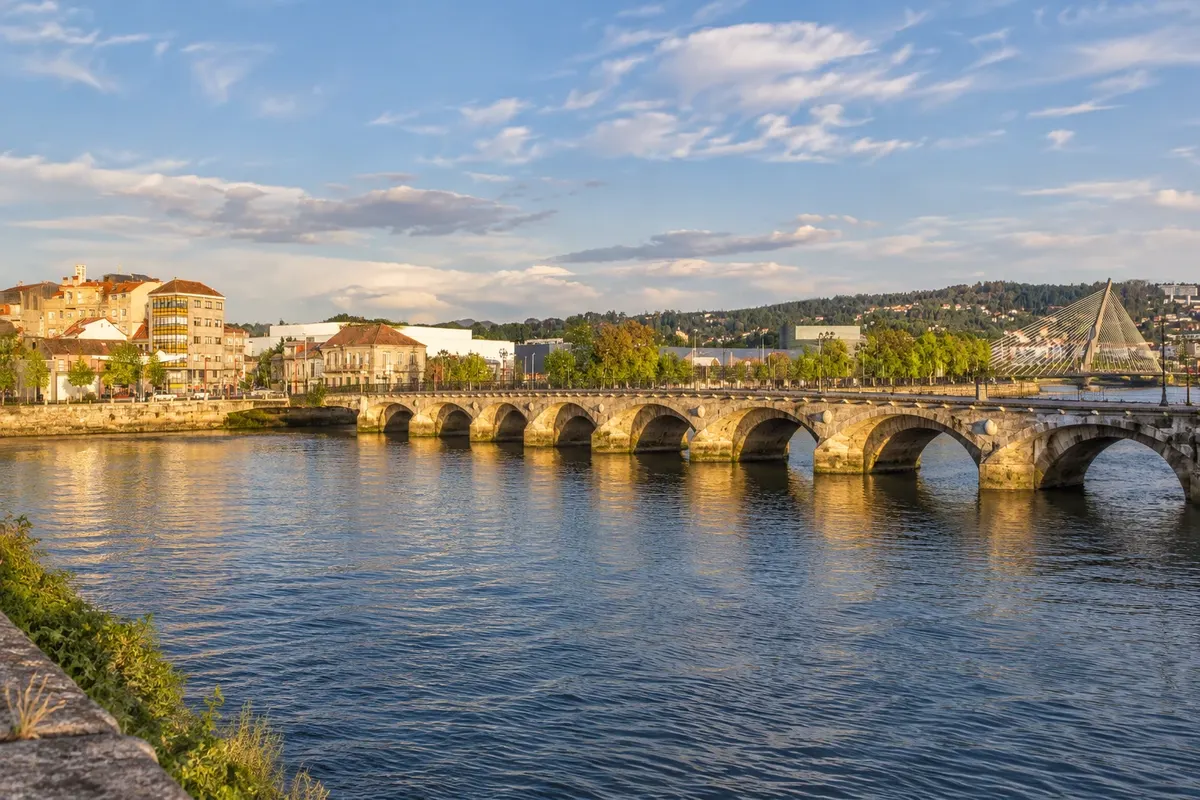
Bridge · Pontevedra, Galicia
Ponte do Burgo
Medieval stone bridge over the river Lérez, built on top of an earlier Roman bridge, with carved pilgrim shells; it is the entrance to the Caminho Português on the north side of the city.
Illustrative images. The pictures in this guide are illustrations based on the real place, not photographs, and may differ from it.

Discover
About Ponte do Burgo
The ponte do Burgo crosses the river Lérez north of Pontevedra's historic center. The current medieval bridge was built on top of an older Roman-origin bridge, along the Roman road that linked Braga to Astorga. The city's name, Pontevedra, comes from 'ponte velha', in Latin.
The earliest records of the current bridge date from 1165, when the kings of León and Portugal signed a peace agreement by the river. In the 15th century the bridge had 15 arches and, in the 16th century, two defensive towers, one on each bank; the one on the city side was connected to the walls.
With port works and later renovations, the bridge lost arches and towers. Between the arches you can see scallop shells carved in the stone, the symbol of the pilgrims of Santiago, who cross the bridge when leaving Pontevedra via the Caminho Português.
Today the bridge is pedestrian-only and links the center to the bairro do Burgo and the riverbanks, from where paths lead to the Ilha das Esculturas.
Before you go
Practical information
Cidade Turismo reviews its information regularly, but something may have changed. Check with the place before planning your trip.
How much time to set aside
15 to 20 minutes.
Best time
In the late afternoon, with the light on the river Lérez.
How to get there
It is on the northern edge of the historic center, about a 5-minute walk from the basílica de Santa María a Maior.
Tip
Look for the carved shells on the pillars on the river side: they are between the arches.
Get your questions answered
Frequently asked questions about Ponte do Burgo
Is the ponte do Burgo Roman?
The current bridge is medieval, built on top of an earlier Roman one. Records of it date back to 1165.
Why does the bridge have carved shells?
The scallop shell is the symbol of the pilgrims of Santiago, who cross the bridge on the Caminho Português.
Where does the name Pontevedra come from?
From 'ponte velha', referring to the old bridge over the river Lérez.