Salamanca

Castile and León · Spain

Salamanca

The university town of golden stone, with the Baroque Plaza Mayor, the university's plateresque façade, two adjoining cathedrals and nights full of students.

Central

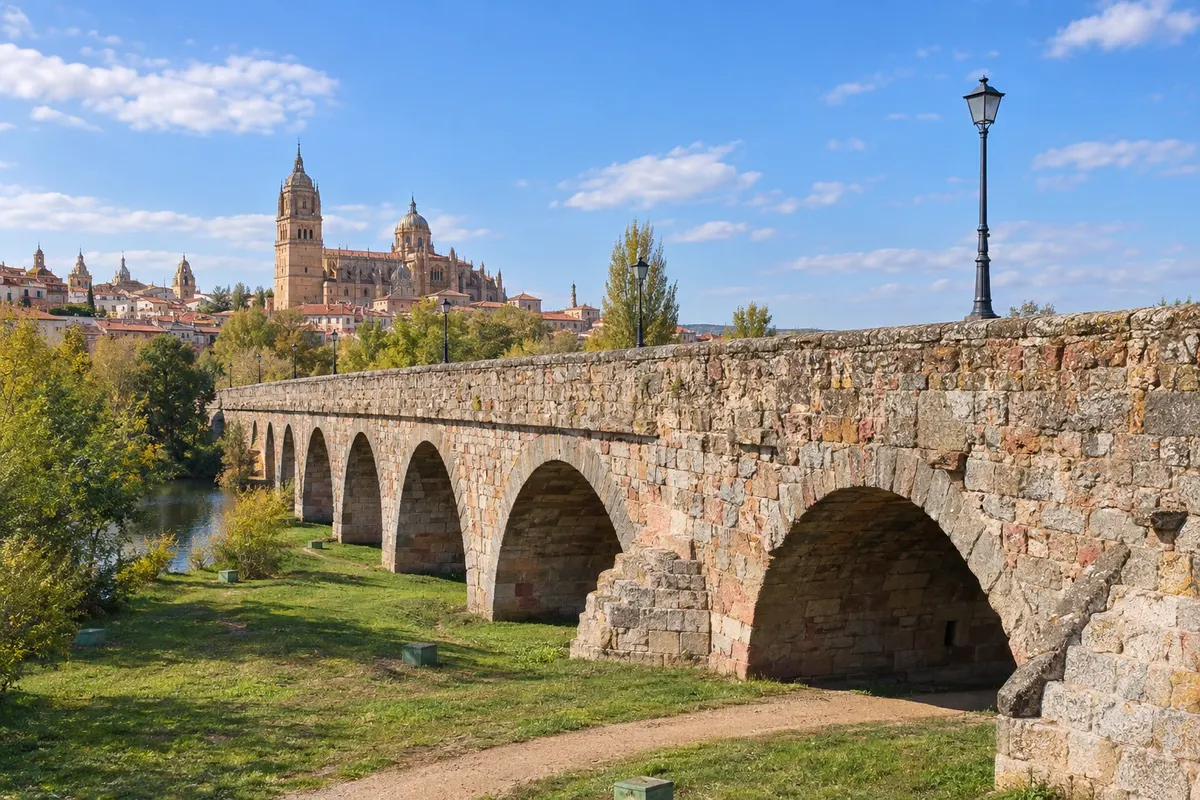
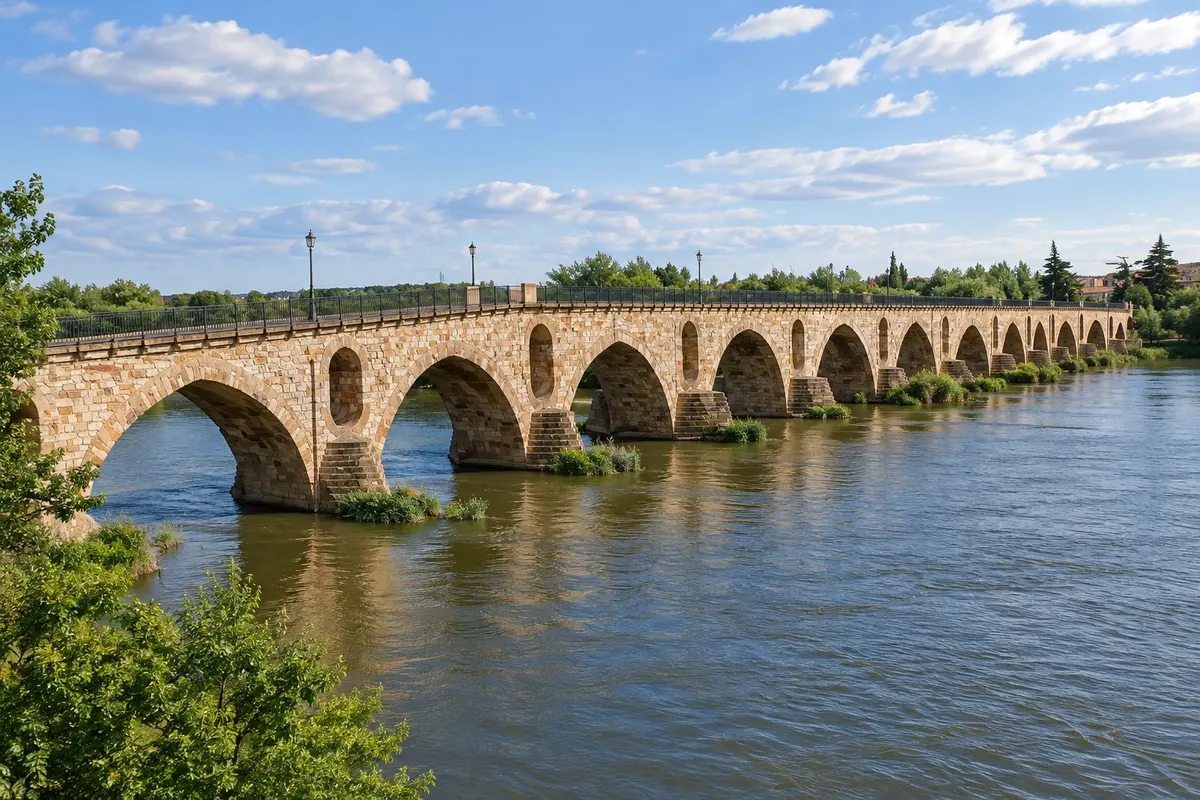
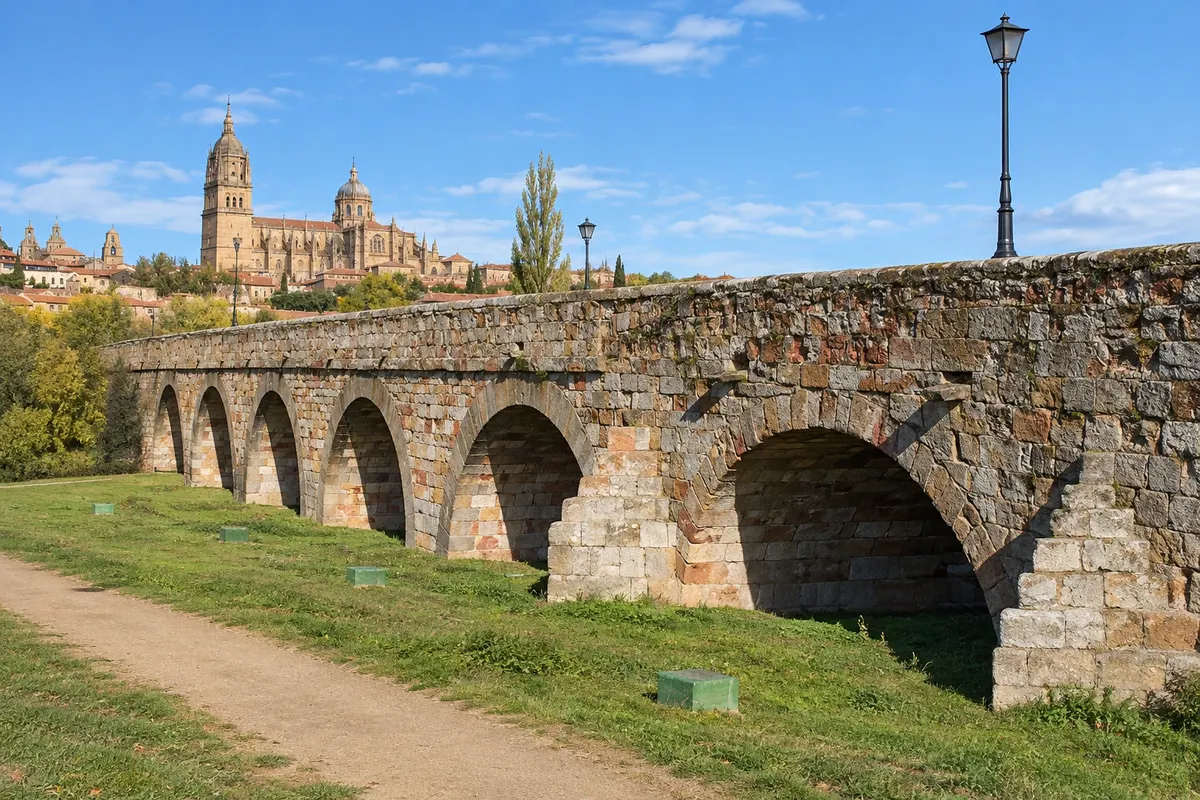
In the photo: Puente Romano de Salamanca

Illustrative images. The pictures in this guide are illustrations based on the real place, not photographs, and may differ from it.

Get it on Google Play Send your photos

Get to know the place

A region to enjoy
at your own pace.

Salamanca is in Castile and León, in western Spain, on the banks of the Tormes river, about 210 km from Madri and just over 100 km from the border with Portugal. The Universidade de Salamanca, founded in 1218, is the oldest university in Spain still in operation, and the city has revolved around it ever since: in the centre almost everything is a college, convent, faculty or student bar.

The buildings were built with Villamayor stone, a sandstone that is light from the quarry and over time takes on a golden hue, stronger at dusk. Hence the nickname Salamanca, la Dorada. The historic centre has been a UNESCO World Heritage Site since 1988, featuring the university's plateresque façade, the Casa de las Conchas, the Clerecía, the convent of San Esteban and the two cathedrals — the Vieja, Romanesque, and the Nueva, Gothic and Baroque — standing side by side.

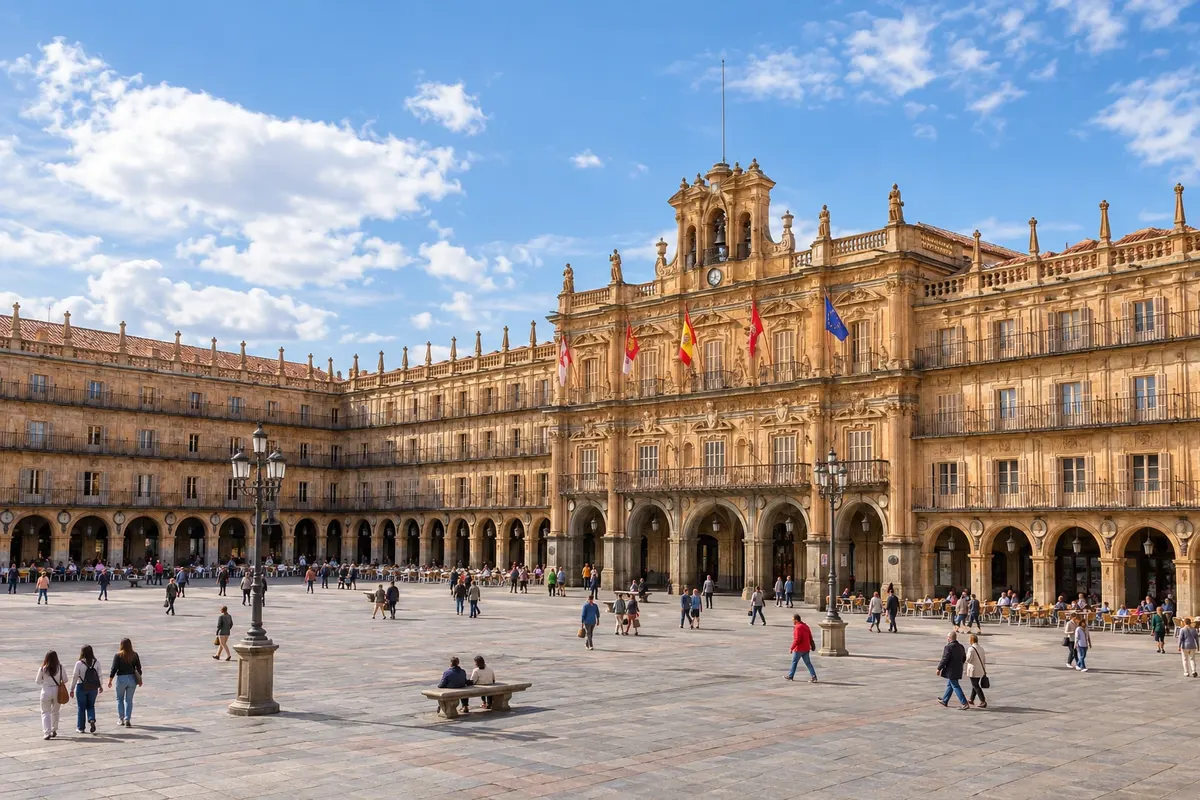
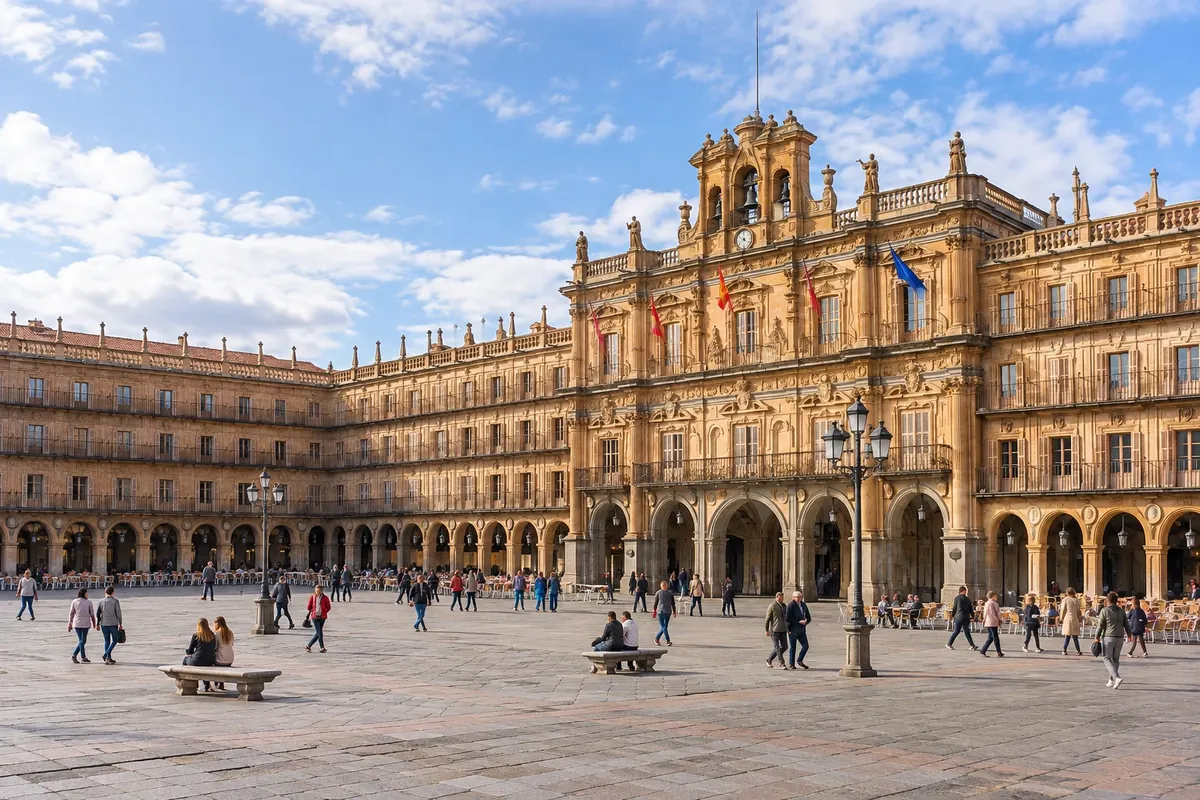
In the middle of it all is the Plaza Mayor, an 18th-century Baroque square that is the city's meeting point at any hour. To the south, the Roman bridge crosses the Tormes, with the classic view of the cathedrals above the roofs.

It’s also on the route between Madri and Porto.

This destination brings together 2 cities: Salamanca, Zamora.

Share: WhatsApp
Traveler, share your experiences through photos Up to 5 photos of each place you visited.

The local experience

Things to do in Salamanca

Catedral de Zamora
Zamora · Castile and León · Church

Catedral de Zamora

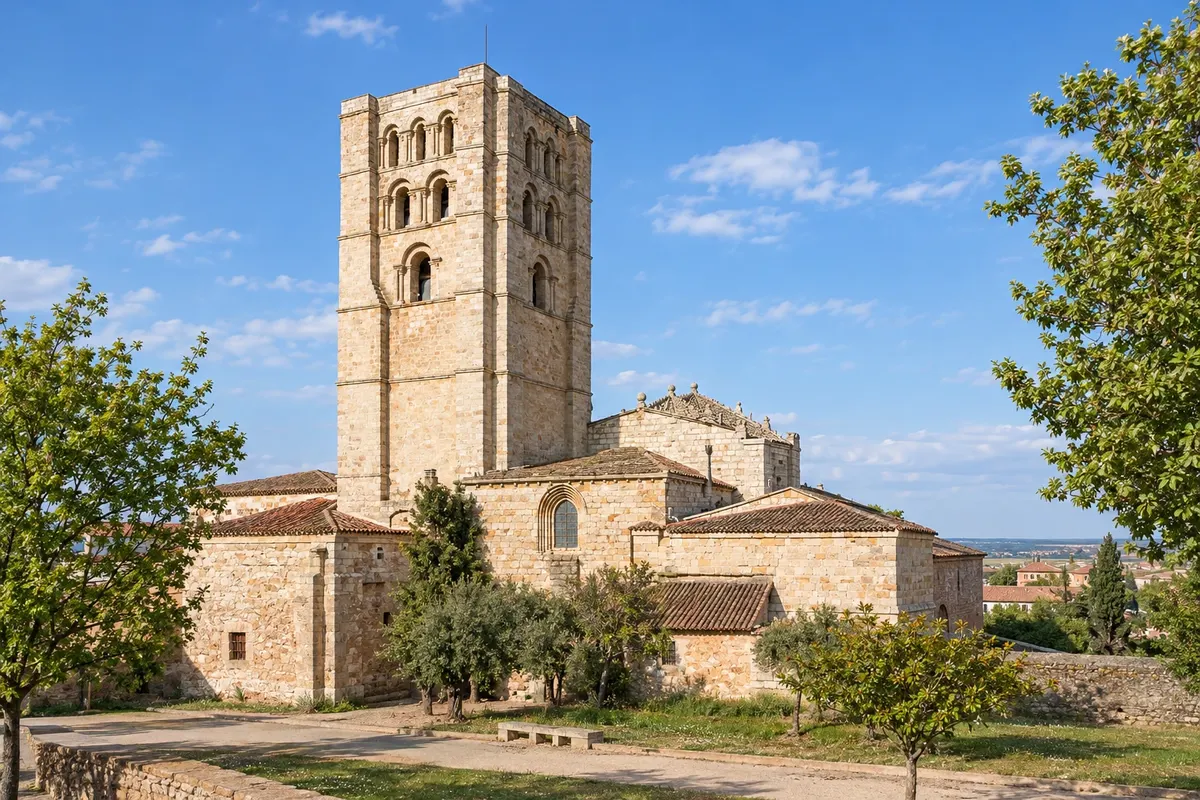
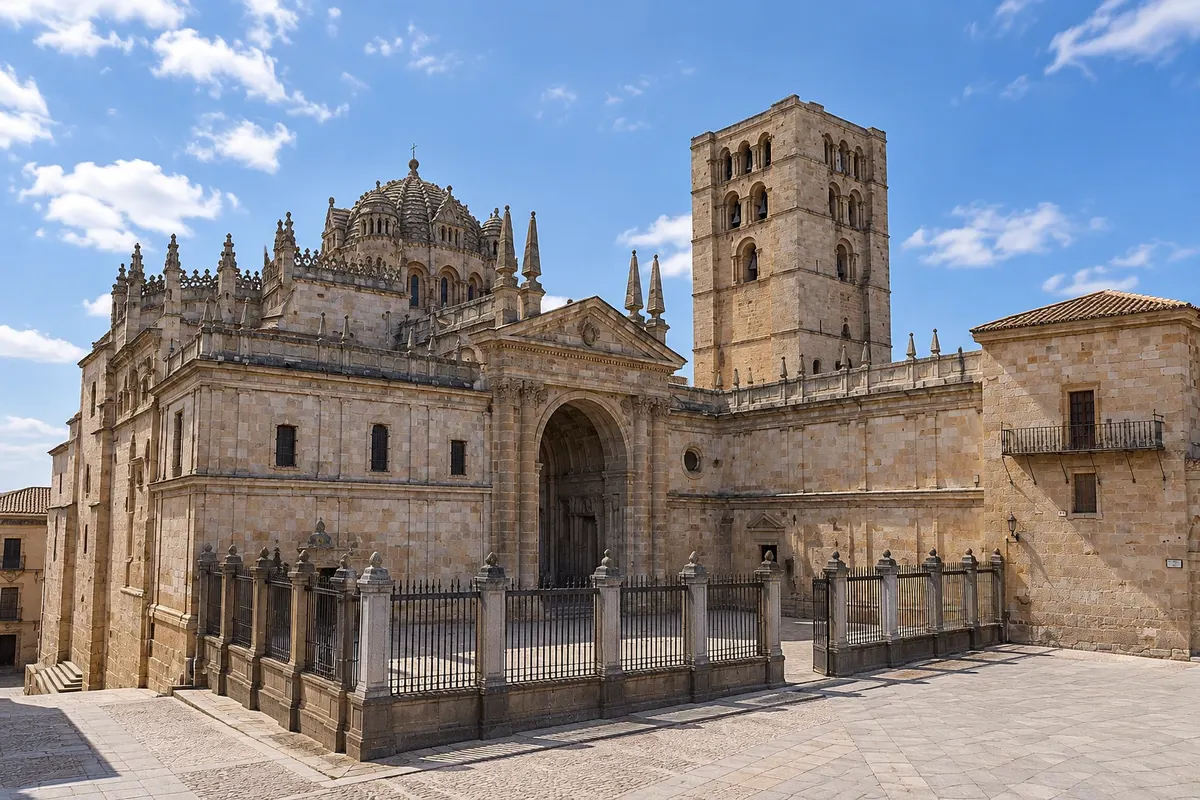
The Cathedral of the Salvador, from the 12th century, is the oldest and smallest of the cathedrals of Castile and León. The cimborium with its stone-scaled dome, of Byzantine influence, is the symbol of the city. The museum houses Flemish tapestries.

Plaza Mayor de Salamanca
Salamanca · Castile and León · Square

Plaza Mayor de Salamanca

Baroque plaza built between 1729 and 1755, enclosed by arcades and three-storey buildings, with medallions of kings and historical figures and the town hall with a decorated façade.

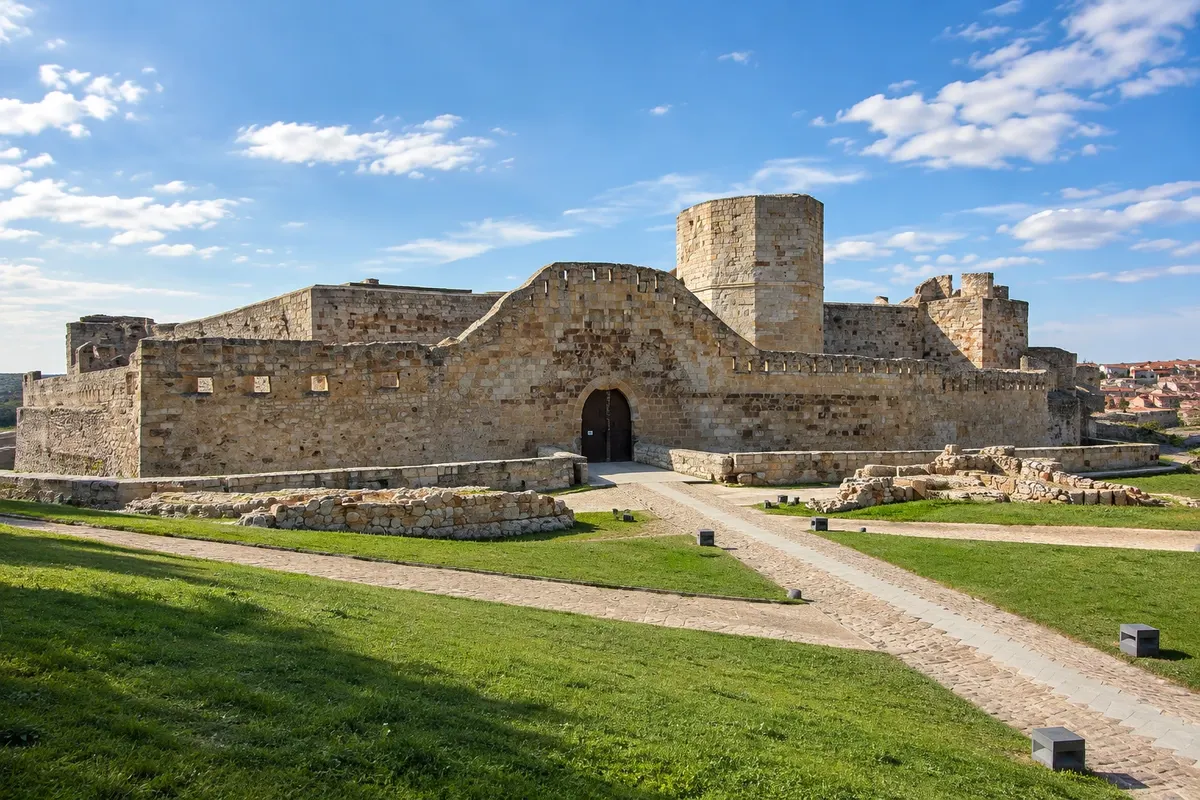
Castillo de Zamora
Zamora · Castile and León · Castle

Castillo de Zamora

The Romanesque castle on the western tip of the plateau, next to the cathedral, with a moat, restored walls and gardens. It houses a space dedicated to the Zamoran sculptor Baltasar Lobo.

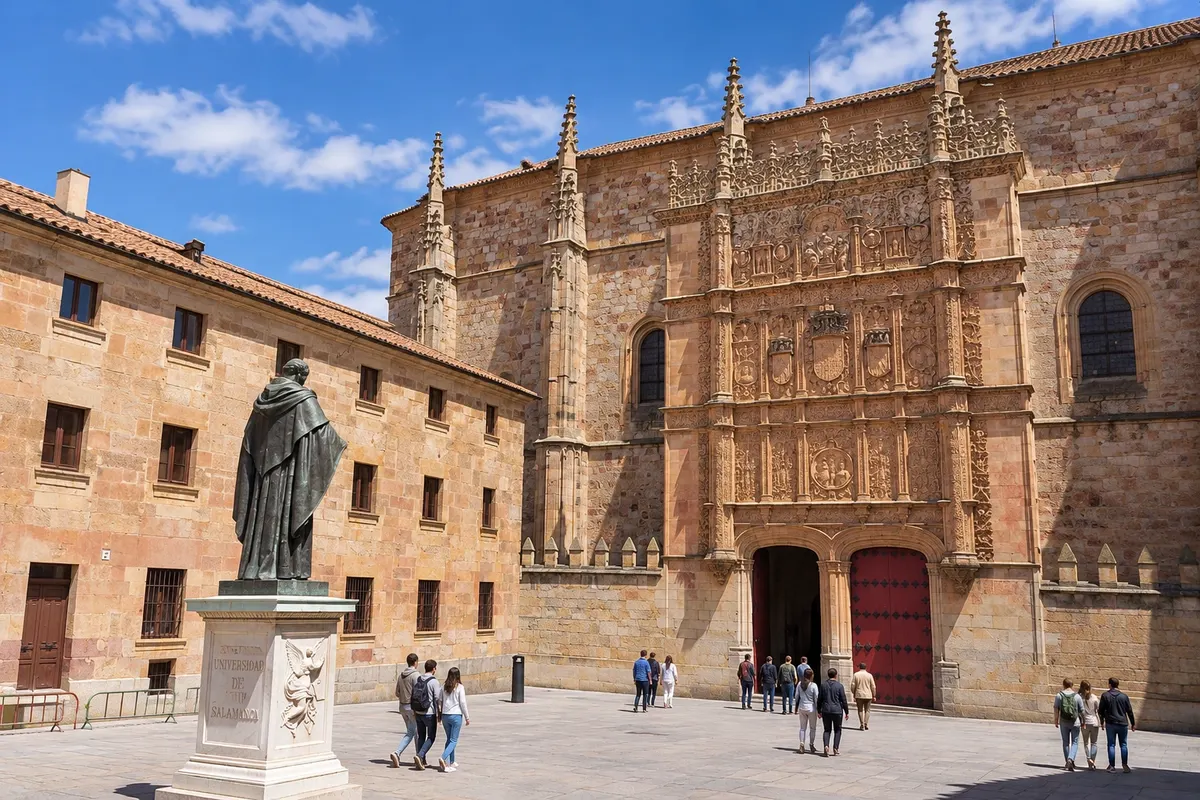
Universidad de Salamanca
Salamanca · Castile and León · Monument

Universidad de Salamanca

University founded in 1218, with the Escuelas Mayores building, the plateresque façade of the frog, the historic library, Fray Luis de León's lecture room, and the Cielo de Salamanca.

See 13 more places in Salamanca
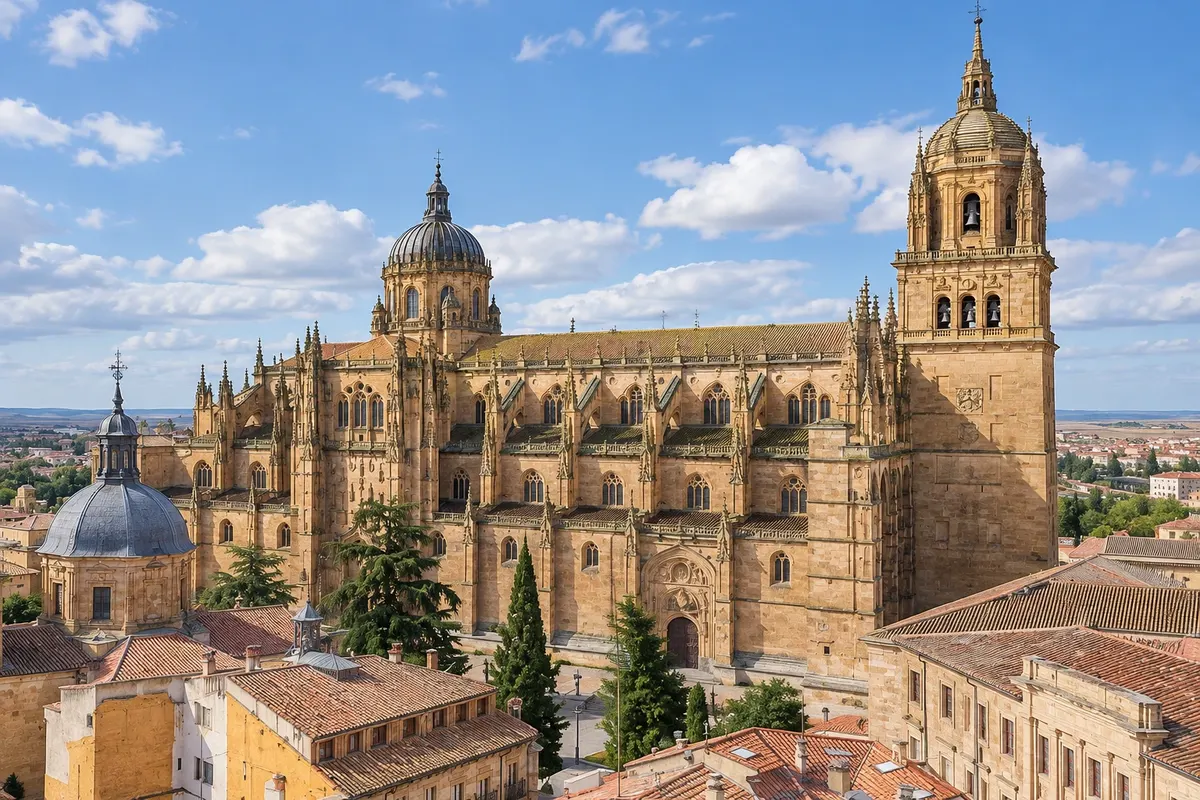
Catedrales de Salamanca
Salamanca · Castile and León · Cathedral

Catedrales de Salamanca

Two adjoining cathedrals: the Vieja, Romanesque from the 12th century, with the Torre del Gallo and an altarpiece of 53 panels, and the Nueva, Gothic and Baroque, with the astronaut on the Puerta de Ramos.

Puente de Piedra
Zamora · Castile and León · Bridge

Puente de Piedra

The medieval bridge over the Duero, completed at the beginning of the 13th century, was for centuries the only crossing of the river in Zamora and lies on the route of the Via de la Plata.

Casa de las Conchas
Salamanca · Castile and León · Palace

Casa de las Conchas

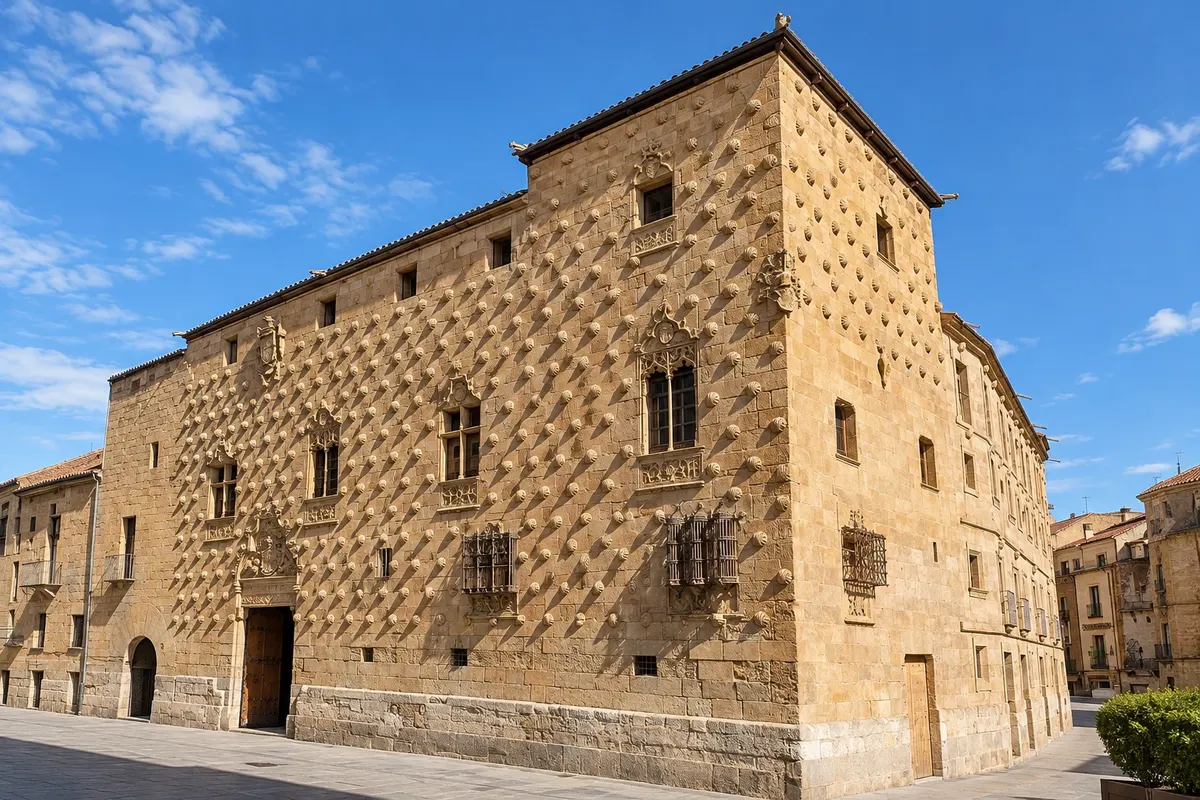
Gothic palace from the late 15th century with a façade covered by about 300 stone shells, symbol of the Order of Santiago, now a public library with an open courtyard.

Iglesia de Santa María Magdalena
Zamora · Castile and León · Church

Iglesia de Santa María Magdalena

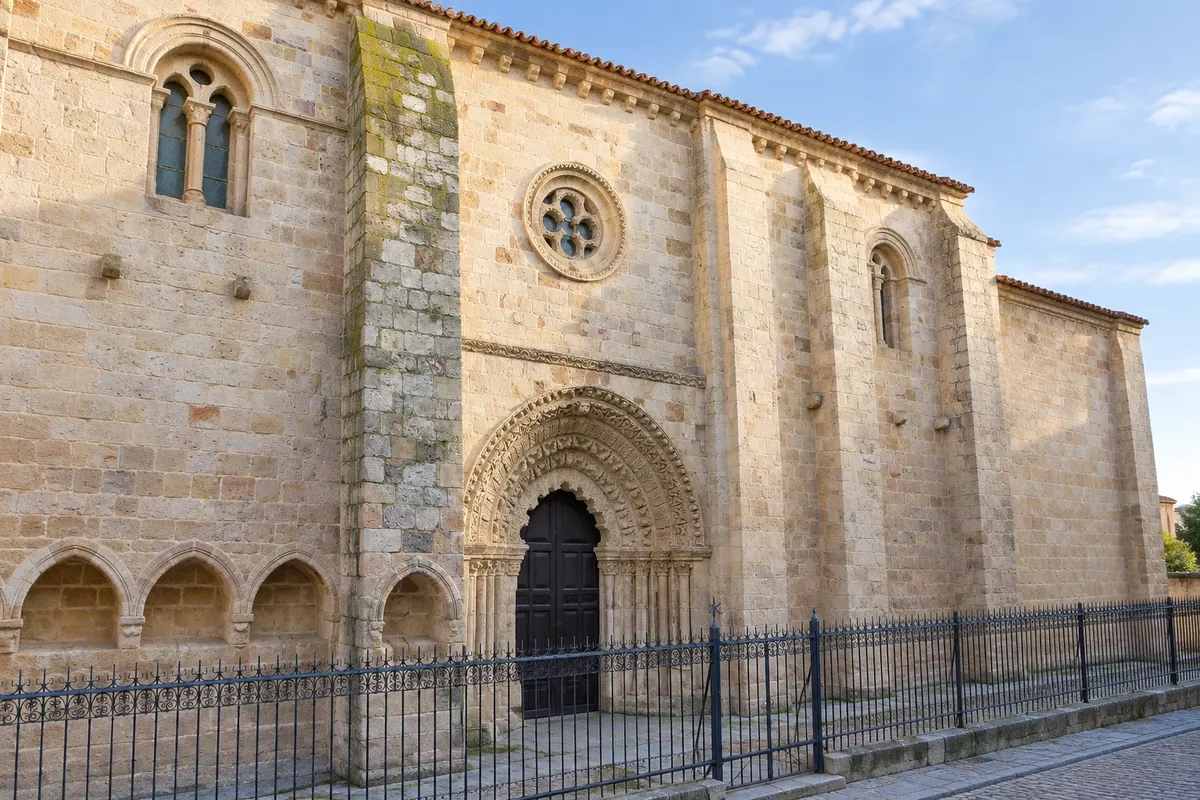
Romanesque church from the 12th and 13th centuries on the rúa de los Francos, with a single tall nave and a southern portal among the most elaborately worked of Zamora's Romanesque.

Iglesia de San Pedro y San Ildefonso
Zamora · Castile and León · Church

Iglesia de San Pedro y San Ildefonso

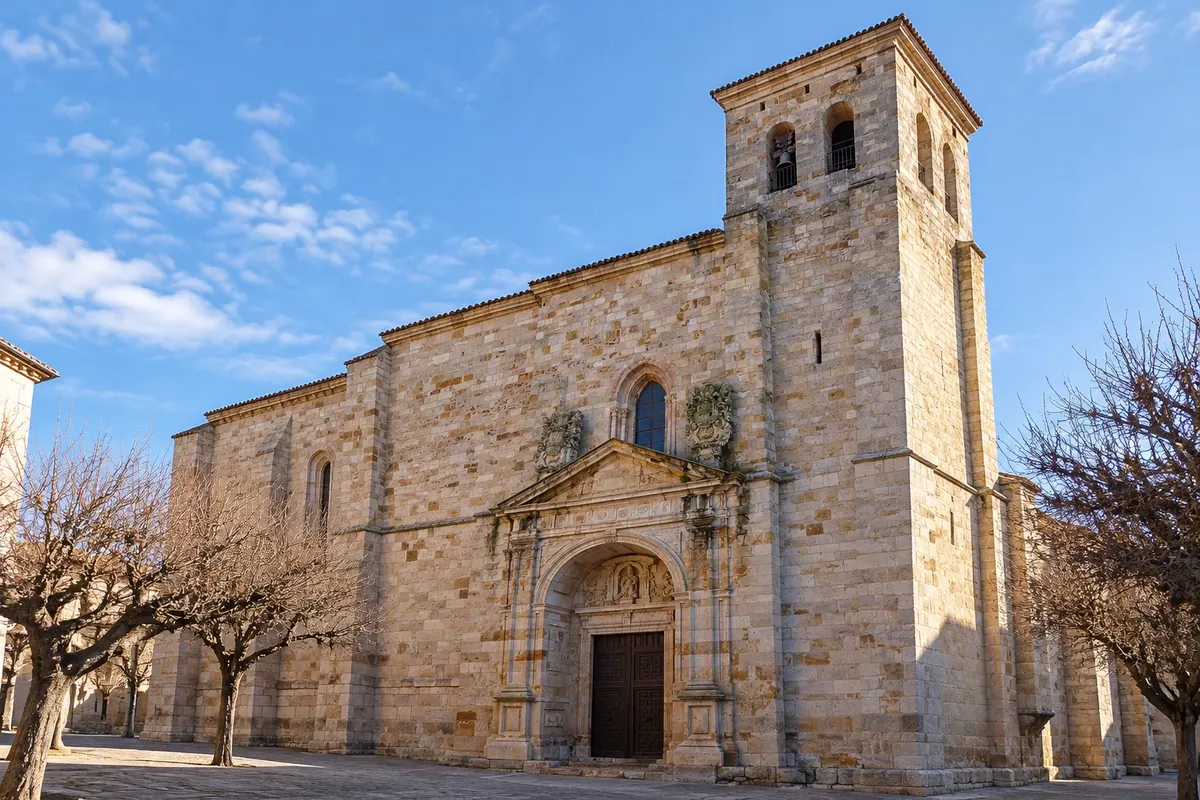
The largest and most important church in Zamora after the cathedral, of Romanesque origin, with a Gothic nave and the relics of Saint Ildefonso and Saint Atilano, the city's patron saint.

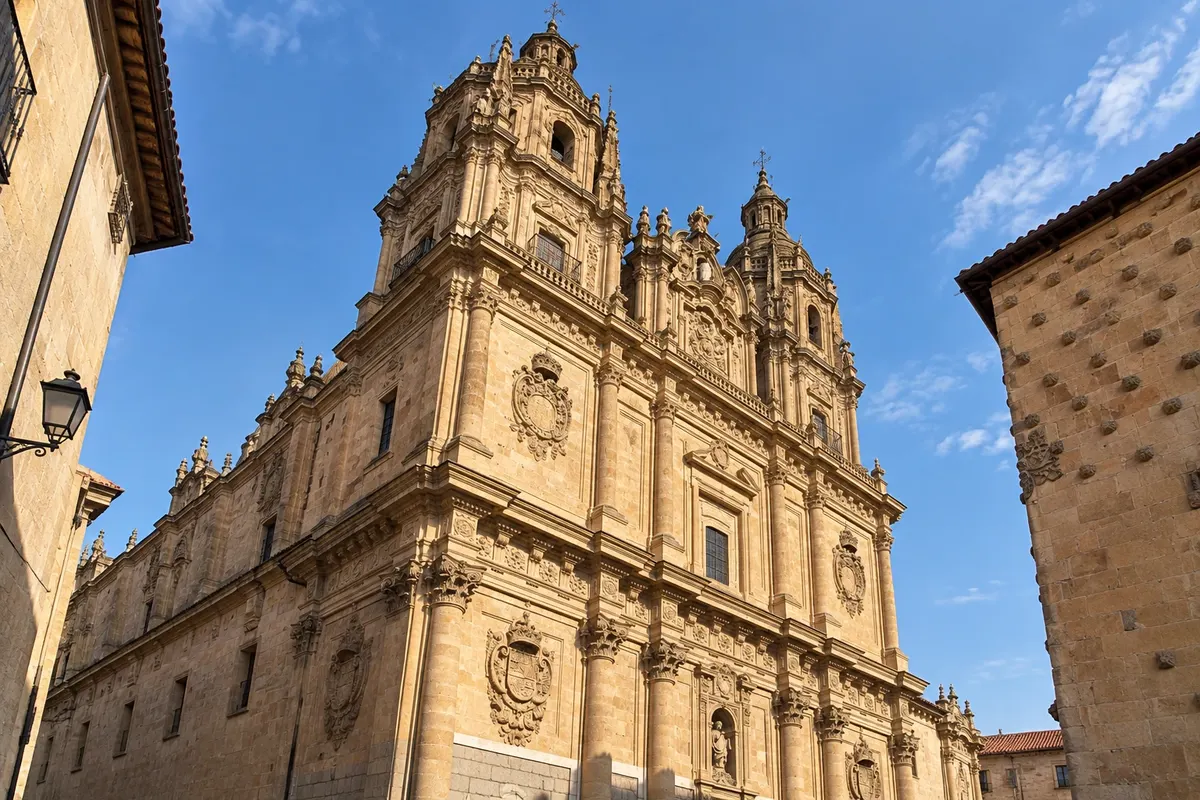
La Clerecía y Scala Coeli
Salamanca · Castile and León · Church

La Clerecía y Scala Coeli

Former Baroque Jesuit college from the 17th and 18th centuries, today part of the Universidad Pontificia, with a cloister and an ascent to the towers, the Scala Coeli, offering views of the cathedrals.

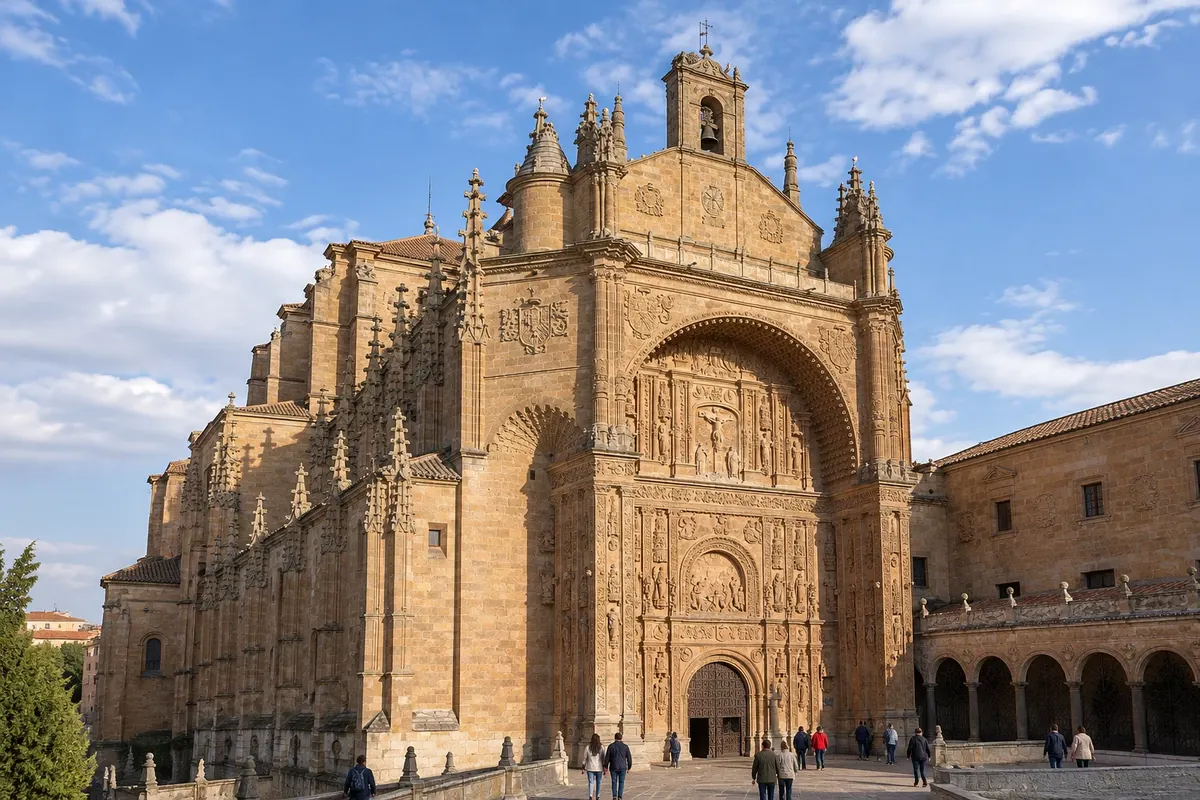
Convento de San Esteban
Salamanca · Castile and León · Monastery

Convento de San Esteban

16th-century Dominican convent with a plateresque façade in the form of an altarpiece, a main altarpiece by José de Churriguera and the Claustro de los Reyes, where Columbus is said to have presented his plan.

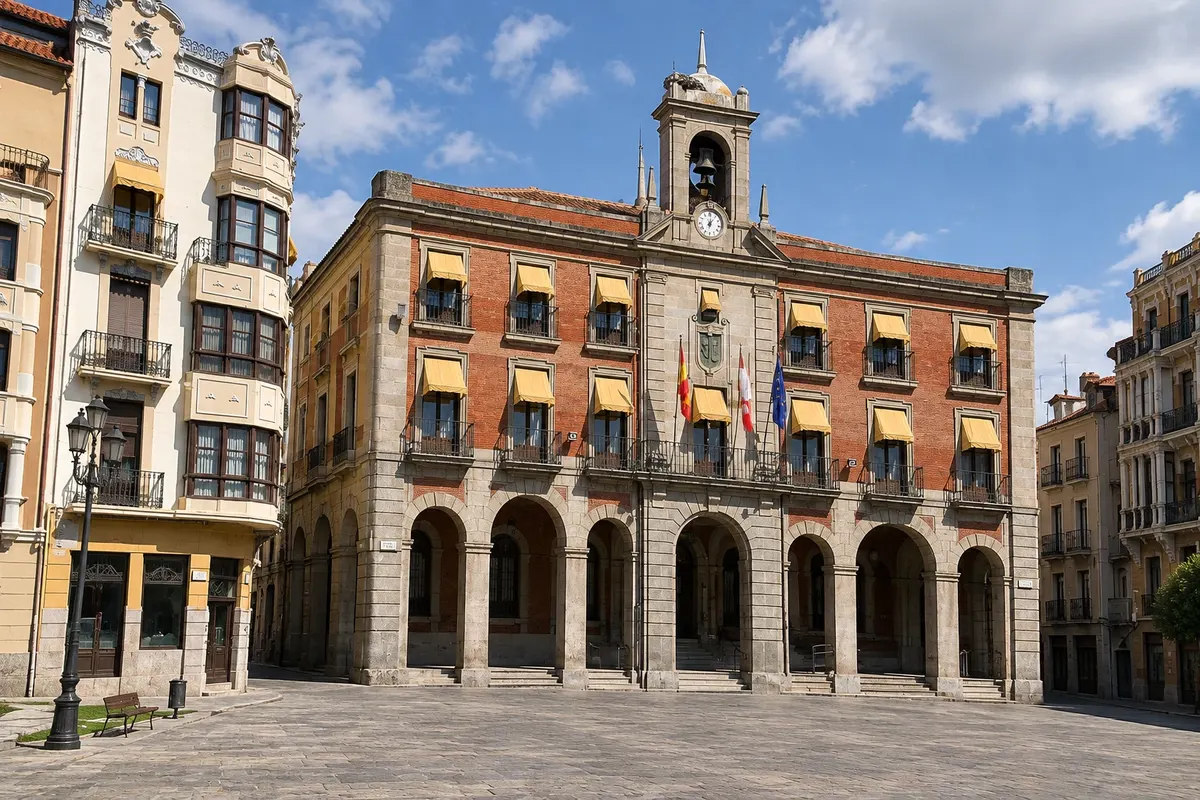
Plaza Mayor de Zamora
Zamora · Castile and León · Square

Plaza Mayor de Zamora

Zamora's main square, with the Romanesque church of San Juan de Puerta Nueva, the old town hall, the statue of the Merlú and Modernist buildings on the surrounding streets.

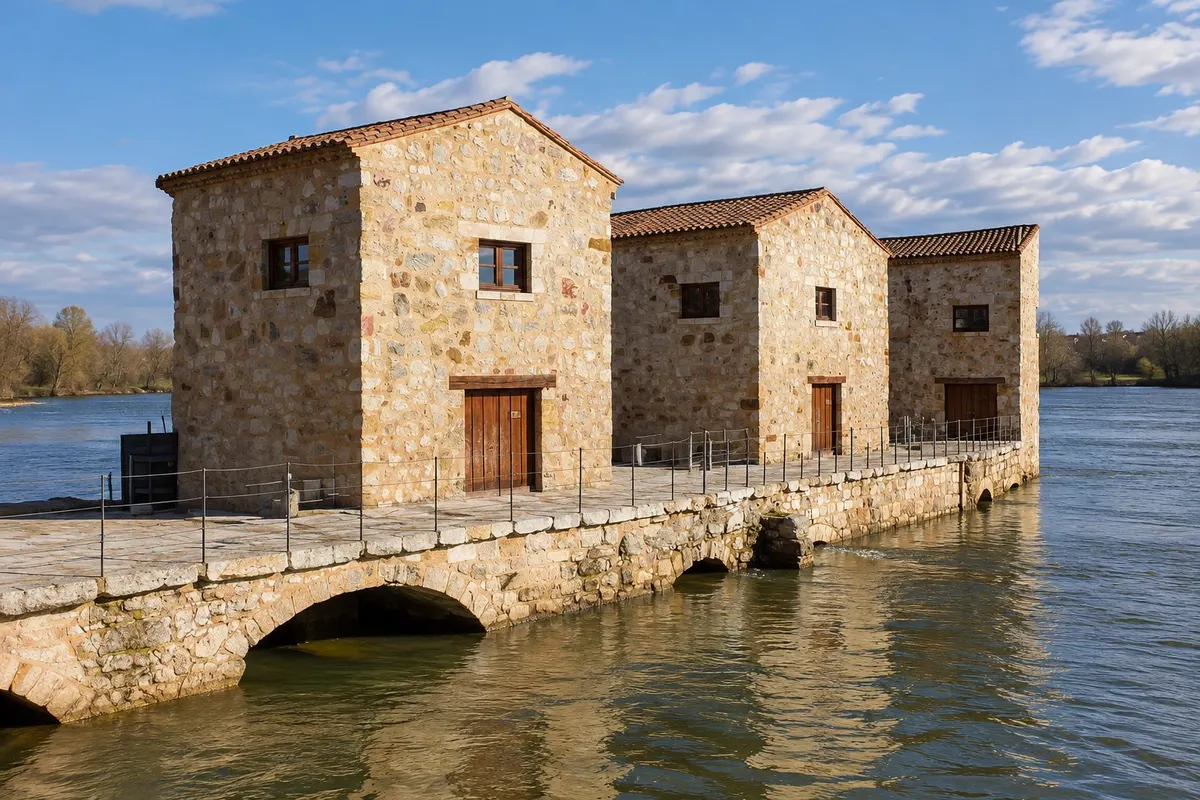
Aceñas de Olivares
Zamora · Castile and León · Industrial heritage

Aceñas de Olivares

Old medieval water mills on the Duero River, restored as an interpretation center of traditional water industries, at the foot of the cathedral.

Convento de las Dueñas
Salamanca · Castile and León · Monastery

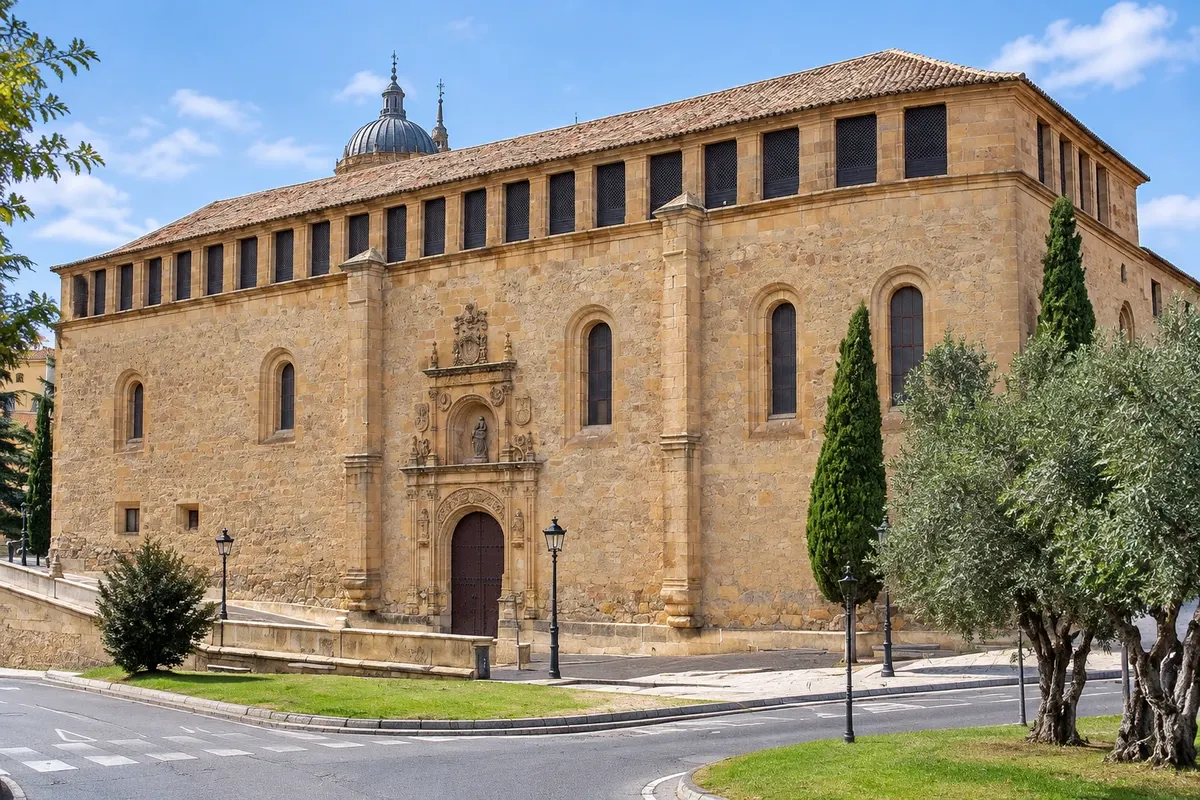
Convento de las Dueñas

Convent of Dominican nuns with a five-sided Renaissance cloister and capitals carved with fantastic and grotesque figures, and sweets made by the nuns.

Puente Romano de Salamanca
Salamanca · Castile and León · Bridge

Puente Romano de Salamanca

Roman-origin bridge over the Tormes River, dating to the 1st century, with an Iberian stone bull (verraco) at the entrance and the classic view of the cathedrals above the city.

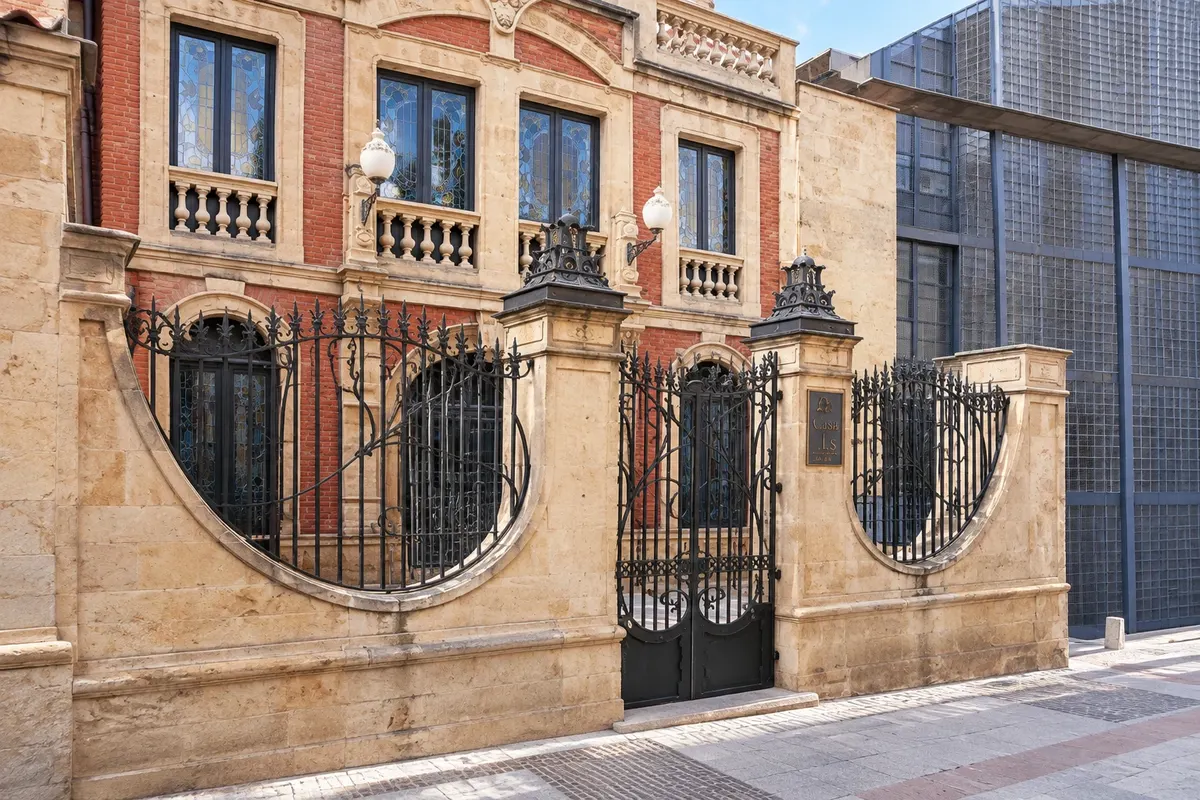
Casa Lis
Salamanca · Castile and León · Museum

Casa Lis

Art Nouveau and Art Deco museum in a 1905 house built on the old city wall, with an iron-and-glass façade facing the Tormes, Gallé glass, and porcelain dolls.

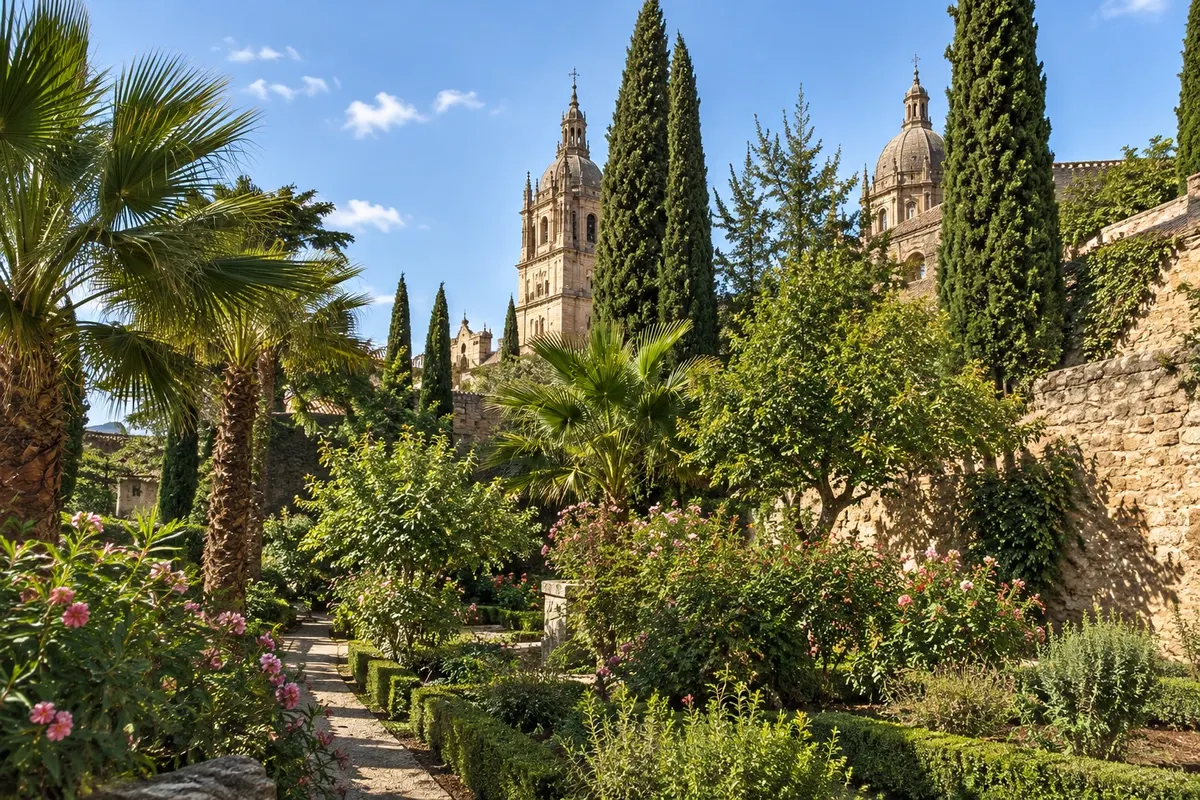
Huerto de Calixto y Melibea
Salamanca · Castile and León · Garden

Huerto de Calixto y Melibea

Small garden on the old city wall, linked to the setting of La Celestina, with fountains, rose bushes and views of the Catedral Nueva and the Tormes River.

Before you go

Practical information

A little planning leaves more time to enjoy the journey.

When to go

From April to June and from September to October the weather is usually pleasant and the city is full of students. July and August are hot in the daytime and cool at night, with the university on holiday. Winter is cold and dry, with frosts. Holy Week often features night processions through the stone streets.

The seasons shown are the most usual ones; nature doesn't always follow the calendar.

How many days to stay

One day is enough for the Plaza Mayor, the university, the cathedrals and the Casa de las Conchas. With two days you can add the cathedral tower climb, San Esteban, the Dueñas, the Casa Lis and the sunset at the Roman bridge, without rushing.

Which city to stay in

The historic centre, between the Plaza Mayor and the cathedrals, puts everything within walking distance and has hotels in old buildings, but the streets stay lively late on student nights. The Gran Vía and Plaza de España area, 10 minutes from the Plaza Mayor, is quieter and has more hotel options. The train station is about 1.5 km from the centre, a 20-minute walk from the Plaza Mayor.

Respect the place

Take your trash with you, follow the signs and support local businesses. In natural areas, follow the visiting guidelines.

Get your questions answered

Frequently asked questions about Salamanca

Can you do Salamanca as a day trip from Madri?

Yes. The train takes about 1h35 from Chamartín, with several departures per day. But spending one night in the city lets you see the Plaza Mayor and the cathedrals illuminated.

What is the frog on the university façade?

A small frog carved on top of a skull on the plateresque façade of the Escuelas Mayores. Tradition says that whoever finds it alone will have luck in their studies or will marry that year.

Why is Salamanca called la Dorada?

Because of the Villamayor stone, used on almost all the buildings, which turns golden over time and shines at sunset.

Is Salamanca near Portugal?

Yes. The border at Fuentes de Oñoro is just over 100 km away, and there are buses to Porto and Lisbon.

Do I need a car in Salamanca?

No. The historic centre is compact and almost entirely pedestrian. A car only helps for villages in the region, like La Alberca and Ciudad Rodrigo.

Routes in Spain

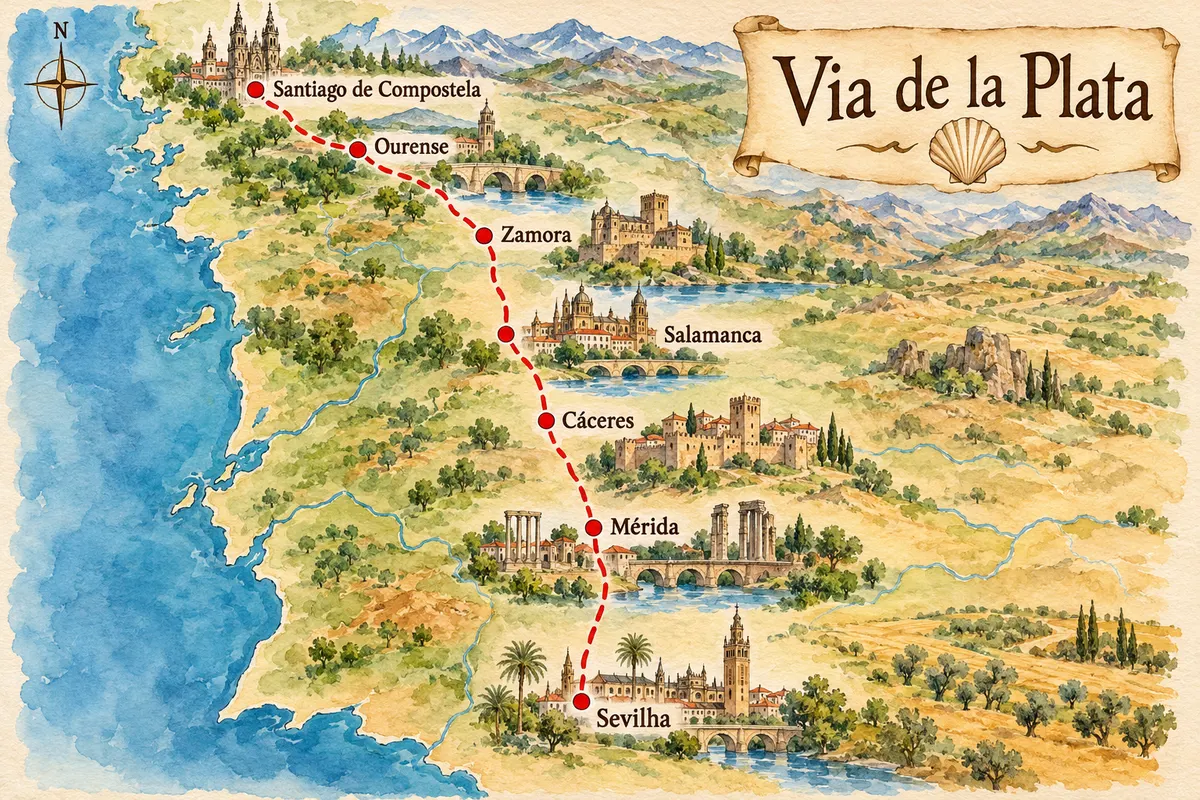
Salamanca is on the Vía de la Plata from Seville to Santiago on foot

The longest Camino de Santiago in Spain: from Seville to Santiago de Compostela along the country’s west, following the old Roman road, via Mérida, Cáceres, Salamanca, Zamora and Ourense.

Illustrative map, not to scale. Tap a city to open its page.
Illustrated map of Vía de la Plata from Seville to Santiago on foot
Explore the Vía de la Plata from Seville to Santiago on foot
Explore other destinations Search by state and city