Mérida and Cáceres

Extremadura · Spain

Mérida and Cáceres

The Extremadura of the two World Heritage cities: Mérida, with the theater, amphitheater and Roman bridge, and Cáceres, with the walled old town of towers and palaces.

Central

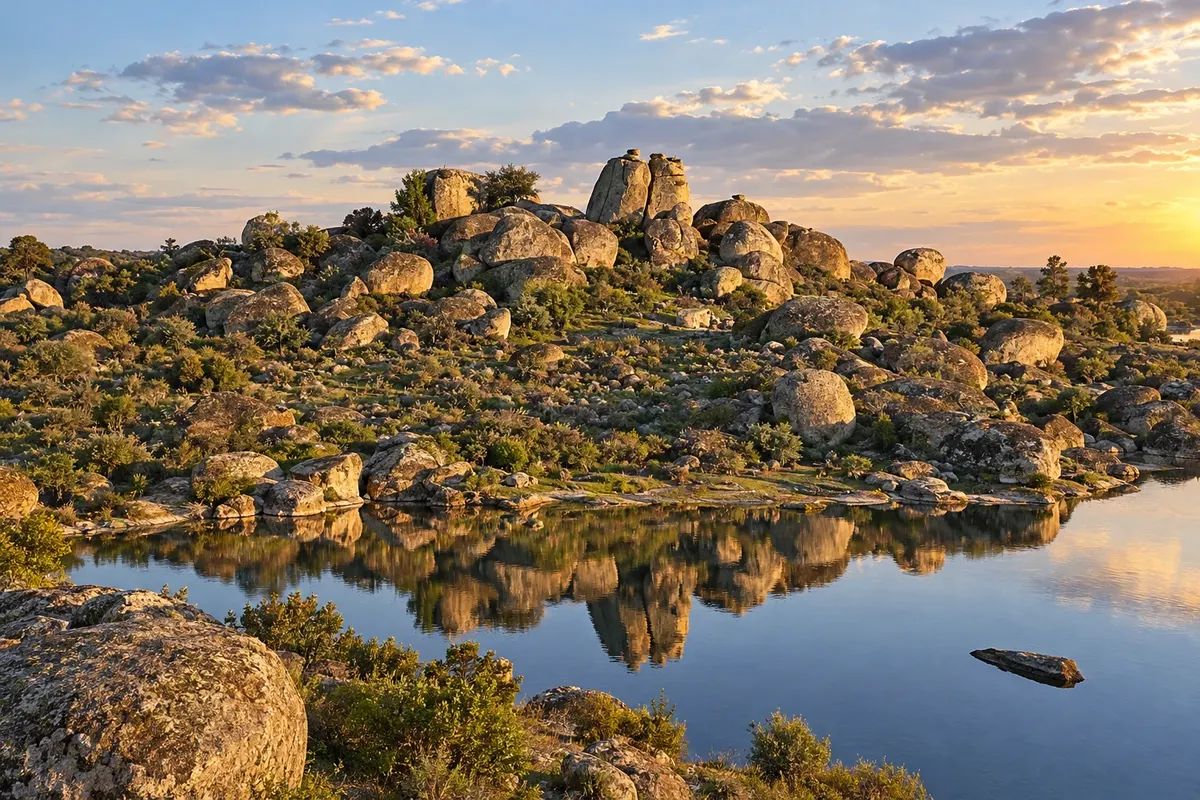
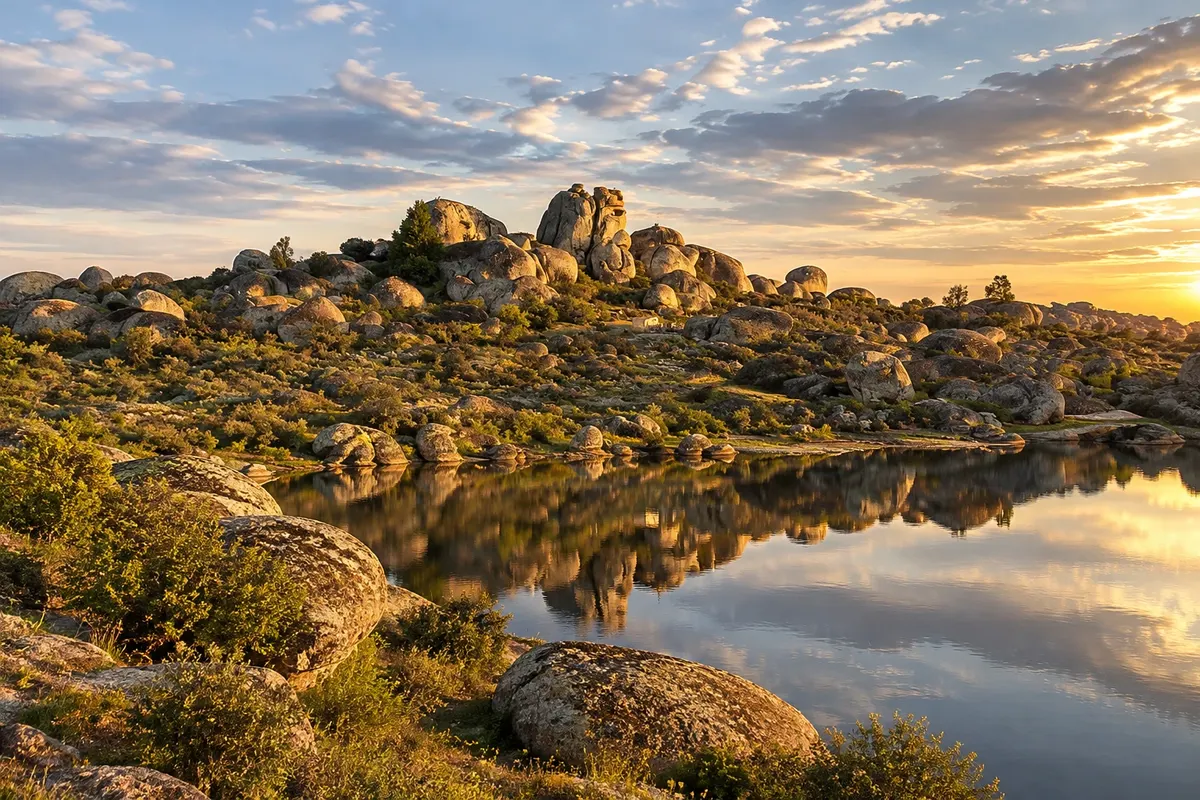
In the photo: Los Barruecos

Illustrative images. The pictures in this guide are illustrations based on the real place, not photographs, and may differ from it.

Get it on Google Play Send your photos

Get to know the place

A region to enjoy
at your own pace.

Many conquistadors of the Americas came from there, such as Pizarro and Cortés, and the money that returned built palaces and churches.

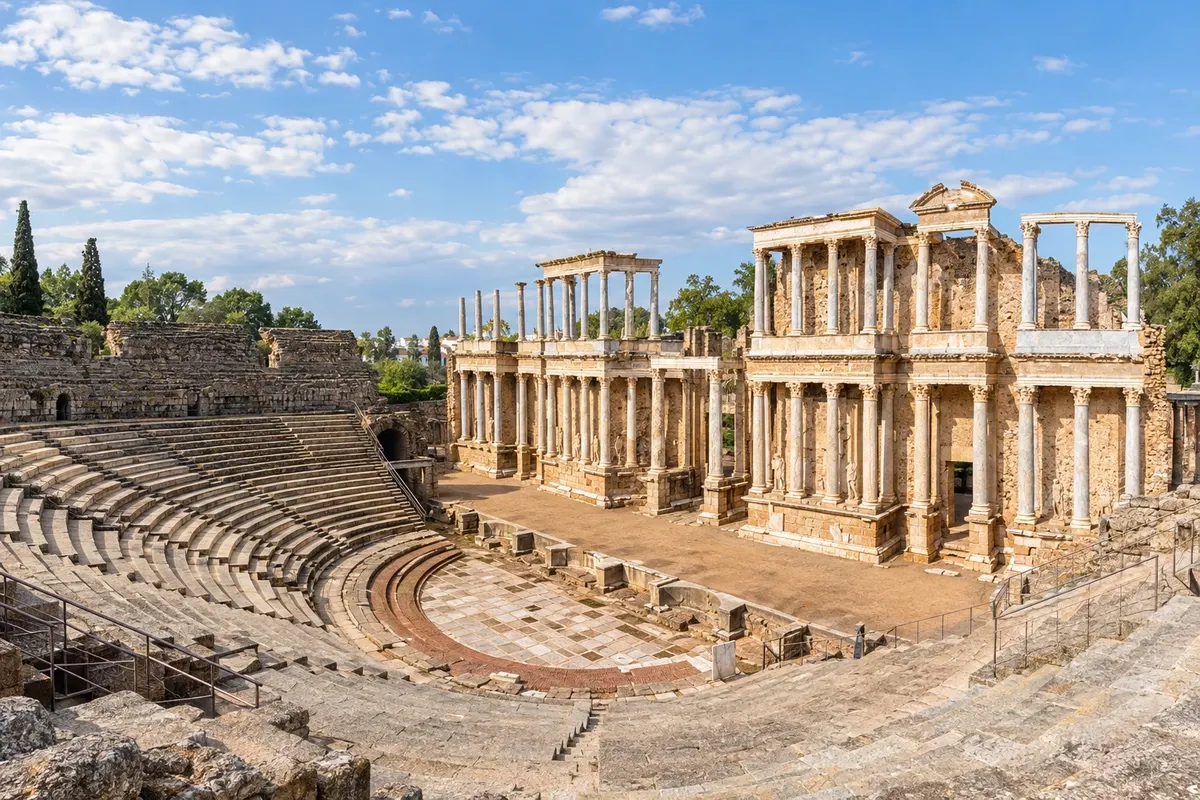
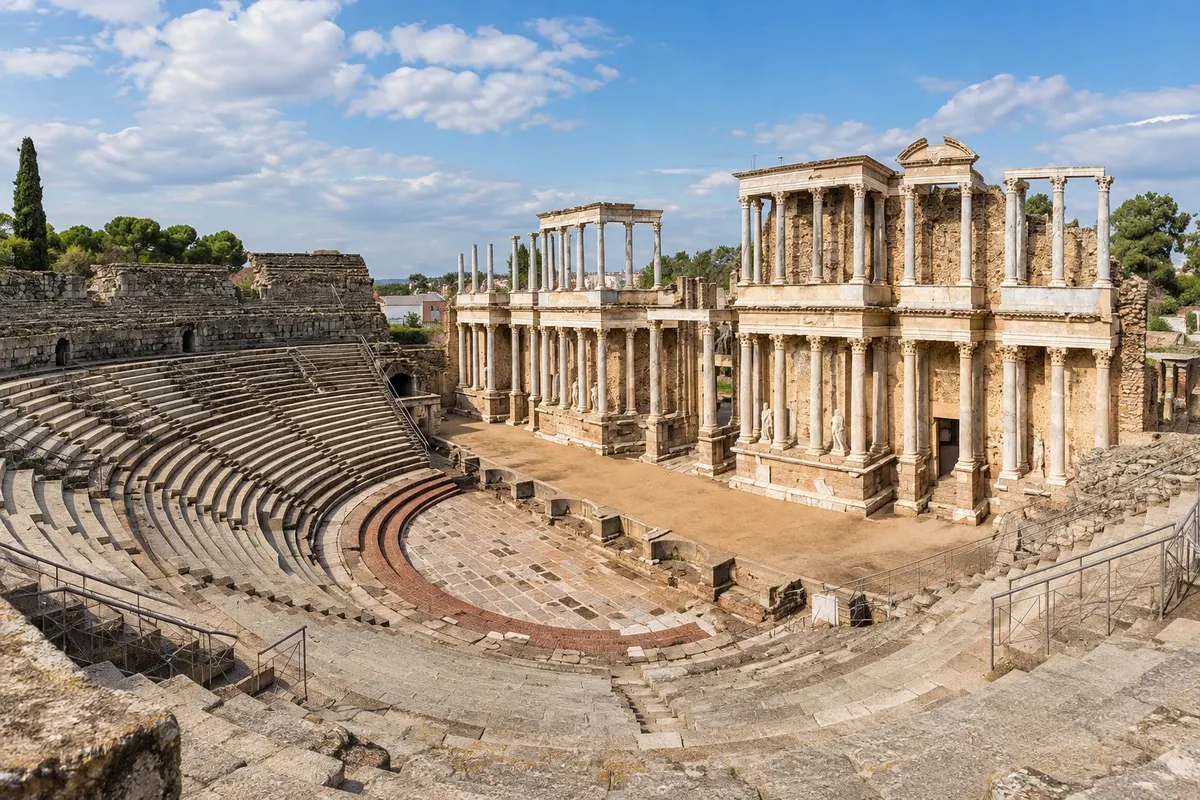
Mérida, capital of Extremadura, was founded in 25 BC by Emperor Augustus as Augusta Emerita, a colony for veteran soldiers, and became the capital of the Roman province of Lusitania, which included much of present-day Portugal. The archaeological ensemble, with theater, amphitheater, circus, temple, aqueduct and the bridge over the Guadiana, has been a UNESCO World Heritage Site since 1993. In summer the Roman theater usually hosts the Classical Theatre Festival.

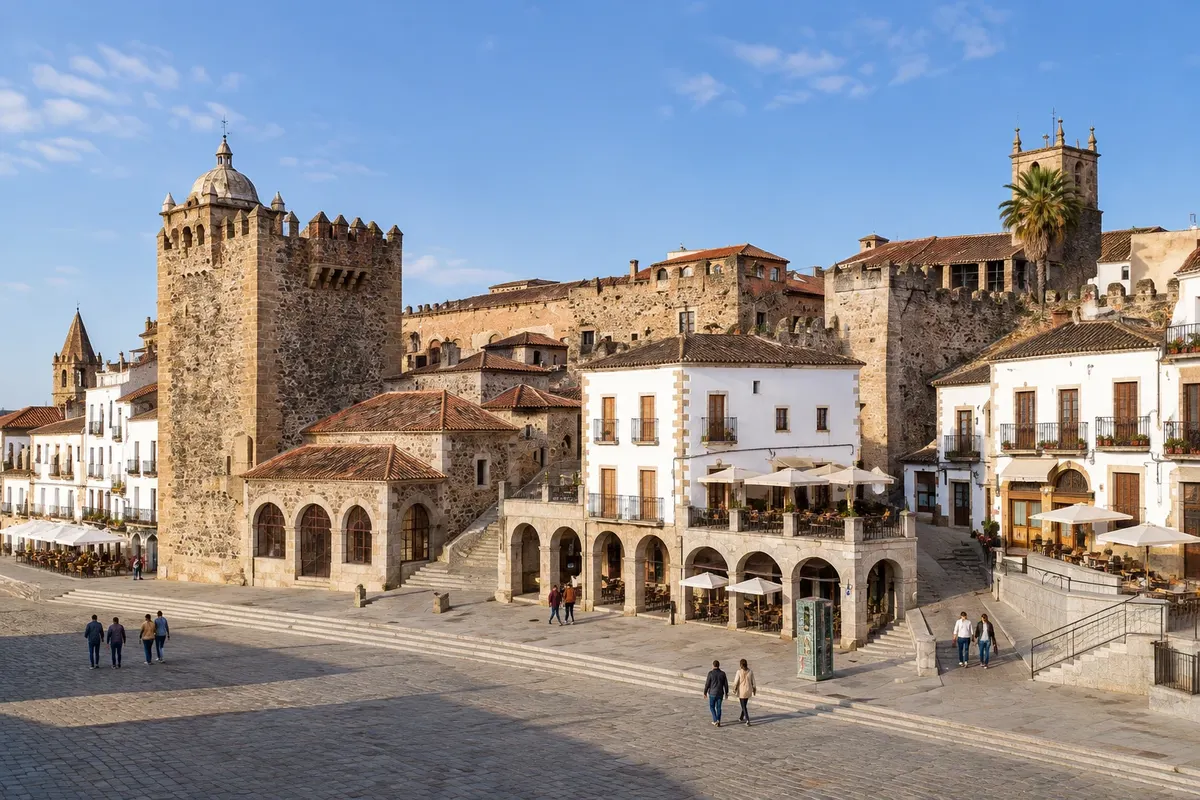
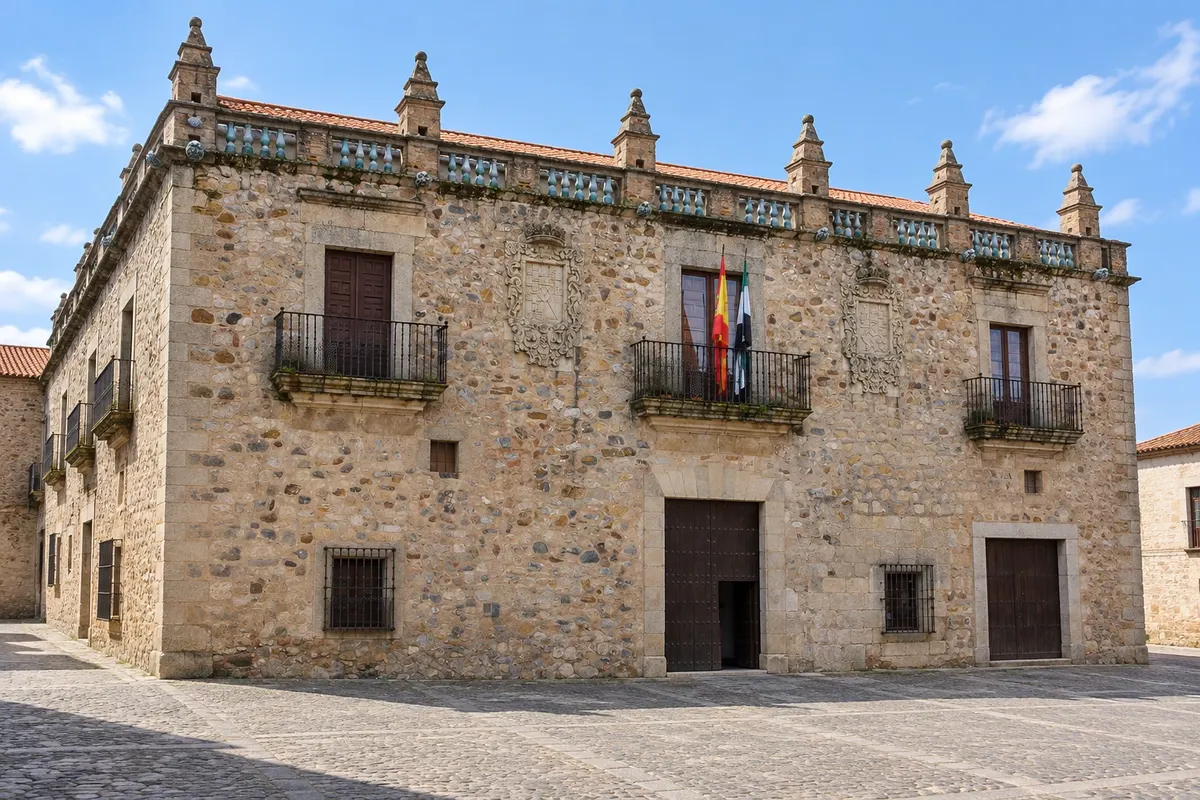
Cáceres, about 70 km to the north, preserves within its Almohad wall an old town almost intact, with towers, noble palaces, churches and stone coats of arms from the 15th and 16th centuries. The Ciudad Monumental has been a World Heritage Site since 1986 and has been used as a setting for films and TV series.

From Madrid, the train takes about 3 hours to Cáceres.

This destination brings together 2 cities: Mérida, Cáceres.

Share: WhatsApp
Traveler, share your experiences through photos Up to 5 photos of each place you visited.

One destination, many paths

The cities on this trip

Start with one city or combine several in your itinerary.

Where Mérida and Cáceres is
MéridaCáceres

Outlines: IGN/CNIG, unidades administrativas, CC BY 4.0. Adapted by Cidade Turismo.

How to get there: Mérida and Cáceres

✈ Aeropuerto de Badajoz (BJZ), in Talavera la Real · 50 km to Mérida

✈ Aeroporto Humberto Delgado (LIS), in Lisboa (Portugal) · 290 km to Mérida

Check before you buy. From Madrid the train takes about 3 hours to Cáceres and a bit longer to Mérida, with few departures per day. From Lisbon the simplest route is by car or bus via Évora and Badajoz. Badajoz airport has few domestic flights.

Suggested arrival point: Mérida

The local experience

Things to do in Mérida and Cáceres

Ciudad Monumental de Cáceres
Cáceres · Extremadura · Historic neighborhood

Ciudad Monumental de Cáceres

Old town surrounded by the Almohad wall, with towers, noble palaces with coats of arms, churches and stone streets from the 15th and 16th centuries. UNESCO World Heritage Site.
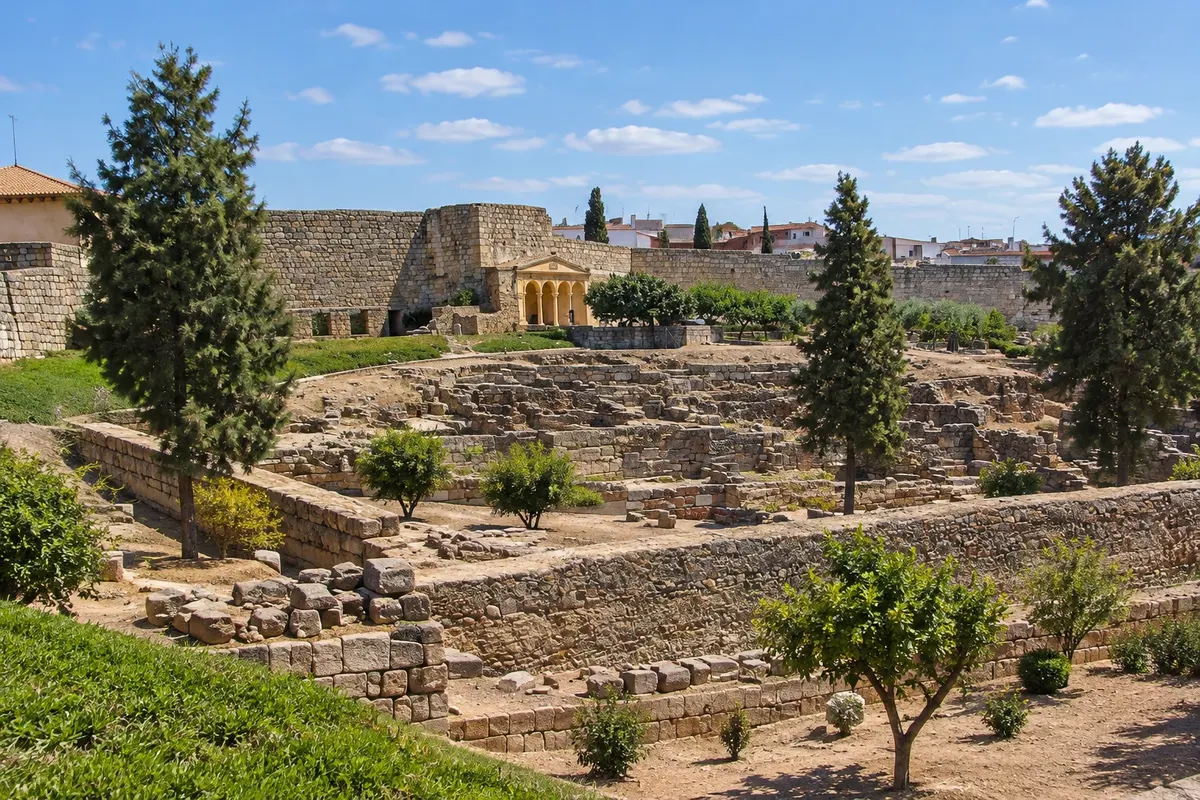
Teatro Romano de Mérida
Mérida · Extremadura · Archaeological site

Teatro Romano de Mérida

Theatre from the late 1st century BC, with a scaenae frons of two orders of marble columns reconstructed, seating for about 6,000 people and the Classical Theatre Festival in summer.

Anfiteatro Romano de Mérida
Mérida · Extremadura · Archaeological site

Anfiteatro Romano de Mérida

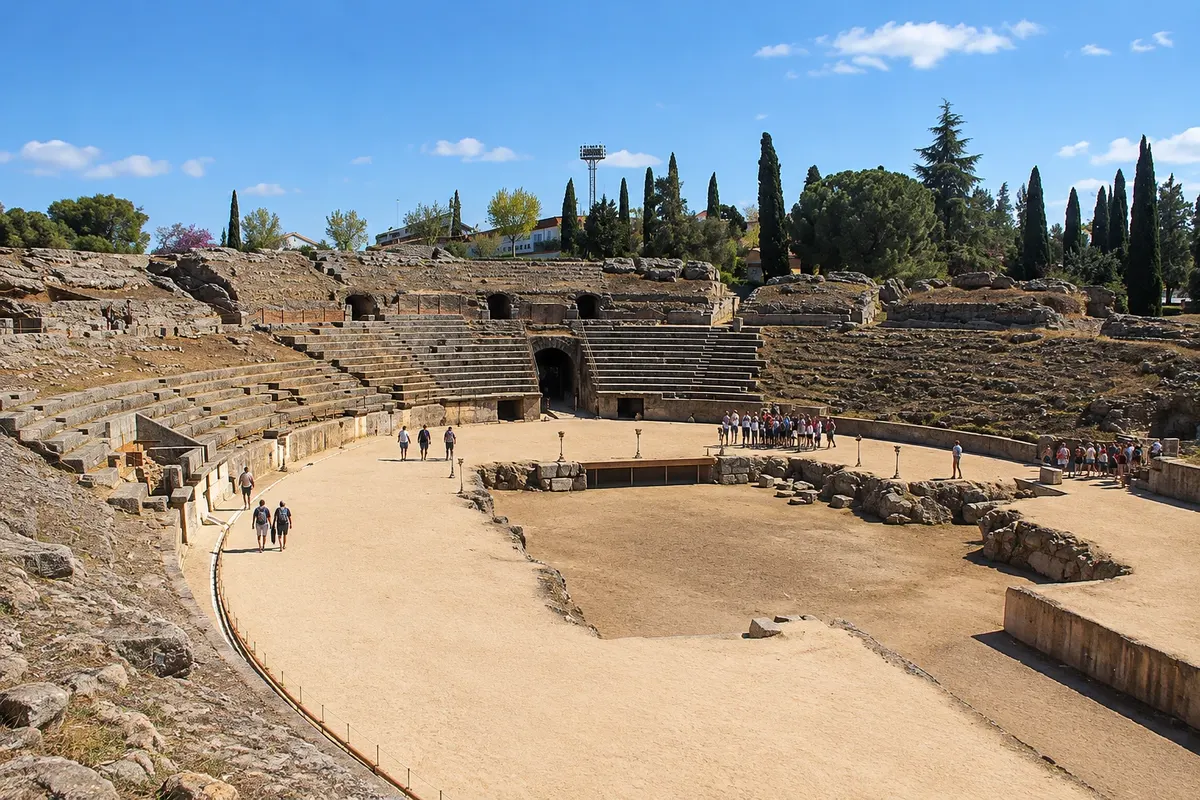
Amphitheatre from 8 BC, next to the theatre, where about 15,000 people watched gladiatorial and animal combats, with the arena and central trench exposed.

Plaza Mayor e Torre de Bujaco
Cáceres · Extremadura · Square

Plaza Mayor e Torre de Bujaco

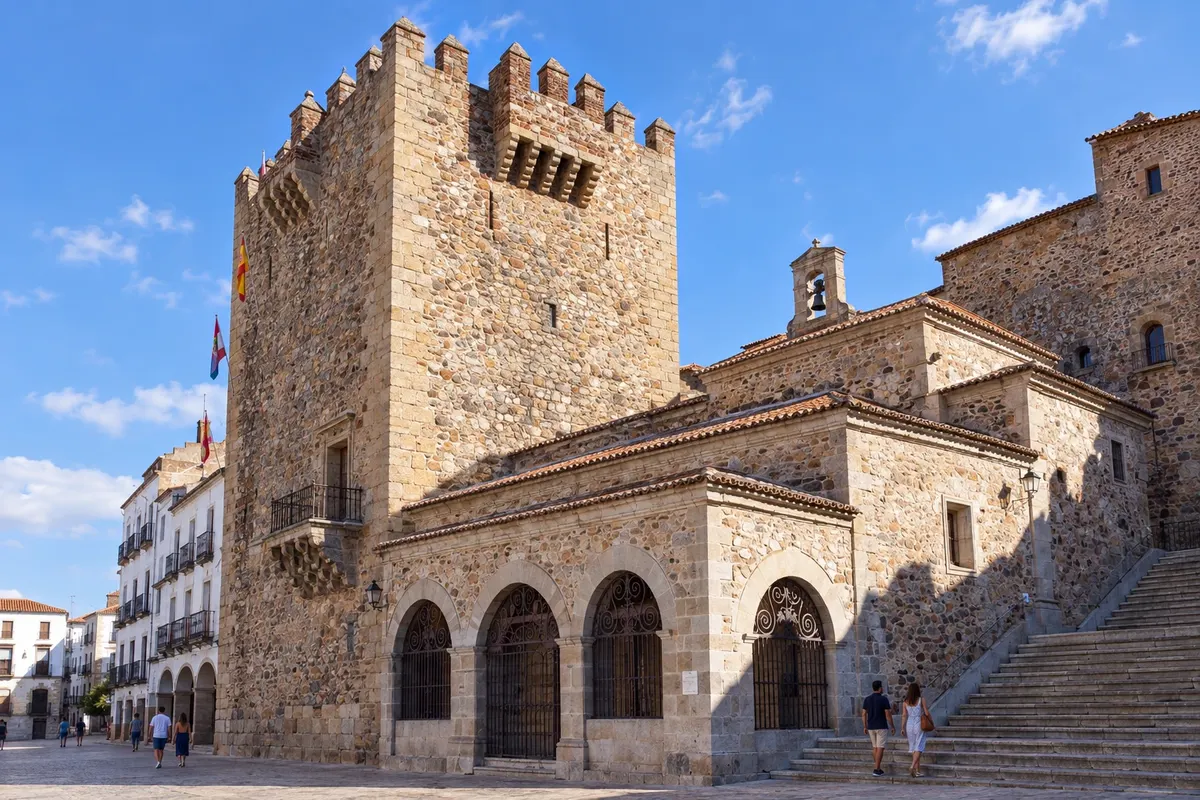
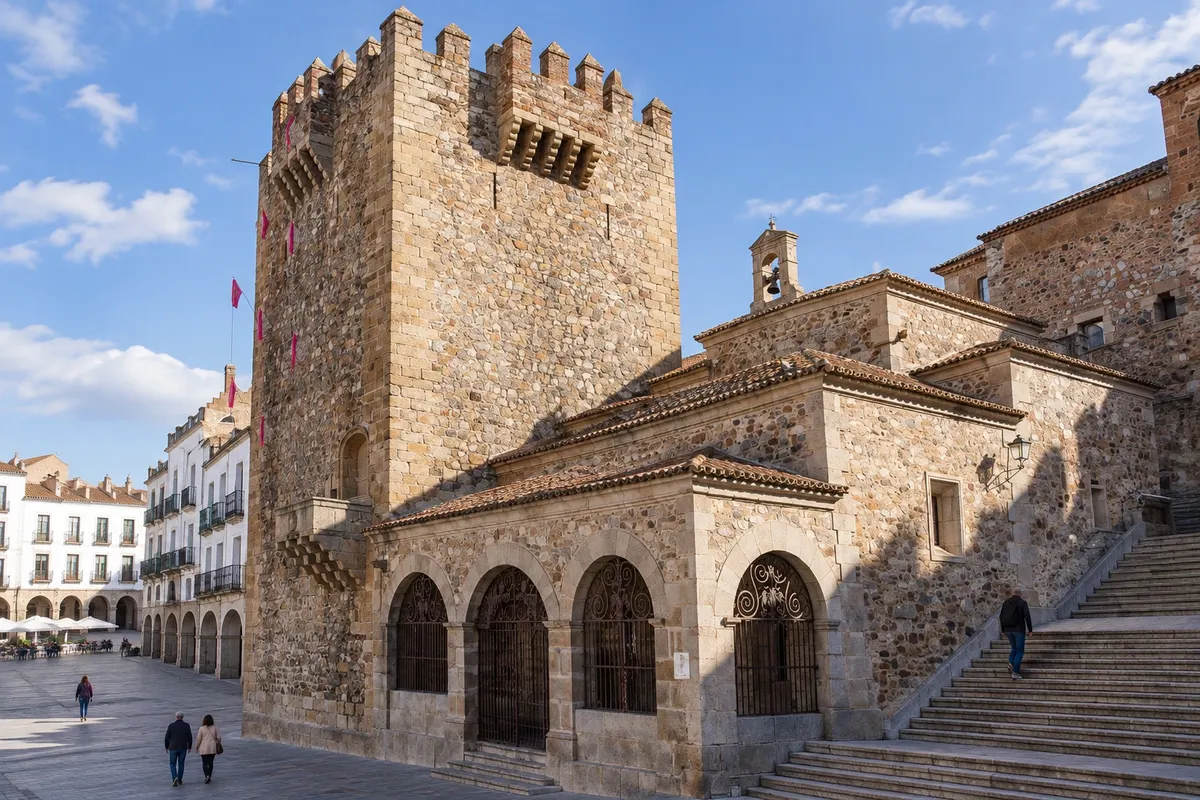
Main square at the foot of the wall, with arcades, bars and the Arco de la Estrella, and the Torre de Bujaco, an Almohad 12th-century tower open to climb.

See 13 more places in Mérida and Cáceres
Concatedral de Santa María
Cáceres · Extremadura · Cathedral

Concatedral de Santa María

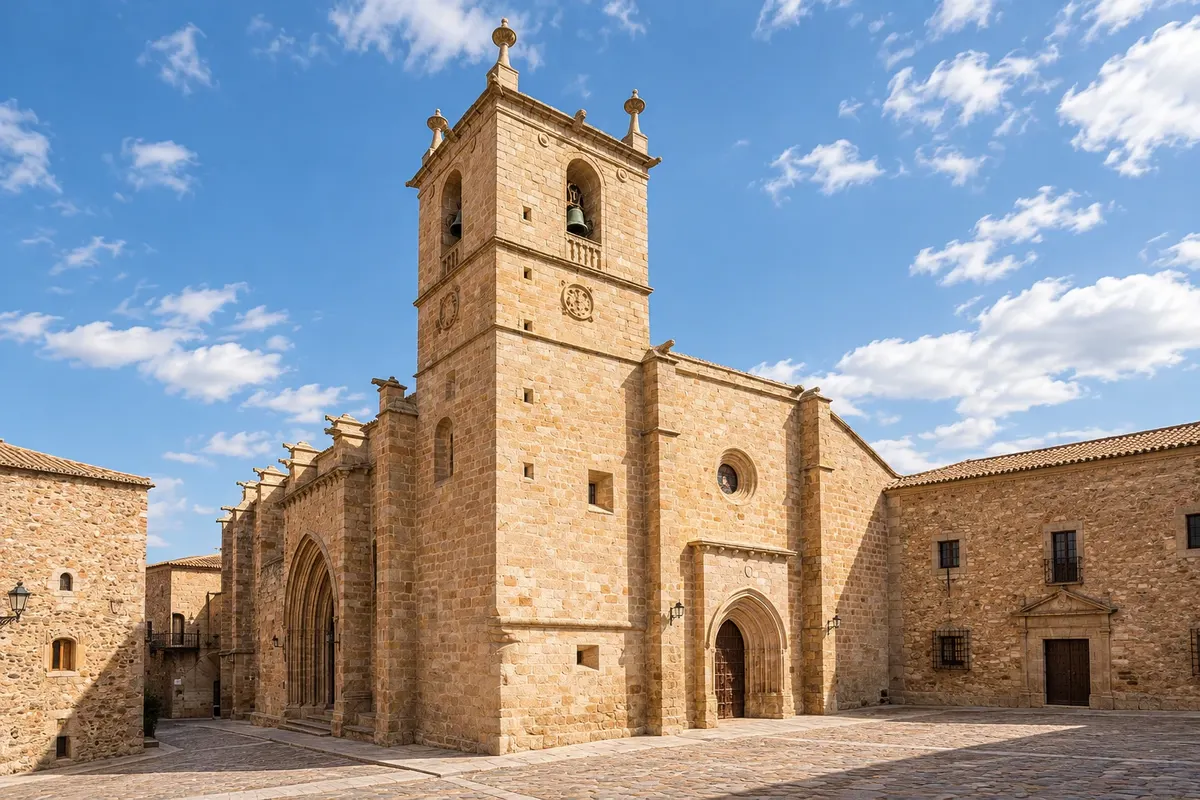
Gothic church from the 15th and 16th centuries on the square of the same name, with an unpainted cedar altarpiece and, outside, the statue of Saint Peter of Alcántara with shiny feet.

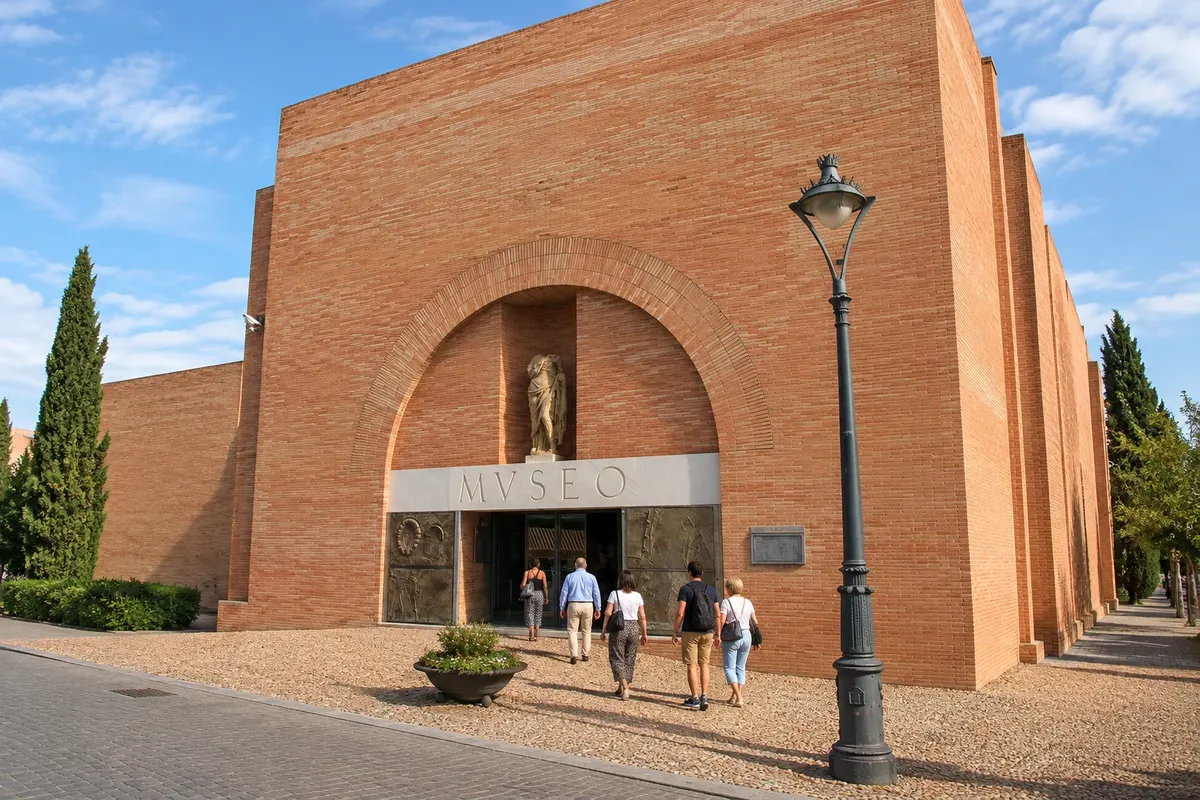
Museo Nacional de Arte Romano
Mérida · Extremadura · Museum

Museo Nacional de Arte Romano

Museu de Rafael Moneo, dating from 1986, with large brick arches that recall Roman architecture, mosaics, theatre statues and everyday objects from Augusta Emerita.

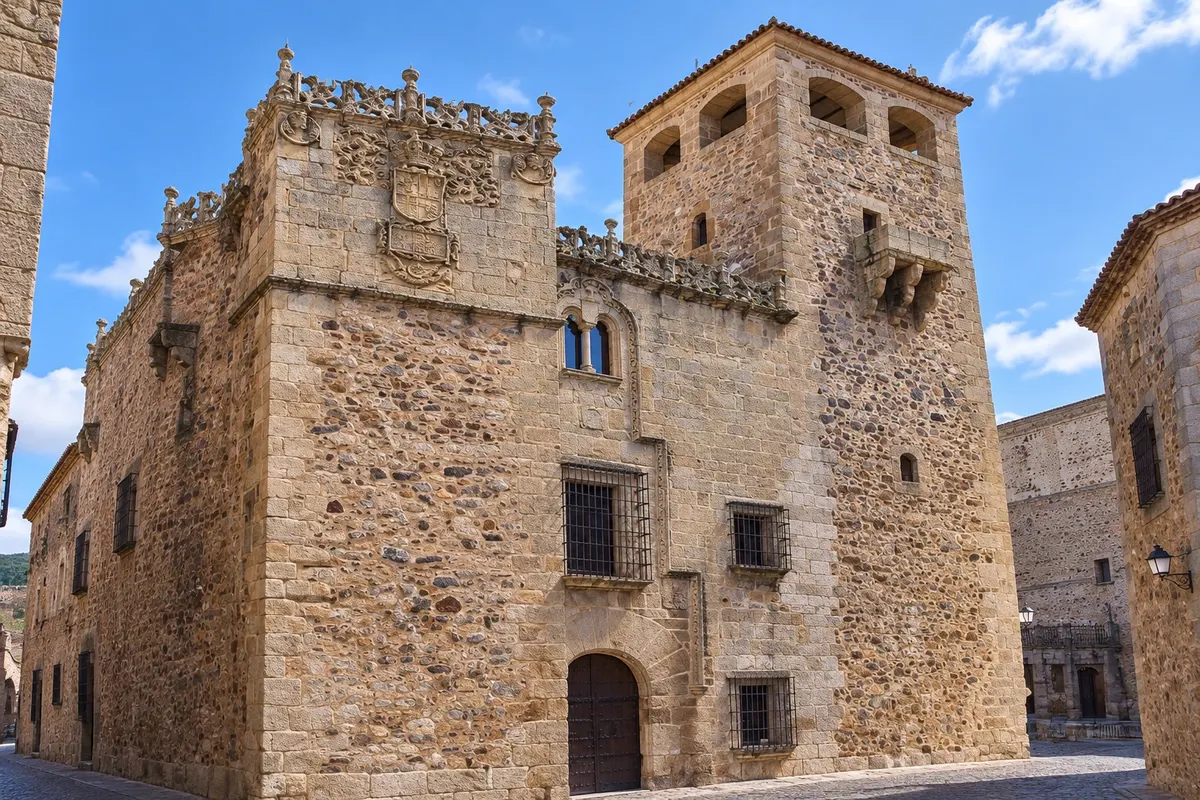
Palacio de los Golfines de Abajo
Cáceres · Extremadura · Palace

Palacio de los Golfines de Abajo

Gothic and Plateresque palace from the late 15th century, where the Catholic Monarchs stayed, with a façade of coats of arms, a truncated tower and furnished halls open to guided visits.

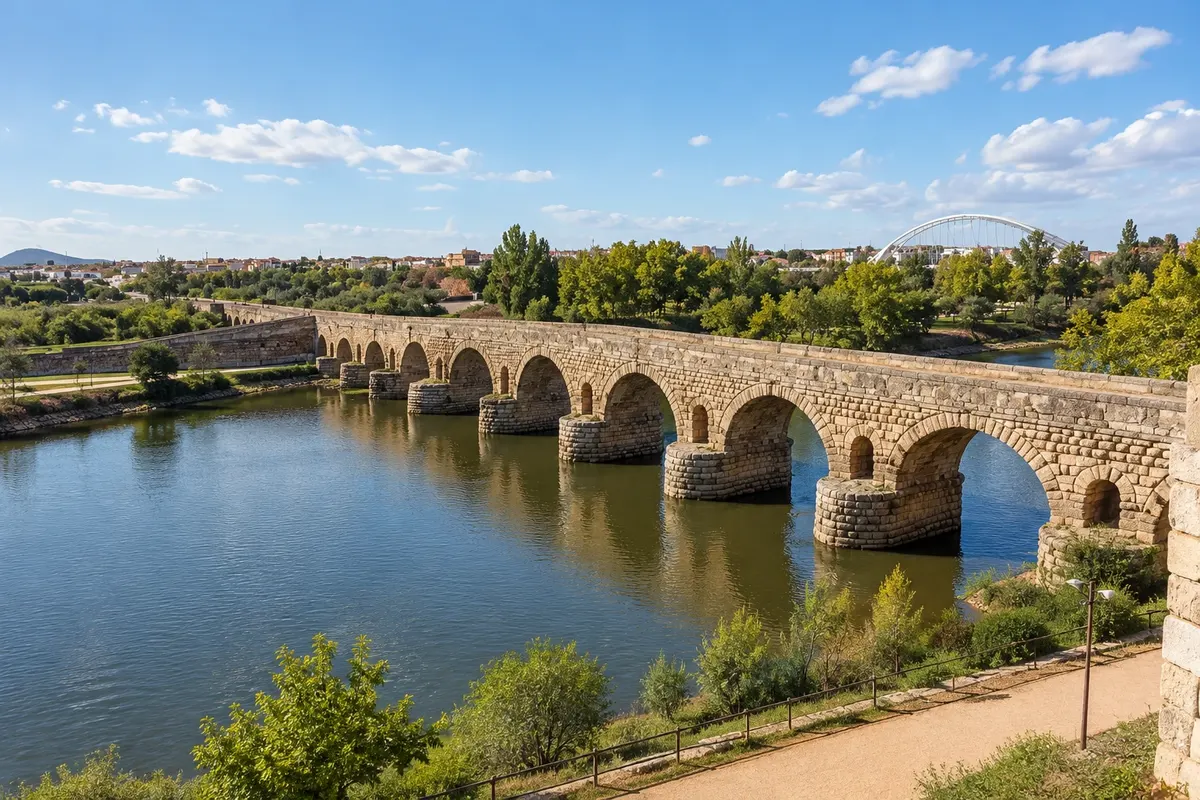
Puente Romano de Mérida
Mérida · Extremadura · Bridge

Puente Romano de Mérida

Granite bridge from the 1st century BC over the river Guadiana, about 790 metres long with 60 arches, now pedestrian-only, with views of the Alcazaba and the ponte de Calatrava.

Museo de Cáceres
Cáceres · Extremadura · Museum

Museo de Cáceres

Museum of archaeology, ethnography and art in the Casa de las Veletas, built over the Almohad alcázar, with an Arab cistern from the 12th century supported by horseshoe arches.

Templo de Diana
Mérida · Extremadura · Archaeological site

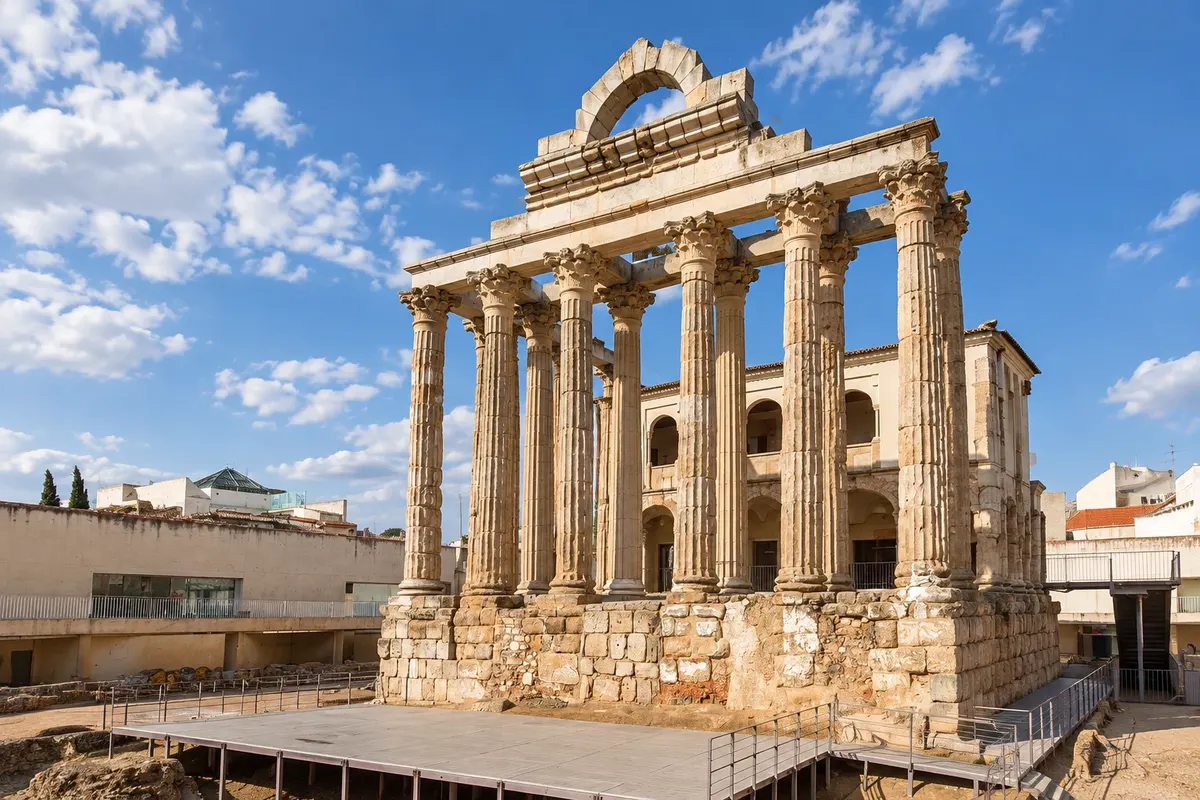
Templo de Diana

1st-century Roman temple dedicated to the imperial cult, with Corinthian granite columns still standing in the centre of Mérida and a Renaissance palace built within it.

Alcazaba de Mérida
Mérida · Extremadura · Fortress

Alcazaba de Mérida

Arab fortress from 835 next to the Roman bridge, with walls made from reused Roman stones, remains of houses and an underground cistern with stairs.

Museo Helga de Alvear
Cáceres · Extremadura · Museum

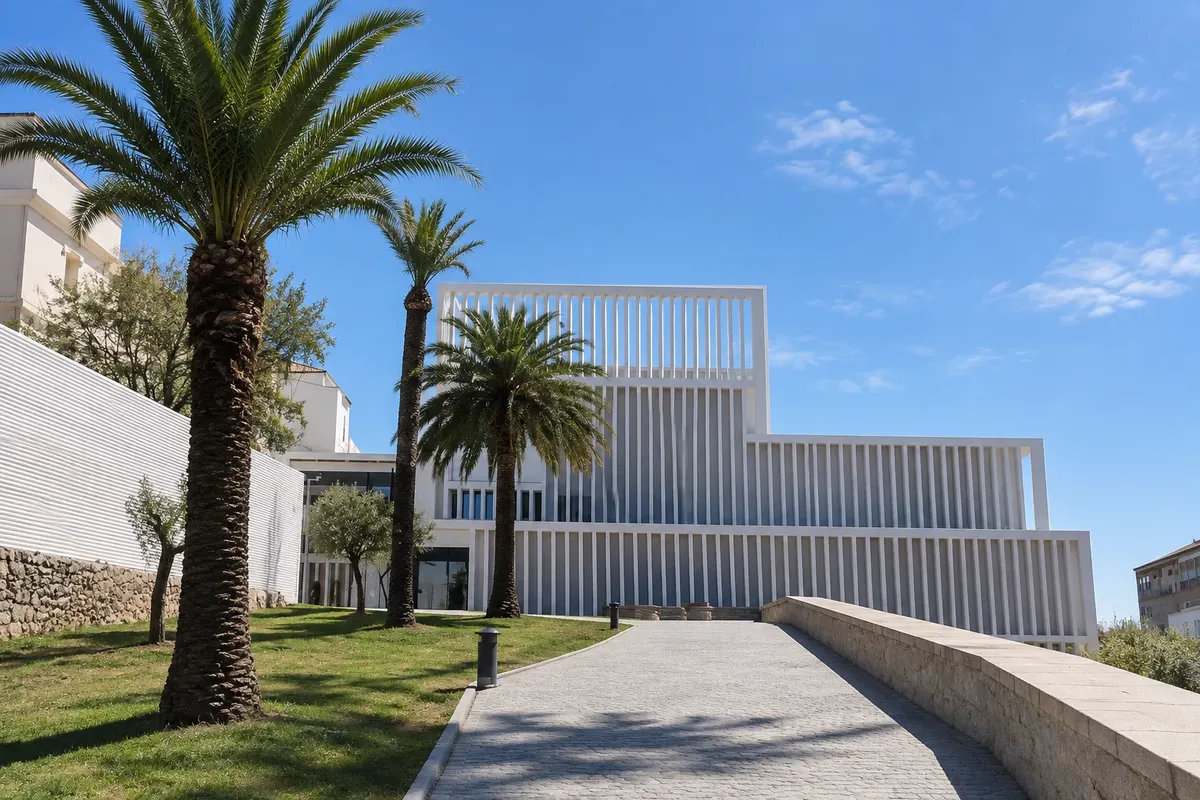
Museo Helga de Alvear

Museum of contemporary art at the foot of the old town, housing the collection of the gallerist Helga de Alvear, from Kandinsky and Picasso to contemporary artists, in a new building by Tuñón and Mansilla.

Acueducto de los Milagros
Mérida · Extremadura · Monument

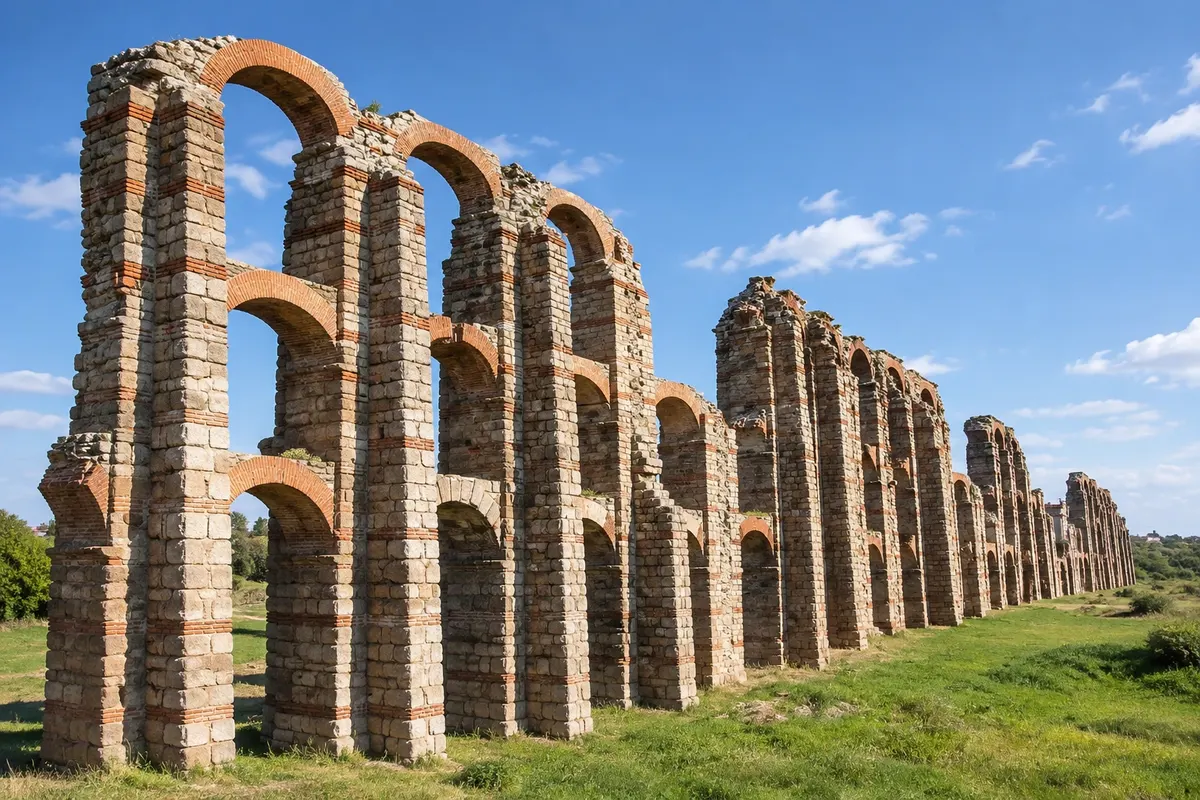
Acueducto de los Milagros

Remains of the Roman aqueduct that brought water from the Proserpina reservoir, with granite and brick arches up to 25 metres high, where storks nest.

Trujillo
Cáceres · Extremadura · Historic village

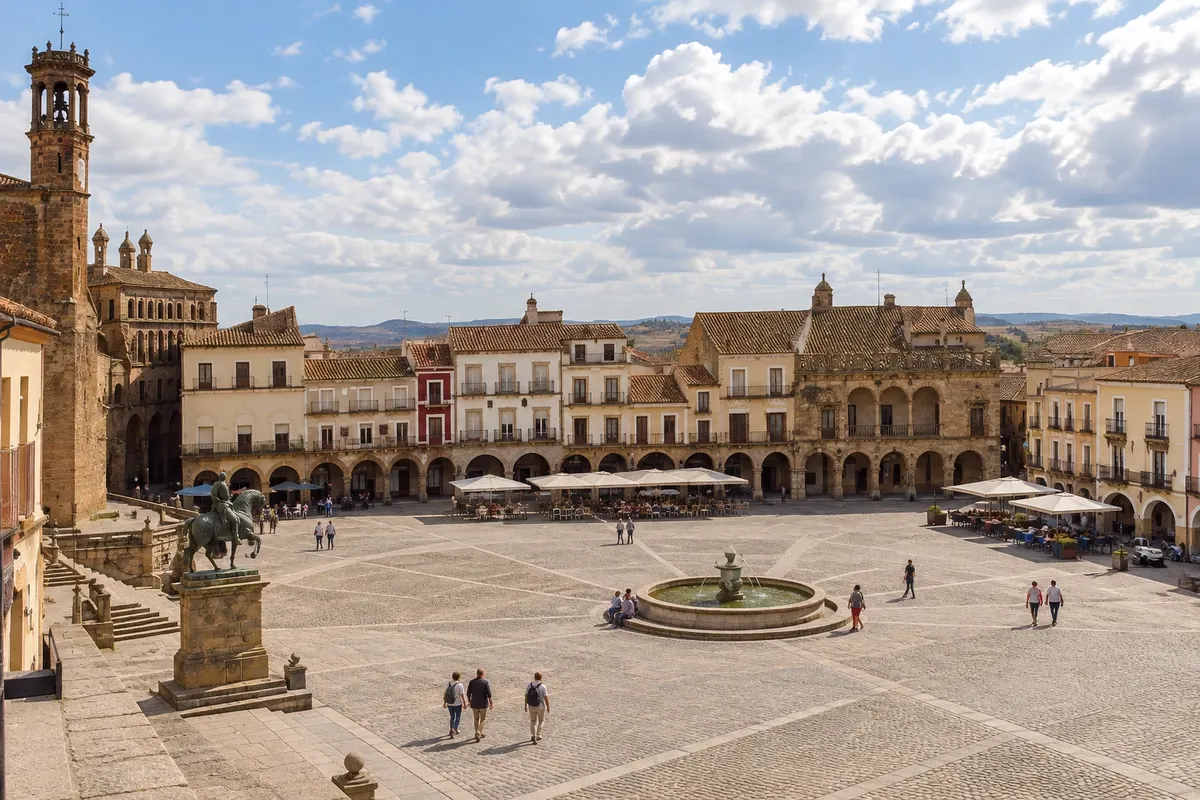
Trujillo

Medieval town 47 km from Cáceres, birthplace of Francisco Pizarro, with a Plaza Mayor of palaces and the conquistador's equestrian statue, an Arab castle and granite churches.

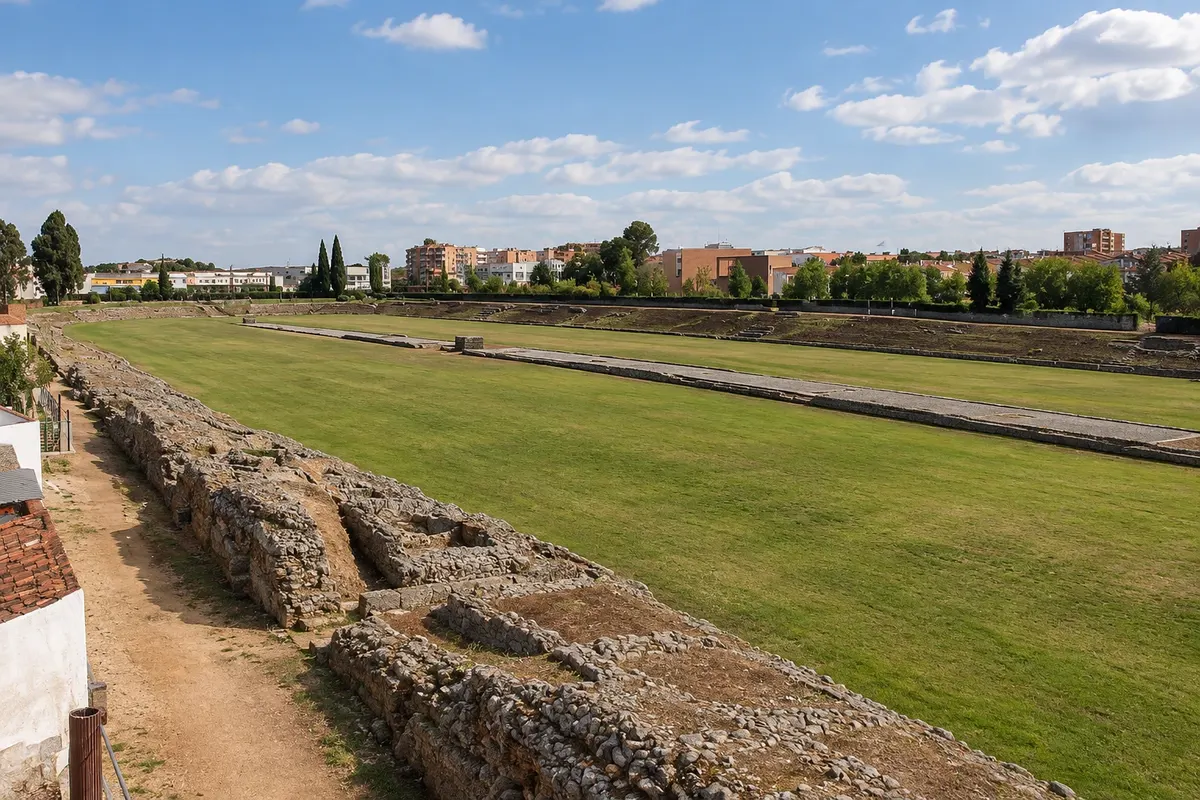
Circo Romano de Mérida
Mérida · Extremadura · Archaeological site

Circo Romano de Mérida

1st-century chariot racing track, about 400 metres long with a capacity for 30,000 spectators, one of the best-preserved in the ancient Roman Empire.

Monumento Natural Los Barruecos
Cáceres · Extremadura · Park

Monumento Natural Los Barruecos

Landscape of large rounded granite rocks, lagoons and stork nests 15 km from Cáceres, in Malpartida, with the Vostell Museum in a former wool washhouse.

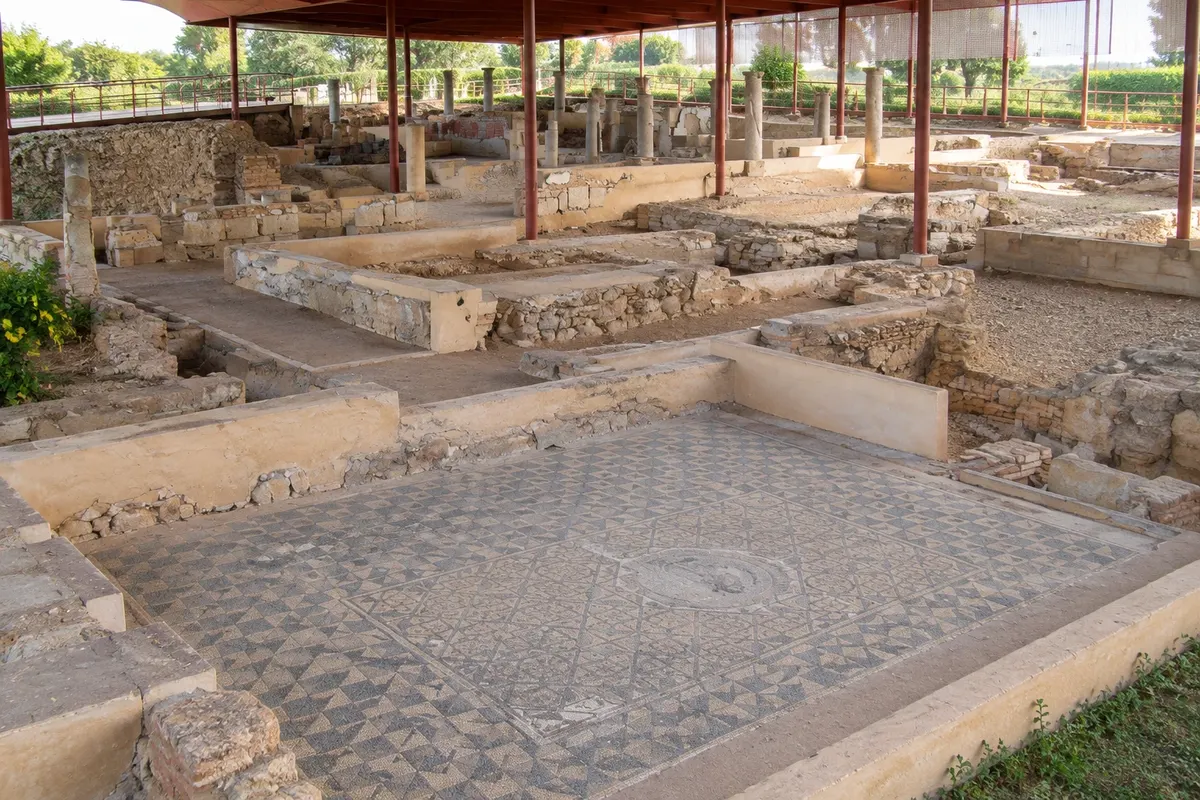
Casa del Mitreo
Mérida · Extremadura · Archaeological site

Casa del Mitreo

Luxury Roman house from the late 1st century, with courtyards, wall paintings and the cosmic mosaic, which represents the universe with figures of the elements, the winds and the seasons.

Before you go

Practical information

A little planning leaves more time to enjoy the journey.

When to go

From March to May and October to November the weather is usually mild, good for walking among the ruins and stone streets. July and August are very hot, with highs over 35 °C; it's the season of Mérida's theater festival. Winter is cool and dry with short days.

The seasons shown are the most usual ones; nature doesn't always follow the calendar.

How many days to stay

A full day in Mérida covers the theater, amphitheater, National Museum of Roman Art, the bridge and the Temple of Diana. One day in Cáceres is enough for the Ciudad Monumental, but an overnight stay lets you see the old town lit up. With three days you can include Trujillo.

Which city to stay in

In Mérida, the center around Plaza de España puts the theater, the Temple of Diana and the bridge within walking distance. In Cáceres there are hotels inside the Ciudad Monumental, in old palaces, and many around Plaza Mayor, just below the wall, with restaurants and easy car access. Both cities usually offer cheaper accommodation than large capitals, and they fill up during the theater festival.

Respect the place

Take your trash with you, follow the signs and support local businesses. In natural areas, follow the visiting guidelines.

Get your questions answered

Frequently asked questions about Mérida and Cáceres

Are Mérida and Cáceres on the route from Lisbon to Madrid?

Yes. Overland, the most used route goes via Évora, Badajoz, Mérida and Cáceres, and on through Trujillo to Madrid. There is no direct train between Lisbon and Madrid; the Portuguese leg is usually done by car or bus.

Can you visit Mérida and Cáceres without a car?

Yes. There are trains and buses between the two cities in about 1 hour, and both can be explored on foot. A car is helpful for Trujillo, Los Barruecos and the villages.

Which city to choose if you only have one day?

Mérida, for those who like Roman history; Cáceres, for those who prefer a whole medieval town, with hotels and restaurants inside the walls.

When is the Mérida Classical Theatre Festival?

It usually takes place in July and August, with Greek and Roman plays staged at night in the Roman theater. Check the program and buy tickets in advance.

What to eat in Extremadura?

Iberian acorn-fed ham (jamón ibérico de bellota), torta del Casar, creamy sheep's cheese, migas, lamb and the wines of the Ribera del Guadiana.

Rotas entre países

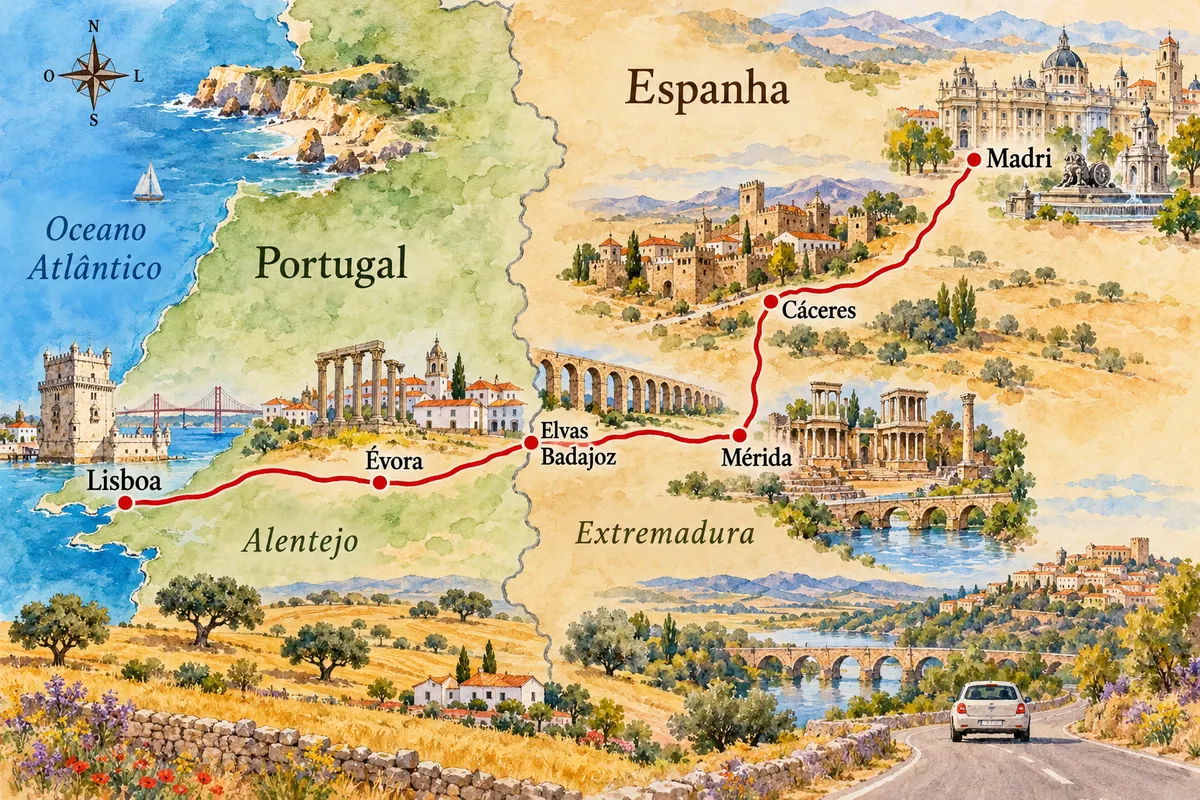
Mérida and Cáceres is on the Lisbon–Évora–Mérida–Cáceres–Madrid by car

By car between the two capitals of the peninsula: the Alentejo around Évora, Roman Mérida and medieval Cáceres on the route from Lisbon to Madrid.

Illustrative map, not to scale. Tap a city to open its page.
Illustrated map of Lisbon–Évora–Mérida–Cáceres–Madrid by car
Explore the Lisbon–Évora–Mérida–Cáceres–Madrid by car

Routes in Spain

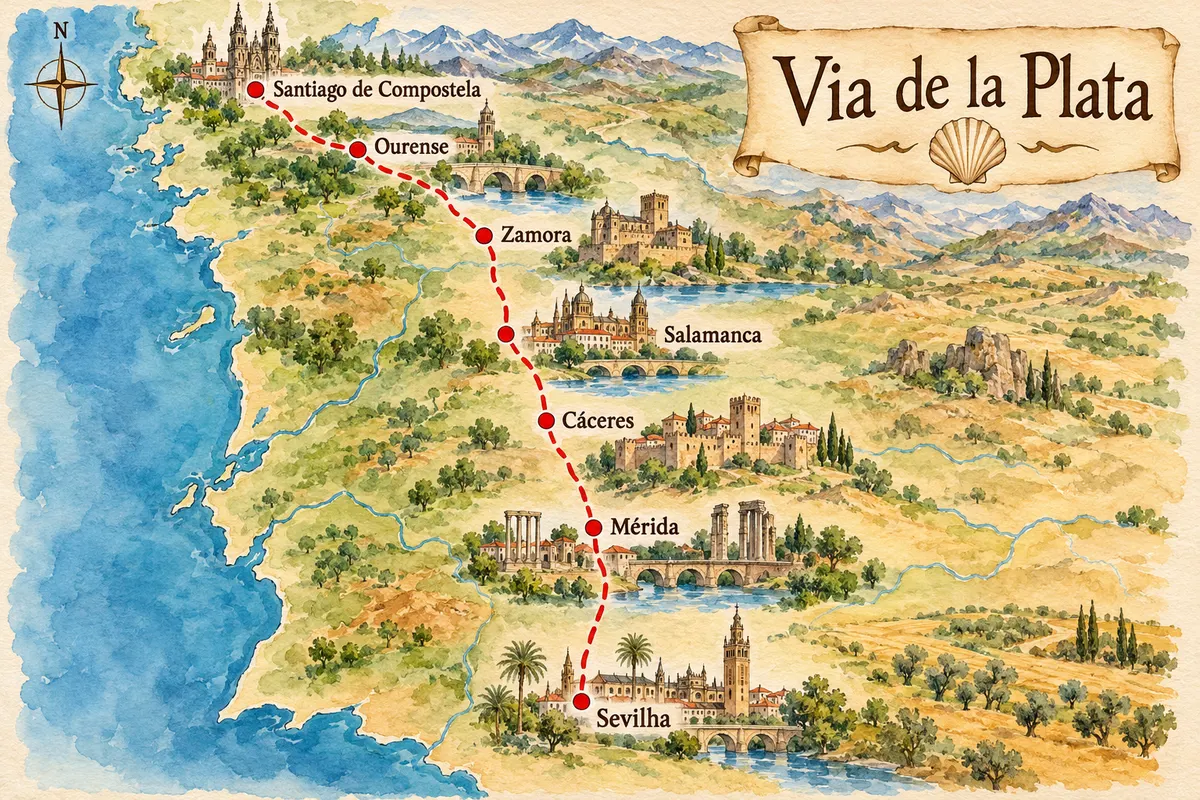
Mérida and Cáceres is on the Vía de la Plata from Seville to Santiago on foot

The longest Camino de Santiago in Spain: from Seville to Santiago de Compostela along the country’s west, following the old Roman road, via Mérida, Cáceres, Salamanca, Zamora and Ourense.

Illustrative map, not to scale. Tap a city to open its page.
Illustrated map of Vía de la Plata from Seville to Santiago on foot
Explore the Vía de la Plata from Seville to Santiago on foot
Explore other destinations Search by state and city