

 Brazil
 Argentina
 Bolivia
 Chile
 Colombia
 Ecuador
 Guyana
 French Guiana
 Falkland Islands (Malvinas)
 Paraguay
 Peru
 Suriname
 Uruguay
 Venezuela
 Germany
 Austria
 Belgium
 Croatia
 Denmark
 Finland
 France
 Greece
 the Netherlands
 Hungary
 Ireland
 Iceland
 Italy
 Luxembourg
 Norway
 Poland
 Portugal
 the United Kingdom
 the Czech Republic
 Sweden
 Switzerland
 Turkey
 the United States
 Mexico
 the Dominican Republic
 South Africa
 Australia
 Fiji
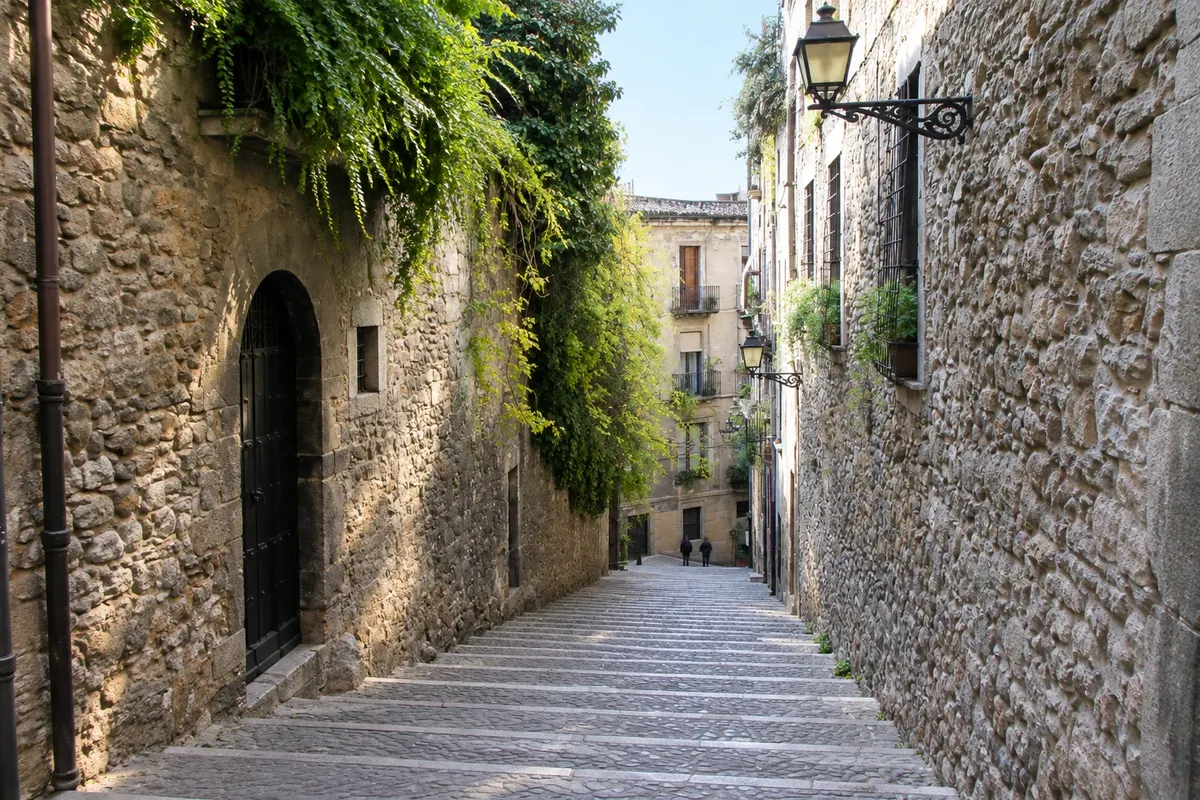
Historic neighborhood · Girona, Catalonia
Call de Girona
Former Jewish quarter of Girona, around the Carrer de la Força, one of the best preserved in Europe. The Centre Bonastruc ça Porta houses the Museu d'Història dels Jueus, which covers the history of Jewish communities in Catalonia.
Illustrative images. The pictures in this guide are illustrations based on the real place, not photographs, and may differ from it.

Discover
About Call de Girona
Jewish presence in Girona appears in documents from the late 9th century. In the 12th century the community concentrated on the Carrer de la Força and the surrounding alleys, and reached about 800 people. The neighborhood, called the call in Catalan, was home to one of the most important Kabbalistic schools in medieval Europe.
The rabbi Mossé ben Nahman, known as Nahmânides or Bonastruc ça Porta, was born in Girona in 1194 and became the leading rabbi of Catalonia. In 1492 the Catholic Monarchs forced Jews to choose between conversion and exile, and Girona's community came to an end. The neighborhood was closed off and new houses were built over the old ones.
The Museu d'Història dels Jueus occupies the Centre Bonastruc ça Porta, on the site where the synagogue and its dependencies stood in the 15th century. The rooms display documents, archaeological pieces and images that illustrate the life of Jewish communities in medieval Catalonia, using examples taken from Girona's history.
While walking through the quarter, notice the entrances of some buildings, such as on the Carrer de Sant Llorenç: a rectangular cut in the doorframe marks the spot of the old mezuzah. On the same Carrer de la Força is the Museu d'Història de Girona, in a former Capuchin convent.
Before you go
Practical information
Cidade Turismo reviews its information regularly, but something may have changed. Check with the place before planning your trip.
How much time to set aside
About 1 hour for the museum and another 30 minutes to walk the alleys.
Best time
Early in the morning the alleys are quieter and cooler. The museum usually closes one day a week and on some holidays; check before you go.
How to get there
On foot, from the Plaça de la Catedral, heading down the Carrer de la Força. From the train station it's about a 20-minute walk.
Tip
Museum entry is usually ticketed and there is an audio guide. The side alleys, such as the Carrer de Sant Llorenç, are narrow and stepped. Combine the visit with the cathedral, which is two minutes away.
Official website
Get your questions answered
Frequently asked questions about Call de Girona
What is the Call?
It is the Catalan name for medieval Jewish quarters. Girona's formed around the Carrer de la Força and existed until 1492.
Who was Nahmânides?
Mossé ben Nahman, also called Bonastruc ça Porta, was a rabbi, philosopher and physician, born in Girona in 1194. The centre where the museum is located bears his name.
Where is the Museu d'Història dels Jueus?
In the Centre Bonastruc ça Porta, on Carrer de la Força, in the middle of the Call, on the site where the 15th-century synagogue stood.
What are the marks on the doors?
Some doorframes still have a rectangular cutout where the mezuzah was placed, the small case with sacred texts that Jewish families fixed to the entrance of the house.