

 Brazil
 Argentina
 Bolivia
 Chile
 Colombia
 Guyana
 French Guiana
 Falkland Islands (Malvinas)
 Paraguay
 Peru
 Suriname
 Uruguay
 Venezuela
 Germany
 Austria
 Belgium
 Croatia
 Denmark
 Spain
 Finland
 France
 Greece
 the Netherlands
 Hungary
 Ireland
 Iceland
 Italy
 Luxembourg
 Norway
 Poland
 Portugal
 the United Kingdom
 the Czech Republic
 Sweden
 Switzerland
 Turkey
 the United States
 Mexico
 the Dominican Republic
 South Africa
 Australia
 Fiji
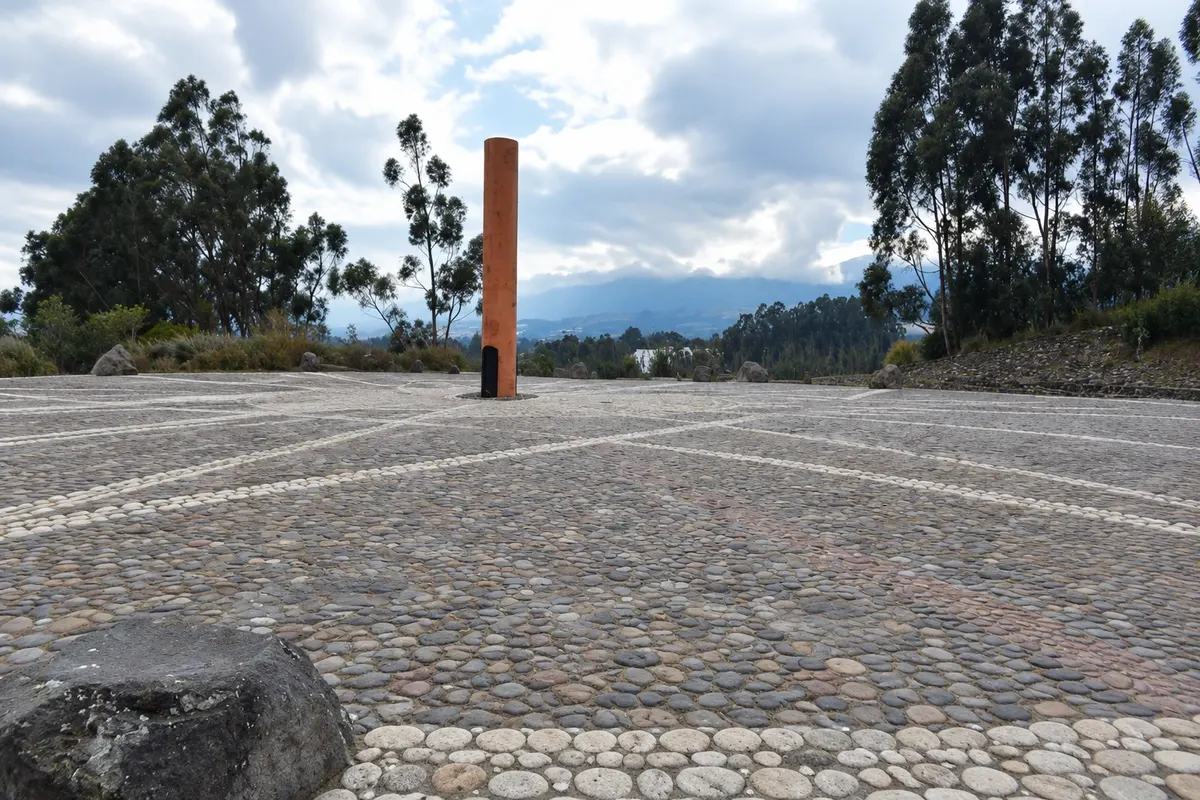
Monument · Cayambe, Pichincha
Quitsato Sundial
54‑meter‑diameter sundial built in 2006 on the Equator line south of Cayambe. Guides explain the astronomy and calendar of Andean peoples.
Illustrative images. The pictures in this guide are illustrations based on the real place, not photographs, and may differ from it.

Discover
About Quitsato Sundial
The Quitsato sundial sits beside the Panamerican Highway, about 7 km south of Cayambe, on the Equator line. It is a non‑profit cultural and scientific project, built in 2006 and inaugurated in 2007.
The sundial occupies a stone circle 54 meters in diameter. At the center, a cylindrical post about 10 meters high casts the shadow that marks hours and seasons; at the equinoxes, at noon, the sun enters through the top opening and the post becomes shadowless.
The name comes from the Tsáfiqui language of the Tsáchilas: quitsa means half, and to means world. Guides explain the Equator’s position, the astronomy of ancient Andean peoples, and dispel common myths about the equatorial line.
Beside it is the monument known as Bola de Guachalá, and from there, on clear days, you can see the Cayambe volcano.
Before you go
Practical information
Cidade Turismo reviews its information regularly, but something may have changed. Check with the place before planning your trip.
How much time to set aside
About 60 minutes, including the guides’ explanation.
Best time
Around midday, to see the post’s shadow; preferably on a sunny day.
How to get there
It is beside the Panamerican Highway, about 7 km south of Cayambe. Buses between Quito and Cayambe stop nearby; from Cayambe you can also go by taxi.
Tip
At the equinoxes, in March and September, the sundial receives more visitors who want to see the post without a shadow at noon.
Get your questions answered
Frequently asked questions about Quitsato Sundial
Is the Quitsato sundial really on the Equator line?
Yes, the project was built on the Equator line, and guides show the position using satellite equipment.
What does Quitsato mean?
"Half of the world," in the Tsafiqui language of the Tsáchilas.
When was it built?
In 2006, with inauguration in 2007.