

 Brazil
 Argentina
 Bolivia
 Chile
 Colombia
 Guyana
 French Guiana
 Falkland Islands (Malvinas)
 Paraguay
 Peru
 Suriname
 Uruguay
 Venezuela
 Germany
 Austria
 Belgium
 Croatia
 Denmark
 Spain
 Finland
 France
 Greece
 the Netherlands
 Hungary
 Ireland
 Iceland
 Italy
 Luxembourg
 Norway
 Poland
 Portugal
 the United Kingdom
 the Czech Republic
 Sweden
 Switzerland
 Turkey
 the United States
 Mexico
 the Dominican Republic
 South Africa
 Australia
 Fiji
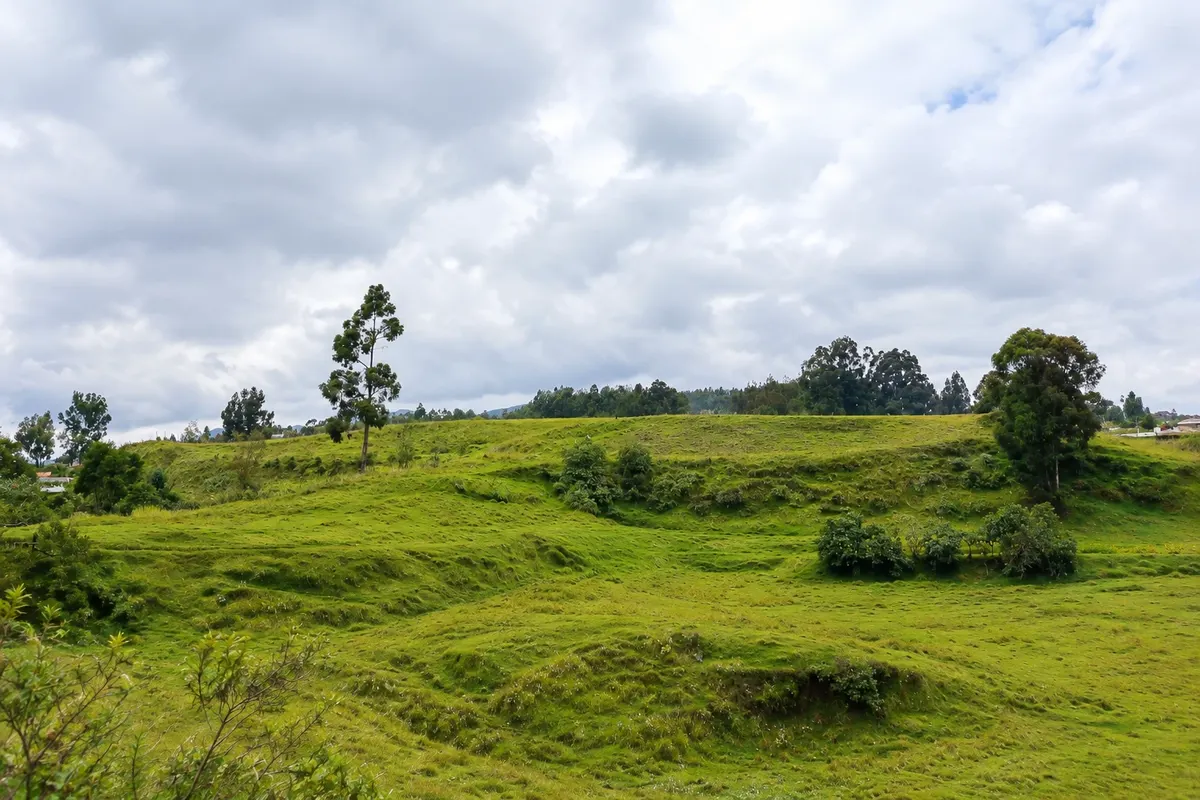
Archaeological site · Cayambe, Pichincha
Puntiatzil
Archaeological site of the Kayambi people, a few blocks from Cayambe’s center, featuring a large tola, an earthen mound with a ramp. It has been State Cultural Heritage since 2001.
Illustrative images. The pictures in this guide are illustrations based on the real place, not photographs, and may differ from it.

Discover
About Puntiatzil
Puntiatzil, also spelled Puntiachil, lies east of Cayambe’s center, a few blocks from the central park. It is the largest set of archaeological evidence in the town and was declared State Cultural Heritage in 2001.
The site comprises a main tola, an earthen mound with a rectangular base and an access ramp, linked to a larger group of tolas, ancient cultivation fields, and dwellings. Researchers interpret it as a former ceremonial and administrative center of the Kayambi, a people who resisted the arrival of the Incas.
Indigenous communities in the region continue to celebrate solstice and equinox festivals at the site, showing the connection between the site and the Andean agricultural calendar.
Artifacts found in the area are displayed at the town museum, in the Centro Cultural Espinosa Jarrín, next to the central park.
Before you go
Practical information
Cidade Turismo reviews its information regularly, but something may have changed. Check with the place before planning your trip.
How much time to set aside
About 1 hour.
Best time
During daytime. Confirm whether guided visits are available before you go.
How to get there
It is a few blocks from Cayambe’s central park, within walking distance.
Tip
Complete the visit with the town museum at the Centro Cultural Espinosa Jarrín, next to the central park.
Get your questions answered
Frequently asked questions about Puntiatzil
What is a tola?
An artificial earth mound built by the ancient peoples of northern Ecuador, used for ceremonies, dwellings or burials.
Is Puntiatzil protected?
Yes. It was declared State Cultural Heritage in 2001.
Who were the Kayambi?
The people who inhabited the Cayambe valley before the arrival of the Incas and who resisted the Inca conquest.