

 Brazil
 Argentina
 Bolivia
 Chile
 Colombia
 Ecuador
 Guyana
 French Guiana
 Falkland Islands (Malvinas)
 Paraguay
 Peru
 Suriname
 Uruguay
 Venezuela
 Germany
 Austria
 Belgium
 Croatia
 Denmark
 Spain
 Finland
 France
 Greece
 the Netherlands
 Hungary
 Ireland
 Iceland
 Italy
 Luxembourg
 Norway
 Poland
 Portugal
 the United Kingdom
 the Czech Republic
 Sweden
 Switzerland
 Turkey
 the United States
 Mexico
 the Dominican Republic
 South Africa
 Fiji
State · Território do Norte (Uluru e Kakadu)
Território do Norte
The Northern Territory is the red heart of Uluru, Kata Tjuta and Kings Canyon, and the Top End of Darwin, Kakadu, Litchfield and Katherine.
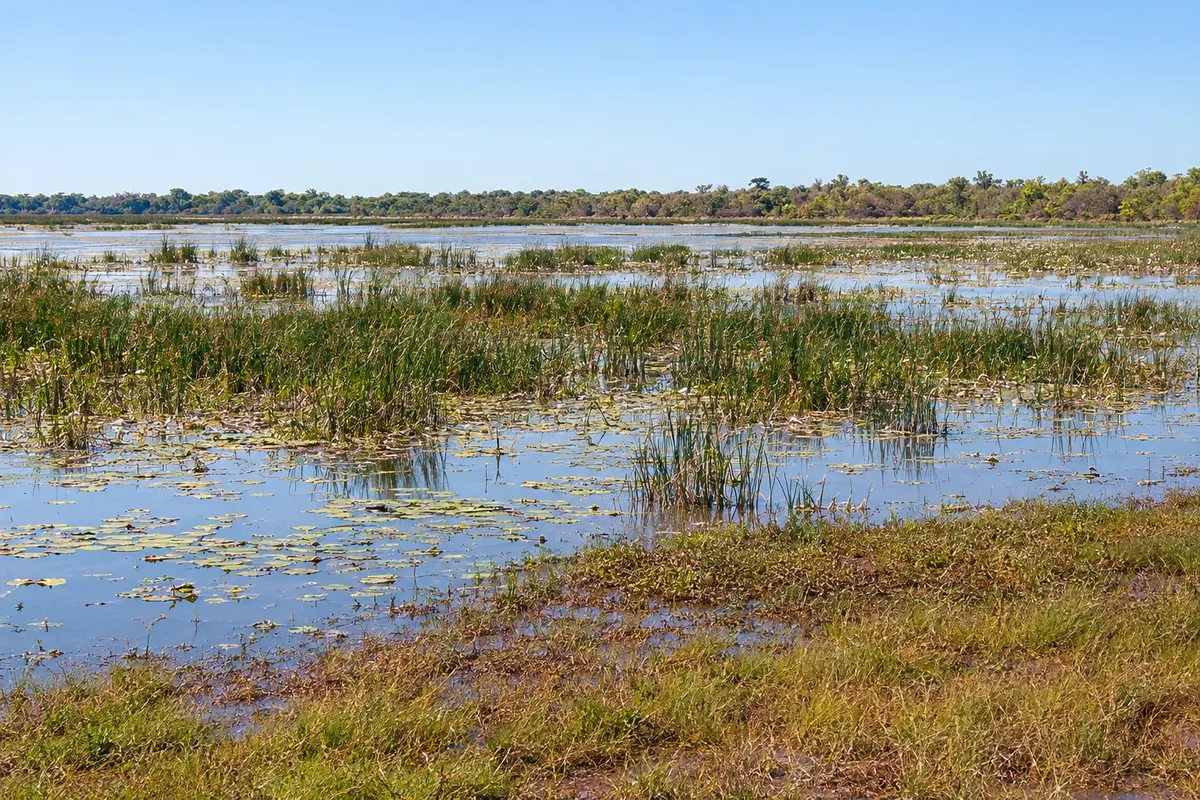
In the photo: Mamukala Wetlands, Kakadu National Park
Illustrative images. The pictures in this guide are illustrations based on the real place, not photographs, and may differ from it.

The state
Get to know Território do Norte
O Território do Norte ocupa o centro-norte da Austrália e reúne duas regiões muito diferentes: o deserto vermelho do centro, com Uluru, e o Top End tropical, com Darwin e Kakadu. É a parte do país onde a cultura aborígine está mais presente no dia a dia e nos parques, administrados junto com os povos donos tradicionais da terra.
No centro fica o Parque Uluru-Kata Tjuta, da UNESCO, com a rocha de Uluru e as cúpulas de Kata Tjuta, terra do povo anangu. Não se sobe na rocha: a visita é a caminhada pela base, com as pinturas e os lugares sagrados, e o nascer e o pôr do sol nos mirantes. Yulara é a vila com aeroporto e hospedagens, perto do parque. Kings Canyon, no Parque Watarrka, tem a trilha pela borda do cânion, e Alice Springs é a cidade do centro, porta das MacDonnell Ranges.
No Top End, Darwin, a capital, fica à beira do mar de Timor, com a orla, os museus e o mercado de Mindil Beach, que funciona na estação seca. Kakadu, o maior parque nacional do país e patrimônio da UNESCO, tem arte rupestre aborígine em Ubirr e Nourlangie (Burrungkuy), áreas alagadas com aves e crocodilos e cachoeiras na estação seca; Jabiru é a vila do parque.
Mais perto de Darwin, Batchelor é a porta do Parque Litchfield, com cachoeiras e cupinzeiros gigantes. Katherine é a base para o Parque Nitmiluk, com o cânion do rio Katherine, que se percorre de barco ou de canoa.
O Território do Norte não é um estado, mas tem governo próprio, e não muda a hora no verão. O trem The Ghan cruza o território de Alice Springs a Darwin.
When to go
In the Top End (Darwin, Kakadu, Litchfield, Katherine), the best time is the dry season, from May to October, when roads and waterfalls are usually accessible. From November to April, in the wet season, parts of Kakadu and Litchfield close. In the centre (Uluru, Kings Canyon, Alice Springs), April to September has more pleasant days and cold nights in winter; in summer the heat is strong and long trails close during the hottest hours.
Getting there
Darwin (DRW), Alice Springs (ASP) and Ayers Rock Airport (AYQ) in Yulara receive flights from Sydney, Melbourne, Brisbane and other Australian cities, and they are the gateways for visitors coming from Brazil. Uluru is about 20 km from Yulara, and Alice Springs about 450 km. Kakadu is about 250 km from Darwin, and Katherine about 320 km via the Stuart Highway. The Ghan train links Adelaide with Alice Springs and Darwin.
Your questions
Frequently asked questions about Território do Norte
How many days for Uluru?
With 2 or 3 days you can do the base walk at Uluru, see sunrise and sunset, visit Kata Tjuta and the cultural centre. To include Kings Canyon, allow another one or two days, because it is about 300 km from Yulara.
Can you climb Uluru?
No. Climbing is prohibited, out of respect for the Anangu people, for whom the rock is sacred. Visits are made by walking the base track, about 10 km, and from the lookouts, with guided walks led by Anangu guides.
What is the best time for Kakadu?
The dry season, from May to October, when internal roads and most trails and waterfalls are usually open. In the wet season, from November to April, the park becomes green and full of water, but many areas close and some can only be seen by scenic flight.
Can you swim in the rivers and waterfalls of the Top End?
Only at points authorised by the parks, which are signposted, such as some natural pools in Litchfield and Nitmiluk. In rivers and floodplain areas, follow the signs and the rangers' instructions.
What is the time zone of the Northern Territory?
Darwin and Uluru are 12 hours and a half ahead of Brasília year‑round, because the Northern Territory does not observe daylight saving time.