

 Brazil
 Bolivia
 Chile
 Colombia
 Ecuador
 Guyana
 French Guiana
 Falkland Islands (Malvinas)
 Paraguay
 Peru
 Suriname
 Uruguay
 Venezuela
 Germany
 Austria
 Belgium
 Croatia
 Denmark
 Spain
 Finland
 France
 Greece
 the Netherlands
 Hungary
 Ireland
 Iceland
 Italy
 Luxembourg
 Norway
 Poland
 Portugal
 the United Kingdom
 the Czech Republic
 Sweden
 Switzerland
 Turkey
 the United States
 Mexico
 the Dominican Republic
 South Africa
 Australia
 Fiji
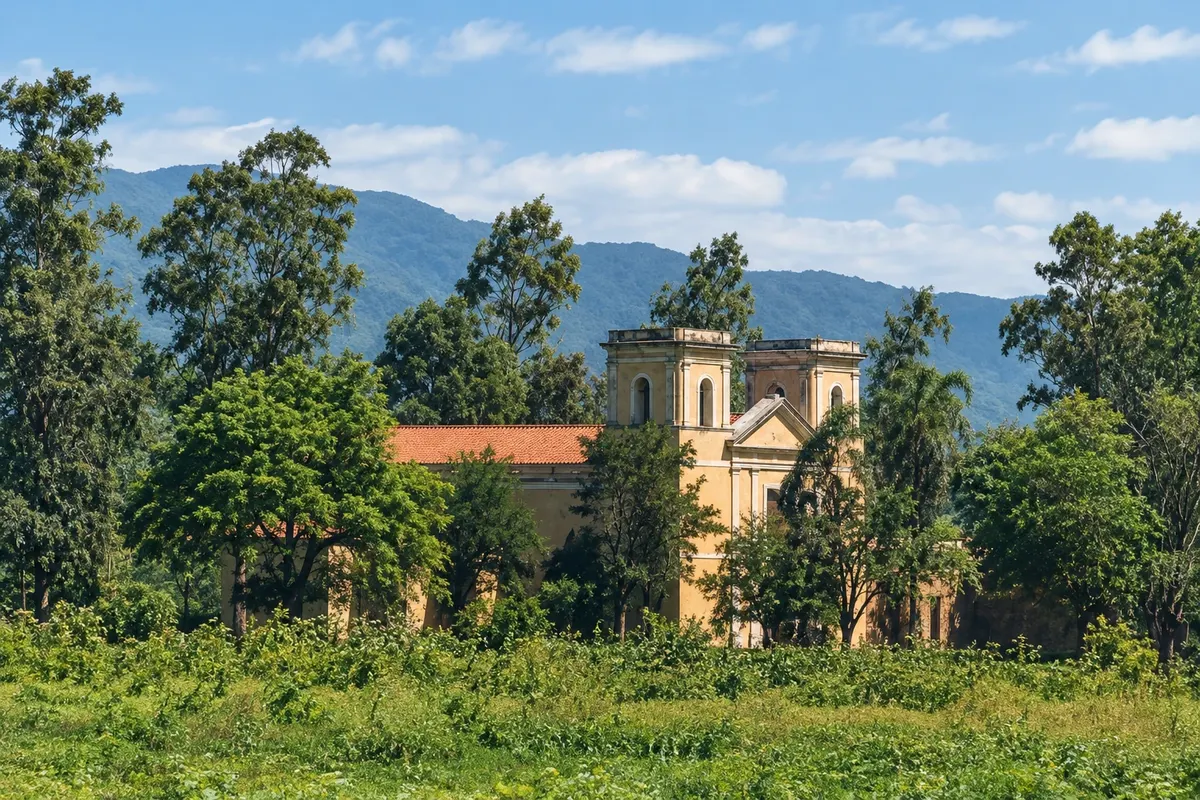
Historic site · Famaillá, Tucumán
Ruins of San José de Lules
Church and convent of the former Jesuit estancia of San José del Monte de los Lules, a National Historic Monument, beside provincial road 301. There the Jesuits planted sugar cane for the first time in Tucumán.
Illustrative images. The pictures in this guide are illustrations based on the real place, not photographs, and may differ from it.

Discover
About Ruins of San José de Lules
The Ruins of San José de Lules lie beside provincial road 301, about 1 km north of the Lules River and a few kilometers from the town of San Isidro de Lules, between San Miguel de Tucumán and Famaillá. They are what remains of the estancia and reducción of San José del Monte de los Lules, founded by the Jesuits at the end of the 17th century on land donated by Jordana de Trejo, with a school and workshops for the indigenous Lules.
The estancia included a church, cloister, mill, brick oven and carpentry and blacksmith workshops. There the Jesuits cultivated sugar cane for the first time in Tucumán, a province that later became the center of Argentina’s sugar industry. After the expulsion of the Jesuits in 1767, the Dominicans received the church and convent and took possession in 1781. During the wars of independence, the site served as a camp for patriot armies.
The ensemble visible today is the result of a major 1882 renovation carried out by the Dominicans over the old walls. The church is the main volume, with a façade of two towers in neoclassical lines and, at the main altar, a carved wooden structure with Saint Joseph and the Child. To the north stands the lower convent, with a cloister around a partly ruined courtyard.
The building functioned as a school until 1935 and afterward was abandoned. It was declared a National Historic Monument in 1944 and restored in the 1970s. The grounds are treed, with space to walk between the church and the convent remains.
Before you go
Practical information
Cidade Turismo reviews its information regularly, but something may have changed. Check with the place before planning your trip.
How much time to set aside
Between 45 minutes and 1 hour.
Best time
In the morning, when guided visits are usually offered; on some days it also opens in the afternoon. Hours change: confirm before you go. From December to March, prefer the cooler hours.
How to get there
From Famaillá, follow provincial road 301 north for about 20 km. It lies after crossing San Isidro de Lules for those coming from Famaillá. From San Miguel de Tucumán it is about 20 km along the same road.
Tip
Ask about the guided visit, which explains the history of the estancia and sugar cane. You can combine the stop with Famaillá in the same day, departing from or returning to San Miguel de Tucumán.
Get your questions answered
Frequently asked questions about Ruins of San José de Lules
What are the Ruins of San José de Lules?
The church and convent of the former Jesuit estancia of San José del Monte de los Lules, from the late 17th century, renovated by the Dominicans in 1882. They have been a National Historic Monument since 1944.
Why are the Lules ruins important for sugar cane?
Because it was there that the Jesuits cultivated sugar cane for the first time in Tucumán, the province that later became the center of Argentina’s sugar industry.
How to get to the Ruins of San José de Lules?
Via provincial road 301: about 20 km from San Miguel de Tucumán or 20 km from Famaillá, north of San Isidro de Lules.
Are there guided tours at the Lules ruins?
There are usually guided tours, mainly in the morning. Hours change throughout the year: confirm before you go.