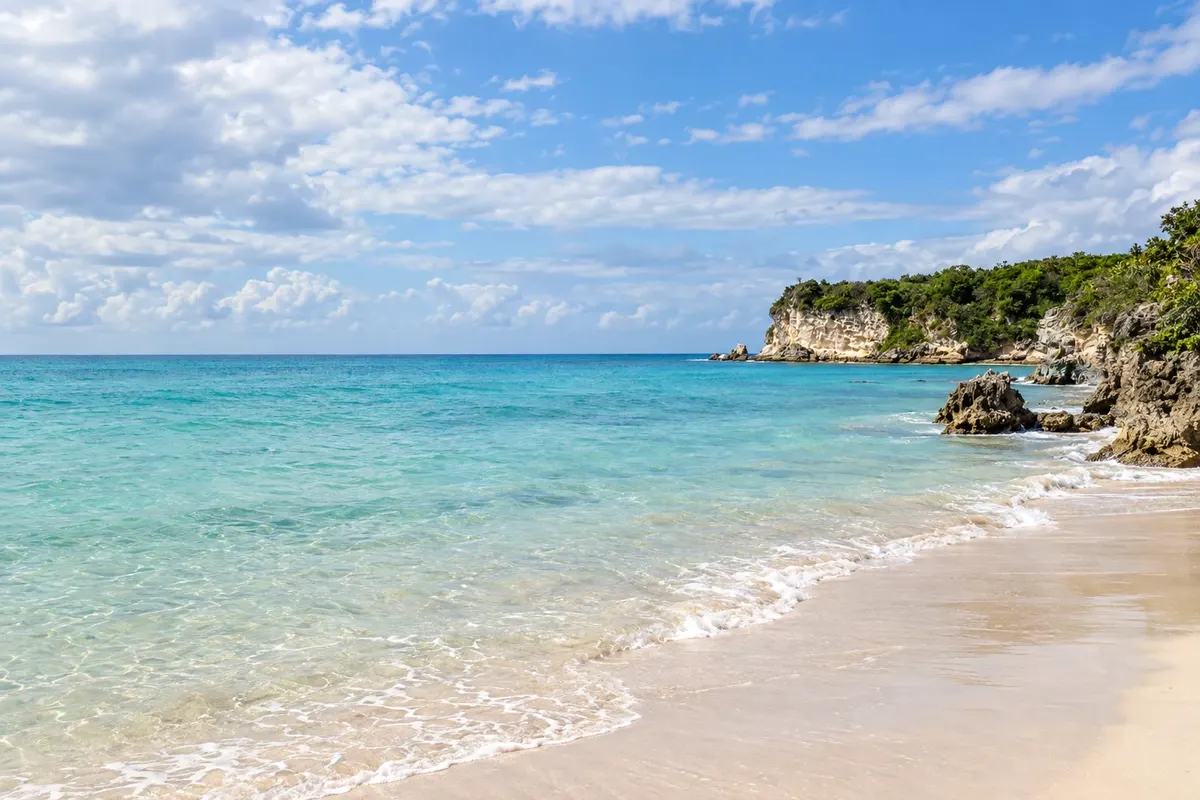
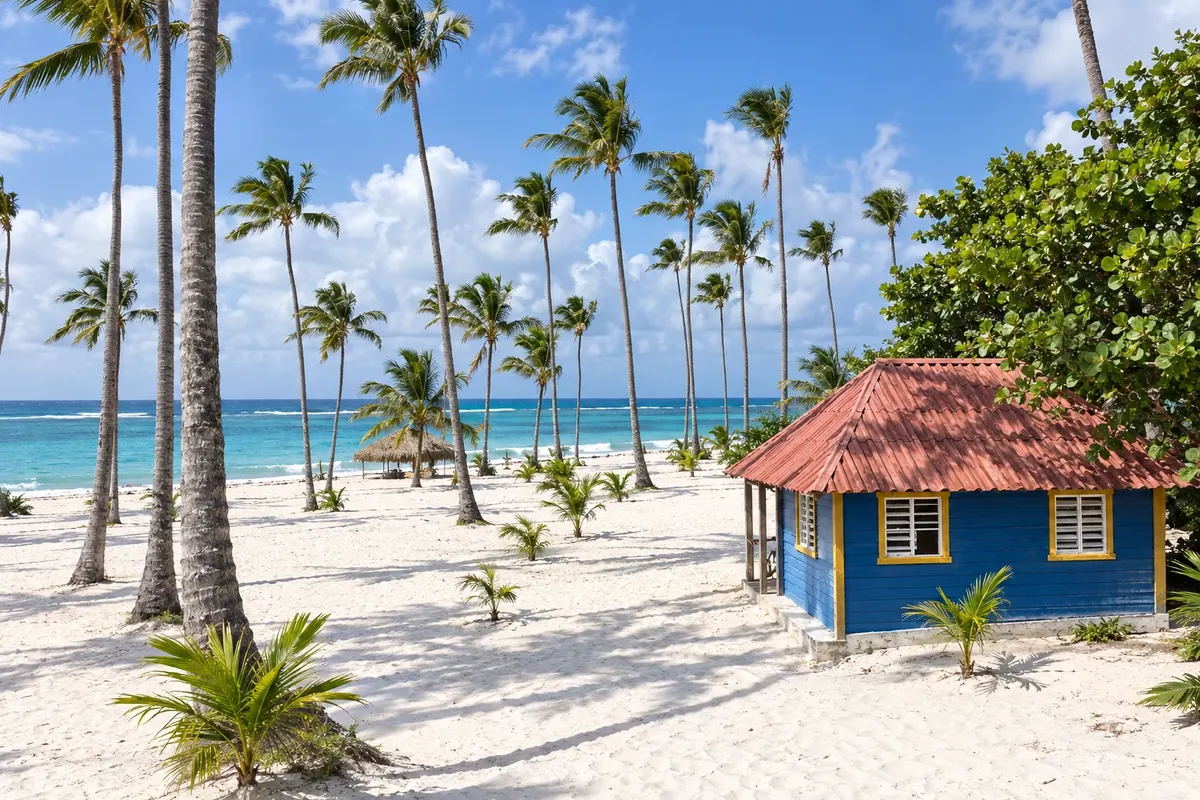
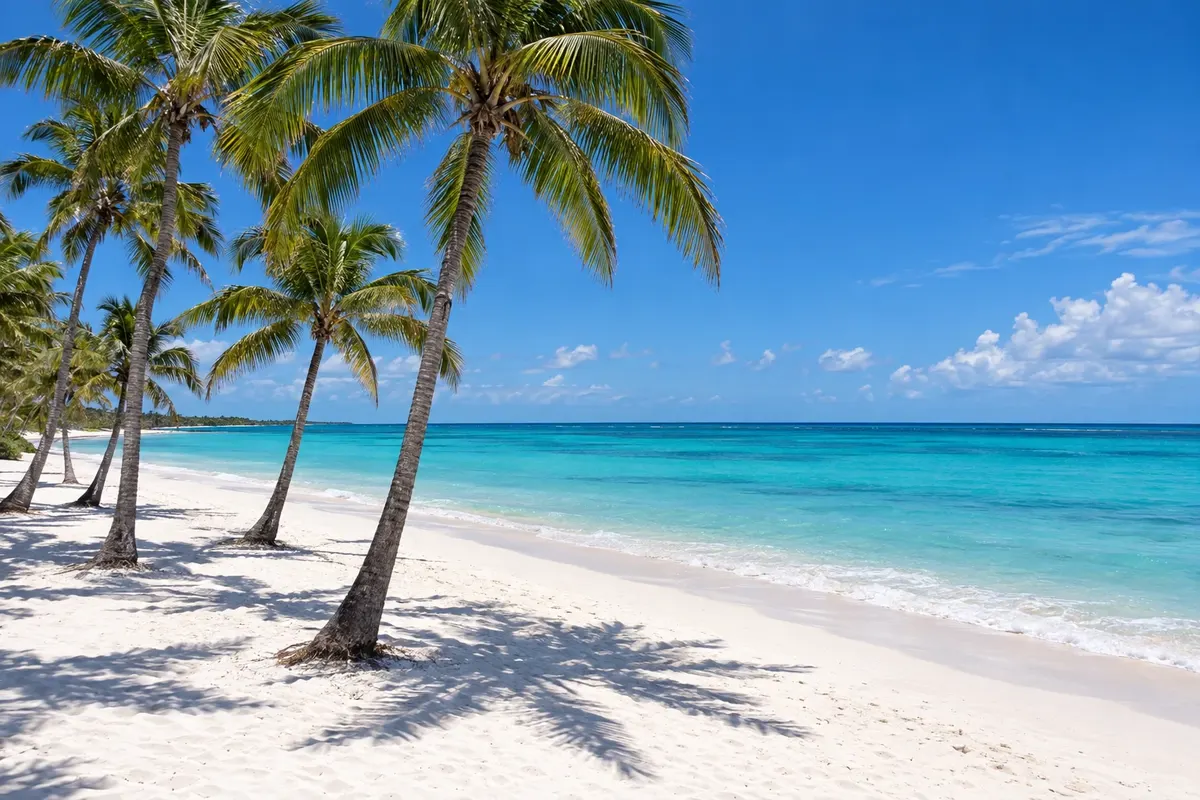
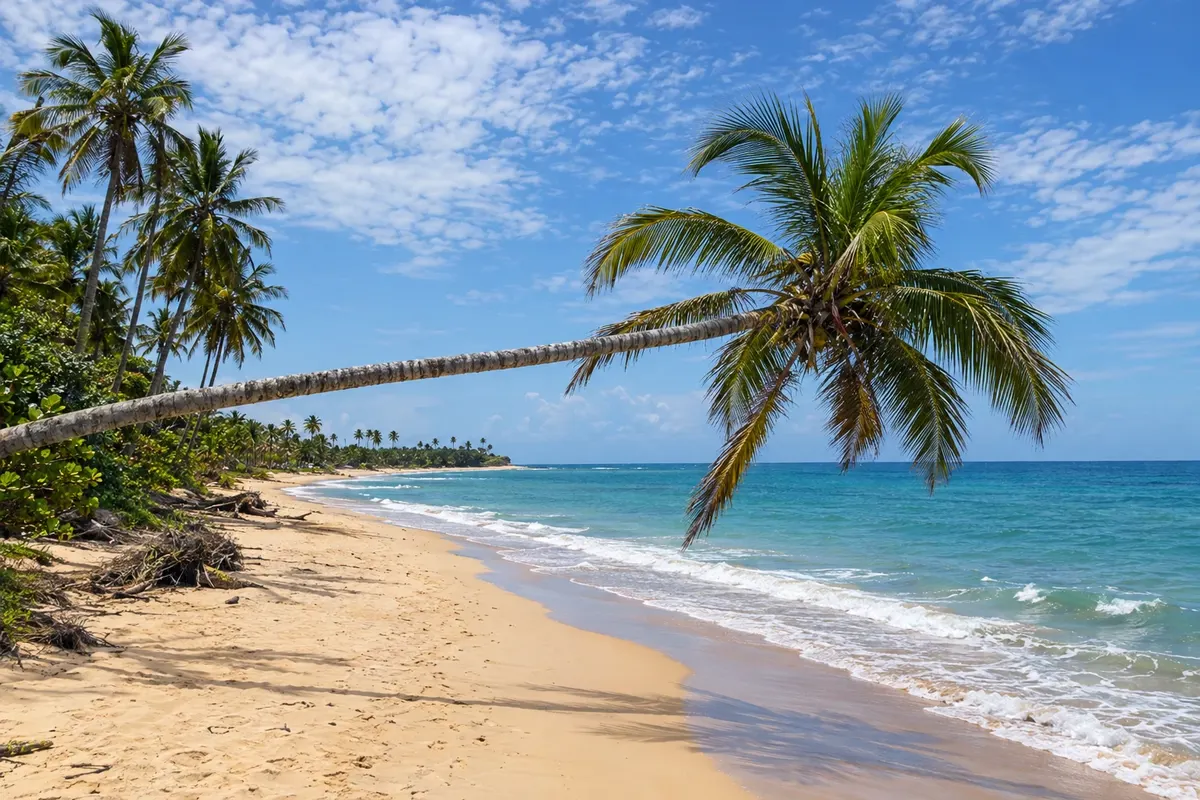
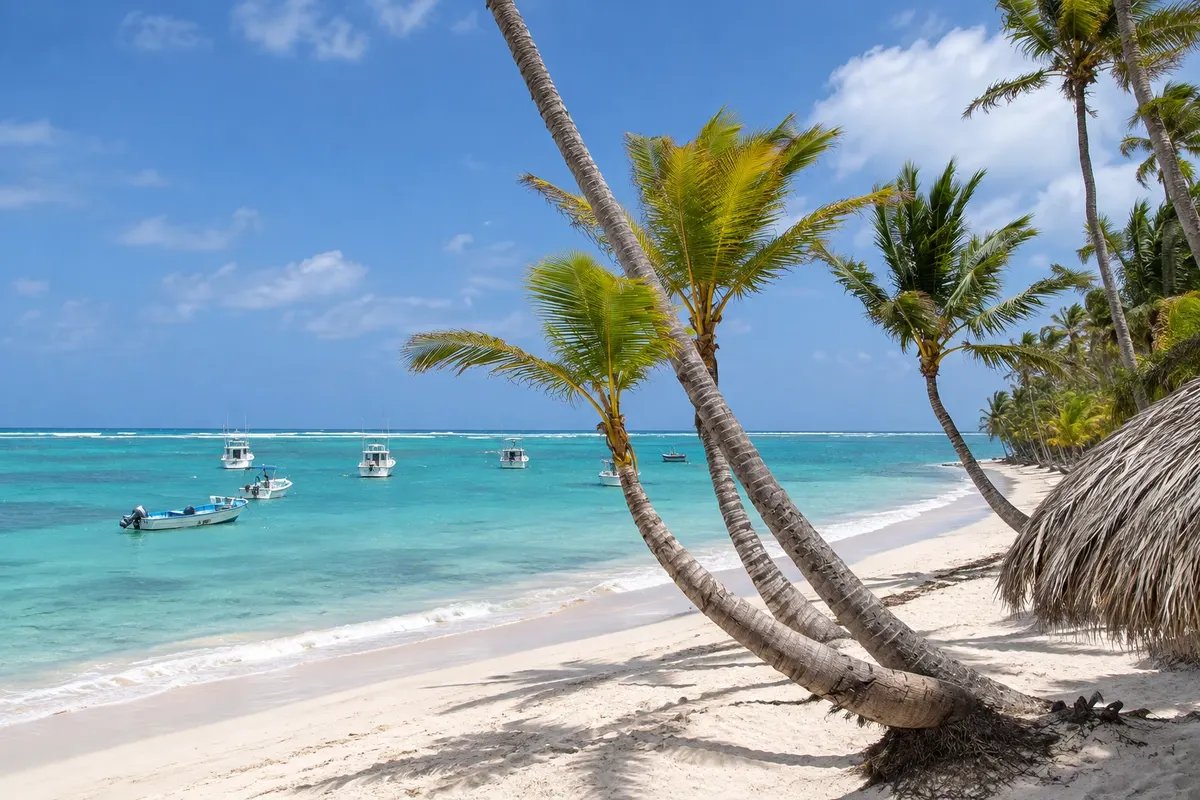
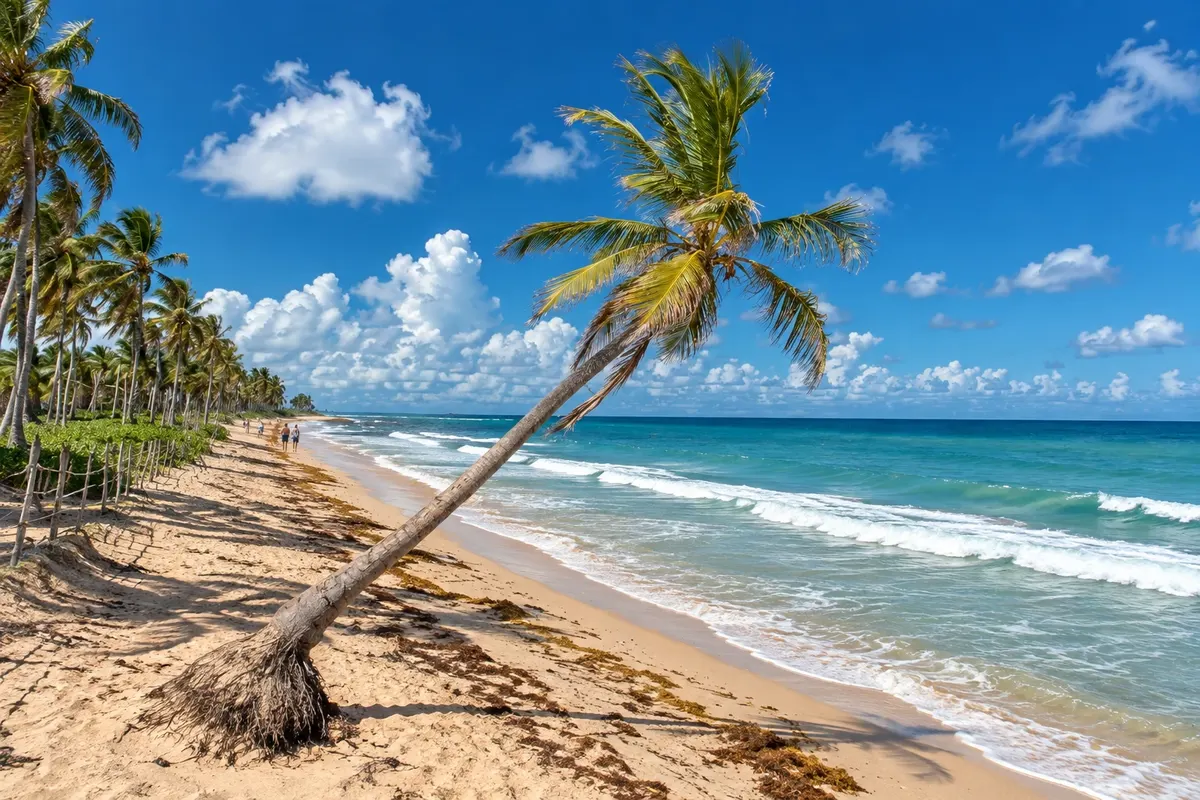
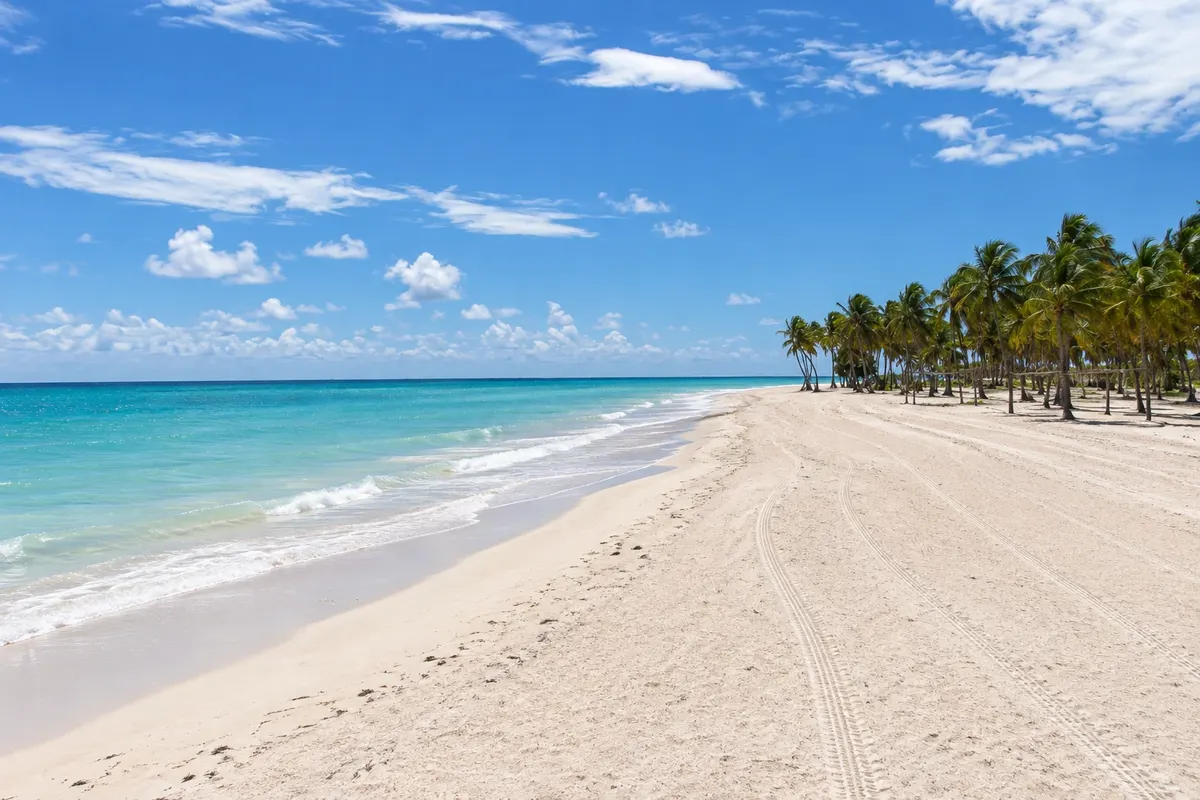
Punta Cana is the name the world gives to the entire eastern tip of the Dominican Republic, where the Caribbean Sea meets the Atlantic. In practice, it’s a stretch of white-sand beaches and coconut palms that runs from Cap Cana in the south to Uvero Alto in the north, passing through Punta Cana itself, Cabeza de Toro, Bávaro, Arena Gorda and Macao. Along much of this coast, a coral reef a few hundred meters offshore keeps the sea calm and light green.
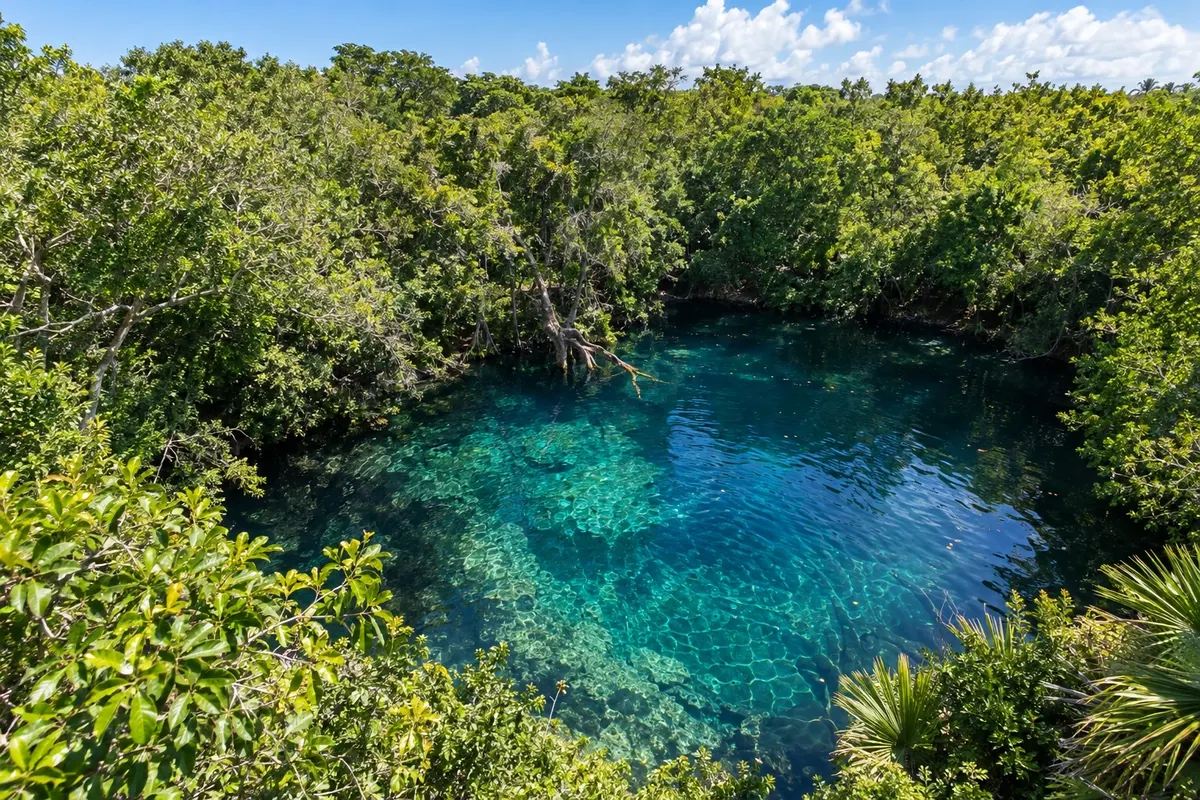
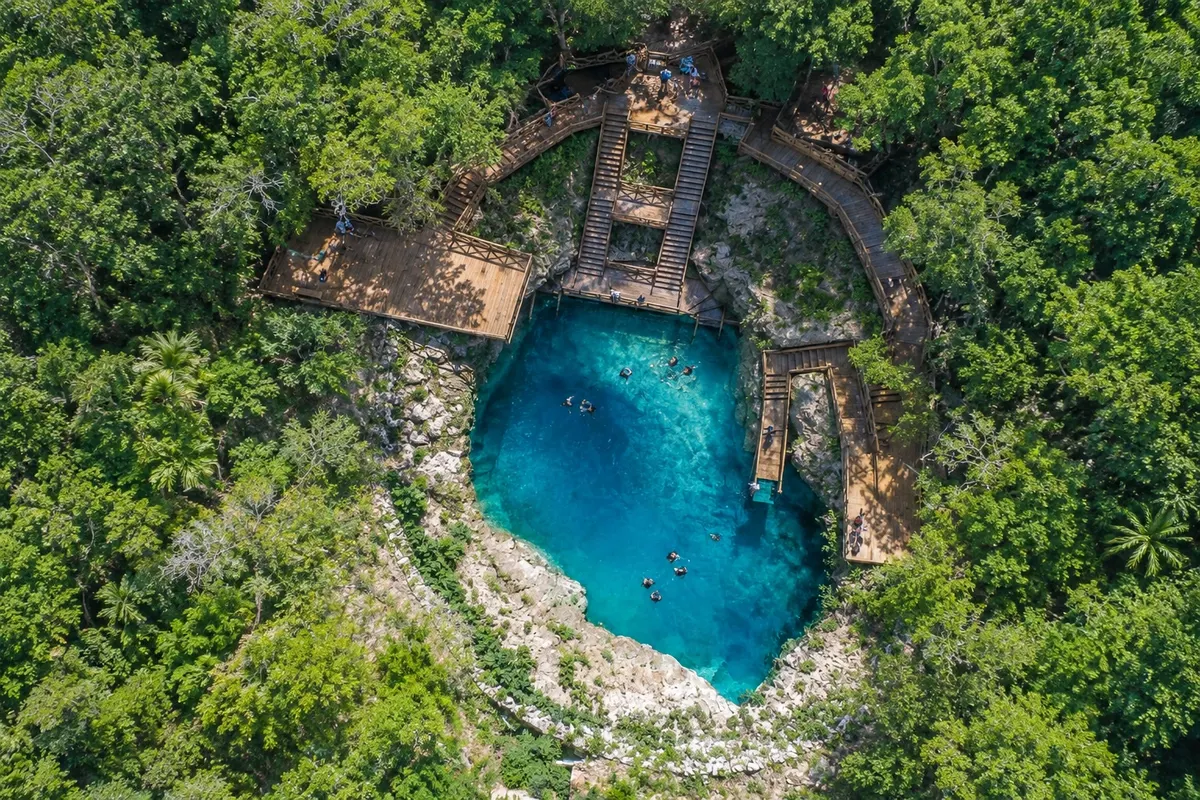
The region grew from the 1970s around large all‑inclusive hotels, and the international airport, opened in the 1980s, became the country’s main gateway. Bávaro hosts most of the hotels, plus a town center with shops, restaurants and the fishing village of El Cortecito. Cap Cana is a luxury residential complex with a marina, golf courses and the Hoyo Azul, a natural pool at the base of a cliff. Further north, Uvero Alto and Macao are more isolated, with open beaches and surf.
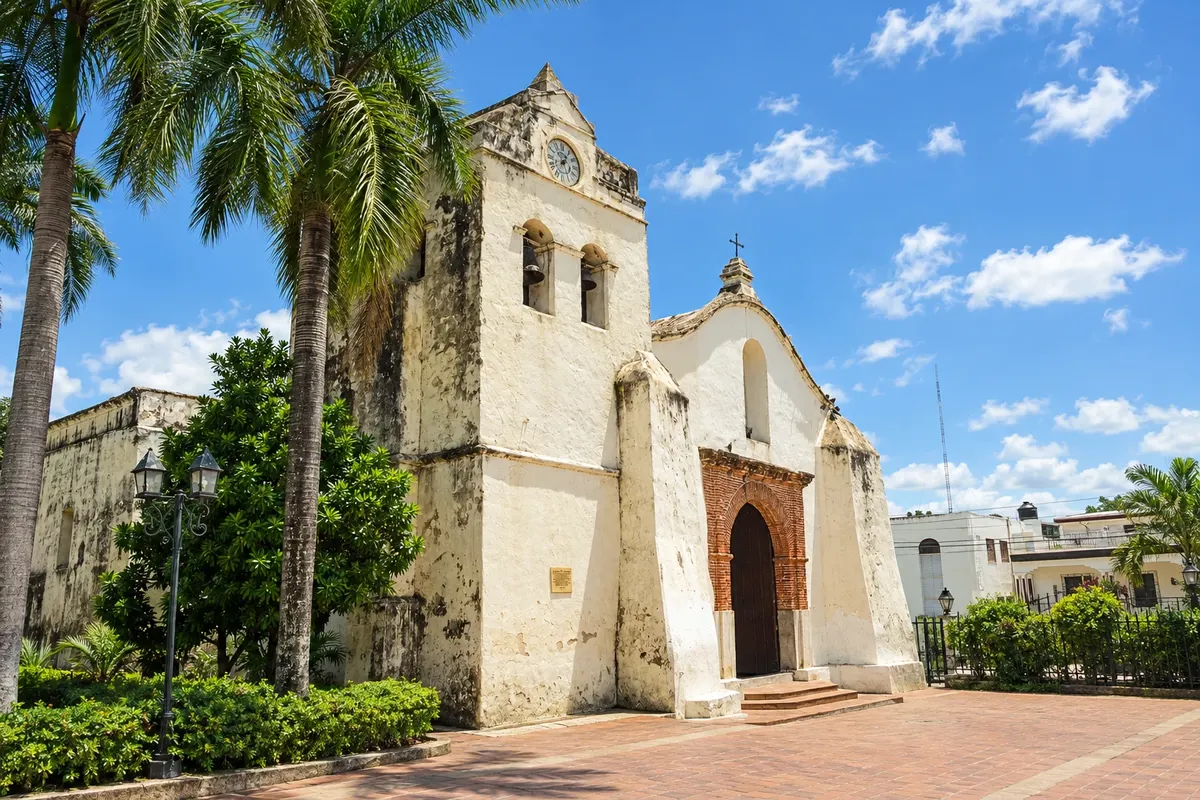
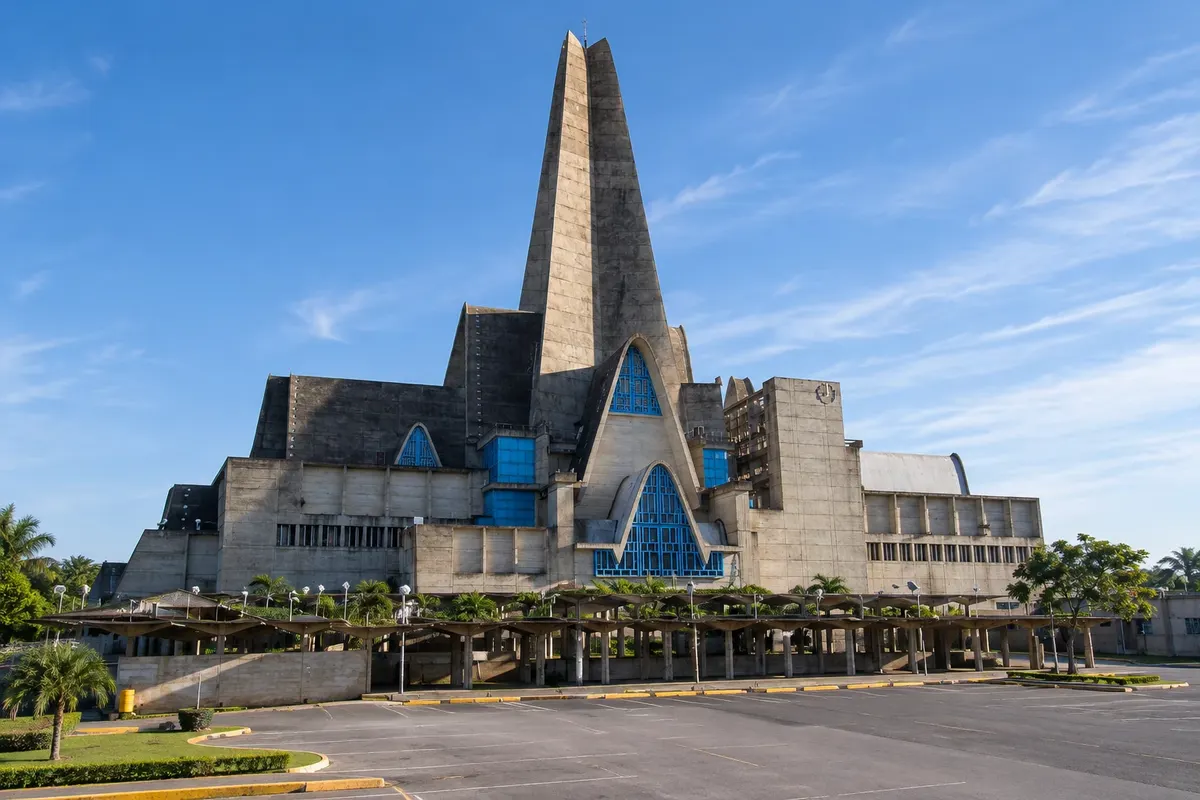
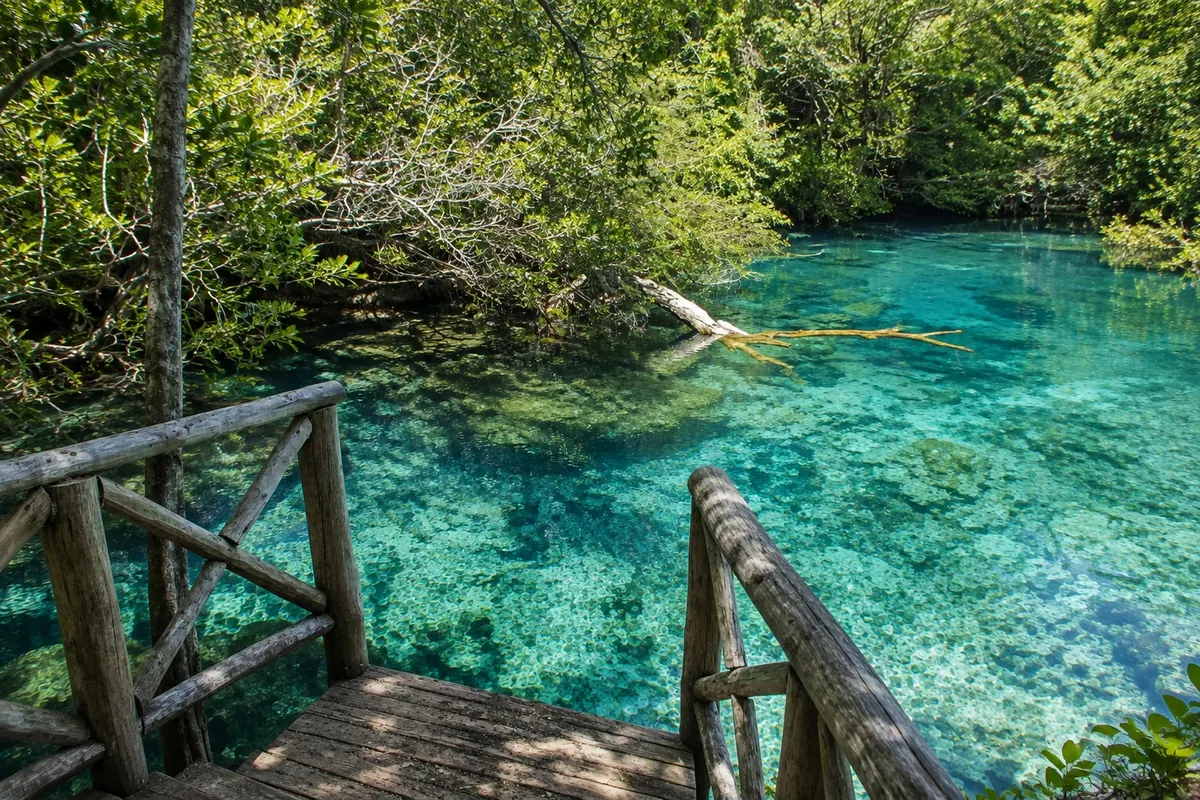
Beyond the beaches, it’s worth visiting Higüey, the provincial capital, where the Basilica of Nuestra Señora de la Altagracia is a national pilgrimage site. For nature, the Ojos Indígenas reserve has freshwater lagoons in the forest, and excursions go to Isla Saona, Santo Domingo and Samaná.
It’s the right destination for calm seas, sun and relaxation, with ready infrastructure and easy flights. Those looking for city life, history or mountain scenery need to leave the area: Santo Domingo is about two and a half hours away by road.
This destination brings together 5 cities: Punta Cana, Bávaro, Cap Cana, Uvero Alto, Higüey.


 Brazil
 Argentina
 Bolivia
 Chile
 Colombia
 Ecuador
 Guyana
 French Guiana
 Falkland Islands (Malvinas)
 Paraguay
 Peru
 Suriname
 Uruguay
 Venezuela
 Germany
 Austria
 Belgium
 Croatia
 Denmark
 Spain
 Finland
 France
 Greece
 the Netherlands
 Hungary
 Ireland
 Iceland
 Italy
 Luxembourg
 Norway
 Poland
 Portugal
 the United Kingdom
 the Czech Republic
 Sweden
 Switzerland
 Turkey
 the United States
 Mexico
 South Africa
 Australia
 Fiji