

 Brazil
 Argentina
 Bolivia
 Chile
 Colombia
 Ecuador
 Guyana
 French Guiana
 Falkland Islands (Malvinas)
 Paraguay
 Peru
 Suriname
 Uruguay
 Venezuela
 Germany
 Austria
 Belgium
 Croatia
 Denmark
 Spain
 Finland
 France
 Greece
 the Netherlands
 Hungary
 Ireland
 Iceland
 Italy
 Luxembourg
 Norway
 Poland
 the United Kingdom
 the Czech Republic
 Sweden
 Switzerland
 Turkey
 the United States
 Mexico
 the Dominican Republic
 South Africa
 Australia
 Fiji
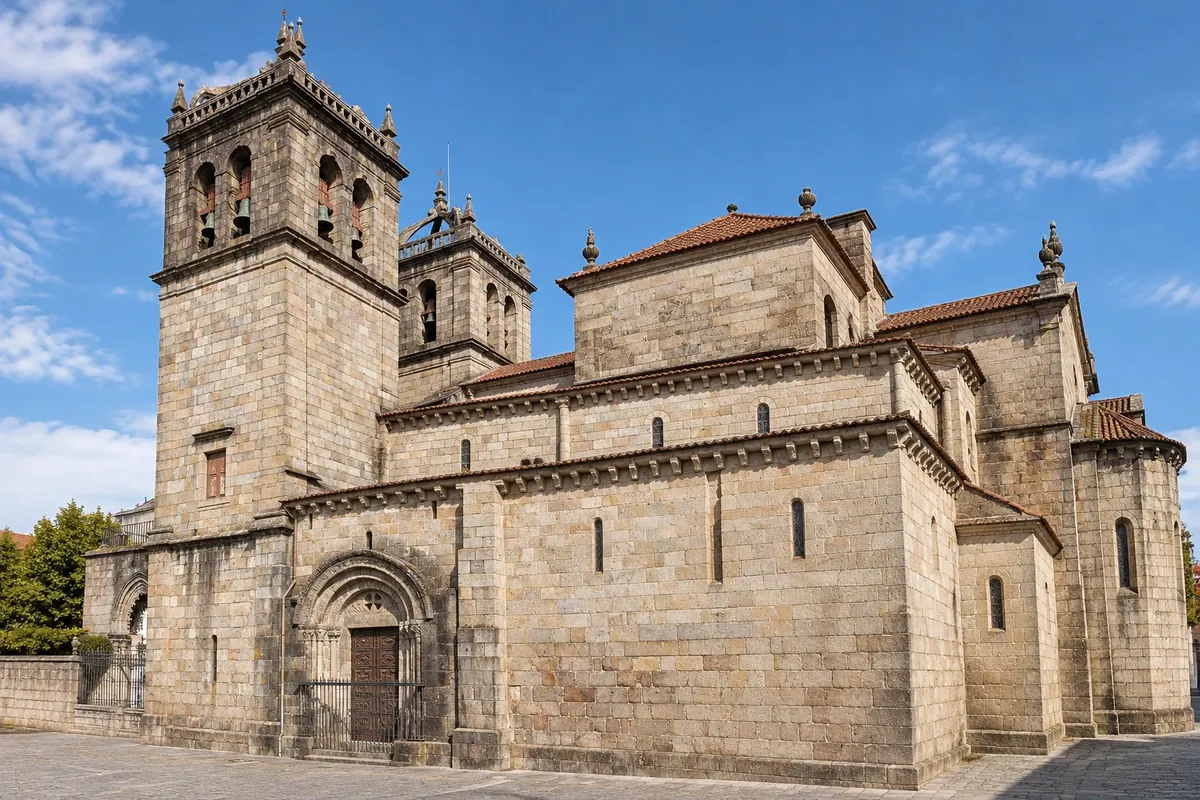
Cathedral · Braga, Braga
Sé de Braga
Cathedral begun in the 11th century, considered the oldest in Portugal, blending Romanesque, Gothic, Manueline and Baroque styles. It has Gothic chapels, gilded Baroque organs and a treasury of sacred art.
Illustrative images. The pictures in this guide are illustrations based on the real place, not photographs, and may differ from it.

Discover
About Sé de Braga
The Sé de Braga began to be built at the end of the 11th century, before the formation of Portugal, and for centuries it was the seat of the primatial archbishop of the Spains. It is considered the oldest cathedral in the country.
The building brings together styles from different eras: Romanesque portals, a Gothic galilee, Manueline vaults and Baroque decoration. In the high choir there are two 18th-century organs, gilded carved wood, facing each other.
Around the cloister are Gothic chapels, such as the Capela dos Reis, which houses the tombs of D. Henrique and D. Teresa, parents of Portugal’s first king, and the Capela da Glória.
The Tesouro-Museu da Sé preserves pieces of goldsmithing, vestments and sculptures. The full visit includes the high choir and the chapels.
Before you go
Practical information
Cidade Turismo reviews its information regularly, but something may have changed. Check with the place before planning your trip.
How much time to set aside
About one to one and a half hours, including the treasury and chapels.
Best time
During the day, outside Mass times. Visits to the chapels and the choir have specific schedules: check before you go.
How to get there
It is in the historic centre, on Rua D. Paio Mendes, about a 10-minute walk from the train station.
Tip
The nave can be seen without a ticket; the treasury, choir and chapels require an admission fee. Don’t miss the gilded organs.
Get your questions answered
Frequently asked questions about Sé de Braga
Who is buried in the Sé de Braga?
D. Henrique and D. Teresa, parents of Portugal's first king, in the Capela dos Reis.
When does the Sé de Braga date from?
Construction began at the end of the 11th century.
What to see in the Sé?
The gilded Baroque organs, the Gothic chapels, and the treasury.