Bodø
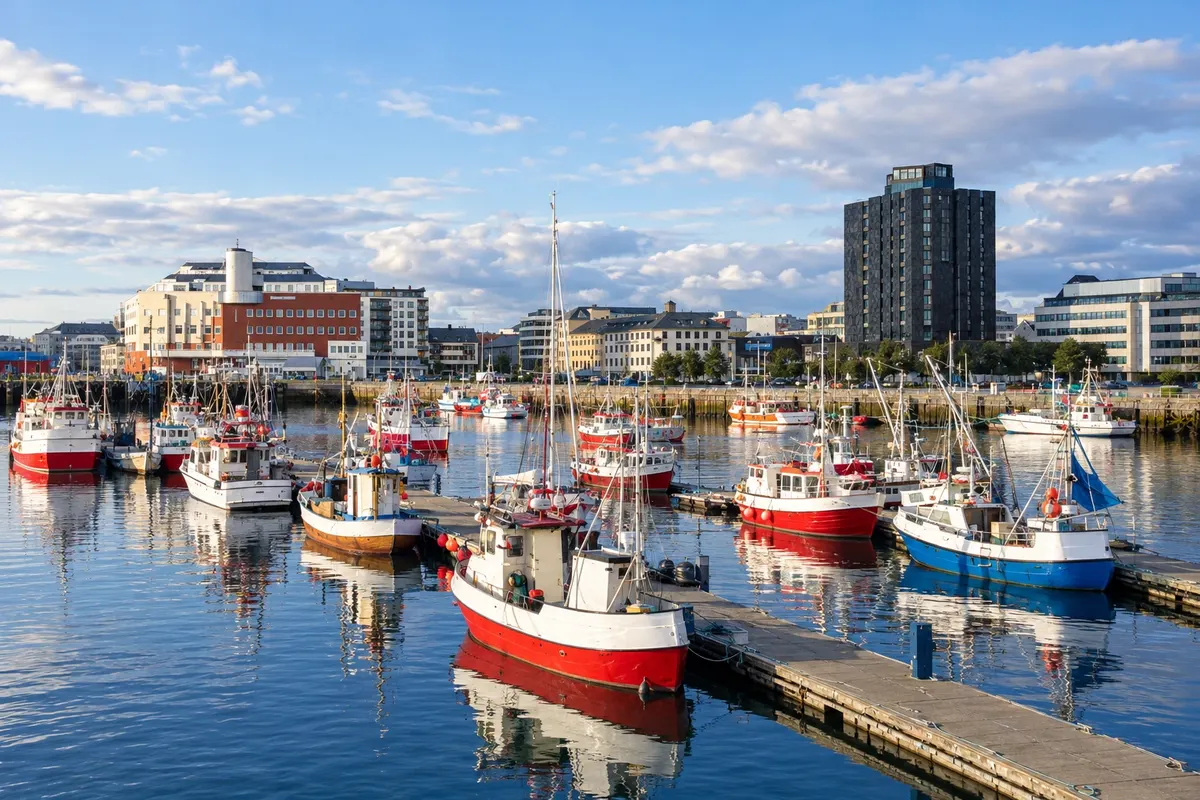
Bodø is a coastal base north of the Arctic Circle, with an airport, railway station and port. A stay combines aviation and maritime trade museums with Saltstraumen and the historic trading post of Kjerringøy.
Nordland · Norway
The coastal base of Nordland, the tidal current of Saltstraumen, and the museums that present aviation and maritime trade.
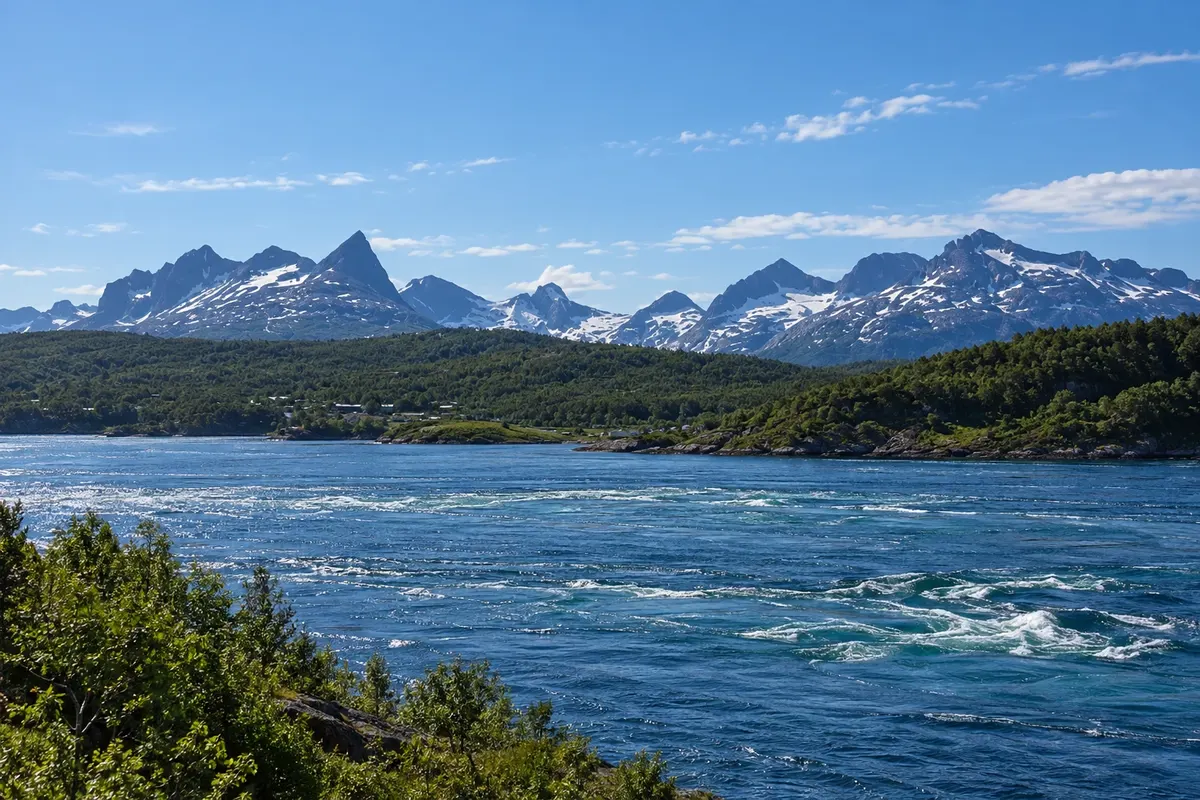
In the photo: Saltstraumen
Illustrative images. The pictures in this guide are illustrations based on the real place, not photographs, and may differ from it.
Get to know the place
Bodø is on the coast of Nordland, north of the Arctic Circle. The town combines an airport, a railway station and a port, which makes it possible to link the visit with other stretches of northern Norway, including Lofoten.
Saltstraumen is a roadside spot to observe tidal movements. In town, the aviation and maritime trade museums explain modes of transport and life in a region defined by long distances. To the north, Kjerringøy preserves a historic wooden trading post.
The destination calls for separating the urban centre from excursions that depend on road and ferry. In winter, the cold and short days usually change the pace of visits.
This destination brings together 1 city: Bodø.
One destination, many paths
Start with one city or combine several in your itinerary.
Outlines: © Kartverket (CC BY 4.0), 2024 boundaries; coastline via geoBoundaries. Adapted by Cidade Turismo.
✈ Bodø lufthavn (BOO) · 2 km to Bodø
Confirm before booking. The airport and railway station serve Bodø; the railway comes from Trondheim. Ferries and coastal ships complement the connections.
The local experience
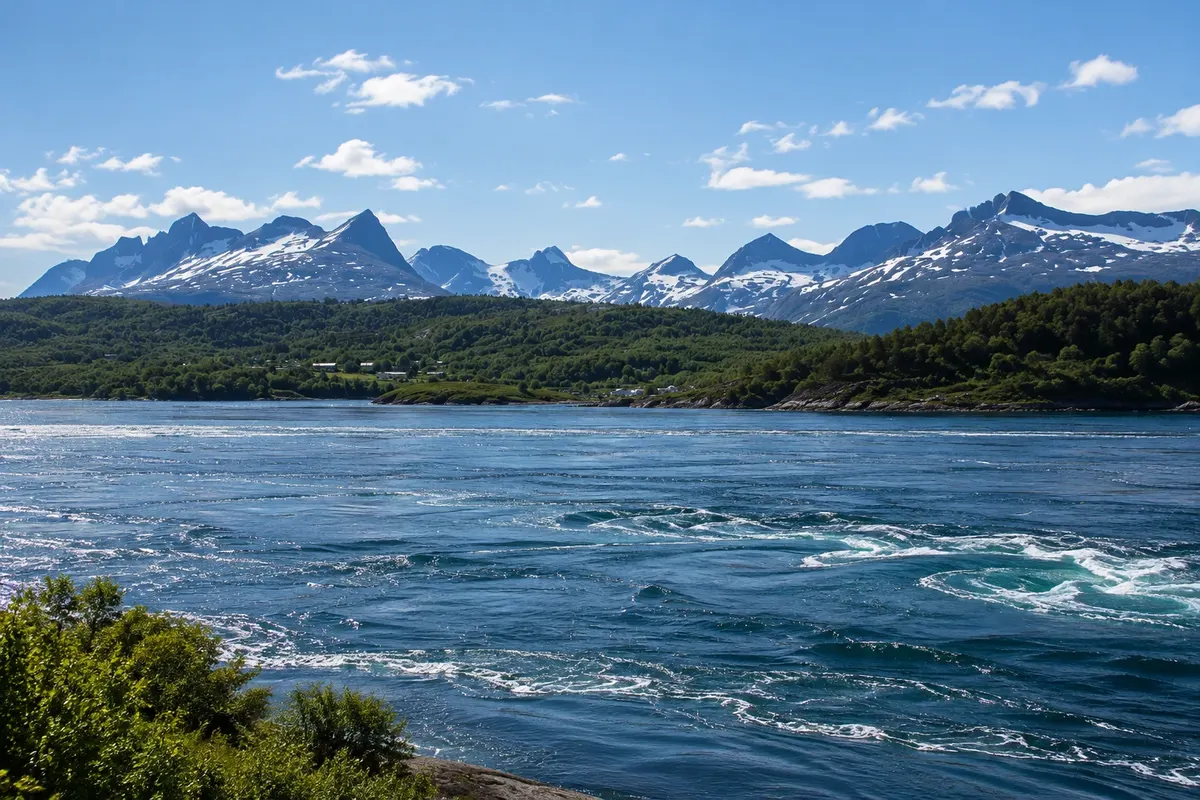
Saltstraumen is a strait near Bodø where water moves between the fjord and the sea with the changing tide. The experience consists of watching the movement from the shore or joining a guided activity on the water.
The Norwegian Aviation Museum is located in Bodø, next to the airport area. The collections present the country’s civil and military aviation, with aircraft and exhibits that help explain the role of flights in linking regions separated by mountains and sea.
The Jektefartsmuseet presents the coastal trade that linked northern Norway with other ports. The museum is located in Bodøsjøen and centers on a jekt-type vessel used to transport goods along the coast.
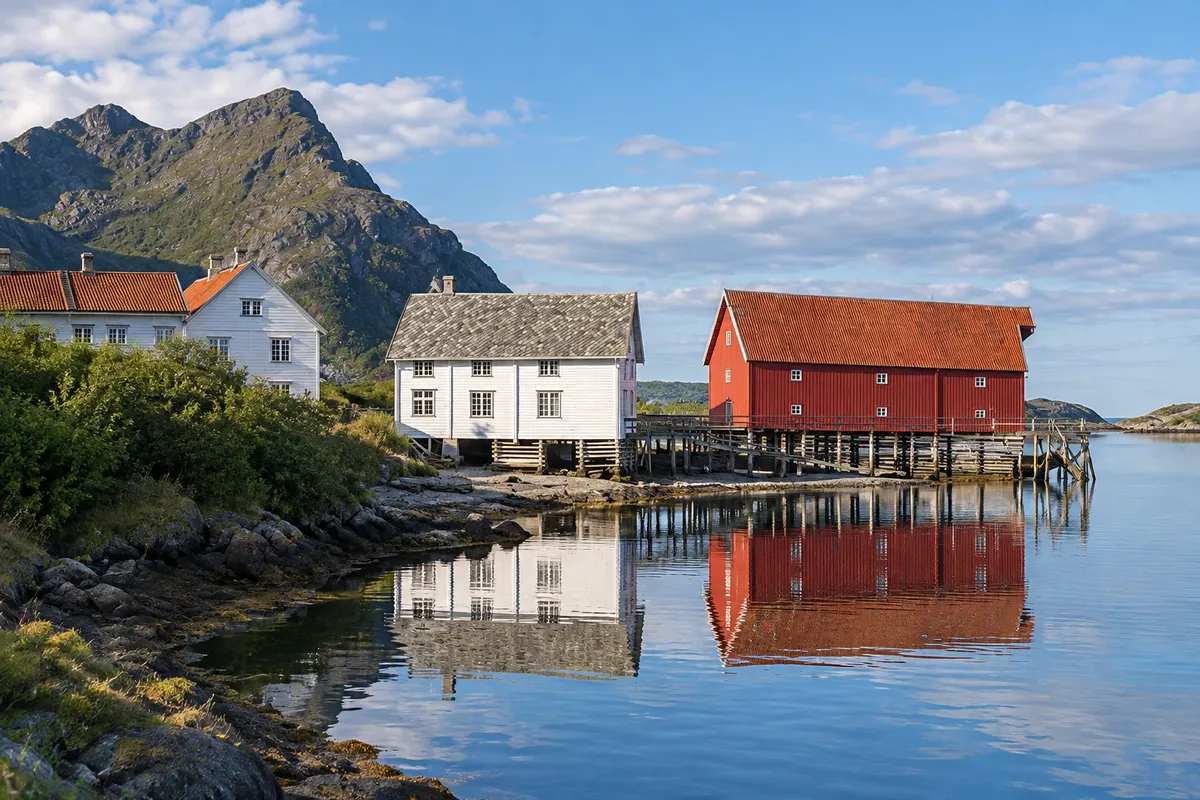
Kjerringøy handelssted preserves an old trading post on the coast north of Bodø. The group of wooden buildings shows how a place organized buying, selling, storage and domestic life around maritime routes.
To choose before you go
Where each tour starts, how long it takes, how it is done, what is included and the price range.
Saltstraumen is a strait near Bodø where water moves between the fjord and the sea with the change of the tide. The visit consists of watching the movement from the shore or taking part in a guided activity on the water. Whirlpools and current lines tend to appear with varying intensity over the tidal cycle. For that reason, the scene does not always look the same. Choose the time of your visit based on the local current table rather than using a fixed time repeated every day.
Stops: Saltstraumen.
Includes: Arrange access to the site and travel separately. Guided activities and admissions have their own terms.
Tip: Check the currents table and choose between observing from shore or taking a guided activity.
Best time: The strength of the current usually varies with the tide; check the day's table
The Norwegian Aviation Museum is in Bodø, next to the airport area. The collections present the country’s civil and military aviation, with aircraft and exhibits that help explain the role of flights in linking regions separated by mountains and sea. The route takes place inside large exhibition halls. Choose the themes that interest you most, because seeing the aircraft and following the explanations takes more time than a quick pass through the foyer. The visit can be done independently of a boat or road trip.
Stops: Norsk Luftfartsmuseum.
Includes: Arrange access to the site and travel separately. Guided activities and admissions have their own terms.
Tip: Decide beforehand whether you want to spend more time on the civil or the military collection.
Best time: Fits in the itinerary year-round, depending on opening days
The Jektefartsmuseet showcases the coastal trade that linked northern Norway to other ports. The museum is located in Bodøsjøen and centers on a jekt-type vessel, used to carry goods along the coast. The visit helps you understand how dried fish, consumer goods and workers moved by sea. The ship Anna Karoline serves as the starting point for a story about commercial relations and coastal communities. The interest goes beyond the boat-building technique.
Stops: Jektefartsmuseet.
Includes: Arrange access to the site and travel separately. Guided activities and admissions have their own terms.
Tip: Use the museum to understand the dried fish trade before continuing to the coastal villages.
Best time: It can be visited in different seasons, according to the opening schedule
Kjerringøy handelssted preserves an old trading post on the coast north of Bodø. The group of wooden buildings shows how a place combined buying, selling, storage and domestic life around the maritime routes. The walk takes you past the buildings and museum spaces, with the shoreline and boats as context. It’s a visit to understand the coastal economy, different from an urban commercial center. Interior spaces and activities follow their own schedule.
Stops: Kjerringøy handelssted.
Includes: Arrange access to the site and travel separately. Guided activities and admissions have their own terms.
Tip: Confirm the museum schedule and the return ferry before leaving Bodø.
Best time: Visits usually have a broader programme between June and August

Day by day
Suggestions to plan the trip. Change the order of the days according to the weather and tour availability.
Dedicate the day to the aviation and maritime trade museums. Both are located outside the harbour centre, in different areas; plan the transfer between them and allow time for the exhibits.
Choose the time window for the Saltstraumen trip using the day's current table. Note the remark in the margin of a boat activity if you want to book a guided outing.
Head north to Kjerringøy, including the ferry crossing when planning the day's schedule. The visiting hours for the buildings and the return transport are the key factors to organize the outing.
Best time to go
From June to August summer is usually mild, with very long days. The northern lights are typically sought between September and March. In winter it tends to be cold and the days are short.
The seasons shown are the most usual ones; nature doesn't always follow the calendar.
Winter · plan your transfers
The monthly average at the reference station is usually around -0.5 °C. The typical monthly precipitation is about 104 mm, combining rain and snow in water equivalent. Cold tends to be persistent and days are usually short. Prioritize activities with confirmed access for the period.
Winter · plan your transfers
The monthly average at the reference station is usually around -1.0 °C. The typical monthly precipitation is about 79 mm, combining rain and snow in water equivalent. Cold tends to be persistent and days are usually short. Prioritize activities with confirmed access for the period.
Spring · plan your transfers
The monthly average at the reference station is usually around 0.2 °C. The typical monthly precipitation is about 81 mm, combining rain and snow in water equivalent. Daylight tends to increase over the season, while snow often remains in the mountains. High-altitude routes follow their own schedule.
Spring · plan your transfers
The monthly average at the reference station is usually around 3.4 °C. The typical monthly precipitation is about 71 mm, combining rain and snow in water equivalent. Daylight tends to increase over the season, while snow often remains in the mountains. High-altitude routes follow their own schedule.
Spring · long days
The monthly average in the reference season is usually around 7.3 °C. Normal monthly precipitation is about 65 mm, combining rain and snow in water equivalent. Daylight generally increases over the season, while snow usually remains on the mountains. high‑altitude routes follow their own schedule.
Summer · long days
The monthly average in the reference season is usually around 10.8 °C. Normal monthly precipitation is about 65 mm, combining rain and snow in water equivalent. Weather is typically mild and the days are usually very long. There is greater demand for outdoor activities; arrange bookings in advance.
Summer · long days
The monthly average in the reference season is usually around 13.6 °C. Normal monthly precipitation is about 66 mm, combining rain and snow in water equivalent. Weather is typically mild and the days are usually very long. There is greater demand for outdoor activities; arrange bookings in advance.
Summer · long days
The monthly average in the reference season is usually around 13.2 °C. Normal monthly precipitation is about 85 mm, combining rain and snow in water equivalent. Weather is typically mild and the days are usually very long. There is greater demand for outdoor activities; arrange bookings in advance.
Autumn · plan your transfers
The monthly average in the reference season is usually around 10.1 °C. Normal monthly precipitation is about 129 mm, combining rain and snow in water equivalent. Temperatures and day length typically fall. Long hikes and mountain transfers require planning before setting out.
Autumn · plan your transfers
The monthly average at the reference station is usually around 5.6 °C. The typical monthly precipitation is about 138 mm, combining rain and snow in water equivalent. Temperatures and day length usually fall. Long hikes and mountain transfers require planning before departure.
Autumn · plan your transfers
The monthly average at the reference station is usually around 2.6 °C. The typical monthly precipitation is about 116 mm, combining rain and snow in water equivalent. Temperatures and day length usually fall. Long hikes and mountain transfers require planning before departure.
Winter · plan your transfers
The monthly average at the reference station is usually around 0.8 °C. The typical monthly precipitation is about 119 mm, combining rain and snow in water equivalent. Cold tends to be persistent and days are usually short. Prioritize activities with confirmed access for the period.
Plan the journey
Check train, bus and ferry connections to Bodø for your travel dates. Verify each leg and the return connection before combining different services. On ferry routes, confirm the pier and the direction of travel.
The town center allows walking and using buses. A car makes visiting Saltstraumen and Kjerringøy easier; without a car, choose scheduled connections or excursions with a fixed return.
Before you go
A little planning leaves more time to enjoy the journey.
From June to August summer is usually mild, with very long days. The northern lights are typically sought between September and March. In winter it tends to be cold and the days are short.
The seasons shown are the most usual ones; nature doesn't always follow the calendar.
Three days for the main outings, allowing time for transport on the northern itinerary.
The centre and waterfront area bring you close to restaurants, the port and the station. Saltstraumen lies outside the centre and serves those who prioritise activities in the strait.
Take your trash with you, follow the signs and support local businesses. In natural areas, follow the visiting guidelines.
Get your questions answered
The airport and railway station serve Bodø; the railway comes from Trondheim. Ferries and coastal ships complement the connections.
Three days for the main outings, allowing time for transport on the northern itinerary.
The centre and waterfront area bring you close to restaurants, the port and the station. Saltstraumen lies outside the centre and serves those who prioritise activities in the strait.