

 Brazil
 Argentina
 Bolivia
 Chile
 Colombia
 Ecuador
 Guyana
 French Guiana
 Falkland Islands (Malvinas)
 Paraguay
 Peru
 Suriname
 Uruguay
 Venezuela
 Germany
 Austria
 Belgium
 Croatia
 Denmark
 Spain
 Finland
 France
 Greece
 the Netherlands
 Hungary
 Ireland
 Iceland
 Italy
 Luxembourg
 Norway
 Poland
 Portugal
 the United Kingdom
 the Czech Republic
 Sweden
 Switzerland
 Turkey
 the Dominican Republic
 South Africa
 Fiji
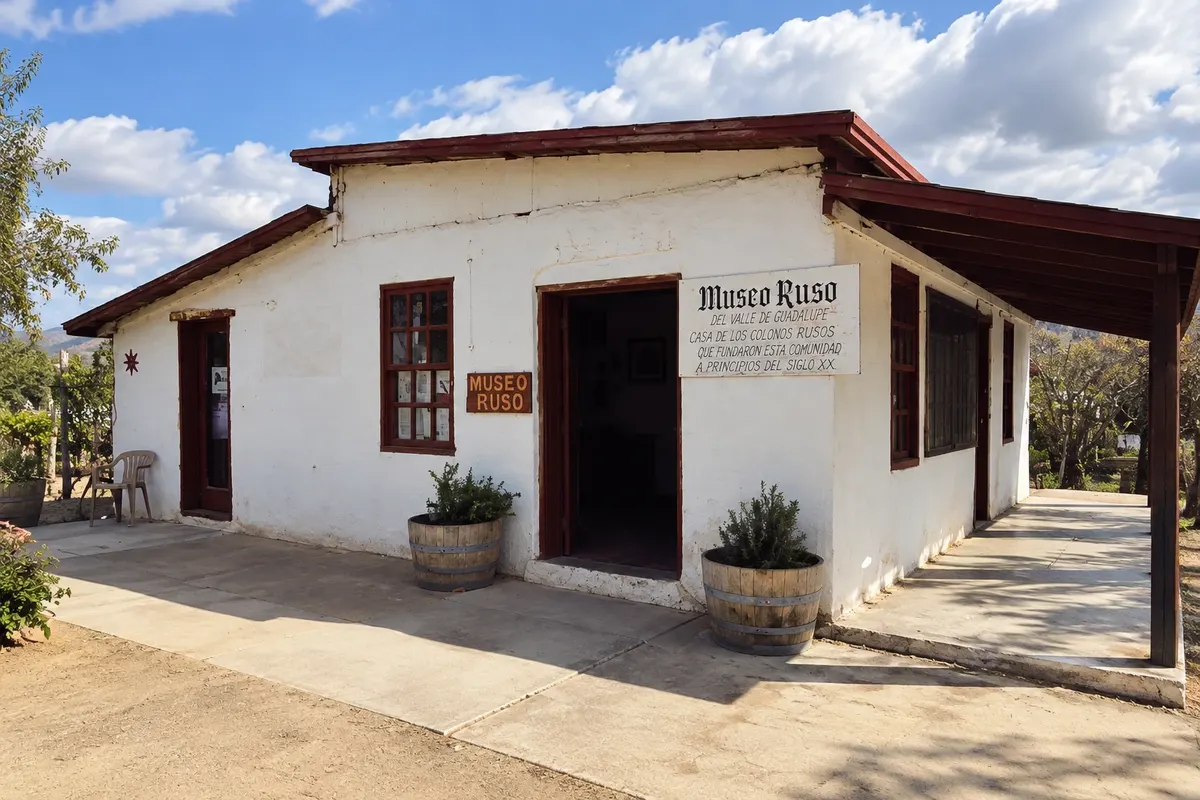
Museum · Valle de Guadalupe, Baixa Califórnia
Museo Comunitario del Valle de Guadalupe
Small museum in Francisco Zarco about the Molokan Russian immigrants who settled in the valley in 1905.
Illustrative images. The pictures in this guide are illustrations based on the real place, not photographs, and may differ from it.

Discover
About Museo Comunitario del Valle de Guadalupe
At the beginning of the 20th century, in 1905, a group of Russian families from the Molokan religious community, who left Russia to escape persecution, settled in Valle de Guadalupe, where they farmed wheat and grapes. Their descendants still live in the village of Francisco Zarco.
The community museum, in an adobe house from that era, displays photographs, clothing, utensils, agricultural tools and religious objects from the Russian families, and tells how they adapted to the valley.
Next door, a Russian family home houses a small private museum and a restaurant serving traditional dishes such as bread, soup and piroshki.
Nearby are the ruins of the Dominican mission of Nuestra Señora de Guadalupe del Norte, from 1834, the last mission founded in Baja California.
Before you go
Practical information
Cidade Turismo reviews its information regularly, but something may have changed. Check with the place before planning your trip.
How much time to set aside
Half an hour to an hour.
Best time
During the day. Check opening days.
How to get there
In the village of Francisco Zarco in Valle de Guadalupe, a few minutes from Highway 3.
Tip
Try the traditional Russian bread and soup at the adjacent restaurant.
Get your questions answered
Frequently asked questions about Museo Comunitario del Valle de Guadalupe
Why are there Russians in Valle de Guadalupe?
Families from the Molokan religious community arrived in 1905, fleeing persecution in Russia.
What is in the community museum?
Photographs, clothing, utensils and objects from the Russian families who settled in the valley.
Where is the Russian museum?
In the village of Francisco Zarco in Valle de Guadalupe.