

 Brazil
 Argentina
 Bolivia
 Chile
 Colombia
 Ecuador
 Guyana
 French Guiana
 Falkland Islands (Malvinas)
 Paraguay
 Peru
 Suriname
 Uruguay
 Venezuela
 Germany
 Austria
 Belgium
 Croatia
 Denmark
 Spain
 Finland
 France
 Greece
 the Netherlands
 Hungary
 Ireland
 Iceland
 Italy
 Luxembourg
 Norway
 Poland
 Portugal
 the United Kingdom
 the Czech Republic
 Sweden
 Switzerland
 Turkey
 the Dominican Republic
 South Africa
 Fiji
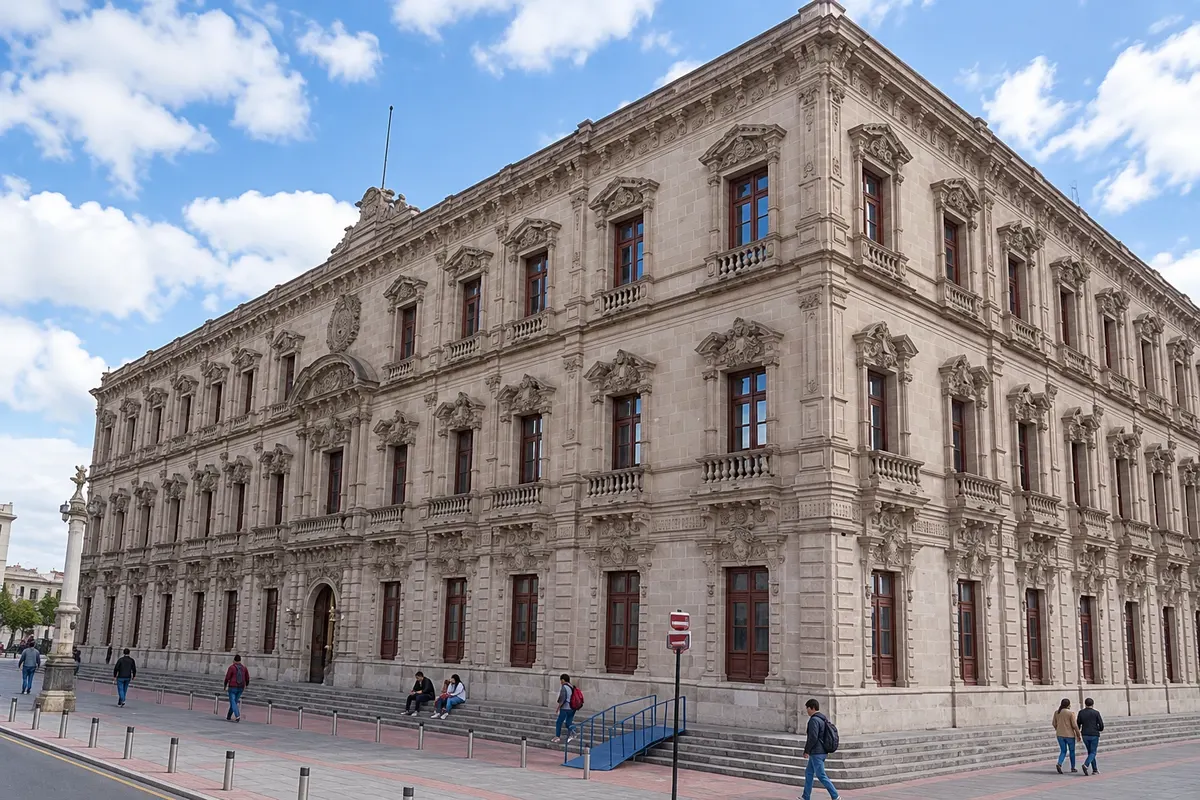
Palace and murals · Chihuahua, Chihuahua
Palacio de Gobierno de Chihuahua
19th-century palace with murals by Aarón Piña Mora about the state’s history and the Altar of the Homeland, on the site where the priest Hidalgo was executed.
Illustrative images. The pictures in this guide are illustrations based on the real place, not photographs, and may differ from it.

Discover
About Palacio de Gobierno de Chihuahua
The Government Palace of Chihuahua was built at the end of the 19th century, on the site of the former Jesuit college, where Father Miguel Hidalgo was imprisoned and executed in 1811 after being captured at the start of the War of Independence.
The walls of the central courtyard are covered with murals by the painter Aarón Piña Mora, painted beginning in 1959, which tell the history of Chihuahua, from the indigenous peoples to the Revolution.
On the ground floor, the Altar of the Homeland marks the exact spot of Hidalgo's execution, with a burning flame. Next to it is the Hidalgo Museum, and a few blocks away, in the Federal Palace, the cell where he was held.
The palace is one block from the cathedral and can be visited during office hours.
Before you go
Practical information
Cidade Turismo reviews its information regularly, but something may have changed. Check with the place before planning your trip.
How much time to set aside
Half an hour to an hour.
Best time
During the day.
How to get there
On Plaza Hidalgo, one block from the cathedral, in downtown Chihuahua.
Tip
Walk through the courtyard's two levels to see the murals in order.
Get your questions answered
Frequently asked questions about Palacio de Gobierno de Chihuahua
Who painted the murals in the Government Palace?
The painter Aarón Piña Mora.
What is the Altar of the Homeland?
The place where Father Hidalgo was executed in 1811, on the palace's ground floor.
Can the Government Palace be visited?
Yes, during office hours.