

 Brazil
 Argentina
 Bolivia
 Chile
 Colombia
 Ecuador
 Guyana
 French Guiana
 Falkland Islands (Malvinas)
 Paraguay
 Peru
 Suriname
 Uruguay
 Venezuela
 Germany
 Austria
 Belgium
 Croatia
 Denmark
 Spain
 Finland
 France
 Greece
 the Netherlands
 Hungary
 Ireland
 Iceland
 Italy
 Luxembourg
 Norway
 Poland
 Portugal
 the United Kingdom
 the Czech Republic
 Sweden
 Switzerland
 Turkey
 Mexico
 the Dominican Republic
 South Africa
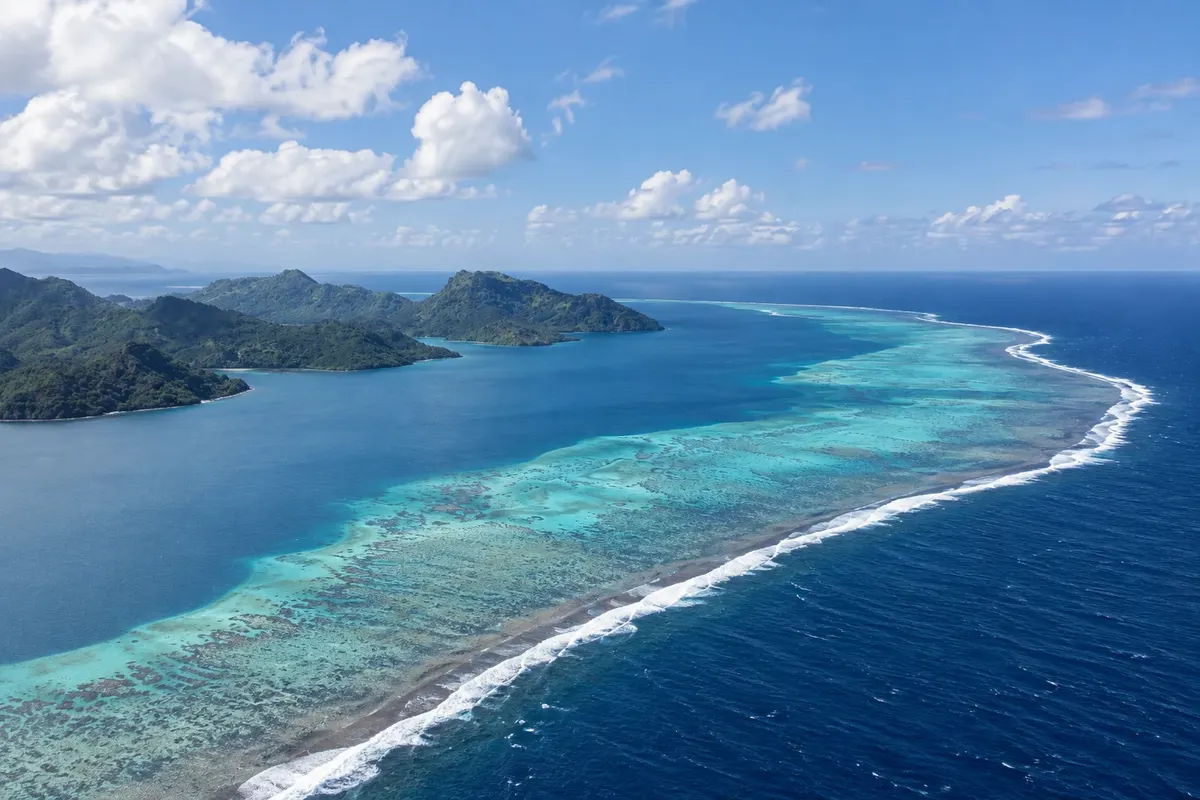
Diving · Vunisea, Kadavu
Grande Recife Astrolábio (Great Astrolabe Reef)
Coral barrier along Kadavu’s east and north coasts, one of the largest in the world, with more than 60 dive sites and stations where manta rays often appear.
Illustrative images. The pictures in this guide are illustrations based on the real place, not photographs, and may differ from it.

Discover
About Grande Recife Astrolábio (Great Astrolabe Reef)
The Great Astrolabe Reef stretches along Kadavu’s east and north coasts and around Ono island, and is one of the largest coral barriers in the world. The name comes from the French ship Astrolabe, of explorer Dumont d'Urville, which nearly wrecked on the reef in 1827.
There are over 60 dive sites, with walls that drop to depth, channels between corals, caverns and heads of hard and soft coral. Marine life includes turtles, reef sharks, schools of barracuda and reef fish, and manta rays commonly visit cleaning stations near Ono and Buliya.
Because the reef is far from large cities, the water is often very clear and the corals well preserved. Local villages take part in protecting reef areas, with zones where fishing is prohibited.
Diving is arranged with lodgings and Kadavu operators who take divers by boat. For non-divers there are shallow snorkel spots near the islets.
Before you go
Practical information
Cidade Turismo reviews its information regularly, but something may have changed. Check with the place before planning your trip.
How much time to set aside
Half a day or a full day, with two or three dives.
Best time
Diving is done year-round. From November to April the sea is usually calmer; from May to October the southeast wind can stir up the sea and cancel outings to the outer side of the reef. Manta rays are not guaranteed to be seen.
How to get there
By boat, from the accommodations in Kadavu and Ono, with local dive operators. From Vunisea, the lodgings arrange transfers.
Tip
Bring your diving certificate and inform the operator of your level; some sites have strong currents.
Get your questions answered
Frequently asked questions about Grande Recife Astrolábio (Great Astrolabe Reef)
Why is it called Astrolabe Reef?
Because of the French ship Astrolabe, of Dumont d'Urville, which nearly wrecked on the reef in 1827.
How many dive sites are there?
More than 60 sites along the reef.
Where are manta rays seen?
At cleaning stations near Ono and Buliya, without a guaranteed sighting.