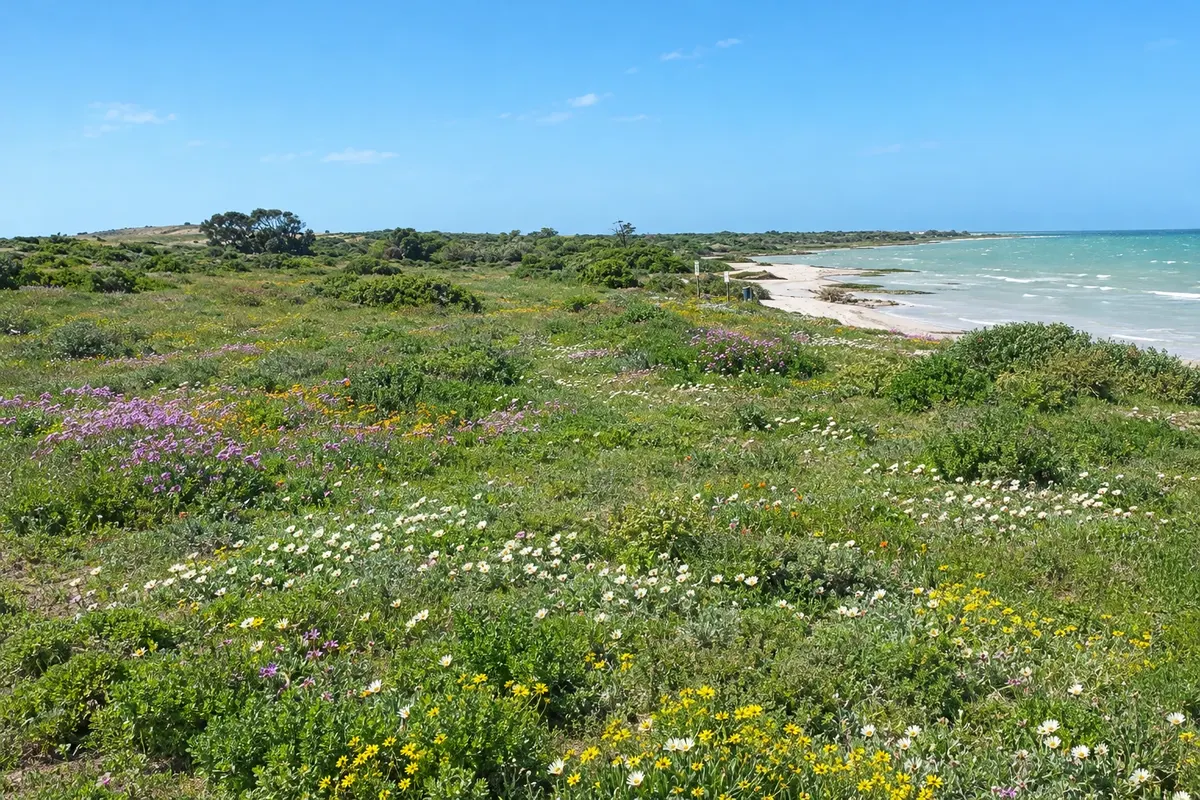
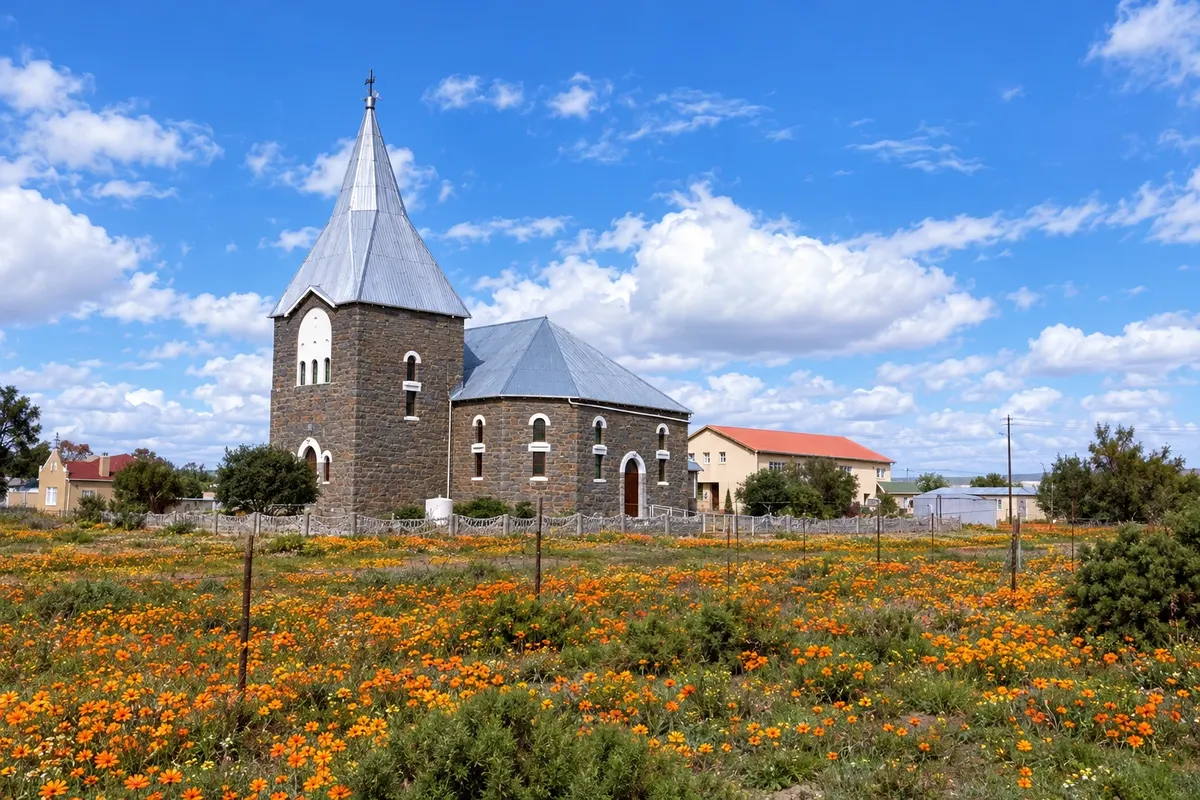
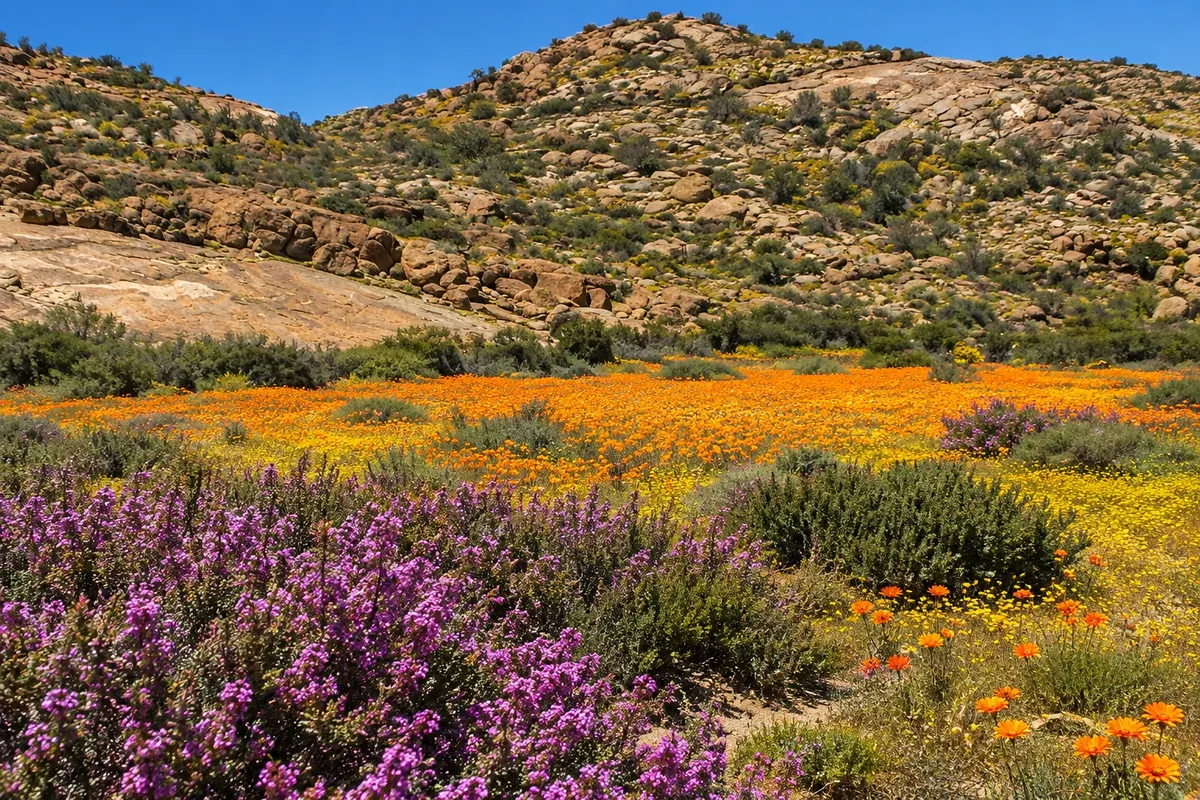
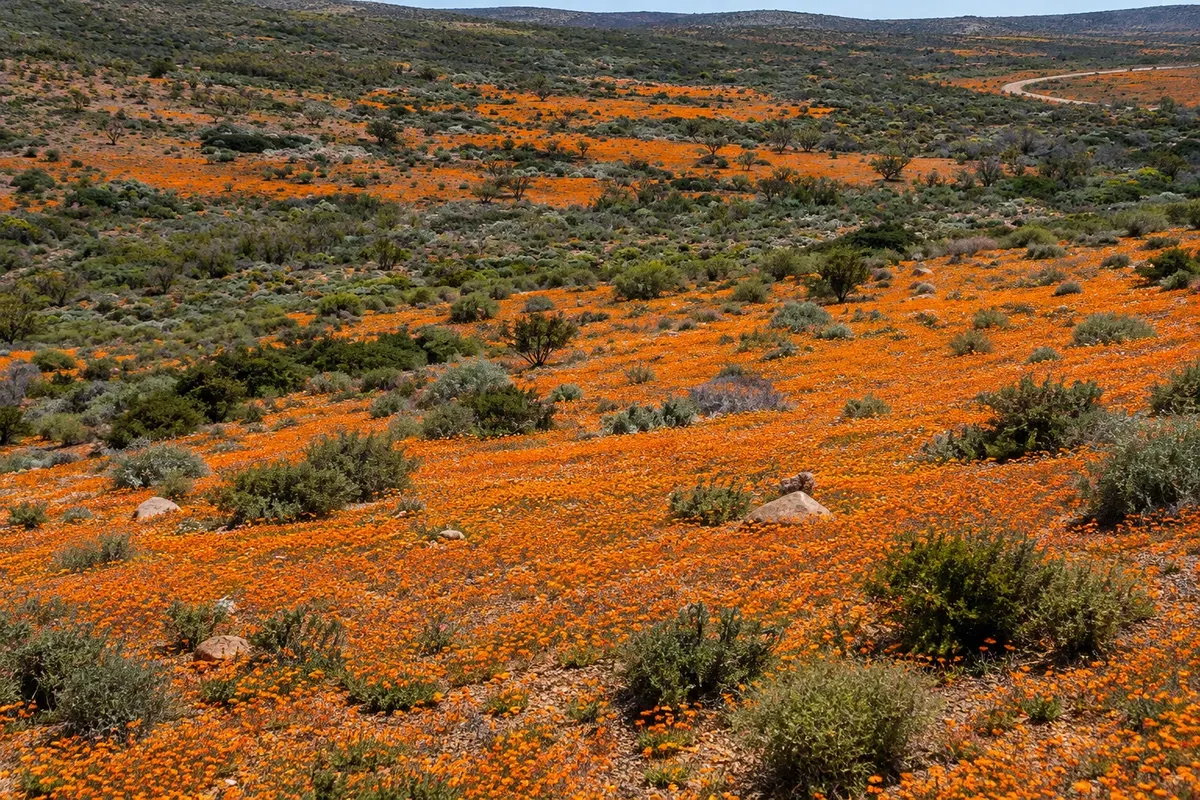
Namaqualand is the semi-desert region in the northwest of South Africa, between the Atlantic coast and the interior of the Northern Cape, near the border with Namibia. For most of the year the landscape is dry, with granite rocks, low shrubs and succulent plants. But when the winter rains arrive in sufficient measure, spring brings a bloom that covers entire fields with orange, yellow, white and purple daisies, a spectacle that lasts only a few weeks.
The region belongs to the Succulent Karoo biome, one of the semi-deserts with the highest number of plant species in the world; half of them exist only there. The flowers typically open between late July and early October, peaking in August and September, but the timing and strength of the bloom change each year depending on rainfall.
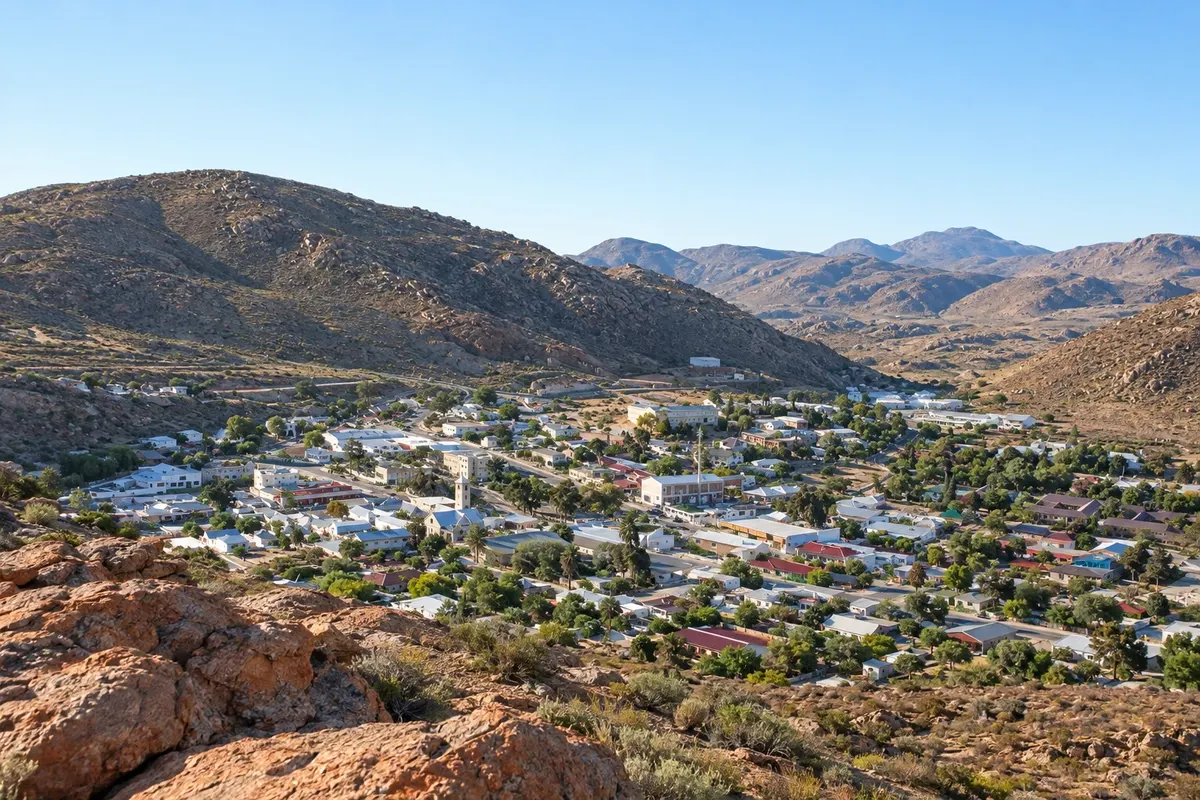
Springbok, the largest town, grew from copper mining discovered there by governor Simon van der Stel in 1685, and is the base for the Goegap Nature Reserve. Further south, Kamieskroon is the gateway to the Skilpad area of Namaqua National Park, where former wheat fields become covered in orange flowers. The roads between them, like the Wildeperdehoek and Messelpad passes, also often have flowers on the slopes.
It’s worth planning with flexibility and checking the park’s and regional tourism bloom reports before going.
This destination brings together 2 cities: Springbok, Kamieskroon.


 Brazil
 Argentina
 Bolivia
 Chile
 Colombia
 Ecuador
 Guyana
 French Guiana
 Falkland Islands (Malvinas)
 Paraguay
 Peru
 Suriname
 Uruguay
 Venezuela
 Germany
 Austria
 Belgium
 Croatia
 Denmark
 Spain
 Finland
 France
 Greece
 the Netherlands
 Hungary
 Ireland
 Iceland
 Italy
 Luxembourg
 Norway
 Poland
 Portugal
 the United Kingdom
 the Czech Republic
 Sweden
 Switzerland
 Turkey
 Mexico
 the Dominican Republic
 Fiji