Vlaams roodbruin bier
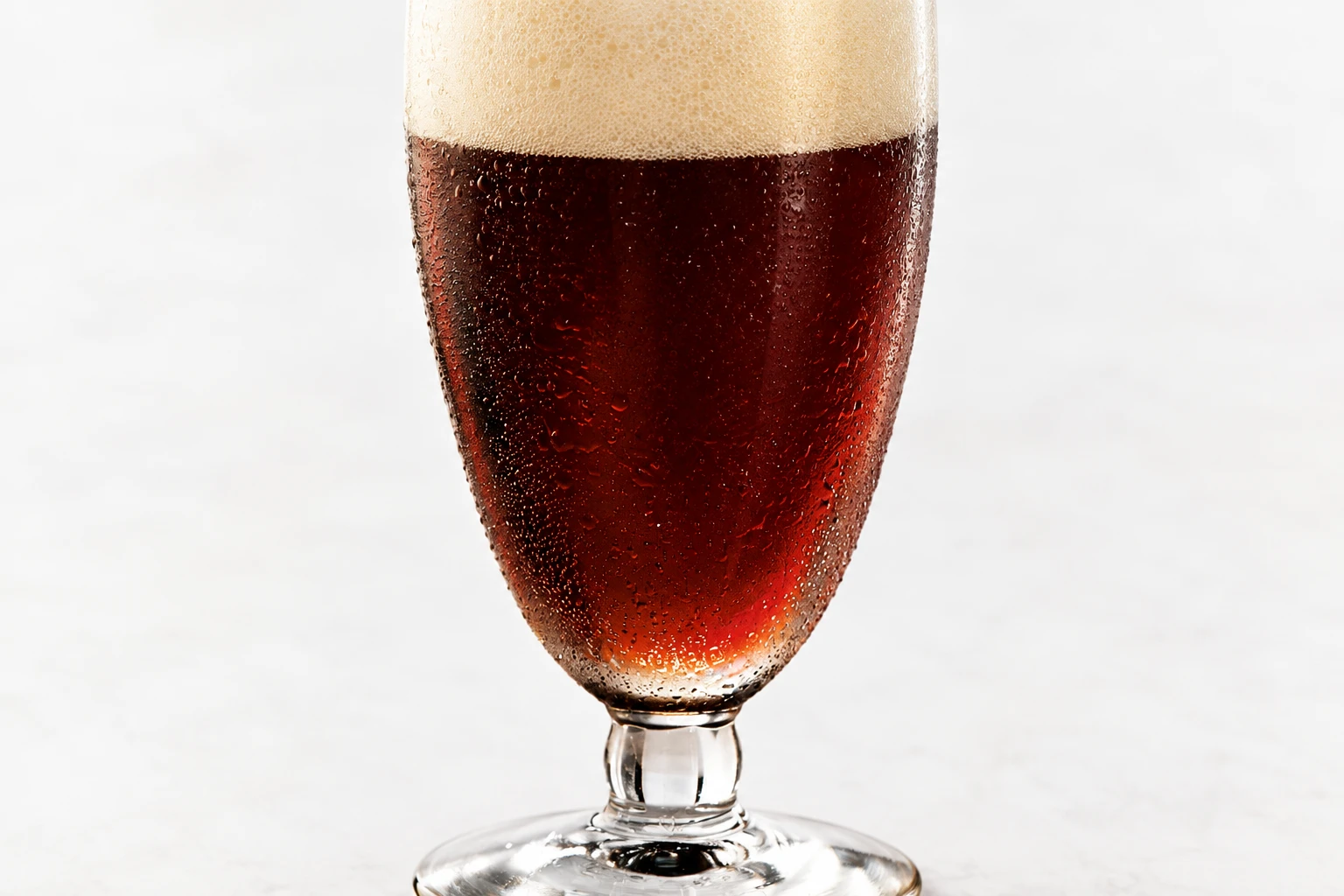
Mixed-fermentation beer, mildly acidic, matured in large upright oak barrels called foeders. The European Union protects the name as a geographical indication, with production in parts of West Flanders.
Antarctica
Province · Flanders
The only Belgian province on the coast: 67 km of beaches and dunes, Bruges with its canals and, inland, the fields where the First World War was fought.
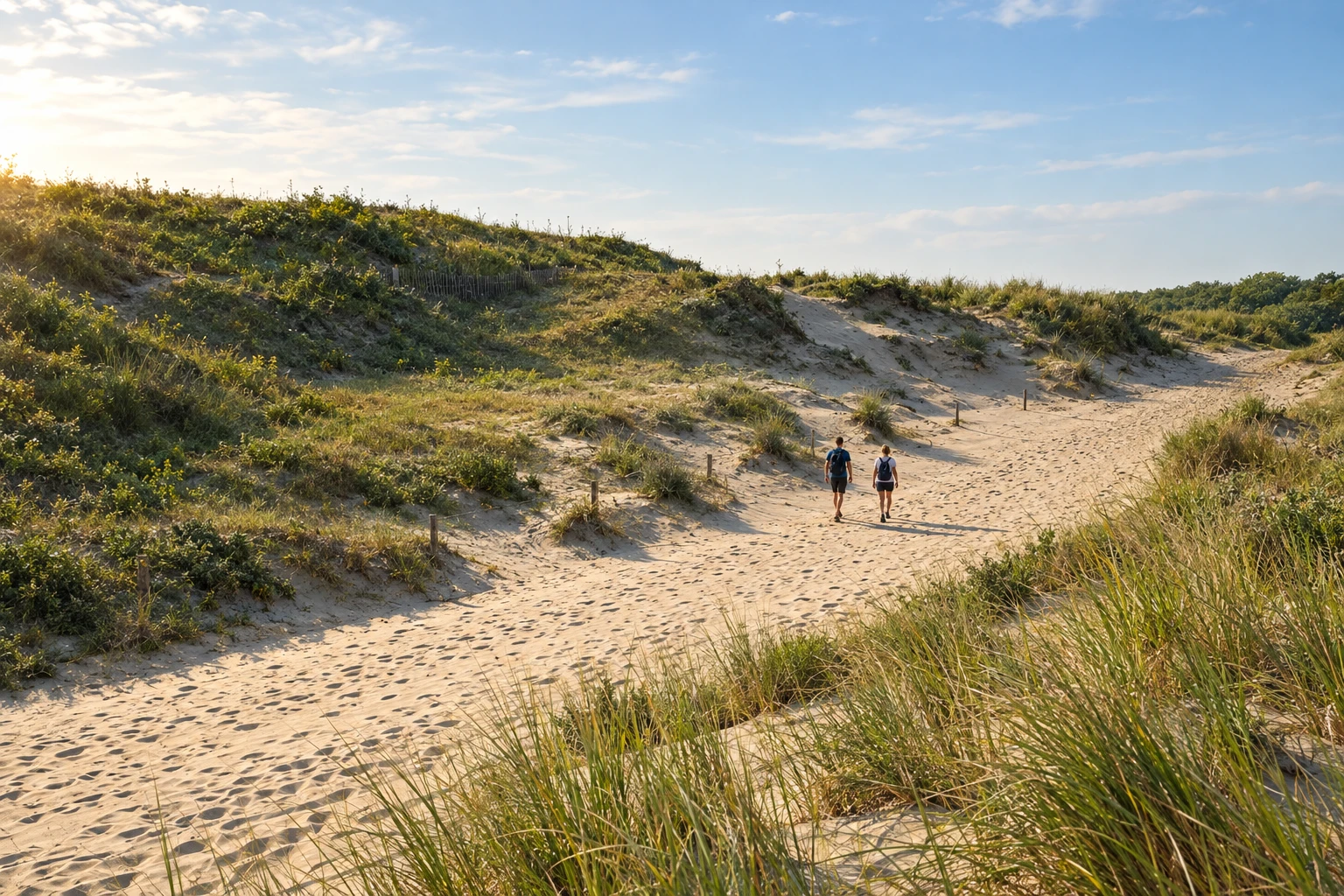
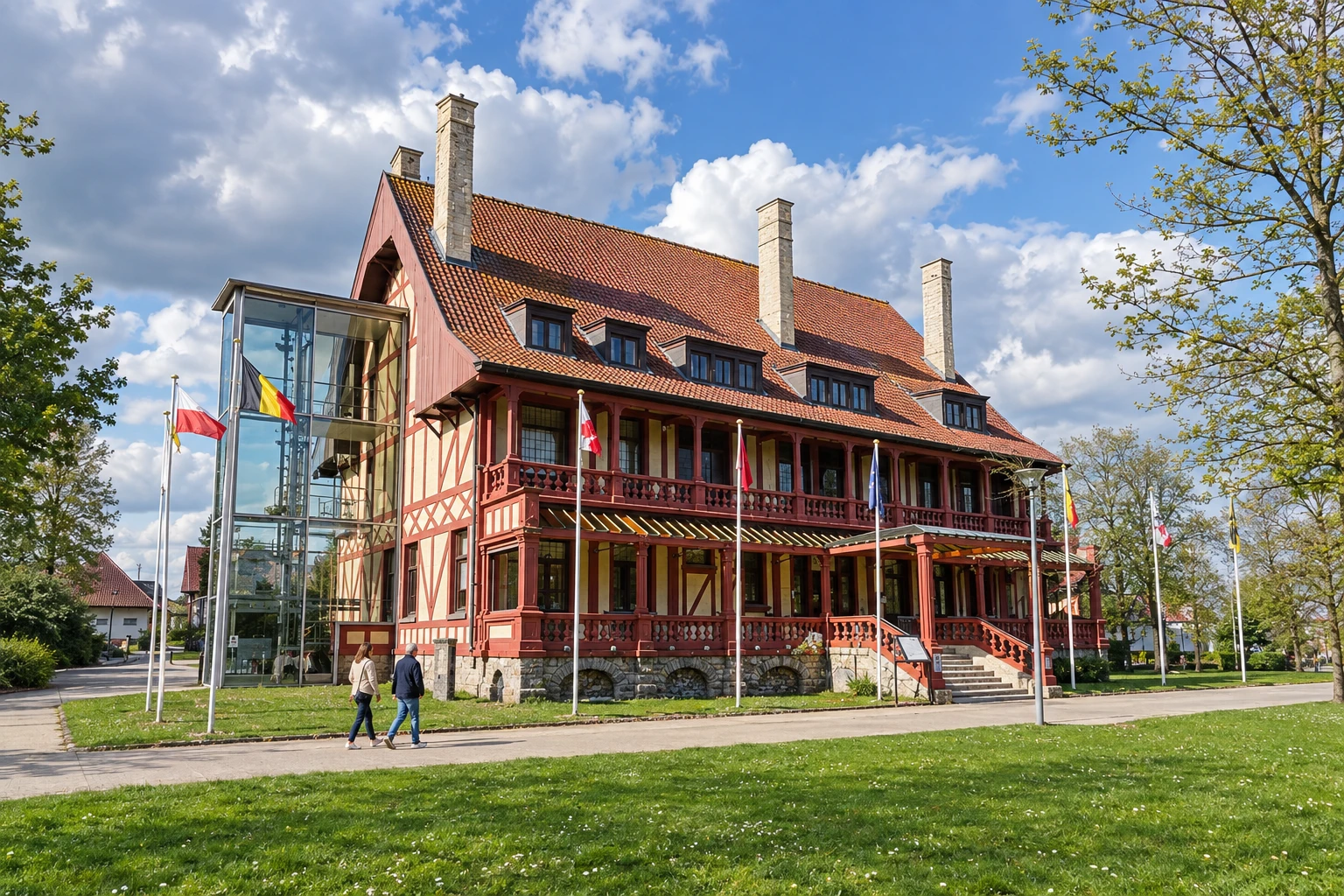
In the photo: Westhoekreservaat, De Panne
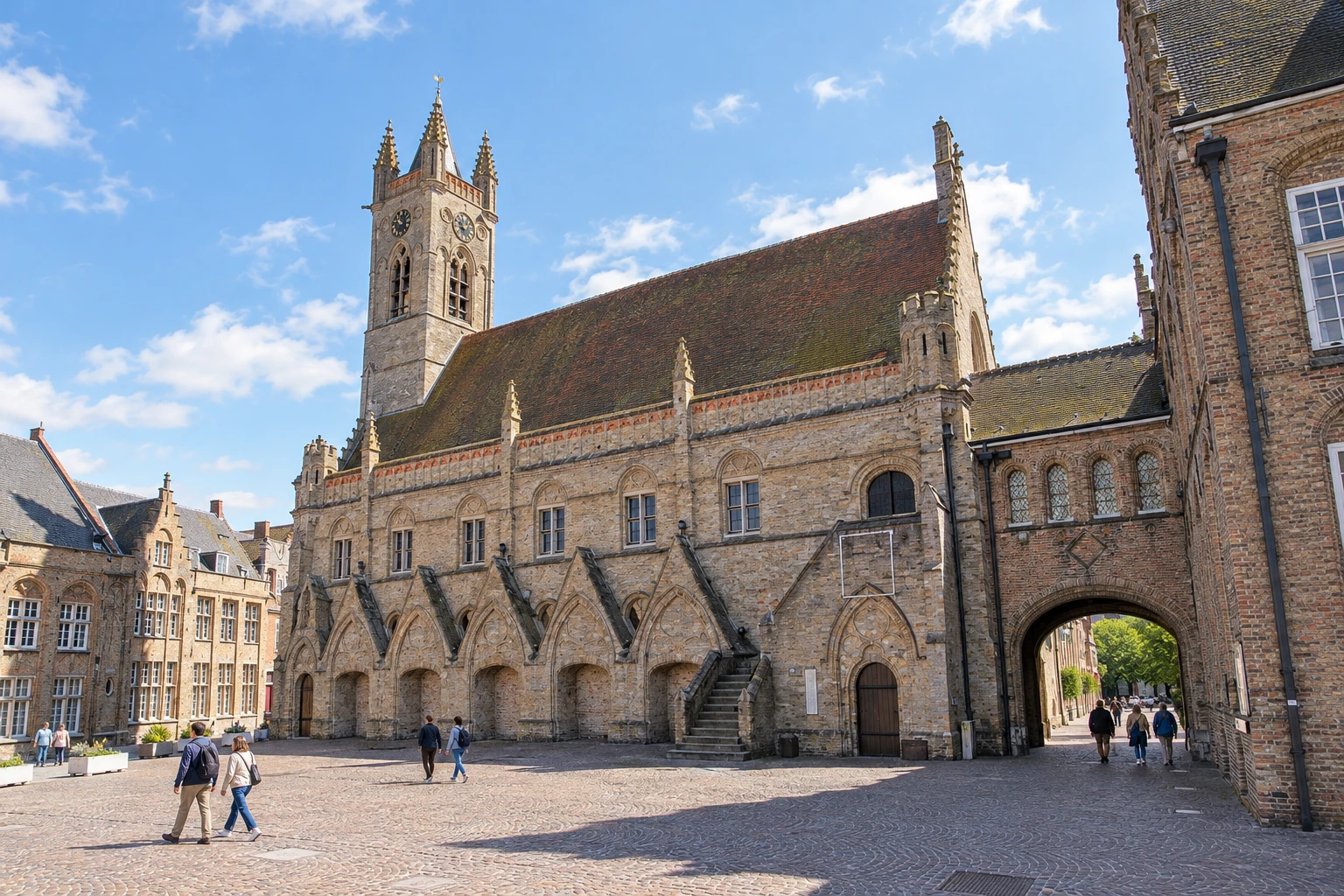
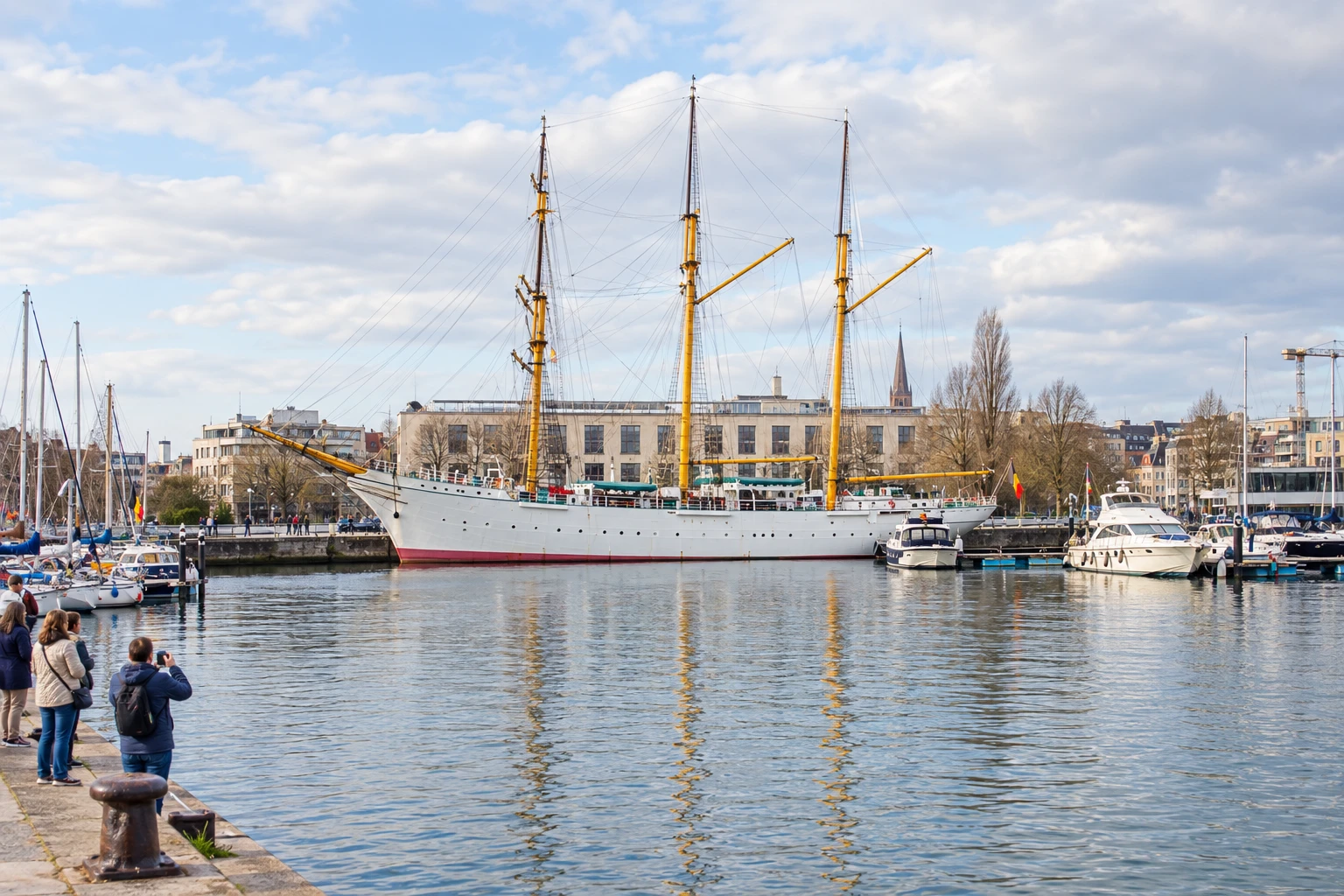
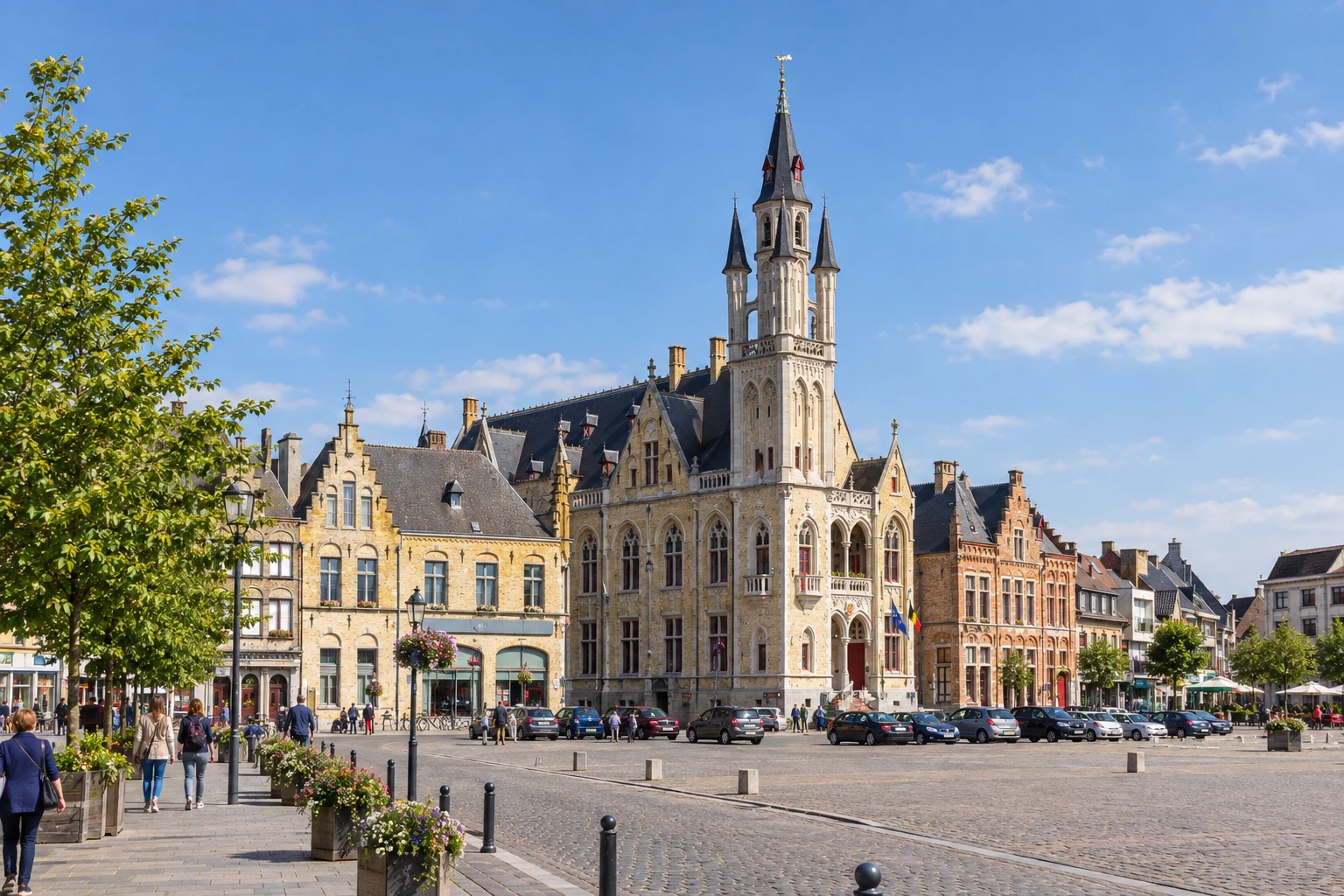
Illustrative images. The pictures in this guide are illustrations based on the real place, not photographs, and may differ from it.
Province
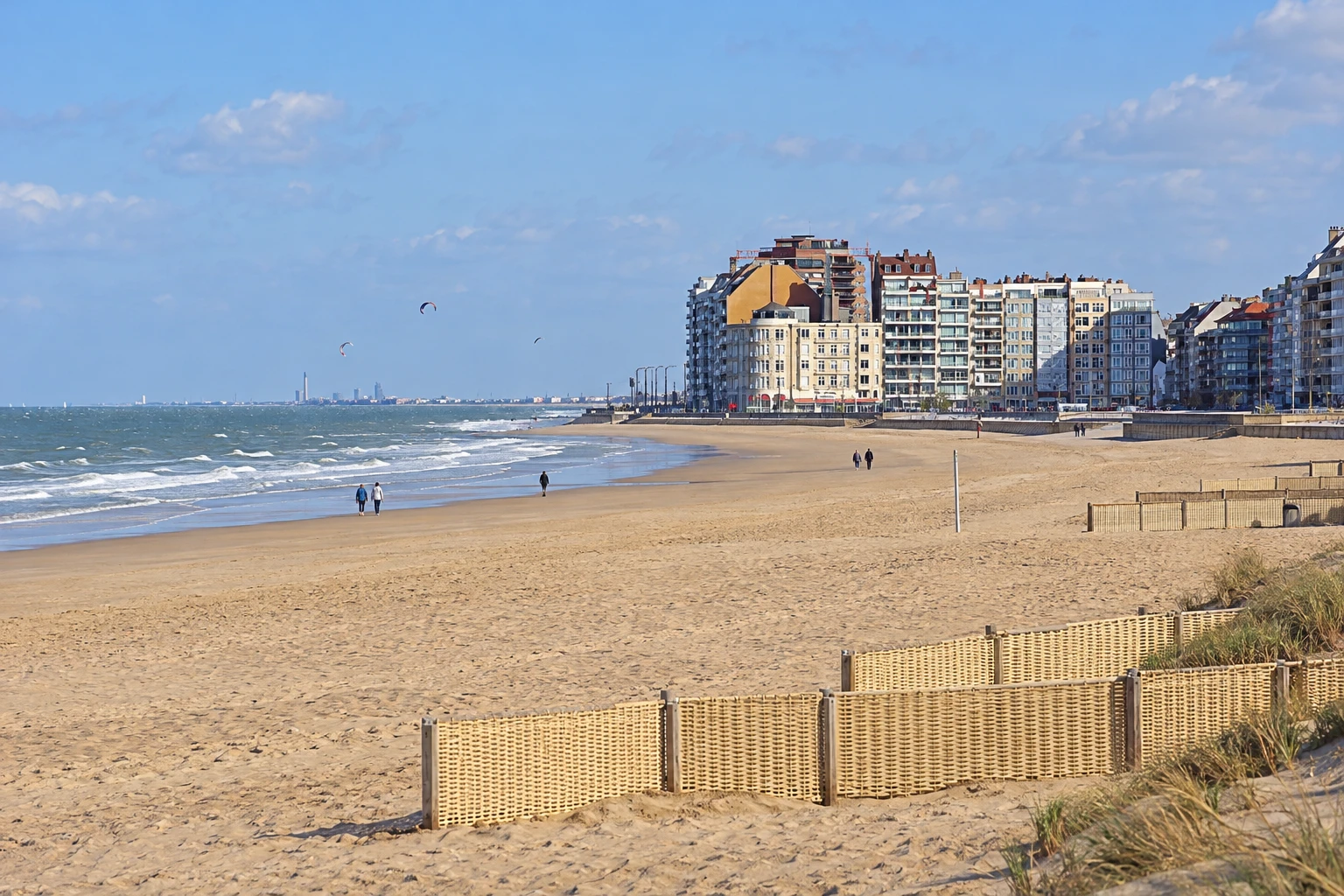
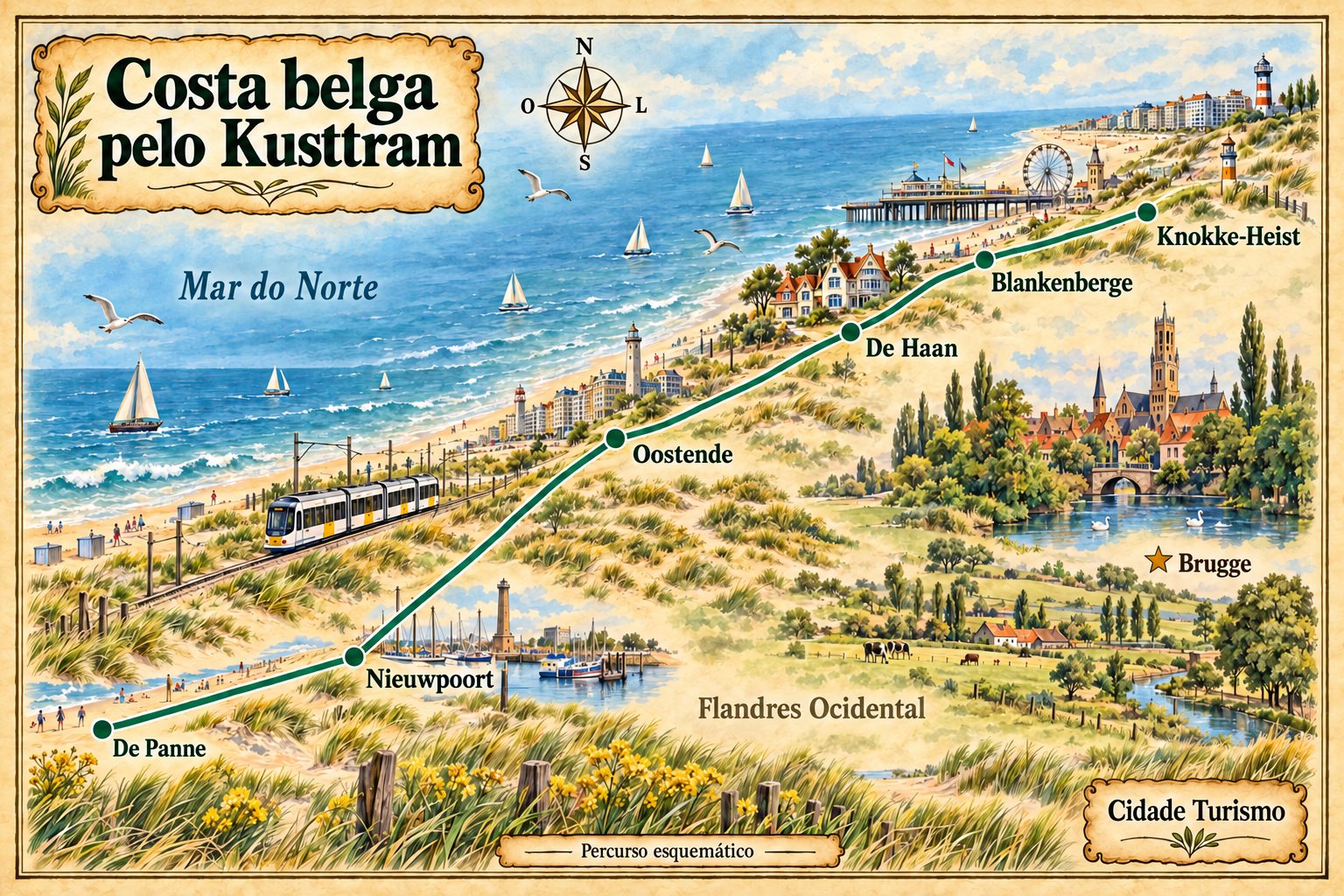
Flandres Ocidental is the corner of Belgium that borders the North Sea. The entire coast lies here, from De Panne, near the border with France, to Knokke-Heist, nearly at the Netherlands. The Kusttram, the coastal tram, runs the length of this shoreline and passes through Nieuwpoort, Ostende, De Haan and Blankenberge. Behind the beach are the polders, flat land reclaimed from the sea, cut by canals and lined with poplars.
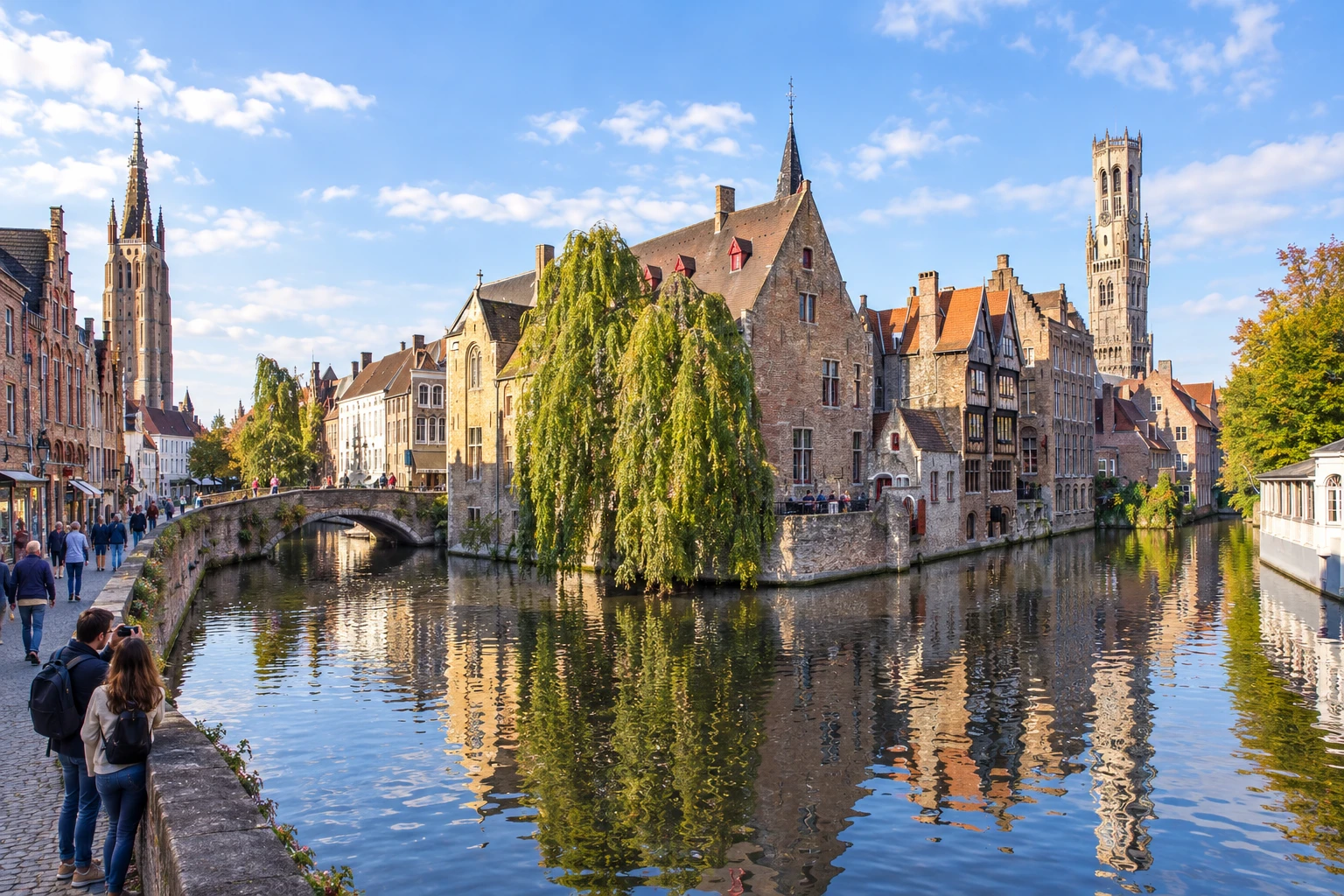
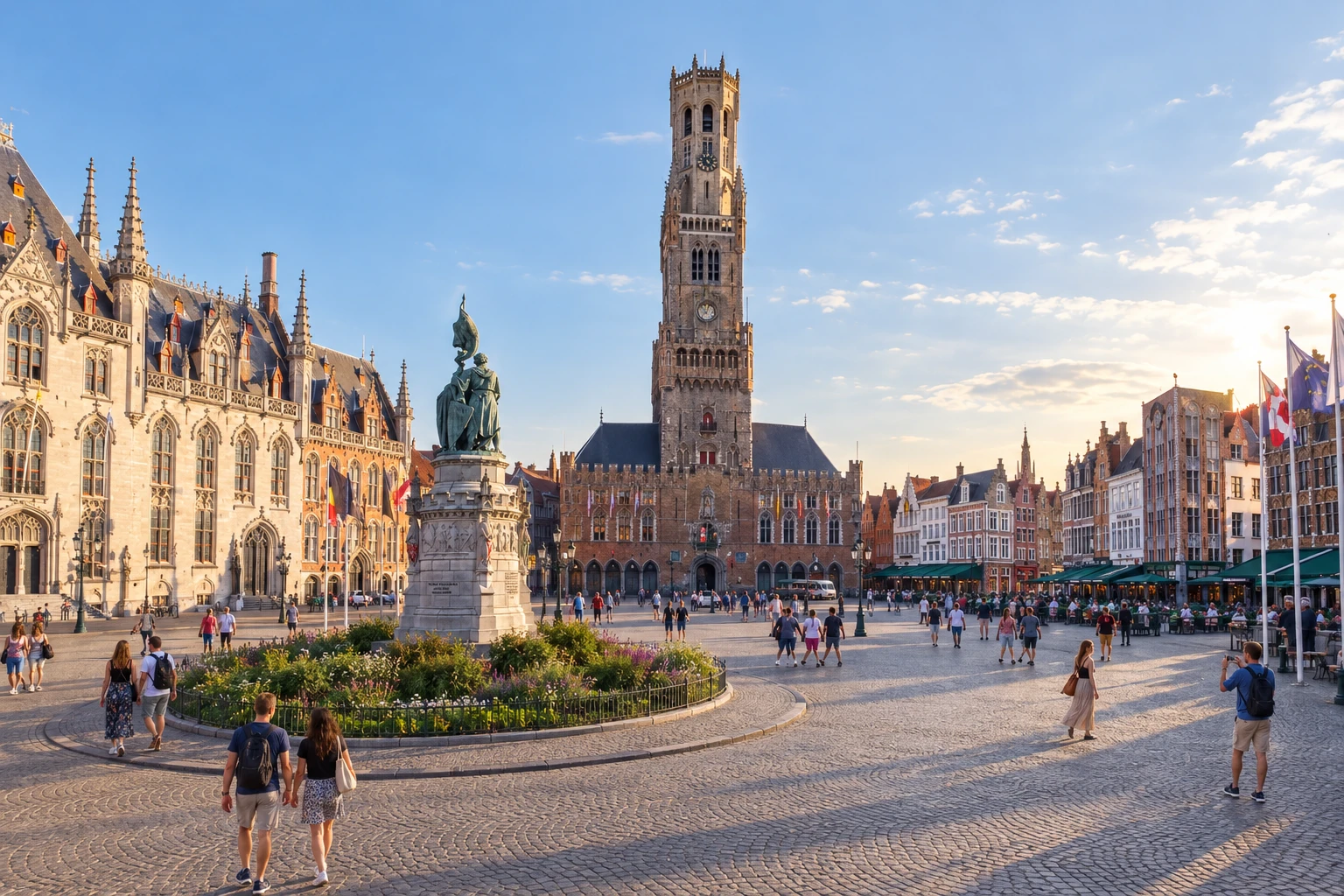
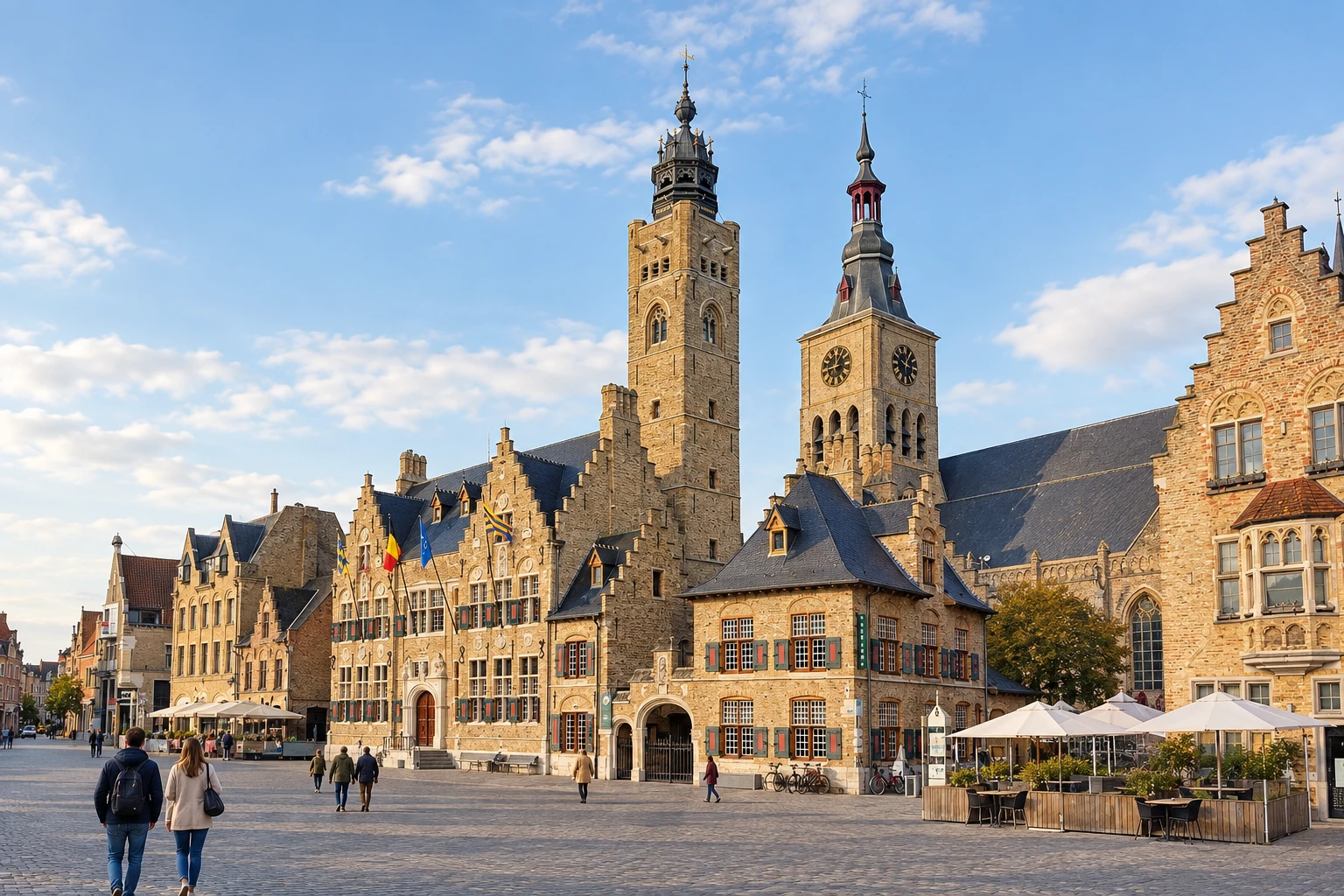
Bruges is the capital and the calling card. The medieval centre, with the Belfort, the Markt and the canals, has been a UNESCO World Heritage Site since 2000. The city grew wealthy on the cloth trade in the Middle Ages, when the Zwin sea arm reached its gates. When the channel silted up, the port died and the centre froze in time. Damme, a few kilometres away, was Bruges’s former outport and today is a village beside a tree‑lined canal.
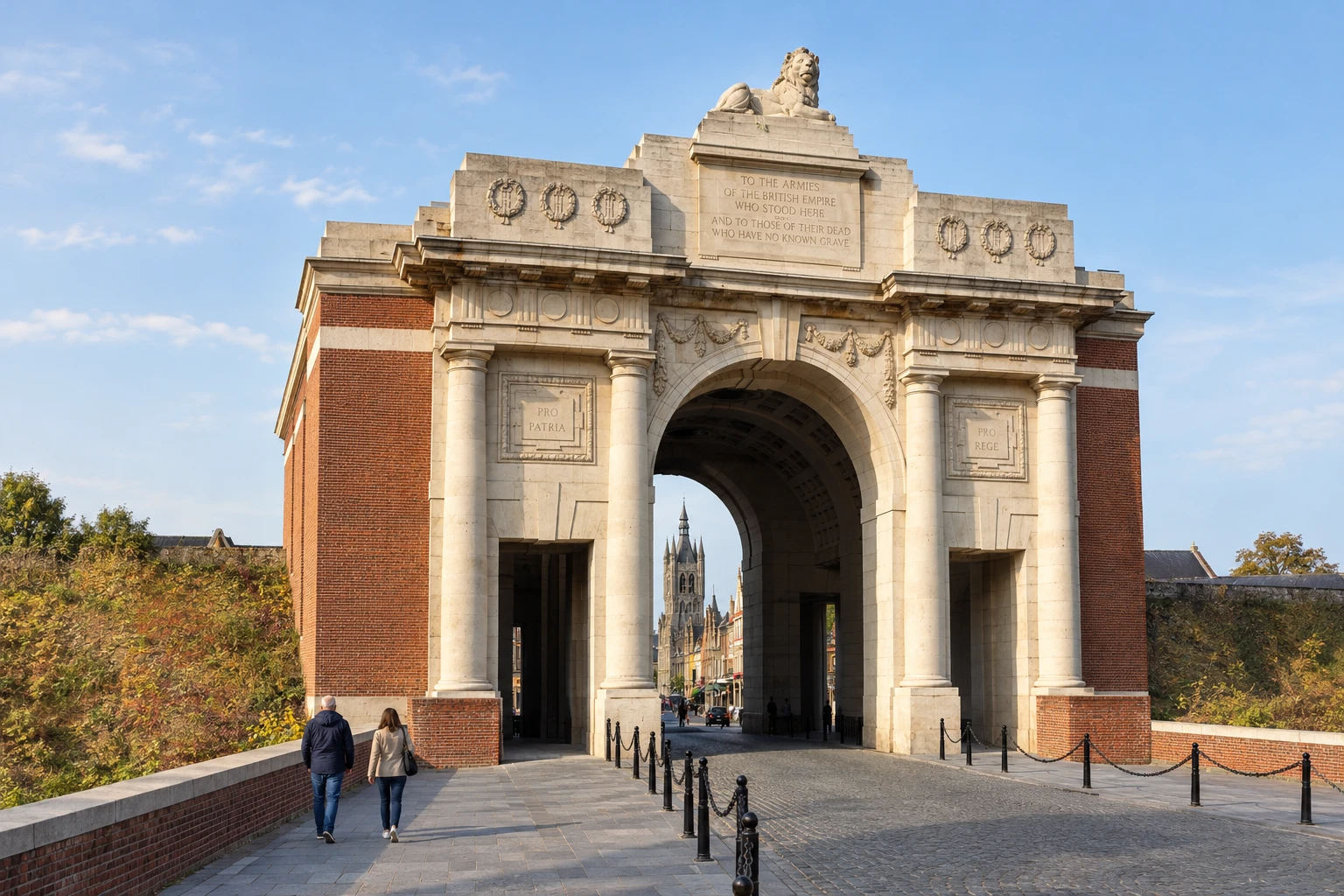
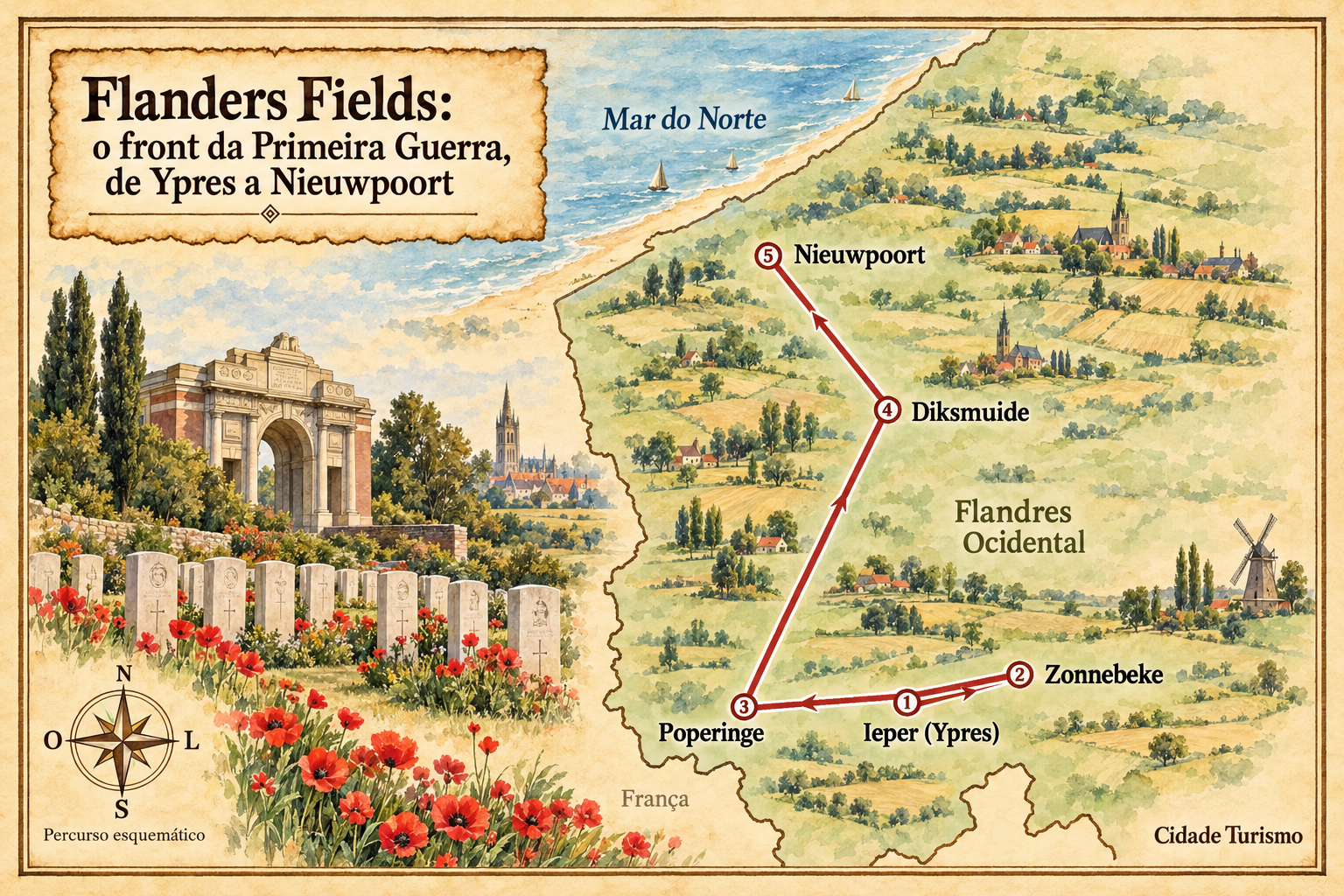
The southwest of the province is the Westhoek, and the story there is different. Between 1914 and 1918 the First World War front line cut across these fields. Ypres was destroyed and rebuilt stone by stone; at the Porta de Menin the Last Post is sounded every night since 1928, interrupted only during the German occupation in the Second World War. Around it are Zonnebeke, with the Tyne Cot cemetery, Poperinge, which was the rear area for British soldiers, and Diksmuide, where the Belgian front stopped behind the waters of the IJzer.
People speak Dutch, in a western dialect called West-Vlaams, which even other Flemings sometimes find hard to understand. On the table, the sea dominates: grey shrimp croquettes, mussels with fries and the catch of the day at the ports of Nieuwpoort and Ostende. Inland you find stoverij, a beef stew made with beer, and abbey and hop‑field beers from Poperinge. In Oostduinkerke fishermen still catch shrimp on horseback, a tradition recognised by UNESCO.

Flavors of Belgium
Destinations
Cities

The capital of West Flanders, Bruges is Flemish-speaking (the Dutch of Belgium) and welcomes visitors who communicate in English. The medieval center, a UNESCO World Heritage Site, is best explored on foot: the Markt with the Belfort, the Burg with the Heilig-Bloedbasiliek, the Onze-Lieve-Vrouwekerk with Michelangelo’s Madonna, the Begijnhof, the Minnewater lake and the canals, the Reien, seen by boat.

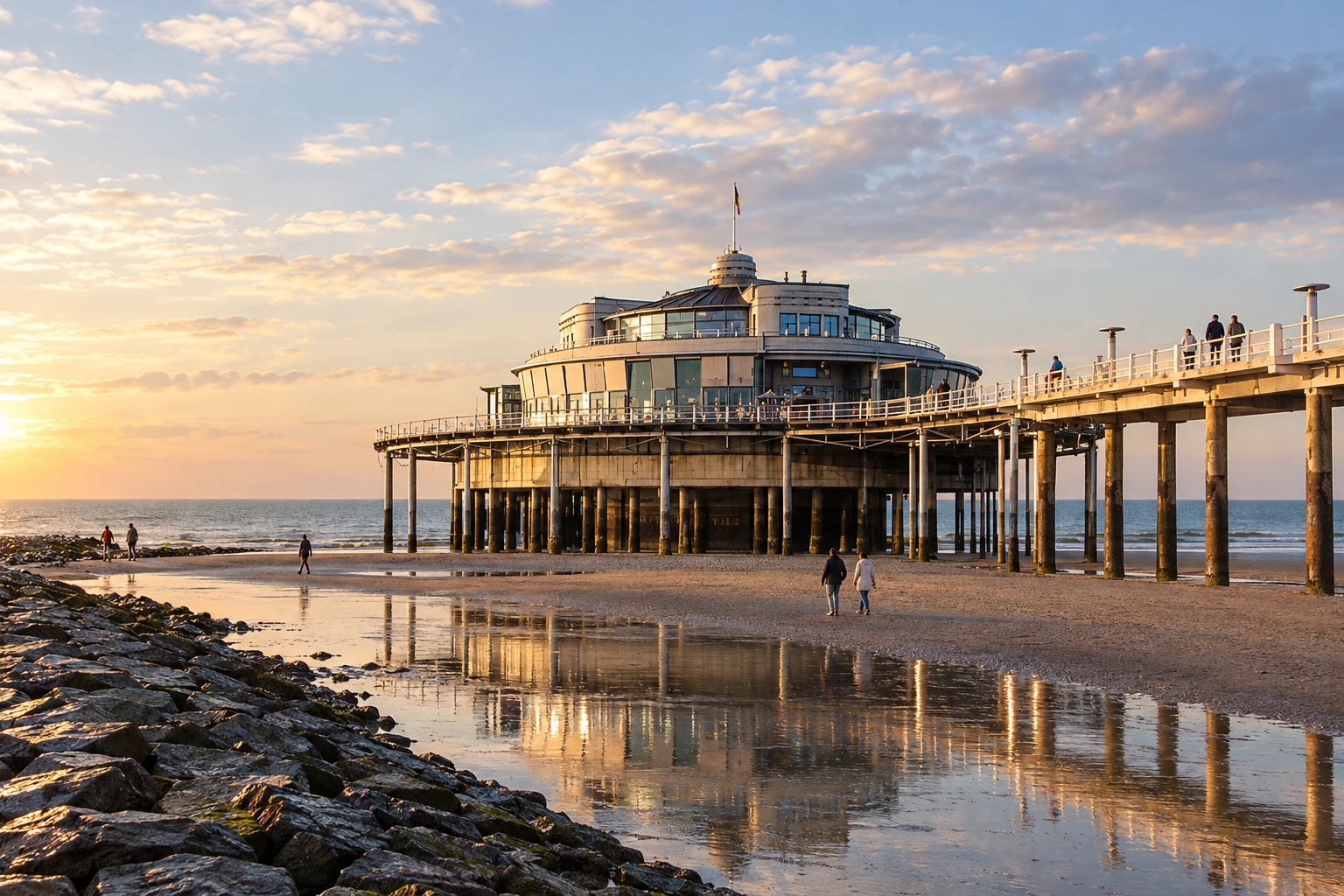
Busy seaside resort about 15 km from Bruges, Blankenberge made its living from fishing since the Middle Ages and became a bathing resort in the 19th century, with the first casino in 1859 and the railway in 1863. It has the Belgium Pier (1933), which extends 350 metres into the sea, the Zeedijk promenade, the Sea Life aquarium and a marina with around a thousand boats. Flemish is spoken.

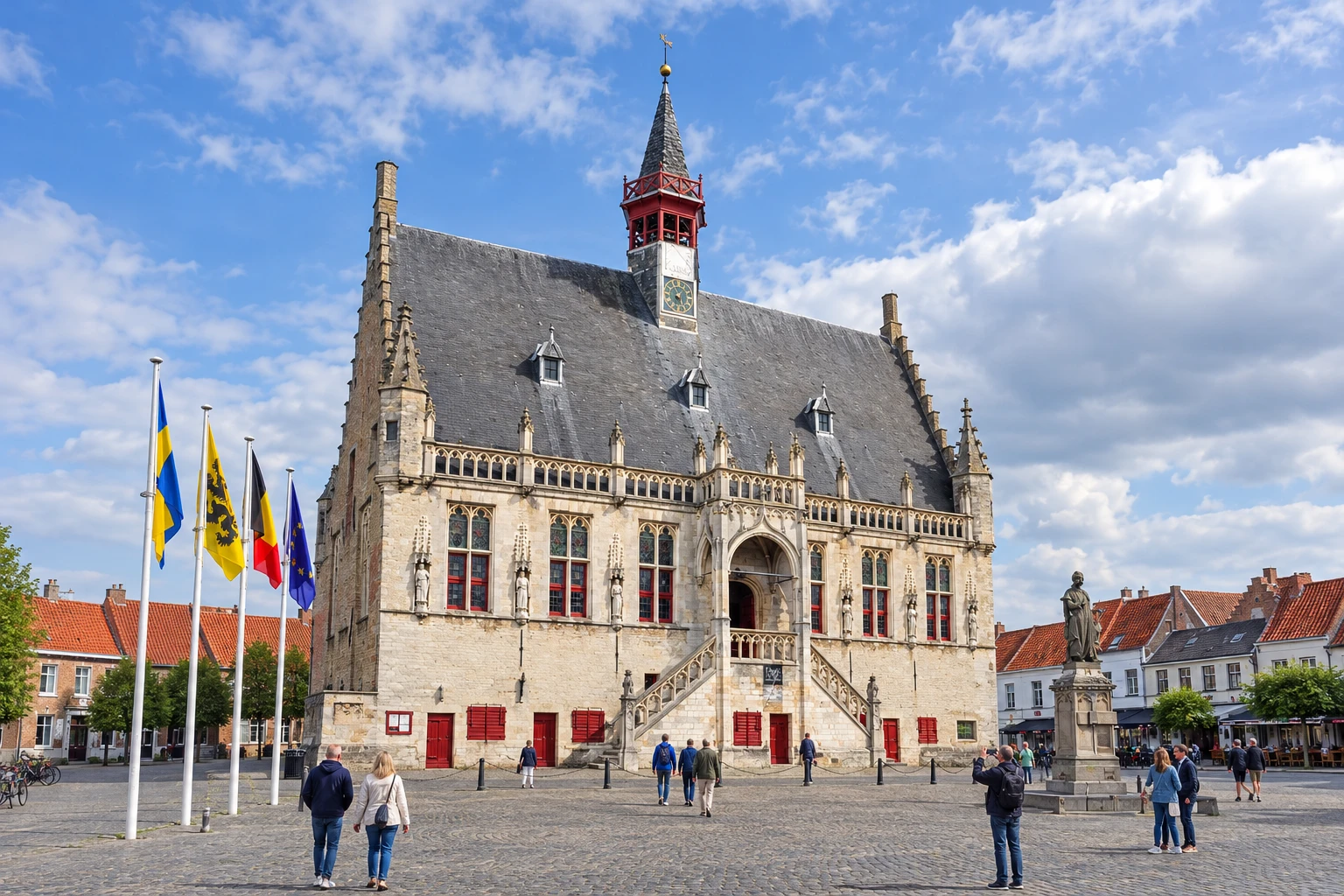
Village about 7 kilometers from Bruges, where Flemish is spoken, the Dutch spoken in Belgium. It was Bruges' port in the 13th century, until the Zwin silted up. It preserves the Gothic town hall of 1464 on the square, the church of Nossa Senhora with a tower of 206 steps and the Schellemolen mill, and is reached along the bank of the Damse Vaart canal. It is known as the village of books, with a fair on the second Sunday of each month.

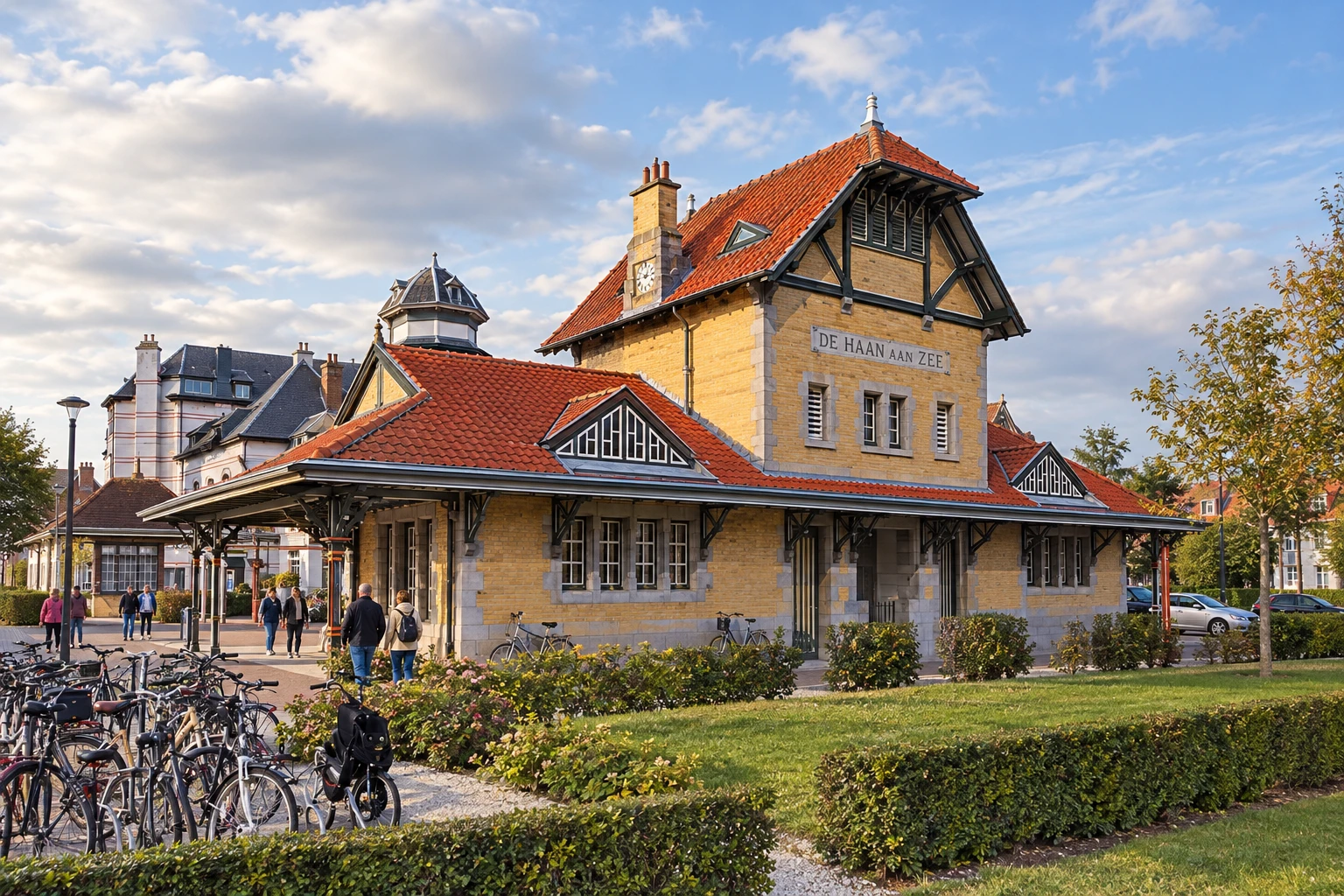
A seaside resort between Ostende and Blankenberge, De Haan brings together the coastal village and the hamlets of Wenduine, Klemskerke, Vlissegem and Harendijk. The seafront has retained low-rise buildings, and the Concessie neighborhood preserves many Belle Époque houses among the dunes and woods. Albert Einstein lived there in 1933, shortly after leaving Nazi Germany. Flemish is spoken.

The westernmost seaside resort in Belgium, on the border with France, De Panne includes the village of Adinkerke. It has a wide beach where the Dumont brothers created the first sand yachts for sport in 1898, and the Westhoek dune reserve, the oldest state nature reserve in Flanders. During World War I, the Belgian royal family lived there, in the small strip of the country that Germany did not occupy. Flemish is spoken.

Town on the banks of the river IJzer that was on the Belgian front line from 1914 to 1918. Attacked from 16 October 1914, it was reduced to rubble and rebuilt in the 1920s. On the riverbank, the IJzertoren, 84 metres high, houses a museum about war and peace. The Dodengang preserves the only Belgian trench from the war. In the same municipality, the German cemetery at Vladslo holds Käthe Kollwitz's statues of the Grieving Parents.

Municipality at the northeastern end of the coast of Bélgica, on the border with the Holanda, Knokke-Heist brings together Heist, Duinbergen, Knokke, Westkapelle and Ramskapelle, as well as the area of Het Zoute. Knokke began as a holiday spot for residents of Bruxelas in the 19th century, and today has dozens of art galleries. The Zwin reserve, created in 1952, was the first nature reserve in Bélgica. Flemish is spoken.

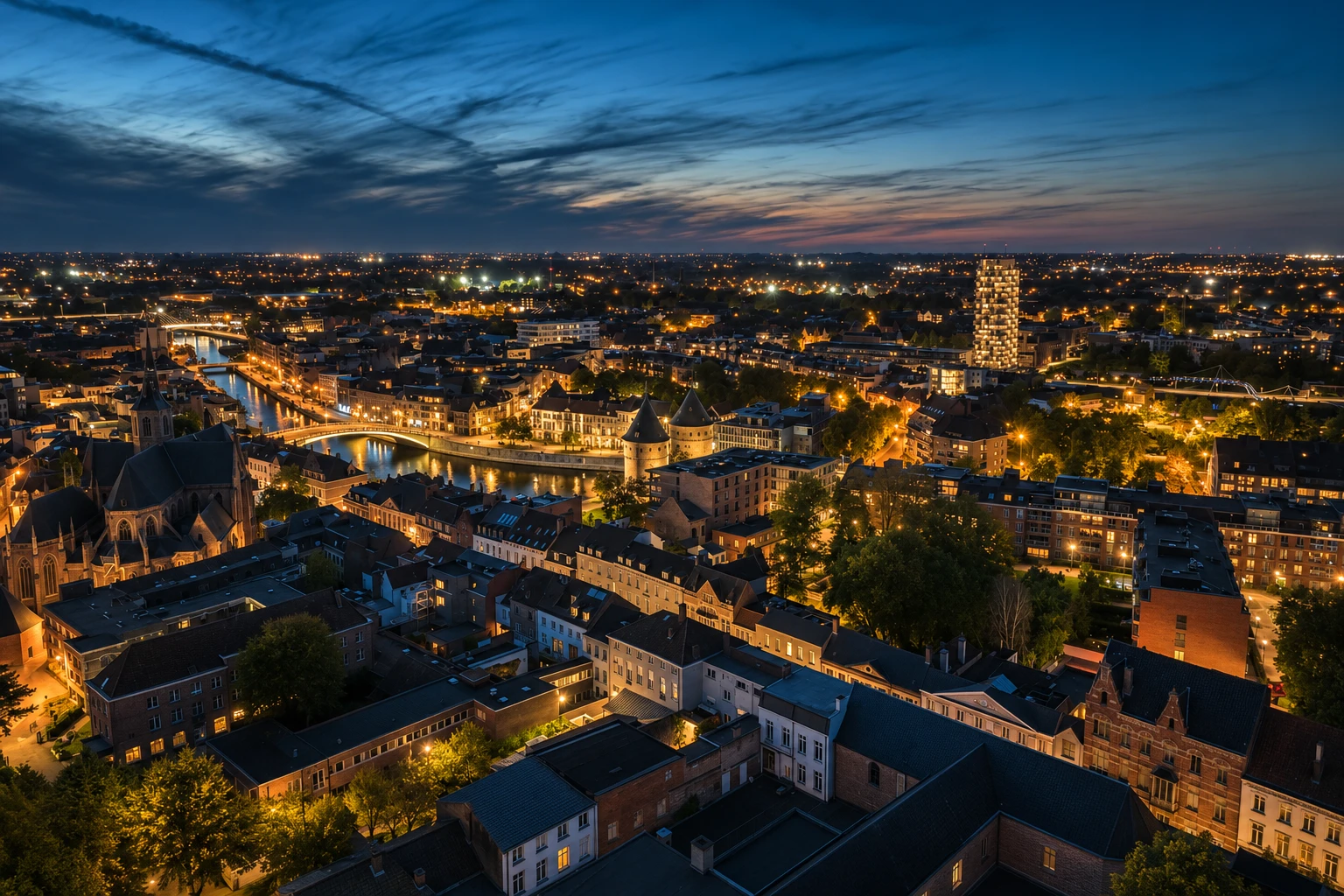
Kortrijk has a compact city center on the banks of the Leie (Lys). Two stone towers guard the Broelbrug. A few streets away, the whitewashed houses of the Sint-Elisabethbegijnhof open onto narrow lanes and a courtyard with a garden.

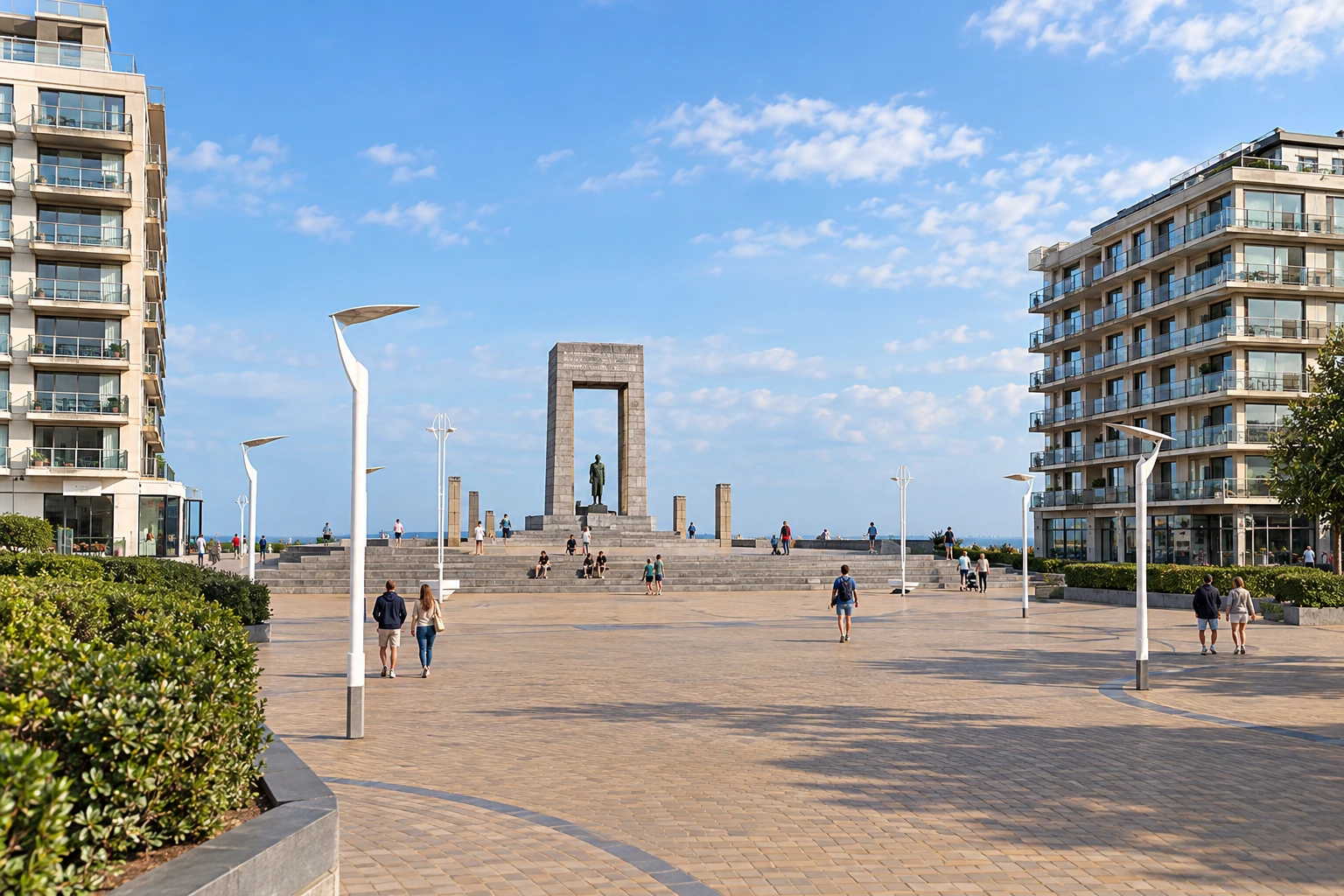
Town at the mouth of the river IJzer, with the historic centre a little set back from the sea and the seaside resort Nieuwpoort-Bad by the beach. At the end of October 1914, at the Ganzepoot sluices, the Belgian army flooded the IJzer plain and the water stopped the German advance: the front stayed there for four years. Beside the sluices, the monument to King Albert I, dating from 1938, houses the Westfront Nieuwpoort centre.

The largest city on the Belgian coast, Ostende speaks Flemish, the Dutch spoken in Belgium. It became a seaside resort in the 19th century with kings Leopoldo I and Leopoldo II. The Zeedijk promenade runs along the beach, the neo-Gothic church of São Pedro e São Paulo marks the center, and Fort Napoleon lies by the port. To the west, Raversyde holds bunkers of the Muralha do Atlântico, and the Kusttram takes you to the other beaches along the coast.

City west of Ypres that remained outside the German occupation during the First World War. Because it was just behind the front, it housed British troops on leave and field hospitals. Talbot House, a club opened to soldiers of any rank in 1915, is now a museum and guesthouse. On the road south, Lijssenthoek is the largest hospital cemetery of the Commonwealth. The region contains much of Belgium's hop cultivation.

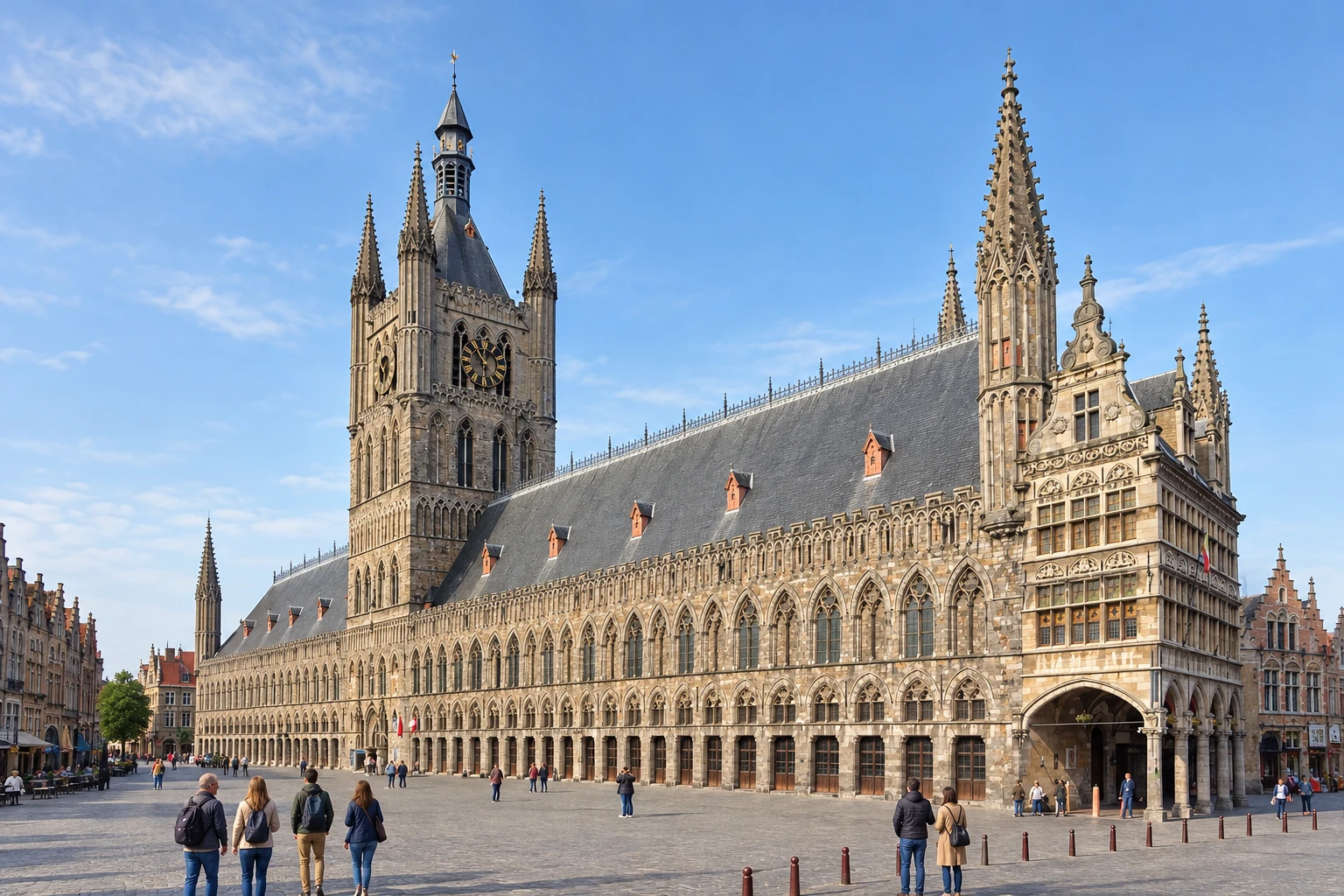
Ypres is a small town in the west of West Flanders, a few kilometres from France. Flemish, the Belgian Dutch, is spoken and English is widely used. Destroyed in the First World War and rebuilt afterwards, it has on the Grote Markt the Lakenhalle with its Belfort and the In Flanders Fields Museum, the Sint-Maartenskathedraal just behind, and the Menenpoort, the site of the Last Post. Around it are the Essex Farm Cemetery, the German cemetery at Langemark, the Passchendaele Museum and the Tyne Cot Cemetery.

Rural municipality east of Ypres, in the centre of the former salient. It includes the village of Passendale, which gave its name to the 1917 battle from 31 July to 10 November, when Commonwealth troops advanced about 8 km through rain and mud. The war destroyed the whole area. Today, in the castle park is the Memorial Museum Passchendaele 1917, and on the Passendale ridge stands the Tyne Cot cemetery, the largest Commonwealth cemetery in the world.
Routes

Between De Panne, near France, and Knokke-Heist, near the Netherlands, a tram runs along the entire Belgian coast, with dunes, seaside resorts and the North Sea beside it.

Cemeteries, museums and trenches of the First World War in West Flanders, from the Ypres salient to the mouth of the IJzer River near the North Sea.

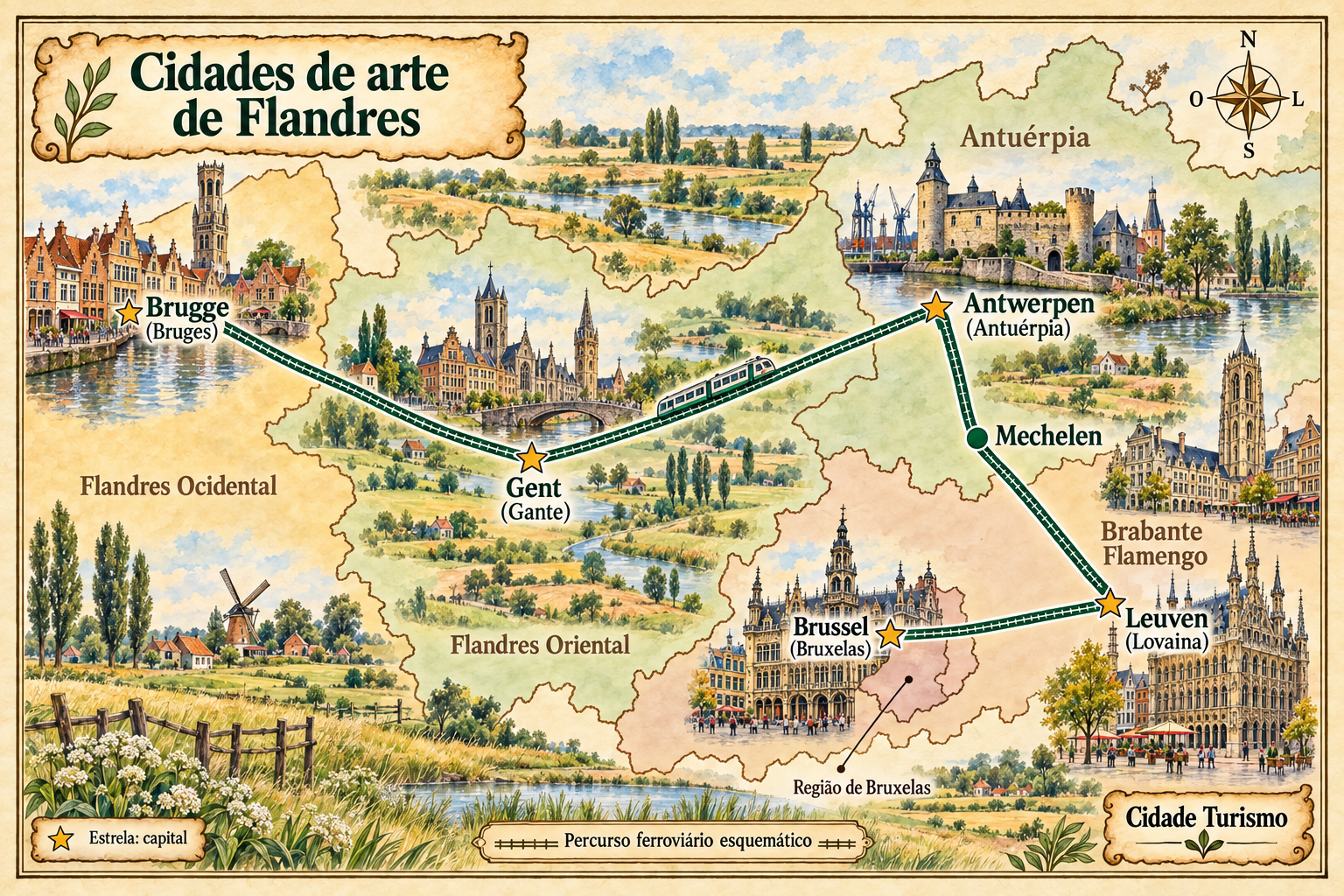
Six historic cities linked by train: Brussels, Leuven, Mechelen, Antwerp, Ghent and Bruges, with Flemish painting, cathedrals and medieval centres less than an hour apart.
The climate is maritime: mild summers, cold and wet winters, and wind for much of the year. The beach season runs from June to August, when the sea is usually around 18–19 °C; July and August fill the coast. April, May and September are good for Bruges and the Westhoek, with fewer people. November is usually the rainiest month. In Bruges, the Procession of the Holy Blood takes place on Ascension Day, in May or June. In Ypres, the Kattenstoet, the parade of the cats, happens every three years, in May. In December and January it gets dark in the mid‑afternoon.
The gateway is Brussels Airport, in Zaventem, near Bruxelas. Flights from Brazil usually involve a connection in another city. Check before you buy. From the airport and Bruxelas stations, SNCB trains run to Bruges and Ostende; many call at Gante en route. On the coast there are stations at De Panne (Adinkerke), Ostende, Blankenberge and Knokke, and from there the Kusttram links the seaside resorts. For Ypres and Poperinge, the train comes via Kortrijk. By car, the E40 connects Bruxelas to Gante, Bruges and the coast and continues to France; the E403 runs from Bruges down to Kortrijk.
Beyond the guide
Your questions
Yes. The direct train takes about an hour and the centre is walkable. But the city empties in the late afternoon when tour groups leave, and many people think it's worth staying a night to see the canals at a more relaxed pace.
It helps a lot. Ypres and Poperinge have train stations, but Tyne Cot, Passchendaele and the smaller cemeteries are scattered across the countryside. Without a car your options are cycling, taxi or a guided tour from Ypres. The waymarked bike routes are flat.
It's cold by Brazilian standards: even in August the water is usually around 19 °C. The beach is wide, with fine sand, and there are lifeguard posts in summer. Belgians go to the coast a lot to walk the promenade, cycle and eat seafood, more than to swim.
Dutch, with the West Flemish accent. In tourist towns almost everyone speaks English, and many understand French. Signs and menus are in Dutch; in Bruges and on the coast they often have translations.
It is the bugle call in memory of Commonwealth soldiers who died on the Ypres salient. It takes place every night under the arch of the Porta de Menin, bringing residents and visitors together in silence. Check the time before you go and arrive early in summer.
In any coastal town and in Bruges. They are made with grey shrimp from the North Sea, small and strongly flavored. In Ostende and Nieuwpoort there are stalls and restaurants by the fishing harbour.